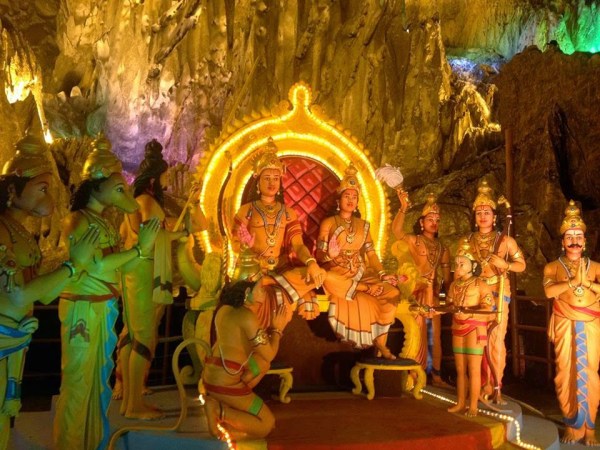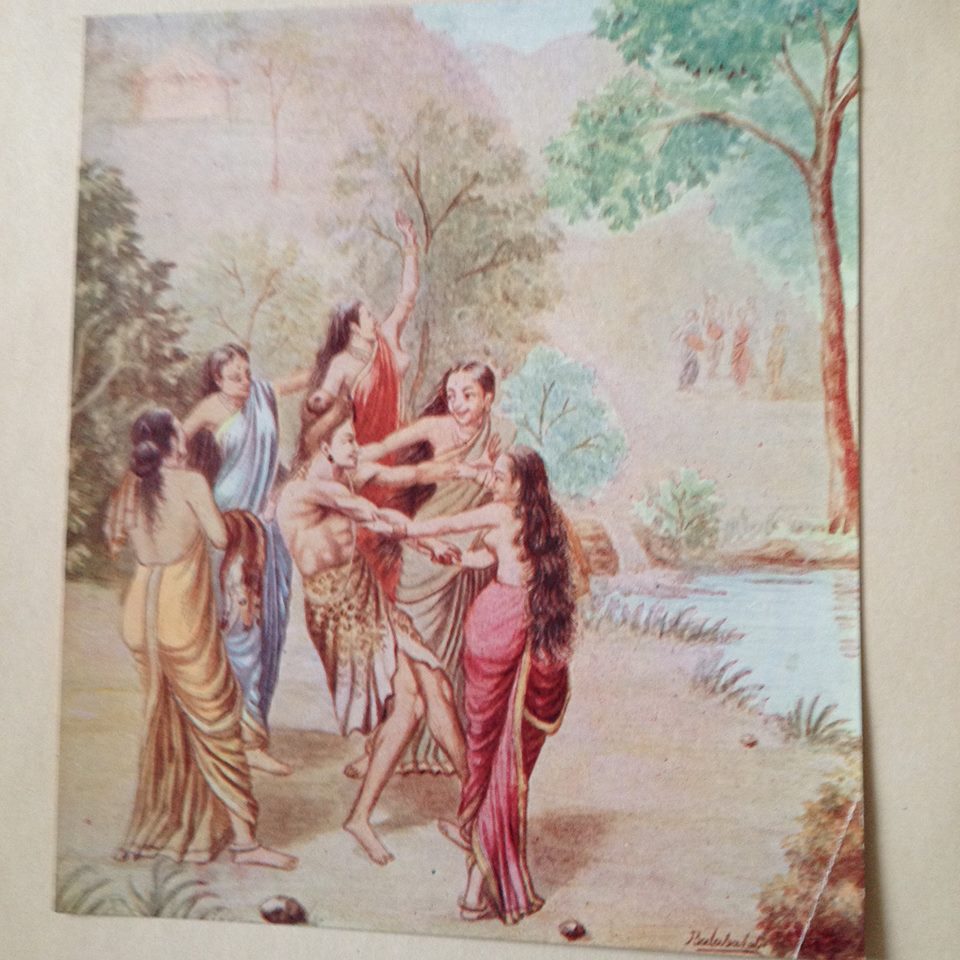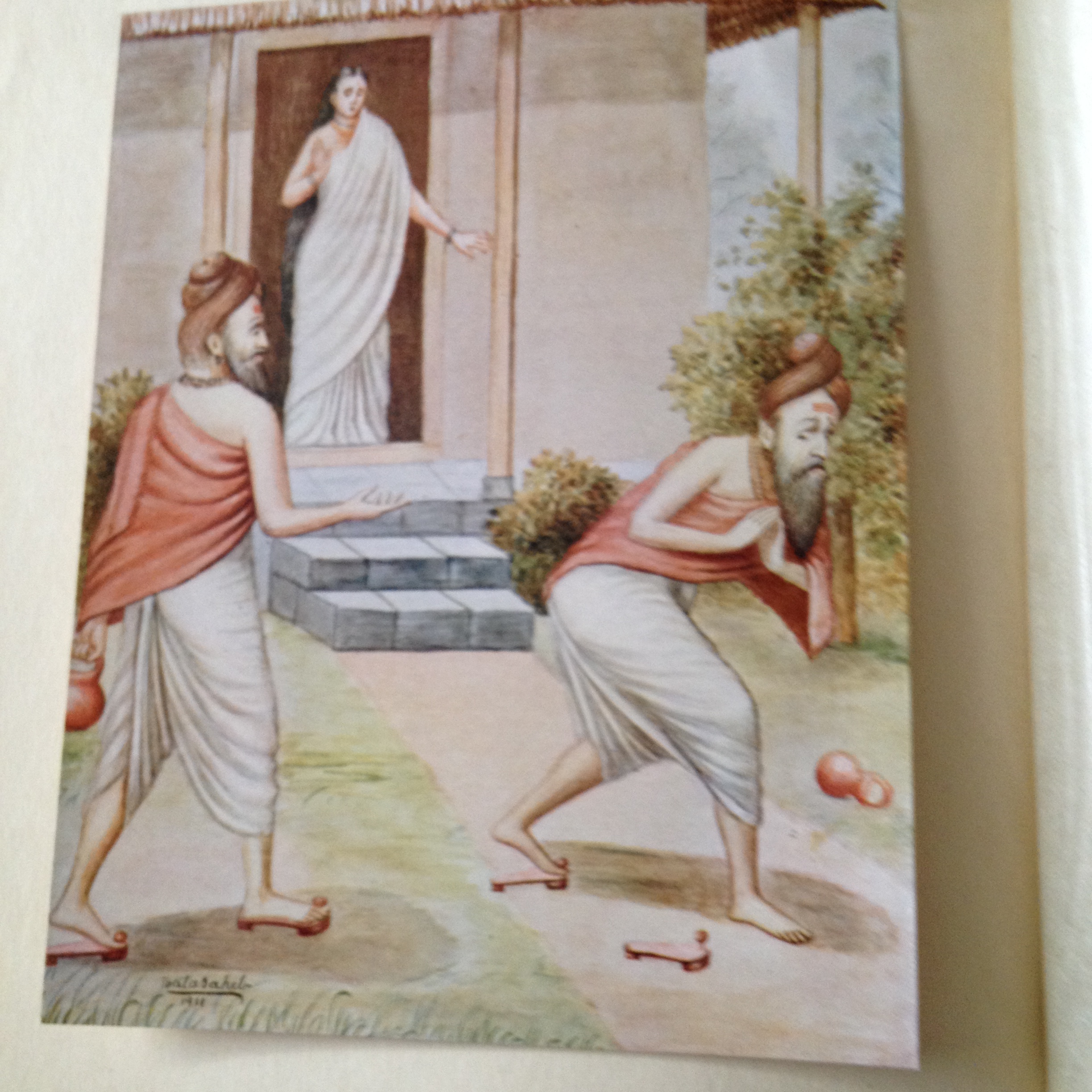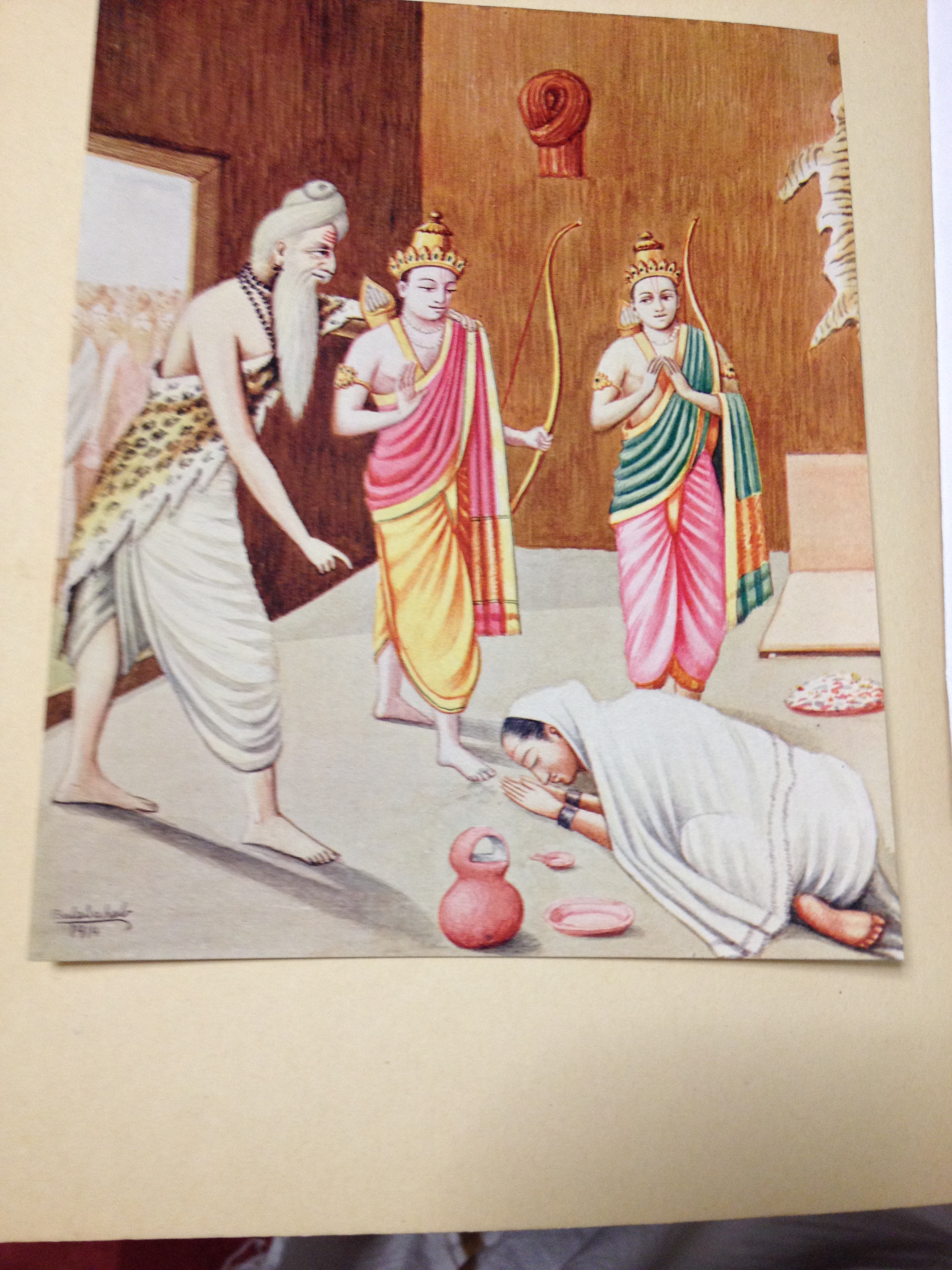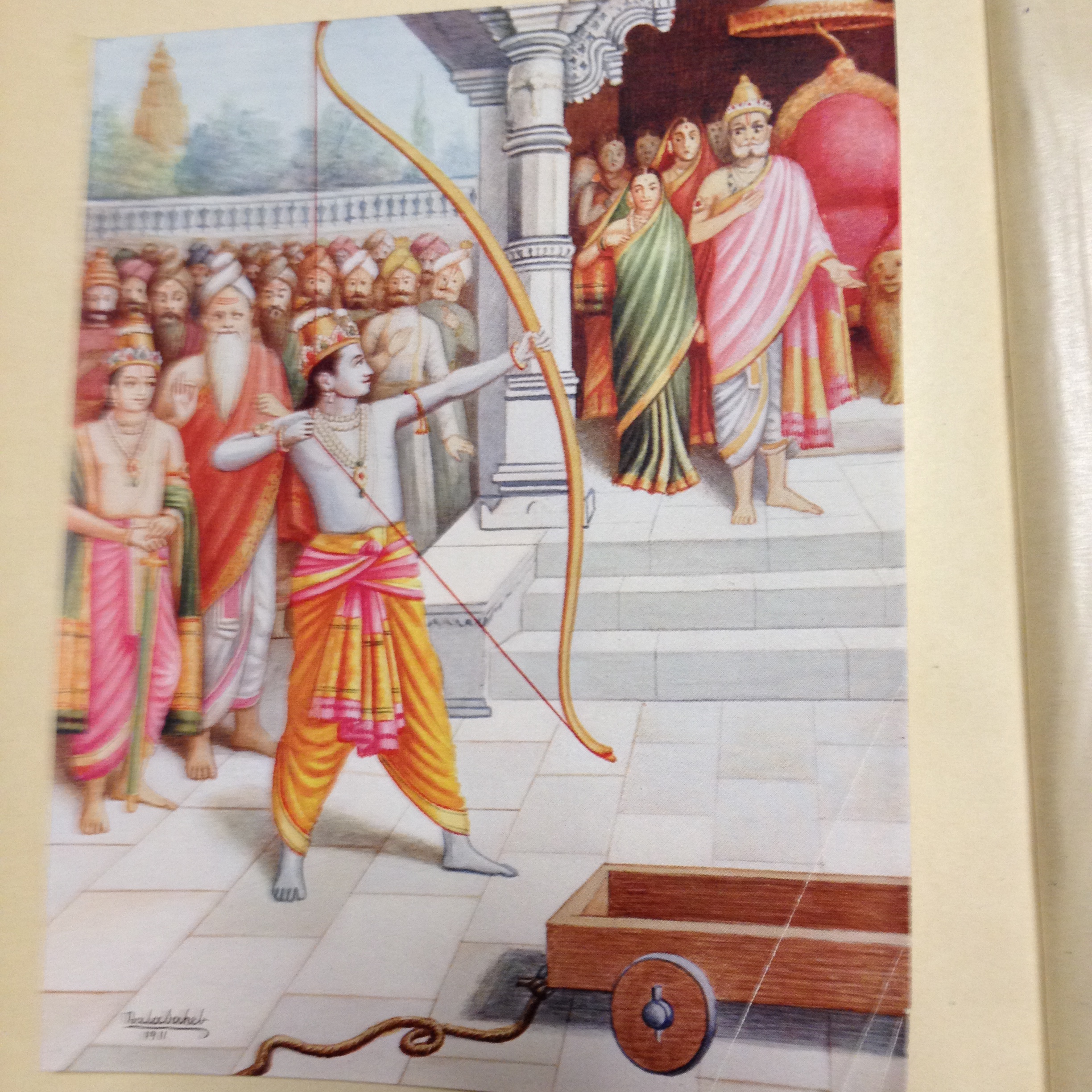
SAMPURNA RAMAYANA IN PICTURES

yuddha 1

Compiled by London Swaminathan

Research Article No.1895; Dated 28 May 2015.

Uploaded at London time 21-39


With the publication of Yuddha Kanda pictures today, we complete the greatest epic Ramayana in pictures. I have already posted pictures of Bala Kanda, Ayodhya Kanda, Aranya Kanda, Kishkindha Kanda and Sundara Kanda. All the six kandas are in 60 pictures. You can teach your children Ramayana with these sixty pictures in a few hours.


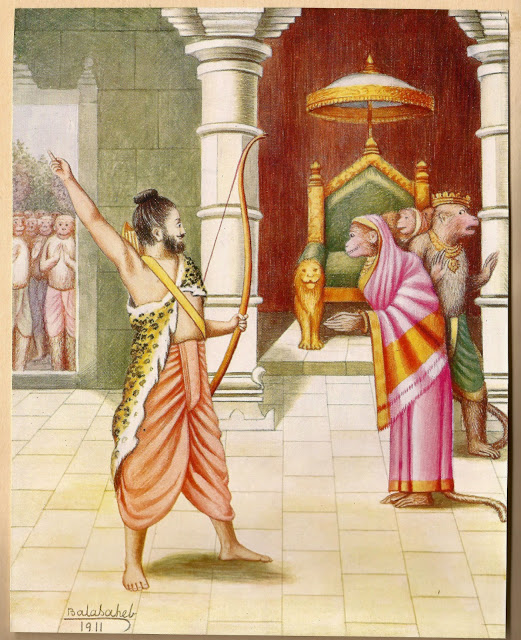
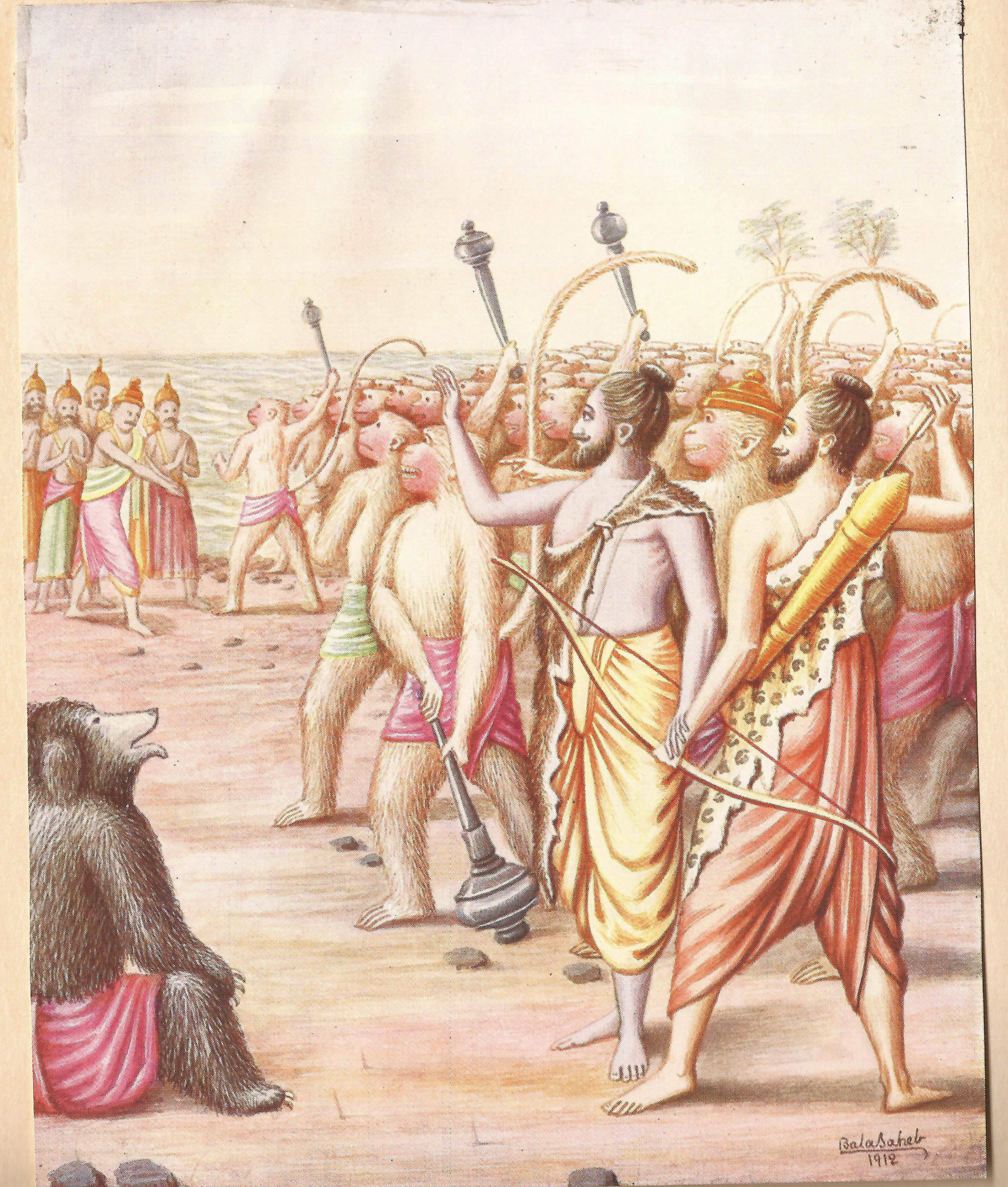
Yuddha Kanda Picture 1 (Ramayana Picture 49)

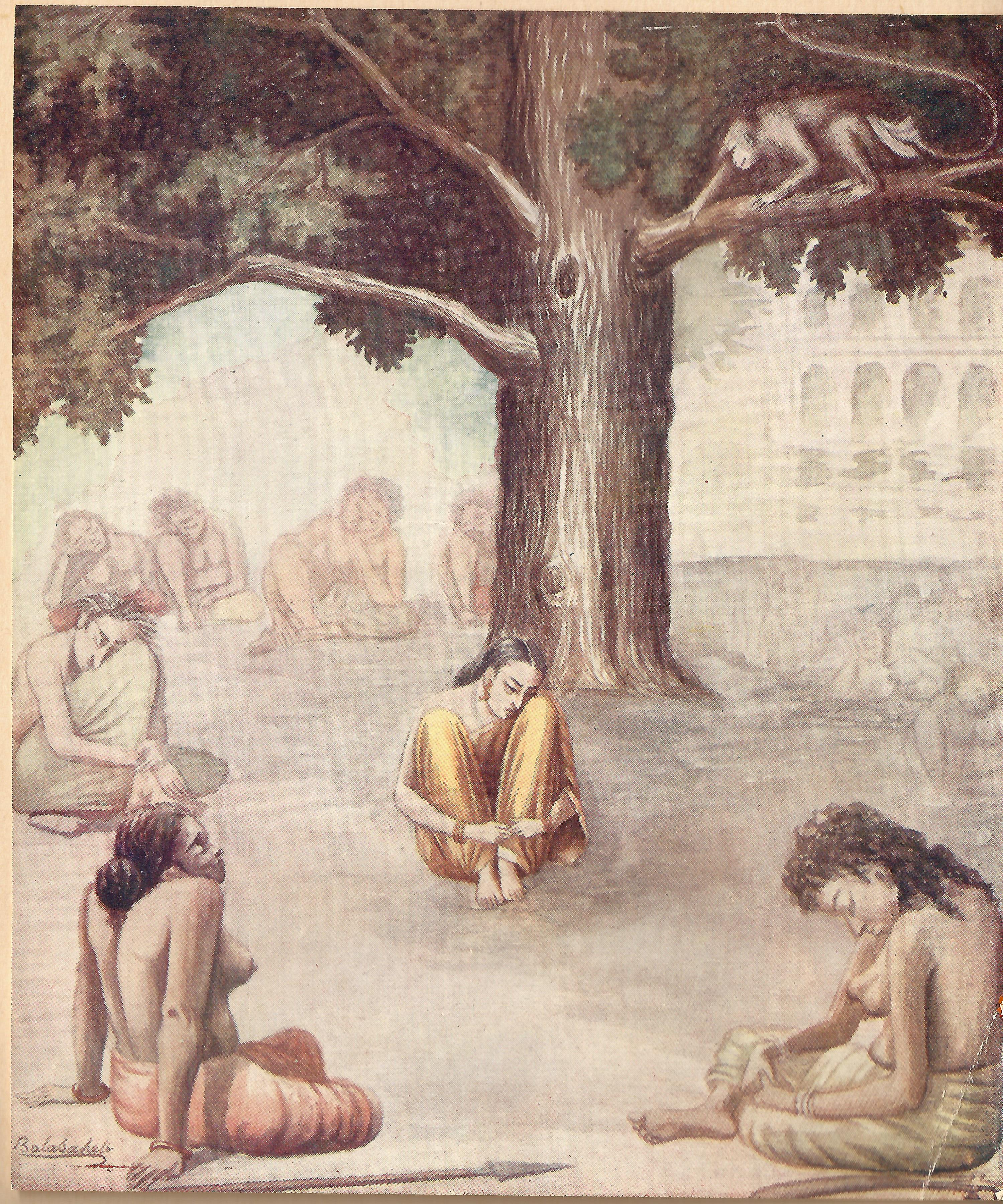
After Maruti’s departure Vibhishana, Ravana’s brother, advised the council to send Sita back to her husband. But no one could take his advice. Ravana in a rage drove Vibhishana, out of the assembly. So Vibhishana and four of Ravana’s cabinet ministers fled to Rama’s camp and asked him to take them on to his side. Sugriva suspected them. When Rama heard Vibhishana’s full story he promised to protect him and to place him on the throne of Lanka.
yuddha 2

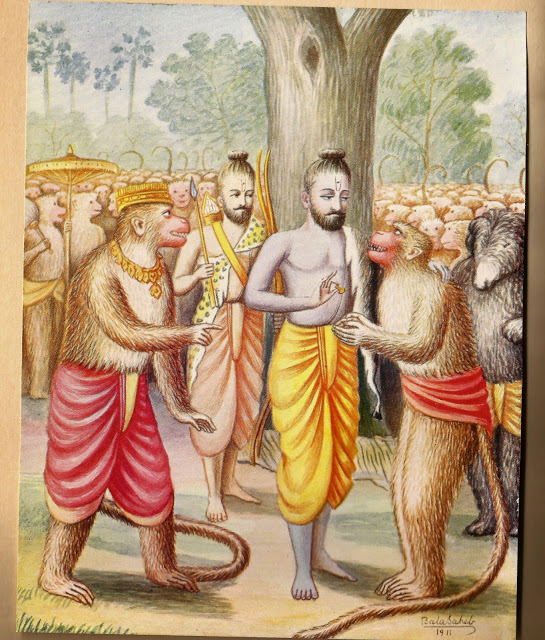
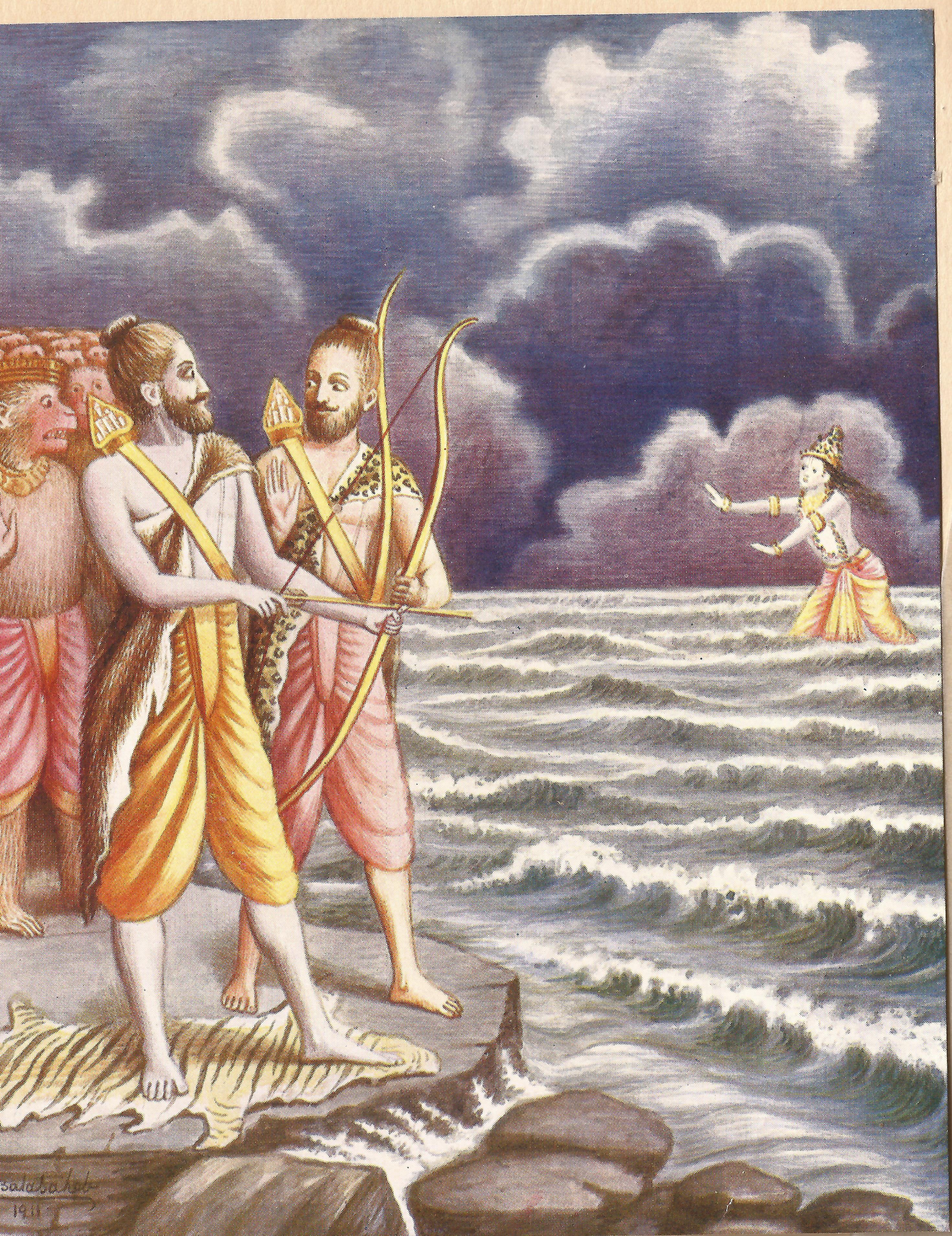
Yuddha Kanda Picture 2 (Ramayana Picture 50)

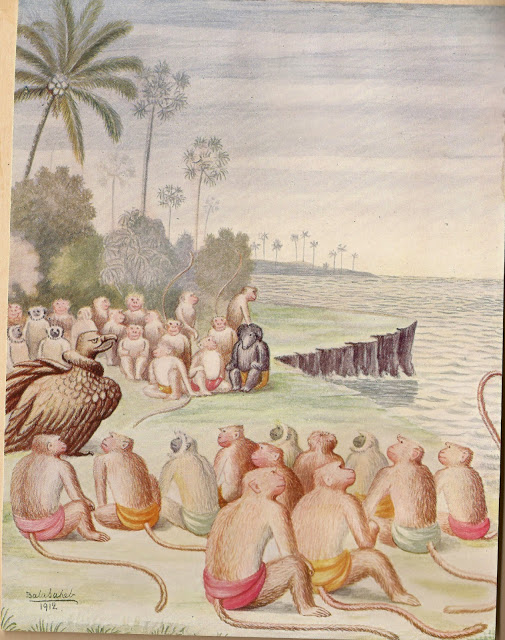
Rama was utterly at a loss to know how to cross the sea with all his monkey battalions. For three days he offered prayers to the God of the Sea (Varuna), but all in vain. At last, losing patience, Rama seized his mighty bow to smite the waters. Lakshmana also took his bow and was about to shoot an arrow. At once, Varuna himself arose from the depth of the ocean and begged to forgive him. Varuna suggested that Nala could build a bridge over him. Nala was a marine engineer of the local area. He knew the terrain of the area and the ins and outs of the sea. Then the sea god Varuna disappeared.(2000 year old Sangam Tamil literature adds that Rama held the consultation and planning meeting under a banyan tree).
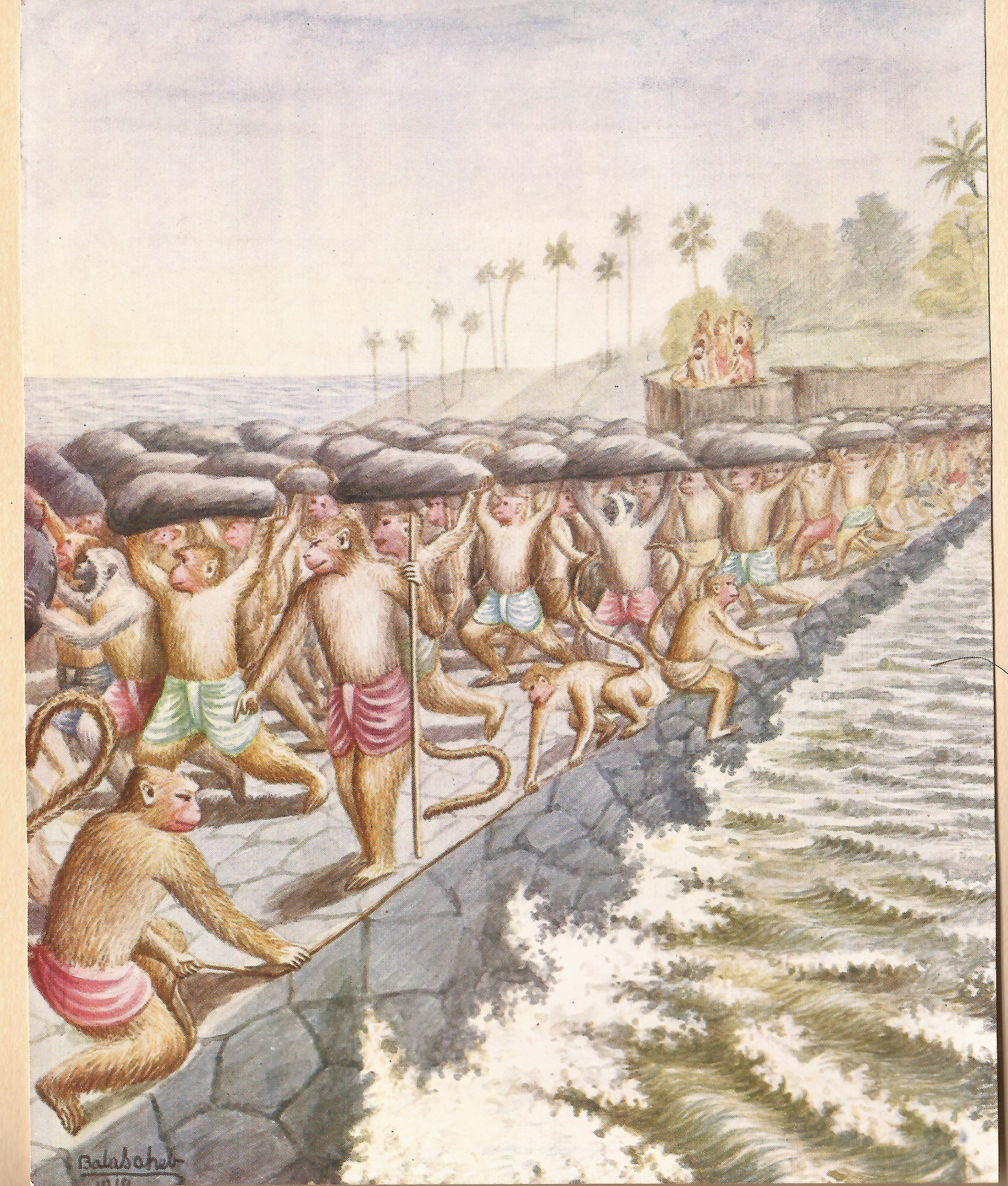
yuddha 3

Yuddha Kanda Picture 3 (Ramayana Picture 51)- WORLD’S FIRST ENGINEERING WONDER: Then Rama asked Nala, the engineer in the monkey brigade, to build a mighty bridge across the sea. Obeying his orders, thousands of monkeys brought huge rocks and piled them into the water. Others plied the plumb line and measuring rod. With the help of the monkey army, the sea was quickly bridged, and the army crossed in safety. They pitched their camp on the hill called Suvelachala. Monkeys wrote Ram on the stone and the stones started floating. This type of floating stones are still available in the area. I published the photo here a few weeks ago (Truth behind the bridge: NASA has found the structure of ancient bridge from space. Actually the sea in the area covered the land only for a few months. Then it parted again. This was the condition several thousand years ago. Since local marine engineer Nala knew the terrain, he identified a proper place for the bridge. It was the first Engineering Wonder of the World.)
yuddha4

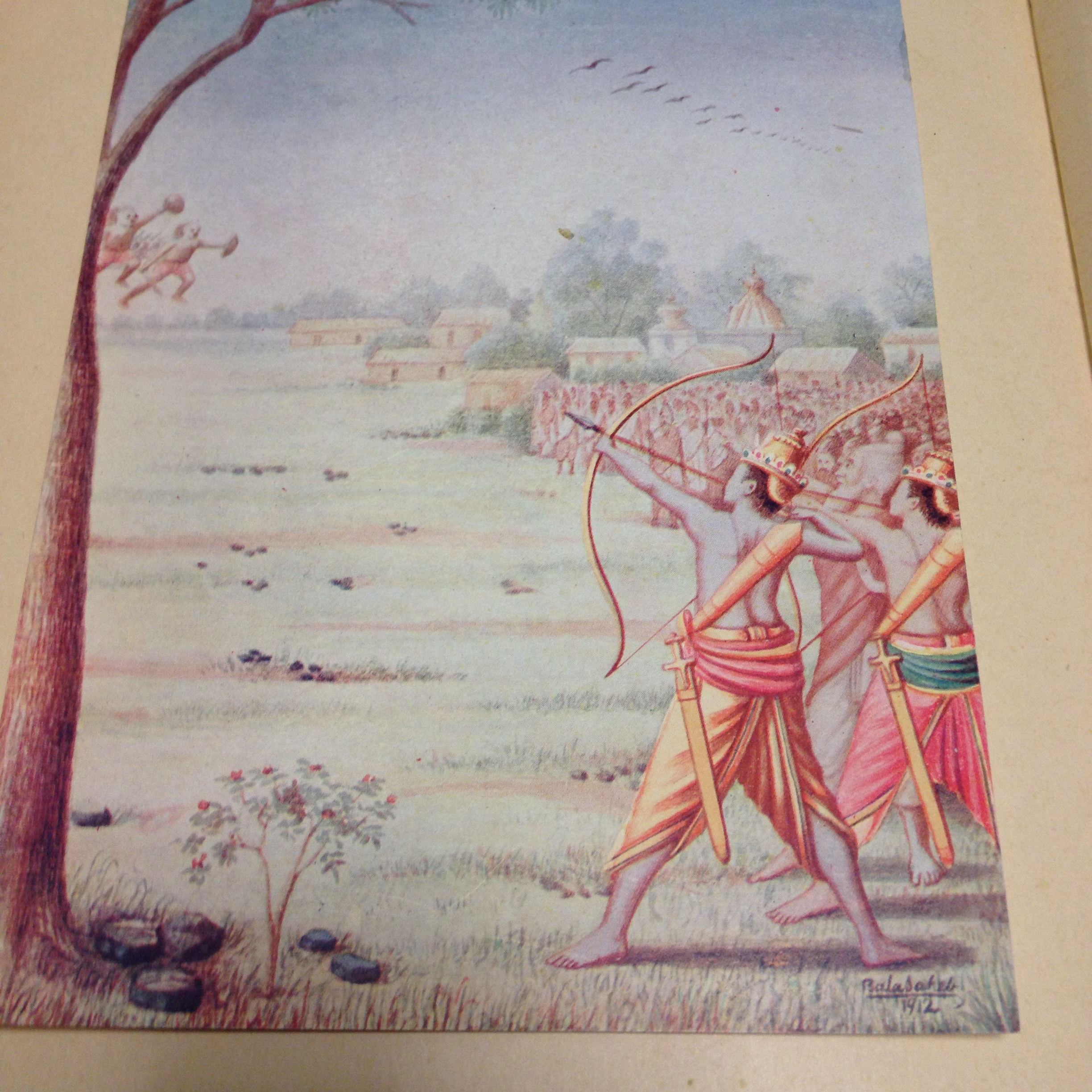
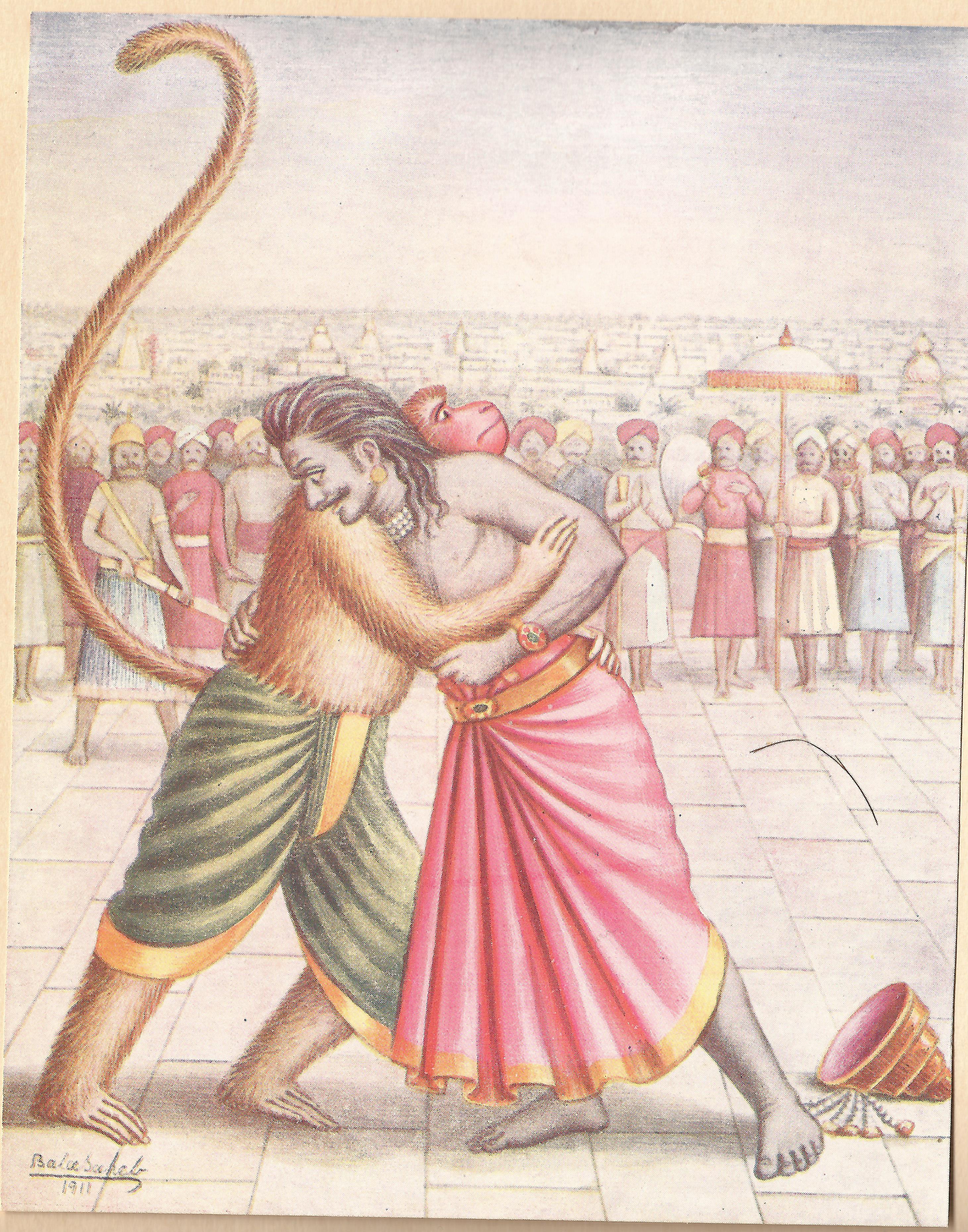
Yuddha Kanda Picture 4 (Ramayana Picture 52)-

Ravana never dreamt Rama would come over so soon after the dismissal of Vibhishana, and was astonished to see that he was already on the soil of Lanka. Climbing the wall of the rampart he began to observe the number of the foe. Rama too was attentive to Ravana’s movements. When Sugriva recognised Ravana standing on the rampart, he jumped over to him and knocked off his crown at a blow. Soon they began to wrestle, and at first Sugriva got the better of his opponent. But at length Ravana exerted his magic powers and Sugriva was forced to relinquish his hold. Both the combatants returned to their respective camps.
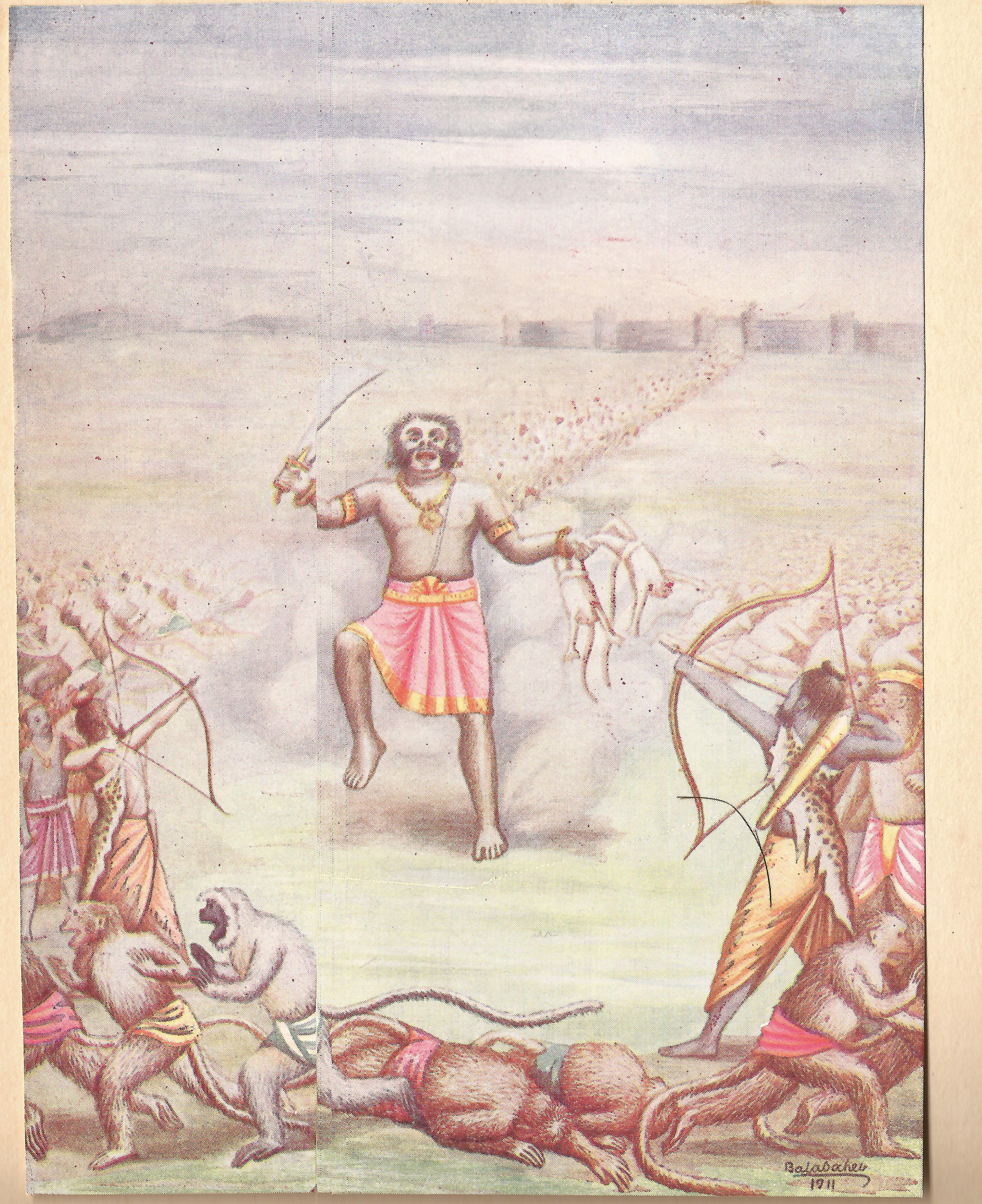
yuddha 5

Yuddha Kanda Picture 5 (Ramayana Picture 53)-

The monkey brigades continued their attack. Again and again Ravana sent out his generals against them but one and all returned beaten. At last Ravana in despair awakened his brother Kumbhakarna and explained his plight to him. At first he blamed Ravana for stealing Rama’s wife, but at last consented to go to his assistance. Kumbhakarna was a huge monster, and at his onslaught the monkeys fled in terror. But Rama and Lakshmana shot him dead with their arrows (About Kumbhakarna’s long sleep and the scientific/ biological reason for it is already in my blog)

yuddha 6

Yuddha Kanda Picture 6 (Ramayana Picture 54)-

At the death of Kumbhakarna, Ravana wept bitterly. But his son Indrajit appeased him by assuring him that he would not return unless he had killed Rama and Lakshmana. Vibhishana advised that Lakshmana should be sent against Indrajit. Both Lakshmana and Indrajit fought heroically. When Vibhishana found out that Indrajit was exhausted, he asked Laksmana to kill him. Lakshmana took an invincible arrow given to him by Rama, and dscharging it, cut Indrajit’s head clean off.
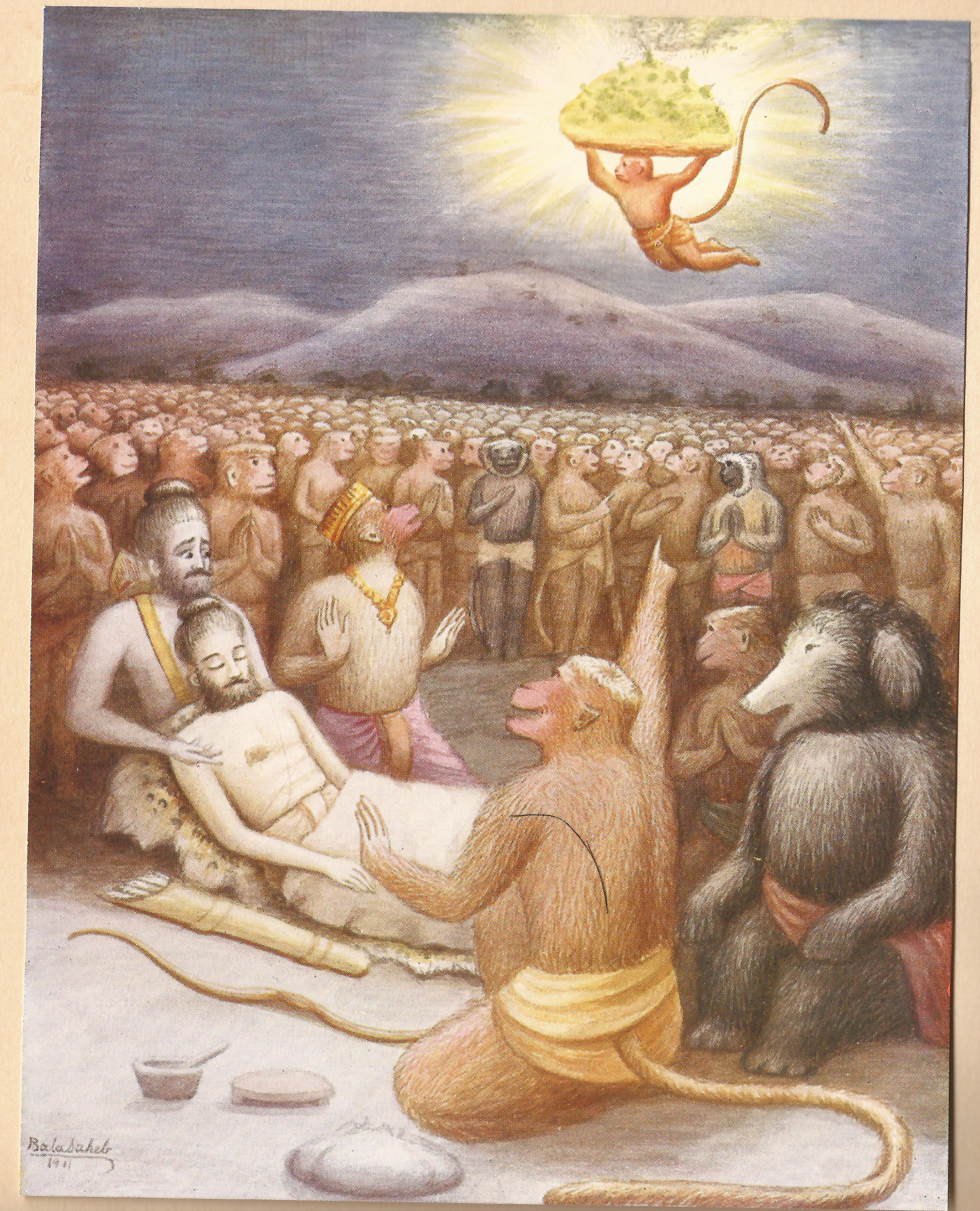
 

yuddha 7

Yuddha Kanda Picture 7 (Ramayana Picture 55)- WORLD’S FIRST HERBAL MEDICINE AND WORLD’S FIRST EMERGENCY MEDICINE. OUR HOSPITALS FOLLOWED HANUMAN AND STARTED A&E IN ALL HOSPITALS.

Ravana, after the death of his son Indrajit, at last went to the battlefield himself to face the enemies. He discharged a powerful missile – biological missile – towards Lakshmana and he fainted at once. Rama came to the forefront and fought with Ravana. Like modern warfare, they had military doctors in the monkey battalion. Dr. Sushena, a monkey, felt Lakshmana’s pulse and said someone must get the herbs Sanjivani, Vishalyakarani and Sandhani from the faraway mountain Dronagiri. Doctor insisted that the medicine must come before daybreak. Jambavana said that it can be done only by Maruti. Immediately Hanuman/Maruti left for Dronagiri and brought the emergency medicine. When Maruti could not identify the herbs, he brought the mountain (rock) itself. Dr.Sushena revived Lakshmana and he got up to the extreme delight of the whole army.
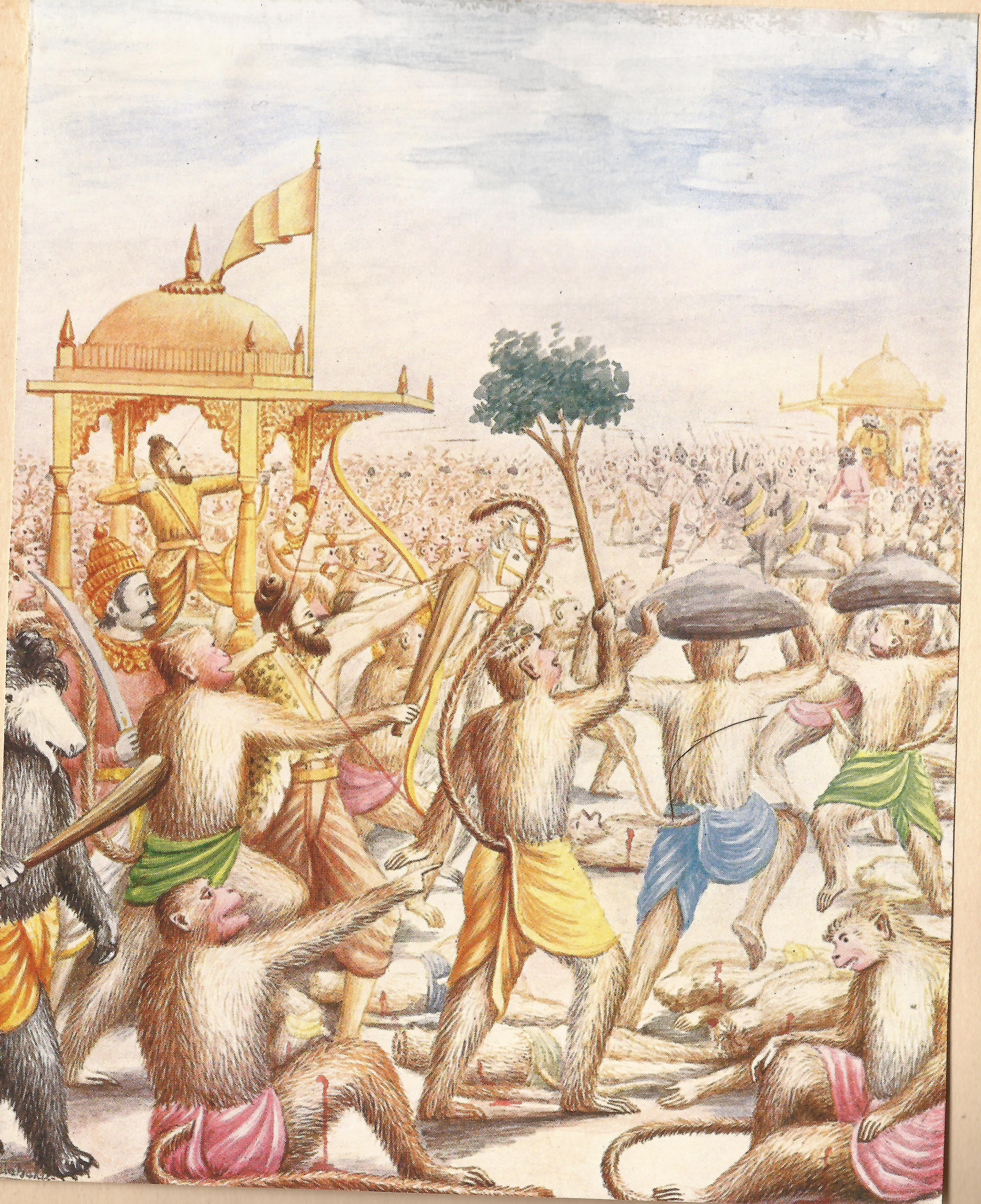
yuddha 8

Yuddha Kanda Picture 8 (Ramayana Picture 56)-

Ravana, collecting all his force, clashed with the monkey army of Rama. Ravana realised that it was a Do or Die mission. Almost impossible it is to find words with which to describe the last battle between Rama and Ravana. Ravana was brave enough, but he was no match for his heroic adversary. At length Rama drew from his quiver the magic arrow which Agastya had given him, and shot his opponent dead. And Ravana perished to the delight of the Devas and the mankind.
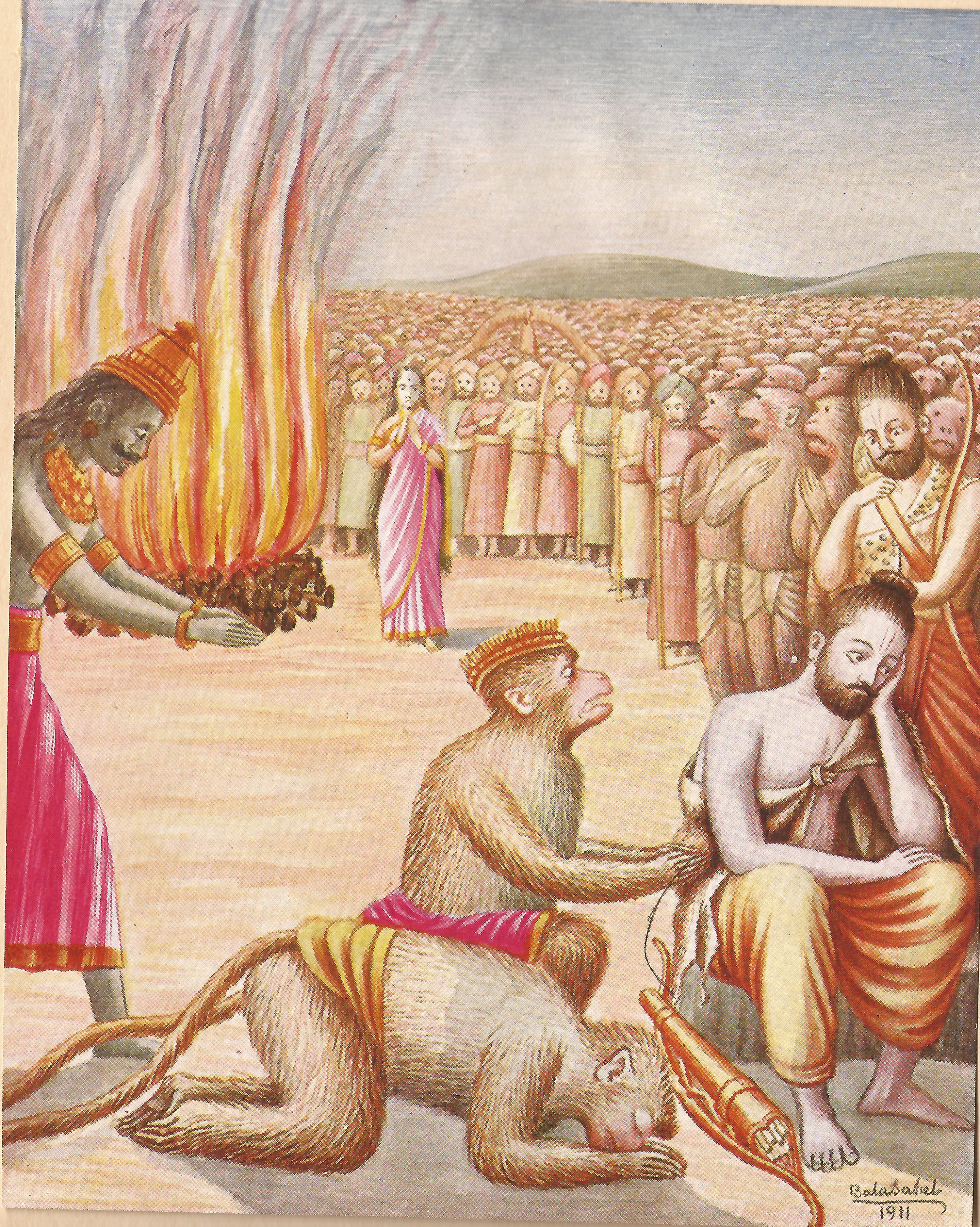
yuddha 9

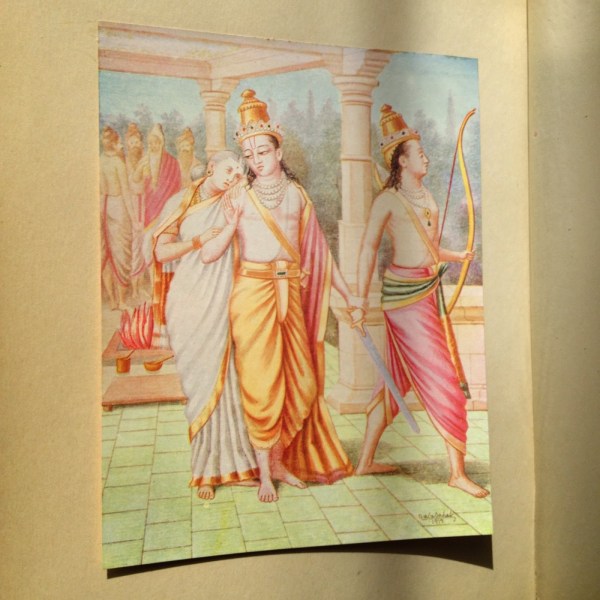
Yuddha Kanda Picture 9 (Ramayana Picture 57)-FIRST FIRE WALKING CEREMONY IN THE WORLD: RAMA then installed Vibhishana on the throne of Lanka. Rama never occupied any country. When Vali was killed Sugriva was installed as king with Vali’s son Angada as deputy. When Ravana was killed his brother was installed. This is unique in the world, quite contrary to Alexander “the Great” and others. Rama sent a palanquin for Sita and Maruti brought her. Rama threw a bombshell by asking Sita to prove her chastity and integrity by entering fire. This was the first fire walking ceremony in the world. Till this day it is practised in Tamil Nadu and other parts of India. Sita was shocked, but did it with tears in her eyes. She came out successfully. Joy reigned everywhere.
yuddha 10 (2)

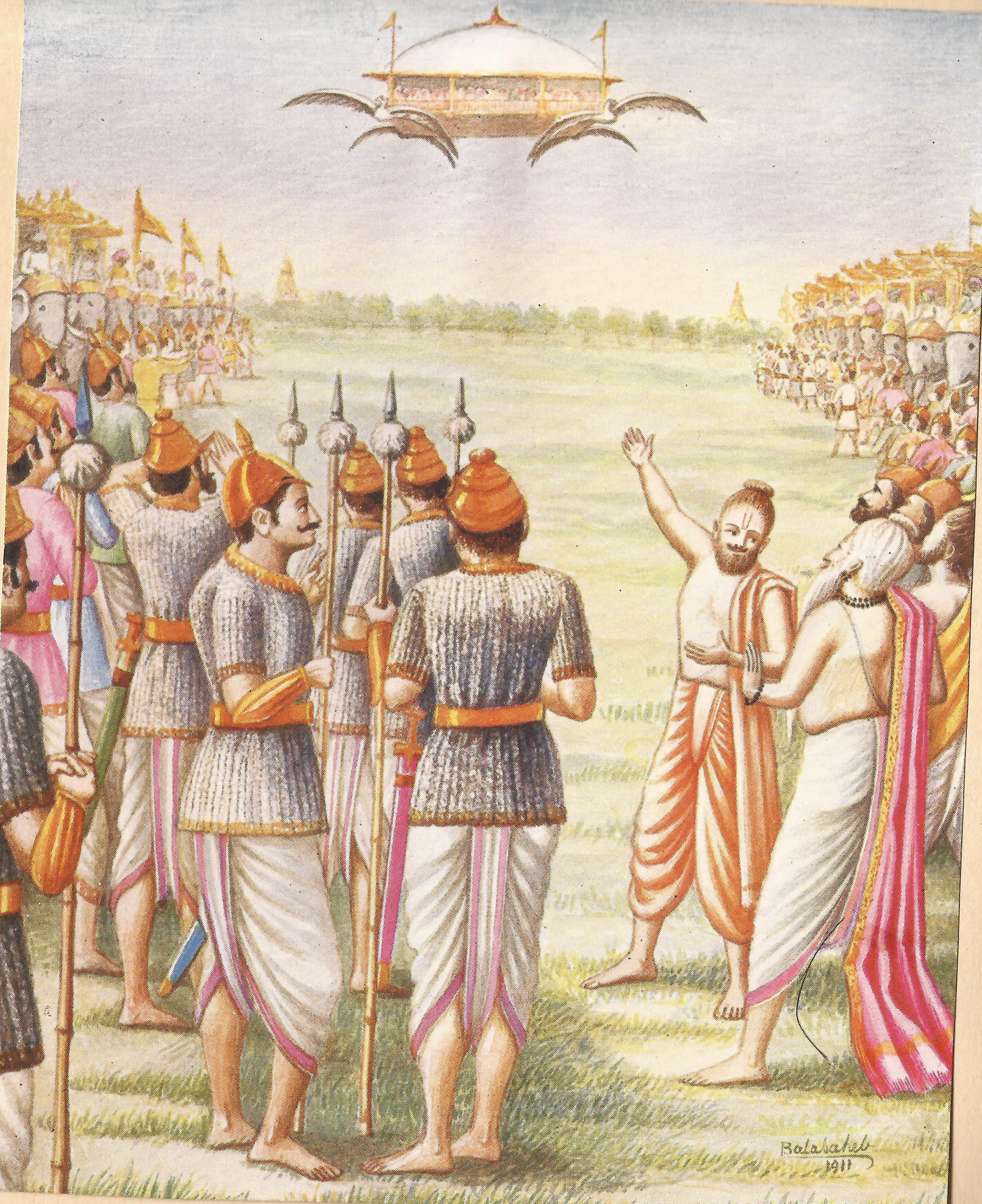
Yuddha Kanda Picture 10 (Ramayana Picture 58):-Then Vibhishana invited Rama to return to Ayodhya in the Pushpaka viman, the air plane of Kubera, which was in Ravana’s possession. Rama, Sita, Lakshmana, Sugriva and other monkeys took their seats in it. And it flew at the will of Rama. (Please read my post HOW DID RAMA FLY HIS PUSHPAKA VIMAN?, posted in my blog on 22nd June 2013. Science behind the plane is explained in a science article).Maruti was sent ahead to give the good news to Bharata and Shatrugna. As the chariot/plane came in sight, all saluted Rama. The air plane descended and all disembarked. Rama saluted his mother first and then other queens. Then he saluted his Kula Guru Vasistha. Rama embraced Bharata.
yuddha 11 (2)

Yuddha Kanda Picture 11 (Ramayana Picture 59):-

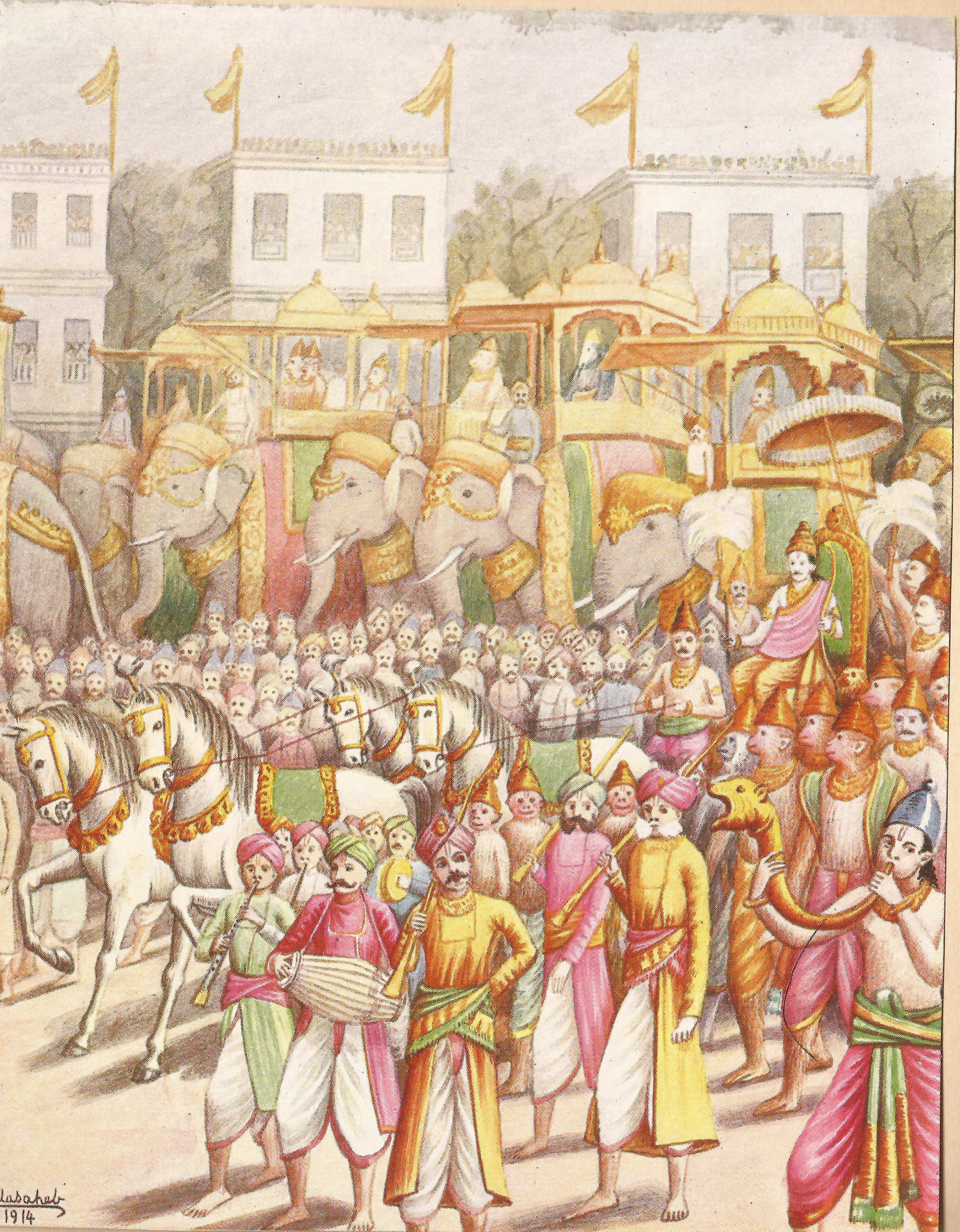
The next day, all took auspicious baths, donned rich dresses and valuable ornaments, and entered the city of Ayodhya in great pomp. Rama was seated in a chariot and the reins of the horses were held by Bharata. Shatrugna carried the Royal umbrella and Vibhishana and Lakshmana the chowries. Many monkeys dressed in human attire rode on elephants, and auspicious drums were beaten. Thus Rama after an absence of fourteen long years in the forests entered the capital of his ancestors. The citizens rejoiced to see Rama entering his palace once more. Whoever reads this will get out of their troubles and difficulties, from which they have been suffering for long.
yuddha 12 (2)

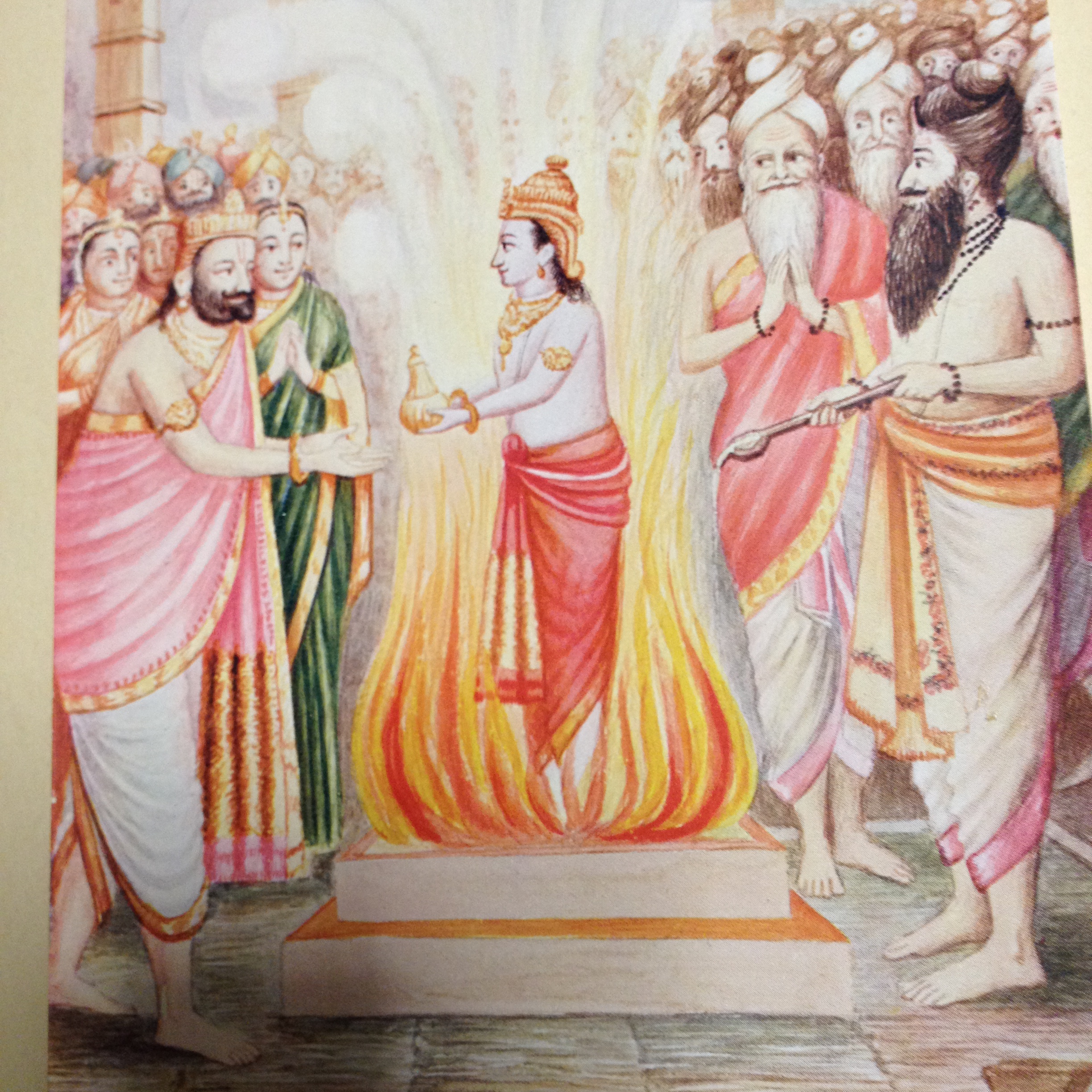
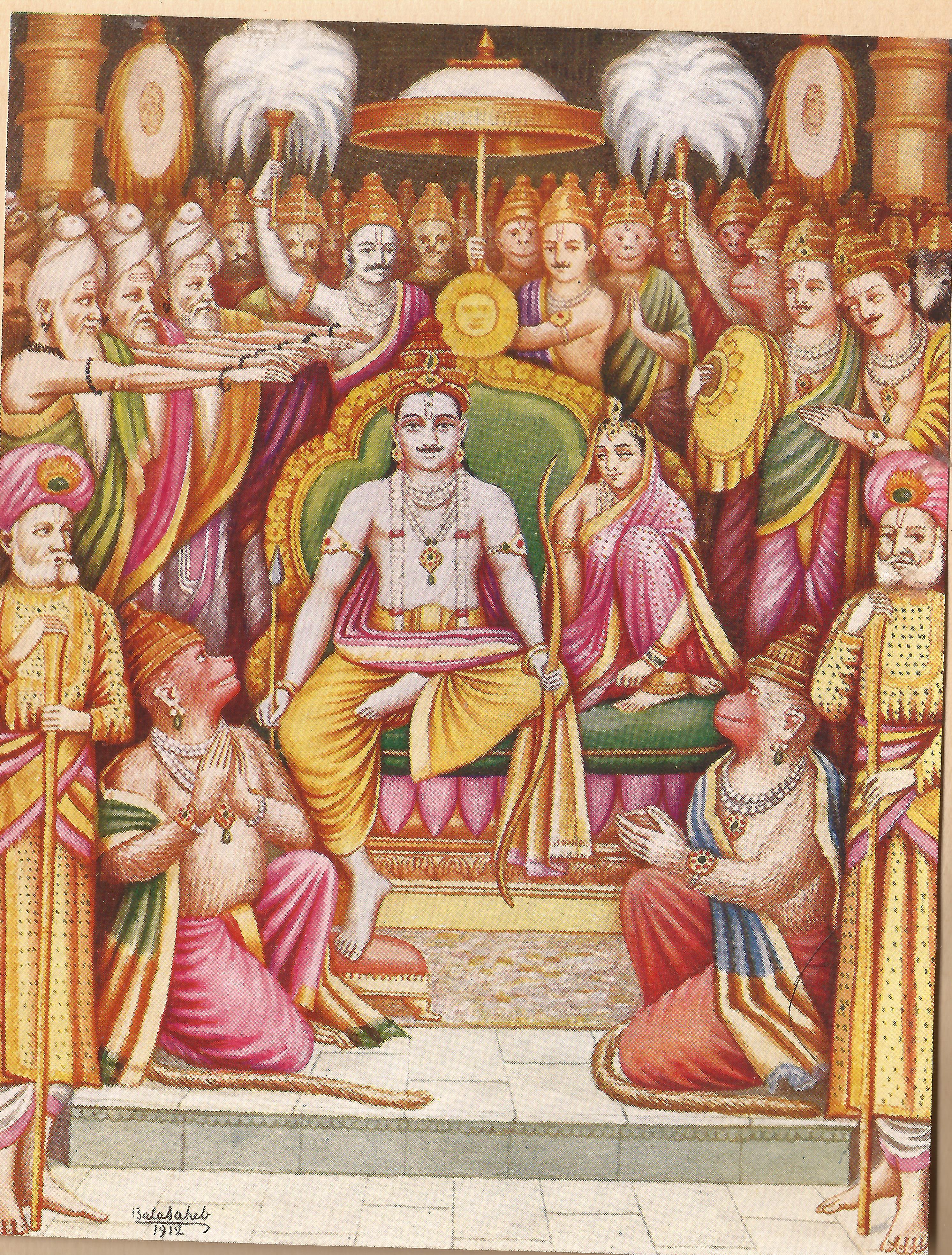
SAMPURNA RAMAYANA:-Yuddha Kanda Picture 12 (Ramayana Picture 60):-

Bharata told Sugriva to fetch water from four oceans for the coronation of Rama. Sugriva sent four monkeys with golden vessels. In the morning Rama and Sita took auspicious bath and saluted the queens, Guru Vasistha  and took their seats on the throne. Then the seers sprinkled the holy water on Rama and Sita. Vasistha placed the Jewelled Crown on Rama’s head. There were loud seers of joy. Rama presented costly jewels to all monkey chiefs. Sita presented Maruti with her pearl necklace and extolled his modesty and bravery. The Golden Age of India had begun. People were extremely happy. There was no fear. They had all the basic needs of life. Everyone had fulfilment.  Later Gandhiji also wanted to establish Rama Rajya in India. Ramayana sloka says that Rama’s story would last till the Sun and Moon shine on this planet. Loka Samastha Sukino Bhavantu!

Source :The Picture Ramayana by Balasaheb Pant and Bhavanrao Shrinivas Rao, Bombay, Year 1916 
Sundara Kanda in Pictures!

Sundarakanda1

Compiled by London swaminathan

Article No.1871; Dated 17 May 2015.

Uploaded in London at 20-37

So far you have seen Bala kanda, Ayodhya kanda, Aranyaka Kanda, Kiskindha kanda in pictures. Today I am posting the pictures of Sundara kanda from the Picture Ramayana book released 100 years ago.

SUNDARA KANDA PICTURE 1 (Ramayana Picture No.39)

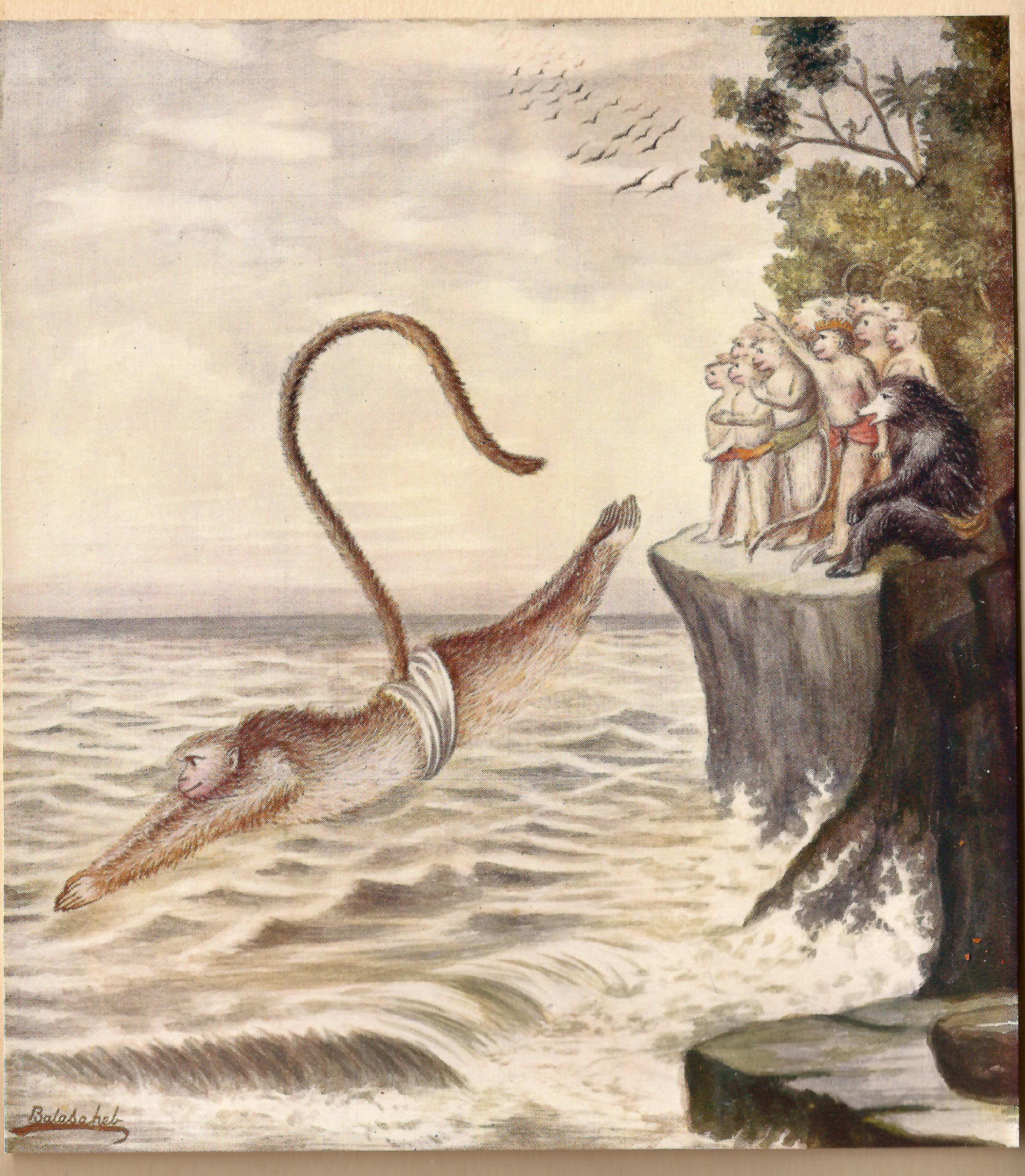
Reading Sundara Kanda of Valmiki Ramayana brings Good Luck, wealth, health and all auspicious things in the family such as Kalyana/Wedding, Birth of a child etc. Here is the first picture of Sundara Kanda. Having prayed to all Gods, Hanuman leapt with all his might from the top of Mahendra Hill. The monkeys on the shore raised a mighty shout of joy. On his way to Lanka, Hanuman met several hurdles including Surasa, Simhika and Mainaka Parvata. Surasa’s episode teaches us big problems can be solved by taking a different route. Simhika episode teaches us to kill the problem with a severe blow. Mainaka Parvata episode teaches us don’t take rest until you reach your target. Temptations must be avoided.

S kanda 2

SUNDARA KANDA PICTURE 2 (Ramayana Picture No.40)

Maruti/Hanuman entered the City of Lanka after assuming a small form. The Guardian Angel of the City stopped him. Hanuman gave her a big punch with his left hand and entered Lanka unobstructed.

SUNDARA KANDA PICTURE 3 (Ramayana Picture No.41)

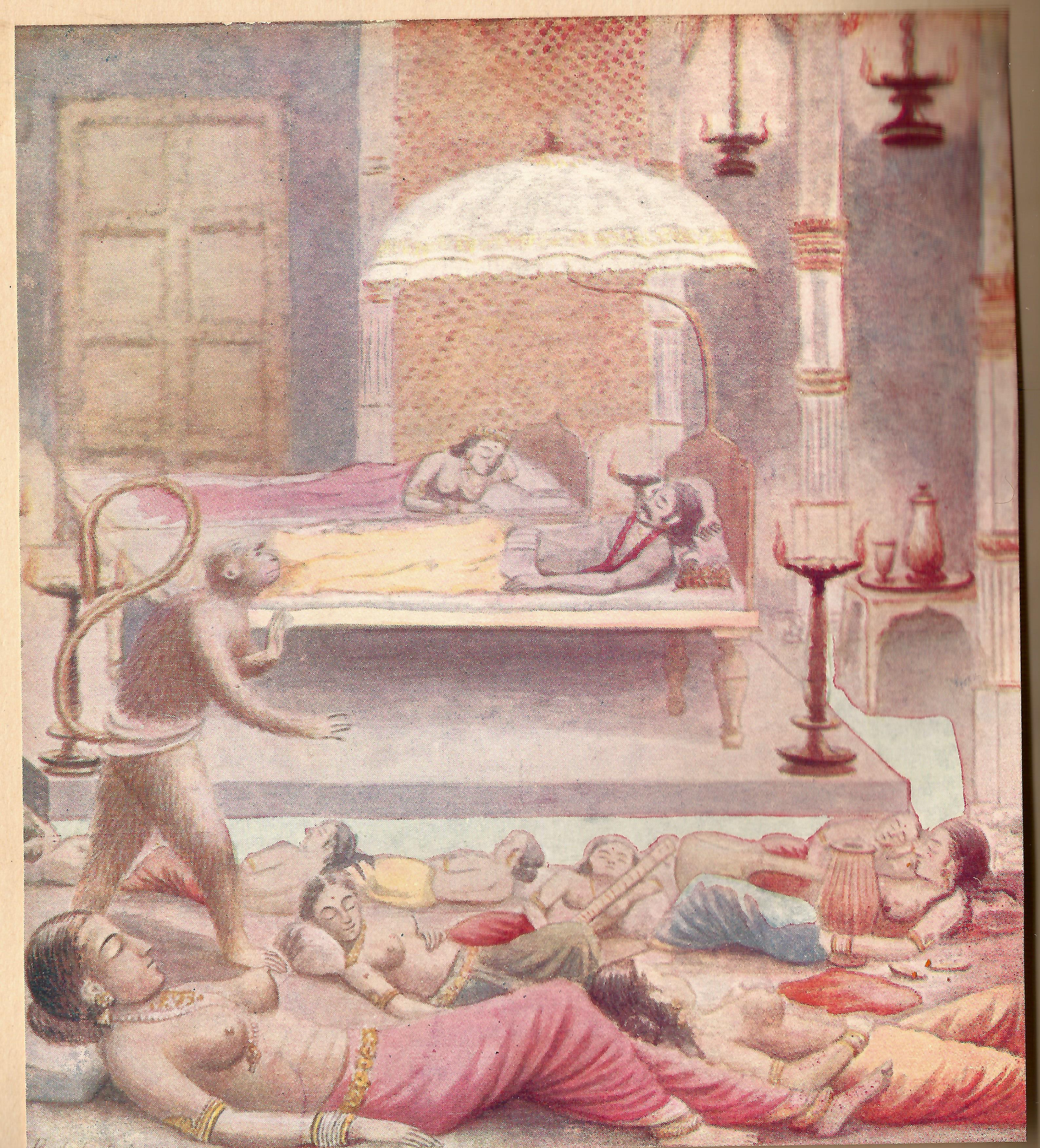
Maruti, after searching in vain many mansions, entered the palace of Ravana, and looked about for Sita in his harem, where he was sleeping in a bed with Mandodari, his wife. Many other women were lying with their musical instruments, which they played during the first part of the night. Maruti first mistook Mandodari for Sita, but soon found out his mistake when he remembered the description given by Rama.

S kanda 3

SUNDARA KANDA PICTURE 4 (Ramayana Picture No.42)

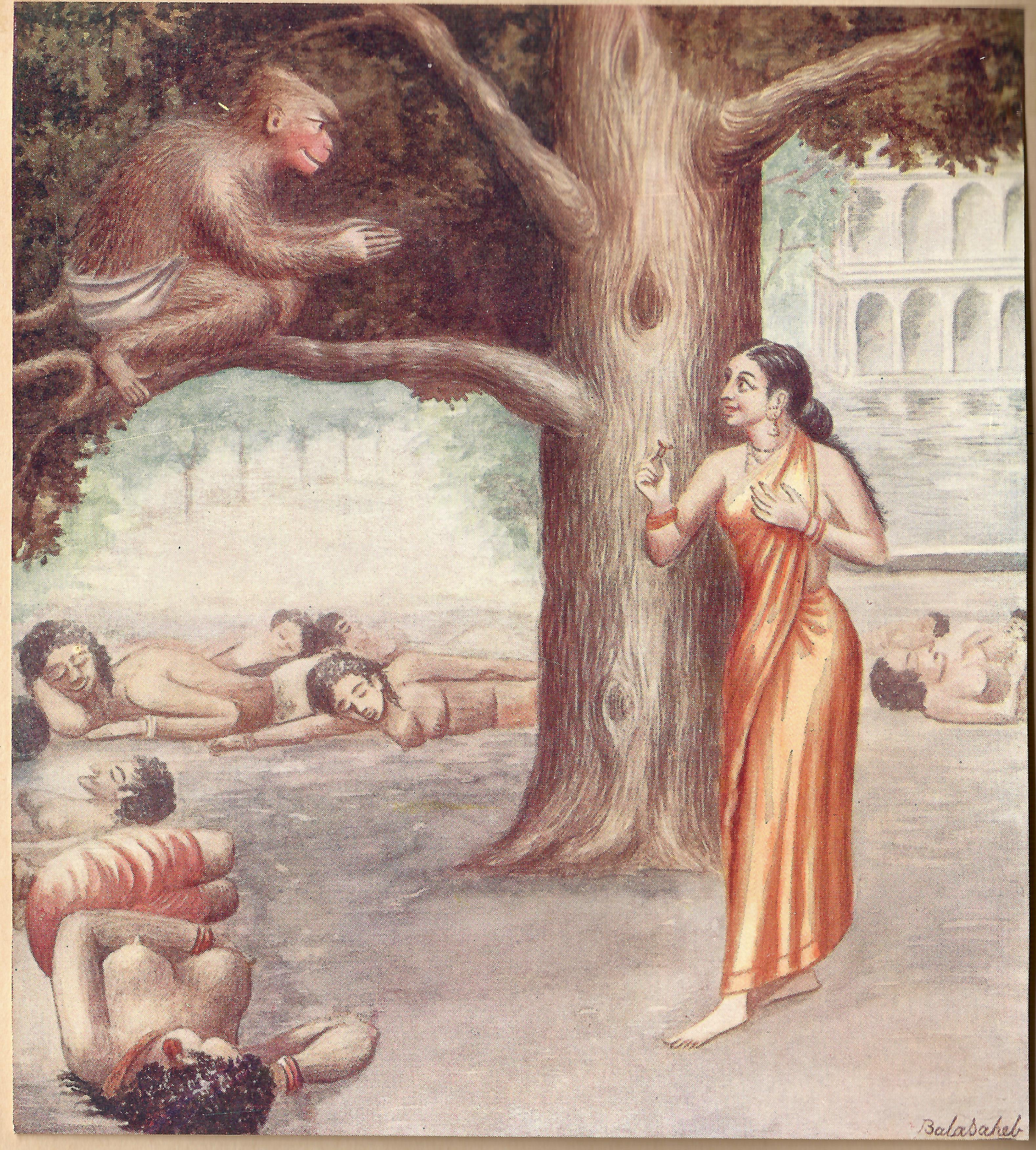
Maruti was extremely sorry that Sita could not be found anywhere in the palace. At last, utterly dejected, he entered Asokavana and found Sita there. She looked pale and pensive sitting under a tree. All the time she kept calling upon the name of Rama. Immediately Maruti concluded that it must be Sita. She was surrounded by fearful and horrid female demons. Maruti was overjoyed to have found Sita at last.

S kanda 4

SUNDARA KANDA PICTURE 5 (Ramayana Picture No.43)

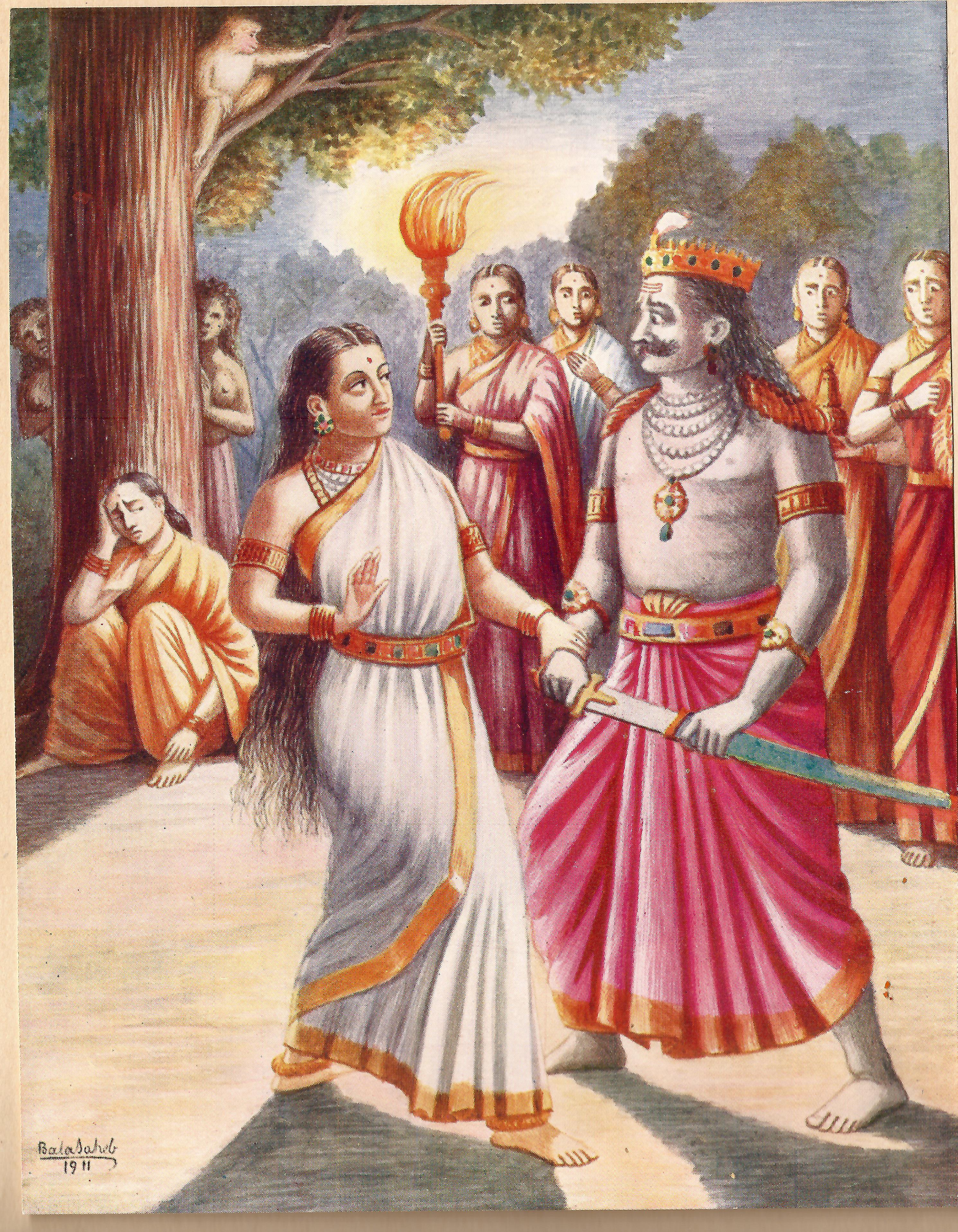
At dawn a noise came from the harem, at which Maruti hid himself in the thick branches of a tree. Just then Ravana arrived there with Mandodari and other women. Some were holding torches, and some chauries, while others carried wine jars. Ravana said to Sita, “Forget all about Rama. Submit to me. Rama being a man cannot have access here”. Sita answered,” boast not, you villain. Why could you not face Rama? Why did you steal me like a coward when Rama and Lakshmana were absent? Ravana was enraged at these words and drawing his sword rushed at her to kill her. But Mandodari stopped him and begged him to pardon the woman.

S kanda 5

SUNDARA KANDA PICTURE 6 (Ramayana Picture No.44)

When Ravana had left the place, the female demons guarding the place tried to induce and frighten Sita in many ways, but afterwards being tired went to sleep. When all was quiet, Maruti called told her, “I am a servant of Rama and the messenger of Sugriva, and am sent to find you”. Saying this, he gave her Rama’s ring. Sita was filled with joy to receive the ring from him and asked him to relate to Rama all her misery and to tell him to release her within two months. Then she gave Maruti a token to be presented to Rama. She gave him the jewel from her necklace.

S kanda6

SUNDARA KANDA PICTURE 7 (Ramayana Picture No.45)

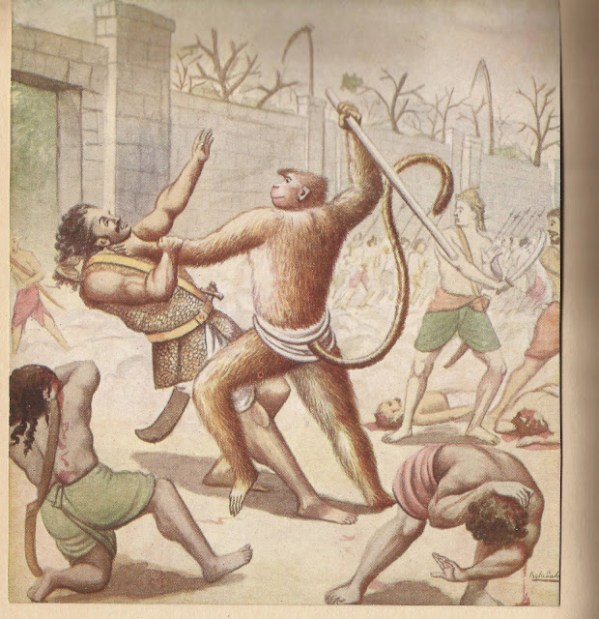
At the day break Maruti (Hanuman/Anjaneya) destroyed all the trees in the garden, except the one under which Sita was sitting. He killed all the forest guards who tried to stop him. Some of the female demons who were watching Sita sent an SOS to Ravana. He sent Jambumali with an army. Maruti slew him with one stroke of an iron rod and killed his army too. Hearing this, Ravana sent his son Aksha, but he too suffered the same fate. At last Indrajit skilfully caught Maruti in a snare and took him to Ravana.

SUNDARA KANDA PICTURE 8 (Ramayana Picture No.46)

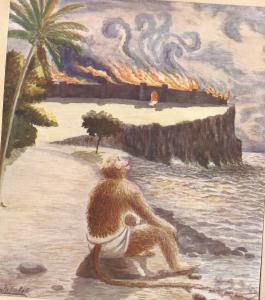
Ravana in anger ordered his men to wrap Maruti’s tail in rags soaked in oil and to ignite it. Maruti with his tail on fire was taken in triumph round the capital with drums beating along with him. Suddenly Maruti attained a small form and eluded the captors. Then with his ignited tail he flew from one house top to another and set all Lanka on fire. Women and children ran through the streets helter-skelter and within a short time the whole city was ablaze. (Whatever we read in today’s comics and stories such as Superman, Spiderman, Harry Potter are already in Ramayana, Mahabharata, Katha Sarit Sagara and Vikram and Vetal stories. All these stories have been in circulation for 2000 years in India!)

S kanda 8

SUNDARA KANDA PICTURE 9 (Ramayana Picture No.47)

Then going to the ocean, Maruti dipped his burning tail into the cool water. He was glad to see Lanka ablaze. But it suddenly occurred to him that Sita too might have been burnt in the fire that destroyed the Ashoka forest. So he rushed off to see and was glad to find her safe. He said to her, “Rama will soon come and kill Ravana and release you.” She then with tears in her eyes let Maruti go.

S  kanda 9

SUNDARA KANDA PICTURE 10 (Ramayana Picture No.48)

MARUTI leapt across the sea and came back to where the other monkeys were anxiously waiting for him. He related to them what had happened and they all returned in triumph to RISHYAMUKA HILL to see Rama. Maruti told Rama what he had done and placed the jewel given by Sita before him. Rama recognised it at once and caressed him. Then Sugriva made ready his vast army of monkeys and started with Rama and Lakshmana for the southern sea.

S kanda 10

Next comes Yuddha Kanda

Ramayana Eagle Seal in Indus Valley!

Picture of Indus Valley Eagle seal

Written by London swaminathan

Post No.1852; Date: 8 May 2015

Uploaded at London time: 5-52 am

Indian kings have been using seals from time immemorial. Chozas of Tamil Nadu used tiger seal and Pandyas the fish. There is a very interesting information in Kamba Ramayana who adapted Valmiki Ramayana in Tamil. Kamban mentioned Ramayana of three people in one of his verses in the Balakanda. The commentators say that the three Ramayanas mentioned by Kamban are Vaistha Ramayana , Bodhayana Ramayana and Valmiki Ramayana. Kamban mentioned that he follows the Adi Kavya of Valmiki. He specifically mentioned the greatness of Valmiki in one of his verses. He praised him as Great Divine Poet (Deiva Ma Kavi). But yet we have certain information that is not found in the Valmiki. He might have used the other two Ramayanas that are lost.

One of the interesting facts mentioned by Kamban is the EAGLE SEAL.

Purananauru of Sangam Tamil literature gives us two Ramayana episodes which are not found in Kamban or Valmiki. The squirrel episode given by the Azavars in Tamil is also not found in others. It shows that there were several facts which were missed by Valmiki and Kamban or we might have missed those verses.

Kamban, in Ayodhya Kanda, says

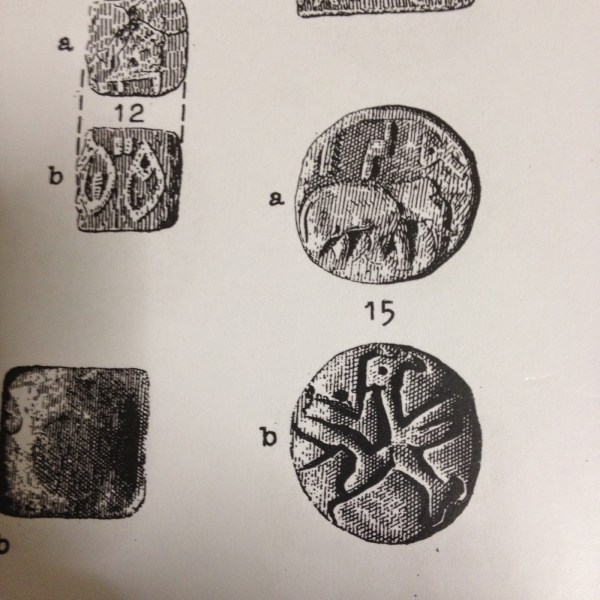
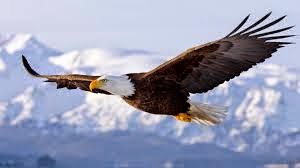
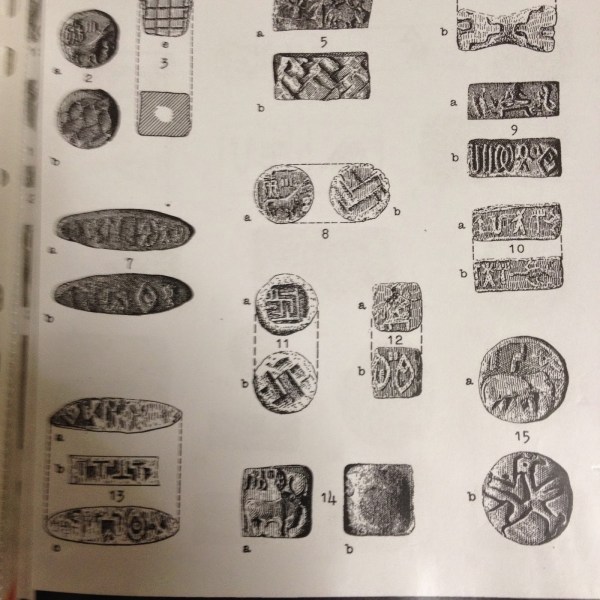
When Dasarartha sent the invitations of Raman’s Coronation to all the kings of Bharat (India), it was in gold leaves. And it had the EAGLE seal of Kosala country. Eagle seal is found in Indus valley. Eagle, falcon and vulture are mentioned in countless places in the Vedas. Eagle/Garuda plays a key role in the Hindu scriptures.

Eagle and Garuda are holy symbols. Garuda was the vehicle of Vishnu. Even the Greek king of North West India installed a pillar with Garuda on top and proclaimed him as the great devotee (Parama Bhagavata) of Vishnu. Eagle is linked with the Soma creeper and ambrosia/Amrta. In fact it is not the EAGLE BIRD, but the people who had eagle as their totem symbol like the Jatayus of Ramayana. No wonder we have eagle featured in Ramayana and discovered it in the Indus Valley civilization. Sangam Tamil literature says that Karikal Choza constructed Yaga Kunda in eagle shape which is already in the Vedas.

I have already written that the Indus Civilization was not monolithic and it had several peoples like today’s Hinduism worshipping various Gods. Gandharvas played a key role in the Indus Valley. They fought with Lava and Kusa and Rama’s brothers and lost. They fought with Duryodhana and captured him. Arjuna rescued him. I have shown elsewhere the strong link of Gandharvas to the Indus area. We know the names of the kings who ruled the Indus valley (Amabarisha, Jayadratha etc)

This eagle symbol and the mysterious Soma Juice Filter symbol found in hundreds of Indus seals confirm the Vedic connection to the Indus. In fact there was only one culture from the Himalayas to the Kumari in the south from the very beginning. Since it covered geographically a vast area with different climates and terrain, regional variations are there like every part of the world. There is no country in the world today without such regional variations. Even in small countries such as Britain, Spain and France that are equal to one state in India, we see various cultures.

So we must approach Indus Valley with this view. It had several types of people and several types of worship; may be more than one language!!!

Reference:–

Tamil Verse of Kamban is given below

வென்றி வேந்தரை வருக என்று உவணம் வீற்றிருந்த

பொன் திணிந்த தோட்டு அரும்பெறல் இலச்சினை போக்கி

நன்று சித்திர நளிர் முடி கவித்தற்கு நல்லோய்

சென்று வேண்டுவ வரன்முறை அமைக்க எனச்செப்ப

–அயோத்தியா காண்டம், மந்திரப் படலம்

Subham.

Kiskindha Kanda Pictures from Valmiki Ramayana

Written by London swaminathan

Post No.1850; Date: 7 May 2015

Uploaded at London time: 7-51 am

You have seen the pictures of Balakanda, Ayodhya Kanda and Aranya Kanda already in my previous posts. Now you can enjoy the beautiful pictures drawn one hundred years. Pictures are from Picture Ramayana book.

Maruti meets Rama: KISHKINDHA KANDA PICTURE 1

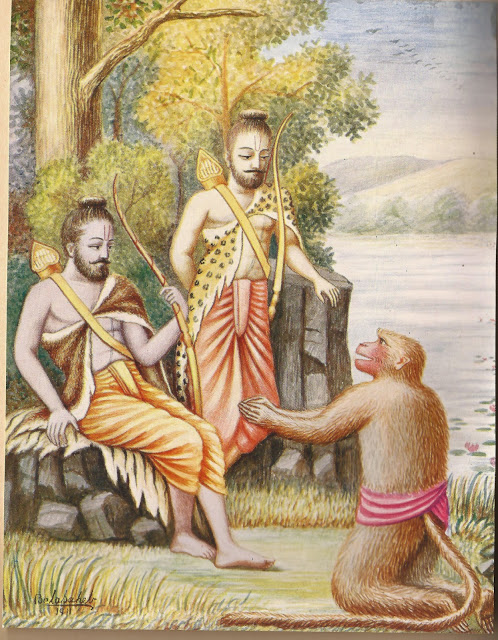
Rama and Lakshmana went to Lake Pampa. Sugriva was afraid to see two mighty heroes from the top of Rishyamuka hill. He sent Maruti (Hanuman/Anjaneya) to find out who they were. Maruti/Hanuman went on a fact finding mission (scouting) and found out they were good people. Immediately he told them the sad story of Sugriva whose wife was abducted by his brother Vali. Maruti wanted to form an alliance with him so that they could help Sugriva in the Rescue Mission. Rama who was on the same boat, readily agreed. Then Maruti took the brothers to Sugriva, the King of Monkeys.

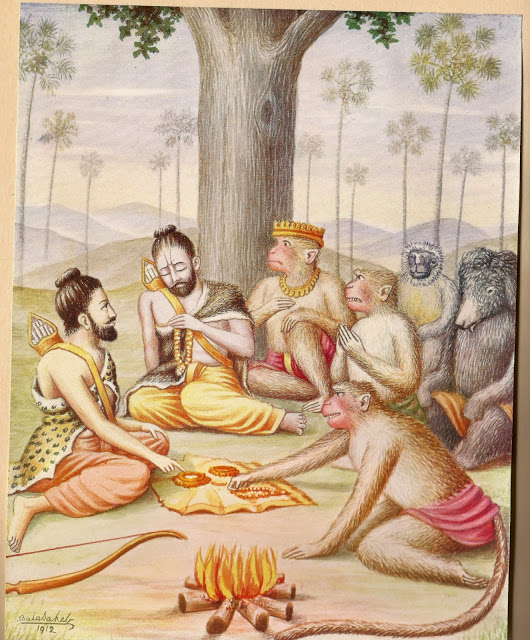
Rama – Sugriva Agreement:-KISHKINDHA KANDA PICTURE 2 (Ramayana Picture No.31) Rama and Sugriva took an oath, in the presence of sacred fire, to be friends even unto death and to help each other in all their undertakings. Then Sugriva brought the ornaments and garments cast down by Sita and showed them to Rama. He recognised them. Lakshmana could recognise Sita’s anklets. Rama promised Sugriva to kill Vali and make him the King of Monkeys again. Sugriva promised Rama to find Sita. An agreement was reached. In those days they did not sign any agreement but took an oath in front of Fire like we do during weddings nowadays. That is more than a written agreement.

KISHKINDHA KANDA PICTURE 3 (Ramayana Picture No.32)

VALI KILLED BY RAMA :-Once Vali fought with a demon named Dundubhi in a cave; Vali asked his friend Sugriva to guard the entrance but he did not come out for several days. Sugriva thought that Vali was dead and crowned himself as the king. When Vali killed Dundubhi and tried to come out, the cave was shut. He was angry and so dethroned Sugriva when he managed to come out. Sugriva took refuge in Rishyamukha Mountain which is a ‘No Go zone’ for Vali because of a curse. When Rama was ready to help, Sugriva asked Vali to come for a duel. Rama killed Vali from behind a tree. Lot of debates were done by scholars whether it was right to kill one hiding behind the tree. But the answer is in Vali’s final words. He himself praised Rama for upholding Dharma. After Vali’s death, Sugriva was crowned as the King of Kiskindha.

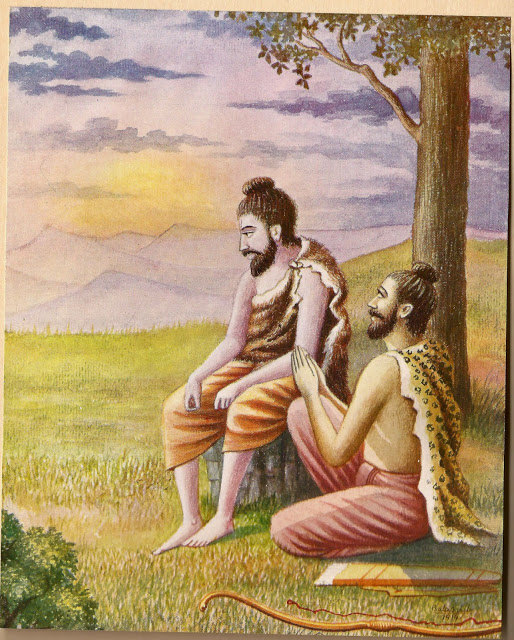
Sugriva’s Faithlessness:-KISHKINDHA KANDA PICTURE 4 (Ramayana Picture No.33) Sugriva stopped visiting Rama after he became the king. Rama was waiting for him at the Mountain Prasravana. He became very much worried about Sita. His brother Lakshmana consoled him.

Angry Lakshmana:-KISHKINDHA KANDA PICTURE 5 (Ramayana Picture No.34) Ordered by Rama, Lakshmana went to Kiskindha and reproached Sugriva severely for not honouring his agreement. Sugriva was enjoying life with his wives Tara, Ruma and others. When Lakshmana was angry, Sugriva hid himself behind Tara. She pacified Lakshmana who brought Sugriva into Rama’s presence.

GOLD JEWELS in RAMAYANA:-KISHKINDHA KANDA PICTURE 6 (Ramayana Picture No.35):Sugriva yielded to Rama and summoned all his force at Mount Prasravana. It was divided into four squadrons. Since they knew Ravana went towards South the elite commandos Maruti (Hanuman) and Angada were selected for the mission towards the south. Rama described the features of Sita to them and gave him his ring, which Sita could recognise easily. Women should note here that Indians used gold from time immemorial for good purpose. Sita threw her jewels for identification. Rama sent his ring for identification. Sita sent back her Choodamani. Kalidasa used this technique in two of his dramas.

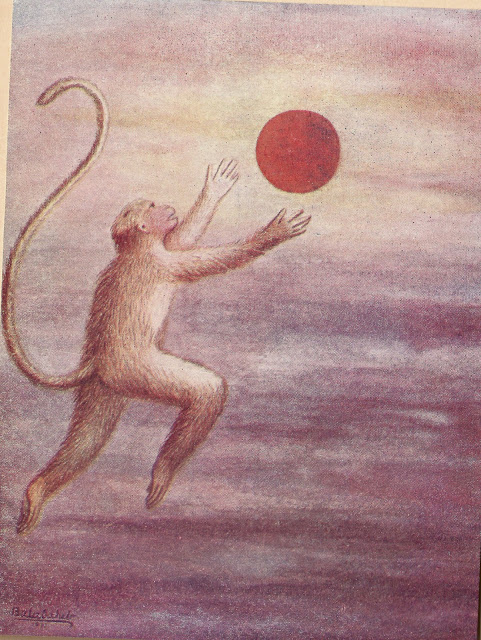
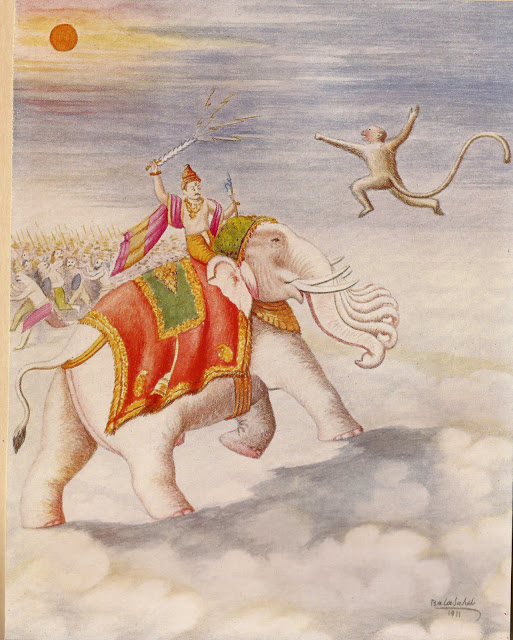
STORY OF HANUMAN-KISHKINDHA KANDA PICTURE 7 and 8 (Ramayana Picture No.36 & 37Maruti was born on a full moon day in Chaitra. When his mother Anjana went to get him some fruits he tried to catch the sun and got burnt. When Indra came to know about it he started attacking him. Then Maruti was hurt and he got a scarred chin. That is why he is called Hanuman. Anajaneya/Maruti/Hanuman is a SUPERMAN. All the comics such as Superman, Spiderman are based upon him. (Scientific explanation: On the day Maruti was born there was a Lunar eclipse followed by Rains. He fell down and broke his chin. Probably that led to the story of him catching the sun, fighting with Inda/thunder and Hanuman/fell and broke his chin)

Hanuman Selected–KISHKINDHA KANDA PICTURE 9 (Ramayana Picture No.38)

Hanuman, Jambavan and Angada encountered many difficulties and reached the shores of southern ocean. Jatayu’s brother Sampati came and told them that Ravana kept Sita at Ashokavana in Lanka. It was unanimously decided by the monkeys that Hanuman should cross the ocean and search for Sita. Accordingly Hanuman climbed the Mahendra mountain and prepared to cross the ocean. (Kiskindha Kanda finito. Next comes Sundara Kanda)

SUBHAM.

Arya Putra Ravana Spoke Sanskrit! Hanuman spoke Prakrta!

Written by London swaminathan

Research Article No.1848; Date: 6 May 2015

Uploaded at London time: 8-43 am


Sanskrit was spoken by all the well educated people in ancient India. Sanskrit was the language used as official language in all the Royal courts. Dance, Drama and Music used Sanskrit. All the Tamil dictionaries and ancient Tamil Nighandus give Sanskrit words as Tamil words!!! In short there is no ancient Tamil literature without Sanskrit words. They treated both Tamil and Sanskrit as their two eyes. The oldest Tamil book Tolkappiam has a lot of Sanskrit words. He even formulated rules to use Sanskrit words in Tamil literature. His book was certified and approved by the Acharya of Tiruvithankodu who had mastered the four Vedas. All these details are documented in literature.

Sanskrit was the link language throughout India. Ravana and Hanuman were great Sanskrit scholars. Ravana mastered Sama Veda as well. Tamil poets were well versed in Sanskrit. Kapila taught Tamil to a North Indian King named Brahma Dutta who ridiculed Tamil and made him to write poems in Tamil. His poems are included in 2000 year old Sangam Tamil literature. Kovalan, hero of Tamil epic Silappadikaram, helped a Brahmin woman who was crying in the street holding a letter written in Sanskrit by her husband. Kamban who adapted Valmiki Ramayana in Tamil was a great Sanskrit scholar.

Hanuman’s Hesitation!

Hanuman hesitated to speak Sanskrit thinking that Sita would mistake him for Ravana (Ramayana, canto 30)

Ravana and his spies spoke in Sanskrit. So when Hanuman went to Asokavana, he thinks:

“Shall I, a puny Vanar, chose

The Sanskrit men delight to use?

If, as a man of Brahman kind,

I speak the tongue by rules refined.

The lady, yielding to her fears,

Will think’ it’s Ravana’s voice she hears.

I must assume my only plan-

The language of a common man”

—Translated by T H Griffith

The language of the common man in those days was Prakrit. In Sanskrit dramas women (even queens), children, court jester spoke Prakrit. Kings, ministers and Brahmins spoke Sanskrit. Low characters (in dramas) like fishermen, policemen spoke in dialect.

In Sudraka’s Mrccakatika, the comedian (jester) says,“ I hate a woman speaking Sanskrit and a man singing”. It is followed until this day in Tamil and Hindi films. Kings or high officers or heroes speak a chaste language and low characters like village folk, comedians speak in dialect or colloquial language. We also speak a dialect or colloquial language at home but when we go to a stage and speak in front of a huge crowd we speak literal, posh language. So Hanuman also wanted to be very careful in choosing his language.

Aryaputra Ravana!

In the Ramayana Ravana and Vali were addressed as Arya while Kaikeyi was addressed as Anarya ( Non-Arya i.e. uncultured, uncivilized)

Door Keepers of Ravana’s palace addressed him Aryaputra (Yuddha Kanda, Sarga32, Sloka 35)

Vijayasvaryaputreti soabivadhya prasadya cha

Nyavaidayadanuprasam prahastam vaahiniipatim

In the following sloka of Kiskindha Kanda of Valmiki Ramayana, Vali was addressed as Aryaputra by his wife Tara

Supteva punaruththaaya aaryaputreti vaadinii

Ruroda saa patim drstvaa samviitam ptrunyudamabih

In the Sloka 14 of Sarga 36 of Ayodhya kanda, Kaikeyi was addressed as Anarya by King Dasaratha

Vahantam kim tudasi maam niyujya dhuri maahite

Anaarye krtyamaarangam kim purvamupaarudhah


Writing during Ramayana Days

We know that Hanuman was well versed in Nava vyakarana. All the monkeys wrote Ram on the stones and they started floating in water. Rama gave his ring to Hanuman as a token to be shown to Sita. His name was engraved on it. Hindus used scripts, but sparsely.

T H Griffith’s translation of relevant Valmiki verse is as follows:

He gave the ring that bore his name,

A token for the captive dame,

That the sad lady in her woe

The missive of her lord might know.

‘This ring’, he said, ‘my wife will see,

Nor fear an envoy sent by me…’

Since writing was prevalent in ancient India, Asoka installed hundreds of rock edicts in Brahmi script from Afghanistan to Kancheepuram in Tamil Nadu (Most of the edicts including Kanchi’s) were destroyed by the Muslim invaders and the monsoon weather. Brahmi inscriptions were available up to the Southern Sri Lanka 2600 years ago!!

Pictures are taken from various websites; thanks.

Ramayana came first; Mahabharata came later!

Written by London swaminathan

Research Article No.1847; Date: 5 May 2015

Uploaded at London time: 16-08


Which came first Ramayana or Mahabharata? It is a question debated for long. Hindus believe that Ramayana happened in Treta Yuga and Mahabharata happened in Dwapara Yuga. That means Ramayana happened well before Mahabharata. But the question arose because of Parasurama and a few others who figured in both the epics. How is it possible if both the epics are Yugas (eras) apart?

The answer is very simple. There were more than one Parasurama.

Let us look at this issue in more details. There are two questions: Which one happened first? Which one was written first?

1.Ramayana happened first and was written first. Mahabharata has abridged Ramayana in the Ramopakhyayanam. Since Mahabharata (here afterwards abbreviated as Mbh) included lot of old stories Vyasa did not want to miss it. Like he gave other stories, he gave Ramayana in short. It is not the other way round.

2.The word Arya is used in its archaic sense in an archaic way in Ramayana. Sita addressed Rama, Hey Arya! and Ravana’s palace guards address him as Hey Arya (Respected Sir, or Cultured man)

  1. In the Ramayana we come across many ‘not so civilized’ tribes such as the Monkey people (Hanuman), Eagle (Jatayu) People, Bear (Jambhavan) People. These may be their totem symbols or they had such tattoos for identification and recognition. We see such customs among forest tribes around the world. During Ramayana days the forests were full of cannibals called demons. Mahabharata has more urban areas and urban culture. Very rarely we come across tribes or cannibals (except Bakasura). Both the cultures are poles (Yugas) apart.

4.Hanuman came across Mainaka Parvat, Simhika, Langini and other hurdles on his way to Lanka. We don’t see such things or similar hurdles in Mahabharata.

5.Parasurama fought with Karta Veerya Arjuna. Mahabaharata Arjuna came several hundred years after Karta Veerya Arjuna, according to historians. So that Parsurama could not have taught Karna martial arts. Some one bearing similar name or someone was called  Parasurama for his Anti Kshatriya stance. Throughout our Puranic literature this confusion exists. There were several Parikshits, several Janamejayas etc. But Pauranics confused the public by saying all are one!

6.In Ramayana we come across some old phrases such as Dasaratha ruled for 60,000 years, Dasaratha had 60,000 wives. The meaning is “a lot of”. This archaic expression was not used in Mahabharata (Mbh).

7.Rama –Ravana battle was like an old style battle. No military formations etc. Whereas Mbh yuddha was fought on military formations. The result of the battle was decided by such formations. Abhimanyu was killed because of this. Moreover the army was divided into 7 and 11 divisions and each one had its commander. In Ramayana days they were never organised on similar lines.

8.Lava and Kusa “sang” Ramayana ballads. Valmiki taught them the ballads. Valmiki himself was praised as a Koel (Vande Valmiki Kokilam). So Ramayana evolved out of ballads like the Odyssey and Illiad of Homer. Whereas Mbh was “written” by Vyasa. There is a big time gap between the ballad period and writing period.

9.Some people were misled by the archaic style of Mahabharata and simple style of Valmiki Ramayana. Vyasa was well versed in the Vedas. In fact he was the one he compiled all the Vedic hymns fearing that it may be lost once and for all. But for him we would have got anything Vedic. Moreover he knit all the existing older materials into Mbh. To make the style uniform he used archaic style. Valmiki being the Adi Kavi—the First Poet—sang in the Anustubh metre for the first time in Sanskrit (apart from the Vedas).

  1. The message of Ramayana is very simple: Be honest, Speak the Truth, Obey your parents, Don’t desire for another man’s wife. Being Treta Yuga people were 50 percent to 75 percent good. But Mbh is full of intrigues, conspiracies, infightings in the family, hatred and jealousy. It was nearer to Kaliyuga, the Dark Age. So we have lot of moral teachings.
  1. Ramayana days were nearer to Upanishadic age. So there was no need for philosophical teaching. Whereas Mbh has the Bhagavad Gita which is the gist of all major Upanishads.

12.Ramayana has 24,000 slokas. When Lava and Kusa sang the ballads it might have been done in a different way; but the story line did not change. Mbh is the largest book in the ancient world with 100,000 slokas. It was that big even in the first century BCE. Lot of scholars have bluffed that it slowly grew to the present level. No scholar could show until today what the original was and what snowballed later. In spite of computers and other modern techniques they could not show it. The fact of the matter is Vyasa compiled everything available at his time. That is why we even see some contradictions in the moral teachings in it. The very word VYASA means a compiler, an essayist.

  1. Ramayana has 300 different versions because it was very old. The longer it travelled it, more and more varied it became. Whereas Mbh has got only one version throughout South East Asia. Ramayana has different versions from country to country in S E Asia. This shows the length of gap between the two epics.
  1. Mbh has got at least 29 countries represented in the great war. Ramayana has not got that many political divisions. We knew even the names of lots of kings of Mbh time. Whereas Ramayana gives only four or five kings names in the entire subcontinent.

15.We could identify many of the places mentioned in Mbh whereas we did not even know where Kiskidha was. We could only guess, but no written or literary records for Lanka or Kiskindha. Mbh places have been continuously repeated in several written or literary records.

  1. Mahabharata has many stories woven into the main Pandava-Kaurava conflict. Whereas Ramayana has only one simple story. It shows that it was the first one.

17.We have highly developed subjects/sciences in Mbh; but Ramayana did not deal with medicine or astronomy or astrology in the same way.

18.In short we see more advanced civilization in the Mbh and a very simple culture in Ramayana.

Since Parasurama existed at the time of Karta Veerya Arjuna he could not have lived at the time of Mahabharata Arjuna to teach martial arts to Karna.

I will deal with more minute details in another article.

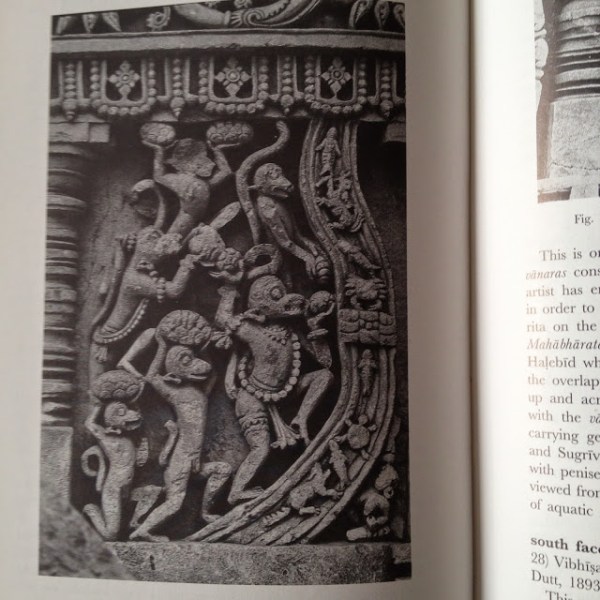
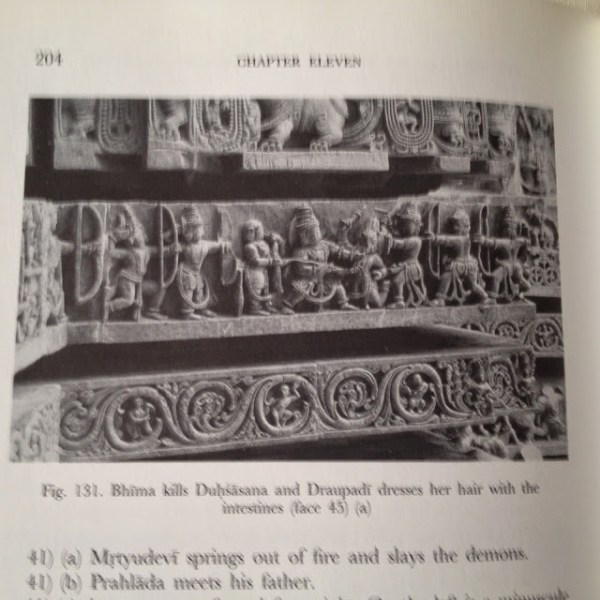
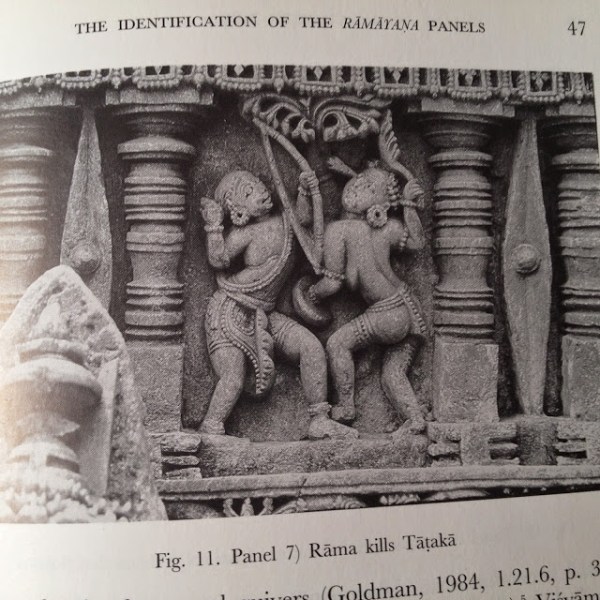
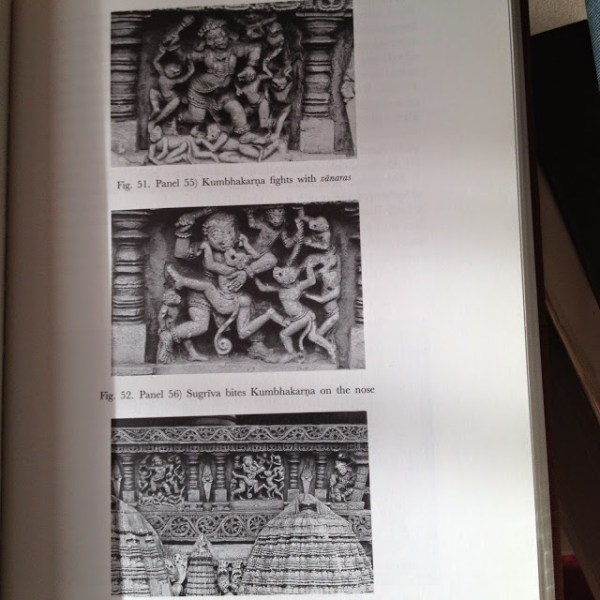
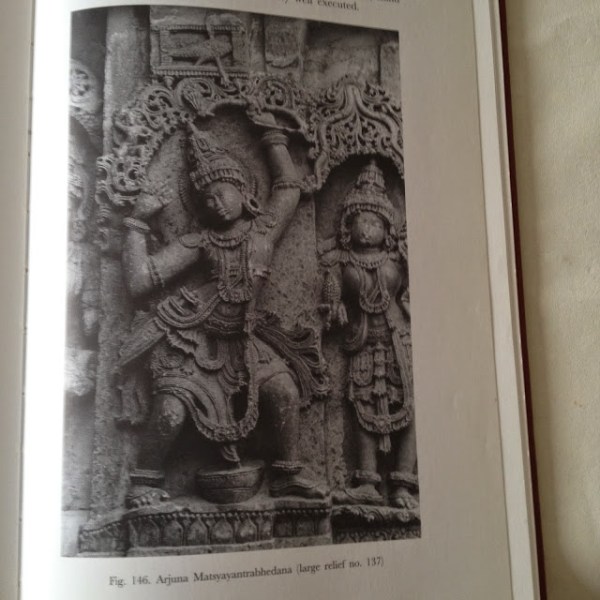
Pictures re used from the book “Epic Narratives in the Hoysala Temples” by Kirsti Evans;thanks.

ARANYA KANDA PICTURES FROM VALMIKI RAMAYANA

Compiled by London Swaminathan

Article No.1836;  Dated 29 April 2015.

Uploaded at London time 18-40

So far I have posted Balakanda and Ayodhya Kanda pictures. Today I am posting Aranya Kanda (Chapter on Forest Residence) pictures. With this the number of pictures posted stands at 29. We have got forty more pictures from The Picture Ramayana published 100 years ago.

Viradha Killed: Rama and Lakshmana killed many demons in the Dandaka forest, all in self- defence. When demon Viradha attacked them, they attacked him back and buried him. Dandaka forest was frequented by lot of demons. Demons are nothing but uncivilized cannibals. They come out during night times and attack seers in the ashramas/ parnasalas (dwelling places of sages)

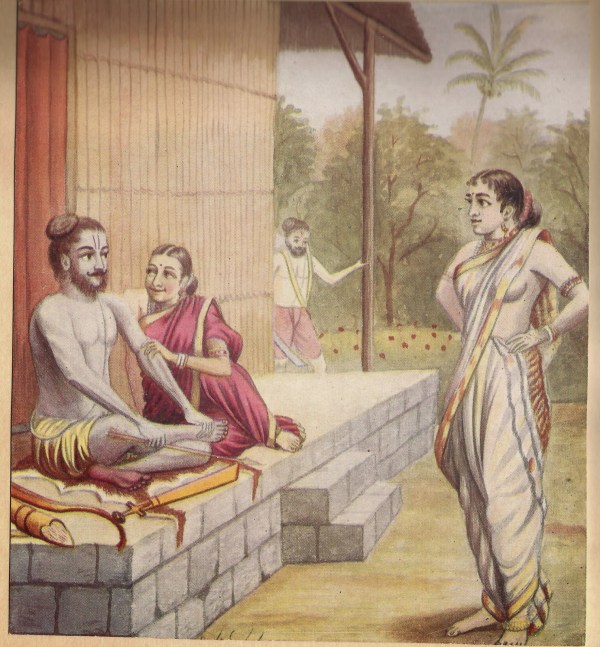
Surpanakha meets Rama:-Rama took the advice of great seer Agastya and built a hut on the banks of River Godavari. Shurpanakha, who was the cousin sister of Sri Lankan King Ravana went to Rama and said, “I have fallen in love with you; so I pray you to take me as your wife”. At this Rama’s wife Sita began to laugh, which excited the anger of Shurpanakha . She went to bite sita. Then she went to Lakshmana (Rama’s brother) and he cut off her nose and ears and drove her away. ( People from Sri Lanka can easily travel to India by using South West Monsoon. I have explained how Sri Lankan King Devanam Priya Tissa’s ambassadors reached Patna in Bihar to meet Emperor Asoka within two weeks. Please read my articles on Mahavamsa in my blog. Sri Lankan Rakshasas frequented the coastal areas and used them as their playing fields)

Khara, Dushana killed: Shurpanakha, wailing bitterly, went to her brothers Khara, Dushana and Trishira and reported that her nose and ears were cut off by Lakshmana. Immediately they attacked Rama and Lakshmana. Rama instructed Lakshmana and Sita to hide in a cave nearby, attacked the demons and killed all of them. Shurphanakha fled to her cousin Ravana in Sri Lanka. That cunning woman gave Ravana a different story!

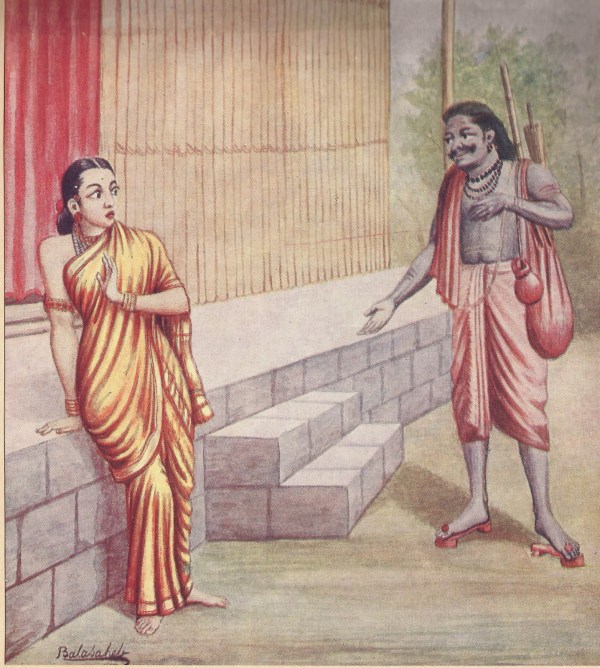
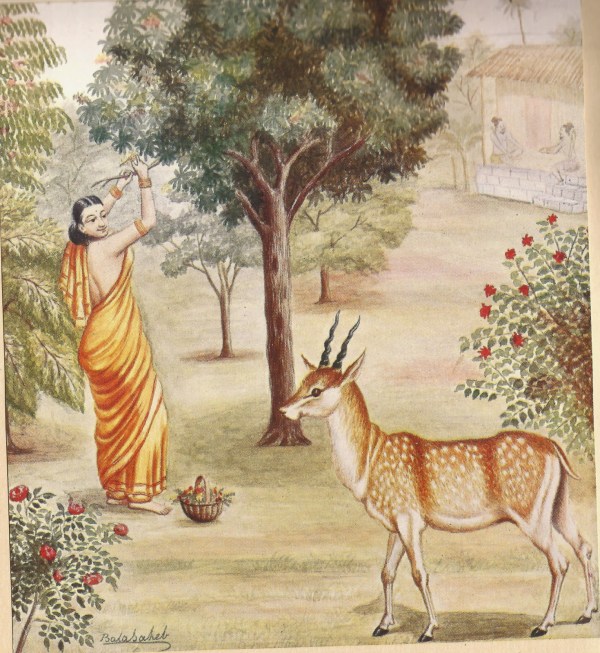
Story of the Phantom Deer: Shurpanakha knew Ravana’s weakness. Though he was well educated, 50 percent Brahmin and fifty percent demon by birth, he was after women. A king can marry as many as he wishes in Hindu tradition. But he can’t touch another man’s wife. Shurphanaka misled him and inflammed Ravana’s passion by describing Sita’s marvellous beauty. Ravana asked Maricha to dress like a deer with golden deer skin and present himself there to divert Sita’s attention. Demons are notorious for cunning devices like this. Sita fell a prey to Ravana’s designs and asked Rama to chase it. Rama went after the PHANTOM DEER.

Maricha, when wounded by the arrow of Rama, cried “Help, Lakshmna, Help” to fool Sita and Lakshmana. Rakshasas are always cunning and cheating. They will try to achieve anything by hook or crook. Sita heard it and asked Lakshmana to help Rama. He told her that it was a false alarm; but Sita reproached him saying, “You want Rama to die so that you can marry me yourself”. Lakshmana wept bitterly at this unbearable taunt. He went out to see where Rama is. At that time Ravana appeared like an ascetic and asked her for food. When Sita crossed the danger line (which Lakshmana drew instructing her not to cross), Ravana abducted her. Vinasa Kale Vipareedha Buddhi!

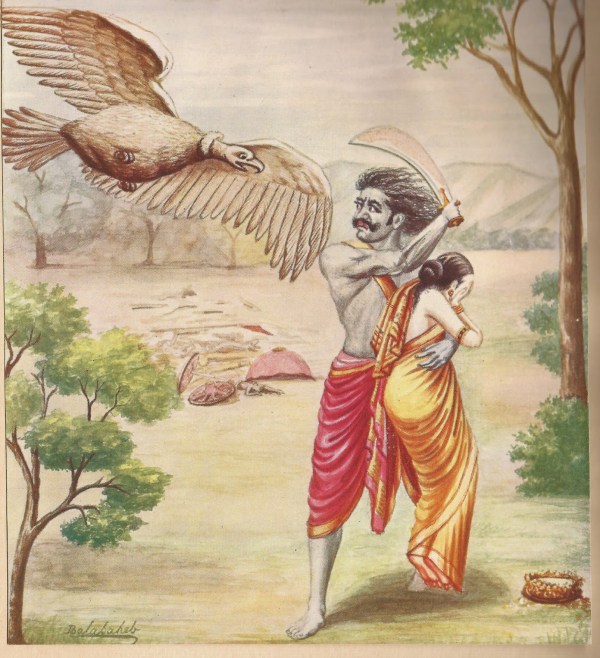
JATAYU ATTACKED: Jatayu, the king of the vultures, saw Sita carried away by Ravana. He attacked Ravana, but Ravana drew his sword and cut its wings. Ravana was also wounded by Jatayu’s attack. He flew away to Lanka in his flying chariot .( I have explained elsewhere in my research papers that Jatayu, Jambhavan, Hanuman are not Eagles or Bears or Monkeys. They were hill tribes with totem symbols. They were called Eagle people, Bear people or Monkey people because of their symbols or tattoos. Since Ramayana was from a different Yuga period, people, particularly Pauraniks, lost touch with reality and dramatized everything).

When Rama’s arrow pierced Maricha, he assumed his true form i.e.the phantom deer became Maricha again. Rama was angry because Lakshmana came leaving Sita alone. But Lakshmana explained to him that just because Sita panicked he had to come. When they came back Sita was not there. Jatayu told them that Ravana carried off Sita.

When Ravana carried Sita first on his shoulders and then in the chariot, she threw some of her jewels towards the monkeys. Women are intelligent. They wanted to leave some clue at the crime scene so that the criminal will be caught.

Aranya Kanda Picture 9:  Rama and Lakshmana went towards south in search of Sita. Jatayu told them that Ravana went towards south. One day they came across a terrible demon named Kabandha. His mouth was in his mouth and he was one eyed. His thighs joined to his belly. When he attacked Rama and Lakshmana, they killed him. When they started cremating him, a celestial being arose from the fire. He was a spirit under curse and now released from the curse he was happy. He instructed them to go to Rishyamuka Mountain where they can get the help of Sugreeva, the king of the Monkeys (monkey tribe).

Aranya Kanda Picture 10

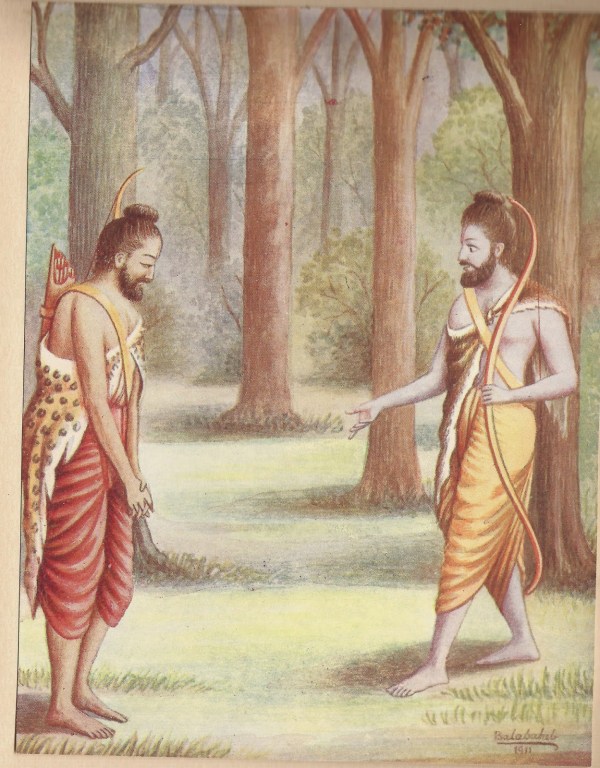
SABARI SALUTING RAMA: Rama was the first king in the world who demolished the caste and class restrictions by embracing all hunter tribes of Guha , monkey tribes of Sugreeva , hill tribe of Sabari , Eagle tribes of Jatayu, Bear tribes of Jambhavan, Rakshasas like Vibhishana. Monkeys, Eagles, Bears are actually tribal symbols; they are not animals and birds. We can’t see anyone in the world history who embraced different tribes and made them feel kith and kin. He was the one who gave back the kingdoms to Angada and Vibhishana. This is also unique in world history. We seldom see such a friendly gesture.

Next we will look at Kiskindha Kanda.

Ayodhya Kanda of Ramayana in Pictures

Compiled by London swaminathan

Date: 20th April 2015; Post No: 1815

Uploaded in London at 15–12

I have already posted the pictures from Balakanda of Valmiki Ramayana. Today I am posting all the pictures from Ayodhya Kanada of Ramayana. Source: Picture Ramayana by Bhavarao Shrinivas Rao, Bombay, Year 1916
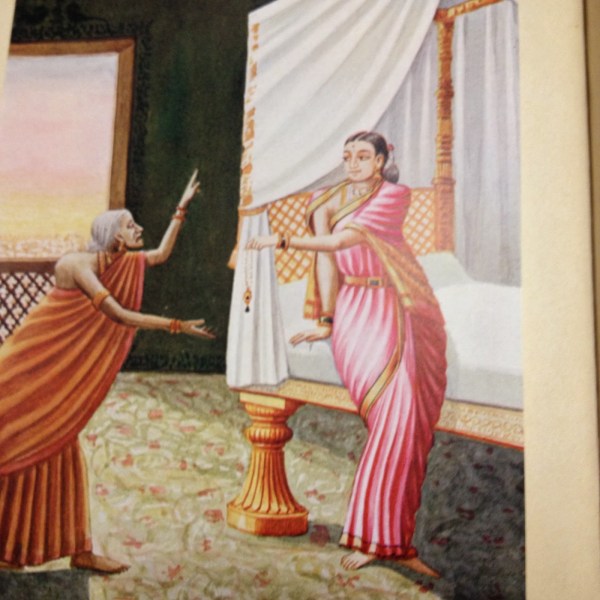
Manthara, a hunch back woman is giving wrong advice to Kaikeyi, the queen in the picture.When Manthara told that Rama is going to be the next king, intermediately Kaikeyi gave her a gem studded necklace, for giving good news.But Manthara threw it and told Kikeyi that Bharata should be the king, otherwise Rama woud endanger the life of Bharata. This poisoned Kaikeyi’s mind. At that time, Bharata went to Kekaya country which is in Afghanistan-Iran border. In those days handicapped people like hunch backs, very short people, lame people were employed in the palaces. Manthara was one of them.

Pretending Kaikeyi: After Manthara poisoned Kaikeyi’s mind, she wrapped herself in an old soiled robe, threw away her jewellery into the corner of the room. When Dasaratha asked for the reason, she told him that he must fulfil her wish. When Dasaratha said Yes, I gave you two boons. Ask anything you want. But she threw bombshells which Dasaratha never expected 1.Rama should go to forest for 14 years 2. Bharata should be crowned as the king.King Dasaratha was upset and summoned Rama. ((Kaikeyi was a brave woman and she took Dasaratha to warfront in her chariot several years back. Dasaratha won the war against Shambara and gave her two boons (wishes) . Such a beautiful woman suddenly changed into a rude adamant queen)).

Kaikeyi and Rama: Rama was summoned by Kaikeyi. Dasaratha told him that Kaikeyi tricked him and trapped him. Kaikeyi told that according to the two boons granted by Dasaratha Rama should go to the forest for 14 years and Bharata must become the king. If he did not obey it, Dasaratha would go to hell for violating the truth. Hinduism is based on Truth. Rama is Embodiment of Truth = Satya Dharma Parakraman. Rama said, Mother,I shall start for the forest at this very moment.

கோசலியிடம்+விடை.JPG (1600×1600)

Good Bye to Kausalya: Rama went to his mother KAUSALYA to get permission to go to the forest. She is a believer is astrology. At that time she was doing some puja (offering) to avert the evil influence of stars and planets. When Rama broke the news she was very upset. Then she said, Go ahead, Dharma (Righteousmess) will protect you. Lakhmana was dead angry. He asked Rama’s permission to kill everyone so that he can place Rama on the throne. But Rama calmed him down and then allowed Lakshmana to come to forest with him for FOURTEEN YEARS! What a sacrifice! Lakshmana was also newly married! But Rama was his God. He sacrificed everything for Rama! This is why Ramayana is timeless. Full of sacrifices: Bharata, Sita, Lakshmana, Rama = all embodiments incredible virtues. Nowhere in the world can one see such people of sacrifice. 1000 times greater than the sacrifice of Sydney Carton of Tale of Two Cities of Charles Dickson.

Rama comforts Sita: When Sita saw Rama without Royal insignia, coming towards her apartments, she was surprised. When Rama told her that the king had banished him for fourteen years, she wept. Rama told her to look after his mother. But she insisted that he should take her to the forest. Rama agreed after a long discussion where he explained all the hardships in the forest.

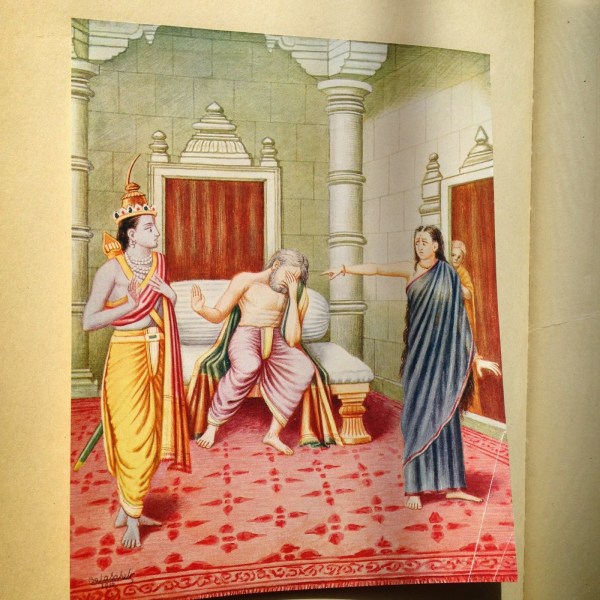
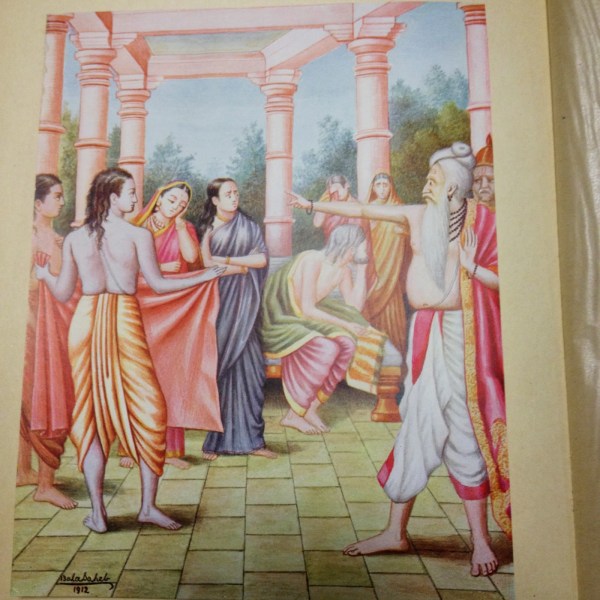
Vasistha curses Kaikeyi: Rama was given bark garments by Kaikeyi. But Sita did not know how to wear them. Dasaratha expressed his last desire: Let Sita go in her silk garments. Kula Guru Vasistha was very angry with Kaikeyi and he cursed her. “This device of yours will never lead to your welfare” – said Vasistha to Kaikeyi.

Rama goes to forest:- Sumantra , the minister, brought the chariot. Rama with his brother Lakshmana ,wife Sita mounted the chariot and set out to forest. All the citizens followed his chariot. Some criticised Dasaratha, some abused Kaikeyi, while others blamed innocent Bharata. When the chariot reached the banks of River Tamasa, Rama begged to the citizens to go back to Ayodhya.

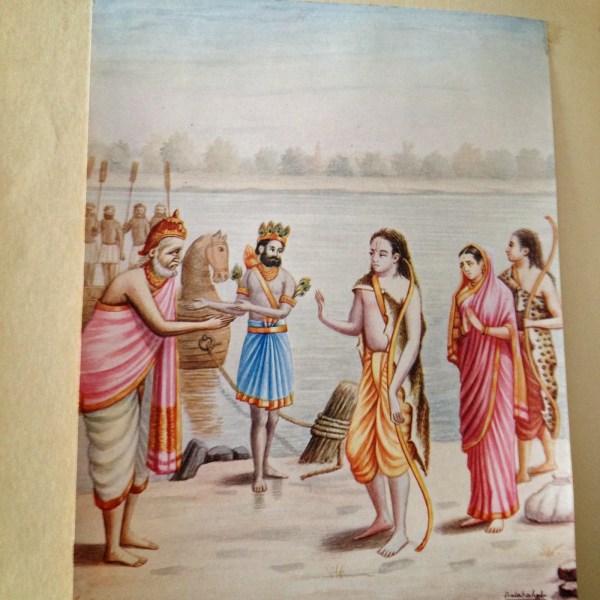
Good Bye to Sumantra:– Rama left Ayodhya. Guha, King of the hunter tribe (Nishadas) helped them to cross the river. Rama instructed minister Sumantra to take good care of the king. Meanwhile King Dasaratha died of grief. Vasistha brought back Bharata back to Ayodhya. But Bharata rebuked his mother and flatly refused to to occupy the throne. He set out on foot to see Rama. Probably the first organised Padayatra in history!! With him went three queens, Vasistha and the VIPs of the country.

பரதனுக்கு்பாதுகைக.JPG (1600×1600)

Bharata meets Rama at Chitrakuta, begged him to return to Ayodhya. Rama said to him that he wanted to keep his promise. Then Bharata begged, with tears in his eys, to allow him to take at least the sandals of Rama to Ayodhya. Rama consented. Bharata placed them on the throne and ruled from outside Ayodhya for fourteen years. This is a unique in World History!! Shoes on throne representing the king! Very Unique!! From that day onwards the sandal worship started in Bharat. Even today we worship the sandals of great people.Buddhists also followed it.

Next comes Aranya Kanda.

Picture Ramayana: Bala Kanda

ramayan1

Written by London swaminathan

Post No. 1794; 12th  April 2015

Uploaded from London at   17-41

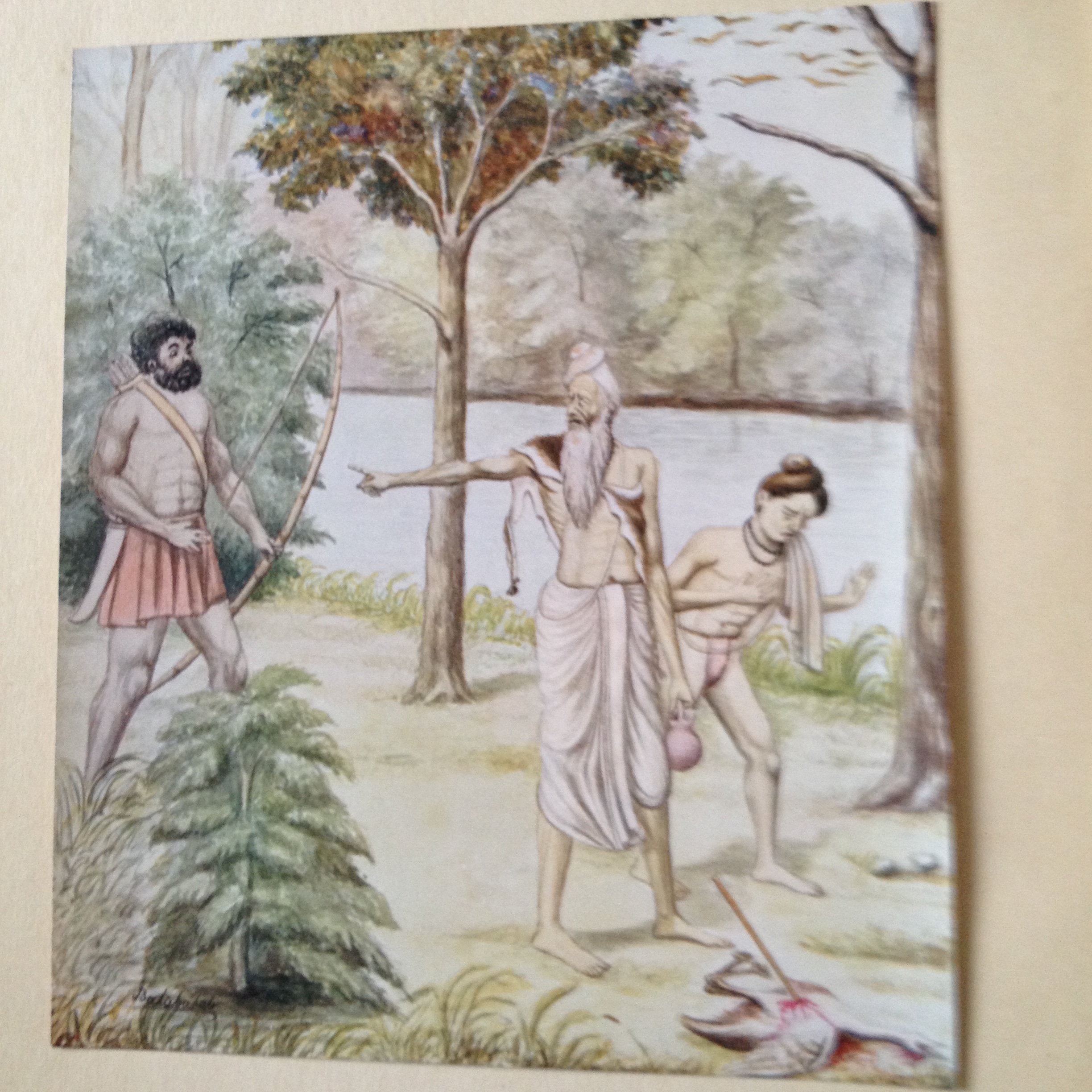
ORIGIN OF RAMAYANA: Sage Valmiki went to Tamasa River to bathe. He saw a hunter shooting two birds in love. One of them died. When Valmiki cursed him he burst into poetry in Anustubh metre. Brahma appeared before him and asked him to sing the glory of Rama. Thus came Ramayana, a timeless epic in Sanskrit with 24,000 slokas/couplets.

ரிஷ்யஸ்ரீனக

Dasaratha was advised by the seers to perform Puthra Kamaeshti Yajna to get children. They advised him to get the great sage Rishya Sunga to do it. He sent courtesans to bring him. Picture shows Rishyasrnga. Rishyasrnga means the seer with a horn. He had a projection on his head like a deer. There is lot of psychology and biology in his story. Sex is a human instinct is the message. Some People were born with some deformities in the Ramayana days. We know Ashtavakra (Eight Angled) from the Upanishads and Surpanaka (deformed ear like a winnowing pan) from Ramayana.

IMG_2767

Dasaratha did Putra Kameshti Sacrifice (Yaga) with Rishyasrnga. On the last day of the Yaga, a Spirit appeared from the altar and gave Dasaratha a pot containing an elixir. After partaking this celestial food, Kausalaya gave birth to Rama, Kaikeyi to Bharata and Sumitra gave birth to the twins Lakshmana and Shatrugna.

IMG_2768

Visvamitra came to Dasaratha and asked him to send Rama with him to fight with the demons. Dasaratha hesitated, but his Kula Guru Vasishta told him to send him. Rama and Lakshmana went with Visvamitra who taught them all old Puranic stories and gave them training in ultra modern arms. Not even America and Russia are able to find such arms until today. They are activated by sound. The vibrations will kill thousands at a second. More powerful than Brahmastra, the Indian nuclear weapon.

IMG_2769

Sage Visvamitra (meaning Friend of the World) took Rama and his brother through thick tropical rain forest. Tadaka, a demoness, appeared before them. Visvamitra ordered him to kill her. Rama refused saying that Hindus can’t kill women even in the battlefield. Then Friend of the World=Visva mitra, explained she does not fall under the category of “woman”. Then Rama shot her dead with a single arrow according to Valmiki and Kamba Ramayana.

IMG_2770

After killing demoness Tadaka, Rama and Lakshmana came to Vishvamitra’s hermitage (Leaf House, Thatched shed). Hardly Visvamitra started his fire sacrifice, Maricha and Subahu, with all the demon hosts, attacked the hermitage. Rama killed Subhahu, smote Maricha and hurled him afar off into the ocean. The rest of the evil spirits took to their heels.

Indra is running away as soon as Gautama arrives. Earlier he molested Gautama’s wife Ahalya. Since Indra came in the disguise of Gautama she was cheated. 2000 year old Sangam Tamil literature also mentioned this incident in Paripatal. There was a painting where Indra was escaping like a cat. This painting was in Tirupparankundram, near Madurai, according to Sangam book Paripatal.

IMG_2669

Ahalya Sapa Vimochanam:–Gautama cursed his wife Ahalya for allowing Indra into her hermitage. Under the curse she was in a trance for long. Gautama told her that when Rama comes to the hermitage she would be delivered from the curse. As soon as Rama entered the hut she became normal. Hinduism is based on truth. Not even God can withdraw a word that was said. So Gautama gave her an exit strategy to get out of the mental depression. This shows that the Hindu seers know what is going to happen in future. Even before Rama left Ayodhya, Gautama knew what would happen to Rama. Seers are called Tri Kala Jnanis. That means they can see Future, Present and Past like we see a river from the top of a mountain.

IMG_2794

Viswamitra (meaning Friend of the World) told Janaka that Rama is ready to bend the Siva Danush. Janaka said,” I have promised to give Sita in marriage to him, who can bend and wield the bow. Rama may try this fortune, if he likes”. (Sita means ploughshare. She was found in the field. Rig Veda has hymns on Sita, but not Ramayana Sita) At the order of Viswamitra Rama drew the bow string so far that the bow string burst asunder in the presence of thousands of men and women. Kamban in Tamil Ramayana says, people only saw Rama taking the bow. The next minute they only heard the noise of breaking of the bow; his action was so swift!!!

IMG_2576
Parashurama humbled: Parashu means axe. This Axe Rama was anti- Kshatria (Ruling caste) because they killed his father. He invaded the Kshatrias 21 times and destroyed all of them. When he challenged Rama who was on his way back to Ayodhya, Dasaratha begged him to leave the teenage boy. Parashu (axe) rama told him that he would go if Rama could bend Vishnu danush like he did with Siva danush. Rama got it from Parashu and bent it and shot an arrow. Parashu bowed and went his own way. There is a big confusion about Parashu. He figures in Ramayana and Mahabaharata periods which is not possible. There were two Parashuramas. I am writing a separate research article about it in my blog.

IMG_2575

Source: Picture Ramayana book.

Why did Indra Steal? How did he Escape?

stealing1

Compiled by London Swaminathan
Post No.1317; Dated 29th September 2014.

I wrote an article “When can you tell a Lie? Adi Shankara’s Advice” and posed it here on 13th February 2014. I gave the stories of Kausika, Asvattama hatha: stories and views of Adi Shankara, Tamil poet Tiru Valluvar, Plato and Shakespeare on lying. Shankara and Valluvar said that one can tell a lie provided it protects Dharma or it brings unmixed good result. Now there is one more interesting story in Mahabharata where Indra stole something and escaped without getting any punishment!

Once the Rishis (sages) resolved to visit all the sacred Tirthas (rivers and lakes) on the earth. In their pilgrimage Bhrgu accompanied other sages like Angirasa, Agastya, Vasistha, Kasyapa, Narada , Visvamitra together with Indra. They placed Indra at their head and visited many holy water sources. At last they reached the sacred Tirtha Kausiki (Tirtha means Water).

After their bath and religious rites they started towards Brahmasara. All took their ablution in that sacred lake. Some of them extracted the stalks of the lotus only, others collected the stalks and consumed them. But Agastya extracted them and kept them on the shore. When Agastya returned to the shore after bath, he found those stalks missing. He naturally suspected that someone among his companions must have stolen the stalks. This unseemly behaviour of the sages was simply revolting for Agastya. He was so annoyed that he made up his mind to renounce this world which was replete with unrighteousness.

Stealing2

Bhrgu took the lead among the sages and tried to impress upon others the virtue of an ideal Brahmin and said “Let the culprit be censured and assail when assailed and eat the flesh attached to the back bone of animal slaughtered in the sacrifice.

Forgiveness is one of the virtues of a Brahmin. Any departure from this virtue is looked upon as a deviation from duty. So one who is revengeful by nature can never be accepted as a Brahmin in true sense of the term. Similarly the use of the flesh attached to the backbone of the slaughtered animal is a grave transgression from virtue for a Brahmin. Thus Bhrgu tried to convince others that he was a true Brahmin.

stealing3

In the similar tone all the sages swore their innocence. When Indra’s turn came ,he said that let the man who had stolen the stalks be endowed with all sorts of virtues. Agastya thought that Indra to be the real offender and asked him to return the stalks. Indra immediately returned the stolen goods to Agastya and said that he had done this mischief on purpose, because he thought that such an act would generate a learned discourse among the sages and he would enjoy this!!! – (Mbh. 13-96)

contact swami_48@yahoo.com