RECITE STORY OF SUNASHEPA: YOU WILL GET GOLDEN CARPET AND SILVER CHARIOT! (Post No.4256)


Written by London Swaminathan


Date: 29 September 2017


Time uploaded in London- 15-56


Post No. 4256


Pictures are taken from various sources such as google, Facebook friends, newspapers and Wikipedia for non-commercial use; thanks.


RECITE STORY OF SUNASHEPA: YOU WILL GET GOLDEN CARPET AND SILVER CHARIOT! (Post No.4256)

Rig Vedic society was well advanced and highly civilized. They were an economic super power in the ancient world. Every prize is given only in big decimal numbers such as 10,000 or 100,000 and  gold is freely distributed as dakshina (fees for the priests). Half baked, white skinned “scholars” and their Marxist sycophants described the Rig Vedic Hindus as nomads, pastoral, silly, ridiculous, childish, gibberish, obscure etc. But the biggest wonder is there were 179 different jobs they were doing. One of them is Nakshatra Darshak (Star gazer= astronomer); Jyotish is different. It dealt with auspicious time and the 27+1 stars. India was the oldest civilization to teach jyotisha (astrology) as part of Veda Patasala syllabus. The Vedic youths must study six more subjects such as grammar, linguistics, astrology along with the Vedas. These 179 jobs are in Yajur Veda. White skinned scholars never give the list of 179 professions such as doctors engineers in the Vedic society but they always add one line “victim of Purushameda Yajna’ when such words occur. What is it?


Purushameda Yajna was sacrificing human beings and they should throw 179 different people into fire. The foreign scholars were very happy to read such passages in the Satapata Brahmana (of Yajur veda) Even Arya Samajists disowned the Brahmana literature saying that they were not part of the Vedas. They did it because of the bad atmosphere created by the Christian preachers.

The Brahmana literature was a huge mass with full of mysteries. The language is a secret language. Neither Tamil, Greek nor Latin had any literature. If anyone reads it, it wouldn’t make any sense. But the subjects it covers is very vast from astronomy to Zoology. At first the foreigners wrote Hinduism won’t survive even for 100 years with such materials. But those foreigners never said what professions existed at the Vedic period. If they give the full list everybody would know that they were highly civilized. Hindus describe even God as doctor and his advice as medicine ( In Rudram of Yajur Veda).


The fact of the matter is that nobody has any proof for Purushameda Yajna (Human Sacrifice). The only anecdote is Sunashepa Anecdote. The brief account is as follows:-


It is from the Aitareya Brahmana: King Harischandra of the race of Ikshwaku, being childless, made a vow that if he obtained a son he would sacrifice him to Varuna. A son was born who was named Rohita, but his father postponed, under various pretexts, the fulfilment of his vow (sacrificing children is in every religious book all around globe; thousands of mysterious children’s graves are in Bahrain; read my article about Mysteries of Bahrain).


When he was ready to perform the sacrifice, Rohita refused to be the victim and he ran into the forest. He lived there for six years. He then met a poor Brahmin Rishi Ajigerta, who had three sons. He gave his second son Sunashepa (meaning Dog’s tail)  for an exchange of 100 cows. Sunashsepa was tied to a pole. Viswamitra was passing that way and found Sunashepa and released him. He thought it was barbaric to sacrifice a human being. Ramayana and Mahabharata gave different versions where Viswamitra’s two divine mantras released Sunashepa. He was adopted as a son by Viswamitra and changed his name as Devavarta.

A series of seven hymns in the Rig Veda is attributed to Sunashepa.


This clearly shows that there was no such human sacrifice nor any custom before Harischandra, one of the long list of kings. Vedic literature was very huge and most of them came before Greeks started writing.


Foreigners thought they could use it against Hinduism; but they couldn’t because there was no sacrifice even in this episode.


But on the contrary Hindus, particularly Brahmins, used it in a positive way. This is the longest and most interesting story in Aitareya Brahmana. The mere telling of the story saves one from sin.


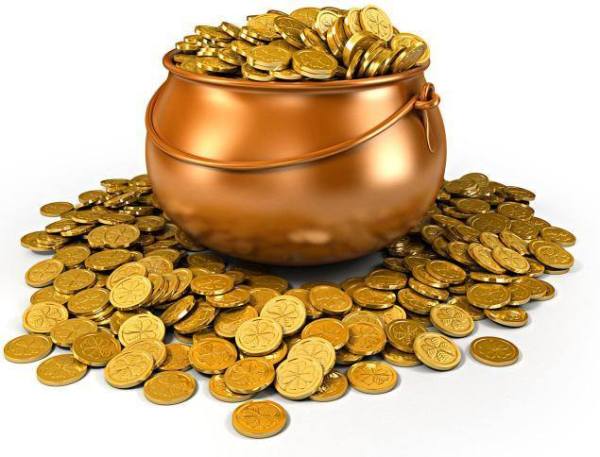
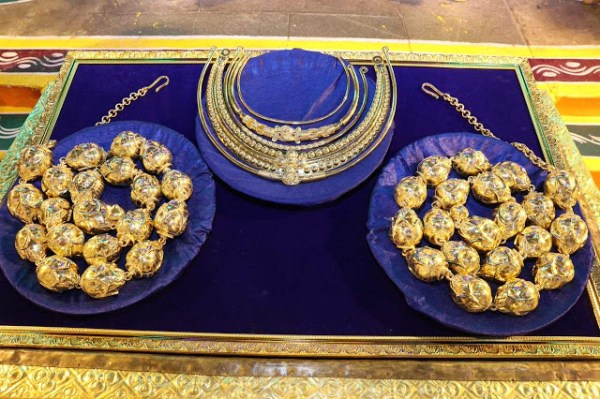
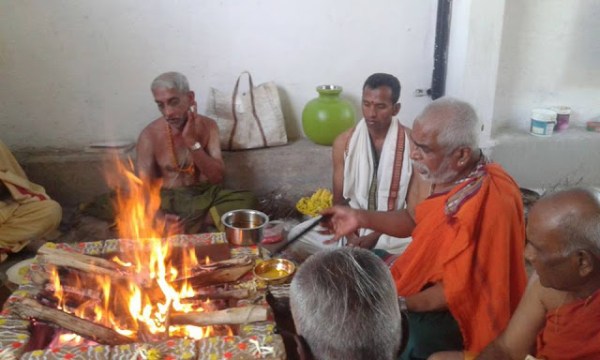
“If a sinful king has the story of Sunashepa told him, not the slightest trace of sin and its consequences will remain in him. He must therefore give a 1000 cows to the teller of this story and a 100 to him who makes the responses required; and to each of them the gold embroidered carpet on which he was sitting; to the priest, besides a silver decked carriage drawn by mules. Those who wish for children should also have this story told them; then they certainly will be blessed with children”.


Foreign “scholars” looked like idiots when this is known to the world. Golden carpet! Silver decked chariot! to the priests for telling a story!! How wealthy they must be! Before the Sumerians did the Tulabharam (weight equal to one’s body weight) of gold was given by the Hindus! Tamil King Cheran Senguttuvan gave 55 kilos of gold to a Brahmin just for advising him to do Vedic yajnas and stop killing people in the wars! It happened 2000 years ago in Tamil Nadu.


Now you can laugh very loudly when you read some silly things about Vedic Hindus written by Marxist idiots and white skinned fools.


–Subham–
 

STAR MYSTERIES IN THE RIG VEDA- Part 1 (Post No.4247)

Research article written by London Swaminathan


Date: 26 September 2017


Time uploaded in London- 16-27


Post No. 4247


Pictures are taken from various sources such as google, Facebook friends, newspapers and Wikipedia for non-commercial use; thanks.

Hindus believed that stars are holy souls or departed souls. In Vanaparva of Mahabharata and Sakuntalam of Kalidasa, Arjuna’s space travel is explained in detail. Please see the links at the end of this article for my old articles regarding this. Read Stars are Gods? We are Stars!


Egyptians, Greeks, Eskimos, Indians of Amazon forest and Australians believed that the heavenly lights have formerly been their ancestors. Hindus have the oldest reference to this in the Mahabharata. We were the ones who gave the Seven Seers (Saptarishis)  a place in the Ursa Major constellation in addition to Dhruva (pole star) and Agastya (canopus).

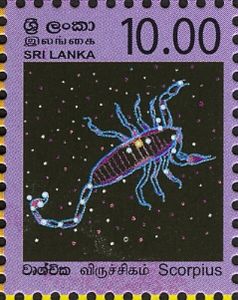
Stars, known as Nakshatra in Sanskrit, appear in the Rig Veda, oldest book in the world. It slowly increases in number to 28 in the later Vedas. The mystery about the star is its heliacal rising at different times in different periods. That is, they were not in the place where they are today.


Another mystery in the Veda is the beginning of the year. It did not begin in Chitrai (April-May) as we have now.


The study of all these things pushed the date of Vedas to 4500 BCE. Two researchers did astronomical study independently and arrived at a period between 4000 and 4500 BCE for the Rig Vedic hymns. They were Balagangadhara Tilak of India and Herman Jacobi of Germany. The wonder about this research is that they did it independently without  the other knowing such a research!

Satapata Brahmana of Shukla Yajurveda is an encyclopaedia. For the white skinned foreign scholars it is the most childish, rubbish prattle, blabber, jabber and gibberish. For Hindus it is the biggest resource book of Yagas and Yajnas detailing hundreds of rituals.


The half baked western “scholars” were happy to read about the Asvamedha Yajna and Purushamedha Yajna in it. The Purushamedha Yajna lists 179 human beings from different professions to be thrown into fire. But it had never happened anywhere in India. The only reference is about a boy called Sunashepa who was rescued by the great sage Viswamitra. Now they must read this episode in various rituals and they will get gold coins for reciting it! All these things puzzle and confuse the western “scholars”. For us it is great encyclopaedia giving 179 different professions in Vedic period. That shows the Vedic society was a highly civilized and advanced one. Several workers or jobs or professions are heard only through the Purushamedha yajna.


In the same way Asvamedha Yajna lists 200 plants and animals for sacrifice. Nobody knew the meaning of the whole list. They did not even know whether it is a plant or animal or an insect!! No proof is there for to show that all the animals were placed in the fire.

Western “scholars” project themselves as clowns, jesters and Jokers by giving different interpretations for each word. Their primary aim was to confuse the Hindus in every sentence, in every word and in every aspect. The sycophant English educated Indians of the 19th century also wrote lot of rubbish following these “great western scholars”. Marxists gave them the lead by interpreting everything as ‘class struggle’! Now we know those people were pukka idiots because we get a bird’s eye view of the Vedic literature and Sangam Tamil literature.


The amazing thing about the huge and voluminous Satapata Brahmana is about that one  can find any subject from Astronomy to Zoology in it. But most of the things they say wouldn’t mean anything if we take them literally. But we know they were very intelligent because they talk about linguistics, psychology, botany etc.


All these things are said to illustrate that the Satapata Brahmana talk about all the stars we know of in astrology and astronomy. No ancient book, Babylonian, Mayan or Egyptian give such a detailed list. Satapata Brahmana belongs to a period around 1000 BCE. It lists 27 or 28 stars.

Let us start from the Rig Veda:

There are various interpretations abbot the meaning of Nakshatra. The meaning is ‘guardian of night’ or ‘having rule over night’ (Nakta is night).


The star appears in all the passages where this word occurs (2-1-2, 2-1-18)


The sun and nakshatras are mentioned together (AV 6-10-3 and later books)!

Now we know that sun is also a star.

At least three stars are mentioned in the Rig Veda: Tisya (RV.5-59-13, 10-64-8) Aghas and Arjuni (10-85-13). It seems probable that they are the later lunar mansions called Maghas and Phalguni. It occurs in the wedding hymn.


Ludwig and Zimmer have seen other references to the Nakshatras as 27 in the Rig Veda (1-162-18—34 ribs of the horse=moon, sun, 5 planets and 27 stars); other “scholars” don’t agree with them.

Nakshatras as Lunar Mansions (months)

In later Samhitas (hymn books) the connection of the moon and the stars is conceived as a marriage union. Two samhitas (Khathaka and Taittiriya) state that Soma/moon was wedded to the mansions, but dwelt with only with Rohini)


It is very interesting to note that Tamils and other North Indians did marry only on the Rohini asterism day according to 2000 year old Sangam Tamil literature and Vedic literature.

It is also interesting to note that Tamils have special names (multiple names) for all the 27 stars 2000 years ago. Some of them are Tamilized Sanskrit words or translated Sanskrit words.


In the second part I will show you how Jacobi and Tilak calculated the age of Vedas on the basis of stars and their heliacal rising.


My Old articles: —


  1. Space Travel | Tamil and Vedas

tamilandvedas.com/tag/space-travel

Matali is always associated with space travel and I have written about Arjuna’s space travel in Matali’s … //tamilandvedas.com/2014/09/12/did-kalidasa-fly …

  1. Did Kalidasa fly in a Space Shuttle? | Tamil and Vedas

tamilandvedas.com/2014/09/12/did-kalidasa-fly-in…

Research Paper written by London swaminathan Post 1284; dated 12th September 2014. Kalidasa gives us an amazing picture of space travel in his most famous drama …

  1. Orion | Tamil and Vedas

tamilandvedas.com/tag/orion

There is a fascinating account of Arjuna’s Space Travel in the Vanaparva … The amazing thing about this space travel of Arjuna in … //tamilandvedas.com …


—to be continued


VEDAS ARE MOSTLY ‘CHILDISH’: MAX MULLER (Post No.4246)

Written by London Swaminathan


Date: 25 September 2017


Time uploaded in London- 14-32


Post No. 4246


Pictures are taken from various sources such as google, Facebook friends, newspapers and Wikipedia for non-commercial use; thanks.


I Have earlier shown in my articles that Max Muller was like a poisonous snake with a split tongue; he would blow hot and cold; he would praise the Vedas whenever he wanted to identify himself with the Aryans “who travelled from Germany to India” to establish that nobody lived in India and any foreigner could occupy it like the British.  At other times he dubbed the Vedas as childish blabbers, pastoral, ridiculous and the Aryan people were nomads.


This he did for two reasons. He got a collie from the East India Company to say so and the Oxford professorship has a condition that they should show to the world that Christianity is the only civilized religion. In fact, all the Sanskrit professors appointed under a chair in Oxford fall under this category. That is what they were paid for. In simple language, coolies. For money, they would do anything.


Here is more proof to show the true colures of Prof. Max Muller. He was a poisonous snake and along with Bishop Caldwell and other foreigners they coined a new term ‘Aryan race’. Neither the Tamil Sangam literature nor the Vedas has that racial connotation for ‘Arya’.

Subrahmanya Bharati, the greatest Tamil poet of modern times used the word ARYA in scores of places in his poems with the correct meaning: civilized, cultured, who recites Mantras in Sanskrit at the foot hills of the Himalayas. Bharati deliberately used the word ARYAN and deliberately avoided the word Dravidian in his poems. Probably to give a slap on the faces of Caldwells and Max Mullers and such cunning dirty fellows.


Max Muller describes the conclusion arrived at by intelligent Indians: “The friends of Rammohan Roy, honest and fearless as they have always proved themselves to be, sent some young scholars to Benares to study the Vedas and to report on their contents. As soon as their report was received, Debendranath Tagore, the Head of the Brahma Samaj, said at once that, venerable as the Vedas might be as relics of a former age, they contained so much that was CHILDISH, ERRONEOUS and impossible as to make their descent from a divine source utterly untenable” (another group of collies).

(Biographical essays pp 163, 169)


Prof. Max Muller has spent many years, editing the Rig Veda, with commentary of Sayana (MM must be the biggest fraud in the field. He did not translate Sayana’s. Because Sayana never said that there was a race called Aryan and they came from Europe).


Max Muller says the following in his “Preface to the Sacred Books of the east”:-

“Scholars also who have devoted their life either to the editing of the original texts or to the careful interpretation of some of the sacred books, are more inclined, after they have disinterred from a HEAP OF RUBBISH some solitary fragments of pure gold, to exhibit these treasures only than to display all the REFUSE from which they have to extract them. I do not blame them for this, perhaps I should feel that I was open to the same blame myself, for it is but natural that the scholars in their joy at finding ONE or TWO fragrant fruits or flowers should gladly forget the BRAMBLES and THORNS that had to be thrown aside in the course of their search”.


xxx

In his Lecture on the Vedas he expresses the following opinion of the hymns:-

“ The historical importance of the Veda can hardly be exaggerated but its intrinsic merit, and particularly the beauty or elevation of its sentiments, have by many been rated far too high. LARGE NUMBER OF THE VEDIC HYMNS ARECHILDISH IN THE EXTREME: TEDIOUS, LOW, COMMON-PLACE. The gods are constantly invoked to protect their worshippers to grant them food, large flocks, large families and a long life; for all which benefits they are to be rewarded by the praises and sacrifices offered day after day, or certain seasons of the year. But hidden in this RUBBISH there are precious stones.


“ I remind you again that the Veda contains a great deal of what is CHILDISH and FOOLISH, though very little of what is bad and objectionable. Some of its poets ascribe to the gods sentiments and passions unworthy of the deity such as anger, revenge, delight in material sacrifices; they likewise represent human nature on a low level of SELFISHNESS and WORDLINESS. Many hymns are utterly UNMEANING and INSIPID and we must search patiently before we meet, here and there, with sentiments that come from

the depth of the soul, and with prayers in which we could join ourselves.”


(Sayana never expressed such an opinion. Tamil Sangam literature praised the Vedas sky high. For two thousand years Tamil devotional poets praised them. Tamils translated he word Veda as ‘secret’. because they knew literal meaning should not be looked at.)

Western fellows never talk about other or their religious books. If Vedas are rubbish there more rubbish in their very short books!


Not even Buddha, not even Mahavira criticised the Vedas.  They praised Indra. They criticised only doing Yagas without understanding the meaning or purpose. Oldest Tamil book  Tolkappiam said that INDRA, VARUNA, VISHNU and DURGA are Tamil gods


When all other old religions died and their gods gone into museums, Hinduism is still a vibrant religion and Vedic Gods are worshipped every day. How and Why?


If there is so much RUBBISH in the Vedas, why did MM spend 60 years in Vedic studies and publish 51 Volumes of Sacred Books of the East? Was he a fraud or a faithful collie and did all these things for money to belittle Hinduism? Because of his Aryan Race theory, Hitler picked up Arya and Swastika and killed millions. Because of this America killed one million innocent Buddhists and Shintoism followers by throwing atom bombs on their heads. They never nuked a Jew or a Muslim or a Christian.

Caldwell says: “If any person reads the hymns of the Vedas for the first time, he will be struck with surprise at the utterly WORLDLY, UNETHICAL, UNSPIRITUAL tone by which they are generally pervaded.”

MM did another fraud by praising Dyaus Pita and comparing him with European gods and dubbing it as he oldest God. he never proved it. He never proved that those hymns in the Rig Vedas as the oldest portions. No scholar in the world proved it. Most of the things said by one idiot is repeated by other idiots. Because all of them belong to the same bandwagon.

Readers can pass a judgement on MM and his bed mates.


–Subham–

Gold! Gold! Yellow Metal in the Rig Veda! (Post No.4241)

Research Paper written by London Swaminathan


Date: 24 September 2017


Time uploaded in London-  14-26


Post No. 4241


Pictures are taken from various sources; thanks.


The Yellow metal – GOLD—figured in scores of hymns in the Rig Veda, the oldest religious book in the world. The Vedic seers talk about gold in big quantity. This shows that the Vedic society was a rich and civilized society. In Sangam Tamil literature, which came several thousand years later than the Rig Veda, we hear about poets getting lot of gold from the Chera (Kerala) Kings in the book Patitruppathu. In the post Sangam Silappadikaram we read about Tulabharam where gold was given to a Brahmin equal to the weight of mighty Chera king Senkuttuvan. We knew that the Roman gold poured into Tamil Nadu and they took black pepper and Indigo colour in exchange of gold coins. But several thousand years before this, where did the Vedic people get that much gold? It is a mystery.


In the later Mahabharata and Puranas we read about a mysterious country called UTTARA KURU where Arjuna and Yuthisthira got gold. But in the Vedic times Hindus talk about gold in their Dhana (Donation Hymns) stuthis!


( I have written five articles here in this blog several years ago to prove the INDIA IS THE RICHEST COUNTRY IN THE WORLD even today.

The amount of gold with the Hindu women and  the amount of jewellery with the temples and Maharajas (ex) are huge.

Let me give some hymns where we see the Gold:-


1.HIRANYA

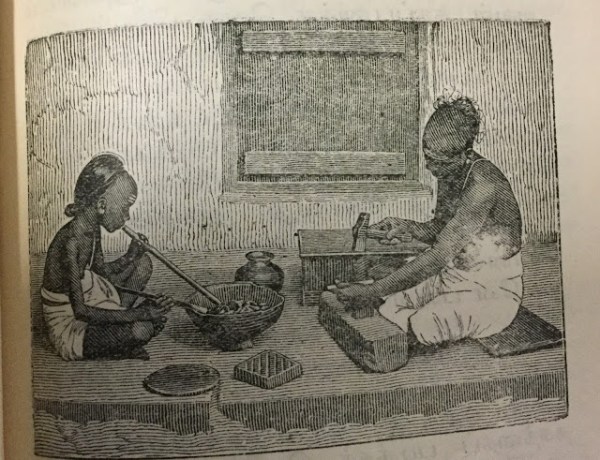
Hiranya in the Rig Veda and later denotes Gold. Perhaps they got it from the bed of rivers. Certain rivers are called Gold (Sone= swarna). Indus is also described as a golden stream. Extraction of gold and washing of gold are recorded in the Vedic literature!


Gold is the object of the wishes of the Vedic singer and golden treasures are mentioned as given by the patrons along with thousands of cows and horses!


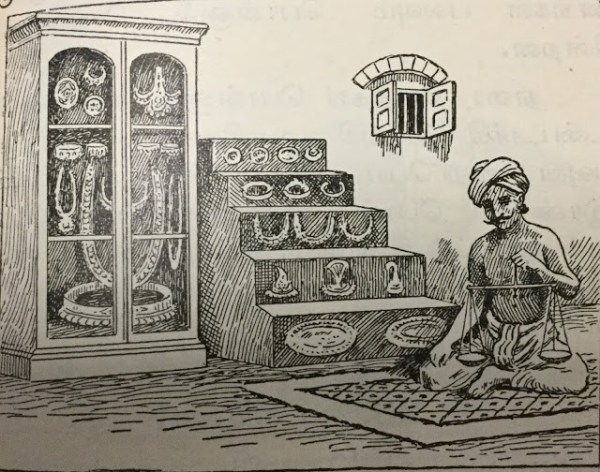
Gold was used for ornaments for neck and breast (Niska), for ear rings (Karna Sobhana) and even for CUPS!!!. Gold is always associated with the gods.


Gold in the RV: 1-43-5; 3-34-9, 4-10-6, 17, 11

Gold in the Atharva Veda:- 1-9-2; 2-36-7; 5-28-6; 4-38-2

Golden River Indus – RV 10-75-8; 6-61-7; 8-26-18


Extraction and Purification of gold: RV 1-117-5; AV 12-1-6, 26, 44 and Taittiriya Samhita and satapata Brahmana


Gold Ornaments: Taittiriya Samhita, Taittiriya Brahmana, Satapata Brahmana.

OLDEST GOLD CURRENCY IN THE WORLD!

A gold currency was known to Vedic people; definite weights of gold are mentioned (astaa-prud)- Taittiriya Samhita, Kathaka Samhita


Satamana =Weight of 100 Krishnalas (Gundu Mani in Tamil) is found in the Brahmanas and samhitas.


If we take the Vedic period to a time then mighty Sarasvati was flowing, then the oldest gold coin is from India.


Even today the Brahmin priests in all the weddings say in the mantra satamanam Bhavatu!

Rajata (silver) is also mentioned in the Vedas


Megasthanes bears testimony to the richness in gold of India in his time (see Diodorous Siculus 2-36; Strabo pp 703, 706.)

Hiranyakara is goldsmith and his work is mentioned in the Yajur Veda (Vajasaneyi Samhita 30-17; Taittiriya Brahmana 3-4-14-1


2.HARITA

Harita is also gold mentioned in the Atharva Veda (AV) 5-28-5-9; Kathaka Samhita- 8-5

3.SUVARNA

Suvarna ( Sona, Sone etc) is gold and used through out India even today. It is the name of the girls as well.

It is found in Taiitiriya Samhita, Atharva Veda and several Brahmanas.


Those who read foreigners’ accounts of describing Vedic Aryans as nomads, uncivilized, pastoral will know those writers were Pukka idiots and wrote with a motive of belittling Hinduism. Since Vedic society was a well advanced, civilized society, we read a lot about a good number of ornaments and gold coins and their weights.

Coinage is known to the civilised world only rom the sixth century BCE in Europe. If Vedic Niska is a coin then India is the first country to issue coinage. The word Satamanam (100) is used from Vedic days to date.

4.NISKA

Niska is frequently found in the RV (2-33-10;8-47-15 etc) and later (AV 5-14-3, 7-99-1, 20-131-8).

Kalidasa used coinage in the first century BCE


Niska is considered a neck ornament, may be made of coins (Kasu Mali in Tamil); even today women in South India is fond of Coin Necklace. So it might have meant both coin and necklace made up of coins.

Words such as niska-kantha, Niska-griva (having a gold ornament on the neck) are found in several places ( RV 5-19-3; AV 5-17-14) in the  Vedic books.

A Niska of silver is also mentioned in the Panchavimsa Brahmana.

As early as the Rig Veda traces are seen of the use of Niskas as a sort of currency, says Keith and Macdonell in the Vedic Index. A singer celebrates the receipt of 100 Niskas and a hundred steeds; he could hardly require the Niskas merely for the purpose of personal adornment. Later use of Niskas as currency is quite clear (AV 20-127-3)


This shows the Vedic society was an Economic Super Power. Several thousand years before he Greeks Hindus used he first coinage, that too, gold coinage!!!

5.CANDRA

Candra appears to denote gold in a certain number of passages from the Rig Veda onwards (RV 2-2-4; 3-31-5;AV 12-2-53).


The number of words in the Veda for gold also indicate that they were using this in enormous quantity.

6.JATARUPA
Jatarupa (possessing native beauty) is the name of gold in the later Brahmanas and sutras (Aitareya 8-13; Brahdaranyaka Upanishad 6-4-25) etc.

7.KRSNALA (Gundumani)= Abrus Precatorius

Krsnala denotes the berry of the Abrus precatorius, used as a weight according to the later authorities (Manu 8-134), one Maasa (bean) being equated to four Krsnalas. In the sense of a weight it occurs in the Taittiriya and other Samhitas and later.


This is another proof that they wieighed gold and valued. So it is possible that Niska is a proper gold currency.


One important factor is that gold occurs from the oldest portions of the Rig Veda Mandalas.

8.SIX DIFFERENT GOLD FEES (DAKSHINA)

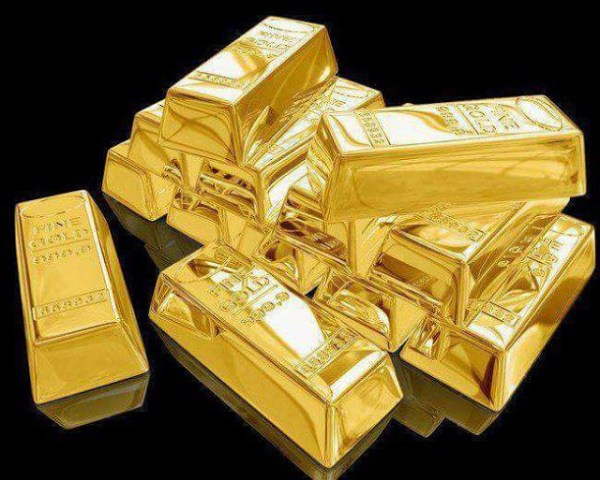
In the description of the observance of the catur-hotra fire ceremony given in the tait. Brah 3-12-5 (11, 12) ,as many as five or six different gold fees are described under the common name of dakshina, including perpetual fees, GOLD BRICKS, sugar mixed with clarified butter when gold is not forthcoming, and cows equal in number to the bricks.


With regard to a gold gift to the priest, it is in sata Bra 3-4-24/27

There are four kinds of sacrificial gifts
Gold- Thereby indeed he preserves his own life

Then the cow, thereby he preserves his own breath also is food

Then cloth, thereby he preserves his own skin

Then the Horse,  for the horse is thunderbolt; he therefore makes a leader……

9.ORIGIN OF GOLD

Agni is at one time cast his eye on the waters- May I pair with them, he thought.

He came together with them, and his seed became gold. For this reason, the latter shines like fire, it being Agni’s seed.

–Sata Br 2-1-1-5


In sat Br 2-2-3-28 the above is given as a  reason why the priests’ fee for a particular sacrifice is gold!

10.Danastutis ( Donation Hymns)

GOLDEN CHARIOT!!!

Brahmatithi says

As Kasu, Chedi’s son, gave me a hundred head of buffaloes, and ten thousand cows

He who hath given me for mine own ten kings like gold to look upon

No man, not any, goes upon the path on which the Chedis walk

No other prince, no folk is held more liberal of gifts than they.

RV 8-5- 37 to 39


The Rishi Vasa Asvya thus praises the liberality of Prithusravas, the son of Kanita:

Now let the godless man approach who hath received so great

As Vasa Asvya, when this light of morning dawned, received from Prithusravas, from Kanita’s son

Steeds 60,000 and 10000 kine and 20,000 camels I obtained

Ten hundred brown in hue and other ten red in three spots;

in all 10,000 cows

Ten browns that make my wealth increase, fleet steeds whose tails are long and fair

Turn with swift whirl my chariot wheel

The gifts which Prithusravas gave, Kanita’s son munificent

HE GAVE A CHARIOT WROUGHT OF GOLD; the prince was passing beautiful, and won himself lofty fame

And now to Vasa Asvya here this stately woman is led forth

ADORNED WIT ORNAMENTS OF GOLD

(Stately woman= probably the wife of the conquered king)


11.Golden Fort in Aitareya Brahmana (1-23)

The gods and demons were engaged in warfare

The evil demons, like to mighty kings

made these worlds castles, then they formed the earth

into an Iron citadel, the air

Into a silver fortress, and the sky

Into a fort of gold. Where at the gods

said to each other, Frame we other worlds

In opposition to these fortresses

Then they constructed sacrificial places

Where they performed, a triple burnt oblation.

By the first sacrifice they drove the demons

Out of their earthly fortresses, by the second

Out of the air, and by the third oblation

Out of the sky. Thus were the evil spirits

Chased by the gods in triumph from the worlds.


Monier Williams gave the above in metrical rendering from the Brahmana.

Perhaps this lead to the story of destruction of Tripura, hanging in the sky, in later Puranas.


There are lot more references to gold in the Vedas. This shows the richness of the society. They aimed high and thought about  only positive things.

Reference: Vedic Index of Names and Subjects, Keith and Macdonell

The Vedas and Brahmanas, Caxton Publications

Rig Veda by Griffith


-Subham-


How Gods are Made? (Post No.4232)

Written by London Swaminathan


Date: 21 September 2017


Time uploaded in London- 21-10


Post No. 4232


Pictures are taken from various sources; thanks.


Greek philosopher Aristotle said, “men create the Gods after their own image, not only with regard to their form, but also with regard to their manner of life.

In Genesis 1-27 (Old Testament, Bible) we read,

Then God said, let us make man in our image, according to our likeness.

God created man in His own image, in the image of God he created him; male and female he created them.


In Hinduism, it is said

In the Vedic period man feared Gods

In the Brahmana period, man subdued Gods

In the Upansihad period he identified himself with God.


In the Tamil Veda Tirukkural, poet Tiruvalluvar says,

“A man who leads an ideal life in this world

will be ranked amongst the Gods in the heaven

–Tirukkural 50


Rama and Krishna fall under this category.

Dr S M Diaz comments on this Kural

Seneca on Mercy book 1 recognises virtue itself as  the most fitting reward for the virtuous but still asks, Have I of all mortals — been chosen to serve on earth as the vicar of the Gods? Similarly, in Book-1 on Providence, Seneca says, Between good men and the Gods there exists a friendship brought about by virtue. Seneca therefore goes half the Valluvar way.


Adi Shankara says, “Though all difference has ceased to exist, I am thine, O Lord, not Thou mine. The billow is of the sea, not the sea of the billow.”

There is interesting story about man becoming God:

The fortress of Sanoda in Bundelkhand was built by Raja Chatar Singh about 265 years ago. His son Raj Singh, soon after the fortress was completed, was killed in an attack upon a town near Chitrakot, a famous place of pilgrimage. He had a temple and tomb erected over his remains. Sometimes after someone suffering from a sickness went to the tomb one night and said that if Raj Singh would cure his illness  he would make offerings to him at his tomb for the rest of his life. After that he never had another attack and was very punctual in his offerings. Others followed his example, until now he is recognised by the people of that part of India as God.


We have such examples throughout India.


It is not restricted to one religion alone. In Catholic Christianity hundreds of saints are recognised as miracle performers. People visit their shrines and expect miraculous cures for their problems of diseases. In Sufism, we see Muslim saints who are worshipped. In Hinduism, also all the saints are worshipped and their birth days are celebrated with Puja and offerings.


Hero Stones in Tamil Nadu

In Tamil Nadu and adjacent places Hero stones are placed in the road junctions and they are worshipped. The hero stones were erected for those who sacrificed their lies for others, particularly killing a tiger, or saving a village from an attack.

In Karnataka and Rajasthan, Pattinis, women who sacrificed their lives were worshipped. Thus India has 1000s of God like men or people who are elevated to divine status.

–Subham–


ரிக் வேதத்தில் “க” (Post No.4229)

Written by London Swaminathan


Date: 20 September 2017


Time uploaded in London- 21-19


Post No. 4229


Pictures are taken from various sources; thanks.


ரிக்வேதத்தில் “க” என்னும் கடவுள் வெளி நாட்டு “அறிஞர்களின்” கண்களில் விரலை விட்டு ஆட்டிவிட்டது. வேத கால மக்கள் நாடோடிகள், கைபர் கணவாய் வழியாக வந்த நாடோடிகள் என்றெல்லாம் பிதற்றிய அறிவிலிகளுக்கு, அரை வேக்காடுகளுக்கு ரிக் வேத  “க” பெரிய புதிர் போட்டது. மாக்ஸ் முல்லர் முதலியோரெல்லாம் சிரித்தனர். இப்போது அதுகளை ப் பார்த்தால் நமக்கு சிரிப்பாக வருகிறது!


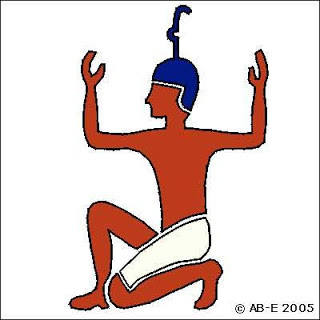
க என்றால் பிரம்மா; க என்றால் பிரஜாபதி; இது தமிழ் அகராதியிலும் உள்ளது. மேலும் சில விஷயங்கள் மாக்ஸ் முல்லர் வகையறாக்களுக்குத் தெரியாது ‘க’ என்றால் கடவுள். தமிழ் ‘க’ பிராமி என்னும் வடக்கத்திய லிபியிலிருந்து வந்ததை உலகமே அறியும். அது கிட்டத்தட்ட கிறிஸ்தவ சிலுவையைப் போல வெறும் கோடுகளால் மட்டும் ஆனது. ஆதி கால எகிப்தில் இது கடவுளைக் குறிக்கும் சின்னம்! ஆனால் வெறும் சிலுவை மாதிரி கோடுகள் மட்டுமில்லாமல் இரண்டு புறமும் இரு கோடுகள் மேல் நோக்கிச் செல்லும் அதைப் பார்த்தால் ஒரு மனிதன் இரு கைகளையும்  உயர்த்தி இருப்பதைப் போலத் தோன்றும். இந்தியாவில் இருந்து சென்ற க (பிரஜாபதி) மூலம் இந்த எழுத்து வந்திருக்கலாம். அதிலிருந்து சிலுவையும் தோன்றி இருக்கலாம்.


இனி ரிக் வேத கவிதை “க” (10-121) பற்றிக் காண்போம்.


‘க’ என்றால் சம்ஸ்கிருதத்தில் யார் என்றும் ஒரு பொருள் உண்டு. வேத கால மக்கள் மிக மிக நாகரீக முன்னேற்றம் கண்டவர்கள். ஆகையால் ‘க’ என்ற எழுத்தை வைத்துச் சொற் சிலம்பம் விளையாடினர். வேத கால மக்களை ‘மண்டுகள்’ என்று சித்தரித்த மாக்ஸ் முல்லர் வகையறாக்களால் இந்த சிலேடைக் கவிதையை ஜீரணிக்க முடியவில்லை. மேலும் அவர்களுக்கு எகிப்திய நாகரீகம் பற்றிய விரிவான  அறிவும் கிடையாது. தமிழ் ‘க’ பற்றியும் தெரியாது. ஆகையால் இது என்ன வெறும் உளறலாக இருக்கிறதே என்று குறை கூறத் துவங்கினர்.


தெரியாத கடவுள்(Altar for Unknown God) என்று ஏதென்ஸ் நகர மக்கள் ஒரு பலி பீடம் அமைத்திருந்தனர் . அந்த பெயர் தெரியாத கடவுளுடன் ரிக் வேத  க -வையும் ஒப்பிடத்துவங்கினர்.


‘க’ என்பது பிரஜாபதியைக் குறிக்கும், உயிரினங்களுக்கு எல்லாம் கடவுள் அவர்; அவைகளை எல்லாம் படைத்தவர் அவர் என்று வேதமே சொல்லியும் அவர்களுக்கு சந்தேகம் தீர்ந்தபாடில்லை.

க-வை வைத்து  யாருடைய என்ற எழுத்தும் பல உரிச் சொற்களும் உருவாயின. இவை எல்லாம் மொழி வளர்ச்சி பற்றிய விஷயங்கள்.


‘க’ என்பது பிரஜாபதி என்பதால் யாகத்திலும் அவருக்கு ஆகுதி அளிக்கப்பட்டது. இது எல்லாம் வெளிநாட்டினரை திகைக்க வைத்தது. வேத கால ரிஷிகளுக்கு முட்டாள் பட்டம் கட்டியே வழக்கம் என்பதால் சிலேடை அர்த்தம் புரியாமல், இது சிறுபிள்ளைத்தனமான ஒரு கண்டுபிடிப்பு என்றெல்லாம் கட்டுரை எழுதினர்.


சுருக்கமாக சொல்ல வேண்டுமால் ‘க’  என்பதன் சிலேடை அர்த்தம் புரியாமல் – அதை குறை கூறினர்.


எகிப்தில் இறந்த மன்னன், கழுகு வடிவில் வான மண்டலத்துக்குச் செல்லுவதாக எகிப்திய பிரமிடு  இலக்கியம் சொல்லும். ‘க’ என்பது மனிதனின் ஆத்மா என்றும் சொல்லும். இந்தியாவிலும் மனர் பறவை வடிவத்தில் மேலுலகம் செல்லுவதாக சம்ஸ்கிருத ஸ்லோகம் உள்ளது. ஆக ‘க’ என்பது கடவுள், ‘க’ என்பது ஆன்மா; க’’ என்பது படைப்புக் கடவுளான பிரஜாபதி/பிரம்மா. ‘க’ என்பது பறவை வடிவில் காட்டப்படும்.

ரிக்வேதத்தில் (10-121) வரும் கவிதை!


1.முதல் முதலில் தங்க முட்டை (ஹிரண்யகர்ப்பம்) எழுந்தது. அவர் பிறந்தவுடன் படைப்புகளுக்கு எல்லாம் கடவுள் ஆனார். அவர் வானத்தையும் பூமியையும் வைத்திருந்தார் யார் இந்தக் கடவுள்? யாருக்கு பிரசாதத்தைப் படைப்போம்?


(இதில் யாருக்கு என்ற இடத்தில் பிரஜாபதிக்கு என்று சிலேடை அர்த்தத்தில் படிக்க வேண்டும். ஏனெனில் க என்றால் யார்; க என்றால் பிரஜாபதி; இந்த சிலேடை பொருள் தெரியாமல் வெள்ளைத் தோல்கள் முழித்தன!)


2.யார் ஒருவர் உயிர் அளிக்கிறாரோ, யார் ஒருவர் பலம் அளிக்கிறாரோ, யாருடைய கட்டளைக்கு எல்லாக் கடவுளரும் கீழ்ப் படிகின்றனரோ அவர்தான் அழியாதவர் யார் இவர்? யாருக்கு படைப்புகளைப் படைப்போம்?


(முன்னர் காட்டியது போல யார்= என்ற இடத்தில் எல்லாம் பிரஜாபதி என்றும் படிக்கலாம்)

3.யார் தனது மகிமையாலுலகின் ஒரே மன்னர் ஆனாரோ யார் இரு கால், நான்கு கால் உயிரினங்களுக்கு தலைவரோ — யார் இவர்? யாரை நாம் வணங்கி காணிக்கைகளைச் செலுத்துவோம்?


4.யார் தனது சக்தியால் பனி மூடிய மலைகளையும் கடலையும் ஒன்றாக வைத்திருக்கிறாரோ- இடையே ரசா என்ற நதியுடன்– யார் கைகளில் வானத்தின் இரண்டு பகுதிகள் இருக்கின்றனவோ அவர் யார்? எவரை வணங்கி நம் காணிக்கைகளைச் செலுத்துவது?


5.யார் வானத்தையும் பூமியையும் திடமாக வைத்திருக்கிறாரோ யார் மூலம் வானம் நிலைத்து நிற்கிறதோ யார் இடைப்பட்ட பகுதியை வைத்து இருக்கிறாரோ யார் அவர்? யாருக்கு படைப்புகளைத் தருவது?


6.யார் மூலம் சூரியன் பிரகாசிக்கிறான்?யார் அவர்? யாருக்கு படைப்புகளைத் தருவது?

7.வெள்ளம்/பிரளயம் வந்தபோது உயிர்க்கருக்களுடனும் தீயுடனும் அதிலிருந்து உருவானவர் கடவுளரின் உயிர் மூச்சு– யார் அவர்? யாருக்கு படைப்புகளைத் தருவது?

8.யார் தக்ஷாவுடன் (படைப்பு சக்தி) வந்த பிரளயத்தை பார்த்தாரோ – யாக யக்ஞங்களைக் கொண்டு வந்தாரோ– கடவுள்களில் எல்லாம் ஒரே கடவுளரோ– யார் அவர்? யாருக்கு காணிக்கைகளைப் படைப்பது?


9.பூமியையும் வானத்தையும் படைத்த அவர் நமக்கு எந்தத் தீங்கும் இழைக்கக் கூடாது. அவருடைய சட்ட திட்டங்கள் உண்மையானவை. தண்ணீரைப் படைத்தவர் அவரே– யார் அவர்? யாருக்கு காணிக்கைகளைப் படைப்பது?


10.ஓ பிரஜாபதியே! படைப்புக் கடவுளே! உம்மைத் தவிர எல்லா உயிரினங்களையும் காப்பவர் எவர்? உனக்கு நாங்கள் காணிக்கைகளைச் செலுத்துகிறோம். எங்கள் ஆசைகளைப் பூர்த்தி செய்வாயாக நாங்கள் செல்வத்துக்கு அதிபதியாகட்டும்.


மிக மிகத் தெளிவாக பிரஜாபதியை/ பிரம்மாவைத் துதிக்கும் பாடல் என்பதை கடைசி மந்திரம் தெளிவாவக் காட்டுகிறது.


ஆனால் யார் (க= பிரம்மா=பிரஜாபதி) என்ற சிலேடை புரியாமல் வெளிநாட்டுக் கிராக்கிகள் முழி முழி என்று முழித்தன!


my old article:

  1. Ka | Tamil and Vedas

tamilandvedas.com/tag/ka

Posts about Ka written by Tamil and Vedas … Picture shows Egyptian Manu= Narmer. Did Indians build Pyramids?-Part 2 ( Please read first part before reading this ..


–சுபம்–


MIRACULOUS ASVINI DEVAS IN THE MYSTERIOUS RIG VEDA! (Post No.4228)

Compiled by London Swaminathan


Date: 20 September 2017


Time uploaded in London- 16-11


Post No. 4228


Pictures are taken from various sources; thanks.


Rig Veda is a great book! Oldest anthology in the world! Oldest religious book in the world! Dated between 1200 BCE and 4500 BCE! One derives great pleasure when one reads it. Every page shows you different things. A lot of words are used only once. Foreigners struggle to find the meaning of them! 100 different “scholars” give 100 different meanings despite Sayana’s interpretation!


Asvini Devas are the most interesting and Mysterious angels: They are twins! “Scholars” tried to compare them with different twins in different cultures; but you will have a good laugh when not even a fraction of similarity is found there!

World’s First Community Service!

One will be wonder struck to know the community service they did for the general public. They were the surgeons and doctors of the heaven and earth. Their stories are full of miracles. They show the marine power of the Hindus of the Vedic period.


Tugra’s son Bhujyu was lost in a shipwreck; Immediately Asvini Devas rushed there in 100 oared ship and brought him ashore after three days: Imagine how deep they went into the sea! Some idiots argued that Vedic Hindus did not know sea. If you read Rig Veda you will dub those people as the Worst idiots of the world!

Rig Vedic Hymns 1-112, 1-116, 1-117, 1-118, 1-119, 1-120 and several other hymns have the adventures of Asvins.

xxx


Arrangements according to an ascending order of significance are quite effective. Thus the passage describing the mounting significance of syllables,

Agni with one syllable won speech;

the Asvins with two syllables won expiration and inspiration,

Vishnu with three… the three worlds

Soma with four… the four footed cattle

Pusan with five.. the Pankti,

Prajapati with seventeen – the seventeen fold stoma.


This shows that the Vedic Hindus were great mathematicians. Their use of decimal system throughout Rig Veda and syllable based prosody show that they were highly educated.

xxx

Asvins fix the broken leg of Vispala! They were great surgeons! They could do anything. They were the ones who extricated people from big troubles; they were the twins who rushed to help anyone in distress. They were involved in great social service. They were the pioneers of Red Cross! They beat Florence Nightingale in nursing field by several thousand years.


The Asvins rescued Rebha who hid in a well as if he were in a pitcher of gold – 1-117-12


This shows that the Rig Vedic society was very wealthy. The talk about gold in hundreds of hymns.


They restored the health of an old seer called Chyavana. They were great gerontologists!


These twin deities are ever young and handsome, bright and full of glory! They are the earliest bringers of light in the morning sky. They reveal to the Gods the places where the Soma plant of magical properties grows!

Who were they?

Are they friends? are they brothers? No one knew!

Why were they called Asvinau? Horse men?

Is it because they rode horses? No one knew!

Because their chariots were drawn by horses, sometimes by swans; sometimes by donkeys; at other times by falcons.

They were golden in colour, bright, swift and fast.

They travelled before Ushas, the goddess of dawn. They brought the light to the world!

The twins have two names! Dasra (light emitting) and Nasatya ( not untruth). What fantastic names they had!

xxx


Rig Veda have several hymns on them. Foreigners become pukka idiots when it came to Asvins. Because no European civilization has similar gods. They tried very hard to compare them with Discouri and Kastor and Polydeukes in Greek mythology, Castor and Pollux (Gemini) in the Roman mythology. The Baltik supreme Gods Dievas had twin sons known as Dievo Suneliai who ride on their divine horses. Cunning foreigners never tell us that these divinities were 3000 years junior to Vedic Asvins!!! Greeks did not even start writing literature before 800 BCE (Homer’s Iliad and Odyssey)

xxx

The Asvins are described as carrying Surya or Soma (Sun, Moon) in their chariot as well as Madhu (honey). The chariot itself is drawn by horses;the gods are also associated with birds—swans and eagles/falcons – and with asses.


Their abode is variously described as the celestial sphere, mid-air, plants, houses and also mountain tops (Sangam Tamil literature describes Anangus/angels dwell in these places)

xxx

They are intimately related with the number three; for, together with surya whom they carry in their chariot they make an archetypal trio.

Many actual exploits together with real historical names are mentioned; they rescued drowning men, men in a burning house, they replaced a broken leg with a wooden one, cured many people from apparently incurable diseases and helped others of dangerous predicaments. The number of actual names mentioned in connection with the Asvins compares only with those in the Indra myths. This led to the belief they were ancient kings who lived long long before Rig Vedic times.


Yaska’s Views!

Yaska, quotting the historical school says, Who, then, are these Asvins?

some say they are the Sun and Moon

some say that they are the sky and the Earth

yet others say that they are the day and Night;

but the historians say that they were pious kings.

Asvins have no parallels in any other culture!


When they use their whip, honey drops from their whips!!!


The heaven and  earth are manifestly the Asvins, for they (heaven and earth) have pervaded everything- Satapata Brahmana 4-1-5-16


xxx

Roman coin

A Story

An incident is recorded in the Aitareya Brahmana 2-25 which seemed to threaten the breach of of the peace among gods, but which was amicably settled:

“The gods did not agree in regard to the first draught of Soma. Each of them desired, Let me drink first! Let me drink first! But coming to an arrangement they said, ‘Come let us run a race, and the victor shall be the first to drink Soma. Agreed, said they all. They ran a race accordingly; and when they started and ran Vayu first reached the goal, then Indra, then Mitra and Varuna and last the Asvins. Indra thought he might beat Vayu (wind god) and he followed him closely; and said Let is two now be the victors. No rejoined Vayu, I alone shall be the winner. Let us so win together that I shall have a third of draught, said Indra. No said Vayu. I alone shall be the winner. Let us so win together that I shall have the fourth, continued Indra. Agreed said Vayu. He gave him a right to the fourth. So Indra has one share out of the four and Vayu three. So Indra and Vayu won together, as did Mitra and Varuna, and the two Asvins respectively”.


We may not understand the full impact of the story today. But Vedic Hindus were great sportsmen. They decided everything by horse race or chariot race or running race!


Elsewhere it is said the Asvins never drank Soma. They refused to drink Soma. Another mystery!

Agni ran the race in a car drawn by mules,

Ushas in one drawn by ruddy bulls,

Indra in one drawn by ruddy horses

while the Asvins carried off the prize in a car drawn by asses. In the Rig Veda 1-116-2 , the asses also are said to have won the race.

In the great race run by the gods for the Asvina Shastra prize, the Asvins were the winners with a carriage drawn by the donkeys. Thence on account of the excessive efforts to arrive at the goal, the donkeys lost their originality, became devoid of milk and the slowest of all animals used for drawing carriages – Aitareya Brahmana 4-9


xxx

Let these songs sharpen you, O Asvins, as a whetstone sharpens the sword-  3-39-7

This shows the Rig Vedic society was full of heroes. Even Avvaiyar of Sangam Tamil literature mocks at a king when he had shiny swords where as his enemy had blunt swords, ie, he was more experienced in warfare where as the other king was a novice in the field.

Elsewhere the Rig Vedic mother prays for heroes as children.

xxx

O Asvins, fly like two swans towards the Soma pressed here- 5-78-1

xxx

The Asvins are frequently invoked to rush to the sacrifice as a pair of deer, cows or more commonly two birds or swans 5-78-1/2

My previous post:–

Asvini Devas on Different Chariots: Rig Veda Mystery- 4 …

tamilandvedas.com/2014/10/13/asvini-devas-on…

Asvini Devas on Different Chariots: Rig Veda Mystery- 4. Research paper written by London Swaminathan Research article No.1343; Dated 13th October 2014.


–SUBHAM–


Vajapeya Yajna- The Olympic games of Ancient India? (Post No.4221)

Written by London Swaminathan


Date: 17 September 2017


Time uploaded in London- 16-39


Post No. 4221


Pictures are taken from various sources; thanks.


What does Vajapeya yajna show?

Vedic Hindus were very sportive; they were highly civilized; even the religious, ritualistic sacrifices had great sports events such as horse races with the beating of the drums. They aimed high in everything; they always aimed at victory. They were positive thinking people. Like todays festivals religion and art went together. Even the utensils and vessels used in the sacrifice were elevated to sacred objects.


Atal Bihari Vajapayee was the tenth prime minister of India. He belongs to the family of Vajapeya performers. Because of him the word Vajapeya became familiar.


Hillebrandt goes so far as to compare it to the Olympic games (Vedische mythologie, 1, 247). Because the yajna is full of games, dance and music.


Vajapeya is the name of a fire ceremony which according to the Satapata Brahmana is performed by a Brahmin or Kshatriya. The book insists that this sacrifice is superior to the Rajasuya, but the consensus of others assigns to it merely the place of a preliminary to the Brhaspatisava in the case of a priest, and to the Rajasuya in the case of a king, while the Satapata is compelled to identify the Brhaspatisava with the Vajapeya.


(Brhaspatisava: It is the name of a sacrifice which according to the T

aittiriya Brahmana, the priest who desired to become a Purohita obtained that office. According to the Asvalayana Srauta Sutra it was the sacrifice to be performed by a priest after the Vajapeya, while the king performed the Rajasuya. It is identified with Vajapeya in the Satapata Brahmana.)

The essential ceremony is a chariot race in which the sacrifice is victorious. There is evidence in the sankhyayana Srauta Sutra showing that once the festival was one which any Hindu could perform.


Eggeling holds the view that the Vajapeya was a preliminary rite performed by a Brahmin prior to his formal installation as a Purohita, or by a king prior to his consecration. The Kuru Vajapeya was specially well known (Sankhyayana and Apastmaba Srauta Sutras).


Satapata Brahmana belongs to Sukla (white) Yajur Veda. Satapata is called 10 paths or sections (sata=100). Book 5 is taken up with the two great sacrifices of Vajapeya and Rajasuya or inauguration of a King. Vajapeya means Drink of Strength or Race cup.


Sangam age Tamil kings performed Rajasuya 2000 years ago according to Purananuru. But there is no reference to Vajapeya in ancient Tamil literature. Yudhishthira performed according to Mahabharata. It is very interesting to see that these Yagas and yajnas were rooted in Tamil Nadu 2000 years ago. Yudhishthira performed it 3100 years before the Tamils!


He who offers the Vajapeya wins food, for Vajapeya doubtless means the same as Anna-peya (food and drink).


Thereupon while looking in different directions, he mutters “ ours be your power, your manhood and intelligence, ours be your energies! For he who offers Vajapeya sacrifice wins everything as he does Prajapati, and Prajapati being everywhere here – having appropriated to himself the glory, the power and the strength of this all, he now lays them within himself, makes them his own; that is why he mutters, while looking in the different directions.  – Sat.Br. 5-2-1-15


The many ritual details of the Vajapeya (Vaja= Food, Peya= Drink) show that the rite is a variety of the Soma sacrifice with which coalesced various popular festivals and rites. It was performed in autumn; the season in later times kings set out on military expeditions for annexing contiguous or distant territories. In addition to Brahmins and Kshatrias, even Vaisyas (business community) performed it for prosperity.


The cups and ladles used in the Yajna were considered sacred or divine; deification of the  wheel  shaped cake in the Vajapeya sacrifice, the torch, the golden plater representing the sun by night, the Mahavira cauldron in the Pravargya rite are cases in the point.

Also read my old article:

Tamil Olympics | Tamil and Vedas

tamilandvedas.com/tag/tamil-olympics

Posts about Tamil Olympics written by Tamil and Vedas


–SUBHAM–


TWO STRANGE STORIES ABOUT INDRA AND HIS SON (Post No.4212)

Picture sent by Lalgudi Veda

Written by London Swaminathan


Date: 14 September 2017


Time uploaded in London- 14-54


Post No. 4212


Pictures are taken from various sources; thanks.


INDRA’S SON BECAME AN ASS!


The following is characteristic of the stories told of this god and his doings:


On a certain occasion, many of the gods were invited to an entertainment in Indra’s palace. To complete their happiness, several of the Apsaras, beautiful nymphs, danced before them. Gandharvasenu, son of Indra, was so fascinated with the charms of one of them and behaved so indelicately that that his father commanded him to descend to earth in the form of an ass. All the assembled gods beseeched him to modify this sentence, and ultimately Indra agreed that his son should be an ass by day, but a man by night. With this he dismissed him to wander about the earth. One day a Brahman  came to bathe at a pond near which the ass was wandering. The animal spoke to him and told him he was Indra’s son and asked him to speak to King Dharu to give him his daughter in marriage. The Brahman consented, and next day the king went with his counsellors and held a conversation with the ass, who related his story and the cause of his degradation. The king refused consent to the marriage unless the ass would perform some miracle to prove his descent. To this he agreed, and the following night he built a fort of iron, forty miles square and six high. Then the king was forced to yield, and appointed the day of marriage.


The day came, and with splendid show, dancing, and music the bride, adorned with jewels and the richest attire, was led into the iron fort to be married to the ass. The bridegroom on seeing her could not refrain from giving voice. Th guests on hearing the ass bray were filled with grief and astonishment. Some hid their faces with sorrow, some because of laughter. Others, more bold, went to the king and said “O King, is this the son of Indra O Monarch, you have found an excellent bridegroom. Don’t delay the wedding! we never saw so glorious a match. We have heard of a camel being married to an ass, when the ass, looking the camel said, “Bless me what a fine form and the camel, hearing the voice of the ass, said Dear me what sweet voice! In that wedding the bride and the bride groom were equal, but that your daughter should have such a bridegroom is truly wonderful!


Then the Brahmans said “Oh King at some weddings, as a sign of joy, the sacred conch shell is blown, but thou hast no need of that (alluding  to the braying of the ass).


The women then cried out, “O King, what is this? To give so angelic a damsel in marriage to an ass! The king felt ashamed and hung his head. At length Gandharvavenu reminded the king of his promise, and urged upon him that the body is merely a garment, that wise men never estimate the worth of a person by the clothes he wears, and, moreover, he was in this shape from the curse of his father, and during the night he would assume the form of a man.


The king then withdrew his objection and the man marriage was celebrated. By the time the guests were dismissed the night drew on, and a handsome man, suitably dressed, presented himself to the king. The king brought the bride in great state to the palace and gave her to her husband. The next day he gave jewels, horses, camels, and servants to her and dismissed the guests with suitable presents. Dharu, however, could not but feel anxious that his son-in- law should finally throw off his ass body. After a thousand contrivances, he said to himself Gandharvasenu is the son of Indra, therefore he can never die; at night he casts off his ass’s body, which lies like a dead body. I will burn it and so keep him always in the form of a man. This he did and the curse was removed.


xxx

STORY ABOUT INDRA


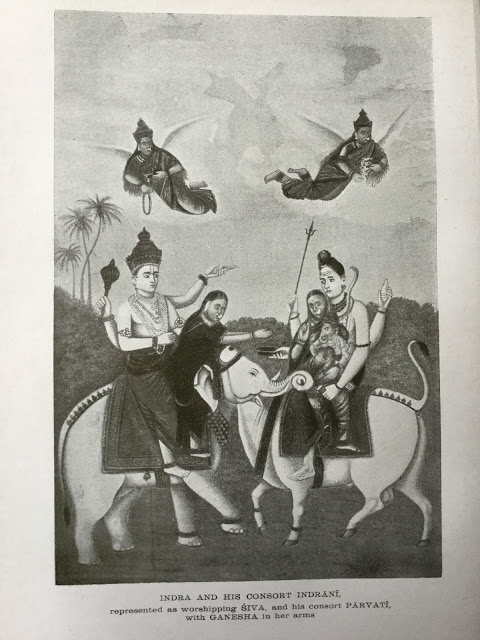
On one occasion Indra assumed the form of a shepherd boy so that he might more easily steal some pomegranate blossoms from a garden to deck the dark tresses of his consort Indrani.


The sequel is told in Sir William Jones’ charming hymn to him


“The reckless peasant, who these glowing flowers, Hopeful of rubied fruit has fostered long,

Seized and with cordage strong,

Shackled the god who gave him showers.

Straight from the seven winds immortal genii flew- Varuna green, whom foamy waves obey;

Bright Vahni, flaming with the lamp of day

Kuvera, sought by all, enjoyed by few;

Marut, who bids the wingéd breezes play

Stern Yama, ruthless judge! and Isa cold

With Narrit, mildly bold:

They, with the ruddy flash that points his thunder,

Rend his vain bands asunder.

Th’ exulting god resumes his thousand eyes,

Four arms divine, and robes of changing dyes.


These “robes of changing dyes” are of course the clouds, and the thousand eyes were the marks of the displeasure of the gods for his intrigue with Gautama’s wife.


SOURCE: The Gods of India by the Rev.E.Osborn Martin, London ,1914


–SUBHAM–


What did the Vedic Hindus pray for? (Post No. 4209)

Written by London Swaminathan


Date: 13 September 2017


Time uploaded in London- 16-14


Post No. 4209


Pictures are taken from various sources; thanks.


Vedic Hindus prayed for wealth, long life, good and heroic sons, cows and horses. They prayed to destroy internal enemies ( violent atheists- violent non believers). They always aimed high; they asked hundred fold and thousand fold of everything; they talk of gold; they were very well organised and organised ploughing ceremonies with golden plough. They were great agriculturalists. They talk of paddy, barley, sugar cane ,sesame seeds etc. They were sons of the soil. Most of the plants and herbs they mentioned are tropical plants. They did not come from cold places. Rice and sesame seeds were part of their ceremonies. They were great mathematicians who always used decimal system in their prayers. The wonder of wonder is that they always prayed for ‘us’ not ‘me’. They conducted group prayers. Highly intelligent, well organised and heroic people were the Vedic Hindus. Their prayers are echoed in simple Sanskrit and Tamil hymns of today.

They even fixed the human life span as 100 years! A healthy and prosperous people were they!


Their three great contributions to the human race are


Cows

Horses and

Decimal system


No other – Egyptian, Babylonian, Mayan, Chinese- ancient books have such clear cut, venerable references to the above three. All these happened between 1500 BCE and 6000 BCE. Rig Veda is the most wonderful book in the world.


Following are few examples from over 1000 hymns and 10,000 mantras of the Rig Veda.


PRAYER FOR WEALTH

Bring us the wealth for we long 8-45-42


O Soma drinker, ever true, utterly hopeless though we be,

Do thou, O Indra, give us hope of beauteous horses and of kine in thousands, O most wealthy one


O Lord of strength, whose  jaws are strong, great deeds are thine, the powerful;

Do thou, O Indra,

give us hope of beauteous horses and of kine in thousands, O most wealthy one 1-29


O Indu, Soma, send us now great opulence from everyside.

Pour on us treasurers thousand fold 9-40-40

Pour out on us abundant food, when thou art pressed, O Indu, wealth

In kine and gold and steeds and strength 9-41-4


will ye then, Maruts, grant us riches, durable, rich in defying onslaught

A hundred, thousand fold, ever increasing 1-64-15


Knowing our chief felicity, O Agni bring hither ample riches to our nobles 7-1-24


O wondrous Indra, bring us wondrous riches 7-20-7


At he commencement of Ploughing, the following verse was repeated with an offering of fire:


Auspicious sita, come thou near; we venerate and worship thee

That thou mayst bless and prosper us and bring us fruits in abundantly 6-57-6


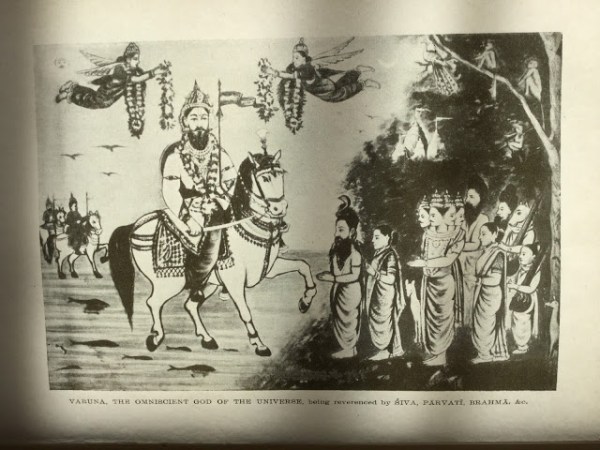
A hymn to Varuna, in which deliverance from sin is sought ends with,

“King, may I never lack well-ordered riches 2-2-8

PARDON FOR SINS


Sons, long life, wealth and victory over enemies are  frequent requests of Vedic Hindus. There are, however, scattered prayers for spiritual blessings, especially in hymns to Varuna. The Rig-Veda, v. 85, contains the following


“If we have sinned against the man who loves us, have ever wronged a brother, friend, or comrade,

The neighbour ever with us, or a stranger, O Varuna, remove from us the trespass. 5-85-7


If we, as gamesters, cheat at play, have cheated, done wrong unwittingly or sinned of purpose,


Cast all these sins away like loosened fetters, and, Varuna, let us be thine own beloved.”


“Absolve us from the sins of our fathers, and from those which we committed with our own bodies, It was not our own will, O Varuna, but some seduction which led us astray–an intoxicating draught, passion, dice, thoughtlessness. The stronger perverts the weaker even sleep brings un- righteousness. (Rig-Veda, 7- 86.)


Prayers of this nature chiefly occur in the hymns to Varuna, the principal of which have been quoted. A few other extracts may be given.


Aditi, Mitra, Varuna, forgive us however we have erred and sinned against you. 2. 27.14.


Prolong our days of life (ye Asvins), wipe out our trespasses.1-157-4


Most, youthful god (Agni) whatever sin through folly, here in the world of men we have committed.


Before  great Aditi make thou us sinless remit entirely, Agni our offences. 4-12-4


Let us not suffer for the sins of others, nor do the deed which ye. O Vasus, punish.” 6, 51. 7.


“What secret sin or open stirs their (Maruts) anger, that we implore the swift to forgive us.7 58. 5.


That he, the bounteous god (Brihaspati) may find us sinless, who giveth at a distance like a father.” 7- 97, 2


“Save us (Visvedevas) from uncommitted and committed sin, preserve us from all sin to-day for happiness 10-63-8


FUTURE WORLD


The references to this are few, and chiefly found in the Ninth and Tenth Books the Rig Veda. The great desire of the Hindus was to enjoy the present life.


“The givers of rich meads are made immortal; the givers of rich fees prolong their life time.” I. 125, 6


“May I attain to that his well loved mansion when men devoted to the gods are happy


We pray for rain, your boon (Mitra varuna) and immortality.” 5-63-2


“When I and Indra mount high up to the bright one’s place and home

We, having drunk of Meath, will reach his seat whose friends are three times seven.” 8-38-7


We have drunk Soma and became immortal; we have attained the light, the gods discovered.” 8- 48- 3.


High up in heaven abide the guerdon-givers; they who give dwell with the Sun for ever. They who give gold are blest with life eternal: they who give robes protect their lives, o Soma. 10. 107, 2.


xxx

PRAYER FOR RAINS


Lift up the mighty vessel; pour down water, and let the liberated streams rush forward


Saturate both the earth and heaven with fatness, and for the cows let there be drink abundant. 5. 83. 8


XXX


Sons


The following are a few examples


“ Men yearn for children to prolong their line, and are not disappointed in their hope.1-68-4


May the wealth giver (Agni) grant us wealth with heroes (sons)

May the wealth giver grant us food with offspring.” I, 96, 8


Help us to wealth, exceeding good and glorious, abundant, rich in children and their progeny 2-2-12


To us be born a son and spreading offspring 1-96-8


Brihaspati, may we be lords of riches, with noble progeny, and store of heroes 4. 50. 6.

xxx


LONG LIFE


Hindus reckoned their years by winters Probably in later hymns autumns are substituted. ( Hindus are most scientific; even today in North India and European countries, old people die more during winter. So Hindus prayed that they must survive the hard and cold winter)


Grant unto us to see a hundred Antumns; ours be the happy life of our forefathers.” II, 27, 10


Long let our life, O Agni, be extended 4, 12, 6.


Accept, o Maruts, graciously this hymn of mine that we may live a hundred winters through its power 5- 54, 15


Be gracious, Indra, let my days be lengthened

6, 47, 10


xxx


Preservation from Danger.


Amidst constant wars with the atheists, this request frequently occurs in the hymns.

But safety is also sought from other dangers, as snake bites.


In thy kind grace (Indra) find favour may we still be strong to expose not to any foe’s  attack.


With manifold assistance guard and succour us, and bring us to felicity.” 8-3- 2.


May  weathy Indra as our good protector, Lord of all treasures, favour us with succour


Baffle our foes, and give us rest and safety.6. 47, 12.


Savitar, god, send far away all sorrows and calamities


And send us only what is good.” 5. 82, 5


Give us not up to any evil

creature, as spoil to wolf or she- wolf, O ye holy 6, 51,6


May they, Earth, Aditi, Indra, Bhaga, Pushan increase our land, increase the fivefold people.

Giving good help, good refuge, goodly guidance, be they our good deliverers, good protectors 6-51-11

Not to the fanged that bites,not

to the toothless give not us up, thou conqueror to the spoiler 1-190-5


xxx


DESTRUCTION OF ENEMIES


Next to wealth, this is one of the most frequent petitions; some prayers include all who are unfriendly; others single out individuals


Destroy this ass, O Indra, who in tones discordant b rays to thee


Slay each reviler, and destroy him who in secret injures us.” 1-29-5


0 Agni,radiant one, to whom the holy oil is poured, burn up enemies whom fiends protect.1-12-5


Cast thy dart knowing, thunderer, at the Dasyu I. 103, 3


Whatever mortal with the power of demons fain would injure us.


May be impetuous, suffer harm by his own deeds, 8. 18.3


Crunch up on  everyside the dogs who bark at us slay ye our foes, O Asvins. I. 182, 4.


Consume for ever all demons and sorcerers, consume thou each devouring fiend. I. 36, 20.


Drive from us with thy tongue, o god, the man who doeth evil deeds


The mortal who would strike us dead.” 6, 16, 32.


  1. Annihilate the fools, slay them and burn them up. Chase them away from us, pierce the voracious ones.
  2. Against the foe of prayer, devourer of raw flesh, the vile fiend, fierce of eye, keep ye perpetual hate.


  1. The fiend O Agni, who designs to injure the essence of our food, kine, steeds, of bodies,

May he, the adversary, thief, and robber, sink to destruction both himself and offspring.


  1. “May be he swept way, himself and children. May all the three earths press him down beneath them.


May his fair glory, O ye gods, be blighted, who in the day or night would fain destroy us. VII 104


Quotations have been given from Hymn 87 Book X. addressed to Agni, the Slayer of Rakshasas.


–SUBHAM–