Silence is NOT Golden!

king

Written by London swaminathan

Article No 1732; Date 19th March 2015

Uploaded at 10-19 am London Time (GMT)

Silence is golden is a proverbial saying in English. The origin of this phrase is in Sanskrit literature. But we see contradictory statements in the literature as well. ‘Silence amounts to consent’ is another saying in Sanskrit. There are a few interesting anecdotes in our literature about silence.

No answer itself is the answer – says ‘Ratnasamuccaya’

The wise should observe silence –  says ‘Subhasitaratna bhandakara’

All is achieved through silence – is found in ‘Pancatantra’

Silence is the ornament for the ignorant – says ‘Niticataka’-6

If telling the truth causes anguish, better be silent – is the saying in ‘Vishnu Purana’ 3-12-3

(Source: ‘Suktisudha’, Chinmaya International Foundation)

brahmin

Compensation case against an innocent Brahmin!

Freedom Fighter Subrahmanya sivam narrates a story in Tamil in his book ‘Moksha Sadhana rahasyam’ and a rough translation goes like this:

A thief made a hole in the wall of a wealthy Brahmin’s house to steal away his money. Unfortunately the wall was very wet and fell on him. He died on the spot. His relatives sued the Brahmin for compensation. He took the case to the king saying that it was unfair to ask money from him for a dead thief.

But the king wanted to find out the cause. He asked him, “why did you leave the wall so wet that it fell at the touch of a person?”

bricklayer_1

O King! I don’t know the reason. Better ask the builder. It is a new wall built just a day ago.

The builder was summoned immediately.

Why did you do a shabby work? You have to pay the compensation to the family of the thief, said the king.

The builder said, O King! I don’t know the reason. Probably the worker mixed the cement with much water.

Immediately the building worker was summoned.

Why did you pour more water? The thief died because of you. You have to pay the compensation  – said the king

Building worker said, O King! I don’t know the reason. The pot was unusually big. Better ask the potter about it.

Immediately the potter was summoned.

Why did you give him a bigger pot on that day? Look at what you have done. Pay the compensation to the family

potter

He said, O King! It is true I made the pot bigger on a particular day. But that was because of a beautiful prostitute walked past me in broad day light. And I was looking at her beauty. It was unusual for her to walk in our street at that time of the day. So she has to pay the compensation.

Immediately the prostitute was summoned to the court.

She said, O King! It was not my fault. I never walk in the streets during day time. On that day the washer man did not deliver the clothes. I always present myself to the clients with clean clothes. So I had to go to washer man’s house to collect my clothes. You have to ask the washer man for the delay.

Immediately the washer man was summoned.

CIS:4660:1/(IS)

Washer man said, O King! It was not my fault. As usual I went to the banks of the river in the early in the morning. An ascetic was washing his clothes in my place. So I did not want to disturb him. I could not finish my work at the usual time. Please ask the saint why he came to my place on the day.

Immediately the ascetic was summoned.

He was observing silence on that day. He did not bother to answer the questions of the king.

Then the ministers quoted the saying, Silence means Yes. So they unanimously decided that the ascetic was the culprit. The ascetic was detained!!

washing clothes

Silence trapped one more saint in another case in the Mahabharata. When thieves were hiding in Sage Ani Mandavya’s house, he was observing silence. When royal servants found the thieves in his house with the stolen property, he was also dragged to the court and he was sentenced to death. He was impaled with other thieves, but he survived the impalement due to his penance and was released later.

Is silence golden? You decide!

What is the Distance between You and God?

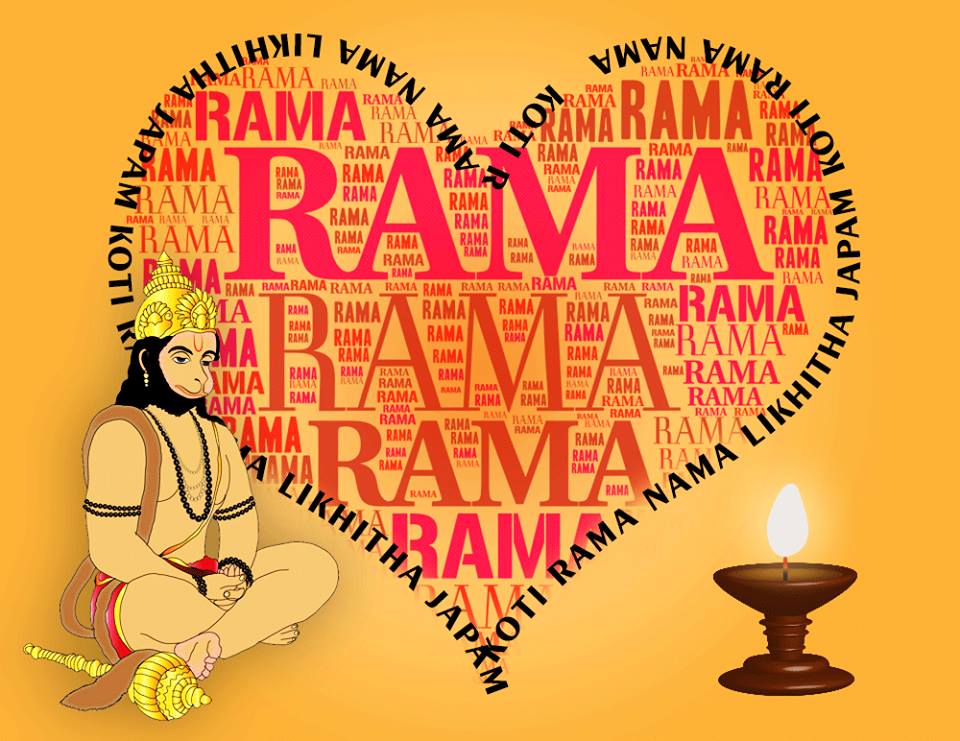
ramais in heart

Article No 1728; Date 18th March 2015

Written by London swaminathan

What is the distance between God and ourselves? There is an interesting story told by Subrahmanya Sivam, famous freedom fighter of Tamil Nadu. I give below a rough translation of his story narrated in his Tamil book Moksha Sadhana Rahasyam.

There was a saintly person in Thanjavur by name Periya Dasar (meaning Great Slave to God).He was very pious and doing all religious rituals 24 hours a day. His name and fame spread far and wide. Local king also wanted to meet him.

One day the king came and met Periyadasar. During the conversation he asked where God was. Immediately Periyadasar replied that God was at “Calling (hailing) Distance”. This phrase calling (hailing) distance is used by Tamils frequently, particularly in village side. The meaning of the phrase is a place or a person is at the distance where your shout or call or cry can be heard. The king was not happy at his reply and thought that the saint was insulting him.

disrobing-of-Draupadi-

Immediately he sent his servants and retinue to find God at “hailing distance”. They came back without finding God. The king warned Periyadasar that insulting a king amounts to treason and may invite harsh punishment. But Periyadasar insisted that God was at a shouting distance. When the king asked for an explanation, Periyadasar explained to the king as follows:

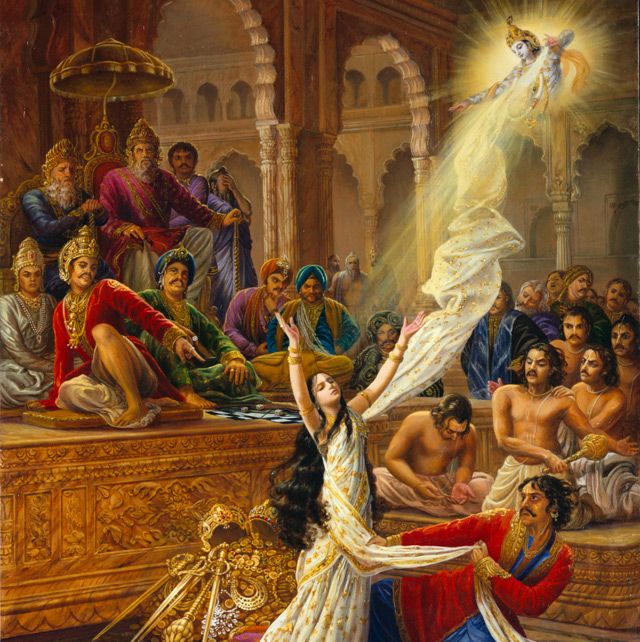
O King! Haven’t you heard the story of Draupadi? She was dragged by Dushasadana to the assembly for disrobing her and she prayed for help from Krishna. First she shouted, “Oh DWARAKApureevasa, please come and help me”, holding her garments tight. Krishna did not bother to come and help her, because she addressed him as Resident of DWARAKA which was far away from Hastinapura. Moreover she was trying to help herself by holding her saree. When she realised that that she was utterly helpless, she cried, “O, HRUDAYA Kamala Vasa (resident of my Lotus shaped heart), please help me”, lifting both her hands over her head. Krishna came to her help the next minute. Krishna supplied her garments endlessly and Dushasana fell down out of exhaustion.

PONRHanumanSacredHeart400

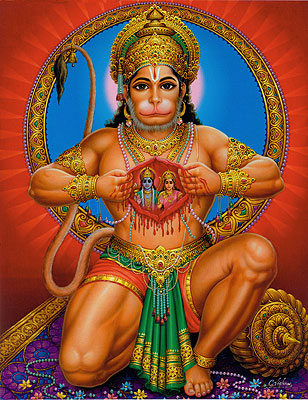
It is up to you to place God at the distance of Dwaraka or just at a hailing distance (inside your heart). King was very happy at his explanation. He thanked him immensely for enlightening him.

Let us keep God in our hearts!

swami_48@yahoo.com

Sorry! No Time for Religious Stories!!

guru_disciple-336x352

Written by London swaminathan

Article no. 1726; dated 17 March 2015

Up loaded at 10-18 am London time

Sage Vaisampayana wanted to tell the full Maha Bharata story to king Janamejaya. He approached the king with great interest and enthusiasm. But the king rejected his proposal outright saying that he was too busy for such stuff. This did not dampen the enthusiasm of Vaisampayana.

“No problem there are 18 Parvas/Sections. I will just narrate to you only one Parva”.

Janamejya gave him a curt reply. “Sorry Vaismpayana. I have no time. I am very  busy”.

Vaisampayana was very persistent. He said to the king, “No Problem. I will just recite only one chapter”.

Janamejaya was very rude now, “how many times do I have to tell you I am very busy”.

guru-shishya (1)

Sage Vaisampayana was the embodiment of patience. He insisted, “No Problem. I will tell you just one couplet (sloka) from the one hundred thousand couplets”.

“OK, Ok. That is fine, just one Sloka. Hope that would not take much of my time. Please go ahead”, said the king.

Vaisampayana did not miss the opportunity. He began, “King Duryodana raided the Pandava territory and took the cows. That was the reason for the great war. At last Duryodhana died in the battle field. Finito!”

I am finished, God Bye, said Vaisampayana.

Hang on. Duryodhana was a great king. Why did he raid for cows? It does not sound correct, said Janamejaya.

Vaisampayana was very happy that he kindled his enthusiasm. Then he gave him the reason for the cattle raid.

Then Janamejaya asked some more sub questions on the same topic. Vaisampayana started narrating the full epic. Janamejaya listened to him with pin drop silence.

Mahabharata, the longest epic in the world with 100,000 couplets, 200,000 lines with approximately one million words, will captivate anyone! Any modern problem can be compared to one of the problems already narrated in the epic. And there is a solution to all the problems of the world too!

No Pain, No Gain!

(Source: Moksha Sadhana Rahasya by Subrahmanya Siva, Year 1925.)

HOW TO ACQUIRE WEALTH – THE HINDU WAY

devi by akila

Written by S Nagarajan

Article no. 1724; dated 17 March 2015

Up loaded at 8-25 am London time

By SANTHANAM NAGARAJAN

“The Hindu religion is not only a religion, it is also a philosophy not only religion and philosophy, it is a way of life”, so said the well known English writer Somerset Maugham in his book Points of View.

The Hindu religion shows the way to lead the life successfully. Needless to say, for anybody’s success wealth is important.

The Goddess Mahalakshmi is being worshipped as the promoter of prosperity by Hindus.
Mahalakshmi means the great source of the best in life. It also means ‘worshipful’ and ‘engrossed in appearance’.

devi

Lakshmi also means the thinker of the welfare of the devotees.
Sri and Lakshmi are the two manifestations of Mahalakshmi. Though they are two, yet they are one. The word Sri means luminosity, beauty, reputation, glory, magnanimity, splendor, prosperity and consolation.

In order to acquire wealth, the Hindu way of life suggests to worship Lakshmi every morning after taking bath. The Sri Sukta praises Goddess Lakshmi.

This Sukta forms the chapter two, Varga six of the Khilas appended to Rig Veda. The Rig Veda is the oldest known text of the world. There are fifteen mantras in Sri Sukta.
The Sri Sukta can be recited or those who had not learnt the Sukta can hear recorded audio tapes.

Those who would like to have enormous wealth usefully recite the one hundred eight name of Goddess Lakshmi, every day.

bowl

There is one more secret. If you keep water in a small bowl in the north-east corner of your hall in your home it will remove all negative vibration and pave the way to get the wealth you want. Every morning the water in the bowl should be drained and fresh water should be filled up. The bowl should be kept in the same place every day. Amazing results could be observed within forty eight hours.

The presence of Lakshmi, who is firm and steady, bestows gold, cattle, horses and human beings.

She is seated on a Lotus flower. She is implored to bestow fame and prosperity.
Lakshmi resides where the fragrance of sandal and camphor exists! Those who desire that the goddess Sri should always reside in their family should be pure. The purity is required both mentally and physically!

And hence the dwelling place should always be kept clean.

There are certain symbols associated with welfare, glory, prosperity and worship. They are lotus, elephant, conch, swastika, pot, garments, diamond, crocodile, owl, discus, mace, bullock, wish fulfilling tree or Kalpa tree, jack fruit, armour and a pair of fish. Hence using these symbols appropriately will make Lakshmi’s presence.

The Hindu literature gives details of performing Lakshmi puja or Lakshmi worship.
We will learn more about Lakshmi worship in our next article.

Lions and Elephants in Mahabharata!

lion

Written by London swaminathan

Research Article no. 1722; dated 16 March 2015

Up loaded at 9-05 am London time

Strange Animal Stories in Mahabharata! – Part 4

Parts 1,2 and 3 were posted in the past few days.

We have seen snakes, snake bites, crocodiles, and strange frog, fish, tortoise and birds’ stories so far. Now let us look at some more strange animal stories in the Mahabharata.

Lion attack

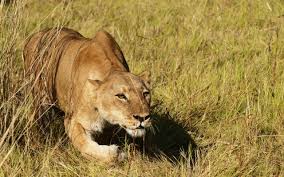
We hear true stories in Mahabharata. Krishna married eight women including Rukmini, Satyabhama and Jhambavati. Sathyabama’s father was Satrajit. He had a beautiful diamond which he gave it to his brother Prasen. When he went for hunting he was killed by a lion. The diamond was taken by tribal people. Even today Krishna’s state (Dwaraka in Gujarat state) is the only place where we can see lions in natural condition.

wolf

Man turning into a wolf

Ram attack

Dhanusaksha was a learned sage. He was insulted by Medhavi, who had a boon to live as long as the mountains stood. But Dhanusaksha created a ram with strong horns. It started digging the earth to bring down the mountain (3-135)

Werewolf

Lot of stories about werewolves are said in Western countries. They were human beings turned into werewolves by curses. In Mahabharata we come across werewolf like people. Ekata (No.1)  Dwita (No.2)  and Trita (No.3)  were brothers. Once Dwita fell into a well and brothers did not come for help. So Dwita cursed them to become wolves- 9-36

Deers-deer-3417187-640-640

Deer Man!

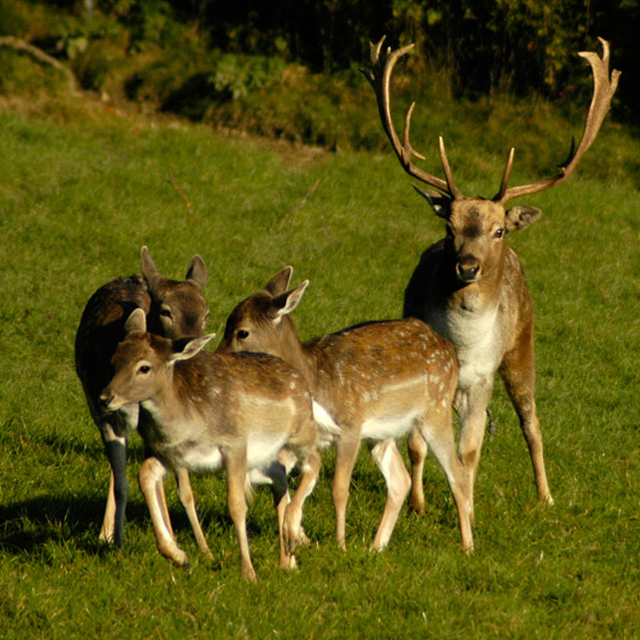
Kindama was a sage who changed himself and his wife into deer. When they were enjoying physical pleasures, king Pandu killed them. Just before dying of wounds Kindama regained his form and cursed Pandu that he would die the moment he tried to make love to his wife. Pandu argued that kings can hunt animals and it was not illegal. Then the sage told him that may be right but he could not kill an animal when it is engaged love making 1-118

My comments: Actually the sage and his wife did not become deer. They were just wearing deer skin to avoid cold or mosquito bite. May be it is a camouflage technique.

There is another deer in the story of Rishyashringa. He was son of Vibhandaka. His mother was a deer and therefore he had one horn in his forehead 3-110

My comments: Biologically it is not possible to get an offspring from a deer and human being. It is immoral as well. But people with horn like projections can be born. Such things are medically recorded. Since Rishyasringa appeared for the first time in Ramayana, lot of time must have elapsed between the time it happened and it was recorded. So we must give some allowance for errors.

viceroy-butterfly-lg

Butterfly Effect

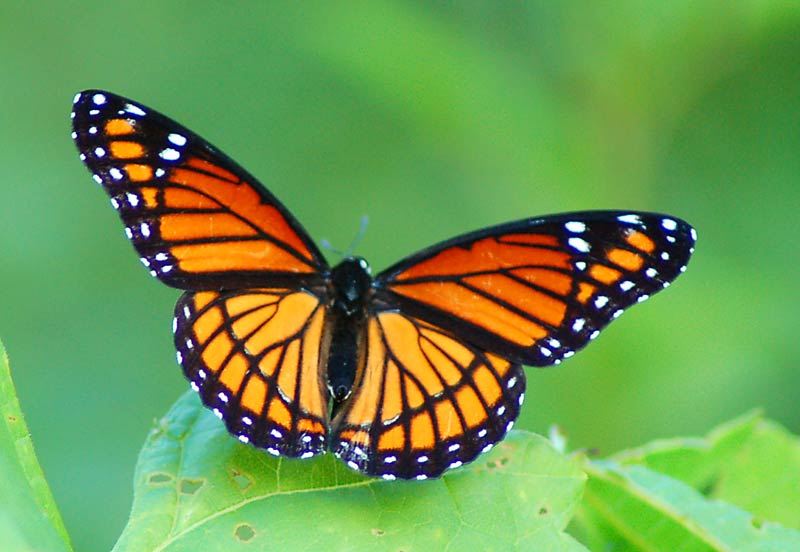
Mandavya was a sage who was observing silence. Thieves came to his house and hid themselves. When King’s soldiers asked him about thieves, he did not answer. The soldiers found the lost goods and the thieves. They took Mandavya along with them thinking that he was an accomplice. King ordered execution by impalement. Mandavya did not die on the stake but was suffering from pain. The king ordered his release when he found out his innocence. When Mandavya asked Dharma (God of righteousness) the reason, dharma told him that he caused pain to a butterfly with a blade of grass when he was a boy. Mandavya was not convinced with his explanation and cursed Dharma to be born as a low caste person in the world. He was Vidura 1-108

blueMorphoZ

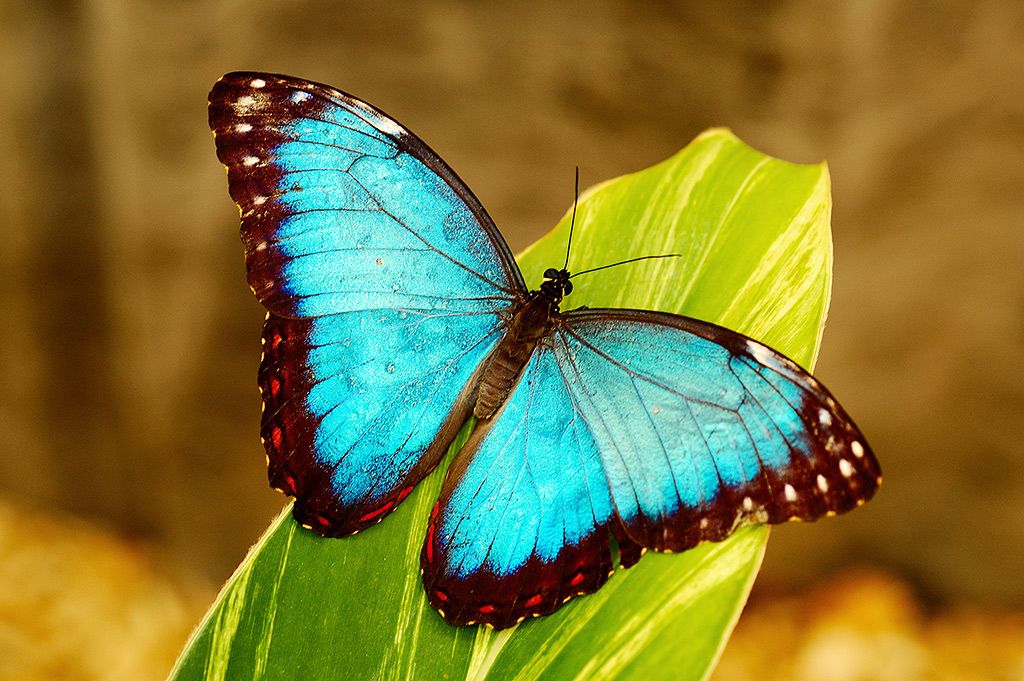
My comments: This is an exaggerated story just to illustrate the Karma theory—cause and effect. Even if you cause a small harm that will come back multi fold. It is actually worked out mathematically. For a butterfly the blade of grass, for a man it is impaling stake! Proportionate punishment!

Cow, Dog and Elephant in Mahabharata

These stories are given by me elsewhere in the blogs. Just a short reference:

Cow :Surabhi’s daughter Nandini was with Vasistha. Story of Surabhi is in 3-9

Dog : Sarma, the female dog of Devas, with her sons were in the Yaga conducted by Janamejaya. King’s brother beat the dogs and Janamejaya was cursed 1-3

My comments: Dog Sarama is in the Rig Veda too. It travelled up to Greece and we find it as Hermes in Greek literature.

Another famous dog accompanied Pandava brothers in their final journey 17-3

yanaiiku jippa

Elephants

Indradymana, a Dravidian king was cursed by Agastya to become a dim witted elephant 3-104

Bhagadatta, king of Pragjyotisa, had a powerful elephant named Supratika. This elephant caused great havoc in the Pandava army. Krishna helped Arjuna to kill Bhagadatta 7-26

Damayanti accompanied some pilgrims going through a forest in the kingdom of Chedi. They were attacked by wild elephants and many pilgrims died.

My comments: This is a real life story from Indian forests. Earlier a python tried to devour Damayanti.

My comments: These are all real pictures of the ancient India. I Have already written about pythons devouring elephants in Tamil Nadu Forests. Tamil poets of Sangam age observed these things and recorded it in their poems. Mahabharata recorded all snake bites, crocodile attacks, elephant attacks, lion attacks etc.

yanai vibhuti

Naming animals like Airavata, Uchchaisravas is also typical Indian. We have this custom followed from the Vedic days. Even Alexander named his horse Bucephalos following Indians.

Asvattama’s story is famous. That was the name of an elephant as well as the son of Drona. When Yudhistra was asked to shout “Asvattama killed”,that turned the tide of the war. Yudhistra was forced to tell a lie. Drona thought that was his son who died.

Arjuna got a Surprise Gift! Krishna Angry!!

சாப்பாடு

Written by London swaminathan

Article no. 1720; dated 15  March 2015

Up loaded at 14-05 London time

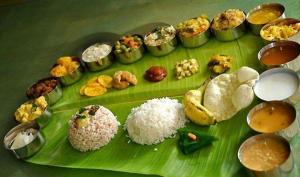
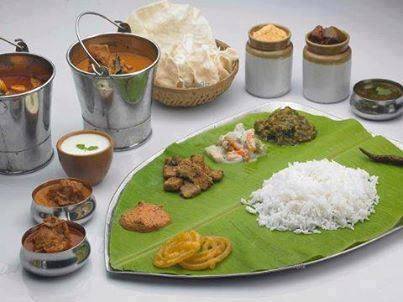
Freedom fighter Subrahmanya Siva gives excellent stories in his Tamil book ‘Moksha Sadhana Rahasya’ (location : British Library, London) to illustrate the great merits of Anna Dhana (Giving food to the needy people).

The advantages of Anna Dhana over other Dhanas are:

a)Helping the poor

b)No harm to others; “no bad side effects”!!

c)Even if there is one good saintly person among the takers that will bring good luck to the whole town. Tamil poem says “even if there is one good person in a town, the town will get copious rains” (nallaar oruvar ularel avar poruttu ellaarkkum peyyum mazai).

d)This is the only gift that everyone will say, “I have had enough; no more please”. For all other gifts they expect more from you.

Even if you serve ambrosia (Amrta), they will beg you to stop it, when their stomach is full. They will thank you whole heartedly, no, ‘whole stomachly’!! There is a saying in Tamil, Even if the mouth does not say Thanks, the stomach will thank him” (Vaay vaazththaavitaalum Vayiru vaazththum)

Now I give a rough translation of Arjuna story from Tamil:

Krishna and Arjuna were discussing future plans for the development of the country.  Suddenly a fisherman came there and submitted a big gold bar at the feet of Arjuna! Arjuna was surprised. Krishna looked suspiciously at Arjuna thinking that he had other “business ventures” without his knowledge. But Arjuna thought that as usual Krishna is playing a game or doing some mischiefs.

Arjuna asked Krishna,

What is this Krishna? Is it your game?

Krishna: I am also puzzled. Let us ask the fisherman.

Fisherman: Arjunji, you gave me one paisa (penny) long time ago. I bought a fishing net with that money. Your hand is a lucky one! From that time onwards I caught more and more fish and I bought more and more nets. Now I am a millionaire. I want to express my gratitude to you. Here is my offering, a few gold bars.

neelavannan

Krishna was furious on hearing this. As soon as the fisherman left, Krishna scolded Arjuna, “Dear friend, you have done a blunder. This fisherman had killed millions of fishes during his long career. Part of that sin would come to you”. Then Krishna gave him some ideas to off load the sins!

Giving this story Subrahmanya Siva, says that Anna Dhana would not have any “bad side effects”. It is always vegetarian food served at Annadhanas. Even at Sikh Gurdwaras in London and other places serve 24 hour Langar food that is vegetarian. But certain Dhanas osuch as giving money may have something bad attached to it. ( In western countries if we give money to beggars, most of them buy cigarettes, alcohol or narcotic drugs)

பந்தி போஜனம்

Anna Dhana (Food Charity) is the best Dhana!

Let us also follow it!!

Holy Dip in Ganga! Parvati’s Question: Shiva’s Answer!

Heaven is never full!  Hell is never empty!!

kumbh-6-photo

Kumbhamela pictures

Written by London swaminathan

Article no. 1717; dated 14  March 2015

Up loaded at 12-48 London time

Freedom Fighter Subramanya Siva has written a voluminous book running to 830 pages on Hindu Traditions and the title of the book in Tamil is “Moksha Sadhana Rahasyam”. The rare book is in the British Library, London. He is narrating beautiful stories in simple Tamil and one of them is about the taking a holy dip in the Ganges to wash away one’s sins.

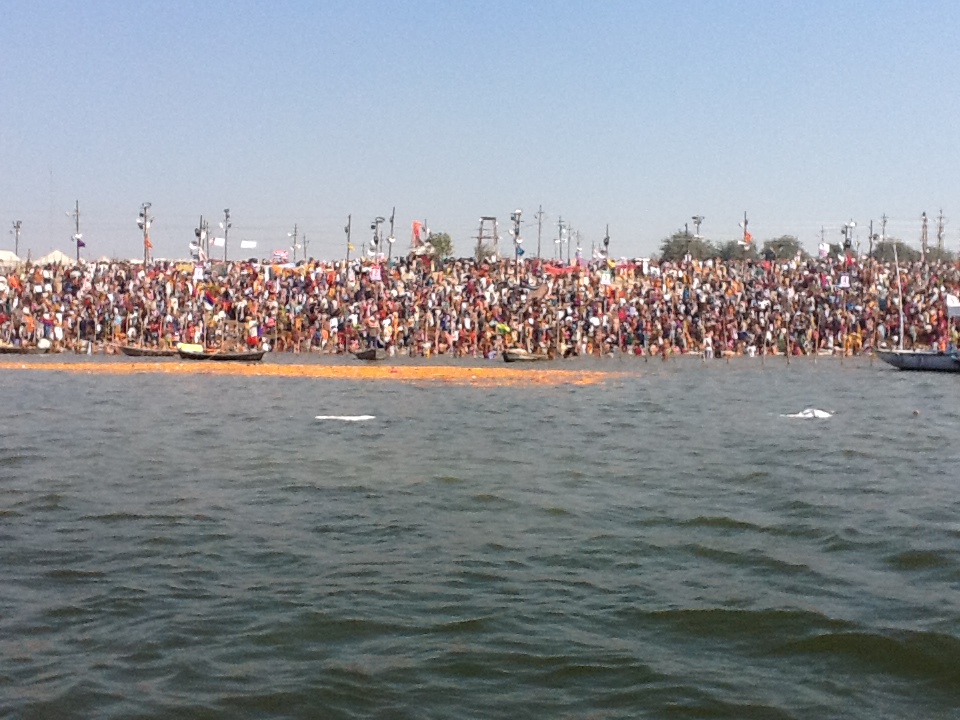
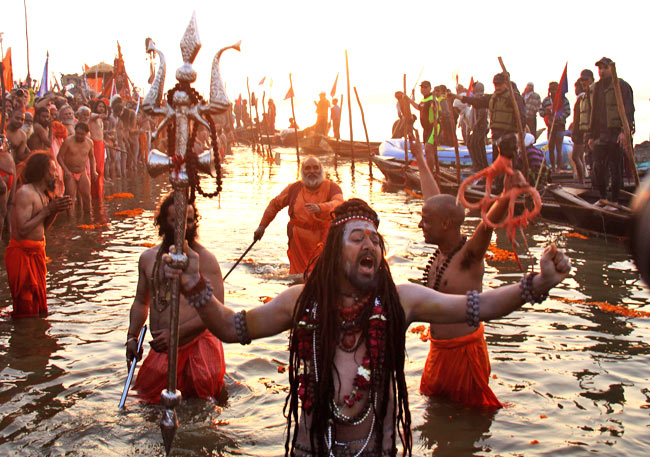
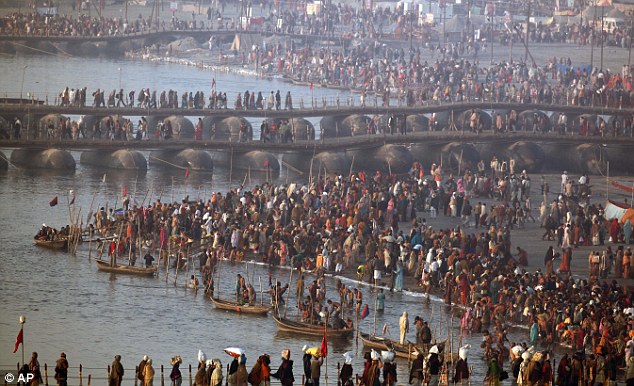
Parvati and Parameswara were going on rounds. Parvati was wonderstruck when she saw the Kmbhamela in Prayag. She said to shiva, “Swami, millions of people are taking holy dip here. I understand that all their sins would be washed away if they take one dip in the holy river. What would happen if all the people are absolved of their sins? There would not be enough space in the heaven and the hell would be empty. Shiva smiled at her and said to her, “My darling, not all the people believe that their sins are gone. So don’t worry too much. But Parvati was repeating what she said because she was unconvinced by Shiva’s reply. Then Siva suggested a novel idea. “Parvati! You go to the banks of Ganga and become a 16 year old girl. I would come there as a sick person afflicted with severe leprosy. I would pretend a sudden death. Then you cry loud and ask for help to dispose my body. But put a condition that my body should be touched only by a person without sins. Then watch what happens”.

mahakumbh-13_021013051606

As planned Shiva came with severe leprosy. Parvati accompanied him as a beautiful teenage wife. Suddenly Shiva fell down and the Parvati cried for help. Lot of people came running to help her. But she insisted that one without sins only could touch him. Everyone moved out slowly. Suddenly one ugly, un cultured, uneducated person came forward and told her that he could do the job in a minute. But she put the same condition and asked him whether he was without any sin. He said to her that he had all the sins to his credit but nothing should worry her. Saying this, he suddenly jumped into Ganga and came back with his wet clothes. He said to her that all his sins had gone the minute he bathed in the Ganga. Parvati allowed him to touch the body of her husband (Shiva). Both of them disappeared at that minute.

கும்ப

Many people follow the rituals without faith. But that uneducated person had tremendous belief in the power of Holy Ganga.

Neither Heaven is always full, nor hell is always empty !!

Mystery of Thirst: Karna’s Question and Krishna’s Answer

karnanan-1-e13315594338311

Written by London swaminathan

Article no. 1714; dated 13 March 2015

Up loaded at 08-45 am London time

Freedom Fighter Subramanya Siva has written a voluminous book running to 830 pages on Hindu Traditions and the title of the book in Tamil is “Moksha Sadhana Rahasyam”. The rare book is in the British Library, London. He is narrating beautiful stories in simple Tamil and one of them is about the merits of doing Anna Dhana. I am giving a rough translation of this excellent story:–

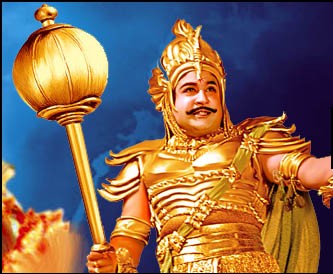
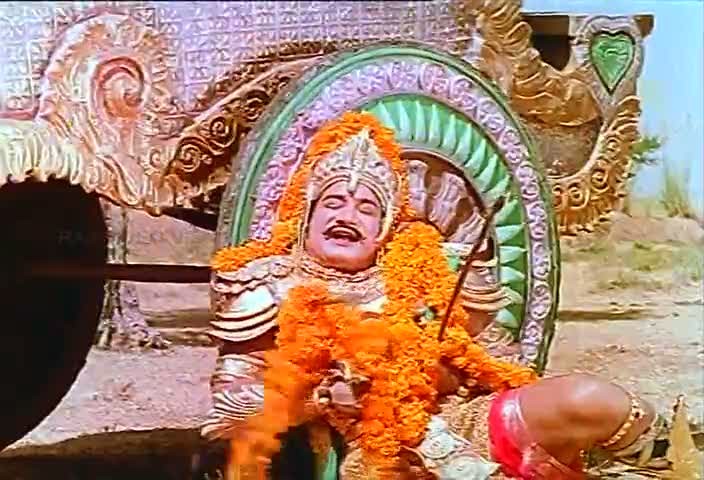
Karna was defeated in the Mahabharata war and had fallen down on the battle field. He was suffering from great thirst. No one was able to fetch him water. The all- powerful and all-knowing Krishna (omnipotent and omniscient) was passing by Karna. Krishna was smiling at Karna. Seeing Krishna there Karna begged him for water. Krishna said, “Is that all you want from me? No problem, here it is”

கர்ண

Water gushed out and fell on the hands of Karna. But wonder of wonders! The water turned into gold. How many times Krishna tried did not matter. All the water became gold. Karna was disappointed and Krishna was puzzled.

Karna looked at Krishna for an explanation.

Omniscient Krishna thought for a minute. He saw what went wrong through his Jnana Drushti  (Third Eye= Eye of Wisdom).

Krishna said,

“Dear Karna! You are one of the greatest philanthropists the earth has ever seen. You gave nothing but gold to all the people that came to you begging for some Dhaana! ( English word donation came from Sanskrit word Dhaana). But you denied food for a person. You showed him the Anna Chatra (choultry for food= Food Centre) nearby and asked him to go there. Don’t worry. It is not too late. Suck with your Index finger. Since you used your Index finger to point out the food centre, some merits (Punya) have stuck to your Index finger. That is enough for you to get the water at this last minute of your life”.

When he asked Karna to suck his index finger. And, behold, the water was pouring into his mouth!

கண்ண

Story of a Greedy Miser!

Long time after this happened a miser heard this story. He was very happy. He wondered, “Oh, My God! If one can earn this much merit (punya) with one finger, how much credits I can earn with my whole body!” At that time he heard a knock at the door. One beggar was standing there begging for food. He remembered what he planned to do. He wriggled his whole body and shown him the direction in which there was a food centre (Anna Chatra). The man went to the Anna Chatra. This miser was born as a wriggly earthworm in his next birth.

Action only won’t help you; good intention must be there!

Stories told by Subrahmanya Sivam, Freedom Fighter, in his Tamil book Moksha Sadhana rahasya.

swami_48@yhaoo.com

Hindu Issues: Questions from Medical Students!- Part 2

IMG_2472

Written by London swaminathan

Article No 1695; Dated 6th march 2015

London Time 11-09 am

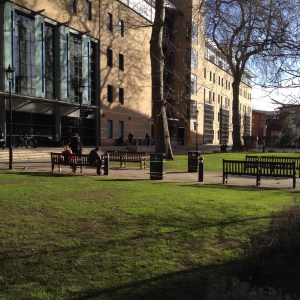
This is the second and final part of my talk to the medical students at Kings College, London. Please read the first part before reading this part.

Alcohol prohibited

When I said alcohol is also prohibited, a girl student interrupted me asking where in Hindu scriptures it is said that you should not drink? I answered her: It is written in all the Hindu scriptures from the Vedas to the latest literature (Tirukkural in Tamil). I told her that I wrote an article on the same topic in my blog showing the difference between Sura Pana (alcoholic drinks) and Soma Pana. Even soma pana is not a narcotic drug. It was a medicinal herb. (One student took my website ID)
IMG_2476

ABORTION: Brunu Hathi

Abortion is a big issue in the U S.; during the American elections it becomes a heated issue. In India the female foeticide has created a big problem now. The ratio between male and female has gone down to a dangerous level. In some places there are only 800 girls for 1000 boys. It may create moral issues. Even now marriages are becoming difficult. But Hindu religion never allowed foeticide. Killing a foetus is considered a murder- Brunu Hathi. 1500 years ago the families of boys went to bride’s house and gave money to get the girl. We have enough proof for it in ancient Tamil and Sanskrit literature. After 1000 year foreign rule in India, it changed topsy-turvy. Boys were demanding dowry money. Then having a girl in the house was considered a burden. This was the reason for female foeticide. It is not allowed in Hindu religion. Because of this imbalance, now boys are ready to give dowry!

I had a chat with a London doctor about it. She believes in all the old Hindu values. She told me that she also supported abortion, when it was known that the child will have some serious genetic diseases. Nowadays people do it if they know for sure that would be child will have some serious deformities. In those days we did not have tests such as amniocentesis.

Two thousand years ago the condition of women were very different in India. They were highly educated and attended conferences where philosophical debates took place. Even before the Greeks started writing their epics Hindu women were attending such sessions and questioning great scholars of those days. We know Gargi Vachaknavi and other such women who lived 3000 years ago.

Organ donations

Very often I am asked about organ donations and religious sanction for it. We did not have much about it in our literature. Though medical scholars like Susruta talk about Rhinoplasty (Nose Transplant) 2500 years ago, we don’t know about organ “donations”. We have to do certain organ transplants within few hours of their availability. We did not have those facilities 2000 years ago.

There are interesting stories such as a devotee of Lord giving eye (Kannappa Nayanar) and another devotee giving his bone (Dadichi). But they all fall under mythology. We know for sure a Pandya king getting golden hand after he cuts his hand for some blunder he did the previous night. I narrated the story of Golden Handed Pandya king (Por Kai Pandiya: It is already in my blog). This showed clearly that they had the techniques of transplanting eyes, hands, noses etc.

Going back to the question of signing some documents regarding donating the organs after one’s death, it is all individuals’ choice. Hinduism is an ever changing religion. It adapts quickly. Only the basic values are kept intact. So even if my son comes to me tomorrow asking my opinion on donating his organs, I will leave it to his discretion. We read a lot of moving stories in the newspapers about donating organs for the benefit of others. Even when a youth dies, his organs are living in four or five persons’ bodies!

IMG_2469

Euthanasia & Attitude towards Life

Again euthanasia is a new concept. I can’t see anything against or for in the scriptures. 2000 years ago, the third stage of a Hindu’s life was Vanaprastha. Parents themselves withdrew from everything worldly and went to the forest for yoga and meditation. They were ready to die. When they saw their grandchildren well off in life, they thought they must leave home. Since Hindu scriptures explain that death is like changing garments (Bhagavad Gita), they did not bother about dying at ripe old age. But finishing someone’s life at an early age because of suffering is not documented.

Dead bodies and Post-mortem

Hindus feel discriminated against in the Western hospitals. When they allow Muslim dead bodies to be buried within 24 hours even without a post-mortem or namesake pot mortem, they insist post mortem in the case of Hindu patients even when they knew the reason for death. Recently my friend died in hospital aged 87, after 15 years on dialysis. They insisted post mortem in spite of his wife’s protests. As a result of which the funeral was delayed by a week. But according to scriptures the body must be cremated within 24 hours. Back home they did not even cook food in the house where a death occurred and the community used to cook for the families for the first few days. (Then I narrated the court case that was filed in a Northern England city for open cremation like in India etc.)

Charaka, Susruta and “AYUSH” – a new Department

I told the students that India was far advanced in medical sciences 2500 years ago. We have the medical books written by Charaka and Susruta. Charaka in his 120 chapters dealt with pathology, anatomy, toxicology, nursing, nutrition and pharmaceutics. Susruta in 184 chapters dealt with 1120 illnesses, 700 medicinal plants, surgical procedures, rhinoplasty, cataract, hernia surgeries etc. He mentioned the names of innumerable surgical instruments!

Immediately one student interrupted me saying that he understood allopathic system is practised in India. I answered him that it is very correct to say that in Indian cities, English medicine is more used, but in village areas still the native medicines are used. After Indian life style changed to “Sofa and TV culture”, they wanted quick solution for their illnesses and allopathic medicines came very handy. But the Indian Government has set up a department called “AYUSH” ( A for Ayurveda, Y for yoga, U for unani, S for siddha and H for homeopathy) to encourage scientific research in the traditional medicines.

Then I mentioned the controversy about Yoga, after a remark by an American pastor that Christians should not practise Yoga and the BBC Radio programme on it a few days back. I told them that even my Muslim colleagues attended Baba Ramdev’s Yoga programme here in London. Though mantra is used in initiation, people can still practise the exercise part of it without involving religion.

Vegetarianism: Are all Hindus vegetarians?

Not all Hindus are vegetarians. But beef is prohibited. When Hindu patients get admitted to hospitals hospital staff ass their preferences. But vegetarian dishes are always very few and not cooked tastily. It is always boiled potatoes plus something else!

When I said beef is prohibited, one person asked a question: So you don’t drink milk or take Yogurt (curd) then?

My answer: I was born in a vegetarian family. But I have been drinking milk from my childhood days. The Vegan concept is not known in India. Our ancient Hindu seers were living just on milk and honey. They raised cows and bulls in their Ashrams (holy shelters).

The reason for adopting vegetarianism is that they dont want to kill animals. They know very well that plants are also living beings, but they thought it is less evil to kill the plants. Even non vegetarians have their own views; some don’t kill pigs, some don’t eat horses or elephants. Theoretically speaking a man can eat another man. There is no higher or lower among the living things. But we don’t do it on moral grounds. There was a strange case of man eating men in South American jungle after a plane crash. It was reported in a Readers Digest Article. Men do anything for survival. Recently we read in the British newspapers that after a ferry disaster everybody wanted to escape. Nobody listened to the captain who said that children and women should be given priority. We only setup rules for certain reasons. Hindu seers don’t eat non vegetarian. Even Sikh Gurudwaras never cook or serve non vegetarian food. Recently we saw Prime Minister David Cameron’s photo making chapatis in a Sikh Gurudwara in Northern England.

(I told them about high Upansihdic principles of Tat tvam asi, Aham Brahmasmi etc and explained that even Charvakam/atheism is considered part of Hindu way of life. Like Buddha one can follow a set of moral code without thinking about God/agnostic)

It was a two hour talk. I did not put everything I said there. Only the gist is given to show the medical students’ areas of interest.

Swami_48@yahoo.com

ரகுராமன், ராஜாராமன், சிவராமன், சீதாராமன், ஜெயராமன், ஜானகிராமன்,வெங்கடராமன்….

எழுதியவர் –Santanam Nagarajan

கட்டுரை எண்: 1694 தேதி 6 மார்ச் 2015

rama beauty

தமிழ் திரைப்படங்களில் ராமர் – 8

ச.நாகராஜன்

சீதைக்கேற்ற ராமனோ!

அம்பிகையின் கேள்வி

கோடானுகோடி பிரம்மாண்டங்களைப் படைத்துக் காக்கும் அம்பிகைக்கு ஒரு பெரிய கவலை – தான் படைத்துக் காக்கும் இந்த மனிதர்கள் எப்போது கடைத்தேறப் போகிறார்கள்!  உள்ளம் கருணையினால் ததும்ப சிவபிரானை நோக்கி அம்பிகை இந்தக் கேள்வியைக் கேட்க சிவபிரானோ புன்முறுவலுடன் அது தான் விஷ்ணுவைத் துதிக்கும் ஆயிரம் நாமங்கள் உள்ளனவே, அதைச் சொன்னால் சம்சார சாகரத்தைக் கடந்து விடலாமே என்கிறார். ஆயிரம் நாமங்களையா? இருக்கின்ற கொஞ்ச நேரத்தில் சுயமாக உருவாக்கிக் கொண்ட தமது பிரச்சினைகளையே இவர்களால் நினைத்துக் கூடப் பார்க்க முடியவில்லை, எப்படி ஆயிரம் நாமங்களைச் சொல்வதாம்! அம்பிகை கவலை மிகக் கொண்டு சிவபிரானை நோக்கிக் கேட்கிறாள்:

“கேனோபாயேன லகுனா விஷ்ணோர் நாம ஸஹஸ்ரகம் I

பட்யதே பண்டிதைர் நித்யம் ஸ்ரோதுமிச்சாம்யஹம் ப்ரபோ II”

“ப்ரபோ! பண்டிதர்கள் சொல்லும் விஷ்ணுவின் ஆயிரம் நாமங்களைச் சொல்ல லகுவான வழி ஒன்று இருக்கிறதா? அதைக் கேட்க எனக்கு விருப்பமாக உள்ளது!”

என்று இவ்வாறு அம்பிகை லகுவான உபாயத்தை கேட்க சிவபிரான் அதற்கான இரகசியத்தை இப்படி அருளுகிறார்:-

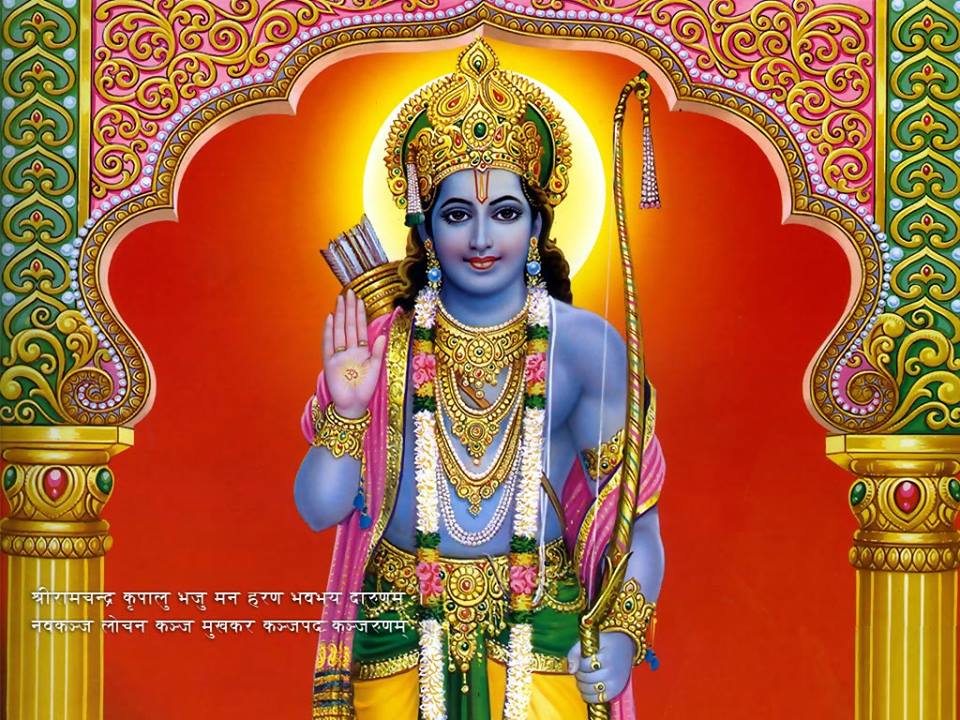
“ஶ்ரீராம ராமேதி ரமே ராமே மனோரமே I

ஸஹஸ்ரநாம தத்துல்யம் ராமநாம வரானனே II”

ஆயிரம் நாமங்களுக்குச் சமமான ராம நாமத்தைச் சொன்னாலே, போதுமே – இது சிவனாரின் அருளுரை. மானுடர் அனைவருக்கும் லகுவான ஒரு உபாயத்தைக் காண்பித்து விட்ட திருப்தி அன்னைக்கு!

 rama with anuman

எங்கும் ராமர்; எதிலும் ராமர்

  இந்த அன்னையின் ஆணையை ஏற்றுக் கொண்ட பாரத தேச மக்கள் தொன்று தொட்டு இந்த இரு எழுத்துக்களைத் திருப்பித் திருப்பிச் சொல்ல வேண்டும் என்பதற்காக ஆங்காங்கே ராமர் கோயிலைக் கட்டுகின்றனர்; பிறக்கும் பிள்ளைகளுக்கு ராமர் பெயரை வைக்கின்றனர். முடிந்த வழிகளில் எல்லாம் ராமரை நினைக்க வழி செய்து கொள்கின்றனர்!

பெயர்களில் தான் எத்தனை ராமர்!

ரகுராமன், ராஜாராமன், கோதண்டராமன், சீதாராமன், சிவராமன், ஜானகிராமன், ஆத்மாராமன், ஶ்ரீராமன், வெங்கடராமன்,சங்கரராமன், சாந்தாராம், ஹரிராம், விஷ்ணுராம், மாதவராம், கேசவ் ராம், கோவிந்தராம்,கோபால்ராம், விநாயக்ராம், சகாராம்,கல்யானராமன், ஜெயராமன், செண்பகராமன், சேதுராமன்,முரளிராமன், ராமலக்ஷ்மி, ராமராஜன், ராமசுப்ரமணியன், ராமசந்திரன், ராமகோபாலன், ராமமகிருஷ்ணன்,ராமேசன்,ராமசேஷன், ராமகூலம், சிவராம கிருஷ்ணன்,சங்கர ராமலிங்கம் .இப்படி ராமனை முதலிலும் இடையிலும், பின்னும் கொண்டுள்ள பெயர்களுக்கு முடிவே இல்லை! இப்படி, குழந்தைகள், நண்பர்கள், உறவினர்கள் பெயர்களை அழைக்கும் போதெல்லாம் ராம நாமம் சொல்லும் பாக்கியம் கிட்டட்டும் என்பதாலேயே நம் முன்னோர் இப்படி வாழ்க்கையின் ஒரு அங்கமாக ராமரைப் பெயரில் அமைக்கலாயினர்!

ஆக இந்த ராமனை திரைப்படப் பாத்திரங்களில் ஆயிரக்கணக்கானோருக்குச் சூட்டுவது இயல்பு தான்! இதைக் கணக்கெடுக்கவும் முடியாது; தேவை யுமில்லை1

 ram gambira

இதே பாரம்பரியத்தைப் பாடல்களிலும் திரையிசைக் கவிஞர்கள் கடைப் பிடித்தனர். இதில் அவர்களுக்கு பெருத்த லாபம் ஒன்று இருந்தது. ராமர், சீதா, லக்ஷ்மணன், பரதன் என்று சொற்களை அமைத்து விட்டால் ஆயிரமாயிரம் ஆண்டு பாரம்பரியப் பின்னணியைக் கொண்டு, சொல்ல வேண்டிய விஷயத்தையும்  சுலபமாக அவர்களால் சொல்லி விட முடிகிறது.காதல், நட்பு, அரசாட்சி, அறத்தை வெல்லுதல், தந்தை தாய் சொல்லைக் கடைப்பிடித்தல், வீரம், ஈகை போன்ற குணங்களைச் சுட்டிக் காட்டல், இப்படி எதை எடுத்தாலும் ராமாயணம் நமக்கு உதவும். ஏன், எதிர்மறை குணங்களான வஞ்சகப் பேராசைக்கு ஒரு கைகேயி, சூழ்ச்சிக்கு ஒரு கூனி, தகாத காமத்திற்கு ஒரு சூர்ப்பநகை, ஆணவம், சர்வாதிகாரத்திற்கு ஒரு ராவணன் என்று கூடாத விஷயங்களைச் சுட்டிக் காட்டவும் ராமாயணமே போதும்!

 இந்த வகையில் ராமரை எப்படியெல்லாம் பயன்படுத்தி இருக்கிறார்கள் என்பது ஒரு சுவையான விஷயம். நெகடிவ் பாத்திரங்களாக இருக்கும் சூர்ப்பநகை, ராவணன், கும்பகர்ணன் கூட பாடல்களிலும், நகைச்சுவை உரையாடல்களிலும் இடம் பெற்று வந்து கொண்டே இருந்ததையும் நீண்ட காலத் தமிழ் திரைப்பட வரலாறு சுட்டிக்காட்டுவதைப் பார்க்கலாம்!

ராமர் எப்படியெல்லாம் பாடல்களில் பயன்படுத்தப்பட்டார் என்பதற்குச் சில உதாரணங்களைப் பார்க்கலாம்.

 rama,sarathy bhattar

எதிர்காலக் கணவனைக் கற்பனையில் காண – ராமர்!

1962ஆம் ஆண்டு ஶ்ரீதர் இயக்கத்தில் வெளியான சுமைதாங்கி திரைப்படத்தில் எம்.எஸ்.விஸ்வநாதன் டி.கே.ராமமூர்த்தி இசையில் எஸ்.ஜானகி பாடும் பாடலுக்கான கவிஞர் கண்ணதாசனின் வரிகள் இவை:-

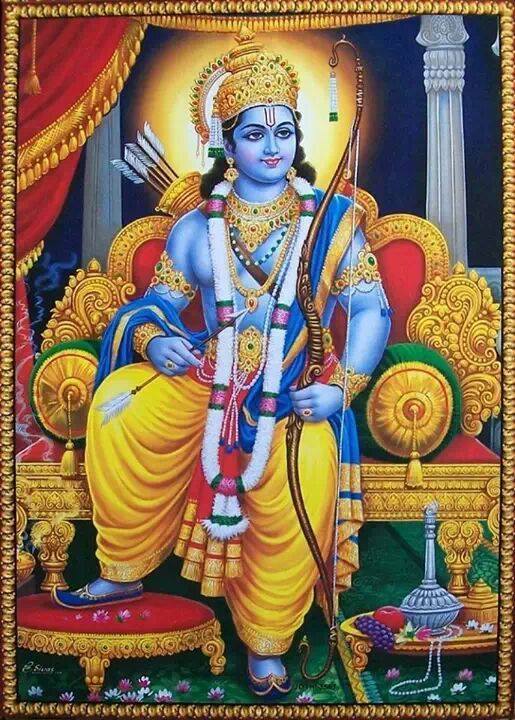
ராதைக்கேற்ற கண்ணனோ சீதைக்கேற்ற ராமனோ

கோதைக்கேற்ற கோவலன் யாரோ

அழகுக் கோட்டைக் கேற்ற காவலன் யாரோ

காதலிப்பவனோ அதில் பேர் எடுப்பவனோ

கண்ணிரண்டில் பெண்ணைக் கைது செய்பவனோ

ஆதரிப்பவனோ உன்னை அனுசரிப்பவனோ

இல்லை, ஆசை தீரும்போது நெஞ்சம் மாறுகின்றவனோ – ராதைக்கேற்ற

17 மொழிகளில் பாடி சாதனை படைத்துள்ள எஸ்.ஜானகியின் இன்குரலில் இந்தப் பாடலை இன்றும் கேட்போர் ஏராளம். படத்தில் நடிகை தேவிகா இந்தப் பாடலைப் பாடுவதாக காட்சி அமைப்பு உள்ளது. ‘உனது வரும் காலக் கணவர் ராமர் போல இருப்பாரா’ என்ற கேள்வியைக் கொண்டுள்ள இந்தப் பாடலில் ராமரைத் திரைப்படம் கையாளும் ஒரு அம்சத்தைப் பார்க்கலாம்!

*************

swami_48@yahoo.com