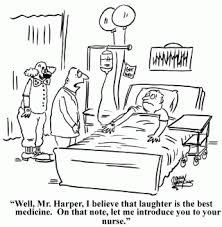
Only a Doctor can kill you Without Punishment– Part1 (Post No.14,980)

Written by London Swaminathan

Post No. 14,980

Date uploaded in London –  13 September 2025

Contact – swami_48@yahoo.com

Pictures are taken from various sources for spreading knowledge.

this is a non- commercial blog. Thanks for your great pictures.

tamilandvedas.com, swamiindology.blogspot.com

xxxx   

1PROVERBS ON DOCTORS AND MEDICINE

The doctor dressed his wounds, but God healed him.

Eat leeks in March, garlic in May; all the rest of the year the doctors may play.

-British proverbs

He that eats but one dish seldom needs the doctor.

A drunken doctor is always clever.

-Irish

Many doctors- death accomplished.

The inexperienced physician makes a humpy church yard.

Live with reason and you will live without physicians.

–Czech

Fresh air impoverishes the doctor.

A house closed to the poor will open to the doctor.

–Danish

He who shakes everyman by the hand may be glad to fee the doctor.

A good doctor must have falcon’ s eye, a girl’s hand, and a lion’s heart .

A young doctor requires a big cemetery.

–Dutch

He is a fool who makes his doctor his heir

The doctor is often more to be feared than the disease.

The presence of the doctor is the beginning of the cure.

The gentle handed doctor makes a stinking wound.

It is only doctors who are allowed to lie.

Bread and cheese medicines for the well.

Most men die of their medicines and not for their maladies.

A mess of broth hath lost the physician his fee.

All sicknesses arrive on wings and depart limpingly.

One sees more old drunkards than old doctors.

–French

If God helps you—thank the doctor.

Do not ask the doctor, ask the patient.

A young doctor is a new graveyard.

New doctor- New churchyard.

Good doctors don’t like big bottles.

The doctor’s errors are covered with earth, our own mistakes with love.

Mirth, temperance and tranquillity shut the door in the doctor’s face.

No doctor is better than three.

Healthy folk make sick doctors.

When there are three doctors to one patient, the cemetery can return thanks.

God and doctor are acknowledged in need.

The lawyers purge the purge, the doctors the stomach, the parsons the soul.

There are more old tipplers than old doctors.

When you call the physician, call the judge to make your will.

Who has a physician has an executioner.

A lucky physician is better than a learned one.

No physician is better than three.

Three things a good physician must have: a lion’s heart, a maiden’s hand, and eagle’s eye.

A young physician should have three graveyards.

Illness always enters where it is well nursed.

Illness comes on horseback and leaves on foot.

When two invalids meet, the illness remains in the middle.

—German

The disorder is a physician.

Consult not the physician, but the disorder.

Don’t consult the doctor but the one who has been ill.

–Greek

First the doctor, then the God—Georgian proverb.

Only a doctor can kill you without punishment.

When everybody is doing well, the doctor is miserable.

–Hungarian

He who doesn’t know a trade becomes a doctor.

Where the sun does not go, the doctor goes.

While the doctor is reflecting, the patient dies.

A doctor’s error, the will of God.

The friend of the priest loses his religion.

The friend of the doctor loses his health;

The friend of the lawyer loses his substance.

If the patient dies, it is the doctor who has killed him and if he gets well, it is the saint who has cured him.

—Italian proverbs.

To be continued………………..

Tags- proverbs , doctor, physician, medicine, illness, disease, cure

BIG SALUTE TO TWO RUPEE DOCTOR AK RAIRU GOPAL

 Kannur’s ‘two-rupee doctor’ AK Rairu Gopal passes away at 80For over 50 years, Dr Rairu Gopal stood as a beacon of hope for the common people—the poor and working class—charging just Rs 2 (later increased to Rs 10) for a consultation and often providing free medicine to those in financial distress..
Kannur’s ‘two-rupee doctor’ AK Rairu Gopal passes away at 80For over 50 years, Dr Rairu Gopal stood as a beacon of hope for the common people—the poor and working class—charging just Rs 2 (later increased to Rs 10) for a consultation and often providing free medicine to those in financial distress.Statesman News Service | THIRUVANANTHAPURAM | August 3, 2025 8:04 pm
Dr AK Rairu Gopal, fondly known as Kannur’s “two-rupee doctor” for treating patients at a nominal fee when healthcare had become a business, passed away on Saturday due to age-related illness.
For over 50 years, Dr Rairu Gopal stood as a beacon of hope for the common people—the poor and working class—charging just Rs 2 (later increased to Rs 10) for a consultation and often providing free medicine to those in financial distress. Driven by an unwavering sense of duty, he examined patients tirelessly from 4 am to 4 pm, later adjusting his schedule to 6 am to 4 pm. At the peak of his practice, he attended to over 300 patients a day.Despite his advancing age, he continued to see patients until 2024, when he put up a sign outside his home in Thana, Kannur, announcing that he was no longer conducting consultations due to health reasons.The sign read: “I don’t have the health to work anymore… so I’m stopping consultations and dispensing medicine.” Yet, despite this, he continued to serve whenever he could.
Initially, Dr Rairu Gopal offered consultations from his home at Thalap in Kannur. The consultation fee was just two rupees. Those in financial distress were provided with free consultations and medicines. When he moved to Thana in Kannur, he increased the consultation fee to ten rupees, but the nickname “Two-Rupee Doctor” stayed with him.
Born to Dr AG Nambiar and AK Lakshmikutty Amma, Dr Rairu Gopal was an epitome of service and compassion. He started charging a modest fee from patients after hearing his father’s words, “If you want to make money, there are plenty of other professions.”
In his final days, Dr. Rairu Gopal stated he had treated 18 lakh patients throughout his lifetime. He leaves behind a lasting legacy of compassion and selfless service.—SUBHAM–

TAGS- TWO RUPEE , DOCTOR, KANNUR, AK RAIRU GOPAL

Revisiting the Charaka Samhita

Revisiting the Charaka Samhita

In keeping with its policy of promoting India’s own knowledge systems, the Government of India has of late proposed integrating MBBS, the standard degree for physicians trained in modern medicine and surgery, with BAMS (Bachelor of Ayurvedic Medicine and Surgery) which is rooted in ancient Indian medical traditions.

MANAS DAS | New Delhi | July 30, 2025 9:01 am THE STATEMAN

In keeping with its policy of promoting India’s own knowledge systems, the Government of India has of late proposed integrating MBBS, the standard degree for physicians trained in modern medicine and surgery, with BAMS (Bachelor of Ayurvedic Medicine and Surgery) which is rooted in ancient Indian medical traditions. Although the idea is offered as a push towards ‘holistic’ medicine, anxieties prevail in many quarters regarding the implementation of such a scheme.

Many in the academic fraternity as well as common people feel that ayurveda, the ancient medical tradition of India, cannot match the allopathic branch of modern medicine and surgery, with respect to technological progress, advanced research and complexities of modern ailments. But why do modern physicians have reservations about ayurveda? According to some scholars, this branch of ancient medical science has not undergone timely revisions and what is taught at ayurvedic colleges is an incongruous mix of truths and untruths. Moreover, the discipline has remained intellectually stagnant because of a continued reliance on outdated texts and traditional beliefs. It is indeed a sad decline for a branch of knowledge that was part of the great glory of ancient India.

The 3000-5000-year-old traditional system of healthcare of the Indian sub-continent is truly India’s precious yet neglected treasure box. Dating back to the Vedic period, this ancient medical science is widely accepted as a holistic system with a philosophy that gives importance to the physical, mental, spiritual, social and environmental factors related to health and medicine. It accepts the panchabhuta-based (the five basic elements Prithvi, Jala, Agni, Vayu and Akasa that is, earth, water, fire, wind and space) nature of all natural objects, including the human body. Today ayurveda and other traditional systems of healthcare are steadily gaining ground across the world, given the prohibitive cost of modern allopathic treatment and its side-effects.

Unfortunately, in India, where ayurveda originated, there is a colossal indifference to this centuriesold medical treatment system. The apathy towards ayurveda in India started from the British period. All research came to a halt and allopathic medicine and treatment were given full patronage and preference. Even after independence, ayurveda in India, for decades, faced neglect, lack of respect and lack of funding that naturally impacted the quality of its practitioners and its medicines. Only recently, under the present dispensation at the Centre, the ancient wellness system is being given some importance through various missions, schemes and incentives that have resulted in renewed interest in ayurveda in India. As India and the world are gradually veering towards ayurveda in search of physical and mental wellbeing, we must remember the towering figure of Charaka, the founder of the ayurvedic system, and his monumental contribution.

People all over the world regard Hippocrates (460- 377 BC) as the father of medicine, but only a few are familiar with the contributions of Charaka who lived in the Indian subcontinent. Charaka is credited with editing one of the most ancient, authentic and popular medical treatises in the world, “Charaka Samhita”, which is one of the foundational texts of classical Indian medicine and ayurveda. Charaka’s treatise is broadly viewed as much as a guide on how to live as it is about how to get better. In the early 20th century, the tradition became professionalised, and now it is government policy with ayurveda and other old medical practices assigned a ministry of their own.

Charaka’s book has been translated in many international and national languages and in one example of its global popularity a “Charaka Club’ was established in New York in 1898 by a group of four doctors to perpetuate his memory. No exact timeline can be set regarding the birth of Charaka. There are many stories regarding his birth and life. In Vedic times, a branch of Krishna Yajurveda was known as Charaka. In one ayurvedic compendium, “Bhavaprakasha”, Charaka is described as a sage, born as the incarnation of ‘Shesha Naga’, the serpent king. As nothing conclusive has been found about Charaka’s personal life, the main source of biographical details remains Charaka Samhita or “Compendium of Charaka.” The text mentions Himalayan place names, plants and foods found in the hills, so we can be quite sure that he lived in north India.

References to Chandrabhaga river suggest his Kashmiri origin. As per the Chinese translation of the Buddhist text “Samyukta Ratna Pithaka Sutra”, Charaka was, however, a physician to a Kushan king named Kanishka, whose mountainous realm, in the second century of the Common Era, stretched from Bactria to today’s Bihar. But it is uncertain whether the name Charaka refers to one man, or to the members of a school of thought perhaps even to a clan or community of practitioners. Indeed, Charaka Samhita encompasses multiple voices and a range of subjects, presenting alternative views of more than one physician. As a treatise, the Charaka Samhita is encyclopaedic, covering almost all aspects of life: epidemics, heredity, the reasons why we live as long as we live; how lives can be made longer or shorter; from earthly topics like visiting toilets to sublime ones such as the nature of wisdom and why the abrogation or violation of wisdom causes all diseases; how to build and supply and run a hospital, and many other topics such as what time one should get up in the morning, what one should eat, the kind of people one should associate with and how to live a virtuous life.

The book is written in Sanskrit and, like other texts from early Indian history, it was composed in a poetic style so that it could be chanted, memorized and passed down. While analyzing the treatise, one finds that Charaka’s model of the body and its functions were in many ways different from the one we would recognise today, and his concepts don’t translate easily into modern terminology. There is no circulating blood, for instance, and no beating heart. Ayurveda’s operating principles are based instead on a conception of the body’s basic ‘humours’: ‘vatta’, ‘pitta’, and ‘kapha’ (wind, bile and phlegm) and on the belief that if these elements are displaced from their proper bodily locations, illness follows.

Ayurveda, like other traditional medical systems such as unani and siddha, sees the human body as part of a vast natural, even cosmic, system of causality. But within that system individuals play an important role as moral actors shaping their own lives and trying to help sustain the universe. Disturbances of the humours and other afflictions are often caused by our own disregard of the basic principles of well-being what Charaka calls “violations of good judgement”. To stop external diseases Charaka suggests the following: “Give up violations of judgement; calm the senses; be mindful; be aware of time, place and yourself and adopt a good lifestyle.”

However, ideas about good conduct proposed in treatises like Charaka Samhita do not represent a uniquely ayurvedic point of view. Rather, they share a great deal with the general worldview conveyed in other Sanskrit Brahminical literature. But the Charaka Samhita diverges from that worldview in its more dialectic spirit. Charaka commends debate as the central method to advance knowledge about life and health. He sets out precise rules for “parleys of specialists”, and much of his treatise is in the form of questions and answers between a teacher and a disciple.

The increasingly popular psychosomatic constitution or “Prakriti” as a patient-specific treatment approach was first explained by Charaka. At the time of conception itself, this ‘prakriti’ or constitution gets determined and this is not changed. This consists of a series of physical, mental and behavioural traits. These determine whether a man belongs to ‘pitta prakriti’, ‘vatta prakriti’ or ‘kapha prakriti’. It is a physician’s job to determine this nature in every patient as it is essential for identifying the predisposition to diseases. Secondly, it is important to determine the course of the disease. In certain people, one disease has a rapid course while in others the disease lingers for weeks and months.

Most importantly, ‘prakriti’ determines response to treatment. The same treatment will not have identical effects on different situations and in different patients. Although the concept of ‘prakriti’ enables practitioners to identify treatments for their patients that are non-generic, it is not exactly customized. As one Charaka researcher, Dominik Wujastyk of Vienna University, feels: “…it’s quite a fine-grained diagnostic tool but it should not be confused with New Age ideas of treating the whole man and not just the symptoms.” Although composed in the ancient period, Charaka Samhita continued to be studied, and its ideas followed, by traditional practitioners right through the medieval period and into the nineteenth century. The emergence of ayurveda as a field of modern professional practice, however, dates back to the late nineteenth century when Indian scholars started to publish editions of Charaka Samhita.

This caught the attention of Western scholars and resulted in an eruption of Charakamania in medical and Indological circles in the West during the 1890s. That interest filtered back to a Western-educated and increasingly nationalist Indian elite, which was searching for aspects of its own history and tradition by which to counter British dominance. Gandhiji, though not himself an advocate of ayurveda he favoured naturopathy saw the readoption of Indian medical principles as a way to recover autonomy, or swaraj. He condemned Western medicine and doctors for undermining our self-control: “Doctors have almost unhinged us…I have indigestion, I go to a doctor, he gives me medicine, I am cured. I overeat again, I take his pills again.

Had I not taken the pills in the first instance, I would have suffered the punishment deserved by me and I would not have overeaten again. The doctor intervened and helped me to indulge myself…” It is not an easy task to enumerate all the contributions of Charaka in one essay. But we can at least remember some of his stellar contributions. Apart from his first-hand explanation of the basic physiological and anatomical fundamentals and principles of human life, he was the first physician to explain the concepts of digestion, metabolism, immunity and reproduction. Causes, pathology and management of various diseases were described extensively in ‘Charaka Samhita”.

Charaka propounded the threefold mechanism of body-mind-spirit and advocated that human life is based on the tripod of ‘Sattva” (mind), ‘Atma’ (spirit) and ‘Sharira’(body). He is therefore considered the original contributor of the modern day psychosomatic phenomena and mindfulness. Charaka introduced the concept of examination of disease and the diseased (Roga and Rogi pariksha) and his five-fold diagnostic techniques (Nidana panchaka) are successfully practiced by ayurveda doctors even today. Charaka is also credited with getting rid of blind beliefs and superstitions regarding occurrence of diseases and their treatment. He promulgated the rational treatment approach (Yuktivyapashya Chikitsa) in the management of diseases. Medical science was classified into eight specialized branches by Charaka.

Charaka’s compendium provided valuable advice to mankind for increasing longevity of life. The first chapter of Samhita is “Dirghamjivitiyam Adhyaya” meaning “Quest for Longevity”. Popular methods of “Rasayana” (Rejuvenation therapies) and “Vyadhikamatva” (Immuno-boosting therapies) are gifted by Charaka to mankind. We also get seasonal dietary and behavioural regimen (“Ritucharya”). Properties and therapeutic actions of thousands of herbs and formulations are described; these are still being used by ayurvedic practitioners. Popular ayurvedic formulations like ‘Chyavanprasha’, ‘Chitrakadi vati’, ‘Kansa Haritaki’, ‘Sitopladi churna’ and ‘Pushyanug churna’ are the contributions of Charaka. The devastating pandemic that we faced not so long ago was also foreseen by Charaka.

He warned us about such a pandemic and explained its causes, effects and do’s and don’ts. His term for the pandemic was ‘janpadodhwansa’. Although Western medicine has superseded all other branches of medicine and eclipsed the study and practice of ayurveda in today’s India, the stress and ill-health created by increasing wealth, rapid urbanization and aggressive competition for jobs at all levels of the economy have, ironically, helped Charaka’s ayurveda flourish.

As medical care becomes more and more like an assembly line in fiscally strapped health systems around the world and as doctors, in general, read generic codes for predispositions instead of looking at the table, the idea of staying away from the medicalindustrial complex can be compelling. One of the reasons why people turn to ayurveda is that Charaka’s system of treatment appears to promise them more recognition as individuals. At the same time, it places on each of us a greater responsibility for our health, enjoining us to live as Charaka teaches: with a little more judgement.

(The writer, a Ph D in English from Calcutta University and a freelance contributor, teaches English at the Government-sponsored Sailendra Sircar Vidyalaya, Shyambazar, Kolkata.)

 —Subham—

Tags- Charaka Samhita, Statesman Article, Manas das

DR RUDRA IN THE RIG VEDA (Post No.10,566)

WRITTEN BY LONDON SWAMINATHAN

Post No. 10,566

Date uploaded in London – –    15 JANUARY   2022         

Contact – swami_48@yahoo.com

Pictures are taken from various sources for spreading knowledge.

this is a non- commercial blog. Thanks for your great pictures.

tamilandvedas.com, swamiindology.blogspot.com

Rig Veda (RV) is the oldest book in the world dated between 6000 BCE and 1500 BCE. Scholars say it should have taken at least 500 years ‘to compose’ them or ‘put together’ in the present form. That means we must give the oldest part  of it 2000 BCE if we accept 1500 BCE as the date of RV. But Hindu Panchangas (almanacs) are crystal clear about the date of Veda Vyasa and they give him 3150 BCE. That means Vedas are in current form for at least 5000 years. Vyasa was the saint who divided Vedas into four and entrusted them to four of his disciples.

God is called Doctor and Medicine in the Rig Veda. Though mantras dealing with all Vedic Gods associate them with medicine and cure, Rudra commands the highest position in the field of Medicine. He was called Bhisak/ Doctor and Bhesajam/Medicine. Later we come across Dhanvantri, the Father of Medicine. We should call him the ‘father of MODERN medicine’. He is considered as Vishnu or his Avatar. Hindus call any one with some Divine Qualities an Avatar/incarnation of God.

Tamil poet Valluvan also confirms it in his Kural couplet 50. Tiru Valluvar (Valluvan) justifies all the 10 to 24 Avatars of Vishnu by this couplet. So Dhanvantri is Vishnu.

The words BHESAJAM and BHISAK occur in Vishnu Sahasranama as well. But there they mention the birth and death cycle as disease and God is described the physician who cures that disease. Later Tamil and Sanskrit poets use this concept throughout their devotional literature. One Sangam Tamil poet extended this to a philanthropist and called him ‘You are the Physician who cures the disease called Hunger’. This is in 2000 year old poem. But the same Vishnu Sahasranama called God as Vaidya (doctor) and Oshadi (herbal medicine).

All these show the concern of Hindus regarding one’s health, whether it is spiritual, mental or physical.

But if we go by the number of references to Doctor and Medicine then Rudra comes first. Rudra is Lord Siva. 2000 year old Sangam Tamil literature confirms it. Like Rig Veda Tamils never used SIVA until sixth century CE for Rudra. They used only his attributes such as Three Eyed, Blue Necked etc. In the same way Three Eyed -Trayambaka is in Rig Veda; Siva/auspicious as adjective is also in the Rig Veda.

xxx

References to Rudra in the Vedas

Yajur Veda (YV) has a part called Rudram-Chamakam. That is recited by all orthodox Saivite Hindus every day. The priests use it during Abishek of idols in all Siva Temples. Most sacred mantra OM NAMA SIVAYA and Trayambaka Mantra occur in it. God is praised as Bhesajam and Bhisak in it. But RV is older than YV.

Let us look at some of the mantras where physician and medicine occur in RV:-

1-43-2- Rudra’s medicines

1-43-4-Rudra, the possessor of healing remedies. Prayer for health and wealth.

xxxx

Yajur Veda -Vajasaneyi Samhita 16-48; Taittriya samhita5-10-1

Prayer to Rudra for men and beasts to be prosperous and free from disease.

2    Prayer to obtain what health and wealth father

Manu acquired

5  Rudra carries in his hands the best remedies.

7  Prayer not to kill he old men, boys, fathers, mothers, adults, foetus, and our bodies.

8   Prayer not to kill our sons, grand sons, and men, cows ad horses.

2-33-1

May we increase in offering O Rudra

2   Prayer  for 100 years of life by Rudra’s blissful medicines. Put away far from us  sickness in all directions.

One YV mantra mentioned  Rudra has 1000 remedies.

Xxx

Maruts and Medicine

Maruts /wind are considered sons of Rudra; he also has link   with medicine. Here are some RV references to Maruts and Medicine

RV 2-33-13

O Maruts, those pure medicines of yours.

RV 5-53-14

You shower down health and wealth, water and medicine, O Maruts.

RV 8-20-3

O bounteous Maruts, bring us some of your

Marut medicines

8-20-25

Whatever medicine there is on the

Sindhu , on the Askini , in the seas, on the mountains.

xxxxx

10-77-7

The man who offers gifts  to the Maruts , gains health and wealth, blessed with offspring.

This is not comprehensive. There are many more mantras linking Siva and Maruts with medicine. In addition we have other gods associated with medicine and medicine men. There are hundreds of mantras where Soma, herbs and Amrita are praised.

–subham–

tags – Dr Rudra, Medicine, Physician, Doctor, in Rig Veda

Water is Medicine : Quotations from the Atharvana Veda! (Post no.10,495)

WRITTEN BY LONDON SWAMINATHAN

Post No. 10,495

Date uploaded in London – –   27 DECEMBER  2021         

Contact – swami_48@yahoo.com

Pictures are taken from various sources for spreading knowledge.

this is a non- commercial blog. Thanks for your great pictures.

tamilandvedas.com, swamiindology.blogspot.com

xxx

January 2022 Good Thoughts Calendar

Festival Days- January 13 -Bogi Pandikai,14- Pongal/Makara Sankranti, 15- Cattle Pongal; 16-Tiruvalluvar day/Kanum Pongal,  18-Thai Pusam, Vadalur Jothi Dharsanam,22- Thiagaraja Aradhana, 23– Seshadri Swamikal Jayanti, 26 Republic Day, 31-Thai Amavasai

Full moon Day/ Purnima -Jan.17; New Moon day/Amavasya – Jan.2, 31; Ekadasi Fasting Days- 13, 28

Auspicious Day- 20

31 Quotations from the Atharvana Veda

xxx

January 1 Saturday

May now Vāchaspati assign to me the strength and powers of
  those  who, wearing every shape and form, the triple seven, are
   wandering round. AV- 1-1-1

xxxx

January 2 Sunday

Come you again, Vāchaspati, come with divine intelligence.
  Vasoshpati, repose you here. In me be Knowledge, yes, in me AV.1-1-2

xxxx

January 3 Monday

I call the Waters, Goddesses, hitherward where our cattle
   drink:
  The streams must share the sacrifice.
Amrit is in the Waters, in the Waters balm.AV.1.4.3/4

xxxx

January 4 Tuesday

You, Waters, truly bring us bliss: so help us to strength and
   power  That we may look on great delight
. AV 1-5-1

xxxx

January 5 Wednesday
Here grant to us a share of dew, that most auspicious dew of
   yours, Like mothers in their longing love. AV 1-5-2

xxx

January 6 Thursday

The Waters be to us for drink, Goddesses, for our aid and
   bliss: 
  Let them stream health and wealth to us. – AV.1- 6- 1

xxx

January 7 Friday

Within the Waters—Soma thus hath told me—dwell all balms
   that heal
, And Agni, he who bless all. – AV.1- 6- 2

xxxx

January 8 Saturday
O Waters, teem with medicine to keep my body safe from harm,
  So that I long may see the Sun.
AV.1- 6- 3

Xxx

January 9 Sunday
The Waters bless us, all that rise in desert lands or marshy
   pools!

  Bless us the Waters dug from earth, bless us the Waters brought
   in jars, bless us the Waters of the Rains! -AV.1- 6- 4

xxx

January 10 Monday

May Indra, Pūshan, Varuna, Mitra, Agni, benignant Gods,
   maintain this man in riches.
  May the Ādityas and the Visve Devas set and support him in
   most supreme lustre. AV.1-9-1

Xxx

January 11 Tuesday
May light, O Gods, be under his dominion, Agni, the Sun, all;
   that is bright and golden.
  Prostrate beneath our feet his foes and rivals. Uplift him to the.
   loftiest cope of heaven. AV.1-9-2

xxxx

January 12 Wednesday
Whatever falsehood you have told, much evil spoken with the
   tongue,
  I liberate you from the noose of Varuna the righteous King. AV 1-10-3

Xxx

January 13 Thursday

I free you from Vaisvānara, from the great surging flood of sin.
  Call you your brothers, Awful One! and pay attention to our
   prayer. AV 1-10-4

Xxxx

January 14 Friday

Four are the regions of the sky, and four the regions of the
   earth:
  The Gods have brought the babe; let them prepare the woman
   for the birth. AV 1-11-2

xxx

January 15 Saturday

Well be it with my upper frame, well be it with my lower parts.
  With my four limbs let it be well. Let all my body be in health
. AV 1-12-4

xxx

January 16 Sunday

Homage to you, the Lightning’s flash, homage to you, the
  Thunder’s roar!
  Homage to you, the Stone which you hurl against the
   undevoted! AV 1-13-1

Xxx

January 17 Monday
Homage to ou, Child of the Flood whence you collect fer-
   vent heat!
  Be gracious to our bodies, give our children happiness and
   joy
. AV.1-13-2

xxx

January 18 Tuesday

Lord of the clans, giver of bliss, fiend-slayer, mighty o’er the
   foe,
  May Indra, Soma-drinker, go before us, Bull, who brings us
   peace. AV 1-21-1

Xxx

January 19 Wednesday
Indra, subdue our enemies, lay low the men who fight with
   us:

  Down into nether darkness send the man who shows us enmity: AV 1-21-2

Xxx

January 20 Thursday

Strike down the fiend, strike down the foes, break you asunder
  Vritra’s jaws.
  O Indra, Vritra-slayer, quell the wrath of the assailing foe. : AV 1-21-3

Xxx

January 21 Friday

  Grant us your great protection
; keep his deadly weapon far
   away. AV 1-21-4

xxx

January 22 Saturday

Further us rightly, favour you our bodies with your gracious love.
  Give (you) our children happiness.AV.1-26-4

xxx

January 23 Sunday 29

With that victorious Amulet which strengthened Indra’s power-
   and might
  Do you, O Brāhmanaspati, increase our strength for kingly
   sway. AV.1-29-1

Xxx

January 24 Monday


Slayer of rivals, vanquisher, may that victorious Amulet
  Be bound on me for regal sway and conquest of my enemies
. AV 1-29.4

XXX

January 25 Tuesday
Yon Sun hath mounted up on high, and this my word hath
   mounted up
  That I may smite my foes and be slayer of rivals, rival less. AV.1.29.5

XXXX

January 26 Wednesday

Guard and protect this man, all Gods and Vasus. Over him keep-
   ye watch and ward, Ādityas.


  Let not death reach him from the hands of brothers from hands
   of aliens, or of human beings.AV.1-3-1

XXXX

January 27 Thursday

Listen, one-minded, to the word I, utter, the sons, O Gods,
   among you, and the fathers!
  I trust this man to all of you: preserve him happily, and to
   length of days conduct him
.AV.1-30-2

XXX

January 28 Friday
All Gods who dwell on earth or in the heavens, in air, within.
   the plants, the beasts, the waters,
  Grant this man life to full old age, and let him escape the
   hundred other ways of dying
. AV.1.30.3

XXXX
January 29 Saturday


You, Guardians of the regions, Gods who keep the quarters of
   the heavens,
  Rescue and free us from the bonds of Nirriti, from grief and
   woe! -AV. 1-31-2

Xxx

January 30 Sunday

Well be it with our mother and our father, well be it with our
   cows, and beasts, and people.
  Ours be all happy fortune, grace, and favour. Long, very long
   may we behold the sunlight.
-AV. 1-31-4

xxxx

January 31 Monday

Homage to the supreme Brahman

Of whom the sun is the eye,

And the moon that becomes new again and again,

And who has made Agni his mouth – AV.10-7-33

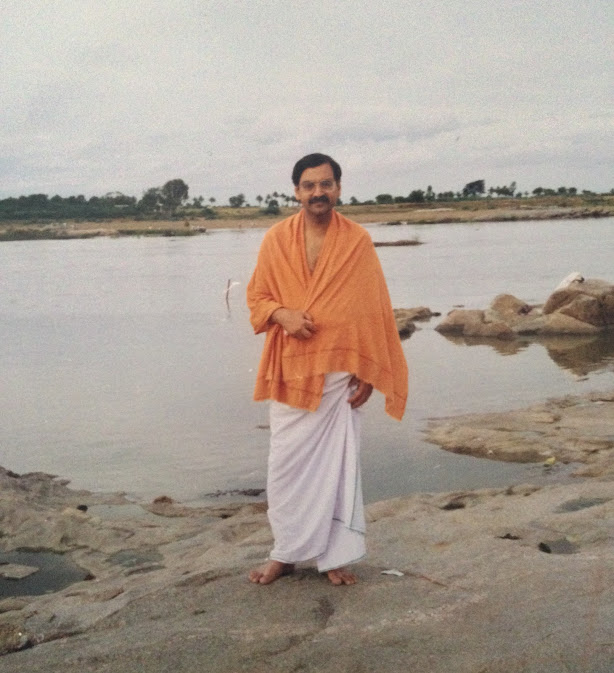
RIVER TUNGABHADRA, Mantralaya 

—subham—

Tags –  Atharvana Veda,  Wwater, Medicine, Quotations, January 2022, calendar

MEDICINAL PROPERTIES OF SAFFRON (Post No.7093)

Written by London Swaminathan
swami_48@yahoo.com

Date: 13 OCTOBER 2019
British Summer Time uploaded in London – 20-55
Post No. 7093

Pictures are taken from various sources; beware of copyright rules; don’t use them without permission; this is a non- commercial, educational blog; posted in swamiindology.blogspot.com and tamilandvedas.com simultaneously. Average hits per day for both the blogs 12,000.

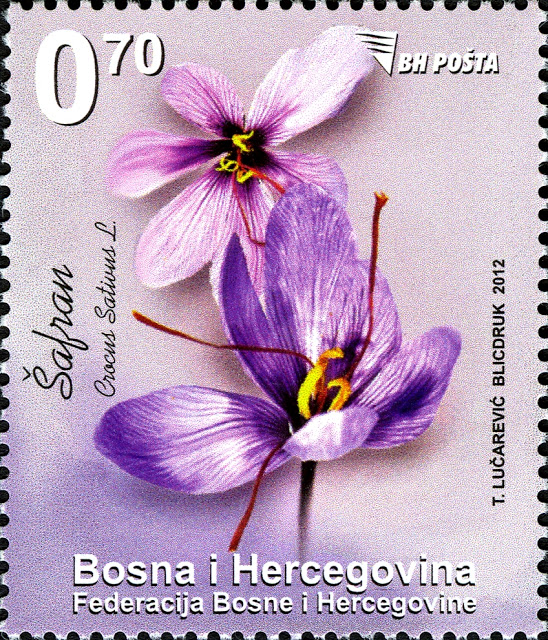
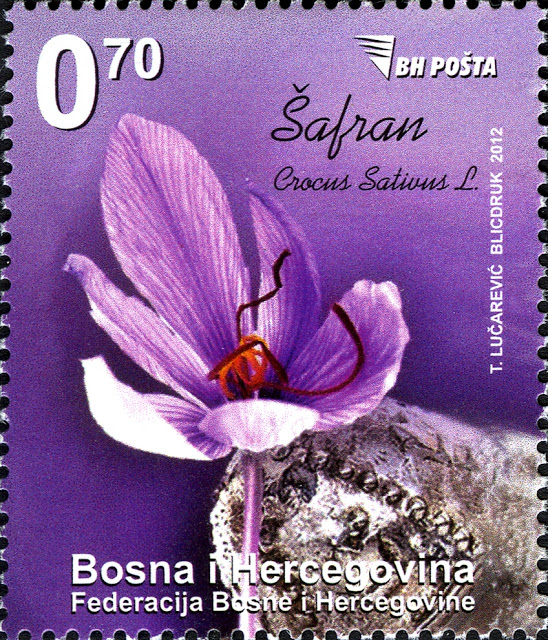
Kashmir is known for its saffron cultivation. Chinese writers say that Kashmir is the home of saffron. Hindus use this in the worship of their gods and goddesses. Pregnant women also use it in their drinks, particularly milk. They believed that the children born to them will be healthy and fair. Latest researches show the benefits of such use. It is a medicine to cure hyperactivity of children.

Latest research in Tehran (Iran) University gives the result:-

NEW YORK—Saffron capsules appear to be as effective as methylphenidate for treating children with attention-deficit/hyperactivity disorder (ADHD), researchers from Iran report.

“My research group at Roozbeh Psychiatric Hospital has worked on the psychotropic effects of saffron since early 2000, and we have documented the antidepressant effects of saffron,” Dr. Shahin Akhondzadeh from Tehran University of Medical Sciences told Reuters Health by email.

“On the other hand, many antidepressants have been used as alternative for stimulants in patients with ADHD that cannot tolerate Ritalin (methylphenidate) or do not respond to Ritalin. Therefore, from this preliminary study, the main point is that we can consider saffron just as an alternative in the above mentioned patients,” he said.

Saffron (Crocus sativus L.) and its active constituents are thought to increase the reuptake inhibition of dopamine and norepinephrine and are NMDA-receptor antagonists and GABA-alpha agonists.

Leaving the medical jargon to one side, we can safely say that it boosts one’s mental power and cures depression.

Other interesting facts about saffron are:-

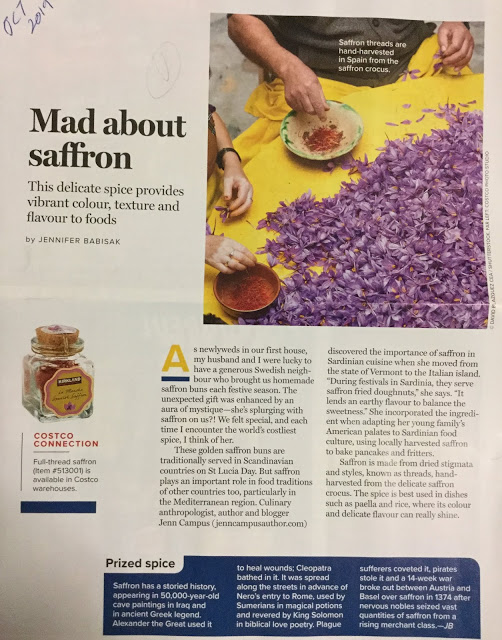
Saffron is seen 50,000 year old cave paintings in Iraq. It is seen in ancient Greek legend.

Alexander the Great used it to heal his wounds.

Cleopatra bathed in it.

It was spread along the streets in advance of Nero’s (Roman emperor 37-68 CE) entry to Rome.

Sumerians used it in magical potions.

King Solomon revered it in love poetry.

Plague sufferers coveted it.

Pirates stole it.

14 week war broke out between Austria and Basel over saffron in 1374 after nervous nobles seized vast quantities of saffron from a rising merchant class.

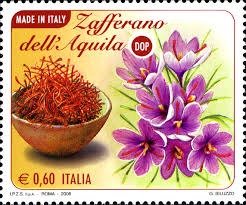
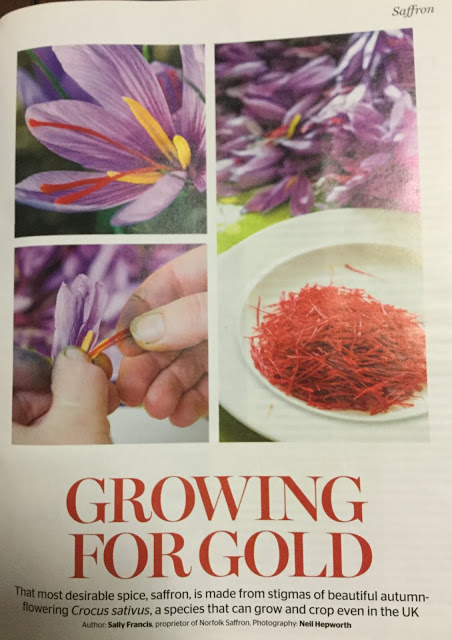
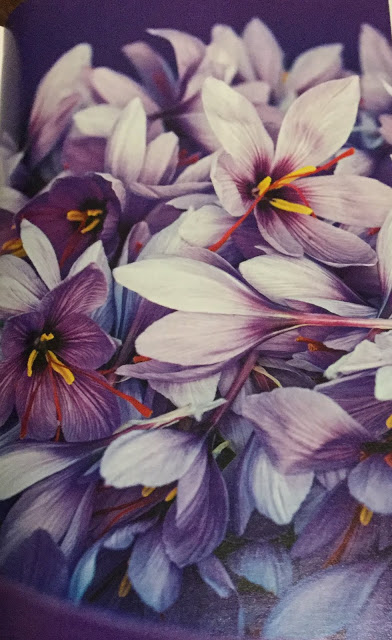
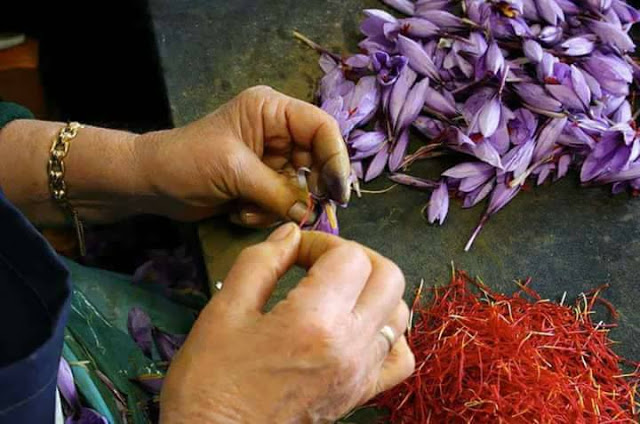
Saffron is extracted from flower stamens of Crocus sativus plant. Iran, Spain, Afghanistan, Italy and India grow saffron.

It is one of the most expensive spices.

Indians use it in milk and drinks. But westerners use it in buns and cooked foods such as saffron Risotto.

Golden brown saffron buns are traditionally served in Scandinavian countries on St Lucia day.

Saffron plays an important role in the food traditions of Mediterranean region.

Latest Costco magazine has given saffron recipes. Saffron is made from dried stigmata and styles, known as threads, hand harvested from the delicate saffron flowers.

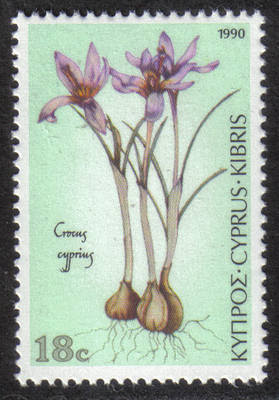
Crocus sativus (saffron plant) is an autumn flowering plant. The etymology and the place of origin are not certain. Crete, Iran and India are considered as the place of origin. Though it has been used for thousands of years the name saffron is attributed to Arabic or Latin. Now Iran generates 94 percent of global supplies. Kashmir (India), Spain, Greece and Morocco are the next largest suppliers.

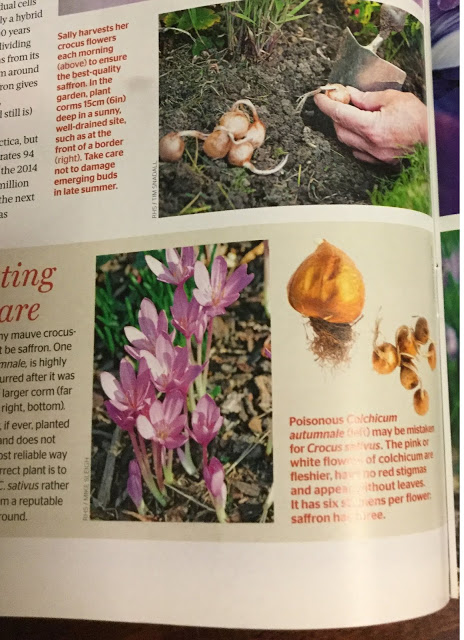
A good gatherer harvests 1000 flowers per hour. We need over one lakh flowers to make one kilo of saffron. There are over 150 volatile chemicals in the flower. Saffron has only three stamens in one flower. So one can easily differentiate saffron from other similar coloured flowers.

Though there are different types of crocus flowers  , crocus sativus is the only one used as spice.

Source – Costco magazine and gardening magazine, U.K.

—subham–

Mantra and Medical Prescription (Post No.5439)

Written by London Swaminathan

swami_48@yahoo.com

Date: 17  September 2018


Time uploaded in London – 8-59 am (British Summer Time)


Post No. 5439

Pictures shown here are taken from various sources including google, Wikipedia, Facebook friends and newspapers. This is a non- commercial blog.


A doctor met a saint and asked whether he could learn Mantras from the websites or You Tube.

The saint said ‘No’.

Next, the doctor asked whether anyone one could recite a Mantra .

The saint said ‘No’.

Expecting at least one ‘Yes’ answer from the saint he quizzed him more.

“Can anyone teach Mantra to another person?”

The saint patiently, but firmly said ‘No’.

“Okay, suppose I put saffron cloth on me tomorrow, can I do all the above things?”

The saint smilingly said a big ‘No’ and then interrupted him, when he was about to ask more questions.

The saint said, “please wait, I wanted to ask you a few questions. Please answer them truthfully”.
Doctor was very happy when he heard it.
“At last the saint has recognised me”, he thought.

“Ok now it is my turn,” the saint started bombarding him with some questions

“Can I give a medical prescription, I mean allopathic medicines, by looking at websites?:

Doctor was surprised to get such a stupid question from a leaned Saint .

Doctor said,
“Oh Swamiji, Dont you know that it is against law and moreover dangerous?”

“Hang on, I am ready to learn from social media and websites.

Can I treat my disciples with allopathic medicines?”

“Oh, Swamiji, unless a medically qualified person prescribes it, you can’t treat any one with the medicines that you get from any Tom Dick and Harry”
‘Why?’ asked the saint.

“Each patient is different.
You have to know his/her case history, ethnicity
age, weight, height, sex, his/her other medications
Whether s/he is allergic to any substance etc


“Ok, ok. Now I understand. If I put on a white coat and a stethoscope around my neck and behave like a doctor, can I do all the above things?”

“Swamiji!  I am shocked to hear such things from you.

How is it possible ? Certain medicines have very serious side effects which may result in serious consequences. Every medicine bottle or carton have a long list of side effects. Don’t you know all these things? People may even abuse certain things”.

“You need to study for at least five years and practise as a house surgeon for a while and then practise under the supervision of experienced seniors. It is like a lawyer practising like a junior in a legal office”.

Swamiji felt very happy when he heard that. “It is good that you said all the things necessary to become a good doctor”.

“That is exactly an ascetic also does. After several years of penance and learning scriptures, he goes to a senior Guru, who watches him for several years and then teaches certain Mantras . He
also looks at various things before doing that . Like you take into account the ethnicity, age, sex, height, weight, previous medications, allergy factors, family history of certain illnesses, we also look at various factors before teaching Mantras. Like you don’t like people practising medicine via website and social media knowledge we also don’t like people learning secret Mantras from websites.”

Like certain medicines are available over the counter without prescription for headaches, cough, cold etc. we also have simple hymns and Bhajan songs which you can learn from any one”.

“Earlier you beautifully explained the side effects and abuse of medications. Mantras also have side effects if they are wrongly used or mispronounced. If someone like Ravana or Pasmasura gets it  may be abused”

“In short, a saint’s work is similar to the work of a doctor”.


The doctor was convinced with his answer and made a big salute to hime and let with ‘prasad’.

-Subham-

Melancholy Anecdotes (Post No. 2822)

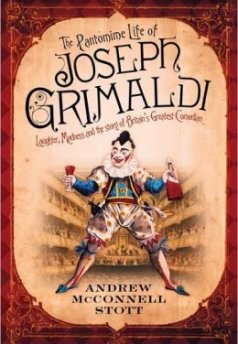
grimaldi picture

Compiled  by London swaminathan

Date: 18 May 2016

Post No. 2822

Time uploaded in London :– 17-37

( Thanks for the Pictures)

DON’T REBLOG IT AT LEAST FOR A WEEK!  DON’T USE THE PICTURES; THEY ARE COPYRIGHTED BY SOMEONE.

(for old articles go to tamilandvedas.com OR swamiindology.blogspot.com)

Melancholy = feeling of sadness

I am Grimaldi !


A patient suffering from profound melancholy one day presented himself to Abernathy. After careful examination the celebrated practitioner said, “You need amusement, go and hear the comedian Grimaldi, he will make you laugh, and that will be better for you than any drugs.

“My God”, exclaimed the invalid, “I am Grimaldi!”

Xxx

Money is Medicine!!

Dr Goldsmith, having been requested by a woman to visit her husband who was melancholy, called upon the patient and told him that he would send some pills which he had no doubt would prove efficacious. He immediately went home, put ten guineas into a chip, and sent them to the sick man. The remedy had the desired effect.


Xxxx

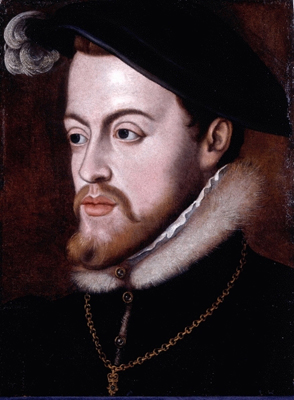
philip of spain

Music is Medicine!!!

Philip of Spain was in such a deplorable state of despondency from ill health, that he refused to be shaved. On the arrival of the famous singer Farinelli, the queen ordered a concert in a room adjoining the Kings chamber.  Farinelli sang one of his best airs, which so overcame the King that he desired he might be brought into his presence, when he promised to grant him any reasonable request he might make. The performer, in the most respectful manner, then begged of the King to allow himself to be shaved to which request Philip graciously consented.


—Subham—-


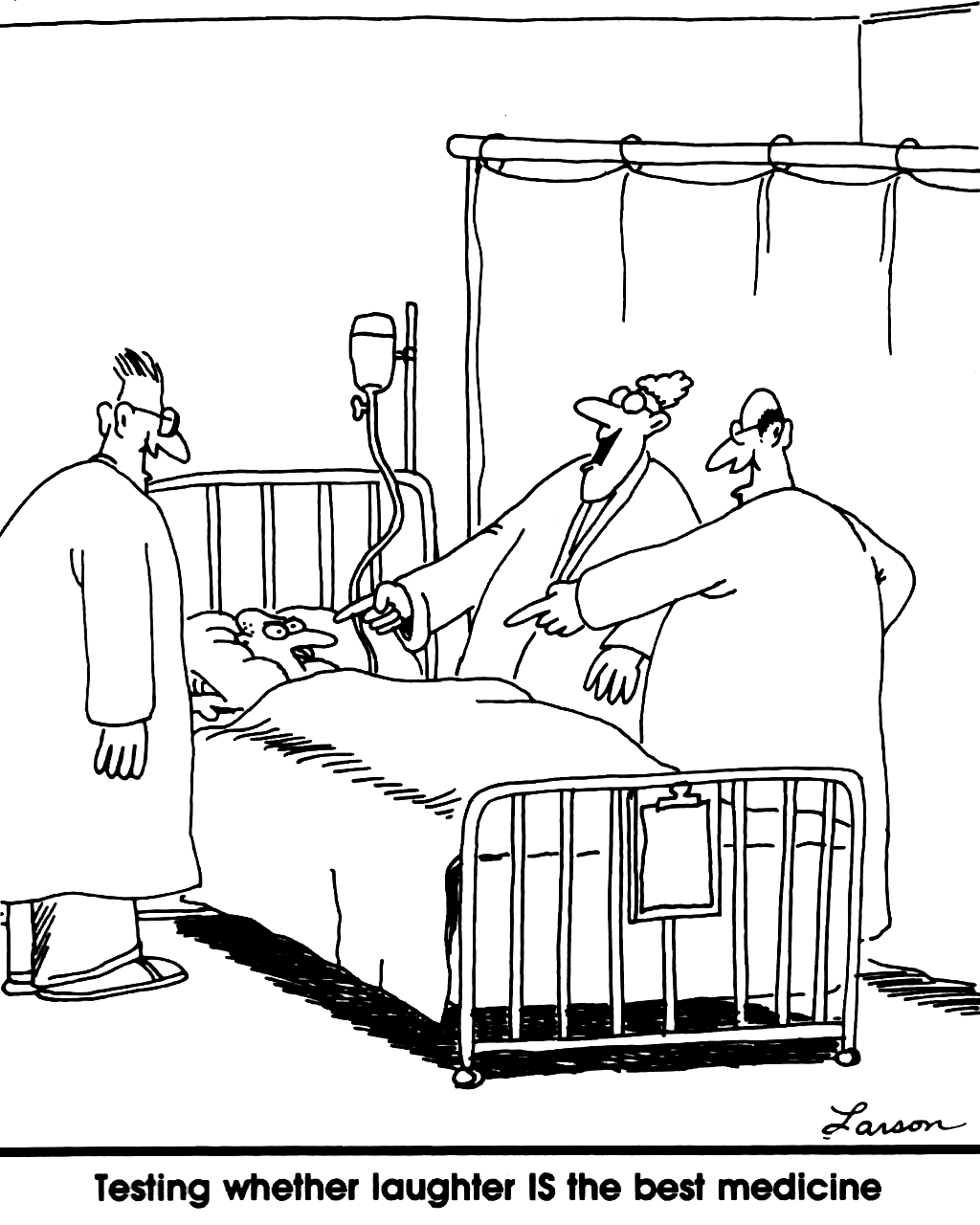
Laughter is the Best Medicine

Compiled someone who is intelligent!
Post No.1116; Dated 18th June 2014.

color siri 1

STUDENT WHO OBTAINED NIL MARK !!

I would have given him 100% for his wit!!!

Q1. In which battle did Napoleon die?
* his last battle

Q2. Where was the Declaration of Independence signed?
* at the bottom of the page

Q3. River Ravi flows in which state?
* liquid

Q4. What is the main reason for divorce?
* marriage

Q5. What is the main reason for failure?
* exams

color siri2

Q6. What can you never eat for breakfast?
* Lunch & dinner

Q7. What looks like half an apple?
* The other half

Q8. If you throw a red stone into the blue sea what it will become?
* It will simply become wet

Q9. How can a man go eight days without sleeping ?
* No problem, he sleeps at night.

Q10. How can you lift an elephant with one hand?
* You will never find an elephant that has only one hand..

laughter-1

Q11. If you had three apples and four oranges in one hand and four apples and three oranges in other hand, what would you have ?
* Very large hands

Q12. If it took eight men ten hours to build a wall, how long would it take four men to build it?
* No time at all, the wall is already built.

Q13. How can u drop a raw egg onto a concrete floor without cracking it?
*Any way you want, concretefloors are very hard to crack.

laugter2

Spread the laughter, share the cheer
Let’s be happy, while we’re here !!