MLECHA: Most misunderstood word

Mlecha: This is the word used from Indus Valley to the backward castes in India. The simple meaning is someone who is not the son of the soil. But it is not the only meaning. When it is used as a prefix for a language it simply means indistinguishable speech. It can be used as a derogatory term even among its own people.

There are two Greek words which can explain it better. If someone says something indistinguishable, I say it is Greek to me. I don’t mean it is Greek language to me. What I mean is it is not understood by me. This is what exactly conveyed when someone said ‘mlecha basha’.

Varahamihira uses this word for Greeks/Romans. When Vikramaditya defeated Mlechas he meant anyone who was not sons of the soil; in other words foreign invaders. Even the English language was called mlecha basha by the patriotic freedom fighters.

Greeks used the word Barbarians for all the Non-Greeks. This is what the Hindus meant when they said ‘he was a mlecha’.

Baluchistan= Mlechasthan= Meluha in Indus valley

Another interpretation for Mlecha is Baloochi people. Linguists knew M=B=V is interchangeable.

Nigel Lewis observation on Mlecha in his book ‘The Book of Babel’ is very interesting. He says “the Greek equivalent of barbarians was Aglossoi, the speechless, while the Poles  had the same idea about Germans, whom they called ‘niemiec’, the dumb people. The Turks got this word from the Poles and used it for the Austrians. Even Coleridge used it as nimiety with regard to Germans”.

“Commenting on the word vealh, oe wealh, the Barbarian British, or Welsh, Max Muller writes it is supposed to be the same as the Sanskrit mlekkha, and, if so,  it meant originally a person who talks indistinctly. Mlekkah has also been identified with ‘Beluchi’: a strange area of probable common ground between Beluchistan and the principality of Wales, whose very name was an Anglo Saxon insult”.

“Also insulting was the now defunct nickname for the Jamaican Jabbering crow, it was called the Welshman because according to Edward Long ‘with their strange , noisy gabble of guttural sounds’… they are thought to have much  the confused vociferation of a party of Welsh people”

-from ‘ The Book of Babel’

When the Rig Vedic people called some people ‘speechless’, what they meant was ‘those who didn’t speak our language’ (Sanskrit).

Tamils and Telugus also trade insults like this. Telugus called Tamils as aravas. This means ‘snake or noisy’. Another explanation is that the border area is known as Arauva nadu. Those who interpret Tamils as snakes say that the border area people were Nagas=snake worshippers people. Even today the Nellore District is full of snake statues. Another interpretation is Tamils are noisy speakers (like the Welsh mentioned above).

Mlecha in Mullaippattu:

In the Sangam Tamil literature we come across the word Mlecha in Mullaippaattu (line 66). Poet Napputhanar called the Yavanas as Mlechas. He described them as dumb who used only sign language. Lot of Roman or Greek bodyguards were used by the Tamil kings. Tamils called the Yavanas (Romans) ‘mlechas’ because they did not speak Tamil and they were from foreign soil.

Mlecha in Mahabharata: In the Adiparavam and Drona Parvam we come across the word Mlecha referring to an engineer (Purochana) who constructed the lac house and kings who fought in the Great Bharata War. They were all from the North West of India. Vidura was said to have spoken to him in the Mlecha language. (Government officials, traders and people in the transport business quickly learn languages. In Madurai in Tamil Nadu, Jatkawalas and Rikshawalas speak fluent Hindi, Maratti, Telugu etc. Necessity makes the man).

Mlecha and Meluha of Babylonian Literature

Indus Valley researchers are reading too much in the word MELUHA mentioned in Babylonian clay tablets. They think Meluha was Indus area and linked it with Sanskrit Mlecha. I think the tablets meant Beluchistan and not the Indus valley area.

Yavana: Yavana is used in Tamil and Sanskrit literature to mean Romans, Greeks and Arabs. Tamil literature has insulting remarks against Romans/Greeks. They are called dumb, rude and people of indistinct/rude language. I am pretty sure the Romans and Greeks would have made the same comments about Tamil 2000 years ago. Now the Telugus use that insulting word for the Tamils. Cheran Senguutuvan of Sangam period saved off the hair and poured oil on the heads of Romans to punish them.

The word Yavana  (Ionian) is directly mentioned in five places in Sangam Tamil literature.

DRAVID=Brahmins, Pandyas= Brahmins

The Dravidian political parties did a propaganda that the Brahmins came to Dravida country from the North. But the fact of the matter is Dravids in the North means only Brahmins. Non Brahmins from the South were not called Dravids. Pandyas in Gujarat are Brahmins. It is crystal clear this geographical name was used for Brahmins migrated to Andhra, Maharashtra, Gujarat and beyond.

In short, politicians and fake researchers are misleading Indians by misinterpreting many words such as Dravid, Mlecha, Asura etc. So laymen must be careful and discreet.

**************

AYAS and ASVA : Most Misunderstood Words

Foreign scholars have derailed the history of India by misinterpreting some words. Sanskrit and Tamil literatures are very clear about such words as Ayas, Asva, Mlecha, Asura, Rakshasa and Dasyu. Words of all the languages in the world lose certain meanings or acquire some new meanings in course of hundreds of years. Linguists knew it very well as historical change of meaning. But when it comes to Indian words they are adamant and stick to one meaning from the very beginning because it fitted very well in dividing the Indians on Aryan Dravidian basis. They wanted to perpetuate their rule and spread their religion. They had believed very strongly that the world was created just 4000 years ago, because the Bible says so! They even refused to translate certain portions of Vedas and Tamil Veda Tirukkural saying they were too sexy! Once again they thought that it is against Biblical injunctions.

I would like to take only a few words now.

Ayas: Ayas is iron. Rig Veda refers to it and so Rig Veda can’t be dated before Indus Valley Civilization is the argument of foreign scholars. It suited very well with the Marxist scholars (because Karl Marx spoke against India and Hinduism) and the Indian scholars who applied for jobs with the then British government controlled educational institutions. Even now our “scholars” are very scared that they won’t be invited or given any visiting professorship if they speak against the ‘accepted’ theories. Accepted by who? The great ‘scholars’ abroad.

In Tamil ‘ayas’ is translated as ‘PON’ in Sangam Tamil literature. But this word means all metals in Tamil. When they say that the temple idols are made with ‘Aim Pon’ it means five different metals or alloys. One single poet uses this word as gold and iron in the same book (Tiruvalluvar in Tirukkural).

If we apply the same rule to Rig Veda, Ayas may mean any metal. Thoguh in some places we get red Ayas for copper black ayas for iron, it may not mean iron in other places. But the translators translated it as iron in all the places where the suffix red is not found. This mislead all the new scholars.

Asva: The word ‘asva’ is translated as horse. Since Rig Veda is full of references to horse, it can’t be dated before the Indus valley Civilization is the view of foreign scholars. There was no horse seal in Indus valley. But there are scholars who argue that the unicorn seal is nothing but horse. They also point out that horse bones were excavated in the valley. But again the foreign scholars don’t agree with them saying it may be the bones of asses or onagers. If we translate asva as horse in all the places in the Vedas it doesn’t make any sense. So it may not be horse at all. It may mean fast, speedy, sun etc. Even if we argue asvamedaha yagna as horse sacrifice, it may not have been the same in the early ages. When Soma plant was not available they used different varieties as Soma plant. So horse may not mean the same. The word Samudra means ocean I Sanskrit. But foreign scholars that it did not mean sea at all!.

In Tamil the word ‘Pari ‘ is translated as horse. Ma is translated as animal. But the same word may mean various animals which has to be understood from the context. In addition, Ma has been used to denote other animals as well with a prefix:  Pari+ Ma, Kari+Ma, Ari+Ma, Kalla+Ma, Asuna+Ma.

If we apply the same rule, asva may mean any animal depending upon the context or the prefix or the suffix.


Kannaki and Andal Weddings

Kannaki & Kovalan pictures from Poompuhar Art Gallery;Picture courtesy: Vijayan

Three Beautiful Tamil Hindu Weddings- Part 2

( Please read first part before reading the second part: swami )

We saw, in the first part, the beautiful descriptions of two weddings that happened 2000 years ago in Tamil Nadu. Another beautiful wedding scene is in the Tamil epic Silappadikaram. This is the most famous epic of the five Tamil epics. The wedding scene of Kannaki- Kovalan is quite a contrast to the scenes from the Akananuru. Here we see the ceremony of going round the fire, Vedic Mantras etc. This is like a typical Tamil Brahmin wedding that is celebrated today. But Kannaki and Kovalan were the daughter and son of two big Tamil merchants. They were not Brahmins. They lived in a city famous for its maritime trade.

The author of the epic was poet Ilango. Like I mentioned in the first part, the wedding was celebrated sometime in the second century AD. But no linguist will date the epic at 2nd century AD. The style of the language, Sanskrit words and knowledge of various fine arts copied from Sanskrit sources—all point to fifth or sixth century AD. Since Vashista Mahrishi’s wife Arundhati is referred to as the chaste woman in Sangam Tamil literature in several places, fire ceremony may have existed in Sangam Time. Seeing Arundhati star in the night of the wedding day is part of Hindu wedding ceremony.

Let’s look at the wedding now:

“Fair maidens seated on an elephant’s neck were sent forth, to invite to the wedding all those lived in the great city. As they went forth into the streets, drums were beaten; mirudangams were sounded; conches were blown; and white umbrellas were lifted high in the sky as if in kingly procession. O, how enchanting was their entry into the pavilion, glimmering with the pearls beneath the canopy of blue silk and with dazzling pillars, decked with diamonds and beautified by overhanging garlands! This was the day the moon moving in the sky approached the star Rohini, when Kovalan who walked around the holy fire in accordance with scriptural injunctions as directed by the revered priest, approached his bride, divinely fair, resembling the star Arundhati. How fortunate were those who enjoyed such a splendid sight!”

“ Lovely maidens bringing spices and flowers, spoke and sang, and looked bewitching. Women with full breasts and glowing tresses took with them sandal paste, frankincense, perfumes and powders. Ladies with lovely teeth bore lamps, vessels and Palikai pots of tender shoots. These maidens who looked like golden creepers and whose hair was decked with flowers, showered blossoms on the bridal pair, saying May you live a flawless life, with a love that knows no separation, and held in close and un relaxing embrace”.

“Then they led Kannaki, the Arundhati of this vast world, to the auspicious nuptial bed with the prayer that the royal tiger emblem, engraved on this side of the Himalayas, might remain forever on the golden crest of the mountain.”

All the three weddings narrated so far were on Rohini star day. But in Kannaki-Kovalan wedding we see the class difference in the ancient Tamil society. The first two were done on sandy floor under a thatched shed. This one was in a dazzling hall decked with diamonds.

Rohini in the Vedas:

Rohini star is an auspicious star according to the Vedas (Vedic Index, Vol. I, page 415).  It is in Brihat Jataka as well. Rohini was the favourite of the 27 wives of the moon. Palikai pots are part of Hindu ceremonies even today. The Bodhayana Grihya sutras mentions five palikais for purpose of marriage.

Andal’s dream of a divine wedding

Andal, one of the glorious Tamil poetesses, lived in the seventh century AD. She fell in love with Lord Vishnu and in her dream she saw her wedding. It is in Varanam Ayiram of Divya Prabandham. This is sung in all Vaishnavaite Brahmin weddings even today. The beauty of Varanam Ayiram is all the steps in today’s wedding ceremony are described in the same sequence.

Arrival of the bridegroom, Betrothal ceremony, arrival of the bride, bridegroom’s sister’s role, the red colour special sari, grasping the hand (Pani Grahanam), Havan/Fire Ceremony, Chanting of Vedic Mantras, Walking around the fire in seven steps (Saptapati), Puffed rice Homam (laja homam)- all these are described in beautiful Tamil verses. This is a wonderful Tamil verse, that too coming from a wise girl, who lived 1300 years ago. Tamil women must be proud of Andal.

Avvaiyar,Andal and Karaikal Ammaiyar are proof for the good education of women in ancient India. Though we have a score of Vedic poetesses and nearly the same number of Sangam Tamil poetesses, Andal’s place is unique in Tamil literature. Her Tiruppavai and Nachiyar Tirumozi were the most popular parts of 4000 Divya Prabandham verses.

Picture shows Saptapati in a Bengali wedding

Varanam Ayiram shows the role of dream in Tamil culture. Lord Vishnu come to marry our poetess Andal with thousand (Ayiram) elephants (Varanam). That is why this piece is called Varanam Ayiram. Purna Kumbham (Holy water pots), Toranams (Decorative streamers),Wedding dais decoration with betel nut trees, Kurai Pudavai (sacred red colour sari that is worn by Hindu goddess), Kankanam (Kaappu mentioned in Akananauru verse), Lighting the holy fire, Walking in seven steps around it in a circle, Stepping on a grinding stone (ammi) to show their steadfastness, Kunkumam (red colour powder) and sandal paste, wedding procession around the city—all these are beautifully described by Andal. This is every girl’s dream in the world. Whoever reads this will get married in a grand ceremony like this is the belief of Tamil Hindus.


**********

Three Beautiful Tamil Hindu Weddings

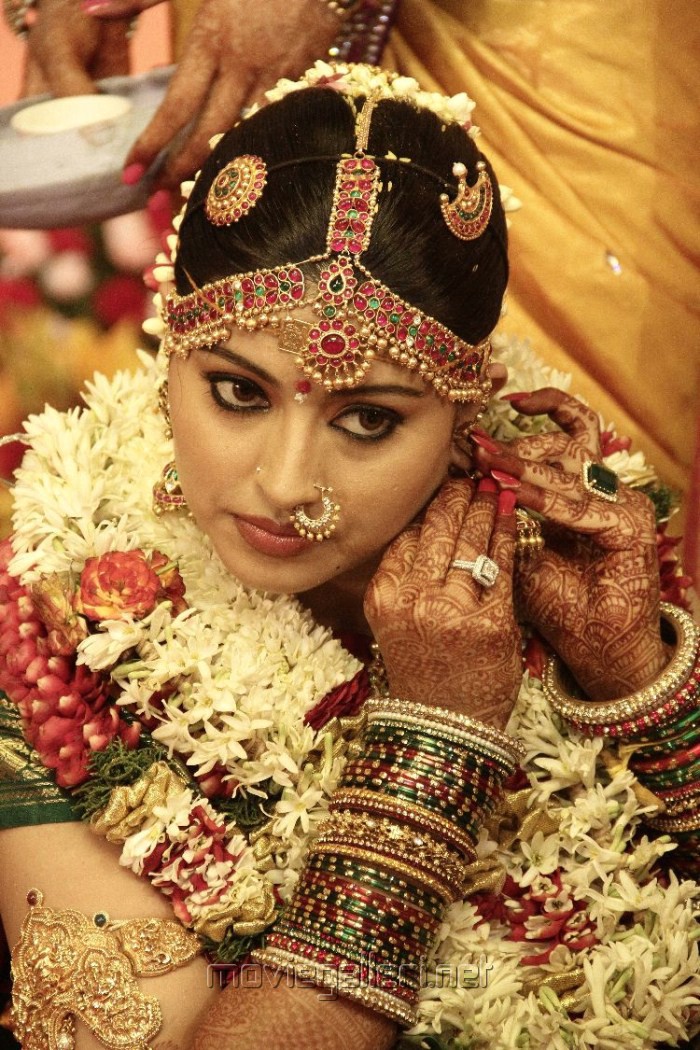
Tamil Actress Sneha on her wedding day

By London swaminathan

How did the ancient Tamil Hindus celebrate their weddings? There are three beautiful wedding scenes in Tamil literature: Akananauru, Silappadikaram and Divyaprabandham.

Two thousand year old Sangam Tamil literature describes Tamil Hindu weddings in two beautiful verses in Akananauru (verses 86 and 136). The poets bring the wedding ceremony in front of our eyes. Anyone who reads those poems can visualise that day. It is like a live running commentary.

In the first verse (86), poet Nallavur Kizar describes the food and the dress. There was a huge heap of rice cooked with black gram (Pongal). There was a wooden shed (pandal) with fresh sand from the river banks spread. Since they believed in astrology and auspicious days ,it was celebrated on the day when Rohini star was with the moon. Since they were orthodox Hindus they lighted lamps even though it was celebrated in the day time. Bridegroom and bride were adorned with flower garlands. Some women were carrying the pots on their head, others bearing new, broad bowls, handed them one after another, while fair elderly dames were making noise. Mothers of sons, with bellies marked with beauty spots, wearing beautiful ornaments, poured water on the bride, so that her black hair shone bright with cool petals of flowers and rice grains (probably yellow rice called Akshatai). They blessed her saying ,’do not swerve from the path of chastity, be serviceable in various ways to your husband who loves you and live with him as his wife. They greeted her ‘Dirgha Sumangali Bhava: in Tamil– Per Il Kizaththi Aguka’–.On the night after the marriage ceremony was over, the neighbouring ladies assembled and sent her to the arms of her lover, to which she went with trepidation ( This is the Shanti Muhurtham alias First Night).

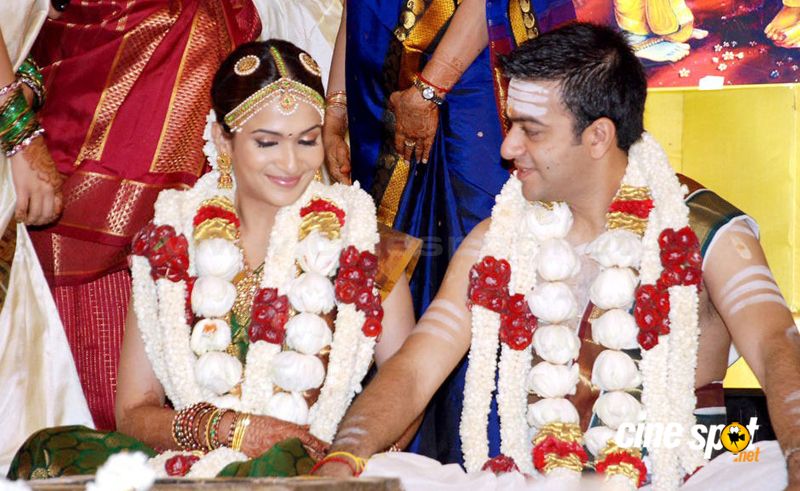
Picture shows Soundarya Rajinikant’s wedding

In another verse136, poet Vitrutru Mutheyinanar says, white rice well cooked with plenty of ghee was served generously to the elders. Since Tamils believed in astrology, the poet remarks, the omens shown by the birds were propitious. It was a bright morning. The moon was in faultless conjunction with the Rohini star. The marriage house was decorated. They worshiped God. The big drums sounded with wedding tunes. Excited women were peeping without a wink with their flower like eyes at the bride who had been bathed. The image (to be worshiped) was made of big flower petals. Clear like a gem that has been well washed, was placed on the soft Vagai flower with the double leaf and the Arukam grass. It was decked with cool, sweet flower buds and white thread clothed with holy cloth, so as to look grand. The bride was seated on the fresh sand under the Pandal ( A thatched shed made over a row of wooden poles). The bride was perspiring with loads of ornaments. They fanned her to dry the wet.( I have used the translations given in History of the Tamils by  PT Srinivasa Iyengar).

Though tying the knot (Thaali=sacred yellow thread around the neck of the bride) is not mentioned  a few other verses hint at it. But no priests, no fire ceremony or no circumambulation of the sacred Fire were mentioned. One can understand it when one understands the caste differences that existed in those days. Since the Tamil epic Silapadikaram mentions the fire ceremony etc we can’t conclude it was never done. Most of the scholars put Silappadikaram event in the Sangam age. But the writing of the epic was dated between 3rd century and 7th century.

What is very clear in the above two Sangam Tamil verses is the Tamils believed in God and astrology. They used lot of vegetarian food and flowers during weddings. Ornaments and decorations, respect for elders are all like modern day weddings. The bride wore a thread (protective Kaappu) and new dress after a shower. Music was part of Tamil Hindu weddings.

(In part 2 Wedding Scenes of Kannaki and Andal are discussed).

Contact swami_48@yahoo.com or Swaminathan.santanam@gmail.com

Vedas and Egyptian Pyramid Texts

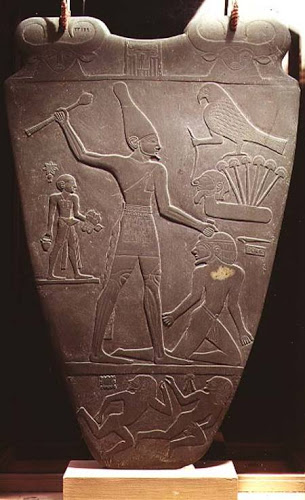
Picture shows Egyptian Manu= Narmer

Did Indians build Pyramids?-Part 2

( Please read first part before reading this SECOND PART: swami )

The Pyramid texts are unique. Those who read it will be reminded of Hindu Vedas. They are presented in the form of “utterances, declarations” either in the voice of kings or gods. In the case of Vedas it was Rishis or gods. The texts were older than the known kings. They have come from pre dynastic period. The texts are full of magic. Much of the texts are written in the form of dialogues like our Upanishads and Puranas. Scholars find it difficult to translate it  just like our Vedas. They are literally untranslatable. The complexity of the language of the texts is multiplied by the Egyptian’s enthusiasm for punning. They not only pun verbally but also visually by using appropriate pictorial hieroglyphs. Vedic seers also say they delight in speaking in coded, secret language. It is not known when the Pyramid texts were collected in the form in which they appear in Unas’s (2375 BC) pyramid; certainly it must have been long before his time. Many of the texts are similar to Vedic hymns. The Book of Dead is also similar to Hindu scriptures.

Misra Desa

Egypt is known as Misra Desa in Sanskrit literature. Misra means mixed. People of different races were living and ruling Egypt for 3000 years. It has a long history. This gave birth to hundreds of Gods like Hinduism. Whoever studies must be careful enough to differentiate between different races and Gods of Egypt. There are three layers of Gods. The oldest layer is just fetishes (reverential objects connected with God), the second layer is full of Gods in human forms and the third layer is Gods with animal forms. This is exactly same with Hinduism. In Vedic times we did not have much other than symbols. Then comes the Avatars- gods in human form. Later came the gods with animal forms like Ganesh, Anjaneya, Hayagriva, Sarabeshvara, Nandikeswara, Purushamrga, Veda Murthys and so on.

Arabic name for Egypt is Masr=Misra in Sanskrit. Hebrew word for Egypt is Misrayim. In English Bible it was translated as Musri. All these corresponds with Sanskrit Misra.

Indian invasion

Sahadevan invaded Misra desam and defeated them, says Mahabharata. Subhanu’s inscription also confirmed it.

The sea people and Hyksos who invaded Egypt may be South Indians and Sri Lankans, from Lanka the land of Yakshas/Hyksos.

Board Games

The world’s oldest board game is in Tamil Nadu, North India, Indonesia, Mayan civilisation and several African countries including Egypt. It is called Pallangkuzi in Tamil Mancala in Africa. It has got hundreds of names around the world and dozens of versions of play. A lime stone board from Ancient Egypt had three rows of 14 holes. It is also cut on rocks in temples at Thebes, Luxor and Karnak.

The Egyptians were enthusiastic board game players. They developed variety of games with counters in the form of animals; some of these , the lions and the dogs for example, were like Indian games (Adu-Puli Attam in Tamil).

Teak and Linen

Now scholars have established that the teak and linen found in Egyptian mummies and palaces came from India. W.H.Schoff said that India and Egypt had commercial contacts in the 3rd millennium BC. Muslin and spices were exported from South India.

In the inscriptions of Harkhuf, an Assuran noble under the Egyptian king Mernere of the VI dynasty  occurs the following:-“ I descended from country of Yam (Southern Nubia) with 300 asses laden with incense, ebony, grain, panthers, ivory, throw sticks and every good product.”

The ebony referred here is Indian ebony was confirmed in later writings. Theophrastus (4th century BC) ascribed this ebony to India. Virgil speaks of it (Georgics ii,116,7) as peculiar to India.  We don’t see elephants in Egyptian paintings or monuments which confirms that the ivory was from India. Indian ivory is found in Greece and other countries in the ancient world. Iron was also exported from India in later days.

Vedas confirm commercial contacts

Unfortunately we don’t have anything in South India to confirm that happened in 2nd or 3rd millennium BC. But Vedas speak about long sea voyages in big ships. The Vedic mantras refer to men who went to far off lands for ‘interchange of merchandise’ (Atharva Veda ), ‘desiring wealth sent ships to sea’ (Rik Veda ); parties of men went on the ocean in ships with a hundred oars’ (AV ) to distant lands for sale and barter (RV).

Kassites (from Kasi Desa of Gangetic plain?) in Western Iran worshiped Maruts and Surya in 1800 BC. Indians went to different parts of the world and established Vedic culture is proved beyond doubt.

Falcon/Garuda

Vedic altars were constructed in different shapes. The popular one was eagle or Garuda. Eagle or Garuda was praised in the Vedas in the epics and in the Puranas. Brahmins used to read Garuda Purana in the bereaved houses for the good of the departed soul in the other world. In Egypt falcon or Nakhbet as a vulture is associated with dead people. We see a beautiful golden collar on the chest of the Tutankhamen’s mummy. Nakhbet is in the form of eagle. Nakh+ bet may be a corrupted Sanskrit word  Naga +Vatha=one who kills snakes). Hindus also associate Garuda Purana with the departed souls. ( I have already written about the most famous Tamil king Kaarikal Cholza constructing a Yaga Kunda in he shape of a falcon. It is in Purananuru)

Imhotep

The most famous priest /minister was Imhotep (Mahadev). He was considered the first universal genius known to history. His parents were creator deity ‘Ptah ‘(Brahma Pitha). He was an architect and revered as a demi god of wisdom, magic and medicine. Imhotep lived 5000 years ago during the rule of Djoser and he was hailed as the greatest of magicians. One who looks at his statue will be reminded of a Hindu Rishi/seer or a Jain Thirthankara.

Ka

One Rik Vedic poet punned on this letter ‘KA’ and Max Muller was baffled by it. Actually ‘Ka’ means God or Brahma in Sanskrit and Egyptian Hieroglyphs. The symbol of ‘ka’ is the raised arms of a human being. This is the first letter of Brahmi consonants. It looks exactly same. Tamil ka came from Brahmi ka which means Katavul/god.


Egyptian Ka (god) and Brahmi Ka (Brahma)

Devas and Asuras are Prajapati’s children. It is crystal clear in our scriptures. Dasyu’s are Vishvamitra’s exiled children. It is said in our own books. But foreign “scholars” deliberately misled Indians and wrote the Aryan Dravidian invasion theory to destabilise India and Hinduism. No Indian scholar came forward to argue against it with relevant quotes from the epics and mythologies at that time, because British were ruling.

Another name for Prajapati is Ka (who).

The interrogative pronoun ‘Who’ has been raised to the position of a deity. In the Brahmana literature Ka is Prajapati. Some of the hymns in which ‘Ka’ occurred were called Kadvat (kadavul in Tamil). During the time of Panini, it became Kaya. Manu called Prajapathi marriage Kaya. Later day epics and Puranas identified Ka with Daksha and Kasyapa.

Ntr = Indra

The Egyptian hieroglyph ‘ntr’ meant god. The vowels are never written. We have to fill the words with vowels. So ‘ntr’  may be indra. Scholars think that the sign was derived from a staff bound with cloth, a fetish of very early date. I think it was Indra’s  vajrayudha/thunderbolt that gave this hieroglyph.

Narayana in Egypt

In the cenotaph at Abydos of king Seti, the sarcophagus was placed on an island. The hieroglyph for this was a double stair, which was the hieroglyph for the primeval hill (Meru?) or island on which all creation began. The island is made with perpetual water supply from subterranean waters. These were the “waters of Nun” from which the supreme creator god has first risen.

In Hindu mythology, Narayanan means water god. Neer /water is an indo European word, which is in Nereids in Greek meaning water nymphs. In both Sumerian and Egyptian mythology water was profoundly important. Atum or Nun in Egypt and Enki (Gangai) in Sumer are water gods

Cow and calf

Similes in Vedas often compare cow with everything good. Vatsalyam=affection  is the love of a cow towards its calf. The symbol for happiness in Egyptian tombs is a cow turning around to succour its calf.

Red and White

In south India the temple walls are painted always  in red and white stripes. This is what the Egyptians also did. The taxmen of Southern kingdom worked from White house and the tax men from the Northern kingdom worked from Red house. When both the kingdoms united the house walls were painted red and white like Hindu temples.

Continued in Part 3 (swami_48@yahoo.com)

*******

Did Indians build Egyptian Pyramids?

By London swaminathan

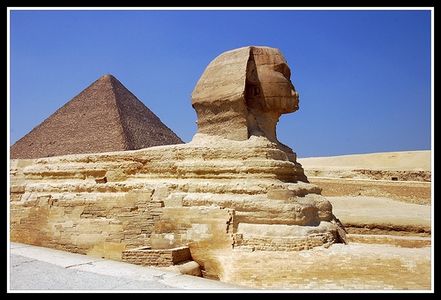
Egyptian Pyramids, Mayan Pyramid Temples, Babylonian Ziggurats (Shikara in Sanskrit) and Hindu temples—all look like a cone. The design and structure are same. Hindus were the originators. Hindus taught the world that God lives in a high place-sacred mountain MERU. The Greeks changed the name to Mount Olympus. Hindus are the only race in the world continuing temple buildings in the same way and worshipping God in it. All others made them as museums. We took this concept of ‘sacred mountain’ to Cambodia and built the largest temple complex in the world Angkor Wat and Borobudur in Indonesia. We used the temple for Gods, where as others used them for God like kings.

Scholars around the world knew the connection between India and Egypt from 1400 BC. That was the time Mittanni King Dasaratha wrote ten letters (it is available in all the encyclopaedias as Amarna letters) after marrying his daughter to Egyptian king Amhenotep (Sramana Dev).  Tushratta/ Dasaratha was a king who ruled Syria (now a Muslim country), but his name and his forefather names are in Sanskrit. To confirm they are Indian Hindus we have an inscription giving the Vedic Gods Mitra, Varuna, Indra and Nasatya (Asvini Devas) in an agreement with the Hittites and a horse manual with Sanskrit numbers.

(Though all these things were in encyclopaedias from 1930s, the ruling British were very careful not to teach this or about South East Asian Hindu Empire to Indian History students. All these excavations were done by non British scholars! British were very successful in sowing the poisonous seeds of divisive Aryan Dravidian Invasion theory which is not in Sangam Tamil or Sanskrit literature. They carefully hid facts like Tamils worshipped Indra, Varuna, Vishnu, Skanda and Durga which was found in the oldest Tamil book Tolkappiam).

Bible which was put to writing around 945 BC (Hutchinson Encyclopaedia) also gave Sanskrit words  for imports from India such as karpasa (cotton),Tuke (Siki for peacock or Suka for parrots), Kapi (monkey)etc.

But many of us do not know that the first king of Egypt was Manu, the law giver. But they were not Dasaratha of Valmiki Ramayana or Manu of Manu Dharma Sastra.  Many of us do not know that the Egyptian builders used the Sanskrit word  Sutra for measurements during building Egyptian Pyramids. Sulba Sutras are Vedic manuals giving measurements for Yaga Kundas (fire pits for sacrificial fire ceremonies). It contains Pythagorean Theorem and other Vedic mathematics. Sutra means thread/plumb line,also book of formulas.

Arta Dama, a Mittanni king, married his daughter to Egyptian king Tuthmose IV and the daughter of Sutharna was married to Amenhotep III (1390 BC). Another daughter was married to his son Akhenaten. He was the most revolutionary king who established ONE GOD for the Egyptians. His name in Sanskrit means Eka Aten (One Aten is God). He worshiped Surya (sun).

Egyptian kings’ sun worship looks exactly like Brahmins doing Sandhyavandhana. Brahmins do it thrice a day facing sun. Egyptian kings worship the sun in the same way.

Manu=Nara Meru

In my earlier posts I have established that the big conflict between Krishna/Arjuna pair and the Nagas under the leadership of Maya Dhanava just before 3100 BC resulted in a mass exodus of Nagas to South America and Central America. After Krishna’s burning of Naga lands (Kandava vana) in the Gangetic plains, there were continuous clashes. It was followed by the mass execution of Nagas (Sarpa Yagna) to avenge the assassination of King Parikshit by the Nagas. A Naga hid himself in the fruit basket and killed King Parikshit.

(Please read my post ARE MAYANS INDIAN NAGAS?)

Around 3100 BC another dynasty started their rule in Egypt. Since they were Hindus, they named the first king Manu (Manes). His other name was Narmer i.e. Nara Meru, a pure Sanskrit word meaning Mountain among the Kings. Meru was the holiest and highest mountain in Hindu Mythology. Any high point was named Meru. We have different Merus around the world. Pameru (Pamir Plateau), KuMeru (Kumari in the South of India). Su Meru (Sumerians) of the Middle East. The word Khmer of Cambodia may be related to Kumari/Ku Meru. I will write about it separately. North and South Poles were also called Merus in Hindu Mythologies (Puranas).

Menes was given a legendary date 3100 BC by the Greeks because Indian Kaliyuga Calendar begins in 3102 BC. Mayans also followed this Kali Yuga Calendar. (Full details are in my posts)

Menes (Manu) was praised the first Law Giver of Egypt by the Greek Historian Diodorous Siculus. Egyptians were just like Indian Hindus. They believed kings were half God, half man. Indian words for kings and palaces are synonymous with Gods and Temples. Diodorous links Heracles (Hercules) with Egypt and India. Hercules was one of the 12 ancient Gods of Egypt and he cleared India of wild animals, says Diodorous.

Narmer palette shows his picture as a strict man punishing the wrong ones.

( In Tamil Khon means King and God, Koil means Palace and temple, In Sanskrit Deva is used for Lord and the King). Khon became Khan in other languages like Kesari/lion gave a new word Caesar. Tele in the Ancient Middle East means temple, which is the corrupted form of Sanskrit word STHALA. Tamils changed it to Thali=temple)

Egyptian kings called themselves children of Surya/sun. This corresponds with the Surya Vamsa of Hindu scriptures. Like Indian Hindu kings, Egyptian kings had two names : 1. Name given at birth 2. Coronation name or Abisheka Nama.

Nile River (Sanskrit word)

River Nile is known as Blue Nile because of its BLUE colour. It is a Sanskrit word NILA meaning blue. If I find only one Sanskrit word from among 1000 place names in Egypt, scholars will laugh at me. But almost all ancient Egyptian names are Sanskrit names. ( Full list is available with me. Just a few examples: Heliopolis= Suryapura, Thebes=Devas, Zawyet el Aryan=Arya of ?, Saqqara= Chakra, Dashuf= Dasyu or Dasa, Asyut=Achyuta, Hierakonpolis=Swarnapura, Amra, Amarna= Amara, Dishashasa=Disa,  El Badari= Badri (nath), Beni Hasan=Vani dasan,  Naj el der=Naga….?). Please note that Greek words are also in many place names.

Ramses=Rama Seshan?

Ramses is a title for at least seventeen kings in Egypt. Kanchi Paramacharya Swamiji has mentioned this is the name of Rama, Hero of Ramayana, in his 1932 Chennai lectures.

(Please read my post Madagascar- INDIA LINK VIA INDONESIA for full details.

Naga on their heads

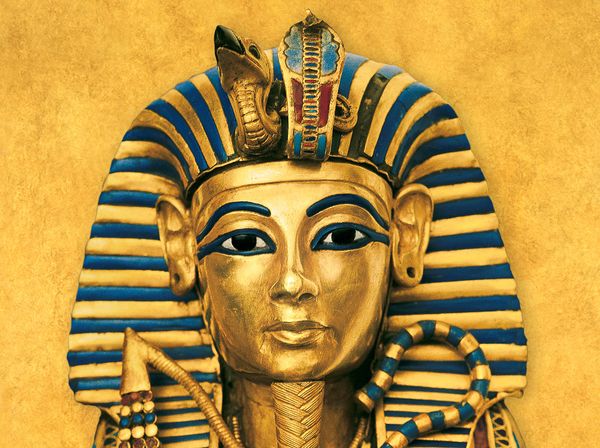
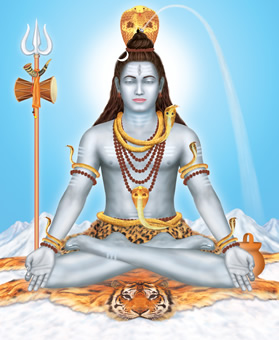
Many of the kings have Naga ( Naga gave birth to English word Snake=S+Naka) on their heads. There is no Hindu God without snake on their bodies. But Egyptian Kings look exactly like Lord Shiva of Hindu mythology. Another word for snake is Uraga=Uraes of Egypt.

Belief in Rebirth

The reason for building Pyramids was their belief in after life and rebirth. All the oriental religions (Hinduism, Buddhism, Jainism and Sikhism) believe in after life and Rebirth. Semitic religions (Judaism, Christianity and Islam) don’t believe in it. This shows very clear connection with the Hindus of India. In Indian mythology we have Nimi (see the Puranas) saving his body like the Egyptians.

(Continued in second part…………….)

Contact swami_48@yahoo.com or Swaminathan.santanam@gmail.com

FLOWERS IN TAMIL CULTURE

By London Swaminathan (swami_48@yahoo.com or Swaminathan.santanam@gmail.com)

Tamils are crazy about flowers. Travellers have noticed the passion of Tamil women for flowers.  Every temple and every bazaar(shopping area) has scores of flower vendors who make garlands and flower strings with fresh flowers. Half of the flowers go on the hair of women and the other half go to the Gods inside the temples. Half of the garlands go into the neck of Tamil politicians and the other half go in to the neck of gods’ statues.

This love for flowers is not a new fashion. The love story began at least two thousand years ago. We have several references of flower vendors in the Sangam Tamil literature (Narrinai verse 97,118,160 etc.)

Tamil’s custom of wearing lot of flowers on their heads was noticed by Valmiki in his Ramyana:Bharata says our soldiers are wearing lot of flowers on their heads like southerners and carry black coloured shields (ayodhya Kanda, Sarga 96)


Tamils are unique in one thing. The three powerful kingdoms of Tamil Nadu had separate flags, emblems and flowers. Like we choose a national flower of a county they chose one flower garland each. The Sangam works simply mention the particular flower garland to mention the king.In other words, the garlands were more popular than the dynasty name! Pandya kings wore Neem flower garlands, Chera Palmyra flower garlands and the Cholas Athi (fig) flower garlands.


Tamils divided their lands into five natural geographical areas add gave the name of dominant flowering tree/plant to each area. At least this custom has precedence in other parts of India. Sanskrit literature called India Jambu dwipa meaning land of Jamboo trees (Rose apple tree). It also divided the globe into seven different continents and named them after the predominant flowering tree of that area: Jambu (Rose apple),Plaksha (fig tree), Shalmali (Silk Cotton Tree), Kusha (Darba grass), Krauncha (water birds, may be some trees with the same name) Shaka and Pushkara (Lotus)

Five regions of Tamil Land

Mullai , a variety of Jasmine, stands for the forest area.

Kurinji, a mountain flower, stands for mountainous region.

Marutham, a tree with red flowers, stands for patoral region

Neytal, a water flower, stands for sandy sea shore

Palai, an ever green tree growing in arid areas, stands for arid lands.


Another unique feature of Tamil culture is they wore different flowers in the battlefield to denote different activities. No other culture wore flowers when they went to war. We know that Olympic winners in Greece received Olive branches. But Tamils took different flowers. For instance if they want to invade a country, soldiers will go in to the border areas and steal the cattle wearing VETCHI flowers. Though this practice of stealing cattle was  in Mahabharata days in the north of the country, the soldiers did not wear any particular flower. But Tamils wear a particular type of flowers during this raid which is not found anywhere in the world. For each and every military activity they allocated a flower. Following is the list of flowers and the corresponding activity:

  • Vetchi – the provocation of war through attack and cattle raids
  • Karanthai – defending against cattle raids
  • Vanchi – invasion of the enemy’s territory
  • Kanchi – transcience and change, the fragility of human life, against the backdrop of war
  • Uzhingai- attacking the fort
  • Nochchi – defence of the fort or territory
  • Thumpai – the frenzy of battle
  • Vaakai – victory
  • Paadaan – praise of a king’s heroism or generosity, asking for gifts

But this was not strictly followed. Tamil men and women wore flowers. Men had flowers in their ears. Women had it on their heads. Women continue to wear it even today. During weddings they spend a lot on flowers.

Pushpanchali (Flower Offering)

In Bhagavad Gita Krishna also spoke about offering flowers and leaves (Tulsi, Bilva) to God. Tamil poet Kapila has translated that sloka in Purananuru

Pushpanchali is an annual event in several South Indian temples. They heap hills of flowers on God on that day.

ANDAL MALAI/ GARLAND

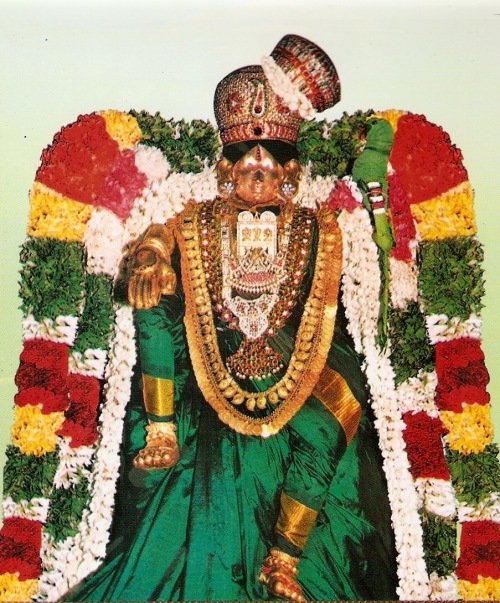
Tamil Nadu is famous for its biggest flower garland called Andal Malai (Malai=Mala+ garland). This garland is a special one meant for Andal of Srivilliputtur, near Madurai. Andal, who lived 1300 years ago in Srivilliputur of Tamil Nadu, was a Vishnu devotee. This garland is normally 8 ft long made up of different flowers. It is heavy and expensive. Political heavy weights get this heavy garland, particularly after election victory.

Kapilar’s Guinnes Record-99 flowers

Sangam Tamil poet who lived 200 years ago would have entered Guinnes Book, has there been a category for reciting flower names. He recounted 99 flowers in his Kurinjipattu ( Lines 62-97). Though other books like Mahabharata, Valmiki Ramayana, Kalidasa have provided more flower names, no one poet had given them at one go.

“Tamil Nadu Assembly Speaker, K. Kalimuthu, who spoke on `Tamil and Tamilians in world arena,’ kept the audience spellbound for about 30 minutes. The audience was stunned when he repeated the names of 99 flowers from Kabilan’s Kurinji Pattu. All the students of Jamal Mohamed College (Trichy)who had occupied every inch of the auditorium maintained pin drop silence and heard his speech in rapt attention.” (The Hindu report on August 16, 2004).

Of the 99 flowers many of them have Sanskrit names and a few of them are unidentifiable.

Onam and Pukkolam

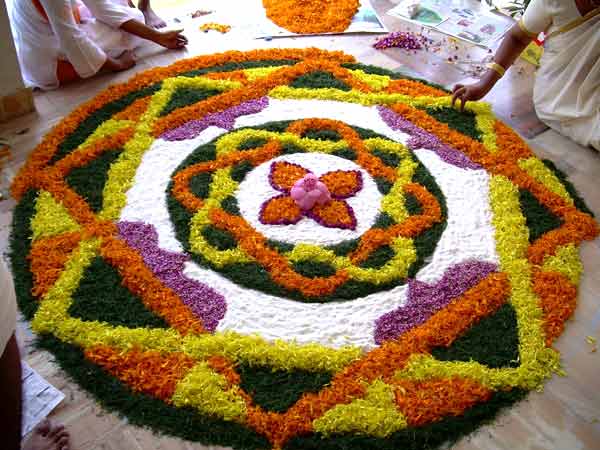
Onam is an old festival mentioned in Tamil Sangam literature (maduraikanji 590-591). Till this day it is celebrated in Kerala (Old Tamil Chera country) with gigantic flower decorations on the ground called Pukkolam.

Tamil classification

Even before Linnaeus classified the botanical kingdom, Tamils classified them in to four categories: Kottu Pu, Kodi Pu, Neer Pu, Nila Pu.

Kottu Pu=Kongu, Shenbakam Makiz etc.

Kodi Pu= Mallikai, Mullai (jasmine varieties) etc.

Neer Pu (water flowers)= Lotus, Water Lily etc.

Nila Pu ( Land flowers)= Thumbai, Sevanthi etc.

They talk about flowering plants and non flowering plants, flowers to give good fragrance to water (Pathiri Pu) etc.

21 leaves for Vinayaka

Ancient Tamils even knew all the plant names by heart. They allocated 21 leaves for Ganesh Puja. Such acts serve many purposes: 1. Spread of knowledge about plants 2.Herbs are used when someone falls sick 3. Naturala environment is protected. Following are the 21 plants: Masi pathram, Bruhati pathram,Bilva pathram, Durva pathram, Thuthura pathram, Badari pathram,Apamarga pathram, Tulsi pathram, Suta pathram, Kraveera pathram, Vishnugranthi pathram, Thadi pathram, Deva thaaru pathram, Maruva pathram, Sindhuvara pathram, Jaji pathram, Kandaki pathram, Samee pathram, Asva pathram, Arjuna pathram, Arka pathram.


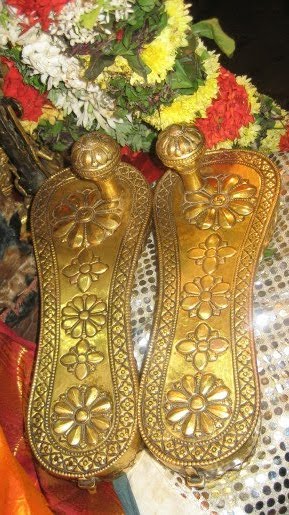
Why Do Hindus Worship Shoes?

By London swaminathan

“A pair of sandals worn by the Maharishi is expected to fetch £80,000 when they are auctioned later this month. Maharishi Mahesh Yogi shot to fame worldwide as a guru to The Beatles who he first met while he was in London.

He wore the wooden shoes during the height of his fame in the late 1960s and 1970s”-This news item was published by The Daily Mail of London in November 2011. Why do they pay Rs 6,80,00,00 for two sandals?


Why did Bharata, Lord Ram’s brother, keep Rama’s shoes just outside the capital city and ruled the country for 14 years? Why did he place them on the golden throne?


Vedanta Desika, one of the Vaishnavaite Acharyas of Tamil Nadu wrote 1000 slokas on Lords Padukas (shoes)in one night! An amazing feat. Why?


Adi Shankara wrote Guru Paduka Stotra (Hymn on Teacher’s shoes). Why?


Why do we keep great peoples’ shoes in the museum or Ashram?


Why do the Vaishnavaite temples in Tamil Nadu put Lord’s shoes (Satari) on our head after Dharsan ( seeing the God)?


Why do Satya Sai Baba devotees send the shoe replicas of Baba to different towns for Puja?


Why do Tamil Hindus worship shoes of great people like Kanchi Shankaracharya and take replicas home and put them in the Puja room?


Strange Customs?


“ Hindus are a strange race and they have strange customs”—the world may say. No, it is not correct.


Hindus are humble. They see divinity in each and everything. Before stepping out of the bed and putting their feet on the ground, they pray for pardon from the goddess of earth- Bhuma Devi. It is in the Pratasmarana hymn.


Before tilling the land they ask for pardon for digging the earth. Before stepping into water source for bath or cleaning they worship the river or sea. Before eating the food they recite a mantra saying, Oh, You Food , you are god, you are amrita”. In short, for Hindus everything is God. Whether it is music or dance, whether it is the special festival dinner or the Rangoli (Kolam in Tamil) drawn, they see God in it. They feel humble when they think about what God had provided them. They use everything to the minimum and with respect. That is how we see the shoes of God. Once you realise that there is one who is mightier than you, you then behave. You help others by sharing everything God had given you. The Isavasya Upanishad says:


isavasyam idam sarvam yat kinca jagatyam jagat

tena tyaktena bhunjitha ma grdhah kasya svid dhanam


Everything animate or inanimate that is within the universe is controlled and owned by the Lord. One should therefore accept only those things necessary for himself, which are set aside as his quota, and one should not accept other things, knowing well to whom they belong. 


A Tamil saint by name Arunagirinathar says the minute Lord Murugan’s (Skanda, Kartikeya in Sanskrit) feet touch his head all the bad Karma will be wiped out. (Tamil verse is given at the end)


A great Tamil Hindu poet Tiruvalluvar praises God’s feet in seven of his first ten couplets in the first chapter (Kadavl Vazthu in Tamil).


Satari In Temples:


Satari is made up of gold or silver or copper with God’s feet on a crown. It is put on every one’s head when one visits Vishnu temples in Tamil Nadu. So Vedanta Desika praised God’s Padukas with one thousand stanzas in his Paduka Sahasra Stotra.


When Rama refused to return to the Kingdom (Ayodhya) saying that he had to fulfil the promise made to his dad, his brother Bharata humbly asked for his shoes. When he took them back, he refused to enter the capital city till his brother return after 14 years. So for 14 years the SHOES RULED A KINGDOM, that was unique in the world.


Worship of Foot Prints


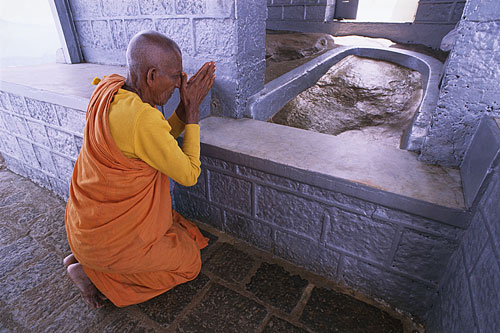
Sivanoli Padam also known as Adam’s Peak in Sri Lanka is a big holy spot. The two foot prints seen there are attributed to Lord Shiva by the Hindus and Buddha by the Buddhists. Thousands of people climb the hills to worship it.


In Kanyakumari, we have Devi’s foot prints. In Haridwar and in the Himalayas we have foot prints of Vishnu.


Foot prints and shoes are sacred symbols for the Hindus. They felt humble and simple in front of little things like shoes or mighty Himalayas. When they looked at sky high mountains they felt like small fries, or like Sir Isaac Newton said, just like pebbles on the vast sea shores. When you feel that way, you get lofty thoughts. All the worries are vanished.


The term Boot Worship in Western Culture has a negative connotation. It is extreme adulation of the boots of a dominant partner. It has got more sexual connotation. In India, it is all about the glory of God.


The very thought that everything is given by the God, will prepare you to share it, respect it and use it to the minimum. This will save the environment and environment will save us in turn.


Satari in Shiva temple


There is a temple in Tirunallur near Papnasam in Tamil Nadu. The Saivaite devotees are blessed with Satari to remember the episode of Shiva blessing the great Saivaite saint Appar 1500 years ago. It looks like this custom has a long history.


Kesaathi Pada Varnanai


Hindu poets sing the glory of God by describing the beauty of god from head to foot. Normally they start with Lord’s feet and goes step by step towards head or hair (Kesa means hair, Pada means foot). If it is human beings like a king or a beautiful girl they start it from the head and go towards foot in description. This is seen in Sangam Tamil literature and earlier Sanskrit literature in several places. So generally speaking Head to foot for the humans and Foot to head for the Gods.


Rig Veda


In the Purusha Suktam of Rig Veda we see the God’s description from face to feet. The hymn described the four varnas (four castes) came from four different parts of the body (of God). This description is about the society. One cannot function without the other. Feet are as important as head.


Sahasra seersha Purusha:………………..


The Purusha has thousand Heads,

He has thousand eyes,

He has thousand feet,

He is spread all over the universe,

And is beyond the count of ten fingers.


Brahmanasya Mukham aseed:…………….


His face became Brahmins

His hands were made as Kshatriyas,

His thighs became Vaisyas,

And from his feet were born Shudras.


Picture: Adams Peak in Sri Lanka

Jesus Christ & Washing the feet

Washing the feet of Gurus or Gods is also considered sacred in several cultures. Hindus do it even today with great saints like Shankaracharyas. On certain days children do it to the parents as a mark of respect. On wedding day husband does it to the wife.

The Maundy Thursday custom of foot washing in the catholic church is a symbolic expression of humility, following Christ’s example, who washed the feet of his disciples in accordance with the Eastern custom of hospitality. In ancient India kings washed the feet of holy men’s foot.


Shoes on the head of powerful Tamil King

Cheran Chenguttuvan was a powerful Tamil King. He even insulted the Romans and Greeks who violated the laws of the kingdom by pouring oil on their head. His powerful navy destroyed the pirates. Such a powerful king who went up to the Himalayas to bring stones for the temple, bore the shoes of Lord Shiva on his crown, says the Tamil epic Silaappadikaram( Kaalkot Kaathai 8)

In China

The mother of the founder of the Chou dynasty was said to have become pregnant  by stepping in the foot print of a god.

சேல் பட்டழிந்தது செந்தூர் வயற்பொழில் தேங்கடம்பின்

மால்  பட்டழிந்தது பூங்கொடியார் மனம் மாமயிலோன்

வேல் பட்டழிந்தது வேலையும் சூரனும் வெற்புமவன்

கால் பட்டழிந்தது இங்கென் தலை மேல் அயன் கை எழுத்தே

——(கந்தர் அலங்காரம்)

For more of the same, contact swami_48@yahoo.com OR Swaminathan.santanam@gmail.com

*******************
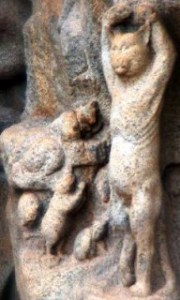
THE STORY OF HYPOCRITICAL CAT

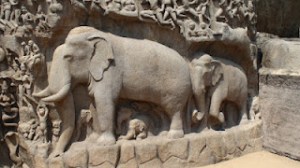
The cat is under the tusks of the big elephant. See below the enlarged cat.


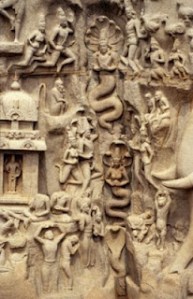
Mahabalipuram near Chennai is famous for its monolithic rock temples. Pallava King Narasimha Varman was the architect of these beautiful rock cut temples and sculptures.  30 feet long panel of Arjunan penance or Bhageerathan penance is one of the main attractions. The sculptor has shown a sense of humour by adding a hypocritical cat in the serious penance of Arjuna/Bhageertha. This is called Rudraksha Cat. It is a phrase in Indian languages to ridicule the hypocritical saints.

The story of hypocritical cat is in Mahabharata (V-160). Tamil Didactic work Sirupanchamulam (stanza 95) also refers to this ascetic cat on the banks of Ganges. This is a folk tale known in different parts of India. The Mahabalipuram panel of rock cut sculptures show this cat with uplifted arms. The story of the cat is as follows:

With uplifted arms the cat performed severe austerities on the banks of the Ganges; and he was so pious and good that not only the birds worshipped it, but even the mice entrusted themselves to his protection. He declared himself willing to protect them, but said in consequence of his asceticism he was so weak that he couldn’t move. Therefore the mice must carry him to the river—where he devoured them and grew fatter and fatter. A wise mouse by name Killika followed the cat to the Ganges and let the secret out to other mice. They all kept away from the cat from that day and the cat had to move to another place.

There are even two or three Tamil proverbs regarding this hypocritical Rudraksha cat. It was named Rudraksha cat because the cat pretend to do prayer by rolling the Rudraksha beads. It must be a familiar painting in the ancient Tamilnadu. The Pallava architecture of Mahabalipuram belongs to seventh century CE.

One of the Sangam works, Paripatal (19-50), refers to the beautiful paintings in Tirupparankundram near Madurai. It was a painting that existed 2000 years ago. The painting shows Indra running in the guise of a cat after molesting Ahalya. May be this episode was the origin of the Rudraksha cat story.


Sirupanchamulam Stanza 95compares an ascetic eating meat with the cat on the banks of the river Ganges. So it is a familiar story throughout India.

Reinterpretaion of Mahabalipuram sculpture

Scholars were debating whether the sculpture panel was about Bhageeratha’s penance or Arjuna’s penance. Now that we know the cat story happened on the banks of Ganges from Mahabharata and Tamil works, it must be Bhageerathan’s story of bringing Ganges to the earth. ( Bhageeratha was one of the earliest engineers of India. He diverted the course of Ganges towards the Bay of Bengal and made India fertile (Please read my post GREAT ENGINEERS OF ANCIENT INDIA for more details).

இந்திர விழா: வேதத்திலும் தமிழ் இலக்கியத்திலும்

(This article is available in English as well in my blogs: INDRA FESTIVAL IN THE VEDAS AND TAMIL EPICS: swami.)

தமிழில் இரட்டைக் காப்பியங்கள் என்று புகழப்படும் சிலப்பதிகாரத்திலும் மணிமேகலையிலும் இந்திர விழா மகவும் சிறப்பான இடத்தைப் பெறுகிறது. ஆனால் இதன் தோற்றம் வேதத்திலும் ராமாயண, மஹா பாரத இதிஹசங்களிலும் உள்ளது. இன்றும் நேபாள நாட்டில் பெரிய விழாவாகக் கொண்டாடப்பட்டு வருகிறது.


தமிழ் உலகம் செய்த தவப் பயனால் கிடைக்கப்பெற்ற பழந்தமிழ் நூல் “ஒல்காப் புகழ் தொல்காப்பியன்” எழுதிய தொல்காப்பியம் என்னும் இலக்கணப் பனுவல் ஆகும். அதன் காலம் கி.மு. முதல் நூற்றாண்டு. அதை எழுதியவர் த்ருணதூமாகினி என்னும் தொல்காப்பியன் ஆவார். இது “உச்சி மேற் புலவர் கொள் நச்சினார்க்கினியர்” தரும் தகவல். அதை ஒப்புக் கொள்ளாதோரும் “நான்மறை முற்றிய” அதங்கோட்டு ஆசான் தலைமையில் தொல்காப்பியம் அரங்கேறியதாக பனம்பாரனார் கூறியதை மறுக்கவில்லை. அதாவது தமிழ்நாட்டில் வேதங்களில் கரைகண்ட ஒரு பார்ப்பனன் இருந்தார், அவர்தான் தொல்காப்பியத்துக்கு நற்சான்றிதழ் வழங்கினார் என்பதை “தமிழ் கூறு நல்லுலகம்” ஒப்புக் கொள்கிறது.

வேதத்தில் இந்திர விழா

டாங்கே, மெயர் போன்ற வேத நூல் அறிஞர்கள் இந்திரவிழா பற்றிய குறிப்பு உலகின் மிகப் பழைய நூலான ரிக் வேதத்திலும், அதர்வ வேத்திலும் இருப்பதைச் சுட்டிக்காட்டியுள்ளனர். இந்திர த்வஜம் (இந்திரன் கொடி) பற்றி அதர்வ வேதம் பேசுகிறது. ரிக் வேதத்தில் மறை மொழியில் இதே விஷயம் உள்ளது. “மருத்துக்கு முன் இந்திரன் நடுங்கியதாக” ஒரு இடத்தில் வருகிறது. இதன் பொருள்—காற்றில் இந்திரன் கொடி படபடத்தது என்பதாகும். மருத் என்பது காற்றுக் கடவுள். அதிலிருந்தே அனுமனைக் குறிக்கும் மாருதி என்ற சொல் வந்தது. ரிக் வேதத்தில் இன்னும் ஒரு இடத்தில் , “ஏ இந்திரனே உன்னை புரோகிதர்கள் உயரே ஏற்றிவிட்டார்கள்” என்ற வரிகள் வருகின்றன. இது இந்திரன் கொடி ஏற்றப்பட்டுவிட்டது என்பதாகும்.

இந்திர விழா தோற்றம்

இந்திரன் விழாவில் முக்கிய அம்சம் கொடி ஏற்றம். அதற்கு முன் வள்ளுவன் பறை அறிவிப்பான். உடனே ஊர் முழுதும் அலங்கரிக்கப்படும். 28 நாட்களுக்கு நாடே விழாக்கோலம் பூணும். ஆடலும் பாடலும் புத்துயிர் பெறும். அதைக் கொண்டாடாவிடில் இயற்கையின் கோபத்துக்கு நாடு உள்ளகும். இறுதி நாளில் இந்திரன் கொடிக்கம்பம் வீழ்த்தப்படும். மணி மேகலையும் சிலப்பதிகாரமும் இது பற்றி நிறைய தகவல் தருகின்றன.

இதை அகத்திய முனிவரின் ஆலோசனையின் பேரில் தூங்கு எயில் எறிந்த தொடித்தோள் செம்பியன் துவக்கியதாக இரட்டைக் காப்பியங்கள் கூறும். ஆனால் உபரிசார வசு துவக்கியதாக மகா பாரதம் கூறும். செம்பியன் என்ற சொல்லே சிபிச் சக்ரவர்த்தியின் பெயரிலிருந்து வந்ததுதான். சிபியின் கதை சங்க இலக்கியத்தில், சிலப்பதிகாரத்தில் மற்றும் பல வட மொழி நூல்களில் இடம் பெற்றுள்ளது சோழ்ர்கள் கல்வெட்டுகளில் தங்கள் முன்னோர்கள் வடமேற்கு இந்தியாவை ஆண்டதாகக் கூறுவர். (சிபி= சைப்ய=செம்பிய)

உபரிசார வசு இந்திரனிடம் வாடாத் தாமரை மாலையும் ஒரு விமானத்தையும் பெற்ற பேரரசன். இந்தியாவின் பழங்கால எஞஜினீயர்களில் சிறப்பானவன். ஒரு மலையை உடைத்து புதிய நதியை உருவாக்கியவன். (வேத காலத்தின் முதல் எஞ்ஜினீயர் இந்திரன். அவன் மலையை உடைத்து விருத்திரனை, நமுசியை விழுத்தாட்டிய செய்திகளை வேதங்கள் பாடுகின்றன. இவைகள் மாபெரும் பொறி இயல் செய்திகள். என்னுடைய GREAT ENGINEERS OF ANCIENT INDIA ஆங்கிலக் கட்டுரையில் மேல் விவரம் காண்க).

உபரிசார வசுவின் மனைவி பெயர் கிரிகா. அவளுடன் படுத்து சுகம் அனுபவிப்பதற்குள் அவனை அவசரமாகக் காட்டில் வேட்டை ஆட அனுப்பினர். அங்கே மனைவியை நினைக்கவே விந்து வெளியாகி, அதை  ஒரு மீன் உண்ண, மத்ச்யா (சத்யவதி) பிறந்தாள். அவனுடைய குழந்தைகள் மூலம் இந்தியாவின் பழைய வம்சாவளிகள் தோன்றின என்பது மகாபாரதம் கூறும் செய்தி. (மீன்,  மனித விந்துவை சாப்பிட மனிதர்கள் பிறக்கும் என்பது எல்லாம் மறை மொழிகள். இதனுடைய சரியான பொருளை வேறு ஒரு கட்டுரையில் தருவேன்). இந்த உபரிசார வசுதான் இந்திர விழாவைத் துவக்கினார்.

சோழன் துவக்கியதும், உபரிசார வசு துவக்கியதும் சரியான தகவல்தான். ஒருவர் வட இந்தியாவிலும் ஒருவர் தென் இந்தியாவிலும் துவக்கினர் என்பது சாலப்பொருத்தமே.

ராமாயணத்தில் வால்மீகி முனிவர் நேரடியாக எந்தத் தகவலையும் தராமல் “அவன் இந்திரன் கொடிக் கம்பம் போல வீழ்ந்தான், சாய்ந்தான்” என்ற உவமையைப் பல இடங்களில் பயன்படுத்துகிறார்.

Picture: Indra in Nepal

தமிழனும் இந்திரனும்

தமிழில் மிகப் பழைய நூல் தொல்காப்பியம் என்பது எல்லோரும் ஒப்புக்கொண்ட உண்மை. அதில் தொல்காப்பியர், வேதங்கள் கூறும் கடவுள்களே தமிழர் கடவுள் என்று உறுதிபடக் கூறுகிறார். இந்திரன், வருணன், விஷ்ணு, ஸ்கந்தன் (முருகன்) ஆகிய நால்வரே தமிழ்க் கடவுள்கள். சிவன் அந்தப் பட்டியலில் இல்லை. உண்மையில் சிவன் என்ற சொல்லை முதல் முதலில் பயன்படுத்தியவர்கள் நாயன்மார்கள தான். ஆனால் சிவ பெருமானைக் குறிக்கும் ஏனைய சொற்கள் சங்கத் தமிழில் உண்டு.

இந்திரன் இடம்பெறாத தமிழ் நூல்களே இல்லை என்று சொல்லிவிடலாம். புறநானூற்றில் உண்டு. திருக்குறளில் உண்டு. ஐங்குறு நூற்றிலும் இருக்கிறது. தேவலோக அமிழ்தம், நிறைய இடங்களில் வருகிறது.

மிகவும் வியப்பான விஷயம்! பாபிலோனிய ஜில்காமேஷ் போன்றோர் உலக மியுசியங்களில் ஒளிந்து கொண்டுவிட்டனர். ஆனால் இந்திரனையோ இன்றும் பிராமணர்கள் முக்கால சந்தியாவந்தனத்தில் தினமும் வழிபடுகின்றனர். உலகம் முழுதும் உள்ள இந்துக் கோவில்களில் தினசரி பூஜைகளில் இந்திரனும் வருணனும் வழிபடப்படுகின்றனர். இந்திரன் பெயர் இல்லாத இனம் இந்தியாவில் எங்குமே இல்லை. இந்தியாவின் முதல் ஜனாதிபதியான ராஜேந்திர பிரசாத் முதல் தமிழ்நாட்டின் நாகேந்திரன், கண்ணாயிரம் வரை எல்லாம் இந்திரன் பெயர்கள்தான்.

இன்றும்கூட குச்சிப்புடி முதலிய நடனங்களில் மேடையில் இந்திரன் கொடி வைக்கப்படுகிறது. சிலப்பதிகார, மணிமேகலை புகழ் மாதவிக்குக் கொடுக்கப்பட்ட தலைக் கோல் இந்திரன் மகன் ஜயந்தனுடன் தொடர்புடையது.


நேபாளத்தில் இந்திர விழா

இன்றுவரை இந்திர விழாவை  பழந்தமிழ்நாடு போலக் கொண்டாடும் நாடு நேபாளம். அதன் தலை நகரமான காத்மண்டுவில் ஆண்டுதோறும் அரசாங்கத் திருவிழாவாக நடைபெறுகிறது. தமிழ் நாடு போலவே கொடி ஏற்றி ஆடல் பாடலுடன் இந்திர தேவன் ஊர்வலத்துடன் விழா நடைபெறுகிறது.

தாய்லாந்து, லாவோஸ், கம்போடியா, பர்மாவில் ஏப்ரல் மாத புத்தாண்டு தினத்தில் நடைபெறும் நீர் விழாவும், இன்று இந்தியா முழுதும் நடை பெறும் ரக்ஷா பந்தனும் (கையில் சகோதரிகள் கட்டிவிடும் காப்பு) இந்திரன் தொடர்புடைய விழக்களே.

பொங்கலுக்கு முதல் நாளன்று தமிழர்கள் கொண்டாடும் போகிப் பண்டிகை இந்திர விழாவின் ஒரு பகுதியே. போகி என்பது இந்திரனின் பெயர்களில் ஒன்று.

Elephant Dance in Indra Viza in Nepal

கண்ணன்—- இந்திரன் “மோதல்”

இந்தியாவிலும் வெளிநாட்டிலும் சில “அதிமேதாவிகள்” உண்டு. இந்திய மக்களையும் நாட்டையும் பிளவுபடுத்த ஏதேனும் ஆரிய மாயை ,திராவிட மாயை கிடைக்காதா என்று கண்ணில் விளக்கெண்ணயை ஊற்றிக் கொண்டு தேடுவார்கள். வெறும் வாயை மெல்லும் இந்த பரிதாப கேசுகளுக்கு அவல் கிடைதது போல பாகவதத்தில் ஒரு செய்தி வருகிறது. இந்திரன் விழாவை கண்ணன் நிறுத்தி தனக்கும் பாதி பங்கு கேட்டான் என்று. இதனால் இந்திரன் கோபம் கொண்டு பேய் மழை பெய்யச் செய்யவே கண்ணன் கோவர்த்தன மலையைத்தூக்கி தனது மக்களைக் காப்பாற்றினான் என்று. பாகவதத்தையே நம்பாதப் பரிதாபக் கேசுகள், கண்ணனின் பகவத் கீதையையே நம்பாதப் பரிதாபக் கேசுகள் இதை மட்டும் பிடித்துக் கொண்டு புது தியரிகள் எழுதி பி எச். டி வாங்கவும் முயலுவர்.

உண்மை என்னவென்றால் தமிழ் நாட்டைப் போலவே கிருஷ்ண பூமியிலும் இந்திர விழா நடைபெற்றது. சோழ மன்னன் அதை நிறுத்தியதால் காவிரிப் பூம்பட்டிணத்தைக் கடல் கொண்டது என்று மணிமேகலை கூறுகிறது. ஆக இந்திர விழாவை நிறுத்தினால் இயற்கைச் சீற்றம் ஏற்படும் என்பதை வட ,தென் இந்தியர்கள் ஒப்புக்கொண்டனர் என்பதே உண்மை.

தொல்காப்பியர் குறிப்பிட்ட இந்திர வழிபாட்டை,, வேதங்கள் குறிப்பிட்ட இந்திர வழிபாட்டை இன்றுவரை தமிழ் பிராமணர்கள் மற்றும் தமிழ் நாட்டுக் கோவில் பூசாரிகள், அர்ச்சகர்கள் பின்பற்றிவருவது 3500 ஆண்டுக்கும் மேற்பட்ட பாரம்பர்யத்தின் தொடர்ச்சி என்பதை அறியும்போது மெய்சிலிர்க்கிறது.


நிவேதிதாவும் இந்திரன் கொடியும்


இன்னொரு வெப்சைட்டில் படித்த ஒரு வியப்பான விஷயம் விவேகானந்தரரின் சிஷ்யைகளில் ஒருவர் உருவாக்கிய இந்திரன் கொடியாகும். அவர் பெயர் மர்கரெட் நோபிள். ஐரிஷ்காரியான அப்பெண் நிவேதிதா என்று பெயர்தாங்கி புகழ்பெற்றார். இந்துக்களுக்கான ஒரு கொடியை உருவாக்கும் பொறுப்பு அவருக்கு வழங்கப்பட்டபோது அவர் இந்திரனின் வஜ்ராயுதத்தைப் பொறித்து வங்காளி மொழியில் வந்தே மாதரம் (தாயை வணங்குவோம்) என்று எழுதிய கொடியை உருவாக்கினார். தமிழர்கள், நேபாளியர்கள் போல வங்காளிகளும் இந்திர விழா கொண்டாடுவர். இன்றும் கூட தென் கிழக்காசிய நாடுகளில் இந்திரனின் ஐராவதம் ( 3 அல்லது 4 தலை யானை ) கொடியிலோ, அரசாங்க சின்னங்களிலோ இடம்பெற்றிருக்கிறது. இந்திரனின் சிலைகள் இல்லாத மியூசியமே இல்லை என்றும் சொல்லலாம்.

வாழ்க இந்திரன் புகழ். வளர்க இந்து மதம்.

குறிப்புகள் வேண்டுவோருக்கு:

Silappadikaram  (5: 141-4) and Manimekalai (1:27-72, 2:1-3, 1:1-9, 24: 62-69, 25: 175-200). (Pura Nanuru 182 and 241, Ainkuru. 62, Tirumurugu. 155-59 ) and Amruta (ambrosia of Indraloka) in a lot of places.

In the Rig Veda it is said that Indra shook in the company of his followers. His companions Maruts were the wind god. Vedas also say, “ priests have raised you up on the high, O, Satakratu like a pole” (RV 1.X.1). Vedic poets used symbolic language to convey the message that the Indra flag was hoisted and it was fluttering in the wind. Meyer gives more evidence from Atharva Veda

*******