Tamil and Sanskrit names in Cambodian Inscriptions and Folktales (Post No.5387)

WRITTEN BY LONDON SWAMINATHAN


swami_48@yahoo.com

Date: 2 September 2018


Time uploaded in London – 15-10 (British Summer Time)


Post No. 5387


Tamil and Sanskrit names in Cambodian Inscriptions and Folktales (Post No.5387)
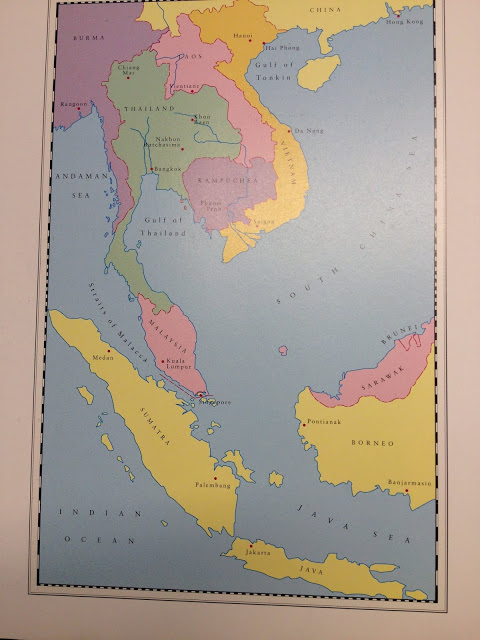
South East Asian countries were ruled by Hindu kings for over one thousand years. Influence of Sanskrit language is seen everywhere, but Tamil influence was not noticed by many. When I read two books written by Judith M Jacob, senior lecturer at SOAS, University of London, I made some marginal notes and I give them below:-

Slave names in Cambodian inscriptions have beautiful Tamil and Sanskrit names. Some musicians and dancers have very poetic names e.g Vasanta mallika, (spring jasmine) in Khmer inscription K 557.

We may compare it with the 400 beautiful names in Rajaraja Choza inscriptions in Thanjavur. He had given the names of all the 400 dancers employed in the big Hindu temple. Some of them are beautiful Tamil names and others were beautiful Sanskrit names.

Xxx


Slaves in Cambodia were treated as ‘goods’ possessed by an owner. They were gifted to temples along with lands and other goods.
A case suggesting two dependent parents is recorded on inscription K904,A1.23,
“me kandan, ta kandan ku Kandan” meaning mother of Kandan, father of Kandan.

Kandan is a Tamil name derivedfrom Sanskrit Skanda.
Va and Ku are used frequently in inscriptions, Va is Mr and Ku is Mrs or Miss.

In folk tales Kandhan , with Tamil spelling, Kam Raj, Krishna Kumar and Suvanna Kumar ( Swarnakumara) are used. Though these names are Tamilized Sanskrit words these are more common in Tamil Nadu than other parts of India.


Order of details in Inscriptions
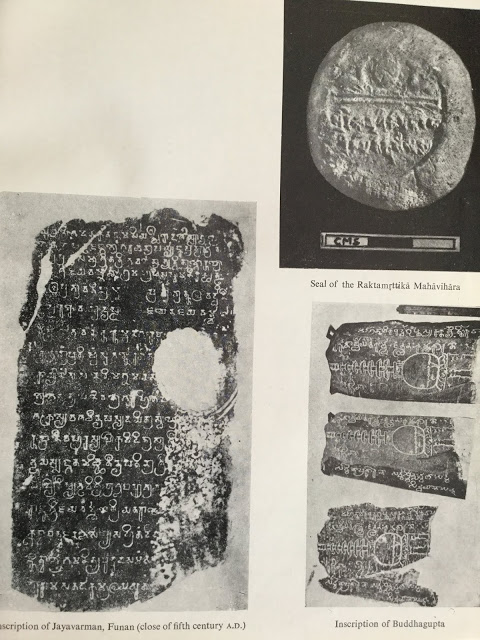
Pre-Angkor inscriptions followed the same order in giving details like India. Here also we see Indian influence.
The date or name of the reigning king;
The title and name of donors;
The name of the god;
Names of the people from whom the donor obtained land to offer to the foundation;
The extent, location, capacity of the donated rice fields;
The names of the donated slaves with an indication of their duties;
Details of the subsistence given to the religious personnel;
Details of other lands given to the foundation, orchards, market, garden etc
List of precious objects given to the foundation;
The statement s that the revenues are to be combined with those of another foundation ;
Warning of punishment for anyone using or abusing the belongings of the foundation.

King Vikramaditya
‘Satra keng kantrai’ is a collection of legal tales known also in Laos, Thailand and Burma. In each case the dispute cannot be solved by a mere judge and has to be referred to the king. His judgments are wise and fair. When two women claim to be the mother of one child, for example, he settles the case very much as Solomon did.
It is like our Vikramaditya, a wise and just king.


Tamil Anangu
The frequent appearances in the stories of spirits ‘anak ta’ always associated with a specific locality such as a strangely shaped tree trunk or huge rock may be compared with ‘Thaakku Anangu’ in Sangam Tamil literature and Brahmarakshas in Sanskrit literature. This shows clear Indian influence. (Thaaku Anangu= Anak Ta)

When we look at all these stories we come across Sanskrit or Tamil words or parallel Indian stories. That shows even Solomon’s stories are borrowed from India and adapted.

Dhananjay
‘Themen Chey’ is a story known in Cambodia, Burma and Thailand. It is the corrupted form of Dhananjayan, one of the popular names of Arjuna. Also a common name among business community of Tamil Nadu. In the story, he is a poor boy who rises first to be the servant of a rich man, then to attend upon the king, and finally to be the most eminent man in the land.

–subham–


HINDUS’ NEW METHODS OF FORTUNE TELLING! (Post No.5384)

WRITTEN BY LONDON SWAMINATHAN


swami_48@yahoo.com

Date: 1 September 2018


Time uploaded in London – 20-23 (British Summer Time)


Post No. 5384


HINDU SCIENCE: DO YOU WANT TO BE A SOOTHSAYER OR A FORTUNE TELLER?


Let us look at two new Hindu methods of sooth saying today; very easy to follow. You can master it very quickly!


Hindus have several methods of predicting one’s future. I have already given details about rope trick astrology, lizard predictions, black bird predictions, parrot astrology, sea shell (Prasnam) astrology, face reading, palmistry, amazing Nadi Jothidam (palm leaf reading), Sneezing predictions, Five Bird (Pancha Pakshi Shastra) Astrology and horoscope reading. Probably Hindus are the only race that has so many prediction methods. In addition to these approved methods there are some voodoo methods as well. Instead of crystal gazing they will look at a betel leaf tarred with special black ink! We can call it Betel Leaf Gazing!


if you hear one sneeze it is bad; if any one sneezes twice it is a positive sign. And then there are predictions on the basis of Fox crossing your way, crow flying above, cat crossing your way, white necked eagle (Garuda) flying above etc.


Now I want to tell you something I Have read yesterday in the British Library in London. It is a Tamil book published in 1901. We had a book in our house in Madurai titled ‘Swarodaya Vinjanam’. Unfortunately, I lost it. Now I have got a very brief description of what was in the lost book.

How to predict:

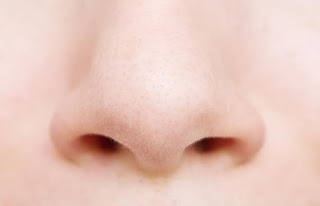
Hindus believe that our breathing alternates in the two nostrils. If you closely watch your breathing, the breathing is done through one nostril for some time and then it changes to another nostril. Sometimes the air goes in and comes out using both the nostrils.


Hindu scriptures say breathing starts with right nostril at 6 am in the morning and then it changes to left at 8 am. it alternates like this every two hours. If someone comes to you and asks some advice, you check your breathing. If it is done through your right nostril and the person who asked your advice also stands on the same side, you say, ‘YES, YOU WILL WIN’, ‘YOU WILL BE SUCCESSFUL’, ‘DO IT’, ‘GO AHEAD WITH YOUR PLAN’ etc.

Possible questions:

Can I buy a new car now? new house now?

Can I go abroad?  send an application now?

Can I get a promotion in my job?

Can I win the election?

Can I get married now?

Will I get my lost property?

Can I win the court case? etc


When your breathing is done by left nostril and the person stands on the left side, then you say Yes.


But if the person stands on the opposite side to your breathing nostril; you tell the person not to do it. If the breathing is done by both nostrils also, it is NOT a positive answer. The Right nostril is called Sun Part (Pingalai) and the left side is called Moon Part (Ida Kalai in Tamil). The central part (both nostrils) is called Sushumna or Suzu Munai in Tamil.

One more rule is there! The person should be standing or sitting below your level. You should be in a raised seat or higher level.


This looks very strange. Someone has to prove it scientifically or disprove it. But all Hindus have certain basic rules for practising astrology or any science. You must be selfless and follow purity in ‘word, deed and thought’. It is called Tri Karana Suddhi (Three Dimensional Purity). If someone practises a Hindu science whether it is medicine or astrology without that purity, the very same science will bring the person down. Every day we read in newspapers that this ascetic was arrested that ascetic was jailed. This is because the moment you get some extraordinary powers the angels in charge of them will send you temptations. You will naturally become greedy or wish something bad i.e. abuse of women or abuse of power or becoming greedy. That is the end of you!


These prediction methods are in our books for very long. Nothing new. I repeat what I have read yesterday in the British Library.

Shadow Science Mystery

This is the second method; it will sound like some science fiction story!

It is called Chaya Darsan Prediction (Shadow Watching/seeing)

When the sky is clear and the sun is shining bright and when you can see a long shadow of you i.e. five to ten feet long, you look at it facing the same direction of your shadow. If you watch it for ten or 15 minutes from head to foot (of your shadow) and look up in the sky you will see your figure in the sky. If it is of golden colour, you will get lot of money or property. If your figure in the sky is of white colour, then you will be healthy and have a long life. If you see it in red colour, something bad will happen and if it is in black colour it is very bad for your health or life. If nay part of the body is missing in the figure, it is a life threatening sign. Some people look at moon and follow the same predictions.


If someone practises this art for 12 years, the shadow will communicate with you. It will speak to you and come with you. Once it starts talking to you,  you will get the Ashta Ma siddhi (Eight Paranormal Powers). The shadow will sit with you, walk with you and lie down with you. It will warn you any dangers that may come to you. And you can do miracles.


This looks like a fairy tale story. But one has to practise it. Looking at moon on certain days in a month is part of Hindu religious ceremony. If one sees 1000 crescent moons in one’s life, a big celebration is organised for that person. Probably this is also part of that Chaya Darsan.

Sometime ago I wrote that NASA scientists of USA must do some research about Hindu Nadi Jothidam. Though most of the Nadi Jyoshya astrologers are frauds nowadays, there is a big science in it. By looking at one’s hand they can tell your birth day and name. So we need some scientific research on such strange astrological methods. I wish I get some funding for such research!


–subham–


SCIENCE IN NALA DAMAYANTHI STORY OF MAHABHARATA (Post No.5371)

RESEARCH ARTICLE WRITTEN BY LONDON SWAMINATHAN

Date: 28 August 2018


Time uploaded in London – 13-57 (British Summer Time)


Post No. 5371


Pictures shown here are taken from various sources including google, Wikipedia, Facebook friends and newspapers. This is a non- commercial blog.


There is a very interesting love story of  Nala and Damayanthi  in the third chapter, Vana Parva,  of Mahabharata. This interesting story was adapted into Tamil by two poets Pukazenthi and Athi Veera Rama Pandyan.  Other poets of Tamil epic Silappadikaram and Thevaram made passing references to it. Because he story is so moving lot of other things in the story are missed by many. According to Mahabharata, it is a pre-Mahabharata story. That means it should have happened before 3100 BCE. It reflects the social condition of those days which is supported by other books as well, particularly Sangam Tamil literature.

Following subjects are dealt within the story:-

1.Extra Terrestrials

  1. Art of Disguise
  2. Eight Paranormal Powers

4.Bird Migration and Training Birds for communication

5.Art of Cookery

6.Art of Charioting

7.Magic Numbers

8.Art of Gambling and Manipulation

9.invisible Cloaking

10.Toxicology

11.Moral Teaching and Psychology

12.Letter Writing by Kings

13.Truth alone Triumphs

14.Necessity of cleanliness

15.Role of Poetry

16.Brahmin Ambassadors/ Role of Ambassadors

17.Travellers’ Tale & Business Travel

18.Geography

19.History

20.Role of Saints/Psychologists

21.Child care

22.Unusual Freedom of Indian Women

23.Body marks

24.Science of Horses

25.Tree Science

  1. SHARING/ EXCANGE OF INFORMATION


NALA DAMAYANTI story was translated into Latin by Bopp and into English verse by Dean Milman.

DAMAYANTI  was the only daughter of King Bhima of Vidarbha (Nagpur region in Maharashtra). She was very beautiful and clever. Nala, King of Nishada, was a brave and handsome person. He was learned in Vedas and virtuous. He had great skills in arms, management of horses and cooking. His only weakness was addiction to gambling (which we see later in Yudhishthira of Mahabharata as well). Nala and Damayanti loved each other, though they have never met. Nala sent a message using swans.

(This shows the use of animals for human communication; it is in Sangam literature Purananuru verse as well.)


Bhima determined that his daughter should hold a swayamvara. The warrior class Hindu women of India had the highest freedom in the world. They chose the bravest ad cleverest prince or a king as their husband. This explodes the theory of Aryan immigration and Aryan-Dravidian division. Since it was not practised anywhere in the world except Hindus from Kanyakumari to Kashmir from the Vedic days, we know the Aryan migration is a concocted story. Madurai Meenakshi, Alli Rani of Tamil Nadu, Yadava women of Tamil Nadu, Indumati of Kalidasa’s Ragu Vamsam, Sita of Ramayana and Draupadi and Damayanti of Mahabharata show that the foreigners’ theory of Aryan and Dravidian is a farce.

(This shows Hindu women were freer and cleverer; even Kalidasa’s wife was a clever woman who wanted to marry only the cleverest man; Though she was fooled by her own ministers later Kalidasa received Goddess Kali’s grace and became most intelligent and world famous).


Bhima sent letters to all the kings inviting them to Swayamvara (princess choosing her own partner). The message was sent by letter written on barks of the trees or cloth. This also explodes the foreigners’ pet theory that Hindus derived Brahmi script from Phoenicians. Even before the Mahabharata period, all stories say something about  writing.


Kings flocked to Damayanti’s Swayamvara and among them was Nala. Having heard the beauty of Damayanti through the Inter Galactc traveller Narada, even the Vedic Gods Indra, Varuna, Agni and Yama came to it. Nala who met them on the way, without knowing their intention, promised them to help. Even when they asked his help in marrying Damayanti , he did not go back on his words. Throughout Hindu literature whether it is a curse or a boon, not even Gods would go back on their words. This Truthfulness of the Hindus was praised by all foreign visitors at least for 2000 years. Modern India also engraved the Upanishad dictum ‘Truth Alone Triumphs’ on its National Emblem.


Nala reluctantly performed the promised task, but his presence perfected his conquest, and the maiden announced her resolve to pay due homage to Four Vedic Gods , but choose him for her lord. Nala entered the harem of Damayanti by becoming invisible with the power given by the Vedic gods. Now we read in science magazines about ‘Invisible cloaks’. We had such facilities thousands of years ago!

During the Swayamvara (princess freely choosing her own lord), all the four gods looked like Nala (art of disguise), but Damayanti was able to see the features of Extra Terrestrials in the Four heavenly Gods. Their feet never touched the ground (floating), they never winked (no beating of brows) and their garlands never withered. Throughout Hindu literature we such description of ETs are found. Other Puranas say ETs cant have sex in the heaven due to Parvati’s curse. They can exceed the speed of Light in Inter Galactic Travel falsifying Einstein’s theory. According to Hindus mind is the fastest object in the Universe, not Light.


When Damayanti chose Nala as her husband, they got married formally and lived happily for some time. Kali, the symbol of bad age- Iron Age- also came for the Swayamvara, but very late. When he heard that everything was over, he decided that he would separate the couple in future. One day when Nala did not wash his hands and feet before worshipping God, Kali entered him and made him an addict to gambling.


Hindus always use this evet to emphasize cleanliness; if a person is not pure or clean mentally and physically, the person will be spoiled. This is a moral lesson every parent gives to their children.

At Kali’s instigation Pushkara, younger brother of Nala challenged him to come for a game of dice. Kali charmed the dice and Nala went on losing; but he was infatuated; the entreaties of friends and ministers, wife and children, were of no avail; he went on till he had lost his all, even his clothes. His brother Pushkara became king and proclaimed that no one should give food or shelter to Nala. So, the defeated king wandered forth into the forest with his wife Damayanti.


When he tried to catch some beautiful birds with his only garment, they flew away with it (This is comparable to Rama trying to catch the golden deer for Sita). He shared the cloth of Damayanti and decided at one stage that he should leave her alone. While she was sleeping, he slipped out leaving her in great distress. When she came to forest she wisely sent her two children Indrasena and Indrasenaa (long vowel is used for females in Sanskrit; Krishna is lord; Krishnaa is Draupadi).


This shows the importance of child care. A woman worries more about the safety and welfare of her children than her life.


Damayanti joined the caravan that was passing through the forest. We find such caravans going through forest in Tamil literature as well. The caravan of business people was attacked by an elephant and the chaotic scene is described vividly in the Mahabharata. Even Brahmins joined the group of tradesmen passing through the forest.

When the queen mother of Chedi Kingdom saw a beautiful woman with all the features of a queen, walking with the traders, she called her and gave her refuge. Now we learn about the geography and history of ancient India. We have come across Vidarbha, Nishada, Chedi and later Ayodhya and Dasarna kingdoms. Ayodhya of Kosala Kingdom is 800 miles away from Vidarbha. We even come across Krishna travelling from Gujarat to Uttarpradesh in Mahabharata. 1000 mile travel was done with the fastest horses 5000 years ago!


Nala fell in with the king of serpents Karkotaka in the forest, who was under a curse from which Nala was to deliver him. The serpent bit Nala and the poison should work upon him till the evil spirit (Kali) was gone out of him, and then he should restore his original handsome form. The serpent’s poison made him ugly and deformed. Here we learn about toxicology. Minus X Minus is Plus. One impurity of poison works as an antidote for another impurity (Kali). Now Nala looked like a misshapen dwarf (dwarf becoming a normal man is also in Periya Purana. A pandyn king dwarf king was made normal by a Miracle boy named Sambandar in Tamil Nadu).


Nala entered the service of King Rituparna of Ayodhya, as a trainer of horses and an accomplished cook, under the name of Bahuka. ( we see some similarity with the Bhima episode in incognito period).


Damayanti was sent to her father’s kingdom of Vidarbha where he found her children. Then she devised a clever plan to bring back Nala. She announced a second swayamvara since three years  had gone. King of Vidarbha also made all efforts to find Nala, but could not succeed in it.

In those days Brahmins were used as ambassadors and Damayanti also employed a Brahmin to find Nala with all the available information. One of the identification technique was the words (cliché) Nala used (we see such identification techniques in Ramayana as well). The Brahmin identified Nala with such clichés used by Bhauka ( Nala in different disguise) and informed Damayanti about his whereabouts.


In the meantime, Rituparna, having heard the second swayamwara of Damayanti, decided to attend it. Since he knew that Nala was a great driver of chariots, he employed the service of him to travel 800 miles in 24 hours (100 yojanas in the original). On their way the speed of the vehicle was explained with some examples. When Rituparna lost his shawl, he asked him stop the chariot so that he can pick it up. Nala said that the chariot had already travelled 8 miles from the spot (before he finished one sentence). On his way Nala says that a particular tree has so many leaves and fruits. When the co -driver Varushneyan checked one branch of a tree it was proved correct. Such references in the story showed the advance science of biology and horse training. Before choosing the horses for the fastest travel, Nala exhibited his knowledge in the field.


We also have great proof of Hindus knowledge in the art of charioting from the Vedas and from the Horse Manual of Kikkuli of 1380 BCE in Turkey. The manual has instructions in Sanskrit! More over Homer also used the Sanskrit word in the first book of Greek literature. Trojan horse episode means Horse -Horse Episode, because Troja is itself Turaga, Sanskrit word for horse and Turkey as well. TROJA=TURAGA=TURKEY= KUDRA in Tamil ( dyslexic image of Troga is Gutra= Kudra= Kuthirai in Tamil).

On their way Rituparna taught Nala the science of numbers and the rule of chances and learnt from Nala, the science of horses. This shows the Exchange of Knowledge and Sharing Information. As soon as Nala acquired this knowledge, the evil spirit (Kali which means Dark) went out of him. Here is another lesson. If you do anything without full knowledge of it, you suffer. The ignorance, impurity uncleanliness- all are Kali+ dark forces. They all went out of him as soon as he became aware of this; but still he retained his deformity.


Damayanti half penetrated his disguise and was at length convinced that it was her husband Nala by the flavour of a dish he cooked. Here comes the art of cooking. In Tamil Nadu only men cook even today for big events, conferences and weddings. Two names have become proverbial among Hindus; if someone cooks very well immediately they will say ‘Oh he is Bhima, He is Nala’. Both of them employed themselves when they were in the forest. There is another lesson here. The more fields you know, better and easier it will be for your future or survival. Nala’s art of charioting, art of cooking, knowledge in the Science of Asva/Horse –all these things came handy.


Afterwards Nala and Damayanti met and Nala resumed his form. Gods also assured him that Damayanti was virtuous. Now that he knew the science of numbers he challenged Pushkara for a game of dice and won the game. Rituparna’s teaching helped him. Humbled Pushkara was forgiven by Nala and he sent him to his own city with lots of gifts. Nala and Damayanti talked and talked about all the things that happened in the past three years. Like Ramayana, Nala also had some doubts about her chastity during his absence. But Gods assured him that she was well behaved in the past three years.


There is another thing in the story. Nala was given the knowledge of eight miracles. By obtaining this paranormal skill he did cooking without fire and water. And he was able to pass through narrow ways and lower gates. His glance made the pots and vessels to fill in with water. If he showed the fuel stick in sun it got fire like phosphorous. Even if he crushed a flower it remained fresh and intact. All these things were watched by Damayanti’s attendent and reported to  Damayanti before she met Nala.

When a Brahmin ambassador met Nalan (Bahuka) in Ayodhya he repeated the words which Damayanti already knew because Nala used to quote that passage. This type of riddles we see in the Story of Kalidasa and Bhohja. All the episodes in the Nala Story show that the Hindu civilization of Pre Mahabharata period was very well advanced in every field.

The queen mother who gave refuge to Damayanti in the Chedi Kingdom was actually aunty of Damayanti. She came from Dasarna kingdom. During a conversation they founout the close relationship and cried in joy. All these facts and twists in the story make it more interesting than a modern Indian film.


Damayanti’s mole in between her brows also figure in the story which helps her identification. This shows the science of body marks was very familiar.


In short, if one reads the Nala-Damayanti between the lines, one would come across lot of facts to show that it was a developed and advanced civilization.

–Subham-



Max Muller’s Sanskrit Knowledge – Abhedananda’s Comment (Post No.5364)

COMPILED BY LONDON SWAMINATHAN

Date: 26 August 2018


Time uploaded in London – 6-58 AM (British Summer Time)


Post No. 5364


Pictures shown here are taken from various sources including google, Wikipedia, Facebook friends and newspapers. This is a non- commercial blog.

Swami Abhedananda was the founder President of The Ramakrishna Vedanta Society
Born October 2 , 1886
Samadhi (Died) 8 September 1939

Swami Abhedananda gives some interesting information while answering three questions sent by Sarvapalli Radhakrishnan, great philosopher and ex-President of India. It was published in 1936 in the book titled ‘Contemporary Indian Philosophy’.

The three questions are
What is your religion?
How are you led to it?
What is its bearing on social life?
ABHEDANANDA said,
I was born in Calcutta October 2,1866 . My father, late Rasiklal Chandra, was a student of philosophy and teacher of English in the Oriental Seminary in Calcutta. I was educated in a Sanskrit school, then in a Bengali vernacular school and afterwards in the Oriental Seminary, from which I successfully passed the entrance examination at the age of eighteen.

From my childhood I wanted to know the cause of everything and used to ask questions about the ‘Why and How’ of all events. When for the first time I read in Wilson’s History of India, that Shankaracharya was a great philosopher, I had a thrilling sensation, and I wanted to become a philosopher and to study his philosophy. At that time, I was a student in the drawing class of the seminary and was learning to paint from nature. Suddenly a thought came to my mind that I didn’t want to be a painter but I would be a philosopher, and so I gave up the study of the art of drawing and painting.

Xxx

I found a copy of the Bhagavad Gita in my father’s private library and began to study it. When my father saw me reading that book, he took it away from me, saying that’ the Bhagavad Gita was not for boys; it would make you insane’. But his remarks could not stop me from reading it.

Xxx
In my youth I was fond of listening to discourses on Hindu philosophy and used to hear lectures on various religionsas well. I studied Patanjali’s Yoga system. Then I studied ‘Siva Samhita’, a treatise on the practical methods of Rajayoga. But I was told not to practise any of the methods without being instructed by a competent Guru. My class mate asked me to go to Sri Ramakrishna.
One Sunday morning I reached the temple garden at Dakshineswar where I met the great yogi Sri Ramakrishna Paramahamsa and I asked him whether he could teach me practical methods of Yoga Philosophy. He replied ‘Yes’, and after reading of my past life, he said, ‘you were a great yogi in your past incarnation. Come my boy! I will teach you how to practise Yoga’. Then he initiated me and then gave me instructions in concentration and meditation. He touched my chest and aroused my ‘Kundalini’, the ‘Serpent Powe’r and I went into Samadhi, the state of super consciousness.

In him I found the embodiment of the Absolute truth of the highest philosophy, as well as of the Universal Religion. I became his humble disciple.

Xxx

Image of Max Muller
I travelled bare footed from place to place, depending entirely on alms cooked and uncooked, whatever chance would bring to me. I endured all sorts of privation and hardship, practised austerities of all kinds, walked up to the sources of Yamuna and Ganga. I stayed for three months in the caves of the Himalayas at the altitude of 14000 feet above the sea level, spending most of my time in contemplation of the Absolute. I realised that the phenomenal world was like a dream. Thus wandering for ten years all over India visiting sacred places, I met great sages and saints like Trailinga Swami, Swami Bhaskarananda at Benares, Pavahari Baba At Gazipur, many Vaishnava saints at Brindavan and great Vedanta philosophers at Rishikesh where I studied monistic Vedanta Philosophy under the great scholar Dhanaraj Giri.

In 1896, Swami Vivekananda , who after his successful lectures in USA came to London . He invited me to assist him and I went to London in1896 . Swami Vivekananda entrusted me with the charge of conducting classes on Vedanta and Rajayoga.


Swami Vivekananda took me to meet Professor Max Muller and Professor Paul Daussen of Kiel University who had translated sixty Upanishads into German. I had conversations with them in Sanskrit. But Professor Max muller could neither speak in Sanskrit nor understand Sanskrit words when spoken, because, as he said, his ears and tongue were not trained in the sounds of Sanskrit utterances. So, I exchanged my views with him in English. He was deeply interested in the life and teachings of Sri Ramakrishna and said, Ramakrishna was an original thinker, for he was never brought up within the precincts of any university and therefore his teachings were new and original. This remark created a deep impression upon my mind. Later on, he published the ‘Life and Sayings of Ramakrishna’.

In 1897 I went to New York at the request of Swami Vivekananda. There in six months I delivered ninety public lectures before large audiences on Vedanta philosophy.

In 1898 , Professor William James held a discussion with me in his house on the problem of the ‘Unity of the Ultimate Reality’. This discussion lasted nearly for four hours. In which Professors Royce, Lanman, Shaler and Dr James from Cambridge took my side and supported my arguments in favour of ‘unity’.

I travelled all through the USA Canada and Mexico and delivered lectures. In 1921 I sailed to Hawai, Japan, China, Singapore Malaya and Philippines before returning to Calcutta. In 1922, I went to Tibet from Kashmir crossing the Himalayas on foot to study Lamaism. My destination was Demis Monastery near Leh in Ladakh. In 1923 after returning from Tibet I established  Ramakrishna Vedanta Society in Calcutta. In 1924 ,I opened a branch in Darjeeling.


This short sketch of my life will give the reader some idea of the different influences which have moulded my convictions.”

Published in 1936


–subham–

BUDDHA – A PUKKA HINDU, PRACTISING MYSTERIOUS HINDU YOGA! (Post No.5362)

WRITTEN BY LONDON SWAMINATHAN

Date: 25 August 2018


Time uploaded in London – 14-47 (British Summer Time)


Post No. 5362


Pictures shown here are taken from various sources including google, Wikipedia, Facebook friends and newspapers. This is a non- commercial blog.


Foreign historians wrote that Buddha was against Hindu rituals and he revolted against Hinduism. But if one reads Buddhist scriptures, one would realise he accepted all the Hindu practices in abstract form. He did not do Yagas or Yajnas, but he practised meditation and Japa/prayer. If one looks at the Mudras (hand and finger gestures) one would understand that he was a serious student of Hindu Yoga Sastra. Patanjali’s Yoga Sastra (Science of Yoga) is one of the six systems of Hindu Philosophy.


English word Yoke is cognate with Yoga (mind and body uniting)

Dr Radhakrishnan, famous philosopher and ex President of India, quotes the words of Buddha in one of his books “ I know a lot of other things; but I am not going to tell you (I will tell you only what you need to know). The reason for Buddha saying this was that he did not want to give too many rituals to laymen which they would not understand or may even abuse. In real life Buddha did great penance like the ancient Hindu seers and he used the same word Nirvana etc from the Upanishads. He praised Brahmins sky-high in one full chapter of Dhammapada.


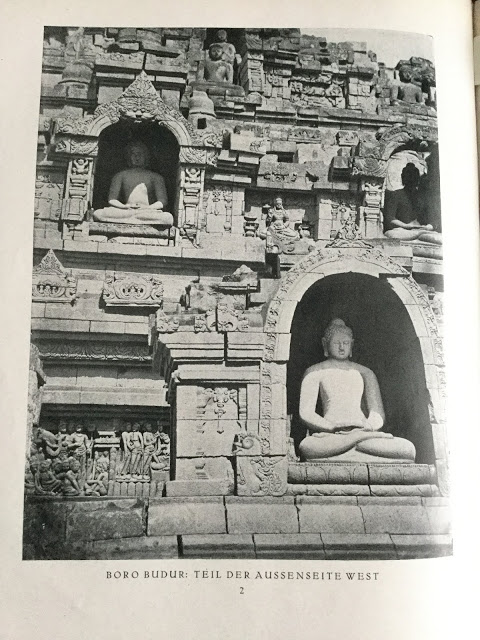
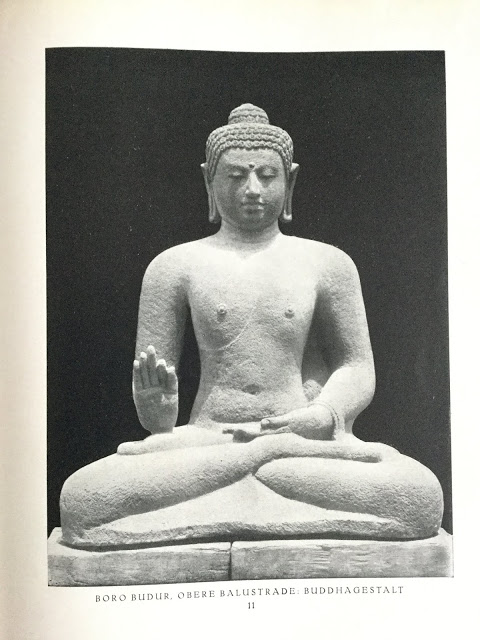
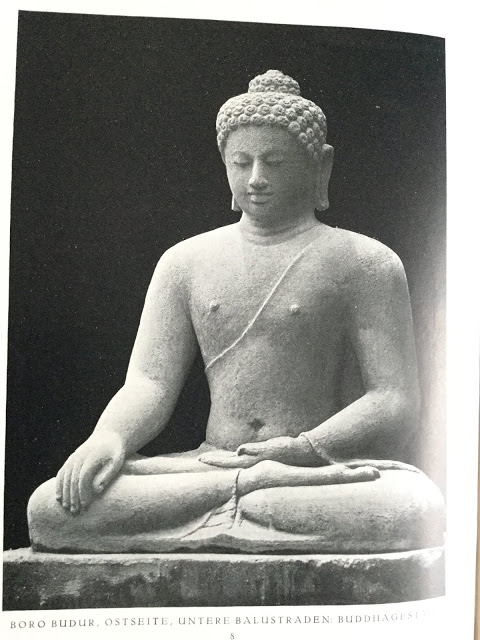
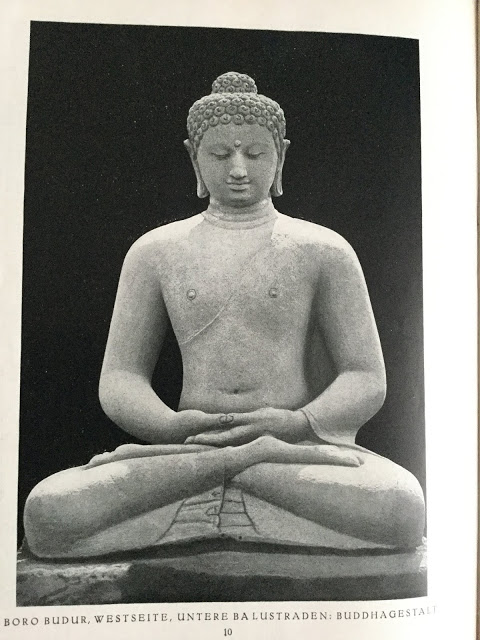
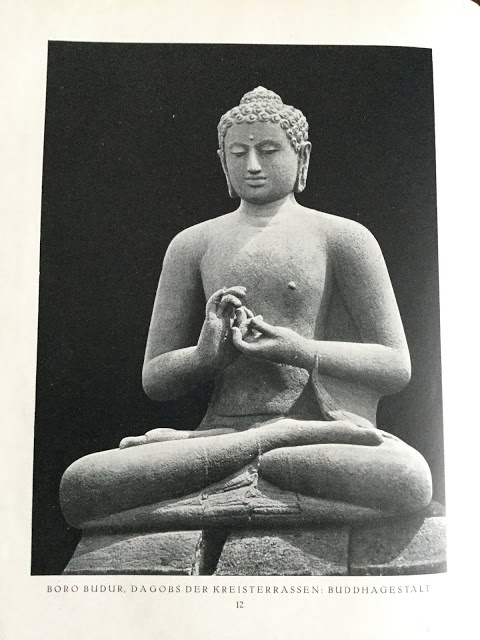
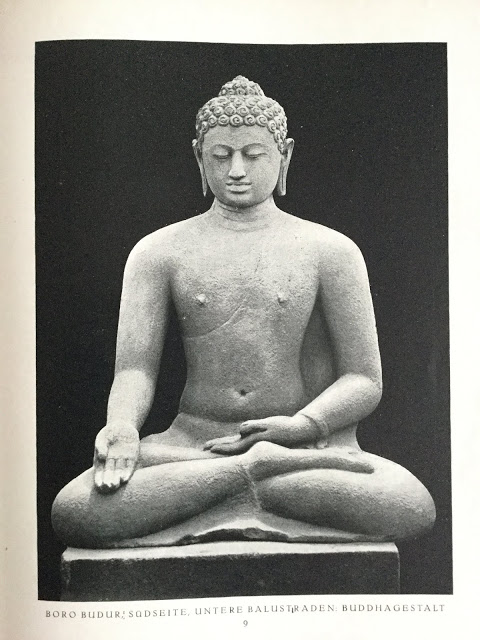
The following pictures from Borobudur, Java, Indonesia showed that he was practising Mudras etc.


A mudra is a hand gesture with fingers pointing different directions or postures. The reason for having different postures is to channelize the body energy. Each Mudra brings or enhances certain type of energy in us.

All Hindu Gods show Mudra mostly Abhaya or Varada.


Mudras are used by Hindu priests differently. There is a book called ‘Mudra Vidanam’ giving a list of over 125 Mudras. A Brahmin who does Sandhyavandana ritual three times a day use Mudras as well. The Sanskrit slokas in the beginning of the book explain the significance of those Mudras. It says Mudras make the Devas (angels and gods) happy and it drives away the sins. The Devatas in charge of each Mantra (spell) are pleased with the Mudras. It also adds one should learn the Mudras used in Archana, Japa, Dhyana (Prayer and Meditation) Kamya Karmas (desire fulfilling rituals), Snanam , Avahanam (Bathing and Invoking), Prathista, Rakshanam and Naivedyam ( Installing, preserving and offering to god). The book classified Mudras under 11 titles and illustrated all Mudras with line drawings.


Regarding the Mudras practised by Gautama Buddha there are some interpretations. Buddhists refer to Indra very often and these Mudras refer to Earth Goddess (found in the Atharva Veda), we come to know that Buddha believed in all those Gods and Goddesses. He advised everyone to follow eight virtues. If one has those eight virtues that will take nearer to god. Ene in higher forms of Hinduism, the Yogis don’t follow rituals like Yagas (fire ceremonies) or Pujas. People at lower level only stick to them and use them as steps to higher. Since Buddha didn’t give them any ritual, Buddhist order slowly invented new rituals and they multiplied in course of time (which we see today).


One example: Buddha did not like killing animals in Yaga or anywhere else. Now Sri Lankan Buddhist monks wait for others to kill animals and bring the meat to them for food. Literally they don’t ‘kill’ animals.

One may wonder if Buddhists of today meditate upon Buddha who did Buddha meditate upon? Did he do Gayatri Japa?

Abhaya Mudra:

Take refuge in me; I will protect you ( No fear gesture).

This is a blessing sign.

Bhumisparsa Mudra

Buddhists interpret it as Buddha asking Bhuma Devi (Goddess Earth) to be witness for his enlightenment. Literally translated it sounds earth touching gesture. So I think he is taking the energy from earth or taking blessing from the earth.

Dhyana Mudra

This is meditation Mudra. preserving the energy or focussing the energy towards body

Dharmachakra Mudra

Turning the Wheel Mudra is a mudra of teaching and transmitting. It will help you to explain anything well.

Varada Mudra

Gesture of Giving, generosity and Compassion.


Mudras are not just gestures of fingers and hands. Here acupressure is also used to stimulate the energy stored in the body. Giving pressure to different places in the hand helps in concentration.


In dance and other arts it is used to just convey a message or thought, for secular purpose. They are different from religious mudras.


Hindu Mudras in Egyptian and Sumerian Statues | Tamil and Vedas

tamilandvedas.com/2012/10/07/hindu-mudras-in…

Picture: Egyptian Statue What is a Mudra? Mudra is the hand gesture or the finger position. Gods or saintly persons who practise meditation or Yoga use Mudras. The …


–Subham–

WHY I AM A HINDU?- MAHATMA GANDHI (Post No.5358)


COMPILED BY LONDON SWAMINATHAN

Date: 24 August 2018


Time uploaded in London – 17-33 (British Summer Time)


Post No. 5358


Pictures shown here are taken from various sources including google, Wikipedia, Facebook friends and newspapers. This is a non- commercial blog.


GANDHIJI’S ANSWER TO THREE QUESTIONS

I have been asked by Sri S Radhakrishnan (later President of India) to answer the following three questions:

What is your religion?

How are you led to it?

What is its bearing on social life?

my religion is Hinduism which, for me, is Religion of humanity and includes the best of all the religions known to me.


I take it that the present tense in the second question has been purposely used instead of the past.. I am being let to my religion through Truth and Non Violence, i.e. love in the broadest sense. I often describe my religion as Religion of Truth. Of late, instead of saying God is Truth, I have been saying Truth is God, in order more fully to define my religion. I used, at one time , to know by heart the thousand names of God which a booklet in Hinduism gives in verse form and which perhaps tens of thousands of Hindus recite every morning. But nowadays nothing so completely describes my God as truth. Denial of God we have known . Denial of Truth we have not known. The most ignorant among mankind have some truth in them. We are all sparks of Truth. The sum total of these sparks is indescribable, as yet unknown Truth, which is God. I am being daily led nearer to it by constant prayer.

The bearing of this religion on social life is, or has to be, seen in one’s daily social contact. To be true to such religion one has to lose oneself in continuous and continuing service of all life. Realization of Truth is impossible without a complete merging of oneself in, and identification with, this limitless ocean of life. Hence, for me, there is no escape from social service, there is no happiness on earth beyond or apart from it. Social service here must be taken to include every department of life. In this scheme there is nothing high. For, all is one, though we seem to be many.


–M K Gandhi

Source book:-

Contemporary Indian Philosophy, Edited by S Radhakrishnan and J H Muirhead, 1936 (second revised edition 1952)

(My father V santanam bought this book on 3-9-1956 for 26 rupees 4 Annas and numbered the book as 580. Probably his book collection number. It was bought from Bharathi Puthaka Nilayam in Madurai. I see his underlining of important points  throughout the book. Total number of pages 650.  I used to go to Bharathi Puthaka Niayam with my father and the owner’s name was also Swaminathan; so I got a chocolate every time I went there!—London swaminathan)


Hindu Gods around the World! (Post No.5339)


Compiled by london swaminathan

Date: 19 August 2018


Time uploaded in London – 13-54  (British Summer Time)


Post No. 5339


Pictures shown here are taken from various sources including google, Wikipedia, Facebook friends and newspapers. This is a non- commercial blog.


Comparative list of Hindu Gods


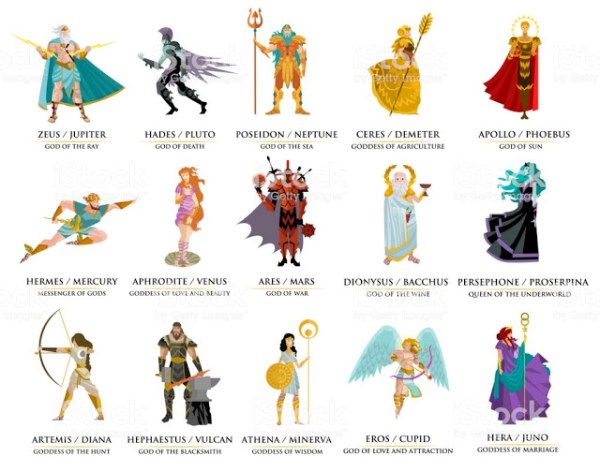
When Hindus migrated to different parts of the world, they took their religion and gods to other cultures. Those people adopted and adapted our Gods, customs and words. We find words of Sanskrit and Tamil origin around the world. Following list may contain some repetitions and contradictions. When a culture takes ours it always get mixed up and the tendency of any culture is to bring it closer to their existing beliefs. I have already shown this in my article ‘Sanskrit in Bible’. I have also shown how our Vahanas are used in Sumerian and Iraq and Mayan civilization.

 
The gods and goddesses of Europe are but copies of their Hindu originals


European version of Hindu Gods
Jupiter        Indra
Juno           Durga or Parvati or Indrani
Apollo         Krishna
Venus        Rati
Ceres         Sri
Cybele       Prithvi (Sri Bali in Kerala)
Neptune

and Uranus         Varuna
Minera        Sarasvati
Mars           Skanda
Pluto           Yama
Plutus         Kuvera
Vulcan        Visvakarma
Cupid                   Kama
Mercury      Narada
Aurora        Ushas
Aeolus        Vayu
Janus                   Ganesa
Dioscuri     Asvini Kumaras
Stys            Vaitarani
Ida              Kailas
Olympus    Meru


Comparison of Vedic Gods


India           Ireland                 Iceland       Italy

Mitra           Nuada                 Tyr              Jupiter


Varuna       Lugh                    Odin           Dius Fidus

Indra          Ogma                  Thor           Mars

Asvins        Bres                     Freyr          Quirinus

Sarasvati   Macha                 Freya          Juno


*My comments: Dius Fidus is Dyaus Pita in the Vedas, Zeus in Greek and Ptah in Egypt.


Indo- Japan Gods Comparison


Ganapathi                     Kangiten (Binayaka)

Sarasvati                       Benzaiten

Narayana                      Narendran

Uma Mahesvara           Umashi Dijizeiten

Brahma                         Bonten

Aditya                            Nitten

Vasishtha                     Basusen


xxxx


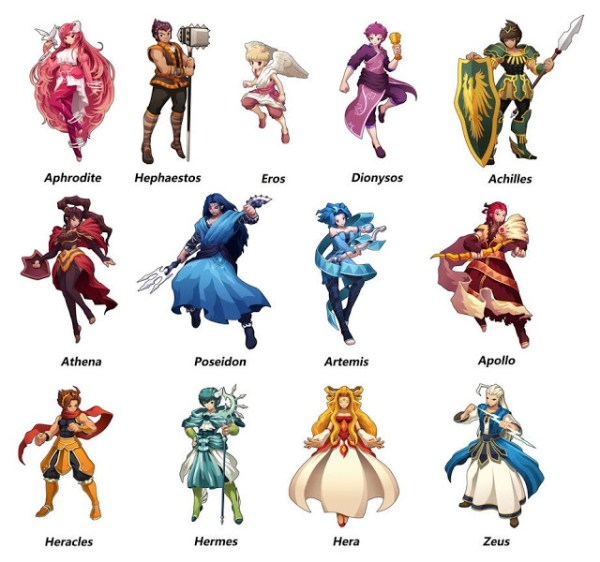
Greek Gods and Hindu Gods


Hindu – Slav
Varun – Perun
Haridasva Hors / sun
Surya Hors / sun
Moksha Mukosh / death

Roman or Greek Gods & Hindu Gods
Zeus – Indra (Taranis, Thor)
Jupiter – Indra
Saturnus – Brahma
Minas – Yama
Neptune – Varuna
Sol -Surya
Lunus – Chandra
Hercules – Krishna (Hari kula esa)
Janus – Ganapathy
Hephaestus/ Vulcan – Visvakarma /Tarkhan/Takshan
Plutarch – Kubera
Apollo – Krishna (also Hercules)
Mercury – Narada
Burgos – Rama
Mars – Skanda
Juno – Durga (also Diana & Artemis)
Minerva – Sarasvati (Also Athena)
Venus – Rambha
Aurora -Usha
Cybele -Prithvi
Ceres – Sree /Lakshmi
Cronos – Kashyap (Father of Asuras and Devas)
Zeus, Poseidon, Hades -Trimurti
Hera – Lakshmi
Hades -Yama
Poseidon – Varuna
Ares – Skanda
Kronos -Shiva


Pleiades – Kritika stars
Hera, Hestia, Demeter- Durga, Lakshmi, Sarasvati
Demeter – Devamata (same as Tiamath in Sumer)
Bacchus –Shiva
Hermes – Sarama
Cybele – Sribali
Gaiya – Jaya
Uranus – Varuna
Hestia – Vastu
Diana /Artemis – Durga


Other cultures:
Gilgamesh – Sri kamesa
River Congo/River Mekong – River (Ma) Ganga


xxxx


Some suggested correspondences for the deities who appear in the rituals

Deities -herbs -colours -runes -trees
Sun -juniper – red -siegel -bay
Moon -mugwort – white -lagu -willow
Sky -basil -blue -tyr -ash
Twins -vevain -orange -ehwaz – hazel
Thunder -leek -brown -thorn -oak
Maiden -mint -rose -gyfu -plane
Earth -crocus – green -odal -linden


sky– thunder– fire
dievas– perkumas– ugunsmate
nuada — taranis– aine

tyr — thor– loki
svarog — perun– istie

zeus — zeus– Hestia
dsius — teshub– –?

armazd — vagahn– -sister fire
dyaus — parjanya– agni

Sun — dawn — moon — twins
Saule — auszrine– menuo — dieva deli
Grian — der greine — manannan– emain macha

Sol — svanhild– mani — alcis

Solnste — zorya — myesyats– cosmas and
Damien

Heliosa — Helen — mene — dioscouroi
Arinitti– hulla and kushukh — sheri and hurri
Mezulla

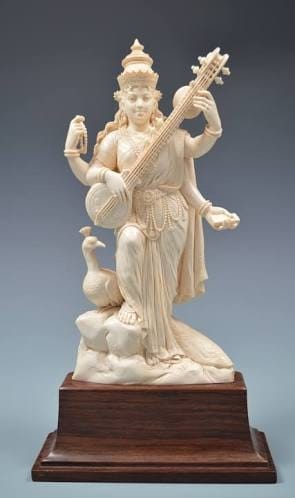
Image of Sarasvati in ivory.


Arev– arevhat — amins — ?

Surya – suryaa– soma — Asvins

From the sun goddess page178

Hope these charts will help future researchers.


Contact swami_48@yahoo.com

roman,greek chart

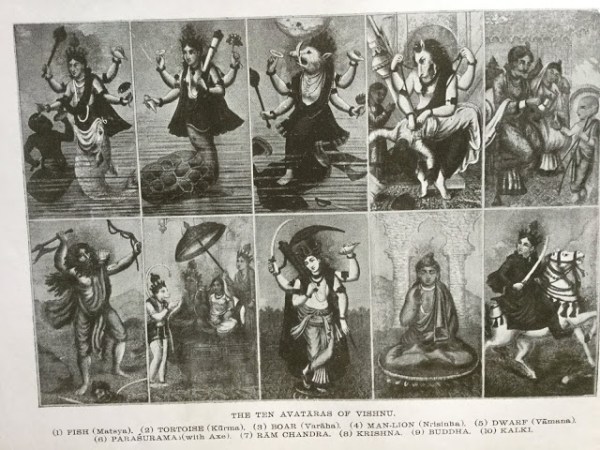
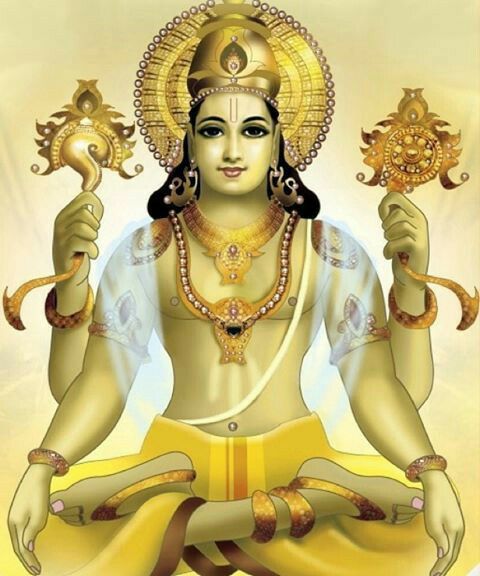
Image of Vishnu

–Subham–


Sheridan bought Boots!! ( Post No.5328)

Compiled  by London swaminathan

Date: 16 August 2018


Time uploaded in London –7-13 am (British Summer Time)


Post No. 5328


Pictures shown here are taken from various sources such as Facebook friends, Wikipedia, Books, Google and newspapers; thanks. Pictures may be subject to copyright laws.


Sheridan made his appearance, one day, in a pair of new boots. These attracting the notice of some of his friends, Now guess, said he, how I came by these boots. Many probable guesses then took place. No, said Sheridan, no you have not hit it, nor ever will. I bought them and paid for them.

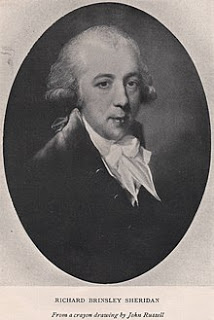
SHERIDAN PROFILE

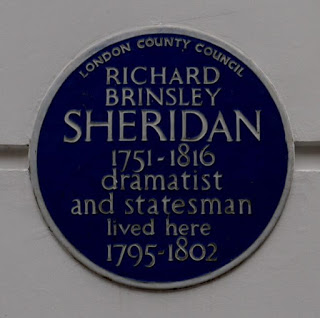
Richard Brinsley Sheridan

Irish Playwright

born oct.31, 1751

Died July 7, 1816

Age at death 64


PUBLICATIONS

1775 The Rivals

1775 St. Patrick’s Day

1775 The Duenna

1777 The School for Scandal

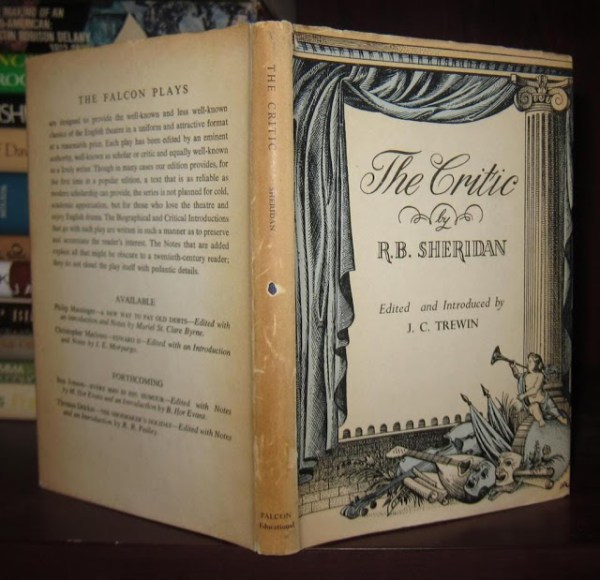
1779 The Critic

The playwright R B Sheridan is best known for his comedies of manners.

Sheridan was born in Dublin, and theatre was in his blood. His father was an actor, and his mother had written novels and plays. However, his family had money problems, and while Sheridan was away in England being educated, the family moved to France to avoid debtors.

When Sheridan was 19, the family moved back to England, and he joined them in the city of Bath. While there he became involved in a scandal concerning a well- known singer Elizabeth Anne Linley, over whom he later fought two duels. They were married in 1773 and then moved to London.


Once in London Sheridan became friends with a group of writers including Dr Johnson and Oliver Goldsmith. Although Elizabeth’s singing career could easily have supported them both, Sheridan decided to earn a living from writing. His first play, The Rivals, was written when he was 23. Two more followed later that year. The success of these plays led directly to Sheridan being offered the job of actor-manager of a London theatre.


Sheridan’s The School for Scandal is considered one of the most brilliant comedies of the 18th century. Like all of his plays, it makes fun of types of people Sheridan felt were cruel, stupid or self-important.


Sheridan’s theatrical skills made him a natural public speaker. He became a member of the British parliament and served as a minister.

Source- Book of Anecdotes and Who Wrote What When.

–Subham–


MANU SAYS DEPARTED SOULS ARE MORE IMPORTANT THAN GODS! (Post No.5311)

Written by London SWAMINATHAN

Date: 11 August 2018


Time uploaded in London – 20-34 (British Summer Time)


Post No. 5311


Pictures shown here are taken from various sources such as Facebook friends, Wikipedia, Books, Google and newspapers; thanks. Pictures may be subject to copyright laws.


MANU SAYS DEPARTED SOULS ARE MORE IMPORTANT THAN GODS! (Post No.5311)


This part of Third Chapter of Manu Smrti contains several Interesting and Mysterious things:

What is Mysterious?

See 231 (departed souls like riddles) and

274 (solar eclipse)

194-202 Strange Names for different types of Manes and Origin of Manes

Invisible Presence of departed souls- See 189

What is interesting?

This part gives severe blow to Aryan Immigration theory for two reasons: all the ingredients used are from tropical regions. No where else in the world we see such ceremonies.

It gives a severe blow to Aryan- Dravidian division; there is no such cultures as Dravidian; even in funeral ceremonies we see similar customs from south to north of the country.

Most Interesting Point

The Four Blessings sought from the departed souls:

FOUR BLESSINGS SOUGHT!

  1. ‘May liberal men abound with us! (MAY OUR GENEROUS DONORS PROPSER)

May our knowledge of the Vedas and our progeny increase! (MAY THE VEDAS AND OUR DESCENDANTS PROSPER)

May faith not forsake us!  (MAY OUR FAITH DISSIPTAE)

May we have much to give to the needy!'(NAY THERE BE MUCH GIVEN TO US THAT WE MIGHT GIVE TO OTHERS)

What a Great Genius Manu is!

Four Types of Questions (see 254)

Brahmins are fire ! (See 212)

Departed souls are Nature Lovers (see 207)

Three Best People (see 185)

Manes are more important than Gods! (see 203)

xxxx


MANU THIRD CHAPTER CONTINUED…………Finished

  1. Now hear by what chief of twice-born men a company defiled by the presence of unworthy guests is purified, and the full description of the Brahmanas who sanctify a company.


Best People

  1. Those men must be considered as the sanctifiers of a company who are most learned in all the Vedas and in all the Angas, and who are the descendants of Srotriyas.
  2. A Trinaciketa, one who keeps five sacred fires, a Trisuparna, one who is versed in the six Angas, the son of a woman married according to the Brahma rite, one who sings the Jyeshthasaman,

Tri naciketa= The Story of Naciketas in Katha Upanishad

Tri Suparna = Three Bird passage in Rig Veda 10-114-3

Jyeshta Saman= Excellent Chants in the Tandya Brahmana 21-2-3


  1. One who knows the meaning of the Veda, and he who expounds it, a student, one who has given a thousand cows (as donation or gift), and a centenarian must be considered as Brahmanas who sanctify a company.

Giving and receiving up to 20000 cows as gift is in the Rig veda and Mulavarman Yupa inscription of Indonesia (4th Century CE).

It is found in several Indian Inscriptions as well .

At least Three Brahmanas for the Srardha

  1. On the day before the Sraddha-rite is performed, or on the day when it takes place, let him invite with due respect at least three Brahmanas, such as have been mentioned above.
  2. A Brahmana who has been invited to a rite in honour of the manes shall always control himself and not recite the Veda, and he who performs the Sraddha must act in the same manner.

INVISIBLE MANES!

  1. For the manes attend the invited Brahmanas, follow them when they walk like the wind, and sit near them when they are seated.

(The departed souls come at the speed of wind and sit near the Brahmins.)


Brahmin becomes Pig!

  1. But a Brahmana who, being duly invited to a rite in honour of the gods or of the manes, in any way breaks the appointment, becomes guilty of a crime, and in his next birth a hog/Pig.
  2. But he who, being invited to a Sraddha, dallies with a Sudra woman, takes upon himself all the sins which the giver of the feast committed.
  3. The manes are primeval deities, free from anger, careful of purity, ever chaste, averse from strife, and endowed with great virtues.
  4. Now learn fully from whom all these manes derive their origin, and with what ceremonies they ought to be worshipped.

CLASSES OF MANES / STRANGE NAMES

  1. The various classes of the manes are declared to be the sons of all those sages, Marici and the rest, who are children of Manu, the son of Hiranyagarbha.
  2. The Somasads (soma drinkers) , the sons of Virag, are stated to be the manes of the Sadhyas, and the Agnishvattas (Tasted by Fire), the children of Marici, are famous in the world (as the manes) of the gods.
  3. The Barhishads (Seated on the Sacrificial Grass) , born of Atri, are recorded to be (the manes) of the Daityas, Danavas, Yakshas, Gandharvas, Snake-deities,

Rakshasas, Suparnas, and a Kimnaras,

  1. The Somapas (Soma drinkers) those of the Brahmanas, the Havirbhugs (Oblation Eaters) those of the Kshatriyas, the Agyapas those of the Vaisyas, but the Sukalins those of the Sudras.
  2. The Somapas are the sons of Kavi (Bhrigu), the Havishmats the children of Angiras, the Agyapas the offspring of Pulastya, but the Sukalins (the issue) of Vasishtha.
  3. One should know that (other classes), the Agnidagdhas (Fire Burnt) , the Anagnidagdhas (Non Fire Burnt) , the Kavyas, the Barhishads, the Agnishvattas, and the Saumyas (Connected with Soma) , are (the manes) of the Brahmanas alone.


ORIGIN OF MANES

  1. But know also that there exist in this world countless sons and grandsons of those chief classes of manes which have been enumerated.
  2. From the sages sprang the manes, from the manes the gods and the Danavas, but from the gods the whole world, both the movable and the immovable in due order.
  3. Even water offered with faith (to the manes) in vessels made of silver or adorned with silver, produces endless (bliss).


DEPARTED SOULS MORE IMPORATANT THAN GODS!

  1. For twice-born men the rite in honour of the manes is more important than the rite in honour of the gods; for the offering to the gods which precedes the Sraddhas, has been declared to be a means of fortifying the latter.
  2. Let him first invite a Brahmana in honour of the gods as a protection for the (offering to the manes); for the Rakshasas destroy a funeral sacrifice which is left without such a protection.

GODS FIRST, MANES NEXT

  1. Let him make the Sraddha begin and end with a rite in honour of the gods; it shall not begin and end with a (rite) to the manes; for he who makes it begin and end with a rite in honour of the manes, soon perishes together with his progeny.
  2. Let him smear a pure and secluded place with cow dung, and carefully make it sloping towards the south.


DEPARTED SOULS PREFER OPEN SPACES

  1. The manes are always pleased with offerings made in open, naturally pure places, on the banks of rivers, and in secluded spots.
  2. The sacrificer shall make the invited Brahmanas, who have duly performed their ablutions, sit down on separate, prepared seats, on which blades of Kusa grass have been placed.
  3. Having placed those blameless Brahmanas on their seats, he shall honour them with fragrant garlands and perfumes, beginning with those who are invited in honour of the gods.
  4. Having presented to them water, sesamum grains, and blades of Kusa grass, the Brahmana sacrificer shall offer oblations in the sacred fire, after having received permission to do so from all the Brahmana guests conjointly.

THE USE OF WATER, SESAMUM SEEDS, KUSA GRASS WHICH ARE TYPICAL INDIAN AND TROPICAL PLANTS. IT EXPLODES ARYAN INVASION THEORY; THEY DID NOT COME FROM A COLD PLACE.OFFERING TO MANES

  1. Having first, according to the rule, performed, as a means of protecting the Sraddha, oblations to Agni, to Soma, and to Yama, let him afterwards satisfy the manes by a gift of sacrificial food.

BRAHMINS ARE FIRE

  1. But if no sacred fire is available, he shall place the offerings into the hand of a Brahmana; for Brahmanas who know the sacred texts declare, ‘What fire is, even such is a Brahmana.’

(IN TAMIL LITERATURE IT IS SAID THAT ONE MUST TREAT BRAMINS AS FIRE; NEITHER GO TOO NEAR NOR TO FAR;GIVE DUE RESPECT)

  1. They also call those first of twice-born men the ancient deities of the funeral sacrifice, free from anger, easily pleased, employed in making men prosper.
  2. After he has performed the oblations in the fire, and the whole series of ceremonies in such a manner that they end in the south, let him sprinkle water with his right hand on the spot where the cakes are to be placed.
  3. But having made three cakes out of the remainder of that sacrificial food, he must, concentrating his mind and turning towards the south, place them on (Kusa grass) exactly in the same manner in which he poured out the libations of water.

FACING SOUTH: ANCINET TAMIL LITERATURE ALSO ALLOCATES SOUTH TO THE DEPARTED SOULS WHICH IS NOT FOUND IN ANY OTHER CULTURE; IT DEBUNKS THE ARYAN INVASION THEORY. SANSKRIT WORD PINDAM (RICE BALL TO THE DEPARTED SOULS) IS ALSO USED IN ANICIENT TAMIL LITERATURE, WHICH POWDER THE ARYAN -DRAVIDIAN DIVISIONS; BOTH HAVE SAME CUSTOMS EVEN IN FUNERAL CEREMONIES)

  1. Having offered those cakes (PINDA) according to the prescribed rule, being pure, let him wipe the same hand with the roots of those blades of Kusa grass for the sake of the three ancestors who partake of the wipings (lepa).


GUARDIAN DEITIES OF SIX SEASONS

SIX SEASONS ALSO IS IN VEDAS AND TAMIL LITERATURE UNLIKE FOUR SEASONS OF COLD COUNTRIES; THIS EXPLODES THE ARYNA-DRAVIDION DIVISON AND ARYNA INVASION FROM OUT SIDE. Both Tamils and north Indians followed the same custom according to the oldest Tamil books.

  1. Having next sipped water, turned round towards the north, and thrice slowly suppressed his breath, the sacrificer who knows the sacred texts shall worship the guardian deities of the six seasons and the manes.
  2. Let him gently pour out the remainder of the water near the cakes, and, with fixed attention, smell those cakes, in the order in which they were placed (on the ground).
  3. But taking successively very small portions from the cakes, he shall make those seated Brahmana eat them, in accordance with the rule, before (their dinner).
  4. But if the sacrificer’s father is living, he must offer the cakes to three remoter ancestors; or he may also feed his father at the funeral sacrifice as one of the Brahmana guests.
  5. But he whose father is dead, while his grandfather lives, shall, after pronouncing his father’s name, mention (that of) his great-grandfather.
  6. Manu has declared that either the grandfather may eat at that Sraddha as a guest, or the grandson having received permission, may perform it, as he desires.


SESAMUM AND WATER

  1. Having poured water mixed with sesamum, in which a blade of Kusa grass has been placed, into the hands of the guests, he shall give to each that above-mentioned portion of the cake, saying, ‘To those, Svadha!’
  2. But carrying the vessel filled with food with both hands, the sacrificer himself shall gently place it before the Brahmanas, meditating on the manes.
  3. The malevolent Asuras forcibly snatch away that food which is brought without being held with both hands.
  4. Let him, being pure and attentive, carefully place on the ground the seasoning (for the rice), such as broths and pot herbs, sweet and sour milk, and honey,
  5. (As well as) various (kinds of) hard food which require mastication, and of soft food, roots, fruits, savoury meat, and fragrant drinks.
  6. All this he shall present to his guests, being pure and attentive, successively invite them to partake of each dish, proclaiming its qualities.


NO LIES, NO ANGER; ANCESTORS LIKE RIDDLES!

  1. Let him on no account drop a tear, become angry or utter an untruth, nor let him touch the food with his foot nor violently shake it.
  2. A tear sends the food to the Pretas, anger to his enemies, a falsehood to the dogs, contact with his foot to the Rakshasas, a shaking to the sinners.
  3. Whatever may please the Brahmanas, let him give without grudging it; let him give riddles from the Veda, for that is agreeable to the manes.
  4. At a sacrifice in honour of the manes, he must let his guests hear the Veda, the Institutes of the sacred law, legends, tales, Puranas, and Khilas.
  5. Himself being delighted, let him give delight to the Brahmanas, cause them to partake gradually and slowly of each dish, and repeatedly invite them to eat by offering the food and (praising) its qualities.
  6. Let him eagerly entertain at a funeral sacrifice a daughter’s son, though he be a student, and let him place a Nepal blanket on the on the seat (of each guest), scattering sesamum grains on the ground.
  7. There are three means of sanctification, (to be used) at a Sraddha, a daughter’s son, a Nepal blanket, and sesamum grains; and they recommend three (other things) for it, cleanliness, suppression of anger, and absence of haste.
  8. All the food must be very hot, and the guests shall eat in silence; even though asked by the giver of the feast, the Brahmanas shall not proclaim the qualities of the sacrificial food.


HOT FOOD

  1. As long as the food remains warm, as long as they eat in silence, as long as the qualities of the food are not proclaimed, so long the manes partake of it.
  2. What a guest eats, covering his head, what he eats with his face turned towards the south, what he eats with sandals on his feet, that the Rakshasas consume.


NO PIG, NO COCK, NO DOG

  1. A Candala, a village pig, a cock, a dog, a menstruating woman, and a eunuch must not look at the Brahmanas while they eat.
  2. What (any of) these sees at a burnt-oblation, at a (solemn) gift, at a dinner (given to Brahmanas), or at any rite in honour of the gods and manes, that produces not the intended result.
  3. A boar makes the rite useless by inhaling the smell (of the offerings), a cock by the air of his wings, a dog by throwing his eye (on them), a low-caste man by touching (them).
  4. If a lame man, a one-eyed man, one deficient in a limb, or one with a redundant limb, be even the servant of the performer (of the Sraddha), he must be removed from that place (where the Sraddha is held).
  5. To a Brahmana (householder), or to an ascetic who comes for food, he may, with the permission of (his) Brahmana (guests), show honour according to his ability.
  6. Let him mix all the kinds of food together, sprinkle them with water and put them, scattering them (on Kusa grass), down on the ground in front of (his guests), when they have finished their meal.
  7. The remnant (in the dishes), and the portion scattered on Kusa grass, shall be the share of deceased (children) who received not the sacrament (of cremation) and of those who (unjustly) forsook noble wives.
  8. They declare the fragments which have fallen on the ground at a (Sraddha) to the manes, to be the share of honest, dutiful servants.
  9. But before the performance of the Sapindikarana, one must feed at the funeral sacrifice in honour of a (recently-) deceased Aryan (one Brahmana) without (making an offering) to the gods, and give one cake only.
  10. But after the Sapindikarana of the (deceased father) has been performed according to the sacred law, the sons must offer the cakes with those ceremonies, (described above.)
  11. The foolish man who, after having eaten a Sraddha (-dinner), gives the leavings to a Sudra, falls headlong into the Kalasutra hell.
  12. If the partaker of a Sraddha (-dinner) enters on the same day the bed of a Sudra female, the manes of his (ancestors) will lie during that month in her ordure.
  13. Having addressed the question, ‘Have you dined well?’ (to his guests), let him give water for sipping to them who are satisfied, and dismiss them, after they have sipped water, (with the words) ‘Rest either (here or at home)!’
  14. The Brahmana (guests) shall then answer him, ‘Let there be Svadha;’ for at all rites in honour of the manes the word Svadha is the highest benison.
  15. Next let him inform (his guests) who have finished their meal, of the food which remains; with the permission of the Brahmanas let him dispose (of that), as they may direct.


FOUR WORDS TO BE USED

  1. At a Sraddha in honour of the manes one must use in asking of the guests if they are satisfied, the word

svaditam= HAVE YOU EATEN WELL?

; at a Goshthi-sraddha, (the word) susrutam= WAS IT COOKED WELL?

; at a Vriddhi-sraddha, (the word) sampannam = WAS IT PERFECT;

and at (a rite) in honour of the gods, (the word) rukitam= WAS IT SPLENDID?.

  1. The afternoon, Kusa grass, the due preparation of the dwelling, sesamum grains, liberality, the careful preparation of the food, and (the company of) distinguished Brahmanas are true riches at all funeral sacrifices.
  2. Know that Kusa grass, purificatory (texts), the morning, sacrificial viands of all kinds, and those means of purification, mentioned above, are blessings at a sacrifice to the gods.
  3. The food eaten by hermits in the forest, milk, Soma-juice, meat which is not prepared (with spices), and salt unprepared by art, are called, on account of their nature, sacrificial food.
  4. Having dismissed the (invited) Brahmanas, let him, with a concentrated mind, silent and pure, look towards the south and ask these blessings of the manes:

FOUR BLESSINGS SOUGHT!

  1. ‘May liberal men abound with us! (MAY OUR GENEROUS DONORS PROPSER)

May our knowledge of the Vedas and our progeny increase! (MAY THE VEDAS AND OUR DESCENDANTS PROSPER)

May faith not forsake us!  (MAY OUR FAITH DISSIPTAE)

May we have much to give to the needy!'(NAY THERE BE MUCH GIVEN TO US THAT WE MIGHT GIVE TO OTHERS)


  1. Having thus offered (the cakes), let him, after (the prayer), cause a cow, a Brahmana, a goat, or the sacred fire to consume those cakes, or let him throw them into water.
  2. Some make the offering of the cakes after (the dinner); some cause (them) to be eaten by birds or throw them into fire or into water.
  3. The sacrificer’s first wife, who is faithful and intent on the worship of the manes, may eat the middle-most cake, if she be desirous of bearing a son.
  4. Thus she will bring forth a son who will be long-lived, famous, intelligent, rich, the father of numerous offspring, endowed with the quality of goodness, and righteous.
  5. Having washed his hands and sipped water, let him prepare (food) for his paternal relations and, after giving it to them with due respect, let him feed his maternal relatives also.
  6. But the remnants shall be left where they lie until the Brahmanas have been dismissed; afterwards he shall perform the daily domestic Bali-offering; that is a settled (rule of the) sacred law.


TYPES OF FOOD

NON VEGETARIAN FOOD MAY BE FOR KSHATRIAS AND VAISYAS)

  1. I will now fully declare what kind of sacrificial food, given to the manes according to the rule, will serve for a long time or for eternity.
  2. The ancestors of men are satisfied for one month with sesamum grains, rice, barley, masha beans, water, roots, and fruits, which have been given according to the prescribed rule,
  3. Two months with fish, three months with the meat of gazelles, four with mutton, and five indeed with the flesh of birds,
  4. Six months with the flesh of kids, seven with that of spotted deer, eight with that of the black antelope, but nine with that of the (deer called) Ruru,
  5. Ten months they are satisfied with the meat of boars and buffaloes, but eleven months indeed with that of hares and tortoises,
  6. One year with cow-milk and milk-rice; from the flesh of a long-eared white he-goat their satisfaction endures twelve years.
  7. The vegetable called Kalasaka, the fish called Mahasalka, the flesh of a rhinoceros and that of a red goat, and all kinds of food eaten by hermits in the forest serve for an endless time.
  8. Whatever food, mixed with honey, one gives on the thirteenth lunar day in the rainy season under the asterism of Maghah, that also procures endless satisfaction.


MYSTERIOUS LANGUAGE!! MAY BE SOLAR ECLIPSE

  1. ‘May such a man the manes say be born in our family who will give us milk-rice, with honey and clarified butter, on the thirteenth lunar day (of the month of Bhadrapada) and in the afternoon when the shadow of an elephant falls towards the east.'(SOLAR ECLIPSE)
  2. Whatever (a man), full of faith, duly gives according to the prescribed rule, that becomes in the other world a perpetual and imperishable (gratification) for the manes.


TIME AND DAY FOR RITES

  1. The days of the dark half of the month, beginning with the tenth, but excepting the fourteenth, are recommended for a funeral sacrifice; (it is) not thus (with) the others.
  2. He who performs it on the even (lunar) days and under the even constellations, gains (the fulfilment of) all his wishes; he who honours the manes on odd (lunar days) and under odd (constellations), obtains distinguished offspring.


  1. As the second half of the month is preferable to the first half, even so the afternoon is better for (the performance of) a funeral sacrifice than the forenoon.
  2. Let him, untired, duly perform the (rites) in honour of the manes in accordance with the prescribed rule, passing the sacred thread over the right shoulder, proceeding from the left to the right (and) holding Kusa grass in his hands, up to the end (of the ceremony).
  3. Let him not perform a funeral sacrifice at night, because the (night) is declared to belong to the Rakshasas, nor in the twilight, nor when the sun has just risen.
  4. Let him offer here below a funeral sacrifice, according to the rule given above, (at least) thrice a year, in winter, in summer, and in the rainy season, but that which is included among the five great sacrifices, every day.
  5. The burnt-oblation, offered at a sacrifice to the manes, must not be made in a common fire; a Brahmana who keeps a sacred fire (shall) not (perform) a funeral sacrifice except on the new-moon day.
  6. Even when a Brahmana, after bathing, satisfies the manes with water, he obtains thereby the whole reward for the performance of the daily Sraddha.

VASU, RUDRA, ADITYA (THREE GENERATIONS)

  1. They call the manes of fathers Vasus, those of grandfathers Rudras, and those of great-grandfathers Adityas; thus speaks the eternal Veda.
  2. Let him daily partake of the vighasa (LEFTOVER OFFERINGS) and daily eat amrita (ambrosia); but vighasa is what remains from the meal of Brahmana guests and the remainder of a sacrifice is called amrita.
  3. Thus all the ordinances relating to the five daily great sacrifices have been declared to you; hear now the law for the manner of living fit for Brahmanas.

(ALL THE CEREMONIES REGARDING ANCESTORS, ALL THE FOODDS AND INGREDIENTS USED IN THE CEREMONIES ARE TYPICAL INDIAN. THIS EXPLOSED THE THEORY OF ARYAN MIGRATION INTO INDIA; ALL THE TAMIL BOOKS SUPPORT THIS DESCRIBING THE SAME CUSTOMS.)


–SUBHAM–


BLIND POET MILTON AND DEAF INVENTOR THOMAS ALVA EDISON! (Post No.5296)

Compiled by London swaminathan

Date: 7 August 2018


Time uploaded in London – 10-51 am  (British Summer Time)


Post No. 5296


Pictures shown here are taken from various sources such as Facebook friends, Wikipedia, Books, Google and newspapers; thanks. Pictures may be subject to copyright laws.


When Milton’s enemies mocked his blindness, the poet with great heat replied,
“I prefer my blindness to yours, yours is sunk into your deepest senses , blinding your minds, so that you can see nothing that is sound and solid. Mine takes from me only the colour and surface of things, but does not take away from the minds contemplation what is in those things of true and constant. Moreover, how many things are there which I would not see. How many which I can be debarred the sight without repining! How few left which I much desire to see! Vile men! Who mock us! The blind have a protection from the injuries of men, and we are rendered almost sacred.”


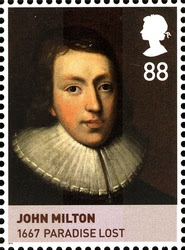
JOHN MILTON

Born on 9 th December 1608

Died on 8th November 1674

Age at death 65


Publications

1629- on the Morning of Christ’s Nativity

1631- L’Alegro

Il Penseroso

1634 Comus

1637 Lycidas

1645 Poems

1667 Paradise Lost

1671 Paradise Regained

1671 Samson Agonistes


John Milton was one of the greatest English poets. He was born in London and educated at Cambridge University. His father was a successful lawyer and composer who was wealthy enough to afford a second house in the country. Milton spent six years in private study thereafter finishing university in 1632. He had given up his original ambition to become a priest and decided to devote his life to God as a poet instead.

Milton began to write poetry while he was at college. He completed one of his major works, Lycidas, perhaps the finest short poem in English at the age of 29. Five years later in 1642 the Civil War divided the country as Oliver Cromwell fought to overthrow the king. At the outbreak of war Milton stopped composing poetry and threw himself into writing political essays supporting Cromwell’s aims. in the same period Milton also became aware that he was slowly going blind.


In 1660 the monarchy was restored, and Milton retired to devote himself poetry. His ambition had always been compose an epic poem to rival the works of ancient writers such as Homer and Virgil. By then completely blind, he began dictating his poem, Paradise Lost , to his wife and daughters. The work published, when he was 55, was immediately recognised as an outstanding achievement. It tells the story of how Satan was thrown out of Heaven and how he came to earth to corrupt Adam and Eve. The themes of war and religious conflict it explores constantly remind the reader of the troubled times Milton lived through.

Source: Who wrote what when?, The Diagram Group,  Simon and Schuster, 1999

 
Xxx

DEAF EDISON!

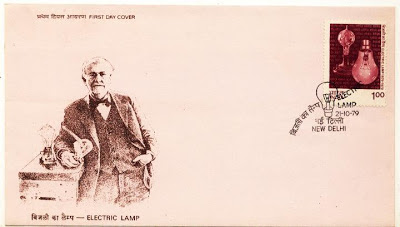
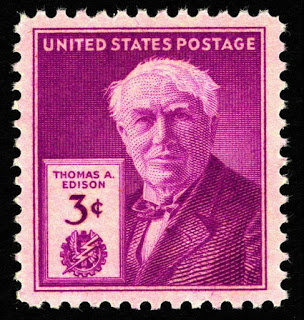
Thomas Alva Edison (February 11, 1847 – October 18, 1931) was an American inventor and business man. He had 1093 US patents in his name.

Thomas Edison was deaf but only a few of his friends were aware that in his case deafness was more psychological than physical. Once a specialist in diseases of the ear called upon Mr. Edison and unfolded a plan of treatment which he was sure would restore his hearing. To the proposition that he submit to the treatment, however, was opposed by Mr Edison. He gave an emphatic negative.

“What I am afraid of, said he, is that you would be successful. Just think what a lot of stuff I would have to listen to that I don’t want to hear! To be a little deaf and be the only one who knows just how deaf you are has its advantages. I prefer to let well enough alone”.


. Xxxx subham xxxx