TAMIL BRAHMINS IN THAILAND (Post No.5004)

Written by London Swaminathan 


Date: 12 May 2018


Time uploaded in London – 13-0 (British Summer Time)


Post No. 5004


Pictures shown here are taken from various sources such as Facebook friends, Books, Google and newspapers; thanks. Pictures may be subject to copyright laws.


WARNING: PLEASE SHARE MY ARTICLES; BUT DON’T SHARE IT WITHOUT AUTHOR’S NAME AND THE BLOG NAME. BE HONEST; OTHERS WILL BE HONEST WITH YOU


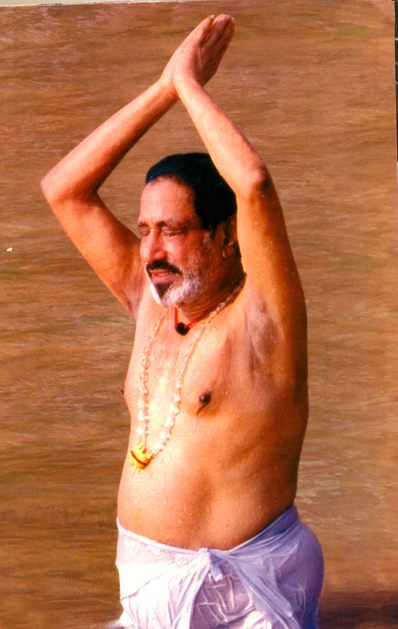
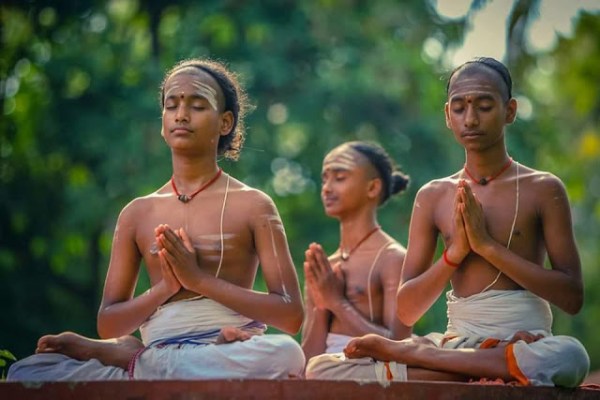
Satya Vrat Shastri of Delhi University gives very interesting details of Tamil Brahmins settled in Thailand, probably 1000 years ago. They still recite the famous Tiruppavai of Andal and Tiruvempavai of Manikka vasagar, the Tamil saints who lived 1500 years ago. Though the Brahmins  speak only Thai language now, they still do the Tamil poems. Buddhism is the main religion of Thailand now; but Hinduism and Sanskrit are at all levels of the society.


Now I give below some facts about the Brahmins in Thailand from Shastri’s book ‘Sanskrit and Indian culture in Thailand’:-
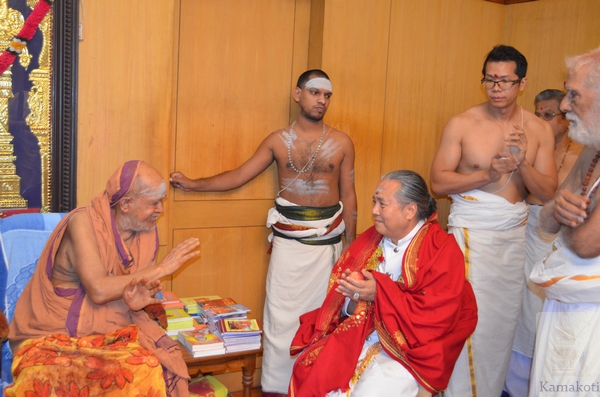
Thailand Rajaguru with Kanchi Shankaracharya

Rajaguru

Not everyone born in a Brahmin family is called a Brahmin. Those who are initiated i.e. those who have Diksha are called  Brahmins.

Raja guru gives the initiation and he is selected from among the Brahmins. Next to him is Huana Phram. They get a very meagre grant from the king.


Annual Worship

It is of two kinds. One is Triyampavaaya and another is Tripavaaya (The first is Thiruvempavai on Lord Shiva and the second Thiruppaavai is on Lord Vishnu; both are popular in Tamil Nadu)


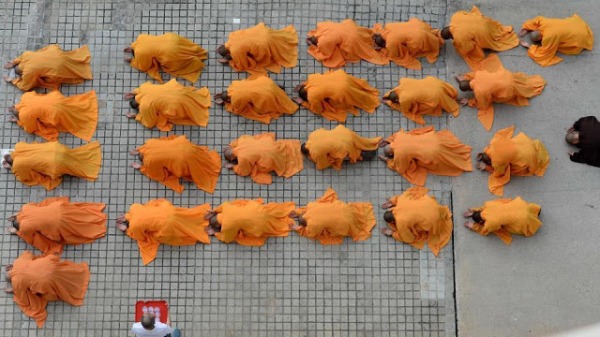
Tiruvempavai is celebrated in three stages: Invoking the god, placing the idol in the swing and the third is bathing the idol. Prasad offered to the deities is distributed to the public. An annual festival is held in December. At the time those who want initiation takes a vow. They stay inside the temple, eat vegetarian food and lie on the floor.

During Tiruvempava festival, they worship Ganesh, Uma and Shiva for ten days.


Tamil Brahmins wear only white clothes head to foot. Some wear dhotis.

During the Swing ceremony Lord Siva is placed in between two pillars with a cup of water. There is a story behind it. Brahma who created the world asked Isvara (Shiva) to protect it. Siva thought that the earth was not strong enough to support the living beings. To test its strength, he just set one of His feet on it. He then asked the Nagas to shake the mountain at the ends of the oceans. The Nagas did shake it but nothing untoward happened. Siva was pleased. Here the two pillars stand for the two mountains and the cup of water represents the ocean.


Tiruppavai in praise of Lord Vishnu is also celebrated in the similar way. People wear new clothes and decorate their houses during the festival period. In Tamil Nadu it is celebrated for 30 days during the Tamil month Markazi corresponding to December/ January.


THE PLOUGHING RITE
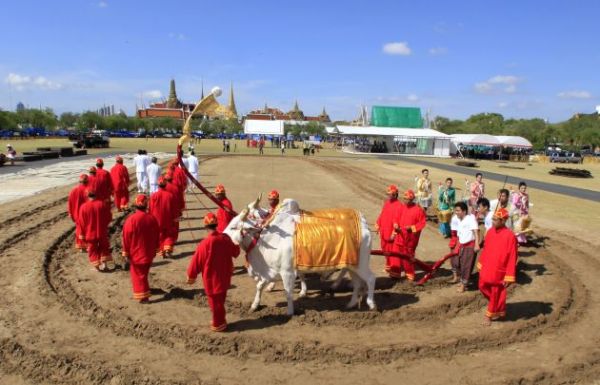
The Ploughing rite is an ancient Hindu rite practised from the  Vedic days. Tamil literature also has references to this rite. Sita Devi was discovered and received by Emperor Janaka during such a rite. Brahmins play a main role in it.

Brahmins fix a date after consulting the almanac (Panchang). They do the Puja after the Buddhists start it in the Temple of Emerald Buddha (Wat Phra Keao). The king comes at the appointed time and he sends his deputy to act on his behalf. The priest worships Gauri, Ganga and Dharani (earth). Brahmins sprinkle water with the grains. Auspicious things are carried by the women. Bulls are also brought with the plough. The king’s nominee does the symbolic ploughing after worshipping the bulls. When all the ploughing finished, the bulls are sent to its place. In front of them seven things are placed: Paddy, Pulses, Corn, Sesame seeds, Water, Wine and Grass. When they show them to the bulls, naturally they run towards them ; the priests watch what they eat first.

If the bulls eat the corn or paddy or the pulses first, it is believed that the crops would be good the year round. If they eat grass or sesame seeds first, it is said that the crops (harvest) world be moderate. If, however, the bulls take to water first, the belief is that there would be floods and the crops would be damaged. If by chance, the bulls take to wine the belief is that drought conditions would prevail leading o unrest everywhere. After the announcement of the future position of the crops, the ceremony comes to an end.
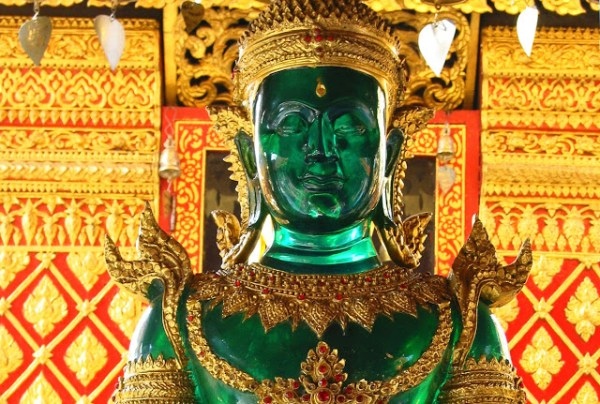
Temple of Emerald Buddha

There are many more rites the Brahmins perform.


— SUBHAM–

MOTHER IN LAW and WIVES ANECDOTES (Post No.4996)

Compiled by London Swaminathan 


Date: 10 May 2018


Time uploaded in London – 7-33 am (British Summer Time)


Post No. 4996


Pictures shown here are taken from various sources such as Facebook friends, Books, Google and newspapers; thanks. Pictures may be subject to copyright laws.


WARNING: PLEASE SHARE MY ARTICLES; BUT DON’T SHARE IT WITHOUT AUTHOR’S NAME AND THE BLOG NAME. BE HONEST; OTHERS WILL BE HONEST WITH YOU


One of the witticisms of Lord Russel of Killowen was his answer to a question from a distinguished counsel who asked what the heaviest penalty for bigamy was.

Two mothers-in-law, said Russel promptly.

xxx

Grand Canyon!

When Marshal Foch visited the Grand Canyon, Colonel John R.White, who spoke French fluently, hung breathlessly on Marshall’s words as he turned to him after a long scrutiny of the depths below.

Now, thought the colonel, I shall hear something worthy of passing along to my children and my grand children.

Observed the Marshal, What a beautiful place to drop one’s mother in law!

xxx


Cato, the Elder!

Roman Senator Cato, the Elder (243 BCE) , having buried his wife married a young woman. His son came and to him and said,

Sir, in what have I offended that you have brought a step-mother in to your house?

Nay, son, answered the old man,

Quite the contrary; you please me so well that I should be glad to have more such.


xxx

Loyalty is too dangerous!

Loyalty sometimes proves embarrassing. A case in point is that of the wife whose husband was unusually late, who wired to five of his friends,

Jack not home. Is he spending night with you?

The unfortunate Jack arrived home shortly afterwards, and was followed by five telegrams all saying YES!

xxx

No sympathy is needed!

I have no sympathy, bellowed the judge, for a man who beats his wife.

That is right your Honor, said the policeman who stood beside the culprit ,

Any man who can beat his wife don’t need Sympathy.

xxx

Impotent!

A man, being suspected of impotency, met a friend one day, who had railed him on it, to whom he said,

My good Sir, for all your wit, my wife was yesterday brought to bed.

What of that, said his friend, nobody ever suspected your wife.

xxx

Hen pecked Husbands!

Well, said Lincoln, on a certain occasion, I feel about that a good deal as a man whom I will call Jones whom I once knew, did about his wife. He was one, and had the reputation of being badly hen pecked. At last one day his wife was seen switching him out of the house. A day or two after, a man met him in the street and said,

Jone, I have always stood up for you, as you know; but I am not going to do it any longer. Any man who stood quietly and take a switching from his wife deserves to be horseworshipped.

Jones looked up with a wink, patting his friend on the back.

Now, don’t, said he; why it didn’t hurt me any: and you have no idea what a power of good it did Sarah Ann!

xxx Subham xxx

Hindu Sankaranti Festival in Thailand and Laos! (Post No.4990)

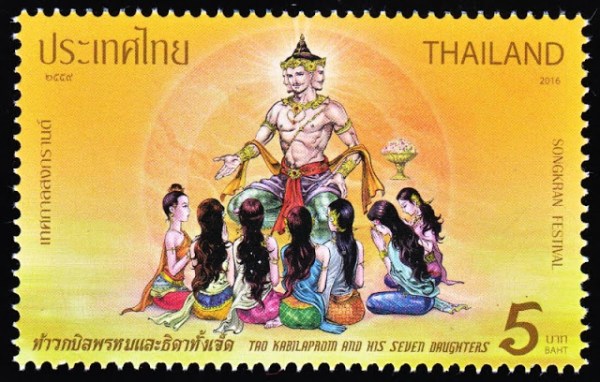
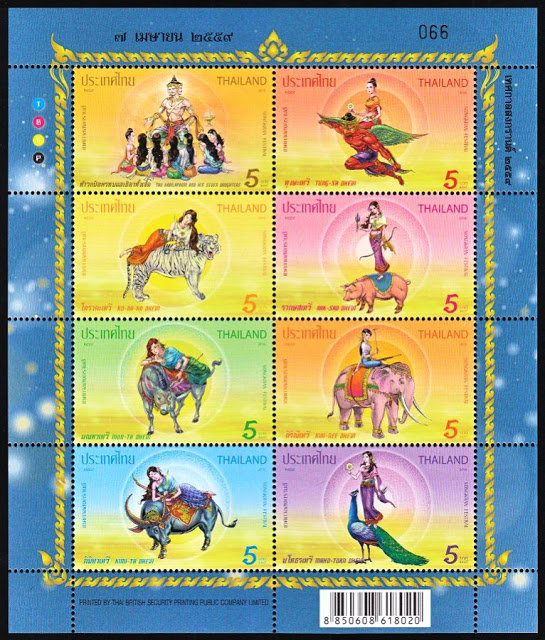
Kabilaprom and his seven daughters, issued by Thailand on April 7,2016


Hindu Sankaranti Festival in Thailand and Laos! (Post No.4990)


Research article Written by London Swaminathan 


Date: 8 May 2018


Time uploaded in London – 18-24 (British Summer Time)


Post No. 4990


Pictures shown here are taken from various sources such as Facebook friends, Books, Google and newspapers; thanks. Pictures may be subject to copyright laws.


WARNING: PLEASE SHARE MY ARTICLES; BUT DON’T SHARE IT WITHOUT AUTHOR’S NAME AND THE BLOG NAME. BE HONEST; OTHERS WILL BE HONEST WITH YOU


Two South East Asian countries celebrate Hindu festival Sankaranti with a Buddhist legend. Tamils in South India celebrate it as Pongal- Harvest Festival. Other parts of India celebrate it as a solar festival. All over India worship Sun God on that day.


Thailand and Laos have different stories associated with it.


In Thailand there lived a wise man who can speak with birds. His name was Dharmabarn (Dharma abarana- one who wears the jewel Dharma/Virtues). He was born in a wealthy family. He was wise even when he was seven years old.


The king was the other intelligent man in the country and his name was Kabila Brahmana. He had seven daughters. Kabila heard about Dharma and challenged him with three questions. That was a riddle. The loser in the competition should lose his head was the condition put forth by Kabila. Dharma agreed to it.

The riddle was: In the morning, at noon and in the evening, where is the human wheel of life?
Since Dharma could understand birds’ language, he heard two eagles talking about the wheel of human life.


The birds revealed to him that: In the morning, the wheel of life is on its face- that is why we wash our faces every morning.

At noon, the wheel of life is at its chest- that is why we wear perfume on our chests.

In the evening, the wheel of life is at its feet- that is why we wash our feet before going to bed.

Dharma gave these correct answers and hence Kabila cut off his own head. His seven daughters feared that if the head fell into the earth, a great fire will engulf the planet. If the head is hurled in the air, the planet will suffer a drought. If the head fell into the ocean, it would dry up. They decided to keep the head suspended in a cave of a mountain. Every year, one of the daughters would retrieve the head and parade around with it.


SANKARANTI (PONGAL) FESTIVAL

Evidently, the King had assigned his seven angel daughters to take turns carrying his head clockwise around Phra Sumane Mountain. And if Songkran Day (13 April) falls on any day of the following, that year would be honoured by that Nang Songkran. SONGRAN= SANKARANTI


In Madurai in South India there is a belief that depending upon the colour of god’s dress during Chitra festival the harvest would be predicted;they forecast if it is green colour that Lord Vishnu (Kalla Azakar is the local name of Vishnu) wears when he enters the River Vaigai, then the harvest would be good so on and so forth.

In the same way Thai people believed if the Sankranti falls on a particular day of the week certain things will happen. Those seven days are the seven daughters of Kabila.


  • Sunday: TungsateveeRed dress, preferred wild fruit, discus in the right hand, shell in the left hand, garuda as the vehicle.


  • Monday: Korakatevee Yellow dress with pearl ornaments, preferred butter oil, dagger in the right hand, walking cane in the left hand, tiger as the vehicle.


  • Tuesday: Ragsotevee Light red dress with agate ornaments, preferred blood, trident in the right hand, arrow in the left hand, pig as the vehicle.


  • Wednesday: Montatevee Emerald green dress with cats eye ornaments, preferred milk and butter, sharp iron in the right hand and walking cane in the left hand, donkey as the vehicle.


  • Thursday: Kirineetevee Greenish yellow dress with emerald ornaments, preferred nuts and sesame seeds, elephant hook in the right hand, gun in the left hand, elephant as the vehicle.


  • Friday: Kimitatevee White dress with topaz ornament, preferred banana, dagger in the right hand, Indian vina in the left hand, buffalo as the vehicle.


  • Saturday: Mahotorntevee Black dress with onyx ornaments, preferred hog deer, discus in the right hand, trident in the left hand, peacock as the vehicle.


Evidently, the prediction for the New Year will be made according to that particular day of the Nang Songkran. For example, if the preferred food of Miss Songkran is nuts and sesame seeds, it is predicted that the year will be productive, prosperous and healthy. And if the preferred food is blood, the prediction would go for a bloody year with quarrels. And if Miss Songkran prefers to carry a gun, it is predicted that the weather would be full of thunderstorms, etc. Also, at the venue where the grand Songkran Festival is organized, a procession of the Miss Songkran is indispensable for the people to appreciate the festival.

songran= Sankranti


Sankaranti is celebrated through out South East Asia. In Laos the people build Sand dunes. The sand dune symbolises the Hindu Holy Mountain Mount Meru. Kabila’s head was kept aloft on this mountain.. Since Buddhism celebrate yellow colour Laos people sprinkle scented water on the sand dune ,decorate it with festoons and flags and put yellow cloth on it. The offerings offered to the Stupas or sand dunes are distributed to Buddhis monks. It shows the mix up of several old customs. Hindu customs and Buddhist customs got mixed up with local beliefs.

Thailand and Laos released stamps to celebrate these festivals.

–Subham—

RAMA IS GREEN, LAKSHMANA IS GOLDEN & HANUMAN IS PURPLE! (Post No.4984)

RAMA IS GREEN, LAKSHMANA IS GOLDEN & HANUMAN IS  PURPLE! (Post No.4984)


Compiled by London Swaminathan 


Date: 6 May 2018


Time uploaded in London – 15-39 (British Summer Time)


Post No. 4984


Pictures shown here are taken from various sources such as Facebook friends, Books, Google and newspapers; thanks. Pictures may be subject to copyright laws.


WARNING: PLEASE SHARE MY ARTICLES; BUT DON’T SHARE IT WITHOUT AUTHOR’S NAME AND THE BLOG NAME. BE HONEST; OTHERS WILL BE HONEST WITH YOU


French historian Michelet described Ramayana as “ a great poem, as vast as the Indian Ocean, a book of divine harmony. A serene peace reigns in it, in the midst of conflict, an infinite sweetness, a boundless fraternity which spreads over all living beings, an ocean of love, of pity, of clemency” (from Jawaharlal Nehru’s Discovery of India)


Ramayana is very popular in Thailand. It is called Ramkien. Scholars believe that is the changed form of Ramakiirti or Ramaakhyaana.


During a particular period, Kings called themselves Rama and their capital was Ayuththaya (Ayodhya of Ramayana)

The original name of Siam is Shyama desa. During the commercial contacts, Indian business men called this region Swarnabhumi (Land of Gold).


We know for sure the Indo-Thai contact began at least 2300 years ago when Emperor Asoka sent two Buddhist emissaries to spread the message of Buddha. The reason he sent those people to Thailand was that  the people of the country are known to India.


Ramayana was introduced in art forms in the thirteenth century.

Though Ramayana was known to Thais for a very long period, King Rama I only gave it a shape. Takshin the Great , King of Thonburi wrote some verses of Ramakien and Rama I (1782-1880) produced a voluminous work of 10,000 stanzas. King Rama II (1809-1820) developed it into a drama.


Before this literary master piece was composed the firs Ramayana literature for the mask came about in 1349 CE. Only solitary evens from Ramayana were used. But long before the stage drama, certain kind of play known as Hnang (hide or skin) was shown. Ramayana characters were painted in different colours. Rama is green, Lakshmana is golden, Hanuman is in purple and Ravana is in dark colours.  When they were staged, they were similar to marionettes, but instead of strings, characters were controlled by hands. Hnang was introduced from Java (Indonesia) and it is an adaptation of the Sanskrit Chayanataka.


The Thai version was adapted to reflect Thai sentiments. Thai dressing, colouring was used. Even the story was changed from Valmiki’s original Sanskrit version. Here is a strange story which is not found in Indian versions of Ramayana.


Hanuman Ruled from Lavapuri in Thailand!

After the victory over Ravana Rama decided to reward all his allies who had helped him. He gave the Kingdom of Lanka to Vibhisana, Kishkinda to Sugreeva, Paatalaa to Jhambavat, Buriram (Rama Puri) to Guha and so on.  Last came the turn of Hanuman. He told Hanuman that he would shoot an arrow and hanuman should follow it. Wherever it falls that area would be his. Hanuman also faithfully followed Rama’s arrow. The arrow fell at Lopburi.


(Lava Puri= Lop Buri; Lava was one of the two sons of Rama. it is 150 kilometres from Bangkok) .

A lot of towns will have Buri suffix; it is the changed form of Puri which means a town or city in Sanskrit.

Lopburi was very uneven and Hanuman levelled it with his tail to make it habitable. Visvakarma helped Hanuman to build a beautiful city and Hanuman ruled from there.


An account of the story made the people to pick up mementoes from that place and ultimately government has to declare it a protected monument. The story was that the land was scorched by the falling arrow of Rama but a green patch was left where Rama’s arrow touched the ground. This account made the people to take everything from the green patch area as sacred objects. Then government introduced measures to protect it. In fact, Lopburi is abound in chalk and it is exported.

A lot of places in Thailand are associated with Ramayana as if Ramayana episodes took place in that country. The people have absorbed the story completely and believed Rama walked the length and breadth of Thailand!!

Source book: Studies in Sanskrit and Indian Culture in Thailand with my inputs.

–Subham–


Twelve Types of Sons- Kautilya (Post No.4977)

Compiled by London Swaminathan 


Date: 4 May 2018


Time uploaded in London – 7-04 am (British Summer Time)


Post No. 4977


Pictures shown here are taken from various sources such as Facebook friends, Books, Google and newspapers; thanks. Pictures may be subject to copyright laws.


WARNING: PLEASE SHARE MY ARTICLES; BUT DON’T SHARE IT WITHOUT AUTHOR’S NAME AND THE BLOG NAME. BE HONEST; OTHERS WILL BE HONEST WITH YOU

 
Kautilya observes in his monumental work Arthasastra, that wives are indeed for bearing sons—Artha sastra 3-2
A husband with a barren wife is allowed to remarry. Hindus believed that a son is necessary to do the funeral rites so that the dead person can avoid a hell called ‘puth’. That’s why a son is called Puthra.

Medical Care (Maternity care)
In the days of Kautilya great medical care was available for pregnant ladies. The midwife attended to her. The state exempted midwives from curfew rules.2-35
The commodities required for confinement were exempted from tolls 2-21
A pregnant woman gets free ferry service 2-28.
Criminal law exempted her from physical torture during pregnancy and one month after delivery.

Kautilya talks about oblations offered to Indra and Brihaspati  for the welfare of the mother and baby.1-17

Greek Ambassador Megasthenes too says
“From the time of their conception in the womb they are under the guardian care of learned men, who go to the mother and under pretence of using some incantations, for the welfare of herself and her unborn baby in reality gives her prudent hints and counsel. The women who listen most willingly are thought to be the most fortunate in their children”.

Speaking of physicians, Megathenes records
“By their knowledge of pharmacy they can make marriage and determine the sex of the offspring”.

xxx


Various classes of sons are described by the Artha sastra (1-17) and they are

1.AURASA
Son begotten by the husband on his wife who has gone through all the required ceremonials

2.PUTRIKAAPUTRA
Son of the appointed daughter
3.KSETRAJA
Son Begotten on a wife of a person by another man, appointed for the purpose, and of the same gotra as that of the husband or of a different gotra (clan)

4.GUUDHAJA
Son secretly born in the house of relatives
5.APAVIDDHA
Son cast off by his natural parents and to belong to that man who performs necessary religious ceremonials to him.

6.KAANIINA
Son of an unmarried girl
7.SAHODHA
Son of a woman married while carrying

8.PAUNARBHAVA
Son of a remarried woman
9.DATTA
He who is given in adoption with water by both the father and the mother (Hindus use water for giving, cursing etc)
10.UPAGATA
Son who either of his own accord or following the the intention of his relatives, offers himself to be son of another
11.KRITAKA
He who is appointed as a son
12.KRIITA
He who is purchased.


xxx


There are various other types of sons born of inter caste marriages

Kautilya was great in describing all the possibilities and allocating shares in the parental property.

It shows that the Hindu family system became very complex even during his time, 2300 years ago!

Source: Kautilya on Love and Morals by P C Chunder

— Subham —

MANU ON STUDENTS WHO WILL BE BORN AS ANIMALS! (Post No.4973)


MANU ON STUDENTS WHO WILL BE BORN AS ANIMALS! (Post No.4973)


Written by London Swaminathan 


Date: 3 May 2018


Time uploaded in London – 11-54 am (British Summer Time)


Post No. 4973


Pictures shown here are taken from various sources such as Facebook friends, Books, Google and newspapers; thanks. Pictures may be subject to copyright laws.


WARNING: PLEASE SHARE MY ARTICLES; BUT DON’T SHARE IT WITHOUT AUTHOR’S NAME AND THE BLOG NAME. BE HONEST; OTHERS WILL BE HONEST WITH YOU


Manu Smrti, in the second chapter, explains the duty of a student who is in the Guru Kula studying the Vedas. There some interesting points:

1.He gives a long list DOs and DONTs. He advises the students not to use perfume and not to learn dance and music. This is only applicable for the Brahmin students who learnt Vedas.

2.He says the students should beg and eat; sleep alone

  1. He talks about the distance to be maintained between him and the students.
  2. He says students will be born as ass or dog or worm or an insect if they insult the teacher in any manner.

(Please read my comments under each heading as well.)


Second Chapter of Manu Smrti continued……………..

Good Vedic Students


DANCE AND MUSIC- NOT FOR VEDIC STUDENTS

2-175. But a student who resides with his teacher must observe the following restrictive rules, duly controlling all his organs, in order to increase his spiritual merit.

  1. Every day, having bathed, and being purified, he must offer libations of water to the gods, sages and manes, worship (he images of the gods, and place fuel on the sacred fire.
  2. Let him abstain from honey, meat, perfumes, garlands, substances used for flavouring food (condiments), women, all substances turned acid, and from doing injury to living creatures.
  3. From anointing his body, applying collyrium to his eyes, from the use of shoes and of an umbrella or parasol, from sensual desire, anger, covetousness, dancing, singing, and playing musical instruments,
  4. From gambling, idle disputes, backbiting, and lying, from looking at and touching women, and from hurting others.


My Comments:

Andal, a saint and poetess of Tamil Nadu, who lived 1400 years ago also mentioned the discipline that girls follow during the period of Vow (Vrata). Refer to Tiruppavai verse 2.


CELIBATE SUDENTS MUST SLEEP ALONE

2-180. Let him always sleep alone, let him never waste his manhood; for he who voluntarily wastes his manhood, breaks his vow.

  1. A twice-born student, who has involuntarily wasted his manly strength during sleep, must bathe, worship the sun, and afterwards thrice mutter the Rik-verse which begins, ‘Again let my strength return to me.’
  2. Let him fetch a pot full of water, flowers, cowdung, earth, and Kusa grass, as much as may be required by his teacher, and daily go to beg food.
  3. A student, being pure, shall daily bring food from the houses of men who are not deficient in (the knowledge of) the Veda and in performing sacrifices, and who are famous for following their lawful occupations.
  4. Let him not beg from the relatives of his teacher, nor from his own or his mother’s blood-relations; but if there are no houses belonging to strangers, let him go to one of those named above, taking the last-named first;
  5. Or, if there are no virtuous men of the kind mentioned above, he may go to each (house in the) village, being pure and remaining silent; but let him avoid Abhisastas (those accused of mortal sin).
  6. Having brought sacred fuel from a distance, let him place it anywhere but on the ground, and let him, unwearied, make with it burnt oblations to the sacred fire, both evening and morning.
  7. He who, without being sick, neglects during seven successive days to go out begging, and to offer fuel in the sacred fire, shall perform the penance of an Avakirnin (one who has broken his vow).


My comment:

Hinduism is a very practical religion; they have atonement and escape strategy for every eventuality.


Guru Puja by good students


VEDIC STUDENTS MUST BEG AND EAT

2-188. He who performs the vow of studentship shall constantly subsist on alms, but not eat the food of one person only; the subsistence of a student on begged food is declared to be equal in merit to fasting.

  1. At his pleasure he may eat, when invited, the food of one man at a rite in honour of the gods, observing however the conditions on his vow, or at a funeral meal in honour of the manes, behaving however like a hermit.
  2. This duty is prescribed by the wise for a Brahmana only; but no such duty is ordained for a Kshatriya and a Vaisya.

My comment

By begging one becomes humble and always looking for support from the local community. More over less eating will keep oneself healthy in physique and mind. Walking is an exercise done during begging.


HOW TO BEHAVE WITH THE TEACHERS

2-191. Both when ordered by his teacher, and without a special command, a student shall always exert himself in studying the Veda, and in doing what is serviceable to his teacher.

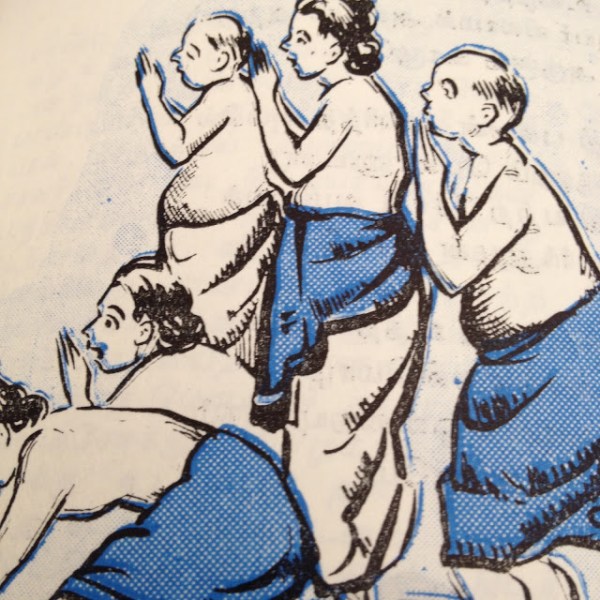
  1. Controlling his body, his speech, his organs of sense, and his mind, let him stand with joined hands, looking at the face of his teacher.
  2. Let him always keep his right arm uncovered, behave decently and keep his body well covered, and when he is addressed with the words , ‘Be seated,’ he shall sit down, facing his teacher.
  3. In the presence of his teacher let him always eat less, wear a less valuable dress and ornaments than the former, and let him rise earlier from his bed, and go to rest later.
  4. Let him not answer or converse with (his teacher), reclining on a bed, nor sitting, nor eating, nor standing, nor with an averted face.
  5. Let him do that, standing up, if his teacher is seated, advancing towards him when he stands, going to meet him if he advances, and running after him when he runs;
  6. Going round to face the teacher, if his face is averted, approaching him if he stands at a distance, but bending towards him if he lies on a bed, and if he stands in a lower place.
  7. When his teacher is nigh, let his bed or seat be low; but within sight of his teacher he shall not sit carelessly at ease.
  8. Let him not pronounce the mere name of his teacher (without adding an honorific title) behind his back even, and let him not mimic his gait, speech, and deportment.
  9. Wherever (people) justly censure or falsely defame his teacher, there he must cover his ears or depart thence to another place.

My comment

Such a respect and reverence is seen nowhere in the world except India. Even today we can see it in the religious centres, but not in ordinary schools. Students must rise when the teacher enters the class room till I studied in the college. Western countries do it only in Judicial courts.


STUDENT BECOMES AN ASS, DOG, WORM AND INSECT

2-201. By censuring his teacher, though justly, he will become in his next birth an ass, by falsely defaming him, a dog; he who lives on his teacher’s substance, will become a worm, and he who is envious of his merit, a larger insect.

  1. He must not serve the teacher by the intervention of another while he himself stands aloof, nor when he himself is angry, nor when a woman is near; if he is seated in a carriage or on a raised seat, he must descend and afterwards salute his teacher.
  2. Let him not sit with his teacher, to the leeward or to the windward of him; nor let him say anything which his teacher cannot hear.
  3. He may sit with his teacher in a carriage drawn by oxen, horses, or camels, on a terrace, on a bed of grass or leaves, on a mat, on a rock, on a wooden bench, or in a boat.
  4. If his teacher’s teacher is near, let him behave towards him as towards his own teacher; but let him, unless he has received permission from his teacher, not salute venerable persons of his own family.


My comments:

You may take the meaning of verse 201 literally and think that it would happen in the next birth. My interpretation is such a student will have the badd qualities of animals mentioned.


Manu Smrti must be read in full with the commentaries and then one would wonder how come he thought about even the minutest details several thousand years ago. Manu is mentioned in the Rig Veda, the oldest book in the world; he is the first law giver, even before Hammurabi.

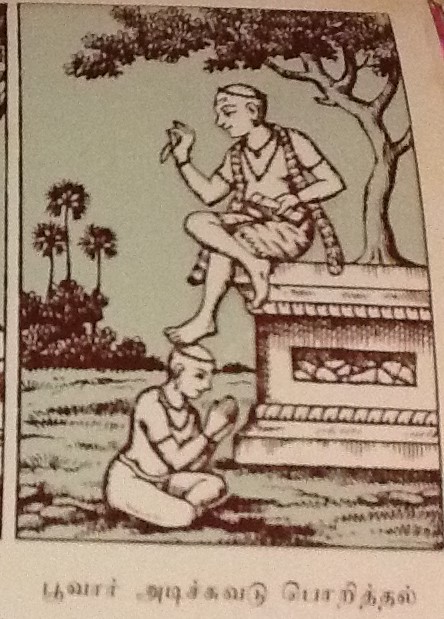
Tamil Saint Manikkavasagar receiving blessings from his Guru

–SUBHAM–
 

FORGOTTEN INDOLOGIST W H ROBINSON (Post No.4966)

Compiled by London Swaminathan 


Date: 1 May 2018


Time uploaded in London – 13-54 (British Summer Time)


Post No. 4966


Pictures shown here are taken from various sources such as Facebook friends, Books, Google and newspapers; thanks. Pictures may be subject to copyright laws.


WARNING: PLEASE SHARE MY ARTICLES; BUT DON’T SHARE IT WITHOUT AUTHOR’S NAME AND THE BLOG NAME. BE HONEST; OTHERS WILL BE HONEST WITH YOU


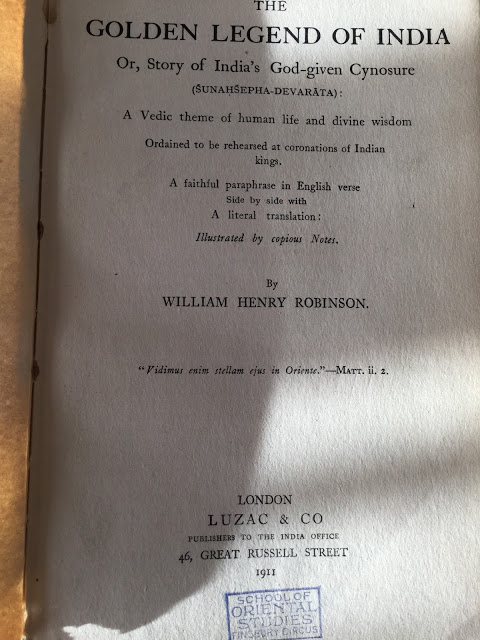
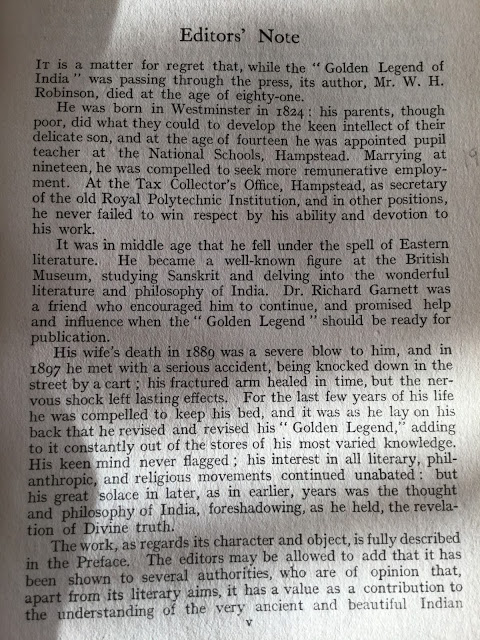
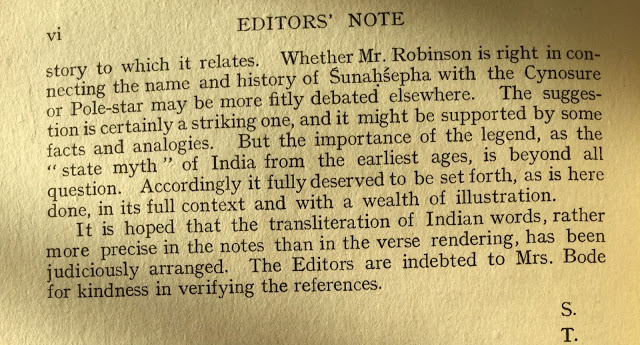
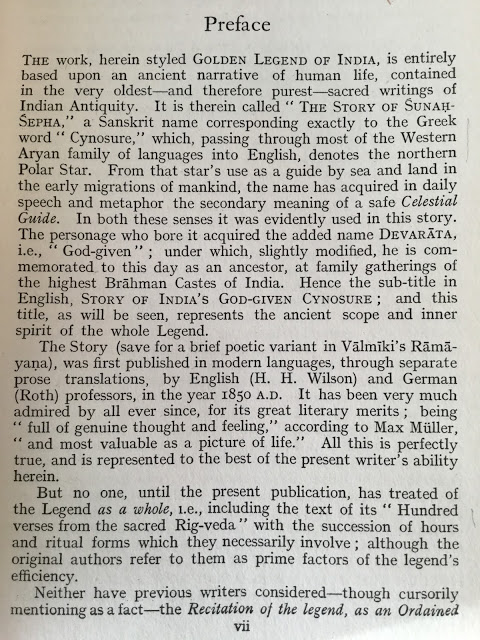
When I was looking for Bhartruhari’s Ntisataka with full commentary at the SOAS library of University of London, I came across an interesting book explaining the The Story of Sunashcepa in English verse  form from the Aitareya Brahmana of the Rig Veda, I read the brief profile of William Henry Robinson. His profile shows that some people are hooked to ancient Sanskrit under some strange circumstances.

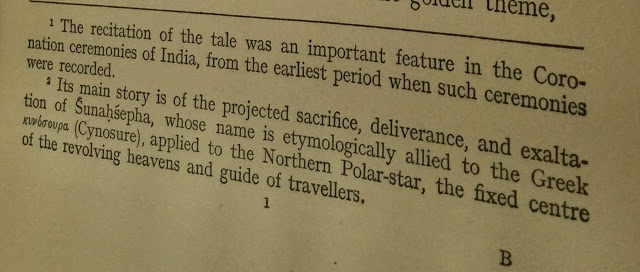
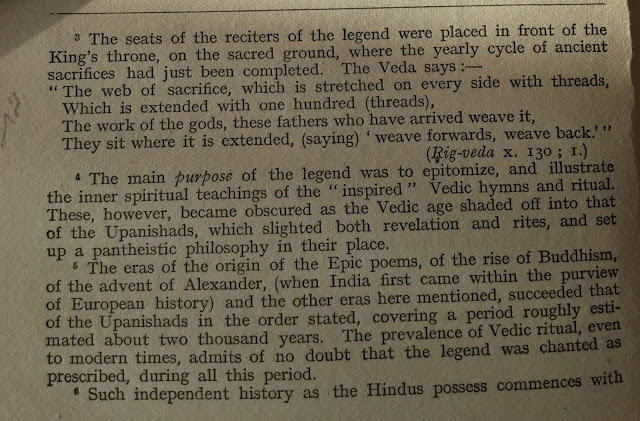
The footnotes under the verses are very informative; This shows his good understanding of the Vedic literature. This is the first time I read the story of Sunashepa in full.

Here is the profile of W H Robinson


THE STORY OF SUNASHCEPA

Sunahsepa was bought for sacrificing to Varuna in place of Rohita, son of Harischandra, the 28th King of Solar race. But seer Vishwamitra rescued him. Sayana, the most popular Vedic commentator, says no animal or no living being was sacrificed in the fire, but they are all released immediately after the fire was taken around the vedic Yupa posts where they were tied. Without Sayana we could not understand any hymn and so what Sayana says must be correct.

Hindu law makers made it compulsory to recite the Story of  Sunahsepa in every coronation and Rajasuya yajna.


–SUBHAM–


WHAT DID INDIA GIVE TO THE WORLD?- HENRY S.MAINE (Post No.4964)

Compiled by London Swaminathan 


Date: 30 APRIL 2018


Time uploaded in London – 19-05 (British Summer Time)


Post No. 4964


Pictures shown here are taken from various sources such as Facebook friends, Books, Google and newspapers; thanks. Pictures may be subject to copyright laws.


WARNING: PLEASE SHARE MY ARTICLES; BUT DON’T SHARE IT WITHOUT AUTHOR’S NAME AND THE BLOG NAME. BE HONEST; OTHERS WILL BE HONEST WITH YOU


“Indian has given to the world comparative philology and comparative mythology; it may yet give us a new not less than valuable than the science of language and folk lore. I hesitate to call it comparative jurisprudence because if it ever exists, its area will be much wider than the field of law.

For Indian not only contains a language (Sanskrit) older than any other descendent of the common mother tongue, and a variety of names of natural objects less perfectly crystallized than elsewhere into fabulous personages, but it includes a whole world of Hindu institutions, Hindu customs, Hindu laws, Hindu ideas, Hindu beliefs, in a far earlier stage of growth and development than any which survive beyond its borders.

There are undoubtedly in it the materials for a new science, possibly including many branches. To create it, indeed to give it more than a beginning, will require may volumes to be written, and many workers to lend their aid:- Rede Lecture 1875

xxx


Role of Brads in preserving history!

No race of men is more proud of ancestry than the chiefs of the ruling dynasties of India. The records of their geneologies are maintained with scrupulous care, more particularly in the states of Rajaputana, by a body of hereditary bards, who are endowed wth lands and pensions for the special purpose.


Sangam literature also talks of the Tamil bards who sang the panegyrics of kings and chieftains. Another kind of bards stood in front of the palace and sang the praise of the kings in the very early morning.

The descent of the present rulers of Udaipur, Jaipur, Jodhpur and many others, from the ancient solar dynasties, and, therefore, thorugh Harischandra, is undoubted all over India.

Jarasandha was the founder of  Pandu dynasty in Magada, whose capital was the ancient Rajagriha. He was a contemporary of Yudhisthira of Mahabharata.

Every Brahman family of India claim to be descended from one or other of the Seven Great Rishis or sages who were exalted to the stars of the constellation – Sapta Rishi Mandla, also known as the Ursa Major (the Great Bear).


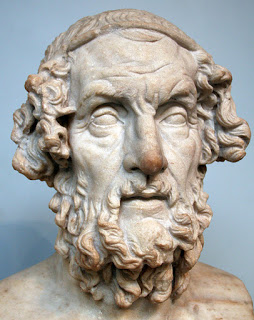
Homer and Indian Poets

Sir Monier Williams said in Indian Wisdom,

“Much of the Homeric poems are still admired, no one in any part of the world, now dreams of placing he slightest faith in their legends, so as to connect them with religious opinions and practices. In India a complete contrast in this respect may be observed. The myths of the Indian Epics are still closely interwoven with present faith”. – (Page 433, Indian Wisdom)

–from The Golden Legend of India, William Henry Robinson,1909


–Subham–


SWAMI RAMA TIRTHA’S QUESTIONS AND ANSWERS (Post No.4953)

Compiled by S NAGARAJAN


Date: 27 April 2018


Time uploaded in London –  13-10  (British Summer Time)


Post No. 4953


Pictures shown here are taken from various sources such as Facebook friends, Books, Google and newspapers; thanks. Pictures may be subject to copyright laws.


WARNING: PLEASE SHARE MY ARTICLES; BUT DON’T SHARE IT WITHOUT AUTHOR’S NAME AND THE BLOG NAME. BE HONEST; OTHERS WILL BE HONEST WITH YOU


Swami Rama Tirtha’s Answers


7


QUESTIONS ANSWERED

Question 1 : What is the greatest riddle?

Answer : Life, for we all have to give it up.


Q 2 : Safest Banks, fast stock – most profitable share?

A    : The farmer’s earth banks, live stock and ploughshares.


Q 3 : How can you always have what you please?

A    : If you will be pleased with what you have.


Q 4 : What is matter?

A    : Never Mind

What is Mind?

No matter.


Q 5 : What man is born with three hands?

A    :  The man who gets a right hand, a left hand and a little behind hand.


Q 6 : I tremble at each breadth of air and yet can heaviest burden bear?

A    :  Water


Q 7 : What does the worthy man think is more blessed to give than to receive?

A    : Kicks, pills and advice


Q 8 : What common thing is very uncommon?

A    : Common sense


Q 9 : Why are people very generous when they hear a sermon?

A    :  They give it all away.


Q 10 : Which is the largest room in the world?

A      : Room for improvement

Q 11 : What is that a king can do and God cannot?

A      :  A king can banish or deport man of his subjects from his kingdom, God cannot.


Q 12 : What does a man see everyday and God never see?

A      : His equal


Q 13 : What is better than an idea?

A      : You dear!


Q 14 : Why does a preacher have an easier time than a Doctor or Lawyer?

A      : Easier to preach than practice.


Q 15 : What low-born ill-bred fellow had noble blood in him?

A      : A flea when it bites lords and ladies.


Q 16 : An Englishman to Abraham Lincoln : What was your family coat of arms?

A      : Shirt sleeves.


Q 17 : This side of the river is “the other side”?

A      : That is one side, therefore this is the other side.


Q 18 : When is the new birth reliable?

A      : When the second birth precedes the first one.


Q  19 : What did Adam first plant in the garden of Eden?

A       : His foot.


Q 20 : Why are potatoes and corn like the Pharisees ?

A      :  They have eyes and see not, and ears and hear not.

Q 21 : Zeno said, “Motions is impossible.”  A body cannot move in the place where it is, for the place is no larger than the body, and it cannot move in another place, because it is not there.

A      : But it can move out of one place into another.


Q 22 : A cat has nine tails?

A      : One cat  (1)   one tail

No cat  (8)   eight tails

————-    ————-

therefore one cat      nine tails

——————–        ———–


Q 23 : Palindromes ?

A      : According to Sidney Smith, How did Adam introduce himself to Eve.

Madam I’m Adam

Napoleon speaks of himself :

“Able was I ere saw Elba”

Q 24 : Squraing the circle?

A      :

C I R C L E

I C A R U S

R A R E S T

C R E A T E

L U S T R E

E S T E E M


( To Be Continued)


Treat this article as second part of the Tamil/English article -Part 1 posted day before yesterday


ஸ்வாமி ராமதீர்த்தரின் குறிப்பேடுகள் சிலவற்றின் தொகுப்பு – 2


–SUBHAM–


31 More Quotations from Poet Kalhana (Post No.4948)

31 More Quotations from Poet Kalhana (Post No.4948)

MAY 2018 GOOD THOUGHTS CALENDAR


COMPILED by London Swaminathan 


Date: 25 April 2018


Time uploaded in London –  18-05


Post No. 4948


Pictures shown here are taken from various sources such as Facebook friends, Books, Google and newspapers; thanks. Pictures may be subject to copyright laws.


WARNING: PLEASE SHARE MY ARTICLES; BUT DON’T SHARE IT WITHOUT AUTHOR’S NAME AND THE BLOG NAME. BE HONEST; OTHERS WILL BE HONEST WITH YOU


Kalhana was a minister in Kashmir King Harsha’s (1089-1101) Kingdom. He wrote his epic poem in Sanskrit, Rajatarangini (River of Kings). It gives the history of Kashmir. Lst month I publied 30 quotations from him. Now there are 31 more quotes from Rajatarangini of Kalahana.


FESTVAL DAYS:  May 10-Hanuman Jayanti (Telugu region) ; 28 Vaikasi Visakam in Tamil  temples; Agni nakshatram begins 4 ; 28 ends


EKADASI/ HINDU FASTING DAYS- May 11, 25


AMAVASYAI/ NEW MOON-  May 15


FULL MOON DAY/ PURNIMA- May 29
Auspicious Days in MAY -2, 4, 6, 7, 13, 20, 25, 27


In the past three years, hundreds of quotations are given in both Tamil and English monthly calendars in my blog. Please use them


May 1 Tuesday
Achievement
What cannot be accomplished by anyone who disregard s his own limbs and mind?
Such a person is capable of bold enterprise. Rajatarangini 7-1328

May 2 Wednesday
Acquaintance
Acquaintance with the use of weapons is common but a strategist is not.
7-1529

May 3 Thursday
Aim
Everyone knows how to use a dart but rarely is one aware of its aim. 7-804

May 4 Friday
Beauty
She had full breasts curved like a jar and also the excellent hips. She was the embodiment of joy in love as well as in a home.4-18

May 5 Saturday
Benefits
There is not one action of the cloud which is not beneficial to others, some plants open their blossoms, when lightning flashes through it pains the eyes, others blossom at the roar of thunder which hurts the ears. Nevertheless, the dull witted find in it no other virtue except that of giving of rain 8-1556


May 6 Sunday
Bravery
When a bold man, after completing his duty, is about to rest, fate imposes on him burdens of New responsibilities- 8-1791

May 7 Monday

Celebrity
Only among ordinary people a thing of surpassing merit becomes celebrity. Who can lure the attention of the mighty to such superb objects? 4-254
May 8 Tuesday
Certainty
If a tree which protect s a river bank collapse s in a flood, the creeper which lives on it, will surely follow suit.8-3250

May 9 Wednesday
Chance
What is intended for protection may, through a stroke of fate, cause destruction.-7-804


May 10 Thursday
Change
Providence by burning the thin grass produces the thick verdure. After a day of acute warmth, it rains.8-1790


May 11 Friday
Enmity
In spite of constant reconciliations, enmity, even though allayed, repeatedly enters the heart just as a wet garment, in spite of its being repaired, is often torn .7-384
 

May 12 Saturday
Courage
The heroic think an object attainable by courage, the timid by caution; otherwise between them there could be little difference. 6-363

May 13 Sunday
Danger
Danger causes sudden alarm but not when one in the midst of it . Water is chill when it is poured on one’s head but not when one is sunk in it.-8-1097

May 14 Monday

Death
A man will not be slain even by a stroke of  lightning before his time but one who has reached his allotted span might die even from a flower 8-531


May 15 Tuesday

Fortune
Fortune which merchants obtain by misappropriation of deposits, which courtesans get by deceiving their lovers, or princes through treason, is after all impermanent. 4-181

Fortune moving about unsteadily, like the lightning playing in the sky, always follow s the cloud of destiny . With whom does it abide permanently? 8-1896

When extraordinary good fortune of overwhelming glory comes to a man, retreating misfortune increases the power of its sorrows.7-795

Fate grants fortune to that person whom those who think themselves wise, persist in considering as unfit 8-491

Fortune like a prostitute daubed with a magic powder conquers even the strong minded, making them unlawful- 8-189
 

May 16 Wednesday
Defeat
Every great person finally meets with humiliating defeat just if he was a common man. Who then could proudly think I am great 8-335
May 17 Thursday

Dependence
By dependent on others, even an animal’s spirit is hurt 7-72

May 18 Friday
Destiny
Destiny can be opposite if and when jackals victoriously control a lion 8-1470
The mighty are cheated by the infirm and those who hold all might in their control, are deluded by the power less 7-959
Who else like him had his head cremated in one place and the rest of his body in another? 8-1473
May 19 Saturday

Devotion
Devotion to one’s sovereign does not change in honest men till they die 7-1322

May 20 Sunday

Diamond
The diamond is not cut by any other precious stone but on the contrary it cuts them. 4-51


May 21 Monday
Diplomacy
Let those who know diploma cy recommend to a different occasion either subservience or when expedient the discharge of duty. 8-691

In contentious transactions virtuous conduct is revealed by speech alone

May 22 Tuesday

Great
The great for a few favour s give much of their own. 3-276

None is great except the greedy, in doing good to others 7-502

The reputation of the great does not by any means conform to their birth place.4-41
May 23 Wednesday

Earth
The earth has been preordained for enjoyment of the valiant. 7-1288

May 24 Thursday

Equanimity
The ocean is not warmed by the submarine fire nor does it cold by the snow s of the Himalayas when they enter it. Men of unruffled mind display equanimity either in dejection or exultation 8-2666
May 25 Friday

Favour
In giving births, parents confer their only favour on their offspring but the sovereign does on all occasions 8-694

May 26 Saturday
Enterprise
In the course of daring ventures. It is not surprising if, through providence, a hundred thousand are vanquished by a single man or a single person by a hundred thousand .7-1499

May 27 Sunday
Fear
If the banks of rivers will only smell of a lion, to elephants they will seem as though they are on fire 8-3013

May 28 Monday

Fools
Fools who depend on cheap recognition and move about every where thoughtlessly like beasts deserve to be scorned. 8-215

May 29 Tuesday

Followers
The lightning of prosperity, the crane of celebrity, the thunder of boldness, and the rainbow of prowess, follow the cloud of prudence. 7-1455


May 30 Wednesday

Futility
What fragrance can a multitude of flower garlands bring to one, whose life has passed away? That is what natural beauty and glory of things mean to a fool. 4-501

May 31 Thursday

Good luck
Good luck will not be impoverished 7-1044

-SUBHAM-