Pictures are taken from various sources for spreading knowledge; this is a non commercial blog.
Tamil devotional poet Abhirami Bhattar is a house hold name in Tamil Nadu. Equally famous was Kalamegham whose name means that he pours down poems like a black rainy cloud. These two poets and and an anonymous poet prays to God and Goddess to pay them SIXTEEN GREAT THINGS.
Whenever a newly married couple seeks the blessings of the elders, they used to bless them saying LET BOTH OF YOU GET THE SIXTEEN and LIVE A LONG LIFE.
So there are at least three Tamil poems giving the List of 16 Great Things. Though the lists slightly vary, I will give below the most popular one of Abhirami Bhattar, a great devotee of Goddess Uma/Parvati/Abirami
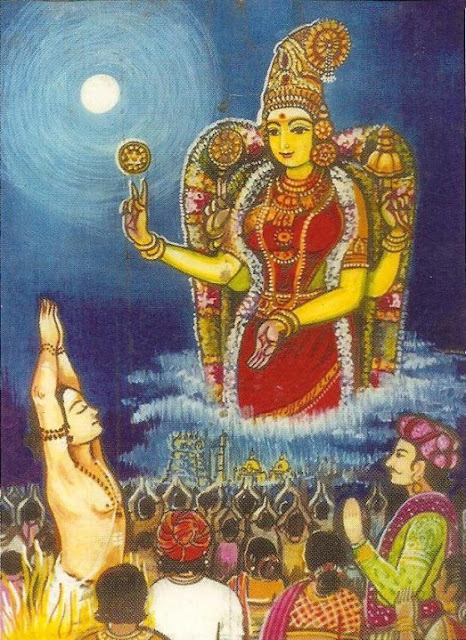
English Translation O, Goddess of old Kadavur, Younger Sister of Vishnu who is ‘sleeping’ on the ocean, who is inseparable from Amutheesar, O Abhirami, please bless me with the following:–
1)Good and Proper Education,
2) Long life,
3)Good Friends,
4)Inexhaustible Prosperity,
5)Youthfulness,
6)Disease free (healthy) body,
7)Calm mind (tranquillity),
8)Affectionate wife,
9)Children with good character,
10)Name and Fame,
11)Truthfulness,
12)Philanthropy,
13)Theft free Wealth,
14)Good government,
15)Worry free life, and
16) Association with your great devotees.
An alternative translation runs like this :– Life long Learning, Long life, Untarnished Friendship, Undiminished Prosperity, Eternal youth, Healthy Life, Unending exuberance, Ever loving Spouse, Unfaltering Children, Ever rising reputation, Truthfulness, Generosity at all times, Wealth that never ceases to grow, Honesty/ Fair play ( a country with a just government), Life free of sorrows, Love of God or association with god loving people/devotees.
xxx
16 GREAT THINGS (SIMILAR THOUGHT FROM ENGLISH POEMS)
A Prayer Found in Chester Cathedral
Give me good digestion, Lord, And also something to digest; Give me a healthy body, Lord, With sense to keep it at its best.
Give me a healthy mind, good Lord, To keep the pure and good in sight; Which, seeing sin, is not applauded, But find a way to set it right.
Give me a mind that is not bored, That does not whimper, wine and sigh; Don’t let me worry overmuch About the fussy thing called “I”.
Give me a sense of humour, Lord, Give the grace to see a joke; To get some happiness from life, And pass it on to other folk.
Unknown
Xxxxx
Enormous Wealth
What We Need
A little dash of purpose, An effort made to cheer, A little more of courage, And less of doubt and fear; A little more of lifting, And pulling all our weight, A little less of leaning, And leaving it to fate.
A little less of grabbing, Of selfishness and greed, A little more of helping, A fellow that’s in need; A little more of working, With smiles instead of frowns, A little less of kicking, A fellow when he down.
A little less complaining, About the things that mar, A little more adapting, To all the things that are; A little more of caring, And willingness to fight, A little more of daring, For what we feel is right.
A little splash of humour, To brighten up the way, A little joy to follow, And linger through the day; A little touch of laughter, To cause a little mirth, Is simply what we’re needing, To gladden this old earth.
Hope Spencer
xxxx
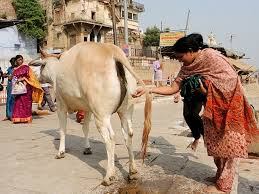
Hindus use cow’s urine for its anti-bacterial properties
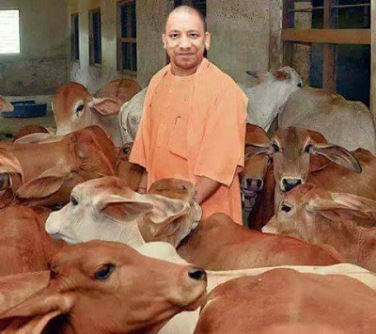
Hindus’ greatest contribution to civilization is cow and its milk. They domesticated it and found out the value of milk.
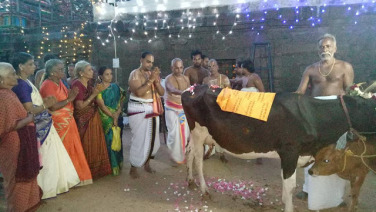
Tamil and Sanskrit inscriptions say that the great kings did 16 Daanaas (gifts or Donations). The list slightly differs in different Hindu scriptures. But all include Food, Gold, Cows, Land.
Other common gifts were golden images of a Pipal tree, Meru Hills, Divine Tree Karpaka Vruksha, Divine Cow Kamadhenu etc.
The lists say that giving a girl to a worthy man is a good gift and it is known as Kanyaa Dhaanam.
Giving education and helping someone to get married are also great gifts.
The general term for Great Gifts is Maha Dhanam. But the actual meaning of the word is giving gold to a Brahmana equal to one’s own weight.
Great Tamil king Cheran Senguttuvan weighed himself against gold and gave it to a Brahmin known as Matalan, according to Tamil Epic Silappadikaram.
Hindu king Mulavarman of Indonesia of fourth century CE and Krishna Devaraya of 14th century did 16 Gifts Ceremony.
Pictures are taken from various sources for non-commercial use; thanks
English newspapers in Britain have published a news item that the British believed in gem power. The news appeared yesterday (8-1-2020). Hindu beliefs about gem power existed in Britain 500 years ago.
The lovers’ ring lost in a field 500 years ago
A MEDIEVAL gold ring discovered in a field is likely to have been a 15th century love token, an expert says.
The band, found by a detectorist in York in 2016 and now on display at the Yorkshire Museum, is thought to have been owned by gentry or those ‘associated with royalty’ because it is set with a ruby and an emerald.
Adam Parker, of the Yorkshire Museum Trust, which bought the ring for £20,000, said emeralds were linked with chastity and rubies with love so it could have been ‘a betrothal charm’.
He said the ‘exotic’ ring, which was buried for 500 years, may have been dropped, or stolen and hidden.
It was likely to have had its origin in the Middle East or North Africa.
But experts, while describing the gold ring set with ruby and emerald as an ‘incredible treasure’, say its provenance cannot be proved.
Mr Ibbotson, 52, from Blackpool, found it in a field at Fulford, near York, in December 2016. It was officially declared treasure and he and the landowner received £10,000 each. Now, after more than two years of research, Mr Ibbotson believes it could be the ring on the index finger of Anne of Cleves in Hans Holbein’s 1539 portrait.
ஷான் கானரி, பிரிட்டிஷ் மஹாராணி, நடிகை ஜேன் பாண்டா (Post No.7427)
Written by London Swaminathan
Uploaded in London on – 6 JANUARY 2020
Post No.7427
contact – swami_48@yahoo.com
pictures are taken from various sources; thanks.
1992ம் ஆண்டு ஜனவரி மாதம் நான் தினமணியில் எழுதிய மூன்று பழைய விஷயங்கள்
1.பிரிட்டிஷ் மஹாராணி இரண்டாம் எலிசபெத் (Queen Elizabeth II) – இன்னும் பதவியில் நீடிக்கிறார். விக்டோரியா மகாராணியின் 64 ஆண்டு ஆட்சி சாதனையை முறியடித்த பின்னர் பதவி விலகி இளவரசர் சார்லசுக்கு வழிவிடுவார் என்று நம்பப்பட்டது . ஆனால் இப்போது அவர் 67 ஆண்டுகளாக பதவியில் உள்ளார். தற்கால உலகில் நீண்ட காலம் ஆடசி செய்யும் ராணி இவர்தான்
XXXX
ஜேன் பாண்டா (Jane Fonda) வின் மணம் முறிந்தது.
மூன்றாவது கணவரான டெட்டுடன் 2001 வரை வாழ்ந்தார்.
பின்னர் நாலாவது கணவராக ரிசர்ட் பெறி வந்தார். அவர்கள் திருமண வாழ்வு 2009ல் துவங்கி 2017ல் முடிந்தது. இப்போது ஜேனுக்கு வயது 82.
XXX
ஷான் கானரி
ஷான் கானரிக்கு (Sean Connery) வயது 89. அமைதியான வாழ்வு வாழ்ந்து கொண்டு இருக்கிறார்.
TAGS —ஷான் கானரி, பிரிட்டிஷ் மஹாராணி , இரண்டாம் எலிசபெத்,நடிகை ஜேன் பாண்டா
–SUBHAM–
Written by London Swaminathan
Uploaded in London on – 6 JANUARY 2020
Post No.7427
contact – swami_48@yahoo.com
pictures are taken from various sources; thanks.
1992ம் ஆண்டு ஜனவரி மாதம் நான் தினமணியில் எழுதிய மூன்று பழைய விஷயங்கள்
1.பிரிட்டிஷ் மஹாராணி இரண்டாம் எலிசபெத் (Queen Elizabeth II) – இன்னும் பதவியில் நீடிக்கிறார். விக்டோரியா மகாராணியின் 64 ஆண்டு ஆட்சி சாதனையை முறியடித்த பின்னர் பதவி விலகி இளவரசர் சார்லசுக்கு வழிவிடுவார் என்று நம்பப்பட்டது . ஆனால் இப்போது அவர் 67 ஆண்டுகளாக பதவியில் உள்ளார். தற்கால உலகில் நீண்ட காலம் ஆடசி செய்யும் ராணி இவர்தான்
XXXX
ஜேன் பாண்டா (Jane Fonda) வின் மணம் முறிந்தது.
மூன்றாவது கணவரான டெட்டுடன் 2001 வரை வாழ்ந்தார்.
பின்னர் நாலாவது கணவராக ரிசர்ட் பெறி வந்தார். அவர்கள் திருமண வாழ்வு 2009ல் துவங்கி 2017ல் முடிந்தது. இப்போது ஜேனுக்கு வயது 82.
XXX
ஷான் கானரி
ஷான் கானரிக்கு (Sean Connery) வயது 89. அமைதியான வாழ்வு வாழ்ந்து கொண்டு இருக்கிறார்.
TAGS —ஷான் கானரி, பிரிட்டிஷ் மஹாராணி , இரண்டாம் எலிசபெத்,நடிகை ஜேன் பாண்டா
RIG VEDA 10-117 IS A BEAUTIFUL HYMN ON GENEROSITY, SHARING FOOD, HELPING FRIENDS AND FEEDING THE POOR.
Another interesting thing about the hymn is that it has the Greek Sphinx Riddle. Sangam Tamil literature verses and post Sangam Tamil Tirukkural reflects the views in the hymn. Bhagavad Gita also shared the same thoughts. Let me compare the riddle first.
Gigantic 187 feet tall Egyptian Sphinx is a famous edifice with a long history. It has been dated a monument from 2600 BCE. It has the face of a man and the body of a lion. Greeks had a different Sphinx with a feminine face and wings. We have such figures from 500 BCE.
In the Greek conception, sphinx is the monstrous daughter of Typhon and Echidna. The sphinx demanded human sacrifice from the Thebans every time her riddle concerning the three ages of man was unanswered. when Oedipus answered, she committed suicide. It was adopted as an emblem of wisdom.
Her riddle was ‘which animal went on four, then two and finally three legs’; the answer being humanity- crawling baby, adult and old man with a stick. Oedipus gave the right reply.
Rig veda 10-117-8 says
“He with one foot surpasses Two foot; and Two foot leaves Three foot behind. Four foot comes at the call of
Two foot watching his herds and serving him where five met together.”
Probably the Greeks copied it like they copied the Sarama dog story in Hermes episode.
The explanation given by the Vedic commentators is
One foot – Sun (Aja Ekapada is another word for Sun)
Two Feet – human being;
Three foot – old person with a walking stick (staff);
Four feet – Dog and other animals.
Five foot – Many people who watch all these things.
xxx
Before this stanza, there are other stanzas illustrating very high thoughts. This is from the 10th Mandala of the Rig Veda.
Rig Veda 10-117-1
The gods have not ordained hunger to be our death; even to the well-fed man comes death in varied shape.
Here the poet Bitsu Angiras says that don’t condemn the begging people that they have to suffer like this because of their past sins. That is not right. Death is not only for the poor. Even well-fed rich men die.
Xxx
10-117-2
The man with food in store, who when the needy comes in miserable case begging for food
Hardens his hear against him – though in the past he had made use of him- he surely finds no one with sympathy.
Tamil poet Tiruvalluar says,
Wealth in the hands of a liberal person is like a useful tree bearing fruits in the middle of a town square – Kural 216
The man who is in the habit of sharing his food with others will never be afflicted with the dire disease called hunger – 227
Xxx
10-117- 3
The man who is truly generous gives to the beggar who approaches him. He puts himself at the service of the man and makes him a friend for times to come.
Xxx
10-117-4
That man is not a friend who does not give of his own nourishment to his friend. Let the friend turn away from him. Let him find another man who gives freely.
Here also we can compare a couplet from Tirukkural-
Genuine friendship hastens to redress distress like the hand that picks up the garment quickly that slips –788
Xxx
10-117- 5
Let the rich satisfy the poor and bend his eyes upon a longer path way.
Riches come now to one, now to another like the wheels of the rolling chariot.
This simile of wheel is used by several ancient poets. Naladiyar , another moral book, also uses this wheel simile for ever moving wealth.
Longer pathway means that the rich also can face ups and downs in future and so he must look into it.
Xxx
10-117-6
The foolish man wins food without labour; I speak the truth; it will bring ruin to him. He cultivates neither a friend nor a patron. All guilt is who he eats alone without sharing.
Lord Krishna illustrates this point in harsher terms. He says that who he eats aloe is a thief; he eats nothing but sin.
The good people who eat what is left from sacrifice are released from all sins but those wicked people who prepare food for their own sake – verily they eat sin – Bhagavad Gita 3-13
He who enjoys the god given gifts without giving to them/gods in return is verily a thief – 3-12
Tiruvalluvar also says,
Enjoying one’s food, sharing it with others, and sustaining other lives is held out as the highest virtue by learned sages – Kural 322
Here Valluvar echoes the Vedic sages.
Xxx
10-117-7
A man gets food by ploughing the field; the legs that walk puts the road behind them. The priest who speaks is better than the one who does not speak. The friend who gives surpasses the one who does not.
Griffith comments on it,
Active exertion is necessary for success.
The speaking brahman priest – the priest who duly discharges his task of recitation for which he is engaged.
Xxx
10-117-8
Already given in the Greek Riddle comparison (see above)
Xxx
10-117-9
The two hands though same, do not do the same thing.
Two cows from the same mother do not give the same amount of milk
The strength and valour of the twins are not the same.
Two kinsmen do not give with the same generosity.
Griffith explains,
All men should be liberal; but we must not expect all to be equally generous.
Here we see the ways of the world beautifully explained.
The similes of twins, ploughing field give a pen picture of the agricultural society.
xxx
Last but not the least, we may compare this with the 2000 year old Tamil Sangam Poems.
A Pandya king by name Ilamperu Valuthi says that Tamils share everything that is eatable, even if its Amrta from the world of Indra. He adds that they would do anything that brings fame and name for one and never do anything wrong even if they are given the entire world.- See Puranaanuru verse-182
In another verse a philanthropist was praised as a ‘Doctor who cures the disease of Hunger’ by a Chola king – See Puram. Verse 173.
The thought of sharing and giving is praised from the Rig Vedic days till today, from the Himalayas to Kanyakumari.
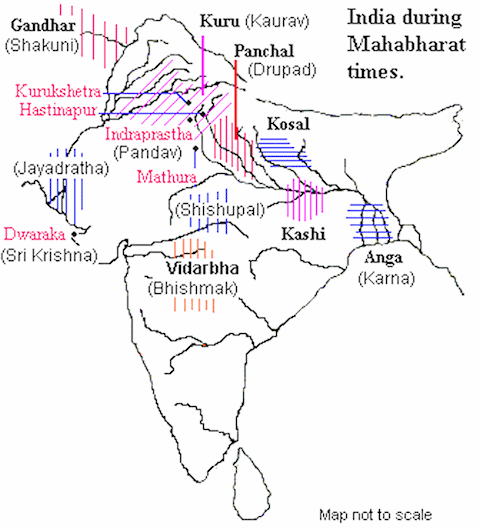
GANDHARI and KUNTI DIED IN FOREST FIRE with VIDURA AND DHRITARASHTRA (Post No.7404)
Complied by London Swaminathan
Uploaded in London on – 31 December 2019
Post No.7404
contact – swami_48@yahoo.com
pictures are taken from various sources; thanks.
Gandhari made Sri Krishna responsible for the Kurukshetra War and uttered a fearful curse on the
Yadavas, of which he was the most distinguished representative. She prophesied that a cruel calamity would overtake the house of the Yadavas, inasmuch as Shri Krishna ignored or failed to prevent the ruinous war between the Pandavas and the Kauravas. on the strength of her chastity and ascetism, she even said that Shri Krishna himself in no distant future would fall a prey to a foul death. It is important to bear in this mind that in this connection that Shri Krishna smilingly accepted this curse and recognised her truthfulness, piety and penance.
After the Kurushetra war, Dhritarastra and Gandhari lived for sixteen years at Hastinapura under the protection of Pandavas. They forgot to a great extent their grief at the loss of their sons on account of the wonderful care and sympathy bestowed upon them by Yudhisthira . At the end of the sixteenth year, however, they decided to go on a mission of pilgrimage to the Himalayas. In this mission they were accompanied by d Dhritarastra’s half brother Vidura, his minister Sanjaya and Kunti, the mother of the Pandavas .
FAREWELL SPEECH; HASTINAPURAM WEPT
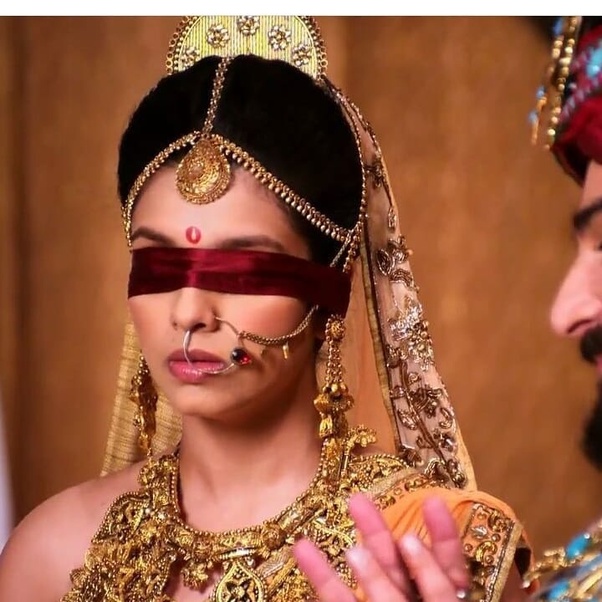
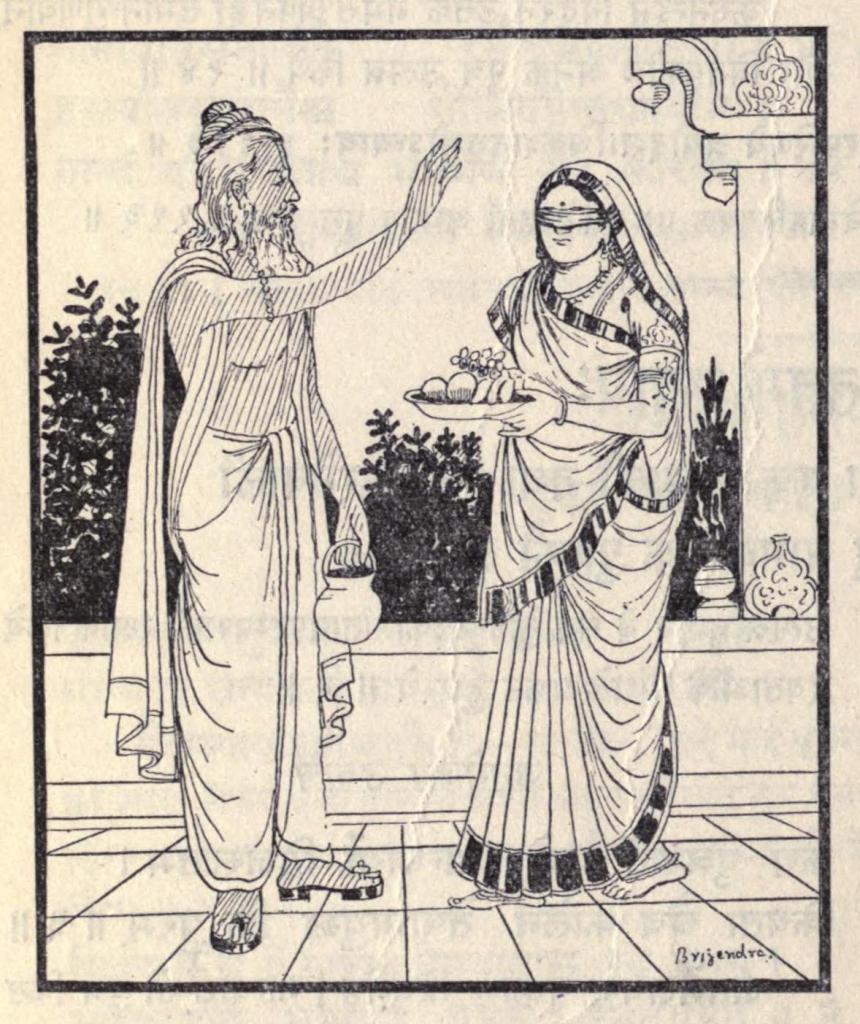
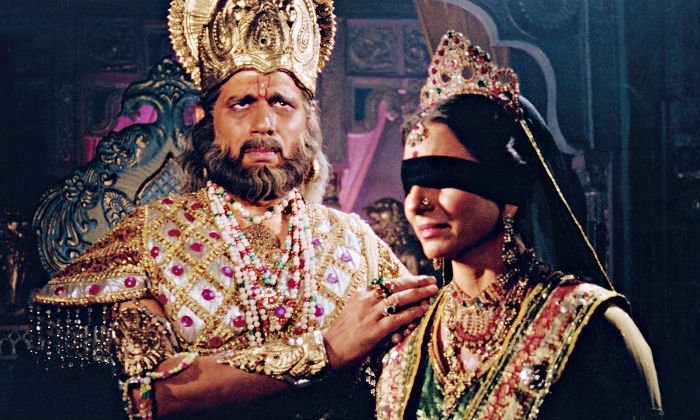
On the eve of their departure, Dhritarastra addressed a big assembly of the citizens of Hastinapura and men from the countryside. In this meeting Gandhari appeared by the side of her husband with her eyes bandaged, and made a request to the assembled multitude through her husband asking their forgiveness of the sins of her sons.
The final departure scene of the old sorrowful King Dhritarastra was pathetic. Kunti came forward to lead the journey, Gandhari put her hands on the shoulders of Kunti and Dhritarastra followed Gandhari , placing his hands on her shoulders. Vidura and Sanjaya were on either side of the procession. The citizens of Hastinapura wept like orphans as the procession came out of the main gate of the city, but Dhritarastra and Gandhari and others walked on unmoved.
ALL BURNT ALIVE IN BIG FOREST FIRE
In the Himalayas, they spent a few more years till they were burnt alive by a conflagration which had enveloped that part of the forest in which they lived. . confronted by it they showed remarkable courage and fortitude. They refused to escape from the fire; on the other hand, they sat down on the ground with calmness and in a spirit of resignation welcoming the approach of the fire.
On the day of her passing away from the earth, Gandhari’s eyes were still bandaged, and she made the supreme sacrifice with unflinching loyalty to her ideals. She exemplifies the best ideals of Indian womanhood through the ages from the days of Mababharata , and remains immortal in the minds of millions of Indians who derive their inspiration from the Great Epic.
Source book – Great Women of India, Advaita Ashrama, Almora, Himalayas, 1953
The old ballads of North Malabar – Vadakkil paattungal – contain a tale of a brave girl (early seventeenth century ) who saved the women of her village from being forcibly kidnapped, and in the end brough about communal harmony.
Mulsims used to molest beautiful Hindu girls in North Malabar. No one dared to challenge the rapists.
Unniyarcha , sister of Aaromal Chevakar, a doughty warrior, was married to a coward named Kunnirhaman. One day she wanted to visit a temple of Ayyappan , a few miles from her village, but her mother in law refused to permit her to leave the house even in the company of her husband. She new what would happen to her from the Muslim Chonakas.
Nothing daunted, the girl took her favourite sword, and with her husband proceeded in the direction of the temple .The headman of the Chonakas (Muslims) – who happened to see her on the way, was enamoured of her beauty and sent his men to carry her away by force. Unniyarcha drew her sword and killed some of them. Their chopped heads rolled on the ground like foot ball. The rest fled and brought their headman himself to the scene, who soon realised that she was the sister of his fencing master. He appealed to both sister and brother to pardon him, but Unniyarcha was inexorable and challenged him and his men to a fight. The chief of the place persuaded the girl to sheath her sword, which she did on headman promising that no woman in the place will be molested in future . Then Muslim rapes stopped in Malabar. One heroic Hindu heroine saved the honour of millions of Hindu women.
Films and TV serials on her were made but with distorted stories.
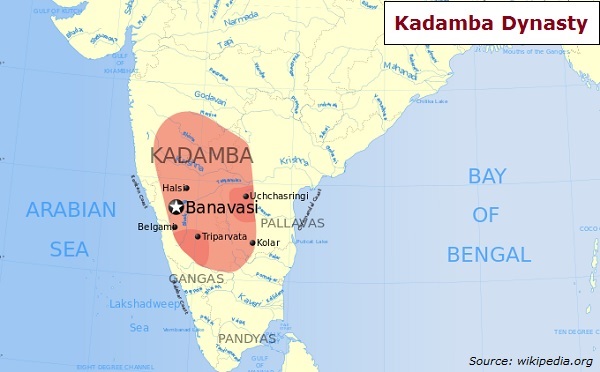
In the list of the famous heroines and administrators of Karnataka the name of Akkadevi 1010-1064 CE, stands very high. She was a Chalukyan princess who ruled over various divisions of the Chalukyan dominions such as Banavasi , Kisukadu, and Masavadi for nearly half a century.
A few days ago I wrote about Rudramba who ruled for 33 years and her sister Ganapamba who ruled for 40 years. But Rudramba was a full fledged queen where as others are not. Here is a Kannada woman who ruled for half a century. Unlike European rubber stamp queens, Hindu queens and princesses were real rulers and fighters.
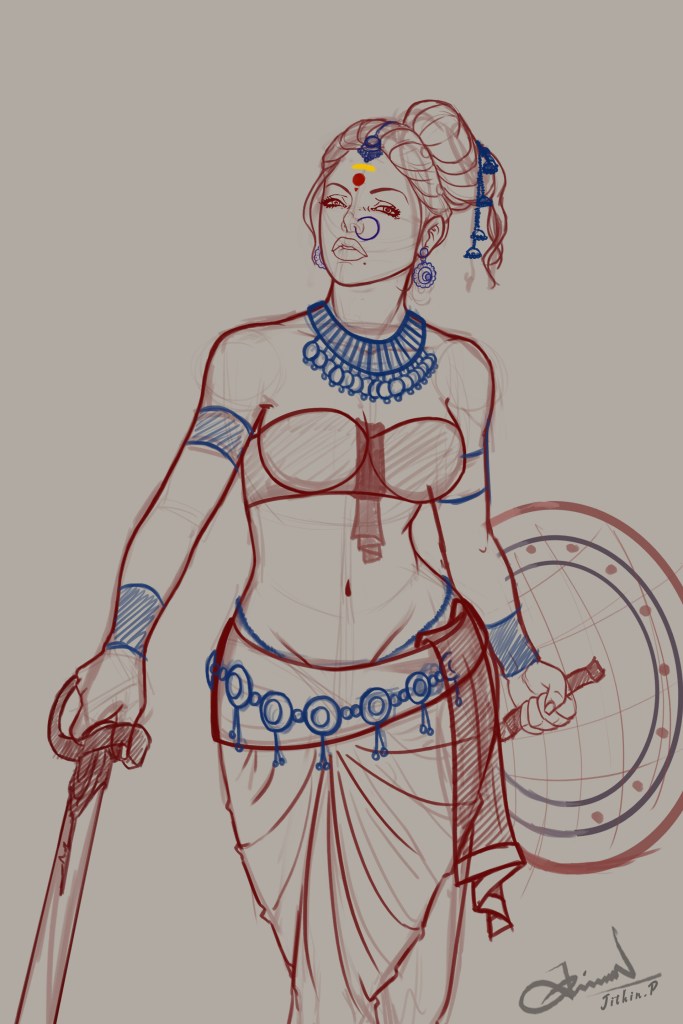
Akkadevi was the daughter of Dashavarman and Bhaagaladevi and was the sister of vikramaditya v and Jayasimha ii, both Chalukyan emperors of Kalyana. She is described in inscriptions as fierce in battle and as having subjugated a large number of enemies. She laid a siege to Gokhaje, probably to quell some insurrection.
She is also described as a marvel of virtual qualities and unswerving in her promises. The seat of her government was VIkramapura ,modern Arashibidi near Bijapur .
She married the Kadamba prince Mayuravarman, who along with her ruled Banavasi in 1037 CE. They had a son named Toyimadeva , who ruled the Banavasi region as a feudatory of the Chalukyan emperor Someshwara in 1064 CE.
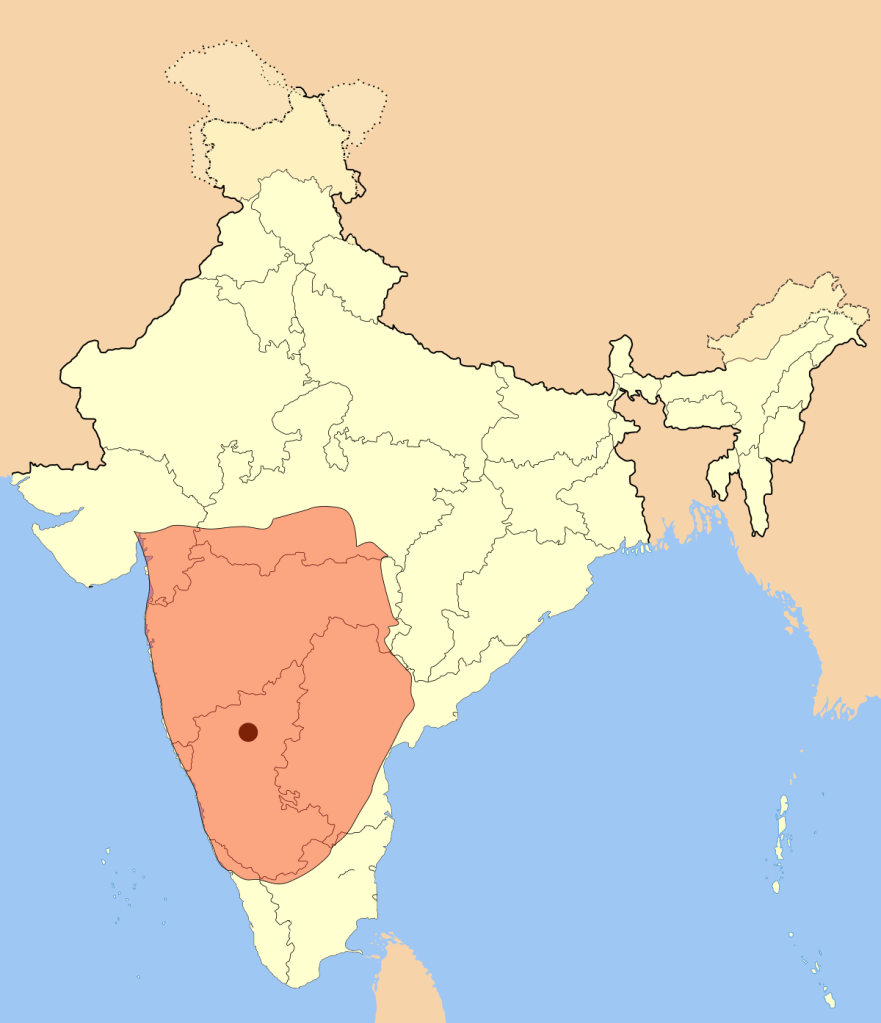
MAP OF WESTERN CHALUKYAN EMPIRE
TEMPLE BUILDER
Her name is associated with the foundation of a number of temples. She also evinced great interest in promoting education. An inscription of 1021 CE says that she made a large gift of land to feed and clothe 500 students and provided them with free quarters. The fact that she reigned not only in conjunction with her husband but also independently in an indication that she was a personage of considerable reputation and importance in her time and no less than three Chalukyan emperors had confidence in her administrative ability.
All Indian girls must study the history of Hindu queens and princesses. This must be made a compulsory subject in schools.
Source book – Great Women of India, Advaita Ashrama, Almora, Himalayas, 1953
(Akka Mahadevi, Kannada devotional poetess of 12th century is different from this Akkadevi)
Longest ruling queen in the modern world is Queen Elizabeth of Great Britain. But she hasn’t got any powers like the old queens. She is a figurative head. But in ancient India, we had queens with absolute powers, who went to war with their enemies, fought actual battles and won or died in action. They crushed rebellions. We had powerful queens like Didda of Kashmir and Rudramba of Kakatiya dynasty.
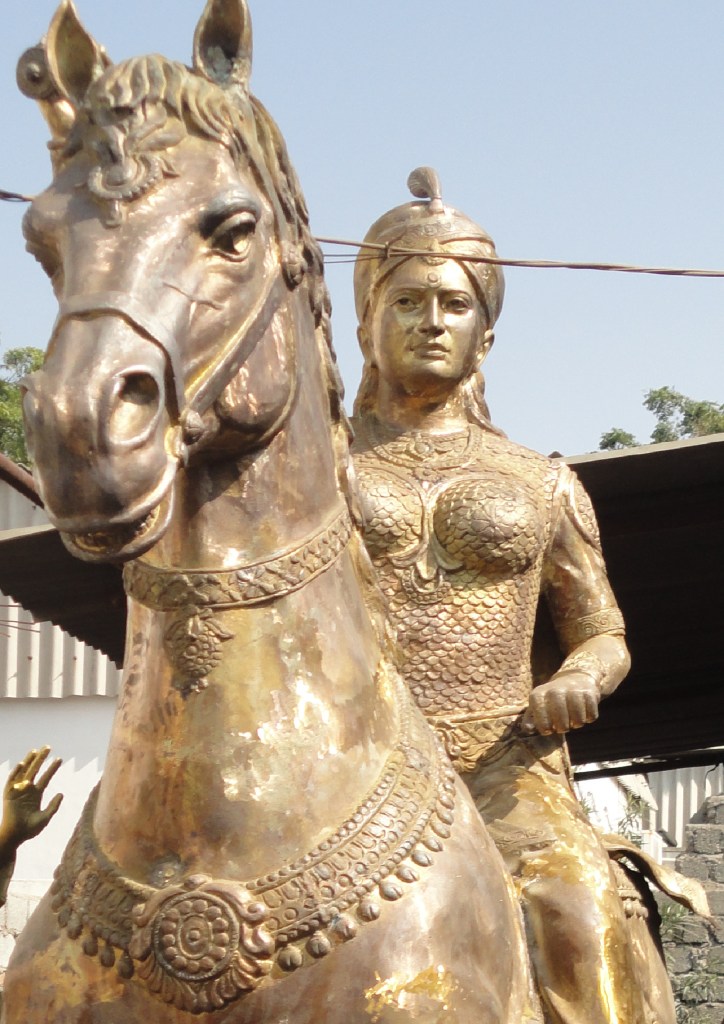
IF WE TAKE THE ANCIENT WORLD, RUDRAMBA WAS THE LONGEST REIGHING QUEEN WHO RULED FROM 1262 TILL 1295.
Cleopatra , Didda of Kashmir, Rani Mangammal of Madurai, Rani Meenakshi of Madurai and many other queens ruled for lesser years than Rudramba . Modern queens of European countries hold decorative posts without much powers. They are not absolute monarchies.
Rudramba was the eldest daughter of Kakatiya king Ganapatideva, whom she succeeded on the throne and ruled over the kingdom for well over three decades. Ganapati had no male issues, but had two daughters
Rudraambaa
And
Ganapaambaa.
Both endowed with great intelligence and exceptional abilities. Determined to keep the sovereignty in his own family, he recognised Rudrambaa as his heir, and bestowing on her the Rudradeva Maharaja, he took special interest in her education and gave her practical training in administration by associating her in his government in the last years of his reign.
Rudraambaa ascended the throne on her father’s death in 1262 CE. She was not however accepted as sovereign by all sections of her subject immediately. The feudatory nobles of southern Andhra country , whom her father recently reduced to subjection, saw in the accession of a woman to the throne an excellent opportunity to raise the flag of revolt and regain their independence. Of these the most important was the Kayastha chief Ambadeva, who ruled a large part of the Rayalaseema from his capital Velluru near Cuddappah. About the same time, Mahadeva, the Yadava king of Devagiri, taking advantage of the internal troubles, invaded the Kakatiya dominions from the west. As all the ministers and officers of the kingdom remained faithful to her, Rudramba was able not only to suppress the rebels and bring them back to subjection but also to repel the Yadava monarch after inflicting a defeat on his forces. Peace and order was restored, and during the remaining years of her reign till 1295 CE, she ruled in perfect security free from the attacks of enemies, both internal and external.
Rudramba was a wise ruler, who strove hard to promote the welfare of her subjects. She constructed tanks, canals and wells to provide water to the agriculturists; granted concessions to merchants to promote trade and industry; built hospitals and provided for their maintenance; endowed religious foundations with rich gifts of lands; and founded Brahmana settlements to encourage learning.
It was probably during Rudramba’s rule that the famous Venetian traveller Marco Polo passed through the coasted Andhra country and visited Motupalli and other important commercial centres of the kingdom. He bears testimony to the flourishing condition of its foreign trade and domestic industry, especially diamond mining, for which the kingdom was famous.
Rudramba married a K shatria prince called Virabhadraof the Eastern Chalukyan family. Like her father she had no sons; but she had two daughters Mummadamma and Ruyyamma. The former married a Chalukya prince called Mahadeva. They had a son named Prataapa rudra, whom Rudramba adopted and appointed heir apparent. Rudramba was a staunch Saivite , but was tolerant towards other sects.
An inscription from Malkapuram dated 1261 CE is of much interest and throws light upon the nature of queen’s charities. It relates to the gift made by her, in accordance with the expressed wishes of her father, of the village of Mandaram on the southern bank of the Krishna to the raja guru Visveshwara Shambu built a temple, round which grew a township inhabited by Brahmanas from different regions , artisans, musicians, dancers, village guards and servants , whom all the lands mentioned in the gift were distributed. A hospital and a college were established in the town, and in the feeding houses people of all sects and castes were fed. Rudramba’s kingdom was then the live centre of the Pasupatha sect. She spent the last years of her life in meditation under the guidance of the Pasupatha priests.
Ganapaambaa
Ganapaambaa was the second daughter of the Kakatiya king Ganapati and the younger sister of Rudramba of Warangal. Though not as famous as her elder sister, Ganapambaa deserves to be remembered as one of the few Andhra women who actually wielded the sceptre and governed their kingdom in their own right.
Ganapambaa was married into the family of Kota chiefs, who ruled over the ‘six thousand country’ from their capital Dharanikota on the Krishna. She ruled the ‘six thousand country’ after her husband’s death. She ruled the royal principality for well over forty years as its undisputed ruler.
G was a wise and enlightened ruler. She was a staunch Shaiva by faith. She built two temples to Shiva , one in memory of her husband and another in memory of her father. She set up gold kalashas /pitchers on the gopura of Amareshwara temple at Amaravati and granted an Agrahara to Brahmins. She spent her last days in peace and tranquillity in contemplation of Maheswara.
–SHUBAM–
Source book- Great Women of India, Advaita Ashrama, Almora, 1953
GREEK PHILOSOPHER WHO PROPAGATED HINDU THOUGHTS- EMPEDOCLES (Post No.7388)
Written by London Swaminathan
Date – 27th December 2019
Post No.7388
contact – swami_48@yahoo.com
pictures are taken from various sources; thanks.
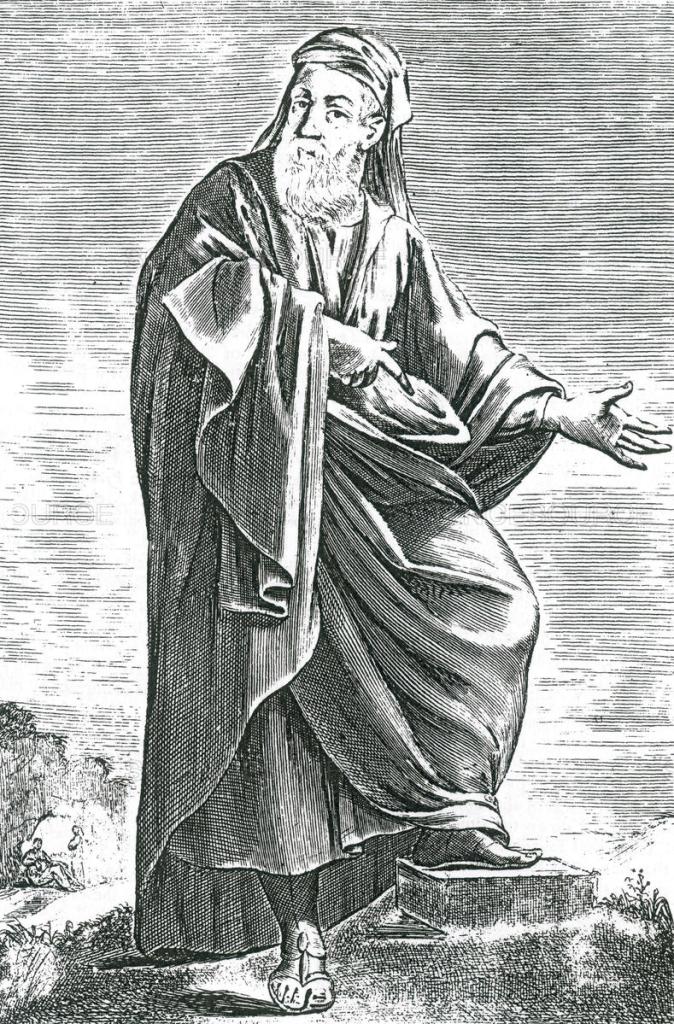
EMPEDOCLES was a Greek philosopher who lived before Socrates in Greece. He was born in 493 BCE and died in 433 BCE at the age of 60. There are very interesting stories, poems and dramas about him. He was a philosopher and scientist.
He proposed that the universe is composed of four elements – FIRE, AIR, EARTH AND WATER which through the action of love and discord are eternally constructed, destroyed and constructed anew. He lived in Acragas / Agrigentum in Sicily according to tradition. He committed ‘suicide’ by throwing himself into crater of the volcano Mount Etna.
Hindus believed in Pancha Bhutas (Five elements); for some reason Empedocles left out Akasa (space/ vacumn).
He believed in the Hindu concepts of
1.Vegetarianism
2.Reincarnation
3.Cyclical Creation and Dissolution
4.Written in verses (like Sutras)
He was the last of the Greek writers to write everything in verse.
He was a follower of Pythagoras who was widely believed to have proposed the Hindu theorem, known in the western world as Pythagoras theorem. He also believed in reincarnation.
Both Pythagoras and Empedocles travelled to the East. They might have received all the Upanishadic thoughts from Iran or India. Later writers wrote that Empedocles travelled to the Land of Magis.
Land of Magis is described as Iran or East up to Sindhu region. The word Magi is in Bible and in the English word Magic. First, they translated as three magicians visited Jerusalem when Jesus was born. Then they changed it into ‘Three Wisemen visited Jerusalem’. It is derived from a Sanskrit word ‘Maya’ meaning illusion. Hindu saints may have been called by this name(Mayaaavaadi) because they described the world, its existence etc. as illusory. Magic is also an optical illusion.
Atma Thyaga (Self Sacrifice)
Hindu saints enter Fire or Water when they think that their mission in life is accomplished or finished. We have several instances of spontaneous combustion (please read my old article on it) in Hindu literature. A Hindu saint who went to Mayan civilisation entered fire saying that he would come back. When the Spanish robbers and murderers came to America, Incas believed that the Hindu saint with his team has come back and gave the white man royal welcome to the murderers. They destroyed the whole Aztec, Olmec, Mayan and Inca civilisations.
Here in the case of Empedocles it was not a suicide he committed. Being a great philosopher he asked his followers to take him to the top of the volcano Mount Etna and drop him into the fire. We see such things in the life of great philosopher Kumarila Bhatta and the greatest of the Sangam Tamil Poets Kapila. Both of thee entered fire voluntarily when their missions were accomplished (please see my old articles for the full story; links are given below).
Bharatiyar, the greatest of the modern Tamil poets has described it in a stanza
“And when one puts a finger in a fame
Nandalala (God), one feels
The thrill of your touch
Nandalala “
His thoughts on various topics
Ancients were fascinated by dreams and much thought was devoted to how they could be explained. Empedocles got close to modern ideas by proposing that dreams dealt with day’s residue. (In the ‘Interpretation of dreams’ by Artemidorus of second century CE, we see his finding that slaves’ dreams commonly featured fear of losing a master’s trust or hopes of freedom)
Empedocles’ belief that the cosmos was constructed by four elements was believed by great Aristotle as well. His authority was so great among intellectuals and the church fathers that the theory was simply assumed to be true for nearly 2000 years till the experimental method was invented in the sixteenth century.
Later authors of medicine attributed body parts, four humours, four seasons to four elements.
Pythagoras in the sixth century BCE, argued that from the moment of conception the foetus was body and soul with every innate human capacity intact. Empedocles thought that the foetus became fully human only at birth.
Since Empedocles wrote in verses, people interpret it differently. More over some of his poems are discovered in parts and joined together. There is a debate whether it is correct or incorrect.
Hindu scholars’ views on Empedocles
Dr S Radhakrishnan says
“Sixth century BCE was remarkable for the spiritual unrest and intellectual ferment in many countries. In China we had Lao Tzu and Confucius, in Greece Parmenides and Empedocle,s in Iran Zarathustra, in India Mahavira and the Buddha. In that period many remarkable teachers worked upon their inheritance and developed new points of view.”
P C Ray and P Ray say
“KAPILA , the reputed originator of Samkhya philosophy, developed his ideas about the ultimate particles of matter in the latter part of his theory of cosmogenesis . The atomic theory of Samkhya bears a great resemblance to the Greek theory of elements introduced by Empedocles .”
Samkhya is the oldest of the six Hindu philosophical systems. Kapila lived before the time of Empedocles .
Professor Macdonell in his history of Sanskrit literature remarks on the question of whether Hindus borrowed the ideas from the Greeks,
“According to Greek tradition , Thales, Empedocles, Anaxagoras, Democritus and others undertook journeys to oriental countries in order to study philosophy. Hence there is at least the historical possibility of the Greeks have been influenced by the Indian thought through Persia (Iran).”
Colebrook too sums up his views in the following words,
“I should be disposed to conclude that the Indians were in this instance teachers than learners.”
Prof. H H Wilson in his preface to Samkhyakarika also observes,
“That the Hindus derived any of their philosophical ideas from the Greeks seems very improbable , and if there is any borrowing in this case, the latter were most probably indebted to the former.”
A KALYANARAMAN in his book ARYATARANGINI has given a detailed analysis of this topic. I will give it separately.
Bibliography
H T COLEBROOK- ENGLISH TRANSLATION OF SAMKHYAKARIKA, BOMBAY, 1887
H H WILSON
A A MACDONELL – HISTORY OF SANSKRIT LTERATURE
RADHAKRISHNAN READER, AN ANTHOLOGY, BHARATIYA VIDHYA BHAVAN, BOMBAY, 1969
Posts about Fire Walking written by Tamil and Vedas.
Empedocles’ atma thyaga (self sacrifice) have been referred to by various authors and poets up to Mathew Arnold and Bertrand Russel. This incident also proved that he was a great Hindu follower.
12 Jul 2014 – Tamil poet Kabila did enter fire after fulfilling his noble mission. Aztec saint Quetzalcoatl (may be a Hindu saint) did sacrifice his life in fire.
25 Nov 2019 – LET US ENTER FIRE BEFORE MUSLIMS TOUCH US- HEROIC SPEECH BY RANI BHAI(Post No.7261) … The queen and the ladies then entered into a house, where they … quiz on 100 great women-2 | Tamil and Vedas.
14 Jun 2014 – Practice of Sati is found in ancient Sangam Tamil literature at least in three places. Sati is the custom practised by some Hindu women in the olden times. The wife of the diseased husband will enter the funeral pyre of her husband.
Fishing Anecdotes (Post No.7378) Compiled by LONDON SWAMINATHAN Post no. 7378 Date 24 December 2019 Uploaded from London Pictures are taken from various sources; thanks
WHY DID THE SIZE OF THE FISH CHANGE?
Mr Jones and Mr Glover were lunching together. As their various friends passed the table, Mr Jones would stop them and, in glowing terms, describe his success on his recent fishing trip. Glover amused by the enthusiastic Mr Jones finally said, “Say, I notice that in telling about that fish you changed the size of it for each different listener.” “Yes, sure, I never tell a man more than I think he will believe.”
Xxx
If I catch three, I will have three
An old coloured man was sitting by the side of a stream patiently waiting for a bite. A youngster, ambling along the banks, stopped to watch him. “Say, uncle, how many you caught?” “Well, sonny, ef I ketch dis heah one I am after and two mo, I will have three.” Xxx Loafs and Fishes During the course of the Sunday school session, the teacher called upon one of the pupils to recite some parables .
“Do you know the parables, Johnny? She asked.” “Yes, Madam.” “Well, I want you to tell us about the one that you like the best.” “That is easy, Madam. I like the one where somebody loafs and fishes.”
Xxx Icy Road For the first time in their long married life, Mrs Smith had persuaded her husband to take her fishing with him.
Seated by the side of the stream, Mr Smith was silently doing his best to make a catch. The guide with them was engrossed only in the business at hand. But Mrs Smith kept chattering away, asking all the questions she could think of. Suddenly she spied a step of oily water, seeming to cross the lake like a broad smooth street. Oh, guide, guide, , what is that streak over there? Where, Madam? Asked the guide, endeavouring to bait a hook. Right over there, what is it? Why that,Madam, drawled the guide, that is just where the road went across the ice last winter.
Xxx Climb up the Pole
A seasoned old fisherman found his neighbor on the bank of the stream one day to be a rank green horn at the art of angling. This personages fished for some hours doing practically everything wrong. Not withstanding this, from the sheer operation of the law of averages, the beginner finally got a bite. Feverishly he reeled and reeled and reeled until at last, some miracle having saved his line, he had wound his small catch, all the way up to the tip of his pole.
Overcome with the excitement of it all, , he turned to the experienced fisherman and said, Now what shall I do? “Looks to me”, said the old timer laconically, as though there was nothing left for you to do except climb up the pole and get him.








 Tamil and Vedas
You must be logged in to post a comment.