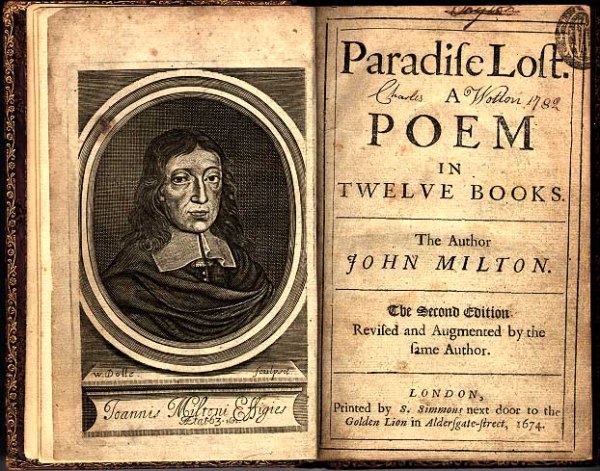
MILTON’S VIEWS SIMILAR TO HINDU VIEWS! (Post No.4295)

Written by London Swaminathan


Date:12 October 2017


Time uploaded in London- 20-32


Post No. 4295

Pictures shown here are taken from various sources such as Facebook friends, Books, Google and newspapers; thanks.


Hindus believe that spirits or angels live everywhere in nature- from sea to the hill top. They are the guardians of hills, groves, streams, fountains, paths, trees, rivers, paths and cities. Sangam Age Tamils called them Anangus. They are cognisant of every human action. In considering the domination of the above, compare Milton’s lines:-


Millions of spiritual creatures walk the earth

Unseen, both when we wake and when we sleep

—Paradise Lost


Xxx


Worship of Earth by the Hindus


They always ask for forgiving before stepping on it or ploughing or digging a well. The worship of the earth assumes many forms. The pious Hindu does reverence to her when he rises from his bed in the morning and even the indifferently religious man worships her when he begins to plough or sow.


Pious Hindu recites a couplet saying, please forgive me for stepping on you, Vishnu patni namastubhyam padas sparsam kshmasvame


In Punjab when a cow or a buffalo  is first bought, or when she gives milk after calving, the first five streams of milk drawn from her allowed to fall on ground in honour of the goddess Mother Earth, and at every time of milking the first stream is so treated.


The dying man is laid on the earth at the moment of dissolution and so is the mother at the time of parturition.


Milton in his Paradise Lost says

………till like ripe fruit thou drop

Into thy mother’s lap- 9-273


Earth again is regarded as a remedy for disease. It is used frequently as a poultice, and an application for the cure of wounds and sores.


Xxxx

Earth in Wedding Ceremony of Lower Castes


Following incident is mentioned by Rev. Osborne Martin in his book Gods of India, year 1914


At the side of a Mission compound in North India is a tank which during half the year is dried up. The women of a neighbouring Chamar village, before any wedding, go in a procession to the dry tank to fetch from it sacred earth used to make the marriage altar and fire place on which the wedding feast is cooked.  The ground close to which the earth is taken is smeared away with vermillion, and marigold flowers are scattered here and there, while puja is offered before the soil is removed. The earth is always given by the digger to a maiden, and married women are not allowed to touch it. The maiden receives it in her sari and heads the procession on its return to the village. This rite is performed with secrecy, and usually at nightfall. This is part of ancient earth worship.

xxx

Valluvar and Milton


Tamil poet Tiru Valluvar says,


If one exercises self-restraint with knowledge and intent

He will gain distinction among the wise (Kural couplet 123)


If one practises self-control in respect of thought, word and deed, he will certainly come to be counted among the good people of the world. In fact as the great English poet Milton would say


“The command of one’s self is the greatest

Empire one can aspire to”


Lord Krishna says in the Bhagavad Gita about the Self-Restrained:

“But the self-controlled man, moving among objects with senses under restraint, and free from attraction or aversion, attains tranquillity- Gita 2-64


xxx

Milton says

The Ionian Gods – of Javan’s issue held

Gods, yet confessed later than Heaven and Earth

Their boasted parents – Paradise Lost 1-508


Vedic Rishis also give queer notions of their gods.


xxx

In the Vedas there is a hymn called the Bhumi Sukta and that is the oldest hymn by a community to Mother Earth. I Have already written about it:-


 Bhumi Sukta | Tamil and Vedas

https://tamilandvedas.com/tag/bhumi-sukta/

Posts about Bhumi Sukta written by Tamil and Vedas.

–SUBHAM—

Interesting Anecdote about Shaalagraama (Fossil) Marriage (Post No.4292)

Written by London Swaminathan


Date:11 October 2017


Time uploaded in London- 16-26


Post No. 4292

Pictures shown here are taken from various sources such as Facebook friends, Books, Google and newspapers; thanks.


Interesting Anecdote about Shaalagraama (Fossil) Marriage (Post No.4292)

What is a Shalagrama?

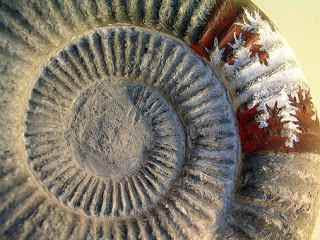
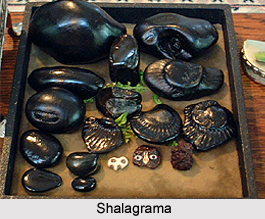
Hindus worship fossils with several designs made by the impressions of dead animals. Such stones are millions of years or thousands of years old. Devotees of Lord Vishnu regard them as a most sacred objects. They see the symbols of Lord Vishnu (Chakra=wheel, Shank= Conch) in it. Normally other stone images of Gods must be consecrated in a special ceremony by a priest before they can be used; but with Shalagrama (Fossil stone) you can worship straight away. This stone is inherently sacred and is worshipped as a part of deity himself. It is a round black ammonite and is found in River Gandaki in Nepal. They are valued according to their size, hollowness, and inside colouring and impression. For rarer kind big amount of money is given.


Hindus believe that whoever keeps this celebrated stone in the house can never become poor; they never want to part with it. It is passed from one generation to another generation for Puja/worship.

Bhagavata Purana has a story about Shalagrama:

Vishnu created nine planets (celestial objects) to preside over the fates of men. Sani/Saturn commenced his reign by requesting Brahma to become subject to him for 12 years. Brahma referred him to Vishnu, who asked him to call on him next day. When he called, he found that the god, dreading the influence of the inauspicious planet, had transformed himself into a mountain. Sani them became a worm, and ate into the vitals of the mountain for twelve years. At the expiration of that time Vishnu resumed his proper shape, and ordered henceforth the stones of this mountain Gandaki should be worshipped as the representatives of himself.


Hindus worship this form of Vishnu in homes. They first bathe or wash the stone, reciting the mantras and then offer flowers, incense, light sweetmeats and water, repeating the mantras. After the worship the offerings ae eaten by the family.


In the hot months, to cool the sacred stone,  a vessel is suspended over it, as in the case of the Linga/ Shiva, and a small hole is bored into the bottom of the vessel. The water poured into the vessel drips over the Shalagrama stone/s. The water is collected and used as holy water. The marks of the stone are shown to dying men, in the belief that the concentration of the mind on this object will ensure the soul a safe passage to Vaikund, Vishnu’s abode.

A separate room or a particular spot in the Hindu houses is kept for the worship of the gods.


Shalagrama – Tulsi Plant Wedding


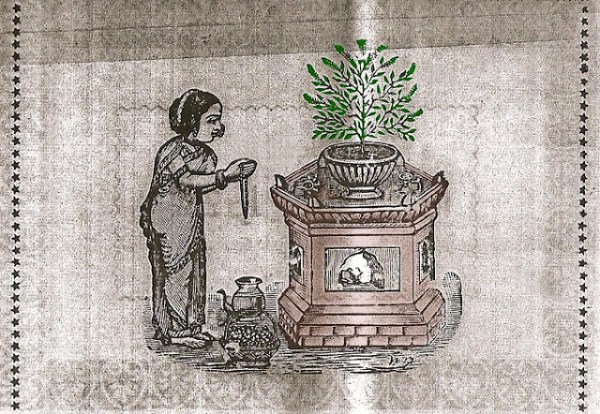
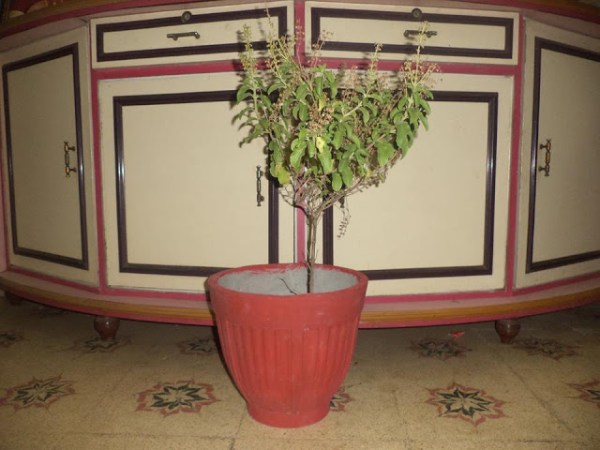
There is a very interesting account of a marriage of Shalagrama with Tulsi (Holy Basil) plant in a 100 year old book:


“The king of Orrcha in Central India, used to spend three lakhs of rupees (100 years ago) on this marriage. The officiating priests get good fees. A procession of 8 elephants, 1200 camels and 6000 horses, all mounted and elephants caparisoned. On the leading elephant of this cortege was carried the Pebble God (shalagrama/ fossil). He was carried to pay his bridal visit to the little shrub goddess/Tulsi.


All the ceremonies of a regular marriage were gone through, and when completed the bride and bridegroom were left to repose together in the temple of Ludhaura till the next year. Over one lakh people were present, and they were feasted at the king’s expenses”.


In addition to the black ammonites (shalagrama), white agates, typifying Shiva in his linga form and red stones, as symbolising Ganesa with certain forms of coral, are also worshipped.


Shashthi, protectress of married women and of children has no temples or idols, but her proper representation is  a rough stone, smeared with red paint and set up at the foot of a banyan tree. Lord Shiva is worshipped by the well known Linga (formless) stone.

Source: The Gods of India by Rev Osborne Martin, 1914


–SHUBAM–

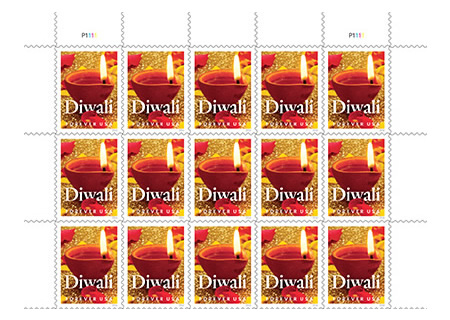
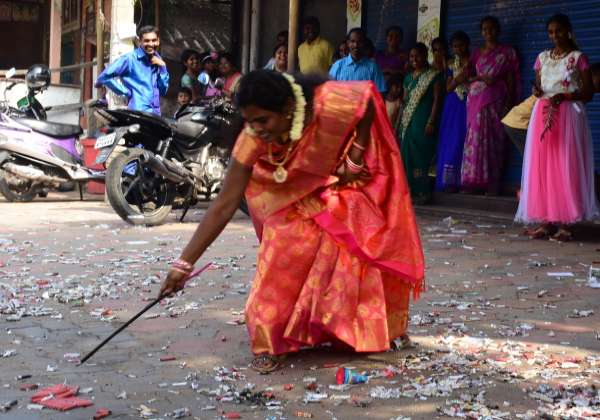
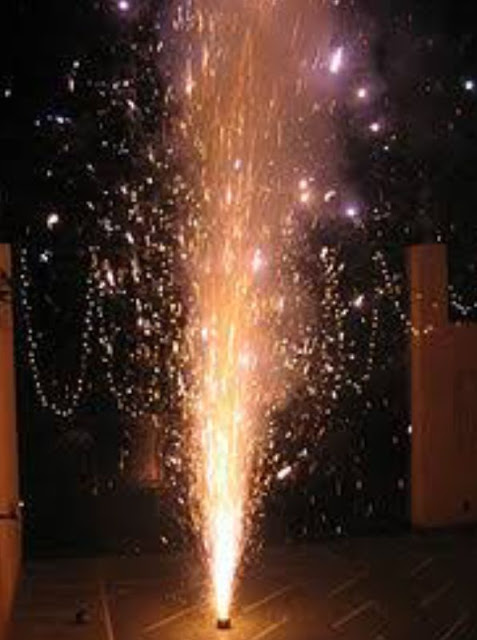
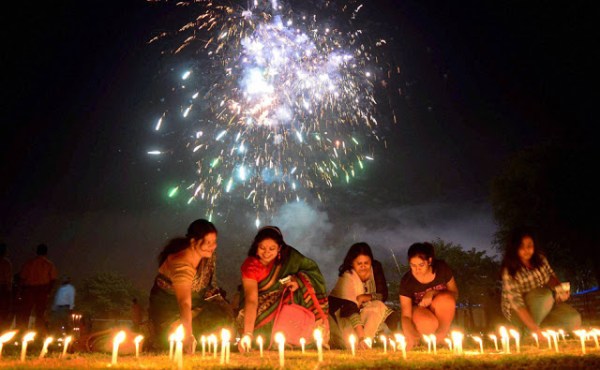
DIWALI FIRE CRACKERS- ‘TO BE OR NOT TO BE THAT IS THE QUESTION’ (Post No.4289)

Written by London Swaminathan


Date:10 October 2017


Time uploaded in London- 16-58


Post No. 4289

Pictures shown here are taken from various sources such as Facebook friends, Books, Google and newspapers; thanks.


WE HAVE A BIGGER DILEMMA THAN THE SHAKESPEAREAN HAMLET! TO BUY FIRE CRACKERS OR NOT, THAT IS THE QUESTION.

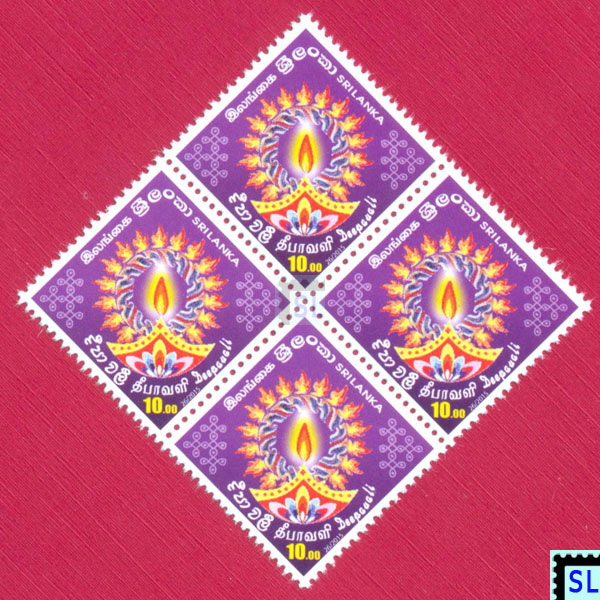
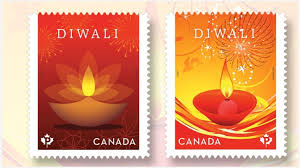
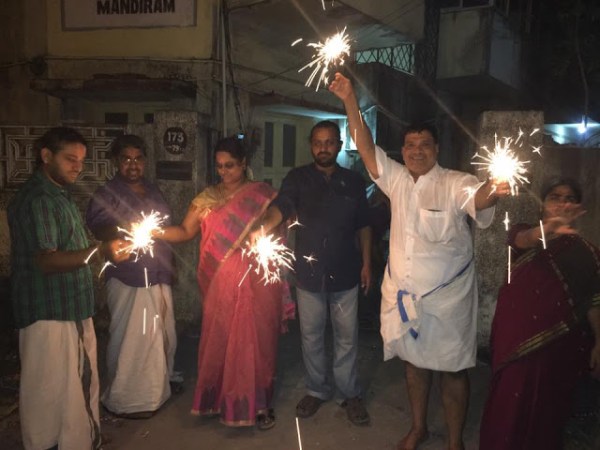
During Deepavali, every year Hindus are faced with a question whether to buy sparklers and crackers or not. Do I do anything wrong by using fire crackers?

My view is………………

Hindu youths must buy fire-crackers and fire them happily.

Otherwise arson attacks will increase!

During bandhs and riots, more houses, buildings and buses will be burnt. Why?

Human beings are pyromaniacs according to science journals.

From the days we lived in caves millions of years ago, we started big fires for cooking and to drive away the wild animal ; in cold places we did it for keeping us warm.

This is in our genes. If we don’t allow to use this genetic trait, our youths will use it during riost and bandhs.

In Hindiusim, everything is scientifically thought and placed in the scriptures. Thy have made cushions and shock absorbers to solve all sorts of problems to reduce tension, depression , riotous behaviour and suicides.


Even western countries allow fire works and bonfires during Guy fawkes day and other events.

BILLIONS OF CIGARETTES SMOKED EVERY MINUTE CAUSE MORE POLLUTION AND CANCER THAN FIRE WORKS. STOP IT. DONT STOP FIRE CRACKERS.


COME TO LONDON AND WASHINGTON. DURING DEEPAVALI AND INDEPENDENCE DAY MILLION CRACKERS ARE FIRED BY THE GOVERNMENT. GO TO OLYMPICS. WHAT YOU DO ON DIWALI DAY IS DONE IN ONE OR TWO HOURS THERE. BILLIONS OF CIGARETTES AND BEEDIS AND CIGARS CAUSE MORE POLLUTION.

ASK AMERICA TO STOP THE ARMS SALE. ASK BRITAIN TO STOP THE ARMS SALE. THE FIRE ARMS AND BOMBS THEY SELL ARE USED IN 55 COUNTRIES IN THE WORLD EVERY DAY– SAYS ECONOMIC TIMES.


MAKING FIRE CRACKERS IS A BIG INDUSTRY IN TAMIL NADU. ANTI TAMILS ARE AGAINST THE DIWALI CRACKERS.

Leather industry and factories pollute the air more than anything.

NOISE POLLUTION

Some people argue fireworks create noise pollution.

Loud speakers at political meetings and mosques don’t allow us to have an undisturbed sleep. The bombs that explode in 55 countries on any one day, the billions of cigarettes smoked at any one day cause more deaths. No US President could stop the arms sale even inside US after weekly shooting on innocent people. Mac Donalds in USA sell fire arms! Why shouldn’t we sell fire works for one week?


In short the arms and weapons, the cigars and cigarettes, one dollar or one pound shops run by Chinese or with Chinese goods, the fireworks done during Olympics, New Year Day, Independence day, Special celebrations, the leather industry, the nuclear tests by the Western countries, the jet planes manufactured by the Western countries, the thousands of cargo / container ships and Oil Tankers cause terrible pollution.


When we consider such big every day, every minute pollution, one day Diwali fire crackers won’t harm the world. Having said that

A word of caution…………..

In those days Hindus lived in big towns wide apart; nowadays we live in big multi story buildings accommodating 500 families or so in one building!

Nearby there are hospitals and offices.

Old and sick people live very near the buildings in care homes and hospitals.

Birds and animals live in the near by woody areas.

Just born children may also be in many flats. Pregnant ladies may be there.

Since we live in densely populated areas,  doing fire works may disturb many people.


So Hindus must show self-restraint.


Fix the time for fire works between 5 am and 11 am on Diwali  day and Diwali Eve.

Let us do fireworks without hurting the feelings of others or harming them.


Tamil Temples paintings show that the fire- works have been in use for many centuries.

China is making big money by selling Fireworks to all the countries in the world. Let us also think how we can give more jobs suing Diwali. We know that textile industry, restaurants, sweet shops and transport make big money. Workers get Diwali bonus ad inams. Let us think positive.


I have already written two articles about the significance of Diwali. Please read those articles as well.


MY OLD ARTICLES:–


SCIENCE BEHIND DEEPAVALI- Part 1 | Tamil and Vedas

SCIENCE BEHIND DEEPAVALI- Part 1

3 Nov 2012 – Science behind Deepavali (swaminathan’s Talk delivered today 03/11/2012) Actual Diwali falls on 13-11-2012 Good Evening,Namsthe …


SCIENCE BEHIND DIWALI-2 : 175 SWEET ITEMS!! | Tamil and Vedas

https://tamilandvedas.com/…/science-behind-diwali-2-175-sweet-ite…

Translate this page

3 Nov 2012 – SCIENCE BEHIND DIWALI-2 : 175 SWEET ITEMS!! Picture from Wikipedia : Making Fire Crackers. This is Second Part of my speech: swami.


–SUBHAM–

Hero Stone Worship in North India (Post No.4286)

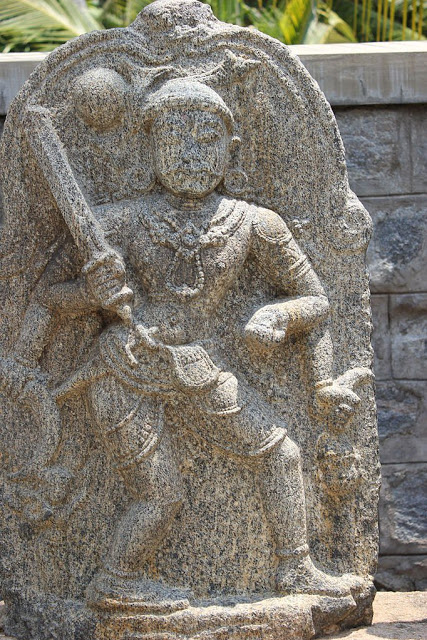
Image of Hero Stone in Karnataka

Written by London Swaminathan


Date:9 October 2017


Time uploaded in London- 18-15


Post No. 4286

Pictures shown here are taken from various sources such as Facebook friends, Books, Google and newspapers; thanks.


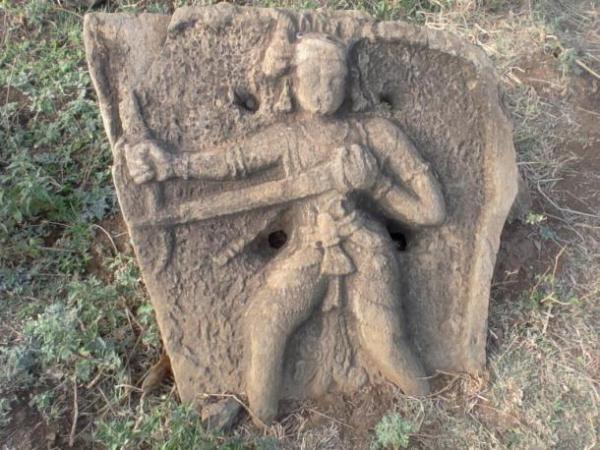
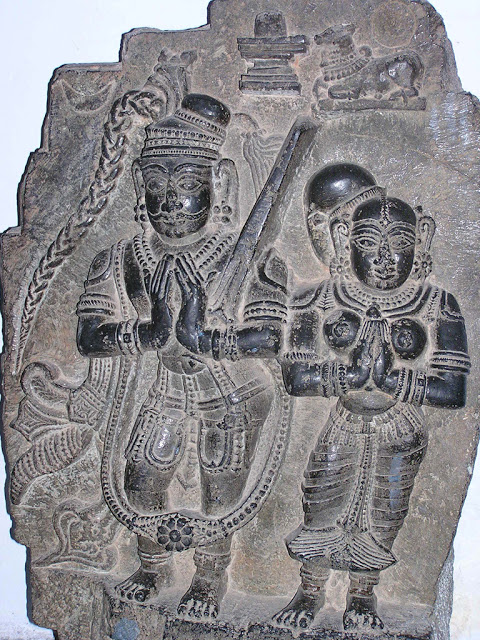
Hero Stones are erected by ancient Tamils for those killed in some community work. We have ancient hero stones found in different parts of Tamil Nadu from 5th century CE. Two-thousand-year-old Sangam Tamil literature also refers to it.

In Tamil Nadu and adjacent places Hero stones are placed in the road junctions and they are worshipped. The hero stones were erected for those who sacrificed their lies for others, particularly killing a tiger, or saving a village from an attack.

In Karnataka and Rajasthan, Pattinis, women who sacrificed their lives were worshipped. Thus India has 1000s of God like people who are elevated to the  status of divinities.


Tamil inscriptional Evidence

Tamil inscription names even a dog called Kovivan in a hero stone. Mahendra Pallava’s Eduthanur Hero Stone inscription praised Kovivan that died with his master in the battle. This Tamil inscription belongs to sixth century CE.


Erecting a stone or a pillar over the burial or the place of cremation has been practised by lot of communities around the world. Probably this pagan custom resulted in erecting decorative graves by the Christians where the pillar was replaced by a cross.

Hero Stone from Gotlur

Bridegroom’s Tragic Death mad him a Hero!

Dulhaa Deo (Bridegroom God) is worshipped in North India. Dulhaa Deo was an unfortunate bridegroom who was killed by lightning marriage ceremonies. People believed he and his horse were stoned into stones. Actually, people erected stones in memory of the horse and the rider like the Tamils.


General Sleeman gives a different version about this accident: In the valley of Nerbudda (River Narmada), near Bhopal, one may see on the side of the road, upon a spur of the hill, a singular pillar of sand stone rising in two spires. On the spur of a hill half a mile distant is another sand stone pillar not quite so high. The tradition is that the smaller pillar was the affianced bride of the larger one, who was a youth of great eminence in those parts. When the bride and bridegroom along with his uncle looked at each other discarding the rules (not to look at each other before the ceremony) they were converted into stones.”

This deity is one of the chief household gods of the tribal people. Flowers are offered to him on the last day of February, and a goat at marriages. In some places, even Brahmins worship him., and his symbol is a fetish battle axe, fastened to a tree.


In Mirzapur he is worshipped in the family cook room, where oil and turmeric are offered to him; when two or three marriages are taking place at the same time there is a combined offering of rice and goat.

Memorial Stone from Andhra Pradesh


In course of time, lot of different customs get mixed up, particularly among illiterate people. Hundreds of such customs exist in Tamil Nadu. Road side stones/deities are offered various things such as lemon, coconut, flowers and incense sticks. In several places like Sabarimala, Madurai Chitra festival even Muslims are linked with Hindu Gods.

Rev Osborne Martin, author of Gods of India even point out similar custom in the Bible:

“For a father afflicted with untimely morning, when he had made an image of his child soon taken away, now honoured him as a god which was then a dead man: Thus in process of time an ungodly custom grown strong was kept as law.”


—subham–


Puja to King George! Abisheka to Queen Victoria!! Scenes from British India (Post No.4283)

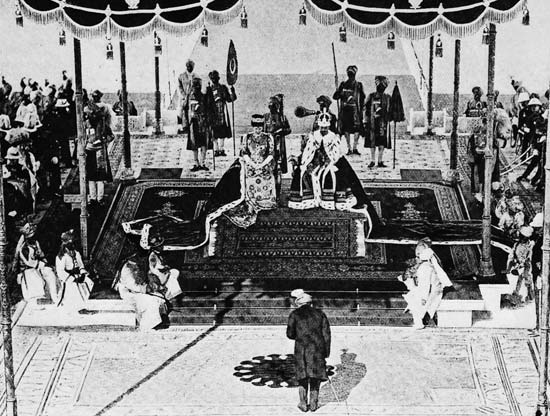
King George and Queen Mary

Written by London Swaminathan


Date: 8 October 2017


Time uploaded in London- 16-05


Post No. 4283

Pictures shown here are taken from various sources such as Facebook friends, Books, Google and newspapers; thanks.

Puja to King George! Abisheka to Queen Victoria!! Scenes from British India (Post No.4283)

The Gods of India by Rev. E Osborn Martin published in 1914, gives some interesting information about the Hindu ‘slaves’ in the British India. This is what made many freedom fighters’ blood boil. Poets like Bharati and Bankim Chandra Chatterjee tried to educate the Hindu people through their writings. Ignorant Hindus justified everything in the name of Fate and Karma. Even some scholars openly supported the British. In Tamil Nadu, Justice party and Dravida Kazakam wanted the British Rule to continue in India. All the text books had one poem praising the King and the Queen.

Here is what Osborne Martin says in his book,

“There is no limit to this kind of deification in India. Volumes might be written describing instances that have occurred, or are constantly occurring, in all parts of the country. Let a man show any heroism, any extraordinary sanctity, any act of great self-sacrifice or any so-called miracle, a niche is sure to allotted him amongst the 330, 000, 000 gods of the Hindu pantheon. Still it is important to note that the granting of divinity is usually associated with four classes of people -kings, warriors, Brahmins, saints and sages—these enjoying a kind of a priory claim.


In Manu’s law book a king is said to be created by drawing eternal particles from the essence of the eight guardian deities of the world. Again, he says “A king even though a mere child, must not be treated with contempt, as if he were a mortal; he is a great divinity in human shape.”


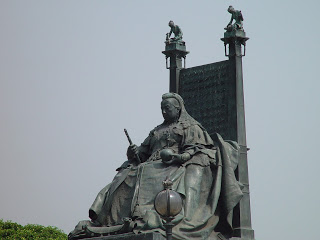
Instances of such worship came under writer’s notice. At Ayodhya, a new marble statue has been recently erected in memory of Queen Victoria, and within a few weeks of the erection of the statue a constant stream of pilgrims was offering worship, poring sacred water and scattering flowers on the pedestal of the good Queen’s statue.

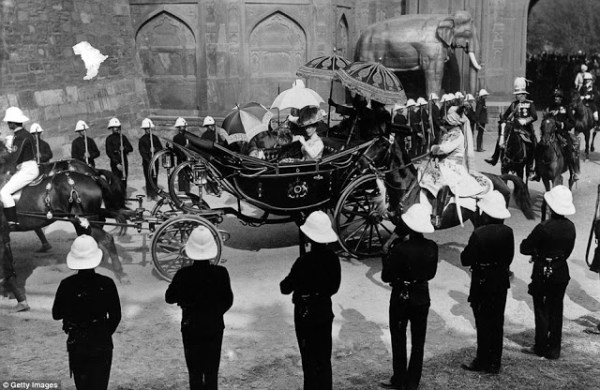
At the recent Durbar at Delhi, when King George and Queen Mary amid scenes of unparalleled magnificence had received the homage of all India and taken their departure over the arena and, prostrating themselves before the empty thrones, offered ‘Puja’ or worship- as a mark of their extreme veneration. After which they carried away to their homes handfuls of dust from the place where their Majesties had stood. The same occurred after the gorgeous pageant in Calcutta.


There is a striking parallel in Wisdom of Solomon (xiv.v.20, “And so the multitude, allured by the grace of the work, took him now for a god, which a little before was but honoured as a man.”


STORY OF GAZI MIYAN

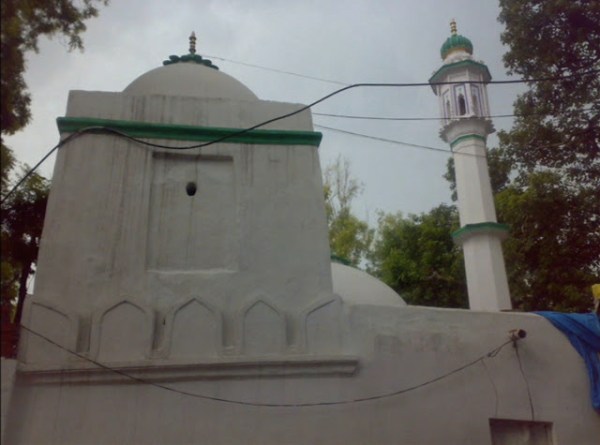
The Transition from the worship of kings to that of military heroes and warriors is easy. An example will be given in this chapter of a Muhammadan warrior, GHAAZI MIYAAN, who with the wonderful catholicity of Hinduism, is probably more reverenced today by the Hindus than by the Muhammadans.

The extraordinary catholicity of Hinduism was never better illustrated than in the case of Ghazi Miyan, or  Sayyid Salaar Masaud to give him his real name. Muhammadan though he was, nephew of the ruthless Muslim conqueror, the Sultan Mahmud of Ghazni, whose career is written in blood on the pages of Indian History.


Ghazi Miyan was born in A D  1015 ad led one of the early invasions into Oudh and was slain in battle with the Hindus at Bahraich in AD 1034. Close to the battlefield where he met his death is a tank with the image of the Sun God on a stone slab on its banks. Masaud, whenever he passed it, was wont to say that he wished to have this spot for a dwelling place and would, if it so pleased god, through the spiritual sun, destroy the worship of the material. He was therefore buried by his followers in this chosen resting place, and tradition avers that his head rests on the image of the sun he had given his life to destroy.


Some believe that the worship of Masaud merely succeeded some primitive local worship such as that of the sun, and it is significant that the great ceremony in  honour of the martyr is called byah, or marriage of the saint, which may also be a continuation of the ancient marriage of earth and the Sun celebrated to promote fertility of crops. Every year a Mela/festival is held in Bahraich for which pilgrims from far off places come by walk. After the marriage was held, water brought by the pilgrims in pots are poured and this water, people believed, had miraculous properties.


Statue of Queen Victoria

Nikkal Sen

A still more remarkable case occurred in the Panjaab where a nobody of Fakirs became Nikkal Sen worshippers. General Nicholson, the mutiny hero, who met his death at the assault of Delhi, was a horseman of unexampled bravery.. He frequently made night journeys of wonderful speed and confronted his enemies by suddenly appearing before them.  His followers, the hardy Northern Tribesmen, from adoration rose to worship of their hero. Nicholson was much annoyed, and tried to stop the progress of deification by administering corporal punishment, but it made them persist in their “puja” with even greater determination, as the chastisement was regarded as an additional proof of this divinity. On hearing of Nicholson’s death, the head of the committed suicide.


Coming the Brahmins, Manu affirms that a Brahmin is a mighty god, a supreme divinity, whether he be learned, or even employed in inferior occupations (Manu 9-317, 319)

From the birth alone a Brahmin is regarded as a divinity even by the gods (Manu 11-84) Especially are religious teachers, Gurus, objects of worship among Hindus.


My comments

Ghazi Miyan story is a hotchpotch of several earlier ancient customs. Even in my home town Madurai in Tamil Nadu, Lord Vishnu visits a Muslim woman’s ‘house’ every year during Chitra Festival. Islam came very recently when compared with the history of Hinduism. Various things get mixed up and people slowly concoct a story.


Regarding the Saints and Miracles, Europe is full of such Catholic saints and  places of worship such as Lourdes in France and Lady Fatima in Portugal. They make big Money by selling lot of mementoes and sacred objects, holy water etc. Joan of Arc, who was burnt alive at the stake, was made into a saint later. There over 800 saints in the catholic religion. In countries like Ireland all the old beliefs are attributed to later Christian saints. In Communist countries Mao, Stalin, Lenin, Marx, Engles were also elevated to venerable status. Big statues, eternal flames, thousands of stamps celebrate their memory. So hero worship is there in every country. You may call them saints, political thinkers or leaders. Buddha who fought against all the rituals, has the highest number of statues all over the world!!! Is it not strange? Not many people follow his teachings but the statues decorate many tables and temples!


–SUBHAM–


Tiger and Bear Story told by Sita in Ramayana (Post No.4277)

Written by London Swaminathan


Date: 6 October 2017


Time uploaded in London- 21-49


Post No. 4277

Pictures shown here are taken from various sources such as Facebook friends, Books, Google and newspapers; thanks.


Sita, Rama’s wife, was full of mercy. When the Rakshasis (demonesses) were tormenting Sita, she was very much distressed. Sita thought of killing herself. At that time, Trijata, only demoness who was supporting Sita, told her a dream with a positive message. She interpreted the dream all too favourably and said,

“Everything is going to turn out well for Sita. Lanka is going to be destroyed. Ravana is going to perish.  You Rakshasis, are going to suffer. So I advise you, Rakshasis, to fall down at the feet of Sita now itself and ask for pardon, so that she may save you”.


The words of Trijata consoled her. and she had begun to feel that all would end well. So, she tells the Rakshais, “Without your begging me, before you ever fall at my feet, I will give you the pardon. If ever what Trijata says happens, then be sure I will protect you all”. The occasion came when she was to protect them.


After Ravana’s death Hanuman said to Sita, “ Give me orders now. I will torment your tormentors. I will bite them. I will tear them with my nails; I will crush them with me feet”.


But Sita humbled and taught a lesson to Hanuman. She told him a story:-

“Let us remember women were not their own mistresses but were acting under the orders of a dreaded monarch. It is not just to be angry with them. They are not the cause of my mystery. I have no doubt brought it on myself by former misdeeds. The law of karma is inexorable. I pardon these slaves of Ravana. Now that Ravana is dead they won’t torment me hereafter. Let me remind you of a great moral taught of old by a bear.


Once upon a time a hunter pursued by a tiger, got up a big tree, which was already tenanted by a bear.

The tiger, halted in his course at the foot, looked up at and advised the bear to throw down the hunter, for he was not their common enemy? The bear refused, saying that a guest must be protected by all means, and he would not break the law of hospitality. With this higher thought the bear closed his eyes, sleeping the sleep of the just.


The tiger then turned to the fugitive, and asked him to hurl down the sleeping bear. This man did. The bear, however used to such mishaps, caught another branch and saved himself.  The tiger saw a fresh opening for his talent of persuasion.

‘Look at this human, says he to the bear, is not a miserable ingrate? Down with him’.  Quietly and in the accents of benignity, the bear enunciated the eternal code:

‘A righteous man ought not to be turned from the right by the sin of a sinner. The rule of honour is inviolable. Good men have only one jewel, their unblemished contact, and they must guard it. Come what may. Be they good men or bad, be they deserving of death, still must they be pardoned and treated with mercy by one claiming to be a cultured person. For no one is above error. So then let us give up the idea of retaliation or retribution and abstain from injury even to miscreants and persecutors of mankind’.

–Ramayana 6-116. 37/45

100 Gods in Daily worship! Brahmin Wonder!! (Post No.4273)

Written by London Swaminathan


Date: 5 October 2017


Time uploaded in London- 8-36  am


Post No. 4273

Pictures shown here are taken from various sources such as Facebook friends, Books, Google and newspapers; thanks.

It is amazing to see that Brahmins worship nearly 100 gods and saints everyday in their worship. Seven Vedic gods, seven seers (rishis), Goddess Gayatri, nine planets,  historical figures like Janamejaya, Jarat karu, Astika and their Gotra(clan) seers (rishis), Yama (god of death), four directions are included in their worship. But some are optional. They do it three times a day! (but I do only two times every day). It is a great wonder they have been doing it for over 5000 years without break. No modern religion existed at that time except Hinduism. Brahmins are like fossils who preserve the oldest rituals in the world. in the olden days, they were called Angels on Earth because of their character and selfless service. Sangam Tamil poet Kabilar, who contributed highest number of poems to Sangam corpus is praised by other poets as a Brahmin of spotless character ( Pulan Azukkatra Anthanaalan). It was sung 2000 years ago. He was a revolutionary Brahmin who opposed the three great Tamil Kings Chera, Choza and Pandya and took two daughters of a philanthropist chieftain called Pari and begged to every Kshatria to marry them. A man who did selfless service without any caste differences. At the end, he sacrificed himself in the fire like the great Ramayana Rishis (seers) and the tribal woman Sabari.

Now back to daily worship of Brahmins:–


Brahmins have been doing a daily ritual called Sandhya Vandanam. It is Sun Worship three times a day. In the morning before sunrise, in the noon and in the evening before sunset Brahmins do it. And in the olden days other two castes (Kshatriyas/warriors and Vaisyas/Businessmen) were also doing it. After wearing the sacred thread at the age of 7 or 9 or 11 respectively the males of 3 castes started doing it. It is a water ceremony. They can’t do it without water.


(This explodes the Max Muller Myth about Vedic Hindus coming from cold central Asia or Europe. This is the oldest ceremony followed by any community in the world. Had they lived in cold countries they would not have used WATER. Hindus take bath everyday where as other communities don’t do it. So Hindus are the sons of the soil- India. During 3 times Sandhya vandana they have to use water over 100 times!!!!!!!!!!!!)


In this article, I am going to show you a wonder the Brahmins do every day. As a Brahmin I do it twice a day instead of thrice a day on the banks of River Thames in London. When I counted the number of saints and Gods in the ritual I was surprised.


Though different sects of Brahmins slightly change it, the main rituals are same. They use the oldest book in the world- the Rig Veda in addition to other Vedic scriptures.


Let us count the number of Gods according to Yajur Veda (smarta) followers:


Lord Ganapathi


1-3:- First they purify themselves by taking three sips of water by reciting Achyuta, Anantha and Govinda


4-15: Then they do touch twelve parts of the body with water while reciting 12 names of Vishnu (though Govinda is repeated here I will include it):–


Keshava, Narayana, Madhava, Govinda, Vishnu, Madhusoodana, Trivikrama, Vamana,Sridhara, Hrushikesa, Padmanabha, Damodara.

  1. Then they worship Lord Ganapathi facing sun in the east.
  2. Om is also added with most of the Mantras


18-24.Here they do recite the names of seven Lokas (holy spheres)

Bhu, Bhuvaha,Suvah, Mahah, Janah, Tapah, Satyam


  1. The most powerful mantra Gayatri is recited in several places


  1. In the Sankalpa (intention to do this ritual or Vow) They do say ‘Parameswara/ Siva’ (other sects may have different God’s names)
  2. Then Apah/water is worshipped/praised

28.Then Surya/Sun or Agni /Fire mantra is recited

  1. Brahman’s name– The Supreme Being– comes in the Upanishad mantra, identifying f the self with the supreme God (brahmai vaham asmi)

30.-38 At the end of the first part water is offered to Nine celestial objects. 12 names of Vishnu are also recited, which we have already included.

SECOND PART of Sandhya Vandana

39.Brahma

40.Paramatma

41-46: Seven Seers: Atri, Bruhu, Kutsa, Vasistha, Gautama, Kasyaa, Aangiasa:

47-53: Seven meters are recited; they mean the some meters in prosody and Goddesses as well:

Gayatri, Ushnik, Anushtu, Brhati, Pankti, Trishtup, Jagatya


( I have included Gayatri in the count because it may be  considered a grammatical term here)

54- 60 Seven Vedic Gods are worshipped here

Agni, Vayu, Arka, Vageesa, Varuna, Indra, Visvedevatah

(Note Agni comes for the second time)

Then Gayatri is worshipped

61 and 62 :Visvamitra Rishi’s name and Savita’s name are recited


63 Gayatri is asked to go to her abode: Uttame Shikare (Mount Meru is mentioned ; she resides on top of a mountain like Babylonian Gods; Ziggurat= Shikara)

64.Sun God is worshipped

65.Mitra is worshipped

(Then comes Sun and Varuna; we have already counted their heads)

66-69: Four Devis in four directions and ‘All gods’ are worshipped: Sandhya, Savitri, Gayatri, Saraswathy, Sarva Devatas


70 to 75: during personal salutation we give our name, our Gotra name, names of the rishis in the Gotra (clan or group) , Sutra name ( in my case I say Vaisvamitra, Aghamarshana, Kausika,Apastamba Sutrah ; My name swaminathan etc)


76-79: Four Directions are worshipped

80, 81, 82,: Upper Region, Middle region, Sky


83 and 84- Yama and his assistant Chitragupta

85.Harihara (Krshna Pingalam)


PM NARENDRA MODI WORSHIPPING RIVER NARMADHA


86, 87, 88, 89, 90-Certain people do Narmadha vandanam where the names of River Narmada, and historical figures Janamejaya, Astika, Jaratkaru, Nga Kings Pannakebhya are worshipped

(Some people don’t do it)

91.Narayana

  1. Krishna

93.Om Tat sat


In each mantra every god has several attributes; for instance in the Yama vandana, God of death (Yama) is praised as 1)Yama, 2)Dharmaraja, 3)Mrtyu, 4)Andaka, 5)Vaivasvata, 6)Kaala/Time, 7)Sarvabhutakshayaya, 8)Audumbaraya, 9)Dadnaya (death= dadnaya), 10)Neelaya, 11)Vrkodaraya, 12)Chitraya, 13)Chitraguptaya

If we include all the names for Sun, Yama, Varuna it will exceed over 100 names.


Followers of  other Vedas such as Rig Veda, Sama Veda they have longer and additional mantras. So it is definitely over 100 Gods at one go.


Normally it will take 20 minutes to finish it even if one recites Gayatri mantra 108 times. So a Brahmin who does Tri Kala (three times a day) Sandhya vandana do one hour or less worship by reciting over names of 100 Gods and Seers/rishis!


Long Live Brahmins who do Tri Kala Sandhya Vandana. They are historical wonders!

Students of Jabalpur Veda Patasala

Please read my old articles:-

Brahmins deserve an entry in to Guinness Book of Records …

tamilandvedas.com/2012/01/26/327

Brahmins deserve an entry in to Guinness Book of … That is why I say Brahmins deserve a mention in the Book of Records. 32. … by Tamil and Vedas on January 26, …

Brahmins deserve an entry in to Guinness Book of Records -Part 5

  • tamilbrahmins.com
  • Brahmins | Tamil and Vedas
  • com/category/brahmins
  • … Asoka mentioned Brahmins first and … //tamilandvedas.com/2017/05/30/about-brahmins-buddha-and … “Brahmins deserve an entry in to Guinness Book of …

·         No Brahmins, No Tamil!! | Tamil and Vedas

tamilandvedas.com/2012/01/14/no-brahmins-no-tamil

No Brahmins, No Tamil!! … political parties in Tamil Nadu has misled the public to a great extent that they really believed Brahmins were aliens to Tamil culture.


·         No Brahmins, No Tamil!! | Swami’s Indology Blog

swamiindology.blogspot.com/2012/01/no-brahmins-no-tamil.html

No Brahmins, No Tamil!! By S Swaminathan … literature would find out that without Brahmins Tamilwould have died or at least become poorer two thousand years ago.


-SUBHAM–


Reputation Anecdotes! (Post No. 4271)

Compiled by London Swaminathan


Date: 4 October 2017


Time uploaded in London- 18-08


Post No. 4271

Pictures shown here are taken from various sources such as Facebook friends, Books, Google and newspapers; thanks.


Police Never knew me!

An Irishman was charged with a petty offence. Have you anybody here who can vouch for your charcter?, said the judge.

Yes, Your Honour, the sheriff there can.


(Sheriff= law enforcement officer)

Why, I do not even know this man, exclaimed the sheriff.

Observe, Your Honour!, said the Irishman triumphantly, that I have lived 12 years in this country and the sheriff doesn’t even know me.


xxxx


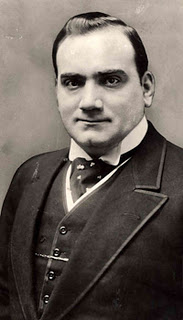
Enrico Caruso= Robinson Crusoe!

It is humbling, to all men of note to find themselves at sometime outside of the spheres in which their talent and fame are known, and to see themselves as lesser individuals.

(Enrico Caruso= famous Opera singer)

The great Enrico Caruso once stopped at a farm during a drive through the country. He obtained water and something to eat, and while he was talking in a friendly way with the farmer, the latter chanced to inquire his name. He said his name was Caruso. Instantly the farmer was transfixed.

What an honour, he said what an honour to have in my own house that great traveller, Robinson Crusoe.


xxx


Businessman of Doubtful Reputation!

One of the powerful figures in Wall Street fell in love with an actress and for many months danced constant attendance upon her and squired her about in the fashionable circles of town.

Deciding to marry her, he first prudently put a private detective to the job of looking into the antecedents in order to guard himself against any rash mistake. At last he received his agent’s report.

(Squire= nobleman acting like an attendant to someone)


Miss Blank enjoys an excellent reputation. Her past is spotless. Hr associates have been irreproachable. The only breath of scandal is that in recent months, she has been much seen in the company of a businessman of doubtful reputation.

–Subham–


179 Victims in Hindu Human Sacrifice- Last Part (Post No.4268)

Written by London Swaminathan


Date: 3 October 2017


Time uploaded in London-21-57


Post No. 4268

Pictures shown here are taken from various sources such as Facebook friends, Books, Google and newspapers; thanks.


Purushamedha Yajna-Human Sacrifice


Following is the third and last part of 179 victims as given in the  Taittiriya Brahmana; first two parts and the introduction about Sunashepa episode are given in the past three days. Please read from ‘Sunashepa Episode: Golden carpet and Silver Chariot to Brahmins’—article.


91.To the mentally wrathful, a blacksmith, or one who works at a forge


93, to him who presides over griefs,  a groom who runs before a chariot


94.To the two who preside over gains above or below, one’s expectation (Utkula and Vikula), a cripple who cannot move even with the help of a crutch


95, him who presides over expected profits, one who harnesses a horse to chariot


96, to him who protects gains, one who unharnesses a horse i


97, to the portly.bodied, the son of one who is addicted to her toilet;


98, to him who presides over politeness, one who puts collyrium on his eyes


99, to the divinity of sin, a maker of leather sheaths for swords;


100, to Yama (the destroyer of life), a barren woman.


101, To Yami, a mother of twins

102., to the goddesses woo preside over, the mantras of the Atharva Veda, a woman who had aborted;


  1. to the divinity of the first year of Jupiter’s cycle, woman who is confined long after due time


104.To that of the second year ditto, one who has not conceiveds for the second time;


105, the third year of ditto, one who is able to bring on delivery before due time;


106, to that of the fourth year ditto, one who can delay delivery

  1. to that of the fifth year ditto, one who becomes lean without delivery


108, to one who produces a misleading impression of the world, a woman who appears old in youth

  1. to the divinity of forests, a forest ranger or keeper


110.To the divinity of a side forest, one who protects forests from fire.


  1. To the divinities of the lakes, a fisherman who catches fish both in water and also from the bank

112.To those of ponds, one who catches fishes with hooks.

113.to those of bays, one who earns his livelihood with a net


114, to those female divinities, who presides over waters amidst prairies, one who earns his livelihood with fishing hooks


  1. To the divinity of the further bank, a Kaivarta, or one who hunts fish from the banks


116.to that of the near bank, a Mérgira (or one who catches fish with his hands only)


117, to the divinities of fords, one who catches fish with by putting up stakes in waters


  1. To those who preside over other than fords, one who earns his livelihood by catching fish with nets


  1. to those who preside over sounding waters, one who catches fish by poisoning them with poisoned leavesplaced in the water.


  1. To those of caverns in mountains, a Kirata (hunter)


121, To those of peaks of mountains, a Yambhaka;

122, to those mountains, a Kimpurusha.


  1. To the divinity of echoes, a news-dealer


124.To that of sounds, an incoherent speaker


125, to that of fading sounds, one who speaks much;


126.To that of unending sound, a dumb person


127, to that of loud sound, a player on the Veena


  1. To that of musical sound, a player on the flute


129, to that of all kinds of sounds, a trumpeter than a blower of conch shells


131, to those of who preside over the of seasons, one whose profession is to collect fragments of skins


132.To those of statesmanship (or of time, place and opportunities, for peace negotiations, a preparer of musical instruments with leather.

  1. To the goddess presiding over abhorrence, a (man of the) Paulkasa (caste)


134, to the goddess of affluence, one who is always careful or wakeful,


135, to that of indigence, a careless or sleepy person


  1. To that of scales (or weighing instruments), a purchaser


137.To the god presiding over the radiance of jewels, a goldsmith


  1. to the Visvedevus, a leper


139.To the  divinity of diseases other than leprosy, a naturally lean person


140.To the goddess of motion, a scadal monger


141, to that of prosperity one who is not impudent


142, to the god of decay, one who splits wood

143, To the divinity of mirth, a loose woman


144.To that of song, a player on the Vina or a songster

should be sacrificed


145.To that of aquatic animals a Sabbulya (one whose body is brindled, or has two colours, a piebald woman


  1. To that of congratulatory words, a woman of perfect form


147.To that of dancing, one who plays on flutes, one who leads the octave in a chorus and one who beats time with his hands.


148.To that of manifest delight, one who invites people to a dance, or one who makes a  sound to indicate the cessation of a dance.


149.to that of internal delight, on plays on the talava (a musical instrument, probably the archetype of the modern table) or one who produces music from his mouth.


  1. To the divinity of gambling with dice, a proficient gambler

  1. To that of the Krita age, a keeper of a gambling hall

152, to that of the Treta age,  a marker or reckoner at a gambling table


  1. To that of the Dwapara age, one who is a spectator at a gambling table


  1. To that of the Kali age, one who does not leave a gambling hall even after the play has stopped,


155.To that of difficult enterprises, a teacher of gymnastics on the tip of a bamboo:


156, to that of roads, a brahmachari (bachelor)


157.To the Pisachas,  one who commits robberies on public highways and then hides in mountain:


158, to the goddess of thirst, one who skins cattle:


159, To that of sin, a cattle poisoner


160, To that of hunger, a cow butcher


161, To the goddess of hunger and thirst, one who lives by begging beef from a butcher


162, To the divinity of land, a cripple who moves about on a crutch


163.To that of fire, a chandala


164 to that of the sky, one whose profession is to dance on the top of a bamboo


  1. To that of the celestial region, a bald person

  1. to the presiding divinity of the sun, a green-eyed person

167, To the divinity of the moon, one who twinkles his eyes too frequently.


168.To the presiding divinity of the stars, one affected with white leprous blotches


169, to that of day, an albino with tawny eyes


170, To that of night, a black person with tawny eyes.


171.To the goddess of speech, a fat person


172, to Vayu, the five vital airs- Prana, Apana, Vyana, Udana, samana of that person

173.To Surya should be immolated his eyes


174, to Grandrma, his mind


175.To the regents of the quarters his ears;


176 his life, to Prajipati.

  1. Now to ugly divinities should be immolated very short very tall, very lean, very fat, very white, very dark, very smooth, very hairy, few toothed, numerously toothed, frequently -twinkling-eyed, and very glaring eyed persons.


178, to the goddess for unattainable (and) objects of hope a woman who has passed the age of conception


179.And to the goddess of hope for unattainable (and) objects, a virgin. -Taittiriya-Brahmana


On the above Apastamba remarks “The is a penta- diurnal; a Brahman or a Kshatriya should celebrate it. He thereby acquires strength and vigour; be enjoys all fruition.

My comments:


The list should not be taken literally; as usual the seers speak in mysterious language. Human sacrifice did not happen at any time in Hindu History whereas the aboriginal tribes had practised them till recently.


The list shows that we are talking about a highly skilled and highly organised, high thinking people. They are not nomads or pastoral. The references to doctor, astronomer, musicians, musical instruments, chariots, speech (Vak) etc show that they were city dwellers.


The words and gods they use to describe certain qualities or virtues, show that they were far superior in thinking to Sumerians, Egyptians, Chinese and Mayans even if we take the period of Brahmanas is around 1000 BCE.


But 50 foreign “scholars” who scrutinised Vedas word by word, sentence by sentence never did it for any other religious book. They did it to justify whatever said in those book but not to oppose it. This shows their true colours and motive.


Those “scholars” (in fact idiots or cunning rascals) never agreed even on a single mantra of the 10,000 Rig Vedic mantras. Leave alone the huge Brahmana literature, which came before the unhistorical Moses, Greek Homer and others. Latin and Tamil did not exist at that time.


Foreigners fooled Indians by placing the Vedas in 1200 BCE and Brahmanas in 1000 BCE. A big difference in or a big jump in knowledge or rituals or approach or thinking process. This is impossible to achieve for “pastoral nomads”. Brahmana literature is encyclopaedic. They talk in decimal numbers and they have big mathematical calculations for erecting Fire Altars. They went to Egypt and helped them in erecting pyramids (For proof, please read my article Did Indians build Egyptian Pyramids?)


In short whatever the foreigners said about Vedas or the Vedic Hindus or their age, shouldn’t be believed.


Hindus should convene scholarly conferences and take mantra by mantra and write down all available Hindu interpretations. Even before Sayana we have several interpretations. More over the lost (huge) Vedic literature must be taken into accounts; the fragments are still available in other literature.


Even for this list I have depended only on foreign translations; one would never know whether they have corrupted the texts or translations to suit their needs!


Please read all the connected articles for my views on the subject. They have been posted in the past one week.


Source book: The Vedas and Brahmanas, J Murdoch,Caxton Publications, Published 100 years ago.


–Subham–


.

179 ‘VICTIMS’ IN HINDU HUMAN SACRIFICE!- Part 1 (Post No.4262)

Written by London Swaminathan


Date: 1 October 2017


Time uploaded in London- 15-33 pm


Post No. 4262

Pictures shown here are taken from various sources such as Facebook friends, Books, Google and newspapers; thanks.


Please read my articles posted in the past few days on the same topic if you need more background information about Purushamedha and Sunaschepa anecdote


Pursuhamedha Yajnam, Human Sacrifice, never happened in Hindu India. Sunschepa episode in Aitareya Brahmana showed that Hindus never tolerated such barbaric acts. There were always revolutionary leaders like he great Viswamitra to revolt against such acts. Even in the Vedic literature King Harichandra only tried it and failed miserably. We have a long list of kings before Harichndra and longer list of kings after him. No such custom or actual incident is reported.

But the most interesting thing is there is a big chapter detailing this fire sacrifice. This shows that all the yajnas were symbolic and they mean actually different things. The seers themselves repeat the phrase, ‘Gods love the mystic or mysterious”. So they show that all the 179 jobs are necessary to run life successfully. The victims list makes very interesting reading. There is eve astronomer. And the first person thrown into the fire was a Brahmin!


This clearly shows that the message is not burning the people, but making them part of the functional society. Without them the society is not complete. Foreigners who wanted to show Hinduism in bad light tried their best to use this sacrifice, but in vain.


Satapata Brahmna (of Yajur Veda) and the Aitareya Brahmana (of the rig Veda) give a detailed description of the rite.


If you read the full list you would yourself know that it is symbolic.

Here is the list of 179 victims and to which god they were ‘’sacrificed’’ from the Taittiriya Brahmna:–


1.To the divinity of Brahman caste a Brahmin should be sacrificed (‘alabhate)

After this only the God and the victim are mentioned without the verb ‘sacrificed’


  1. To the divinity of Kshatriya caste a kshatriya (king or warrior)


3.To the Maruts, a Vaisya (business man)

  1. To the Tapas (presiding deity of penance), a Shudra
  2. To the Tamas (divinity of darkness) a thief
  3. To naraka (hell), a Virahana, one who blows out sacrificial fire.
  4. To Papman (divinity of sin), a hermaphrodite (a eunuch.
  5. To Akrayi ( divinity of commerce), an Ayogu (one who acts against the ordinances of Satras

9.To Kama (divinity of Love, a courtesan).

  1. To Atikrushtha, a Magadha (the son of a Vaisya by a Kshatria woman)

(Mixed marriages were encouraged!!)

  1. To Gita (divinity of Music), a Suta or a musician.

(Vedic society had great number of music lovers and singers. They were a happy group who enjoyed dance and music)

  1. To Nritta (Divinity of Dancing),one who lends his wife to another ( a cuckold)

13.To Dharma (righteous behaviour), one who frequents assemblies and preaches preaches morality.

  1. To Narma, the Divinity of Humour), a wit


15.To Narishta, a coward.

  1. To Hasa ( the divinity of Laughter), a person of ambling gait.


(So it is not a nomadic, pastoral, uncivilised community; Foreigners contradict themselves)


  1. To Ananda (the divinity of delight), a favourite of  women
  2. To Pramada (the divinity of Joy, the son of an unmarried woman


  1. To Medha, (the Goddess of Intelligence), a coach builder
  2. To Dhairya (the divinity of Patience), a carpenter.

21To Srama (divinity of labour), the son of a  potter

22.To Maya (divinity who delights in Art), a blacksmith

23.To Rupa (the divinity of beauty), a jeweller

24.To the divinity of Prosperity, an agriculturist

25.To Saravyi (divinity of arrows), an arrow-maker

26.To Heti (Goddess of arms), a bow-maker

27.To Karma (divinity of art-work), a bow string maker

28.To Dishta, a maker of ropes

29.To Mrtyu (the divinity of death), a hunter

30.To Antaka (the divinity of murder), aperson delighting in hunting with dogs


31.To Sandha (Divinity of assignation), a person given to adultery

32.To Geha (the divinity of homesteads), one who live in concubinage

33.To Nirriti (the goddess of mis fortune), one who has married before his elder brother

34.To Atri (the goddess of pain), one who wishes to marry before his elder brother

35.To Aradhi (divinity who causes obstruction to enterprise), , one who has married a widow


36.To Pavitra (divinity of purity), a Doctor/physician

37.To Prajnana (divinity of Time), an Astronomer

38.To Niskriti (goddess of success), the wife of a goldsmith

39.To Bala (Divinity of strength), a girl who is forcibly taken and kept as a concubine for food and raiment, but no pay

40.To Vrana (the Divinity of colours), one who works for the sake of another, not for himself.


My comments:–


Max Mullers and Caldwells and Marxists looked like Pukka Idiots before this list. They described this list silly, ridiculous, childish, and from nomads, pastoral, migrants.

But all these items show they were high ranking thinkers, they have doctors, astronomers, engineers and agriculturists in the list. They knew if they publish this list which belongs to 1000 BCE or before they will become the laughing stock. So they did not make the list very popular. Anyone who reads between the lines will know how thoughtful they were about the society, the works and the professionals. There is even a person “one who works for the sake of another, not for himself”, may be a social worker!


to be continued…………..