Vedic Ribhu is Greek Orpheus: Nicholas Kazanas (Post No.3720)

Compiled by London swaminathan


Date: 13 March 2017


Time uploaded in London:- 20-43


Post No. 3720


Pictures are taken from various sources; thanks.


contact; swami_48@yahoo.com


“Rbhu is a Vedic God. Rbhu means Intelligent fashioner. Scholars generally agree that this word is cognate with English/Germanic elf (Elfe, Alp etc.), old Slavic Rahb (servant) and the name of the Greek poet- musician- hero Orpheus.


In the Rig Veda (1-20, 110; 3-60; 7-48 etc) the Rbhus are three brothers, sons of Sudhanvan who perform several miraculous deeds “through the power of mind”.


For instance, Rig Veda 4-2 says ‘ratham ye cakruh suvrtam sucetaso avibvarantam manasas pari dhyaya’ The wise ones who fashioned the fine-rolling, impeccable car by visionary power ’dhi’ – out of mind/manas – But three are often indicated by the singular Rbhu as one. Thus, in the RV, the name appears both in the singular and in the plural. The three brothers, though mortal, thanks to their great mental power gain the favour of the gods and stay in the mansion of the Sun god where they serve as priests and there become immortal gods themselves.


The Slavic servant can be put aside as of no significance other than the cognation rbhu=rabh. The Germanic elves are in the plural, a whole tribe of them. They are of two kinds: the dark ones live underground and  often identified with the Dwarfs who often are greedy and who are craftsmen dealing with metals, precious stones and ether minerals; the fair ones live in the light in Alfheim, are associated with the sun and can heal. Thus it is not difficult to see the connection with the Rigvedic Rbhus.


Greek Orpheus was a figure of veneration from very ancient times and a multitude of legends were woven around him. He too was a clever craftsman with music and became a devotee (and in later legend a priest) of the Sun god. Only instead of gaining immortal godhood he was torn apart by the Maenads; his head was thrown into the river Hebros, floated still singing into the sea and finally was washed ashore on Lesbos where a shrine was established giving out oracular prophecies. A different strand has him killed by the lighting of Zeus.


Here again countless generations of ancient and modern scholars tried to trace his antecedents. Some said Orpheus was a historical figure who performed miraculous deeds and founded a religion — Orphism”. Others said he was the son of the Sun god or even the very incarnation of Apollo. Some said his origin was to be found with the Thracians or the shamans in the Hyperborean regions (and farthest Siberia); others claimed that he came from Anatolia and still others argued that he was a native Greek and and/or son of Oiagros.


But, of course, Orpheus is a PIE (-Prtco-Indo-European) as the evidence shows and some IEans brought a memory of him with them when they came and settled into Greece, in the 3rd or the 2nd millennium BC. Although this fact is now well known among IE scholars, classicists continue to speculate and argue in their accustomed vein.

Reincarnation Theory


Closely connected with the Orphics are the Pythagoreans. Both held the idea of reincarnation, albeit clearly, in their early but only in their later traditions.


Now, since the very early Greekliterature of Homer, Hesiod and other poets until Pindar and Empedocles (early 5th century BCE), shows no definite knowledge of this doctrine, hellenists tend to accept what Herodotus says in the Second Book of his Histories (2-123), namely that Pythagoreans brought it into Greece from Egypt. In fact several scholars have the Greeks importing many ideas into Greece from the Near East (e.g. Pengalese 1994; West 1971, 1994).


We can say with certitude that Herodotus is often totally unreliable and this is one such instance. The Egyptians had no doctrine of reincarnation; they mummified the corpses of noblemen and held that their souls rose into heaven joining Ra or Osiris in his sky boat. In fact no, Near -eastern culture had reincarnation at this period.


It would be far more reasonable to accept that Greece brought the idea of metempsuchosis (reincarnation) or palingenesia (rebirth) together with the Erinus (Vedic Goddess Saranyu) legend, the memory of Orpheus and many other elements from the PIE culture, rather than assume that these were borrowed from near-eastern cultures that did not have them anyway.”


Source: Vedic and Indo-European Studies, Nicholas Kazanas, Aditya Prakashan, New Delhi, 2015


–Subham–


Story: The Brahmin who ate Too Much! (Post No.3714)

Written by London swaminathan


Date: 11 March 2017


Time uploaded in London:- 10-17 am


Post No. 3714


Pictures are taken from various sources; thanks.


contact; swami_48@yahoo.com


I am trying to document all the old stories I have heard or read in the past. This is about the gluttonous Brahmins. People may wonder why they single out Brahmins in such stories. Of course, there are stories about every caste in India.


Feeding Brahmins (Brahmana Bhojanam) was considered a great meritorious (Punya) act; this is because the Neeti Shastras (Law Books) stipulated that the Brahmins should not accumulate any wealth and they should always go begging for alms by reciting the Vedas. So, kings have donated lot of lands to Brahmins so that they survive easily at times of natural catastrophes such as famine, drought, floods. Moreover, Brahmins themselves organised lot of Yagas and Yajnas (Fire Ceremonies) and other Pujas (ritual offerings to Gods) where feeding the Brahmins was done. This gave birth to a type of Brahmins who were gluttons. They can consume enormous quantity of food like a cart puller or a manual labourer.


One day there was a big festival in a village. Hundreds of Brahmins had a great feast on that day. Having done justice to their calling, Brahmins were returning to their respective villages in the afternoon. It happened so that two Brahmin priests travelling in opposite directions, crossed each other at a junction. Thy exchanged some pleasantries and then one of them had a big doubt!

“Oh my god, did I forget my shoes? I don’t feel anything in my feet because of heavy meals. I can’t even bend and look below because of my protruding tummy. Let me ask for some help from this man”, thought one of them. He said to the other Brahmin:

O, friend, do you see a pair of shoes on my feet?

Unfortunately, that Brahmin who had enjoyed a good feeding, was unable to look down at the foot of the Brahmin. He looked here and there and told him:

“What do you think about me? Am I a fool to leave some space in my tummy so that I can bend? Had I got that much space to allow me to bend, I would have consumed two more Vadas!”

(Vadai is a fried doughnut like snack)

He , then, made big burp and went his way!

Such was the helpless condition of the overeating Brahmins!


There is a saying about Brahmins: ‘Brahmana Bojana Priya’ (Brahmins are fond of food)


People use to tease Brahmins by saying, “Oh, that man! he would not know how much to eat in a feast. He always ties around his stomach a piece of thread, and eats until the thread bursts with the distension of the stomach!”

Long live Brahmins!

–Subham–

Word Research shows Sanskrit is the Oldest Language! (Post No.3709)

Compiled by London swaminathan


Date: 10 March 2017


Time uploaded in London:- 21-15


Post No. 3709


Pictures are taken from various sources; thanks.


contact; swami_48@yahoo.com


I gave some excerpts from “Vedic and Indo-European Studies” written by Nicholas Kazanas, (Aditya Prakashan, New Delhi, year 2015) yesterday.


Here are some more issues raised by him. I found his research into 400 words in Indo European languages very interesting. Here is what he says in his summary:


The second study is about, “Coherence and Preservation in Sanskrit” (published in Kumar 2009, 108 184, but revised since). Herein are examined more than 400 IE lexical items (nouns, verbs etc) occurring in the IE branches and denoting fairly common and as far as possible invariable things, qualities and activities like arm and foot, anger and love, father and mother, bowl and barley/grain, to breathe and to fly and so on. This study shows that Sanskrit lacks 53, some of which may well have not been PIE, Germanic lacks 145, Greek 149, Baltic 185 in 207, Celtic 210 and Slavic 215. Thus Sanskrit preserves a much larger stock whereas Greek, with its early and voluminous literature does not surpass Germanic, and Latin, with an almost equally early and rich literature, lags behind Germanic and Baltic. Another and perhaps more important aspect is that while many words appear in Germanic, Greek, Latin etc, only as isolated lexemes without a family of cognates (e.g. daughter’), in Sanskrit many such words have root- nouns, adjectives and verbal forms. Sanskrit has organic coherence. Both facts indicate that Sanskrit is by far the most archaic branch and most faithful to PIE.

PIE= Proto Indo-European

I E = Indo European

xxx


Rig Vedic Poetry is better than Greek Poetry

The third study, “Rigvedic All-comprehensiveness reinforces the conclusion that Sanskrit is the most archaic of the IE branches and closest to PIE. In the second chapter are examined the lexical items. Here, in the third, are examined grammatical and poetical aspects and in every case the Vedic language and poetry are seen to contain everything found in one or two of the other branches. For instance, the Periphrastic Perfect is found in Hittite but not in ancient Greek or Latin (in both it appears as a later innovation), is also present in Vedic. The Greek poetry has strict metre but little or no alliteration where as Germanic poetry has as one of its basic elements alliteration but not strict metre: both of these are present in the poetry of Rig Veda.


xxx

Vedic and Avestan

The fourth study, ‘Vedic and Avesta’ is very technical and shows that contrary to mainstream belief, Vedic is far older than Avestan. It shows also that it is the Iranians who moved out of the wider Saptasindhu to Bactria/Gandhara, then to South East Iran and North westward.

xxx


  1. As the title Vedic and Indo-European Studies indicates, the volume consists of dealing with common in both areas so that one may illuminate the other. Following facts rather than conjectures and reasoning rather than repetition, I arrive at unorthodox conclusions that diverge from mainstream (usually mechanical) thinking.


The most significant conclusion is that the Rig Veda furnishes facts that militate against many prevalent notions in many disciplines and studies in academia like the beginning of language or religion. Another conclusion concerns the origins of the Indo Aryan or Vedic people and the obnoxious Aryan Invasion/Immigration Theory. The AIT (-Aryan Invasion Immigration Theory) is a major impediment in mainstream IE (Indo European) scholarship but it is not the only one. In fact this is an external structure established by other, internal or psychological tendencies like inattention, love of ease, mechanicalness, arrogance, obstinacy, ambition, greed etc, all sprouting from an unchecked ego; all these can be encapsulated in the triad arrogance, greed, ignorance (more in the sense of ignoring than not knowing). And it is these that often motivate us rather than love and promotion of truth, the primary purpose of all scholarship (And if your mind, dear reader, rejects all this as claptrap unrelated to scholarship, then it is in the thralls of the triad.)


xxxx

Research on Vedic God Rhbu


Let us now go to Greece holding in mind the adjective name rbhu ‘intelligent fashioner. Scholars generally agree that this word is cognate with English Germanic ‘elf’ ( Elf, Alp etc), Old Slavic rabh ‘servant’ and the name of the Greek poet-musician-hero Orpheus.


In the Rig Veda ( 1.20, 110; 3.60, 7.48 etc) the Rbhus are three brothers, sons Sudhanvan, who perform several miraculous deeds through the power of mind’. For instance, RV 4- 2 says “ratham ye cakruh suvrtam sucetaso a-vibvarantam manasas pari dhyaya.

The wise-ones who fashioned the fine-rolling, impeccable car by visionary power ‘dhi’- out of mind/ manas. But the three are often indicated as one. Thus in the RV the indicated by the singular Rbhu as one. Thus in the Rig Veda the name appears both in the singular and in the plural.  The three brothers, though mortal, thanks to their great mental power gain, the favour of the gods and stay in the mansion of the Sun god where they serve as priests and become immortal gods themselves.


–Subham–


First Homosexual King in History! (Post No.3692)

Written by London swaminathan


Date: 5 March 2017


Time uploaded in London:- 5-29 am


Post No. 3692


Pictures are taken from various sources; thanks.


contact; swami_48@yahoo.com


Pepy II ruled ancient Egypt between 2278 and2184 BCE. This means he had ruled for 94 years! He was the longest reigning king in the world history. He was famous (or notorious) for two or three other things.


He was the first homosexual king in the world! Pepy married many women, but he lived longer than those queens. He died at the age of 100. He became king when he was six years old. This is possible because he would have been supported by his uncles or mother. He was famous for capturing pygmies from central Africa and made them dance for him. They were known as Dancing Dwarves.

The other thing that made him known was his homosexuality. According to a story circulating during the Middle Kingdom he pursued a homosexual affair with one of his generals, Sasenet. The king was said to have been observed creeping surreptitiously out of his palace at night and climbing over the wall of the general’s house and returning in the dawn.


Pepy II belonged to the Sixth Dynasty of Old Kingdom. He was buried in a Pyramid at Saqqara. He followed his brother Merenre at the age of six with the support of his uncle vizier and Harkhuf. During Pepy’s rule the country became prosperous. He invaded Nubia and Sinai to get gold and precious gem stones.


No tax to Temple lands!

Like the Hindu Kings of India he donated lands to temples and nobles. He exempted those lands from tax. Though he ruled peacefully because of these handouts, his policy created problems for later kings. The central authority was weakened and there was instability.


Source: Who is Who in Ancient Egypt by Michael Rice


Father in Sanskrit and Tamil Literature (Post No 3690)

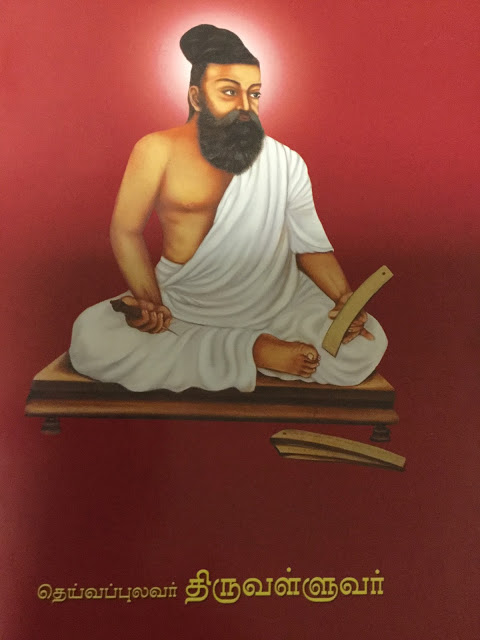
Picture of Tiruvalluvar


Written by London swaminathan


Date: 4 March 2017


Time uploaded in London:- 15-20


Post No. 3690


Pictures are taken from various sources; thanks.


contact; swami_48@yahoo.com


In the Atharva Veda (3-30):-

“The union of hearts and minds

and freedom from hate I will bring you

Love one another as the cow

loves the calf that she has borne.


Let son be loyal to father

and of one mind with his mother;

let wife speak to husband words

that are honey-sweet and gentle.


Let not a brother hate a brother,

nor a sister hate a sister

unanimous, united in aims

speak you words with friendliness


I will make the prayer for that

concord among men at home

by which Devas do not separate,

nor ever hate one another”.

–Atharva Veda 3-30


Hindus consider Mother, Father and Teacher as Gods:

Mata, Pita, Guru (Teacher), Deivam

Linguists know that the English words Mother, Father, Teacher and Deity came from these Sanskrit words.

There is another interpretation for the above Sanskrit quote. Respect is given to in the following order; mother, father, teacher and god.


All the saints have praised god as Mother and Father. So they knew that no one else can excel their love and affection. I have given below some similes and verses about father in Sanskrit and Tamil literature.


Tamil Veda Tirukkural says:

What a father is expected to do his son is to make him fit to hold the foremost pace among the learned (Kural 67)

The duty of the son to the father is to make others exclaim “ what penance has he done to be blessed with such a worthy son.”


Tiruvalluvar, author of the Tamil Veda Tirukkural knew about the penance domne by the parents of Adi Shankara and Markandeya.


Picture of Agastya

In the Rig Veda

Several passages in the Rig Veda show father as a standard of affection. The Vedic seers implore the fire god to be of easy access as a father is to his son

sa nah pite’va suunave agne suupaayano bhava RV 1-1-9


Vyusitaasva protects all the castes as a father protects his own sons:apaalayat sarvavarnaan pitaa putraan ivau rasaan –Mahabharata 1-112-13;1-110-11; 3-3-5


Yudhisthira going into exile into the forest is described as abandoning his subjects like a father abandoning his sons:

pite’vaputraan apahaaya caa smaan. Mbh 3-24-9


Sometimes, paternal affection takes the shape of advice, e.g. like a father instructing his sons, Matali instructs the Pandavas and goes away:

pite’va putraan anusisya cai’naan.Mbh 3-161-25


Arjuna implores Lord Krishna to pardon his faults as a father pardons those of a son, a friend those of a friend, a lover those of his beloved:

pite’va putrasya sakhe’va sakhyh priyah priyaayaa rhasi deva sodhum.Mbh 6-33-44


as a father lifts his fallen son, so does the minister lift the fallen king Samvarana who is unable to bear his beloved Tapati’s sudden disappearance:

tam samutthaapayaam aasa .. pite’va patitam sutam.Mbh 1-162-5


Bhisma embraces Karna by one arm as a father embraces his son:

pite’va putram gaangeyah parisvajyai ‘kabaahunaa.6-117-7


Damayanti, lamenting, accuses the Himalaya of not consoling her with its voice as a father consoles his distressed daughter:

giraa naasvaasayasy adya svaam sutaam iva duhkhitaam. 3-61-52

from very childhood, Parasara, the grandson treats vasistha as his father:

janmaprabhri tasmims ca pitarii’va

vyavartata. Mbh 1-169-4; 3-24-7

Picture of Tamil Poet Tiruvalluvar


In Kalidasa:-

In the Raghu Vamsa by reason of his protecting and maintaining the subjects, he was virtually their father. Their real fathers were merely the source of their birth.

Raghuvamsa 1-24

Vasistha blesses Dilipa, “May you stand like your father, at the head of those who are blessed with worthy sons”. RV 1-91


Again, the great sage Kautsa blesses Raghu, “May you obtain a son wothy of your excellence as your father obtained yourpraiseworthy self”

Raghuvamsa 5-34


Just as King Pundarika was the father with an excellent son Devanika, who was ready to please his father, similarly, the son had an excellent father by reason of loving his son. The image suggests the perennial affection between the father and son. Raghuvamsa 18-11; 17-2


Also read my previous article:


Ruler is Father and Mother: Hindu Concept in Tamil … – Tamil and Vedas

https://tamilandvedas.com/…/ruler-is-father-and-mother-hindu-con…

Translate this page

11 Feb 2017 – Hindus considered the Rulers as their father and mother. Generally, Guru and God are praised as father and mother by the Hindus in their …


–Subham–

 

31 Beautiful Quotations from the Panchatantra! (Post No.3675)

March 2017 GOOD THOUGHTS Calendar


Compiled by London swaminathan


Date: 27 FEBRUARY 2017


Time uploaded in London:- 20-33


Post No. 3675


Pictures are taken from various sources; thanks.


contact; swami_48@yahoo.com


March 11 Masi Makam; 13 Holi; 14 Karadaiyan Nonbu;  29 Telugu New Year (Yugadhi); March 8 -International Women’s Day

27– New Moon Day

12 –Full Moon Day

Auspicious Days— 9, 15, 23, 26.

March 1 Wednesday

Wealth: “Let the wealth you earn circulate (invest)

and you keep it still

Water in a full tank, lacking an outlet

spills over and go to water (Chapter 1-2)


March 2 Thursday

Wealth: “Wealth lures wealth as tame elephants the wild;

wealth cannot be earned by wishful thinking

there can be no trade without wealth (1-3)


March 3 Friday

Wealth: “The man who lets the wealth that Fortune showers on him

sit idle, finds no happiness in the world,

nor I the next. What is he then?

A confounded fool performing a watchman’s role- 1-4


March 4 Saturday

Earned by valour alone:

“No rite of consecration

no sacred ablution

do beasts of the forests perform

to crown the lion as king? (1-6)


March 5 Sunday

Poking Nose: “He who pokes his nose where it does not belong,

surely meets his end;

for that’s what happened to the monkey who meddled

with the wedge, my friend” (1-8)

March 6 Monday

Kin and kith: If a man does not hold dear the well-being

of parents, kin, dependants, and himself,

what good is his living in the world of men?

A crow too lives long eating ritual offerings (1-11)


March 7 Tuesday

Scurvy: Easily filled is a tiny stream

easily filled the cupped paws of a mouse

easily pleased a scurvy fellow;

he gives thanks for crumbs (1-14)


March 8 Wednesday

Effort and Conduct: By no man’s smile is any many raised high;

frown is any man cast down;

By no man’s up or down, a man rises or falls in life,

by the true worth of his actions and conduct 1-18


March 9 Thursday

Virtue and Vice: With greatest effort are stones carried uphill;

and with the greatest ease do they tumble down;

so too with our own self, through Virtue and Vice 1-19


March 10 Friday

Understanding: “What is left unsaid, the learned, wise, infer

The intellect sees clearly revealed

another’s true intent and purpose,

gains knowledge from expression of face and eyes

from tone of voice, gait

from gesture and deportment 1-20

March 11 Saturday

Courtier: “A courtier in the palace should act with extreme caution;

a pupil in his teacher’s house, with respect and discretion;

Those unmannerly who do not know their place

will soon meet with extinction like oil lamps

lighted at dusk in dwellings of the poor -1-25


March 12 Sunday

Women: Kings and women and slender climbing wines

cling to whatever they find close to them

such is the way of the world 1-27


March 13 Monday

Wise: “The wise do not care to serve the King

Who cannot recognise each ones individual merit

Such service is wholly barren of all fruit

Like the tillage of a salt meadow 1-31


March 14 Tuesday

He who stands in the forefront in battle

But walks behind King in the city

Waits in the palace at the Royal chamber door

He is beloved of princes 1-35

March 15 Wednesday

He who looks upon dice as Deaths messenger

And drink as Deadly Poison

Who sees other men’s wives simply as forms

He is beloved of princes 1-44


March 16 Thursday

If the master gets angry, his man bends low

Sings his praise, extols at his largesse

Hates his foes, dotes on those who he favours,

That is the sure way to win someone over

Without recourse to magical arts 1-53


March 17 Friday

Even a worthless bit of straw comes in handy

For the great ones to pick their teeth or scratch their ears

What today then of the service a person

Endowed with speech and limbs can render, O King 1-58


March 18 Saturday

A fine gem fit to grace a gold jewel,

If mounted in a cheap tin setting

Does not scream, nor refuses to gleam

It is the jeweller who is put to shame 1-63


March 19 Sunday

In a place where no difference is perceived

Between a priceless gem with eye of fire

And a fragment of pale crystal

How can a gem trade flourish there? 1-66


March 20 Monday

Shaping: A horse, a weapon, a text, a lute

A voice, a man and a woman

They perform Ill, or well

According to who master’s them 1-68


March 21 Tuesday

Birth: Silk is spun by the humble worm

gold is born of rock

the lotus from the mud

ruby from the serpent’s hood

A person of merit shines

by the light of his own rising merits

of what consequence is his birth? 1-69


March 22 Wednesday

Confiding: A man might confide some things to his wife

some to his close friends, and some to his son;

these deserve his trust; but not reveal

all matters to everyone in sight 1-73


March 23 Thursday

Relief:  true and tested friend, a faithful wife,

a loyal servant, a powerful master,

disclosing his troubles to these

a man discovers great relief 1-74


March 24 Friday

Son: Joyous in prosperity,

not cast down in adversity

steadfast in battle

rarely does a mother bear such a son

the ornament of the three worlds  1-79


March 25 Saturday

Sycophants: A blade of grass bends low, powerless,

tosses about, light, lacking inner strength

A man who lacks a sense of honour and pride,

is like a pitiful blade of grass -1-80


March 26 Sunday

King: As a man in perfect health

disdains all doctors and drugs

so, a king free of troubles

thinks little of his ministers 1-89


March 27 Monday

Lie: Even the smallest lie spoken before a king

has the gravest consequences;

the ruin of the speaker’s parent and teacher

and that of the gods as well 1-90


March 28 Tuesday

King is God: Blended of essences of all gods,

a king is formed; so sages sing

Look upon him, therefore, as a god

never speak an untruth to a king 1-91


March 29 Wednesday

Humility: A hurricane does not uproot the pliant grass

that bends low before its fury;

it snaps only proud, lordly trees;

A man might let his valour speak

only to others of equal might 1-93


March 30 Thursday

Ministers: A kingdom is held firm by ministers

who are tested and true, straight, resourceful,

accomplished and endowed with inner strength,

as a temple is well-supported by pillars

straight, strong, well polished and firmly grounded 1-95


March 31 Friday

Sweetness: Sweet as nectar is the fire’s warmth in winter;

Sweet as nectar is the sight one’s beloved;

Sweet as nectar is royal favour;

Sweet as nectar is food cooked in milk 1-97


Book used : The Pancatantra, translated by Chandra Rajan (Panchatantra was written by Vishnu Sarma before fifth century CE in Sanskrit)


–Subham–
Eagle in the Rig Veda and Egyptian Civilization (Post No.3672)

Most Imporatnt Vahana of Vishnu Temples


Research Article Written by London swaminathan


Date: 26 FEBRUARY 2017


Time uploaded in London:- 17-21


Post No. 3672


Pictures are taken from various sources; thanks.


contact; swami_48@yahoo.com


In the Rig Veda and the Egyptian literature Eagle or falcon was mentioned. Rig Veda is the oldest book in the world if we go by the dating of Herman Jacobi and BG Tilak.  Both used the astronomical data in the Veda independently and arrived at the same date, around 4500 BCE.

Picture of Eagle shaped Vedic Fire Altar


Hindus and Egyptians identified eagle or falcon with death and immortality. Both identified the bird with divinities and kingship. They praised the eagle or falcon sky-high. The beliefs were same.


In ancient Egypt, the falcon was a royal symbol, because the gaze was said to have paralyze birds as such the countenance of the Pharaoh his enemies. It was the manifestation of Sky God Horus, presumably because the bird flew so high.


Rig Vedic Reference:

Syena (eagle) is described as a strong bird in the Rig Veda (1-32-14; 1-33-2; 1-118-11; 1-163-1; 1-165-2; 2-42-2; 4-38-5 etc In the other Vedas lot of references are there.

Saghan is mentioned in Tattiriya Brahmana; it may be a vulture or an eagle.

Su-parna means well-winged and is mentioned in RV 1-164-20; 2-42-2; 4-26-4;8-100-8;10-48-3 etc

In the RV 4-26, 4-27 falcon is praised. But the full meaning is not explained in the translation. It may be the seed for later stories of Garuda and Amrita and Garuda and death and immortality.

(I am afraid there is no scholar at present to explain the significace of eagle in the Vedas. For example, there is one hymn addressed to The Falcon (4-27). No proper explanation is found in any book. Probably this is the only hymn addressed to falcon in ancient civilizations)

The Satapata Brahmana (12-2-3-7) praises eagle as Maha Suparna, i.e. Great Eagle

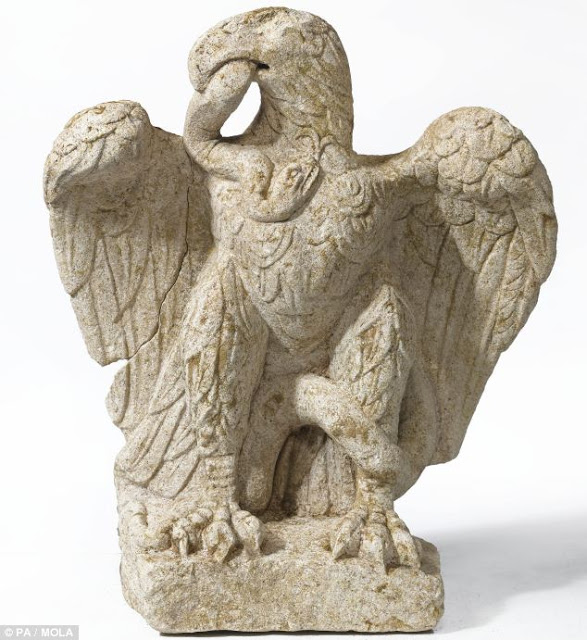
Roman eagle discovered in London Aldgate area.

In Rome

When Roman emperors were cremated ritually, an eagle was released above the funeral pyre to indicate that the soul has gone to dwell among the gods. One old Babylonian text tells us of the ascension of King Etana borne into the heavens by an eagle.


In fact, it is a Hindu belief. Hindus read the Garuda (Eagle) Purana during the 13 day mourning period after the death of a near and dear relative. Of the 18 major Puranas (Hindu Mythology), Garuda Purana is the only one that has got a special funeral liturgy called Pretakanda. Garuda (eagle) was the one who brought Amrita according to a Hindu story and so it symbolised immortality. Bird is always associated with the soul in Hindu literature.


Tamil Veda Tirukkural

Tamil Veda Tirukkural confirms it with a couplet:

The affinity of the body and the soul is like that of the nest and a bird in it. The soul departs from the body even as the chick deserts the nest – Tirukkural 338.

It is in Sangam Literature as well:

Tamil poet Kalladanar says in Akam 113:

“Oh, my friend! I won’t cry if my soul (life) leaves my body and goes to the place where my lover is working, like the bird that deserts its desolate nest and flies away”- said by a woman to her friend.


So, this is a Hindu concept of soul which is seen in many Hindu scriptures including Manu smrti and Bhagavad Gita with different similes.


Eagle is associated with Sun God in several cultures. In Palmyra in Syria, the eagle was associated with the Sun God.

Egyptian God Horus from Wikipedia

Garuda Vahana in Egypt

Horus is Sky god in Egypt recorded from 3000 BCE. Horus symbol is falcon, and he is generally depicted either wholly or in human form with a falcon’s head, exactly like Hindu’s Garuda Vahana.

Other divinities similarly portrayed were the Sun God Rue; Mentu, with adouble crown of feathers; Seker the god of the dead (as a mummified hawk); Hariese with the crown of Upper and Lower Egypt.


Horus is a form of the sun god. The alternative name Harakhti translates Horus of the horizon. He is sometimes depicted as a sun disc mounted between falcon’s wings. Kings are identified with Horus.


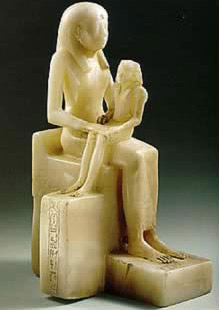
Horus as a baby on her mother Isis’ knee is as an amulet against snakes and other animals. In Hindu scriptures Garda mantra is used against snakes.

In many countries, such as Mexico, Thailand, Indonesia, India Garuda emblems are used.

The noticeable marking in the feathers under the hawk’s eyes is called Udjat-eye. This is Horus’ all seeing Udjat eye which became a symbol for visual acuity and imperviousness to injury as well as treasured amulet.


Assyrian Eagle Genie, 883 BCE (May be Garuda carrying amrita)


Christian World

Gothic windows portray the eagle carrying its unfledged young up into the sky to teach them to gaze into the sun. It figures in Norse mythology Odin. In Europe several saints have falcon as their symbol.

In Christian iconography, the eagle appears frequently as a symbol of  john the Evangelist, as an attribute of ascended phrophet Elijah and the resurrected Christ.


Quauhtli (eagle) is the 15th of the 20 days of the Aztec calendar. In ancient China it was the symbol of power and strength.


In Tamil Nadu, King Karikal Choza constructed an eagle shaped fire altar (Yaha Gunda) to perform a yaga according to Purananuru (verse 224). In Kerala even today eagle shaped fire altars are constructed for Atiratra  fire ceremony.

Eagle Vahana (Mount of God in processions) of Hindu temples


Eagle in Mahabharata similes

Bhima and Sikhandin wander about in the battlefield enraged like an eagle (6-78-28).

The Pandavas rush towards Jayadratha’s army as an eagle rushes towards meat (3-253-24)

The Pandavas and Kauravas fight like two  eagles fighting for meat (6-111-42)

I have already given the story of Garuda and Vinata as found in the epic.


Conclusion:

All ancient cultures used eagle, hawk and falcon as symbols of power and might.

But there are more similarities between Vedic and Egyptian cultures in attributing divinity to eagles.

Both identified eagle with Sun and Death and Immortality.


All other civilizations that used falcon and eagle have dies long ago and gone into museums. But the culture is still alive in Hindu India.


There are innumerable towns named after eagle and falcon; there are hundreds of temples where Eagle Vahana is use to carry Lord Vishnu’s idol.


Garuda is worshipped by villagers and sight of it is considered an auspicious sign.

Garuda Hymns and Mantra are used as anti-dotes for poison.

Rig Vedic hymns, the oldest in the world are still used!


(Please see below my previous articles on this subject)


Eagles fed at Tirukkazuku Kundram in Tamil Nadu Temple


Books used:

Rig Veda

Sangam Literature

Dictionary of Symbolism by Hans Biedermann

Encyclopaedia of Gods by Michel Jordan

Elements of Poetry in the Mahabharata


From my old article:


Hindu Eagle Mystery deepens, 16 February 2013


1.Why do Hindus worship eagle (suparna=garuda) from Rig Vedic Days till today?

2.Why do Hindus including the greatest Tamil king Karikal Choza built their Yaga Kundas (Fire altars) in eagle shape?

3.How is that two eagles come to Tirukazuku kundram just to eat rice pudding everyday for over 1300 year period?

4.Why do Hindus call Emeralds as Garuda Ratna (eagle gem), which Sindbad story writer copied it from the Hindus?

5.Why a Saivaite saint sang 1300 years ago about an eagle bringing flowers to Shiva every day?

6.Why do Tamil children shout ‘Drop me  a flower please’ when they see Garudas (falcon/eagle) in the sky? Why do Hindus recite a Sanskrit hymn when they see Garuda?

7.Why does Vishnu use Garuda as his Vahana (Mount of God)?

8.Why did Rama cremate an eagle Jatayu in Ramayana? Was it eagle totem people or real eagle? Why Tamils associate this with Vaitheeswarankoil (eagle town)?

  1. Why did Eagle people and Snake people (Garudas and Nagas) fight all over the world? We have the story here in Puranas, but symbols are in Egypt and Maya civilization?
  2. How come eagle brought Soma plant for the Yagas (Fire ceremonies of Hindus)?
  3. Why did a Greek build an eagle pillar with inscription calling himself as a great devotee of Vishnu?


Falcon symbols in Egypt

12.Tamil Encyclopedia Abithana Chintamani ( year 1899) attributes sixteen acts to Garudas. Many of them actually belong to people with eagle totem. They were against people with snake totem (Nagas). It is the ancient history of India. One must go deeper in to it to reveal the secrets.

  1. Why do women fast on Garuda Panchami day every year?
  2. Why is Garuda Purana is associated with the departed souls? It is read in the 13 day mourning period.
  3. Indus People painted eagle in (funeral ??)  potteries, Why? Has it anything to do with Hindus reading Garuda Purana after the funeral?
  4. Why is it that Amrita (ambrosia) is linked with Garuda/suparna?
  5. In the Assyrian bas-relief in Khorsabad (885 BC) Eagle headed  winged genie is carrying a vessel of lustral water and a pine cone sprinkler. It is one of the benevolent genies that protected men from diseases and evil forces. Is it Garuda with Amrita? (see the images)
  6. Why does Jaiminiya Brahmana (Vedic literature) say that eagle separates water from milk like Krauncha (swan) bird?
  7. Why does Romulus saw an eagle on the Aventine Hill and considered it as a good omen like Hindus and keep it in front of his army? Orthodox Hindus wait for Garuda Darsanam every day.

20.Why do newspapers report sighting of Garuda as a good omen during Kumbhabishekam or any religious event?

  1. Why does Krishna say that he is garuda/eagle among birds in Bhagavad Gita (10-30)(vainatheyascha pakshinam)? Western cultures also consider eagle as ‘King of Brids’.

If I write answers to all these questions it would become a big book. I am going to answer a few of these questions in this article.

(Please read the full article for more information)

…………………………..

I have already written about Vahanas, eagle shaped fire altars of Karikal Choza, Eagle Vs  Naga clans enmity in Mayan civilization, Double headed Eagle, Garuda Sthamaba of Greek Ambassador etc. Please see the titles of the articles given below:-

Double Headed Eagle: Sumerian-Indian Connection, posted on 18 December 2011

Picture of Double Headed Eagle in Turkey (Ganda Beranada Bird of Hindu literature)


Eagle/Garuda in India, Rome and Sri Lanka

25 September 2014

Karikal Choza and Eagle shaped Fire Altar

14 January 2012

A Hindu Story in Sumerian Civilization

11 May 2014

Eagle shaped fire altar at Vedic ceremony

–Subham–

ABOUT SIN: from Tamil and Sanskrit Literature! (Post No.3653)

Picture of Hell with sinners


Compiled by London swaminathan

Date: 20 FEBRUARY 2017

Time uploaded in London:- 11-05 am

Post No. 3653

Pictures are taken from various sources; thanks.

contact; swami_48@yahoo.com


A sin committed does not, like a cow, bear fruit soon; one sees it sons and grandsons, it not in oneself; a sin necessarily bears consequences like a heavy (indigestible) meal in the belly –Mahabharata 1-75-2

naa dharmas carito raajan sadyah phalati gaur iva

putresu vaa naptrsu vaa n aced aatmani pasyati

phalaty eva dhruvam paapam gurubhuktam ivo dare

-Mbh 1-75-2


Tamil Veda Tirukkural on Sin


There may be forgiveness for any sin but not for ingratitude (Tirukkural 110)


For those who harmed the cows, who did abortions, who harmed Brahmins, there is atonement; but for those who have been ungrateful, there is no atonement- Alathur Kizar in Purnanauru verse 34


Harming Brahmins is a sin: Puram34, 43


Deeds forbidden by the wise – who dare to do them? –even if they succeed, suffer grief and troubles (Tirukkural 658)


Though he sees his mother starving, let him not do those actions which are condemned by the wise (Tirukkural 656)


Never do a wrong for which you repent afterwards. Once done repeat it not (Tirukkural 655)


All profits, that make others weep, depart with tears. Even if lost, blessings flow from good deeds(Tirukkural 659)


Even in adversity, men gifted with an unfaltering vision, never do actions that are disgraceful (Tirukkural 654)


Picture 2 of Hell


Manu on Sins


Five Great Sins/ Pancha mahaapaataka


Killing of Brahmana- Brahmahatya

Consuming liquor- suraapaanam

Stealing- Steyam

Misbehaving with teacher’s wife- Gurvanga naagamah

Having association with the above – Samsargi


Brahmahatyaa suraapaanamsteyam gurvanganaagamah

Mahanti paatakaanyaahustasamsargi cha panchamah

–Manu smrti 11-54


If one mainly practises virtue [punya] and to a lesser extent vice [påpa], one obtains bliss in a heavenly realm, clothed with those very elements. 12:20.


But if one primarily practices vice and less virtue, one suffers, deserted by the elements, the torments inflicted by Yama. Having endured those torments of Yama, one again enters, free from taint, those very five elements, each in due proportion. 12:21-22.


He who has committed an offence and has repented, is freed from that offence, but he is purified only by [the resolution of] ceasing [to sin and thinking] ‘I will do so no more.’11:231.


He who, having either unintentionally or intentionally committed a reprehensible deed, desires to be freed from [the blame of it, must not commit it a second time. 11:233.


Having thus considered in his mind what results will arise from his deeds after death, one should always be good in thoughts, speech, and actions. 11:232.


The penances for transgressions [made public] have been thus declared according to the law; learn next the penances for secret [transgressions]. 11:248.


Sixteen suppressions of the breath [Prå±åyama] accompanied by [the recitation of] the Vyåhritis and of the syllable Om, purify, if they are repeated daily, after a month even the murderer of a learned priest. 11:249.


Even a drinker of [the spirituous liquor called] Sura becomes pure, if he mutters the hymn [seen] by Kutsa, ‘Removing by thy splendour our guilt, O Agni,’ &c., [that seen] by Vasishtha, ‘With their hymns the Vasishthas woke the Dawn,’ &c., the Mahitra [hymn] and [the verses called] Suddhavatis. 11:250.


Even he who has stolen gold, instantly becomes free from guilt, if he once mutters [the hymn beginning with the words] ‘The middlemost brother of this beautiful, ancient Hotri-priest’ and the Sivasaºkalpa sûkta. 11:251.


But if one fasts for three days, bathing thrice a day, and reciting [while standing in water] the Aghamarshana sûkta (Rig Veda10-190), is [likewise] freed from all offences causing loss of caste. 11:260. 5

xxxx

Picture of Punyaloka/Heaven

Sin in Bhagavad Gita


What pleasure can be ours, O Krishna, after we have slain the sons of Dhritarashtra? Only SIN will accrue to us if we kill these malignant.

Alas, what a great SIN have resolved to commit in striving to slay our own people through our greed for the pleasures of the kingdom.1-36, 45


But if thou doest not this lawful battle, then thou wilt fail thy duty and glory and will incur SIN.

Treating alike pleasure and pain,gain and loss, victory and defeat, then get ready for battle. Thus thou shall not incur SIN. 2-33, 38

But by what is a man impelled to commit sin, as if by force, even against his will, O Krishna? 3-36

The All pervading Spirit does not take on the SIN or the merit of any. Wisdom is enveloped by ignorance; thereby creatures are bewildered. 5-15

But those men of virtuous deeds in whom SIN has come to an end, freed from the delusion of dulaities, worship Me steadfast in their vows. 7-28

The gateway of this hell leading to the ruin of the soul is threefold, lust, anger and greed. Therefore, these three one should abandon 16-21


xxx

Man is never punished FOR his sins but BY his sins. To dissipate our energies through the sense organs is the vulgar hobby of the thoughtless mortal.

–Swami Chinmayananda

Sin and mercury are hard to digest- Ramakrishna Paramahamsa

xxxx


xxxx

Five Karma Candaalaah


Five lowest category of people are:

Atheist – naastikah

Wicked -pisunah

Ungrateful- krtaghnah

Sinner- dirgha dosakah

By birth- janmatah

Naastikah pisunashchaiva krtaghno diirghadosakah

Chatwaarah karmachandaalaa janmataschaapi panchamah


–Subham–


Perfume Simile in Hindu Literature (Post No.3639)

Written by London swaminathan


Date: 15 FEBRUARY 2017


Time uploaded in London:- 19-19


Post No. 3639


Pictures are taken from various sources; thanks.


contact; swami_48@yahoo.com


Many of you would have read the famous quote of Shakespeare in Macbeth:


“Here is the smell of blood still. All perfumes of Arabia will not sweeten this little hand.”


But the art of perfume making spread to various parts of the world from India. I have already written about the art of perfume making from Brhat Samhita of Varaha Mihira and Kamasutra of Vatsyayana. It is considered one of the 64 arts prescribed to all the women of ancient India. So there is no wonder we have some quotations and similes in our epics. here is one form Mahabharata:

As the perfume of flowers (in contact with them) scents clothing, water, sesame seed, or the ground, so qualities are born from contact (with the good or evil)

vastram aapas tilaan bhuumim gandho vaasayate yathaa

puspaanaam adhivaasena tathaa samsargajaa gunaah (Mbh 3-1-22)


In the olden days we mixed perfume with water, oil and used them.

In Tamil we have a proverb (Puuvoodu serntha naarum manam perum). Even the string that is used to make garlands gets the fragrance of the flowers. We use this to say that anyone who hasthe company of scholars will shine like the scholars.


There is another proverb saying that even the weaving tools in Kamban’s house will sing Ramayana!

Ramakrishna Paramahamsa says that if anyone has done good or bad that lingering smell will still be there. So one must be careful not to join the same group:-


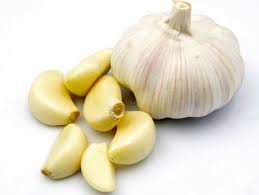
“The cup in which garlic juice is kept retains the odour, though washed several times. Egotism is such an obstinate aspect of  ignorance that it never disappears completely, however hard you may try to get rid of it.”


Once a Marwari gentle man, approached Sri Ramakrishna Paramahamsa and said, “How is it, Sir, that I do not see God although I have renounced everything?”

The Master: “Well, haven’t you seen leather jars for keeping oil? If one of them is emptied of its contents, still it retains something of the oil as well as its smell. In the same way there is still some worldliness left in you, and its odour persists.”


–Subham–


Nectar and Poison in Tamil and Sanskrit Books (Post No.3636)

Written by London swaminathan


Date: 14 FEBRUARY 2017


Time uploaded in London:- 20-55


Post No. 3636


Pictures are taken from various sources; thanks.


contact; swami_48@yahoo.com


In Sangam Tamil Literature, which is 2000-year-old, Sanskrit word Amrita (nectar) is used in at least 40 places with three different Tamil spellings (amiztham, amirtham, amutham). Tirukkural, which belongs to the post Sangam period has at least three couplets with the word Amrita. Mahabharata which is several thousand years old has got interesting slokas on nectar and poison (Amrita and Visha)


Here are few similes on Amrita and Visha from Mahabharata:


yat tad agre visam iva

parinaame amrtopamam

tat sukha saatvikam proktam

aatma buddhi prasaadajam 6-40-37


That which is initially like poison (but) like nectar in maturity, that is called the saatvika happiness, born of serenity of soul and mind.


visayendriya samyogaad

yat tad agre amrtopamam

parinaame visham iva

tat sukham rajas am amrtam 6-40-38


That which is initially like nectar owing to contact of the objects of sense and the sense and the sense organs, but like poison in maturity, that is known as Rajasam happiness.


Vyasacompared Amritam with sweetness and extreme contentment, sweet fruits (3-155-44), water (3-152-22), an interesting story (1-90-5) and a consoling word (1-147-24).


Poison is compared with anger.

The sage’s son of hot temperament is likened to poison (visakalpa rseh sutah 1-36-23)


Yudhisthira is very much pained to remember the insult to Draupadi in the assembly; this painful insult is likened to the essence of poison.

duuve visaye va rasam viditvaa (3-35-17)


That great army of Dhrtaraastra), while destroyed in three battle field, displayed violent paroxysms like a man after having drunk poison) 6-79-23)

saa vadhyamanaa samara dhaartaraastri mahaacamuuh

vegan bhhuvidhaams cakre visam piitve va maanavah


Amrita in Tamil Veda Tirukkural:-

Tiruvalluvar, author of Tirukkural, used the word nectar in three couplets:-

“The food into which the children’s little hands have been dipped will be far sweeter to the parent than nectar” (64)


“ A discourse addressed to unsympathetic hostile ears is like poring sweet nectar into a filthy gutter” (720)


“Her arms are made up of nectar, for their touch revives my life whenever it occurs” (1106)


–Subham–