29 Names of Brahma!

brahma (1)halebedu
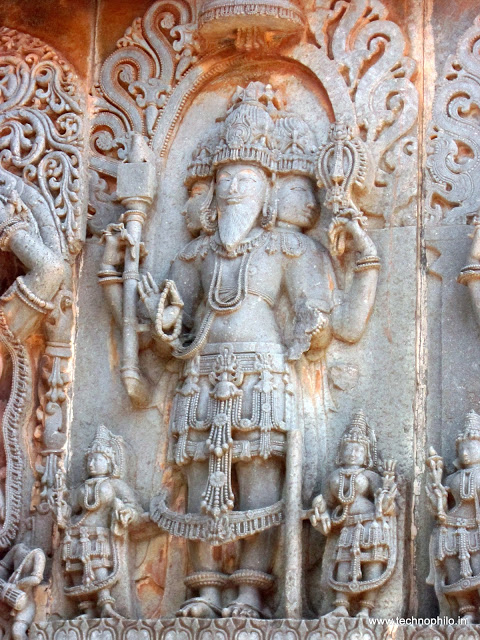
Brahma from Halbedu temple, Karnataka

Research paper written by London Swaminathan
Research article No.1423; Dated 20th November 2014.

Please read the First part of this article: Science behind Hindu God Brahma.
Hindu Vedas (Prajapati) and Brahmana (satapata) literature preserved the legend of Brahma alias Prajapati. Brahma is four faced who could see the entire universe. His four faces emit the sounds of Four Vedas.
Four faced Gods are found around the world. Svetovid/ Svatovid/Sventovit (meaning world seer, white in colour) are the names of Slavic God. Another four faced god is found in Sumer, but no one knows much about this god. All went from India and lost their identities in course of thousands of years. Statues of Brahma are found throughout South East Asia. Cambodian statues of Brahma are preserved in Guimet Museum, Paris, France.
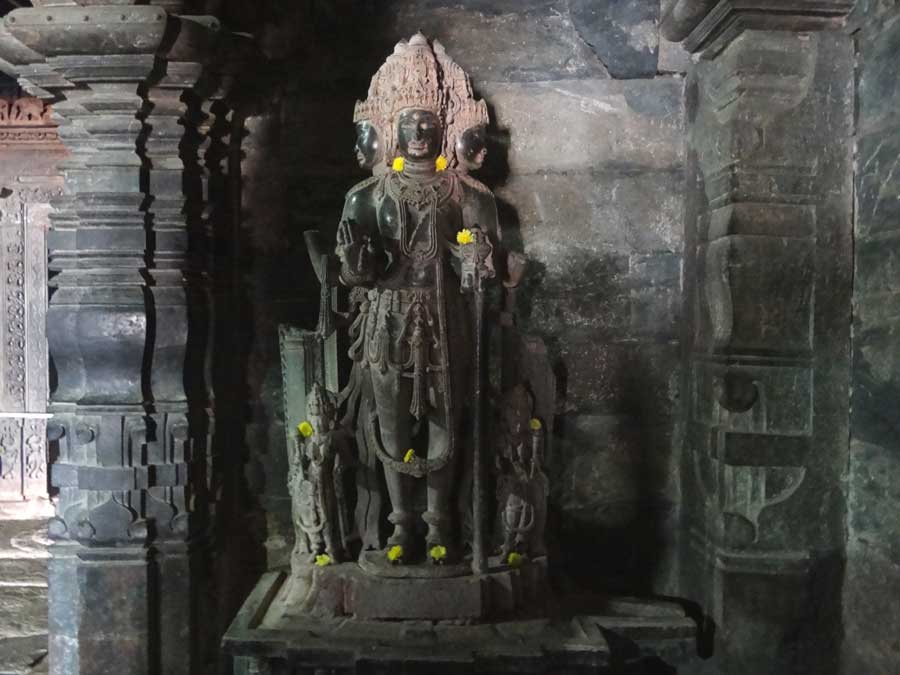
Brahma ,Lakkundi, Karnataka
Brahma in Lakkundi Temple, Northern Karnataka

Amarakosa gives the following 29 names for Brahma (I am not sure about a few words. Sanskrit Dictionary and Vsihnu sahasranama are used for some word meanings):

1.Brahma = Big, Supreme, creator; To breathe is also another meaning. We can see him as the life breath of every creature or one who crated all that breathes.
2.Atmabhu = self existent
3.Surajyeshta = elder of the Devas/Deities
4.Parameshti = Giver of supreme desire, Moksha; he who stays in the lotus of heart; also who is worshipped with Yajnas (ishti).
5.Pitamahah = Grandfather
6.Hiranyagarba = Golden Egg
7.Lokesah = Lord of the world
8.Swayambhu = self existent (originated)
9.Chaturanana = Four faced
10.Datha = exalted; leader
11.Abjayonih= Lotus born
12.Druhinah= creator of the world
13.Kamalasanah = Lotus seated
14.Shrashtah = creator of the world
15.Prajapatih = Lord of all creatures
16.Veda = Vedas come from him
17.Vidhata = Exalted in heaven (leader)
18.Viswasrush = one who hears everything
19.Vidhih = Lord of Vedas; one who is in charge of Vidhi/fate
20.Nabijanma = born from the navel (of Vishn)
21.Andajah = Egg born
22.Purvah = First
23.Nidanah =?
24.Kamalodbhava =Lotus born
25.Sadanandah = Ever ha[y
26.Rajomurti: = in charge of Rajoguna
27.Satyakah = Truthful
28.Hamsavahanah = one who has swan as vehicle
29.Virinchi = Creator

He is invoked in all religious ceremonies. He is properly worshiped in a temple in Pushkar near Ajmer in Rajasthan. His statues are found in many temples in India.
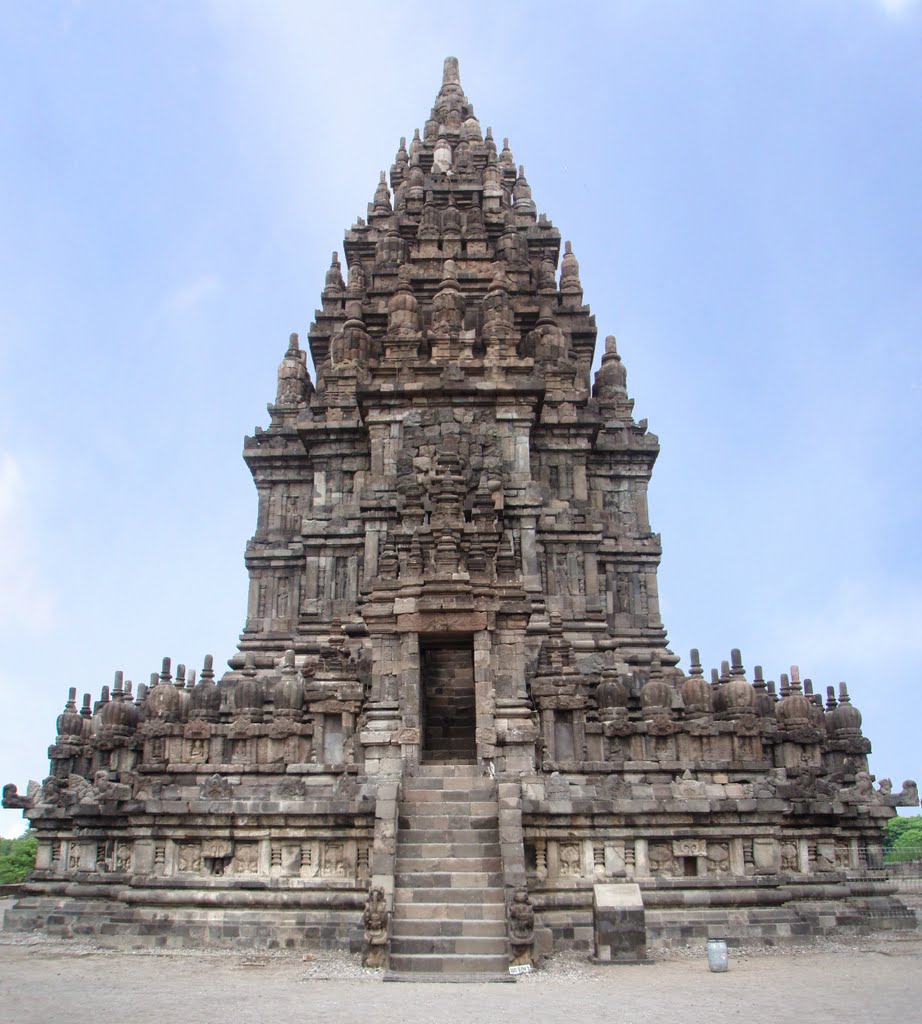
prambanan
Temple of Brahma in Prambhanan, Indonesia

Satapata Brahmana says,
He uttered Bhur, the earth appeared;
He said Bhuvar and the air appeared;
He said Suvar and the sky appeared
From these five syllables he created the seasons.
Prajapati then stood up. He was born aged a thousand years.
Just as one can see the far shore across a river, so could he contemplate the far shore across his age ( XI.1, 6, 6).

After Prajapati issued the living beings, his joints started to dislocate. His joints were the junctions of the day and night, full moon and new moon and the beginning of each season. Gods cured him by the ritual of Agnihotra, which tightened his joints. The sun would not rise if the priest did not make the offerings of fire at dawn (Satapata Brahmana II.3,1-5)

Vedic seers enjoy speaking in symbolic language. Above passage is an example.
Mandasore Stone inscription of Yasodharman (533 CE) refers to Brahma as the Creator, Preserver and Destroyer.

brahma-temple7
Brahma temple, Pushkar, Rajasthan

Sanskrit Words Brahma, Brahmana and Brahman are confusing. Brahma is the first god in the Hindu Trinity: Brahma, Vishnu, Shiva. Brahmana is the caste name in the four fold caste system: Brahmana, Kshatriya, Vaisya and Shudra. Brahman means God, the Supreme God.

Hindu God Brahma had five heads, but lost one to Shiva. He is in charge of creation. He is in Ptah of Egypt and Svetovid of Baltic countries. His wife is Sarasvati or Vach (word). His vehicle is swan. All are white in colour. Brahma is red in colour but wears a white robe. From his face came the Vedas. He is a never stopping radio station broadcasting Vedas every second. Brahma is very generous and he gave lot of boons to Asuras/ Demons. Bali and Ravana got boons from him.

Indian sculptures and paintings show him seated on a lotus that came out of the navel of Vishnu who was lying on the cosmic serpent Ananta in the primordial waters.
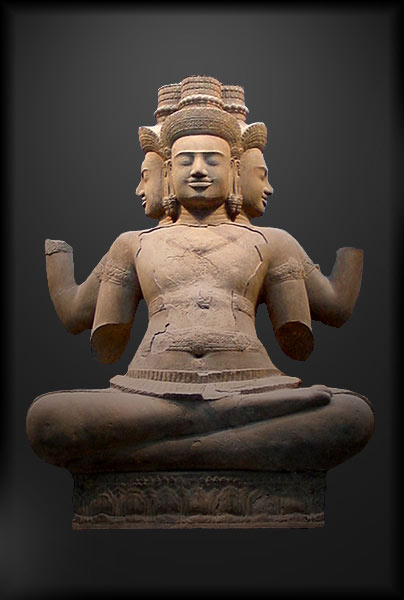
guimet-brahma-from-cambodia
Brahma at Guimet Museum, Paris; from Cambodia

In his four arms he holds a sceptre, s spoon, a string of beads or his bow, a water jug and the Vedas. His name Brahma and his story occur in the Valmiki Ramayana for the first time. In the Vedas he is known only as Prajapati. All the major temples in India have his statues. In all the hymns he is praised along with Vishnu and Sadashiva. In fact he stands first in the hymns : Brahma, Vishnu Sadhashiva. There are temples like Suchindram in Tamilnadu where all the three forms of Hindu Trinity are worshipped (sthanu+mal+ayan).

museum brahma

contact swami_48@yahoo.com

Sapta Rishis in Sumeria! Similar to Hindus! More Tamil and Sanskrit words in Sumer!

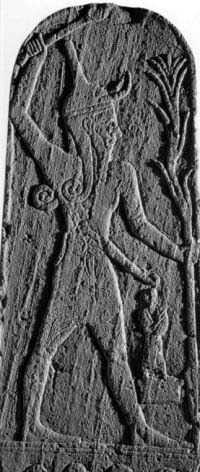
baal2

God Baal of Sumer ( Indra of Sumer)

Research paper written by London Swaminathan
Research article No.1419; Dated 18th November 2014.

Sumerians believed that the human beings came from seven men and seven women. Hindus also believe that mankind originated from Seven Sages known as Sapta Rishis who in turn came from Brahma, the Creator.

Following sentences in italics are taken from “The Dictionary of Ancient Near East”, published by The British Museum, London and I have added my comments below the italicized sentences-
(1)“Motherhood of most of the early gods is ascribed to a particular goddess who by the second millennium BCE appears under a variety of interchangeable names, some of which are titles, but who may in origin have been several different deities. In Mesopotamia these are
Aruru
Mami or Mama (My comment: Ma in Sanskrit; Amma in Tamil)
Dingi ma
Nin ma
Nintud
Ninmena
Belet iti
Namma”

In the above list, we see a lot of ‘’Ma’’ which stands for mother in Indian languages. Mama (amma), Mami are found in Tamil for women

(2)“The making of a figurine of clay which is then brought to life is another image of creation. Usually it is a goddess who pinches off and make moulds of the clay especially in connection with the creation of mankind. An additional woman acts like a mid wife”.
Such stories occur in Hindu mythology as well.

four faced Sumer
Four Face God from Sumer (Brahma in Sumer)

(3)“In the complex account of the creation of the first seven and seven women in the epic Athrahasis , the mother goddess is assisted by 14 sassuratu (literally wombs) who oversees the shaping and preparing of the clay figurines”.
Seven Rishis are considered the forefathers of mankind in Hindu mythology. In some Puranas the clay figurine story is also seen.

(4)“In the Hittite mythology the ancient Hattic mother goddess is called Hannahanna meaning grandma”.

In certain parts of Tamil speaking world, grandma is called mother’s mother or father’s mother ‘’ammammaa’’ or ‘’appamma’’ . We see the same expression in hannahanna.

‘Mot’ and forefathers

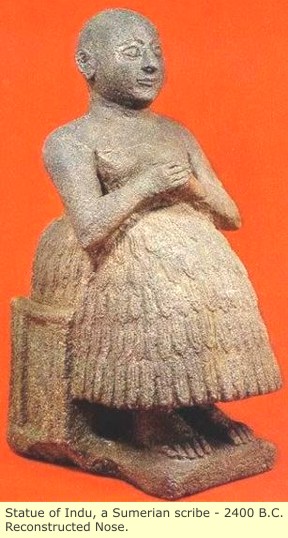
Sumer_Scribe Indu 2400 bc
Sumer Scribe Indu ( Indu is Sanskrit for Moon)

What is Mot?

(5)The Semitic word ‘mot’ means death. Phoenicians had a god called Muth who is identified with death.
In Tamil also dead people or forefathers are called “mutha athaiyar”.
In Sangam Tamil ‘’pattaan” (fatal) means dead. Mot= pat are interchangeable (M=V=P)
In Sanskrit ‘Mrit’ is to die. This root has given birth to lot of words in English such as mortal, fatal.
M=V=P/F + atal
Any word in any ancient language can be traced back to Tamil or Sanskrit. A root word will branch out either the Tamil way or the Sanskrit way. So Pattan, Fut swaha (Skt. Mantra), Fatal, Mortal, Mot (in Sumer)—all have same root.
Phoenician God Muth is nothing but Sanskrit Mrthyu.

Sumer_worshipper3
Sumer worshiper

(6) “Mot is ever hungry for living beings. With his huge jaws he devours the living and swallows Baal ‘like an olive’. Mot is cut into pieces and ground and scattered over the fields for birds to eat. This procedure brings about the rebirth of Baal”.
This type of stories about dead people coming back to earth with the rain drops and growing into plants, animals and men is found in Hindu Puranas.

Hungry Mot devouring everything can be compared to gory Yama devouring everyone. Yama, the God of death’s another name is Kala, synonym for time. Viswarupa darsanam in Bhagavad Gita, where Arjuna described Krishna, runs like this, “all are rushing in to thy fearful mouths set with terrible teeth. Some caught between the teeth are seen with their heads crushed to powder. As the many rushing torrents of rivers race towards the ocean, so do these heroes of the world of men rush into their flaming mouths” (Bhagavad Gita 11-27, 28)
In short, the description of Mot fits very well with the description of God of Death Kala/Yama in Hinduism.

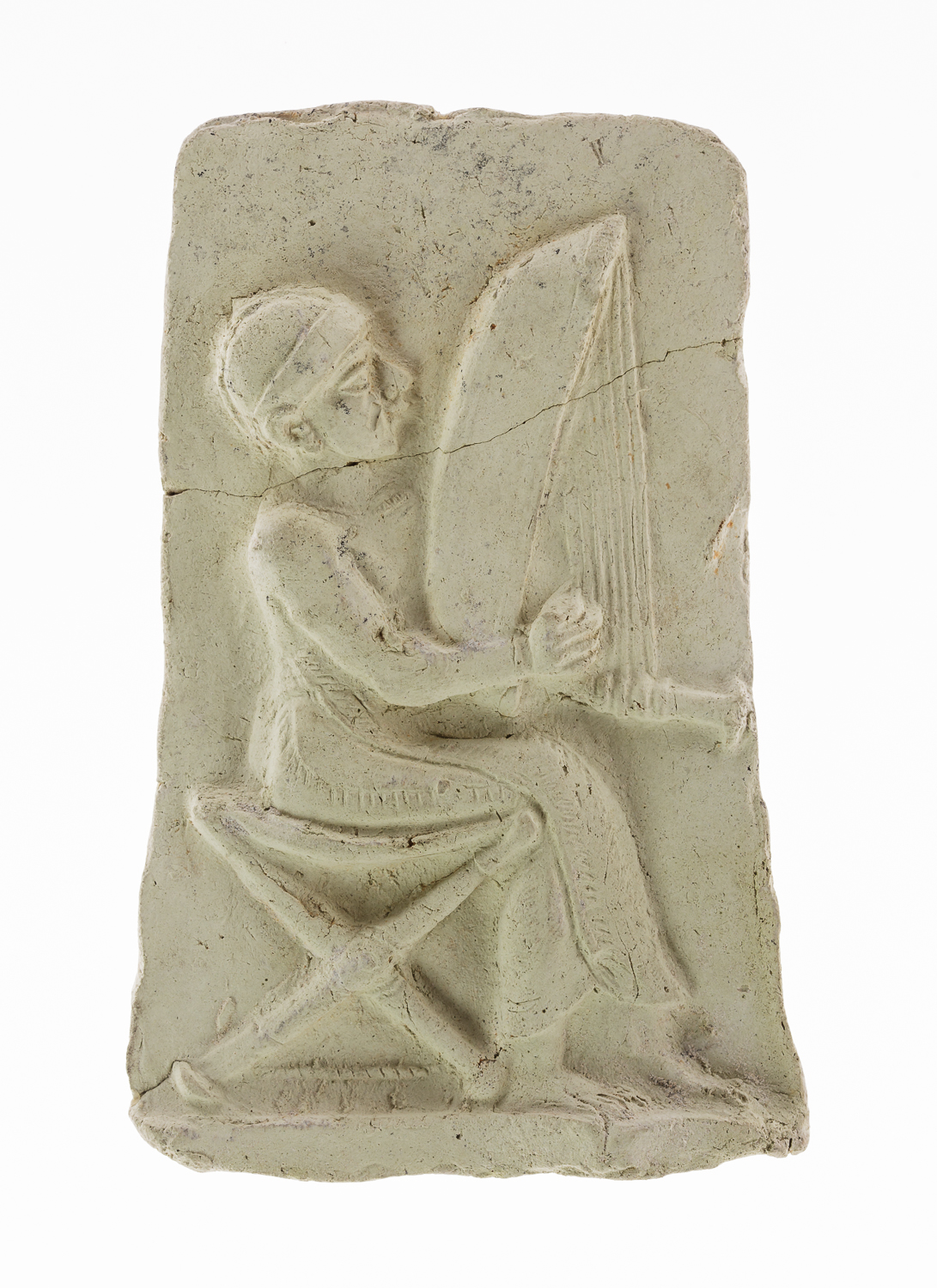
A9345
Sumer Harpist 2000 BCE (Yaz in Tamil and Vana in Vedic Sanskrit)

My previous articles on Sumerian culture:

The Great Scorpion Mystery in History ( November 2012)
Mysterious Fish Gods around the World (October 2012)
Hindu Mudras in Egyptian and Sumerian Statues (October 2012)
Hindu Eagle Mystery Deepens — posted on 16th Feb. 2013
Gods and Birds, posted on 3rd Feb. 2013
Double Headed Eagle: Sumerian –Indian connection– posted on18 December 2011.
Tulabharam: Indian-Sumerian Connection (January 2012)
3000 Gods in Sumeria! Similar to Hindus!! (18th September 2014)
Why did Sumer and Egypt Worship Indra? (14th September 2014)
Sanskrit Words in Sumeria: Sumukan Mystery (12 May 2014)
A Hindu Story in Sumerian Civilization (11th May, 2014)
How old is Indian Civilization?
Creation: Vedic Hymn and Babylonian Hymn
Birds for Finding Direction: Sumer to Tamil Nadu
Indus Valley to Egypt: Lapis Lazuli Export (6th September 2014)
Did Indra Attack Sumeria? (9th October 2014)
Hindu Kings who Ruled Syria and Turkey (11th October 2014)
Hundred Sanskrit Names from 1800 BCE to 1400 BCE (14th October 2014)
Su Meru, Ku Meru, Pa Meru, Meru ((posted on 8th November 2014)
Rig Vedic king and Sumerian King 2600 BCE (posted on 14th November 2014)

வாகனங்கள் தோன்றியது எங்கே?
எந்தக் கடவுளுக்கு என்ன வாகனம்?
சுமேரியாவில் தமிழ் பறவை
தேள் தெய்வம்

Mata and Pita in Egyptian Religion!

Maat_Egyptian_goddess

Research paper written by London Swaminathan
Research article No.1417; Dated 17th November 2014.

Hindus see Matha/mother and Pitha/father as Gods. The Sanskrit saying goes Matha, Pitha, Guru, Deivam. There are two interpretations for this adage:

1.Mother, Father and Guru must be respected as Gods
2.Mother, Father, Teacher and God must be respected in the order of the words in the adage. Mother, being the first in the saying, she is greater than the other three.

Whatever may be the interpretation; there are two similar sounding deities in Egypt. Egyptian civilization had a 3000 year long history. At every stage of the history there were drastic changes in the customs and Gods and beliefs. Apart from the ancient Gods, new gods were introduced into Egypt from the places with which it maintained trade relationship. So the number of gods increased slowly in course of time. Maat and Ptah are two ancient Gods. It is very interesting to compare them with the Hindu Gods with similar names.

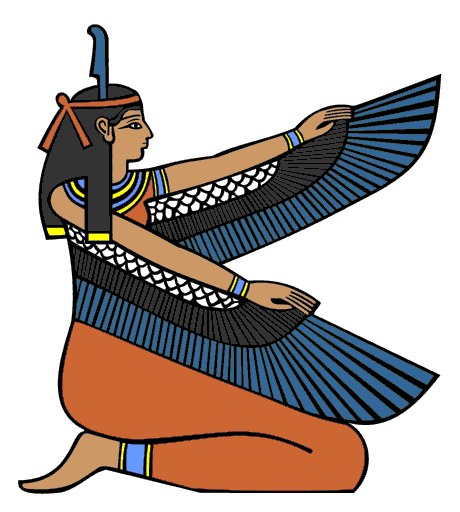
deesse-maat
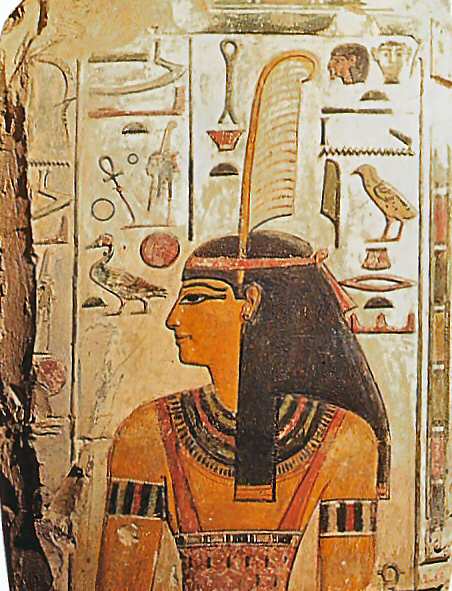
Image of Maat

Hindu mantras in Sanskrit and other regional languages say that goddess is mother, in Sanskrit Jagan Maathaa (universal mother). If it is not a long sound like Maathaa, but just a short sound Matha, as in Egyptian, then the meaning is ‘’a way, a way of worship’’. Hindu religion is called Hindu Matham in Tamil.
Egyptian Goddess Ma’at is similar to this matha. Her name would easily fit in with ‘matha’. And her image will fit in with Maathaa.

In Sanskrit the meaning of the word Matha is ‘’a way, creed, sect, path, opinion, or Dharma’’. In the Bhagavad Gita Krishna uses the word ‘’matham’’ in at least five places.

The key to the Egyptian world was represented by the concept Ma’at, a term which is elusive and resists precise translation. Ma’at represents order, balance, justice, the harmony of the universe, a disciplined weighing of many elements in a coherent whole. Ma’at is represented in the hieroglyphic dictionary by the most charming of all glyphs, a delicate, adolescent girl, with a single feather in her hair.

This fits in with Hindus’ matham and Maathaa in concept and image respectively.

She is associated with the sun god like Hindu goddess Gayatri. In later times she was called the daughter of sun god. The rulers of Egypt believed that they governed under her aegis and frequently had themselves described as beloved of Ma’at.

In the underworld, the heart of a dead persons is weighed against the feather of Maat. If the heart was burdened with sin and heavier than the feather, the deceased was devoured a monster. If the heart is lighter, the deceased became a spirit among the gods. This is again is in Hindu mythology. We say that if the heart is pure then the soul goes to heaven to be among gods. If the ‘Papa/sin’ is more than the ‘Punya/good merits’, then the person suffers in the hell.

Ptah

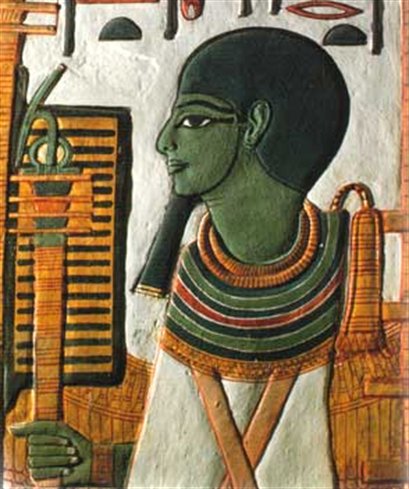
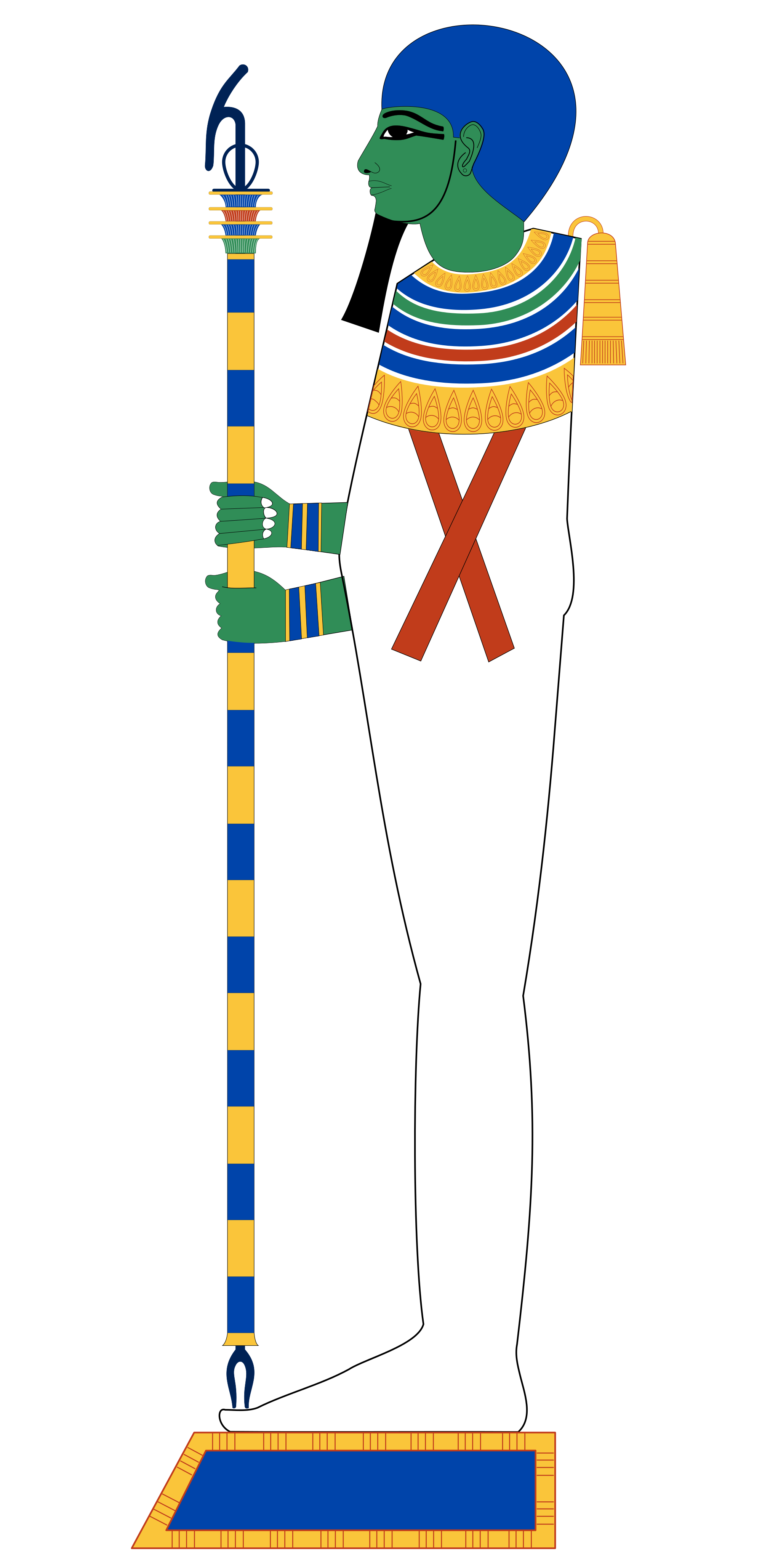
P’tah, Creator god and god of craftsmen

The greatest of the Egyptian creator gods was P’tah of Memphis. He was hailed as Lord of Destiny, Lord of Truth and Lord of Fate. All Egypt’s gods were actually manifestations of P’tah. He is invariably represented in human form, though mummified. The meaning of his name is unknown; opener, sculptor and engraver have been suggested. This fits very well with the creator god of Hindus– Brahma. Hindus believe that he writes our fate on our heads. His main task is the creation. So opener, engraver and sculptor will very well fit into him.

P(i)tah was also identified with an immensely ancient divinity associated with the very beginning of the world and his name was Tanon. He is known as the Lord of years. In Hinduism Brahma’s life span is one era called Param (1000 Chatur Yugas is one night and another 1000 Chatur Yugas is one day; in this way Brahma’s life span is 100 years! An incredible number!) So Ptah is Prajapati or Brahma. Like Brahma, Ptah is also associated with lotus flower.

All life and matter was generated by the heart and tongue of P’tah – thought and word. He created deities by thinking of them in his heart and speaking aloud their names.
As the years went by and Egypt grew old, the nature of gods also changed. Foreign divinities were brought into the pantheon and the Egyptian gods began to take on the common nature.

2000px-Ptah_standing.svg

References:–
Information about Egyptian gods is culled out from the following books:
Egypt’s Making by Michael Rice
Who is Who in Ancient Egypt by Michael Rice
Encyclopaedia a of Gods by Michael Jordan.

some pictures are taken from wikipedia;thanks.

More Tamil and Sanskrit Names in Egypt

pyramid

Research paper written by London Swaminathan
Research article No.1413; Dated 15th November 2014.

I wrote a series of articles about the similarities between Egyptian and Indian cultures in 2012. I have listed the similarities in words as well. I wanted to add the following words to the list:
Tamil Words

Poraiyan = Pharaoh
Kuttuvan = Khet
Athan = Aten

Kerala in South India was called Chera country in the olden days. The Tamil rulers of that kingdom had the Royal suffixes Poraiyan, Kuttuvan and Athan. No one knew the exact meaning of these words. What we know is that they are royal titles for the Chera kings. The same words existed in the names of the ancient Egyptian kings.

Kerala in South India is facing the India Ocean and Egypt. We knew that the blabbering of an Indian sailor to a Greek by name Hippalus revealed the secret of south West Monsoon to the Western world. But even before Hippalus, the contacts were maintained, but only by Indian sailors. Indians controlled the Arabian Sea, which is confirmed by Chran Senguttuvan’s sea expeditions and Lord Krishna’s naval attacks from Dwaraka port (Please read my earlier post Hindu Gods’ naval Attacks). Solomon’s palace also had teak wood probably from Kerala.

trademap

We can easily link the words Poraiyan with Pharaoh, Kuttuvan with Khet and Athan with Aten. Egyptian Kings bore these suffixes. There are some other explanations for these royal titles in Egypt. They associate some gods’ names with those titles. But the Egyptian Gods came from different regions and at different ages. So we cannot say where it began and when it ended.
Egyptian kings with the same ending

Akhenaten (Atan)- 1352 BCE
Amenehet (Khet) -1985-1955 BCE
Hereukhet (Khet) ,Temple singer, 21st Dynasty, 1000 BCE

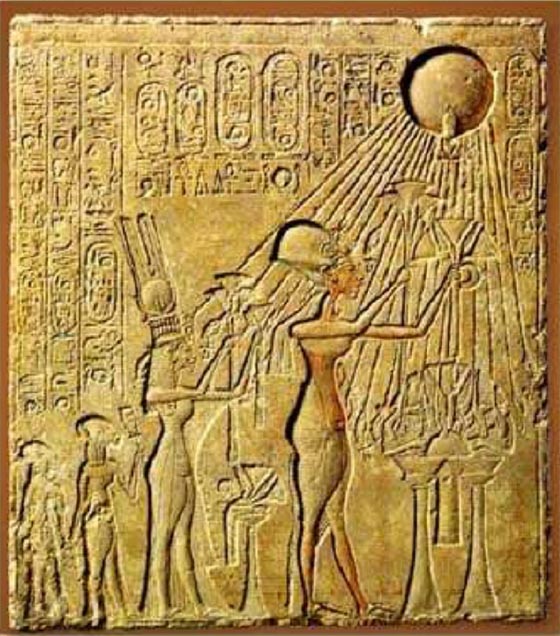
Atun in Egyptian religion was the personification of sun’s rays. In Tamil also Athavan means sun.

Ay was a famous Tamil king and great philanthropist in ancient Tamil Nadu.
Ay was a king in Egypt in the New Kingdom 1327-1323 BCE

We can see a very clear Indian influence from the middle of 15th century BCE. Mitannian king Dasaratha wrote letters to the Egyptian Pharaohs. They were kept intact as Amarna letters. Hindu girls Pudu Hepa( Budha Shiva)and Tadu Hepa (Dhatta Shiva) were married to the pharaohs. From that time onwards we see more Sanskrit names. We come across 13 Kings with the same name Ramases.

egypt 2

Of all the names the most interesting names are

Thutmose –I (1504-1492 BCE)
Thutmose –II(1492-1472 BCE)
Thutmose –III(1479-1475)
Thutmose –IV ((1400-1390 BCE)
Al l were kings.
Ramose
Harmose, Musician, 18th Dynasty
Ahmose (1550- 1525 BCE), king 18th Dynasty. He imported Lapis lazuli semi precious stonesfromIndian sub continent.
Djutmose (Thutmose)
Kamose (1555-1550 BCE), king, 17th Dynasty
Minmose

There were several officials with the names as well. In Tamil Nadu (India, kings names were given to officers as well.

The name Mose is a Tamil name as well. The word means first born son in Egypt and Kenya. In Tamil Nadu we had MudaMose, a famous poetess 2000 years ago. The young jack fruit in Tamil is also Musu. Moses of Bible also was called the child (moses) by Pharah’s daughter. So from Egypt to Tamil Nadu, we have the same name with the same meaning. Tamil poetess Mudamosi means lame Mosi. She might have become lame or born with polio legs. That is the reason for Muda Mosi. Till today the meaning of the name is debated. But we knew it meant son, first born, young one etc.

Though lot of Egyptian names end with Tep, they are considered God Hotep’s name. But yet we can argue that God Hotep also has the Tep=Dev ending.
Egyptian-Sunpower

Please Read my earlier Posts
The Great Scorpion Mystery in History – Part 1 (posted 10 November 2012)
The Great Scorpion Mystery in History – Part 2(posted 10 November 2012)
Did Indians build Egyptian Pyramids? ( 27 August 2012)
Vishnu in Egyptian Pyramids ( 5 September 2012)
Vedas and Egyptian Pyramid Texts ( 20 August 2012)
Sex Mantras and Talismans in Egypt and Atharva Veda (26-9-2012)
Hindu Gods in Egyptian Pyramids ( 16-9-2012)
Flags: Indus Valley- Egypt Similarities (15-10-2012)

எகிப்தில் திருமூலர் கருத்துக்கள் (21-11-2013)
கொடி ஊர்வலம்: சிந்து சமவெளி-எகிப்து அதிசய ஒற்றுமை (14-10-2012)
Hindu Symbolism in France ( 24 August 2014)

egypt india
contact swami_48@yahoo.com

Women and Rivers in Kalidasa and Tamil literature

gujarati

Research paper written by London Swaminathan
Research article No.1403; Dated 10th November 2014

I have listed over 200 similarities between Kalidasa’s works and Sangam Tamil literature. I have argued in my previous posts on Kalidasa that he lived in the first century BCE or before that. Most of the Indian scholars believe that he lived during the rule of Vikramaditya of first century BCE. Amazing similarities between the Tamil poems and Kalidasa’s confirm that the Sangam Tamils were very familiar with his works. This is confirmed by the Brahmin poet Kabila’s work in the Sangam period. He taught Tamil poetics to an Aryan king Bruhat Datta ( through Sanskrit) and made him write a Tamil poem which is included in the Sangam corpus. Kabila was a trend setter. He used many Sanskrit words and Sanskrit themes in Sangam verses. He copied Kalidasa in his Kurinjipattu which was noticed by an ardent Tamil lover Rev. Dr G U Pope 150 years ago.

I present below some similes where Kalidasa’s influence is noticeable.
Rivers in India are considered women and sea as their (lover) husband. Women’s beauty is compared to the beauty of cities. Though it may look strange today ancient people used this simile. If I compare a beautiful actress to the beauty of a big city today, people will laugh at me. But it is in the Bible as well.
Sangam poets Nakkirar, Paranar , Kabilar, Mamular, Orampoki and Ammuvan compared the beauty of a woman to a city/town.
Seattle_Skyline_2112
Women and city are compared in literature!

Tamil Ref. Natrinai 367, 258, 260, 340, 350, 358, 395; Ainkurunuru 56, 171
Poet Nakkirar compares the beauty of a woman to Aruman’s small and beautiful village (Natrinai 367). And in another poem (358), he compares the beauty of a woman to Pandya’s town Marungai. Poet Orampokiar compared a woman’s beauty to Choza town Amur (Aink.56). Another woman was compared to Pandya’s port city Tondi by Ammuvan (Aink.171).

20120222 Water change near Ballina

Kalidasa used this simile in Raghuvamsam :

Mithila is compared to a woman. Like a woman tolerates all that is done to her (by her husband) out of love, Mithila tolerated the army of Dasaratha -11-52,
City of Ayodhya with its smoke from sandal is compared to women with their hair drying in the fragrant smoke– 14-12

Akasath Patitam Toyam Yatha Gachchati sagaram ………

Hindus are very familiar with the rivers and the seas. Great seers Bhrgu, Agastya and Kaundinya took the Hindu culture and civilization to different parts of the world via sea route.
So they always use this comparison:
“Even as all the waters (rivers) falling from the sky invariably flow into the sea, so ………. (all prayers offered go to God)”.
This is found in Kalidasa and Tamil literature. This shows that Indians from Kashmir to Kanyakumari thought in the same way. This simile is unique to Indian literature.
Tamil references: Puram 42, Malaipatukadam 51/53; Perumpanatrupatai line 427, Purpporul Venpa 11, Kamba Ramayana Kaiyatai ppatalam 15
pen painting

Kalidasa :
“Fortunately, you have set your heart on one truly worthy of you. But then where else would a great river flow except to the ocean? (Saku 3-13)

The daughters of the Kings of Maghada, Kosala and Kekaya obtained a husband (Dasaratha) for them who is a mighty warrior, just as the rivers, daughters of mountains, obtain the mighty ocean (as their husband) (Raghu 9-17)

Just as the bride loved the bridegroom worthy of her, so too did he love her for the Ganges did not leave the ocean, and the ocean too finds the greatest delight in tasting (the nectar of) her mouth (Kumara 8-16)

most-beautiful-cities-101
Beauty of the city is compared to woman

Sangam Tamil poet Nalvellaiyar compared the amorous thoughts to the flooded Ganges River in Natrinai 369. In can’t be a rare co incidence for a Tamil poet to compare the floods in Ganges to a woman’s feelings in the southern most part of India. They are well versed in Kalidasa. Otherwise the common men would not understand or appreciate this simile!

Tamil Poet Idaikatan of Puram verse 42 compares the rivers that eagerly flow into the sea to poets that come towards the Choza king Killivalavan.

Uruthirankannan, author of Perumpanatruppatai, says that like the rivers take all the things to the sea, kings come to you with their tributes (line 427)
Raghu.12-35,13-9, 13-58, 13-62,15-60 more references

13-10-08_217_CONFLUENCE_OF_INDUS_RIVER_N
Rivers go to seas, men go to kings or gods.

My earlier posts on Kalidasa
1.Did Kalidasa fly an Airplane? 12 Sept. 2014
2.Sea in Kalidasa and Tamil Literature
3.Ganges in Kalidasa and Sangam Tamil Works
4.Gem Stones in Kalidasa and Tamil Literature
5. Bird Migration in Kalidasa and Tamil Literature
6.Kalidasa’s Age:Tamil Works confirm 1st Century BC
7.Above articles in Tamil

contact swami_48@yahoo.com

Vedic Lion around the World!

simhasanam
Lion Throne at Louvre Museum, France.

Research paper written by London Swaminathan
Research article No.1401; Dated 9th November 2014.

The Story of Lion King is found in the Vedas (RV 10-28-4 and 7-18-17)!!.Lion maintains a prominent place in the Vedic literature. No other literature has so many references to the lion. We find the origin of Panchatantra stories in the Rig Veda. Aesop and other fable writers are indebted to Rig Veda and Panchatantra.

Sanskrit words for LION are used all over the world. Kings who ruled India had lion as suffix or surnames. Even Roman kings had this Sanskrit title. The Lion throne concept was borrowed from India.

Ceasar=Kesari
Kesari is the Sanskrit word for lion which was used by all the Roman kings with the title Caesar.

yali

Yali in Hindu temples. English word Leo is derived from Yali.

Ariel = Ari
Hari is a Sanskrit word for lion. Hebrew and Tamil use this word as Ari. In Tamil Ja, Ha, Sha, SH, S sounds don’t exist. So they are Tamilized. Ari is used in Sangam literature (Ainkuru Nuru 265, 268) and Hebrew literature as ‘Ariel’ etc.

Muslim Kings had names such as Babar, Haidar, Asad and Sher which meant lion. These are NOT cognates of Sanskrit. But the idea of having it as a title was borrowed from India.

Sing = Simha (R.V.1-64-8; 1-95-5; 3- 2-11; 3-9-4; 3-26-5; 4-16-14; 5-83-3)
Simha is the most common Sanskrit word for the lion. This occurs more times than any other animal name. All Punjabi Sikhs have it as surname after their last and Tenth Guru, Guru Govinda Sing, made it a surname.
This comes from the word Simha.

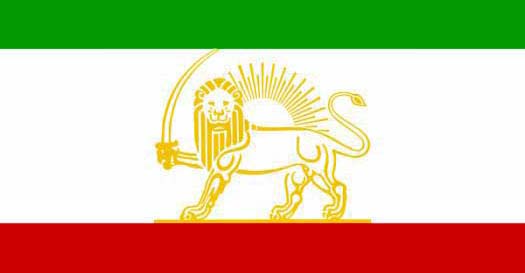
Sri Lankans had it from Sixth Century BCE from their forefather Simhabahu. Sinhalese and many more words are derived from this. Iran had it on its flag before the Islamic revolution.
iran flag
Old Flag of Iran

Lion=Leo=Yali=Vyala

Words such as leo, leander, learnando, lion etc. came for the lion like animal Vyala. In Tamil it is called ‘Yali’ and Leo may be the mirror image of the Tamil word or derivative of Vyala. (Vyala=Yali=Liya=Leo)
Concept of Lion Throne (Simha + Asana= Simhasana) also spread to various parts of the world from India. It is found in most of the Sanskrit books. Lion as the king of the forest is in Panchatantra stories, for which Aesop is indebted. Sanskrit proverbs such as Swayameva Mrigendratha and Vikramaditya Simasana also praise the lion. In all religious hymns god is said to have seated on the Lion Throne. So this is not an imported concept.

Lion seems to be symbol of Pallava Dynasty

Pallavas had lion as their emblem

Lion in the Vedas & Origin of Fables

Rig Veda, the oldest book in the world, has got more than fifteen references to the lion. It is used in beautiful similes which show that it’s a well known animal. Since almost all the Mandalas use lion, it must have lived in the Sarasvati, Sindhu, Gangetic plains of India for long. Now it is found only in Gujarat. Atharva Veda also has got many references.
The roaring of the lion and the
Thundering noise of lion are described in the Vedas.

In Tamil Sangam literature lot of references to drum sound has the word lion (Ari in Tamil) before it. But for want of evidence the commentators left it as drum sound. It must be actually roaring sound like a lion which is in the Rig Veda and Atharva Veda.

Lion hunting and the courage of lioness are also described in the Vedas.
Rudra is compared to a lion
Agni is compared to a lion

That a jackal should defeat the lion is spoken of as a marvel. Here we see the origin of fables. Fables had its origin in India.

The aid given to Sudas by Indra against the vast host of enemies is compared to the defeat of a lioness by a ram. Here we see the origin of animal fables.

Apart from the references already given under Simha, following are other references to the lions:
R.V.1-54-2; 10-160-2; 2-33-11; 3-9-4; 10-28-4; 1-174-3; 10-28-10; 5-74-4; 5-15-3; 7-18-7
Yajuveda and Brahmana literature have many more references.
It is a mystery that Indus valley had no seals with cow or horse or lion!Hundreds of seals with bull are available, but no cow!!!

srilankan coins
Sri Lankan coins with lion.

Sanskrit literature described heroes as Bull, Lion or Tiger. But among the wild animals, lion gets more references than tiger. The reason being tiger kills any animal that it sees. Lion kills only for its food when necessary. A lot of stories in ancient literature show that lions are attached to humans and become harmless. King Bharata who gave the name Bharata to India was said to have played with animals as a young boy. So he was called Sarva damanan.

Amarakosa , the oldest dictionary, dated to fifth century CE, gives the following Sanskrit words for lion:
Simha, Mrgendra (King of Animals), Panchasyo, Kesari, Hari, Haryaksha, Mrgaripu, Kandiravo, Mrgadrushti, Mrgasanah.

India and Sri Lanka have lion in its national emblem and flag. Hindus worship Nara Simha (man-lion form) avatar of Vishnu. There are famous temples in South India for Narasimha who killed the demon king Hiranyakasipu just to save the demon’s son.
nahapana newwwww
Nahapana coins.

Contact swami_48@yahoo.com

SuMeru, KuMeru, PaMeru,Meru

pameru
(Pamir (Pa Meru Mountains)

Research paper written by London Swaminathan
Research article No.1398; Dated 8th November 2014.

Sumeru is Iraq; old Mesopotamia
Kumeru is South Pole, Kumari in South India and Khmer in Cambodia
Pameru is Pamir, the roof of the world in Tazkistan, Kyrgystan, Afghanistan
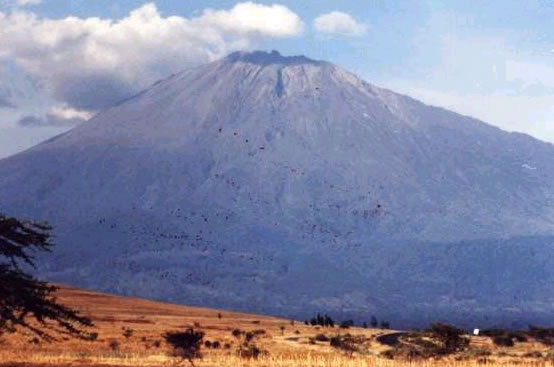
Meru is North Pole and Mountain Peak in Kenya; Himalayas in modern times

I am just developing a theme on the basis of Kanchi Paramacharya Swamikal’s lecture in Chennai in 1932. Kanchi Paramacharya (1894 -1994) was the Shankaracharya of Kamakoti Mutt. His Madras lectures were famous and brought out in book form in several editions. On 12th October 1932, he was talking on the topic “Our Religion”. In his scholarly exposition, he said that our Puranas explain that North pole is Su Meru and South Pole is Ku Meru and in between there are seven oceans and seven continents. But today we don’t see such a division because it was the position seen millions of years ago. Then he explained how the earth pole is tilted and how the pole star changes during thousands of years.

mount-meru
Mount Meru in Kenya, Africa

Now look at the words Sumeria, Pamir Mountains, Khmer civilization of Cambodia and Kanyakumari of South India. All these have Meru in their names which mean a Peak, a High place, a Mountain etc.
Meru becomes Medu (high land) in Tamil. I have already explained in one of my posts that R=L=D are interchangeable in most of the names we know.

Kumari in South India is the land’s Southern most point today. But thousands of years ago it was a mountain area which went into the sea.Tamil literature mentioned it in at least two places. There they referred Kumari only as a mountain ( Kumari Kodu in Tamil). It may be Ku+Meru. The people might have migrated to different places and named them after Kumari. We see Comoros islands in Indian Ocean and Khmer in Cambodia.

If you search for the origin of the words Khmer and Sumer, you will draw blank. There is no origin for Sumer, Khmer and Kumari. At least Kanchi Shakaracharya’s 1932 talk explained Kumeru. But he did not elaborate on this and he never said Kumeru is Kumari. I only guess that Tamils might have named it Kumari after the South pole Ku Meru.

sumermap2 in modern Iraq
Sumer in Iraq

In the absence of logical explanation for the Khmer race or Khmer Kingdom, I guess that is also based on Ku+Meru. There is no need to explain Khmer’s Hindu origin. Kambojas were living in the North West part of India long ago and they migrated to different places. The Sanskrit word Kamboja (Camboja=Cambodia) and Meru like Angkhor Wat and Borobudur (Java in Indonesia) temples are self explanatory.

Now look at Sumeria. Again no encyclopaedia gives the origin of the word. Sumerum was the term given by Akkadians according to the “Dictionary of the Ancient Near East” published by the British museum, London; it adds, “However it has not prevented violent scholarly debates in modern times about the possible origins outside Mesopotamia of a Sumerian race who allegedly entered the area as immigrants”.

After going through the Dictionary several times I strongly believe that the Sumerians migrated from some parts of India. If we study the music in ancient Sumer we can see the Sapta swara (seven notes) contribution of Akkadians and all other music things from the Hittiltes. Scholarly world knew that Kassites and Hittites spoke a language closer to Sanskrit family.

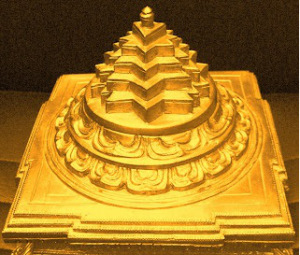
maha-meru-yantra
Maha Meru in Sri Chakra of the Hindus

Hindus who migrated to Mesopotamia might have named it Su+Meru. The term occurs for the first time in Taitriya Aranyaka. English people who migrated to Australia, Canada and United states 200 years ago named all the new places after their places of origin. Just to avoid confusion they added ‘NEW’ before the place names (Eg. New South Wales, New England). Tamils who migrated to Northern Sri Lanka named several places after Tamil towns in Tamil Nadu. All the Sri Lankan rivers are given Ganga as a suffix. In the same way Hindus named their new land Su+Meru.

The peak of the tallest mountain in East Africa is also called Meru (Kenya). Meroe is also a known place name in Kushite civilization. When we have a bird’s eye view from top we know that all these civilizations were helped by the Hindus

sumeru_parvat9742
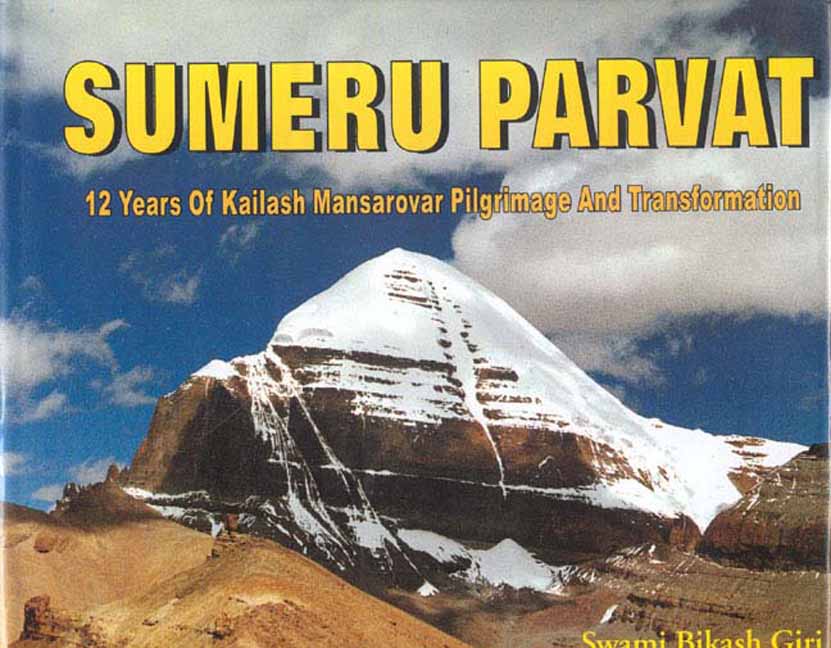
Even Kailash is consiered meru in modern days

Pameru= Pa+Mir
Mir in Arabic and Urdu means high, exalted, honourable which is used as a suffix or prefix in many place names and peoples’ names. Pamir is called the roof of the world. No wonder they called it Meru (Pa+Meru). Pa is a Sanskrit prefix which is used in the book title Pamathy. The nearby mountain in China is called Tien Shan (Deva Achala). It means celestial mountains in Chinese.

So I believe that these Pamir Mountains, Khmer culture, Sumerian civilization and Tamil Kumari mountains (which went under the sea long ago according to Tamil literature) share the word Meru which means high place or a tall mountain.

In the Hindu religious literature Meru has geographical, symbolical, ritual and mythical meanings (John Woodroffe and many others have explained it).

Tamil Reference book :– Sri Jagaguruvin Upadeasangal, First Part, page 75, Kamakoti Kosasthanam, Chennai, 1957, Rs.3.

contact swami_48@yahoo.com

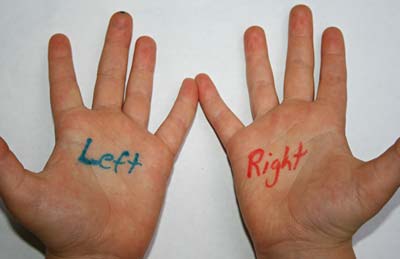
Is your Husband a Leftist or a Rightist?

left_verse_right_brain

Research paper written by London Swaminathan
Research article No.1396; Dated 7th November 2014.

Left and right mean several things in Hinduism. Generally speaking left has a bad connotation. From “Vamachara” to twitching of eyes, it has many interpretations. But it is not all superstition. There is some science behind it. In India, people use left hand for cleaning purposes. That is one of the reasons. Latest science reports say that those who use left hand (left-handed from birth) live nine years shorter than the right handed. It is statistically proved.

But the belief about left and right does goes beyond the geographical boundaries of India. An 1898 book on English phrases by Brewer give some interesting information:

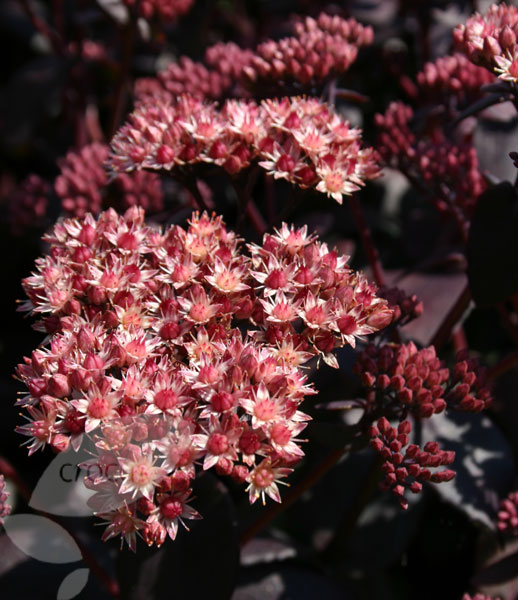
A plant known as Orpine (Sedum telephium) is called midsummer men. It is also known as Live Long and Stone crop (Orpine in French means stone crop). The reason for the name “Midsummer men” is that it was used for finding the loyalty of men. Young women used to hang the potted plant in the house. If their husbands are true the plants’ leaves will bend towards right. If they are not loyal to their wives it will turn left.
The plant is called Live Long because when it is cut and sprinkled with water it lives longer than any other plant.

journal.pone_.0040259.g001

Five “M”
Vamacharam is a sect in Hinduism who practise unconventional mode of worship. Literally translated Vamachara is left handed mode and they value Five “M”s more than anything else: Madhu (wine), Mamsa (meat), Matsya (fish), Mudra (cereal or gestures) and Maithuna (sexual intercourse). The very list will caution every one because of Madhu and Maadhu (women). There is scope for doing wrong half way through the practise.

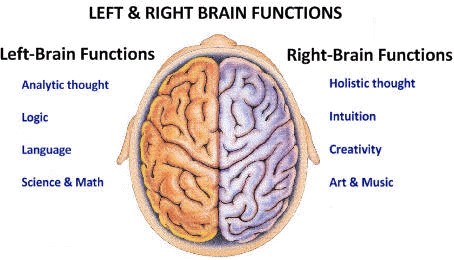
But twitching of eye is a very interesting area where different cultures have quite opposite views. Indians believe that twitching of right eye is good for men but bad for women. Rama says in the Yuddha Kanda of Valimiki Ramayana (6-4-7) that he is definitely going to win the war because of his right eye twitching. Sita sees bad omen when her right eye twitched just before Rama sent her to forest (Uttara Kanda). Scientists also believe that men and women are wired in opposite directions in the brain (Women are right brain dominant and men are left brain dominant creatures)

In Hinduism rightists always win! The clockwise direction was invented by the Hindus. They started using the clockwise direction for all good rituals—in the wedding, in the Graha Pravesa (House warming) etc. When they go to temples they have to circle the temple in the clock wise direction. It is called Pradakshinam in Sanskrit or Valam Varuthal in Tamil. They face east when they do all auspicious ceremonies and then turn to South=Dakshina and go in a circle.

No one is allowed to give or accept anything by the left hand in Hindu houses. It is considered blasphemy. In all the religious ceremonies such as Abhishek or Puja they have to extend their right hand with a great and visible humility. They can use only right hand for eating in the house or rstaurnats. When the temple priest gives the Prasad he will also use only right hand and anyone can take it only with his or her right hand.

Only in the funeral rites and monthly rites for the departed souls they use left. They go round the funeral pyre in anti clock wise direction. The sacred thread lying on the left shoulder (going towards right direction) will be changed to right shoulder so that it goes towards left side during the rites for departed souls (Tarpan, Tithi etc)

traditional_banana_leaf_meal
You can only use right haand for eating

Tamils support Rightists!
Two thousand year old Sangam Tamil poems praise tigers which will eat only when its prey falls on its right side. If it kills a deer and it falls on the left side it wont eat! Valam = right carries more weight than Itam=left in Tamil poems.

Tamil Ref. Puram.190, Akam 238, 252 etc.

Tamil film song says Oh, Bride! Oh Bride! Step into the house with your right foot please! ( Mana Makale! Mana Makale! Va Va! Un Valathu Kaalai (right foot) etuthtu vaiththu Va Va!

Hindus put first right foot into the house on holy occasions. Saints also follow this. In the rituals they have to place anything on the right first and then come to left. When Brahmin boys do Samidhadhana, they have to put the Homa paspa (ash) on their body parts starting from right side of the body. So they do in Sandhyavandana.

There are hundreds of customs like this in Hindu scriptures.

book on left

Only place where left is honoured is the body of Shiva in Ardhanari form where his left side is occupied by the goddess. Half of his body – left side—is given to the goddess. This is the basis of Adam and Eve story in the Bible. Left bone was shaped into a woman. ((Kanchi Paramacharya gave another interpretation that Adam=Atma and Eve=Jeeve Atma quoting the Vedic story where one bird eats the fruit —Adam eating the forbidden Apple — and the suffering followed. That is life and death. Anyone can easily see the similarity in words ATMA=ADAM, EVE=JEEVE Atma. So the first story in the Genesis is taken from the Vedas).

Though left is allotted for woman, during all the religious ceremonies a person’s wife is given prominence by giving the right side. She has to stand on his right side.

left hand

Homer also followed Hindu custom!!
Greek epic poet Homer also refers to such a respect for right in his Odyssey.
He says,
They swooped away on the right through homes and city,
All were dumbstruck, watching the eagles trail from sight (2-172 and 173)

Commentator explains the above lines,

“The lucky side for omens, lucky at least for Telemachus in this case. The idea that signs on the right are lucky and on the left unlucky is common in many cultures and languages”.

Hindus believe that seeing Garuda/eagle on the right is good. Homer refers to god sending eagle on the right side and say it is a good sign in The Odyssey 15-179
The odyssey has more references to auspicious Right 15—588/598; 20—269;24—358/50
left-right-handedness-dominance

Sinister Designs

Following is found in the Encyclopaedia of “Word and Phrase origins” by Robert Hendrickson
“English word sinister comes from Latin and the meaning in Latin is “left”. In English it means that something harmful will happen.

A right hand man in English means an invaluable and trusted aide; the right side was the place of honour in political assemblies and gave its name for royal or conservative parties of the right.
Right foot foremost means putting your best foot forward. (This is Hindu belief. They will use only right foot in all the auspicious ceremonies)

Right in French is adroit which also means cleverly, skilful. Dextrous means right as well as ‘skilful with the hands, body and mind’.

On the contrary left-handed compliment is a thinly disguised insult that poses as praise. When a royalty marries a commoner all that is received by the commoner is a “morning gift” i.e. the gift suddenly got on the day of the marriage. This marriage is called “morganatic” meaning morning gift in Latin. The bridegroom gave his left hand to the bride instead of right hand in such left handed marriages. This is the origin of left handed compliment in English.”

sedum telphinium
Sedium plant

In the above Greek, Latin and English phrases we see the Hindu customs of
1.Using the right hand for all auspicious ceremonies
2.Using the right foot in all auspicious ceremonies
3.Seeing the Eagle (Garuda)on the right as a god sent good omen
4.Believing right is skilful and clever
5.Giving right an honourable place

Though we may call this as a cross cultural belief, Hindus only follow it until today. Hindu scriptures have more references to this custom than any other scripture or book.

22 Sanskrit words for Sky !

Point Reyes Sunset1

Research paper written by London Swaminathan
Research article No.1394; Dated 6th November 2014.

Amarakosha is one of the celebrated dictionaries in the world. It is a thesaurus that gives several words with the same meaning. Several scholars date this Sanskrit work to fifth century CE. It has been commented upon by excellent scholars. Ksheeraswamin, Rayamukuta, Linga Bhatta, Bhanuji Dikshit and several others commented on the work from ninth century onwards. This is also called Nama linga anusasana. In the Sanskrit language, so far over 100 versified vocabularies and commentaries have been discovered. Sanskrit pundits always quote Amarakosha , Vaijayanti and Sasvat kosha.

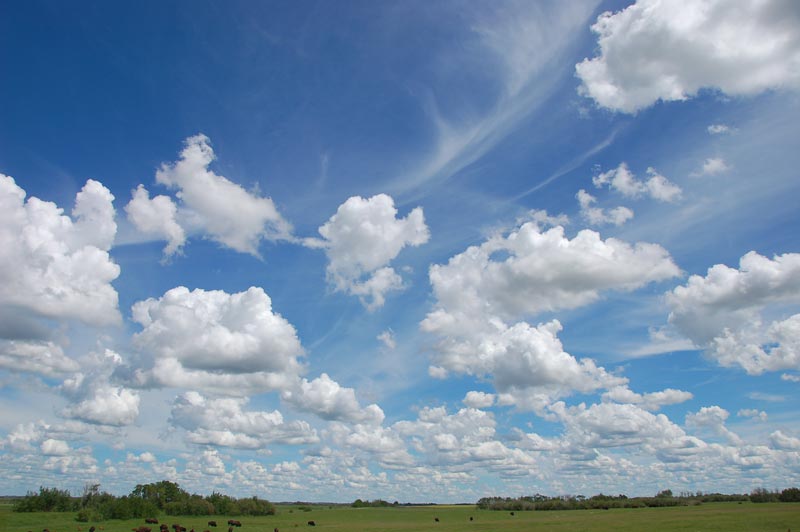
Amarakosha gives 22 words for the sky and the atmosphere. One of them is a word which says about sky route for transport! 1500 years before the invention of aeroplane Amarasimha called sky is used for transport!!

alberta-sky-1

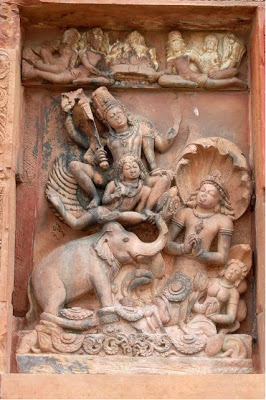
When Brahmins do Tarpana for the departed souls over ninety times a year, they pray to the departed souls to come by the sky route (Deva Yanai: or Puurvyai Pathibi: in Sanskrit). Tamils also believed that Gods and angels (Deva) reside in the sky. Famous Tamil poet Tiruvalluvar refers to the deity in the sky (heaven) in his Tirukkural (couplet 50). All the pictures, calendars, sculptures show God as descending from the heaven (Eg. Gajendra Moksha sculptures, paintings etc.from Guptas period). In short, God has to use the air route! That is what humans believed. Famous Tamil poem Kutrala Kurvanji of Trikuda Rasappa Kavi says that Siddhas use sky for their travel (Gagana Siddhar).

Following are the words for the Sky given in Amarakosha:
1.Dyau = which can’t be filled, which will never be full. Dyaus is father and Prthvi (earth) is mother. Dyau became Zeus in Greek. That gave the word Jupiter.
2.Diva =place of divinities
3.Abram = touching the sky; filled with water clouds
4.Vyoma = that which surrounds us
5.Pushkaram = that which gives water.
6.Ambaram = sky or covers earth like clothe.
7.Naba: – surrounded by the clouds
8.Antariksha = atmosphere
9Gagana = fit for transport
10.Ananta = endless
11.Suravartman = devas reside there
12.Kam = that which supports
13.Vihayasi = air; atmosphere; aerial
14.Vihayas= suspended in air; aerial
15.Tarapatha:= path of stars
16.Naka = heaven
17.Meghadva = cloud bearing
18.Akasa = Open space
19.Viyad = intermediate area between heaven and earth; part asunder
20.Vishnupadam = vishnu’s place, vishnu’s foot
21.Mahabhila = great hole
22.Dyu: = See Dyaus
sky1_mini

When Amarasimha lists the words in his Amarakosa he gives the gender of the words as well. In the olden days whoever goes to Gurukula will be asked to memorise the 2000+ lines at young age. By the time s/he becomes a youth he would have learnt 10,000 synonyms!

Deogarh2

vyomavargaḥ (Namalinganusasana)
Sky or atmosphere (26)
(1.2.167) dyodivau dve striyāmabhraṃ vyoma puṣkaramambaram
(1.2.168) nabho ‘ntarikṣaṃ gaganamanantaṃ suravartma kham
(1.2.169) viyad viṣṇupadaṃ vā tu puṃsyākāśavihāyasī
(1.2.170) vihāsayo ‘pi nāko ‘pi dyurapi syāt tadavyam
(1.2.171) tārāpatho ‘ntarikṣaṃ ca meghādhvā ca mahābilam
(1.2.172) vihāyāḥ śakune puṃsi gagane puṃnapuṃsakam

sky at sunrise

There are more words for the sky in other books. It shows the richness of the language.

contact swami_48@yahoo.com
Mahabharat names Vs Indus Valley Names

Krishna-Arjuna
Research paper written by London Swaminathan
Research article No.1392; Dated 5th November 2014.

I was going through the names of Mahabharata characters in “Who is who in the Mahabharata?” by Subash Mazumdar. An approximate list of suffixes or surnames is as follows:

Sena — 24 names, e.g Chitrasena, Shursena, Dhumatsena, Sinsena, Bhimasena
Ketu – 9 names, E.g.Shvetaketu
Varman –13 names, E.g Ketuvarma , Kshatravarma, Kritavarma,Dhritavarma ,Satyavarma
Pati+Vati — 11+3 names, Madhravati, Mayavati, Prabhavati
Datta — 6, Vygradatta, Bhanudatta, Bhagadatta
Dyuman – 6, Dhrstadyuman
Ratha – 5 e.g.Chitraratha, Jayadratha (Indus Valley area), Bhagiratha
Mana – 5 Anshumana, Shrenimana
Ayudha/Yudhdha -3, Halaydha

Vasu – 5
Asva – 6 E.g. Brhadasva, Vyusistasva
Wana – 6 E.g. Sharadwana, Rumanvana
Ayana – Krishna Dwaipayana
Deva—Sahadeva, Vasudeva, Shrutadeva,Shakradeva

313183-mahabharat.jpg
Sena ending, Ketu ending and Pati/Vati ending names are in the Vedic literature as well. This shows that these names are being used for thousands of years. Even in the Kathasaritsagara and Vikram and Vetal we come across same suffixes like Sena and Varman and Datta. So if at all we look for some names in the Indus valley it should be Sena, Varman, Ketu, Pati, Vati, Mati ending names. If we keep it in mind and identify these suffixes in the Indus valley script, we can succeed in the deciphering it.

I have already written an articles about Pati, Mati, Vati ending names in Vedas and Epics.
We have to prepare a list of Vedic names and epic names and compare it for further research.

contact swami_48@yahoo.com