Prayag, the meeting place of Ganga and Jumna; A H Hallam Murray (Post No.2712)

prayag

Sketch by Murray

Compiled by london swaminathan

Date: 10 April, 2016


Post No. 2712


Time uploaded in London :–  13-56


( Thanks for the Pictures  ) 


DON’T REBLOG IT AT LEAST FOR A WEEK!  DON’T USE THE PICTURES; THEY ARE COPYRIGHTED BY SOMEONE.


(for old articles go to tamilandvedas.com OR swamiindology.blogspot.com)


Centuries before Akbar’s day, however, a stronghold, called Prayag, or the place of sacrifice, existed at the meeting of the Ganges and the Jumna, which, since the earliest days, had been most popular place of pilgrimage with the Hindu race.  The first authentic historical information about it is on the tapering shaft of the Lath of the Buddhist king Asoka, in the garden entrance of the fort; it dates from about BC 258 and its 49 feet of height is covered with inscriptions; it, no doubt, very curious, but it is one of the things about which I find it difficult to screw up much enthusiasm.

(Prayag is known as Allahabad now)


In the native town, with its low brown houses, there were of course picturesque corners, but what struck our eyes chiefly – as we drove, through it, to the tomb of Khusru – was the absence of colour, after the vivid blues and reds and yellows of Bombay, and the number of clothes worn.

prayag2

We drove, under a tall archway, overgrown with creepers, into the Khusru Bagh, one of the most beautiful and shady gardens of India, and there under a fine spreading the tamarind tree, we saw the last resting place of Akbar’s ill-fated grandson, prince Khusru, the rebellious and popular heir of Jahangir. Akbar had a great affection of Khusru, whom Jahangir treated with jealous animosity that caused the Rajput Princess Khusru’s mother to commit suicide. Khusru was imprisoned and at last poisoned to death by Shah Jehan.


The Fort, which passed to the English in 1801 must have been originally a splendid and intensely interesting place, and it still forms a striking object above the sandy spit at the meeting of the rivers. But perhaps military exigencies obliged us to obliterate and destroy every vestige of originality in it; it has been ruthlessly shorn of any architectural beauty or archaeological interest.


It contains the arsenal. But the military authorities have been more respectful to the Hindu remains inside the Fort and not interfered with the well-known  Akshai Bar, or ever living banyan tree- – a forked stump with the bark on—which, though the tree appears to be  replaced every few months , yet stands in the midst of what is, probably identical the Hindu temple of Shiva, described by the Chinese pilgrims in the seventh century it is now in a pillared crypt, reached by an underground passage  beneath the walls of Akbar’s Fort; this seems to show that Akbar’s well known religious liberality led him to allow the priests  and pilgrims free access to the  ancient Hindu shrine, though he was obliged to incorporate it in his building.


In the passage leading to the ancient temple are some curious idols, and, in the centre, a stone rudely tapered to a cone, which the devout venerate and reverence with lustrations.  Beyond is a square aperture probably leading to the river, though the Hindus say it leads straight to Benares; whilst the natural moister, exuding from the walls, is supposed to prove the truth of the legend that the sacred river Saraswati, which disappears in the Bikaneer desert, many miles away north, finds it way to this holy spot. The tree was probably worshipped here by the rude aboriginal tribes, with its ostrich like capacity for assimilating alien religious practices, has sanctioned its continued worship. Hiouen Thsang gives a description of the wide-spreading tree in front of the principal shrine of the temple, which recalls description of the blood stained grove at Kumasi. The tree was supposed to be the abode of a man eating demon, and was surrounded by the bones of the human sacrifices, with which from the “old unhappy far off days” of earliest tradition it had been propitiated.
Extract from AHH Murray’s book The High-Road of Empire

To be continued……………………


“No Cabinet Minister is Indispensable!” Abraham Lincoln (Post No.2700)

statue-of-plato

Statue of Plato.

Compiled by london swaminathan

Date: 6 April, 2016

Post No. 2700

Time uploaded in London :–  19-53

( Thanks for the Pictures  ) 

DON’T REBLOG IT AT LEAST FOR A WEEK!  DON’T USE THE PICTURES; THEY ARE COPYRIGHTED BY SOMEONE.


(for old articles go to tamilandvedas.com OR swamiindology.blogspot.com)


Modesty anecdotes


Plato’s Story about Spirits
Plato tells a fable of how spirits of the other world came back to find bodies and places to work. One took the body of a poet and did his work. Finally, Ulysses came and said,
“All the fine bodies have been taken and all the grand work done. There is nothing for me”.

“Yes”,said a voice, “the best has been left for you – the body of a common man, doing a common work for a common reward”.

Xxx

court
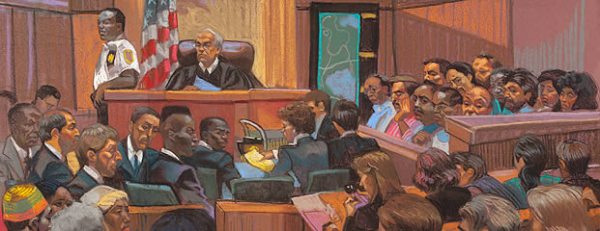
Respectable Ladies thrown out!
A t Lyon assizes, in France, before the trial of a certain case, the presiding judge remarked on seeing the court crowded with ladies:
“The persons composing the audience are probably not aware of the nature of the case about to be tried. I therefore feel it incumbent on me to request all respectable women to withdraw”.

Not one of the ladies stirred from her place.

“Usher”, the judge continued, “now that all the respectable women have left, turn the others out”.

Xxxx

lincoln speeches
Let him resign; no one is a national necessity!
Salmon P Chase, when Secretary of the Treasury, had a disagreement with other members of the Cabinet, and resigned.
The President was urged not to accept it as “Secretary Chase is today’s national necessity”, his advisers said.

“How mistaken you are!” Lincoln quietly observed, “yet it is not strange. I used to have similar notions.
No! if we should all be turned out tomorrow and could come back here in a week, we should find our places filled by a lot of fellows doing just as well as we did, and in many instances better”.

“Now, this reminds me of what the Irish man said. His verdict was that ‘in this country one man is as good as another. And, for the matter of that, very often a great deal better’. No, this government does not depend upon the life of any man.

Xxxx

da vinci

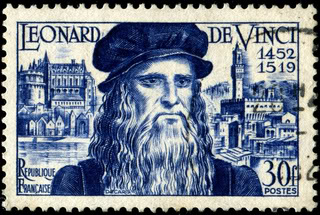
Learno da Vinci’s modesty

Vasari relates that when Learnado da Vinci lay on his death bed, the King came to visit and cheer him. He raised himself as far as he could in the Royal presence and lamented that he offended God and man in that he had not laboured in art as he ought to have done.

Xxxx

paderewsi_readmore

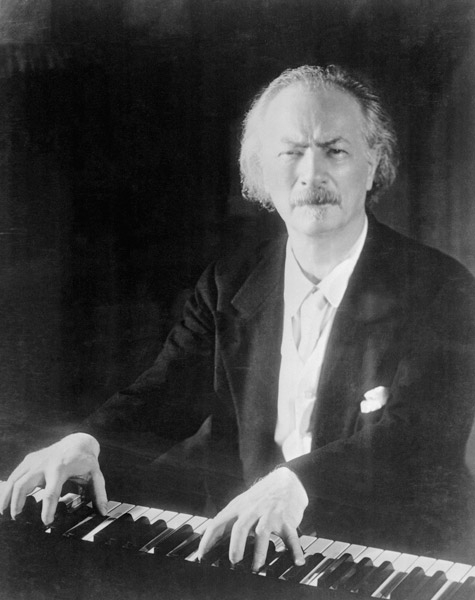
Picture of Pederewski

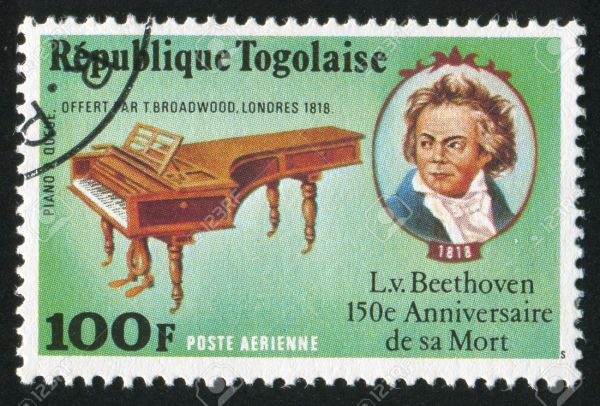
Piano at Beethoven Museum

In Bonn, the home of Beethoven has been converted into a memorial museum. In one of the rooms, roped off from curious hands, is the Piano upon which Beethoven composed many of his great works. A Vassar girl visiting the shrine with a party of American students, looked upon the instrument with awe and asked the guard, with the additional persuader of a generous tip, if she might play upon for a minute. The permission was granted and she sat at the piano and strummed out a few bars of the ‘Moonlight Sonata’.

Departing she remarked to the guard, “I suppose all the great pianists who have come here at one time or another played on it”.

The guard said, “No, Miss, Paderewski (famous Polish pianist) was here two years ago; but said he was not worthy to touch it”.
beethoven piano

–Subham–


Eight Great Writers’ Views on the Role of a King (Post No.2688)

SIVAJI ON THRONE

picture of great Hindu King Veera Sivaji

Compiled  by london swaminathan

Date: 2 April, 2016


Post No. 2688


Time uploaded in London :–  15-39


( Thanks for the Pictures  ) 


DON’T REBLOG IT AT LEAST FOR A WEEK!  DON’T USE THE PICTURES; THEY ARE COPYRIGHTED BY SOMEONE.


(for old articles go to tamilandvedas.com OR swamiindology.blogspot.com)


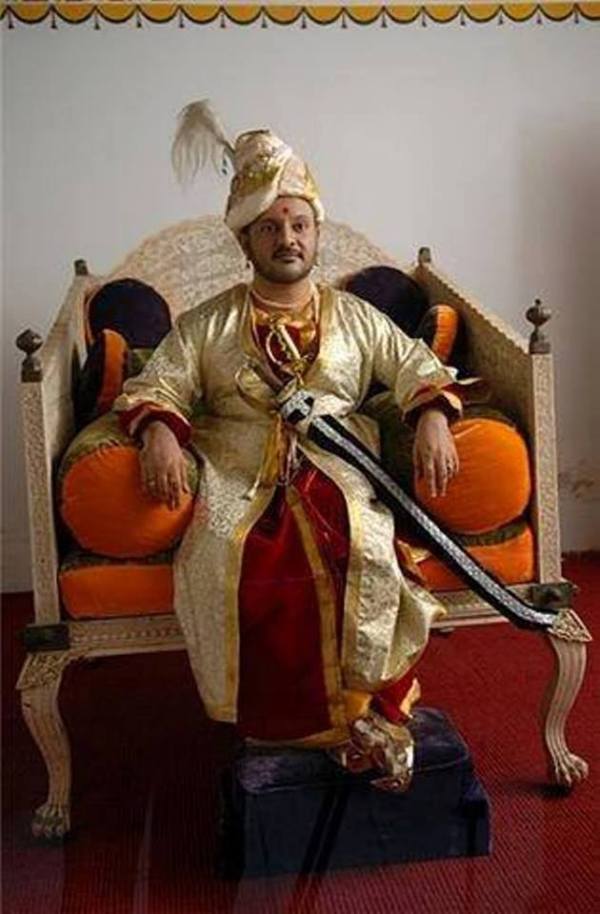
aswathi thirunal prince

King of kerala

1.Kautilya/ Chanakya

Harmlessness, truthfulness, purity, freedom from spite, abstinence from cruelty and forgiveness are duties common to us all.  Hence the king shall never allow the people to swerve from their Dharma; for whoever upholds his own duty even adhering to the customs of the cultured will surely be happy both here and hereafter.  For the world, when maintained in accordance with injunctions of the Vedas, will surely progress, but never perish.


2.Sukra

How can the man who is unable to subdue his mind and senses master the world? The king should first provide discipline to himself, then to his sons and then to ministers, then to servants, then to the subjects.


3.Tiruvalluvar (Tamil Poet)

He is a lion among leaders who has these six: an army, subjects, wealth, ministers, allies and fortifications (Kural 381);courage, liberality, wisdom and zeal – these four qualities form royal features (Kural 382); the three things alertness, learning and bravery should never be wanting in the ruler of a country (Kural 383).


4.Manu

When creatures, being without a king, were through fear dispersed in all directions, the Lord created a king for the protection of this whole creation, the king who properly inflicts punishment prospers, but he who is voluptuous, partial and deceitful, will be destroyed, even through the unjust punishment which he inflicts. (Manu Smriti, seventh chapter)

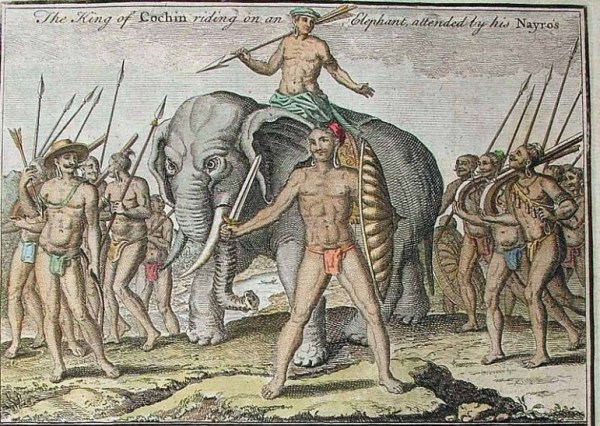
kings-of-Cochin-771x548

Picture of King of Cochin

5.Vyasa

All creatures rest upon righteousness. All creatures grow in the growth of

Righteousness and decay with its decay. Righteousness is called dharma. The sages, O king, have declared that Dharma restrains and sets bounds to all evil acts of men.  The Lord created Dharma for the advancement and growth of creatures.


6.Mosikeeranar (Sangam Tamil Poet)

The life breath of this vast land is the king. Paddy is not life; water is not life. The king should know that he is the life of the world/people (Verse 186, Purananuru).


7.Vivekananda

The king is like the lion; in hi are present both the good and evil propensities of the lord of the beasts. Kings are the centres where all the forces of society, otherwise loosely scattered about, are made to converge and from which they start and course through the body politic and animate society. But the king forgets that those forces are only stored with him so that he may increase and give them back.

விஷ்ணுவர்தன் ராஜா

Picture of Hoysala King Vishnuvardhan

8.Mahatma Gandhi

Government over self is the truest Swaraj; it is synonymous with Moksha or salvation. The first step to Swaraj lies in the individual. The great truth: As with the individual so with the universe, is applicable here as elsewhere.  A drowning man cannot save others. In order to fit to save others, we must try to save ourselves. The individual, being pure, sacrifices himself for the family, the latter for the village, the village for the district, the district for the province, the province for the nation, the nation for all.


–Subham–


In India Rain drops turn into Pearls and Rubies! (Post No.2678 )

rubies-article-8688364

Compiled by london swaminathan

Date: 30 March,2016


Post No. 2678


Time uploaded in London :–  18-43


( Thanks for the Pictures  ) 


DON’T REBLOG IT AT LEAST FOR A WEEK!  DON’T USE THE PICTURES; THEY ARE COPYRIGHTED BY SOMEONE.


(for old articles go to tamilandvedas.com OR swamiindology.blogspot.com)


Arab writers praised India sky high; here are two notes:–

ruby_plain

India is a land where when rain falls it turns into pearls and rubies for those who have no ornaments; from here come musk camphor, amber and aloe wood, and various kinds of perfumes for those who require them; here grow all sweet smelling substances and nutmeg and andropogonnadus; here are found ivory and jai-phal, and aloe wood and sandal, and here is found in abundance the mineral tutia; here are found lions, leopards, elephants and bears; and here are found cranes and parrots, and peacocks and pigeons; and here grow the coconut tree and ebony tree and pepper plant; and here are made the unparalleled swords which need not be polished, and the lances which when wielded, large armies are routed; who can deny the excellence of such a land except fools?

Arabic writer Atharul Bilad, Al-Qazvini

1280-pearl-farming

Indians are the Most Advanced

The Indians are the first (most advanced), very large in number and belonging to a noble country. All the ancient peoples have acknowledged their wisdom and accepted their excellence in the various branches of knowledge. The kings of china used to call the Indian kings the kings of wisdom because of their great interest in sciences. The Indians, therefore according to all the nations throughout the ages had been the mines of wisdom, and the fountains of justice and administration. But on account of the great distance of india from our country, few of their compositions reached us. And, therefore only a small portion of their sciences was received by us.


We learnt of only a few of their scholars. In astronomy, for example there are three schools of thought in India

1.The school of Siddhanta

2.The school of Arjbar (Aryabhatta)

3.The school of Arkand (Khandakhadyaka)

But in spite of our efforts we received only the theory of Siddhanta. And this is the theory which is followed by a group of Muslim scholars who based their astronomical tables on it.

In music we have received from them the book called Yafar(?) it literally means ‘the fruits of wisdom’. It contains the principles of modulation and the collections of tunes. And what reached us of their science of ethics is the book “Kalila Wa Dimna’’(Panchatantra stories) which is widely known. And what reached us of their works on arithmetic is the one which has been collaborated by Abu Jafar Muhammed b. Musa al- Khawrizmi. This is the shortest process of calculation easiest to learn. It proves the sharp intelligence of Indians, their creative genius and their excellence in invention.

golden-pearls.jpg

Arabic writer Abu Mashar al –Balkhi

–subham–


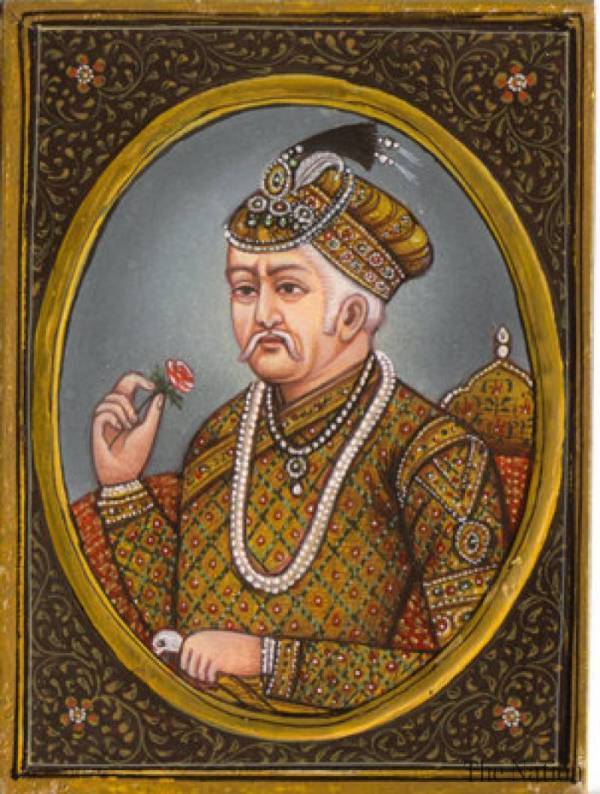
“My father always………”- Jahangir about Akbar! (Post No.2675)

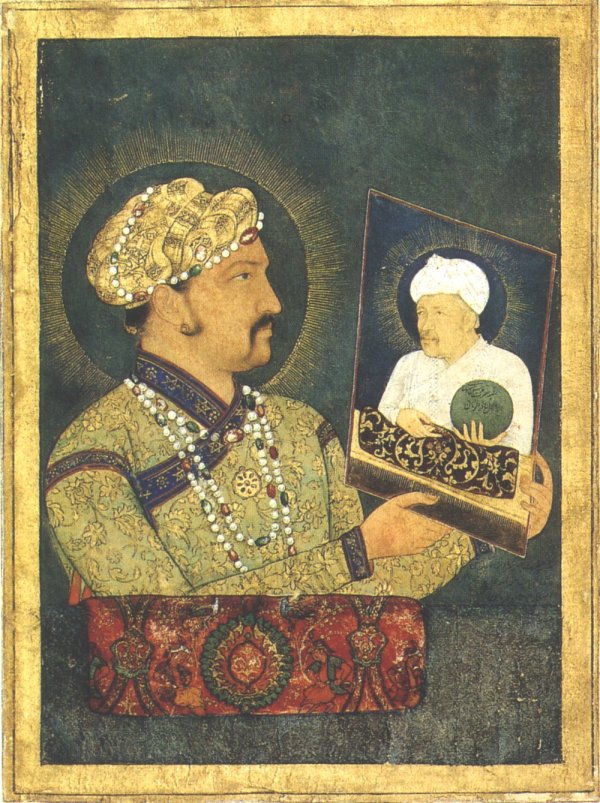
Jahangir_with_portrait_of_Akbar

Jahangir holding a portrait of Akbar.

Compiled by london swaminathan

Date: 29 March,2016

Post No. 2675

Time uploaded in London :–  16-36

( Thanks for the Pictures  ) 

DON’T REBLOG IT AT LEAST FOR A WEEK!  DON’T USE THE PICTURES; THEY ARE COPYRIGHTED BY SOMEONE.

(for old articles go to tamilandvedas.com OR swamiindology.blogspot.com)


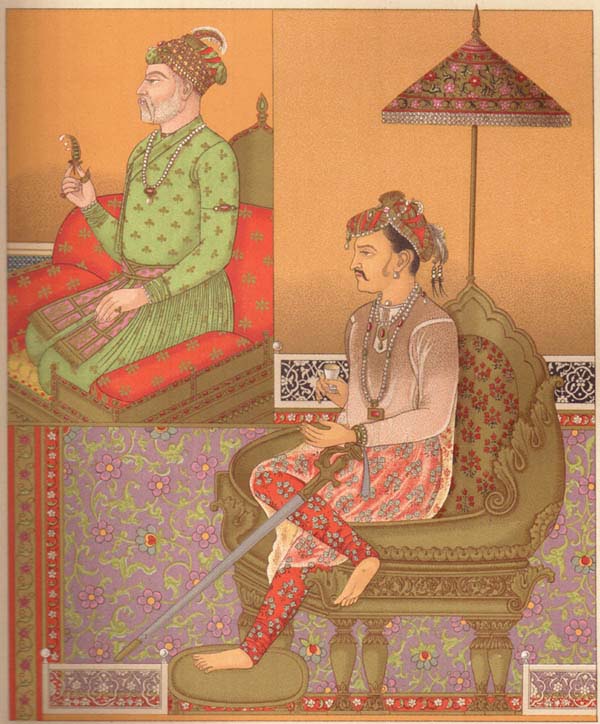
akbarjahangir

“My father always associated with the learned of every creed and religion: especially the Pundits and the learned of India, and, although he was illiterate, so much became clear to him through constant intercourse with the learned and the wise, in his conversations with them, that no one knew him to be illiterate, and he was so well acquainted with the niceties of verse and prose compositions that his deficiency was not thought of.


In his august personal appearance he was of middle height, but inclining to be tall; he was of the hue of wheat; his eyes and eyebrows were black, and his complexion rather dark than fair; he was lion-bodied with a broad chest and his hands and arms long. On the left side of his nose he had a fleshy mole, very agreeable in appearance, of the size of half a pea. Those skilled in the science of physiognomy considered this mole a sign of great prosperity and exceeding good fortune. His august voice was very loud, and in speaking and explaining, had a peculiar richness.


In his actions and movements he was no like the people of the world and the Glory of God manifested itself in him.  Notwithstanding his kingship, his treasures, his fighting elephants and Arab horses he never by a hair’s breadth placed his foot beyond the base of humility before the Throne of God, and never for one moment forgot Him.

the-nav-ratna-of-akbar

He associated with the good of every race and creed and persuasion, and was gracious to all in accordance with their condition and understanding. He passed his nights in wakefulness, and slept little in the day. The length of his sleep during a whole night and day was not more than a watch and a half.  He counted his wakefulness at night as so much added to his life.  His courage and boldness were such that he could mount raging, rutting elephants and subdue to obedience murderous elephants.”

—Emperor Jehangir’s Memoirs


Why I Love Bombay: Edwin Arnold (Post No. 2647)

Bombay_Mumbai_Harbour_Scene_c1880

Compiled by london swaminathan


Date: 19 March 2016


Post No. 2647


Time uploaded in London :–  18-11


(Thanks for the Pictures; they are taken from various sources)


DON’T REBLOG IT AT LEAST FOR A WEEK!  DON’T USE THE PICTURES; THEY ARE COPYRIGHTED BY SOMEONE.


(for old articles go to tamilandvedas.com OR swamiindology.blogspot.com)


From the book India Revisited by Edwin Arnold Published in London in 1886


(Pictures are taken from different sources, not from Edwin’s book)

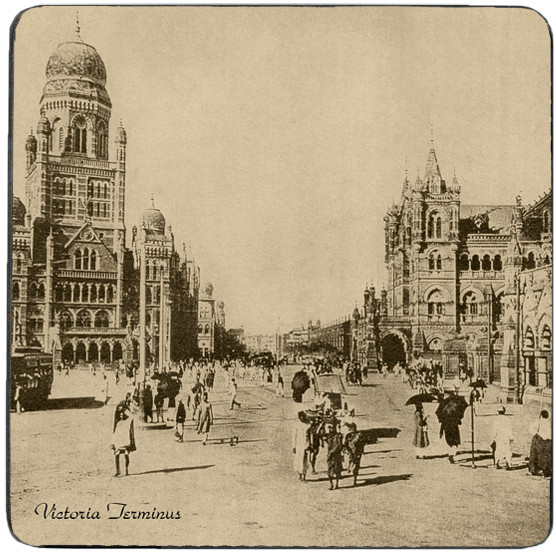
oldbombay2_grande

Augustus said of Rome, “I found it mud; I leave it marble,” and the visitor to India who traverses the Fort and the Esplanade Road after so long an absence as mine might justly exclaim “I left Bombay a town of warehouses and offices; I find her a city of parks and palaces.”


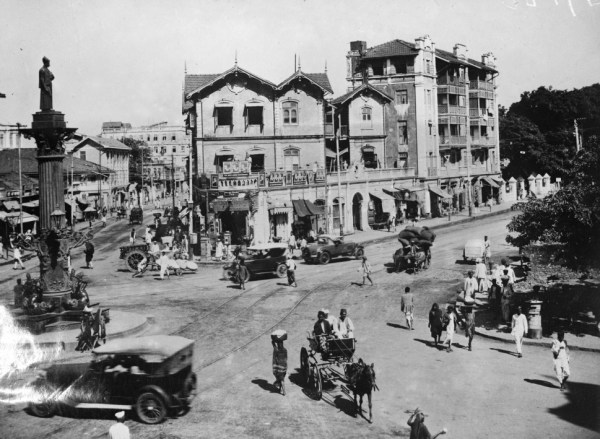
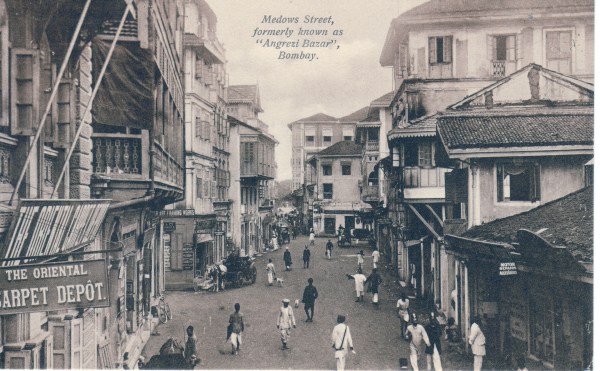
“Even the main native streets of business and traffic are considerably developed and improved, with almost more colour and animation than of old. A tide of seething Asiatic humanity ebbs and flows up and down the Bhendi Bazaar, and through the chief mercantile thoroughfares. Nowhere could be seen a play of livelier hues, a busier and brighter city of life! Besides the endless crowds of Hindu, Gujerati, and Mahratta people coming and going – some in gay dresses, but most with next to none at all – between the rows of grotesquely painted houses and temples, there are to be studied here specimens of every race and nation of the East.

Arabs from Muscat, Persins from the Gulf, Aghans from the Northern Frontier, black shaggy Biluchis, negroes of Zanzibar, islanders from the Maldives and Laccadives, Malagashes, Malays, and Chinese throng and jostle with Parsees in their sloping hats, with Jews, Lascars, fishermen, Rajpoots, Fakirs ,Europeans, Sepoys and Sahibs. Innumerable carts drawn by patient, sleepy-eyes oxen, thread their creaking way amid tram car, buggies, victorias, palanquins and handsome English carriages. Familiar to me but absolutely bewildering to my two companions, under the fierce, scorching, blinding sun light of midday, is this play of keen colours, and this tide of ceaseless clamorous existence.

OldBombay-110624_8_2665237

But the background of Hindu fashions and manners remains unchanged and unchangeable. Still, as ever the motely population lives its accustomed life in the public gaze, doing a thousand things in the roadway, in the gutter, or in the little open shop, which the European performs inside his closed abode. The unclad merchant posts up his account of pice and annas with a reed upon long rolls of paper under the eyes of all the world.


The barber shaves his customer, and sets right his ears, nostrils and fingers, on the side walk. The shampooer cracks the joints and grinds the muscles of his clients wherever they happen to meet together.

The Guru drones out his Sanskrit slokas to the little class of brown-eyed Brahman boys; the bansula player pipes; the sitar singer twangs his wires; worshippers stand with clasped palms before the images of Rama and Parvati, or deck the Lingam with votive flowers; the beggars squat in the sun, rocking themselves to an fro the monotonous cry of ‘Dharrum’; the bheesties go about with water skin sprinkling the dust; the bhangy coolies trot with balanced bamboos; the slim bare limber Indian girls glide along with baskets full of chupatties or bratties of cow dung on their heads, and with small naked babies astride upon their hips.


Everywhere, behind and amid the vast bustle of modern Bombay, abides ancient, placid, conservative India, with her immutable customs and deeply rooted popular habits derived unbroken from time immemorial days. And overhead in every open space, or vista of quaint roof tops, and avenues of red, blue, or saffron hued houses, the feathered crowns of   the date trees wave, the sacred fig swings its aerial roots and shelters the squirrel and the parrot, while the air is peopled with hordes of  ubiquitous, clamorous, grey necked crows, and full of ‘Kites of Govinda’, wheeling and screaming under a cloudless canopy of sunlight.  The abundance of anima life even in the suburbs of this great capital appears once more wonderful, albeit so well-known and remembered of old. You cannot drop a morsel of bread or fruit but forty keen beaked , sleek, desperately audacious crows crowds to snatch the spoil; and in the tamarind tree which overhangs our veranadh may at this moment may be counted more than a hundred red throated parakeets, chattering and darting, like live fruit, among the dark green branches. India does not change!”

postcard-20005-horiz

In the beginning Mr Arnold says:-

“The transformation effected in this great and populous capital of India during the past twenty years does not vey plainly manifest itself until the traveller has landed. From the new light house at the Colaba Point, Bombay looks like what it always was, a handsome city seated on two bays, of which one is richly diversified by islands, rising,  green, and picturesque, from the quiet water, and the other has for its background, the crescent of the Esplanade and the bungalow dotted heights  of Malabar Hill.


He who has been long absent from India and returns here to visit her, sees strange and beautiful buildings towering above the well-remembered yellow and white houses, but misses the old line of ramparts, and the wide expanse of the Maidan behind Back Bay which we used to call ‘Aceldama, the place to bury strangers in”.


And the first drive which he takes from the Apollo Bunder – now styled Wellington Pier – reveals a series of really splendid edifices, which have completely altered the previous aspect of Bombay.

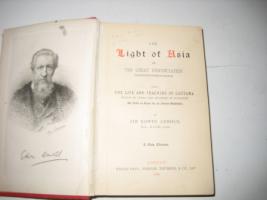
light of asia

Picture  of Edwin Arnold and his book.

Close to the landing-place, the pretty façade of the Yacht Club –one of the latest additions to the city – is the first to attract attention, designed in a pleasing mixture of Swiss and Hindu styles. In the cool corridors of that waterside resort we found a kindly welcome to the Indian shores and afterwards on our way to a temporary home, passed, with admiring eyes, the Secretariat, the University, the Courts of Justice, the magnificent new railway station, the Town Hall, and the General Post Office, all very remarkable structures, conceived for the most part with a happy inspiration, which blends the Gothic and the Indian schools of architecture. It is impossible here to describe the features of these splendid edifices in detail, or the extraordinary changes which have rendered the Bombay of today hardly recognisable to one who knew the place in the time of the Mutiny and in those years which followed it.


-subham-

Mogul Emperor for 72 Minutes only! (Post No 2642)

HUMAYUN BABAR (2)

Written by london swaminathan


Date: 18 March 2016


Post No. 2642


Time uploaded in London :–  6-10 AM


(Thanks for the Pictures; they are taken from various sources)


DON’T REBLOG IT AT LEAST FOR A WEEK!  DON’T USE THE PICTURES; THEY ARE COPYRIGHTED BY SOMEONE.


(for old articles go to tamilandvedas.com OR swamiindology.blogspot.com)


There are very interesting stories in the life of second Mogul emperor Jahangir. The name means ‘a lucky one’. But he was the most unfortunate king in the list of the Moguls. When he was born he was very sick and about to die. His father Babur prayed to god to take his life and save his son’s. God also did the same. Babur died and Humayun recovered dramatically and survived. But he faced lot of difficulties.


As soon as he ascended the throne a Battani leader by name Sersha invaded Delhi. Humayun   chased him but he hid in the mountains. Humayun reached Bengal by pursuing him.


Humayun was the cause for his own downfall. He spent most of the time in partying, womanising and taking opium.

3 NAZIKAI THRONE (2)

When the rainy season started Humayun wanted to return to Delhi but couldn’t do that due to flooding of rivers. Suddenly Shersa came back from the hills and challenged him. Humayun could not tackle him and was forced to make peace with Shersa. Humayun told him that he would give him certain areas. At once Shersa promised him a free passage. Trusting him  Humayun camped with his army on the banks of Ganges.


Shersa attacked him in the night and many of  his commanders were killed. Humayun  had to run for his life. He tried to cross the river on horseback but washed away by the floods. A water man who fills water in the leather bags was swimming with the help of two air filled leather bags. Seeing the Mogul emperor struggling for his life, he went near him and asked him to hold the air filled leather bags. Humayun did it and came to Agra safely. While he was swimming with him, he promised the waterman that he would make him ascend the throne for three Nazika ( one Nazikai is equal to 24 minutes; a day is made up of 60 nazikas).


As promised the waterman was made king for three nazikas in Agra. The waterman was sitting on the throne. He cut his leather bags and made each one a valuable coin with his seal on it. He made his relatives to receive valuable gifts from the emperor.


While Humayun was in Delhi, Shersa attacked him again with his army.  asked hi Humayun’s brothers to help him in the battle. Instead of helping him they also attacked him from other sides.  ran to Persia/Iran where he got the help of the king. He lived there for 15 years. When Shersa and his son died Humayun,  came back to Delhi and ruled the country. His life was a sad story in the chapters of Mogul history.


–subham–


What did Mahmud of Ghazni learn from the Owls? (Post No 2640)

owl story

Written by london swaminathan


Date: 17 March 2016


Post No. 2640


Time uploaded in London :–  7-58 AM


(Thanks for the Pictures; they are taken from various sources)


DON’T REBLOG IT AT LEAST FOR A WEEK!  DON’T USE THE PICTURES; THEY ARE COPYRIGHTED BY SOMEONE.


(for old articles go to tamilandvedas.com OR swamiindology.blogspot.com)


One of the tyrants of Indian sub-continent was Mahmud of Ghazni. He invaded India 17 times and destroyed Hindu temples including the most famous Somanath temple of Lord Shiva. Saying that he was an iconoclast, he broke the 15 foot high Shivlinga in to pieces. He was a fanatic Muslim. He plundered many rich temples and took the booty back to Ghazni in Afghanistan. He displayed them for the public to see. His unruly army damaged lot of valuable things along its way. This unruliness spread to his own country.


His soldiers were looting the villagers and setting fire to their houses and crops in Afghanistan. People were unhappy.


One of his ministers was very intelligent and believed in the rule of law. He learnt the language of animals through a Muslim saint. Mahmud also knew about his minister’s knowledge in this area.

lrg360owls

One day Mahmud and his minister went for hunting. After a long day of hunting they were returning on their horses.  Mahmud saw two owls sitting on a tree and talking. Immediately he stopped the horse and asked his minister to find out what they were talking. The minister pretended to listen to them for some time and came back with a sad face. He told that he couldn’t divulge the contents of their conversation because it wouldn’t be palatable to the king. The king insisted to reveal their talking. The minister told him that he would tell him if he would promise him not to harm him. When he gave him an assurance, the minister told him:

One of the owls wanted to give her daughter in marriage to the son of another owl. He insisted that he would give consent to the marriage provided the she owl give 50 dilapidated villages as dowry with the girl (owl). Immediately that owl replied, “Oh, that shouldn’t be a problem as long as the Mahmud was ruling. Even 500 dilapidated villages can be given as dowry under his rule.”


As soon as Mahmud heard this he hung his head in shame!


-subham-


India, farewell! Poem by Edwin Arnold (Post No 2637)


ilove my indiaCompiled by london swaminathan


Date: 16 March 2016


Post No. 2637


Time uploaded in London :–  6-09 AM


(Thanks for the Pictures; they are taken from various sources)


DON’T REBLOG IT AT LEAST FOR A WEEK!  DON’T USE THE PICTURES; THEY ARE COPYRIGHTED BY SOMEONE.


(for old articles go to tamilandvedas.com OR swamiindology.blogspot.com)


An Adieu

India, farewell! I shall not see again

Thy shining shores, thy peoples of the sun

Gentle, soft mannered, by a kind word won

To such quick kindness! O’er the Arab main

Our flying flag streams back; and backwards stream

My thoughts to those fair open fields I love,

City and village, maidan, jungle, grove,

The temples and rivers! Must it seem

Too great for one man’s heart to say it holds

So many many Indian sisters dear,

So many unknown brothers? That it folds

Lakhs of true friends parting? Nay! But there

Lingers my heart, leave-taking; and it roves

From hut to hut whispering “he knows and loves!”

Good-bye! Good-night! Sweet may your slumbers be,

Gunga! And Kasi! And Saraswati!

-Edwin Arnold

March 8, 1886

From his book India Revisited (Published in1886)

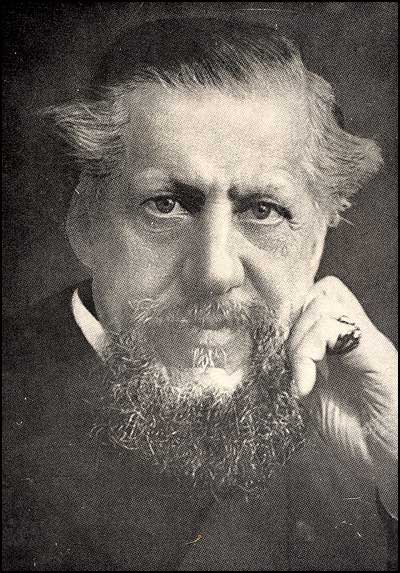
edwin arnold

On the last page of the book he says:

“I leave my heart behind me in leaving these Indian peoples, who have taught me, as I have wandered among them, that manners more noble and gentle, learning more modest and profound, loyalty more sincere, refinement more natural, and sweeter simplicities of life, and love, and duty exist in the length and breadth of British Asia than even I had gathered from my old experiences, before India was “revisited.”

THE END (page 324)

EdwinArnold 1832 – 1904 (English Poet, Journalist and author of many books)

His famous books (poetical works) are:

The Light of Asia, Indian Poetry, Pearls of the Faith, Indian Idylls,The Secret of Death, The Song Celestial (Bhagavad Gita)

-subham-


Socialism is 16 cents each! (Post No. 2616)

democratic-socialism

Compiled by london swaminathan


Date: 10 March 2016


Post No. 2616


Time uploaded in London :–  14-27


( Thanks for the Pictures)


DON’T REBLOG IT AT LEAST FOR A WEEK!  DON’T USE THE PICTURES; THEY ARE COPYRIGHTED BY SOMEONE.


(for old articles go to tamilandvedas.com OR swamiindology.blogspot.com)


churchil2

God of Thieves!


Among the Romans, the deity who presided over commerce and banking was Mercury, who, by strange association, was also the god of thieves and of orators. The Romans who looked upon the merchants with contempt, fancied there was a resemblance between theft and merchandising and they easily found a figurative connection between theft and eloquence; hence thieves, merchants and orators were placed under the superintendence of the same deity.


On the Seventeenth of May, in each year, the merchants held a public festival, and walked in procession to the temple of mercury, for the purpose, the satirist said, of begging pardon of that deity for all the lying and cheating they have found it convenient to practice, in the way of business, during the preceding year.


Xxx

churchill

Orange Woman


One time in Mexico, Carleton Beals had fallen into the habit of buying two oranges from an orange woman near his house. One day, when he was planning to give a party, he undertook to buy her entire stock of four dozen oranges.


Severely she said, “Here are your two”, and handed him his usual purchase.


“But this time I want to buy all the rest of them”.


“Why”, she said outraged, “you can’t; what do you think I would do all the rest of the day with no oranges to sell!”


Xxxx


the-truth-about-socialism

Socialism is 16 cents each!


Andrew Carnegie was once visited by a socialist who preached to him eloquently the injustice of one man possessing so much money. He preached a more equitable distribution of wealth. Carnegie cut the matter short by asking his secretary for a generalised statement of his many possessions and holdings, at the same time looking up the figures on world population in his almanac he figured for a moment on his desk pad and then instructed his secretary,

“Give this gentleman 16 cents. That is his share of my wealth.


–Subham–