Pictures are taken from various sources; this is a non- commercial,
educational blog; posted in swamiindology.blogspot.com and tamilandvedas.com
simultaneously. Average hits per day for both the blogs 12,000.
WHO IS RAYA?
One of the greatest kings of India. He ruled whole of south India in the 16th
century.
WHERE IS KUMBAKONAM?
Kumbakonam is a town in Tamil Nadu with lot of temples.
WHAT IS MAHAMAGAM ?
MAHAMAHAM tank is in Kumbakonam. Every 12 year, a festival is held and lakes of
people come to the tank to take bath. They believe that their sins will be
washed away or their demands will be fulfilled.
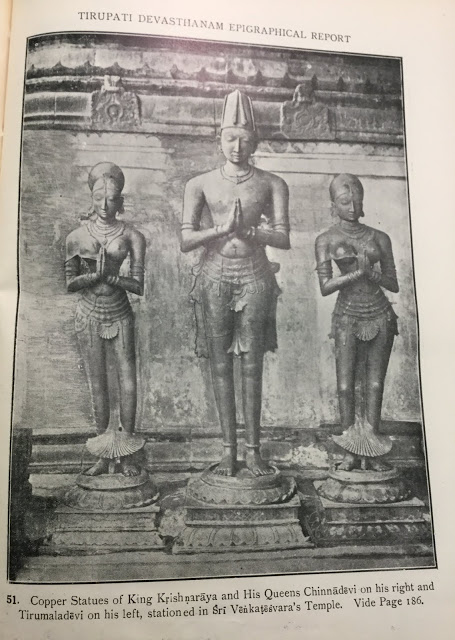
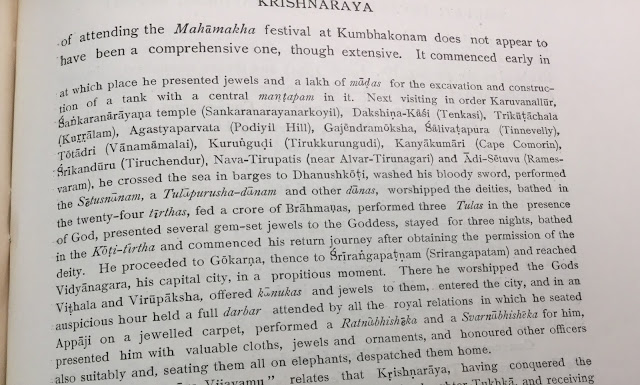
it is interesting to read even a great king came all the way to Kumbakonam.
Here’s the detail
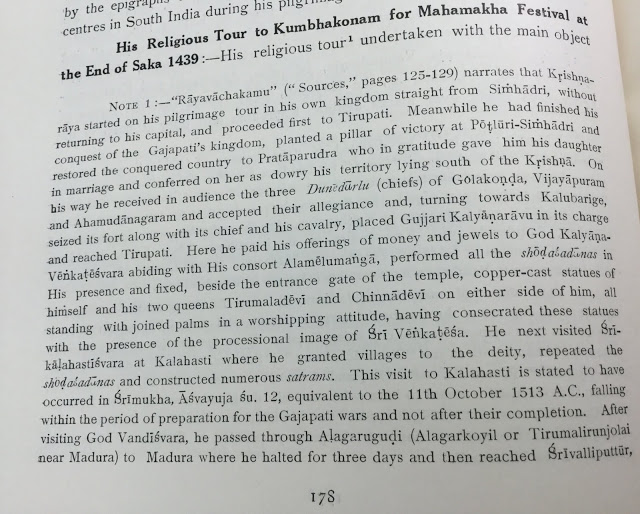
After conquering Gajapati Kingdom he went straight to Tirupati without
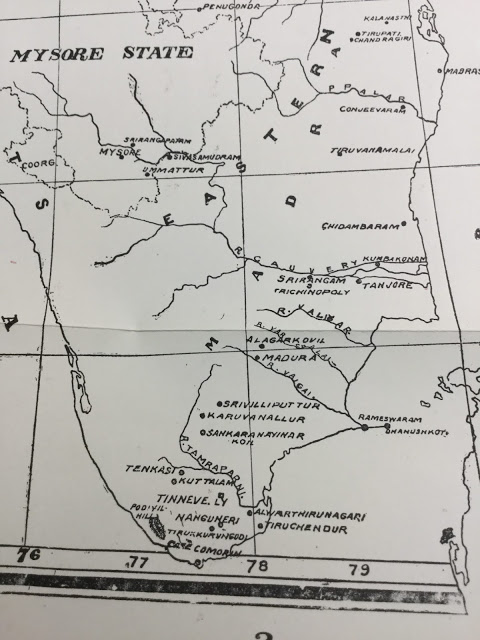
returning to his capital Hampi. He went to Kalahasti, Madurai, Alagarkoil,
Sriviliputur and all Tamil Nadu shrines.
Inscriptions give precise details and they are supported by literature. But
there are minor discrepancies.
He was in Kumbakonam on sixth February 1517.
He stayed in Madurai for three days. (DON’T GET CONFUSED BETWEEN SAKA YEAR AND ENGLISH YEAR)
He stayed in Madurai for three days. (DON’T GET CONFUSED BETWEEN SAKA YEAR AND ENGLISH YEAR)
He stayed in Madurai for three days. (DON’T GET CONFUSED BETWEEN SAKA YEAR AND ENGLISH YEAR).
Pictures are taken from various sources; this is a non- commercial,
educational blog; posted in swamiindology.blogspot.com and tamilandvedas.com
simultaneously. Average hits per day for both the blogs 12,000.
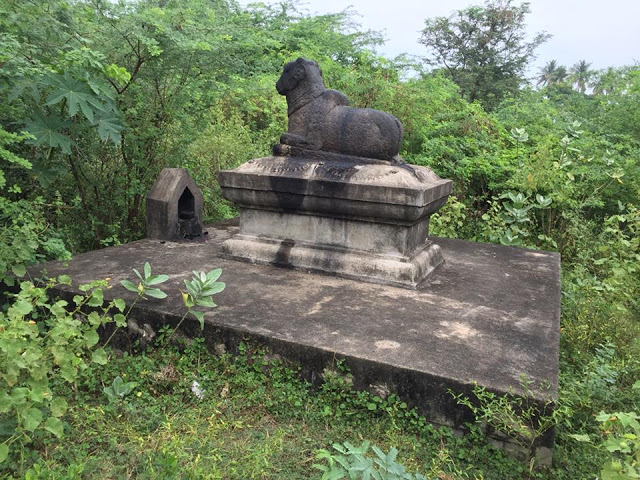
A giant petroglyph of Nandi, found in front of a Shiva
Temple
Nandhi, the bull, is Lord Shiva’s Vahana
Chennai: A giant petroglyph of Nandi, found in front of
a Shiva temple on top of a hill in K Mettupatti village near
Madurai, may be the biggest of ITS KIND IN Tamil Nadu .
The petroglyph of Nandi is 27 feet wide and 30
feet tall
Andhra Pradesh’s second largest petroglyph site, containing
about 80 petroglyphs, has been discovered at Mekala Benchi in Kurnool
district.
Kandanathi, with 200
petroglyphs, the biggest petroglyph site in Andhra Pradesh is
also in Kurnool district.
Petroglyphs are rock
carvings (rock paintings are called pictographs) made by pricking directly on
the rock surface using a stone chisel and a hammerstone.
These Petroglyphs
mostly have images of bulls or bull-riding, in addition to human
figures, an elephant, tiger-like animals and cupules.
While Mekala Benchi
has petroglyphs dating back from the Neolithic to the Megalithic period,
Kandanathi carvings range from the prehistoric to the historic period.
The petroglyphs at
Kandanathi reveal the presence of the Boya community divided into many
exogamous groups such as Mandla (herdsmen) and Yenubothula (buffalomen).
Hundreds of
skeletons are scattered around a site high in the Himalayas, and a new study
overturns a leading theory about how they got there.
Science magazines
around the world have published today (21-8-2019) the latest results of their
studies about the Hindu Mystery Lake in the Himalayas.
I have collected the
details from various reports.
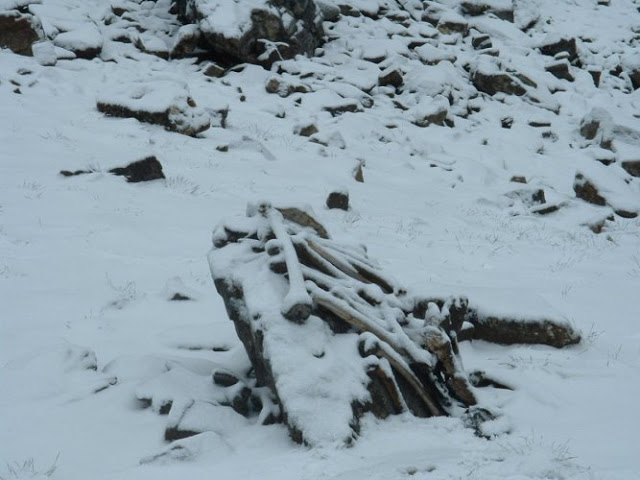
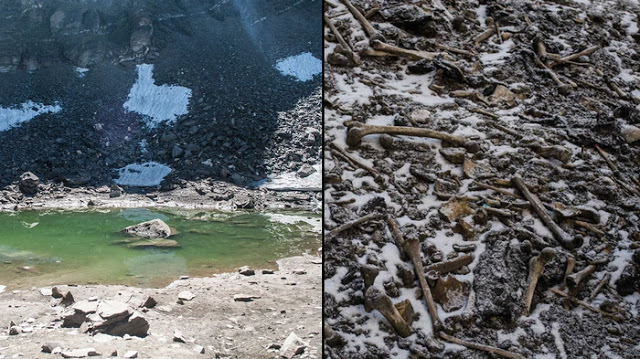
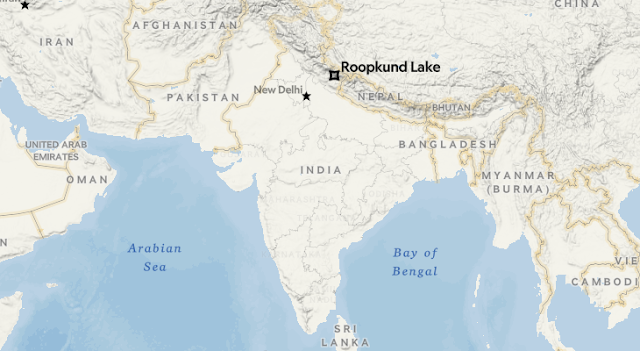
The Roopkund lake
at an altitude of 16,500 ft in Chamoli district of Uttarakhand has hundreds of
ancient human skeletons around its shores.
Untangling a few
knots on the enigmatic skeleton lake mystery, scientists on Tuesday reported
that people belonging to three distinct ethnicities — Indians, Greeks and a lone
South East Asian individual — travelled to the icy lake in the Himalayas
The Roopkund lake at an altitude of 16,500 ft in
Chamoli district of Uttarakhand remains a puzzle to science for more than 60
years, with barely any explanations about hundreds of ancient human skeletons
around its shores
XXXX
skeletons in icy lake
Biomolecular
analyses of Roopkund skeletons show Mediterranean migrants in Indian Himalaya
A large-scale study conducted by an international team of scientists has
revealed that the mysterious skeletons of Roopkund Lake—once thought to have
died during a single catastrophic event—belong to genetically highly distinct
groups that died in multiple periods in at least two episodes separated by 1000
years. The study, published this week in Nature Communications,
involved an international team of 28 researchers from institutions in India,
the United States and Europe.
Situated at over 5000 meters above sea level in the Himalayan Mountains
of India, Roopkund Lake has long puzzled researchers due to the presence of
skeletal remains from several hundred ancient humans, scattered in and
around the lake‘s shores, earning
it the nickname Skeleton Lake or Mystery Lake.
“Roopkund Lake has long been subject to speculation about who these
individuals were, what brought them to Roopkund Lake, and how they died,” says
senior author Niraj Rai, of the Birbal Sahni Institute of Palaeosciences in
Lucknow, India, who began working on the Roopkund skeletons when he was a
post-doctoral scientist at the CSIR Centre for Cellular and Molecular Biology
(CCMB) in Hyderabad, India.
The current publication, the final product of a more than decade-long
study that presents the first whole genome ancient DNA data from India, reveals
that the site has an even more complex history than imagined.
xxx
800 skeletons may be there
First ancient DNA data from India shows diverse groups at Roopkund Lake
Ancient DNA obtained from the skeletons of Roopkund Lake—representing
the first ancient DNA ever reported from India—reveals that they derive from at
least three distinct genetic groups.
“We first became aware of the presence of multiple distinct groups
at Roopkund after sequencing the mitochondrial DNA of 72 skeletons. While many
of the individuals possessed mitochondrial haplogroups typical of present-day
Indian populations, we also identified a large number of individuals with
haplogroups that would be more typical of populations from West Eurasia,”
says co-senior author Kumarasamy Thangaraj of CCMB, who started the project
more than a decade ago, in an ancient DNA clean lab that he and then-director
of CCMB Lalji Singh (deceased) built to study Roopkund.
Whole-genome sequencing of 38 individuals revealed that there were at
least three distinct groups among the Roopkund skeletons.
1.The first group is composed of 23 individuals with ancestries that are
related to people from present-day India, who do not appear to belong to a
single population, but instead derived from many different groups.
2.Surprisingly, the second largest group is made up of 14 individuals
with ancestry that is most closely related to people who live in the eastern
Mediterranean, especially present-day Crete and Greece.
3. A third individual has ancestry that is more typical of that found in
Southeast Asia. “We were extremely surprised by the genetics of the
Roopkund skeletons. The presence of individuals with ancestries typically
associated with the eastern Mediterranean suggests that Roopkund Lake was not
just a site of local interest, but instead drew visitors from across the
globe,” says first author Éadaoin Harney of Harvard University.
XXX
skeletons of three ethnic groups
In a kinder world,
archaeologists would study only formal cemeteries, carefully planned and
undisturbed.
But such an ideal
burial ground wouldn’t have the eerie appeal of Skeleton Lake in Uttarakhand,
India, where researchers suspect the bones of as many as 500 people lie. The
lake, which is formally known as Roopkund, is miles above sea level in the
Himalayas and sits along the route of the Nanda Devi Raj Jat, a famous festival
and pilgrimage. Bones are scattered throughout the site: Not a single skeleton
found so far is intact.
HOW DID THEY FIND IT?
Since a forest ranger stumbled across the ghostly scene during World War
II, explanations for why hundreds of people died there have abounded. These
unfortunates were invading Japanese soldiers; they were an Indian army
returning from war; they were a king and his party of dancers, struck down by a
righteous deity. A few years ago, a group of archaeologists suggested, after inspecting
the bones and dating the carbon within them, that the dead were travelers
caught in a lethal hailstorm around the ninth century.
In a new study published
today in Nature Communications, an international team of
more than two dozen archaeologists, geneticists, and other specialists dated
and analyzed the DNA from the bones of 37 individuals found at Roopkund. They
were able to suss out new details about these people, but if anything, their
findings make the story of this place even more complex. The team determined
that the majority of the deceased indeed died 1,000 or so years ago, but not
simultaneously. And a few died much more recently, likely in the early 1800s.
Stranger still, the skeletons’ genetic makeup is more typical of Mediterranean
heritage than South Asian.
“It may be even more
of a mystery than before,” says David Reich, a geneticist at Harvard and one of
the senior authors of the new paper. “It was unbelievable, because the type of
ancestry we find in about a third of the individuals is so unusual for this
part of the world.”
Roopkund is the sort
of place archaeologists call “problematic” and “extremely disturbed.”
Mountaineers have moved and removed the bones and,
researchers suspect, most of the valuable artifacts. Landslides probably
scattered the skeletons, too. Miriam Stark, an archaeologist at the University
of Hawaii at Manoa who was not involved in the research, pointed out that,
unlike most archaeological sites, Roopkund is “not within a cultural context,”
like a religious site or even a battlefield. That makes the new study “a really
useful case study of how much information you can milk” from an imperfect data
set, she says.
From a scientific
standpoint, the only convenient thing about Roopkund is its frigid environment,
which preserved not only the bones, but the DNA inside them, and even, in some
cases, bits of clothing and flesh. That same environment can make the site
difficult to study.
Veena
Mushrif-Tripathy, an archaeologist at Deccan College in Pune, India, was part
of an expedition to Roopkund in 2003. She says that even at base camp, which
was about 2,300 feet below the lake, the weather was dangerous and turned
quickly. To reach Roopkund, the party had to climb to a ridge above the lake
and then slide down to it, because the slopes surrounding the lake are so
steep.
Mushrif-Tripathy never actually reached the lake; she was stuck at
base camp with altitude sickness. “That was one of my biggest … regrets,” she
says. “Still today, I am not over that.”
As Fernando Racimo, a geneticist at
the University of Copenhagen, points out, ancient-DNA studies commonly focus on
the global movements of human populations over thousands of years. The new
study, in contrast, is “a nice example of how ancient-DNA studies could not
only inform us about major migration events,” Racimo says, “but it can also
tell smaller stories that would have not been possible to elucidate otherwise.”
Stark says that seeing geneticists and archaeologists collaborating to ask
nuanced questions is refreshing. “A lot of the time it seems like the
geneticists are just performing a service,” she says, to prove the hunches of
anthropologists or historical linguists about where a specimen really came from. “And
that’s not what we should be asking.”
To Kathleen Morrison,
the chair of the anthropology department at the University of Pennsylvania, the
least interesting thing about the specimens at Roopkund is where in the world
their DNA says they came from. She points out that a Hellenic kingdom existed
in the Indian subcontinent for about 200 years, beginning in 180 b.c. “The fact
that there’s some unknown group of Mediterranean European people is not really
a big revelation,” she says. She also cautions that radiocarbon dating gets
less and less accurate the closer specimens get to the present day, so the
early-1800s date assigned to the Roopkund specimens with Mediterranean heritage
might not be perfectly accurate.
Besides, knowing that
some of the bones at Roopkund came from a slightly unusual population still
doesn’t shake the fundamental mystery: how hundreds of people’s remains ended
up at one remote mountain lake. Reich and Mushrif-Tripathy are both confident
that the skeletons were not moved to the site. Mushrif-Tripathy believes that
the people whose bones she helped study simply “lost their way” and “got stuck”
near the lake during bad weather. As Reich points out, it’s possible that
remains scattered around the area gradually fell into the lake during
landslides.
Morrison, though,
doesn’t fully buy this explanation. “I suspect that they’re aggregated there,
that local people put them in the lake,” she says. “When you see a lot of human
skeletons, usually it’s a graveyard.”
XXX
Nobody Knows Why Hundreds of People Died at This Creepy Himalayan Lake
Hundreds of people mysteriously died over a millennium at “Skeleton
Lake” in the Himalayas according to a new study, making the creepy
location even more mysterious.
A small glacial lake nestled in the world’s highest mountain range is
the site of hundreds of unexplained deaths spanning more than 1,000 years,
according to a new study.
Roopkund Lake, also known as “Skeleton Lake” because it is cluttered
with human bones, has perplexed visitors for decades. Located over 16,400 feet
above sea level in the Indian Himalayas, it was rediscovered during the 1940s by a forest
ranger. But the shallow lake was clearly known to ancient travelers, many of
whom never made it out alive.
Nobody knows what killed all these people at such a remote location.
Until now, the leading theory was that a brutal hailstorm pummelled all of the travelers to
death at the same time around 800 CE in a single catastrophic event, which
might explain the unhealed compression fractures found on some of the bones.
While deadly hail may account for some of the fatalities, new evidence strongly
suggests that these people met their deaths in multiple different events at the
lake across the centuries.
In a study published on
Tuesday in Nature Communications, a team led by Éadaoin
Harney, a PhD student in evolutionary biology at Harvard University, analyzed
DNA extracted from 38 skeletons. This analysis revealed that many different
populations experienced mortal incidents at the lake, including one that
occurred as late as the 19th century.
“We find that the Roopkund skeletons belong to three genetically
distinct groups that were deposited during multiple events, separated in time
by approximately 1,000 years,” Harney’s team said in the study. “These findings
refute previous suggestions that the skeletons of Roopkund Lake were deposited
in a single catastrophic event.”
The earliest group of deceased travellers identified by the researchers,
called Roopkund_A, contained 23 men and women from a diverse range of South
Asian ancestries. This population was already known to have perished some 1,200
years ago, but radiocarbon dating showed that their deaths were likely not
caused by a single violent storm as previously proposed.
Some of the Roopkund_A individuals were dated to earlier ranges of about
675-769 CE, while others were dated to between 894-985 CE. The gap in time
suggests “that even these individuals may not have died simultaneously,” the
team said.
Even more astonishing is the discovery of a second population, called
Roopkund_B, which died just centuries ago, around 1800. This group contained 14
men and women of eastern Mediterranean descent, who were most genetically
similar to the people of present-day Crete, the largest of the Greek islands.
The third population is comprised of a sole individual, called Roopkund_C, who
was a man of East Asian descent that died at the same time as the Roopkund_B
group.
“Our study deepens the Roopkund mystery in many ways,” said study
co-author Niraj Rai, head of the Ancient DNA Lab at Birbal Sahni Institute of
Palaeosciences in India, in an email. At the same time, the team was able to
rule out common “speculations about the ancestry of Roopkund individuals,” Rai
said.
For instance, since the 1950s, there has been a local theory that the skeletons were left by
the fleeing army of general Zorawar Singh Kahluria, who was killed in an
attempted invasion of Tibet in 1841. This explanation is challenged by the new
discovery of several women at the site, who were unlikely to have been included
in a military expedition.
The hailstorm theory is still plausible for some of the victims, and the
team plans to examine the fractured skulls in their next study, Rai said.
Still, we don’t know how these groups ended up at such an inaccessible
location in the first place. Roopkund Lake lies on the route of the Nanda Devi
Raj Jat, a Hindu pilgrimage, which may have been observed as early as 1,200
years ago. For now, that is the most plausible explanation for the presence of
at least some of the Roopkund_A individuals, the team said.
The remains of the other populations are much harder to explain. The
study concludes that the Mediterranean individuals, who did not seem to have
close familial ties to each other, were probably born under Ottoman rule.
“As suggested by their consumption of a predominantly terrestrial,
rather than marine-based diet, they may have lived in an inland location, eventually
traveling to and dying in the Himalayas,” the team said. “Whether they were
participating in a pilgrimage, or were drawn to Roopkund Lake for other
reasons, is a mystery.”
“Mystery” seems to be the operative word for anything to do with
Roopkund Lake. While the site has become a destination for researchers and
tourists—who have lived to tell the tale of their visits—the secrets of those
who never left remain largely unknown.
Xxx
Himalayan Lake Mystery
ANOTHER REPORT—800 SKELETONS
DNA study deepens mystery of lake full of skeletons
Hundreds
of bodies at Roopkund Lake belonged to pilgrims who perished in a Himalayan
storm more than a thousand years ago—or so researchers thought.
Roopkund, a remote lake high in the Indian
Himalaya, is home to one of archaeology’s spookiest mysteries: the skeletons of
as many as 800 people. Now, a study
published today in Nature Communications attempts
to unravel what happened at “Skeleton Lake”—but the results raise more
questions than answers.
In the early
2000s, preliminary DNA studies had suggested that the people who died at
Roopkund were of South Asian ancestry, and radiocarbon dates from around the
site cluster at 800 A.D., a sign that they all died in a single event.
Now, full genomic
analyses from 38 sets of skeletal remains upend that story. The new results
show that there were 23 people with south Asian ancestry at Roopkund, but they
died during one or several events between the 7th and 10th centuries A.D.
What’s more, the Roopkund skeletons contain another group of
14 victims who died there a thousand years later—likely in a single event.
And unlike the
later South Asian skeletons, the earlier group at Roopkund had a genetic
ancestry tied to the Mediterranean—Greece and Crete, to be exact. (An
additional individual, who died at the same time as the Mediterranean group,
had east Asian ancestry.) None of the tested individuals were related to each
other, and additional isotopic studies confirm that the South Asian and
Mediterranean groups ate different diets.
Why was a
Mediterranean group at Roopkund, and how did they meet their end? Researchers
don’t know and aren’t speculating.
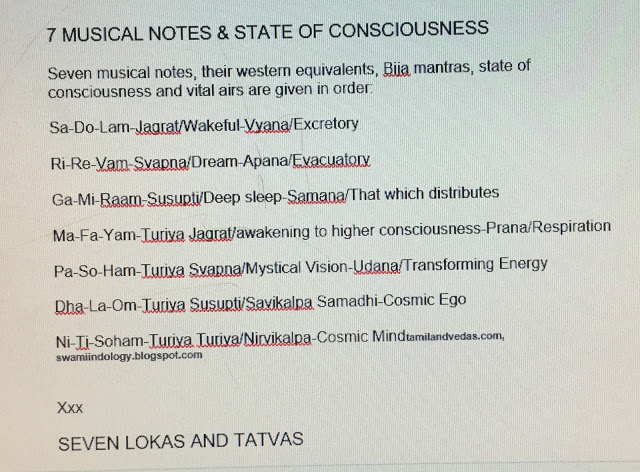
13 Apr 2014 – It
is no wonder 7 was considered a mystic number by
our ancients. … Anandakalippu tune ‘ Nandavanathil Or Andi’ (all Tamil songs) are in this …
Before going any further let me list my earlier posts on Numbers: Mystic No.7 in Music!
(posted on 13th April 2013) Numbers in the Rig Veda (posted on 3rd …
Before going any further let me list my earlier
posts on Numbers: Mystic No.7 in Music! (posted on 13th April 2013) Numbers in the
Rig Veda (posted on 3rd …
7 Feb 2017 – I have already explained the significance
of Number 7 in my two articles as given in the … Mystic No.7 in Music!!
posted on 13th April 2014. 2).
Some people see Seven Matas (seven mothers) as in
Hindu scriptures and others see Seven Demons as described in Babylonian clay
tablets. But Hindus have …
13 Nov 2018 – Post No. 5658.
Pictures shown here are taken from various sources including google, Wikipedia,
Facebook friends and newspapers. This is a …
To be continued
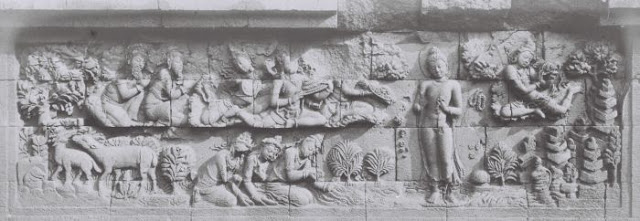
An interesting
story of golden bowl given to Buddha has been described in 1800 year old Sanskrit
book called Lalita Vistara and 1000 year
old sculptures of Borobudur in Indonesia.
Sujata was
the daughter of the village headman of Uruvilva. After a long fast of Buddha,
se gave him milk rice in a golden bowl. But before eating it he went to the
river of Nagas known as Nairanjana to refresh himself. After his bath he wanted
to sit down on the banks of the river. Naga daughter who inhabits the river
brought him a jewelled throne. Seated on
the throne Buddha took his milk rice. After having the food he threw the golden
bowl into the river.
Sagara, the
Naga King, seized it at once and waned to carry it to his
abode. At the same time Indra assuming the shape of Garuda (eagle) and holding
his Vajra weapon in his beak tried to rob the priceless treasure from the Naga
chief. When Indra realised, he was too powerful for him to beat, he took his original
fomr and begged for the bowl. When Indra received it, he took it to the Heaven
and instituted an annual ‘Festival of the Bowl’. The author of Lalita Vistara
says it is still celebrated.
(Today we don’t
know anything about it. So it may be one of the lost festivals of ancient
India)
It was so
popular till Borobudur period and in panels 85 to 89 of Lalita Vistara sculptures
we see them even today. The popular story went up to Indonesia. 120 panels
describe the anecdotes in Buddha’s life as detailed in Lalita Vistara.
Following are
the details found in the sculptures of five panels:
Buddha in
his previous Bodhisatva form, receives the golden bowl from Sujata in his right
hand.
Four divine
personages kneel before him. Celestial Rishis shower on him divine flowers and
ornaments.
Then a Naga
maid offers him the jewelled throne. Another three Naga females kneel before
Buddha
Buddha
seated cross legged on the throne took the food.
Another panel
shows buddha’s empty right hand . Then a hooded Naga receive the bowl and then
give it to Indra. Another peculiar figure with the head dress in the shape of an
elephant trunk is found near the royal personage. Scholars think that it is
Airavata in the shape of a human being.
Airavata is
the elephant Vahana of Indra.
Such a
detailed and popular story has disappeared from India with its Bowl festival!
(The elephant
headed dress is found in North West India and Pallava History as well)
Largest and
longest stone inscription in the world is in Rajasthan,India.
It has 1106
Sanskrit slokas detailing the history of Mewar from 7th century to
17th century.
They are
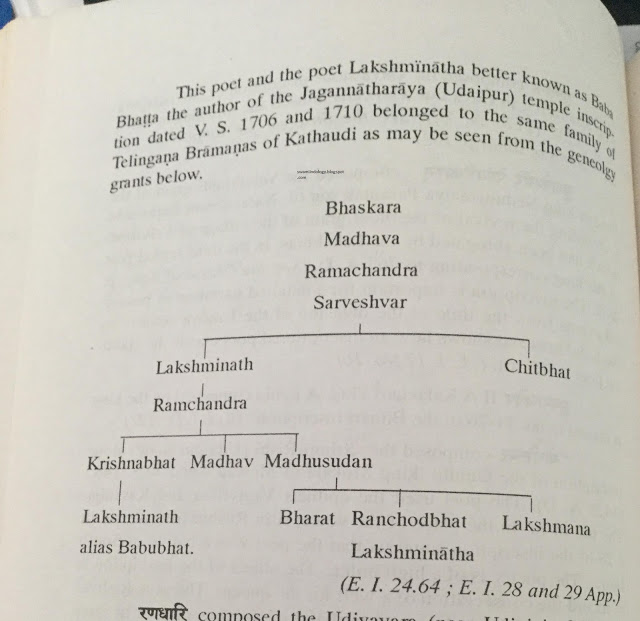
inscribed on 25 marble slabs. It was composed by a Telegu Brahmin who went to
Rajasthan with his family. He has done a book in 24 cantos. The whole book is
on the slabs.
Where is it?
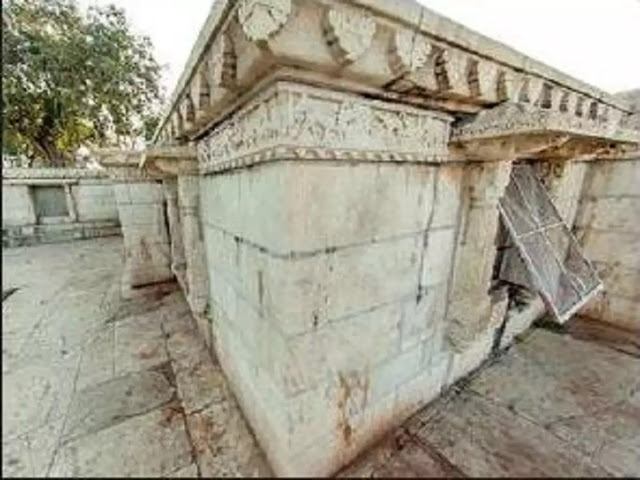
About 40
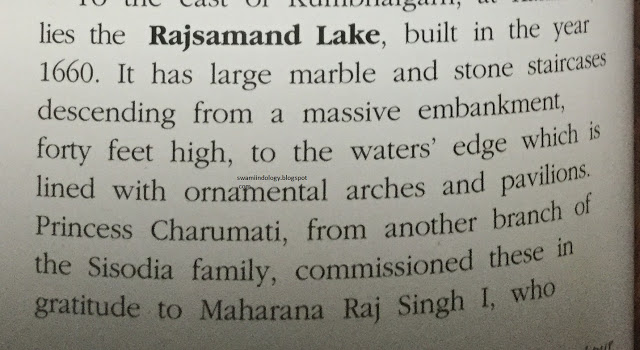
miles from Udaipur is Lake Raj Samand (Raja Samudra). On the banks of this
artificial lake is the inscription. It is 400 years old.
First Woman
to write an Epigraph!
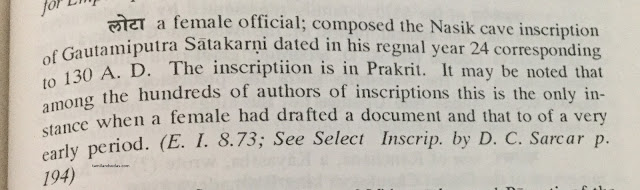
First woman
epigraph writer was Lota of Nasik. She engraved historical information during
the reign of Gautami putra Satakarni who ruled 2000 years ago.
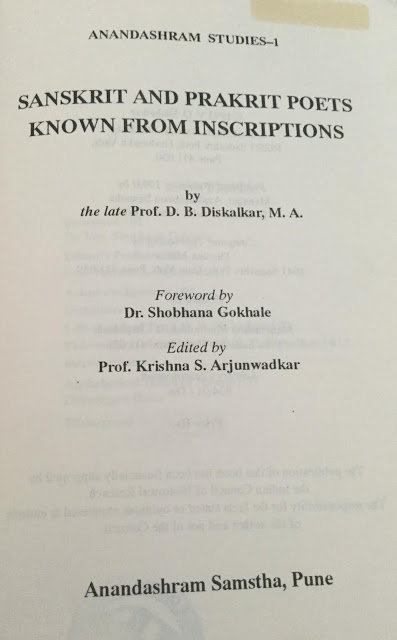
Encyclopaedic
information about 800 Sanskrit and Prakrit poets of Indian inscriptions is in a
book by Prof. Disalkar published from Pune.
When I read
about Ranachota Bhatta, who proclaimed himself as Telenganapati in the book, I googled
for information. To my surprise there was only one article in the Times of
India about this world wonder. Then I went to University of London Library and
gathered some information.
Please see
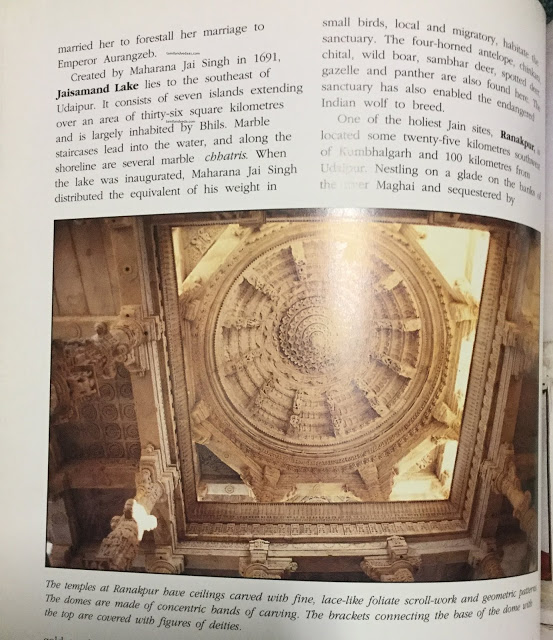
the interesting information about Rana Raj Sing, Princess Charumati, beautiful
marble temples around Raja Samand.
When I visited Sweden, Greece, Italy and USA, I wrote several ideas which would bring money to Indian institutions or government. I copied those ideas from those countries and posted them with pictures in my blogs. Here are some more ideas–
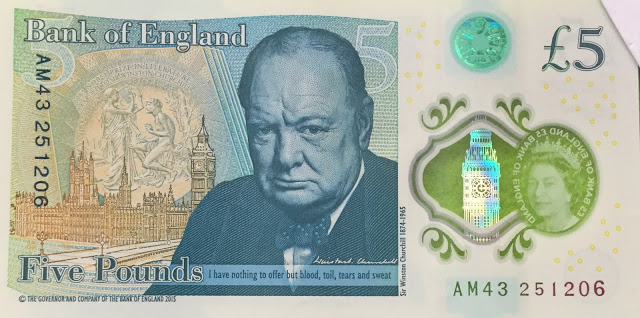
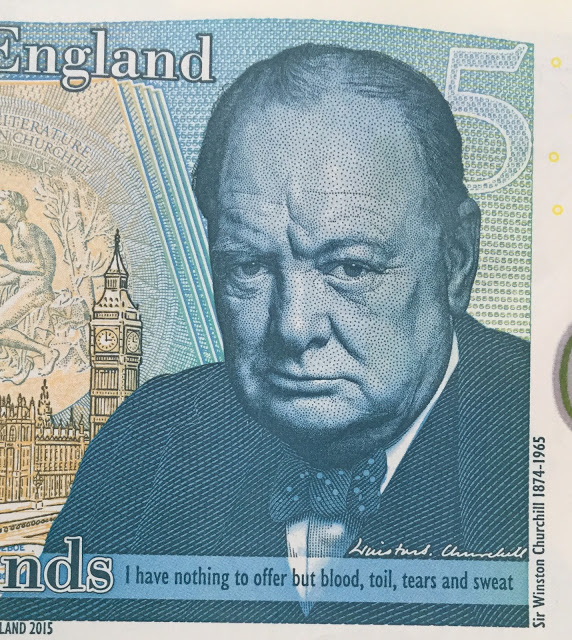
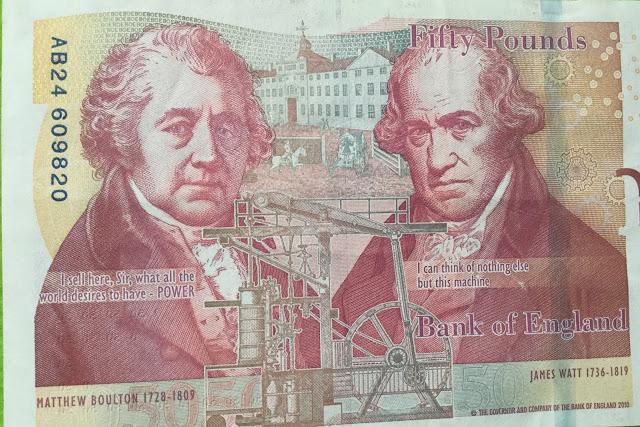
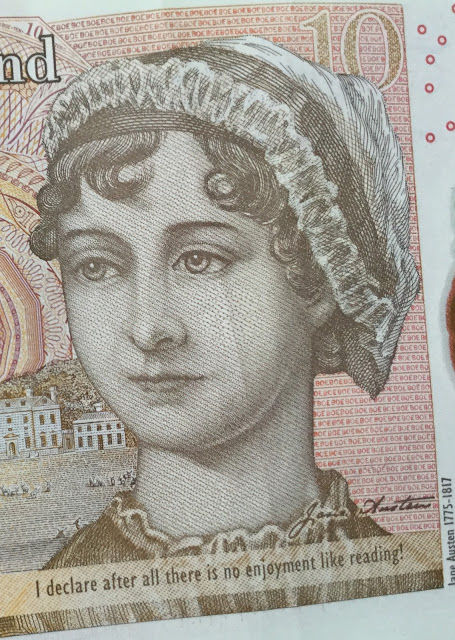
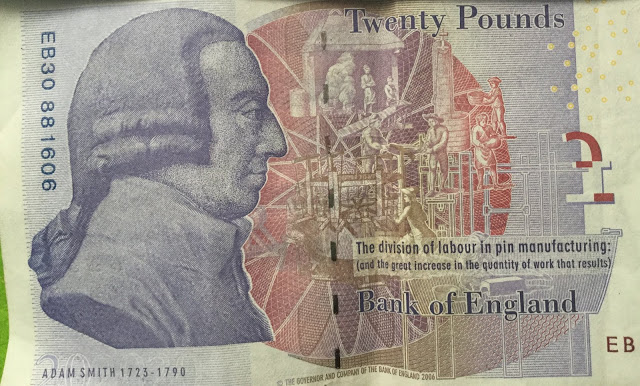
1.CURRENCY NOTES
BRITAIN started issuing plastic money. Each currency note carries figure of a prominent British leader with his or her quotation on it.
Why can’t India do it?
At the moment India has Gandhi’s picture on it. To start with we may add his popular quotations on the currency notes.
Slowly we may also include other pictures of other great Indian leaders with their quotations.
Unlike Britain, India is a vast country with more ancient history with illiterates in large numbers. It may give some teething problems in selection of pictures. Then we have to think about fake currencies as well. With more types of notes with different pictures new problems may arise. It may confuse the illiterates and make them more vulnerable. But we can tackle those problems with the modern technology. Western counties are marching ahead in this field. We may follow them.
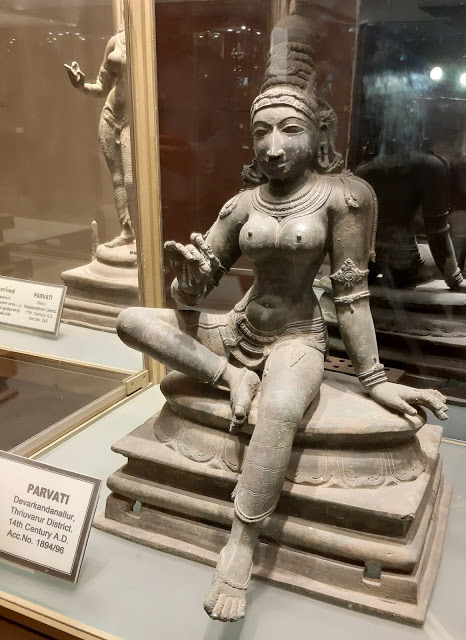
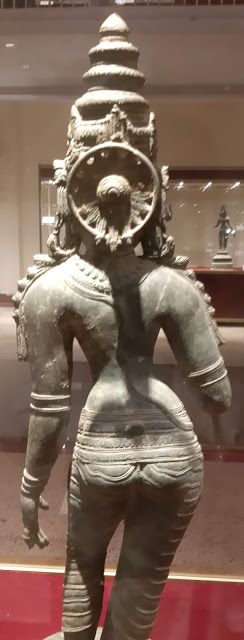
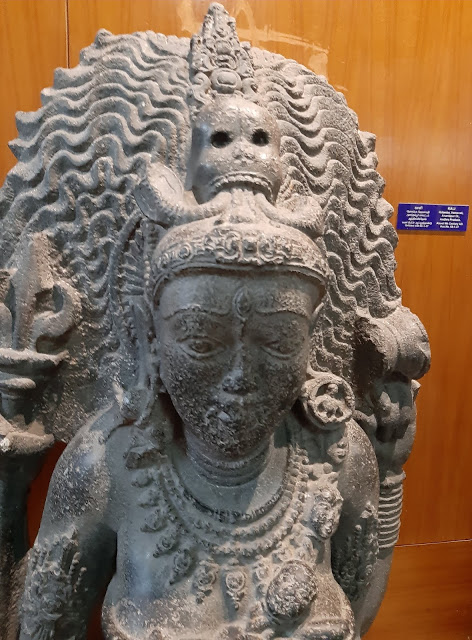
2. MADRAS GOVERNMENT MUSEUM
In the past ten days I have posted hundreds of pictures of rare and beautiful idols and statues in the Government Museum in Chennai. Every museum around the world has a big shop with mementos and pictures. I see none in India. All the foreign museums sell post cards, books, paper weights, pencils, pens, bags, curtains, erasers, money boxes, puzzles, toys , clay models etc with the pictures of museum exhibits. Chennai museum with its billion dollar worth bronzes (idols) can make billions of rupees. To start with such a shop should be auctioned to experts in this field. Government or museum may take 50 percent of the profit. Never ever do it as part of government. It will definitely make loss. A contract may be issued to a firm for two years and then renew it with new terms and conditions. Any one visiting foreign museums would understand what I say. The museum visitors can only exit though the shops in London and other places. Why cant we do it?
3. MISSING PERSONS IDENTIFICATION
Three things always worry me. Whenever I hear such things I pray for them from the bottom of my heart,
When a person says,
My daughter or son is not married yet and their age is above 35 or 40.
My son or daughter has no children yet, though they are married for long.
My son or daughter is missing for many years; no trace of him or her.
These things give me worries whether I know them personally or not. Here is a solution to the last problem- Missing children:-
We hear about electronic tagging of birds and animals to know their movements in the forest or their migratory routes.
We hear about electronic tagging of prisoners when they are released on parole.
Why cant we do something for children on these lines?
I see in London buses and trains lot of girls and boys with body full of tattoos. Summer comes, I see more naked parts with more tattoos; even Indian women show off their strange tattoos. So here are my ideas:-
With all sorts of modern technology of indelible inks, tattooing, invisible ultra violet inks etc. can’t we do some sort of markings on our children with the consent of father and mother? The mark we place on the child may be entered on its birth certificate again with invisible ink. If the child is lost it may help us to trace the child somewhere. If someone goes on mountaineering or forest walking we can do something in the same way which may last for a few months.
Once we start such measures, we can solve all the teething problems and make progress. With advanced technology we can make everyone accountable. Even future ID cards may be done in this way. Even now I can show my eyes to the electronic machine and exit in London airports within a few seconds. Why cant we do something to tackle the missing children problem?



























 Tamil and Vedas