Where is the need for a shield if you have patience? (Post No.3108)

question red

Written by London Swaminathan


Date: 31 August 2016


Time uploaded in London: 18-33


Post No.3108


Pictures are taken from various sources; thanks for the pictures.

get-answers.jpg

There are four Sanskrit couplets which give us practical advice about good and bad virtues. Instead of dry listing of all the virtues in a list, it gives the same message in beautiful slokas. I give below a rough translation and then the Sanskrit verses.

Where is the need for a shield, if you have Patience?

Where is the need for an enemy, if you have Anger?

Where is the need for fire, if you have Relations?

Where is the need for medicine, if you have Friends?

Where is the need for a snake, if you have Bad friends?

Where is the need for money, if you have Knowledge?

Where is the need for jewels, if you have Modesty?

Where is the need for a kingdom, if you have Wisdom?

Where is the need for bad habits, if you have Greediness?

Where is the need for new sins, if you Talk behind one’s back?

Where is the need for penance, if are Truthful?

Where is the need for pilgrimage if your mind is Pure?

Where is the need for strength, if are United?

Where is the need for make ups, if you are Great/Famous?

Where is the need for money, if you are Learned?

Where is the need for death, if you have Stained hands?

kim kim 2 (1)

kim kim 2 (2)

In Sanskrit:

Saantiscet kavachena kim

Kim aribhih kroto asti

Jnaati cet analena kim

Suhrut divya ausadhaih kim palam


Kim sarpaih  yadi durjanaah

Kim dhanair vidhyaa anavadhyaa yadi

Vriida cet kim bhaushanaih

Sukavitaa yadi yadyasti raajyeva kim


Lobhah cet gunena kim

Pisunataa ydyasti kim paatakaih

Satyam cet tapasaa ca kim

suchimano yadhyasti tirtena kim


saujanyam yadi kim balena

mahimaa yadyasti kim mandanaih

savidhyaa yadi kim dhanah

apayasaa yadi kim mrutyunaaasti


–Subham–


Poverty Anecdotes (Post No. 3104)

holes in socks

Compiled by London Swaminathan


Date: 30 August 2016


Time uploaded in London: 9–53 AM


Post No.3104


Pictures are taken from various sources; thanks for the pictures.


Comedian’s Poverty

Ned Shutter ,the 18th century comedian, was often very poor, and being more negligent than poor, was careless about his dress. A friend overtaking him one day in the street said to him,  “Why Ned, are you not ashamed to walk the streets with twenty holes in your stockings? Why don’t you get them mended?”

“No, my friend”, said Ned,

“I am above it and if you have the pride of a gentleman you will act like me, and walk with twenty holes, rather than have one darn”.

“How?” replied the other, “how do you make that out?”

“Why, replied Ned, a hole is the accident of the day, but a darn is a premeditated poverty”.


Xxxx

elegy

Lincoln’s Poverty

When Abraham Lincoln once was asked to tell the story of his life, he replied, “it is contained in one line of Gray’s ‘Elegy in a Country Church Yard’:

“The short and simple annals of the poor.”


Xxx

EdgarAllanPoe-42

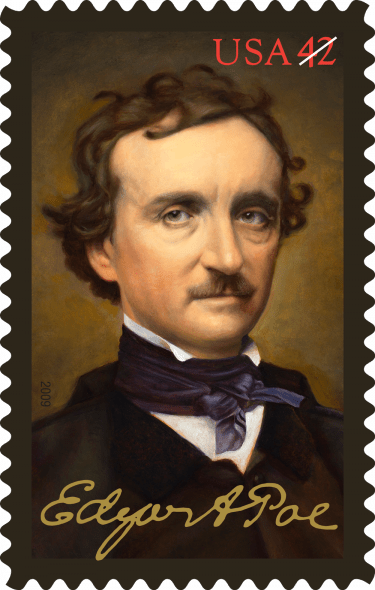
Edgar Allan Poe’s Poverty

In December 1846, Edgar Allan Poe, being in the direst need, inserted a notice in ‘The Express’:

“We regret to learn that Edgar A.Poe and his wife are dangerously ill with the consumption (T.B.), and that the hand of misfortune lies heavy upon their temporal affairs. We are sorry to mention the fact that they are so far reduced as to be hardly able to obtain the necessitates of life. This is indeed a hard lot, and we hope the friends and admirers of M Poe will come promptly to his assistance in his bitterest hour of need.”


Xxx

george_ade

Writer’s Poverty

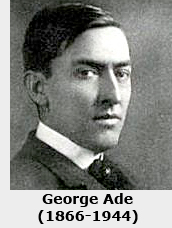
During his early newspaper days in Chicago, George Ade was accustomed to pawn a large old-fashioned gold watch every Monday morning, to tide him over that trying period between weekly pay checks.

Many years later, when he had become nationally known and attained a certain degree of affluence, Ade met his old pawn broker friend on the street.

“Why, George”, asked the old pawn broker “what happened to you? I haven’t seen you in years. Did you lose your watch?”


xxx

Mark Twain’s Poverty

When Mark Twain was a young and struggling newspaper write in San Francisco, a lady of his acquaintance saw him one day with a cigar box under his looking in a shop window.

Mr.Clemens (Mark Twain), she said, I always see you with a cigar box under your arm. I am afraid you are smoking too much.

“It is not that I am moving again, said Mark


m twain

xxx

Quarrelsomeness Anecdotes

Keats was a famous little fighter, less in truculent self-assertiveness than by way of high chivalry and defence of the right.

According to his school fellow. E Holmes , “He would be fighting anyone — morning, noon and night, his brother among the rest. It was meat and drink for him.”

Xxx


How many Law Books Hindus have? Why? (Post No.3102)

31oeb-hindu_jpg_645950e

Written by London Swaminathan


Date: 29 August 2016


Time uploaded in London: 13-41


Post No.3102


Pictures are taken from various sources; thanks for the pictures.

cover manusmriti

India is the most civilized country in the world? How do we know it? What is the proof?


The proof lies in the OLD Law Books Hindus own. Law books are called ‘Smritis’ in Sanskrit.

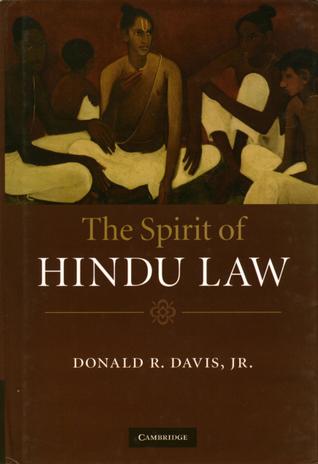
Manu’s Law Book, known as Manu Smriti or Manava Dharma Sastra, is famous and notorious! Famous because that is the oldest law book, older than the Hammurabi Code of 2600 BCE. The subjects it deals with in 12 chapters in approximately 2700 couplets are wholesome and enormous. Manu has been referred to in the oldest book in the world- The Rig Veda. What we have today is only the latest updated version, because Narada Smriti says the original Manu Smriti contained 100,000 couplets like Mahabharata. It is notorious because of its caustic remarks about the lowest caste of India – the Shudras, which are later additions or interpolations. One who reads the whole book will come to this conclusion.


Is it the only law book that Hindus follow? No. Because the cunning and divisive foreigners translated this first to use against the Hindus, the world came to know about it. They knew that most of the Hindus are simpletons and believe whatever written in English by a white skinned man. They also knew Hindus are chatter boxes and talk about anything in the world without reading a single book in full. They also knew that Hindus are very catholic in their outlook and take whatever given to them without knowing that they are actually ‘time bombs’.

The Vedas are called Shruti i.e. that which is heard by the seers. They receive it like we receive different broadcasts or stations on radio. Next in order to Shruti in authority comes the SMRITI i.e. that which is remembered.

So let me tell you how many law books we have and why?


manusmriti-the-hindu-law-book-economic-ideas

(1).Manu Smriti (12 Chapters: 1.Origin of the Universe, 2.Duties of the Student, 3. Duties of the householder, 4.duties of the Snataka, 5.Food, impurities, Women 6.Forest dweller, Ascetic, 7.Duties of a King, 8.Administration of Civil and Criminal law, 9.Laws for husband and wife, laws of inheritance, Royal duties 10.rules of Four castes 11. Laws on penances, 12.Transmigration and Supreme Bliss.

(2).Yajnavalkya Smriti consists of 3 chapters (Adyayas) containing 1010 couplets (slokas): 1.Achara (conduct), 2.Vyavahara (Civil Law), 3.Prayaschita (Penance)

(3).Vishnu Smriti

(4).Narada Smriti

(5). Shankha Smriti

(6).Likhita Smriti

(7).Parasara Smriti


(8).Apastamba sutra

(9).Gautama sutra

(10).Vasishta sutra

(11).Baudhayana sutra


These books deal with Dharma (moral conduct rules). But there are books on economics such as Artha Shastra of Kautilya, Brihaspati Shastra, Sukra Niti which deals with punishments for economic offences. Several of the Law Books are lost.

There is a couplet in Sanskrit which says,

“The Laws of Manu are declared for the Krita Yuga, those of Yajnavalkya for the Treta Yuga; those of Shanka and Likhita are recommended for the Dwapara Yuga, those of Parashara are remembered for the Kali yuga (current yuga)”

Krute tu maavaa: proktaas tretaayaam yaajnavalkyajaa:

Dwaapare shankkalikhitaa: kalua paraasaraa: smrutaa:

 manu 2

Manu smriti says:

“The Veda is known as Shruti, the Dharmashastras as Smriti: these should not be doubted (but carefully consulted and considered) in all matters, for from them Dharma arose.”

Shrutistu vedo vinjeyo dharmasaastram tu vai smruti:

Te sarvaartheshvamiimaasye tabhyaam dharmo hi nirbabhau

Manu 2-10


What do they indicate:

1.A community needs different codes of conduct to suit the needs of people living in different areas at different times

2.Change is inevitable; so introduce new books or update the old version; this is used by the foreigners to give a false date for each book.

3.Whenever Hindus met elders or seers they introduced themselves with their names, part of the Veda they are mastering and the Law Book/ Dharmasutra they are following. (For instance, I bow to the elders at my house saying I recite Yajur Veda and follow Apastamba Sutra)

4.Since no country in the world has so many law books during a span of 3000 years, and since nobody recites to his elders what law book he is following we have to accept that Hindus are more civilized and advanced in the area of codifying laws.

yajna smrti

–subham–

30 Quotations on Desire from Indian Literature (Post No.3100)

GANESH WITH NAM

Written by London Swaminathan


Date: 28 August 2016


Time uploaded in London: 18-29


Post No.3100


Pictures are taken from various sources; thanks for the pictures.


September 2016 Good Thoughts Calendar

Festivals in September:

4-Sama Veda Upakarma

5-Ganesh Chathurthy

13- Tiru Onam and Bakrid

17- Mahalaya Paksha begins

30-Mahalaya Amavasai


Auspicious Days- 4, 5, 8, 14, 15

Full Moon/Purnima- 16

New Moon/Amavasya- 1, 30

Ekadasi Fasting Days- 12/13, 26/27
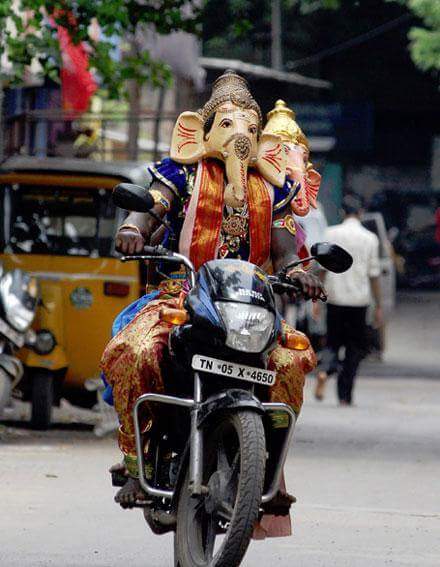
 chennai ganesh motorcycle


September 1 Thursday

Acting out of desire is not approved of, but here on earth there is no such thing as no desire; for even studying the Veda and engage in the rituals enjoined in the Veda are based upon desire – Manu 2-2


September 2 Friday

Desire is the very root of the conception of a definite intention, and sacrifices are the result of that intention; all the vows and duties are traditionally said to come from the conception of a definite intention – Manu 2-3


September 3 Saturday

Not a single rite is ever performed here on earth by a man without desire; for each and everything that he does is motivated by the desire for precisely that thing- Manu 2-4


September 4 Sunday


The man who is properly occupied in these desires goes to the world of the immortals, and here on earth he achieves all the desires for which he has conceived an intention. Manu 2-5


September 5 Monday

He whose soul is not in union with the Divine is impelled by desire, and is attached to the fruit of action and is therefore bound — Bhagavad Gita 5-12

ganesh blue

September 6 Tuesday


Only those who do penance could be considered as doing their duty;

The others who give way to their desires, fall a prey to blighting vice – Tirukkural 266


September 7 Wednesday

It is not right to forsake what is at hand anticipating distant happiness -Padmapraabhdraka


September 8 Thursday

Don’t leave your husband desiring the King- Tamil proverb


September 9 Friday

Impossible desires will never be fulfilled; in fact they may turn into obstacles –Subhasitavali


September 10 Saturday


Desire  invites misery – aasaa duhkhasya kaaranam

ganesh drawing by cat.

September 11 Sunday

Weeds harm the fields, desire harms human nature; offerings given to those free from desire bring a great reward- — Dhammapada 359


September 12 Monday

I have conquered all; I know all, and my life is pure; I have left all, and I am free from desires. — Dhammapada 353


September 13 Tuesday

Those who are slaves of desires run into the stream of desires, even as a spider runs into the web that it made– Dhammapada 347


September 14 Wednesday

The man who free from desires finds joy in solitude, but when free he then returns to his life of old desires, people can say of that man: He was free and he ran back to his prison! — Dhammapada 344


September 15 Thursday

When the thirty six streams of desire that run towards  pleasurers are strong, their powerful waves carry away that man without vision whose imaginings are lustful desires. — Dhammapada 339

ganesh indonesia

September 16 Friday


Once desire grips, patience flees-Aasaapare na dhairyam


September 17 Saturday

Acute desire is painful; lack of it is bliss – aasaa blavatii kastam mairaasyam paramam sukham –Subhasitavali


September 18 Sunday

Those who are slaves to desire are indeed slaves of the world – aasaayah khalu ye daasaaste daasaa  jagataamapi


September 19 Monday


Has anyone seen the shores of desire? – Kahavatratnakar


September 20 Tuesday


Just as a tree, though cut down, can grow again and again if its roots are undamaged and strong, in the same way if the roots of craving/desire are not wholly uprooted sorrows will come again and again. — Dhammapada 338
ganesh ivory

September 21 Wednesday

Therefore in love I tell you, to you all who have come here; cut off the bonds of desires, as the surface grass creeper birana is cut for its fragrant root called usira – — Dhammapada 337


September 22 Thursday


But whoever in this world overcomes his selfish desire, his sorrows fall away from him, like drops of water from a lotus flower. — Dhammapada 336


September 23 Friday

A wild jackal longs for ‘elephanthood’! – Kahavatratnakar


September 24 Saturday

Desire does not diminish though the body withers – Ramayanamanjari 1-10-465


September 25 Sunday

If a man watches not for Nirvana, his cravings grow like a creeper and he jumps from death to death like a monkey in the forest from one tree without fruit to another – Dhammapada 334

ganesh, Thailand

September 26 Monday

Even if the moustache turns grey, desire never becomes grey — Tamil proverb


September 27 Tuesday

Time teases, age advances, yet the grip of desire loosens not! – Mohamudgara


September 28 Wednesday


And when his cravings overcome him, his sorrows increase more and more, like the entangling creeper called ‘birana’ — Dhammapada 335


September 29 Thursday

Hope sustains life – aasaa lokasya jiivanam


September 30 Friday

Hope makes bearable even the intense sorrow of separation – Sakuntalam 4-16

ganesh procession

–Subham–


Teacher teaches you only 25%- Hindu concept of Education (Post No. 3099)

boys play 1

Written by London Swaminathan


Date: 28 August 2016


Time uploaded in London: 8-45 AM


Post No.3099


Pictures are taken from various sources; thanks for the pictures.


I came to know about the beautiful concept of teaching in ancient India when I interviewed Mayuram Sri A V Swaminatha Sivachariar in London on Friday. He is running a Vedic School in Mayuram.


When I asked about the courses available at his school, he told me that they teach certain portions of Vedas and Agama for five years; the course is recognised by Tamil Nadu Government; and the successful students can be employed as priests in Hindu temples.


When I asked about the general education they get, he told me Mr Sankaran, a philanthropist from Australia, teaches English to Veda Patasala students. He is doing this charity work even in the villages helping all the communities.


Asked about the general knowledge to survive in the world, Sri Sivachariar told me that he knew very well the need for such things because of increasing demand of qualified Hindu priests overseas. So the students are taught general knowledge as well.

children 3

But when I expressed my unhappiness that the students are not even getting a qualification like SSLC (school final exam in Tamil Nadu), and their survival in the world would be difficult, Sivachariar gave me some amazing details about the Hindu concept of teaching:-

He quoted the following couplet: –


one fourth from the teacher, one fourth from own intelligence,
one fourth from classmates, and one fourth only with time.


AchAryAt pAdamAdatte, pAdam shiShyaH swamedhayA |
sa-brahmachAribhyaH pAdam, pAdam kAlakrameNa cha ||


When I heard it, I felt very happy and fully satisfied. I compared it with what my children did in London. Yesterday I gave the details from his interview that Hindus were pioneers in introducing eight-day holiday in schools, revision in classes, introducing finger calculators and introducing new memory techniques.


Many jobs are learnt in the field and on the job. In the olden days many of the artists and artistes never went to school, but learnt them on the job under the tutorship of elders or parents. But Veda Patasalas (Vedic Schools) had a mixture of old and modern elements. Only 25 % of education comes from the teachers and the rest comes from experience, maturity, discussion and self-efforts.


Even the Bhagavad Gita says,

“Let a man lift himself by himself; let him not degrade himself; for the Self alone is the friend of the self and Self alone is the enemy of the self. (BG 6-5)


And Buddha also said,

“The Self is the Lord of the Self” – Dhammapada 160

girls school

Like in Western schools, the students are asked to discuss among themselves what they have learnt, they are asked to learn on their own and rest came from experience and maturity.


It is very interesting to know that they have been following it in Vedic schools for thousands of years. A teacher teaches the same subject to all the students, but one or two students stand out; they become scientists or scholars or leaders. Why? It is because they learn 75% on their own.


If we create an awareness about this 25%+ 75% learning and follow it, it will help the students a great deal. In places like London, the students are asked by the teachers to come with points for discussion on a topic. One group will support and another group will oppose it. Students prepare most of the materials with the help of parents and computers.


–subahm–


How much is Queen’s Letter worth? Shrewdness Anecdotes – Part 4 (Post No. 3097)

Queen_Victoria_by_Bassano

Compiled by London Swaminathan


Date: 27 August 2016


Time uploaded in London: 21-01


Post No.3097


Pictures are taken from various sources; thanks for the pictures.


Queen’s Letter 25 pounds

A wastrel grandson of queen Victoria once begged her highness by letter for an advance on his allowance. The severe queen answered with lengthy rebuke of his way of life, and a great deal of additional advice, exhorting him to thrift and diligence. Although no money had been sent the good queen shortly received a letter of thanks from the young man, explaining that he had followed her precepts literally by selling her letter for 25 pounds.


Xxxx

ticketpark

Five days for police to find a car!

A certain motorist drove his car to work one day and parked it in front of his office.  Coming out some hours later he perceived that it was covered with a number of tickets for an assortment of offences and violations of parking and traffic rules.

He conceived an ingenious way of extricating himself from the difficulty. Calling the police from his home address he reported his car as lost. With interest, as time went by, he passed in and out of his office watching the slow accumulation of additional penalties piling upon the forlorn automobile.

It took the police five days to find it.


Xxx

Anarchist and Atheist

Uncomfortably crowded once in a London bus, Edmund Gosse said to his companion, W M Rosetti, I understand you are an anarchist.

I am an atheist, replied Rosetti in a loud voice

My daughter is an anarchist. A sufficient number of people left the us indignantly to make Goss and Rosetti comfortable.


Xxx

To the Egress

P T Barnum solved the problem of overcrowding in his popular New York museum where customers prone to linger overlong, by rigging up a corridor toward a door way to the street and displaying above it prominently the sign TO THE EGRESS.


Xxxx

pecan

Can you crack Nuts?

Marshall Field, 3rd, according to a story that was going the rounds at the turn of the century, bade fair to become a very cautious business man. Approaching an old lady in a Lakewoood hotel, he said

“Can you crack nuts?”

“No, dear”, the old lady reported, “I lost all my teeth ages ago”.

Then requested Master Field, extending two hands full of pecans , please hold this while I go a and get some more.


Xxx

Lincoln’s One More Trick

Seeking to raise enough money for a volunteer fire department in Spring field, a committee approached Abraham Lincoln for subscription. He expressed sympathy for the movement but said

I will tell you what, boys, I will talk it over with Mrs Lincoln tonight.

Here is what I will say, “My dear, there is a subscription paper being handed around to raise money for a new hose cart for the fire department. The committee called on me today and I told them I would talk it over with you. Don’t you think we had better subscribe 50 dollars? Then she will look up quickly and say, Oh, Abraham, Abraham! Will you never learn? You can’t afford it.Twenty five dollars is quite enough.

Mr Lincoln chuckled as he added, “Bless her dear soul, she will never find out how I got the better of her. Come around tomorrow, boys, and get your 25 dollars”.

speeches_lincoln

Xxxx Subham xxxx


Never run after your Hat! Shrewdness Anecdotes – Part 3 (Post No.3094)

top-hat-flying_2256212k

Compiled by London Swaminathan


Date: 26  August 2016


Time uploaded in London: 8-18 AM


Post No.3094


Pictures are taken from various sources; thanks for the pictures.


Valentine Williams says, “I was walking with Sir Herbert Tree one day when my hat blew off. I was about to hurl myself into the thick of traffic in pursuit when Tree restrained me

My brother Max says, he told me gravely, “Never run after your hat someone sure is to bring it to you”.

True enough a moment later, a passer-by dashed up breathlessly and restore d my hat to me.


Xxx


Shrewder Blind Man

One sunny May Day in Central Park a blind man was tapping for attention with his cane and carrying on his chest a sign Help the Blind. No one paid much attention to him. A little farther on another blind beggar was doing better. Practically every passer-by put a coin in his cup., even some turning back to make their contributions.

His sign said, “It is May — and I am blind”.

Xxx

hang-knot-1188238

Hang him before……

Tribulations was jester to Francis I. A great Lord offended at his sallies threatened to flog him to death. Tribulations went to complain to his master.

If he does it, said the King, I will hang him a quarter of an hour after.

Thank you, cousin, piped the jester, but if it is all the same to you, couldn’t you do it a quarter of an hour before?


Xxx

Lincoln’s Trick

Once when a deputation visited Lincoln and  urged emancipation before he was ready. He argued that he could not enforce it even if he proclaimed it.

He asked, “How many legs will a sheep have if you call the tail a leg?

“Five”, they answered

You are mistaken, said Lincoln, for calling a tail a leg don’t make it so.

sheep6

–Subham–
 

Four More Shrewdness Anecdotes (Post No.3092)

CORNELIA

Compiled by London Swaminathan


Date: 25  August 2016


Time uploaded in London: 17-07


Post No.3092


Pictures are taken from various sources; thanks for the pictures.


1.Autograph Sale!

Cornelian Otis Skinner (American author and actress) declares that as a child she was so ugly that her mother used to weep.  “But I did have a genius for something even then”, she says.

I was good at trade and I made money from dad. He thought I was a good correspondent; I was; for every letter I wrote him, I received an answer. I cut the Cornelia from the address on the envelope containing his reply, and sold the Otis Skinner as my father’s autograph. Sometimes it brought a dime, sometimes a quarter”.


Xxx

2.Otto Kahn

Otto Kahn, the well-known financie , was one day driving through the East Side of New York when he saw a large sign reading,

“Samuel Kahn, cousin of Ottoman Kahn”

He immediately called up his lawyer, instructing him to have the sign changed, sparing no expense.  A few days later Kahn drove by the place again. The offending sign had been changed. It read, Samuel Kahn, formerly cousin of Otto Kahn.


Xxxx

(3)Thousand Dollars a Week!

When the films were in their infancy, David Freedman claimed to have arranged a splendid contract for Francis X Bushman by a well-conceived stratagem. Bushman had been playing in Chicago at 250 dollars a week. Freedman brought him to New York and met him at grand central to take him across the Broadway to the office of Metro. Freedman carried a sack of 2000 pennies. He stewed these along behind him in a thin trickle as they walked.


First children and then curious adults began to follow. By the time they had crossed 42nd street to Broadway and entered the office of Metro, a vast throng was surging in their wake. Looking out the window, the executive of Metro was easily induced to sign Bushman at a thousand dollars a week.


Xxx

4.Boy and the Blacksmith

A boy, generally known about the village as being not too bright was annoying the busy blacksmith. Hoping to scare him away, the blacksmith finally held a red hot piece of iron under the boys nose.

“If you give me half a dollar I will lick it” , said the simple looking youngster.

The smith held out the coin. Without a word the boy took the coin and licked it, dropped it in his pocket, and whistling softly walked away.


— Subham–

Rabelais and Shrewdness Anecdotes (Post No.3088)

rabelais 1

Compiled by London Swaminathan


Date: 24  August 2016


Time uploaded in London: 18-33


Post No.3088


Pictures are taken from various sources; thanks for the pictures.


gargantua-252683

A sidewalk pitchman was disgusted by his failure to elicit any profitable response from the large crowd assembled around him.

“You pikers, he said in disgust, are too tight to offer me 50 cent for a dollar”.

“I will”, someone spoke up.

“All right, said the pitch man, handover the fifty cents.”

“I am not taking any chances. Take it out of the buck and hand me the change”.


Xxx


(Francois Rabelais (1494-1553) was a French writer. He wrote Gargantuan and Pantagruel, a hilarious classic of French literature and one of the greatest books ever written.  He was a Greek scholar and joined a monastery.)


Rabelais once found himself stranded in a village in southern France without a sou (a former French coin of low value) to get him back to Paris.  He took this means to obtain quick and easy passage to the French capital.


He engaged a room in the only tavern in the town and asked for a secretary to assist him in some writing. The mistress of the inn sent him her son, a sharp lad about twelve years old.


Rabelais said to his ‘secretary’, “My boy, we are about to undertake a very serious business here. I want you to sit down here and print these labels for me. Poison for the King, Poison for the queen, Poison for the Duke of Orleans etc While you are doing this I shall be preparing the poison.


While the terrified youngster was busy at his task of printing, RABELAIS Scrapped up the ashes from the grate, mixed them with the contents of his snuff box  and wrapped up the contents in several neat packages, on which he pasted his labels.

Gargantua_GF

He then dismissed his ‘secretary’ with a solemn warning and the boy at once rushed downstairs and breathlessly told his mother of the whole business. The woman summoned the gendarmes (French Police) who came to the inn and caught the dangerous guest with his damning evidence.  As the suspect could not give an account of himself he was bundled off to Paris. Hence he was brought to court and recognised by the King who heard his case and of course set him free.


–Subham–
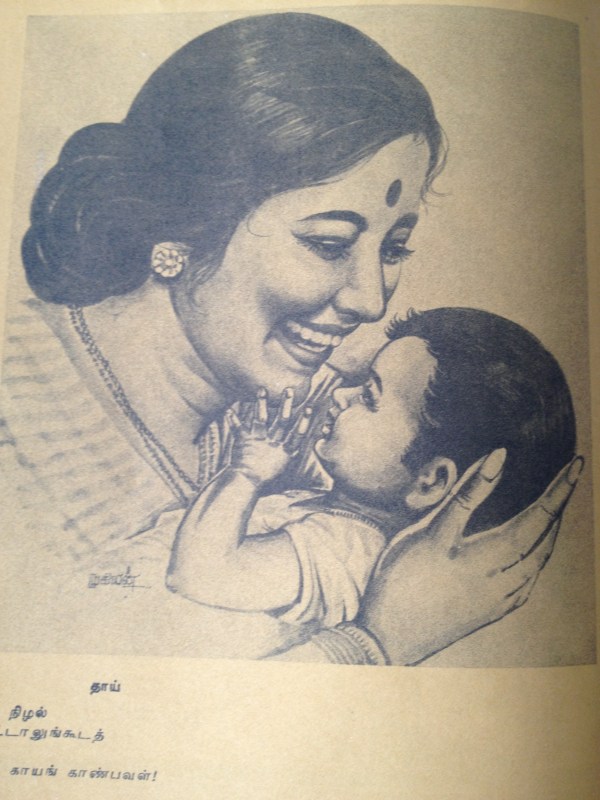


Interesting Quote about WIFE in the Indian Epic (Post No.3078)

IMG_3212

Compiled by London swaminathan

Date: 21 August 2016

Time uploaded in London: 6-25 AM

Post No.3078


Pictures are taken from various sources; thanks for the pictures.


There is a very interesting couplet in the Aranya (Vana) parvam of Mahabharata, the longest epic in the world.

Na ca bhaaryaa samam kincit vidhyate bhisajaam matam

Ausadham sarva dukkeshu satyametat bhraviimi te

–Aranya Parva

A rough translation of the couplet runs like this: Wife is a medicine for all the difficulties or sorrow; no one is equal to a wife in this, think medicine men. I am telling you the truth.


There is another interesting quotation about wife and mother in a couplet:-

Maatraa samo naasti sariira poshane

Bhaaryaa samo naasti sariira toshane

Vidhyaasamo naasti sariira bhushane

Chintaa samo naasti sariira soshane


A rough translation of this runs like this:

There is no one equal to your mother in nourishing you;

There is no one equal to your wife in making you happy;

Nothing is equal to education in honouring you (the qualifications you get);

Nothing is equal to worry in making you depressed.

(The above sloka may be a Subhaasitam)

IMG_4927

Everyone must read Sanskrit originals!

I have given you lot of interesting quotations about women in my posts. I am thrilled by the quotations of Manu in particular where he praised the women sky high. No ancient literature in any language has so much praise for women as in Sanskrit. Some cunning foreigners quote one or two odd quotes from here and there to malign Hinduism. If they don’t like certain good things, they will call them ‘interpolations’. If it suits them they will translate ‘LITERALLY’ the passages they like. If you forget the literal meaning, you will see what the authors really mean. Since they knew no one in the world can read all the Hindu scriptures, they write whatever they want to write.


No one in the world has read all the Hindu scriptures. They are as vast as Pacific Ocean. No language in the world can come nearer to Sanskrit in its quantity or quality.


If you want to question anything in Hinduism, first you must have read that book in full. Second you have to weigh it with the books in other cultures of the same period.


Since Sanskrit is the oldest language in the world, you don’t have any book in the world to compare with the Rig Veda or the great epics. Greek literature came at least 600 years after Sanskrit. Tamil literature came 1300 years after Sanskrit. Though Hebrew and Chinese have some writings nearer to 1000 BCE they are only fragments. They are not ‘book’s like Rig Veda. Rig Veda is dated between 1400 BCE (Max Muller) and 6000 BCE (Jacobi and BG Tilak).


Please read Sanskrit books in its originals and compare them with other language books of the SAME period.


–subham–