SWAMI HINDU CROSSWORD PUZZLE-4 AND SOLUTION TO PUZZLE 3 (Post No.5554)


SWAMI HINDU CROSSWORD PUZZLE-4 AND SOLUTION TO PUZZLE 3 (Post No.5554)

WRITTEN by London Swaminathan
swami_48@yahoo.com
Date: 18 October 2018

Time uploaded in London – 7-33 am

(British Summer Time)

Post No. 5554

Pictures shown here are taken from various sources including google, Wikipedia, Facebook friends and newspapers. This is a non- commercial blog.

ACROSS

1.ONE OF NINE PLANETS IN HINDU ASTROLOGY

2.HINDU VOW, FASTING; ALSO COUNTRY WHERE PANDAVAS STAYED

7.HIGHEST MUNTAIN IN HINDU SCRIPTURES; NORTH POLE

8.DAUGHTER OF NAGA KING WHO PULLED ARJUNA DOWN IN RIVER GANGA

10.ONE OF THE FIVE PANDAVAS

12.ONE OF THE 27 STARS; ALSO NAME OF BALARAMA’S WIFE

15.ONE OF THE COUNTRIES OF TRIBES IN MAHABHARATA

DOWN

3.BROTHER OF SAKUNI; ALSO SUFFIX WITH ALL HILLS

4.ACHARYA; ALSO SIKH’S HOLY BOOK

5.(UP) ONE OF NINE PLANETS IN HINDU SCRIPTURES

6.THE GREAT DYNASTY INVOLVED IN MAHABHARATA WAR

7.DAUGHTER OF HIMALAYA; HURDLE IN THE SEA ENCOUNTERED BY HANUMAN

9.THE BOOH OF SIKHS.

11.FEMALE BIRD IN A MAHABHARATA STORY

13.WIFE OF BRIHASPATI; BUDDHIST GODDESS; WIFE OF VALI IN RAMAYANA

14.FATHER

1
2 3
4
5 6
7
8
9 10 11
12 13 14
15

Solution to Puzzle 3

R A M A Y A N A R
B A A L I
R H A H A G
A A A B V
H R B H I M A A E
M I H G D
A S H T A V A K R A A
S A R V
U R T Y A J U R
T A U T
R A R J U N A A
A R U N M S
I N D R A N I

–subham–

Hindu Forest/ Wood Dwellers (Post No.5552)


WRITTEN by London Swaminathan
swami_48@yahoo.com
Date: 17 October 2018


Time uploaded in London – 15-49

(British Summer Time)


Post No. 5552


Pictures shown here are taken from various sources including google, Wikipedia, Facebook friends and newspapers. This is a non- commercial blog.

Vanaprastha is a unique stage in a Hindu’s life.

Hindus have four stages in their lives,
Brahmachari– Student life
Grhastha (asrama)—Householder stage (Family life)
Vanaprastha– Forest living
Sanyasa– Complete Renunciation

These four stages are not found anywhere in the world, but seen in Vedic literature written before the Hebrews, Greeks and other ancient literatures. This explodes the half- baked Aryan immigration theory. Hundreds of ancient Hindu customs and rituals, thousands of Sanskrit words are not found in European cultures or any other cultures except India. From northern Himalayas to the southern most Kanyakumari we see the same culture and thoughts from very ancient times. Sangam Tamil literature, which is 2000 year old, praised all the Vedic customs . Some Tamil poets have names such as Valmiki, Kamakshi (Kamak Kanni) , Maha chitran, Vishnudasan, Mahadevan, Damodaran, Kesavan, Kapilan, and Brahma .

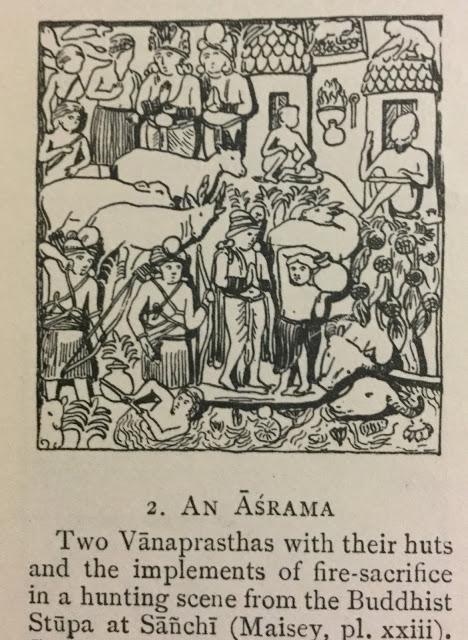
It is very interesting to see the sculptures showing Vanaprastha stage in Bharhut and other Buddhist Centers. Great kings like Pandu of Mahabharata along with his wife Madri, emperor Chandragupta Maurya  (in Jain way) spent their later lives in the forests.


People who have seen their grandchildren, go to forest and live a detached life. They pass their time thinking of god and praying for the welfare of the world. Contrary to the modern old age homes, full of gossips and T V shows they watched nature and thought only about god and people’s welfare. In contrast to three course meals at old age homes they had natural organic food, only vegetarian food. Milk, honey, forest grains and fruits gave them good health and good and positive thoughts. They never knew dementia or depression. Those who read Aranyakas and Upanishads (Vedic literature in Sanskrit dated 800 BCE of before) would long for such a peaceful and happy atmosphere. Their only hobby was walking in the woods and enjoying nature. Parrots and deer came to such peaceful places and resided happily which we come to know from the ancient Hindu literature.

During this period the theological ideas of the Hindus were fully developed and put to writing. We see a deep tendency in portraying one supreme God -The Brahman. All other rituals and worship of other old gods were shown as steps towards a higher goal. The Trinity- Brahma, Vishnu and Shiva -are the manifestations of this Supreme being. Some saw the Supreme being in the Sun as Gayathri and others saw the most powerful goddess. At no stage, they demolished the steps leading to the highest stage. They knew very well that those steps are necessary for people at lower levels. The lower levels were like nursery schools with lot of nursery rhymes,  (Slokas or hymns), lots of pictures on the walls. Next stage was like high schools with labs for experiments and wall charts (like modern temples with rituals). Next was the university stage with lots of debates and researches on gods and scriptures. When they passed all these nursery school, high school and university stages they came to forest for the real and ultimate peace.


We have beautiful forest scenes in Valmiki Ramayana and Kalidasa’s Sakuntalam drama.

Hindus are great nature lovers. The lofty Himalayas are the source of their numerous Aranyakas (Forest Teachings) and Upanishads (Philosophical Teachings).

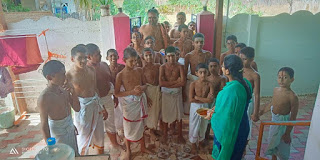
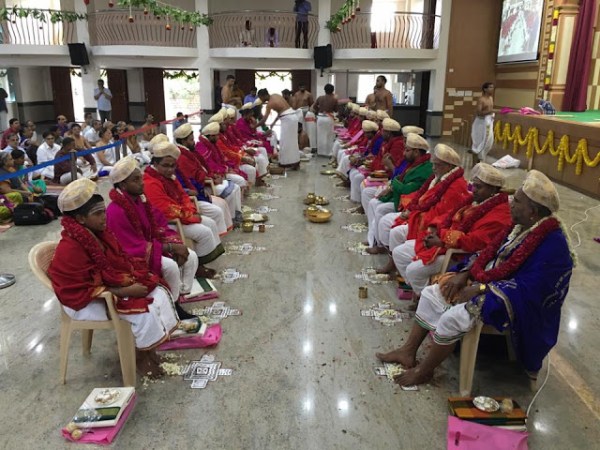
PICTURES POSTED BY RADHIKA BALAKRISHNAN

The awesome nature with gigantic mountains and high water falls made them look tiny. They also compared their impermanence with the millions of years old valleys and hills. The beautiful flowers reminded them the three great virtues Satyam, Shivam and Sundaram.


–Subham–

Three Layers in Rig Veda (Post No.5509)

Compiled by London Swaminathan

 
swami_48@yahoo.com
Date: 5 October 2018


Time uploaded in London –18-47 am (British Summer Time)


Post No. 5509


Pictures shown here are taken from various sources including google, Wikipedia, Facebook friends and newspapers. This is a non- commercial blog.

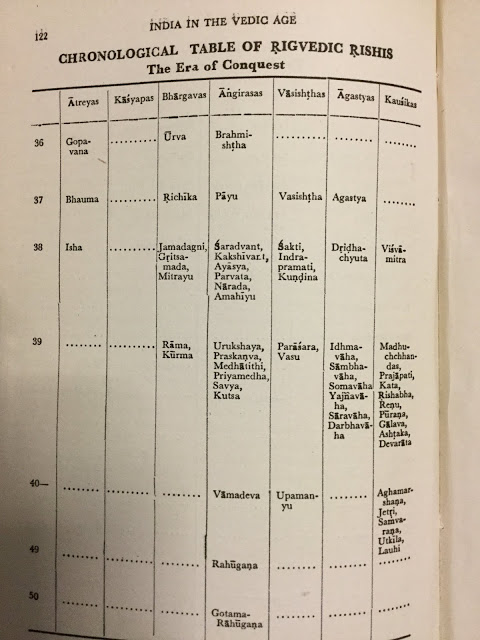
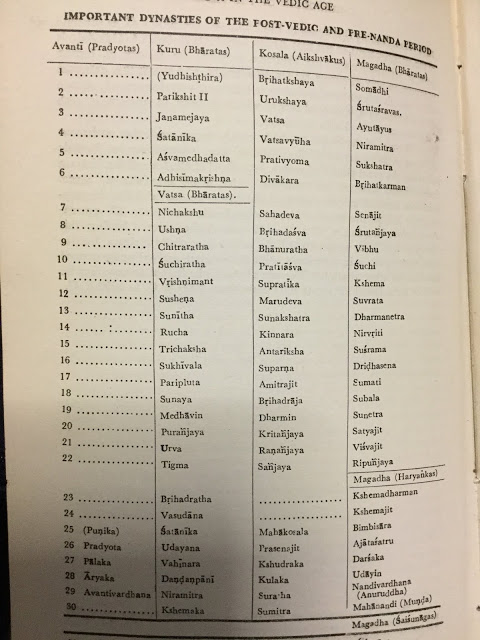
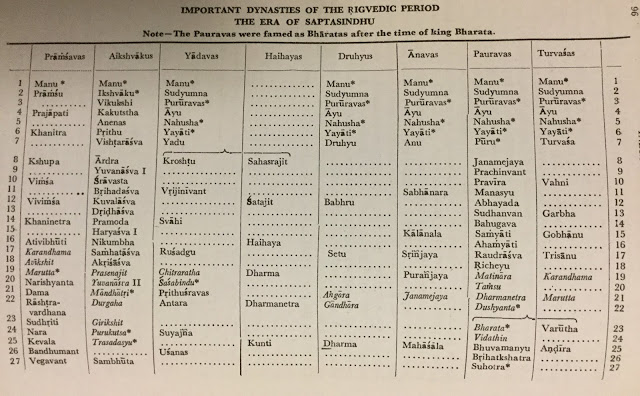
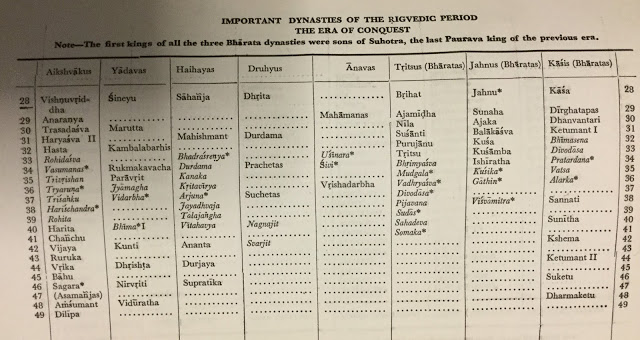
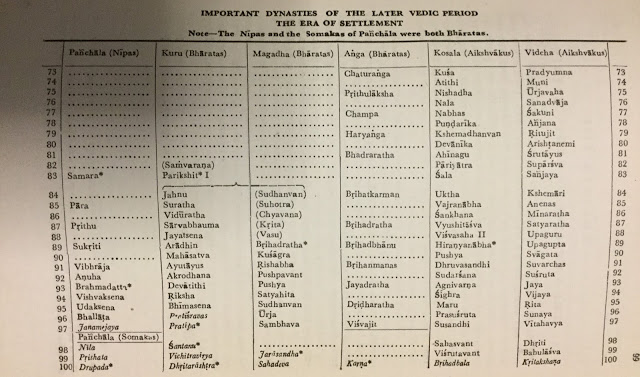
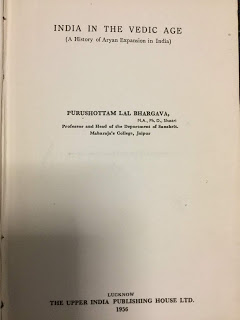
Purushottam Lal Bhargava in his book ‘India in the Vedic Age’, published in 1956, made the following interesting remarks

Pre Divodasa-Sudan’s Rishis/seers
On examining the hymns, we find that those of them, which are attributed to rishis (seers) who are known to have lived before these kings never mentioned, while the hymns ascribed to rishis who are known to have been the contemporaries of Divodasa and Sudas or to have lived later, often mentioned their names.


Thus the rishis,
Chyavana
Kavi
Usanas
Avatsaara
Devala
Asita
Budha
Archananas
Andhiigu
Naabaananedhista
Vatsapri
Brihaspati
Samvarta
Diirghatamas
Saaryaata
Nahusa
Yayaati
Maandhaatri
Trsadasyu
Vasumanas
Tryaruna
Puuru
Suhotra
Ajamiidha
Pratardana
Sivi
Mudgala and
Kusika
Lived earlier than Divodaasa and Sudaas and never mentioned the kings names.

xxx

Second Layer
Purukutsa and Trsadasyu
The names of these two famous Vedic kings are mentioned in many hymns, but never in those rishis who lived before them. Sobhari was a contemporary of Trsadasyu. The hymns ascribed to him never mentioned Divodasa and Sudas’.

xxx

Third Layer
Contemporaries of Divodasa and Sudas’s, besides mentioning the names of these kings also often mentioned the names of the Purukutsa and Trsadasyu.
Vasistha, who was a contemporary of Sudas mentioned the name of Sudas and Trsadasyu.

Rishis who were joint authors of hymns are known from other sources to have been contemporaries.
Thus a rishi Manu Samvarani is the joint author of hymn 9-101,with kings Nahusa and Yayati, which means he was their contemporary, and this is borne out by hymn 10-61 in which Nabhaanethista speaks of his father Manu Samvarani being held in high esteem by the princes Yadu and Turvasa, the sons of king Yayati.

Similarly Kutsa Angirasa is the joint author of hymn 9-97 with Vasistha and his sons which means he was their contemporary and this is borne out by the mention of Sudas IN HYMN 1-112 ATTRIBUTED TO KUTSA.

Again hymn 10-179 is ascribed to three kings Sivi, Vasumanas and Pratardana and these were contemporaries according to Puranas.


Judging from the names of authors, the oldest among the books of Rig Veda seems to be Book 5, attributed to ancient Atri family, though it does not mean all the hymns in the book are equally ancient.

Rig Veda has Ten Books or Mandalas

See the attachments for the chronology:


–subham–


PURANA RESEARCH- PURANA IN ATHARVA VEDA (Post No.5506)

Written by London Swaminathan
swami_48@yahoo.com
Date: 4 October 2018


Time uploaded in London –16-18 (British Summer Time)


Post No. 5506


Pictures shown here are taken from various sources including google, Wikipedia, Facebook friends and newspapers. This is a non- commercial blog.


The word Purana is found in the Atharva Veda (25-6-4); Ithihasa-Purana occur together in Satapata Brahmana and other Brahmana  period books. This shows that Puranas- Hindu Mythologies– are as old as Vedic literature. But Puranas were constantly updated and so the latest updated versions decided their date. Hindus were great historians and they were updating the history and added it to the existing Puranas. This updates earned a bad name for Puranas and they were classified as the latest books in the Hindu literature. Puranas were meant to give genealogies of Hindu Kings and sutas/bards were singing it in all the places.


Atharva Veda  mentions Puranas with the Richs, the Samans and the Yajus (11-7-24)

The Satapata Brahmana (850 BCE composition according to foreign authors) called Ithihasa-Purana and certain other compositions as ‘honey offering to the God’s and commands their daily study (11-5-6-8)


In the Chandogya Upanishad, Narada mentioned the subjects he had studied in which Ithihasa- Purana comes immediately after four Vedas. So it is clear by the time of Bramanas, Ithihasa-Purna existed in its original form.


There are 18 major Puranas (see my two earliers posts on Puranas for more details). The internal evidence shows that they were written at different periods. By the time of Guptas,they got the present form.
Narrator of most of the Puranas is Romaharshana or his son Ugrasrava. Brahma, Vayu and Matsya Puranas were the oldest of the 18 Puranas. We see a clear pattern in the later Puranas. Brahma Purana is called the Adi (old, original) Purana.


Brahmanda Purana followed Vayu;

Padma Purana followed Matsya;

Agni Purana followed Brahma.


A comparison of the 12 later Puranas  shows that the version of each of them approximates to one or the other of the three ancient Puranas.

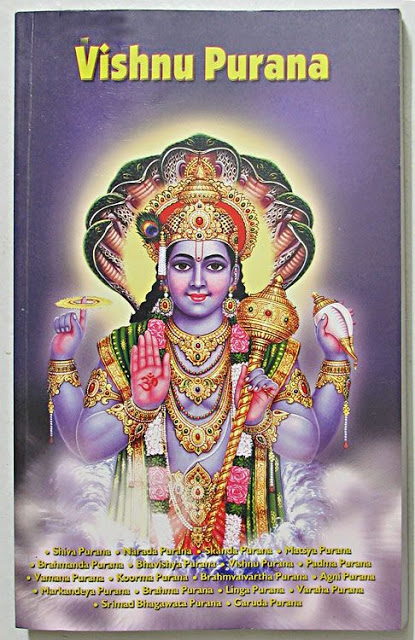
Vishnu Purana came after this.


Vayu Purana’s origin itself shows that it is very old. In the olden days Hindus had a very beautiful system which is not seen anywhere in the wolrd. They had conference inside the deep forest for 12 long years. Romaharshana recited the Vayu Purana deep inside the Naimisaranya (Forest named after King Nimi).

They had havans, scholarly deliberations, editing, compiling, revising during the 12 year period. Even daily recitation of it was considered sacred. We see even later day Tamil kings giving grants for reciting Ithihasa- Puranas in the temples.


Puranas were relegated to backstage because of some defects:


1.Winternitz says that the Puranas were passed into the hands of lower rank priesthood, who used them for the glorification of local deities. Even now we see such a trend in ‘sthala puranas’.


2.New editors gave wrong origin to many ancient dynasties. As the time passed they mixed up and merged two or three dynasties, because they could not understand them. When the brothers ruled different parts as juniors or a different clan ruled a smaller area the confusion arose (we see such trends in Tamil Chera Kings and Pandya kings; nothing to do with Puranas; just as an example I am giving this)


3.A  lot of exaggeration was there because it was for general public.


4.Editors who were lacking historical sense gave fabulous ages to ruling dynasties


King Alarka of Kasi is said to have ruled 66000 years; Rama ruled for 24,000 years.

But Vedas repeated in numerous places that the human life span is 100 years. Only Mahidasa Aitareya lived for 116 years; Dirgatamas lived for 100 years.
My comments:


We see this even in Sumerian history and Tamil Sangam History. wherever thousand comes we have to delete the three zeroes. Patajnjali in Mahabhasya approached this problem in a scientific way and worked out Rama ruled for 24 years.


5.We see many kings with same names. It is possible even today. But Puranic reciters or editors got mixed up with them. A Dasaratha ruled Mitanni region (Turkey, Iraq) in 1400 BCE. Another Dasaratha is found before Rama’s father. Most famous Dararatha was Rama’s father. Emperor Asoka’s grandson was also named Dasaratha. When such things came Pauranics recited or concocted new stories.


Manu Vaivasvata who was a king is mentioned in the Rig Veda. Later Manu samvarani who was not a king is also mentioned. His son Nabanedhista was shown as the son of Vaivasvata Manu. Two ‘Saryatis’, two Yayatis also led to lot of confusion.


  1. Rishi names such as Vasishta and Visvamitra are found in different ages. Actually they are Gotra names. Tamils have lot of Agastyas in different ages in different locations from te Vindhyas to Java  in Indonesia. All Vasithas shown having Arundhati as wife!


7.The identification of different persons was carried to an absurd limit when historical persons were confused with mythological beings and even planets or other objects bearing the same names.


For instance Indra, Surya/sun and Chandra/moon figure in most of the names from Kashmir to Kandy in Sri Lanka. With all the modern day communication, mass media and social media we sift them. Even then some confusion arises.


  1. Puranic editors deliberately introduced divine beings in the life of famous persons. In our time many people called themselves Avatars of so and so or Reincarnation of God etc. Lakhs of people believed them. It happened in the olden days leading to big confusion in later periods. (E.g. Sathya Sai Baba called himself an avatar of Shirdi Sai Baba)
9.Puranic editors added miracles in the lives of many. When great adventures or extraordinary events happened they attributed miracles. When Agastya laid a land route through the Vindhya mountains they called Agastya ‘belittled’ Vindhya mountain (Vindhya Garva Bhanga). When Agastya took a naval force to South East Asia, they interpreted it as Agastya drank the sea. This is a symbolic language. But Puranic reciters without understanding it said that he really drank the ocean. Bhagirata diverted the Ganges into new plains; Indra did it during Vedic times. Parasurama reclaimed saline and of Kerala and converted them as inhabitable area. Several Pandyas did this. But Tamil literature said that the Pandya king threw the spear in anger and the sea went back.


In short ignorance, communication gap, exaggeration, poor editing, mix ups, false interpretations, attributing miracles without understanding ancient way of presentation (symbolic language) and deliberate distortions for favors from kings—all these earned the Puranas a bad name.

–subham–
HINDUS TAUGHT THE WORLD AMAZING WEEKLY HOLIDAYS!! (Post No.5499)

Written by London Swaminathan
swami_48@yahoo.com
Date: 2 October 2018


Time uploaded in London –18-37  (British Summer Time)


Post No. 5499


Pictures shown here are taken from various sources including google, Wikipedia, Facebook friends and newspapers. This is a non- commercial blog.


DONT RECITE VEDAS DURING EARTH QUAKE, THUNDER AND ON PARVA DAYS-MANU

We continue with the fourth chapter of Manu Niti from sloka 101.

MY COMMENTS

1.It is interesting to note that Manu talks about natural catastrophes such as earth quakes and cloud bursts and natural phenomena like meteorite showers and ask the Hindus to stop the study of Vedas for 24 hours.

2.Weekly Holiday:-Manu was the first person in the world who asked the schools to close six days a month. He banned Vedic teaching on at least six days :-


Two ashtamis :– 8th day after new moon and eighth day after full moon.

Two Chaturdasis: one day before full moon; one day before new moon;

Full Moon Day and New Moon Day (two days)

Even today Vedic schools follow this rule

3.He is very keen about the ‘pollution’ from visiting crematoriums etc. So he asked us to stop Vedic recitation


  1. He asked us to stop Vedic recitation during travel (horse ride, camel ride, sea travel); this shows that Vedic Pundits were great travellers.

(But elsewhere he bans Brahmins going abroad by sea like Tamils ban women travelling abroad- See my article on Tolkappiam)

  1. In one of the slokas he talks about stopping Vedic studies on meat eating days. In the olden days, Brahmins, Kshatriyas and Vaisyas were learning basic Vedas. That is why he talks about meat eating and Vedic studies.

6.In sloka 124, he explains  the special role of three Vedas.

7.Sloka 126 is very interesting which gives the superstitious beliefs in the olden times.

8.Sloka 135 warns about offending Brahmana, Kshatria and a snake.


9.Sloka 146 says what Krishna said in the Bhagavad Gita- Good Person never comes to grief ( BG 6-40)


Manu was a great educationist, great planner and a well- informed scientist.

The amazing thing is that he talks about meteorite showers which is given in all astronomical magazines nowadays. He bans the teaching of Vedas for 24 hours on those days.

(Note the slokas in bold letters)


FOURTH CHAPTER OF MANAVA DHARMA SHASTRA CONTINUED


4-101. Let him who studies always avoid reading on the following occasions when the Veda-study is forbidden, and let him who teaches pupils according to the prescribed rule do it likewise.

  1. Those who know the rules of recitation declare that in the rainy season the Veda-study must be stopped on these two occasions, when the wind is audible at night, and when it whirls up the dust in the day-time.
  2. Manu has stated, that when lightning, thunder, and rain are observed together, or when large fiery meteors fall on all sides, the recitation must be interrupted until the same hour on the next day, counting from the occurrence of the event.
  3. When one perceives these phenomena all together in the twilight, after the sacred fires have been made to blaze (for the performance of the Agnihotra), then one must know the recitation of the Veda to be forbidden, and also when clouds appear out of season.
  4. On the occasion of a preternatural sound from the sky, (of) an earthquake, and when the lights of heaven are surrounded by a halo, let him know that the Veda-study must be stopped until the same hour on the next day, even if these phenomena happen in the rainy season.
  5. But when lightning and the roar of thunder are observed after the sacred fires have been made to blaze, the stoppage shall last as long as the light of the sun or of the stars is visible; if the remaining above-named phenomenon, rain, occurs, the reading shall cease, both in the day-time and at night.
  6. For those who wish to acquire exceedingly great merit, a continual interruption of the Veda-study is prescribed in villages and in towns, and (the Veda-study must always cease when any kind of foul smell is perceptible.


FUNERAL CEREMONIES

  1. In a village where a corpse lies, in the presence of a man who lives as unrighteously , while the sound of weeping is heard, and in a crowd of men the recitation of the Veda must be stopped.
  2. In water, during the middle part of the night, while he voids excrements, or is impure, and after he has partaken of a funeral dinner, a man must not even think in his heart of the sacred texts.
  3. A learned Brahmana shall not recite the Veda during three days, when he has accepted an invitation to a funeral rite in honour of one ancestor (ekoddishta), or when the king has become impure through a birth or death in his family (sutaka), or when Rahu by an eclipse makes the moon impure.
  4. As long as the smell and the stains of the (food given) in honour of one ancestor remain on the body of a learned Brahmana, so long he must not recite the Veda.


  1. While lying on a bed, while his feet are raised (on a bench), while he sits on his hams with a cloth tied round his knees, let him not study, nor when he has eaten meat or food given by a person impure on account of a birth or a death,


NOT ON ASHTAMI, CHATURDASI, PORNAMI, AMAVASYA DAYS

  1. Nor during a fog, nor while the sound of arrows is audible, nor during both the twilights, nor on the new-moon day, nor on the fourteenth and the eighth days of each half-month, nor on the full-moon day.
  2. The new-moon day destroys the teacher, the fourteenth day the pupil, the eighth and the full-moon days destroy all remembrance of the Veda; let him therefore avoid reading on those days.


ANIMAL SOUNDS

  1. A Brahmana shall not recite (the Veda) during a dust-storm, nor while the sky is preternaturally red, nor while jackals howl, nor while the barking of dogs, the braying of donkeys, or the grunting of camels is heard, nor while he is seated in a company.
  2. Let him not study near a burial-ground, nor near a village, nor in a cow-pen, nor dressed in a garment which he wore during conjugal intercourse, nor after receiving a present at a funeral sacrifice.
  3. Be it an animal or a thing inanimate, whatever be the (gift) at a Sraddha, let him not, having just accepted it, recite the Veda; for the hand of a Brahmana is his mouth.


24 HOUR STOPPAGE

  1. When the village has been beset by robbers, and when an alarm has been raised by fire, let him know that the Veda-study must be interrupted until the same hour on the next day, and on the occurrence of all portents.
  2. On the occasion of the Upakarman and of the Vedotsarga an omission of the Veda-study for three days has been prescribed, but on the Ashtakas and on the last nights of the seasons for a day and a night.


SEA TRAVEL

  1. Let him not recite the Veda on horseback, nor on a tree, nor on an elephant, nor in a boat or ship, nor on a donkey, nor on camel, nor standing on barren ground, nor riding in a carriage,
  2. Nor during a verbal altercation, nor during a mutual assault, nor in a camp, nor during a battle, nor when he has just eaten, nor during an indigestion, nor after vomiting, nor with sour eructation’s,
  3. Nor without receiving permission from a guest who stays in his house, nor while the wind blows vehemently, nor while blood flows from his body, nor when he is wounded by a weapon.
  4. Let him never recite the Rig-veda or the YaJur-veda while the Saman (melodies) are heard; let him stop all Veda-study for a day and a night after finishing a Veda or after reciting an Aranyaka.


3 VEDAS FOR GODS, HUMANS AND MANES

  1. The Rig-veda is declared to be sacred to the gods, the YaJur-veda sacred to men, and the Sama-veda sacred to the manes; hence the sound of the latter is impure as it were.
  2. Knowing this, the learned daily repeat first in due order the essence of the three Vedas and afterwards the text of the Veda.

FROGS AND SNAKES

  1. Know that the Veda-study must be interrupted for a day and a night, when cattle, a frog, a cat, a dog, a snake, an ichneumon, or a rat pass between the teacher and his pupil.
  2. Let a twice-born man always carefully interrupt the Veda-study on two occasions, viz. when the place where he recites is impure, and when he himself is unpurified.
  3. A twice-born man who is a Snataka shall remain chaste on the new-moon day, on the eighth (lunar day of each half-month), on the full-moon day, and on the fourteenth, even (if they fall) in the period (proper for conjugal intercourse).
  4. Let him not bathe immediately after a meal, nor when he is sick, nor in the middle of the night, nor frequently dressed in all his garments, nor in a pool which he does not perfectly know.
  5. Let him not intentionally step on the shadow of (images of) the gods, of a Guru, of a king, of a Snataka, of his teacher, of a reddish-brown animal, or of one who has been initiated to the performance of a Srauta sacrifice (Dikshita).
  6. At midday and at midnight, after partaking of meat at a funeral dinner, and in the two twilights let him not stay long on a cross-road.
  7. Let him not step intentionally on things used for cleansing the body, on water used for a bath, on urine or ordure, on blood, on mucus, and on anything spat out or vomited.
  8. Let him not show particular attention to an enemy, to the friend of an enemy, to a wicked man, to a thief, or to the wife of another man.
  9. For in this world there is nothing so detrimental to long life as criminal conversation with another man’s wife.


DONT OFFEND SNAKE AND BRAHMANA-

  1. Let him who desires prosperity, indeed, never despise a Kshatriya, a snake, and a learned Brahmana, be they ever so feeble.
  2. Because these three, when treated with disrespect, may utterly destroy him; hence a wise man must never despise them.
  3. Let him not despise himself on account of former failures; until death let him seek fortune, nor despair of gaining it.
  4. Let him say what is true, let him say what is pleasing, let him utter no disagreeable truth, and let him utter no agreeable falsehood; that is the eternal law.
  5. (What is) well, let him call well, or let him say ‘well’ only; let him not engage in a useless enmity or dispute with anybody.

Journey Timings

  1. Let him not journey too early in the morning, nor too late in the evening, nor just during the midday heat, nor with an unknown companion, nor alone, nor with Sudras.
  2. Let him not insult those who have redundant limbs or are deficient in limbs, nor those destitute of knowledge, nor very aged men, nor those who have no beauty or wealth, nor those who are of low birth.
  3. A Brahmana who is impure must not touch with his hand a cow, a Brahmana, or fire; nor, being in good health, let him look at the luminaries in the sky, while he is impure.
  4. If he has touched these, while impure, let him always sprinkle with his hand water on the organs of sensation, all his limbs, and the navel.
  5. Except when sick he must not touch the cavities (of the body) without a reason, and he must avoid to touch the hair on the secret (parts).
  6. Let him eagerly follow the customs which are auspicious and the rule of good conduct, be careful of purity, and control all his organs, let him mutter (prayers) and, untired, daily offer oblations in the fire.
  7. No calamity happens to those who eagerly follow auspicious customs and the rule of good conduct, to those who are always careful of purity, and to those who mutter sacred texts and offer burnt-oblations.


Daily Recital

  1. Let him, without tiring, daily mutter the Veda at the proper time; for they declare that to be one’s highest duty; all other observances are called secondary duties.
  2. By daily reciting the Veda, by the observance of the rules of purification, by (practising) austerities, and by doing no injury to created beings, one (obtains the faculty of) remembering former births.
  3. He who, recollecting his former existences, again recites the Veda, gains endless bliss by the continual study of the Veda.
  4. Let him always offer on the Parva-days oblations to Savitri and such as avert evil omens, and on the Ashtakas and Anvashtakas let him constantly worship the manes.

–to be continued………………..

–subham–


Krishna’s Friend died in ‘Wheel’ Accident! (Post No.5485)

Written by London Swaminathan
swami_48@yahoo.com
Date: 28 September 2018


Time uploaded in London – 13-30 (British Summer Time)


Post No. 5485


Pictures shown here are taken from various sources including google, Wikipedia, Facebook friends and newspapers. This is a non- commercial blog.


Krishna’s Friend died in ‘Wheel’ Accident! (Post No.5485)


Strange stories about Lord Krishna are available in Tamil literature which are not found in Sanskrit scriptures. I have already given the story about Dadhipandan who got Moksha (liberation) for him and his pot. Now there is another story told by Perialvar, a Vaishnavite saint, who lived 1400 years ago.


There was a cowherd by name Srimalikan who was great friend of Lord Krishna. He told Krishna that he would carry his Sudarsana wheel so that he could feel a bit relaxed. But Krishna told him that it would be dangerous, because it may cut his head off. But he was always nagging Krishna to leave the wheel with him. At last Krishna yielded to his demand and gave him the Wheel. As soon as he received the wheel it cut his head. We can guess that he would have reached heaven because it was the holy wheel and it happened in front of the Lord.


But there are some morals in the story:

Tamil poet Thiruvalluvar in the Tamil Veda Tirukkural says,

Consider the aim, the obstacle and the greatness of the ultimate gain and then resort to action- Kural 676


Curiosity Killed the Cat

We are reminded of the saying ‘Curiosity Killed the Cat’.

Be Johnson used the following in his drama ‘Every Man in His Humour’ and Shakespeare acted in it:

“Helter skelter, hang sorrow, care will kill a cat, up-tails all, and a pox on the hangman”.


Later Shakespeare also used this in his drama Much ado about Nothing:

What, courage man! what though care killed a cat, thou hast mettle enough in thee to kill care

-Much Ado about Nothing.


Thus, we learn that unnecessary curiosity is not good. Moreover, if great people like Lord Krishna say something, we must listen to them.


–subham–


SIMILARITIES BETWEEN CAMBODIAN PCHUM BEN AND MALAYA PAKSHA (Post No.5483)

RESEARCH ARTICLE WRITTEN by London Swaminathan
swami_48@yahoo.com
Date: 28 September 2018


Time uploaded in London – 7-46 AM (British Summer Time)


Post No. 5483


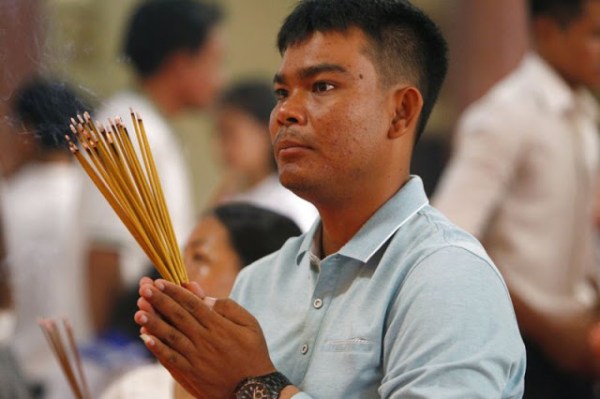
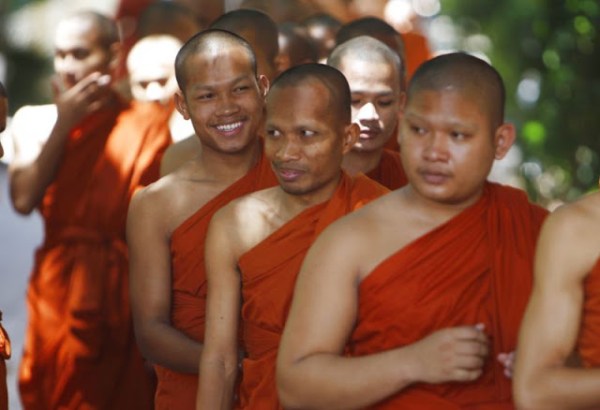
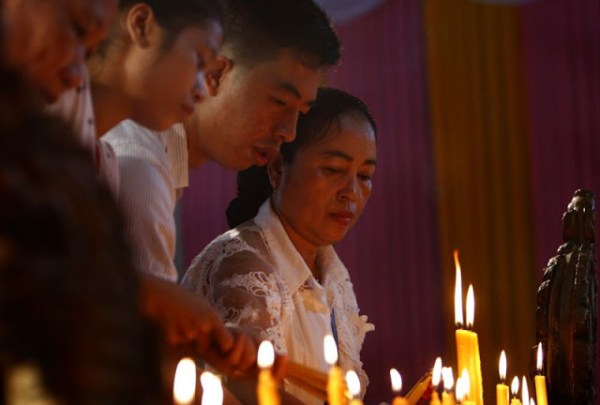
Pictures shown here are taken from Deccan Chronicle.


MALAYA PAKSHA IN CAMBODIA

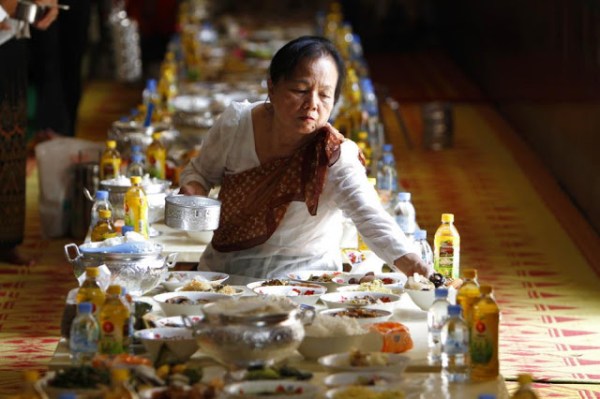
My research shows that the Cambodian Ancestor Festival Pchum Ben is nothing but the Hindu ancestor ritual Malaya Paksha. The following points will prove my point.


What is Pchum Ben?

It is a period to pay food offerings to the dead ancestors. It is the period to remember and venerate them. It is a public holiday in Cambodia.


What is Malaya Paksha?

It is a period to remeber and pay oblations to ancestor sand get their blessings. Hindus do it in the month of Bhadrapatha (Purattasi in Tamil)

Now let us look at the similarities:


1.A fortnight period is common among Hindus and Cambodian Buddhists. Malaya Paksha means Malaya fortnight. It starts on a full moon day and finishes on a new moon day. That new moon is called Mahalaya Amavasya. A very important day for orthodox Hindus.

2.It is celebrated in the month of Bhadrapatha and the Cambodians call it Potrbotr (bhadrapatha). Potrbotr is the corrupted form of the Sanskrit month.


3.Hindus offer rice balls (Pindam) to the dead. Cambodians also offer rice balls. Pindam is even used in 2000 year old Tamil Sangam literature

4.Hindus always mention seven generations of ancestors. Cambodians also say they offer food for seven generations during this period. Te word seven generation is found in the Vedic literature and Tamil Veda Tirukkural.


5.Cambodians believe that the Gates of Hell are opened and then the Ghosts come to earth, particularly to their relatives. But Hindus never use ghosts for the dead. They elevate them to divine status and call them Pitrus. But the similarity is their visit to earth during this period. It is always easy to see a Prime Minister or President when he visits our town and present a memo. In the same way Hindus and Buddhists believe the dead ancestors visit earth during this fortnight. So it is easy to get their blessings.


6.Hindu priests recite mantras in Sanskrit during the ceremony. Buddhist priests recite Pali Suttas (Suktas). Pali is nothing but colloquial Sanskrit. Buddha used this spoken form to attract laymen.Dharma is changed to dhamma, sukta to sutta in Pali.


7.Cambodian Buddists also believe in Hindu Yama, god of death, and talk about Yama loka during this festival


8.Cambodians never miss a visit to pagoda during this period to offer food to Bikshus or someone there. Orthodox Hindus never miss the ceremony during this Paksha


The similarities between the Hindus and Buddhists of Cambodia is confirmed by another factor. Cambodians celebrate two festivals without a miss. Both are holidays. The other one is April 14 which is a New Year Day for the whole of South East Asia and India. From Kathmand to Kandy, several communities in the Northern Hemisphere celebrate this day.


All these point out to the Hindu influence in S E Asia and they are Buddhacised in course of time.


Other Buddhist countries like Sri Lanka also offer rice balls (Pindam)to ancestors during such festivals but at different period in a year.

Hindus consider two New Moon days ( Ashada and Pausa) important to ancestor

worship in addition to this Mahalaya New Moon Day in Bhadrapada which corresponds to September/October every year.


–subham–
STRANGE AND RARE STORIES OF LORD KRISHNA (Post No.5479)


Written by London Swaminathan
swami_48@yahoo.com
Date: 27 September 2018


Time uploaded in London – 13-29 (British Summer Time)


Post No. 5479


Pictures shown here are taken from various sources including google, Wikipedia, Facebook friends and newspapers. This is a non- commercial blog.


Tamil is a divine language. Probably it has more divine writings than any other language in the world except Sanskrit. Tamil Nadu is a land of the divinities. There are more Hindu temples in Tamil Nadu than any other state in India. Under Tamil Nadu Government control alone there are over 30,000 temples. One third of the 100,000 temples of the country are in Tamil Nadu. When north India suffered attack after attack from the time of Darius, South India was peaceful until fighting Pandya brothers invited Muslim invaders into Madurai in the 12th century. Until then Chozas, Pandyas and Chera Kings vied with one another in building bigger and bigger temples. Temples in Madurai, Thanjavur, Tiruvannamalai, Chidambaram and Rameswaram were touching the sky even before Americans contemplated sky scrappers.

Stranger is the Tamil literature which describes unknown stories of Lord Krishna and Lord Rama. Neither Valmiki nor Vyasa or Sukar touched those incidents which the Sangam literature described. Later the Alvars, Tamil Vaidhnavite saints gave more stories about Lord Krishna.


The oldest part of Sangam Tamil literature, Pura Nanuru, which is 2000 year old, has two Rama anecdotes that are not found in Valmiki Ramayana. Kamban who adapted Valmiki in Tamil also differed from Valmiki in various places. The reason being Kamban talked about three different Ramayanas that existed in his time. Unfortunately we lost two Ramayanas and Valmiki alone survived. So we may guess that Kamban and other Tamil saints borrowed some stories or anecdotes from those two extinct Ramayanas.The incidents mentioned in the hymns of Alvars (Vaishnavite Tamil saints) also serve as missing links.


The strangest story is about one devotee called Dhadipandan (Yogurt/ curd potter). Krishna, known as Kannan in Tamil was stealing butter and curd from every house of the Yadava community. He also belonged to that Yadava community. Neighbors started complaining about his mischief, pranks and thefts. Yasoda, his foster mother, was furious. She was chasing him from house to house. But the clever and cunning Krishna always found a way out. Once he was about to be caught. Then Krishna begged to a cowherd to hide him. He also obliged. But when she was too close, he begged the man to hide him under a pot. So the man also cupped him with a big pot. He sat over the pot as if he was doing some work. Yasoda was fooled one more time.

When Krishna came to know that the chaser had gone he asked the man to let him out. Clverer than Krishna, the man asked him a promise from Krishna. He did not demand money. But knowing that Krishna was an Avatar (incarnation of God) he asked him to give him liberation- Moksha from the cycle of Birth and Deaths.


Krishna said, ‘Granted’.

But that fellow still did not release Krishna.

Now Krishna started begging,

Hey Man, I gave you what you wanted. Please get me out. That fellow became cleverer and cleverer. “Look this pot only helped me to get liberation. I must be grateful to this pot. So give Moksha to the pot as well”. Krishna had to yield to get his release. Just to get normal release Krishna had to give ‘real release’ for TWO and one among them is a solid mud pot!


This story which is not found in Bhagavatha (Life Story of Lord Krishna) or the Maha Bharata (The Great War of India/Bharat) is sung by several saints.


This is not the only story. The Bhagavatha Purana ( Biography of Krishna) is dated around Gupta period. But even before that 2000 year old Tamil literature mentioned the boyish pranks of Krishna on the banks of holy river Yamuna. The river is mentioned with the Tamil name THOZUNAI, which is the corrupted form of Dohna in Sanskrit(Akam.59). If the date of Bhagavatha Purana is correct, then Tamils can be prouder to have mentioned the pranks of Krishna on the banks of River Jamuna/Yamuna. Later lierature like the Tamil epic Silappadikaram also mentioned this.

There are a few more stories in Tamil ( I will give them separately)


–subham–
Comparison of Sankara’s Viveka Cudamani and Tiruvalluvar’s Tirukkural (Post No.5444)

Written by London Swaminathan

swami_48@yahoo.com

Date: 18  September 2018


Time uploaded in London – 8-57 am (British Summer Time)


Post No. 5444

Pictures shown here are taken from various sources including google, Wikipedia, Facebook friends and newspapers. This is a non- commercial blog.


Adi Sankara, one of the greatest Hindu philosophers, has beautifully explained the Advaita (Non Dualism) Philosophy in his masterly work, Viveka Cuudaamani, ‘Crest Jewel of Discrimination’. It has got 580 couplets in Sanskrit.


Tiruvalluvar, the greatest Tamil poet has dealt with 133 subjects of moral importance in his work Tirukkural. The 133 chapters have got 1330 couplets on ethics in Tamil.

It is said that ‘Great men think Alike’, which is amply illustrated in the following comparisons of the two great geniuses.

If we couldn’t get access tomorrow to important Hindu scriptures such as Bhagavad Gita or the Vedas we don’t need to worry. Tiruvalluvar has given the gist of Hinduism in fifty or so couplets.

In his first chapter on God, Valluvar says
‘None but those who have meditated constantly on the feet of god can cross the oceans of birth’- Kural 10
‘Ocean of birth and death’ is known to every learned Hindu as ‘Samsara Saagaram .

Sankara says in Viveka Cudamani (VC),
‘Having attained the Yogaruda state one should recover oneself, immersed in the sea of birth and death, by means of devotion to right of discrimination’- VC 9

Yogaruda state is when onr is attached neither to sense objects nor to actions, and has given up all desires.

Xxxx

Shankara continues,
‘Therefore, a man of learning should strive for his best for liberation, having renounced his desire for pleasures from external objects, duly approaching a good and generous preceptor, and fixing his mind on the truth inculcated by him’–VC 8

Valluvar says,
‘Of what avail is a man s learning if he does not pray to god’- Kural 2

Xxxx
Can wealth help you to reach heaven?
‘There’s no hope of immortality by means of riches- such indeed is the declaration of Vedas. Hence it is clear that works/karma cannot be the cause of liberation’ –VC 7

Valluvar also says it, but indirectly,

‘As those without riches can have no enjoyments in this world so also are those without compassion denied the belongings of the world above’.

Here Valluvar clearly associates wealth with the human world and compassion with the heaven.

Xxx

Desire and Egoism

‘Let the wise and erudite man, having commenced the practice of realisation of the Atman give up all works/ Karma, and try to cut lose the bonds of birth and death’-VC10
A child plays with its toys forgetting hunger and bodily pains ; exactly so does the man of realisation take pleasure in the Reality, without ideas of I and Mine and is happy—537 Viveka Cudamani
He who renounces the egoism of I and mine shall attain the highest heavenly bliss rare of attainment even by the gods– Kural 346

Only when one renounces the two -fold desires can one overcome births. Other wise one will be subject to the rotation of births and deaths caused by desires–Kural 349

Xxx


Time and Place
Though Shankara wrote a religious manual and Valluvar an ethical manual certain things are common for one who wants to achieve something or to reach a goal.

Shankara says,
Success depends essentially on a qualified aspirant; time, place and other such means are but auxiliaries in this regard’– VC14

Valluvar also acknowledges it,
‘Consider these five before deciding on an action: finance, instrument, time, proper place and the nature of action’- Kural 675

Xxx

Use of certain similes such as ‘tiger and cow’, ‘actors’ etc show that Hindu geniuses think in the same way. There is a possibility ofone influencing the other as well as both are from South India. Both of them might have spoken Tamil at home.

Tiger Simile


The pretentious conduct of a man who has not the firmness of mind to direct him in the path of true ascetism is likened to a cow grazing clothed in tigers skin– Kural 273

O Master, you have awakened me from sleep and saved me . I was wandering in the forest of illusion, troubled by the tiger of egoism–
VC 518

The arrow which is shot at an object with the idea that it is a tiger, does not, when the object perceived to be a cow, check itself, but pierce s the object with full force –VC452.

Xxx
Actor Simile
‘Fortune coming to one and its departure are likened to the assembling of a crowd to witness a drama and its dispersal respectively’- Kural 332

‘As an actor, when he puts on the dress of his role or when he does not, is always a man. So the perfect knower of Brahman is always Brahman and nothing else’– VC 555


–subham–
RADISH GANESH AND CAMEL HANUMAN (Post No.5429)


Written by London Swaminathan

swami_48@yahoo.com

Date: 14 September 2018


Time uploaded in London – 7-58 am (British Summer Time)
 

Post No. 5429

Pictures shown here are taken from various sources including google, Wikipedia, Facebook friends and newspapers. This is a non- commercial blog.


Hinduism is the oldest religion in the world. When other ancient religions of Egypt, Greece, Rome and China went into museums how did hinduism survive? Even the name Hinduism is only 2500 years old: before the Greeks and Persians called the people living beyond Indus River, Hindus, the religion was flourishing, aptly under the name Sanatan Dharma- The Eternal Religion.


The reason for the amazing success of Hindus is adaptation, absorption and digestion of foreign thoughts and newer ideas. Earlier I wrote about the newest vehicle of Hindu Gods- camel for Anjaneya. Each Hindu god has a vahana/vehicle. Camel is added as a vehicle of Anajaneya also called Maruti, Hanuman and Vayu putra. Strangley the vehicle is found in South Indian Anjaneya temples, where as the camel is a desert animal of Rajasthan and other western states. But Hindus can adopt, adapt, absorb and digest anything and make it look like ‘pukka’ Hindu!


Here is another story not known to many of us. Radish Ganesh! Ganesh with Radish (Muli) is found mostly in South East Asian countries.


Ganesh is one of the most original gods of Hindu pantheon and one of the most loved. Associated with intelligence- knowing and knowledge—he is said to have worshiped by all other gods before embarking on any new adventure. He put the Mahabharata- the longest epic in the world, into writing for Veda Vyasa. He lost one of his tusks in the gigantic task of writing 200,000 lines.


Ganesa is considered the protector of corps. That is why a rat is shown as his vehicle/vahana. It is believed that he protects the crops by controlling the crops. Considered as one who surmounts of obstacles, Ganesh or Vinayaka (or Pillaiyaar in Tami)l is invoked before each undertaking. He does not need big temples. He is shown in natural surroundings in caves, under the trees ad in open spaces without even a roof over his head!

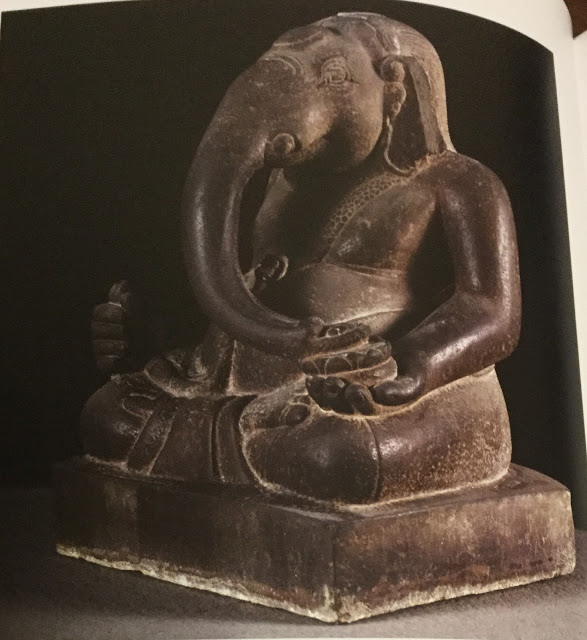
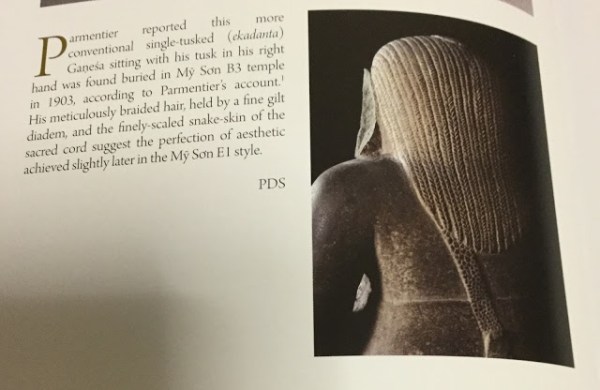
One of his attributes is the axe (Parasu) which cuts and tears down the bad things such as sins and evil fate. In places like Vietnam (Champa of olden days) he is shown with a radish (Mulaka gandha) in one of his hands. The association of the deity with with the world of agriculture, vegetation, more widely, with nature is betrayed by the attribute of a radish in his left hand. This radish with acidic taste is loved by the elephants. We see it in some of  the Indian Ganesh statues of 6th and 8th centuries. The other attribute of Ganesa is a bowl with Modakas ( sweets made up of coconut and rice flour or sometimes ladduka). Ganesh image is rich in symbolism. We see snakes, tiger skin draped around his hips, gem studded gold necklaces, Brahmanical cord (the sacred thread) on left shoulder. One statue of Ganesh was recovered from Myson in Vietnam with missing parts, but others are intact and displayed in museums.

–subham–