Story about Company of the Good: Vasishta X Viswamitra clash!

hare krsn bhajan

Satsang by Hare Krishna Devotees

Don’t Reblog it for at least a week; don’t use pictures.


Article written by London swaminathan

Date: 18th  September 2015

Post No: 2169

Time uploaded in London :– 16-54

(Thanks  for the pictures) 

Satsangatve nissangatvam

Nissangatve nirmohatvam

Nirmohatve niscalitatvam

Niscalitatve jivanmuktih

–Adi Sankara’s Bhaja Govindam

“Through the company of the good, there arises non-attachment; through non-attachment there arises freedom from delusion; through delusionlessness, there arises steadfastness; through steadfastness there arises liberation in life.”

There is a story about Viswamitra. Once there was a discussion between him and sage Vasishta, the Guru of Sri Rama. The discussion was: which was greater, the power of austerities or the power of the company of the saints. Vasishta said that the power of the power of the company of the saints was greater. Viswamitra disagreed with him. The matter was brought before Lord Vishnu. He directed them to Mahasesha, the big serpent on whose head this earthly globe is supposed to be resting.

The sages went to Mahasesha and asked him which was greater — company of saints or austerities. Mahasesha said: I have this heavy burden of the earth on my head. If you will just lift it for a moment from my head I will be free to give the answer. At this, Vasishta and Viswamitra looked at each other as to how best this problem could be solved. Viswamitra suggested that he would apply the power he had gained by his austerities and lift the earth. He put forth all the strength he had gained by his austerities but the earth did not move. Then Vasishta came forward and applying the strength which he had gained by one minute company of saints, lifted the earth. Now Mahasesha said: your question has been answered.


Ramakrishna Paramahamsa’s Story

The agent of a rich Zamindar (land owner), when he goes into rural localities tyrannises over the tenants in various ways, but when he come back to the head quarters, and under the eyes of his master, he changes his ways, becomes pious, treats the tenants kindly, investigates into all their grievances fully and tries to meet out justice impartially to all. The tyrannical agent becomes good through the fear of the master and also  by reason of his society. Similarly does the society of the pious make even the wicked righteous, awakening awe and reverence in them.

Clean Temple Elephants

Elephant and soil

If you wash an elephant well and leave it at large, it is sure to make it self dirty in no time; but if, after the wash, you tie it down in its stable, it will remain clean. So if by the good influences of holy men, you once become pure in spirit, and then allow yourself to mix freely with wordly men, you are sure to lose that purity soon; but if you keep your mind fixed on god, you will never more get soiled in spirit

As you sow, so you shall reap!

cropped_kali

DON’T REBLOG IT AT LEAST FOR A WEEK!  DON’T USE PICTURES; THEY ARE COPYRIGHTED BY SOMEONE.


Article Written by  London swaminathan

Date: 14th September 2015

Post No: 2158

Time uploaded in London :–20-05

(Thanks  for the pictures) 


Hindus believe in Karma theory. They know the deeds of one individual will follow the individual in his/her next birth. What a person has done in former birth, will come upon him again. There is a saying in Tamil that “He who sows millet, reaps millet, he who sows deeds (good or bad) will reap accordingly”. Hindus also believe that Brahma, the creator, has already written in one’s head what is going to happen. It cannot be changed.

“That which does not exist will not come into existence, and that which exists will not be annihilated” – is another saying. They have several stories in their folklore and scriptures. Here is a story to show that inherited fate will not expire.

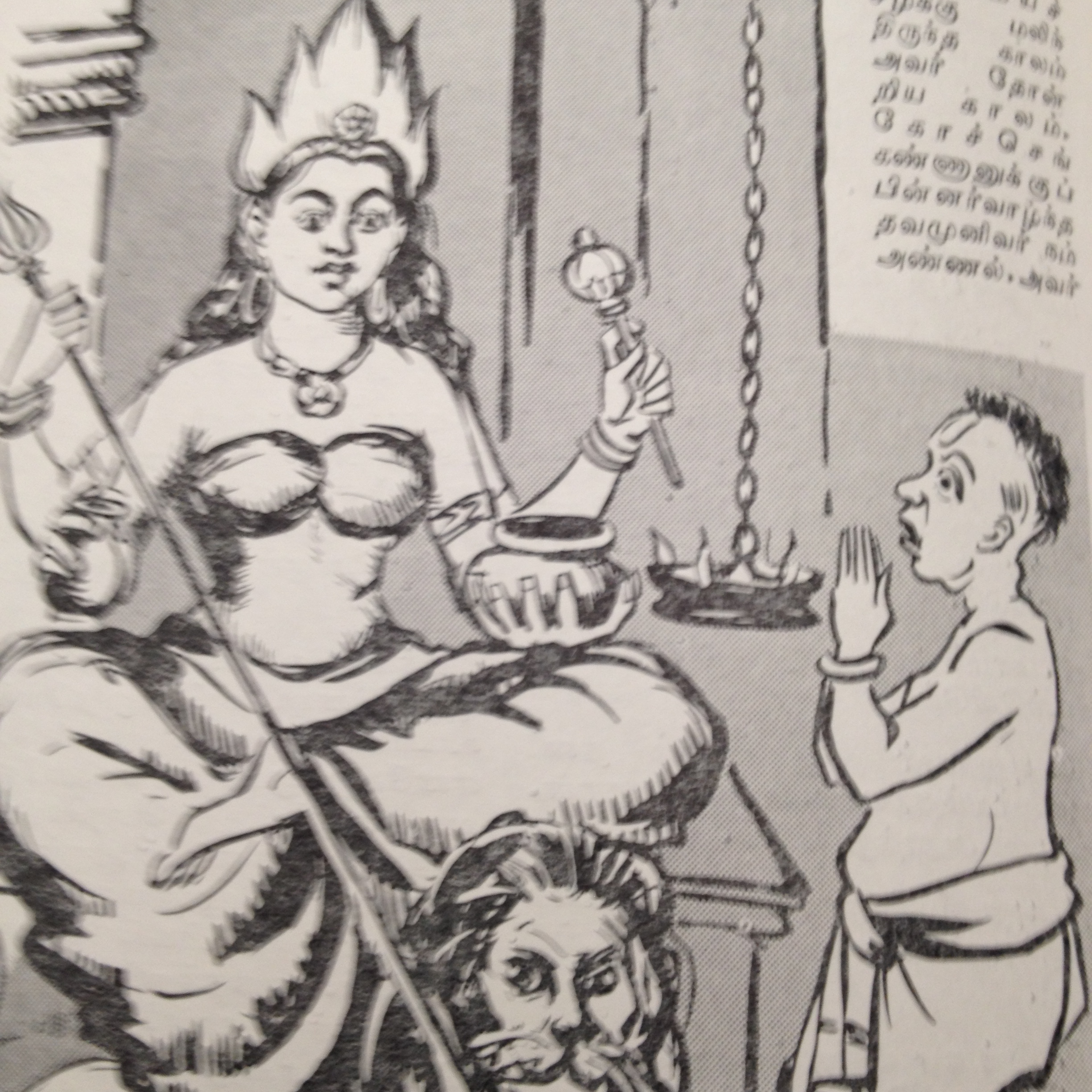
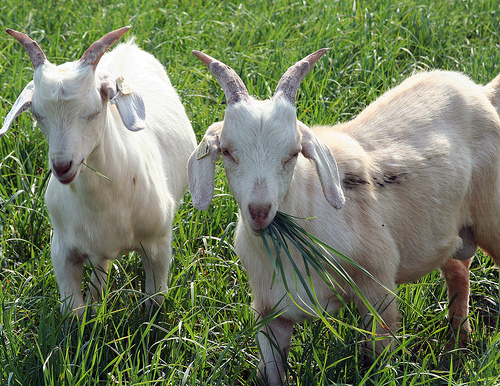
There was a priest in a Kali (goddess) temple. He used to swindle money allocated to make Prasad (Food Offering) for the goddess. Even the Prasad he made for public distribution, was not distributed it to the public. Because of his overeating, he fell sick. Then he prayed to Goddess that he would sacrifice two goats to the goddess if he was cured. His illness was cured in a weeks’ time. Then he sacrificed two animals just to satisfy his hunger.

In the meantime, there was severe drought in the kingdom. So the king and the minister decided to visit the Kali temple. As soon as the priest saw the king and minister coming, he thought that they were coming to punish him for all his bad acts. So he hid himself behind the goddess Kali’s statue.

The king and the minister prayed loudly, “Oh Merciful Mother! The country is suffering from acute drought for a long time. You must save the country and the people by showering timely rain”. Then the goddess replied that she needs a human sacrifice to set things right. Immediately the king told the minister that it was the solemn duty of a king to protect his people. So let me sacrifice myself. But the minister objected to his proposal and said there are several ministers to help the king. But there is only one king so let me die for the sake of the country.

They argued like this for a long time. At last they decided to ask goddess about her choice. Before they opened their mouth, Goddess said loudly, “When I said human sacrifice I did not mean you people. Please sacrifice the priest who is hiding behind me”. Both of them got the priest and took their sword to finish him off. He also said his last prayer, “Oh, Mother! I have been serving you for half a century. And yet you wanted my blood! Why? Why?”

two-goats

Goddess said smilingly, “Dear priest! You became sick because of your over eating. And yet you found an excuse to eat more and sacrificed two innocent animals. As you sow, so shall you reap.”

The king and the minister cut off the head of the priest. Goddess appeared before them and asked what they wanted now. They told her to remove the drought by regular rain and revival of the dead priest. She did both according to their request. The priest behaved from that day. There was copious rain fall which made everyone happy.

This is a folk tale.

God’s Name alone saves!

ram-nam-fb

WRIITEN BY london swaminathan

Date : 12 September  2015

Post No. 2152

Time uploaded in London: – 19-44

(Thanks  for the pictures)


“In the Kingdom of God, reason, intellect, learning, are of no avail. There the dumb speak ,the blind see, and the deaf hear” – Sri Ramakrishna Paramahamsa


There was once a Sadhaka (spiritual aspirant) who aspired after God realisation.  He went to a sadhu and asked him what he should do for realising God .the sadhu said that he should repeat Gods name and think of God constantly. The young aspirant did not like this simple advice He thought poorly of the power of the name. He had the idea that one should learn Sanskrit and master the Vedas and Shastras, before he could get God realisation. So he left this sadhu and went to another sadhu who was well versed in the Vedas and Shastras so that he may gain proficiency in the same.

The teacher agreed, but added that the student should also do some service, besides pursuing his studies.  He was given the work of tending the cows in the ashram. So the young friend took up the service of the ashram cows and whenever he had spare time, he went to the teacher and took his lesson s in Sanskrit. Thus twelve years passed. He became a great Sanskrit scholar and had a good knowledge of the Vedas and Shastras. But he did not realise God. So he asked his teacher why he had not attained God even though he had become learned in the Vedas and Shastras.

The teacher then said mere scholarship and learning did not lead to God realisation. To realise God one must love him intensely and ceaselessly remember him by taking to Ramnam. Now the young aspirant realised his mistake in not listening to the advice of the first sadhu who had asked him to take god’s name twelve years ago. He regretted he had wasted many precious years in merely acquiring learning without chanting god’s name or cultivating love and devotion for God.

parrot cat

Parrot and the Cat Simile

Sri Ramakrishna Paramahamsa naarates a good story:

A parrot repeats by rote the holy name of Radhakrishna, but as soon as it is caught by a cat it screams ‘Kang, kang’, betraying its natural cry worldly-wise men sometimes repeat the name of Hari and perform various pious and charitable deeds with the hope of worldly gains, but when misfortune, sorrow, poverty and death overtake them, they forget Him and all such deeds.


ram namaste

Barrenness of Mere Book Learning

One day the late Keshab Chandra Sen came to Sri Ramakrishna in the temple of Dakshineswar and asked him, “How is that even learned people remain so profoundly ignorant of things that truly matter in spiritual life, although they have read a whole library of religious books?”

The Master replied, “ The kite and the vulture soar up high up in the air, but all the times their eyes remain fixed on charnel houses in search of putrid carcasses; similarly the minds of the so called learned men  are attached to the things of the world, to lust and wealth,  in spite of their erudition in sacred lore, and hence they cannot attain  true Knowledge.”

“To explain God after merely reading the scriptures like explaining to a person the City of Banaras (Varanasi) after seeing it only on map”.

–subham–

How can you tackle Angry People?

angry

DON’T REBLOG IT AT LEAST FOR A WEEK!  DON’T USE PICTURES; THEY ARE COPYRIGHTED BY SOMEONE.

WRIITEN BY london swaminathan

Date : 11 September  2015

Post No. 2148

Time uploaded in London: –   19-16

(Thanks  for the pictures)


Great harm may be caused by anger. Therefore one should restrain anger towards anybody – Tirukkural 303


Can there be greater enemy than anger which flares up, destroying one’s peace of mind and cheerfulness? – 304


If one wishes to safeguard oneself, one should control anger. If not, it is bound to ruin oneself – 305


How Mataji tamed a Modern Durvasa

Swami Ramdas of Ananashramam narrated this anecdote:–

Sadhus (ascetics), to whatever denomination, sect or creed they belong, welcome at Anandhasram situated near Kanhankad in Northern Kerala. Sometimes we would find scuffles and fights going on amongst them in the Ashram Dharmashala. One would say to the other, “You should not touch me. Stand farther away! You belong to a lower sect. You have no business to sit close to me. Why did you touch my leaf? You have polluted the leaf on which I was served my food and so on and so forth”.

anger cartoon

Once a Sadhu came to the Ashram and would not eat food in the common dining hall. So he cooked his food separately. He was given the necessary provisions such as rice, dhal, ghee, wheat flower and vegetables for cooking his food. One day he had taken a bucket from the ashram for storing water. He had, of course his own Lota/tumbler which was used by him for drinking water and other purposes.  He also kept the bucket, nearly half full, by his side it was rather close to the plantain leaf on which he had, as usual, served his food , prepared by himself. He sat down for eating.

Just then, a woman worker of the ashram went there. She wanted the bucket, as it was the one used by her for washing utensils. She was about to take vessel, and had hardly touched it, when the sadhu shouted: “How did you dare to touch my bucket? You have polluted the whole place I cannot take this food”.

He became wild and started cursing and shouting at her. We could hear him in the ashram.  He was jumping about with uncontrollable fury. The woman, unable to stand all this ran away from the place and came to Mataji Krishnabai. In a moment, another person came and reported to Mataji: “The sadhu has collected all the food he had cooked and served on the leaf and thrown it away to the dogs. He is still fretting and fuming. Nobody dare approach him”.

The sadhu was short and stout in stature and had a ferocious look. He had a grizzly beard and a matted hair on his head. Mataji looked at his wild behaviour from a distance and found he was burning with anger. He looked like a modern Durvasa in action. She felt that something must be done to calm him down. She went inside the kitchen store. There were in it some water melons. She cut them into nicely shaped pieces and got also some fine variety of plantains and two tender coconuts. All these she placed on a plate and asked another worker to ake it to the sadhu. She also followed the worker to the place where the sadhu was.

anger

When the sadhu saw the plate with the juicy red water melon pieces and other fine fruits, and Mataji coming along with them, his anger cooled down a bit. Mataji said to him: “The woman worker committed a mistake but she never intentionally did it. Will you just take the fruits on this plate?”  She handed him also a big pitcher full of sweet warm milk. He now sat down and began to eat and when nearly half the fruit and milk was finished, he came back to normal.

Mataji is a tamer of lions. A smile appeared on the sadhu’s face when the whole quantity of fruits and milk went down. Now he was perfectly cheerful. Mataji then asked him, “ How do you feel?” He replied, “Quite happy, mother!”  At last, he went about telling everybody that Mataji was supremely gracious. “The food I had prepared was nothing in comparison”, he said. “What she gave me was veritable nectar. My body was burning, but it has cooled down now. I am most grateful to her”.

DURVASA: An angry saint in the Hindu Mythology, who was famous for his anger and curses
–Subham–

Blind Rituals! The Cat and the Guru Story!

Cat-tied-to-a-pole

Don’t Reblog it for a week. Pictures are copyrighted by someone else. Don’t use them. When you use the matter, you must not remove the author’s name and blog name.

Compiled by London swaminathan

Date : 8 September  2015

Post No. 2138

Time uploaded in London: – 19-26

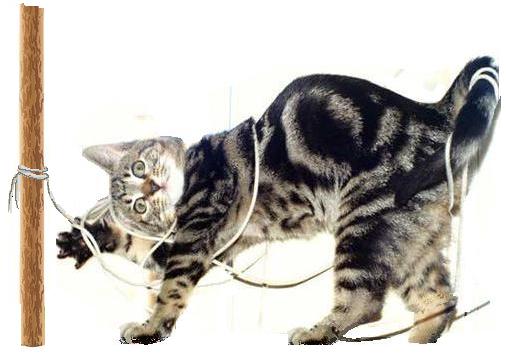
In a hut lived a Guru and his disciple. The hut was situated outside the town limits in a forest. As they were troubled every night by rats, the Guru reared up a cat. Both the Guru and the disciple were very fond of the cat. But during the meditation early in the mornings, the cat would sit up on the lap of the Guru and disturb his meditation. So the Guru got a string and tied up the cat to the leg of his coir cot. This went on from day to day. Eventually both the Guru and the cat passed away through old age.

The disciple stepped into the shoes of his Guru and was the sole owner of the hut he carried on the practice of early morning meditation. When meditating he found that he had no cat which he could tie up to the leg of the cot as his Guru did. He was under the impression that tying up the cat was necessary for successful mediation. He also bought a cat and tied it before meditation.

When he passed away, his disciple faithfully followed cat tying ritual. It went on for generations. Lot of us practise such rituals blindly without understanding the meaning.

Some disciples blindly imitate their Gurus without understanding the meaning. Imitation is not the way – each one should develop on the spiritual path according to his or her individual nature and temperament. An all beneficent influence and guidance is, of course, necessary from an illumined sage.

—xxx—

Gist of 18 Puranas in ONE line! Vyasa’s Discovery!

Intertwined-hands

Written by London swaminathan

Date : 3 September  2015

Post No. 2121

Time uploaded in London : 20-03

Veda Vyasa, the black sage of India, spent his life time in compiling the Four Vedas, writing the longest epic in the world – Mahabharata and compiling 18 Puranas. This is unparalleled in any part of the world and no one could beat him at any time to enter the Book of Records. He showed the world that India was the most civilized and most literate in the ancient world.

But after writing 800,000 lines in 18 Puranas (Hindy Mythology), ie. Four million words, he gave the gist in one line:

Paropakaara Punyaaya, Paapaaya para piidanam

Helping others is good; harming others is sin!

This is the message he conveyed to the world according to Panchatantra of Vishnusarman. His Panchatantra (Animal fables) itself was translated into other languages from fifth century CE. He says,

“Ashtaadasapuraaneshu Vyaasaaya Vachandvayam

Paropakaara Punyaaya, Paapaaya para piidanam – Pancha tantra.

(In the eighteen Puranas Vyasa made made two statements: Helping others is Punya (good, meritfl) and hurting others is Paapa (sin)

Ancient Hindu wisdom is always given in formulas (Sutras)

helping_hands_1_lgw

Following are the 18 Puranas with the number of Slokas (couplets) they contain:

Agni                        16,000

Bhagavata              18,000

Bhavisya                 14,500

Brahma                  10,000

Brahmanda            12,000

Brahmavaivavarta18,000

Garuda                   18,000

Kurma                    18,000

Linga                       11,000

Markandeya          9000

Matsya                   14,000

Naradiya                25,000

Padma                    55,000

Skanda                   81,000

Vaman                    10,000

Varaha                    24,000

Vayu                       24,000

Vishnu                    23,000

Total : About Four hundred thousand couplets= 800000 lines X 5 words a line = Four million words!

Largest Purana: Skanda Purana

Shortest Purana: Makandya Purana

Oldest Purana: Vishnu Purana: (in the present form -300 AD)

Heart-Quotes

They alone live…………….

There is another beautiful saying about helping others in Tamil, Sanskrit and English with the same message. Great men think alike:

“Param Paropakaaraartham Yo Jiivati Sa Jiivati” – Subhasita Ratna Bhandaagaaram

Those who live for others are only live (their life).

Swami Viekananda said,

“They alone live who live for others, the rest are more dead than alive”.

The same message is in Tamil Veda Tirukkural,

“Only those, who know and practise social cooperation, live their life;

The others are as good as dead” – Kural 214

German philosopher and poet Goethe also said,

“A useless life is only an earthly death”

 Helping-Others-Quotes

—-xxxx—-

Are you a Beggar? Beg only of God!!

IMG_3421

Article No. 2105

Written by London swaminathan (தமிழில் மொழி பெயர்ப்பு)
Date : 28 August  2015
Time uploaded in London :– 9-47 am

A Sadhu (saint) living in a forest wanted some money for repairs to be done to his hut. He therefore went to the nearby kingdom so as to request the king to provide him with necessary funds. He entered the palace and enquired where the king was so that he could see him. The minister in charge of the palace asked him to sit for a while in the waiting room as the king was at prayers. The King’s Prayer room happened to be in the adjoining the one in which the sadhu sat. Now the sadhu could distinctly hear the king praying,

”Oh Lord of the universe, I appeal to You to grant me more wealth and prosperity than what I have now. Deign to shower your grace on me so that this prayer of mine be fulfilled.”

On hearing this, the sadhu suddenly got up and started to go. The prayer being over, the king came to the waiting room just at the moment the sadhu was leaving .The king asked the sadhu why he came and what he wanted.

The Sadhu replied, “I came to request you for some money for reconstructing my small hut in the forest. But I heard your pray begging to God for more wealth and more prosperity. I find you are a beggar like myself. So I felt no purpose will be served by asking for anything from a beggar like myself. I prefer on the other hand to directly approach the same Supreme God to whom you appeal for help”.

So saying the sadhu left.

The King and the Slave! Punctuality and Reliability!!

king

Article No. 2103

Written by London swaminathan
Date : 27 August  2015
Time uploaded in London :– 19-58

Here is a story on Punctuality, Loyalty and Reliability!

A king had a slave serving him with all faith and love. In fact the slave adored his master and was ever ready to please him in all manner of ways. The king appreciated his lovable nature and made him a minister in his court. He gradually raised him to the position of his Prime Minister. Seeing his rise to the biggest position under the king, the other ministers, who had served long in the state, becoming envious of the slave, grumbled and complained. All of them joined together and went to the king in deputation with the complaint. The king heard them patiently and said, “Exactly a week hence all ministers including the prime minister should meet me in the green rest house five miles away from the city, at four pm sharp. He who would meet me first would be considered to have real love and regard for me.

Soon after, he sent for the prime minister and, after telling him what he said to the ministers, asked him to build houses, camps and shamianas on both sides of the road that led to the distant garden where the ministers had to meet him as arranged. In the newly constructed camps and houses, all kinds of entertainment, shows etc. should be exhibited besides lines of shops and restaurants providing the most tempting foods and articles – the condition for meeting the king was all those who go to the garden house should do so on foot.

king 2

The day came. The prime minister along with the other ministers started on the journey. When they walked on the road leading to the place, except for the prime minister, all other ministers were tempted to see the shows, witness the entertainments, visit the restaurants, etc. as all these could be had without payment. They thought that there was plenty of time to reach the place where they were to meet the king. Leisurely, they went from one place of entertainment to the other. Time passed. The prime minister, without looking to the left or right walked straight to the garden where the meeting was fixed, reached there an hour before schedule. The other ministers reached the place half an hour late, or one hour late. Some of them failed to be there at all.

The next day, the king called all the ministers and addressed them thus,

“Now you all know why I made this slave (pointing to him) a prime minister. He is a man possessing sterling qualities for the high post. Ministers hung down their heads in shame and unanimously applauded the king for his choice of the PM.

So also, God’s devotees, when they possess genuine love and devotion for him, never think of anything or anybody other than God. They take the straight course that leads to him and are not drawn away by the attractions and temptations of worldly pleasures.

–Story as told by Swami Ramdas.

Story of a Persian Parrot! When your Ego dies, You are Free!

alexandrine_parrot_f

Article No. 2100

Compiled by London swaminathan
Date : 26 August  2015
Time uploaded in London :–  22-12

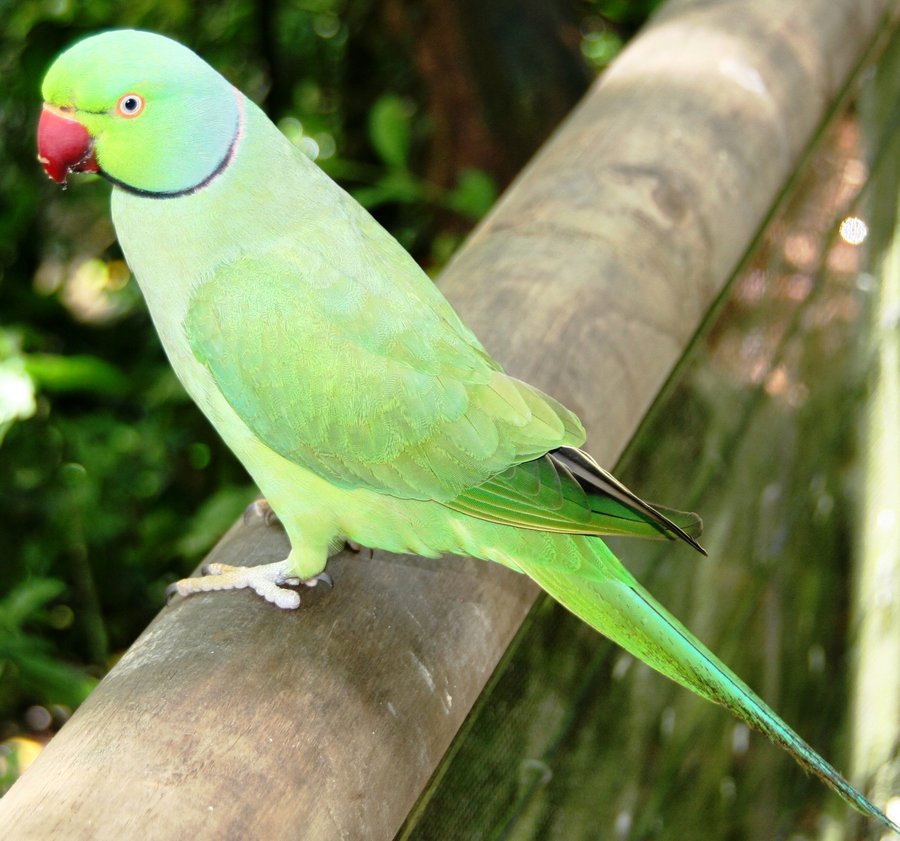
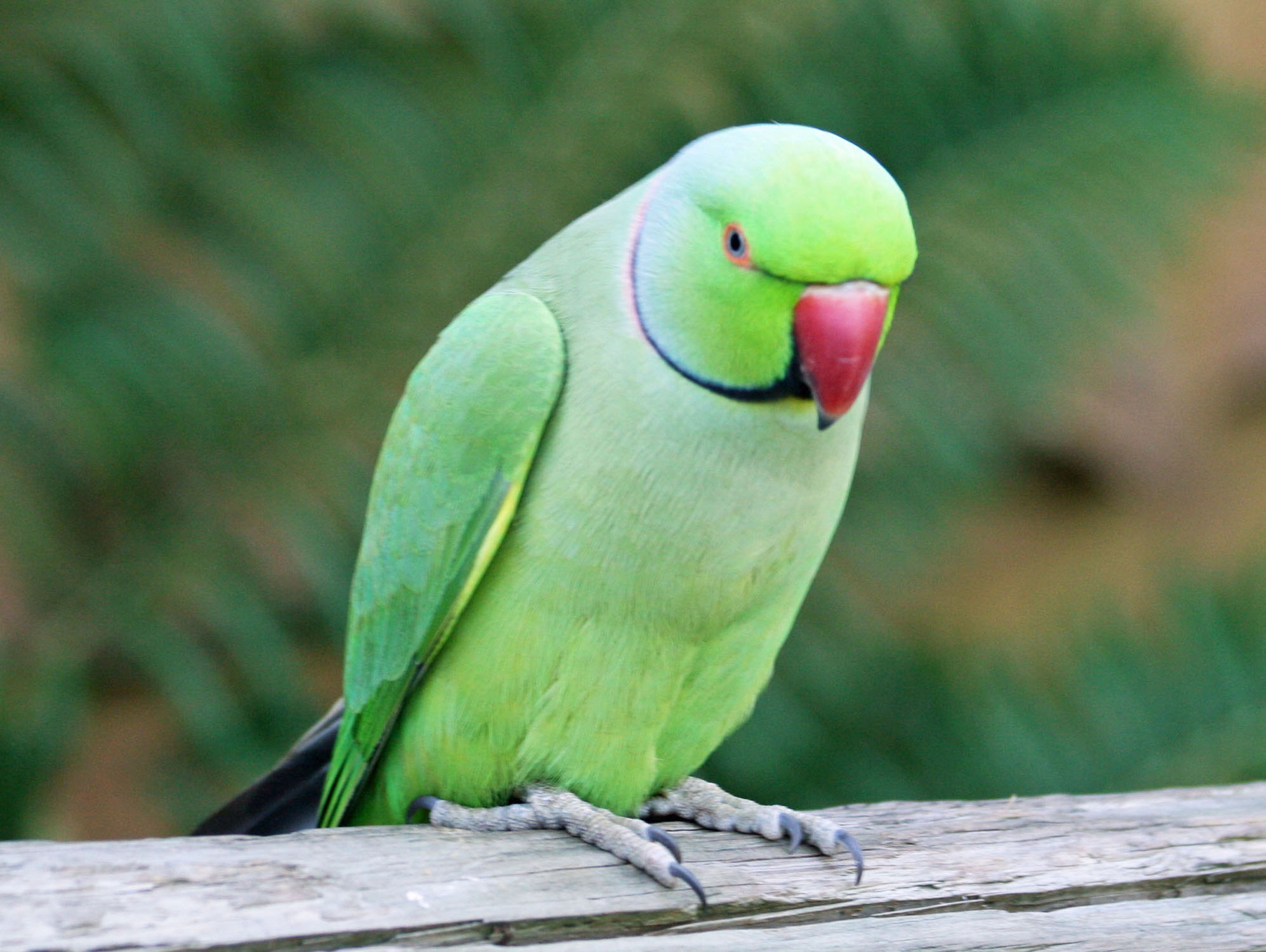
In Kashmir there was a big merchant who was dealing in all kinds of goods made in Persia. Every year he would go to Persia with some merchandise for sale and return with goods purchased in that distant land for sale in his country. This was going on for several years. On one occasion he saw a beautiful talking parrot for sale in a shop in Persia. He bought the parrot and brought it to Kashmir and hung its cage in a prominent place in his house. The parrot talked like a human being and was very much loved by its master and his family.

Once it so happened that the merchant fell ill at the time of his usual annual visit to Persia for business. So he asked his secretary, who was a trust worthy man, to go to Persia on his behalf and transact business.

330591-green-parrot

On the day of secretary’s starting on the journey, the parrot coming to know that he was to go to Persia in place of his master, called him and said  “since you are going to my native place will you do me a favour?  You know I am imprisoned in a cage and denied the joy of flying about freely and cheerfully. Kindly go to the big forest lying into the east of the town which you are going to visit. On the trees of this forest are living my relations and friends. You have to report to them about my miserable condition in Kashmir, as I am imprisoned in a cage and living far off from them. Then you had to ask them on my behalf what means should I employ in order to get free from the cage. Whatever answer you receive from them, please report it to me on your return”.

Accordingly after the business in Persia was over, the secretary turned towards the forest as directed by the parrot and looking up at the trees found hundreds of parrots flying from branch to branch in those trees.  The secretary then spoke to the parrots placing before them the question raised by their brother parrot living in a cage in Kashmir. He asked the question three or four times but got no reply. He waited for some time and was about to turn away in disappointment. Just then he saw an old parrot drop down to the ground apparently dead. Of course the secretary did not attach any importance to this as he thought the parrot must have died of old age.

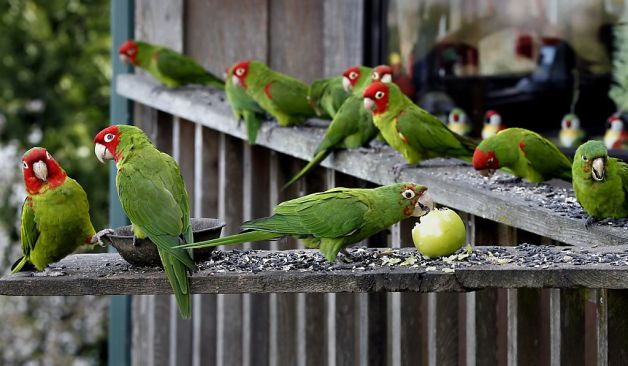
parrot group

In due course the secretary returned to Kashmir and presenting himself before his master , reported about hi business transactions in Persia . Before going home the secretary was called by the parrot to ascertain the result of his enquiry with its friends and relatives in Persia. The secretary said the he had carried out the instructions of the parrot as suggested but in spite of his repeated questionings he got no response. But a strange thing happened, namely, an old parrot fell down from the tree dead. This may be due to some sudden attack of some illness or old age, and there may be nothing strange about the occurrence

As soon as the parrot heard the secretary’s story, it fell down from its perch on to the floor of the cage and stretching out its wings and legs lay as though dead. The secretary thought that the parrot must have had a stroke which caused its sudden death. He conveyed the sad news immediately to his master. The master came and noticed the prostate condition of the parrot without any sign of life. He called a servant and asked him to take the dead parrot out of the cage and throw it somewhere far away from the house. The servant ,as ordered too the dead parrot out and going some distance, threw it on a heap of debris in a pit. The moment the parrot touched the ground it got up and flew away.

This story teaches us the lesson that the soul can achieve freedom only when its ego-sense is dead.

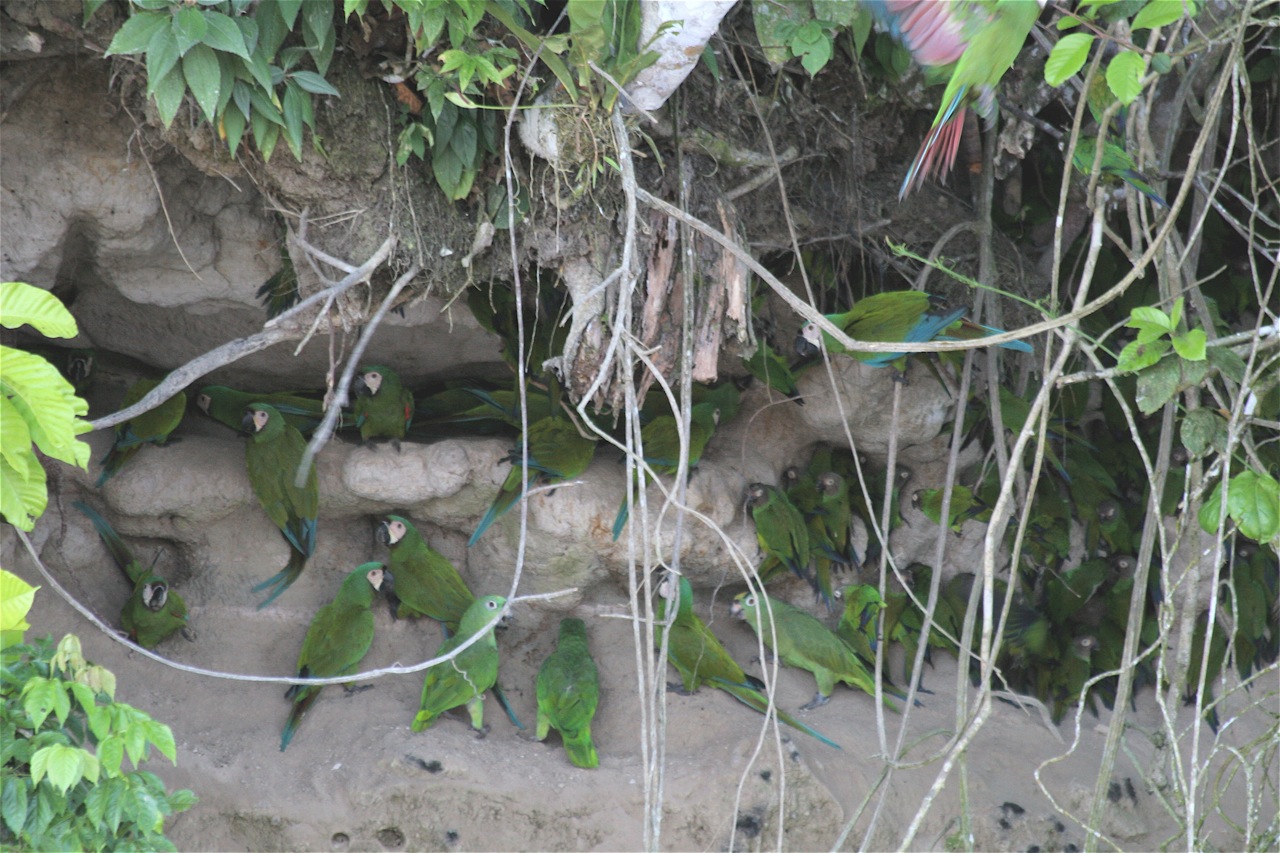
Parrot_clay_lick

From Stories as told by Swami Ramdas

Pictures are taken from Wikipedia and other sites;thanks.

Islamic Militants destroyed ‘Indra Temple ‘ in Syria ?

baal shamin big

Baal Shamin in Palmyra, Syria

Research Article No. 2098
Written by London swaminathan
Date : 25 August  2015
Time uploaded in London :–  16-18

Newspapers around the world have flashed the news of destruction of the temple of Baal Shamin in Palmyra, Syria. Those who read about the attributes to Baal Shamin can easily see the similarities between Baal Shamin and the Vedic God Indra.

First of all, we must remember that Syria and Turkey were ruled by the Hindus once. We already know that the oldest archaeological evidence for Vedic Gods came from Bogazkoy in Turkey. We also know the Sanskrit names of Kings Dasaratha, Pratardhana etc who ruled Mitannian empire in the Middle East. All of them existed before 1400 BCE.

Baal = Sanskrit “Paala” = protect, rule, maintain

Baal is a common Semitic noun that means ‘lord’ or ‘owner’, but it occurs quite frequently in ancient texts as the proper name of an important god. Baal was one of the widely known deities in the west Semitic pantheon. He was associated with aspects of the natural world that were central to agriculture and society.

All these attributes are similar to Indra’s. We add Indra with lot of words such as Rajendra (Tamil Choza king), Khagendra (King of birds eagle), Mrgendra (King of Beasts Lion), Nagendra (King of Snakes) etc. Baal is cognate to Paala in Sanskrit meaning protector, maintainer, ruler, Lord etc. We have Go+pala, Indra pala, Raja pala.

In short Indra, Pala, Baal – all mean Ruler, Chief, Lord and one who maintains. Like Hindus add Pala or Indra or Eswar (Lord) with all local Gods, Middle East people added Baal with all the local gods. Baal Hadad was the most popular one.

Like we used Indra to mention a particular deity or used it as suffix to many more, they used ball as local manifestations of the god (Eg. Baal Sidon, Baal Shamin, Baal Hermon, Baal Peor), but it was also used in its general sense to refer to other deities as well.

For example, Lord Shiva has over 300 different names in Tamil Nadu towns (Sundareswar in Madurai, Ekambareswar In Kanchi, Brhadeswar in Thanjavur). Similarly goddess Parvati has 300 different names in Tamil Nadu temples (E.g.Meenakshi in Madurai, Visalakshi in Kasi, Kamakshi in Kancheepuram, Neelayathakshi in Nagappatinam and so on)

Baal appears in Near Eastern texts in 3000 BCE, but he was best known from his prominent role in Ugaritic Literature (1250 BCE). The latter contains over 500 references to Ball, who was said to live on Mount Sapnu/Zaphon, north of Ugarit. It is like Mount Meru or Mount Kailash of Hindu literature.

Bible links Ball with Goddess Ashtoreth (Ishtar=Durga)

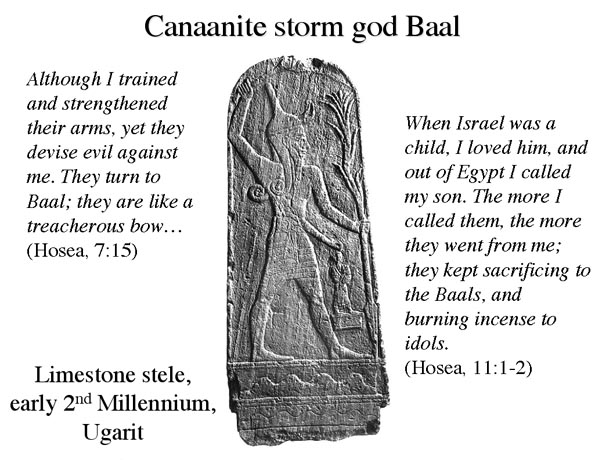
CanaaniteStormGodBaal

Ball =Thunder God = Indra

Throughout the Ancient Near East, Ball was viewed as a Thunder God like Vedic Indra. He was associated with thunder, clouds, lightning and rain like Vedic Indra. As a Canaanite deity of weather and fertility, he was linked with the annual return of vegetation, similar to Indra Festival.  From Nepal to Tamil Nadu, Indra Festival was celebrated 2000 years ago every year. Now Nepal and South East Asian countries only celebrate this as Water Festival every year.

According to Ugaritic mythology Baal has to fight with his brothers Yam (sea) and Mot (death) for supremacy. Like Baal is a cognate to Sanskrit word ‘Paala’ (ruler, lord, maintainer) Yam is cognate to Sanskrit word Thoyam (water) and Mot is cognate to Sanskrit word Mrtyu (which gave birth to English words mortal, immortal etc).

Till the spread of Christianity in the 3rd or 4th century, Baal was worshipped. In numerous passages the Bible records a long term, intense animosity towards Baal and those who worshipped this deity (eg. Numbers 25; Judges 6; I Kings 18; Hosea 2 in the Bible). Later Baal’s attributes merged with Yahweh (Psalm 68:4) where Yahweh was said to ride on the clouds and to manifest his power into thunderstorm (Psalm 29).

In short, the concept of Nature God found in Rig Veda, the oldest literature in the world, spread to various parts of the Middle East and took its own forms in the course of 2000 years.

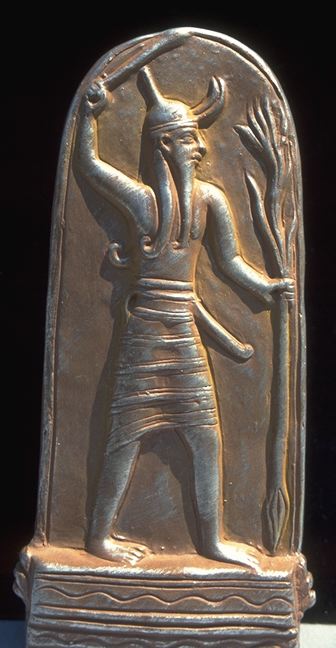
Baal

Palmyra Temple destroyed by Islamic Terrorists!


Baal Shamin was built in 17 AD in Palmyra and it was expanded under the reign of Roman emperor Hadrian in 130 AD.

Known as the “Pearl of the desert”, Palmyra, which means City of Palms, is a well-preserved oasis 210 kilometres (130 miles) northeast of Damascus.

Its name first appeared on a tablet in the 19th century BC as a stopping point for caravans travelling on the Silk Road and between the Gulf and the Mediterranean.

But it was during the Roman Empire — beginning in the first century BC and lasting another 400 years — that Palmyra rose to prominence.

Before the arrival of Christianity in the second century, Palmyra worshipped the trinity of the Babylonian god Bel, as well Yarhibol (the sun) and Aglibol (the moon).

Baal Samin was first mentioned in a treaty between the Hittite king Suppiluliuma and Nigmadu II of Ugarit. His epithets include Lord Of Eternity. He leads the list of deities like the Vedic God Indra. By Hellenic times he was equated with Zeus in the Greek pantheon and Caelus (sky) in the Roman pantheon. Zeus is Indra according to several scholars.