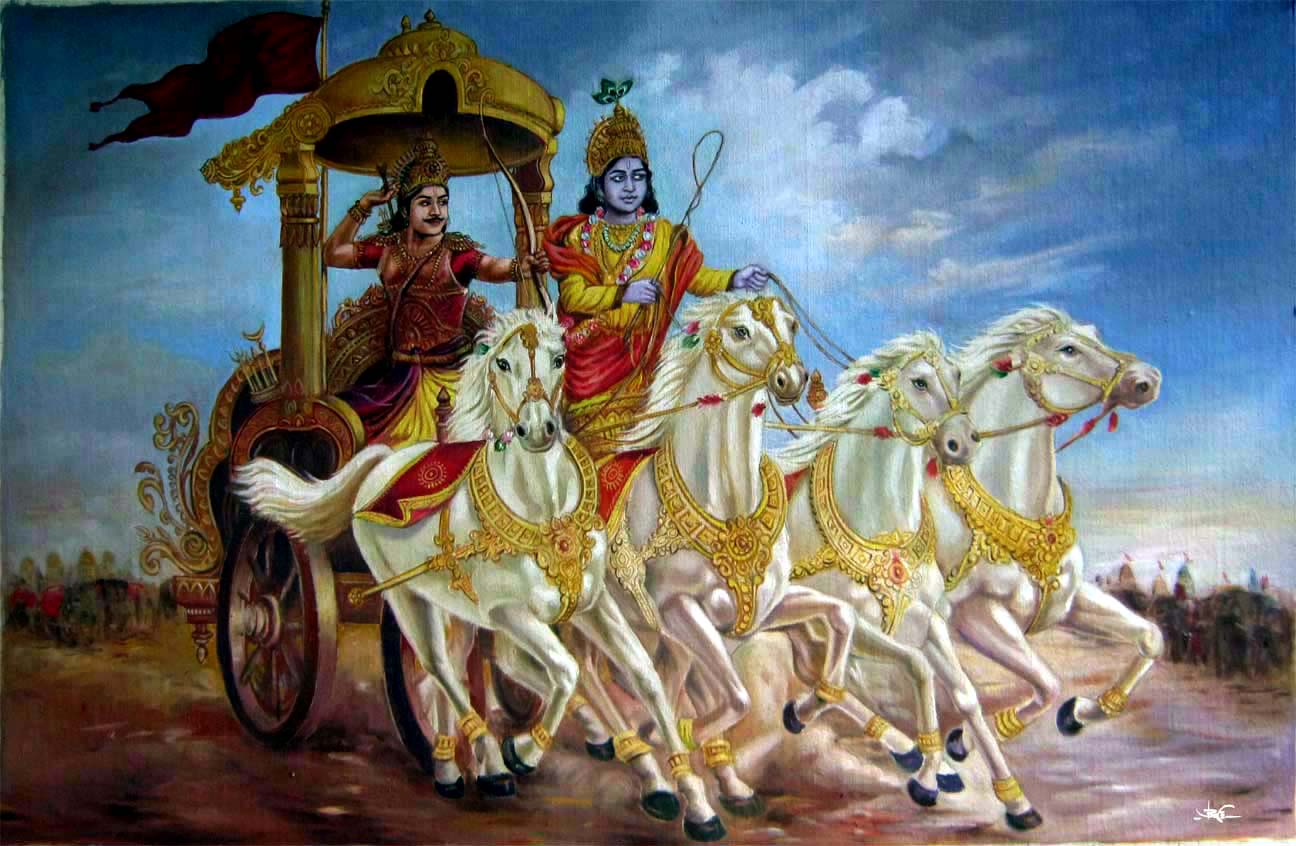
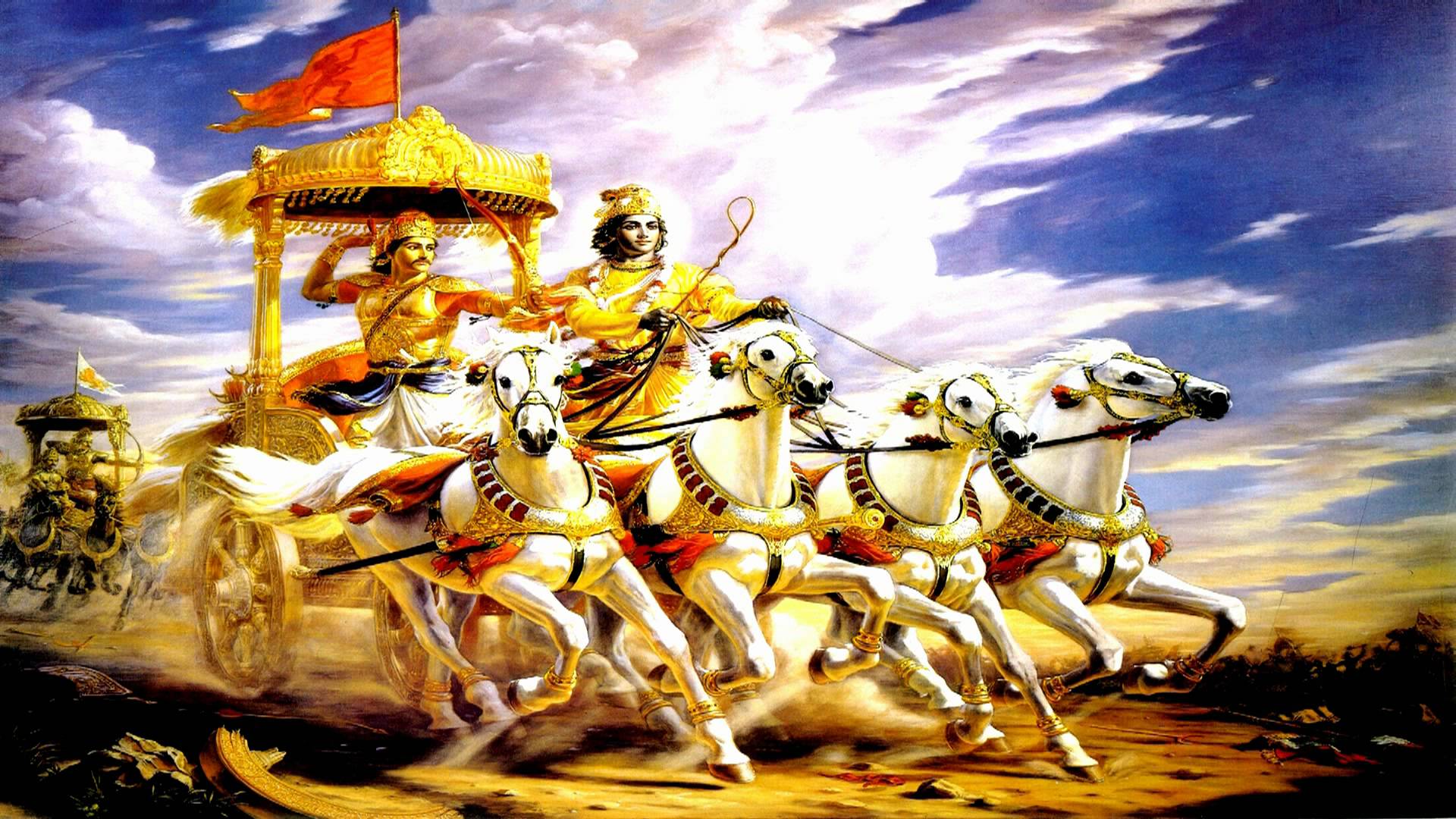
Ten Commandments from the Bhagavad Gita

gitopadesa

Research paper written by London Swaminathan
Research article No.1452; Dated 2 December 2014.

1.Uddared Aatmanaatmaanam (Chap. 6, Sloka 5)
One should lift oneself by one’s own efforts

2.uttishta! yaso labha! (11-33)
Arise! Win Glory!

3.Klaibhyam Maa sma Gamah (2-3)
Yield not to Unmanliness

4.Karmanyeva Adhikaraste Maa Phalesu Kadacana (2-47)
Your right is to work only, but never to the fruit thereof.

5.Maamekam Saranam Vraja; Ma Sucah (18-66)
Take refuge in me alone; Worry not.

gita

6.Na Santim Aapnoti Kaamakaami (2-70)
No peace for he who hugs desires

7.Samsayaatmaa Vinasyati (4-40)
A man who is of a doubting nature perishes

8.Sraddhaavaan labhate jnaanam (4-39)
He who has faith gains wisdom

9.Sreyaan Svadharmo 18-47
Better is one’s own duty

10.Na hi Kalyaanakrut Kascit Durgatim (6-40)
For never does anyone who does Good tread the path of woe.

geethopadesam -2x3' oil-DPSC Bose

contact swami_48@yahoo.com

Fate and Freewill –Part I

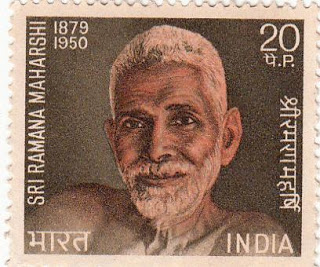
ramana stamp

Article written By Santhanam Nagarjaan

Article No.1446; Dated 29th November 2014.

Is it Fate or Free will? Which determines our life?
If it is fate, then we need not work at all.
Every thing will happen according to the fate.
If everything is according to freewill and effort, why one, worthy in all respects fails in his/her efforts; others who are not at all worthy in very many respects are successful in all aspects of life.

In this series, we are going to analyze Fate and Freewill.

Readers are invited to post their views without hesitation for a healthy debate.
There is an interesting incident in the life of the great seer Ramana Maharishi.
One Mrs. P.C.Desai met Ramana Maharishi on 3-1-1946 and asked a question on freewill.

Quoting Bhagavat Gita, she asked Ramana maharishi, “If (as Arjuna was told) there is a certain work destined to be done by each and we shall eventually do it however much we do not wish to do it or refuse to do it, is there any free will?”

Ramana maharishi replied, “It is true that the work meant to be done by us will be done by us. But it is open to us to be free from the joys or pains, pleasant or unpleasant consequences of the work, by not identifying ourselves with the body or that which does the work. If you realize your true nature and know that it is not you that do any work, you will be unaffected by the consequences of whatever work the body may be engaged in according to destiny or past karma or divine plan, however you may call it. You are always free and there is no limitation of that freedom”.

From His reply we come to the conclusion that freewill can overcome destiny by not identifying ourselves with the body.

We will analyze the Fate and Free will in the next article in depth.

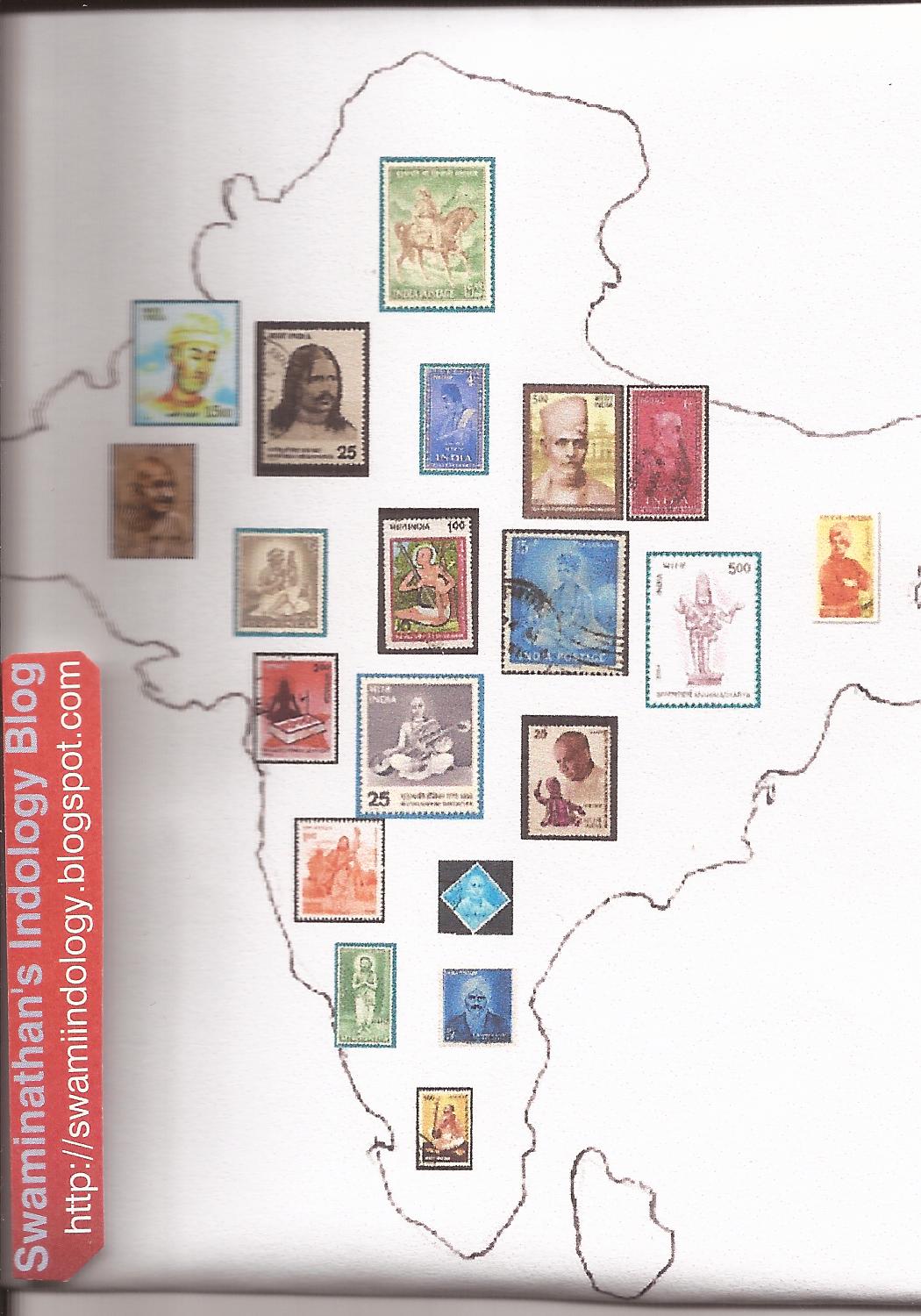
poets of india scan 3

Fate and Free will – Part II

By Santhanam Nagarajan

Devaraja Mudaliar, an ardent devotee of Ramana maharishi (on 3-1-1946) asked him, “Are only important events in man’s life, such as his main occupation or profession, predetermined, or are trifling acts in his life, such as taking a cup of water or moving from one place in the room to another, also predetermined?”
Bhagavan Ramana replied, “Yes”, everything is predetermined.”

“Then what responsibility, what free will has man?” asked the devotee.
Bhagavan replied,” What for then does the body come into existence? It is destined for doing the various things marked out for execution in this life. The whole programme is chalked out (Not an atom moves except by His Will) expresses the same truth, whether you say, Does not move except by His Will or Does not move except by karma.

As for freedom for man, he is always free not to identify himself with the body and not to be affected by the pleasures or pains consequent on the body’s activities.

A devotee by name Khanna asked Ramana (on 28-6-1946), “Is there destiny? And if what is destined to happen will happen is there any use in prayer or effort or should we just remain idle?”

Bhagavan Ramana replied,” There are two ways, to conquer destiny or be independent of it. One is to enquire for whom is this destiny and discover that only the ego is bound by destiny and not the Self, and that the ego is non-existent. The other way is to kill the ego completely surrendering to the Lord, by realizing one’s helplessness and saying all the time : ‘Not I but Thou,oh Lord!’, and giving up all sense of ‘I’ and ‘mine’ and leaving it to the Lord to do what he likes with you. Surrender can never be regarded as complete so long as the devotee wants this or that from the Lord. True Surrender is love of God for the sake of love and nothing else, not even for the sake of salvation. In other words, complete effacement of the ego is necessary to conquer destiny, whether you achieve this effacement through Self-enquiry or through Bhathi-marga meaning the path of Devotion.

Khanna asked the seer whether our prayers are granted.
Bhagavan replied,” Yes, they are granted. No thought will go in vain. Every thought will produce its effect some time or other. Thought-force will never go in vain.”

Ramana’s explanation regarding fate, freewill, prayer and thought power are wonderful!

The power of prayer and thought power has never been explained so beautifully.
But still we want to know further about fate and free will.

There are many more incidents in the lives of the great. Let us see one by one in the future articles.

This series is written by my brother S Nagarajan: swami

****************

Sri Ramanuja’s Favourite Tamil Hymn!

ramanuja

Article written by London Swaminathan
Article No.1443; Dated 28th November 2014.

Who is Ramanuja?
Sri Ramanuja was a Hindu philosopher born in a Tamil Brahmin family in1017. Considered a great teacher who spread Vishtadvaita, was born in a Vadama family to Kesava Perumal Somayaji Dikshitar and Kanthimathi Ammal at Sri Perumpudur near Chennai. He lived a long life of 120 years and died in 1137. He was a great social reformer and converted a lot of people from lower castes as Vaishnavite Brahmins.

What is Tiruppavai?
Thirty verses sung by Tamil poetess Andal of seventh century CE in praise of Lord Krishna is known as Tiruppavai.

Sri Ramanuja is called by many names and epithets such as Udayavar, Emperumanar, Yathirajar and Bhasyakarar. But Ramanuja himself preferred another name Tiruppavai Jeeyar. He liked the verse No.18 more than any other verse from the thirty verses of Andal’s Tiruppavai. There is a story behind this. Vaishnavites sing this verse twice in all the reciting events because it was liked by Sri Ramanujacharya.

Ramanuja used to go to the houses of the devotees every day for food collection, singing the glories of Lord. One day he was singing the verse no 18 of Tiruppavai (Tamil, “Undhu Matha Kalitran….) and went round the streets. When he approached the house of his teacher Perianambi, he finished the verse by singing the last line

“Come along, throw open delighted
To clang thy bangles bright
In pinky lotus hand a sight
Listen and consider our damsel”.

Suddenly the door opened and he saw his teacher’s daughter Athulai standing there with the alms. Ramanuja saw her as Nappinnai and prostrated before her. People of divine origin see god everywhere. We have heard such episodes in the lives of several Alvars and Nayanmars. And thus this verse gained added significance. When the Vaishnavites sing this verse they remember their great Acharya Ramanuja and Lord Krishna with his consort Nappinnai.

05FR-SMITHA__29950e
Dancer Smitha Madhav as Andal (Photo from The Hindu)

Full Verse 18 of Tiruppavai goes like this:–
Oh! Daughter in law of Nandagopala
Who hath a shoulder mighty, never a fleer
A valiant Tusker emitting vigour; atop jasmine arcade
Again and again flock of larks had cooed;
Nappinnai! Thy hair perfume fragrant, door thou open!
Cock come around, have crowed with rigour
Though art asleep, ball agrip, as we sing thy groom;
Come along, throw open delighted
To clang thy bangles bright
In pinkly lotus hand a sight
Listen and consider our damsel – verse 18

Meaning : Andal and her friends request Nappinnai, Krishna’s wife, to open the door. She praises Krishna with a mighty shoulder like an elephant. Beautiful morning time is also described. Nappinnai with her fragrant hair had a ball in her hand which was used for playing with Krishna the previous day.

Source book: Concept’s of Sri Andal’s Tiruppavai by Dr Chenni Padmanabhan

Hindus’ Strange Medicines! Cow’s Urine, Tiger Teeth, Elephant’s Hair, Deer Skin….

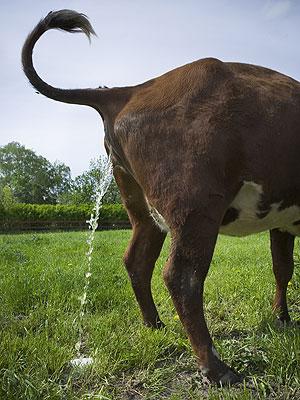
gomutra

Hindus’ Strange Medicines! Cow’s Urine, Tiger Teeth, Elephant’s Hair, Deer Skin, Tiger Skin, Dharba Grass, Fox Face, Water Pot, Elephant poo, Cows’ poo!

Research paper written by London Swaminathan
Research article No.1437; Dated 25th November 2014.

1.My father used to do meditation sitting on a deer skin. First he started with a tiger skin. Then he changed to deer skin. People told him that tiger skin is not fit for family men. It will make one angry. Why?

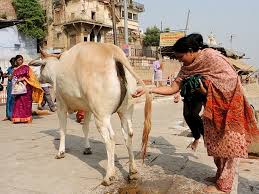
2. My mother used to wash our oven and kitchen area with cow’s poo (cow dung) every night. Why?

Cow-Urine

3. My sister used to sprinkle cow’s poo mixed with water on the ground in front of the floor every morning and then decorate the floor with some geometrical designs without any instrument. It is called Kolam in Tamil and Rangoli, Alpna in other languages. Why?

All this happened in Madurai,my home town in Tamil Nadu.

4.When I was asked to wear the sacred thread, for being born as a Brahmin, they tied a deer skin in my sacred thread. They tied some grass around my waist. Why?

5.When my friend was a little boy they hung a tooth of a tiger in his chain around his neck. Why?

OLYMPUS DIGITAL CAMERA
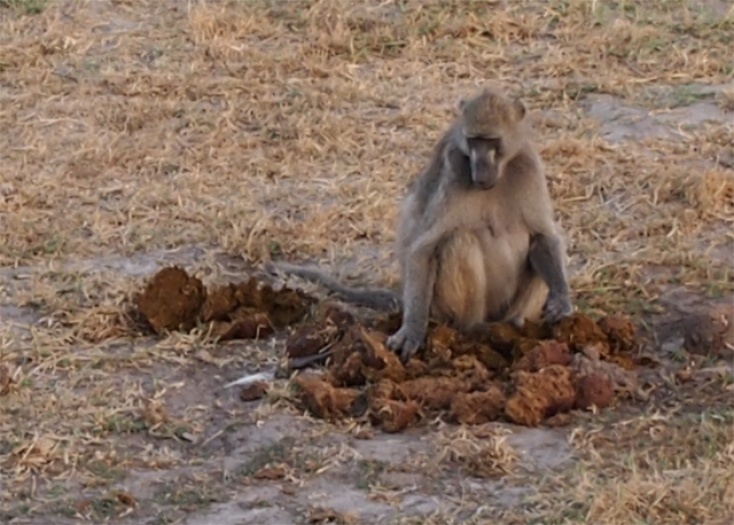
Baboon eats elephant poo in Africa

6.When my wife was pregnant the priest brought the thorn of a porcupine and drew a line on her head. Why?

7.When I was a boy, the temple elephant used to come once a week through our streets and when it excreted on the road we children used to run to the road and stamp on the elephant poo. Even old ladies with chilblain used to join us. Why?

8.When I went to Guruvayur, the most famous shrine of Krishna in Kerala, the mahouts of the elephant sanctuary were selling secretly the hair from the tail of the elephants. People were exchanging money with them for the hair. Why?

selous-game-reservesmoking elphant poo
(In Tanzania (Africa) they smoke elephant dung

9.When I wore the sacred thread, the priest asked me to eat in very small quantity Panchagavya (five products from a cow including cow’s urine, cow’s poo, milk, curd/yogurt and butter). At that time I thought it was disgusting. Not anymore. Why?

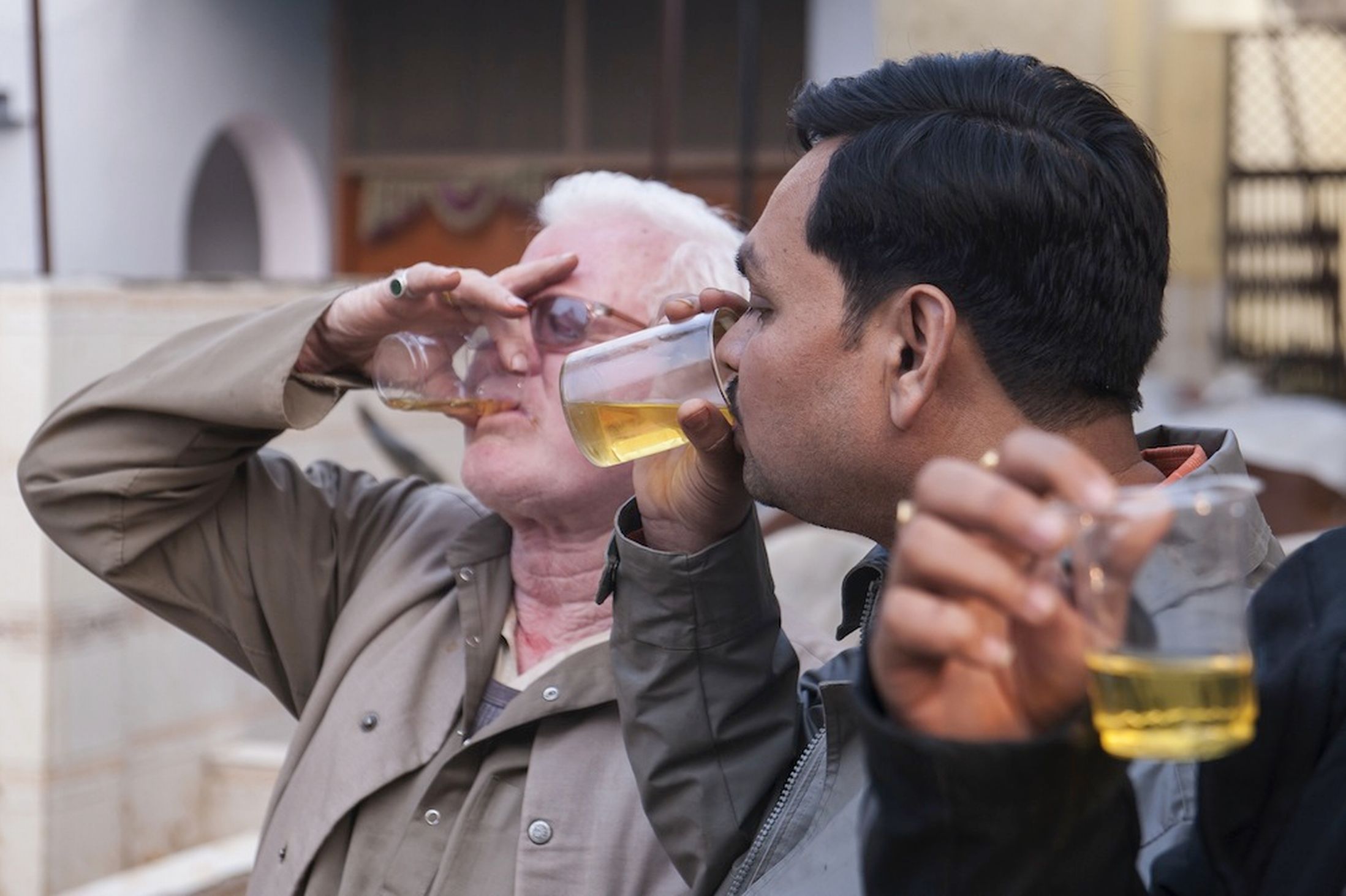
10. I lived in the street of Yadava community in Madurai. People used to sprinkle cow’s urine on their heads and drink a small quantity whenever the cows urinated. Why?

11.We are asked to wear Dharba grass on our ring finger every time we do some ritual. Why?

12. In London, where I have been living for the past 28 years, a lot of foxes visit our garden. All Tamil Hindus are very happy to see it in the morning like we see Garuda (eagle with white neck) in the morning in India. Hindus think it is lucky to wake up in front of a fox. Why?
coffee elephant poo
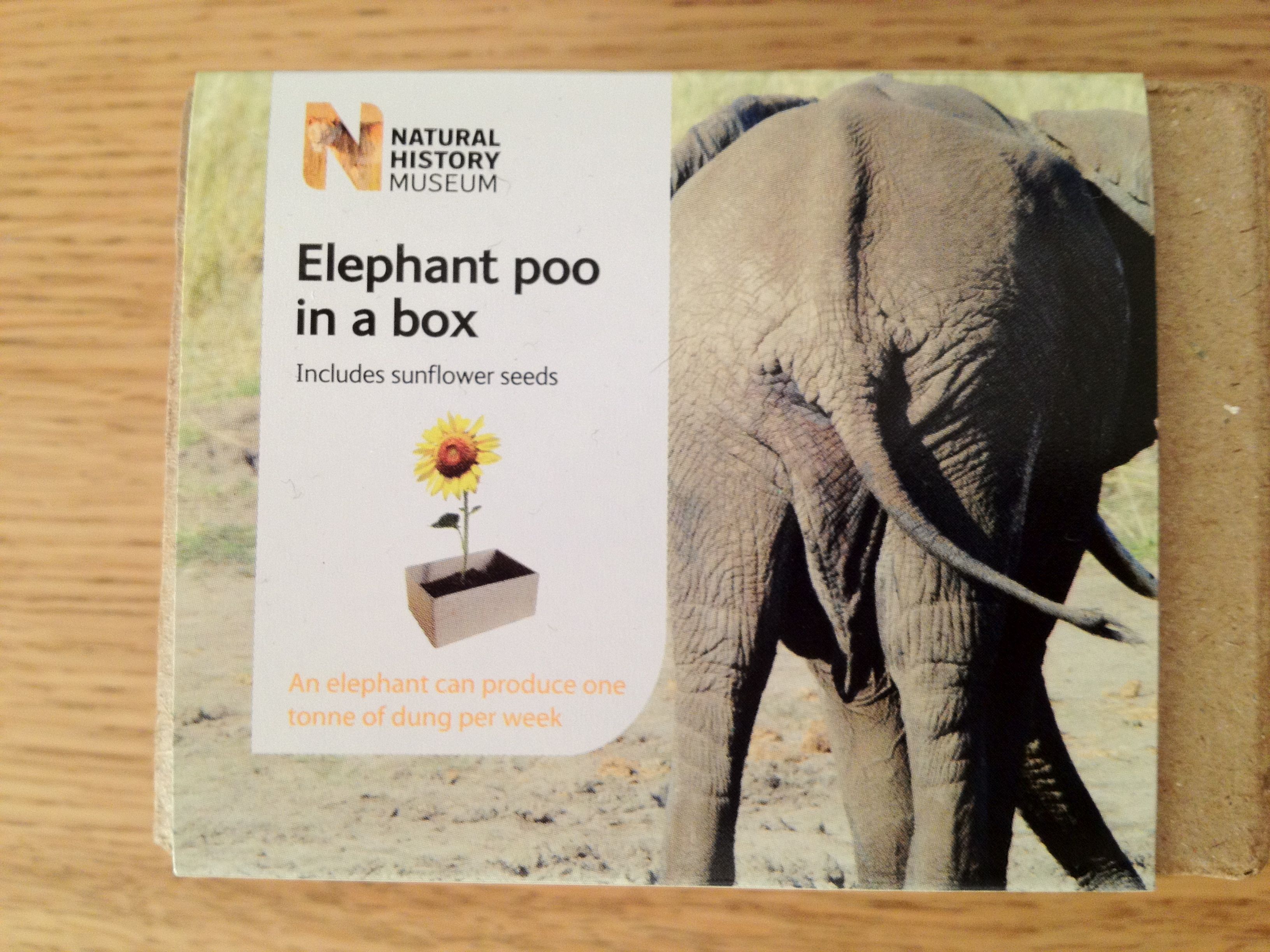
Elephant poo coffee is very expensive

13. All the ancient sages and seers always carry a water pot in their hand. They believed in the magical qualities of water. They can give a boon or a curse with water.Why?

I can add hundred more customs like this. For all the ‘Why’s, I will give a one word answer: Hindus are children of nature. They knew the value of natural products. If someone says that something is a medicine they don’t bother until one falls sick. But if someone says it is mandatory in your religion, if you don’t do it you will incur sin, then you do it without questioning. Most of the products mentioned above have got some medicinal properties or may be placebo effect.

Nara_Narayana_Deogarh (1)
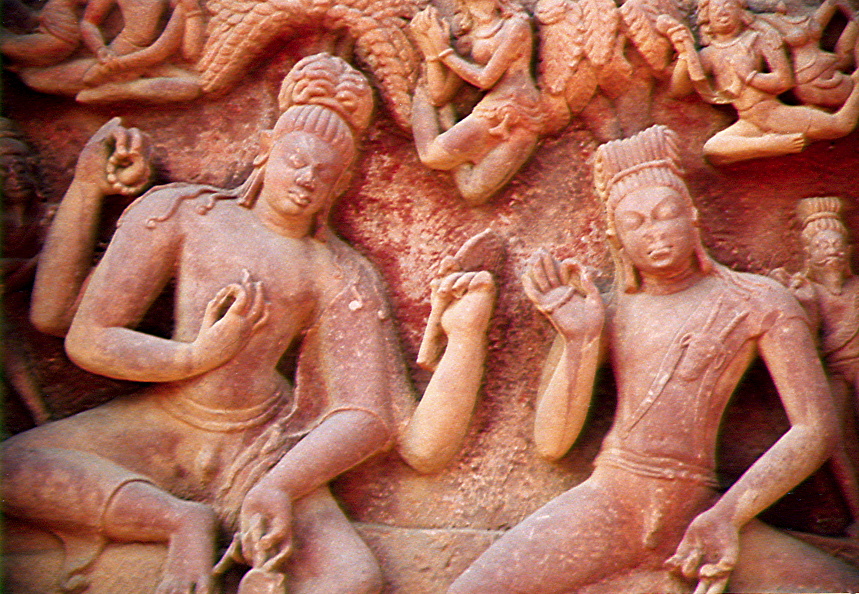
Deogarh Gupta staues of Nara Narayana with deer image on chest

Animal skins: deer skin will give one satva guna (good virtues without anger, Tiger skin will give you focus and concentration. Whatever you target you will ‘’kill’’, i.e. you achieve.

Poos of elephant and cow: They have medicinal properties. The greatest discovery of Hindus is cow. This is their gift to humanity. They use all their excretions: Urine, Poo, Milk and other dairy products. More than the protein and other essential nutrients in the milk, the urine and poo have got anti bacterial properties. Seers and sages simply survived with cow’s products. That is why Hindus worship cow as mother until today.

Dharba, grass, Tiger’s tooth or Tiger nail: No scientific study was done other that the effect of Dharba (kusa Grass) during eclipse. It is good some university does study it and reveal the secrets. I have read one or two things about theg ood qualities of the Dharba grass. But we need scientific proof with the date and the people who did the research and the name of the university. Whatever I have read so far was without proof.

cow urine cola

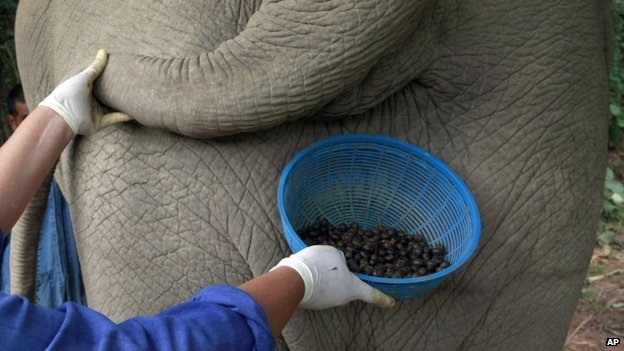
The poos of all animals are stinking and found with worms and germs. But the poo of an elephant or a cow never stink. Hindus have been using it for thousands of years without any bad side effect. African people use it. They smoke cigarettes and baboons eat them. Recently they have invented elephant poo coffee beans. Please read my earlier article on most expensive coffee.

Using porcupine thorn on the head of a pregnant lady will give her a healthy male child is the belief of Hindus. But we have to study it in the labs.

Village folk in Tamil Nadu strongly believe that the parts of tiger such as tooth, nail will instil courage, fearlessness, fortitude and steadiness. Tamil epic Silappadikaram and Tamil Saivite Purana Periapuranam describe the custom of wearing tiger tooth. But I don’t know any scientific proof for the medicinal qualities of elephant’s hair from the tail. Kerala people strongly believe that it wards off evil.

elephant-poo-11
For certain reason Hindu Law giver Manu also gave over importance for a certain type of deer. He says that where the black antelope ranges by nature, that should be known as the country fit for sacrifices ( Yagas and Yajnas); and beyond it is the country of Mlecchas (Manu 2-23).

Mlecha is used in Tamil literature for foreigners like Arabs, Romans and Yavanas. Brahmins wear the skin of that particular (Krishnasaram) deer in their sacred thread and it is called Krishnajinam.
These beliefs may look strange for westerners. But for people living in natural surroundings, many of these are not new. As long as you respect nature, nature cures your maladies! Give and take is Nature’s policy!
cow urinating
Cow’s urine is used by all Hindus.The most purifying thing like Ganges water.

contact swami_48@yahoo.com

Number 7: Rig Vedic link to Indus Valley Culture !

sapta mata - IVC
Sapta Mata (Seven Mothers ) seal from Indus Valley

Research paper written by London Swaminathan
Research article No.1427; Dated 21st November 2014.

Number seven is used in Indus valley civilisation seals more than any other number. Number seven is the most important number in the Vedas. Does it show a connection between the Rig Veda and Indus culture?

Before going any further let me list my earlier posts on Numbers:
Mystic No.7 in Music! (posted on 13th April 2013)
Numbers in the Rig Veda (posted on 3rd September2014)
Hindus’ Magic Numbers 18,108,1008! (posted on 26th November 2011)
Most Hated Numbers 666 and 13 (posted on 29th July 2012)
King and 8 Ministries in Vedic Period (posted on 28th May 2013)
Four Stages and Seven Ages of Man (posted on 21st March 2013)
Tamil Articles:

Thamizarkalin En Jothidam (posted on 16th April 2012)
Neengal Naalum Therinthavaraa? (Tamil Quiz)

InscriptH8205a_edited-1
Indus script with seven strokes

Mysterious Number 7
Number Seven is a mysterious number and most sacred number in Hindusim. When we see number seven and number 3 on Indus seals, its connection with Hinduism is 100 percent confirmed. I will go one step further to say that its connection with the Vedic culture is confirmed one hundred percent. But I have been cautioning in my 20 plus articles on Indus Valley Civilization that it is not a homogenous culture. Probably it was like today’s Hinduism where we have from the highest Advaita to the lowest buffalo sacrifice (in Bengal). It was like a melting pot of culture like Mesopotamia where we had 3000 different Gods and umpteen languages (Please read my earlier post 3000 Gods in Mesopotamia! Similar to Hindus! Posted 18th Sept.2014)

ARV_INDUS_12484f
The comb has seven strokes

Sapta Mata Seal
The Saptamata seal from the Indus valley is interpreted in various ways. Some people see Seven Matas (seven mothers) as in Hindu scriptures and others see Seven Demons as described in Babylonian clay tablets. But Hindus have only good connotation for Number Seven.
Brahmins do Sandhyavandanam thrice a day where Sapta Rishis are worshipped along with Seven Vedic Meters and Seven Vedic Gods. Orthodox Hindus are very familiar with the sanctity of number seven. This is nothing new. We see such a trend from the oldest book in the world, The Rig Veda.

babylon demons
Babylonian demons/devils

Rig Veda mentions:
Sapta Rishis (Seven ages; also in the sky as Ursa Major constellation)
Sapta Sindhu (Seven Rivers in Punjab)
Seven horses of sun
Seven mouths of Brihaspati
Seven priests at the sacrifice
Seven holy places
Seven castles of the aerial demons destroyed by indra
Seven holy singers
Seven rays of sun
Seven tongues/ flames of Agni (Fire)
Seven male children
Seven elements
Seven Adityas
Seven foundations of the sea
Seven races of men
Seven heads, 7 hands, 7 tongues
Seven threads
Seven germs within the seed
Seven meters
Seven tones
Sapta Vadhri

(This list is taken from The Rig Veda – A Historical Analysis by Shrikant G Talageri)
If we take references from other Vedic scriptures then it will be the longest list regarding number 7.There cannot be any better emphasize on this sacred number anywhere else. If we study the Indus seals with seven strokes or number 7 with this background we may be able to decipher it.

Seven Rishis recited by Brahmins everyday:
Atri, Bhrigu, Kutsa, Vasistha, Gautama, Kasyapa, Angirasa
Seven Poetic Meters recited by Brahmins everyday:
Gayathri, Ushnik, Anushtup, Bhrigathi, Pankti, Thrustup, Jagati
Seven Vedic Gods recited by Brahmins everyday:
Agni (Fire God), Vayu, Arka (sun), Vageesa (Brihaspati) Varuna, Indra,Vishvedevas.
Brahmins recite three of the seven upper worlds
Bhur, Bhuvas, Suvar , Maha, Jana, Tapo, Satya Loka:

demon indus
Devil or Demon from Indus Valley

They have divided the important mountains, rivers, holy places, continents, seas etc into seven. Hindu fictional stories will have phrases like “ beyond seven seas, seven mountains and seven caves” etc. Even Lord Rama was asked by Sugreeva to show his bow power by piercing through seven trees with one arrow. Vibheesana gave Rama a memento of Seven Golden Plamyrah Trees while saying god bye to Rama. Hundreds of episodes like this are available in Hindu culture. Above all it is a living tradition here where we see seven is used in their culture in all the ceremonies.

I will narrate one or two interesting things about the references given above:
Sapta vadhri (RV 5-78-5; 8-73-9, 10-39-9 AV 4-29-4) –
Sapta vadhri is a pupil of the Asvins. He was rescued by the Asvins. The story goes that his brothers locked him in a chest during night time to prevent him from having sexual pleasure. At the end Asvins rescued him.
Mr A Kalyanaraman (in his book Aryatarangini) adds some interesting details about Saptavadhri: the name means seven eunuchs. In Lydia there were castrated priests serving the temple of Mahedeus (Mahadeva). The myth obviously allegorises the debilitated winter sun being freed by the rosy sun. strangely enough Lydians were worshippers of sinahdevas (phallic symbol)

bronze-bells
Seven demons from Bronze Bell

Sapta –gu is the reputed author of a RV hymn in a verse of which he is mentioned (RV 10-47-6)
Sapta sindhavah (RV 8-24-27) the seven rivers occur in the Veda.
Sapta suryah : seven suns (Av 13-3-10)
Sapta manusa (RV 8-39-8)– it is used as an epithet of Agni, belonging to the seven tribes. Hopkins thinks that it refers to the seven family mandalas of RV.
Sapti : a swift steed

Hindus even had an era called Saptarishi era with a 2700 year cycle. It was used in Kashmir. Pole star moves from one star to another star every 100 years.
(I have explained the significance of Seven in my earlier post “34 names of Agni” and Seven mountains in my earlier post Vedic Lion around the World).
Sapta Mata in Hindu temples are: Vaishnavi, Kaumari, Maheswari, Brahmani, Chamunda, Varahi, Aindri (Indrani).

babylon demon
Babylon demon: face similar to Indus valley tiger god or demon

Seven Devils from Babylonia
Babylonians believed in seven demons which is in the religion of Babaylonia. It will be interesting to compare them with the Indus seals where we see ghosts, devils and mysterious tiger gods/devils and goat headed Yaksha (gomuka yaksha).

SEVEN DEMONS (Translated by RC Thompson, 1903, London)
Raging storms, evil gods are they
Ruthless demons, who in heaven’s vault were created, are they,
Workers of evil are they,
They lift up the head to evil, every day to evil
Destruction to work.
Of these seven the first is the South wind…
The second is a dragon, whose mouth is opened…
That none can measure.
The third is a grim leopard, which carries off the young …
The fourth is a terrible Shibbu …
The fifth is a furious Wolf, who knoweth not to flee,
The sixth is a rampant … which marches against god and king.
The seventh is a storm, an evil wind, which takes vengeance,
Seven are they, messengers to King Anu are they,
From city to city darkness work they ……………………….
&&&
babylon-8
Seven demons of Babylon

Seven gods of the wide heavens,
Seven gods of the broad earth,
Seven robber-gods are they.
Seven gods of universal sway,
Seven evil gods,
Seven evil demons,
Seven evil and violent demons,
Seven in heaven, seven on earth.

Gods from Indus 5

Ghosts or Gods with seven stroke combs

Contact swami_48@yahoo.com
29 Names of Brahma!

brahma (1)halebedu
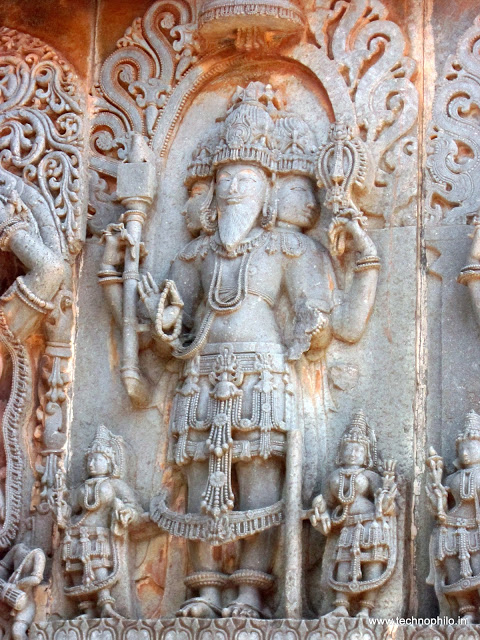
Brahma from Halbedu temple, Karnataka

Research paper written by London Swaminathan
Research article No.1423; Dated 20th November 2014.

Please read the First part of this article: Science behind Hindu God Brahma.
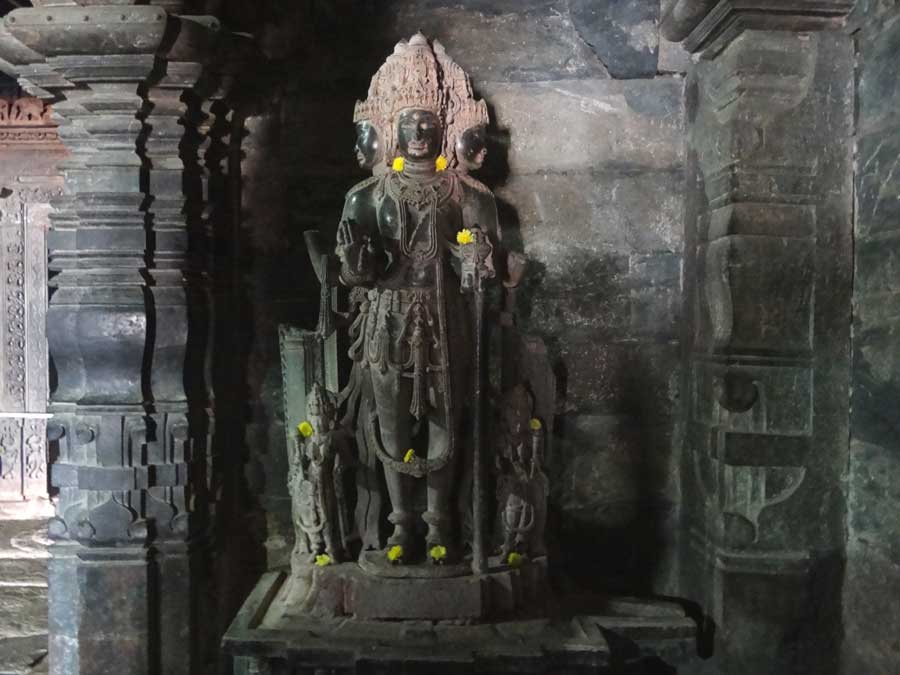
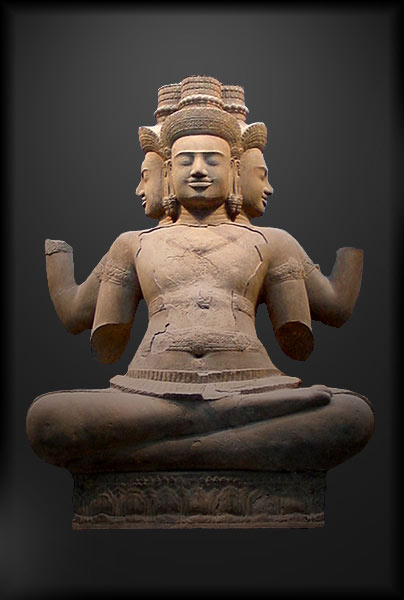
Hindu Vedas (Prajapati) and Brahmana (satapata) literature preserved the legend of Brahma alias Prajapati. Brahma is four faced who could see the entire universe. His four faces emit the sounds of Four Vedas.
Four faced Gods are found around the world. Svetovid/ Svatovid/Sventovit (meaning world seer, white in colour) are the names of Slavic God. Another four faced god is found in Sumer, but no one knows much about this god. All went from India and lost their identities in course of thousands of years. Statues of Brahma are found throughout South East Asia. Cambodian statues of Brahma are preserved in Guimet Museum, Paris, France.
Brahma ,Lakkundi, Karnataka
Brahma in Lakkundi Temple, Northern Karnataka

Amarakosa gives the following 29 names for Brahma (I am not sure about a few words. Sanskrit Dictionary and Vsihnu sahasranama are used for some word meanings):

1.Brahma = Big, Supreme, creator; To breathe is also another meaning. We can see him as the life breath of every creature or one who crated all that breathes.
2.Atmabhu = self existent
3.Surajyeshta = elder of the Devas/Deities
4.Parameshti = Giver of supreme desire, Moksha; he who stays in the lotus of heart; also who is worshipped with Yajnas (ishti).
5.Pitamahah = Grandfather
6.Hiranyagarba = Golden Egg
7.Lokesah = Lord of the world
8.Swayambhu = self existent (originated)
9.Chaturanana = Four faced
10.Datha = exalted; leader
11.Abjayonih= Lotus born
12.Druhinah= creator of the world
13.Kamalasanah = Lotus seated
14.Shrashtah = creator of the world
15.Prajapatih = Lord of all creatures
16.Veda = Vedas come from him
17.Vidhata = Exalted in heaven (leader)
18.Viswasrush = one who hears everything
19.Vidhih = Lord of Vedas; one who is in charge of Vidhi/fate
20.Nabijanma = born from the navel (of Vishn)
21.Andajah = Egg born
22.Purvah = First
23.Nidanah =?
24.Kamalodbhava =Lotus born
25.Sadanandah = Ever ha[y
26.Rajomurti: = in charge of Rajoguna
27.Satyakah = Truthful
28.Hamsavahanah = one who has swan as vehicle
29.Virinchi = Creator

He is invoked in all religious ceremonies. He is properly worshiped in a temple in Pushkar near Ajmer in Rajasthan. His statues are found in many temples in India.

prambanan
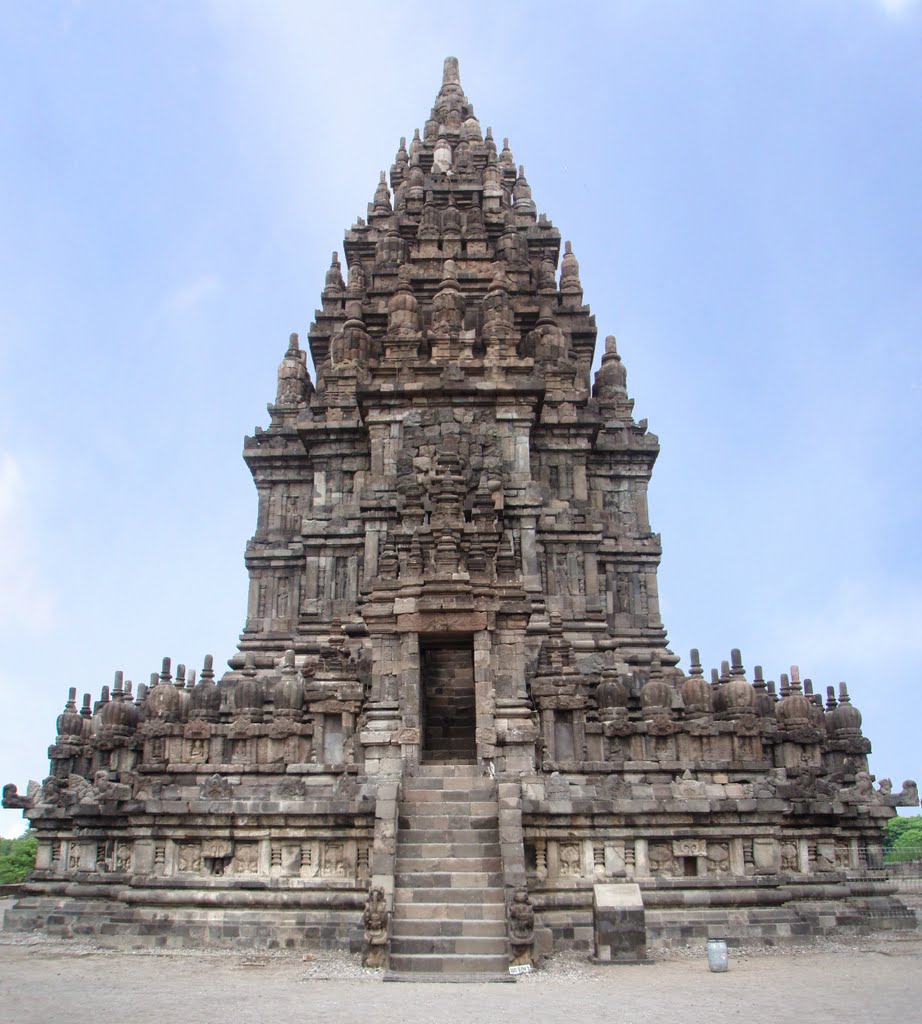
Temple of Brahma in Prambhanan, Indonesia

Satapata Brahmana says,
He uttered Bhur, the earth appeared;
He said Bhuvar and the air appeared;
He said Suvar and the sky appeared
From these five syllables he created the seasons.
Prajapati then stood up. He was born aged a thousand years.
Just as one can see the far shore across a river, so could he contemplate the far shore across his age ( XI.1, 6, 6).

After Prajapati issued the living beings, his joints started to dislocate. His joints were the junctions of the day and night, full moon and new moon and the beginning of each season. Gods cured him by the ritual of Agnihotra, which tightened his joints. The sun would not rise if the priest did not make the offerings of fire at dawn (Satapata Brahmana II.3,1-5)

Vedic seers enjoy speaking in symbolic language. Above passage is an example.
Mandasore Stone inscription of Yasodharman (533 CE) refers to Brahma as the Creator, Preserver and Destroyer.

brahma-temple7
Brahma temple, Pushkar, Rajasthan

Sanskrit Words Brahma, Brahmana and Brahman are confusing. Brahma is the first god in the Hindu Trinity: Brahma, Vishnu, Shiva. Brahmana is the caste name in the four fold caste system: Brahmana, Kshatriya, Vaisya and Shudra. Brahman means God, the Supreme God.

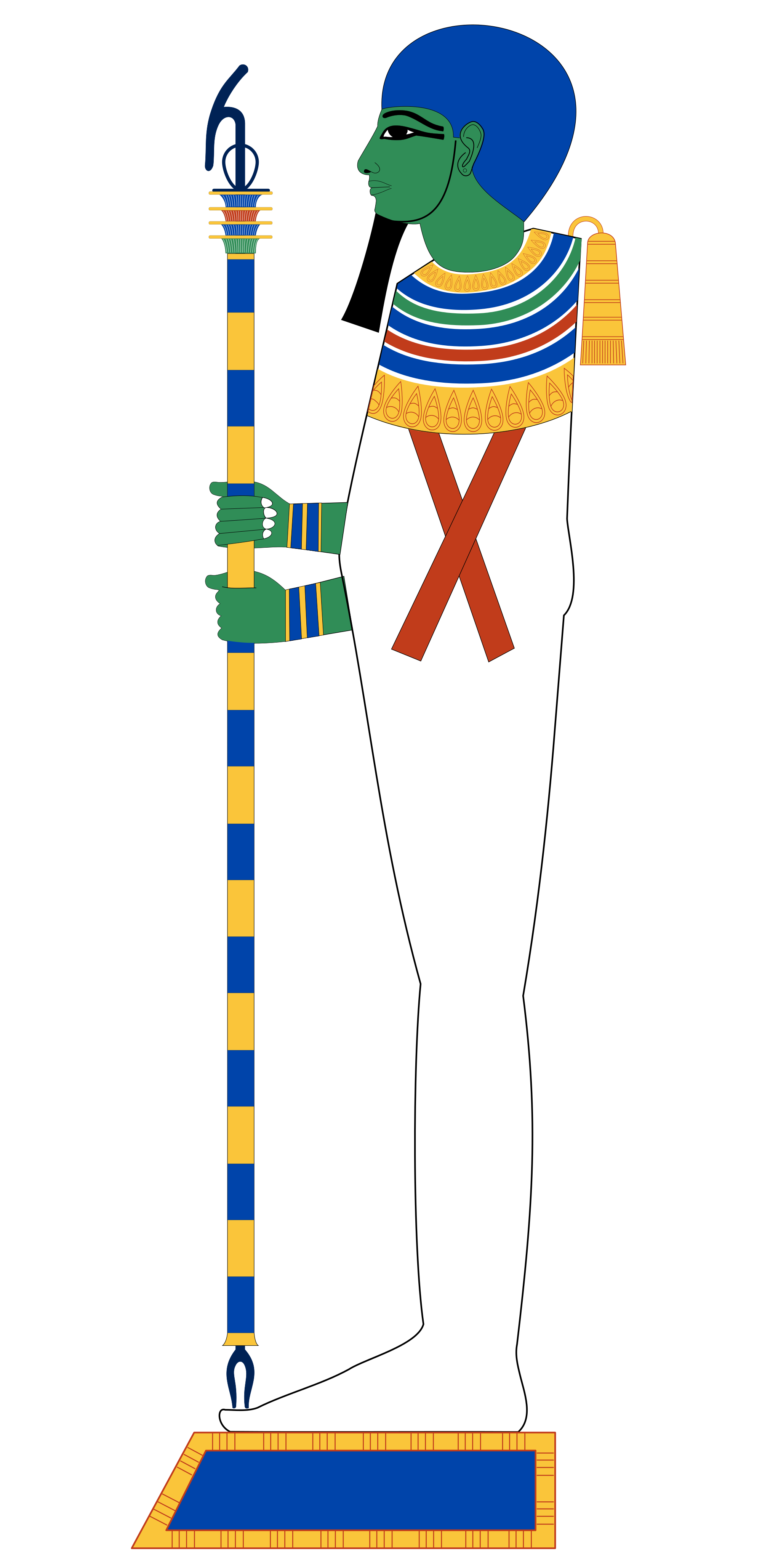
Hindu God Brahma had five heads, but lost one to Shiva. He is in charge of creation. He is in Ptah of Egypt and Svetovid of Baltic countries. His wife is Sarasvati or Vach (word). His vehicle is swan. All are white in colour. Brahma is red in colour but wears a white robe. From his face came the Vedas. He is a never stopping radio station broadcasting Vedas every second. Brahma is very generous and he gave lot of boons to Asuras/ Demons. Bali and Ravana got boons from him.

Indian sculptures and paintings show him seated on a lotus that came out of the navel of Vishnu who was lying on the cosmic serpent Ananta in the primordial waters.

guimet-brahma-from-cambodia
Brahma at Guimet Museum, Paris; from Cambodia

In his four arms he holds a sceptre, s spoon, a string of beads or his bow, a water jug and the Vedas. His name Brahma and his story occur in the Valmiki Ramayana for the first time. In the Vedas he is known only as Prajapati. All the major temples in India have his statues. In all the hymns he is praised along with Vishnu and Sadashiva. In fact he stands first in the hymns : Brahma, Vishnu Sadhashiva. There are temples like Suchindram in Tamilnadu where all the three forms of Hindu Trinity are worshipped (sthanu+mal+ayan).

museum brahma

contact swami_48@yahoo.com

Mata and Pita in Egyptian Religion!

Maat_Egyptian_goddess

Research paper written by London Swaminathan
Research article No.1417; Dated 17th November 2014.

Hindus see Matha/mother and Pitha/father as Gods. The Sanskrit saying goes Matha, Pitha, Guru, Deivam. There are two interpretations for this adage:

1.Mother, Father and Guru must be respected as Gods
2.Mother, Father, Teacher and God must be respected in the order of the words in the adage. Mother, being the first in the saying, she is greater than the other three.

Whatever may be the interpretation; there are two similar sounding deities in Egypt. Egyptian civilization had a 3000 year long history. At every stage of the history there were drastic changes in the customs and Gods and beliefs. Apart from the ancient Gods, new gods were introduced into Egypt from the places with which it maintained trade relationship. So the number of gods increased slowly in course of time. Maat and Ptah are two ancient Gods. It is very interesting to compare them with the Hindu Gods with similar names.

deesse-maat
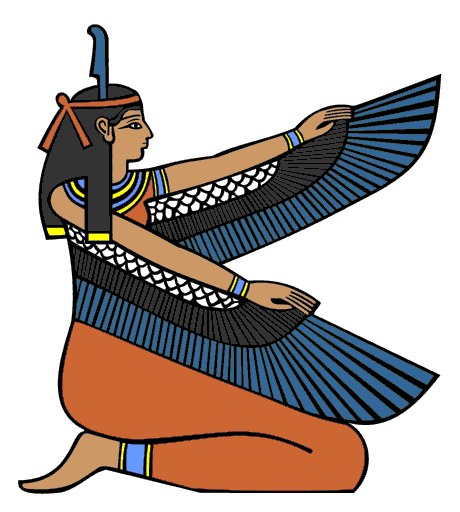
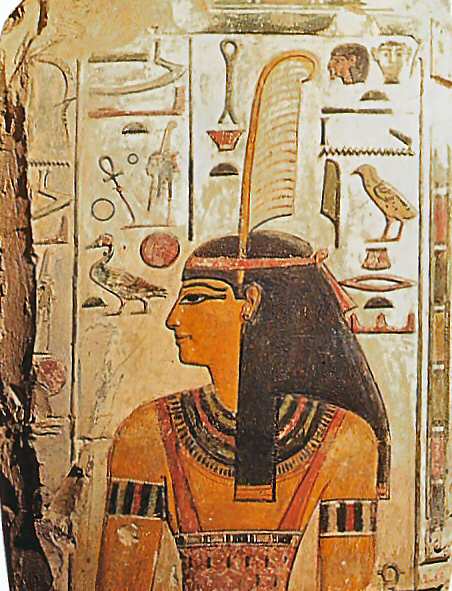
Image of Maat

Hindu mantras in Sanskrit and other regional languages say that goddess is mother, in Sanskrit Jagan Maathaa (universal mother). If it is not a long sound like Maathaa, but just a short sound Matha, as in Egyptian, then the meaning is ‘’a way, a way of worship’’. Hindu religion is called Hindu Matham in Tamil.
Egyptian Goddess Ma’at is similar to this matha. Her name would easily fit in with ‘matha’. And her image will fit in with Maathaa.

In Sanskrit the meaning of the word Matha is ‘’a way, creed, sect, path, opinion, or Dharma’’. In the Bhagavad Gita Krishna uses the word ‘’matham’’ in at least five places.

The key to the Egyptian world was represented by the concept Ma’at, a term which is elusive and resists precise translation. Ma’at represents order, balance, justice, the harmony of the universe, a disciplined weighing of many elements in a coherent whole. Ma’at is represented in the hieroglyphic dictionary by the most charming of all glyphs, a delicate, adolescent girl, with a single feather in her hair.

This fits in with Hindus’ matham and Maathaa in concept and image respectively.

She is associated with the sun god like Hindu goddess Gayatri. In later times she was called the daughter of sun god. The rulers of Egypt believed that they governed under her aegis and frequently had themselves described as beloved of Ma’at.

In the underworld, the heart of a dead persons is weighed against the feather of Maat. If the heart was burdened with sin and heavier than the feather, the deceased was devoured a monster. If the heart is lighter, the deceased became a spirit among the gods. This is again is in Hindu mythology. We say that if the heart is pure then the soul goes to heaven to be among gods. If the ‘Papa/sin’ is more than the ‘Punya/good merits’, then the person suffers in the hell.

Ptah

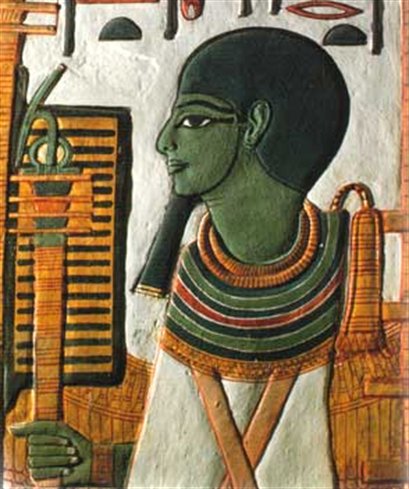
P’tah, Creator god and god of craftsmen

The greatest of the Egyptian creator gods was P’tah of Memphis. He was hailed as Lord of Destiny, Lord of Truth and Lord of Fate. All Egypt’s gods were actually manifestations of P’tah. He is invariably represented in human form, though mummified. The meaning of his name is unknown; opener, sculptor and engraver have been suggested. This fits very well with the creator god of Hindus– Brahma. Hindus believe that he writes our fate on our heads. His main task is the creation. So opener, engraver and sculptor will very well fit into him.

P(i)tah was also identified with an immensely ancient divinity associated with the very beginning of the world and his name was Tanon. He is known as the Lord of years. In Hinduism Brahma’s life span is one era called Param (1000 Chatur Yugas is one night and another 1000 Chatur Yugas is one day; in this way Brahma’s life span is 100 years! An incredible number!) So Ptah is Prajapati or Brahma. Like Brahma, Ptah is also associated with lotus flower.

All life and matter was generated by the heart and tongue of P’tah – thought and word. He created deities by thinking of them in his heart and speaking aloud their names.
As the years went by and Egypt grew old, the nature of gods also changed. Foreign divinities were brought into the pantheon and the Egyptian gods began to take on the common nature.

2000px-Ptah_standing.svg

References:–
Information about Egyptian gods is culled out from the following books:
Egypt’s Making by Michael Rice
Who is Who in Ancient Egypt by Michael Rice
Encyclopaedia a of Gods by Michael Jordan.

some pictures are taken from wikipedia;thanks.

Amazing History in one Rig Vedic Hymn! 38 Names at one go!!

Rig Veda images

Research paper written by London Swaminathan
Research article No.1415; Dated 16th November 2014.

One of the most interesting Rig Vedic hymns is 7-18.
It is the 18th hymn in the Seventh Mandala of the Rig Veda.
There are twenty five verses/riks in it.

Seventh Mandala belongs to the family of Vasistha, author of one of the early Mandalas of the RV.
This is very interesting because of a simile about a lion, tricky numbers and various tribes. Scholars find it very difficult to understand the full hymn. Another puzzle is that it explodes some false notions. Suddenly River Jamuna is mentioned in the earliest parts of the Veda. Foreign “scholars” differ in interpretation which is not uncommon.

Puzzle 1
In the 14th verse of the hymn a number comes – sastih sataa sata sahasraa sastir adhi sat, literally six hundreds, six thousands, sixty, with six more.
Sayana and Wilson say sixty six thousand six hundred six 66606
Ludwig says 6666
Griffith says it is obscurely expressed
Whatever be the interpretation, look at the number 6 repeated several times! Does it really mean a particular number in a hymn like this or a symbolic hidden message or poetic style?

new

Puzzle 2
Yudhyaamadhi – is thought to be king’s name. But we don’t know the details!
Puzzle 3
Yamuna – Griffith says it is not east to see how the expedition reached so far.
Scholars, who blabber about “Aryan expansion” towards east, struggle hard to explain this River Yamuna! Scholars like Shrikant Talageri and others argue that the expansion was from East to West which is confirmed by this verse.

Puzzle 4
Griffith says – the Ajas, Sigrus and Yaksus were perhaps subject to Bheda, but nothing is known regarding them. Mysterious Bheda!!!

Puzzle 5
Sudaas, Divodaasa :– all Dasas are Indra’s friends!!! Vasishta’s men!! Foreign propaganda about Dasas is exploded in this and several other hymns where Dasyus and Dasas are supported by Indra!!!

Puzzle 6
In verse six there is a reference to “fishes urged by hunger”. Some scholars say they are not fishes. They are the Matsya tribe! (Matsya in Sanskrit means fish). So the scholars are not sure whether they are people or fishes!!

nad035

Puzzle 7
Verse number 6 refers to Turvasa Purodaasa. Scholars don’t know whether it is two people or one man with a surname; three different scholars interpret it in three different ways!!! In Vedic interpretation, scholarship means confusion!

One must be careful, when people quote the Vedas! They don’t know what they are talking about! No two clocks agree. No two “scholars” agree! They don’t believe in the Vedic culture. They have never lived in India! They don’t know how Hindus live! They don’t know why the Tamil Kings and North Indian kings donated huge quantity of gold and lands to Brahmins to pass this knowledge from generation to generation and never allowed the Vedas to put it in writing!!

Now look at the 38 words in the hymn:–
1.Indra
2.Vasistha
3.Sudas
4.Simyu
5.Turvasa
6.Purodas
7.Bhrgus
8.Drhyus
9.Pakthas
10.Bhalanas
11.Alinas
12.Sivas
13.Visanins
14.Trstus
15.Parusni
16.Prisni
17.Vaikarna
18.Kavas a
19Anu
20.Puru
21.Anavas
22.Bheda
23.Yamuna
24.Ajas
25.Sigrus
26.Yaksus
27.Devaka
28.Manyamana
29.Sambara
30.Parasara
31.Satayatu
32.Paijavana
33.Agni
34.Devavan
35.Yudhyamadhi
36.Divodasa
37.Maruts
38.Matsyas (Fishes)

thumb_286_47041

History behind the hymn:
The hymn glorifies Indra as the protector of Sudaas, the king of the Trstus and praises the liberality of the prince.

Vasistha, the Rsi/ sage of the hymn and the chief priest accompanied the war like expedition of Sudaas (note that Dasa has a priest, that too Vasistha! Is he a Dravidian Dasa? Or an Aryan Dasa?)

Ralph T H Griffith says,
“The poet begins to recount the events of Sudaas’s victorious expedition. These are not always intelligible partly on account of the obscure phraseology employed and partly on account of our ignorance of details which are vaguely alluded to. In this stanza Sudaas, king or chief of the Trstus tribe, has, with the aid of Indra crossed a deep river – the Parusni which is now called Ravi – and put the Simyus to fight, some of the fugitives being drowned in its waters. The Simyus are mentioned together with the Dasyus, in 1-100-18 as hostile barbarians slain by Indra. The second half of the stanza is difficult, the meaning of two of the words being uncertain”

At least Griiffith was honest enough to admit here “our ignorance”. So if anyone says anything against the Vedas, you don’t need to believe them. Nobody has understood it fully. No two scholars agreed on controversial matters. Just because some foreigners wrote something in English, don think they are all Scholars.

nab843

( I have read several books where they dub some as Demons and some as Dravidians and some as invaders and some others as non-Aryans. If you read the Rig Veda translated by three or four different authors you will enjoy the Aryan –Dravidian Jokes!! You can enjoy a hearty Laugh!!! Particularly the talk about Dravidian Indus Valley and the Aryan Vedic society!!!)

Contact swami_48@yahoo.com

Who is a Demon? Asuras,Rakshas, Danavas and Daityas

Bhutan masked dancers  4
Bhutan Mask dance; they are not demons.They dress like demons.

Research paper written by London Swaminathan
Research article No.1381; Dated 31 October 2014.

Hindu epics and mythology give a good description of the demons. Those who read them will see how much the foreign “scholars” have distorted and mis interpreted these people. Anyone can see their evil designs in dividing the Hindus. In fact, there is no culture in the world without demons. Every culture has demons.

The wonder of wonders, the greatest wonder, is that they are always described as sons of seers like Kashyapa or born out of Prajapati. In all the Hindu scriptures they are described as part of Hindu society. Vishnu Sahasranama and Bhagavad Gita describe them as part of the human beings or semi divine beings: Sura-Nara- Kaga- Go-Bogi-Gandharva-Daityai:

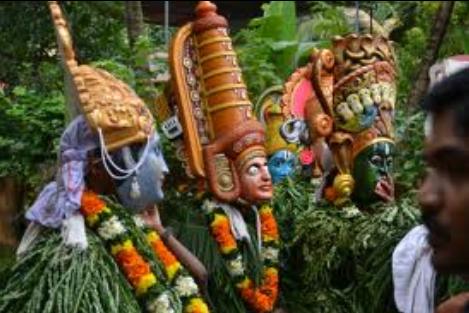
Kummatti-Kali-Onam-Dance
Kerala Onma dance with masks.

Even according to the Upansishads they went along with the Devas, humans and received the mantra Da—Da—Da—( Read my earlier post about Datta, Damyata, Dayatva).

Even in the churning of the ocean episode they were called to participate in the task together with the Devas. The Ramayana described the different masks they wore like elephants, horses etc like our children wear during fancy dress competition or festivals.

Even today the country where the masks are worn is called Bhutan meaning Bhutastan. But the only difference is they went against the rules. We can compare them to the criminals of today.

All the Asuras, Daityas, Danavas and Raksasa were connected with either Brahma, Brahmin seers Kasyapa or Pulastya, Prajapati. But the foreigners deliberately described them as Dravidians and aborigines. Those who study the Puranas, epics and earlier Brahmanas like Satapata Brahmana or Taitriya Aranyaka will understand what they meant by these terms.

There is a difference between Asuras, Raksasaas, Danavas and Daityas, though the English translation for all of them is demons!!!
masks

Amarakosa, the oldest dictionary in the world, gives ten names for Daityas and Danavas; but it has grouped them together:

Daitya : Descendants of Diti and Kasyapa
Daiteya : same as above
Danujendra: Descendants of Danu
Danava : descendants of Danu
Sukrasishya: Brahmin Sukra was their Guru
Ditisudha: Descendants of Diti
Purvadeva: Originally started as good and then degenerated
Suratvisha:

mask-dance,bhutan
Bhutan mask dance

Amarakosa gives 15 names for Rakshasaas

Raksasana = should be protected from
Konapan= dead body
Kravyat = raw meat eaters
Kravyata: = raw meat eaters lie animals

Asrapaka: = Blood suckers
Asara:= one who tortures
Ratrinchara: = roaming in the night; also Naktan chara
Ratrichara:= roaming in the night
Karpura: = Black; they came during night with their face painted with black ink. E.g. In London criminals come with their hoods on the head. So, now the shops have banned the hoodies. This is what the criminal Raksasas did in the olden days.
Nikasatmaja: = Nikasha’s children
Yatudana: = nourishes his own (Yatu) kind; E.g. in London we have lots of gangs. Gangsters get support only from their own group.
Punya jana:= never does anything good, an irony; a parody; E.g.Cobras are called “Good” snakes in Tamil! They wouldn’t tell the name in the night time. They say “Goodies” may come. Because some people, particularly children, get scared if you say Snake!
Nairuta: = descendents of Nitruti
Yaturakshasi = protects their own kind.

Jaws_
Villain Jaws in James Bond film.

They have more epithets descriptive of their actions or character: Hanuushas= killers or hurters; Ischipachas= stealers; Sandhya balas= strong in twilight; Samani sadas= night walkers, Nri chaksas= cannibals; Paldas= carnivorous; Raktapas= blood drinkers; dandasukas=biters; Praghasa=gluttons; Malina mukhas= black faced ; they applied black paint on the faces for camouflage effect during darkness
Asura : In the early part of the Rig Veda Indra, Varuna and Agni are called Asuras. Only in the later parts of the Rig Veda and the Atharva Veda Asura got a bad connotation. This is because one splinter group migrated from Saurashtra area to Iran. According to Kanchi Parmacharya, Saurashtra was called Zoaroastra. When Iran was occupied by the Muslims they came as refugees back to Saurashtra! Because of this division, the word Asura changed its meaning in India. Their Guru was a Brahmin- Sukra Acharya!!
E.g. We see the same thing when political parties divide and splinter groups form; the previous good leaders become bad to another group.

dracula
Dracula film

Quotations on Demons

The following quotes will fit with all the fraudsters and criminals in the modern world; when bad thoughts or violent thoughts come to us, if we write them on a sheet of paper, we will also be dubbed a Raksasa!
(From the book Sukti Sudha of Chinmaya International Foundation)
Demons will always be devious — Valmiki Ramayana 6-50-54
Nityam jihmaa hi raakssasaaha

Negotiations do not augur well with ogres — Valmiki Ramayana 5-41 -3
Na saama rakshah su gunaaya kalpaté

Devils are naturally treacherous in war — Valmiki Ramayana 6-50-53
Prakrtyaa raaksasaa sarvé sangraamé kuutayódhinah

Ogres become invincible at twilight — Valmiki Ramayana 1-26-23
Raksaamsi sandhyaakaalé tu durdharsaani bhavanti hi

Demons brim with bestial strength – Valmiki Ramayana 1-20-15
Viiryootsiktaa hi raakssasaaha

Demons are extremely deceitful – Bharat Kthamanjari
Asuraasca bahucchaalaah

Demons are treachery personified — Ramyana Manjari3-24-768
raakssasaaha bahucchaalaah

So, all the immoral, deceitful, violent and fraudulent people who disturbed or troubled good people were called demons. We can compare them to the villains of today’s films. Foreign scholars deliberately concealed what Hindu scriptures told about them: they were our own children, but mislead and mis guided by bad people.

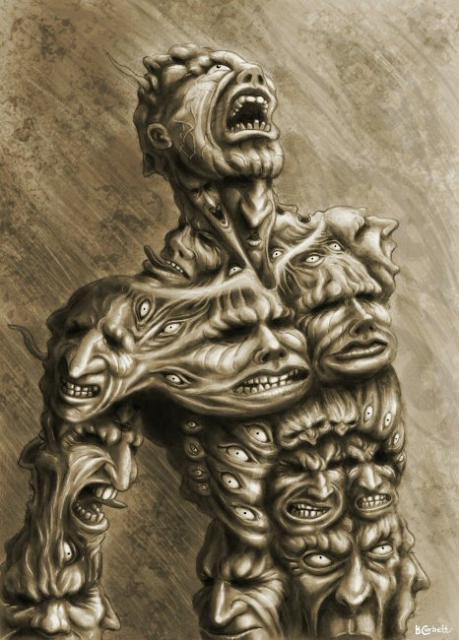
demon-within-faces
Contact swami_48@yahoo.com
Rig Vedic Hariyupia and Indus Valley Harappa: Rig Veda Mystery 7

harappa2

Research paper written by London Swaminathan
Research article No.1379; Dated 30th October 2014.

Please read the earlier posts covering from Rig Veda Mystery 1 to 6.
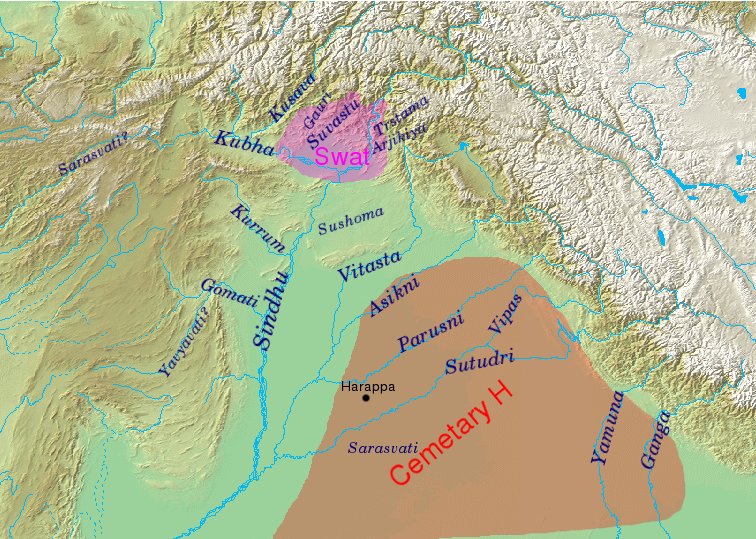
Harappa and Mohenjo-Daro are two major cities of the Indus valley civilization. Harappa is in East Punjab (now in Pakistan). It is on the banks of River Ravi. Ancient name of the river is Parusni.

There is a similar sounding word Hariyupia – in the Rig Veda. Few scholars identify it with Harappa of Indus Valley Civilization. Rig Veda describes it a as a Vedic city with Yupa posts of golden colours!!

Rig Vedic Index by A B Keith and A A Macdonell gives the following information:

harappa

Hari-yuupiiyaa:
“Hari-yúpíyá is mentioned in a hymn of the Rig Veda (6-27-5) as the scene of the defeat of the Vrivavants by Abhyavartin Caayamana. It may denote either a place or a river, since many battles seem to have been fought on the banks of rivers.
Ludwig took it as the name of a town on the river Yavyaavatii, which is identified in Sayanas’ commentary on the passage.

Hillebrndt thinks it is the river Iryaab (Haliab), a tributary of the Kurum (Krumu), but this is not all probable”.

The above passage from the Vedic Index shows that a big difference in views! It is very common in the Vedic interpretation. That is, no one can understand the Vedas!!!

Ralph T H Griffith’s translation of the hymn runs like this:
RV 6-27-5/6
“In aid of Abhyavartin Cayamana, Indra destroyed the seed of Varasikha.
At Hariyupia he smote the vanguard of the Vrcivans, and the rear fled freighted

Three thousand, mailed, in quest of fame, together on the Yavyavati, O much sought after Indra
Vrcivan’s sons, falling before the arrow, like bursting vessels went to their destruction”.

harppa mohanjo

Griffith added foot note:
“Hariyupia (having golden sacrificial posts), the name of a town or according to others, a river.
Yavyavati: the name of a river, according to Sayana, identical with Hariyupia of stanza 5”.
So, according to Sayana, it is a river. Whether it is a river or a city, the meaning of the word “HARIYUPIA” is not disputed. It means place of golden Yupa posts.
A few people have even connected the word Hariyupia with Europa/Airoppa!!

Samudra-4787v-280.50
Samudra Gupta gold coin with Asva and Yupa post

What is a YUPA? — From Tamil Literature

Yupa is a post made up of wood from the tree. There are two purposes: one is to tie the animal to be sacrificed at the fire pit (Yaha Gunda) and the other is a victorious post installed after each big Yaha like the Asvamedha or Rajasuya.

Kalidasa mentioned it in Raguvamsa 1-44 and several other places.

2000 year old Sangam literature mentioned Yupa with the same Sanskrit word “YUPA” in at least 4 places:
Purananuru verses 15 and 224
Maduraikanci line 27
Pathtrupathu 67-10

Nettimaiyar, one of the oldest poets of Sangam period, wonders ,“Oh! Pandya! please tell me whether the number of Yupa posts you installed more? Or the number of enemies you defeated more? Or the praises by the poets more?”
Verse 224 parised the greatest of the Chola kings Karikalan for installing the tall Yupa post.

ujjain333
Ujjain coin with yupa post

Tamil Kings Karikalan, Perunarkilli and Mudukudumi Peruvazuthi have done so many Yajnas according to Sangam Tamil literature. So the Rig Vedic word YUPA is very popular in Tamil Nadu even 2000 years ago. Karikalan and Mudukudumi are the two oldest Tamil kings we knew.

Kanchi Paramacharrya Swamikal in his 1932 lectures in Chennai pointed out that archaeologists were surprised to see the Mulavarman’s Yupa post in the “virgin” forests of Borneo, now part of Indonesia. He belonged to fourth century CE. It shows the word Yupa is known throughout South East Asia.

Now going back to Hariyupia, if it is Hari+Yupa, then Harappa is a Vedic city. The battles that happened there did not give the name to the place. It is only the Vedic Yajnas gave that name to the city – Harappa. So the battles may be described as internal wars among local kings. Tamils fought among themselves continuously for 1500 years, though they worshipped the same Hindu gods, spoke the same Tamil language, upheld the same values Dharma, Artha and Kama according to the oldest Tamil book Tolkappiam. Words Dharma, Artha, Kama is repeated several times in Sangam and later Tamil books (but the words are in tamil Aram, Porul Inpam).
So, my argument is that the word Hariyupia confirms the Vedic presence in East Punjab during Harappan period.

Rigvedic_geography

INDUS VALLEY CIVILIZATION Read my other 30 posts on Indus:

Indus Valley-Brahmin Connection (Post No 1034, Date 10-5-14)
Bull Fighting: Indus Valley to Spain via Tamil Nadu (posted 21/1/12)
Human Sacrifice in Indus Valley and Egypt (posted on 31/10/12)

Ghosts in Indus Seals and Indian Literature
Flags: Indus Valley- Egypt Similarity
Tiger Goddess of Indus Valley: Aryan or Dravidian?
Indra on Elephant Vahana in Indus Valley
Indus Script Deciphered

Human sacrifice in Indus Valley and Egypt 0ct.31, 2012
Indus Valley Cities in Ramayana Dec.18, 2012
Open Sesame’: Password to Heaven Post No 756 dated 23rd December 2013
Change ‘’Indus’’ valley civilization to ‘’Ganges’’ valley civilization! Ulta! 29-3-2014
Indus Valley Case: Lord Indra Acquitted Post No 764 dated 28th Dec. 2013
‘Sex Worship’ in Indus Valley

harappa well

Flags: Indus Valley – Egypt Similarity (15/1012)
The Sugarcane Mystery: Indus Valley and the Ikshvaku Dynasty
Vishnu in Indus Valley Civilization (posted on 19-10-11)
Serpent Queen: Indus Valley to Sabarimalai 18 June 2012
Fall of Brahmin Kingdoms in Pakistan and Afghanistan 23-3-14
Indus Valley Civilization- New Approach , posted on May 29, 2011

என்னுடைய முந்தைய 30 கட்டுரைகள்:
சிந்து சமவெளியில் பேய் முத்திரை
சிந்து சமவெளியில் ஒரு புலிப் பெண் Aug.23, 2012
‘எள்’ மர்மம்: ரிக் வேதம் முதல் சிந்து சமவெளி வரை! Post No 755 dated 23/12/13

தேள்— ஒரு மர்ம தெய்வம்!
சிந்து சமவெளி & எகிப்தில் நரபலி1 November 2012
சிந்து சமவெளியில் செக்ஸ் வழிபாடு (26/7/13)
கொடி ஊர்வலம்: சிந்து சமவெளி – எகிப்து அதிசய ஒற்றுமை (15/10/12)
‘திராவிடர் கொலை வழக்கு: இந்திரன் விடுதலை’ Post-763 dated 28th Dec. 2013.

சிந்து சமவெளியில் அரசமரம்
சிந்து சமவெளி நாகரீகம் பெயரை மாற்றுக! march 29, 2014
1500 ஆண்டு பிராமண ஆட்சியின் வீழ்ச்சி 24-3-14
சிந்து சமவெளி – பிராமணர் தொடர்பு (Post No 1033, Date 10-5-14)
Contact swami_48@yahoo.com