Horse headed Seer: Rig Veda Mystery No.1

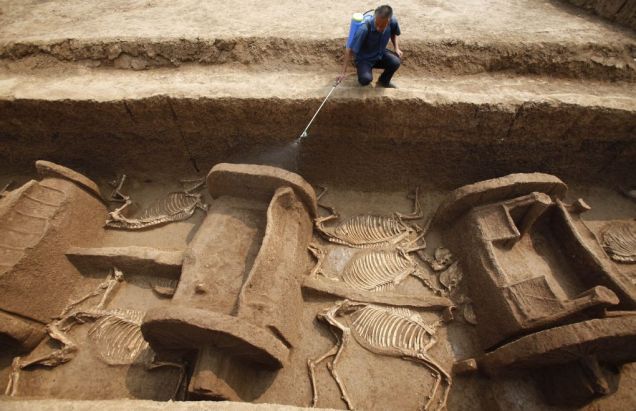
horse and chariot burial 3000 year Western Zhou dynasty 2011 Luoyang
3000 year old horse and chariot burial in China.

Research Paper written by London Swaminathan
Post No.1255; Dated 27th August 2014.

Rig Veda, the oldest record of religion and human history, is full of mysteries. Foreign “scholars” who translated it have added footnote at every other page, ‘the meaning is uncertain’, ‘the meaning is not clear’, ‘the meaning is obscure’, ‘Sayana says this, but it is vague’. Each of those “scholars” contradicts the other. For thirty three minor gods of the Rig Veda, they have written more than 33 different interpretations. If someone wants some entertainment or jokes, they can compare those interpretations. But I have to warn you that you may go crazy one day!!

Great scholars of India such as Adi Shankara or Sayana haven’t got any such doubts or confusion, because they believed in what the Veda says. It is like we believe in what our parents or teachers say. Moreover they know the overall underlying meaning, because they were born and brought up in this culture.

Some westerners cannot look above the waist. They look only below the waist and give sexual interpretations. Sri Ramakrishna Paramahama explained the seven stages of mind and said that the bad ones cant go above the third level. Some can’t look at the heart but only at words and give racial interpretations. They have never done it to any other religion except Hindu religion. They know that Hindus are simpletons who will believe anything they say without reading the original books. Thank god, now there is some awareness and they are slowly waking up and reading the originals! I know millions of Hindus who have never read just 700 couplets of Bhagavad Gita, but ask umpteen questions raised by non believers!!
God bless them!

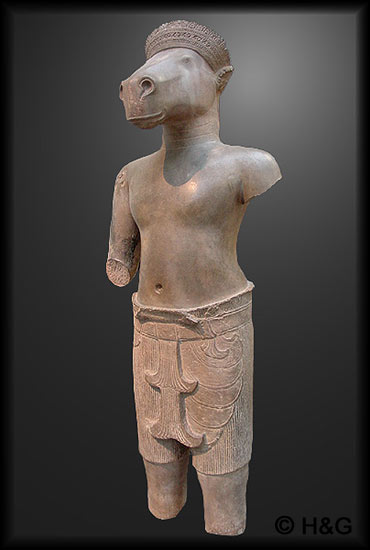
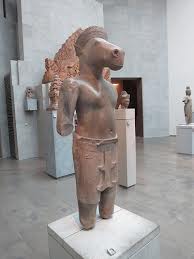
hayagriva2,khmer,940 ce
Hayagreeva from Khmer (Cambodia), 10th century CE

I will try to list the mysteries of R.V., one by one.

One of the mysteries of Rig Veda that puzzled the westerners is the Story of Dadhyanc Atharvan, a Rishi with a horse head. Until the year 2000, they wrote that they have discovered his grave in Potapovka near Samara in Russia. By 2010 they have changed their view!

Excavations of 1985-86 of a kurgan burial dated 2200 BCE at Potapovka revealed in grave shaft of kurgan no.3, a decapitated man with a horse skull replacing his head. In simple terms, the man’s head was removed and a horse head was fixed. They thought that it was the grave of Rig Vedic seer Dadhyanc. Later research showed that the skeleton of both the horse and the human being were not of male, but of female. They also found the horse head was fixed 1000 years after the human being’s death. This shows that we can’t jump to conclusion by listening to archaeologists! They only “interpret” it and confirm in what they have already believed. In this case they started talking Aryan migration from the Steppes.

Still some questions remain unanswered: Why did they put horse head there after 1000 years? Why did someone behead the man or woman?

But horse heads were used in Western countries in the graves, church buildings etc., for its mysterious powers until 300 years ago.

((If you google horse burials, chariot burials, you will get loads of matter)).
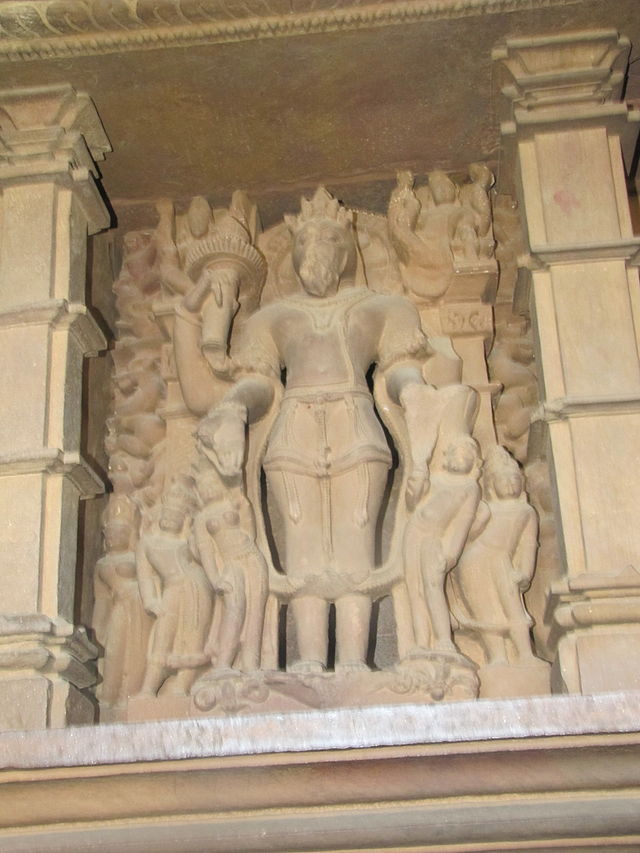
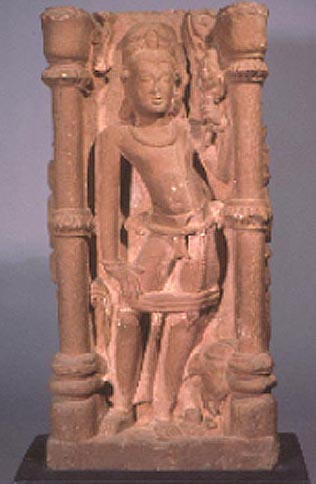
Khajuraho_India,_Lakshman_Temple,_Sculpture_12
Khajuraho Lakshmana Temple, 12th Century

Now let us look at the interesting story of the horse headed Dhayanc! His story is in RV 1-84-16; 1-116-12; 1-117-22; 10-48-8, Satapatha Brahmana 14-4-5-13; Brhad Aranyaka Upanishad 2-5; Bhagavatam 6-10 Adhyaya. His story is found in many places in the Vedas.

Dadhyanc was the son of Atharvan. He and his father were regarded as the founders of Vedic sacrifice. They knew a secret mantra known as Madhu Vidhya. Dadhyanc taught this to all his devoted students. Those who learn this vidhya gets free from all miseries of life. Indra also came to the seer and learnt the vidhya. But the seer warned him that he should lead a life worthy of it. Indra became angry at his advice and told him that he would cut off the Rishi’s head if he had taught it anyone else.

Later the Vedic twins Asvins came and asked the seer to teach them. When he told them about Indra’s curse, the Asvins cut his head off and preserved it in a safe place and learnt the Madhu Vidya. During that study, they fixed a horse’s head on Dadhyanc. Some people can interpret even this to show that head transplant surgery was common during Vedic days. But this is beyond the scope of this article.

When he finished teaching them, Indra’s thunderbolt came and cut off Dadhyanc’s head. Later Asvinikumaras fixed his original head.

Rishi Kakshivan has glorified Asvins in his Rig Vedic hymns. Asvins are attributed with mystical powers throughout the Vedas.
vajimukha,guimet,paris
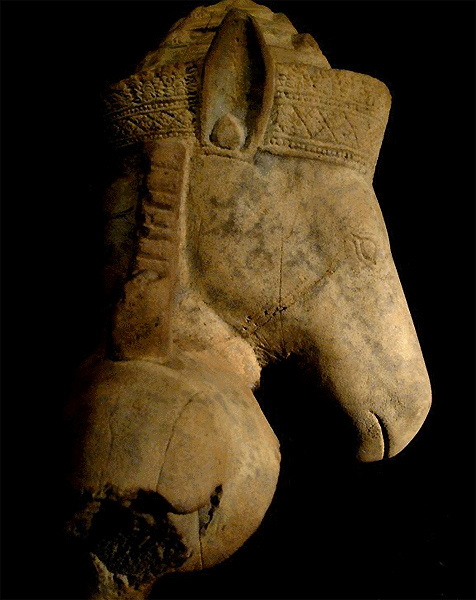
Horse faced Vajimuka in Guimet Museum, France.

For Hindus, head replacement or transplant is nothing new. We have Lord Ganesh with elephant head, Hayagriva with horse head, Daksha with a goat’s head, lord Narasimha with lion’s head and vishnu’s avatars with fish, tortoise and pig forms. Horse headed Hyagreeva sculptures are available even in Cambodia.

Griffith has added the following the following foot note in his Rig-Veda translation:–Dadhyanc was called Dadhica later. With his bones or with the horse head bones, Indra made his thunderbolt weapon. Indra slew Vritra with this weapon. Vritra with held the rains. The Vedic legend which was modified and amplified in later times, appears to have been connected in its origin with that of Dadhikras, often mentioned in the Veda and described as a kind of divine horse, probably a personification of the morning sun in his rapid course. Dadhyac may be the old moon whose bones when he dies, become the stars with which Indra slays the fiends of darkness. (page 53 of The Rig Veda; foot note to RV 1-84-13 and again in 1-116-12).

horse head khmer cambodia, guimet
Hayagreeva in Paris

Many of the Vedic stories are symbolic. We can’t interpret them literally. But all the Hindu saints quote Dadhichi for his sacrifice. Indra made his Vajrayudha only with Dadhichi’s bones. That seer made a sacrifice for the welfare of the humanity, to destroy evil. Griffith says both Dadhichi and Dadhyanc are one and the same.

Vedic legends remain a mystery!
contact swami_48@yahoo.com

பாரிஸ் நகரில் காதல் பூட்டு! ‘’லவ் லாக்’’ மேலை நாட்டில் விநோதம்!!

lock1

கட்டுரை மன்னன்: லண்டன் சுவாமிநாதன்
கட்டுரை எண்:–1250; கட்டுரை தேதி:– 25 ஆகஸ்ட் 2014.

(என்னுடைய இரண்டு ‘’பிளாக்’’ குகளையும் படித்தோர் எண்ணிக்கை ஒரு மில்லியனைத் தாண்டி விட்டது! அனைவருக்கும் நன்றி)

சனீஸ்வரன் எள் விளக்கும், சர்ச் (மாதா கோவில்) விளக்கும்:

தமிழ் நாட்டுக் கோவில்களில் சனிக்கிழமைகளில் சனைச்சரன் (சனீஸ்வரன்) சந்நிதியில் எள் விளக்கு ஏற்றுவதைப் பார்த்திருப்பீர்கள். இதைக் காசு கொடுத்து வாங்க வேண்டும். இது போல மேலை நாட்டு கத்தோலிக்க கிறிஸ்தவ சர்ச்சுகளில் மெழுகுவர்த்தி ஏற்றும் வழக்கம் இருக்கிறது. பாரீஸ் நகரில் உள்ள புனித இருதய மாதாகோவிலில் 2 யூரோவுக்கு சின்ன மெழுகு திரியும், 10 யூரோவுக்கு பெரிய மெழுகு திரியும் விற்கிறார்கள். இதை கிறிஸ்துவ பக்தர்கள் வாங்கி ஏற்றுகிறார்கள்.

(( சனை: = மெதுவாக, சரன்= செல்பவன். இதை தவறுதலாக சனீஸ்வரன் என்று எழுதி வருகின்றனர் )).

candle1

24 ஆண்டுகளுக்குப் பின்னர் மீண்டும் ஒரு முறை பாரிசுக்குப் போயிருந்தேன் (ஆகஸ்ட் 19,20,21—2014). அப்போது சாக்ரெட் ஹார்ட் சர்ச்சுக்கும் சென்றேன். மெழுகுவர்த்தி பகுதியைத் தாண்டி ஒரு பெட்டியும், உறைகளும் வைத்திருந்தார்கள். சர்ச்சில் அவர்களின் பெயரில் பிரார்த்தனை செய்ய 17 யூரோ சார்ஜ் என்று அறிவிக்கப்படிருந்தது. இது நமது ஊரில் அர்ச்சனை சீட்டு வாங்கி அர்ச்சனை செய்வது போன்றது! சத்ய சாயி பாபாவிடம் பலர் கோரிக்கை எழுதப்பட்ட ‘’கவர்’’களை (உறை) கொடுப்பார்கள். அதை அவர் வாங்கிவிட்டால் அந்தக் காரியம் நிறைவேறும் என்று பக்தர்கள் நம்பினார்கள். இன்னும் சில இந்துக்கள் அனுமார் சிலயில் ராமநாமம் எழுதி காகித மாலை போடுவார்கள். இதை எல்லாம் நினைவுபடுத்தியது 17 யூரோ சர்ச் உறை!!

notredame cathedral

கத்தோலிக்க கிறிஸ்தவர்கள், இந்துக்களைப் போலவே பல பழக்க வழக்கங்களைக் கொண்டுள்ளனர். இரண்டு ஆண்டுகளுக்கு முன்னர் நான் எழுதிய ‘’பைபிளில் சம்ஸ்கிருதம்’’ என்ற நீண்ட ஆங்கிலக் கட்டுரையில் இது பற்றி ஒப்பிட்டு எழுதியுள்ளேன்.

பாரிஸில் உள்ள மற்றொரு புகழ்பெற்ற நாத்ர்தாம் கதீட்ரலுக்கும் சென்றேன்.அங்கு ஒரு மிஷினில் 2 யூரோ போட்டால் கோவிலின் படத்துடன் ‘மெடல்’ வெளியேவந்து விழும். இந்துமதக் கோவில்களும், சுற்றுலாத் தலங்களும் இந்த முறையைப் பின்பற்றலாமே!
sacred heart2

பாரீஸ் நகரில் உள்ள லூவ்ர் மியூசியம் மிகவும் புகழ்பெற்றது. இங்குதான் புகழ்பெற்ற மோனாலிஸா படம் உள்ளது. வெளியே ஒரு பெரிய ‘போஸ்டர்’ ஒட்டி இருந்தார்கள். அதில் ஒரு எகிப்திய எழுத்தர் யோகாசன நிலையில் அமர்ந்திருந்தார். ஏற்கனவே நான் இந்துமதத்தையும் எகிப்திய பழங்கால மதத்தையும் ஒப்பிட்டு பல கட்டுரைகள் எழுதி இருக்கிறேன். யோகாசன முறையில் அமர்ந்த அந்த படத்தைப் பார்த்தவுடன் நேராக அனத சிலை வைக்கப்பட்ட இடத்துக்கு விரைந்து சென்று புகைப்படம் எடுத்தேன்.
meditation2

அந்த எகிப்திய எழுத்தர் யோகாசன நிலையில் அமர்ந்திருப்பது நான் முன்னர் எழுதிய ஏழு கட்டுரைகளில் சொன்ன விஷயத்தை உறுதிப் படுத்தியது. சிந்து சமவெளியில் காணப்படும், நரபலி மற்றும் கொடி ஊர்வலம் இந்துமதத்தில் காணப்படும் முத்திரைகள், அதர்வ வேதத்தில் காணப்படும் ‘’செக்ஸ்’’ மந்திரங்கள், தாயத்துகள் முதலியன் எகிப்திலும் இருப்பதை ஒப்பிட்டு நான் எழுதியதை இந்தச் சிலையும் உறுதிப் படுத்தியது. எகிப்திய அரசர்கள் அணியும் பாம்புக் கிரீடம் சிவபெருமான் போல இருப்பதையும் பார்த்தமாத்திரத்திலேயே உணரலாம்.

ma n2
இளங்கோ அடிகள் சொன்ன மான் வாகனம்

சிலப்பதிகாரத்தில் கொற்றவைக்கு (துர்கா தேவி) மான் வாகனம் இருப்பதை இளங்கோ அடிகள் பல இடங்களில் ‘’கலையதூர்தி’’ என்று குறிப்பிடுவார் (கலை= மான், ஊர்தி=வாகனம்). பிற்கால சைவ இலக்கியங்களிலும் இச் சொல் பயிலப்படுகிறது. இது பற்றி வாகன ஆரய்ச்சிக் கட்டுரைகளில் விரிவாக எழுதிவிட்டேன். லூவ்ர் மியூசியத்தில் மானுடன் காட்சி தரும் வனதேவதை ஆர்டெமிஸ் சிலை இருந்தது. அதை விரைந்து சென்று புகைப்படம் எடுத்தேன். இந்துமத எச்ச சொச்சங்கள், மிச்சம் மீதிகள் உலகெங்கும் காணப்படுகிறது என்று காஞ்சி பரமாசார்ய சுவாமிகள் (1894-1994) தனது 1936 ஆம் ஆண்டு சென்னை உபந்யாசங்களில் கூறி இருப்பதையும் நினைவிற் கொண்டேன்.

love locks2

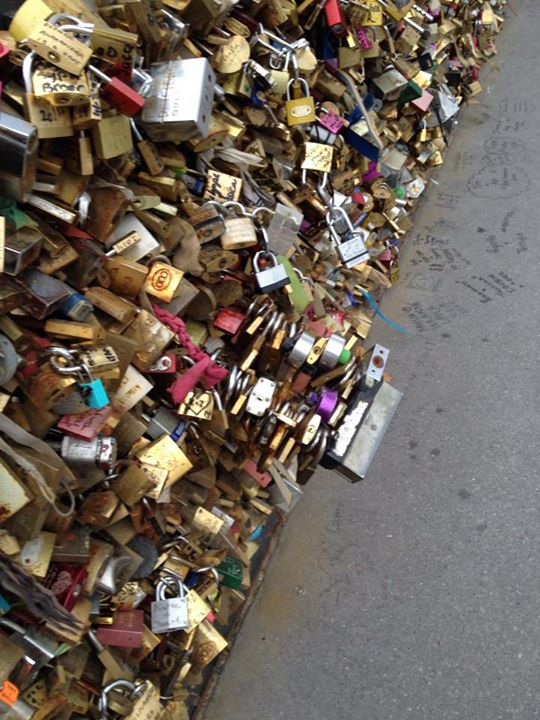
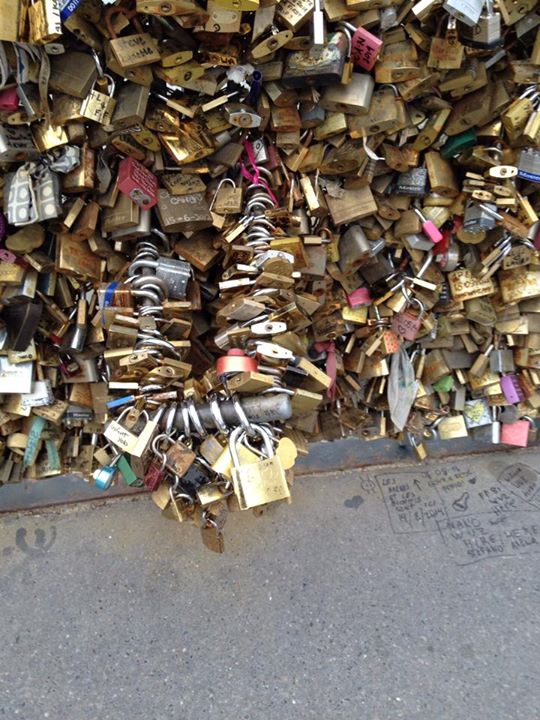
‘’லவ் லாக்’’– (காதல் பூட்டு)

பாரிஸ் நகர செய்ன் நதி, லண்டனில் உள்ள தேம்ஸ் நதியைவிட அழகானது. இரண்டு நதிகளிலும் இரண்டு முறை படகுப் பயணம் செய்துள்ளேன். பாரிஸில் கரை முழுதும் சிமென் ட் பூசி, கான்க்ரீட் போட்டு, படித்துறை அமைத்து, படிக்கட்டுகள் கட்டி இருப்பதால் மக்கள் ‘’ஜாலி’’யாக அமர்ந்து படிக்கிறர்கள். கல்லூரி மாணவிகள் ‘’லாப்டாப்’’ கப்யூட்ட்ர்களையும், வயதானவர்கள் நாவல்களையும் வைத்துக் கொண்டு பொழுதுபோக்குவதைக் கண்டேன்.

அந்த நதியின் பாலங்களில் ஆயிரக் கணக்கான காதலர் பூட்டுகளைக் கண்டு, பல கோணங்களில் நின்று, ஏழெட்டுப் புகைப்படம் எடுத்தேன். உலகில் மனிதர்கள் உருவ வழிபாட்டையோ, மூட நம்பிக்கைகளையோ ஒழிக்கவே முடியாது என்பதற்கு இது ஒரு உதாரணம். காதலர்கள் அவர்களுடைய பெயர்களை பூட்டுகளின் மீது எழுதி அந்தச் சாவியை நதியில் தூக்கி எறிந்து விடுவார்கள். அப்படிச் செய்தால் அந்தக் காதலை யாரும் காலாகாலத்துக்கு அழிக்க முடியாது என்று நம்புகின்றனர். ஆயினும் இப்படிக் காதலுக்கு பூட்டுப் போட்டவர்கள் கொஞ்சம் வருடங்களில் விவாக ரத்து (டைவர்ஸ்) செய்வதை புள்ளி விவரங்கள் காட்டுகின்றன!! ஆக, இது ஒரு மேலை நாட்டு நவீன மூட நம்பிக்கை என்று நாம் கொள்வதில் தவறில்லை. இந்த வழக்கம் 100 ஆண்டுகளுக்கு முன், முதல் உலகப்போரின்போது துவங்கியதாம்.
love locks3

செய்ன் நதிக்கரையில் நிறைய பழைய புத்தகக் கடைகளும் ஓவியக் கடைகளும் இருக்கின்றன. இரவு நேரத்தில் சாதாரண பூட்டுப் போட்டுவிட்டுப் போய்விடுவார்கள்!! யாரும் திருடமாட்டார்கள் என்றே நினைக்கிறேன்!!

பாரிஸில், லண்டன் சுறுசுறுப்பைக் காண முடியவில்லை. ஒருவேளை நாங்கள் போனபோது சம்மர் சீசன் என்பதால் எல்லோரும் வெளியே போய்விட்டார்கள் போலும்!! எங்கு பார்த்தாலும் ஜப்பானிய சுற்றுலாப் பயணிகள்!!
medal1

சிம்மாசனத்தை கண்டுபிடித்தது இந்துக்கள்

விக்ரமாதித்தன் சிம்மசனம் பற்றிய கதை 2000 ஆண்டுகளுக்கு முந்தையது. தமிழிலும் அரியாசனம் என்ற சொல் உண்டு. இது இந்தியாவில் இருந்து உலக்ம் முழுதும் சென்ற கொள்கை. மைசீனிய மற்றும் மத்திய கிழக்கு நாடுகளில் கோட்டை வாசல்களில் பெரிய சிங்கச் சிலைகள் இருப்பது இந்திய கலாசாரத்தின் தாக்கதைக் காட்டுகிறது. ஜூலியஸ் சீசர், அகஸ்டஸ் சீசர் என்ற பெயர்களில் உள்ள சீசர் என்பது கேசரி என்ற சம்ஸ்கிருதச் சொல்லின் மரூஉ. கேசரி என்றால் சிங்கம். இந்த மிருகம் ஆப்பிரிக்காவிலும் இந்தியாவிலும் மட்டுமே உண்டு.

பாரிஸ் லூவ்ர் மியூசியத்தில் இம்மசனம் , காமதேனு ஆசனம் கண்டு மகிழ்ந்தேன். காமதேனு ஆசனம் பற்றி ஆராய்ச்சி துவங்கியுள்ளேன். முடிவு தெரிந்தால் எழுதுவேன்.

simhasanam

kamadenu asanam

contact swami_48@yahoo.com

Hindu Symbolism in Paris!

egypt meditation
meditation2
Egyptian scribe in Yogasana posture in Louvre Museum, France.

Research article Written by London Swaminathan
Post No.1249; Dated 24th August 2014.

I went to Paris with my family in August 2014 after a gap of 24 years. I did not see much change! I missed the most famous Louvre museum last time, but I covered the Palace of Versailles. During this trip my main purpose was to see the famous painting MONALISA of Italian artist Learnado da Vinci and Hindu exhibits in the Louvre museum. I was disappointed because there wasn’t any remarkable Hindu sculpture there. But there were some surprises! I was thrilled to see a big poster outside the Louvre museum with an Egyptian sitting in Yogasana posture. Since I have already written some research articles such as

Hindu Mudras in Ancient Egyptian and Sumerian sculptures (posted7-10-2012)
Did Indians build Egyptian Pyramids? (posted on 27-8-2012)
Sex Mantras and Talismans in Egypt and Atharva Veda (26-9-2012)
Hindu Gods in Egyptian Pyramids (16-9-2012)
Human Sacrifice in Indus Valley and Egypt (Posted 31-10-2012)
Vedic Mantras in Pyramid texts
Tirumular in Egyptian Pyramids (in Tamil Egiptil Tirumular Karuththukkal posted on 23-11-2013)

man vahanam
Statue of Artemis in Louvre Museum
ma n2

I went straight in to that section and took some photos. My views are confirmed once again. Egyptians learnt a lot from us. Historians knew about it and already listed Dasaratha letters in all encyclopaedias. But my view is that even before the Dasaratha letters, Egyptians had connections with the West Coast of India. Most of the standing statues are similar to Jain statues of India. Sitting posture is in Padmasana or some Yogasana. The caps look like Araiyar (Vaishnavite singers in South Indian temples) caps. The snake on the crown looks like Shiva. Kanchi Parmacharya had pointed out Ramses similarity in his 1936 Chennai talks.

candle1
Candle lighted in Sacred Heart Cathedral,Paris

Vahanas Research
The next thing that attracted me was the Statue of Artemis with a deer (Stag). I have done extensive research in VAHANAS of HINDU GODS and GODDESSES. I have written scores of articles on this. Tamil epic Silappadikaram describes Goddess Durga riding a deer or stag (Kalaiyathurthi). Hindu goddesses are depicted with deer or stags. I have also written about Deer Chariot of Santa Claus is from the Rig Veda. So I eagerly went to the statue of Artemis and took some pictures.

notredame cathedral
Notredame Cathedral

Roman Catholic and Hindu customs
Scholars have already pointed out that most of the Roman Catholic customs are based on Hindu and Buddhist practises. I wrote a lengthy two part article on this topic under “Sanskrit in The Bible” sometime ago. I had more surprises at the Church of Sacred Heart (Basilique du Sacré Couer) in Paris. There were two types of candles sold there for 2 Euros and 10 Euros. Devotees of Christ were buying them and lighting them up in the place allocate for this. Anyone visiting South Indian Temple can see such lamps are lighted in front of Durga or Sanaicharan (Saneeswaran) statues.

sacred heart2
Sacred Heart Cathedral

The nest surprise was waiting in another part of the church. There were envelopes and a box to put your demands (Demande de messes) or requests to present it to God. But the charge is 17 Euros!! It is like the Hindus doing Archana to god by paying a fee. There are Hundis (money boxes) everywhere.

simhasanam
Lion Throne (Simhasanam)

Lion Throne = Simhasanam
The concept a king sitting on a LION THRONE is a Hindu concept. Though we see it in Mycenaean and Middle East gates, lions live in India and Africa alone. The word Caesar (King) came from the word Kesari, lion in Sanskrit. It is like the SINGH suffix with North Indian names. I took some photos of Lion Throne and Kamadenu Throne in Louvre Museum. That was another surprise for me.

kamadenu asanam
Kamadenu Asanam from Louvre

Some novel ideas
There are machines selling medals as mementoes in several churches in Rome and Paris (Notre dame Cathedral). Hindu temples also can sell such medals with the picture of god and temple. Now the private parties are doing it outside every temple and ripping off people.

medal1
medallion making machine at Notredame Cathedral

Churches in Rome, Paris and Vatican are huge like the temples of South India, but they are not as ancient as Hindu temples. Architecture and sculptures are stereotyped.

lock1

There is a novel superstitious custom in Western countries of putting Love locks in river bridges with lovers names on them. In spite of these Love Locks divorces are increasing in Western countries. This is from River Seine.

Temples of Ancient Tamil Nadu

meenakshi close

Research article written by London Swaminathan
Post No.1214; Dated:- 4th August, 2014

Ancient Tamil Nadu had lot of Temples. Though Sangam literature mentioned about temples, images, painting of Gods etc. we did not have any archaeological evidence for temples. The reason is that all he old temples were constructed with bricks, wood and mortar. They could not have withstood the onslaught of time and weather. Only from the Pallava period we have temples built of stones. Today, Tamil Nadu can boast of 38,000 temples, big and small. Most of them belong to the later Chozas and later Pandyas.

Tamil epic Silappadikaram gives a better picture of temples that existed in second century CE in three major towns Pukar, Madurai and Vanji. It also mentioned other temples at Srirangam, Alagar koil, Lord Skanda shrines and Tirupati. It is very interesting to get all the information from one book. Ilango, author of the epic gives the lists at least in four places. Some of the temples have disappeared. Some of the worships (such as Balarama,Vajra,Indra) are also gone into history books! Nowhere Ilango mentioned the temple or worship of Lord Ganesh. It shows the antiquity of the epic.

Silappadikaram is an encyclopaedia of Hinduism. It gives details about Vahanas of gods (mounts of Gods), flags of gods, folk dances of gods and goddesses, Punya Theerthas/holy waters and the methods of worship.

2alakarkoil
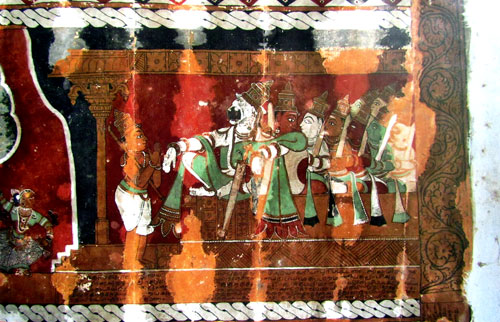
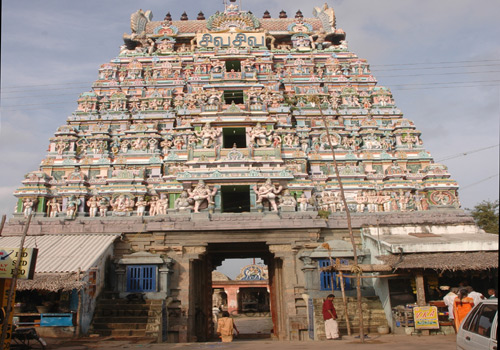
Alakarkoil near Madurai

First List of Temples
Let me give some lists as produced by Ilango:-
The first list comes from ‘Indra Viza Uretutta Katai’. Joy prevailed everywhere on account of Indra’s festival in the temples of

1.Lord who was never born (Siva)
2.Temple of Six Faced Red Lord (Skanda)
3.Temple of Valiyon (Baladeva), with the complexion of conch shell
4.Temple of Netiyon (Vishnu)of the dark colour
5.Temple of Indra of the victorious umbrella and the pearl garland
6.Jaina Temples
7.Dharma institutions (Buddhist or Jain or Hindu)
(These are the temples of Pumpukar)

srirangam kuthirai veera

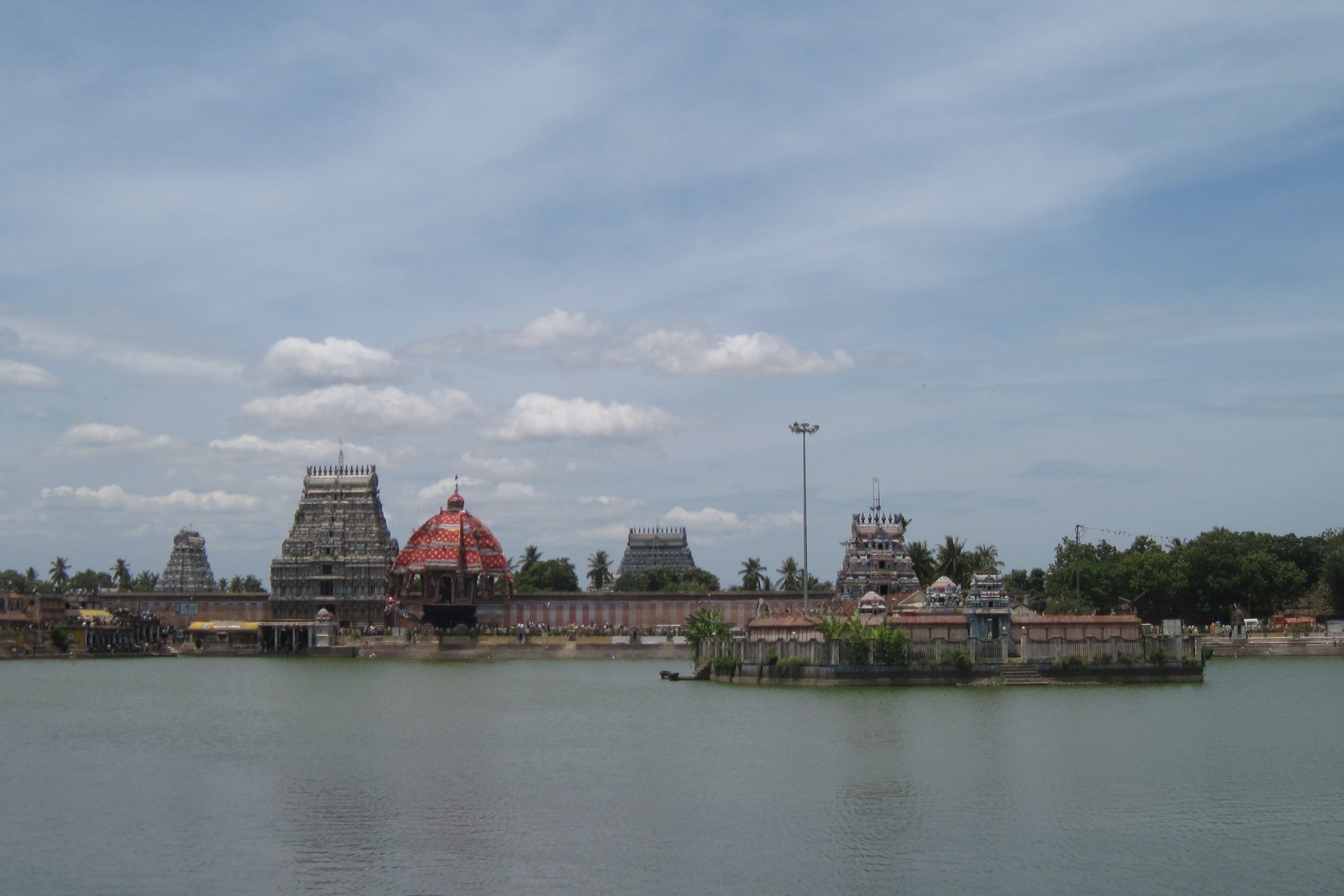
Temples of Pumpukar
In the Kana Tiram Uraitta Katai, Ilango gives a list of 11 temples of Ancient Tamil Nadu:
1.Temple of Kalpaka Vriksha (Divine Tree)
2.Temple of white elephant (Indra’s Airavata)
3.Temple of beautiful white god (Balarama)
4.Temple of the Sun
5.Temple of City God (one interpretation is Shiva Temple)
6.Temple of Vajra (Indra’s shrine or temple for his weapon)
7.Temple of Spear (of Murukan/Skanda)
8.Temple of Deity who dwells outside the city (Ayanar/Sastha)
9.Temple of Nigranthas (Jaina Temple)
10.Temple of the Moon
11.Temple of Sattan learned in the Pasanta sastras
12.Temple at Cremation ground (may be Yakshini or Chakravala Kottam of Manimekalai)
13.In the Natukan Katai Kovalan and Kannaki circumambulated the temple of Manivannan (Vishnu) at Srirangam and they passed by
14.Seven Viharas made by Indra (Buddhist Viharas).

Srirangam, Tirupati,Alakarkoil Ujjain (Madya Pradesh) and Madurai are mentioned.
15.Madurai temple is mentioned in Purancheri Irutta Katai.
temple side view

Temples of Madurai
Urkan Katai gives another list of Temples in Madurai:
1.Temple of Siva with the forehead eye
2.Temple of Vishnu with Garuda flag
3.Temple of Baladeva with plough
4.Temple of Subramanya with cock flag
5.Jain centres

Temples of Lord Skanda Kartikeya
In the chapter Kundrakuravai, he gives the list of Murukan (Skanda) temples:
1.Sentil — Tiruchenthur
2.Senkotu_- Thiruchengotu
3.Venkunram – Swamimalai
4.Erakam – Tiruverakam

lepakshi multihead
From Lepakshi Temple

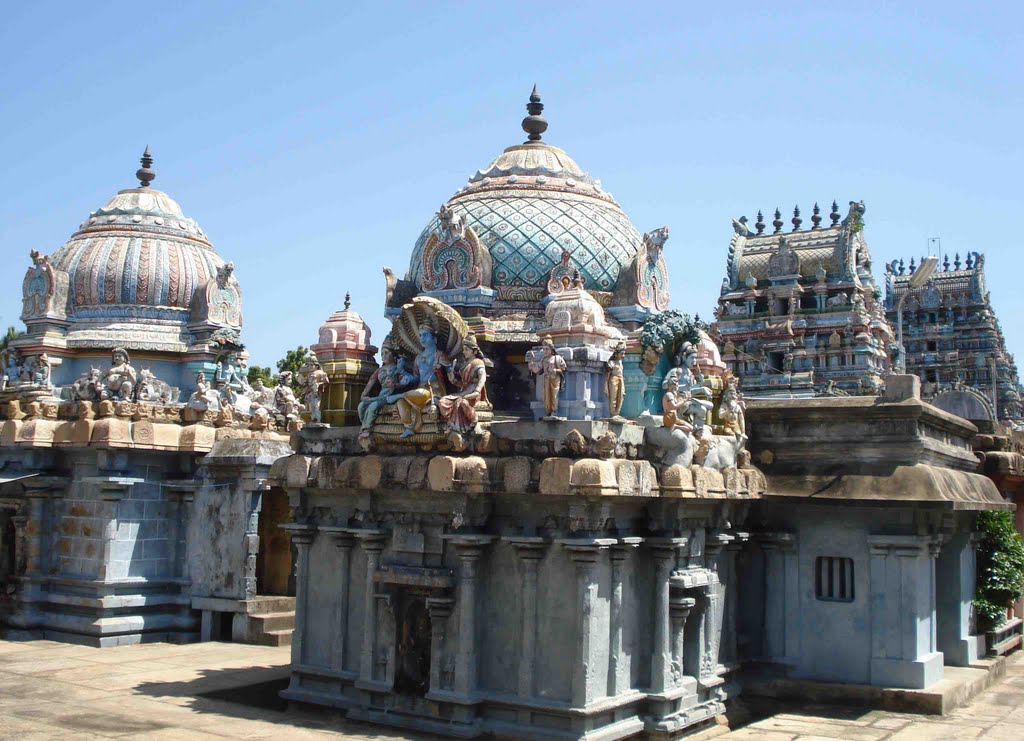
Temple at Tiruvananthapuram

1.Adaka madam (Anantha Padmanabha Swamy Temple)
–Kalkot Katai,Silappadikaram
2.Buddha vihara
3.Indra vihara (Buddhist) in Neerpadaik Katai

One must remember that Silappadikaram is not a religious scripture and yet we find so much information about religion, particularly about Hinduism. For the first time, places of worship of Jains and Buddhists are also described in detail.
தங்க கோபுரம்

Contact swami_48@yahoo.com

A Jain Story in Tamil Epic

Tamilnadu_02
Jain Tirtankaras in Tamil Nadu

Compiled by London Swaminathan
Post No.1196; Dated 26th July 2014.

Silappadikaram is the most popular Tamil Epic written by Ilango. Of the five Tamil epics this is the one widely read by the Tamils. Ilango gives lot of information about the Jainism prevalent in Tamil Nadu around second century CE. One of the characters in the epic is Kavunti Adikal, a Jain nun who accompanied Kannaki and Kovalan, the heroine and hero of the epic, to Madurai.

Kavunti narrated a story which is not fund in any other book:

“Listen! However small the sum entrusted to your care by a saint, it multiplies a hundredfold. There was a Deva of great power in a town adjoining river Kaveri. Though the Deva was adorned with garlands made up of flowers and gems and gold, one of his hands resembled that of a monkey with black fingers.

Kalugulamalai
Kazukumalai Jain Caves

All the Savakas worshipped the Saranar and wanted to know the reason for the monkey hand, the god spoke as follows:

Once there was a merchant called Etti Sayalan. In his house many would gather who observed fasting. One day the lady of the house received a monk. At the same time a monkey from the village silently entered the house and worshipped the feet of the great monk. It was very hungry and ate all the leftover food. The monk was very happy and told the lady of the house, “Regard this monkey as one of your own sons”.

The lady agreed to the wise words of the saint. When the loving monkey died, the lady gave the property set apart for it to the assembled monks and prayed that it may be absolved of all its sins. Hence it was born as the only son of Uttaragutta at Varanasi. This son who was celebrated for his beauty, wealth and great wisdom, and noted for his great gifts died in his thirty second year. Later he attained the form of a Devakumara and has come here with the monkey’s hand as if to announce to all his followers, “ Please note that all my wealth and enjoyments were the outcome of the gifts of her who protected me with grace. Though in my previous birth a monkey, this change of form is due to the gifts of Sayalan’s wife”

jain_cave_3vallimalai
Valimalai Jain Caves

Jain nun Kavunti added, “Now that you have heard this account, accompany this lady (Kannaki) with the flower decked hair, without wasting any more time.

When Kavunti said this Matari, a woman from the cowherd’s community took Kannaki to her home
(Source Silappadikaram, Adaikkala Katai, Chapter 15)
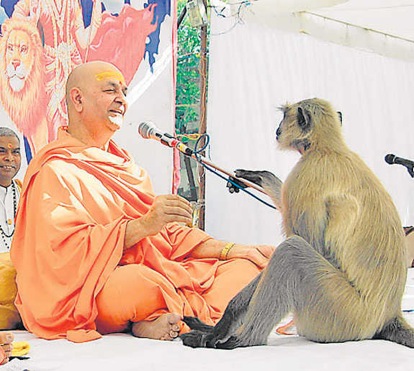
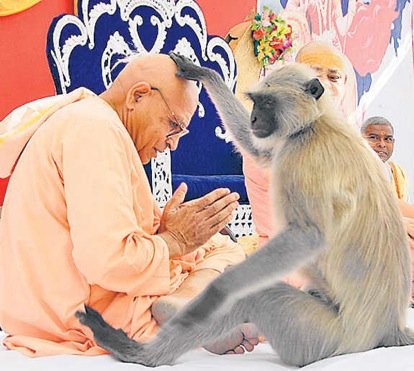
kalika-hanuman1
Hindu saint in Ratlam, Madya Pradesh
kalika-hanuman3

Interesting Story about an unknown Tamil King!

05FR_MURALS-TIRUVAR_742658g

Mucukundan in Tiruvarur Temple, Tamil Nadu

Research paper written by London Swaminathan
Post No.1194; Dated 25th July 2014.

Very interesting stories are woven around a Choza king who was not recorded or documented in history. The Choza king Mucukunda is in the Puranas and Tamil literature. But history does not know him. From Kandhapurana and Silappadikaram commentaries we know the following details about him:

1.He helped Indra in defeating a demon.
2.Indra gave him a goblin (Bhuta) to protect his city. Later Chera took it to Vanji.
3.Mucukunda ruled from Pumpukar, Choza port city or Tiruvarur.
4.Mucukunda was an ardent devotee of Shiva.
5.He received several statues from Indra and installed them in and around Tiruvarur.
6.His face looked like a monkey (Musu = Monkey).
7.Mucukunda celebrated Indra Festival. He was very much into it.
8. A lot of Sthalapuranas have recorded Mucukunda’s role in local temples. He is connected with Tiruvarur, Tirumaraikkadu, Nagappatinam, Tirunallaru, Tirukkarayal, Tiruvaymur and Tirukkuvalai.

Following are the references from the Puranas and Tamil Epic Silappadikaram.
Pumpukar was a port city in the Chola kingdom. The importance of Pukar was not long lived. Now part of it is under the sea– Bay of Bengal. Anticipating the forthcoming devastation of the city, ‘buta’ (goblin) at Butachahukkam, which was brought from Indra’s abode by Mucukunta, was removed to Vanji by the Chera king. Source : –Canto 28 commentary of Silappadikaram

mural tiruvarur

Tiruvarur Temple Murals

Tamil epic Silappadikaram while describing the Indra festival says that the dancers performed Tunankai dance to ward off the evil which might befall the victorious king Mucukuntan. Whole Canto Five of Silappadikaram is devoted to a detailed description of Indra festival. It was an annual festival lasting for 28 days. Lot of men and kings came from the northern parts of India came to watch the festival. It commenced on the full moon day in the month of Chitra and with the preliminary worship of the guardian deity who was sent by Indra to help an ancient king of the Pukar line, Mucukunta. Sanskrit literature has many references to Indra dwajam festival. (For details read my earlier post on Indra Festival)

In Canto Six of Silappadikaram, the story of Mucukundan is narrated through the mouth of a Vidyadara (celestial being). He says to his wife that was the flag hoisting day of Indra Festival in Caampapati (Pumpukar). He said to his wife, “We shall go and witness the place where the great Bhutam (goblin) eats the sacrifice offered to it having carried out Indra’s orders to ward off the evil effects of the arrows aimed by hosts of swift going Asuras against the terror stricken but best of men, the victorious king Mucukunda, while he was keeping watch, tiger like over Indra’s city.

To cut the story short, once Mucukunda helped Indra and he in turn sent his Bhuta to protect the city. He gave him another boon that whoever wakes him from his sleep will be burnt to ashes.

Tiruvarur_temple,_tank,_car
Tiruvarur Temple and Tank

Lord Krishna was chased by a Kala yavana and Krishna entered the cave where Mucukunda was sleeping. When Mucukunda became tired he got a boon from God to sleep undisturbed for a long time in a cave. Kalayavana also entered the cave and slapped on Mucukundan thinking that it was Krishna pretending to sleep. When Mucukunda opened his eyes, Kalayavana was burnt to ashes. Tricky Krishna came out of his hiding and blessed Mucukunda. He advised him to go to Badrinath.

Bhagavatha and Skanda Puranas give a different account about Mucukunta . He is one of the three sons of Mandhata and Bindumati. His brothers are Purukutsa and Ambarisa. Hearing that Kala Yavana was destroying Devas , Mucukunta entered the cave, the residence of the Yavana, and slew him, to the wonder of the Devas. Indra offered him a place of honour in heaven. But Mucukunta wanted to go on sleeping in that cave undisturbed for an unlimited period.

Choza history has not recorded him in the historical line of known Choza kings. So we don’t know when it all happened.

Origin of Cholzas is shrouded in mystery. Pura Nanuru of Sangam literature and Silappadikaram of Post Sangam period praised Sibi Chakravarthy in many places as the forefather of the Chozas. Sibi ruled North West of India, far away from the Choza territory of Tamil Nadu.

Story of Mucukundan is also shrouded in mystery. While story of Sibi happened in North West India, Mucukundan was linked with Tiruvarur and its surrounding temples in Tamil Nadu.

tirukkuvalai
Tirukkuvalai Temple.

Tamil Encyclopeadia Abidana Chintamani adds more interesting stories: Mucu means monkey and when he was born as a monkey in the Himalyas, he did offer Bilva leaves to Shiva. As a result of this Puja he was born as a son of Dilipa and Mangalvathy in the solar race found in Hindu Puranas. Then he married Vichitravathy and helped Indra in his fight against Vala. When Indra told him that he would give him a gift, Mucukundan wanted a particular Shiva idol from Indra. That was given to Indra by Vishnu. But Indra gave him a different idol. This happened six times and at last he got the idol he wanted. He installed all the idols in different temples in Thanjavur district. The main idol was installed in Tiruvarur.
Please read my earlier post

Sibi Story in Old Tamil Literature (Did Tamil Chozas come from the North?) posted on 15 July 2013.

vedaranyam
Tirumaraikkadu (Vedaranyam) Temple

contact swami_48@yahoo.com

Pictures are taken from various sites;thanks.

Hindu’s Amazing Knowledge in Botany!!!

purnakumba
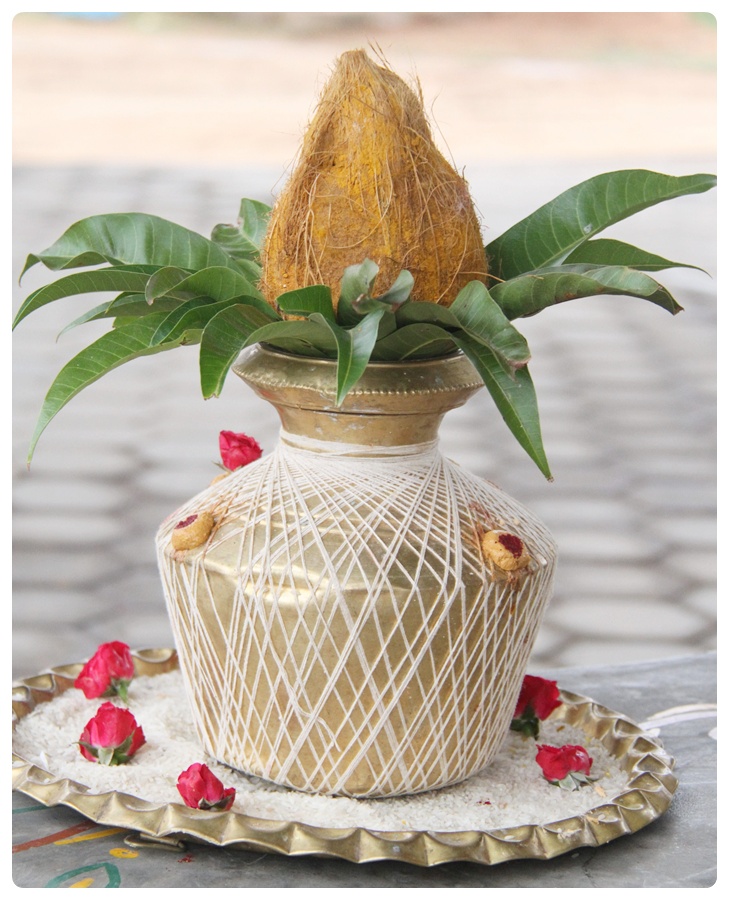
Purna kumba with coconut and mango leaves (auspicious symbol)

Research writer:– London Swaminathan
Post No:–1184; Dated 20th July 2014.

*Vedic Index mentions about 74 different plants.
*Valmiki Ramayana Index gives a list of about 170 plants.

Hindus use a lot plants in their day to day religious rituals in their houses as well as temples. They have got an amazing variety of plants .This article is about the plants used only for “religious rituals”. Hindus will comfortably beat any community or race in the world. I can’t list all the plants here. This is only a sample survey.

If it is a medical treatise like Charaka in Sanskrit or Agastya in Tamil I would not be surprised. In 2000 year old Sangam Tamil Literature a Brahmin poet by name Kabilar gives a long list of 99 plants of the Tamil landscape at one go in Kurinjippattu. But it is not a religious literature. But the same poet sings about offering Patram,Pushpam, water to god in Purananuru verse 106.

Arani Mantha
Vedic Equipment to kindle fire (Arani)

Following is the list of some important plants. The numbers within brackets are used for counting:–
Tulsi (1) and Bilva (2) are used in the houses and temples every day.

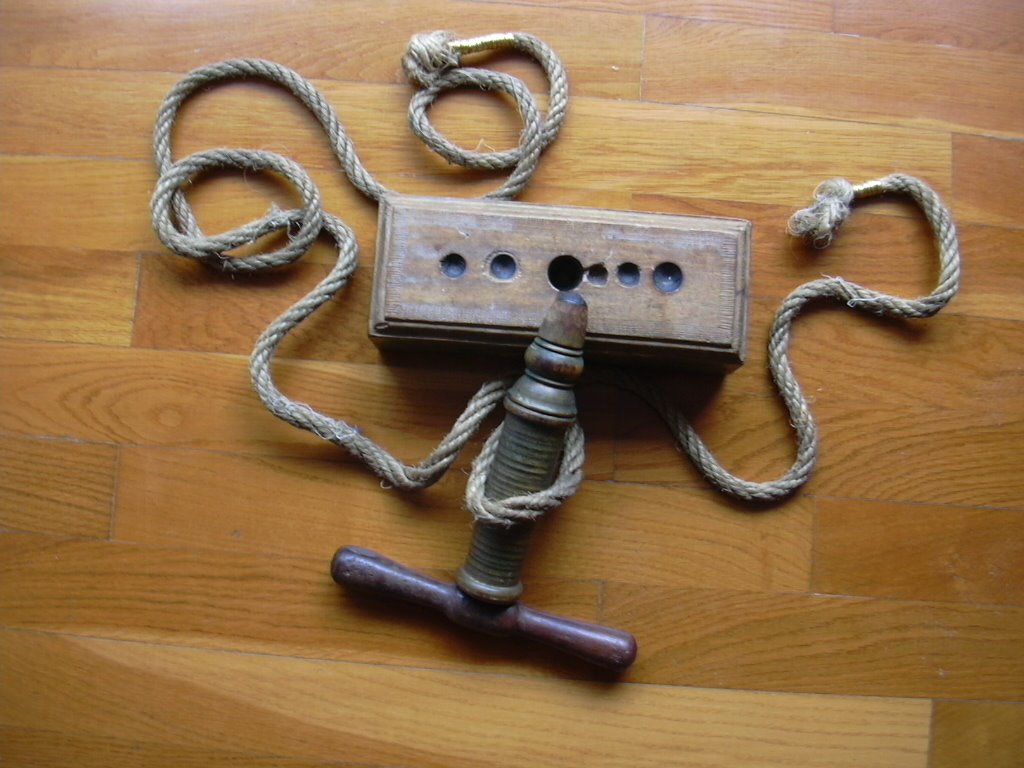
Peepal (3)tree (Ficus religiosa) and Sami (4)tree(Prosopis cineraria) are used to produce fire. In Vedic days there was no match box. Either they used the fire from the permanent fireplace in the houses or used an Arani wood. It is made up of Peepal and Sami Trees. A churning device made up of strong peepal wood will churn the sami wood to kindle fire. This has been used from the Vedic days.

Banyan (5)tree( Vata Vrksa) and Fig (6)tree (Udumbara) are mentioned in Vishnu Sahasranamam along with the Peepal tree. Neem (7) tree also known as Margosa tree is used in all the village goddess temples in Tamil Nadu. It has got anti viral and anti bacterial properties. South Indians use it on the new year day.

Two plants (8)Mango tree and (9)Plantain Tree (banana tree) are considered very auspicious. No religious function or festival is celebrated without these two. Mango leaves are used as festoons in weddings and Holy Pots are decorated with the leaves. Mango fruits are God’s favourite fruits. All parts of plantain tree are used in temple and home rituals and food. Plantain leaf cups are used (Donnai) in Vedic ceremonies. Coconut (10) is the most important ingredient in the temple offerings. Copra is offered in the homam.
spoons
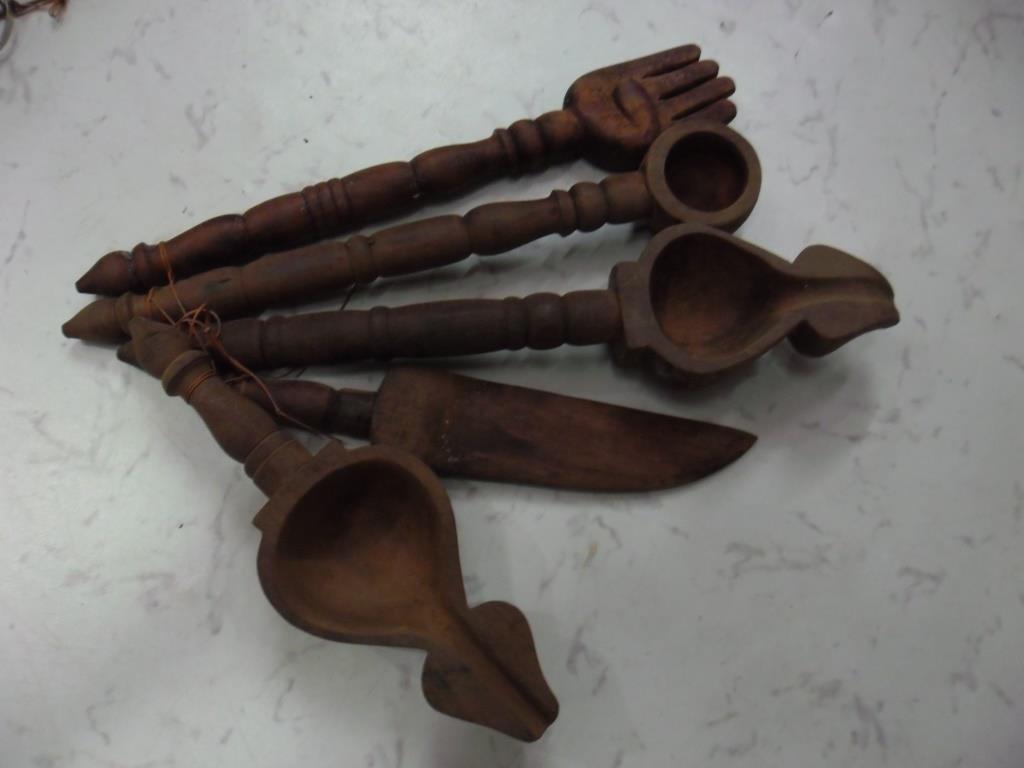
Yaga Spoons made up of Palasa wood

In the Fire Ceremonies known as Homams, Havans, Yagas and Yajnas in Sanskrit, a lot of special woods or sticks are burnt with butter/ghee. The most important of these plants are Soma plant (11) and the peepal sticks. No one knew the identity of the soma plant yet. But foreign “scholars” have competed with one another in bluffing and fooling the Hindus (See my earlier article). Drug addicts described it as a narcotic and drunkards described it as an intoxicant. This is because they don’t see drinking or using drugs as a sin and they have been using it for long. In short their interpretations reflected their culture.

The wood or sticks used for Navagraha Homam or any Household are Arka/Erukku/ calatropis procera (12)Purasu (13), Karunkali (14), Arasu/Peepal, Aththi/Udumbara/Fig, Vanni/Sami,Nayuruvi (15)and Arukam (Durva) Pul grass (16).

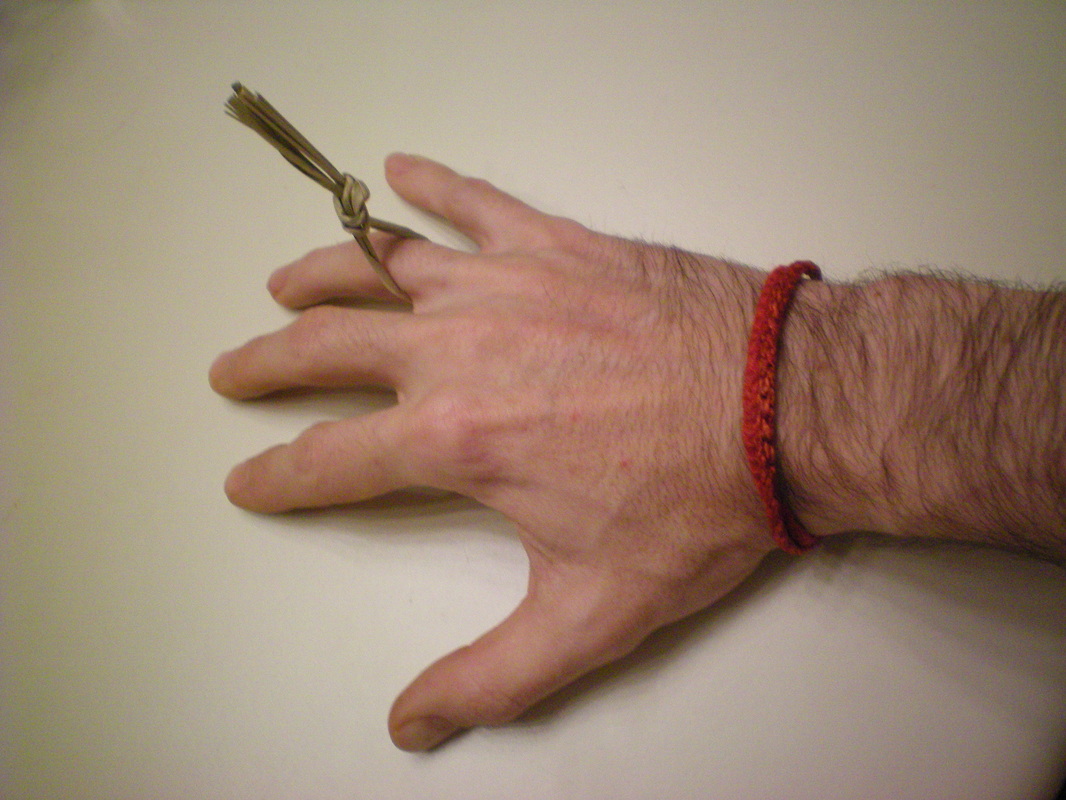
No Hindu priest will walk out of his hose without (17) Dharba grass in his Puja/ceremony pack. Hindus believe that Dharba is the most powerful and the holiest of all the grasses. All the ceremonies must be performed by wearing this as a ring (Pavitram) in the ring finger.

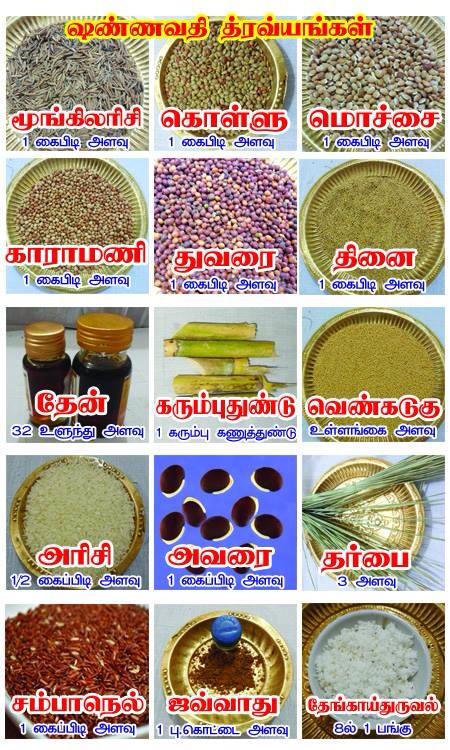
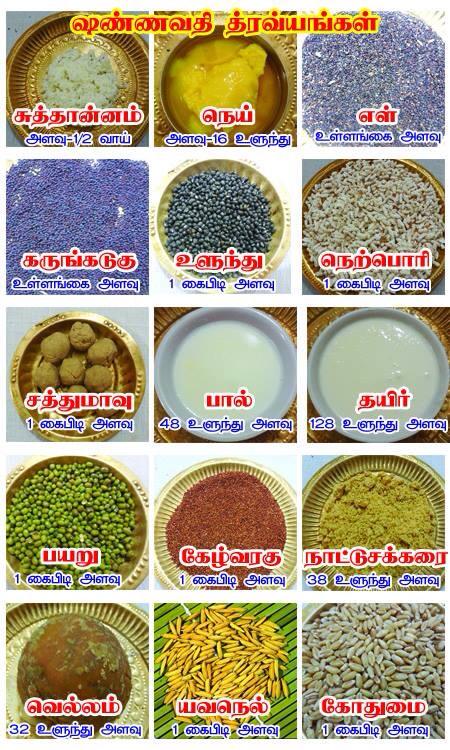
In the Homam to propitiate nine Planets (Nava Grahas), Hindus use nine different pulses or grains. Rice plays the most important part in the funeral rites as well as the wedding rites. If it is a funeral ritual, cooked white rice balls are used. Uncooked yellow coloured rice is used in all the auspicious functions. This shows Hindus did not migrate from any cold countries. They originated in the Indus -Ganges plains where (18) paddy was grown. Other ingredients used: Bamboo rice (19), Black gram (20)Horse gram(21), Lima Bean seeds (22), Millets (23), White Mustards (24),Black mustard (25) Sesame (26), Sugar Cane (27), Wheat (28), Green Gram (29), Karamani pulses/Cow peas(30).

homadravyas5
Homa Dravyas (Pulses and Grains)

I have written an article about use of sesame seeds from Vedas to Indus valley. I have written another article about Sugar cane Dynasty (Ikshwaku Dynasty and Indus Valley)
No funeral ceremony can be conducted without white rice and sesame seeds. This shows Hindus originated in the tropical India. Rice mixed with jaggery (unrefined sugar) is offered to God.

Plant from the Heaven
The one thing which I couldn’t explain scientifically is the Samudra Manthan (Churning of the Milky Ocean with the help of a mountain and a snake) in Hindu mythology. Though some people have given some explanations, they don’t justify all the 14 products that came from the ocean! One of the fourteen is (31) Parijatha tree (Coral Jasmine), the flowers of which are offered to the god. I How come this tropical plant came from the heaven? Or Have we identified it wrongly?

Spices
Hindus use the (32) cloves (33)cardamom and (34) saffron to add fragrance to all their religious drinks. Turmeric (35) is the most auspicious colouring product that Hindus use.

homa dravyas

Garlands
Garlands made up of (36)Rudraksha seeds and Tulsi seeds are worn by devotees. 10 to 15 types of flowers are used in the temple offerings. It differs from region to region. 37.Jasmine, 38.Marigold, 39.Lotus, 40.Hibiscus rosasinensis, 41.Nerium odorum, 42.Champak/Shenpakam and 43.Chrysanthemum dominate. 44.Roses are late arrivals in Hindu offering.

Probably India is the only country in the world named after a tree- (45)Jambu tree (Jambu dweepa). There are other dweepas (islands/continents) named after plants among the Sapta dweepas. But they are not used now. Orthodox Hindus in India do the Sankalpa ( religious vow) everyday in the name of Jambudweepa. Black coloured berries (Syzigium cumini) are offered to Lord Ganesh with (46) wood apple.

Yaga spoons are made up of Palasa (47) wood. Sandal (48) wood is offered in Homa and sandal paste is a must for all religious ceremonies.

((I have a B.Sc. in Botany with Zoology and Chemistry as ancillary subjects. I have two M.A.s in Literature and History. So whenever I study any literature I always look for botanical references. What amazed me was the reference of innumerable plants in religious literature. Of course Bible also has references to many plants and there are some books on this topic. But the big difference between Hindus and other religions is that Hindus are still using innumerable plants in their day today life for religious rituals)).

pavitra
Pavitra ring made up of Dharba grass

List of Plants used by the Hindus:—
1.Tulsi plant 2.Bilva Tree 3.Peepul (Ficus religiosa) 4.Sami tree 5.Banyan tree (Ficus Indica) 6. Fig Tree 7.Neem Tree (Azadirachta Indica) 8.Mango Tree 9.Plantain Tree 10. Coconut Tree 11. Soma creeper (somalatha) 12.Erukku 13.Purasu 14.Karunkali 15.Nayuruvi 16.Arukampul grass 17.Dharba grass 18.Paddy 19.Bamboo rice 20.Black gram 21.Horse gram 22.Country Bean seeds 23.Millets 24.White Mustards 25.Black mustard 26. Sesame 27. Sugar Cane 28. Wheat 29. Green Gram 30. Karamani/Cow peas 31.Parijatham 32.Cloves 33.Cardamom 34.Saffron 35.Turmeric 36.Rudraksha Tree 37.Jasmine 38.Marigold 39.Lotus and its root 40.Hibiscus rosasinensis 41.Nerium odorum 42.Shenpakam /Champak 43.Chrysanthemum dominate. 44.Roses 45.Jambu Tree 46.Wood Apple 47.Plasa wood 48.Sandal wood

contact swami _ 48 @ yahoo.com

How Many People did Indra Kill?

indra big

Written by London Swaminathan
Post No. 1178; Dated 17th July 2014.

Foreign “scholars” have been fooling Indians for nearly 300 years because they know that lot of Hindus never read anything Hindu in original, for instance 20,379 Vedic Verses or 24,000 verses of Valmiki Ramayana or 100,000 verses of Mahabharata 800,000 verses of the Puranas. It is very easy to cheat the Hindus. So anyone can quote any of these verses and write anything they wanted. Whenever they touch anything Hindu their imagination runs riot. They won’t do it in the case of other religions because they know the serious repercussions. Moreover what other religions have got is very little. If Hindu scriptures are Pacific Ocean, theirs is just a small lake. It is no way of belittling their holiness or their importance. It is just a quantitative analysis.

Archaeological evidence for Indra and other Vedic Gods are available from 1400 BCE. Indra is mentioned in the Bogazkoy inscription in 1400 BCE in Turkey (150 kms from Ankara). He was worshipped even before this date in India. He is mentioned a few times in Zend Avesta as well.

indra on elephant

Indra has got more than forty names in the Vedic literature. He is mentioned in 300 hymns in the Rig Veda, the oldest scripture in the world. No hero or God in the world had so much coverage around 1200 BCE, the date given to Rig Veda by most of the scholars. But Hindus believe that Vedas are timeless, ageless with no beginning or no end. It is there forever and seers can catch those hymns like we catch (tune in) radio waves/broadcasts. Great Hindu philosophers Shankara, Ramanuja and Madhwa and commentators like Sayana approached it differently. They never mentioned Arya, Dravida, Munda, Mongoloid, Caucasian etc. Because they are not in the Vedas!

Word Arya occurs 34 times in the Rig Veda. It is not used with racial connotation. Dravida or Munda is not there. If I say educated or uneducated, cultured or not cultured, Hindus or Non Hindus there is no racial meaning. They used Arya to mean cultured, respectful etc. Dasas or Dasyus were criticized. Even Tulsidas and Kalidas called themselves Dasas! So we have to judge after reading the book in its entirety. Last hymn of the Rig Veda summarises beautifully well its purpose (Please see “Vedic Hymn – Better than National Anthems” for more details, posted on April 17, 2014).

airawat

Just to show how foreigners are deceiving Hindus, I have given below some mind boggling numbers concerning Indra and other Gods; In all these originals they insert words like ‘Non Aryan’, ‘Munda’, ‘Dravidian’, ‘Foreign’, ‘Iranian’ according to their whims and fancies or their concocted theories. They will hide facts like Indra’s greatest achievement was killing the “Brahmins” Trisiras and Vritra, Indra’s wife Saci was an “Asura” lady. If they reveal the words Brahmin, Asura, all their racist theories will crumble into dust. So they will tell you only half truths, which are more dangerous than lies.

I would recommend to anyone to take one Vedic hymn and see what each and every foreign, non Hindu “scholar” interprets it. I have been doing it for forty years and enjoying the Best Jokes. I would recommend in particular the book “Minor Vedic Deities”. The author (J R Joshi) has listed beautifully well the interpretations of all the western “scholars” for every minor deity. They will leave you in utter confusion. If their interpretations don’t fit their concocted theories, they will interpret them as natural phenomena!!!

Tamils are the people who fought among themselves for 1500 years without stoppage. Chera, Choza and Pandya, the three Tamil Kings killed each other and destroyed their forts. But nobody inserted any racist theories among the three. Foreigners, particularly, Christian missionaries, thought they could easily fool them because of their dark skin and convert them. But Tamils disappointed them! The lesson is: Not all the fights are racist; not all the wars are racist. They simply fought to show they were “heroic”. Those who read Sangam Tamil literature (Purananuru) will understand this.

indra kudai

Indra, the greatest Hero:

Indra killed Dhuni, Chumuri (RV 6-20).
Indra killed Tugra and Vetasu; He killed 100,000 people; killed Shambara on the mountains (RV 6-26)
Indra killed Chumuri and 60,000 enemies (RV 6-26)
Indra killed Kulitara’s son Shambara and crushed 100,000 varcins (RV 4-30)
Indra killed 10,000 Vritra (RV 1-53)
Indra killed 150 soldiers (RV 1-133)

Indra killed Arna, Chitraratha on the banks of Sarayu (RV 4-30)
Indra broke the mountain to release the captivated water (RV 2-11)
Indra found out Shambara after 40 years in the mountain hide-outs (RV 2-11)
Indra killed Vala, Brahmin Vritra and Demon Ahi who captivated the waters (RV 2-11)
Indra freed the dragon and released Seven Rivers (RV 2-12)
Indra subdued Kings Kutsa, Athigva and Ayu(RV 2-14)
Indra destroyed Shambara’s 100 ancient Puras (forts/castles/cities) (RV 2-14;1-53)
Indra killed Dhribika, Urana, Arbuda, Shushna, Pipru, Namuci, Rudhikra (RV 2-14)

standing indra - sandstone - madhya pradesh - singapore

Indra breaks the cave of Vala, rich in cows. (RV 1-11)
Indra smites Dasa and opens the caves where cows were imprisoned (RV 1-32)
Indra scattered Dasa and Dasyus (RV 1-53;5-3-34)
Indra killed Parnaya, Karanja (RV 1-53)
Indra broke the forts of Sushna, Shambara, Kuyava (RV 1-103)
Indra shattered 90 forts of Puru and brought Shambara from the mountains (RV 1-130; 3-12-6)

Indra’s Wife an Asura woman!

Indra’s wife is Saci devi, the daughter of a Daitya (asura) chief Puloma.
Jains have 64 Indras and 22 Devis.

indra-mathura-sculpture-with airavata (gupta period)

Contact swami_48@yahoo.com

அதிசய புருஷர் சுவாமி விவேகானந்தர்!

vivek1

By ச.நாகராஜன்
Written by S Nagarajan
Post No 1174 : Dated 16th July 2014.

இந்தியாவிற்கும் அமெரிக்காவிற்கும் இடையே ஒரு ஆன்மீக உறவை ஏற்படுத்தியவர் சுவாமி விவேகானந்தர். தனது அமெரிக்க உறவை அனைவரும் அதிசயிக்கத்தக்க வித்த்தில் நினைவு கூறும் விதமாக அமெரிக்க சுதந்திர தினமான ஜூலை நான்காம் தேதியன்று சமாதி அடைந்தார் அவர். அவரின் நினைவுக்கு அஞ்சலி செய்து போற்றித் துதிக்கும் கட்டுரை இது!

இந்தியாவைப் பற்றி அறிய விவேகானந்தரைப் படியுங்கள்!

அமெரிக்க சகோதரிகளே! சகோதரர்களே! (Sisters and brothers of America!) என்ற சில சொற்களினாலேயே அமெரிக்கா முழுவதையும் தன் அன்பு வளையத்துக்கு ஆட்படுத்திய பெரும் அதிசய புருஷர் சுவாமி விவேகானந்தர்.

இந்தியாவைப் பற்றி அறிய வேண்டுமென்றால் சுவாமி விவேகானந்தரைப் படி என்றார் வங்கக் கவிஞர் ரவீந்திரநாத் தாகூர். இந்தியப் பண்பாட்டின் கருவூலமாக, பாரதத்தின் ஆன்மீக சக்தியின் நடமாடும் திரு உருவாக அவதரித்தவர் சுவாமிஜி.

books on vivek

சூரியனுக்கே சான்றிதழா?!
அமெரிக்காவில் பிரபல பேராசிரியரான ஹென்றி ரைட் சுவாமிஜியுடன் அளவளாவிய சிறிது நேரத்திலேயே அவரது அறிவின் ஆழத்தைப் புரிந்து கொண்டு வியந்தார். போஸ்டனிலிருந்து 30 மைல் தொலைவில் இருந்த அன்னிக்ஸ்வாம் என்ற இடத்தில் அமைதியான இடத்தில் தம் இல்லத்தில் தங்கி இருந்த அவர் சுவாமிஜையைத் தன்னுடன் தங்குமாறு அழைத்தார். அந்த அழைப்பை ஏற்றுக் கொண்ட சுவாமிஜி அவருடன் இரு நாட்கள் கழித்தார். சர்வமத மஹாசபையில் நிச்சயம் சுவாமிஜி கலந்து கொள்ள வேண்டுமென்ற தன் எண்ணத்தை பேராசிரியர் ரைட் வெளிப்படுத்தினார்.

“அமெரிக்கா உங்களை அறிய வேண்டுமானால் அதைத் தவிர வேறு வழியில்லை” என்று ஆணித்தரமாக உரைத்த பேராசிரியரை நோக்கிய சுவாமிஜி,” அந்த சபையில் கலந்து கொள்வதற்கான அறிமுகக் கடிதமோ, சான்றிதழோ என்னிடம் இல்லையே! “ என்று தயங்கிவாறே கூறினார்
“உங்களுக்குச் சான்றிதழா?! சூரியன் பிரகாசிப்பதற்குச் சான்றிதழ் கேட்பது போல அல்லவா இருக்கும் அது!” என்றார் ரைட்

சூரிய ஒளிக்கே ஒரு சான்றிதழா! மின்மினிகள் அதைத் தர இயலுமா? என்பதை உணர்ந்த பெரும் மேதையாக இருந்தார் ரைட்.

பின்னர் நடந்த சம்பவங்கள் அனைவரும் அறிந்ததே. சுவாமிஜி 1893 ஆம்
செப்டம்பர் 11ஆம் தேதி சர்வமத மகாசபையில் கலந்து கொண்டார். இந்தியாவின் ஆன்மீக சக்தியை உலகெங்கும் அறியச் செய்து உலகப் புகழ் பெற்றார்.

vivek3

அமெரிக்கர்கள் வியந்த அதிசய புருஷர்!

பிரபல பகுத்தறிவுவாதியும் சொற்பொழிவாளருமான இங்கர்சால் சுவாமிஜியைச் சந்தித்து வியந்து போனார்.

“ஒரு ஆரஞ்சுப் பழத்தின் சாறைப் பருக விரும்புகிறேன். அதில் என்ன தவறு?” என்று உலோகாயத நோக்கில் அனைத்தையும் அனுபவிப்பதில் என்ன தவறு என்று பூடகமாக்க் கேட்ட இங்கர்சாலை நோக்கிப் புன்முறுவல் பூத்த சுவாமிஜி,” அதில் தவறு ஒன்றுமில்லை. ஆனால் கடைசிச் சொட்டு சாறு வரை முழுவதுமாக அருந்த வேண்டும் என்கிறேன் நான்!” என்றார். வேதாந்தம் மூலம் அனைத்தையும் அறிந்து சுவைக்க முடியும் என்ற அவரின் அறிவுரையைக் கேட்ட இங்கர்சால் பெரிதும் மனம் மகிழ்ந்து சுவாமிஜியை மிகவும் ஜாக்கிரதையாக இருக்குமாறு வேண்டிக் கொண்டார். அவரது பரந்த மனத்தையும் நோக்கையும் ஏற்றுக் கொள்ளும் பக்குவம் அங்குள்ள மதவாதிகளுக்கு இல்லை என்பது இங்கர்சாலின் கருத்து.

பிரபல தொழிலதிபர் ராக்பெல்லர் சுவாமிஜியைச் சந்தித்தார். சில நிமிடங்களே நீடித்த அந்த சந்திப்பில் அவரை அறக்கட்டளை ஆரம்பிக்குமாறு உத்வேகம் ஊட்டினார் சுவாமிஜி. அவர் வாழ்க்கையே மாறிப் போனது.

150th annivesar
.
அமெரிக்கா மீதுள்ள அன்பு

எகிப்து, சீனா, பிரான்ஸ், அமெரிக்கா, இங்கிலாந்து உள்ளிட்ட உலகின் பல்வேறு நாடுகளுக்கு சுவாமிஜி விஜயம் செய்த போதிலும் அமெரிக்காவின் மீது அவர் கொண்டுள்ள பாசம் எழுத்தில் வர்ணிக்க முடியாதது.

39 வயதிலேயே பிரம்மாண்டமான சாதனையை உலக அரங்கில் நிறைவேற்றி முடித்த சுவாமிஜி தான் வந்த “காரியம்” முடிந்து விட்டதென்று எண்ணி விட்டார் போலும்.
1906ஆம் ஆண்டு ஜூலை மாதம் இரண்டாம் தேதி ஏகாதசி தினம். அன்று அவர் விரதம் இருந்தார். மார்கரெட் எலிசபத் நோபிளாக இங்கிலாந்தில் பிறந்து சுவாமிஜியின் கருணை நோக்கினால் சகோதரி நிவேதிதையாக மாறிய ஆன்மீகச் செல்வி அங்கு வந்த போது சுவாமிஜி அவருக்கு உணவு வகைகளைப் பரிமாறி சாப்பிடுமாறு உபசரித்தார். சாப்பிட்டு முடித்தவுடன் கை கழுவ தாமே நீர் வார்த்தார். “சுவாமிஜி, இதை நான் அல்லவா உங்களுக்குச் செய்ய வேண்டும்” என்று நெஞ்சுருக நிவேதிதை கூற, “ ஏன் ஏசுநாதர் தன் சீடர்களின் கால்களையே கழுவி விட்டாரே!” என்று அவர் பதில் அளித்தார்.

“ஆனால், அது. அது.. அவரின் கடைசி தினமாயிற்றே..!!” தொண்டையில் சிக்கித் திணறிய வார்த்தைகள் நிவேதிதையின் வாய்க்கு வரவில்லை.
அதற்குச் சில நாட்களுக்கு முன்பே சுவாமிஜி பஞ்சாங்கம் ஒன்றைக் கொண்டு வரச் சொல்லி நாளைப் பார்த்துக் கொண்டிருந்தார்.

அது எதற்கு என்று யாருக்கும் தெரியாது.
தன் யாத்திரையின், அவதார தினத்தின் இறுதி நாளை அவர் தேர்ந்தெடுத்திருந்தார். அது ஜூலை நான்காம் தேதி.

அமெரிக்காவிற்கும் தனக்கு உள்ள ஆன்மிகத் தொடர்பின் அழியாத முத்திரையைப் பதிக்க விரும்பிய வீரத் துறவி தேர்ந்தெடுத்த தினம் அமெரிக்க சுதந்திர தினப் பொன்னாள். என்று வரை அமெரிக்கர்கள் அந்தப் பொன்னாளில் சுதந்திர தினம் கொண்டாடுகிறார்களோ அன்று வரை அவரின் நினைவும் அதில் பூரணமாக்க் கலந்திருக்கும்.

அன்று இரவு சுமார் ஒன்பது மணி அளவில் யோக மார்க்கம் மூலமாக சிரசின் வழியே தன் உயிரைத் துறந்து பர வெளியுடன் கலந்தார் சுவாமிஜி.

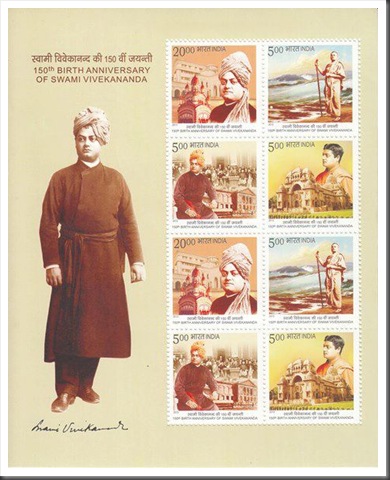
stamp3

எழுமின் விழிமின்

எழுமின் விழிமின் குறிக்கோளை அடையும் வரை தளராது செல்மின் என்ற கடோபநிஷத்தின் வாக்கியத்தை லட்சியமாகக் கொடுத்து ‘அனைவருக்கும் முக்தி’ என்ற லட்சியத்தை உலக மக்களின் முன் வைத்தார் சுவாமிஜி.

“உலக மாந்தர் அனைவரும் முக்தி அடைய உதவுவதற்காக எத்தனை முறை வேண்டுமானாலும் நான் பூமியில் பிறக்கத் தயார்” என்று அறிவித்த அவரது அமிர்த வாக்கியம் மனிதர்களின் உள்ளங்களை எல்லாம் பூரிக்க வைக்கும் கருணை வெள்ளத்தின் அடையாளம் அல்லவா!

stamp2

சுவாமிஜியின் நினைவை அனுதினமும் போற்றி அவர் காட்டிய வழியில் நடப்போம்! உயர்வோம்!! உய்வோம்!!!
******************

Written by my brother S Nagarajan of Bangalore for “முதல் ஓசை” daily:-
Contact swami_48@yahoo.com

stamp1

BASIC QUESTIONS ABOUT TAMILS & HINDUISM

vivek image

Questions in the letter are answered by London swaminathan

Post No.1173; Dated-15th July 2014.

I received the following message by email:-

Letter from PJ

Hi sir,

I am 17 year old kid from a Tamil family,
I was born in ‘K’near Nagapattinam, I moved to France when I was 13.
I was brought up in a typical Tamil-Hindu family, but I was never taught any religious books.

I love Hinduism so I wanted to learn more about it.

So I did some research in the web and I ended up getting confused.
I came across your blogs and read some of your blogs and biography. I don’t know why, I got a feeling that you would answer all my doubts.

In the web I came across those so called Aryan migration theory and out of India theory and I don’t believe Aryan migration and for me out the India theory make more sense.

My questions are:
book

Q1).Are Tamil people really Hindus ?

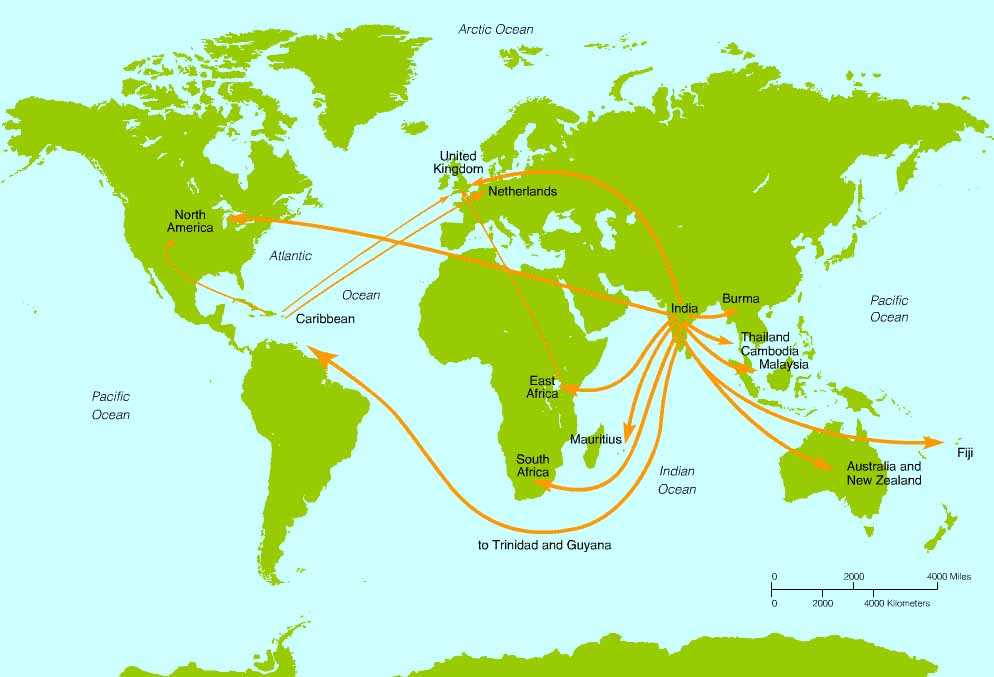
My answer: In today’s world 80 to 90 % of Tamils are Hindus. They live traditionally in Tamil Nadu (India), Sri Lanka, Malaysia, Singapore, South Africa, Mauritius, Seychelles, Fiji, Guyana and for the past thirty years in almost all the countries from North Pole (Norway, Sweden) to South Pole (New Zealand and Australia) because of Sri Lankan ethnic conflict. France has a good population of Tamils from the French ruled territories of Tamil Nadu and from Sri Lanka.
Ancient Tamils were Hindus. Sangam Tamil literature has innumerable references to Hindu Gods, Yaga, Yajna (Fire sacrifices), Vedas, Karma theory, Rebirth, Cremation, Beliefs about 40 Samskaras of the Hindus, Yama and Death, Brahmins, Caste System, Wedding ceremonies and Astrology. I have published over 1000 posts in these blogs in Tamil and English quoting references from the Tamil and Sanskrit literature.

If anyone visits Tamil Nadu and see all the 38,000 temples under the HRCE Department OR read the 27,000+ lines of the Sangam Tamil Literature or the 18,000 Saivite Poems of the Nayanmars and 4000 Vaishnavite poems of the Alvars, their doubts will be cleared.

Sage Agastya is associated with Tamil or Tamil country in ancient Tamil literature and Kalidasa’s works.
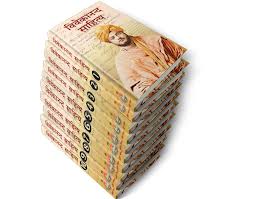
vivek works

Q2). Why are Vedas and Bhagavad-Gita written in Sanskrit ?

Jesus spoke in Hebrew, Mohammed spoke in Arabic, Krishna spoke in Sanskrit, Sambandar spoke in Tamil and Zoroaster spoke in Persian; but the message they delivered is universal love and faith in God. Tomorrow one more saint may come to spread the same message in Esperanto or a language newly developed. What difference a language can make? Tongues may be different but the hearts are one.

God understands all the languages and even the sign language of the deaf and dumb. Lord Shiva invented a new language called SILENCE. He did preach for the four great saints through silence in his Dakshinamurthy form under the Banyan tree. In our own times Ramana Maharishi did this. If you read “The Search in Secret India” by Paul Brunton, you will understand it.
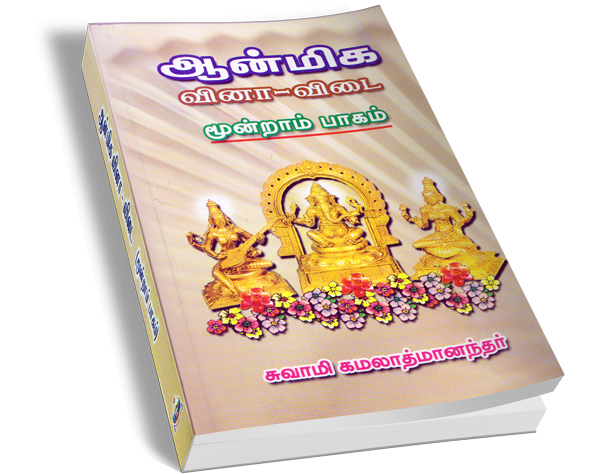
Aanmiga-Vinaa-Vidai-Vol3-Tamil-S

Q3). What is the link between Tamil and Sanskrit ?

Foreign “Scholars” spread a theory about two different language groups -Dravidian and Aryan- which is not correct. It is true that both the languages are different. But Sanskrit is the closest language to Tamil. No other language in the world can come closer to Tamil than Sanskrit. It is not because of geographical proximity. I mean structurally they are closer than other languages. It is a big topic and only linguists can understand. An old poem of Paranjothy Munivar says that Shiva was the one who taught both the languages. Hindus believe that all the languages in India came from Lord Shiva. Both the Tamil and Sanskrit commentators have written so.

Now and then I read that ‘Tamil is closer to Sumerian’, ‘Tamil is connected to Finnish’, ‘Tamil has link with Japanese’ and I used to laugh at the ignorance of those “scholars”. The latest language theory is that you can find similar words between any two languages in the world. When I was working for the BBC WORLD SERVICE between 1987 and 1992, I interviewed Mr.Sathur Sekaran who wrote 140 books connecting Tamil language with all the languages in the world. When I interviewed him on behalf of the BBC Tamil Service (Tamilosai), I politely pointed out the fallacies in his argument. In short I can show similarities, at least superficial/morphological, between any two languages in the world. This is because we all lived under one roof at one time. The tower of Babel story in the Bible is partly true. We have similar stories in the Hindu scriptures in the Yajur Veda.

With regard to Tamil, no one in the present world can speak pure Tamil without Sanskrit. If you ask the names of one’s father, mother, native place, Deities, everything will be in Sanskrit. Even the people who spearheaded Dravidian movements had only Sanskrit names! I have pointed out Tamils have no words for some common words like ‘heart’ and ‘Face’. I have also pointed out that if anyone dares to remove the poems written by Brahmins or references to Brahmins, and all that is Hindu, there wouldn’t be anything left in Sangam Tamil literature. A lot of Sangam Tamil poets have Sanskrit names such as Kesavan, Damodaran, Valmiki, Brahma, Kapila, Parana,Kamakshi, Vishnu Dasan, Kanna dasan. Please read my article “No Brahmins! No Tamil!!” posted in this blog.

Srimad_Bhagavad__4bfd17abd98d4

Q4). When I was small I thought Tamil was derived from Sanskrit but now they say both are different?

A)I have answered this question already. Please see above.
In an island like New Guiea we have over 750 languages. How and Why? If it can happen in an island, in a vast country like India with different climatic conditions, flora and fauna and 4000 year long history, naturally languages will branch out forming new dialects, leading to newer languages. During Sangam period there was no Malayalam in Kerala. Telugu and Kannada had more Tamilized forms at that time. Now we can’t understand one another; why? The natural law is “Change is inevitable. Everything must change”. Tamil won’t be the same after two hundred years. Tamil that which my great grandfather used is not the language I use today.

Q5). I can understand that India is a land of diversity. I keep wondering why some are really white, we should all be brown due to our climate? ( I am brown and I’m proud to be one)

A)This colour of the skin is the one which foreign scholars used to deceive the native people. People who lived in the north had fairer colours because of the cold climate. I also used to wonder how come we changed to brown colour from the African black and how come the white people became white from the African black. The scientific theory is that we all evolved from the Monkeys/Apes in Africa. Scientists say that Mankind originated in Africa. We were only black at that stage. How come one section became white and another remained black. How long would it take for a black race to become white race? How come there are still black and brown animals and birds even in the cold countries where as the people are all white?

One person told me it was albinos that produced the white race. I expect a better answer from the scientists/biologists.
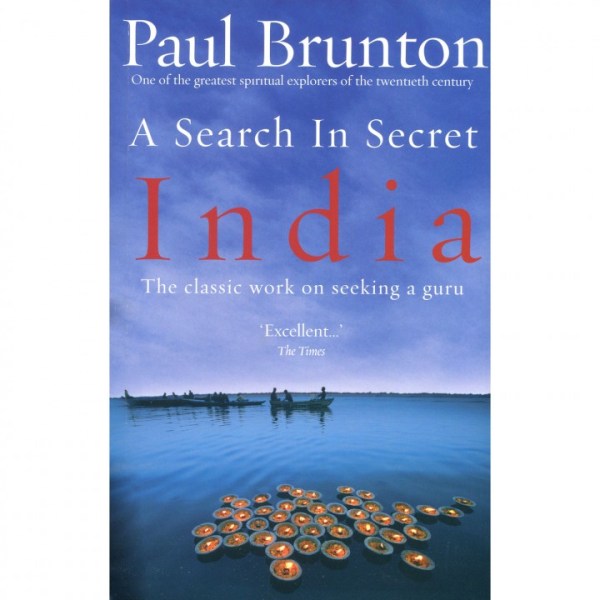
BRUNTON

Regarding the racist theory:

My theory is that Indians went to different parts of the world taking their culture. Foreign “scholars” arbitrarily fixed the meaning of words (e.g ayas=iron), dates for iron and horse, language groups according to their whims and fancies, interpretations as per their imagination etc. Everything can be changed topsy-turvy (ulta) and can be proved right. The Word ‘Dravidian’ did not exist during Vedic period. The world ‘Aryan’ was used with the meaning of ‘cultured, civilized’ and not with any racial connotation. Foreigners deliberately used it with a racial meaning to confuse the Hindus and destroy their identity.

Q6). I can also understand that Hinduism has more holy books, unlike other religions, but is there any holy book of the Tamil s?

A)Holy Books for the Tamils are Thevaram/Tiruvasagam and Divya Prabandham. Even the authors who composed over 14,000 poems said that they are giving the Vedas in Tamil!!!

Even the atheists accept Tirukkural written by Tiruvalluvar. There can’t be a purer Hindu than Tiruvalluvar. Please read two volumes of English commentary of Tirukkural by Dr S M Diaz, I.P.S.,Ph.D
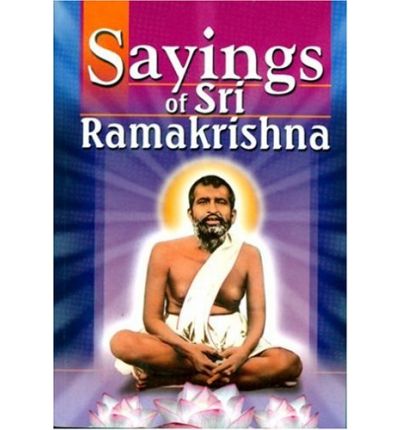
ramki book

7. Why is the Five great epics of Sangam period written by the Jains and Buddhists ?

A)Five Tamil Epics do not belong to Sangam Period; they belong to post Sangam period, may be from 5th century CE to 10th Century CE. We did not get two of the five epics in full. Of the five Tamil epics, Manimegalai is purely Buddhist and Seevaka Chintamani is of the Jains. Silappadikaram, the most popular of the five, is like a Hindu Encyclopaedia. It praised Hindu Gods more than anything else. It is true Jainism is praised by the author. If I have only Tamil books, I will teach Hinduism through this epic than any other book. No rationalist or atheist will touch this book because it is full of “Superstitious Hindu Beliefs”!!!

Q8). Who is Thiruvalluvar ?
I have written under the topic “Who was Tiruvalluvar?” in this blog on24 July 2013. Please read it.

In short, the greatest Tamil Hindu that post Sangam period (fifth century CE) produced was Tiruvalluvar. Even if all the Vedas, Bhagavad Gita, Ramayana and Mahabharata disappear tomorrow, TIRUKKURAL is enough to teach Hinduism. Hindus only can follow the vegetarianism, penance (Tavam=Tapas), Pancha Yajna etc preached in this book. No Muslim, No Christian will be able to follow this. The very structure of the book is Dharma, Artha, Kama and Moksha (Arathu pal, Porutpal and Inpathu Pal; Moksha is discussed in chapters like Tavam etc.in the Arathu Pal)
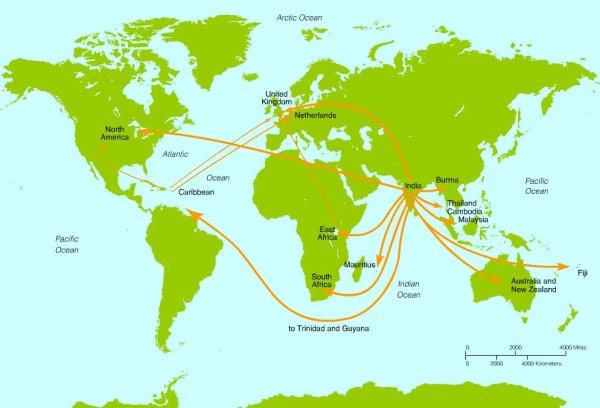
hinduism spread

Q9). To make it more confusing THE CASTE SYSTEM: why was that created? I mean “we all are equal”.

A)In ancient India, it started as ‘division of labour’. Slowly it changed into ‘castes by birth’ system. It divided and sub divided in to hundreds and thousands of castes. Who made it? It is not in any Hindu scripture ( I mean the sub sub sub sub castes). Unless every one touches his heart and say that I would not follow it, it won’t go away. There are two movements in India, RSS and Communist party, where it is practised less.

The equality can be brought only by great people who preach religion. When people aim for higher things in life these petty differences will melt away. We saw it happening in big movements like Satya Sai Baba and Sri Ramakrishna missions.

In no part of the world at any one point of time in History, everyone was treated equal. This has been only in letters, not in spirit. People are talking about an idealistic society where they expected no discrimination against anyone. In the United States, different states have different laws!! If it can happen in one country in our own time, imagine what could have happened in Greece and Rome, Egypt and Babylonia two thousand years ago. Being a Gay or a Lesbian was immoral and illegal in all parts of the world. Now a man can marry a man in some parts of the world and can have all family benefits!! MPs and Prime Ministers, Presidents and Queens (like British queen) are not like you and me!! Some are more equal than others!

I have an MA in history. All the ancient societies had big, big discriminations. I am not justifying caste discriminations. But no politician in India will do away with the caste system. No backward caste or scheduled caste will relinquish their status for the next 100 years! They thrive on this. Go to a backward class man or a scheduled caste woman and preach your equality theory. They will look at you as if you have landed from planet Mars!!
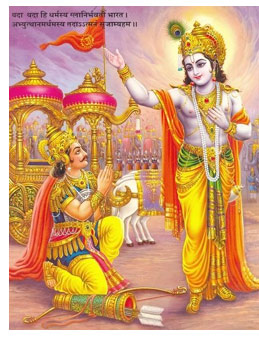
bhagvad-gita

Q10). And finally, is it true that Vedas permit eating meat and it only based on nature.

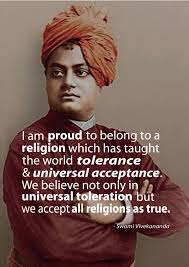
Yes. It is true. They ate meat on certain occasions. If you believe that part of the Vedas and that part of the Puranas, you must believe in everything that they say. They narrate thousands of miracles and you must believe them. Just because some non Hindus or atheists do some propaganda you don’t need to deny or accept it. Take it (the scriptures) as a whole and weigh it. Read more speeches by Swami Vivekananda or Sayings of Sri Ramakrishna or Bhagavad Gita Tamil commentary or Tiruvasagam commentary by Swami Chidbhavannabda. You would not even have asked these questions.

Poor and ignorant Hindus never read anything that is Hindu, but trained only to ask questions. I don’t blame you. This is the trend with the Hindus. It is true we have hundreds of holy books unlike other religions. But read at least ONE BOOK in full and stick to it. Even if you read only Tirukkural and follow it you will be the greatest Hindu.
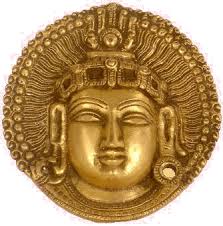
hinduism2

Q). I like Vallalar and Bharathiar a lot and what they say about Hinduism (Santana dharma); why is Murugan and many gods worshiped only by us?

A)If you read Vallalar that is more than enough; He has given the essence of Hinduism. I have already given all the important poems by Vallalar.
If you read Bharatiyar, that is more than enough. He has given the Vedic thoughts in beautiful Tamil poems. Ilango, Vallalar, Valluvar and Bharatiyar are True Tamil Hindus.

Murugan and other Hindu gods are different aspects of ONE GOD. Sri Ramakrishna Paramahamsa says, ‘same gold is used to make different ornaments’ (Every time my wife enters a jewellery shop she admires the beauty of each and everything and urges me to buy one for her! Even if I buy the whole shop she wouldn’t be satisfied! In the same way Hindus have found out that they can enjoy more and more by having varieties).

Sri Ramkrishna says that ‘same sugar and flour are used to make different sweets’ ( Every time I go to India, I ask someone to buy halwa from Madurai Nagapattinam Ney Mittay shop or Tirunelveli Lala Halwa shop and I beg someone to buy Panneer Jhangry. Same flour, same sugar! Why do I long for such petty things? It is the sheer variety. Kalisada says ‘variety is the spice of life!’ Hindus have found out that people at different levels of spiritual progress can be slowly elevated to higher and higher state by various forms of deities, various rituals, festivals, foods and dress codes.)
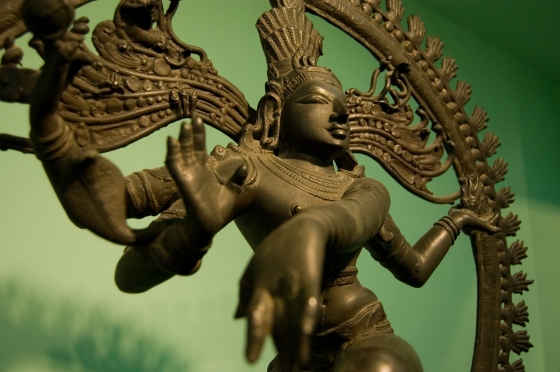
hinduism
Q)Sir,I love our religion I just want to know if we and our ancestors are really part of it or we got converted into it.

A)Kanchi Paramacharaya says that Hindusism is the only religion that has no founder, that has no name (word Hinduism is not in our scriptures). He says that it is the eternal religion (Sanatana Dharma). Its vestiges are found in all parts of the world.

Others were converted to newly founded religions such as Islam and Christianity. What happened to the grandfathers of Buddha, Jesus and Mohammed? Did they go to hell because the new religions were not there? Those who follow the oldest religion in the world still remain as Hindus. Santana Dharma is the oldest religion according to all the famous encyclopaedias.

I hope you will answer me and I will be grateful to you.

A)I have answered most of your questions.

Q)Pls take a look at my source and tell me if they are true I need you help sir.

A)I had a look at some of the You tube videos. I support ‘out of India theory’. Dr BR Ambedkar, Swami Vivekananda, Mahatma Gandhi, Aurobindo, Kanchi Paramacharya, great Tamil scholars U V Samynatahiyer and Bharathi did NOT support Aryan Migration Theory.

Contact swami_48@yahoo.com