விஞ்ஞானம் நிரூபிக்கும் வால்மீகி முனிவர் கூறும் உண்மைகள்! (Post No.3807)

written by S NAGARAJAN


Date:11 April 2017


Time uploaded in London:-  5-44 am


Post No.3807


Pictures are taken from different sources; thanks.


contact: swami_48@yahoo.com


விஞ்ஞானம் மெய்ஞானம்

ஞான ஆலயம் மார்ச் 2017 இதழில் வெளியான கட்டுரை


விஞ்ஞானம் நிரூபிக்கும் வால்மீகி முனிவர் கூறும் உண்மைகள்!


by ச.நாகராஜன்


நாஸா நிரூபிக்கும் சேது


அறிவியல்  முன்னேற முன்னேற பல்வேறு ஆய்வின் முடிவுகள் ஹிந்து மதம் கூறும் தத்துவங்களையும் கொள்கைகளையும் உண்மை என நிரூபித்துக் கொண்டே வருகின்றன.

வால்மீகி தான் இயற்றிய ராமாயணத்தில் உண்மையைத் தவிர வேறொன்றும் உரைக்கவில்லை.


நாஸா எடுத்த சாடலைட் படம் சேது அணை இருப்பதை உறுதி செய்ததை நாம் அறிவோம் (ஞான ஆலயம் டிசம்பர் 2007 இதழில் இந்தக் கட்டுரை ஆசிரியர் எழுதிய கட்டுரையை வாசகர்கள் நினைவு கூரலாம்)


ஜெர்மனியைச் சேர்ந்த வரலாற்று ஆய்வாளர்களான புரபஸர் க்ளாஸ் டி ருல் (Prof Klaus D Ruhl)  மற்றும் அவரது இந்திய சகாவான புரபஸர் விஷாத் திரிபாதி ஆகியோர் ராமர் கட்டிய சேதுவைப் பற்றிய உண்மையை நிரூபிக்கத் தயார் என்று அகில உலக இராமாயண் மாநாட்டில் 2007இல் அறிவித்தனர்.

இராமர் பிறாந்த தேதி


இராமாயணம் நடந்த காலத்தில் ராமர் பிறந்த நேரத்தில் இருந்த பல்வேறு கிரக் நிலைகளை வால்மீகி ரிஷி கூறியிருப்பதை வைத்து ஆராய்ந்து அப்படிப்பட்ட கிரக நிலைகள் கிறிஸ்து பிறப்பதற்கு 5114 ஆண்டுகளுக்கு முன்னர் ஜ்னவரி மாதம் 10ஆம் தேதி அமைந்திருந்ததாக இப்போது பிரபல ஆராய்ச்சியாளர் புஷ்கர் பட்நாகர் கூறுகிறார்.. தி இன்ஸ்டிடியூட் ஃபார் ஸயிண்டிபிக் ரிஸர்ச் ஆன் வேதா என்ற ஆய்வு நிறுவனம் இந்த கணிதத்தைப் போடுவதற்கான  ஒரு விசேஷ மென்பொருளை வடிவமைத்துள்ளது. அதன் உதவி கொண்டு இந்த முடிவை அவர்  கண்டுள்ளார். இதே கிரக நிலைகள் சுழற்சி அடிப்படையில் இதற்கு முன்னர் வரும் போது காலம் இன்னும் பல ஆயிரம் ஆண்டுகளுக்கு முன்னர் உள்ள தேதியைக் காண்பிக்கும் என்பது இன்னும் சில அறிஞர்களின் முடிவு.


196 ராமாயண ஸ்தலங்கள்!


2002 ஆம் ஆண்டில் டாக்டர் ராம் அவதார் சர்மா என்ற ஆய்வாளர் ராமாயணத்துடன் தொடர்பு கொண்ட 196 இடங்களுக்கு நேரில் சென்று ஆய்வு நடத்தி அங்கெல்லாம் இன்றும் கூட ராமாயணம் நடந்ததற்கான சின்னங்கள் இருப்பதை உறுதிப் படுத்தியுள்ளார்.
 

குகனின் வமிசாவளியினர்


டெல்லி பல்கலைக் கழகத்தைச் சேர்ந்த டாக்டர் சௌபே மற்றும் புரபஸர் வி.ஆர்.ராவ் ஆகியோர் இன்னொரு உண்மையைத் தங்கள் ஆய்வின் மூலம் கண்டறிந்துள்ளனர்.மிராஜ்பூர், வாரணாசி,பண்டா மற்றும் அலஹாபாத் ஆகிய இடங்களில் இன்றும் இருந்து வரும் கொல் என்னும் பழங்குடியினர் குகனுடைய வம்சத்தின் வழித்தோன்றல்கள் என்று அவர்கள் கூறுகின்றனர்.இவர்களுடைய மரபணுக்கள் பத்தாயிரம் வருடங்களாக இருந்து வரும் ஒரு குடியினரின் மரபணுக்களாகும் என்ற அவர் கூற்று ஆரியர் இந்தியாவின் மீது படையெடுத்து வநதனர் என்ற ஆரிய-திராவிட வாதத்தைத் தவிடு பொடியாக்குகிறது.


பிரித்தாளும் சூழ்ச்சியில் கை தேர்ந்த ஆங்கிலேய அரசுக்கு உறுதுணையாக இருந்த பல அறிஞர்களின் கட்டுக்கதையான ஆரிய திராவிட வாதம் தற்போதைய பல்வேறு அறிஞர்களின் ஆய்வால் முற்றிலும் கட்டுக்கதை என்பது நிரூபணமாகி விட்டது.


நான்கு தந்தங்கள் கொண்ட யானை உண்மையே
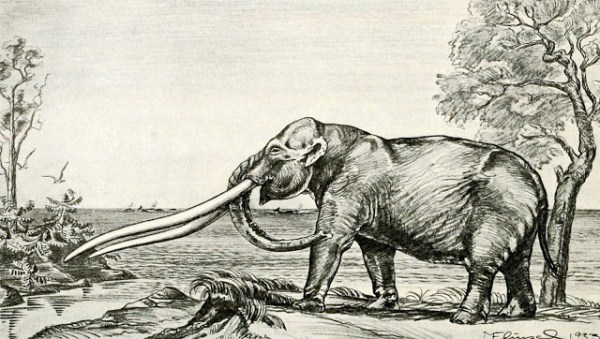
 

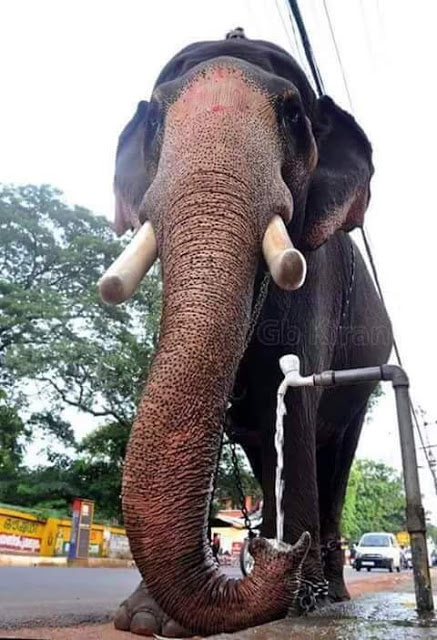
சுந்தர காண்டத்தில் இராவணனின் அரண்மனை நான்கு தந்தங்கள்  கொண்ட யானைகளால் காவல் காக்கப்படுவதை வால்மீகி முனிவர் நான்காவது ஸர்க்கம் 29ஆம் சுலோகத்தில் “வாரணைச்ச சதுர்தந்தை:” என்ற சொற்றொடர் மூலம் குறிப்பிடுகிறார்.

அதே காண்டத்தில் 27ஆம் ஸர்க்கத்தில் வரும் சுலோகம் இது:


ராகவஸ்ச மயா த்ருஷ்டச் சதுர்தந்தம் மஹாகஜம் |

ஆரூட: சைல சங்காஷம் சசார சஹ லக்ஷ்மண: ||


விபீஷணனின் பெண்ணான திரிஜடை, இராவணன் அழிக்கப்பட்டு சீதையுடன் இராமன் சேருவதாகத் தான் கண்ட கனவை சீதையிடம் கூறுகிறாள். அப்போது அவள் கூறும் இந்த சுலோகத்தின் பொருள்: “ராகவர் லக்ஷ்மணரோடு கூடியவராய் நான்கு தந்தங்களை உடைய குன்று போல உள்ள யானையின் மீது ஏறினவராக என்னால் காணப்பட்டார்”


நான்கு தந்தங்கள் கொண்ட யானையே இல்லை; அது கற்பனை என பல “பகுத்தறிவுவாதிகள்” கிண்டலும் கேலியுமாக கூறி வந்ததுண்டு.


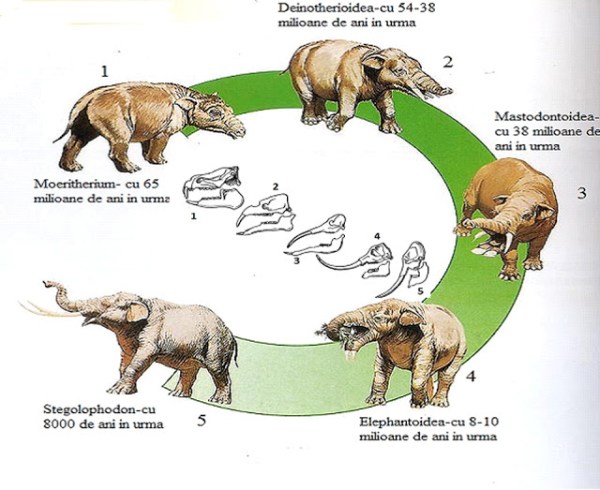
ஆனால் என்கார்டா என்சைக்ளோபீடியா (Encarta Encyclopedia)  என்னும் கலைக்களஞ்சியம் இப்படிப்பட்ட நான்கு தந்தங்கள் கொண்ட யானைகள் 38 மில்லியன் ஆண்டுகளுக்கு முன்னர் இருந்தது என்பதையும் அவற்றின் பெயர்


மஸடோடோண்டாய்டியா (MASTODONTOIDEA) என்றும் குறிப்பிடுகிறது. அந்த இனம் 15 மில்லியன் ஆண்டுகளுக்கு முன்னர் அழிந்து பட்டது என்றும் பின்னர் இரண்டு தந்தங்கள் உடைய யானைகள் தோன்றின என்றும் அந்தக் கலைக் களஞ்சியம் தெரிவிக்கிறது.


ஆய்வுகள் பல நவீன உபகரணங்களுடன் நடத்தப்பட நடத்தப்பட புதிய உண்மைகள் வெளியாகிக் கொண்டே இருக்கின்றன. ஒவ்வொன்றும் வால்மீகி கூறி இருக்கும் ஒவ்வொரு வார்த்தையும் உண்மையே என்பதை நிரூபிக்கின்றன.

சத்தியத்தின் அடிப்படையில் சத்திய நாயகனான ராமனின் சரிதத்தைக் கூறும் வால்மீகி ராமாயணத்தில்,
“ஏகைகமக்ஷரம் ப்ரோக்தம் மஹா பாதக நாசனம்” – அதில் வரும் ஒவ்வொரு எழுத்தும் கூறப்படுகையில் அது மகா பாதகத்தையும் போக்கி விடும் என்று முன்னோர் கூறியது பொருள் படைத்ததல்லவா!

******


Water in the Oldest Scripture in the World- Rig Veda (Post No.3805)

Written by London swaminathan


Date: 10 APRIL 2017


Time uploaded in London:- 18.57


Post No. 3805


Pictures are taken from various sources; thanks.


contact; swami_48@yahoo.com


Hindus praised water as God. All the rivers in India are worshipped as goddesses (except Brahmaputra river which has a masculine name). From the Rig Veda to the latest Bharati, every one praised water or rain.


Following is the oldest hymn on water:

To Apas (water)

Rig Veda ( 10-9)

Metre: various including Gayatri metre

Rishi Sindhudvipa (Indus Valley King)

Son of Ambarisha, Indus Valley Civilization Emperor

(also called Trisiras or Tvastri)

Waters! you who are health-giving

give us energy, so that

we may look on great delight (1)

Give us a share of your most

beneficent sapidity/ strong pleasant flavour

like mothers longing with love (2)


So, gladly do we go with you

to the home for which you make us live,

Waters! Give us progeny (3)


Gracious be divine Waters for

our protection, be they for our drink,

and stream on us bliss and happiness (4)


Sovereigns over precious things,

and Rulers over men, Waters!

we seek healing balm of you. (5)


Within Waters – so Soma has

told me – are all healing balms,

and Agni, benign to all (6)

Waters, come filled with healing balm

for the shielding of my body,

so, may I long see the sun (7)

Wash away, Waters, whatever

sin is in me, what wrong I have done,

what imprecation I have uttered,

and what untruth I have spoken (8)

Today I have sought the Waters,

we have mingled with their essence;

approach me, Agni, with thy power,

and fill me, as such, with brilliance (9)


(Date :– Herman Jacobi dates it to 4500 BCE; Max Muller dates it to a date before 1200 BCE up to 5000 BCE)


This is an amazing hymn on Waters. The Vedic people knew the healing properties of the water; the words healing-giving, beneficent sapidity and healing balm show that the Vedic people recognised the hygienic and curative powers of water.


Soma ,here, means personification of the juice

Agni, here, referring particularly to the heat in water.


Hindus had the science of changing water into  a powerful weapon by some magic spells like the one above; they were able to curse or give boons with water. They used Fire(agni) as a witness to all treaties or agreements and they used Water (Apas) for all the curses, boons and giving donations. We couldn’t see such a thing anywhere in the world. In Sangam Tamil literature, we have lot of references to using water for giving donations; but we have very few references to curses in Post Sangam literature. By that time Hindus forgot the magical powers of waters.

Water is Law: Satapata Brahmana (850 BCE):


The Satapata Brahmana, which the foreigners dated 850 BCE, says

“The waters, they are law; that is why when the earth receives waters regularly, everything is in accord with the law. But when the rain fails, the strong victimise the weak, for the waters, they are law.”


Tamil Veda Tirukkural also emphasized this:

“Even as life on earth cannot sustain without water, virtue too depends ultimately on rain”- Kural 20


The life on earth cannot sustain without water – is said by Kapilar earlier in Natrinai (verse 1) which is at least 2000 old.


Hindus used water as similes and in the proverbs.

If something is not reliable and not permanent they say, “It is written on water”. If something is written and preserved in tact they it is written on written on stone.”

The life’s impermanence is compared to the bubble in the water.


Manu Smrti, the oldest Law book in the world, mention God created water first and the life from it. The word for god is Narayana, one who has water as his abode. (Neer is Indo European and and Found in Nereids in Greek. Neer is also found in tail as Tamil and Sanskrit evolved from the same source according to my research.)

Manu says about water:

A man who gives (gifts) water obtains satisfaction/contentment; a giver of food boundless happiness; a bestower of sesame seeds progeny; and a giver of a lamp, excellent eye sight (Manu 4-229)

When it comes to division of property, they say that a piece of clothing, a carriage, jewellery, cooked food, water women, the means of security and a pasture should not be divided (Manu 9-219)

One should not urinate in water, on roads, on ant hill, on the ruins of a temple, a cowpen or a mound of the dead;one should never emit excrement in water (4-45/46/48)


One should not throw urine, excrement, poison, saliva or impurities in water (4-56)

a man should not shed his semen in water (11-174)

A Brahmin should throw his worn out thread water pot, staff, small animal skin bit, belt into water reciting Vedas (2-64)

A Priest is purified Bywater that reaches up to his heart, a king by water up to his neck, a Vaisya by the water swallowed and a Shudra by water touched on the tip of his lips (2-62)


Manu also speaks of the punishment for stealing or diverting irrigation water in chapters (3 and 9)


–Subham–


Kalidasa’s simile in Tamil ‘Kalitokai’ about Water Purification! (Post No.3775)

Written by London swaminathan


Date: 31 March 2017


Time uploaded in London:- 9-38 am


Post No. 3775


Pictures are taken from various sources; thanks.


contact; swami_48@yahoo.com

Picture: A girl is fetching water from Railway Supply Pipes in Agartala, Tripura

Kalidasa has used over 1300 similes and imageries in his seven works. Out of the 1300 plus similes, Sangam Tamil poets have used over 200 similes; This places Kalidasa before the Sangam Poets i.e. before 2000 years ago. I have shown in my research articles posted here from 2011 that only Sangam poets copied Kalidasa and not vice versa. It is all about Ganges, Himalayas and mythologies. Here is one more example from his drama Malavikagnimitram (Malavika+ Agnimitram). This is repeated verbatim by the Sangam Tamil poet Nallanthuvanar in Kalitokai verse 142)


Here is the reference from Kalidasa’s work:

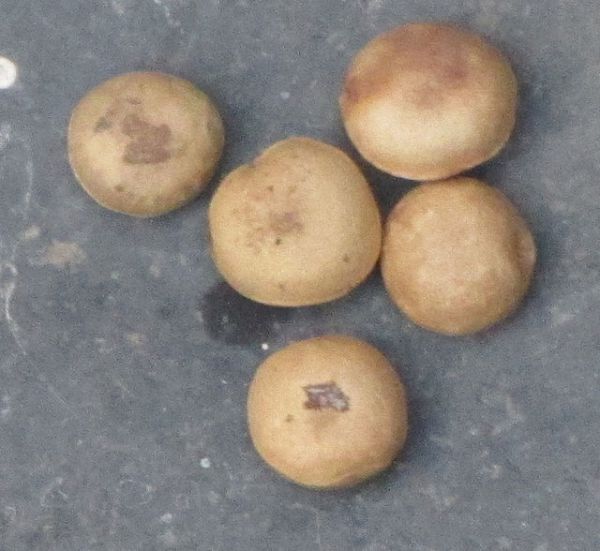
“Just as a stupide person becomes wise by association with the wiser, similarly the turbid water becomes clear by contact with the purifying fruit of the Kataka tree” – Malavikagnimitram II-7


Mandoapyamandataameti samsarhgena vipachchitaha

pankacchidaha phalasyeva nikarshaenavilam payaha


Here is the Tamil poet’s simile:

“ How come she has become bright and composed now! As soon as she embraced that broad chested man, she has become clear like the water that has become crystal clear after adding the Thetraankottai (Clearing nuts)” – Kalitokai, Verse 142;  Nallanthuvanar in Neithal Kali.


Kalitokai is an anthology of Sangam Tamil period. It is dated to first three centuries CE.


Though this water purification method is known to all the villagers from Kanyakumari to Kashmir, the way the two poets used betrays copying. Since Kalidasa is praised sky-high by the whole world for his usage of similes he couldn’t have copied. His similes are found in Gatha Sapta Sati and Sanagm Tamil Literature—over 300 similes! Had Kalidasa copied from all the 300 poets the world would have condemned Kalidasa as a copy cat! Moreover, the way and the place he used the imageries proved that his were the originals. Apart from these things, Kalidasa knew the Northern parts of India and Hindu mythology than the Southern Tamil and GSS Prakrit poets. This places Kalidasa in the first two centuries of BCE. ( For more proof , please read my articles comparing Kalidasa and the Sangam Tamil Literature)


I have given below my previous article on the water purification methods:


Water Purification Techniques in Ancient Indian Literature!


Written by London swaminathan

Research Article No. 1688; Dated 3 March 2015.

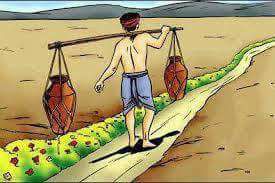
Water is a rare commodity in certain parts of India. There is a proverb in Tamil, “Treat Water as Precious” – “Neeraiyum Seeraadu”. Villagers have to walk miles together just to get some water for their day to day essential use. Even that water is murky or muddy. Indian literature is full of stories about mass migration because of big droughts. We read about the droughts and migration in Vedic literature and later Tamil literature. Indus valley civilization was also affected by acute drought. Mahabharata described the drought in Saraswati River basin and the Brahmins moved out of that area.  have collected all the references to drought in the Vedas and Tamil literature for my research.

Even in the areas where water is available, there were certain periods of acute scarcity. So the ingenious people have found out some techniques for water purification. Usually they dugout water springs in the dry river beds or some places identified by the trees. Varahamihira has dealt with this in a separate chapter in his Brhat Samhita (Please read my earlier article on this topic: How to find water in the desert? Posted on 16th February 2015 in this blog)

Tamil Books on Water purification

Kalitokai is an anthology of Sangam Tamil period. It is dated to first three centuries CE. A confused woman who later became clear and composed is compared to the water that is purified by the clearing nuts (Kalitokai, Neithar Kali by Poet Nallanthuvanar):

“ How come she has become bright and composed now! As soon as she embraced that broad chested man, she has become clear like the water that has become crystal clear after adding the Thetraankottai (Clearing nuts)”

Naladiyar is an anthology of 400 verses in Tamil. It is dated to eighth century CE. One of the verses says about the unlearned people,

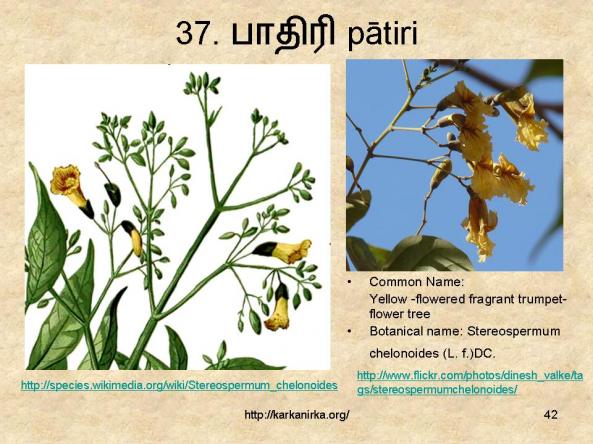
“Though they be unlearned, if they move in the society of the learned, the former will grow wise and learned just as the new earthen pot by its contact with the bright coloured “Paathiri” flower, imparts its fragrance to the water deposited in it”.


जलकतकरेणुन्यायः

jalakatakarenu nyayah

Sanskrit language has got many Nyayas (analogies or similes) and one of them is jala katakarenu nyaya. The nyaya is used to illustrate that dirty things can be purified by mixing with good things. If you mix the kataka powder (Clearing nut powder), then the water gets purified-  is the message. This is used by great people like Sri Sathya Sai baba to bring out the sacrifice one makes in community service. He used to say, “bring out the good in the society and disappear like Kataka powder. Once it purifies the water it dissolves in the water and loses its shape. A social worker also should sacrifice his name, fame and identity when he serves the community like the kataka powder” — is the message, he gives.

KATAKA = Strychnos potatorum = clearing nut tree= Thetra maram in Tamil

It is a common sight in South Indian houses that a corner is allocated for a mud pot. There the mud pot is placed on a heap of river sand and in the water pot they put Vettiver or pathiri flower for fragrant and cool drinking water.


Varahamihira on Water purification

Brhat Samhita – Chapter 54

“A mixture of antimony, and the powder of Bhadramusta ( a kind of grass) bullbs, andropogon, Rajakostaka and myrobalan combined with Kataka nuts should be dropped into a well.

Anjanasusthosariirai: saraajakosathakaamalakachurnai:

Kathakafalasamayukthairyoga kuupe pradhaatavya:

(Kataka = Strychnos potatorum- Clearing Nut tree. Cilliya mara , Tettamaram in Tamil and Malayalam;  Anjana is translated as antimony; but it has other meanings in Sanskrit).

Even the water that is muddy, bitter, saltish, bereft of good taste, and of bad odour, will become clear/pure, of good taste and good smell and endowed with other qualities”.

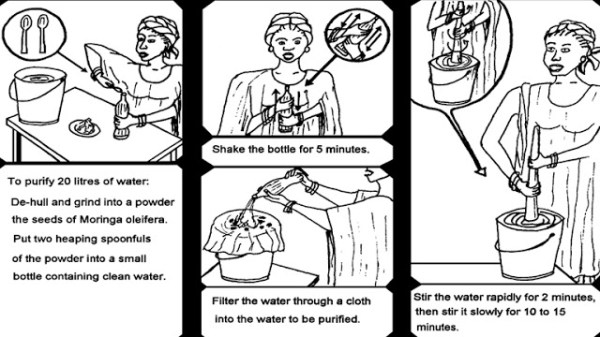
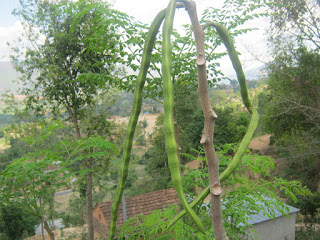
The villagers living in arid areas will be benefitted if they follow ancient scriptures. In African countries they use the seeds of Moringa oleifera, a common vegetable used in South India and Sri Lanka.


–Subham–

Book Review: A Journey towards the Infinite Absolute… (Post No.3752)

Written by S NAGARAJAN


Date: 24 March 2017


Time uploaded in London:-  6-12 am


Post No.3752


Pictures are taken from different sources; thanks.


contact: swami_48@yahoo.com


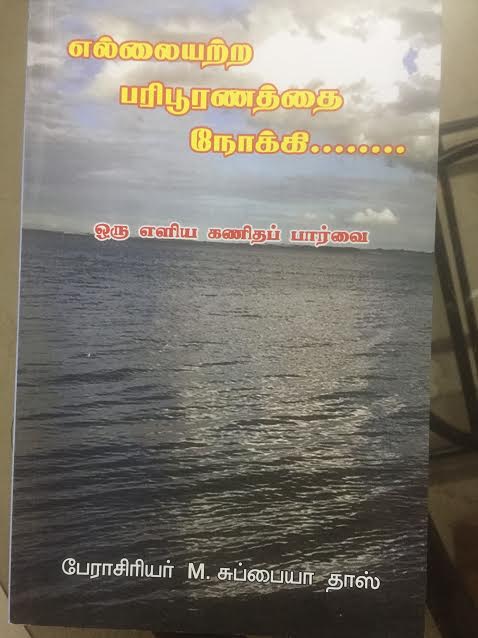
புத்தக மதிப்புரை : எல்லையற்ற பரிபூரணத்தை நோக்கி ..


Book Review

A Journey towards the Infinite Absolute…

Santhanam Nagarajan


The book under review titled,’A Journey towards the Infinite Absolute’ is written in Tamil language by a retired professor of mathematics, Mr M.Subbiah Doss.


Many mathematics professors, scholars have tried successfully in describing and measuring God with their mathematical stick.


We have Swami Ramathirtha who was a great advadic scholar as well as a mathematics professor.

In his eight volumes ‘In the Woods of God Realization’ we have beautiful mathematical analogies explaining God.

The great genius Ramanujan declared that ”An equation for me has no meaning unless it represents a thought of God”.


The present work is also trying to measure the immeasurable things.

The book has three parts with eighteen chapters. Six chapters explain the various principles of spirituality with the help of simple mathematical principles.

Mandukya Upanishad explains the three dimensional world and four dimensional world


The ancient sages have discovered everything with their intuition. Even though the physical heart is on the left side of the body the spiritual heart is in the right side of the body.

When the author emphasize this point we remind ourselves about the saying of Bhagawan Ramana Maharishi, the sage of Arunachala, who also emphasized this point with his own experience.

The fourth dimension is always a curious subject. The great author J.W.Dunne (1875-1949)  has explained it in his world famous book, ’An Experiment with Time’.


The author explains three dimensional world and four dimensional world with many simple sketches.

Man is determined by his karma which in turn is due to his own thoughts. The next birth is determined by his own thoughts of previous birth, this birth and the balance one brings from previous karmas.

The ancient sages by their inner vision have seen the hexagonal symbol in the northern pole of the planet Saturn and arranged to carve it in the Saturn temples roof. Now the spacecraft Cassini sent by Nasa proves this by sending photos of Saturn.


After illustrating the above points the author narrates an incident from Sri Sathya SaiBaba’s divine life. Once a girl met Baba in the river Chitravathi at Puttaparthi, in Andhra Pradesh, India. Baba had taken a statue from the river. That was the statue which was worshipped by the girl’s grandfather. Including this statue everything is being saved as a thought form.

Living within the limits of Space and Time and Cause and Effect is one thing. In order to free from these things one has to choose the spiritual path.


To understand God, mathematics is a helpful tool.


All the above points are all very interesting. In 147 pages the author gives us a complete picture about the hitherto unexplained principles.

A fitting foreword has been given by R.Panneerselvam, a Scholar in his own rights.


Many quotes from Swami Vivekananda, Swami Yogananda, Swami Chitbavananda and Ramakrishna mutt sages makes the book interesting reading.

The book is neatly printed and I congratulate the author for his painstaking research.


புத்தக விவரம்:

எல்லையற்ற பரிபூரணத்தை நோக்கி ..

எம்.சுப்பையாதாஸ்

147 பக்கங்கள்

விலை ரூ 150/

கிடைக்குமிடம்:

THAASU PUBLICATIONS

14, II CROSS STREET, VISWANATHAPURAM

MADURAI 625014  TAMILNADU INDIA

PHONE  0452 2641945

EMAIL : subdoss2014@gmail.com


Summary

The book under review titled,’A Journey towards the Infinite Absolute’ is written in Tamil language by a retired professor mathematics, Mr M.Subbiah Doss. To understand God, mathematics is a helpful tool. Many mathematics professors, scholars have tried successfully in describing and measuring God with their mathematical stick. The author explains three dimensional world and four dimensional world with many simple sketches. Many quotes from Swami Vivekananda,Swami Yogananda, Swami Chitbavananda and Ramakrishna mutt sages makes the book interesting reading.

Keyword

Mathematics is a tool to explain the absolute, three dimension and four dimensional wonders, explained

  1. Nagarajan has written more than 3000 articles in Tamil in 18 magazines and published 52 books. He is revealing Eastern Secret Wisdom through T.V. Programmes, magazine articles, seminars, courses. He has covered various subjects in his wide range of articles which include Mantras, Yantras, Yoga, Meditation, Astrology, Astronomy, Space Science, Science and Spirituality, Hollywood cinema, Women’s progress, Aura, Significance of Colors, Reincarnation, Divine Geometry, Power of Prayer etc. As an ardent seeker of Truth, he has collected scientific experiments on mantras, mind, Auto suggestion etc. He has written many articles on para psychology also. His email id is snagarajans@gmail.com


PANDU- TIGER AMONG MEN! (Post No.3697)

Written by London swaminathan


Date: 6 March 2017


Time uploaded in London:- 10-42 am


Post No. 3697


Pictures are taken from various sources; thanks.


contact; swami_48@yahoo.com


Pandu was the father of Pancha (five) Pandavas in the Mahabharata. He was born to Ambalika and Vyasa. There is a big scientific truth in the birth story of Pandu. If any woman has sex with a man in disgust or hatred, the child born may be handicapped or sick or a baby with a rare syndrome.


Pandu’s older brother was Dhritarashtra who was born blind. Because of brother’s blindness Pandu took over the reins of the Kingdom. He was ruling from Hastinapura. He married Kunti, who chose him as her husband in a Swayamvara ( a princess choses her own husband in an open competition). Later he married Madri from Madra Kingdom. In the olden days, a king could marry as many princesses as possible from neighbouring kingdoms to strengthen the country and save it from invasions.


Kunti, taught Madri the mantra (magic spell) she learnt from Durvasa, a seer, to get children. Through that mantra she invoked the Vedic twins Aswini kumaras and got twins Nakula and Sahadeva. Yudhisthira, Bhima and Arjuna with these twins were called Pancha/Five Pandavas.

Science behind their births!

Vyasa was asked to help Amba and Ambika in getting children, since both had no issues. They couldn’t have children with their husband Vichitraveerya. This was an ancient custom allowed to continue the lineage. So, Vyasa agreed to produce children, but neither he was  a handsome man nor dresses properly. He was more involved in the Vedic studies. When Ambika looked at him she hated him and shut her eyes while she had conjugal bliss with him. Because of her mental state she gave birth to a born blind, Dhritarshtra. Ambalika also was not happy, but had sex with him with a feeling of disgust and the child born to her was pale, Pandu.


So, if someone doesn’t feel comfortable or happy while having sex, that will affect the children born to them physically or mentally. Western country statistics also show that children brought up in an atmosphere of violence, squalor, bad habits such as drink and drugs become anti-social elements.


How Pandu died?

Hunting and gambling were two big vices of Hindu kings. When Pandu went for a hunt in the forest he mistook a rishi and his wife as deer and shot and killed them. At that time they were having sex. Since Rishis (seers) of ancient India wore deer skin, they were easily mistaken. When the seer (Kindama) died, he cursed Pandu that he would also die when he has sex with his wife.


Pandu felt very sad and went to the forest to practice yoga and penance. Both his wives Kunti and Madri accompanied them. As fate, would have it, one day Pandu felt very happy and decided to enjoy conjugal pleasure. He died immediately and Madri also died with him in the funeral pyre, feeling that it was her fault to allow him to come closer to her despite the seer’s curse.

Kunti took care of her children.

Tiger among Men

Pandu did not get much coverage as others, outside the epic. But Mahabharata praised him very much. He had great qualities and he was used as similes in many passages Let us look at a few couplets about Pandu from the epic:-


“This tiger among men comes again, the knower of virtue, the one who protects us in accordance with what is right, as his own relatives”

ayam sa purusa Vyaagrah punar aayaati dharmavit

yo nah svaan iva daayaadaan dharmatah pariraksati ( 1-199-17)


“Pandu, while practising penance in the forest behaved like a brother to some, like a friend to others; the sages, however, protected him like their own son”


kesaam cid abhavad bhraataa

kesaam cid abhavad sakhaa

rsayas tv apare cai ‘nam

putravat paryapaalayan 1-113-3


Pandu, though a Kshatriya (king), he looked like an enlightened sage in the forest: brahma rsi sadrsah paandur – 1-111-4


He is one of the unsung heroes of Mahabharata.


—Subham–


Time is a Mysterious Factor! Let us First Know about Present! (Post No.3643)

Written by S NAGARAJAN


Date: 17 February 2017


Time uploaded in London:-  5-33 am


Post No.3643


Pictures are taken from different sources; thanks.


contact: swami_48@yahoo.com


by S. Nagarajan

How could an object be located in space? While the first three dimensions are used to specify its location in the space, the fourth dimension time, locates its position in time.


Space and time are inseparable. Time could not be easily explained. For our convenience sake we are saying present tense, past tense and future tense.


The events that had happened is past. The events which we are experiencing now is present and what is to come is future.


But these tenses are related. Swami Vivekananda once explained that all the three tenses are mingled together if you see them from an infinite height. You can take whatever tense you want at that level and see what is happening at that moment.


How could this be explained? Very Easy. Imagine one person is travelling in a train. In the compartment, he is able to see through the window up to a distance. The person sitting opposite to him will be able to see the other side through the window up to a distance. The person who is sitting in the compartment next to the engine could see a little more. Suppose if a person travels sitting on the roof of the train he could see everything in front, back, right and left.


Now could anyone say who is exactly in the present tense? Before you say, this moment starts, it ends within a second. The present becomes past in a second and the future becomes the present in that second. So, who is living exactly in the present? And whose vision is the ‘present’ vision among the travelers, the person whom we referred first or the person opposite to him or the one who is in the compartment next to engine or the person who is sitting on the roof top of the train?


For the person who is on the roof top other person’s past is also present. And other person’s future also present. At a higher level all the tenses are mingled.

All are in present tense only but their vision is full or partial depending upon the obstructions or limits.


So our views regarding present tense is only relative! Actually we are all in present tense only.

The train is moving and hence all the persons are in ‘Continuous Present”.

This is exactly the Hindu religion says about time. We are ever in Continuous Present.


Time is ever flowing. Nobody could explain it. Nobody could escape from it also.

Space and time are inseparable. Living in present is desirable. For this, continuous effort is required. Because all are either fuming about the past or hoping about the future.


The Zen Buddhism and Hinduism emphasize to live in present. If you are able to live in the present then nothing could stop your success.

This is one aspect of Time. We will explore further in our future article.

****

Alexey Pavlovich Kulaichev on the Secrets of Sri Yantra (Post No.3637)

Written by S NAGARAJAN


Date: 15 February 2017


Time uploaded in London:-  5-50 am


Post No.3637


Pictures are taken from different sources; thanks.


contact: swami_48@yahoo.com


By S. Nagarajan


In my previous article titled ‘The Secret of Sri Yantra, I have given the basic points about the complicated Divine Geometry of Sri Yantra.

In this article we will see the Yantra as per famous scientist Alexy Pavlovich Kulaichev’s perspective views.


He made a thorough research on Sri Yantra in 1987 and published his paper in Russian language. This was endorsed duly by a referee as per customary practice. The paper attracted worldwide response and caused a most lively interest from readers and received more than a hundred responses. Today his paper is considered to be one of the best scientific paper on the complicated Divine Geometry.


He has drawn Sri Chakra as per the stipulated rules and three more similar yantras were also drawn for comparing with the original.


Volunteers were asked to fix their attention for one minute at chosen parts of the test pictures. There were three test pictures along with the real one. 1) A coloured picture of Sri Yantra 2) A coloured drawing produced by a random intermixing of the Sri Yantra elements, that is to say, a  pseudoyantra 3) A black and white picture with concentric drawn according to the levels of the Sri Yantra circles. 4) A set of black rays on white background intersected in the common centre.


The persons selected for these experiments had no practice in relaxation and meditation techniques. They were not informed about either the aim of the experiments or the significance of the experiments.

The results were astonishing. The reaction to the original Sri Chakra was unique. Those who concentrated that felt tranquil effect. During gazing the alpha-rhythm appeared in the EEG more quickly as compared to while gazing at the other pictures. It was observed that the Yantra effectively changes the basic psychophysiological state of the person and ensures relaxation and peacefulness. While the original one even cures the psychological defects the pseudo yantras could not effect the same cure.


After publishing the first paper, one more paper on its mathematical properties was also published after twelve years by Kulaichev.


A very high complicated explanation with formulas put forth in that paper could be understood by only   mathematical experts.

The base angle of Sri Yantra is 51.5032 degrees and the base angle of Great Pyramid of Gizeh in Egypt is also 51.5032.  Very many such never ending wonders can be enumerated.


There are negative energies around us. These are stumbling blocks to achieve greater success, peach, health, wealth. Once the Sri Yantra is worshiped with concentration, all the negative energies are driven away automatically ensuring peace, health, wealth etc.


This secret was found out by the ancient Hindu Sages and they advised the worship of Sri Yantra. Now modern day scientists are also agreeing with the views of the sages after conducting their scientific experiments.

Those who have a high mathematical background and are interested in knowing more about the secrets could read the original paper of Alexey Kulaichev.

****


Warning! Your Xerox may also be reading this article right now in Parallel Universe! (Post No.3613)

Written by S NAGARAJAN


Date: 7 February 2017


Time uploaded in London:-  6-50 am


Post No.3613


Pictures are taken from different sources; thanks.


contact: swami_48@yahoo.com


  1. Nagarajan


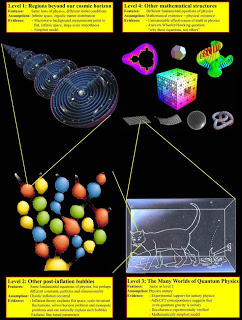
Warning! When you are reading this article, your Xerox may also be reading this article in Parallel Universe. It is not a joke. The great scientist Max Tegmark exactly starts his article in Scientific

 
American May 2003 issue with these words only.

“Is there a copy of you reading this article? A person who is not you but who lives on a planet called Earth with misty mountains, fertile fields and sprawling cities, in a Solar system with eight other planets? The life of this person has been identical to yours in every respect” – These are his exact words.


Is there a Parallel Universe? The theory ‘Nothing Dies’ has been proposed long back.


Take the Hindu Scriptures. Krishna studied as per the age old system staying in his Guru Sandeepany’s hut along with other students. Once the stipulated period was over, the parting day arrived. Krishna wanted to offer ‘Guru Dakshina’ meaning offerings to the Master. But the great saint told him no such thing is required. But the saint’s wife who stood by the side of him was looking sad. Krishna asked the reason. She told Him that her only son was met with untimely death at the age of five and whether Krishna could bring him back. Krishna was pleased very much. He had an opportunity to pay his debt back to the great guru. He immediately went out and after some time brought back the saint’s son. The child was exactly the same boy when died.


Sandeepany and his wife praised Krishna for achieving this impossible task.

Now let us think for a moment, Lord Krishna’s extraordinary feat. How could He bring a dead boy? Where was the boy with flesh and blood? The answer which was not possible hitherto  is possible now with ‘Parallel Universe’ theory.


Yes, He went to a parallel Universe and brought the identical person from there.

Same explanation could be given when Saint Gnanasambandar brought back the young girl named Poombavai in Mylapore, Chennai India. When asked by him, where was Poombavai, the girl’s father wept and told him that she was dead. Gnanasamandar immediately brought and spread the remainings of the girl and sung ten verses. On completing the last verse, Poombavai came alive. Everybody was wonderstruck. They danced with immense joy.


Where was the dead Poombavai all along and how was she brought back?

The answer lies in the new scientific finding – Parallel universe!

The ten verses are inscribed in the outer wall of the Kapaleeswarar Temple in Mylapore, Chennai, India. Even today all the devotees are reciting these ten verses with great devotion.


This new theory explains the impossible happenings recorded in the Hindu history.

What is parallel universe and who first proposed this theory? Hugh Everett was the first scientist who proposed this theory of multiple universe.

In the next article we may study this great theory in detail!

***

The Secret of Sri Yantra (Post No.3571)

Written by S NAGARAJAN


Date: 24 January 2017


Time uploaded in London:-  7-26 am


Post No.3571


Pictures are taken from different sources; thanks.


Contact: swami_48@yahoo.com


Santhanam Nagarajan


Yantra can be simply explained as a divine geometry. There are many yantras. The most powerful yantra is called as Sri Yantra. It is also called as Sri Chakra.

This has been worshipped in a specified manner from time immemorial in India. This is a symbol of both the Universe and its cause.

Sir John Woodroffe (1865-1936) in his book, Shakti and Shakta has explained it in detail thus:

It is composed of two sets of Triangles. One set is composed of four male or Shiva triangles called Shrikanthas denoting four aspects of evolved or limited Consciousness-Power, and the five female or Shakti trainagles denote the five vital functions, the five senses of knowledge, the five senses of action, and the five subtle and the five gross forms of matter.

These two sets of triangles are superimposed to show the union of Shiva and Shakti. As so united they make the figure within the eight lotus petals in the full Yantra. Outside these eight lotuses there are sixteen other lotuses. There are some more lines which is called as Bhupura. It serves as a fence.

The Sri Yantra should not be hanged on a wall. It must be kept flat or horizontal to the ground and must be worshipped daily with due offerings. It should not be drawn on ground, wall, or plank.

Even there is a prescribed way to draw the Yantra to the correct proportion.

Sri Chakra drawn on a plate, foil or disc of gold, silver, copper or any other material can be worn on person as talisman.

Sri Chakra can be worshipped by one and all irrespective of religion, caste or creed, sex or age, young or old, high or low, the learned or ignorant and the rich or poor.

The secret of Sri Yantra worship is that It will bestow wealth, health and above all salvation.

We may find Srichakra in all states of India, namely Andhra Pradesh, Assam, Gujarat, Himachal Pradesh, Kerala, Karnataka, Madya Pradesh, Pondicherry, Tamilnadu, Uttar Pradesh etc.


Swami Pranavananda has visited almost all the places where Sri Yantra has been installed. He has given details of one hundred and eighty places in detail in his fantastic book titled ‘A Treatise on Sricakra’

It is interesting to note that Sankara the great master of advaita visited Kashmir and built a temple there on a hillock. He has installed one Srichakra also there after which the capital of Kashmir was named Srinagara another name of Srichakra.

Knowing the full details of all the one hundred and eighty places where these capsules of cosmic energy were installed will inspire each and every one.

Whoever interested in Sri Yantra should also read the findings of the scientist Alexi Kulaichev.

In my next article I will explain the scientific findings as well as the Scriptures version

***********                                                                                                                                                                          Note: This article first appeared in http://www.ezinearticles.com  on 22-1-2017

Who invented Camouflage Technique? (Post No.3569)

Written by London swaminathan


Date: 23 January 2017


Time uploaded in London:- 10-37 am


Post No.3569


Pictures are taken from different sources; thanks.


contact: swami_48@yahoo.com


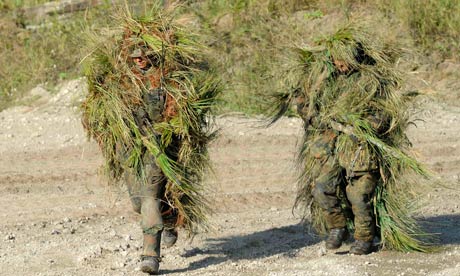
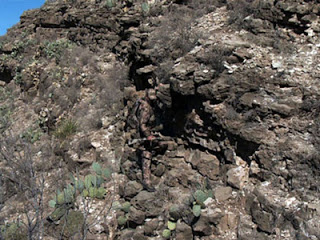
Hindus invented the Camouflage technique and taught the world. As keen observers of animals, they watched them  and used their camouflage wherever necessary. Colour changing chameleon and crocodile are part of their literature and proverbs.

Camouflage means colours or structures that allow an animal or structures to blend with its surroundings to avoid detection by others. Camouflage can take the form of matching the background colours. It is widely used in military as a technique disguising either an equipment, troops or a position in order to conceal them from an enemy- Hutchinson Encyclopaedia


Aristotle (Born in 384 BCE) referred to it. But We have older references in our literature. The greatest poet of India Kalidasa (First or Second Century BCE) has referred to it in at least two places in his Raghuvamsa. Let us look at it :


ग्रथितमौलिरसौ वनमालया तरुपलाशसवर्णतनुच्छदः।
तुरगवल्गनचञ्चलकुण्डलो विरुरुचे रुरुचेष्टितभुमिषु॥ ९-५१

grathitamaulirasau vanamālayā tarupalāśasavarṇatanucchadaḥ |
turagavalganacañcalakuṇḍalo viruruce ruruceṣṭitabhumiṣu || 9-51

grathitamaulirasau vanamAlayA tarupalAshasavarNatanucChadaH |


9-51. vana-mAlayA grathita mauliH = with garden, creepers, intertwined, headgear; taru palAsha sa-varNa tanu cChadaH= trees, leaves, equalling, body, covered – hisbodycovered  with agarment  having the colour of theleavesof trees;  turaga valgana ca~ncala kuNDalaH= by horses, galloping, moving, eardrops – one who has such ear-ornaments;  asau= he that Dasharatha;  ruru-ceShTita-bhumiShu= black-striped antelopes, moving, in such places;  vi-ruruce = shone forth.

This King Dasharatha camouflaged with his headgear tied up with a string of wild flowers and leaves,his body covered with a garment having the colour of the leaves of trees, and while his earrings moving about by the galloping of his horse, shone forth on the hunting grounds frequented by the ruru antelopes. [9-51]

–sanscritdocuments.com

Though Kalidasa came after Aristotle, he said that Dasaratha adopted this technique and we knew for sure that Dasaratha lived thousands of years before Aristotle.


Kalidasa also spoke about Animal Camouflage in another place:


Like the crocodile merges with its surroundings and waits to attack its prey, Aja’s enemies gave him prizes merging with the happy atmosphere, but was waiting to attack him.

लिङ्गैर्मुदः संवृतविक्रियास्ते ह्रदाः प्रसन्ना इव गूढनक्राः।
वैदर्भमामन्त्र्य ययुस्तदीयाम् प्रत्यर्प्य पूजामुपदाछलेन॥ ७-३०

liṅgairmudaḥ saṁvṛtavikriyāste hradāḥ
prasannā iva gūḍhanakrāḥ |
vaidarbhamāmantrya yayustadīyām
pratyarpya pūjāmupadāchalena || 7-30

li~NgairmudaH sa.nvR^itavikriyaaste hradaaH
prasannaa iva guuDhanakraaH |
vaidarbhamaamantrya yayustadiiyaam
pratyarpya puujaamupadaaChalena || 7-30

7-30. mudaH li~NgaiH= smiles, [as an outward] mark – hence with pseudo smiles; sa.nvR^ita vikriyaaH= concealed, change of feeling – wrath; prasannaa= [outwardly] unruffled – lake; guuDha nakraaH= with hidden, alligators; hradaaH iva = lake, as with; [sthitA= those kings who are there]; te= those kings; vaidarbham aamantrya= from king of Vidarbha, taking leave; tadiiyaam puujaam= his – Bhoja’s, hospitality by presents and gifts etc; upadaaChalena= by return gifts; pratyarpya= by requiting; yayuH= went away.

As with a lake hiding alligators under its serene sheet of waters, those suitor-princes concealing their irritation with feigned expressions of joy, bade farewell to the Lord of Vidarbha and went away, but only after having requited the worth of honour done to them, in the pretext of wedding presents. [7-30]


1cb16-horsegaits_med_hr

Gaits of Horses

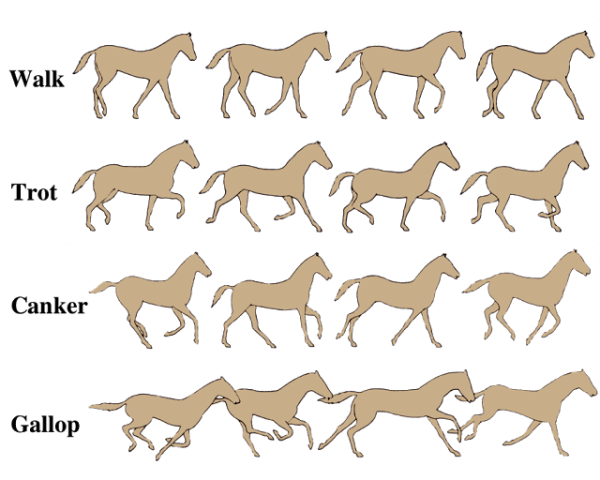
In the first verse (quoted above) Kalidasa (Rv 9-51) used beautiful words to describe the gait of Dasaratha’s horse: Turaga Valgana Sanchala Kundala. Valgana is one of the five gaits of horse. Horse and cow are biggest contribution of Hindus to the civilization. Both figured in the Rig Veda, the oldest scripture in the world (dated between 6000 BCE and 1500 BCE). Latest discoveries show that horse and rhino originated in India illions of years ago. Hindus domesticated themand trained the entire world.Hindu Yakshas (Hyskos) took it to Egypt and from where It spread to other civilised parts of the world. Kikkuli’s training Horse training manual in Sanskrit was discovered in Turkey. It is dated 1300 BCE.


Following couplets show that Hindus were well advanced in the Horse training. The very word Horse came from Sanskrit Hrasva=Asva. Since Indian horse has different number of ribs, which is clearly mentioned in the Rig Veda, the Aryan migration was also thrown into dustbin by the latest research.


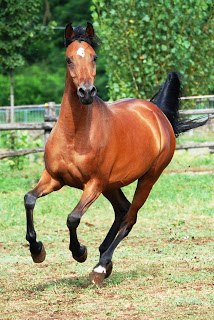
ed4ae-galloping_arabian_front_view_stock_by_folipoo-d4v84dz

Asvagati

Aaskanditam – Leaping

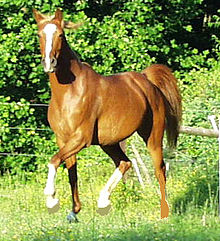
Dhoritakam – Trot

Recitam -Canter

Valgitam – Space

Plutam – Caper

asskanditam dhoritakam recitam valgitam plutam gatayo amuuh pancha dhaara  – Amarakosham 2-8-48


Asvakrama (Training of Horse)

Mandala – circular

Caturasra – square

Gomutra – cow urine shaped

Ardhacandra- Crescent shaped

Naagapaasa – Snake shaped


mandalam caturasranca gomutrancardhacandrakam

nagapasakramenaiva bramayet katapanchakam

-Vasishta Dhanurveda Samhita page 72

e95ca-220px-trot

Asva Types in Mahabharata

Saibya; Sugriiva, Meghapuspa, Balaahaka


vajibhih saibyasugrivameghapuspabalahakaih

snatah sampadayamasuh sampannaih sarvasampada- M.Bh.(Udyogaparva 4-21)


–Encyclopaedia of Numerals, Vol.1, Kuppuswami Sastri Research Institue, Chennai, 600004, Year 2011

–subham–