அருணகிரிநாதருடன் 60 வினாடி பேட்டி


(கேள்விகள் கற்பனை, பதில்கள் திருப்புகழ் பாடல்களிலிருந்து; —ச. சுவாமிநாதன்)

அன்பரே, வணக்கம். நீர் ஒவ்வொரு திருப்புகழிலும் முருகப் பெருமானை வெவ்வேறு விதமாக வேண்டுவது என்ன?


“வாராய் மனக் கவலை தீராய் நினைத் தொழுது

வாரேன் எனக்கெதிர் முன் வரவேணும்”

“இருநிலம் மீதில் எளியனும் வாழ எனது முன்னோடி வரவேணும்”

“உன் புகழே பாடி நான் இனி

அன்புடன் ஆசார பூசை செய்து

உய்ந்திட வீணால் படாது அருள் புரிவாயே”

“அறிவாகமும் பெருக இடரானதும் தொலைய

அருள் ஞான இன்பமது புரிவாயே”


நீங்கள் இந்துஸ்தானி உருது மொழி சொற்களைக் கூட

பயன்படுத்த அஞ்சுவதில்லையாமே?

அவமாயை கொண்டு உலகில் விருதா அலைந்து உழலும்

அடியேனை அஞ்சல் என வரவேணும்”

நீங்கள் ஒரு மருத்துவரா?அழகாக எல்லா வியாதிகள் பெயர்களையும் பாடலில் அடுக்கி விட்டீர்களே?

“ இருமலும் ரோக முயலகன் வாத

எரிகுண நாசி        விடமே நீ

நீரிழிவு விடாத தலை வலி சோகை

எழு கள மாலை         இவையோடே

பெரு வயிறு ஈளை எரி குலை சூலை

பெரு வலி வேறு உள நோய்கள்


சரி தேனினும் இனிய தமிழ் பற்றி என்ன பாடினீர்கள்?

இரவு பகல் பல காலும் இயல் இசை முத்தமிழ் கூறித்

திரம் அதனைத் தெளிவாகத் திருவருளைத் தருவாயே”

“அரு மறை தமிழ் நூல் அடைவே

தெரிந்துரைக்கும் புலவோனே”

“வளமொடு செந்தமிழ் உரை செய அன்பரும்

மகிழ வரங்களும் அருள்வாயே”


நான் காவி உடை அணிந்து ஒரு மடத்தில் சேரலாம் என்று யோசித்து வருகிறேன். உங்கள் அறிவுரை என்ன? –மழித்தலும் நீட்டலும் வேண்டா என்று வள்ளுவர் கூறுகிறாரே.

காவி உடுத்தும் தாழ் சடை வைத்தும்

காடுகள் புக்கும் தடுமாறிக்

காய் கனி துய்த்தும் காயம் ஒறுத்தும்

காசினி முற்றும் திரியாதே.


அதிசயம் அநேகமுற்ற பழனி மலை” என்று ஒரு அடை மொழி போட்டீர்கள். அங்கே என்ன அதிசயம் இருக்கிறது?

செபமாலை தந்த சற்குணநாதா

திரு ஆவினன் குடி பெருமாளே.


ஓஹோ, அங்குதான் முருகன் உங்கள் கையில் உமக்கு சபமாலை தந்தாரா? நீர் அதிர்ஷ்ட சாலிதான். திருப்புகழைப் பழித்தால்………..

சிரிப்பவர் தமக்கும் பழிப்பவர் தமக்கும்

திருப்புகழ் நெருப்பு என்று அறிவோம் யாம்


ஒரு பாட்டில் நேர்மையில்லாதோர் யார் யார் என்று நீங்கள் சொன்னதாக ஞாபகம்?

“பஞ்ச பாதகன் பாவி மூடன் வெகு

வஞ்ச லோபியன் சூது கொலைகாரன்

பண்கொளாதவன் பாவ கடல் ஊடு நுழை பவுஷாசை

பங்கன் மோதியம் பாழ் நரகில் வீணின் விழ

பெண்டிர், வீடு பொன் தேடி நொடி மீதில் மறை

பஞ்ச மாமலம் பாசமொடு கூடி வெகு சதிகாரர்”

முலை குலுக்கிகள் கபடிகள் வடி புழுக்கைகள் அசடிகள்

முறை மசக்கிகள் திருடிகள் மத வேணூல்

மொழி பசப்பிகள் விகடிகள் அழு மனத்திகள் தகு நகை

முக மினுக்கிகள் கசடிகள் இடையே சூழ்

கலை நெகிழ்த்திகள் இளைஞர்கள் பொருள் பறித்த மளியின் மிசை

கனி இதழ்ச் சுருள் ஒரு பாதி”


அப்பப்பா, திருப்புகழில் இப்படி வசை மாரி இருக்கும் என்று யாரும் எண்ணிக் கூட பார்க்கமாட்டார்கள்.

முருகனைத் திட்டினாலும் தமிழில் திட்டினால் பலன் உண்டாமே?

தமிழால் வைதாரையும் வாழவைப்பவன் (கந்தர் அலங்காரம் 22)


திருஞான சம்பந்தரைப் பல பாடல்களில் புகழ்ந்துள்ளீர்களே?

கதிர்காம திருப்புகழில் அவரை முருகன் என்றும் கூறீனீர்களா?

“வழுதி கூன் நிமிர்த்த பெருமாளே”

 “புமியதனிற் ப்ரபுவான

புகலியில் வித்தகர் போல

அமிர்த கவித் தொடை பாட

அடிமைதனக்கு அருள்வாயே”


குழந்தைச் செல்வம் பெற ஒரு திருப்புகழ் இருக்கிறதாமே. முதல் சில அடிகளை மட்டும் சொல்லுங்களேன்

செகமாயை உற்றென் அகவாழ்வில் வைத்த

திரு மாது கெர்ப்பம் உடலூறித்

தெசமாத முற்றி வடிவாய் நிலத்தில்

திரமாய் அளித்த பொருளாகி


கடைசியாக ஒரு கேள்வி. தேவியர் பெயர்களை எல்லாம் அடுக்கி ஒரு பாடல் பாடினீர்களா?

குமரி காளி வராகி மகேசுரி

கவுரி மோடி சுராரி நிராபரி

கொடிய சூலி சுடாரணி யாமளி      மகமாயி

குறளுரூப முராரி சகோதரி

உலகதாரி உதாரி பராபரி

குரு பராரி விகாரி நமோகரி         அபிராமி

சமர நீலி புராரி தனாயகி

மலை குமாரி கபாலின னாரணி

சலில மாரி  சிவாய மனோகரி    பரையோகி

சவுரி வீரி முநீர் விட போஜனி

திகிரி மேவுகை யாளி செயாளொரு

சகல வேதமுமாயினை தாய் உமை அருள் பாலா.


சந்தக் கவி புலவரே, நன்றி, நன்றி.


மாணிக்கவாசகருடன் 60 வினாடி பேட்டி

கேள்விகள் ச. சுவாமிநாதனின் கற்பனை, பதில்கள் உண்மை)

திருவாசகத்துக்கு உருகார் ஒரு வாசகத்துக்கும் உருகார் என்று உலகமே உம் புகழ் பாடுகிறது. நீவீர் வணங்கும் தெய்வம்?

“தென் நாட்டுடைய சிவனே போற்றி

எந் நாட்டவர்க்கும் இறைவா போற்றி”

“நமச்சிவாய வாழ்க நாதந்தாள் வாழ்க

இமைப் பொழுதும் என் நெஞ்சின் நீங்காதான் தாள் வாழ்க”


கேள்வி: அந்த இறைவன் எங்கே இருக்கிறான்?

வான் ஆகி மண் ஆகி வளி ஆகி ஒளி ஆகி

ஊன் ஆகி உயிர் ஆகி உண்மையுமாய் இன்மையுமாய்க்

கோன் ஆகி யான் எனது என்று அவர் அவரைக் கூத்தாட்டு

வான் ஆகி நின்றாயை என் சொல்லி வாழ்த்துவனே


கேள்வி: முதல் மூன்று ஆழ்வ்வாரை நினைவுபடுத்துமாறு

ஒரு பாடல் பாடினீர்களா?

பூ(த)த்தாரும் பொய்கைப் புனல் இதுவே யெனக் கருதிப்

பேய்த் தேர் முகக்குறும் பேதை குணமாகாமே.


கேள்வி: கடவுள் நம் பாவங்களை மன்னித்து மேலும் ஒரு வாய்ப்பு தருவாரா? நீங்கள் கூட அரசாங்க பணத்தை எடுத்து குதிரை வாங்காமல் கோவில் கட்டியதும் ஒரு குற்றம் தானே?

யானே பொய் என் நெஞ்சும் பொய் என் அன்பும் பொய் ஆனால்

வினையேன் அழுதால் உன்னைப் பெறலாமே

தேனே அமுதே கரும்பின் தெளிவே தித்திக்கும்

மானே அருளாய்  அடியேன் உனை வந்துறுமாறே


கேள்வி: இறைவன் கருணைக் கடலா?

“கல்லைப் பிசைந்து கனி ஆக்கி, தன் கருணை வெள்ளத்து

அழுத்தி வினை கடிந்த வேதியன்”

பால் நினைந்தூட்டும் தாயினும் சாலப் பரிந்து

பாவியேனுடைய ஊனினை உருக்கி உள் ஓளி பெருக்கி

உலப்பிலா ஆனந்தமாய்த் தேனினைச் சொறிந்து


கேள்வி: உங்கள் பாட்டில் மாபெரும் வெடிப்பு BIG BANG பற்றியும் பாடியிருப்பதாகக் கூறுகிறார்களே

அண்டப் பகுதியின் உண்டைப் பிறக்கும்

அளப்பரும் தன்மை வளப்பெருங் காட்சி

ஒன்றனுக்கொன்று நின்றெழில் பகரின்

நூற்றொரு கோடியின்  மேற்பட விரிந்தன


கேள்வி: மதுரையில் உமக்காக சிவன் பிட்டுக்கு மண் சுமந்து அடிவாங்கினாராமே?

கண் சுமந்த நெற்றிக் கடவுள் கலி மதுரை

மண் சுமந்து கூலி கொண்டக் கோவான் மொத்துண்டு

புண் சுமந்த பொன் மேனி பாடுதுங் காண் அம்மானாய்


கேள்வி: பாரதியார் கூட உம்மைப் பார்த்துத்தான் பாரத மாதா பள்ளி எழுச்சி பாடினாரோ?

இன்னிசை வீணையர் யாழினர்  ஒருபால்

இருக்கொடு தோத்திரம் இயம்பினர் ஒருபால்

துன்னிய பிணை மலர்க் கயினர் ஒருபால்

 தொழுகையர் அழுகையர் துவள்கையர் ஒருபால்

சென்னியில் அஞ்சலி கூப்பினர் ஒருபால்

திருப்பெருந்துறையுறை சிவபெருமானே

என்னையும் ஆண்டு கொண்டு இன்னருள் புரியும்

எம் பெருமான் பள்ளி எழுந்தருளாயே


கேள்வி: ஒரு பாட்டில் இறைவனையே ஏமாளி என்று பாடிவிட்டீரே!

தந்தது உன் தன்னை; கொண்டது என் தன்னை;

சங்கரா! யார் கொலோ சதுரர்?

அந்தம் ஒன்றில்லா ஆனந்தம் பெற்றேன்

யாது நீ பெற்றது ஒன்று என்பால்?

கேள்வி: நாத்திகம் பேசி நாத்தழும்பு ஏறியதாக நாத்திகர்களைச் சாடிய உமக்காக நரிகளைக் கூட சிவ பெருமான் பரிகள் (குதிரை) ஆக்கினாராமே?

“நரியைக் குதிரையாக்கிய நன்மையும்

ஆண்டு கொண்டருள அழகுறு திருவடி

பாண்டியன் தனக்கு பரி மா விற்று”


கேள்வி: மனிதனாகப் பிறப்பது மிகவும் அரிதாமே?

புல்லாகிப் பூடாய்ப் புழுவாய் மரமாகிப்

பல் விருகமாகிப் பறவையாய் பாம்பாகிப்

கல்லாய் மனிதராய்ப் பேயாய்க் கணங்களாய்

வல் அசுரராகி முனிவராய்த் தேவராய்”


கேள்வி: கடவுளைப் போற்ற நீங்கள் அழகான சொற்களை பயன் படுத்துவதாக

கேள்விப்பட்டோம்:

ஏகன் ,அனேகன், பிறப்பறுக்கும் பிஞ்ஞகன்றன்,தேனார் அமுது, ஆரியன், போக்கும் வரவும் இல்லா புண்ணியன்,, சொல்லற்கரியான், பெம்மான், பெண் சுமந்த பாகத்தன்,ஒப்பிலாமணி,அன்பினில் விளைந்த ஆரமுது,காண்பரிய பேரொளி, நுண்ணர்வு,ஆற்றின்ப வெள்ளமே,சுடரொளி,மெய்யன்,விடைப் பாகன், ஐயன், பெருங்கருணைப் பேராறு, காவலன், தில்லை கூத்தன், தென் பாண்டி நாட்டான்.

“ஒரு நாமம் ஓர் உருவம் ஒன்றும் இல்லார்க்கு ஆயிரம்

திரு நாமம் பாடி நாம் தெள்ளேணம் கொட்டாமோ”

முன்னைப் பழம் பொருட்கு முன்னைப் பழம் பொருளே

பின்னைப் புதுமைக்கும் பேர்த்தும் அப்பெற்றியனே”


கேள்வி: நன்றாகத்தான் இருக்கிறது.OLDER THAN THE OLDEST NEWER THAN THE NEWEST. “இயம் சீதா மம சுதா” போன்ற கல்யாண மந்திரங்களைக் கூட பாட்டில் பாடியிருக்கிறீர்களாமே?

“உன் கையில்  இப் பிள்ளை உனக்கே அடைக்கலம் என்ற

அங்கப் பழம் சொல் புதுக்கும் எம் அச்சத்தால்”


கேள்வி: கடைசியாக ஒரு பொன்மொழி?

“ஒன்றும் நீ அல்லை; அன்றி ஒன்று இல்லை”

அற்புதம்,அற்புதம். நன்றி

Karikal Choza and Eagle shaped Fire Altar

–S Swaminathan

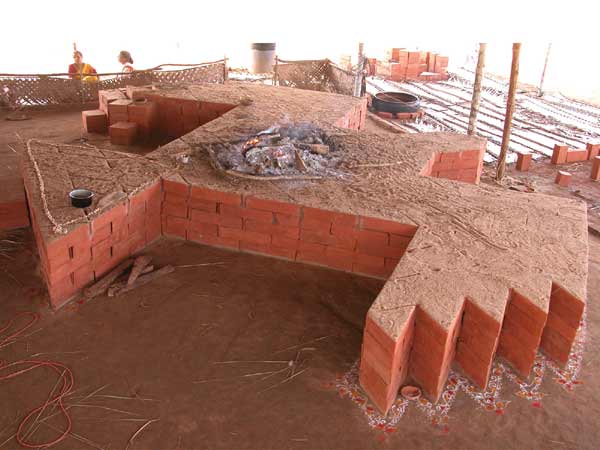
Fire altar, Kerala, April 2004

Ancient Tamil kings followed Vedic customs in their daily life. They respected the Vedas and performed Yagnas/fire ceremonies like the Rajasuya and the Aswamedha. The oldest Tamil book available today is Tolkappiyam, a grammatical treatise. The book says that the Vedic Gods Indra, Varuna, Vishnu were worshipped along with Durga and Skanda. Vedic deities were the gods assigned to three of the four Tamil land divisions. For Marutham-Indra, Neithal-Varuna and Mullai- Vishnu. Skanda and Durga were the deities for Kurinji and Palai respectively.

Mudukudumi Peruvazuthi, one of the earliest Pandya kings had the epithet of “The King Who Performed Several Yagas”. In fact that was his greatest achievement. He probably even performed the Aswamedha Yagna. His country was full of Yupa posts. (Purananuru verses 6, 9, 16 ).They treated Vedic culture as their own culture. The Pandya king was praised for holding his head high except in two situations: one is in the temple and second, before Brahmins. He would bow to only these two in the whole world! Another Pandya king of Madurai was praised for awaking to the Vedic chants of the Brahmins where as other kings wake up to the cry of fowl. (Mankudi Maruthn in Madurai Kanchi). Another king Nalliakodan says that his palace doors were always open to Brahmins (Ref. Sirupan Atruppadai).

Kalidasa, one of the world’s greatest playwrights and the most celebrated Indian poet for his 1000+ beautiful similes mentioned the Pandya king and Agastya in consecutive slokas in his Raguvamsa, which indicates a close relationship that ran for thousands of years. The commentators mention Avabruda Snanam which is done during the Aswamedha Yagna.

The grand old lady of Tamil Sangam period poetess Avvaiyar praised the unity of the three great kings Chera, Choza and Pandyas on the occasion of Rajasuya Yagnam of Perunar Killi (Puram verse 367)

Why did he walk SEVEN STEPS?

The most interesting reference is about the greatest of the ancient Cholas Karikalan by Mudathama Kanniyar. Karikal Peruvalathan is dated 1st century BC. (Please read my article Why British Judges follow Karikalan?).  There are two interesting references to show that Karikalan followed the Vedic customs. He was praised as the one who walks with his guest SEVEN STEPS before seeing them off (Line 166 ,Porunar Atrupadai). Rig Veda says that a friend must be seen off after walking seven steps. Walking Seven Steps (Saptapadi) is an important ceremony in Hindu marriages as well. If both any two friends or a couple walk the seven steps together, their bond last for a lifetime.

This is the meaning of the Sanskrit Saptapadi mantra in marriage:

“Now let us make a vow together. We shall share love, share the same food, share our strengths, share the same tastes. We shall be of one mind, we shall observe the vows together. I shall be the Samaveda, you the Rigveda, I shall be the Upper World, you the Earth; I shall be the Sukhilam, you the Holder – together we shall live and beget children, and other riches; come thou, O sweet-worded girl

We have taken the Seven Steps. You have become mine forever. Yes, we have become partners. I have become yours. Hereafter, I cannot live without you. Do not live without me. Let us share the joys. We are word and meaning, united. You are thought and I am sound. May the night be honey-sweet for us. May the morning be honey-sweet for us. May the earth be honey-sweet for us. May the heavens be honey-sweet for us. May the plants be honey-sweet for us. May the sun be all honey for us. May the cows yield us honey-sweet milk. As the heavens are stable, as the earth is stable, as the mountains are stable, as the whole universe is stable, so may our union be permanently settled.

Eagle Shaped Altar

The second reference is that Karikalan did a Yagna with an EAGLE-SHAPED FIRE ALTAR (Yaga Kunda). Poet Karunkuzalahanar praised Karikalan for setting up eagle shaped fire altar and a Yupa post in Puram verse 224. When he did this he consulted the Brahmins in his court and all his wives were with him during the Yagna, the poet added.

For important fire ceremonies such as the Soma Yaga, the Athirathra and the Aswamedha the fire altar is set up with 10,008 bricks or 1,008 bricks (Please read my article Hindu’s Magic Numbers). Each brick is cleaned ritually and mantras are chanted while the eagle shape fire pit is constructed. The altar is sprinkled with gold chips. If it is an Aswamedha Yagna the altar that is constructed is three times bigger.

In the Valmiki Ramayana we get more details about the Aswamedha performed by King Dasaratha. Gupta Kings issued gold coins after they performed the Aswamedha. Pandya coins were excavated featuring a horse on its side. This proves that they performed the Aswamedha. All credit for this goes to Mudukudumi Peruvazuthi.

The Eagle is the King of Birds. Lord Krishna says in Vibhuti Yoga of Bhagavad Gita that among the birds, he was the eagle. Garuda/eagle was his vehicle as well. The Eagle is used as an emblem throughout Western countries, including the USA. It is Thailand’s national emblem. Though Indonesia is the largest Muslim country in the world, it has named its national airlines after Vishnu’s vehicle Garuda.

The symbol of the national airline of Indonesia

Mankudi Kizar in Puram 29 praised Thalaialangkanathu Neduncheziyan for performing a fire ceremony .Dr R Nagaswamy, famous historian and archaeologist has given a long list of all the Yagas done by the Tamil kings and the Pallava kings in his book (Yavarum Kelir page 78 to 82). Almost all the Chera kings listed in Pathitru Pathu performed several yagnas. It gives a lot of detail, such as the fasting done by the kings before the ceremonies. Cheran Chenguttuvan even released all the prisoners in his jails to mark this occasion.

Velirs claim that they were born in Fire pits. They belonged to the Agni clan. Several clans in Gujarat, Punjab and Rajasthan also claimed themselves as fire-born. One famous Maya King’s name was Fire-Born.

Pallavas were powerful and they performed the famous Aswamedha (Horse Sacrifice) to establish their political superiority. If we look at the epigraphs and copper plates of that time, they give a long list of the Yagas they performed and the donations they gave on such occasions. Rajathi Rajan I performed an Aswamedha according to his epigraphs. Foreign scholars, with their mischievous propaganda of Aryan Dravidian divide distorted Indian history beyond recognition. They made us believe that there were two different cultures existing in India during ancient times. Anyone who studies our ancient literature without the Aryan Dravidian prejudice will find one culture and unity of thought throughout its 5,000 year history from the northernmost Himalayas to the southernmost oceans. The minute our scholars realise this truth, they will find the key to the Indus script as well.

Finally, a twelve day Athirathram Yagna was recently performed in Kerala (April 2011) in Panjal near Thrissur. The eagle-shaped fire altar was set up with 1,110 specially designed bricks. Frits-Staal, Indologist and Emeritus Professor of Philosophy, University of California, Berkley attended the ceremony with a group of scholars and scientists to study the effects on the environment and biosphere.

***********************

Tamil Article: Solar Eclipse in Tamil and Sanskrit Literature

Please see below for my latest article on Solar eclipses in Tamil and Sanskrit Literature in Tamil

புறநானூற்றில் சூரியகிரஹணம்

Tamil article: The Age of Tamil Race

Click the title below for my Tamil article about The Age of Tamil Race


தமிழ் இனத்தின் வயது என்ன

Why Do British Judges Follow a Tamil King?

By S Swaminathan


Strange as it may look, British judges, magistrates and barristers follow a custom that was started by a Tamil king two thousand years ago. British judges and several others who preside over the courts of justice wear a white wig.

If we go to encyclopaedias they don’t explain why they wear it or when it was exactly started. Ancient Egyptians wore wigs for protecting their heads from the scorching sun. Then Romans and others wore different types of wigs as symbols of aristocracy.

The British judiciary started wearing wigs from 17th century. Many of the commonwealth countries also followed it. Whenever the reason for the custom is asked many people say that it is the tradition or uniform for professional discipline or it shows experience. Actually it was started by the most famous Tamil king, Karikal Chola two thousand years ago. Crystal clear proof comes from the ancient Tamil Cankam (Sangam) literature.

Karikalan was the greatest of the Tamil kings for three reasons. He ruled vast areas of Tamil-speaking land, subjugating other Tamil kingdoms. He was the first Tamil king who went up to the Himalayas and carved his dynastic emblem there. Till today, there remains a Chola pass in the Himalayas. The second reason was he was a just king and his court of justice in Uraiyur became very famous. Tamil literature praises his justice and gives the story of wigs. And the third reason is the Grand Anaicut he built across the river Cauvery is one of the oldest dam s in the world. 

Though we did not have any historical records scholars have dated him around 1st century BC. He was a boy king – like the Egyptian Tutankhamen. He came to power while he was a teenager.


The Story of Wigs:

One day two elderly people came to his court seeking justice. They had a dispute among themselves. They decided that whatever the Uraiyur court says must be the final settlement. When they came in to court they were shocked to see a boy sitting as the judge. They were greatly disappointed – which Karikalan felt immediately by looking at their faces. Indeed the face is the index of the mind.

Karikalan politely asked the elders to take seats and told them to wait for the ‘judge’ and he went in. The entire assembly was puzzled. Then came an elderly person and sat on the chair. After carefully listening to the arguments of both the sides he gave his judgement. Both of them were immensely happy to hear a fair settlement. Now the assembly wanted to know who the elderly judge was. King Karikalan removed his white hair wig (Narai Mudi in Tamil) and revealed himself.  All applauded the Wisdom of the ‘Solomon of India’.

The proof for the anecdote is in three Tamil books:

  1. Porunar Atruppadai –lines 187-188. Porunar Atruppadai is one of the ten long poems of Tamil Cankam literature dated  between 1st to 3rd century AD
  2. Manimekalai- This is one of the five Tamil epics dated 3rd century AD  
  3. Pazamozi – poem 25 translation:


“The grey haired old men said the young man could not come to a decision about their case. They were delighted to find the Choza wore a grey wig, and understood the case from listening to their statements”.

This proves that even before they learn the arts suited to their caste, men are “ripe for their duties” This book is dated around 5th century AD.

Nobody can deny the fact that Karikalan was the first one to use white wig in judiciary matters.

There are lot of interesting stories about Karikalan in Tamil literature. He had to fight his own relatives to get the throne after the death of his father Ilam Chet Senni. He escaped an arson attack and his feet were charred and thus he got the name “Kari Kalan” (man with charred legs). The ancient custom in India is to select a king by the Royal elephant if nobody knew who the real heir apparent was. Karikalan was garlanded by the royal elephant when he was standing in the crowd. The episodes about his daughter Adi Mandi also formed the basis of several interesting stories.

Please Help to Find our Father’s Tamil Translation of Anna Karenina

By S Swaminathan


Anna Karenina was written by the famous Russian author Leo Tolstoy. My father Venkatraman Santanam translated it in to Tamil in the 1940s and it was published even before India became independent. It ran in to 1500 pages a monumental work for that time. I think no one else had embarked on such a Himalayan task. Unfortunately neither I in London nor my brothers in India have a good copy. The copy we have got has many pages missing. I request the Tamil enthusiasts to find us a copy of the Tamil translation.

For the sake of an easy flow, my father titled the book as ANNA KARINA in Tamil instead of the original title Anna Karenina. Please see the Tamil introduction written by my father. He was praised by leaders like K Kamaraj and writers like Manikkodi B S Ramiah (Please see Ramiah’s book Manikkodi Kalam). My father was detained in Vellore jail with K Kamaraj during the freedom struggle. After release he became a journalist and worked as the News Editor of Dinamani, Madurai for over forty years.

The book was priced Rs10 which must be an expensive book at that time. Had anyone invested that ten rupees and it doubled every five years it would have grown to Rs 81000 today. One surprising thing is that no writer of History of Tamil Language has mentioned this translation. Probably the copies were sold out as soon as they were published or few hundred copies only were printed. So I request future writers to include this book which will be a fitting tribute to his Tamil contributions. My father’s big contribution to Tamil language, I would say, is the development of Patti Mandapam (debate) and spiritual writing in Tamil.

Great speakers like Solomon Pappiah, SSM Sundaram, Mrs Saraswathy Ramanathan, Late Kundrakkudi Adigalar have got huge publicity due to these Patti Mandapams. When people ridiculed religious discourses (Upanyasam), my father published page after page in Dinamani summarising the discourses. No one of that age would have missed the speeches of  Variyar Swamikal, Keeran, Kanchi Maha swamikal, Anantharama Deekshithar to mention a few.

Please read the Tamil intro of the book and help us to find a complete copy.


Please send feedback to: swami_48@yahoo.com; through Twitter (@Swami_48) or Facebook.


The scans are below:


Free Tamil Lessons now on YouTube!

Please visit: http://www.youtube.com/user/swaminathansantanam  to view my Free Tamil Lessons on YouTube!

The accompanying print-outs are available at my blog: studytamil.wordpress.com


Pandya King Who Ruled Vietnam

By S Swaminathan
It is a well known fact that India’s cultural empire extended to South East Asia in the first few centuries of our era. Hindu empire existed for over a thousand years in several countries in the region. But the fact that a Pandya king ruled Vietnam was missed by many historians. The first king in Vietnam was known by the name Sri Maran. Translated in to Tamil it is Thiru Maran. We knew several Pandya kings by these names through inscriptions and Tamil Cankam literature. The oldest Sanskrit inscription discovered in Vietnam mentions the name Sri Maran. Unfortunately we did not get the complete inscription. Most of it is not legible.
The inscription is known as Vo-Chanh Inscription. It was inscribed on a rock as two parts. This is about the donation made by the family of the king Sri Maran. We have fifteen lines on one part of the rock and seven more lines on the other side. Of these only nine lines are readable. Scholars who took a copy of the inscription say the poetry part is in Vasantha Thilaka metre in Sanskrit and rest is in prose.
The king donated all his property to the people who were close to him and ordered that it should be honoured by the future kings. The inscription ends abruptly. But we could read the words ‘Sri Mara raja kula’ very clearly. Though we couldn’t get much information about this king from other sources, Chinese historians confirmed that the Hindu empire that existed in Vietnam, Laos and Cambodia started with Sri Maran.
Chinese historians named Thiru Maran as Kiu Lien and said that he captured Champa following a revolt. Champa was part of modern Vietnam. The French scholars who excavated most of the South East Asian sites have identified Kiu Lien as Sri Maran. All the kings’ names who followed Sri Maran were in Chinese style and beyond recognition. The revolt started in AD 132 against Chinese and Sri Maran ruled from AD 192.But the kings’ names end with Fan (in Chinese) which is nothing but Varman. As a surprising co incidence we have both Varman and Maran names in the Pandyan Kingdom in Tamil Nadu.
There are more than 800 Sanskrit inscriptions in South East Asia. Mula Varman was another king whose inscription was found in the thick jungle of Borneo (Indonesia).
Now let us look at the Tamil literature to get some corroborative evidence. The last king who ruled during the second Tamil Academy (Second Tamil Sangam) was Thiru Maran. When a tsunami struck his capital he moved his capital to the present day Madurai. May be he or his representative might have ruled Vietnam.
Velvikkudi Copper Plate inscription also mentions Thiru Maran, Sri Maran as titles for a few kings. The king who ruled during the days of Tolkappiyar also had the title Thiru. He was Nilam Tharu Thiruvil Pandyan. We see the name Maran at least ten times in the colophon of Cankam poems. Most importantly the author of Natrinai poems 105 and 228 was Muda Thiru Maran. Velvikkudi Copper Plate says that Agastya was the Kula Guru of the Pandya clan and we see Agastya statues in several places in S.E. Asia. (See my article ‘Did Agastya drink the ocean?’ for more information) .
The author of Purananuru poem 182 was Kadalul Maintha Ilam Peru Vazuthi. The translation of the king’s name will sound ‘the king who died in the sea’. This king might have died during an expedition to S E Asian countries. So it was not uncommon for a Pandya king to travel to a foreign country in first or second century.
We have more evidence from the Tamil inscription in Malaysia, the discovery of Tamil coins in Thailand, Greek and Roman writers’ references about South Indian Marine trade to support our argument in favour of Pandya’s expedition to South East Asia. (For more information on inscriptions of Champa/Vietnam please read R.C. Mazumdar’s book).
Please do contact me with feedback at: swami_48@yahoo.com, or leave comments below.