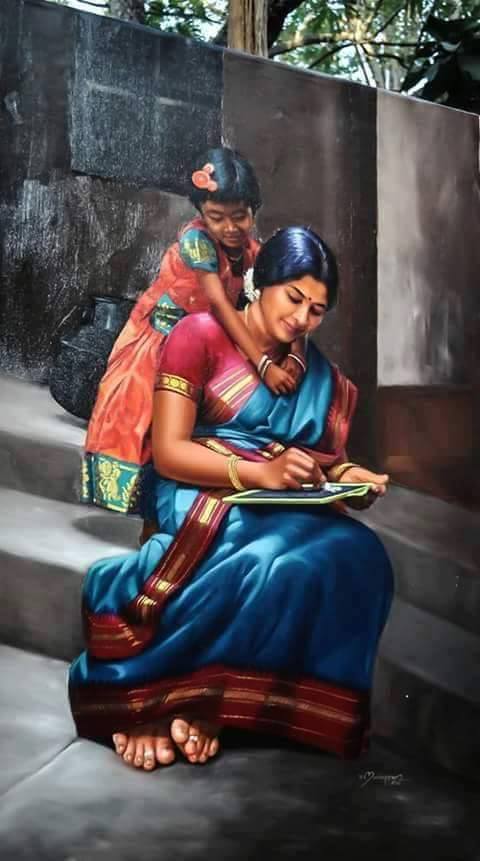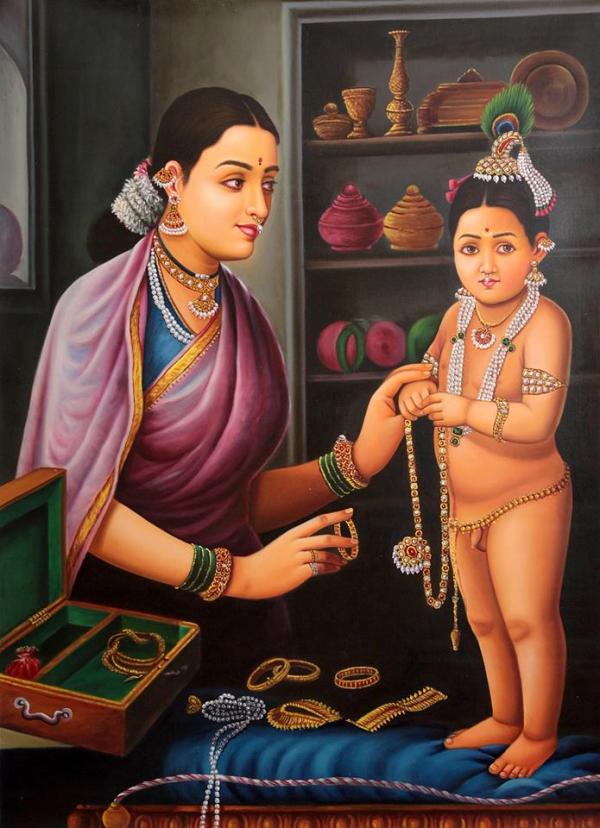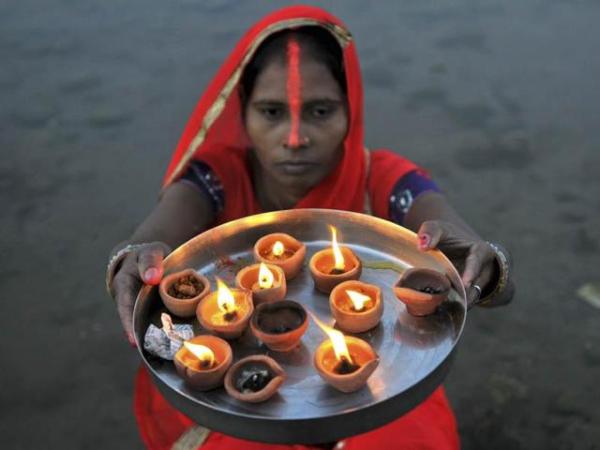
Interesting Quote about WIFE in the Indian Epic (Post No.3078)

IMG_3212

Compiled by London swaminathan

Date: 21 August 2016

Time uploaded in London: 6-25 AM

Post No.3078


Pictures are taken from various sources; thanks for the pictures.


There is a very interesting couplet in the Aranya (Vana) parvam of Mahabharata, the longest epic in the world.

Na ca bhaaryaa samam kincit vidhyate bhisajaam matam

Ausadham sarva dukkeshu satyametat bhraviimi te

–Aranya Parva

A rough translation of the couplet runs like this: Wife is a medicine for all the difficulties or sorrow; no one is equal to a wife in this, think medicine men. I am telling you the truth.


There is another interesting quotation about wife and mother in a couplet:-

Maatraa samo naasti sariira poshane

Bhaaryaa samo naasti sariira toshane

Vidhyaasamo naasti sariira bhushane

Chintaa samo naasti sariira soshane


A rough translation of this runs like this:

There is no one equal to your mother in nourishing you;

There is no one equal to your wife in making you happy;

Nothing is equal to education in honouring you (the qualifications you get);

Nothing is equal to worry in making you depressed.

(The above sloka may be a Subhaasitam)
IMG_4927

Everyone must read Sanskrit originals!

I have given you lot of interesting quotations about women in my posts. I am thrilled by the quotations of Manu in particular where he praised the women sky high. No ancient literature in any language has so much praise for women as in Sanskrit. Some cunning foreigners quote one or two odd quotes from here and there to malign Hinduism. If they don’t like certain good things, they will call them ‘interpolations’. If it suits them they will translate ‘LITERALLY’ the passages they like. If you forget the literal meaning, you will see what the authors really mean. Since they knew no one in the world can read all the Hindu scriptures, they write whatever they want to write.


No one in the world has read all the Hindu scriptures. They are as vast as Pacific Ocean. No language in the world can come nearer to Sanskrit in its quantity or quality.


If you want to question anything in Hinduism, first you must have read that book in full. Second you have to weigh it with the books in other cultures of the same period.


Since Sanskrit is the oldest language in the world, you don’t have any book in the world to compare with the Rig Veda or the great epics. Greek literature came at least 600 years after Sanskrit. Tamil literature came 1300 years after Sanskrit. Though Hebrew and Chinese have some writings nearer to 1000 BCE they are only fragments. They are not ‘book’s like Rig Veda. Rig Veda is dated between 1400 BCE (Max Muller) and 6000 BCE (Jacobi and BG Tilak).


Please read Sanskrit books in its originals and compare them with other language books of the SAME period.


–subham–

Woman is an Adjective; Man is a Noun! (Post No.2982)


IMG_3686

Compiled by London swaminathan

Date:18 July 2016

Post No. 2982

Time uploaded in London :– 14-05

( Thanks for the Pictures)


DON’T REBLOG IT AT LEAST FOR A WEEK!  DON’T USE THE PICTURES; THEY ARE COPYRIGHTED BY SOMEONE.


(for old articles go to tamilandvedas.com OR swamiindology.blogspot.com)


Following piece is an interesting excerpt from a 100-year-old book written by a Muslim scholar: –


Source: Life and Labour of the People of India by Abdullah Yusuf Ali, Barrister at Law, London, 1907


 IMG_3681


‘Woman, said Keshub Chunder Sen, has been defined as an adjective agreeing with the noun man.  I should rather say that man is a noun in the objective case, governed by the verb woman. This humorous simile may be read with the simile of the poet of the Veda when he compares the brightness of the God of fire to the shining of a woman in her home.


Sita, in a celebrated passage of Valmiki’s Ramayana, says to her husband,


“The world shall wake no care in me;

My only care be truth to thee”


If we apply this noble saying in a reciprocal sense, and base the solidarity of human society on the truth of man to woman, and of woman to man, many of life’s riddles would be solved –many of life’s difficulties would disappear.


I may be something of a dreamer, but I hope and trust that society in India, — as elsewhere — will recognise the place that is woman’s , not as a result of conflict and strife– not as a victory after the dust of battle– but as the natural symbol of Peace, Harmony, Union, Devotion, and Love.”


Xxxx


IMG_3685

American, French English Women


“The Americans have a saying that a woman is independent before marriage in England, after marriage in France, and at all times in America. From an Indian point of view, it would probably be expressed thus; that a woman in her husband in England, and in her brother in France, while in America, she has to fight for her own hand against all the world.


The Indian woman is always protected — by the father in childhood, by the husband in youth, and by the sons in old age. A woman, says Manu, should never left unprotected. Whatever degree of freedom and initiative she had in her mother’s house is lost to her in her new home. There she is the daughter in law. The mother in law is with us the chief butt of satire and comic poetry in what country she is not? But in India the mother in law is the husbands mother, not the wife’s; and the amenities between her and her son’s wife are accentuated by the fact that he former is so much older than the latter and the two have to live together, with scarcely any influence on the part of the boy husband”.


Xxx

IMG_3682

Woman is not made for work!


“The fact that the woman is not supposed, according to our social ideas, to earn her daily bread.


For the legal profession a very energetic and all but success full attempt was made by one of the most brilliant of India’s women, Miss Cornelian Sorabjee. After a distinguished college career in India she went to Oxford and studied law. She passed rats all her legal examination s, but unfortunately the High Courts in India did not see their way permit her to practise as an advocate on account of her sex. The loss of the legal profession was the gain of literature, for she has since published two charming books containing sketches of India n life. But her legal knowledge was not acquired in vain; how services have been requisitioned by the Bengal Government. She is acting as the legal adviser to the women under Courts of Wards. Her position is one of great authority and exceptional difficulty, for she is the interpreter between two languages, vulgarly held to be incompatible with one another — the language of a woman’s wish, and the language of the law but the wit of a refined woman may be trusted to translate from the one to the other, with a full combination of grace, tact, and business acumen”.


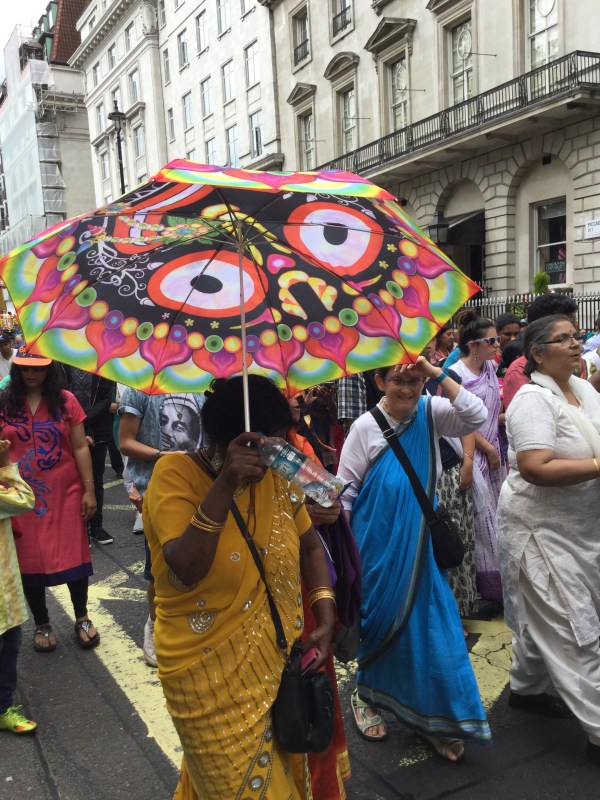
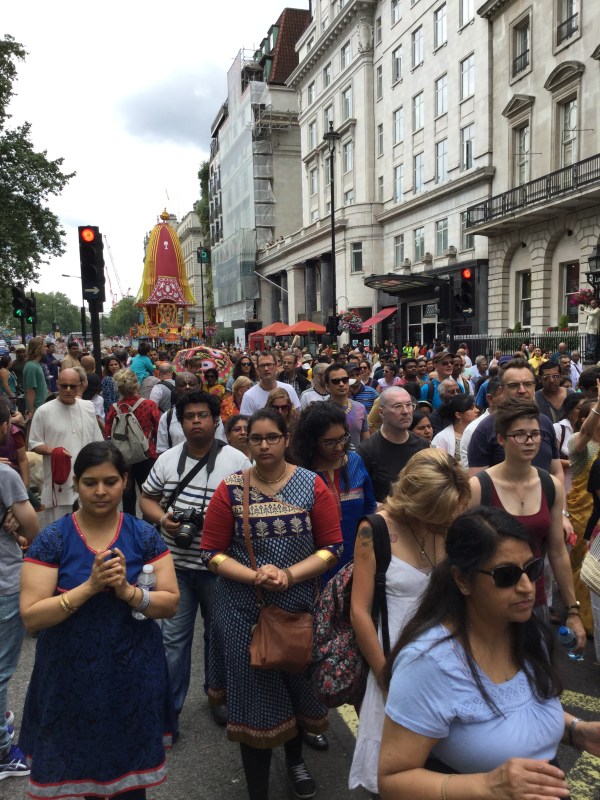
Written over 100 years ago by a Muslim Scholar; pictures re from Hare Krishna Rath Yatra in London held on 17th July 2016; taken by london swaminathan.


–Subham–

மனைவி சொத்தில் வாழலாமா? (Post No. 2965)

kalai3

Written by London swaminathan

Date:12 July 2016

Post No. 2965

Time uploaded in London :– 14-19

( Thanks for the Pictures)


DON’T REBLOG IT AT LEAST FOR A WEEK!  DON’T USE THE PICTURES; THEY ARE COPYRIGHTED BY SOMEONE.


(for old articles go to tamilandvedas.com OR swamiindology.blogspot.com)


மனைவி சொத்தில் வாழலாமா? மனைவி மூலம் கிடைத்த பணத்தில் வாழவே கூடாது. அது மிக மிக கடைத்தரமானது. அப்படியே கிடைத்தாலும், அதை விஞ்சும் அளவு ஒரு ஆண்மகன் சம்பாதித்துக் காட்டவேண்டும். செய்யும் தொழிலே தெய்வம்; உழைப்பே செல்வம்.


குந்தித் தின்றால் குன்றும் கரையும்; ஒருவன் வீட்டில் உட்கார்ந்து சாப்பிடுவானால், அந்தச் செல்வம் மலை போல இருந்தாலும் கரைந்து போகும் என்பது சான்றோர் வாக்கு.


உத்தமம் ஸ்வ ஆர்ஜிதம் வித்தம் மத்யமம் பிதுரார்ஜிதம்

அதமம் சேவகாவித்தம் ஸ்த்ரீ வித்தம் அதமாதமம்


ஸ்வ ஆர்ஜிதம்உத்தமம் – சுயமாக சம்பாதிப்பது மிகச் சிறந்தது


பிதுரார்ஜிதம் மத்யமம் – அப்பா விட்டுச் சென்ற சொத்தைப் பெறுவது மத்தியமம் – இடைநிலைப்பட்டது.


சேவகாவித்தம் அதமம் – பிறரிடம் உழைத்துச் சம்பாதிப்பது கடைநிலைப்பட்டது ( அதமம்)


ஸ்த்ரீ வித்தம் அதமாதமம் – பெண்கள் (மனைவி) மூலம் கிடைத்த சொத்து மிகவும் கீழ்த்தரமானது. அதமத்திலும் அதமம்!


பெண்கள் வருமானத்தில் பெற்றோர்கள் வாழ்வதும் கூட பல பிரச்சினைகளை உண்டாக்குவதைக் காண்கிறோம்.


பெண்கள், திருமணமாகிப் போனால், தங்களுக்கு வருமானம் நின்று, வாழ்வு இருண்டுவிடுமே என்று கருதி, தி ருமணத்தைப் பல சாக்குகள் சொல்லி தள்ளிப்போட்டு,  சொந்தப் பெண்களின் வாழ்க்கையையே பாழாக்கிவிடுகிறார்கள்.

kalai23

மற்றொரு புறம் பெண்கள் சுயமாகச் சம்பாதிக்கத் துவங்கிவிட்டால், அவர்கள் ஆட்டம்போடுவது அதிகரிப்பதையும் காண்கிறோம். இஷடப் பட்ட இடத்துக்கு இஷ்டப்பட்ட ஆட்களோடு போய்விட்டு,  இஷட்ப்பட்ட நேரத்துக்கு நள்ளிரவில் வீட்டுக்கு வருவதையும் அதனால் ஏற்படும் சீர்கேடுகளையும் காண்கிறோம்.


மனு ஸ்ம்ருதி சொல்வது போல பெண்களுக்கு அவர்களது சகோதரர்கள் எல்லாவற்றையும் வாங்கிக் கொடுத்த முந்தைய சமுதாயம் ஒழுங்குக் கட்டுப்பாடுகளுடன் இருந்தது. பெண்களை மனமகிழ்ச்சியோடு வைக்காத வீடு அடியோடு அழிந்துவிடும், பெண்கள் மகிழ்ச்சியாக உள்ள இடத்தில் மட்டுமே தெய்வங்கள் மகிழ்ச்சியோடு இருக்கும் என்றும் மனு ஸ்மருதி சொல்லுகிறது. அப்படி அவர்களை மகிழ்ச்சியாக வைத்துவிட்டால் பின்னர், அவர்களுக்க் சம்பாதிக்கும் தேவையும் இல்லையே.


இன்ன பிற காரணங்களால்தான் மேற் சொன்ன சம்ஸ்கிருத ஸ்லோகம் பெண்களின் பணத்தில் வாழ்வது அதமாதமம் என்று சொன்னதுபோலும்!!!


–Subham–


Don’t lend Books, Money and Woman! (Post No.2959)

IMG_4530

Article Written by London swaminathan

Date: 10 July 2016

Post No. 2959

Time uploaded in London :– 18-39

( Thanks for the Pictures)

DON’T REBLOG IT AT LEAST FOR A WEEK!  DON’T USE THE PICTURES; THEY ARE COPYRIGHTED BY SOMEONE.


(for old articles go to tamilandvedas.com OR swamiindology.blogspot.com)


Wisdom literature in Sanskrit is great. If a person is well versed in Sanskrit he will be using hundreds of Subhasitams (Golden sayings) in his daily conversation. It is a great pleasure to listen to such people. Tamils cant speak without using a proverb. Villagers use Tamil proverbs more than the city dwellers. They may illiterate but they will use apt proverb at the right place at the right time.

Here are some Sanskrit couplets which anyone will enjoy:–


Pustakam, Vanita Vittam parahastam gatam gatam!

Athavaa punaraagacceet jeernam brashtaa sa khandasah


If book, money and woman go to another hand that is gone for ever.

Or If it comes back they are spent, spoiled or torn


This couplet needs no explanation.

books, BL

Xxx

What can you sacrifice

Tyajet kulaarthe purusam graamasyaarthe kulam tyajet

Graamam janapadasyaarthe hyaatmanaarthe pruthviim tyajet

–Sabaaparvam, Mahabharatam


One can sacrifice a man for the sake of his clan

To save the entire village, a clan may be sacrificed

To save the country a village may be sacrificed

But for the sake of the Self, the entire may be sacrificed.


The meaning is that you can leave everything to attain spiritual benefits.

Xxx


Ruupa yauvana sampannaa visaalakulasambavaah

Vidyaahiinaa na sobante nirgandhaa iva kimsukaah


Even if one is born in a good family with beauty and youth, one would not shine in life without education/learning. He will look like the bright coloured Kimsuka flower sans fragrance.


Tamil poets Tiruvalluvar also use a similar simile:–

Those who are unable to elucidate their learning are like the cluster of blossoms without fragrance – Kural 650


–Subham–

Manu Smrti on Low Caste Women (Post No.2946)

kalai23

Written by London swaminathan

Date: 5 July 2016

Post No. 2946

Time uploaded in London :– 19-15

( Thanks for the Pictures)

DON’T REBLOG IT AT LEAST FOR A WEEK!  DON’T USE THE PICTURES; THEY ARE COPYRIGHTED BY SOMEONE.


(for old articles go to tamilandvedas.com OR swamiindology.blogspot.com)

klai add2

The oldest law book in the world ‘Manu Smrti’ has very interesting couplets on women who were born in low caste.


A man who has faith may receive good learning even from a man who is lower, the ultimate law even from a man of lowest caste, and a jewel of a woman even from a bad family.

Manu 2-238


Ambrosia may be extracted even from poison;

And good advice even from a child;

Good conduct even from an enemy;

And gold even from impure ore.

Manu 2-239

Women, jewels, learning, law, purity, good advice and various crafts may be acquired from anybody


Manu 2-240

In extremity, one is permitted to learn even the vedas from someone who is not a Brahmin and to walk behind him and obey him like a guru as long as the instruction lasts

Manu 2-241

It is interesting that Tamil king Nedunchezian who lived 2000 years ago also said the same about education in verse 183 of Purananuru. Tamil poet Tiruvalluvar who lived 1500 years ago also said the same:-

Though high born, an unlettered man is lower than a learned man of lower birth. Kural – 409

kalai3

Low Caste Woman Arundhati

When a woman is joined with a husband in accordance with the rules, she takes on the very same qualities that he has, just like a river flowing down into the ocean (River=wife, Ocean = husband).

Manu 9-22

When Akshamala (Arundhati), who was born of the lowest, united with Vasishta, and Sarangi, the hunter woman with Mandapala, they became worthy of honour.

Manu 9-23

Six acts banned for women

Drinking

Associating with bad people

Being separated from their husbands

Wandering about

Sleeping alone in other places

And living in other peoples’ houses

Are the six things that corrupt women.

Manu 10-13

kalai4

Respect Women! Or else you will be destroyed!!


Manu’s severe warning:–


Fathers, brothers, husbands, and brothers-in-laws who wish for great good fortune should revere women and adorn them Manu 3-55

The gods delight in places where women are respected, but where women are not honoured all rites are fruitless

Manu 3-56


Where the women of the family feel miserable, that family is soon destroyed, but the family where the women are happy thrives well

Manu 3-57

Homes that are cursed by the women who have not treated with reverence are completely destroyed, as if struck down by magic

Manu-3-58


Therefore, men who wish to prosper should always revere those women with ornaments, clothes and food at celebrations and festivals

Manu 3-59

There is unwavering good fortune in a family where the husband is always satisfied by the wife, and the wife by the husband

Manu – 3-60

Nowhere else in the world we can see such support for women. Manu was the greatest supporter of women’s rights.

assorted-coloured-gemstones-1

—Subham–


Mahabharata–about Women! (Post No.2813)

IMG_4875 (2)

Compiled by london swaminathan


Date: 15 May 2016


Post No. 2813

Time uploaded in London :–  14-55


( Thanks for the Pictures)


DON’T REBLOG IT AT LEAST FOR A WEEK!  DON’T USE THE PICTURES; THEY ARE COPYRIGHTED BY SOMEONE.


(for old articles go to tamilandvedas.com OR swamiindology.blogspot.com)


Women! Women !! Women !!!

IMG_4412

She is the true wife who is a good house wife. She is a true wife whose heart is devoted to her husband. She is a true wife who is faithful to her husband.

A man’s half is his wife. The wife is her husband’s best of friends…. The wife is the source of salvation.


Those who have wives can perform religious acts. Those that have wives lead domestic lives. Those that have wives can be happy; and those that have wives can achieve good fortune.


The sweet –speeched wives are their husband’s friends on the occasion of joy; they are as fathers on occasions of religious acts;they are as mothers in the hours of illness and woe.


Even in the deep forest, the wife is the refreshment and solace of her roaming husband. He who has a wife, is trusted by all. The wife, therefore, is man’s great means of salvation.

–Mahabharata

(Taken from the book Asia through Asian Eyes, Thames and Hudson, London, page176)


“Let this heart of yours be mine, and let this heart of mine be yours”- Mahabharata (1.3.9)

Xxx

IMG_4384

Manu on Wife

The production of children, the nurture of those born, and the daily life of men (of these matters) woman is visibly the cause.

Offspring, (the due performance of) religious rites, faithful service, highest conjugal happiness, and heavenly bliss for the ancestors and oneself, depend on one’s wife alone.

“ Yatra naryast pujyante ramante tatra devatah

Yatraitastu na pujyante sarvastatraphalah kriyah”

Manu smriti 3-56, Mahabharata 13-45-5


‘Where women are worshipped, there the gods are delighted; but where they are not worshipped, all religious ceremonies become futile’—Manu Smriti.


“Her father protects her in childhood, her husband protects her in youth, and her sons protect her in old age; a woman is never independent”. Manu IX-9 (The meaning is that she is always protected and not left alone without support).


Durga Saptasati

In Saptashati, Durga says, “He who conquers me in battle, he who humbles my pride, he who is my equal in this world, he shall be my husband”.

India was the only country in the world where women were free to choose their husbands. Eight types of marriages were offered to men and women. Men and women met and mixed freely at festivals like ‘Samanas’. Nowhere in the ancient world have we seen such a freedom.

IMG_4880 (2)

Selling of Daughters

Whoever sells his daughter in emergency or merely for the sake of filthy lucre, goes to the Hell…. Where he is bitten by crows and vultures.

Whoever sells his daughter for gain dwells in the pit of flesh, and eats I for as many years as there are hairs on the skin of the body of his daughter.

–brahma-Vaivarta, Prakrit Khanda


Old Posts on Women

One mother is greater than 1000 fathers (posted on 7 June 2013)

‘Women in state affairs are like Monkeys in Glass Shops’ (Post No 2625)

Posted on 12 March 2016

An Ounce of Mother is worth a Ton of Priest! (Post No.2793);posed 8 May 2016

Most Intelligent Woman in the Ancient World; Posted 7 August 2013

Women’s freedom by Bharatiyar; posted on 19 April 2014

Wonderful Syllabus for Women! Posted by 4 May 2014
இந்தியப் பெண்கள் உலக மஹா அறிவாளிகள்! – பகுதி-1


இந்தியப் பெண்கள் உலக மஹா அறிவாளிகள்- பகுதி 2

–subham


An Ounce of Mother is worth a Ton of Priest! (Post No.2793)

mother rangoli

Compiled by london swaminathan


Date: 8 May 2016


Post No. 2793


Time uploaded in London :–  14-4o


( Thanks for the Pictures)


DON’T REBLOG IT AT LEAST FOR A WEEK!  DON’T USE THE PICTURES; THEY ARE COPYRIGHTED BY SOMEONE.


(for old articles go to tamilandvedas.com OR swamiindology.blogspot.com)


Following are the proverbs and sayings on Mother in Tamil ,Sanskrit and English

mother_love_

1.A man’s mother is his other God (African Proverb).

2.The teacher is more important than ten instructors; And the father more than a hundred teachers, but the mother more than a thousand fathers- Manu Smriti 2-145

3.Mataa, Pitaa, Guru, Deivam.

4.Guru is the physical form of god, the father the physical form of Brahma, the mother the physical form of the earth and the brother is the physical form of one’s own self- Manu Smrti 2-227


5.A mother’s love is best of all.

6.A mother’s love never ages

7.Never forget your mother (Tamil: Mathaavai oru Naalum Marakka veendaam)

8.Though one see’s one’s mother starving let the person not do  those actions which are condemned by the wise- Tirukkural 656

9.It is not as thy mother says, but as thy neighbours say.

10.A father’s goodness higher than the mountains; a mother’s goodness is deeper than the sea (Japanese Proverb)


mother baby

11.An ounce of mother is worth a ton of priest.


12.Like mother like daughter


13.Like mother like daughter; like yarn like the sari (Tamil Proverb)

14.The birth follows the belly (daughter is like her mother)

15.Is there a mother who does not pardon the mistake of her offspring? – Pratima Nataka

16.The mother’s side is the surest

17.The hand that rocks the cradle rules the world.

18.THERE MAY BE BAD SONS BUT NEVER A BAD MOTHER- Devi Aparadha Kshamapana Stotra


19.There is only one pretty child in the world, and every mother has it.

The owl thinks her own young fairest (For a crow its young one is golden- Tamil Proverb)

mother-and-baby-portrait-drawing-kate-sumners

20.The good mother says not. “Will you?” but gives.

21.The mother’s breath is aye sweet.

22.The mother of the coward does not worry about him (Arabic proverb).

23.Mother and Motherland are greater than heaven  (Jananii janma bhuumisca svargaadapi gariiyasii) – Kahavatranakar

24.Home life is blessed as long as mother is alive– Kahavatranakar

25.Unbrarable are the sorrows of mothers –Brhad Katha manjari

26.When a daughter is given away in marriage, mothers feel distressed-Pratinjaa yaugandharaayana

27.No god beyond mother (Na maatuh daivatam param)—Canakya Neeti

28.The teesth of the mother cat do not harm her kittens

29.For all humans, the mother indeed is the God of all Gods.

30.Hail the Mother as God! Hail the Father as God (Maatr Devo bhava pitr devo bhava) – Taittiriya Upanishad.

31.As the Mother, so the daughter –Kahavatratnakar

32.None indeed can nourish your body like the mother – Subhasitaratnavali

33.The caress of a mother is as soothing as a water-jet to the thirsty.

–subham–
 

Five Objects of Esteem: Manu Smrti (Post No. 2750)

IMG_5163 (2)

Compiled  by London swaminathan

Date: 23 April 2016


Post No. 2750


Time uploaded in London :– 10-25 AM


( Thanks for the Pictures)


DON’T REBLOG IT AT LEAST FOR A WEEK!  DON’T USE THE PICTURES; THEY ARE COPYRIGHTED BY SOMEONE.


(for old articles go to tamilandvedas.com OR swamiindology.blogspot.com)

IMG_3259

Vittam – Money

Bandhu – Relatives

Vayah – Age

Karma – Duty/work

Vidyaa – Knowledge


Vittam bandhurvayah karma vidyaa panchamii

Etaani maanasthaanaani gariiyoo yadhyaduttaram

–Manu Smrti 2-136

Xxx

IMG_3203

2.Five People to be Worshipped

Devaah – Gods

Pitr – Ancestors

Manushyaah – Men

Bhiksu – Mendicants

Atithi – Guest

Panchaiva puujayan loke yasah praapnoti kevalam

Devaanpitruun mnushyaansca bhikshuunathipanchamaan

-Viduraniiti 1-80


Xxx


IMG_4859 (2)

3.Five People to be honoured for

Vidyaa – Excellence in learning

Buddhi – Intelligence

Paurusa – Valour

Abhijana – Birth in a noble family

Karmaatisaya – Magnificent work

Puujyaavidyaabuddhipaurusaabhijanakarmaatisayatascha purusaah – Arthasaastram 3-2o-23


Xxx


IMG_4545

4.Five People to be looked after well

Atithi – Guest

Baalakah –Child

Patnii – Wife

Jananii – Mother

Janakah – Father


Atithirbaalakah patnii jananii janakasthathaa

Panchaite gruhinah poshyaa itare ca svasaktitah

–Subhasita ratna bandagaram 157/206


–Subham–


Classification of Women according to Age (Post No 2709)

amma ponnu

Compiled by london swaminathan

Date: 9 April, 2016


Post No. 2709


Time uploaded in London :–  14-17


( Thanks for the Pictures  ) 


DON’T REBLOG IT AT LEAST FOR A WEEK!  DON’T USE THE PICTURES; THEY ARE COPYRIGHTED BY SOMEONE.


(for old articles go to tamilandvedas.com OR swamiindology.blogspot.com)

alankaram girl

1.Classification

Baalaa (age 11 to 16)- girl

Tarunii (age 17 to 30)- youth

Praudhaa (age 31 to 55) – Middle aged

Vrddhaa (age 55 and above) – Old aged


Yaavatsodasa sankyamabdamuditaa baalaa tatastrimsatam

Yaavatsyaattaruniiti bhaanavisikhaprakyam tu yaavatbhavet


Saa praudetyamidhiiyate kavivarairvrudhdhaa tadhuurdhvam smrtaa

Nindhyaa kaamakalaakalaapavidhishu tyaajyaa sadaa kaamibhih

–anangaranga 4-1

Xxx

azaki beauty old

2.Not eligible to claim women’s Property

Bhartaa – husband

Bhraatarah – brothers

Sutaah – sons

Pitaa – father

Na bhartaa naiva ca sutaa pitaa bhraataro na ca

Aadaanae vaa vasarge vaa striidhane prabhavishnavah

Xxx


IMG_3356


3.Adornment of women

Kacadhaarya – hair dress

Dehadhaarya – make up

Paridheya – attire

Vilepana – unguents

Kacadhaaryam dehadhaaryam paridheyam vilepanam

Caturdhaa bhuushanam praahuh striinaamanyacca daisikam


Xxx

chat ht 14

4.Women who attained realisation

Maitreyii

Sulabhaa

Saarngii

Saandilii


Maitreyii sulabhaa saarngii saandilii ca tapasvinii

Striitvepraaptaah paraam siddhimanyajanma samaadhitah

Xxx


ac17chhatfestivalmumbai05

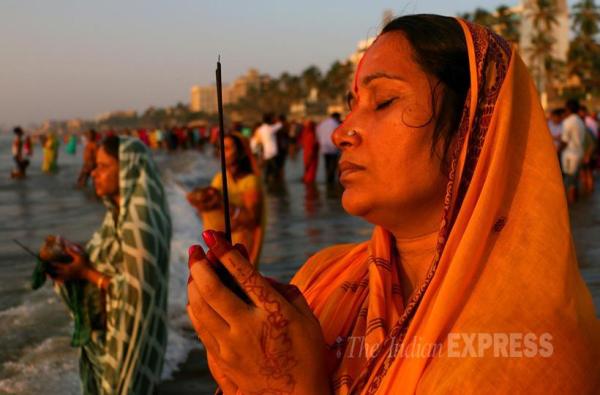
People offering prayers to Sun God during Chhat festival at Juhu Beach Mumbai . Express Photo by Amit Chakravarty 17-11-15, Mumbai

5.Things forbidden for Women

Vapanam – tonsuring of head

Gaamanuvrajanam – following a cow

Raatrau gosthe vaasah – staying in a cow-pen at night

Vaidikii-suukta paatha – reciting Vedic mantra

Na striinaam vapanam kuryaat na ca saa gaamanuvrajet

Na ca raatrau vasegoshthe na kuryaat vaidikiim srutim

Xxx

bihar voting1

6.Women to be remembered in the morning

Ahalyaa

Draupadii

Seetaa

Taaraa

Mandodari


Ahalyaa, Draupadii, Seetaa, Taaraa, Mandodari tathaa

Panchakanyaah smaren nityam sarva mahaapaataka nasanam


Meaning:

By remembering the Five Pure Women Ahalya, Draupadi, Sita, Tara and Mandodari all the great sins are wiped out or destroyed.


Xxx

flower picking

7.Five Mothers

Following five women are considered equal to mothers:

Raja patnii – king’s wife

Guru patnii –  teacher’s wife

Bhraatpatnii – brother’s wife

Patniimataa –mother-in-law

Svamaataa – one’s own mother


Raaja patni Guroho patni bhraatru patni thadaiva cha

Patnimaathaa svamaathaa panchaitaa maatara smrutaahaa

–Chanakya Niti

Queen (King’s wife), Teacher’s wife, Brother’s wife, own mother and wife’s mother (Mother in law) are considered mother.


holi,ht3

Source :-

Sankhya sanketa kosa, Volume 1,The Kuppusswami Sastri Research Institute, Chennai.

–subham—


easter island

Compiled by london swaminathan

Date: 7 April, 2016


Post No. 2703


Time uploaded in London :–  19-10


( Thanks for the Pictures  ) 


DON’T REBLOG IT AT LEAST FOR A WEEK!  DON’T USE THE PICTURES; THEY ARE COPYRIGHTED BY SOMEONE.


(for old articles go to tamilandvedas.com OR swamiindology.blogspot.com)


Modesty Anecdotes

Cato, the Roman statesman (95 BCE), on observing that statues were being set up in honour of many remarked, “I would rather people ask, why is not there a statue to Cato, than why there’s”.

Xxx

Mr President!

Abraham Lincoln was free from the usual official vanity. He rather shrank from than courted the official title of Mr President, and generally referred to his office as “this place”, “since I have been in this place” or “since I came here”.

Referring at one time to the apartment reserved in the Capitol for him, he called it “the room, you know, that they call the President’s room.”

Once he pleaded with some old Illinois friends who addressed him as “Mr President”,
“Now call me Lincoln, and I will promise not to tell of the breach of etiquette”.

Xxx

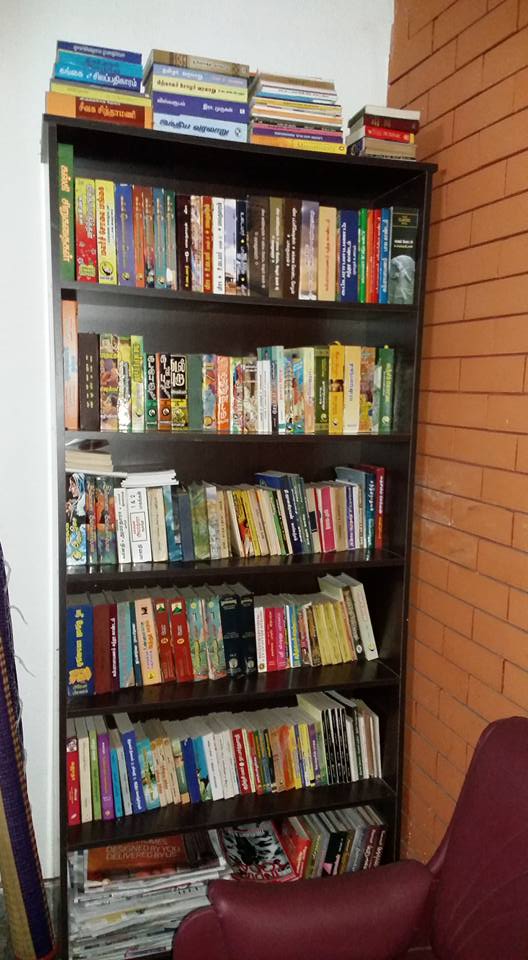
book shelf

Male and Female author books on the same shelf!!!

Madame de Genlis carried her purity of Manners to such an extent, that she reprimanded the book seller who had the arrangement of her library, for having placed books written by male and female authors on the same shelf.

Xxx

Boot Polishing Lincoln!


A man came upon Lincoln blacking his boots in the basement of the White House. He expressed astonishment that the President of the United States should be at such a menial task.

“What! Mr. President,” he exclaimed, “are you blacking your own boots?”

“Who else’s should I be blacking?” Lincoln’s laconic reply.


boot polishing

Xxx

Most Immodest Lady!

When conversation in a company in which Dr Johnson was present had fallen upon rather a delicate topic, one of the ladies, with an expression of great displeasure, rose and left the room.
“That woman”, said the doctor, “is the most immodest of all the company”.

xxx

If there is Fire, I first!

fire
F.W.Wile tells how, “Once when a group of Washington newspaper men wanted Secretary of State Hughes to attend a dinner at which a number of first rank foreign statesmen were to be present I was a committee of one to ask him where he wished to be seated at table. That was long before Dollie Gann an Alice Longworth all but caused social civil war in Washington over dinner table precedence. “You need never worry about that in my case”, Hughes said, “The only place I ever want to be first is at a fire!”

Xxxx

Modesty of Principal Cairns

A characteristic story is told of the great Principal Cairns, one of the most simple- minded and humble of men. Attending a great public meeting on one occasion in Edinburgh, which was densely crowded, his appearance on the platform was received with loud cheers. Never imagining that it was for himself, he turned and saw following him a man of diminutive stature, and totally unknown.

Taking him to be the object of popular applause, he stepped aside to let him pass, and as he did so began an enthusiastically to join in the clapping. The act, so characteristic of the man, was received with uproarious delight, and fairly brought down the house.

–Subham–