Word Research shows Sanskrit is the Oldest Language! (Post No.3709)

Compiled by London swaminathan


Date: 10 March 2017


Time uploaded in London:- 21-15


Post No. 3709


Pictures are taken from various sources; thanks.


contact; swami_48@yahoo.com


I gave some excerpts from “Vedic and Indo-European Studies” written by Nicholas Kazanas, (Aditya Prakashan, New Delhi, year 2015) yesterday.


Here are some more issues raised by him. I found his research into 400 words in Indo European languages very interesting. Here is what he says in his summary:


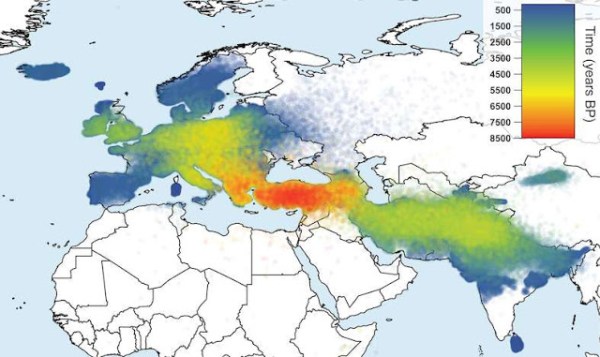
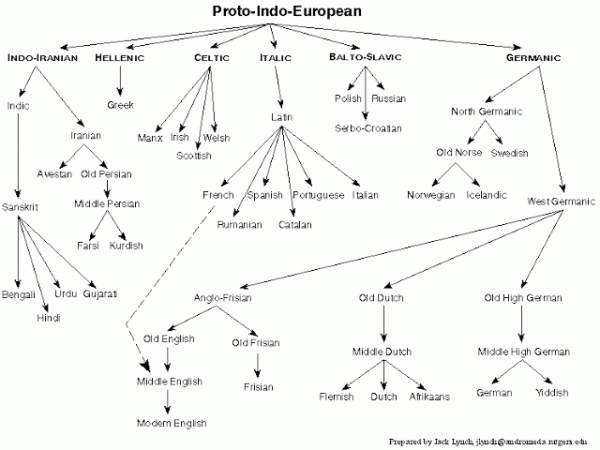
The second study is about, “Coherence and Preservation in Sanskrit” (published in Kumar 2009, 108 184, but revised since). Herein are examined more than 400 IE lexical items (nouns, verbs etc) occurring in the IE branches and denoting fairly common and as far as possible invariable things, qualities and activities like arm and foot, anger and love, father and mother, bowl and barley/grain, to breathe and to fly and so on. This study shows that Sanskrit lacks 53, some of which may well have not been PIE, Germanic lacks 145, Greek 149, Baltic 185 in 207, Celtic 210 and Slavic 215. Thus Sanskrit preserves a much larger stock whereas Greek, with its early and voluminous literature does not surpass Germanic, and Latin, with an almost equally early and rich literature, lags behind Germanic and Baltic. Another and perhaps more important aspect is that while many words appear in Germanic, Greek, Latin etc, only as isolated lexemes without a family of cognates (e.g. daughter’), in Sanskrit many such words have root- nouns, adjectives and verbal forms. Sanskrit has organic coherence. Both facts indicate that Sanskrit is by far the most archaic branch and most faithful to PIE.

PIE= Proto Indo-European

I E = Indo European

xxx
 

Rig Vedic Poetry is better than Greek Poetry

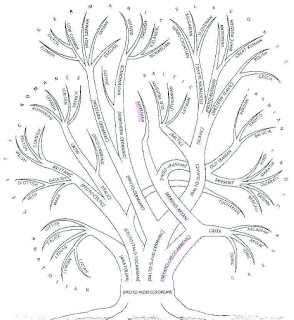
The third study, “Rigvedic All-comprehensiveness reinforces the conclusion that Sanskrit is the most archaic of the IE branches and closest to PIE. In the second chapter are examined the lexical items. Here, in the third, are examined grammatical and poetical aspects and in every case the Vedic language and poetry are seen to contain everything found in one or two of the other branches. For instance, the Periphrastic Perfect is found in Hittite but not in ancient Greek or Latin (in both it appears as a later innovation), is also present in Vedic. The Greek poetry has strict metre but little or no alliteration where as Germanic poetry has as one of its basic elements alliteration but not strict metre: both of these are present in the poetry of Rig Veda.


xxx

Vedic and Avestan

The fourth study, ‘Vedic and Avesta’ is very technical and shows that contrary to mainstream belief, Vedic is far older than Avestan. It shows also that it is the Iranians who moved out of the wider Saptasindhu to Bactria/Gandhara, then to South East Iran and North westward.

xxx


  1. As the title Vedic and Indo-European Studies indicates, the volume consists of dealing with common in both areas so that one may illuminate the other. Following facts rather than conjectures and reasoning rather than repetition, I arrive at unorthodox conclusions that diverge from mainstream (usually mechanical) thinking.


The most significant conclusion is that the Rig Veda furnishes facts that militate against many prevalent notions in many disciplines and studies in academia like the beginning of language or religion. Another conclusion concerns the origins of the Indo Aryan or Vedic people and the obnoxious Aryan Invasion/Immigration Theory. The AIT (-Aryan Invasion Immigration Theory) is a major impediment in mainstream IE (Indo European) scholarship but it is not the only one. In fact this is an external structure established by other, internal or psychological tendencies like inattention, love of ease, mechanicalness, arrogance, obstinacy, ambition, greed etc, all sprouting from an unchecked ego; all these can be encapsulated in the triad arrogance, greed, ignorance (more in the sense of ignoring than not knowing). And it is these that often motivate us rather than love and promotion of truth, the primary purpose of all scholarship (And if your mind, dear reader, rejects all this as claptrap unrelated to scholarship, then it is in the thralls of the triad.)


xxxx
Research on Vedic God Rhbu


Let us now go to Greece holding in mind the adjective name rbhu ‘intelligent fashioner. Scholars generally agree that this word is cognate with English Germanic ‘elf’ ( Elf, Alp etc), Old Slavic rabh ‘servant’ and the name of the Greek poet-musician-hero Orpheus.


In the Rig Veda ( 1.20, 110; 3.60, 7.48 etc) the Rbhus are three brothers, sons Sudhanvan, who perform several miraculous deeds through the power of mind’. For instance, RV 4- 2 says “ratham ye cakruh suvrtam sucetaso a-vibvarantam manasas pari dhyaya.

The wise-ones who fashioned the fine-rolling, impeccable car by visionary power ‘dhi’- out of mind/ manas. But the three are often indicated as one. Thus in the RV the indicated by the singular Rbhu as one. Thus in the Rig Veda the name appears both in the singular and in the plural.  The three brothers, though mortal, thanks to their great mental power gain, the favour of the gods and stay in the mansion of the Sun god where they serve as priests and become immortal gods themselves.


–Subham–


First Homosexual King in History! (Post No.3692)

Written by London swaminathan


Date: 5 March 2017


Time uploaded in London:- 5-29 am


Post No. 3692


Pictures are taken from various sources; thanks.


contact; swami_48@yahoo.com


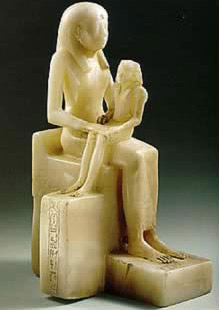
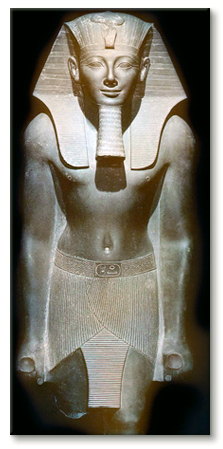
Pepy II ruled ancient Egypt between 2278 and2184 BCE. This means he had ruled for 94 years! He was the longest reigning king in the world history. He was famous (or notorious) for two or three other things.


He was the first homosexual king in the world! Pepy married many women, but he lived longer than those queens. He died at the age of 100. He became king when he was six years old. This is possible because he would have been supported by his uncles or mother. He was famous for capturing pygmies from central Africa and made them dance for him. They were known as Dancing Dwarves.

The other thing that made him known was his homosexuality. According to a story circulating during the Middle Kingdom he pursued a homosexual affair with one of his generals, Sasenet. The king was said to have been observed creeping surreptitiously out of his palace at night and climbing over the wall of the general’s house and returning in the dawn.


Pepy II belonged to the Sixth Dynasty of Old Kingdom. He was buried in a Pyramid at Saqqara. He followed his brother Merenre at the age of six with the support of his uncle vizier and Harkhuf. During Pepy’s rule the country became prosperous. He invaded Nubia and Sinai to get gold and precious gem stones.


No tax to Temple lands!

Like the Hindu Kings of India he donated lands to temples and nobles. He exempted those lands from tax. Though he ruled peacefully because of these handouts, his policy created problems for later kings. The central authority was weakened and there was instability.


Source: Who is Who in Ancient Egypt by Michael Rice


Eagle in the Rig Veda and Egyptian Civilization (Post No.3672)

Most Imporatnt Vahana of Vishnu Temples


Research Article Written by London swaminathan


Date: 26 FEBRUARY 2017


Time uploaded in London:- 17-21


Post No. 3672


Pictures are taken from various sources; thanks.


contact; swami_48@yahoo.com


In the Rig Veda and the Egyptian literature Eagle or falcon was mentioned. Rig Veda is the oldest book in the world if we go by the dating of Herman Jacobi and BG Tilak.  Both used the astronomical data in the Veda independently and arrived at the same date, around 4500 BCE.

Picture of Eagle shaped Vedic Fire Altar


Hindus and Egyptians identified eagle or falcon with death and immortality. Both identified the bird with divinities and kingship. They praised the eagle or falcon sky-high. The beliefs were same.


In ancient Egypt, the falcon was a royal symbol, because the gaze was said to have paralyze birds as such the countenance of the Pharaoh his enemies. It was the manifestation of Sky God Horus, presumably because the bird flew so high.


Rig Vedic Reference:

Syena (eagle) is described as a strong bird in the Rig Veda (1-32-14; 1-33-2; 1-118-11; 1-163-1; 1-165-2; 2-42-2; 4-38-5 etc In the other Vedas lot of references are there.

Saghan is mentioned in Tattiriya Brahmana; it may be a vulture or an eagle.

Su-parna means well-winged and is mentioned in RV 1-164-20; 2-42-2; 4-26-4;8-100-8;10-48-3 etc

In the RV 4-26, 4-27 falcon is praised. But the full meaning is not explained in the translation. It may be the seed for later stories of Garuda and Amrita and Garuda and death and immortality.

(I am afraid there is no scholar at present to explain the significace of eagle in the Vedas. For example, there is one hymn addressed to The Falcon (4-27). No proper explanation is found in any book. Probably this is the only hymn addressed to falcon in ancient civilizations)

The Satapata Brahmana (12-2-3-7) praises eagle as Maha Suparna, i.e. Great Eagle

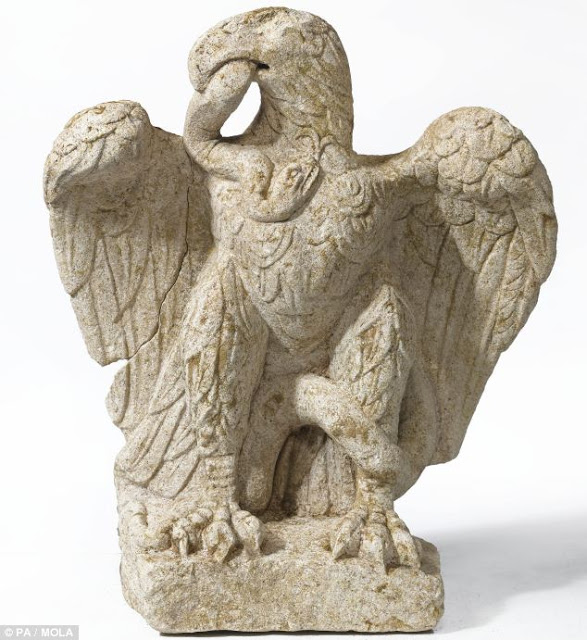
Roman eagle discovered in London Aldgate area.

In Rome

When Roman emperors were cremated ritually, an eagle was released above the funeral pyre to indicate that the soul has gone to dwell among the gods. One old Babylonian text tells us of the ascension of King Etana borne into the heavens by an eagle.


In fact, it is a Hindu belief. Hindus read the Garuda (Eagle) Purana during the 13 day mourning period after the death of a near and dear relative. Of the 18 major Puranas (Hindu Mythology), Garuda Purana is the only one that has got a special funeral liturgy called Pretakanda. Garuda (eagle) was the one who brought Amrita according to a Hindu story and so it symbolised immortality. Bird is always associated with the soul in Hindu literature.


Tamil Veda Tirukkural

Tamil Veda Tirukkural confirms it with a couplet:

The affinity of the body and the soul is like that of the nest and a bird in it. The soul departs from the body even as the chick deserts the nest – Tirukkural 338.

It is in Sangam Literature as well:

Tamil poet Kalladanar says in Akam 113:

“Oh, my friend! I won’t cry if my soul (life) leaves my body and goes to the place where my lover is working, like the bird that deserts its desolate nest and flies away”- said by a woman to her friend.


So, this is a Hindu concept of soul which is seen in many Hindu scriptures including Manu smrti and Bhagavad Gita with different similes.


Eagle is associated with Sun God in several cultures. In Palmyra in Syria, the eagle was associated with the Sun God.

Egyptian God Horus from Wikipedia

Garuda Vahana in Egypt

Horus is Sky god in Egypt recorded from 3000 BCE. Horus symbol is falcon, and he is generally depicted either wholly or in human form with a falcon’s head, exactly like Hindu’s Garuda Vahana.

Other divinities similarly portrayed were the Sun God Rue; Mentu, with adouble crown of feathers; Seker the god of the dead (as a mummified hawk); Hariese with the crown of Upper and Lower Egypt.


Horus is a form of the sun god. The alternative name Harakhti translates Horus of the horizon. He is sometimes depicted as a sun disc mounted between falcon’s wings. Kings are identified with Horus.


Horus as a baby on her mother Isis’ knee is as an amulet against snakes and other animals. In Hindu scriptures Garda mantra is used against snakes.

In many countries, such as Mexico, Thailand, Indonesia, India Garuda emblems are used.

The noticeable marking in the feathers under the hawk’s eyes is called Udjat-eye. This is Horus’ all seeing Udjat eye which became a symbol for visual acuity and imperviousness to injury as well as treasured amulet.


Assyrian Eagle Genie, 883 BCE (May be Garuda carrying amrita)


Christian World

Gothic windows portray the eagle carrying its unfledged young up into the sky to teach them to gaze into the sun. It figures in Norse mythology Odin. In Europe several saints have falcon as their symbol.

In Christian iconography, the eagle appears frequently as a symbol of  john the Evangelist, as an attribute of ascended phrophet Elijah and the resurrected Christ.


Quauhtli (eagle) is the 15th of the 20 days of the Aztec calendar. In ancient China it was the symbol of power and strength.


In Tamil Nadu, King Karikal Choza constructed an eagle shaped fire altar (Yaha Gunda) to perform a yaga according to Purananuru (verse 224). In Kerala even today eagle shaped fire altars are constructed for Atiratra  fire ceremony.

Eagle Vahana (Mount of God in processions) of Hindu temples


Eagle in Mahabharata similes

Bhima and Sikhandin wander about in the battlefield enraged like an eagle (6-78-28).

The Pandavas rush towards Jayadratha’s army as an eagle rushes towards meat (3-253-24)

The Pandavas and Kauravas fight like two  eagles fighting for meat (6-111-42)

I have already given the story of Garuda and Vinata as found in the epic.


Conclusion:

All ancient cultures used eagle, hawk and falcon as symbols of power and might.

But there are more similarities between Vedic and Egyptian cultures in attributing divinity to eagles.

Both identified eagle with Sun and Death and Immortality.


All other civilizations that used falcon and eagle have dies long ago and gone into museums. But the culture is still alive in Hindu India.


There are innumerable towns named after eagle and falcon; there are hundreds of temples where Eagle Vahana is use to carry Lord Vishnu’s idol.


Garuda is worshipped by villagers and sight of it is considered an auspicious sign.

Garuda Hymns and Mantra are used as anti-dotes for poison.

Rig Vedic hymns, the oldest in the world are still used!


(Please see below my previous articles on this subject)


Eagles fed at Tirukkazuku Kundram in Tamil Nadu Temple


Books used:

Rig Veda

Sangam Literature

Dictionary of Symbolism by Hans Biedermann

Encyclopaedia of Gods by Michel Jordan

Elements of Poetry in the Mahabharata


From my old article:


Hindu Eagle Mystery deepens, 16 February 2013


1.Why do Hindus worship eagle (suparna=garuda) from Rig Vedic Days till today?

2.Why do Hindus including the greatest Tamil king Karikal Choza built their Yaga Kundas (Fire altars) in eagle shape?

3.How is that two eagles come to Tirukazuku kundram just to eat rice pudding everyday for over 1300 year period?

4.Why do Hindus call Emeralds as Garuda Ratna (eagle gem), which Sindbad story writer copied it from the Hindus?

5.Why a Saivaite saint sang 1300 years ago about an eagle bringing flowers to Shiva every day?

6.Why do Tamil children shout ‘Drop me  a flower please’ when they see Garudas (falcon/eagle) in the sky? Why do Hindus recite a Sanskrit hymn when they see Garuda?

7.Why does Vishnu use Garuda as his Vahana (Mount of God)?

8.Why did Rama cremate an eagle Jatayu in Ramayana? Was it eagle totem people or real eagle? Why Tamils associate this with Vaitheeswarankoil (eagle town)?

  1. Why did Eagle people and Snake people (Garudas and Nagas) fight all over the world? We have the story here in Puranas, but symbols are in Egypt and Maya civilization?
  2. How come eagle brought Soma plant for the Yagas (Fire ceremonies of Hindus)?
  3. Why did a Greek build an eagle pillar with inscription calling himself as a great devotee of Vishnu?


Falcon symbols in Egypt

12.Tamil Encyclopedia Abithana Chintamani ( year 1899) attributes sixteen acts to Garudas. Many of them actually belong to people with eagle totem. They were against people with snake totem (Nagas). It is the ancient history of India. One must go deeper in to it to reveal the secrets.

  1. Why do women fast on Garuda Panchami day every year?
  2. Why is Garuda Purana is associated with the departed souls? It is read in the 13 day mourning period.
  3. Indus People painted eagle in (funeral ??)  potteries, Why? Has it anything to do with Hindus reading Garuda Purana after the funeral?
  4. Why is it that Amrita (ambrosia) is linked with Garuda/suparna?
  5. In the Assyrian bas-relief in Khorsabad (885 BC) Eagle headed  winged genie is carrying a vessel of lustral water and a pine cone sprinkler. It is one of the benevolent genies that protected men from diseases and evil forces. Is it Garuda with Amrita? (see the images)
  6. Why does Jaiminiya Brahmana (Vedic literature) say that eagle separates water from milk like Krauncha (swan) bird?
  7. Why does Romulus saw an eagle on the Aventine Hill and considered it as a good omen like Hindus and keep it in front of his army? Orthodox Hindus wait for Garuda Darsanam every day.

20.Why do newspapers report sighting of Garuda as a good omen during Kumbhabishekam or any religious event?

  1. Why does Krishna say that he is garuda/eagle among birds in Bhagavad Gita (10-30)(vainatheyascha pakshinam)? Western cultures also consider eagle as ‘King of Brids’.

If I write answers to all these questions it would become a big book. I am going to answer a few of these questions in this article.

(Please read the full article for more information)

…………………………..

I have already written about Vahanas, eagle shaped fire altars of Karikal Choza, Eagle Vs  Naga clans enmity in Mayan civilization, Double headed Eagle, Garuda Sthamaba of Greek Ambassador etc. Please see the titles of the articles given below:-

Double Headed Eagle: Sumerian-Indian Connection, posted on 18 December 2011

Picture of Double Headed Eagle in Turkey (Ganda Beranada Bird of Hindu literature)


Eagle/Garuda in India, Rome and Sri Lanka

25 September 2014

Karikal Choza and Eagle shaped Fire Altar

14 January 2012

A Hindu Story in Sumerian Civilization

11 May 2014

Eagle shaped fire altar at Vedic ceremony

–Subham–

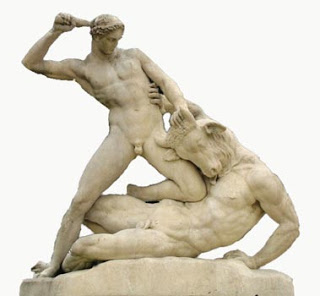
Picture of Theseus killing Minotaur

Written by London swaminathan


Date: 13 FEBRUARY 2017


Time uploaded in London:- 9-44 am


Post No. 3633


Pictures are taken from various sources; thanks.


contact; swami_48@yahoo.com


Vedic Hindus’ great discoveries include the decimal system, domestication of cow, bull, horse, the use of wheel, the concept of time, marine trade, divinity of man and arts. The proof lies in the 10,000 hymns of the Four Vedas. They are considered the oldest records of religious experience of human beings. Jacobi and BG Tilak dated them 6000 BCE. Others dated them 2000-1500 BCE.


Cows and bulls have more references in the Vedas than any other religious literature in the world. They gave them a holy status. They used them as similes for the affection and heroism. Indra is praised as bull among the humans in the Vedas. Later bull was made the vehicle of Lord Shiva. Every temple of Shiva has a big bull statue (Nandhi) in front of him. Though we have references to the bull in other civilizations, if we accept the date of the Vedas as 6000 BCE, then that is the oldest literary record.


“There were bulls which had massive strength, youthful and intoxicated bull, a bull with a steady gait, a vagabond and a forest bull, a fleeting bull, billowing bull in search of a mate. Indra is compared to a massive bull.” (Animals in Sanskrit Literature by Dr M K Sridhar)

Vrsabha (Bull) is referred to in the Rig Veda 1-116-12; 2-5-6;1-94-10; 1-160-3; 6-46-4;7-101-1;2-16-5;


Valmiki in his Ramayana aslo called Rama, a bull among men.

In Sangam Tamil literature which is 2000 year old, we see at least 70 references. Kings and heroes were addressed as Bulls.

In Kalidasa

Kalidasa used bull as a simile to the heroism or force of a leader in Raghuvamsam.


“He who has a befitting physique for his heroic deeds in kingship, with a sizable chest, bullish shoulders, tallish stature like a sala tree, and with dextrous arms, abided as a personification of the devoir and valour of kshatriya-s. [1-13]


As a calf attains the build of an impetuous bull, or a calf of elephant donning the build of an impulsive young elephant, raghu steadily attained a majestic and pleasing build when his adolescence is bested by his youthfulness. [3-32]

Oh, curvaceous lady, this chitrakUTa mountain with its mouth of a valley sending forth gurgling sounds of rapids, mud-like rainclouds attached to its horn-like apices, thus resembling a proudish bull whose cavern mouth sends forth a continuous bellowing and the tips of whose horns are smeared with mud dug up while indulging in butting against the side of a mountain, rivets my sight. [13-47]


“I have a wife, young girl; you may therefore resort to my younger brother…” Thus bull-shouldered Rama directed that lustful sUrpaNakha.(12-34)”

6b63d-bull-seal_0

Bull in Indus Valley

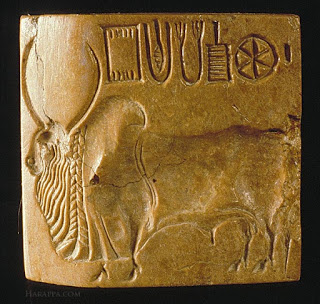
We have excavated more seals with bull figure in Indus valley than other animals. Surprisingly no seal with cow or no figure of cow is discovered in the valley. This shows the reverence they gave to the cow.

Sumerian Bull

Cattle evolved from the now extinct aurochs; water buffaloes are common in the seals of third millennium BCE Mesopotamia and it has been argued that they were imports from India.


0c090-ibni-sharrum-seal

Egyptian Bull

In Egypt, the king was hailed a s a Mighty Bull and his people were The Cattle of God.

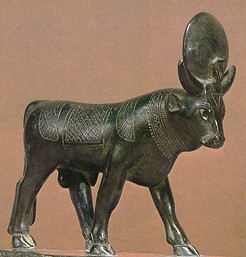
Apis was the bull god worshiped as symbol of natural forces.


One of the most ancient of all the evidences of funerary cults comes from the very distant past in the extreme south, from Tushka in Lower Nubia, where burials have been excavated from the twelfth millennium BCE which were surmounted by the skulls of the wild bull, the aurochs, Bos primigenius, which roamed the valley until it was exterminated by the kings of the New Kingdom, ten thousand years later.

In Mithraic religion in Rome, a bull was killed.


Cretan ritual had the artistic leaping dances in which the humans imitated the bulls. The bull faced demon Minotaur of ancient Crete was killed by the hero Theseus.


In astrology, the bull is represented in the zodiacal sign of Taurus.


Bull in Tamil Literature

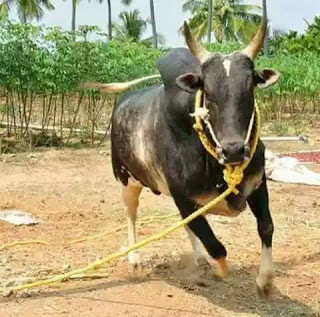
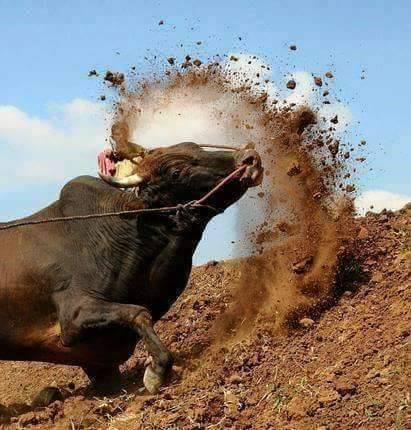
The primeval bull must have been a powerfully impressive symbol of vitality and masculine strength. The bull is of particular importance in the history of religion; bulls were worshiped in various cultures. There were symbolic rites in which a bull is defeated or sacrificed. Lord Krishna defeated seven bulls according to Hindu mythology. Tamils have the heroic game of Bull Fighting known as Jallikkattau or Manju Virattu. Unlike the Spanish bull fighting, here the bull is not killed but only tamed.

a09b5-bull2bsand

Tamil poets describe the bulls goring the wet ant hills with their horns and with mud on the horns accompanying the cows (Akananuru 64)


A fish caught in the fishing rod fights like a bull tied to ropes (Akam.36)


The tall black bull with white legs looked like a mountain with waterfalls.

The white bull with dots over its body resembles the twilight sky with shining stars.

The red with its curved horns appears like the God Siva wearing the crescent moon on his head. (Kali 103)


The bells on the horns of the reddish black bull are like the bees humming over the Naravu flower buds. (Kali 105)


Sources:

The Treatment of Nature in Sangam Literature, M.Varadarajan, 1969

Dictionary of Symbolism, Hans Biedermann, 1992

Who is Who in Ancient Egypt, Michael Rice, 1999

The Imagery of Kalidasa, Dr(Mrs) Vinod Aggarwal, 1985

Dictionary of the Ancient Near Eas, British Museum, 2000

sanscritdocuments.org

4e4b2-apis

Picture of Apis of Egypt

–Subham–


Ruler is Father and Mother: Hindu Concept in Tamil and Sanskrit Literature! (Post No.3626)

50b32-shivaji2bwalking2bpose

Written by London swaminathan


Date: 11 FEBRUARY 2017


Time uploaded in London:- 8-22 am


Post No. 3626


Pictures are taken from various sources; thanks.


contact; swami_48@yahoo.com


Hindus considered the Rulers as their father and mother. Generally, Guru and God are praised as father and mother by the Hindus in their hymns. But considering a ruler as a close relative is unique to Tamil and Sanskrit literature. Such a concept existed in ancient India at least 2000 years ago! We have got evidence for this in Tamil and Sanskrit literature. Though we have numerous references I will just give some proofs from both the literatures.


Following slokas (couplets) are from Raghuvamsa of Kalidasa (Source:sanskritdocuments.org)


प्रजानां विनयाधानाद्रक्षणाद्भरणादपि।
स पिता पितरस्तासां केवलं जन्महेतवः॥ १-२४

prajānāṁ vinayādhānādrakṣaṇādbharaṇādapi |
sa pitā pitarastāsāṁ kevalaṁ janmahetavaḥ || 1-24


Orienting his subjects in good conduct, protecting them from fears or dangers, according succour with welfare facilities, king DilIpa became their de facto father while their actual parents remained parents de jure. [1-24]


भूतानुकम्पा तव चेदियं गौरेका भवेत्स्वस्तिमती त्वदन्ते।
जीवन्पुनः शश्वदुपप्लवेभ्यः प्रजाः प्रजानाथ पितेव पासि॥ २-४८

bhūtānukampā tava cediyaṁ gaurekā bhavetsvastimatī tvadante|
jīvanpunaḥ śaśvadupaplavebhyaḥ prajāḥ prajānātha piteva pāsi || 2-48

“If, however, this be thy compassion for living beings, this cow will be the single one rendered happy by your death: on the other hand if alive, oh thou refuge of the people, thou canst like a father always guard thy subjects from calamities…  [2-48]


तेनार्थवान् लोभपराङ्मुखेन
तेन घ्नता विघ्नभयम् क्रियावान्।
तेनास लोकः पितृमान्विनेत्रा
तेनैव शोकापनुदेव पुत्री ॥ १४-२३

tenārthavān lobhaparāṅmukhena
tena ghnatā vighnabhayam kriyāvān |
tenāsa lokaḥ pitṛmānvinetrā
tenaiva śokāpanudeva putrī  || 14-23


On account of his being disinclined to avarice, his subjects became rich; on account of his removing the fear of obstacles they carried on their religious ceremonies; on account of his being their leader they had a father in him; and on account of all grief being removed by him they were, as if, blessed with a good son. [14-23]

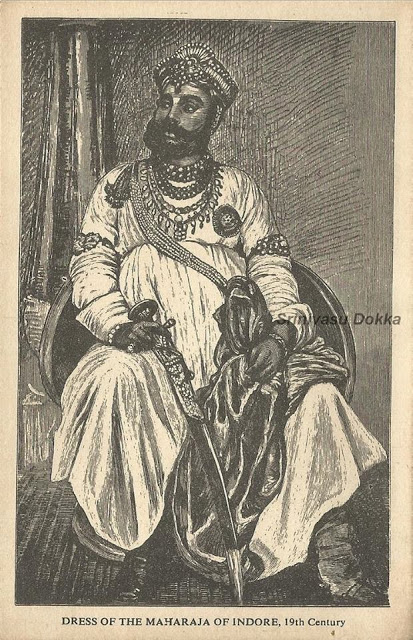
2949d-indore2bmaharaja

In Sakuntalam drama of Kalidasa:


Chamberlain:

“Here is His Majesty

Wearined caring for his subjects

as if they were his own children” (5-3)


King

On the other hand, what does it matter whether there is an heir or not;

Proclaim thus to my subjects; Whosoever

suffers the loss of one dearly loved

shall find in Dudhyanta one to take his place

in all relations deemed lawful and holy (7-25)


Kautilya in his Arthasastra also says the same (4-3; 7-16)


MANU SMRTI says

  1. Having ascertained his learning in the Veda and (the purity of) his conduct, the king shall provide for him means of subsistence in accordance with the sacred law, and shall protect him in every way, as a father (protects) the lawful son of his body.


TAMIL INSCRIPTIONS AND LITERATURE


We find the same lines in a Tamil inscription of Raja Raja II

“Father for those who have no fathers, Mother for those who lost mothers

Sons for those who have no issues, life of all the living beings”


SANGAM LITERATURE


Mankudi kizar (verse 396) says that the ruler Vataatru Eziniyaathan is the relative of every citizen who has no relations.


“Most quoted Tamil verse in Purananuru (192) of Kaniyan Punkundran says

Every town is my home town; everyone is my kinsman”


Nari Veruuththalaiyar (verse 5) praises the king as father and his subjects as his children.


Marudan Ilangan (Kalitokai verse 99) praises the king as Mother to everyone.


Mosikeeranaar of verse 186 (Purananuru) says that the world depends upon the king for everything.


Another strange coincidence is the word for people in Tamil and Sanskrit are Makkal and Prajaah respectively. Both meant people and children both the languages!


All these references show that Ancient India had one culture and all the arguments that Aryans and Dravidians came to India from outside are false.


–Subham–


Parliament/American Congress Anecdotes (Post No.3618)

Compiled by London swaminathan


Date: 8 FEBRUARY 2017


Time uploaded in London:- 18-59


Post No. 3618


Pictures are taken from different sources; thanks.


contact; swami_48@yahoo.com


The late Senator Henry Cabot Lodge was talking about the ineffectiveness of the most Congressional (Parliament) Investigating committees.

Some of them, he observed, remind me of Si Hoskins. Si got a job at shooting muskrats, for muskrats overran a mill owner’s dam .There in the lovely Spring weather, Si sat on the grassy bank, his gun on his knee. Finding him one morning, I said,

“What are you doing, Sir?”

“I am paid to shoot the muskrats, sir. They are undermining the dam.”

“There goes one now, said I, shoot man! Why don’t you shoot?”

Si puffed a tranquil cloud from his pipe and said,

“Do you think I want to lose my job?”

Xxx


Once the House was making an effort to secure a quorum, and, as is usually done in such cases, telegrams were sent to members who were absent. One man, who was delayed by a flood on the railroad, telegraphed Thomas B Reed, Speaker of the House saying,

“Washout on line, can’t come”.

Reed telegraphed back, “Buy another shirt and come on next train”.


Xxxx

Strange Parliament!


Congress is so strange, commented Boris Marshalov, a Russian actor and dramatic coach, after a visit to the spectators gallery of the House of Representatives,

“A man gets up to speak and says nothing. Nobody listens — and then everybody disagrees.”


Xxx

Uni Cameral and Bi Cameral Systems

Laboulaye said, in one of his lectures, that Jefferson, who had become so completely imbued with French ideas as even to admire the unicameral system of legislation, one day visited Washington at Mount Vernon , and in course of the conversation that ensued, the comparative excellence came up for consideration. After much had been said on both sides, finally, at the tea-table , of the two systems

Washington turning sharply to Jefferson, said,

“You, sir, have just demonstrated the superior excellence of the bicameral system, by your own hand”.

“I! How is that?”, said Jefferson

“You have poured your tea from your cup out into the saucer to cool. We want the bicameral system to cool things. A measure originates in one house, and in heat is passed. The other house will serve as a wonderful cooler; and by the time it is debated and modified by various amendments there, it is much more likely to become an equitable law! No, we can’t get along without the saucer in our system”.


Xxxx

Tension Headaches!

The nervous condition resulting from high tension in our national capital in war time is indicated by the case of the weary Congress man who paused in the drug store of his hotel and asked for a box of aspirin tablets.

“Sorry, sir, said the clerk. We are all out of everything for headaches”.


Xxx

Ward Lamon told this story of President Lincoln, whom he found one day in a particularly gloomy frame of mind. Lamon said,

The president remarked, as I came in, “I fear I have made senator Wade of Ohio my enemy for life”.

“How?”,I asked.

“Well, continued the President, Wade was here just now urging me to dismiss Grant and in response to something he said, I remarked: Senator that reminds me of a story

“What did Wade say? Inquired Lamon of the President.

“He said in a petulant way, the President responded: “It is with you, sir, all story, story! You are the father of every military blunder that has been made during the war. You are on your road to HELL, sir, with this government, by your obstinacy, and you are not a mile off this minute”.

“What did you say then?

I good naturedly said to him, the President responded,

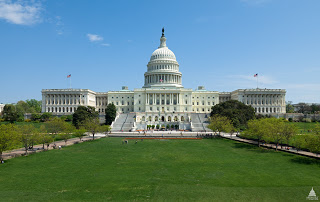
“Senator, that is just about from here to the CAPITOL (Building of American Congress), is it not?”

He was very angry, grabbed up his hat and cane and went away.


–Subham–


Taj Mahal is a Hindu Temple reveals the book ‘World Vedic Heritage’ (Post No.3591)

Written by S NAGARAJAN


Date: 31 January 2017


Time uploaded in London:-  5-06 am


Post No.3591


Pictures are taken from different sources; thanks.


contact: swami_48@yahoo.com


Santhanam Nagarajan


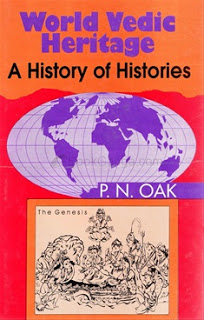
The book under review ‘World Vedic Heritage – A History of Histories’ is written by a great reserach scholar P.N.Oak after years of research on this subject.

This was written way back in 1984 and I have read it long back with wonder. Some of the topics like Taj Mahal was a Hindu Temple, Vedic stanzas are in Koran, Aurangazeb’s grave is in a Goddess Temple-Yard etc. attracted me very much. While I am reading this book now, still it fascinates me.

Even though the subjects are controversial, the author has given ample authoritative evidence for the readers.

The author says that the dome of the Taj Mahal in Agra, near New Delhi, the capital of India, has lotus petals. The lotus petals in inlay-work girding its base, the inverted lotus on top of the dome and the trident pinnacle are all Hindu, Vedic features indicating that the fifth generation Mogul emperor, Shahjahan only requisitioned the Tejo Mahalaya Shiva Temple.

Most of the area in around the main building is under Archaelogical Department’s control and no visitor is permitted there. Oak says that there is ample evidence to prove his point in those areas.


The book has 92chapters in 1312 pages. The Vedic culture in the East, Vedic past of Japan, China, Korea and Manchuria, West Asia etc. are dealt in detail by the author. Supporting his theory, the author has given 56 photos also in the book.

The book makes an interesting reading.  It is argued in the book that the first immediate reaction of a large section of the public on reading an unheard of thesis of the kind expounded in this book is likely to be one of shock, disbelief and rejection. But the cogency of the argument, the continuity of the thread of the history and the comprehensive evidence are likely to be persuasive factors which may ultimately make the theme more agreeable and acceptable.

A detailed bibliography is also attached at the end of the book quoting 114 sources.

The reader may draw his own conclusion after digesting all the facts put forth in the book. Lastly, after going through the contents of this book, one will get the impression that the Indian history must definitely be re-written correctly.

Purushottam Nagesh Oak (Birth: 2 March 1917; Death: 4 December 2007), commonly referred to as P. N. Oak, was an Indian writer, notable for his Hindu-centric brand of historical revisionism. Oak’s “Institute for Rewriting Indian History” issued a quarterly periodical called Itihas Patrika in the 1980s.    He has written more than twelve books. He was on the editorial staffs of the newspapers Hindustan Times and The Statesman.  He joined in the Ministry of Information and Broadcasting, India and served as class I officer for a long time.

In all, those who are interested in Indian History, should read this book without fail.

***

This article first appeared in www.ezinearticles.com

You may read Platinum Author Santhanam Nagarajan’s articles in the above site.

Pl follow the link to read about Taj Mahal :                         http://EzineArticles.com/expert/Santhanam_Nagarajan/19574


Hide and Seek Game in Sangam Tamil literature (Post No.3555)

Written by London swaminathan


Date: 18 January 2017


Time uploaded in London:- 20-37


Post No.3555


Pictures are taken from different sources; thanks.


contact; swami_48@yahoo.com


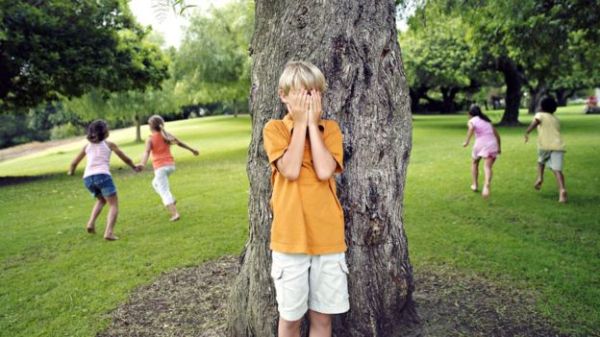
Hide and seek game is played all over the world. There is no wonder that it is played everywhere because it is happening in every home. A mother knows that when she is away the child cries. She has found out how she can make a child to cry and then to cheer it up. So just to make it laugh loudly she closes her face and then suddenly opens it with some words or sound, then the child bursts into laughter. C Sometimes she hides herself behind the door or a curtain and the child cries. Cave men also would have played this with his sons to surprise them. Later it would have developed into a proper game with all the rules.

Greek recorded hide and seek in the second century CE. But Hindu Puranas and Tamil literature recorded it even before that.

I have played it in my school days. Once a person in a group finds one of the playmates then we ask him to count hundred facing the wall and then all of us hid ourselves in small lanes, upstairs, under the beds etc. Though we know that it is a world wide game played even today in some parts of the world, one would seek some historical information about this game. We are fortunate to have some references in Sangam literature and later Kamba Ramayana.


In the ancient Tamil speaking world, it has been a woman’s game. One lady is blindfolded and all her friends run and hid themselves. Then this lady goes in search of her. Another way of playing is to blindfold one lady with a towel and all others sorround her and make funny remarks or clap their hands from different directions. The blindfolded lady should find her target/victim tracking her friends’ voices. Either way it is interesting.


We have two references in Sangam Tamil Literature :


Ainkurunuru verse 293


Malaipadukadam Line 221

The advantages of this game are

Any number of people can play

Any time you can play

It can be played indoor ( for kids) and outdoor for adults

Ancient Tamils would have played it in parks and village temples

It is a good  exercise for adults.

You don’t need to spend a penny; it is free

You don’t need any instrument or coins or equipments

It gives a great mental relief.

There is no time limit, one can play as much as one wishes


Sangam literature is 2000 year old. We have a reference in Kamba Ramayana which gives a good description of the game:


A rough translation of the verse on Balakandam:

Oh my honey! My flower like girl! My Gold! Find me if you can. When the lady is struggling to find her friend, she jumps out from nowhere to come behind her and cover the lady’s eyes saying ‘look at me now’. She is surprised and all others laugh and tease her.


We have similar stories in the Puranas.  Parvati played hide and seek with Siva and the whole world became dark when she covered Siva’s eyes. Then Siva opened his Third Eye to drive away the darkness.


Following is a BBC story:-

World’s biggest ‘hide-and-seek’ bid starts at Milton Country Park

More than 1,000 people have turned out at a country park in a bid to break the world record for the the biggest ever game of hide-and-seek.

The current Guinness record for a hide-and-seek game involved 1,437 people.

The record-breaking attempt at Milton Country Park near Cambridge was organised by Cambridgeshire Search and Rescue (CamSAR).

It is understood the total turnout, while “close”, was just short of the world record-breaking target.

The exact number has yet to be confirmed.

The search group hosted a hide and seek competition in 2014 which attracted 400 people and another last year which drew in 1,100.

A spokesman for CamSAR said: “If all (those) who had pre-registered had come then we would have just beaten the record.

“Still, probably more importantly, those who spoke to me said they were having a great time at least.”

CamSAR is expected to consider another record-attempt next year.


The current record was set on 1 January 2014 in Chengdu, China.

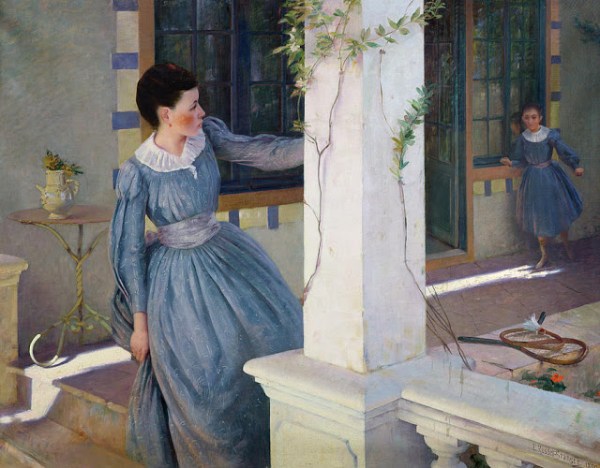
  • Hide and seek in painting


  • According to the Encyclopaedia Brittannica, hide-and-seek appears to be equivalent to the game apodidraskinda, described by the 2nd-century Greek writer Julius Pollux


(Hindu Literature referred to it even before second century)

  • Versions of the game exist across the globe. In Spain the game is called el escondite, in Israel machboim and in South Korea sumbaggoggil
  • Key elements in all the versions of the game are the closing of eyes, hiding and an agreed period of counting


–Subham–


Kurathi- Tamil Soothsayer and Bull Fighting Floats in Tamil Procession (Post No.3430)

Compiled by London swaminathan


Date: 8 December 2016


Time uploaded in London: 13-28


Post No.3430


Pictures are taken from different sources; thanks.


contact; swami_48@yahoo.com


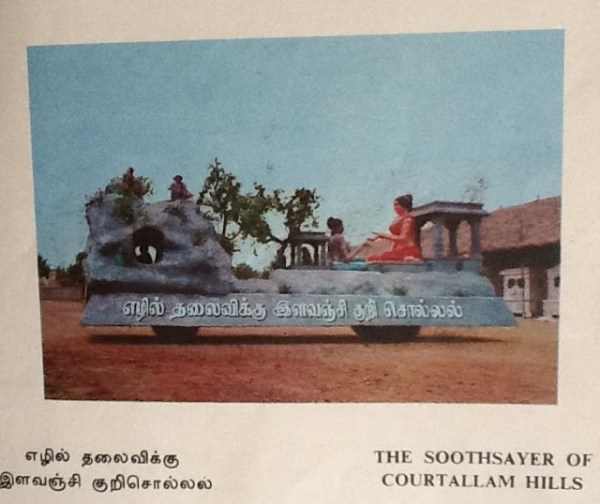
Following are the floats (tableaus) in the Fifth World Tamil Conference held in Madurai in 1981
THE SOOTHSAYER OF COURTALLAM HILLS

Kuravanchi is a conventional form of Tamil poetry which blends together some of the ways of life of the elites with those of the hunters. Tirukuta  Rasappa Kavirayar, a Tamil poet from Melakaram, near Tenkasi in Thirunelveli District, has composed Kutralakkuravanchi which is considered to be the supreme example of this genre of Tamil poetry.


It portrays Lord Siva coming in procession accompanied by his devotees against the background of the natural tapestries of the captivating hills of Courtallam, its flora and fauna and its beautiful waterfalls. With its excellent rhythmic beauty, sensuous style, flexible and tender poetic diction it also depicts the heroine Vasantha Valli falling in love with Lord Siva. She is so captivated by the charms of the handsome Lord that she suffers from insomnia and mental agony which a girl faces due to the pangs of separation from her lover. At this juncture, a woman soothsayer from the hunter’s tribe of Courtallam arrives there singing the beauty of Courtallam and the transcendental glory of the Lord. The words of the foreteller console Vasanthavalli and give her the hope of marrying the Lord. This tableau depicts the foretelling of the soothsayer.


xxxxx


KURINCHI


The ancient Tamils have classified the landscape into five divisions namely Kurinchi (Hilly region), Mullai (Pastoral), Marutam (Plain), Neytal (Coastal region) and Palai (Wilderness). While dealing with the poetic conventions of the love poems, they have assigned the Mutarporul (i.e. time and space), Karupporul (i.e. the flora and fauna) as well the Uripporul (i.e. the human drama which forms the poetic theme) for each division of lands. This tableau depicts an event wh ich normally happens in the ancient Kurinchi poems. In the human drama of love, Kurinchi depicts love at first sight. Eventhough the damsel is anxious to embrace the hero, out of her feminine quality namely “nanam” (shyness), she feels reluctant to come near the hero. At this juncture, a ferocious tiger comes on the spot. The fear of the tiger makes her cast away her shyness. Without any second thought she takes refuge in the broad chest of the hero, who protects her and drives away the tiger by his arrow.
xxxx

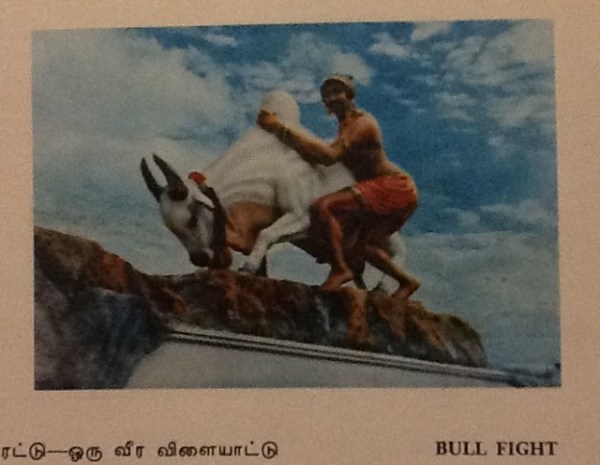
BULL FIGHT


Bull fight is one of the heroic sports of the Tamils and has its origin in a very hoary past. In Mullaikkali of Sankam anthology we come across some instances of the hero grappling with a bull and conquering it as a test of bravery. The damsels of the ancient Tamil pastoral used to bring up wild bulls. They were given in marriage to the suitors who successfully conquered their bulls.


According to Mullaikkali, the girl of the pastoral land would not even think of the defeated man as her husband in anyone of her various births. This scene depicts a hero who tries to conquer the bull and a heroine who waits anxiously to garland him after his victory. This sport is in vogue in many parts of Tamilnadu, especially in some parts of Madurai as a sport under the popular name Manchu Virattu.
xxxx


THE HERO AND THE LANCE

Thiruvalluvar, who glorified agriculture describes a heroic battle in one of his couplets as: “At elephant heads his lance, for weapon pressed He laughs and plucks the spear from his breast be Slaying the elephant in the battle is considered to a supreme kind of heroism by the Tamils. A hero who was nurtured in this heroic tradition fought with an elephant in a battle. He threw his lance on the frenzied elephant which fought fiercely with him. The elephant fell down. When he turned with pride, the victorious hero was hit by the spear of an enemy. At the same time, an elephant also attacked him. Finding no lance ready with him to attack the elephant, he removed the spear which had pierced into his body to throw it on the enemy elephant. Removing the spear, he gloats over the fact that he has a weapon to fight the elephant. Tirukkural describes this thrilling episode and the tableau depicts it.

–Subham–

My Challenge to Dalits in Britain (Post No.3390)


Mr Krishna Ralleih speaks


Written by London swaminathan


Date: 26 November 2016


Time uploaded in London: 7-51 AM


Post No.3390


Pictures are taken by Mr Prabhakar Kaza and Mr Aditya Kaza; thanks.


contact; swami_48@yahoo.com


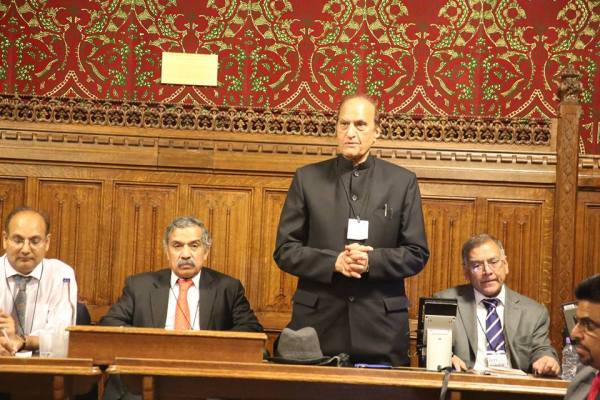
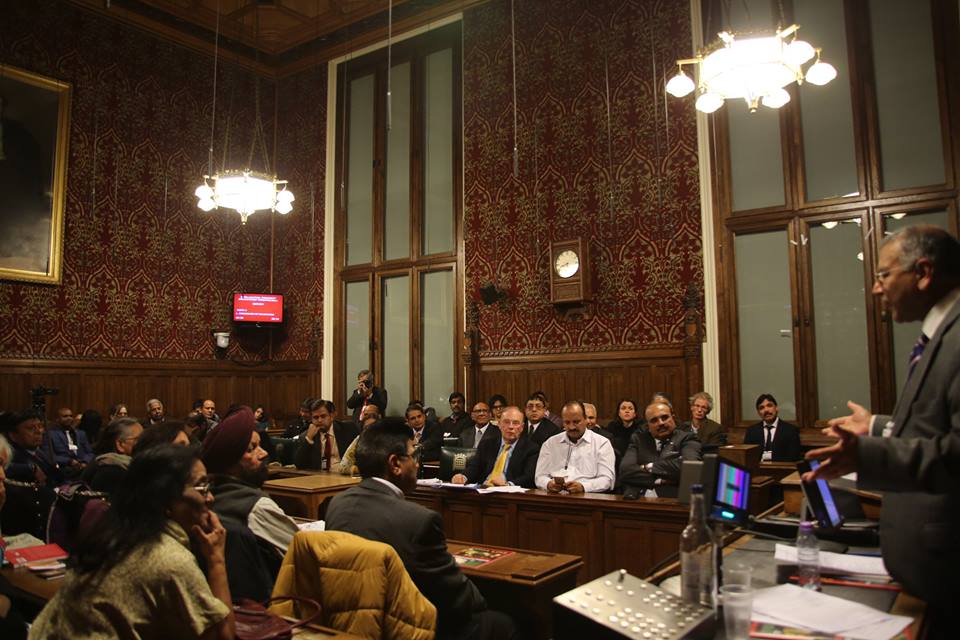
Part two of my speech at the British Parliament (Building, committee room 12, date 23-11-2016)


Please read the first part of my speech, posted here yesterday.

Friends,

What will happen if the word CASTE is included in the equality Law?

Christians will use it to convert the Hindus in Britain,

Solicitors will make money by inducing Dalits to file compensation cases. We see a very big compensation culture in this country.

Dalits will use this to get financial aid from some organisations. Domestic servants who came from India will use it to stay in the country permanently and get British citizenship.


Politicians will get more votes if there are more Dalits in their constituencies.

Society will be more divisive

There will be a permanent black spot on Britain

That will be the blackest day in British history because you yourself admit that there is a caste issue in this country.


My friends,

This is the only European country, nay, only country in the Western world that admits that you are suffering from caste discrimination. No other country in Europe has such a law.

There are one million Tamils living in and around Paris. All of them went from Pondicherry, from my part of the world. They did not enact any law regarding caste discrimination.


So if you enact a law like this, it will be a permanent black patch on British society, particularly Hindu community.


Like I said in my two stories, you can solve this problem like Lord Krishna or the King who ordered shoes for everyone in his kingdom.


What we need is change of attitude, change of mind set, education and creating awareness on this issue, where it exists, if it exits.


Now I throw you a challenge! Get out of this hall and ask 100 Hindu youths at random about caste discrimination. They will tell you they don’t know anything about it.

The younger generation do not know anything about it. If you include the word CASTE, you will be poisoning their minds.

Shout from the audience:

At this point, one gentleman in the audience raised his hand with a book, and said It is in this book.

Then I shut his mouth by saying “who wrote the book? It is we who write the book”.

Immediately others also pointed out, that there is Q and A Time and he has  to wait.

I continued…….


Right. You enact the law. What will be the result?

Did all the laws work in this country?

Anti -drug laws are there; but they are ineffective. We read news items that it did not work. Even inside prisons they can get drugs causing enormous problems. Drug abuse is even legalised in some countries.

There is anti- terrorism law; but the Metropolitan police chief himself issued a warning recently: if you hear any bomb explosion run as far as possible or hide yourself somewhere safe; don’t do any stupid things (like taking selfie pictures of pictures for Facebook) There is no guarantee for your safety.


That is why I tell you to change the attitude, mindset by educating them.

Let us spread the message of love and kindness.

Thank you.

(I was happy that they listened to me and gave me a big round of applause, though the hall had more Dalit supporters. They were very vociferous when the Dalits accused the caste Hindus)

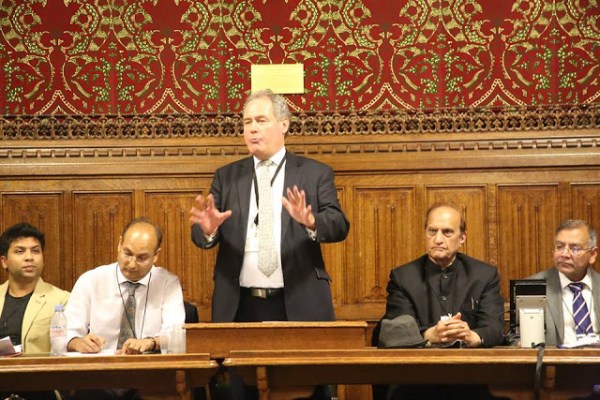
A great Friend of the British Hindus, Bob Blackman MP, speaking


There were other speakers: Mr Satpal Murman, Mr Ram Morla, Mr Saunvedan Aparanti and Mr Geaorge Kunnath who supported amending the law o include the word CASTE.


Miss Ridhi Vyas, myself Santanam Swaminathan, Mrs Trupti Patel and Mrs Satish Sharma opposed the inclusion of the word Caste.

Mr Bob Blackman MP and a great friend of the Hindus, opposed it. Mr Veerendra Sharma MP could not attend it due to some urgent work in his constituency.

Earlier Mr Prabhakar Kaza welcomed the gathering and Krishan Ralleih ,Founder of the IFBM, explained the activities of the organisation and the purpose of this meeting.

Ms Bhanu Sistla introduced the speakers and conducted the seminar.

It was well attended and well received.

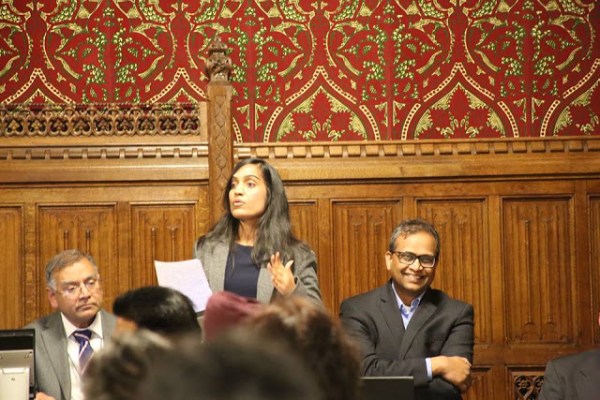
Ms Ridhi Vyas speaking


What I did not say:

Though it was in my written notes, I didn’t say the following, for lack of time and propriety:

India is a land of wonders; not only for its natural beauty, cultural diversity and beautiful temple architecture. It is a land of wonders because of its castes. No one was able to tell us how and why the castes divided or multiplied into thousands. We see only four castes in the oldest book in the world- The Rig Veda. But now we have 40, 000 castes. How and why it happened, no one could tell us. Recently I have been doing some research about the Badaga community in Tamil Nadu. This small hill tribe has got 20 castes in the group! That is why I call it a land of wonders.

All of us want a society where there is no discrimination on the basis of one’s birth. “All are born equal but some are more equal than others”. Look at us. We all respect Her Majesty the Queen, whose post is decided by birth. Neither I nor you can become king or queen in this country. It is decided on birth in the royal family.  But we all accept it. Not only British, even the Australians voted for our queen. She commands so much respect from one and all. As long as it does not affect an individual or as long as the majority agree, we do such things.


–Subham–