Mystery of Horse: Sudden Appearance from Egypt to India! (Post No.3181)

img_8090

Written by London swaminathan

Date: 23 September 2016

Time uploaded in London: 15-30

Post No.3181

Pictures are taken from various sources; thanks.


Rig Veda, the oldest book in the world, contains references to horse, horse race, chariots and riding in almost all the ten Mandalas. No other literature in the world has so many references to horses. May be Zend Avesta which came after Rig Veda has some references. We know Homer’s Iliad and Odyssey came nearly 1000 years after the Rig Veda.


A research paper submitted on the basis of fossils discovered in Western India in 2014 showed that the ancient relatives of horses originated in India.

“Working at the edge of a coal mine in India, a team of Johns Hopkins researchers and colleagues have filled in a major gap in science’s understanding of the evolution of a group of animals that includes horses and rhinos. That group likely originated on the subcontinent when it was still an island headed swiftly for collision with Asia, the researchers report today in the online journal Nature Communications. It happened more than fifty million years ago. (20 November 2014 newspaper report)
horse-body-parts

Though there is a very big gap in time between the Rig Veda and the fossils, the fossil discovery shows that horses are not new to this region. Actually a great mystery lies in the fact that horses appeared suddenly in Egypt, Middle East and India at the “same time”. But latest hydrological research in the Sarasvati basin shows that Rig Veda was “composed” or “heard” by the seers before 1900 BCE. The precession of the earth and the stars mentioned in the Vedic literature shows that Rig Veda must have been composed or heard before 3000 BCE. This means that the horses were exported from India to other parts of the world.


Is there any other proof to support this hypotheses? Yes, we have archaeological proof from the Hittite empire. They were trained in Sanskrit!

Mitannian kings had Sanskrit names found in Ramayana and Vishnu sahasranama such as Dasarata, Pratardana. But being distant from the place of origin they had corrupted spellings like Tushratta. We see such trends in Mauritius, Sri Lanka and Malaysia where the migrated Tamils write Turka instead of Durga, Tamayanti instead of Damayanti, Murder mootoo instead of Marudamuthu.


We also find the Sanskrit word asva/horse in their names: Biridaswa (Brhad Asva) possessing great horses, sattasva (Sapta+ Asva), possessing or winning seven horses.


Zend Avesta, holy book of Zoroastrians, also has names such as Drvaspa ( agoddess)- she who keeps horses in good health, Vistaspa ( a king of Bactria), son of Aurvat aspa, Pourus aspa, father of Zarathustra, he who possess many horses, Arbataspa master of war like hoses, Huaspa- having good horses.

Aspa= Asva= Hrasva= Horse

Kikkuli of Mitanni was the one who taught them to use war horses. His horse training manual is in Sanskrit:

Wartanna = vartana = a turn

Akika = Eka = one turn

Tera = tri = three turns

Panza = pancha = five turns

Nava artanna = nava = nine turns.

Foreigners looking at the colloquial form of Sanskrit thought that it was Proto Sanskrit. It is actually the localised Sanskrit. Even today Sanskrit words are Tamilized in Tamil Nadu and the ancient Tamil Grammar book has rules for it. Without understanding this, they thought it was a different language.

img_8091

There is another proof also. The Bogaizkoy inscription mentioned the Vedic Gods in the same order as Rig Veda. When two kings signed an agreement they sealed their agreement with the Vedic mantra. All the scholars who studied Vedas agree that the Vedas originated on Indian soil. This shows that  the Hindu scriptures have spread to Turkey-Syria border around 1400 BCE!

We see horses at the same time from Egypt to India


With the archaeological and linguistics evidence, now it is confirmed that the Hindus went from India to give training in horses. There are more proofs in the Rig Veda:-

The horse was called asva, atya (runner), arvant (swift), strong for pulling (vaajin), the runner (sapti). Mare was called with four different names. Different colours of horses are also described. A white horse with black ears is mentioned in the Athrva Vedas as of special value. Horses were highly prized. Gifts of 400 horse are mentioned. Horses were decorated with pearls and gold. Horses from Indus and Sarasvati were praised high.   Kings had names as Asvapati etc. chariots, races and Asvamedha Yajna are mentioned.

All these show that the technic of raising horses originated in India.

Now that we know the Rig Veda is dated between 1900 BCE and 3000 BCE following dates are better understood:–

Hittite empire, a city rebelling against King Anittas in 1750 BCE, fielded 40 Chariots; Hattusilis I (sathyaseela)  (1650 BCE) fielded 80 chariots at the siege of Urshu; by the Battle of Kadesh (1285 BCE) Hattusas fielded 2500 chariots under Muwattalis II (1306 BCE)


img_8092

The Hyksos (Hindu Yakshas)

Egypt used ‘equus asinus’ first for carrying burdens and then ‘equus caballus’. Asiatic Hyksos captured power in Nile delta in 1750 BCE. They were the one who brought horses from India to Egypt they are shown in chariots.


We see horses in a plaque of Tuthmose III (1479 BCE). Later we see more horses. So around 1400 BCE it is seen on a large area frm Egypt to Plains of Ganges. How was it possible where there was no modern transport like today. It was possible only because India sent trainers like Kikkuli to all the countries


Science of Horses

Mitochondrial DNA tests conducted on over 600 horses from 25 breeds world wide prove that at least 17 genetic groups are involved; that horses originally from diverse locations; and there were at least six locations in which horses were domesticated. At present no direct glimse of how the first horse was domesticated (Daily telegraph, 14-8-2002)


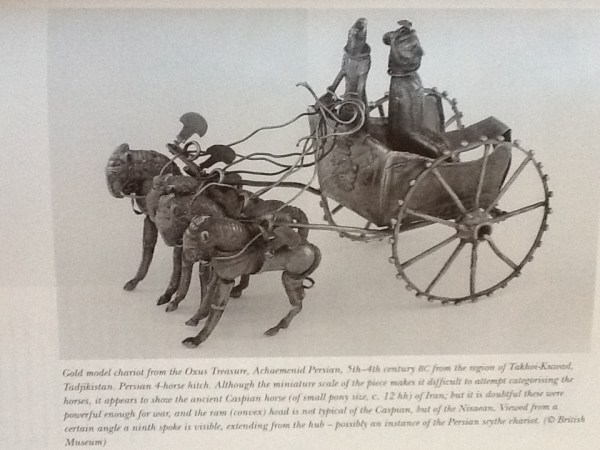
Domesticated horse was present in Mesopotamia from 2500 BCE. Horse remains found in Syria are dated 2400 BCE. Syria and Turkey were under Vedic Kings from very early times under Kassites, Hittites and Mitanni. Standard of Ur depicts five four wheeled wagons with four equids apiece. Mesopotamian horse artefacts are dated between 2800-2500 BCE. Sice the Vedas are dated before this date by astronomical refrences, we may assume that domesticated horses went for India to other countries.


The horse appears in a Sumerian text ‘The Curse of Agade” where the Goddess Inanna of Agade, capital of Sumer, sought to bring harmony to men and nimals, among them the ass of the mountains Anse Kur ra – the horse (2000 BCE)


There are proverbs about horses in Sumerian texts :

You sweat like a horse (it is) what you have drunk

If my burden is always  to be this, I shall become weak (horse says)


Domestic horse remains are recovered from south west Iran. They are from the Kaftari era (2100-1800 BCE)
 img_8088

Biblical reference

Genesis 47:16 has reference to horses. Canaanites had come requesting food from Egypt; this was granted ‘in exchange for their horses, their sheep and goats, their cattle and donkeys’.

Mari used chariotry in war, and also the donkey mounted couriers. From mari comes the earliest personal record of horse riding. King Zimri Lim was advised to take the safer option of riding a mule, or in a chariot, rather than risk riding horses.


The scarcity of horses at this time is shown by the value of a single animal:

A horse is worth 30 times that of a slave

Or 500 sheep

Or 5 minas of silver (2-4 Kilos)

From the above facts  we can prove that the Rig Veda is the first source of horses provided the date 3000 BCE is accepted.


At Jaggayyapeta, India is a relief where the horse is depicted as a symbol of the world ruler- Chakravarti.


The horse sacrifice also appears in Zend Avesta , albeit in religious fiction, when 100 male horses, 1000 oxen, 10,000 lambs are offered to Ardvi sura Anahita on the Hara, the Alborz mountains south of Caspian Sea.

(This shows Zend Avesta is an imitation of Hindu scriptures, sometimes a caricature of the Hindu Vedas)

Source: The horse in the ancient world by Ann Hyland, 2003, Newspaper cuttings and my comments.

img_8085


–subham–

Dictionary of 10,000 Kings -Part 22: Hindu Rulers of Bangladesh (Post No.3139)

img_7942

Written by London Swaminathan


Date: 9 September 2016


Time uploaded in London: 17-51


Post No.3139


Pictures are taken from various sources; thanks.


img_7941

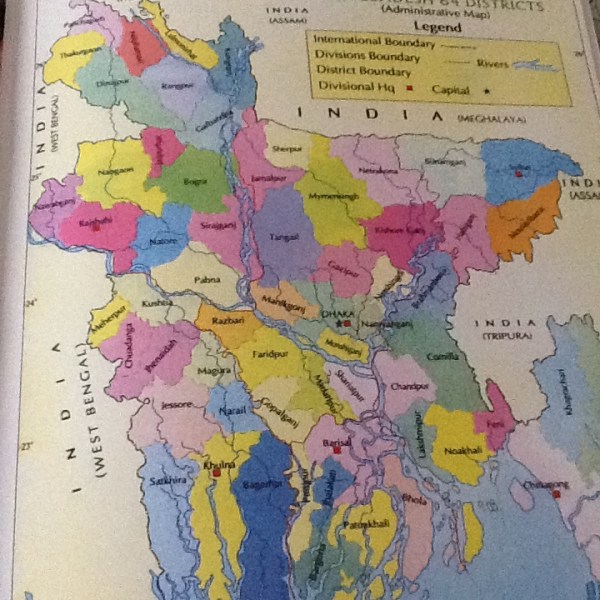
I have already listed the Pala Vamsa (dynasty) kings of Bengal in part 15. Recent discoveries have revealed names of more kings who ruled Bengal area, now called West Bengal state of India and Bangladesh.


So let me add those kings to our 10,000 kings who ruled India from ancient days.


Source book

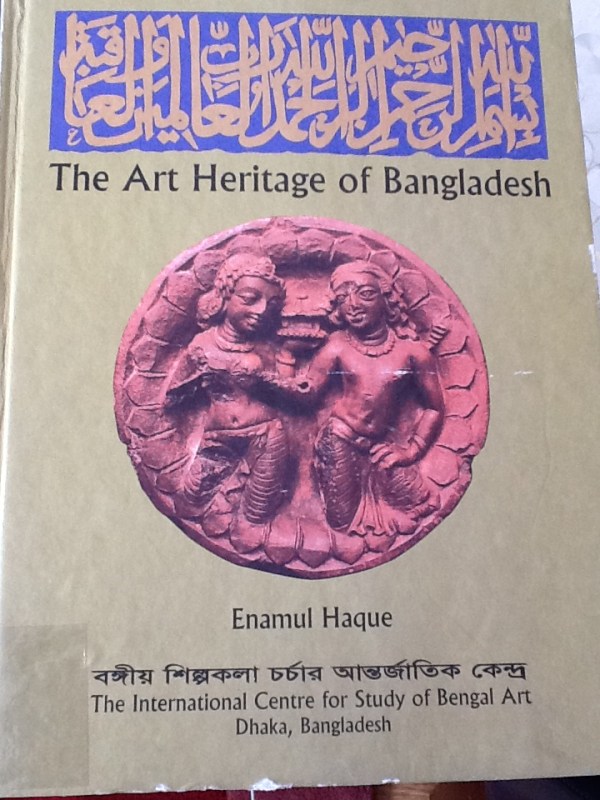
The Art Heritage of Bangladesh by Enamul Haque,Dhaka, 2007


Archeological materials are available from 450 BCE in Bangladesh

Tha Bodhayana Dharmasutra, Ramayana, Mahabharata and later books mentioned the Vangas and adjacent Lauhitya (Brahmaputra river).

Greek and Latin authors also mentioned these areas as Prasii and Gangaridai. Prasii is identified with Magadha. Market town Gange, Gangaridum are also found in their books. Gange is identified with Chandraketugarh in West Bengal (India).


Scholars think that the Greeks mentioned both Prasii and Gangadirai together because when Alexander invades India, these two empires formed joint command of their armies. Greeks say the two Indian Kingdoms had an army of

20,000 to 80,000 cavalry

200000 to 600 000 soldiers

2000 to 8000 chariots

4000 to 9000 elephants

Since various authors give different numbers approximate numbers are given. Having heard about the mighty Indian army Alexander turned back.

Vijaya, a banished king of Vanga established the first kingdom in Sri Lanka according to Mahavamsa and Dipavamsa.

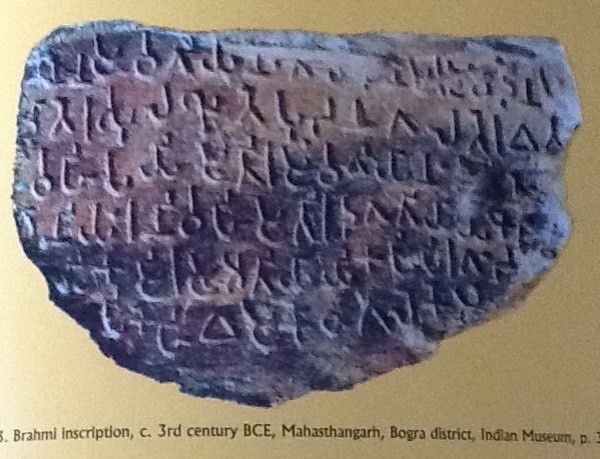
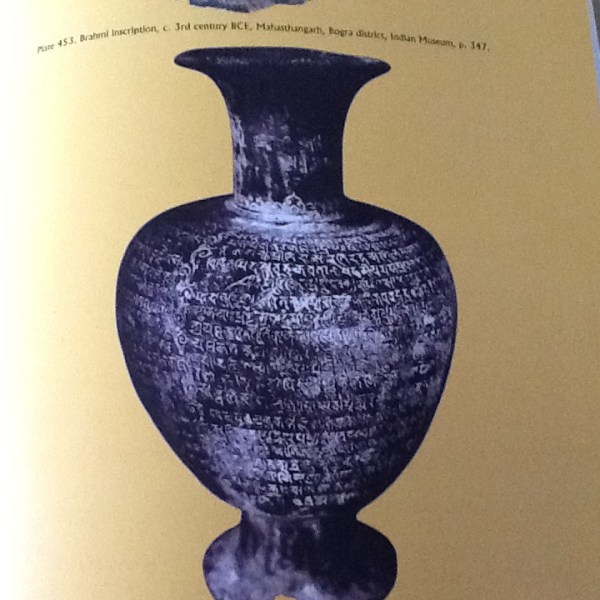
After Alexander’s departure Magadha kings might have ruled Bengal area. Indirect evidence comes from the 2nd century BCE inscription of Mahasthangarh (also known as Pundranagara).


Samudragupta inscription in Allahabad says that Vanga (Bangladesh) was part of his kingdom.

Probably it came under the Gupta Kings Chadragupta II and Samudra Gupta.

img_7945

New Kings discovered

1.Maharaja Vainyagupta (507 CE) according to Gunaighar copper plate grant (Comilla District)

2.Sasanka (594-637)

At least five copper plate inscriptions discovered in and around Kotalipara revealed three more kings

3.Gopachandra

4.Dharmaditya

5.Samacharadeva

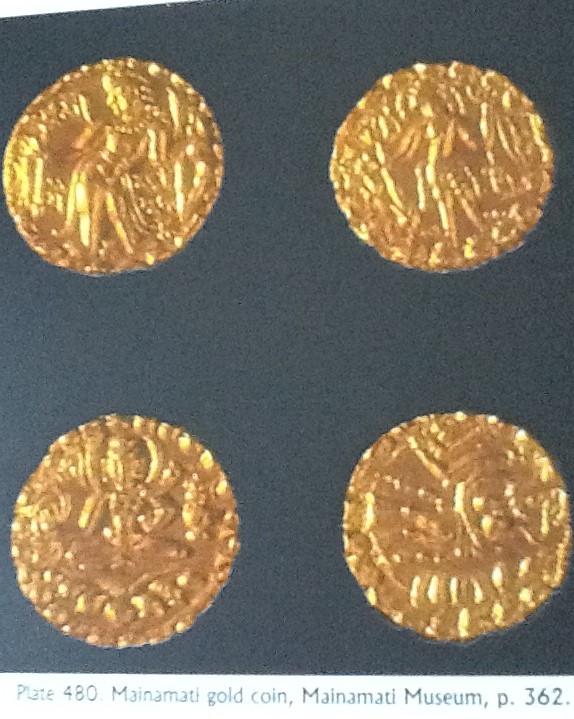
They had Maharajadiraja title and issued god coins

6.Tibetan king Srong-tsan invaded northern Bengal in the end of 7th Century CE

7.Yasovarman, King of Kanauj slayed King of Gaur (Gaur=Gauda=Bengal)

Following feudatory chiefs are also known from Comilla area

8.Samanta Lokanatha

9.Jivadharana Rata

10.Sridharana Rata (Samatatesvara)

11.Shrimad Devatideva Bhattaraka of Chittacong 715 CE

12.Kanti deva, Chittacong, 9th Century

Akara Dynasty kings came to light recently are

13.Lalitakara

14.Ramyakara

15.Pradyumnakara

16.Antakara


17.In 2007 a new copper plate inscription was discovered and a new king’s name Shriman Attakaradeva is found in it.

After this period, the area came under Harshavardhana and then Pala Dynasty began its rule

 img_7940

LOVE STORY

Kashmiri chronicler Kalhana gives an interesting story about Bengal. According to him Kashmiri Prince Jayanta came to Pundra nagar in Bengal and fell in love with a temple dancer named Kamala. Later, one night, when a man eater lion strayed into the city, Jayanta valiantly killed the beast. Soon his identity became known and the local king offered his daughter in marriage to the prince. It is told that the prince left for Kashmir with both the ladies. Two birds in one stone!


Later Pala kings ruled the area. Rajendra Choza from the South defeated one of the Pala kings in 1022.


Ramacharitam of Sandhyakaranandi gives a list of feudatory chiefs.

Before the Pala dynasty established their rule, Kadga, Deva, Chandra and Varman dynasties were ruling certain parts of Bengal. Following kings are known from newly discovered copper plates: –

18.Khadgodyama

19.Jatakhadga

20.Devakhadga (Queen Prabhavati)

21.Rajarajabhata

Excavations at Salban Monastery of Mainamati gave the names of unknown kings:-

22.Shri Santi Deva

23.Shri Vira Deva

24.Shri Ananda Deva

25.Shri Bhava Deva

The discoveries of the last fifty years or so now have clearly established genealogy of the kings of the Chandra Dynasty:-

26.Purnachandra

27.Suvarnachandra

28.Trilokyachandra (900-930)

29.Shri Chandra (930-975)

30.Kalyanachandra (975-1000)

31.Ladahachandra (1000- 1020)

32.Govindachandra (1020-1050)

Varmans supplanted the Pala kings in the last quarter of 11th century. The Varmans probably came from Orissa;

33.Jatavarman (who married Kalachuri King Karna’s daughter Virashri)

34.Harivarman


img_7938

SENA DYNASTY

35.Samanta sena (from Karnataka region)

36.Hemantasena

37.Vijayasena (who ruled for an amazing seventy-three years! From 1095-1168). If it is correct it is a world record!

38.Vallasena (1168-1178)

39.Laksmanasena

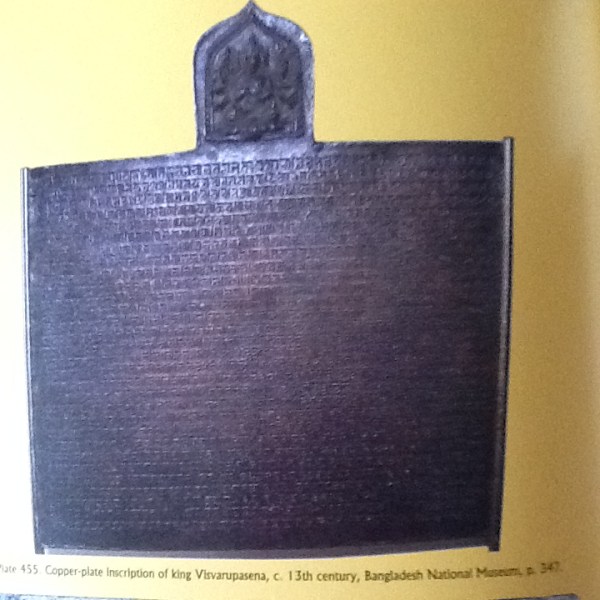
40.Vishvarupasena(1206-1220)

41.Keshavasena (1220-1223)


After this period, Muslims conquered large areas in Bengal.

From epigraphic record we get the names of following kings:

42.Purushottama

43.Madhusuthana deva

44.Vasudeva

45.Damodaradeva

46.Dasarathadeva

img_7560

A book worth buying!!!! 536 illustrations! 408 pages!!!

–subham–


Strange Caste Customs in Cochin and Travancore (Post No. 3091)

IMG_5596

Compiled by London Swaminathan


Date: 25  August 2016


Time uploaded in London: 11-57 AM


Post No.3091


Pictures are taken from various sources; thanks for the pictures.


From the book

INDIA – ITS LIFE AND THOUGHT

By John P.Jones D.D.

The Macmillan Company, 1908


“The relation of the Maharajah of Travancore to his Prime Minister, who is a Brahman, is an interesting illustration. The Rajah is not a born Brahman; he is by many of his people regarded as a manufactured Brahman. But His Highness himself does not regard himself as equal to his Brahman Prime Minister; hence he will never be seated in his presence. Nor will the Brahman Dewan deign to sit in the presence of his royal master, the Maharajah. Hence all the business of the State (sometimes requiring conferences of three hours a day) is transacted by them while standing in each other’s presence.


Rajah of Cochin


The Rajah of Cochin, who lives temporarily near the writer, and who is evidently a sticker for caste observances, receives calls from European friends only before nine o’clock in the morning, for the obvious reason that is the hour of his daily ablution.


The Maharajah of Travancore bathes at 7 am daily; hence intending European guests find reception only before that early hour. In the state of Travancore, in which Brahmanical influence is great, even the high caste Nair cannot touch, though may approach a Nambudiri Brahmin. A member of the artisan casts will pollute his holiness 24 feet off; cultivators at 48 feet off; the beef eating Pariah at 64 feet. Like the Palestinian leper of old, the low caste man of that part of India was, until recently, expected to leave the road when he saw a Brahman come, and remove his polluting person to be required number of feet from his sacred presence.


Low caste witnesses were not allowed to approach a court of justice, but standing without, at the requisite distance, to yell their testimony to the Brahman judge who sat in uncontaminated purity within. The falling of the shadow of a low caste person upon any Brahman in India necessitates an ablution on the part of the latter.

IMG_5597

Hinduism Digests and Absorbs Everything!

Page 71

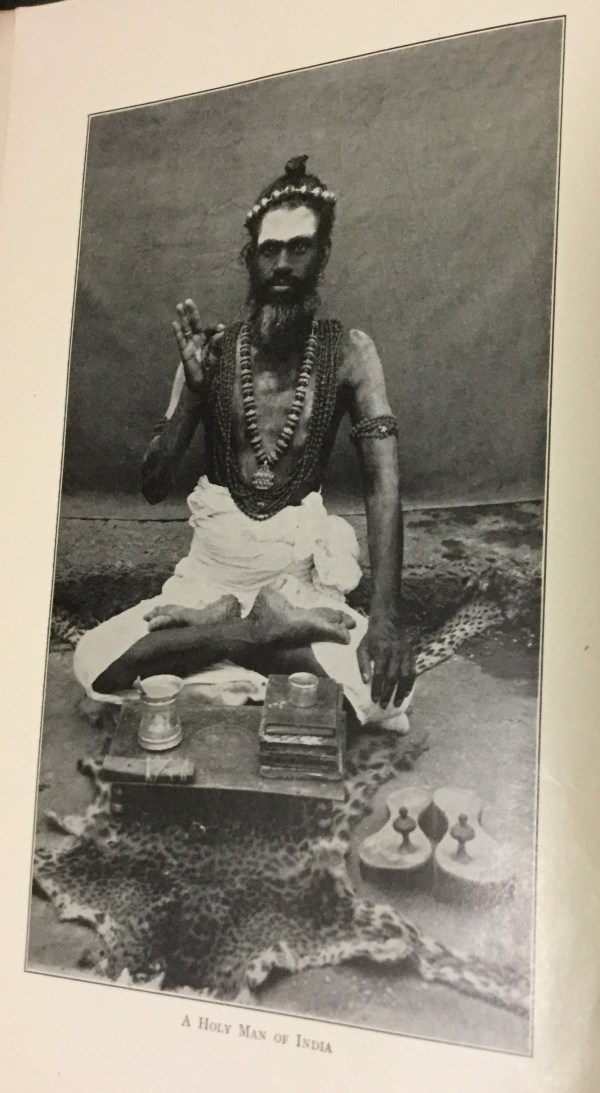
“In this extended pilgrimage, during which we have sought ancient and modern expressions of the many faiths which have dominated, or which now dominate, the people of this land, we have come to touch not only with those tolerant faiths which have found their origin here, or which have found refuge and popularity in this peninsula, – such as Hinduism, Demonolatry, Buddhism, Jainism, Zoroastrianism and Sikhism. We have also come into touch with the three most intolerant faiths of the world, — Christianity, Mohammedanism, and Judaism. There is no land where these religions have suffered less of opposition than in India. Indeed, it is not from persecution and opposition that they have stood in most danger, but from fraternal contact, growing appreciation, and ultimate absorption. The Hindu mind, like the Hindu faith, has a fatal facility for accepting, semi-assimilating, and finally absorbing, all of religious belief and conviction that may come into contact with it. And this never necessarily involves the abandoning of the old beliefs.”


–subham–


Part 6 – Comparative Proverbs about Different Castes (Post No.3081)

new tribe 1

Compiled by London swaminathan

Date: 22  August 2016

Time uploaded in London:  10-38 AM

Post No.3081


Pictures are taken from various sources; thanks for the pictures.


Part-6 on caste Proverbs. For proverbs on Brahmins, Banias, Jats, Carpenters, Blacksmiths, Goldsmiths and agricultural castes, please read the first five parts.


Proverbs on Bhils


The Bhils are described as hunters, blackmailers and highway robbers. They are the kings of the jungle. They are always ready for fight. Bhil is also a man of word and with a Bhil for escort your wife is safe.


If you manage to please him he is a Bhil;

If you rub him on the wrong way up he is the son of a dog.


From the wilds of Assam comes the quaint saying

The Naga’s wife gets a baby; the Naga himself takes the medicine.


This sounds rather like a reminiscence of the ‘couvade’, but it may be nothing more than a reflexion on the intelligence of the Nagas.


My comments: –


Meaning of Couvade (French word):

The custom in some cultures in which a man takes to his bed and goes through certain rituals when his child is being born, as though he is physically affected by birth.


It is very strange that such customs exist through out India. In Sanskrit and Tamil we have such proverbs about forest dwellers.


Nishada wife gives birth; Nishada father drinks medicine is in Sanskrit.


Kurva woman gives birth; Kurava man took medicine (Karuvuyirthal Kurathi; Kaayam thindraan Kuravan) – is a tamil saying.


Though it is in several cultures through out the world Indian Proverbial meanings are closer than other proverbs. In other cultures the husbands of the pregnant women undergo various ritual to distact the evil spirits from his wife. In India it is about him taking medicine!


Forest dwelling Nishadas are ardent Hindus and cultures. The story of Nalan and Sabari are very good examples. In Tamil one of the 63 Nayanmars (saivite Saints), Kannappan, was a Nishada. Nalan was the King of Nishada Country and great Charioteer and a cook.


This explodes the foreign invaders’ theory that Nishadas were aborigines or outside the bounds of Hinduism. They lived simultaneously with the city dwellers and had a good rapport with the kings.


Xxx

new tribe 16

Comparative Proverbs


A black Brahmin, a fair Shudra, an undersized Muslim, a ghar-jamai (son in law who lives with father in law) and an adopted son are not to be trusted


Trust not a black Brahmin and a fair Pariah


A dark Brahmin, a fair Chuhra (sweeper), a woman with a bird are contrary to nature.


The Kunbhi (tiller) died from seeing a ghost;

The Brahmin from wind in the stomach;

The goldsmith from bile.


Brahmins are made to eat;

Bhavaiyas to play and sing;

Kolis to commit robbery;

Widows to mourn.


A Dom (low caste), a Brahmin and a goat are of no use  in time of need.


The Brahmin is Lord of the water;

A Rajput lord of the Land;

The Kayasth, Lord of the Pen

Khatri, Lord of the back ( a coward)


A Khatri woman brings forth sons always

A Brahmin woman only now and then

(may be due to female infanticide)


Kayasths, Khatris and cocks support their kins

Brahmins, Doms and Nais destroy theirs


Bribe a Kayasth; feed a Brahmin; water paddy and betel; but kick a low caste man.

A Turk wants toddy

A bullock wants grain

Brahmin wants mangoes

Kayasth wants an appointment


A Dhobi is better than a Kayasth

A Sonar is better than a cheat

A dog is better than a deity

And a Jackal better than a Pandit


Kazis, Kasbis, Kasais and Kayasths – the four bad ‘K’s.


Know a good Kaysth by his pen

A good Rajput by his moustache

A good Baidya (doctor) by his medicine.


There are hundreds of proverbs like these. The list is not exhaustive. These are only examples.


Source book:–

These were recorded 100 years ago in the book:

The People of India by Sir Herbert Risely, London, 1915.


—subham–


Black Antelope in Manu: Strange Facts- Part 3 (Post No.3047)

BlackBuckAntelope

black buck antelope deer 

Research Article Written by london swaminathan

Date: 9th    August 2016

Post No. 3047

Time uploaded in London :– 15-35

( Thanks for the Pictures)


DON’T REBLOG IT AT LEAST FOR A WEEK!  DON’T USE THE PICTURES; THEY ARE COPYRIGHTED BY SOMEONE.


(for old articles go to tamilandvedas.com OR swamiindology.blogspot.com)


Manu says,

God’s Country:

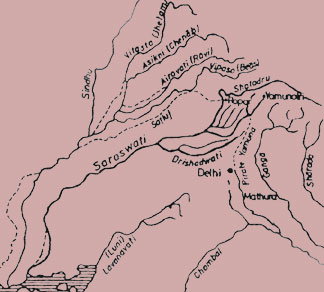
“The country that Gods made between the two divine rivers Sarasvati and Drsadvati is what they call the Land of Veda (Brahmavarta).

Manu 2-17

The conduct of the classes (four) and the intermediary classes in that country, handed down from one person to another, is called the conduct of good people.

Manu 2-18

The field of the Kurus, the Matsyas, the Pancalas and Surasenakas constitute the country of Priestly sages (Brahmarsi Desa), right next to the Land of the Veda

Manu 2-19

25d24-talageri-rivers

My comments

Since Manu refers to perennial river Sarasvati he must have lived long long ago.

The areas he mentioned falls under Indus Valley Civilisation. He says that is the Land of Veda. So Indus valley and Vedic Civilisation are one and the same.


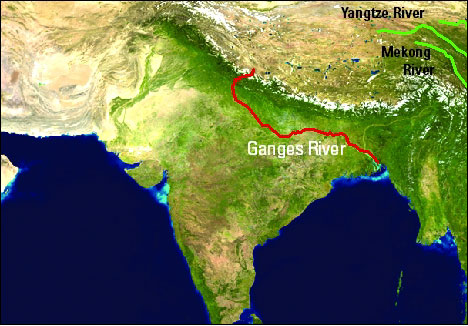
He mentioned the above two rivers as divine, so he must have lived during Vedic times. We have to note that Ganges is not mentioned!

xxx

Antelope Land!

From the eastern sea to the western sea, the area in between the two mountains (Himalayas and Vindhyas) is what wise men call the Land of the Noble ones.

Manu 2-22

Where the black antelope ranges by nature, that should be known as the country fit for sacrifices; and beyond it is the country of the Mlechas.

Manu 2-23


No Ganges River!

The above passages raise lot of questions:-

1.Why did not Manu mention the holiest river Ganges when he mentioned Sarasvati and Drsadvati?

2.For whom Did Manu write his code?

3.Where did the Land of the Mlechas begin? And who were the Mlechas?


  1. If Manu has written only for the land between the Vindhyas and Himalayas, what happened to the South Indians? Did civilised people live at that time in the South or not?


My comments:

Ganges River is one of the rivers in the Rig Veda; not the holiest of the holy rivers. So can we take that Manu lived well before the Epic age?

Manu mentioned the land where black bucks roam is the holy place fit for sacrifices. We know that it roamed from Nepal to South India. So South is also a holy place?


If Manu had written only for the noble people between the two seas and two mountains why should others bother about it?


Is there any proof to show that someone was ill treated or harmed for violating Manu’s code? No, definitely not in ancient times. Even the Ramayana reference to a Shudra doing penance and Rama punishing him is considered a later addition or interpolation according to the scholars. They point out that it is in gross contradiction to the picture of Rama’s relationship with Sabari and Guha.

ganges-map-simple

Ganges Mystery!!

Ganga Mystery can be solved by dividing the period into two: Holy Saraswati period and Holy Ganga period; when Saraswati River completely dried up and disappeared without leaving a trace or imprint Ganga came into prominence. There is another way of looking at it. Bhagiratha , the king cum the greatest Hindu civil engineer planned and executed the diversion of River Ganga into the present Gangetic plains. Earlier kings failed in this. So Ganga became holy and prominent only after some period. We have to find out when. Manu did not give any prominence to River Ganges. So he must have lived in the Saraswati period. Ikshwaku came after Vaivaswata Manu. And Bhagiratha was the 54th ruler in the Ikshwaku dynasty. So there is a gap of 1500 to 2000 years (Western Kings ruled only for 20 years on an average. But Hindu kings ruled for 30 to 40 years on an average.)

(Please read my research article: “Great Engineers of Ancient India”, posted on 25 June 2011)


Bones in Indus Valley

It is very interesting that black antelope’s bones are discovered in Indus Valley civilisation. Can we take it that Rishis—ancient seers – raised them in their Ashramas in the Indus valley?


Half baked Westerners and their Indian pawns placed Manu in second century BCE. But Manu talks about perennial Sarasvati and sale of Soma herbs! Manu definitely wont fit into this period.


Mlechas in Tamil

Mlechas (barbarians) according to 2000 year old Sangam Tamil literature are ‘Yavanas’ from Rome, Greece and Arabian land. So the mention of Mlechas by Manu is not about Dravidians of the South. Cunning and divisive foreigners attributed this word to the Dravidians. Non Tamil speakers were called Mlechas by the Tamils.


Holy Ganges is praised sky high by Tamil Sangam literature, where as Ganges is not found in Manu. So there must be a wide gap between the Sangam period and Period of Manu.

yavana-in-bharhut

Picture of a Mlecha in Barhut, 2nd Century BCE

The treatment of the Ganges and the Mlechas in two different ways in two different languages show the big time gap between the Manu Smrti and Sangam Literature of first three centuries of our period.


In short, the geography and the beliefs and customs of the people mentioned by Manu, place him well before the second century BCE that is attributed to it by the foreigners.


The biggest blunder is that the foreigners try to cramp Buddha, Mahavira and 1001 Smrti writers, litterateurs, writers of Ramayana , Mahabharata, Puranas, medical treatises – all into a period of 600 years or so. It is not reasonable and there is no evidence for such a thing in any other civilisation.


If we apply the same scale to other civilisations, this theory will fall flat. Max Muller’s theory that ‘a language changes every 200 years’ is not applied anywhere in the world except Sanskrit. Even if we apply it to Tamil, all the dates of Tamil literature will collapse and hang in balance!


In short, foreigners thought Hindus are simpletons and tried to foist  their rubbish theories on us like they do dump today all the unwanted, banned medicines and pesticides on us. They polluted the world with all tobacco smoking, firing arms, nuclear explosions, burning coal and petrol. And today they advise us that we should do this or shouldn’t do that. It is the same with their writings and theories as well!

 saraswati-map

Read my earlier article:

“Yavana(Mlechas) Mystery in Tamil Literature”, posted on 31 July 2014.

–subham–


புதிய ஐடியாக்கள் -New Ideas from STRATFORD UPON AVON (Post No.3037)

IMG_0225

Written by london swaminathan

Date: 5th    August 2016

Post No. 3037

Time uploaded in London :– 9-47 AM

( Thanks for the Pictures)


DON’T REBLOG IT AT LEAST FOR A WEEK!  DON’T USE THE PICTURES; THEY ARE COPYRIGHTED BY SOMEONE.


(for old articles go to tamilandvedas.com OR swamiindology.blogspot.com)


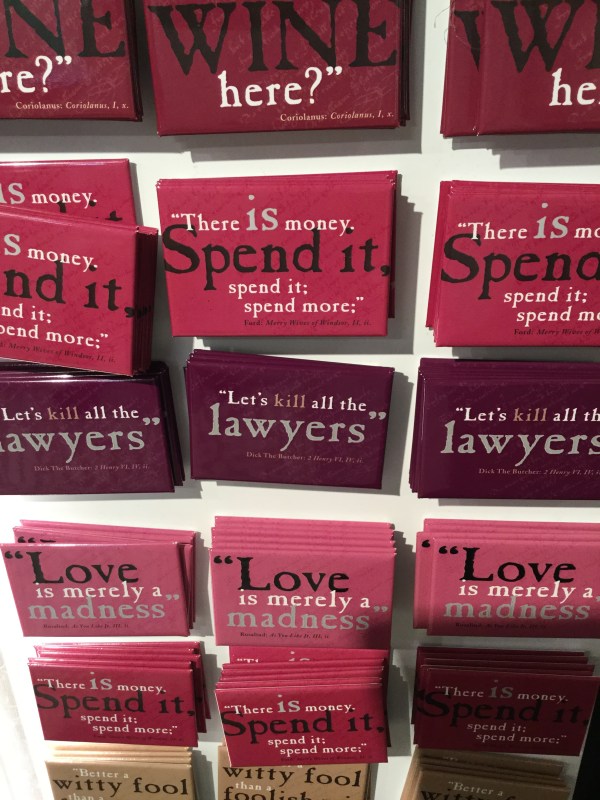
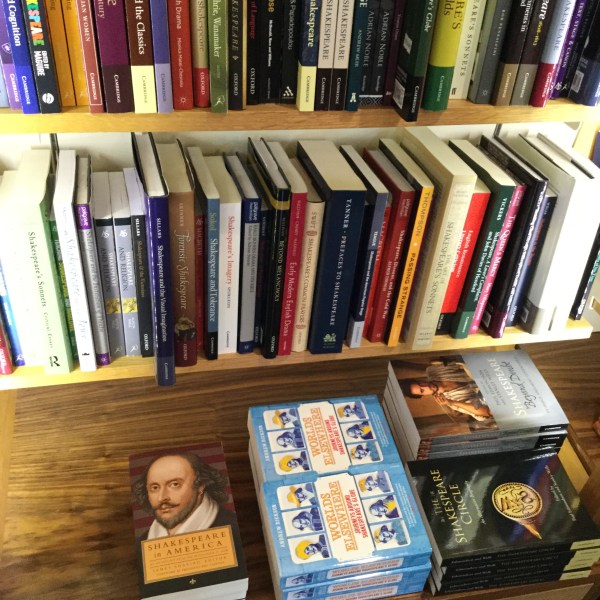
நான் ரோம், நியுயார்க், ஸ்டாக்ஹோம் போன்ற நகரங்களுக்குச் சென்று வந்த பிறகு புதுப் புது யோஜனைகளை எழுதி இந்தியர்களும் இப்படிச் செய்யலாமே என்று எழுதினேன். இங்கே ஷேக்ஸ்பியர் பிறந்த ஸ்ட்ராட்போர்ட் அபான் ஏவன் STARTFORD UPON AVON என்ற இடத்தில் விற்கப்படும் காந்த வில்லைகலையும் MAGNETS ஒரு மெஷினையும் பாருங்கள். மேலை நாடுகளில் எந்த ஊருக்குப் போனாலும் பிரிட்J FRIDGE மேல் பொருத்த மாக்னெட் கிடைக்கும். அதில் படமோ மேற்கோளோ பொன்மொழியோ இருக்கும். இது போல நாமும் பாரதி, கம்பன், ராகவேந்திரர், தியாகராஜர் பொன்மொழி ளை காந்த வில்லைகளாக விற்கலாம். எல்லா இடங்களிலும் அதுவது அல்லது அவரவர் சம்பந்தப்பட்ட புத்தகங்கள், படங்கள் விற்கப்படுகின்றன.


IMG_4711

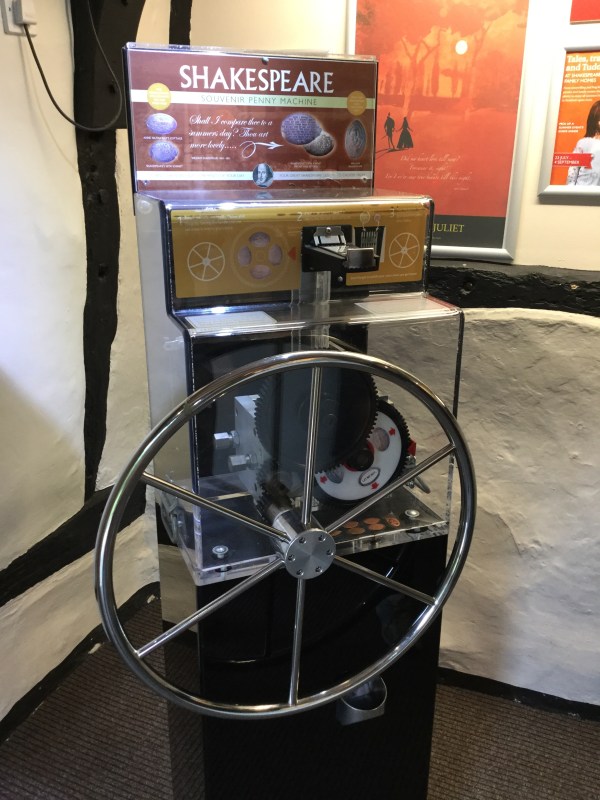
படத்தில் காட்டிய மிஷினில் ஒரு பென்னி அல்லது இண்டு பென்ஸ் காசுகளை நுழைத்தால் SHAKESPEARE படத்துடன் அது வெளியே வரும். இது போல நாமும் ஒரு காசை நுழைத்தால் கம்பன், பாரதி படம் அல்லது பொன் மொழியோடு வரச் செய்யலாம்.


IMG_4709


IMG_4502

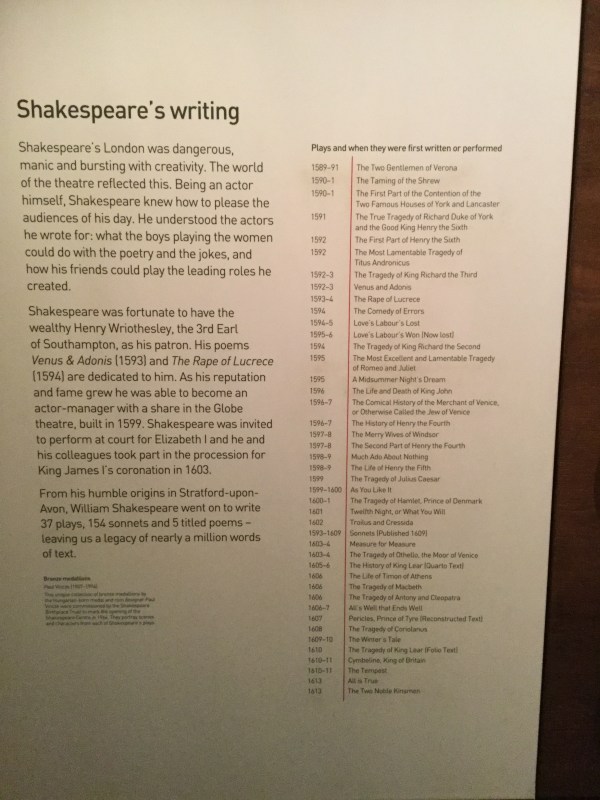
இது போல நாமும் நம் கவிஞர்களின் படைப்புகள் பற்றி சுருக்கமாக போர்ட் அல்லது போஸ்டர் வைக்கலாம்

இது போல அந்தக் கால உடைகளில் நாமும் கவிஞர்கள், சரித்திர நாயகர்கள், ராஜா-ராணிகளின் கதைகளை அவரவர் பிறந்த இடத்தில் நடித்துக் காட்டலாம். இவர்கள் இருவரும் 37  நாடகங்களிலிருந்து முக்கிய கட்டங்களை நடித்துக் காட்டுவர்.


IMG_4577


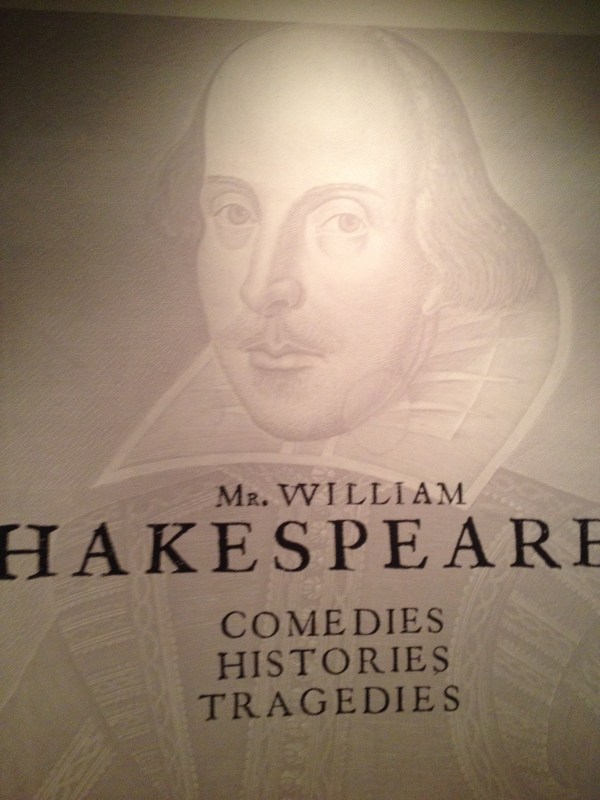
Shakespeare’s Birth Place at Stratford upon Avon- two hours’ drive from London: Every time I go to a country or a place, I write about new ideas for Indians to follow (Please see my ideas from New York, Stockholm and Rome).


Why dont we sell the quotations of Kamban, Bharatiyar and others on magnets so that we fix them on the Fridges. We always buy fridge magnets whenever we go to a country or a city. Look at the Shakespeare quotations here. And see the machine: if you insert one penny or two pence coin you will get a picture embedded on it. We can also do such things at the birth places of Ragavendra, Bharathy, Kamban, Thyagaraja etc.

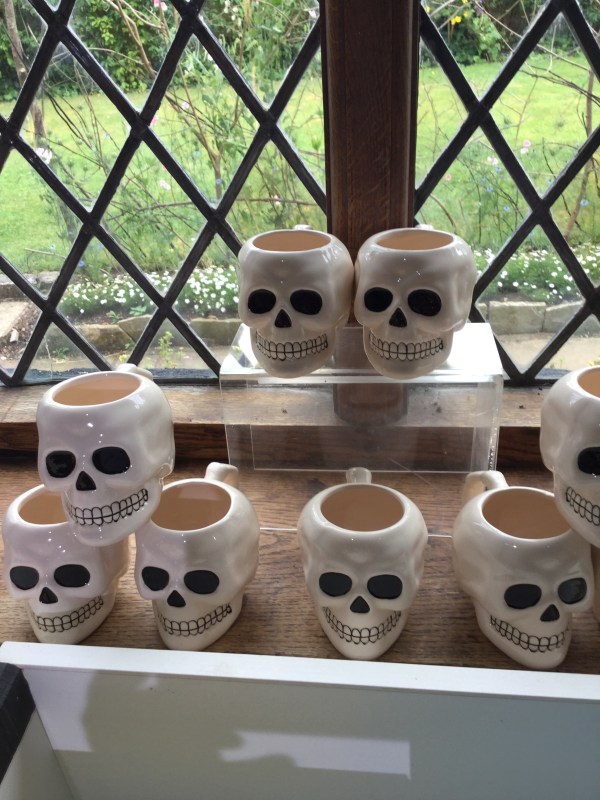
மண்டை ஓடு போல காப்பிக் கோப்பைகள்

IMG_4716

Indian Grammar Wonder! (Post No.3008)

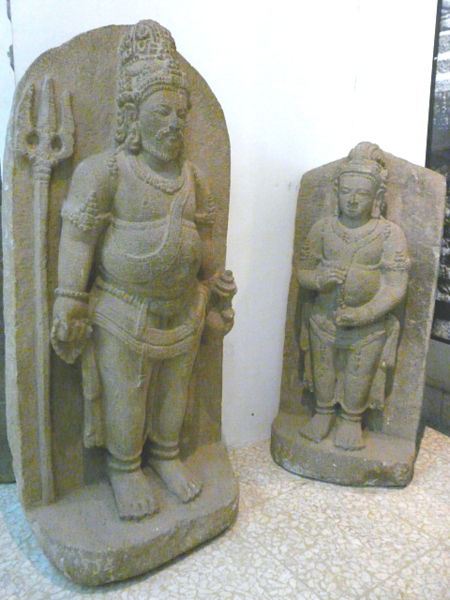
450px-agastyaprambananindonesia

Statues of Agastya in Indonesia

Research Article written by London Swaminathan

Date:26 July 2016

Post No. 3008

Time uploaded in London :–  21-30

( Thanks for the Pictures)


DON’T REBLOG IT AT LEAST FOR A WEEK!  DON’T USE THE PICTURES; THEY ARE COPYRIGHTED BY SOMEONE.


(for old articles go to tamilandvedas.com OR swamiindology.blogspot.com)

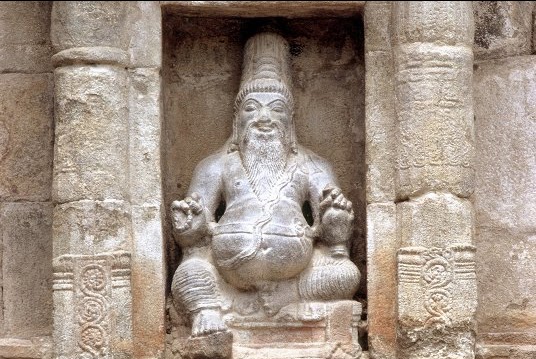
 agastyanepal-carole-r-bolon

Statue of Agastya in Nepal

There is a beautiful verse in Tamil:


If there is no literature, no grammar;

If there is no sesame seed, there is no oil;

Like we extract oil from the seeds

We get grammar from literature

–Peragathyam (Big+Agastyam)


All of us are familiar with the chicken and egg question which came first? Chicken or Egg?

We are familiar with the question whether man came first or woman came first?

We have an answer at least for this question.

Adam came first and he made Eve out of his left rib. This story was copied from the Hindu scriptures. Atma became Adam and Jiivatmaa became Eve (atma) in the Old Testament (I have already dealt with it in my post “Sanskrit in the Bible”).


Hindus say that Parvati was the left side of Shiva and that form is known as Ardha Naareeswar (Half Shiva and Half Parvati/Uma). This is also basis for the ‘left rib’ story of Adam. Left always denotes woman in Hindu literature.


There is another story about Brahma falling in love with his own daughter. Stupid foreigners dubbed this as “Incest” without understanding the symbolism. This is again the basis for the Adam and Eve story. Adam fell in love with his own daughter created out of his left rib. This is copied again from the Brahma’s ‘incest’ story.


Going back to the original topic, which came first, Grammar or Literature? Tamils are very clear about it: Literature came first and then Grammar was done on the basis of existing literature. Later writers followed that grammar. After 1000 years they dropped some rules and invented new rules as we see in Tamil and Sanskrit.

agastya-in-london

Statue of Agastya in London V and A Museum

Both the languages were created by Lord Shiva from the same root (Sounds from his kettle drum). Foreigners who wanted to divide India invented two families –Aryan family and Dravidian family of languages which is wrong. Both the languages belong to the same family. Thousands of Tamil words are in English which has a known relationship with Sanskrit. This is possible because Tamil and Sanskrit belonged to the same family ( I have dealt with it in my previous research paper)


Great Grammar Wonder!

Agastya, a saint who lived in the Himalayas was sent by Lord Shiva to the South to codify a grammar for the Tamil language. We have inscriptional, archaeological and literary proof in Tamil epigraphs, Agastya Statues in South East Asia and literary evidence in Kalidasa and Tamil literature in support of this belief.


If we go by the Tamil verse that literature came first, we accept that there was literature in Tamil even before Agastya was sent to the South. The scholars believe that this happened between 700 BCE and 1000 BCE. Unfortunately, Tamils lost their books and their literature and the existing ones start only from first century BCE. One grammarian known as Tolkappiar , believed to be a disciple of Agastya wrote the grammar for Tamil – Tolkappiam which is used until today. But original Agastya couldn’t have been his Guru. Tolkappiam betrays a later age. One thing is certain that Tamils had literature before Agastya came. Tolkappiar had 12 contemporary grammarians including Agastya.

agastya

Sanskrit wonder!

If we apply the Tamil verse that literature came before grammar, we can see a big wonder. Panini was the oddest grammarian in the world. But he himself referred to ten other great grammarians. We did not have those grammars. If we accept the date of Panini as seventh century BCE. We must accept lot of books existed at that time; unfortunately, we did not have any work except the Vedic literature. The oldest book in the world — the Rig Veda– is dated between 1400 BCE and 6000 BCE. Even if we accept 1400 BCE, then another wonder awaits us. There are grammatical terms in Vedic literature which shows that there was a grammar. It was referred to in a religious book! This again means another thing that literature existed even before the Vedas.


Remember: Before Grammar was literature!


Another coincidence is that some of the names mentioned by Panini are found in the Vedic literature too. But we don’t know whether they are just saints with the same names or saints cum grammarians.


Pre- Paninian grammarians include Apisali, Kasyapa, Gargya, Galava, Cakravarmana, Bharadvaja, Sakatayana, Sakalya, Senaka and Sphotayana.


Yaska of 8th century BCE refers to the works of Saakataayana, Kraustuki, Gragya and several others.


Another wonder is that it shows that Hindus were far more advanced than any other civilization in the world 3500 years ago. Language (Sanskrit), Literature (Vedas), Linguistics (Yaska’s Nirukta) and Grammar (Panini) are the yard sticks of a civilisation. In the above four fields no language of today or ancient days comes closer to Sanskrit. Moreover this is the status after losing hundreds of Shakas (branches ) of the Vedas and thousands of books.


Long Live Tamil and Sanskrit.

Tribes in the Rig Veda; Mystery of Hill Tribes of India – Part 9 (Post No.3005)

IMG_2696

Research Article Written by London swaminathan

Date:25 July 2016

Post No. 3005

Time uploaded in London :–  17-15

( Thanks for the Pictures)


DON’T REBLOG IT AT LEAST FOR A WEEK!  DON’T USE THE PICTURES; THEY ARE COPYRIGHTED BY SOMEONE.


(for old articles go to tamilandvedas.com OR swamiindology.blogspot.com)


Part 8 was published here on 25th of July. First part contains a detailed introduction.


The oldest religious book in the world is the Rig Veda which is in Sanskrit. It covers a huge geographical area—from Iran to Gangetic plains of India. It is dated 1400 BCE by some and 6000 BCE by German scholar Jacobi and Indian scholar and freedom fighter B G Tilak. Nobody could dispute that date which is based on astronomical data. Even if we accept the date 1400 BCE, there is no book that comes closer to the Rig Veda in geographical details or ethnographic information. It is amazing to see the rivers listed from the Holy Ganga in the East and remote rivers in Afghanistan. It is more amazing to see the number of ethnic groups in the Veda. These details explode the Arya – Dravidian myth.

1430101041-1083_india565ADmagadha

Tamils , Greeks and Latin speakers had no books when Vedas were composed. Hebrew had very little in the Old Testament of the Bible, just after the Vedas. Chinese wrote something. Though the Sumerian, Egyptian and a few other extinct languages had some records or inscriptions they did not have anything worth the name of literature or higher thoughts that are found in the Vedas.


Vedic Gods and Sanskrit names and Sanskrit numbers were recorded in inscriptions from 1400 BCE. So we have archaeological proofs as well (Please read my previous articles for precise information or go to Wikipedia and look for Mitanni civilization, Boghazkoy inscriptions, Dasaratha letters of Egypt and Kikkuli Horse Manual).


Amazing number of Tribes
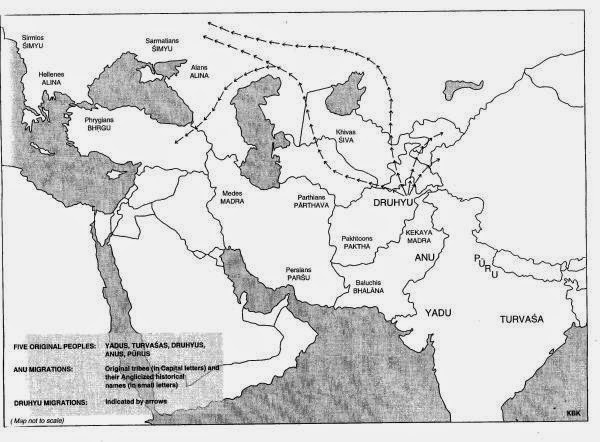
The tribes found in the Vedas are listed by A A Macdonell and A B Keith in the “Vedic Index of Names and Subjects”. Shrikant G.Talageri has written about the migratory routes of Vedic Hindus from India to various parts of the world in his book “The Rig Veda – A Historical Analysis”.

Following are the names of the tribes found in the Vedic Literature:

Anga, Aja, Anu, Andhra, Aambashya

Udiichya, Usinaara, Kamboja, Kaaraskara

Kaasi, Kikata, Kuru, Krivi, Gandhaari, Cedi

Turvaasa, Trstu, Druhyu, Nisaada, Naisadha

Paktha, Panchajanaah, Paancaala, Parsu

Paaraavata, Pulinda, Pundra, Puru, Prthu

Praacya, Balhiika, Bahiikha, Bharata, Bhalaanas

Magada, Matsya, Madra, Mahavaavrsa

Muuciiba / muutiba/ muuvipa, Muujavant

Yaksu, Yadu, Rusama, Vanga, Varaikha

Vasa, Videha, Vidarbha, Visaanin, Vrcivant

Vaikarna, Saphaala, Sabara, Saalva, Sigru, Sibi

Simyu, Siva, Siesta, Suuraksenaka, Svikna, iva

Satvant, Salva, Srnjaya, Sparsu

IMG_3736

Over sixty tribes are listed. Later they became the names of kingdoms. We find many of them in the Mahabharata as well.

Ramayana has Kosala , Videha, Kishkinda, Sri Lanka etc. If Mahabharata and Ramayana taken together, it shows the vastness of this country.

The questions Rig Veda and other Vedic materials raise are:

How many centuries it would have taken to get these many number of tribes/groups?

How many centuries it would have taken to cover a vast area from Bengal in the East to Iran in the West and Andhra in the South?

How many centuries it would have taken to attain the maturity we see in the tenth Mandala of the Rig Veda?

They pray for peace for the entire mankind.

If we go by BG Tilak’s theory it covers even North Pole.

All these things coldn’t have happened overnight. So one is right in saying that they lived in this country for thousands of years before dividing themselves into various groups and establish kingdoms in their names (such as Vanga, Anga, Magada, Andhra etc).

They would have taken several thousand years to establish kingdoms from Iran to Ganga in Bengal and Bihar.

We have references to Rig Vedic Kings giving camels as gifts. Plants and animals of Tropical areas are mentioned more than the temperate areas in the oldest part of the Vedas. Over 400 poets (Rishi) names are in the Rig Veda alone. Over 1000 hymns are there in the Rig Veda alone. There is no book in the world to compare with the Rig Veda around 1400 BCE.

vedic route

This proves the oldest country in the world is India and the oldest race in the world is the Hindus. The greatest contribution of the Vedic Hindus is the decimal system and the domestication of cows. The bulls in the Indus seals prove that it is part of Vedic civilisation. When the world was drinking camel milk and donkey milk the Hindu genius found that the cow’s milk is the closest one to mother’s milk. They are proved right until today. Decimal system is found in the Rig Vedic hymns in innumerable places. Cow is the holiest of the holy animals in the Vedas. Milk and Honey were used as food by the Vedic saints. Without decimal numbers and the Hindu maths and cow’s milk, the world wouldn’t have progressed even an inch.

I wrote that the hill tribes and advanced city civilisation existed simultaneously and gave references from the Hindu epics. Now the tribal names in the Vedic literature also proved my theory.

–Subham–

Hindu and Muslim Wedding (Post No.2988)

IMG_3805

Compiled by London swaminathan

Date:20 July 2016

Post No. 2988

Time uploaded in London :–5-44 AM

( Thanks for the Pictures)


DON’T REBLOG IT AT LEAST FOR A WEEK!  DON’T USE THE PICTURES; THEY ARE COPYRIGHTED BY SOMEONE.


(for old articles go to tamilandvedas.com OR swamiindology.blogspot.com)


Following piece is an interesting excerpt from a 100-year-old book written by a Muslim scholar: –


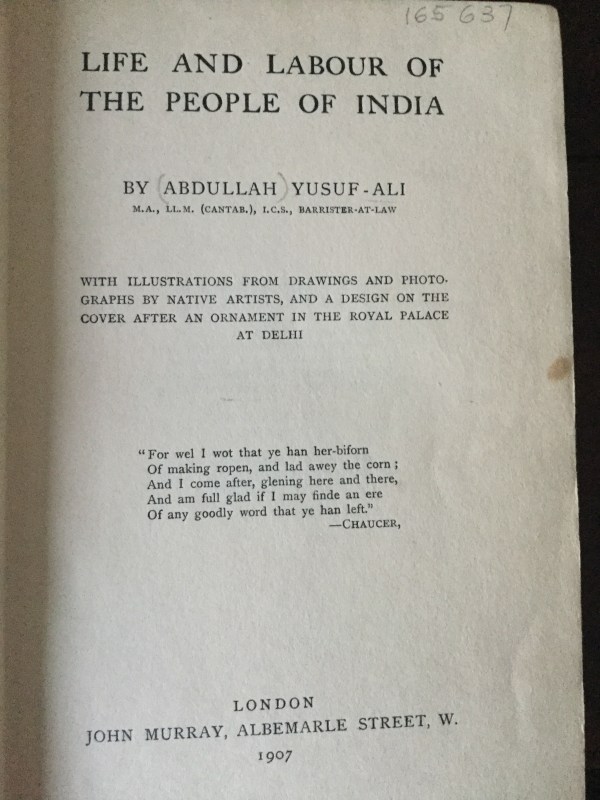
Source: Life and Labour of the People of India by Abdullah Yusuf Ali, Barrister at Law, London, 1907

IMG_3807

What is the marriage ceremony?

There are many picturesque and pretty rites, and feasting for days on end is the order of the day. But the chief incident of better class Hindu marriage ceremony consists in what is called the Bhaunri — the seven steps taken in unison.  All this is symbolical. The seven steps are the seven grades of life. Compare this with the seven ages of life in your own immortal bard, or the seven sacraments of the Roman Catholic Church, or the seven planets of ancient astronomy, after which the names of the week were named.


Among the Muhammadeans these picturesque ceremonies are not recognised. In the first place, the parties are little older. In the second  place, the Mohammadan marriage is a civil contract in which neither party merges its identity in the other.


The Hindu is bound to invite his whole caste or community, within a reasonable distance, to his wedding festivities; The Mohammadan only his select friends. The Mohammadan ecclesiastical ceremony is of the simplest description, as simple as that among the Society of Friends.


Many of the Muhammadan families restrict themselves to the ecclesiastical ceremony, but the majority have adopted or inherited in addition the customs of the country. Some even use a modified form of the Bhaunri. Prolonged feasts and ceremonies, with music or noise (whichever you prefer to call it and martial-looking pro- cessions (a relic of marriage by capture), are quite common.


A wealthy family’s bridal party would be mounted on palanquins, horses, elephants, and chariots, such as Abhimanyu might have used in the Great War. Coins would be scattered on the march, to be scrambled for by boys and youths of the poorer classes.


FIREWORKS

Fireworks play a very important part in the rejoicings incident to an Indian marriage. Most of the firework makers drive a roaring trade in the marriage season, and earn the best of their profits during that time, hibernating during the rest of the year. Thus marriage is good for trade.


The marriage season is limited to two or three months of the year, generally in the spring: but the heavenly aspect varies in different years. When the stars are most propitious there is regular marriage boom, with a concomitant boom the trade in fireworks, cloths, and fancy articles. But the stars may also ruin trade if they frown to the astrologers and indicate a slump in the marriage market.


If we may trust to the fidelity of Hogarth, English popular marriage customs were not so English popular marriage customs were not so very different in the eighteenth century from what we may observe every day in India at the present time. Take the wedding scene in the series of pictures entitled “Industry and Idleness.” The industrious apprentice has at last won the band of his master’s daughter. At the festivities the proud bridegroom is seen offering the drummer — shall we call him tom tom boy? —  bakshish in time form of hard coin. The butchers are there with the marrow bones and cleavers, just as you would find the representatives of different trades following an Indian bridal party, each with the emblems of his trade — the sweeper with his broom, and the barber with his bag. You have further in Hogarth the beggar with his merry ballad but mournful face. An Indian Bhat might well have sat for a model. But what is this? – a poor woman with a child in one wallet and “the crumbs that do fall from the master’s table” in another. Evidently a Chamarin come to assert her claims on the lord of the feast.

IMG_3806

BRIDE’S DRESS


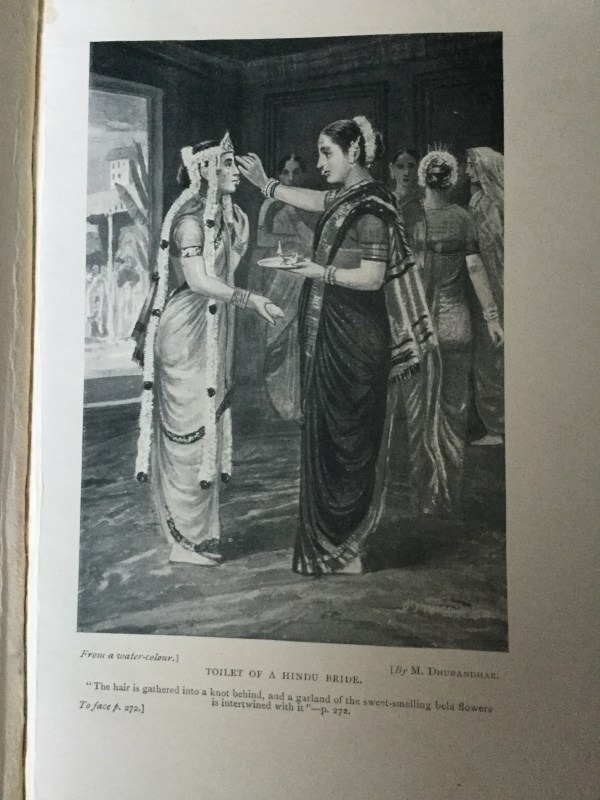
How is the bride dressed, and what does she look like? Dare I attempt a word-picture? It would be more satisfactory if a gifted artist’s brush were allowed to tell its own tale. I have the honour to possess a picture in oils, The Hindu bride,” painted by Mrs Barber, which won a medal at the Simla Fine Arts Exhibition some years ago. It is a symphony in colours, but most difficult to reproduce. Let us try to gain an idea of the bride’s appearance by means of a feeble description.


There is the girl, with the brightest of black eyes, and a face more round than oval. The white of those eyes is of dazzling purity, like the modest little soul that looks out of them, but you can scarcely see the eyes. The cloth which serves both for head gear and body garment is drawn closely over the face. It would be difficult to name the colour of this piece of drapery. It is semi-transparent, and lets you see the glory of the raven hair and the sparkle of the jewels worn on the person, but it adds its own contribution of colour to the general harmony. Perhaps we should not call it colour: Pas la couleur, rien que la nuance, as Paul Verlaine would say. It is a suggestion in light blue silk gossamer, with a border worked in gold and silver threads, which both stiffens and enriches the airy stuff.


The jewellery errs on the side of profusion, but jewellery there is no trace of vulgarity. The drapery, which, in concealing it, heightens its effect, gives it a subdued tone where it might otherwise “cry aloud”. A row of little pearls hooked into one of the plaits of hair covers the parting of the hair in the middle. From it hangs on the forehead a flat little pendant of pearls, rubies, and moon stones, set in gold. This pendant also fits into the scheme of the caste mark if the girl is Hindu otherwise it is artistically meaningless.


The hair is gathered into a knot behind, and a garland of the sweet-smelling bela flowers is intertwined with it snowy white on raven black, filtered through the blue of the drapery. From the nose hangs a pearl drop, and there are sapphire earrings to match. The neck is absolutely loaded with ornaments, but you only catch a glimpse of them through an indiscreet opening of the veil. The upper arms carry amulets and charms, and the lower arms bracelets and bangles of many shapes and styles of workmanship.


IMG_3809

There are rings, not only for the fingers, but also for the right thumb, and one of them has a miniature mirror with a receptacle underneath for a plug of cotton wool saturated with otto of roses. There are anklets and toe rings to complete the tale of ornaments. Such is the bride as she sits on her machia, a sort of low chair, made of wood turned on the lathe and lacquered.”

A portion of the jewellery is often borrowed for the occasion. The jewellery is rarely false except in circles affected by “modern civilization”.


I have devoted so much space to the marriage customs, because I find that they are of perennial interest to people of all temperaments among all nations. Did not Lady Augusts Hamilton write a book on the marriage rites, customs, and ceremonies of “all nations of the universe”? this was in 1822, but the world has not much changed since then – at least in this respect.”


–SUBHAM—


How Whiteman fooled the Hindus!! Mystery of the Indian Hill Tribes – Part 7

Research Article Written by London swaminathan

Date:11 July 2016

Post No. 2962

Time uploaded in London :– 19-54

( Thanks for the Pictures)

DON’T REBLOG IT AT LEAST FOR A WEEK!  DON’T USE THE PICTURES; THEY ARE COPYRIGHTED BY SOMEONE.


(for old articles go to tamilandvedas.com OR swamiindology.blogspot.com)


Part 6 was published here on 9th of July. First part contains a detailed introduction.


Following are taken from the People of India written by Sir Herbert Risley, Director of Ethnography For India, Year 1915

FullSizeRender (1)


Pandit Duli Chand, Vidyapati Brahman of Agra, Indo-Aryan Type, Plate 25


“This is a fine picture of the old fashioned, learned Brahman of Northern India, whose life is devoted to the study of Sanskrit literature and the observance of an intricate form of ritual. He has been little influenced by the western culture. He wears wooden clogs, held between his toes by a brass peg, because the touch of leather is a source of ceremonial pollution. He carries a rosary, but the help of which he mutters prayers or holy texts, and recites the names of the Deity whom he worships. He is in many ways like the Nambuthiri Brahman of Malabar, the most primitive type of Brahman. But the latter have preserved their isolation more successfully than their Northern Brethern, who have lived for centuries under foreign governments. His title Vidyapati implies that he is a master of learning.”


My comments: – The author has bracketed him with the Indo-Aryan type without any rhyme or reason. May be his skin colour is fairer than the black “Dravidians”. His nose and other features are like any other person in India. Like him the Sikhs, Buddhists, Muslims and Catholic Christian mutters prayers. So that is not a criterion of “Aryanism”. The author says he was least influenced by the Western culture. Yes. The hill tribes were also least affected by the Western culture. That is not a criterion for “Aryanism”. He does not wear anything leather. Yes. Even the animal rights people don’t wear anything leather in London and New York. So that is also not a criterion for Aryanism. Even before the DNA tests and genetic tests were available, foreigners divided the entire universe into many groups according to their whims and fancies.

Brahmins changed a very little; yes, the hill tribes also have least changes. How come the hill tribes have hundreds of groups without many similarities?


There are eight types of Brahmins. Even the hair style of Soziya Brahmins, and Dikshitas are different. Why? The fact of the matter is these differences don’t decide which race you belong to. Foreigners took whatever suited to their theories and hid the other important factors. Even modern genetic research is inconclusive. If the appearance is the decisive factor, then Indus Valley civilization is not Dravidian. The skeletons discovered in the Indus Valley are of Punjabi type.

FullSizeRender (2)

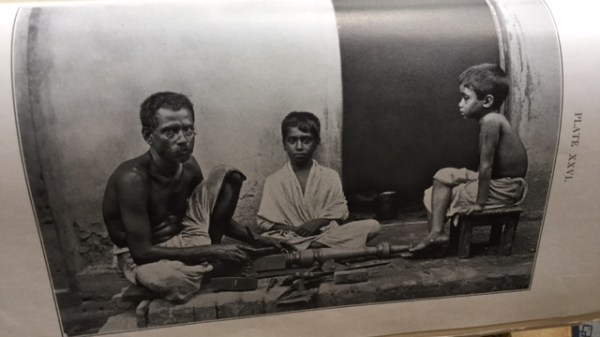
Sutaars, carpenters of Bengal, Mongolo Dravidian Type, Plate 26:

“The carpenters of Bengal, like other craftsmen, hold a low rank, and Brahmans will not take water from their hands. Besides ordinary work in wood, they carve conch-shells into bracelets, make images of gods and paint religious pictures. They are probably recruited from the non-Aryan or indigenous races. Their chief object of worship is Visvakarma, the Divine architect of the universe, sometimes represented as a white man with three eyes and bearing a club; but more usually he is symbolised by the tools used by the house holder, which are set up and decorated with flowers; offerings are presented to them, and the god is besought to favour his votaries in their profession during the coming year.”


My comments: taking water or not taking water from a particular group or sect wont decide the race. Orthodox Vaishnavite Brahmins wont even take anything from orthodox Saivite Brahmins. Vaishnavite Brahmins will close the doors when saivite Gods taken in procession through their streets in Tamil Nadu. So this wont decide Mongoloid or Dravidianism. Author Risley himself was puzzled and so he created a mixed Mongolo- Dravidian Type. This is a typical example to show how Whiteman fooled Hindus hundred years ago. Hindu scholars who wanted posts in educational institutions played second fiddle to them. When the foreigners are puzzled, they created newer and newer groups to shut the mouths of intelligent people.


These people do not know that the Tamil Cities of Sangam age were arranged in caste order. It is very clear in Sangam Tamil literature and Tamil epic Silppadikaram.

Tamil Brahmins like the great poet also cut conches and made bangles. Those who did not recite the Vedas were considered Vratya Brahmins. So cutting conch shells to make bracelets won tdecide the race. Either.

Viswakarma is a Vedic God. Those who worship him in Tamil Nadu, the non -Brahmin Aasaari caste, wears sacred thread like Brahmins!

FullSizeRender

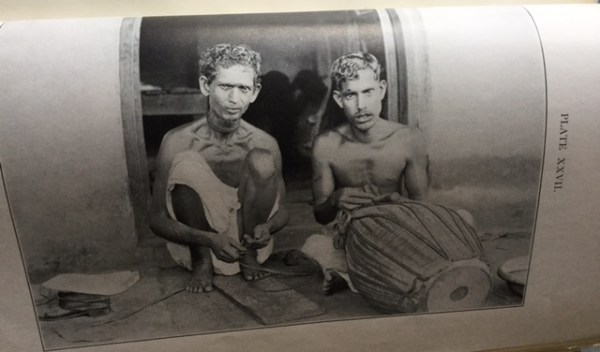
Mochis, Shoe makers of Bengal, Mongolo-Dravidian Type, Plate 27:-


“The Mochis or Muchis are a branch of the Chamaar caste, whose business is tanning leather. Their association with this material renders them impure in the estimation of high caste Hindus. The Mochis’ chief business is making the slipper like shoes worn by their customers. They also, as in the illustration, manufacture drums. The covering is made up of goat skins, while strips of cow hide are used for tightening the parchment. In all native drums, at one or both ends, black circles are inscribed with a paste of iron filings and rice in order to improve the pitch. Muchi women never acts as midwives, like those of the Chamaar caste.”


My comments: Here is another hollow argument of the foreigners. Several types of drums are listed by the oldest book in the world, the Rig Veda. If they are untouchables, because they dealt with leather, that caste existed during the Vedic times as well. I have already written about the biggest drum in the world – Bhumi Dundubi – from the Rig Veda. There is no reference to pollution or segregation of the drummers in the Vedas. In Sangam Tamil literature Royal Drum is considered a sacred object. The issue of cleanliness and hygiene is considered very important in every culture. Even today Hindu doctors and nurses consider them impure until they take a shower. They wont do cooking or praying. It is all about cleanliness, not about Mongolo-Dravidianism. All through the Sanskrit literature we see all types of craftsmen with due respect given to them. Even today no one can touch the queen or king in England. You have to bend and salute them. These are all customs not racial dividing lines.


To be continued…………………..