தமிழ்ப் புலவர் மாயமாய் மறைந்தது எப்படி?

yaha1

ஆராய்ச்சிக் கட்டுரை : லண்டன் சுவாமிநாதன்
கட்டுரை எண்:— 1219; தேதி 7 ஆகஸ்ட் 2014

சங்க இலக்கிய நூலான பதிற்றுப் பத்தில் ஒரு அதிசய நிகழ்ச்சி பதிவு செய்யப்பட்டுள்ளது. இந்த அதிசயத்தை சிலப்பதிகாரத்தில் இளங்கோவும் இரண்டு இடங்களில் சொல்லிச் சொல்லி வியப்படைகிறார்.

யவனர்களைப் பிடித்து, கைகளைப் பின்புறம் கட்டி, (மொட்டை அடித்து) தலையில் நெய்யை ஊற்றி அவமானப் படுத்தியவன் இமயம் வரை சென்று விற்கொடி நாட்டிய இமயவரம்பன் நெடுஞ்சேரலாதன். அவனுடைய தம்பி பல்யானை செல்கெழுகுட்டுவன். இவன் மீது கவிபாடியவர் பாலைக் கௌதமனார். அவன் 25 ஆண்டுகள் அரசாட்சி செய்தான்.

பல்யானை செல்கெழுகுட்டுவன் பற்றிப் பதிற்றுப் பத்து சொல்கிறது:

ati rudra
Sri Sathya Sai Baba performing Ati Rudra Maha Yajna

அரபிக்கடல் முதல் வங்காள விரிகுடா வரை வரிசையாக யானைகளை நிறுத்தி வைத்து இரு கடல் நீரையும் ஒரு பகலில் நீராடியவன். அகப்பா என்னும் கோட்டையைப் பிடித்து ஒரே பகலில் தீயிட்டுக் கொளுத்தியவன். அயிரை மலையில் உள்ள துர்க்கையை அனுதினமும் வழிபட்டவன். அவனுடைய புரோகிதர் நெடும்பாரதாயனார் என்பவர் வானப் ப்ரஸ்தம் செய்யக் காட்டுக்குச் சென்றார். உடனே இவனும் அரச பதவியை விட்டு காட்டுக்குத் தவம் செய்யப் போய்விட்டான்.

இதை எல்லாம் விடப் பெரிய அதிசயம்!!! பாலைக் கவுதமனார் என்ற பிராமணப் புலவன், அவர் மீது கவி பாடினான் —(காண்க பதிற்றுப்பத்து—மூன்றாம் பத்து). —–புலவரே! உமக்கு என்ன வேண்டும், கேளும், கொடுக்கிறேன் ——– (நீர் வேண்டியது கொண்மின்) ——– என்றான் மன்னர் மன்னன்.

பிராமணப் புலவன் பாலைக் கௌதமன் சொன்னான்: “யானும்என் பார்ப்பனியும் சுவர்க்கம் புகல் வேண்டும்”

மன்னன் அசந்தே போனான். உடனே பார்ப்பாரிற் பெரியோரைக் கேட்டு ஒன்பது பெரு வேள்வி வேட்பிக்கப் பத்தாம் பெருவெள்வியிற் பார்ப்பானையும் பார்ப்பனியையும் காணாராயினர் ——- என்று பதிற்றுப் பத்து பதிகம் பகரும்.
elijahchariot
Elijah going by Fire Chariot

அதாவது பெரிய பிராமண அறிஞர்களைக் கலந்தாலோசித்து பத்து யாக யக்ஞங்களுக்கு மன்னன் ஏற்பாடு செய்தான். ஒன்பது வேள்வி முடிந்தது. பத்தாவது வேள்வியில் பார்ப்பனப் புலவன் கௌத்தமன், அவனுடைய மனைவியுடன் மாயமாய் மறைந்து விட்டான். 2000 ஆண்டுக்கு முன் எழுந்த சங்க இலக்கியம் தரும் தகவல் இது.

( ஒரே பகலில் நான்கு கடல்களின் நீரைக் கொண்டு குளிப்பது தமிழ் மன்னர்களுக்குப் பிடித்த விளையாட்டு —- இது சாத்தியமா?——– இது பற்றி முன்னரே நீண்ட ஆராய்ச்சிக் கட்டுரை எழுதி இருக்கிறேன். மாயா இன மக்கள் எப்படி ஓடி, ஓடி செய்தி பரப்பினர், மாரத்தன் வீரன் எப்படி 26 மைல் ஓடிவந்து செய்தி சொன்னான், வீரபாண்டிய கட்டபொம்மன் எப்படி திருச்செந்துரில் தீவாரதனை ஆனவுடன் சாப்பிட்டான் என்பனவற்றை ஏற்கனவே விளக்கி இருக்கிறேன். வானப் பிரஸ்தம் என்பது இந்துக்களின் மூன்றாவது கட்ட வாழ்க்கை என்பதையும் வேறு ஒரு கட்டுரையில் விளக்கி இருக்கிறேன். கண்டு மகிழ்க!)

பாலை கௌதமனார் பாடிய மூன்றாம் பத்து:

இமையவரம்பன் தம்பி அமைவர
உம்பற்காட்டை தன்கோல் நிறீ இ
அகப்பா எறிந்து பகல் தீ வேட்டு
மதியுறழ் மரபின் முதியரைத் தழீ இக்
கண்ணகன் வைப்பின் மண்வகுத்து ஈத்துக்
கருங்களிற்று யானைப் புணர் நிரை நீட்டி
இருகடல் நீரும் ஒரு பகல் ஆடி
அயிரை பரை இ ஆற்றல் சால் முன்போடு
ஒடுங்கா நல்லிசை உயர்ந்த கேள்வி
நெடும் பாரதாயனார் முந்துறக் காடு போந்த
–பதிற்றுப் பத்து பதிகம்

சிலப்பதிகாரச் செய்தி

பிற்காலத்தில் யாரும் இதை பொய் என்றோ இடைச் செருகல் என்றோ சொல்லிவிடக் கூடாது என்பதற்காக இளங்கோவும் இதை கட்டுரைக் காதையிலும் நடுகற் காதையிலும் பாடிவைத்தார்:

நான்மறையாளன் செய்யுட்கொண்டு
மேல்நிலை உலகம் விடுத்தோன் ஆயினும்
(—வரிகள் 137-137, நடுகற் காதை)

வண்டமிழ் மறையோர்க்கு வானுறை கொடுத்த
திண்டிறல் நெடுவேற் சேரலன் காண்கு
(—வரிகள் 63-64, கட்டுரைக் காதை)

elijah
Elijah fed by Ravens!

கோவலனும் கண்ணகியும் விசேஷ விண்கலத்தில் சுவர்க்கம் சென்றதையும் சிலப்பதிகாரம் கூறும். ராமன், விமானி இல்லாத விசேஷ விமானத்தில் இலங்கையில் இருந்து உத்தரப் பிரதேசம் வந்தது எப்படி என்பதற்கான விஞ்ஞானப் பத்திரிக்கைச் செய்தி ஆதாரத்தை முன்னரே எழுதி இருக்கிறேன். அதே போல விமானி இல்லாத விமானம், பெரியோர்களை அழைத்துச் செல்ல, சுவர்க்கத்தில் இருந்து வரும் செய்தியை புற நானூற்றுப் புலவன் முதுகண்ணன் சாத்தனார் பாடிய பாட்டில் இருந்து நாம் அறிகிறோம் (புற. 27).

இதே போல பைபிளிலும் ஒரு கதை உண்டு.

பைபிளில் விமானம்
பைபிளில் வரும் ஒரு கதை: எலிஜா என்பார் ஒரு தீர்க்கதரிசி. அவர் விக்கிரக ஆராதனையை எதிர்த்தும் ஜெஹோவாவை ஆதரித்தும் பிரசாரம் செய்தவர். அவருக்கு வறட்சிக் காலத்தில், அண்டங் காக்கைகள் உணவு கொண்டு வந்தன. திரவுபதி வைத்திருந்த அட்சய பாத்திரம் போல, ஒரு விதவைப் பெண்ணிடம் இருந்த பாத்திரத்தில் இருந்து ரொட்டிக்கான பொருட்களை வரவழைத்தார். அவளுடைய இறந்துபட்ட குழந்தையை அப்பர், பெருமான, திருஞான சம்பந்தர் ஆகியோர் குழந்தைகளை உயிர்ப்பித்துத் தந்தது போல உயிர்ப்பிக்கிறார். அவருக்கு சொர்கத்துக்குப் போவதற்கு தீ கக்கும் ஒரு ரதம் வருகிறது. அதை இழுக்கும் குதிரைகளும் ஜோதி ரூபத்தில் இருந்தன. அவர் ஒரு சூறாவளியால் தூக்கப்பட்டு அந்த ரதத்தில் சென்று மறைந்தார்.

elijah ascent to heaven
Place where Elijah ascended in Jordan

ஆக, யாகத் தீயில் மாயமாய் மறைந்த பார்ப்பனன், பார்ப்பனி, ஜோதி ரதத்தில் மறைந்த எலிஜா ஆகியோர் கதைகள் சுவையான பல விஷயங்களைத் தருகின்றன. இன்றுவரை அவைகளை உண்மையே என்று நம்புவோர் இருப்பதையும் காண்கிறோம்.

வாழ்க வண்டமிழ் மறையோர் = தமிழ் பிராமணர்கள்!!

–சுபம்–

How did Tamil Poet and Biblical Prophet Elijah go to Heaven?

yaha1

Research paper written by London Swaminathan
Post No. 1218; Dated 6th August 2014.

Sangam Tamil poet Palai Kautamanar went to heaven with human body. Chera king Palyanai Selkezukuttuvan helped the poet in this venture. The king was the younger brother of Imayavarampan Neduncheralathan. The Third Ten section of the Patitrpattu (Ten Ten Book) gives the interesting story.
Kautamanar is the Tamilized form of Sanskrit name Gauthama.

The legend goes that Palai Kautamanar, a Brahmana poet, performed ten Fire sacrifices (Yagas, Yajnas, Havans) and in the course of the tenth, the Brahmana and his wife disappeared by going to heaven. In its accomplishment Chera king Selkezukuttuvan helped him.

Tamil epic Silappadikaram referred to this episode in two places (Katturai Katai, Natunar Katai).

Sangam book Pathitru Pattu says Selkezukuttuvan ruled for 25 years. He made a bridge of elephants between the east and west coast of peninsular India just to get water from both the seas for bathing. Ancient kings did such things to show that the entire country was under their rule. The second purpose was to appreciate the holiness of both the seas.

ati rudra
Image of Atirudra Mahayajna conducted by Sathya Sai Baba.

He was a great devotee of Goddess Durga of Ayirai Hills. When he heard that his priest Nedum Bharathan went to forest for ‘Vanaprastha’, he also followed him. The third stage of a Hindu’s life is Vanaprastha, going to forest to spend life in meditation and prayer.

When he asked his royal poet Kautamanar (Gauthama) what he wanted after he sang the decad in his praise, he told that he wanted to go to heaven with his wife in human form. Then the king consulted the learned in the scriptures and did proper fire sacrifice for this purpose. After the ninth round of the Yagas, the tenth and final round came. Suddenly the poet and his wife disappeared!!

We have several references to people going to heaven in special air planes that were sent from the heaven. In the Tamil epic Silappadikaram, the dead husband Kovalan came to take her beloved Kannaki to heaven in a heavenly vehicle. Rama of Valmiki Ramayana also flew in a pilotless plane (Please read my scientific explanation in How did Rama fly his Pushpaka Vimana/ Air Plane?)

Sangam Tamil book Purananuru (verse 27 by Mudukannan Sathanar) says that there were pilotless planes for great people praised by the poets. Such air planes will take them straight to heaven. We know how the great Rishi Viswamitra tried to send Trishanku straight to heaven with human body. Viswamitra’s fire sacrifice helped him to ascend to heaven, but he was denied entry. When he came back Viswamitra took it as a personal defeat and stopped him halfway through in the sky. He was hanging in the heaven and he was made the constellation Crux or Sothern Cross.

elijahchariot
Elijah’s Fire Chariot

Jewish Prophet Elijah

Jewish Prophet Elijah (900 BC) fought against idol (Bal) worship. His story is in the Jewish and Christian Bibles. Nothing much about his origin is known. But he is attributed with several miracles in the Bible:

Elijah was fed by ravens during a big drought.

Elijah went to a widow and made her cup an Akshaya Patra (inexhaustible vessel).

Elijah brought the dead son of the widow alive (It is similar to the stories of Saivite Saints Appar and Sambandhar who brought alive the dead children of a few Devotees/bhaktas)
Elijah had a competition with the worshippers of idol. His bull was burnt completely, but the enemies could not produce fire (It is similar to the clash between the Jains and Saivites during Sambandhar period)
Elijah brought rains like Rishyasrnga Rishi of Valmiki Ramayana

elijah

One day God sent a Chariot of Fire with Horses of Fire. Elijah went to the heaven in that chariot by whirlwind (This is similar to several stories in Hindu mythology and the Palai Gauthama in Sangam Tamil literature).

Source for Elijah’s story: Bible ( 1Kings 17-19; 2 Kings 2)
Source for Tamil poet Gauthama : Pathitru Pattu (3rd Ten and Silappadikaram)

But we must remember a big difference between Palai Gauthaman and Elijah, the former was a believer of idol worship and the latter was an opponent of idol worship.

elijah ascent to heaven
Elijah’s ascent to heaven in Jordan.

Contact swami_48@yahoo.com

Pictures are taken from various websites;thanks.

Five Ascetics who Entered Fire: Vedavati, Sabhari, Sarabhanga,Kabila, Quetzalcoatl

sabari ram
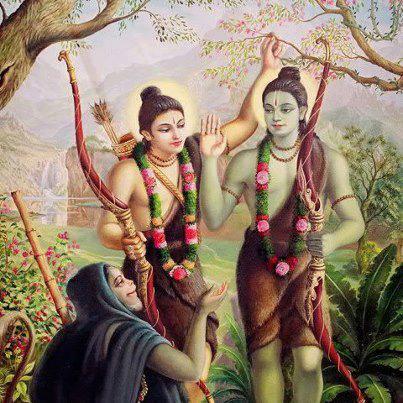
Tribal Woman Saint Sabhari and Rama.

Five Ascetics who Entered Fire: Vedavati, Sabhari, Sarabhanga,Kabila, Quetzalcoatl

Research Article Written by London Swaminathan
Post No. 1168; Dated 12th July 2014.

Hindu epic Ramayana is unique in many ways. One of the unique things about the Ramyana is “self immolation”. It is very interesting to know that women ascetics existed in the days of Ramayana and they did enter the fire and sacrificed their lives when they thought that the date of their departure had come. This is one the boldest things, we can see only in the Hindu world. Here we see a continuity of Upanishadic age sages like Gargi and Maitreyi. They did not feel any body pain when they entered the fire due to their Yogic practice.

Sita did not fear to enter fire to prove her purity. Kumarila Bhatta, contemporary of Adi Shankara, did not hesitate to burn his body slowly in the middle of husk lighted on all four sides. Tamil poet Kabila did enter fire after fulfilling his noble mission. Aztec saint Quetzalcoatl (may be a Hindu saint) did sacrifice his life in fire.

Goddess Uma did penance by standing in the middle of Five Fires (Panchagni). Many a saints including Bhageeratha did Panchagni penance. Bharata and Angatha tried to enter the fire thinking that they lost their in their mission. This is a Hindu ritual. When one completes something noble, one enters fire. When one failed to achieve to fulfil something, they enter the fire ritually.

There is a big difference between suicide and this ritual sacrifice. Here they enter the fire after announcing to the whole wide world that on such and such day they would do it for a particular noble cause. It is not because of depression or agitated mind. There is another type known as Sati, where in the women who lost their husbands climb the funeral pyre. There is another type of sacrifice where women like Chitoor Rani Padmini along with her friends entered the fire to save their modesty.
Here is a short list of great ascetics who immolated themselves:
sita
Sita Devi in Agni Pareeksha.

Sharabhanga :

Rama, after slaying the demon Viradha, visited the hermitage of Sharabhanga. He told Rama that he rejected Indra’s invitation to visit Brahmaloka, knowing that Rama was visiting the place. He also directed Rama to Sutikshna’s dwelling. He requested Rama to stay with him till he casts off his body as a snake casts off its slough. Then Sharabhanga prepared a fire and poured clarified butter therein. The sage entered the flames and assumed a youthful form and ascended to Brahma’s abode (Source: Aranya Kanda, Chapter 5)

Sabhari:

She was waiting to see Rama. When Rama went to her in the middle of the forest; she gave him berry fruits and roots which were bitten by her. She did this to give the sweetest ones to Rama. Since Rama knew her motherly love, he did not reject it. She belonged to the caste of hunters. That tribal woman guided Rama and Lakshmana to lake Pampa an Rishyamuka mountain.
“Having received permission from Rama to depart, Sabhari, wearing matted locks, robes of bark and a black antelope skin, cast herself into the fire, thereafter rising into the air like a bright flame. (Chapter 74, Aranya Kanda).
ram sabari
Rama and Sabhari

Vedavati:

Vedavati was the daughter of Rishi Kusadhwaja. When Ravana was passing through the forests in the Himalaya he met Vedavati, a damsel of great beauty dressed in acetic garb. When Ravana wanted to marry her she told him that she would marry only Vishnu. But Ravana boasted to her about his heroic deeds and touched her hair with a bad intention. Enraged by this, she cursed him that he would be destroyed by her in her next birth (as Sita) and entered fire before him. When she entered the fire celestial flowers fell around her (Uttara Kanda, Ramayana)

Tamil Poet Kabilar:

Kabilar, a Brahmin poet of great character, who lived in the Sangam Age ( First three centuries CE) was a good friend of a generous chieftain Pari. When the mighty Tamil kingdoms laid a siege around his kingdom Kabilar boldly supported Pari. The three Tamil kings of Sera, Choaza, Pandya kingdoms killed him by deceit. Then Kabilar took his two daughters to all the chieftains begging them to marry them. No one dared to earn the enmity of the powerful Tamil kings. At last, one chieftain took care of those girls and Kabilar, having fulfilled his mission, entered the fire. There was a memorial stone in the place known as Kabilar Stone near Tirukoyilur on the banks of River Pennai. There is an inscription with this story in verse (Source Dr R Nagasamy’s Tamil book ‘Paamaalai’).

Bharatha, Rama’s brother, was desperate to see Rama after his 14 year banishment. When he did not arrive on the appointed day Bharat was about to jump in to ceremonial fire. But Rama arrived by his divine Supersonic jet from Sri Lanka and saved his life. When Angathan and other monkeys could not find Sita in their search mission, they contemplated sacrificing themselves in fire. This is a typical Hindu approach.

Quetzalcoatl_magliabechiano
Aztec Deity
Aztec Saint’s Self Immolation

Aztec civilization (750 CE to 1500 CE) in South and Central America had a mysterious person with the name Quetzalcoatl. There were two people with the same name which resulted in lot of confusion. He was a demiurge, priest, ruler conceived by virginal birth years after his father’s death. He was ruler of Toltecs for twenty two years. He lived in Tula, lost a civil war, fled with a good sized Toltec force. He set sail into the open sea on a particular date Aztec calendar with a prophecy that he would come back on the recurrence of that date.

Centuries after this date, Spanish man Herman Cortes landed on the coast of Mexico on 4th March 1519. Aztec king Montezuma believed that god and saint Quetzalcoatl had come back in the form of a white man. He was given royal welcome. But Cortes, Columbus and his band of explorers brought disease, death and destruction to the wonderful Mayan, Aztec and Inca civilizations. They plundered the whole of South America and took tons of gold to Spain and Portugal.

Quetzalcoatl_Ehecatl
Quetzalcoatl means ‘feathered serpent’ or ‘precious twin’. He is one of the most important Aztec deities, although he has origins in pre Aztec cultures. There was a historical king in the same name that was expelled from Tula, the Toltec capital in 987 CE. According to one version he reached the Gulf of Mexico and immolated himself, to be reborn as the planet Venus. He predicted that he would come back. He may be a Hindu saint who practised such rituals in ancient India.

sita2
Sita Devi in Fire Test.

Contact swami_48@yahoo.com

Miracles of Asvins in the Vedas

ashwini_kumars_tales_f

Written by London Swaminathan
Post No. 1159;Dated 8th July 2014.

Miracles are part of mythology. But in Hinduism we come across miracles even in the Vedas. Western scholars take the Vedic statements as true historical records and use them to support their fanciful Aryan-Dravidian Race Theory. The Vedic twins Asvini Devas are attributed with lot of miracles. The “scholars” expounded (in fact bluffed) lot of theories. If one puts them together and read them, they will be utterly confused. But orthodox Hindus believed them with all the traditional faith in the Vedas.

Asvins are called Dasras (enlightened giving) and Nasatyas (kind & helpful); also known as horsemen, Asvinau, Aswinikumaras.

They are the sons of Vivaswan and Saranyu. They are the doctors of the gods (Svar Vaidhyau).
They healed the blind and the lame. They are invoked in various Hindu ceremonies. They ride in three wheeled chariots drawn by horses or birds.

They are the harbingers of dawn – Ushas. Their other appellations are ‘ocean born’(Abdhijau), ‘wreathed with lotuses’(Pushkara srajau), sons of the submarine fire (Badaveyau) and Gadagadau.
Western scholars compared Asvins with the Dioscuri of Greece. But not many similarities exist between them.
In the Nirukta, they are interpreted as heaven and earth, day and night, two kings, performers of holy acts. They represent light or luminous objects.

asvins book

The number of hymns (57 specific hymns and mentioned 376 times in the Rig Veda) addressed to them testifies to the enthusiastic worship they received.
In the Mahabharata they are the parents of Nakula and Sahadeva. Like Asvins, they are also twins.
The Vedic poets use beautiful similes in their hymns. They praise Asvin twins
Like two hymn singing Brahmanas
Like two charioted heroes
Like two beautiful damsels beautifying themselves
Like a wise married couple
Like two Chakravaka birds/ swans
Like two lips that speak sweetly with the mouth
Like two breasts that give nurture to life

sukanya

Miracle 1
The twins Asvins restored youth to old Chyavana. He had a beautiful young wife named Sukanya. When Asvins wanted to marry her, she hesitated. Asvins told her that they would make her husband young and then she can choose one among them i.e. two Asvins and Chyavana. When all the three came before her, she rightly chose her husband Chyavana.

Miracle 2
Bhujyu episode is mentioned at least in eight hymns in the Rig Veda. Bhujyu was the son of king Tugra. When enemies from an island gave him trouble, Tugra sent Bhujyu by boats to attack them. His boat was broke in the mid sea. Then Asvins saved him, according to Sayana (RV1.117-14). Bhujyu’s ship had 100 oars. This serves as an evidence for naval forces during the Vedic period.

Miracle 3
In Khela’s battle a leg was severed like a wild bird’s pinion. Immediately Asvins gave Vispala an artificial iron leg. This shows that artificial limbs were fixed in those days (1-116-15).
Poetess Gosha has a hymn on Asvins. (RV 10-40).This serves as an evidence for literate women in Vedic society. Gritsamada’s hymn (RV 2-39) to Asvins is a beautiful poem:–

dioscouri
Dioscouri of Greece and Rome

Come near like two press stones, with a common aim
Like two zealous men moving to a tree of treasure
Like two hymn singing Brahmanas to the assembly
Like two people’s envoys called at many places.

Like two charioted heroes going in the morning
Like two leaders, come together to your choice,
Like two beautiful damsels beautifying themselves
Like a wise married couple among the people.

Like two horns come earliest to us hither
Like two hoofs, travelling with rapid motion
Like two Chakravaka birds/ swans at the day’s dawning
Come towards us, mighty, like charioted heroes.

Like two boats take us across; like two poles
Like axles, like spokes, like fellies carry us.
Like two dogs ward off all harm to our bodies
Like two crutches protect us against falling.

Like two raging winds, two confluent rivers.
Like two quick seeing eyes, come towards us
The two hands most useful to the body
Like two feet take us towards our welfare – RV 2-39

This shows Rig Vedic people are highly literate and cultured. We also hear about the ship attacks, maritime warfare etc. Medical science has advanced to transplanting an iron leg. Women poets (poetess) sang hymns and were part of the Vedic society.

Contact swami_48@yahoo.com

Priest who changed New Moon Day to “Full Moon Day”!!

Abhirami-and-Bhattar-painted-by-Keshav

Written by London Swaminathan
Post No.1144; Dated 2nd July 2014.

Tamils bless newly married couple with auspicious yellow rice (akshathai) greeting them with the words “Let you get Sixteen and Long Live”. Even villagers people, though illiterate, know the ‘sixteen’ does not mean sixteen children, but sixteen essential things in life. Of the three Tamil poets listed the good things that needed in life the most famous sixteen came from a saitly devotee who composed a verse with all the sixteen essentials. It is part of Abhirami Ammai Pathikam- a decad on Goddess Abirami of Tirukkadavur in Tamil Nadu.

There is a very interesting story behind that poet. Subramanya Iyer was his original name, but became popular with the new name Abhirami Bhattar after a miracle. Subramanyam lived in the later part of the 18th century. His father Amirthalinga Iyer was a great scholar and musician. Subramanyam studied music, Tamil and Sanskrit. He did not seek any employment because his mind was after spiritual things. He became a great devotee of the local deity Goddess Abhirami, another name for Shiva’s wife.

He lived mostly in the temple meditating upon the glory of the goddess. After seeing his strange behaviour, people thought he became mad. King Sarabhoji of Thanjavur used to visit the temple. One day he visited the temple when all except Subramanyam paid respect to the king. The king became angry and asked who that arrogant fellow was. People gave him different versions, with both positive and negative things about Subramanyam. King wanted to test him and so asked him what day was it? Was it a full moon day or new moon day?

He replied at once, “It is a full moon day”. Actually it was a new moon day (Amavasya in Hindu calendar). The king thought that he deliberately insulted him and ordered that he should be executed if he did not show the moon on that day. The man who always saw the glorious light of the goddess thought that it was full moon. Later he realised his mistake and prayed to goddess to save him.

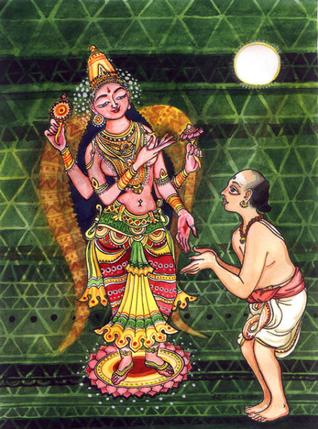
Abirami

His prayer was a beautiful hymn with 100 verses. It is called Abhirami Andhathi. When he sang the 79th verse, goddess took off her ear stud and threw it in the air. And lo, the full moon appeared on the sky and bathed the village in bright light. He continued his composition and finished at 100 verses.

King Saraboji who was camping in the nearby town also saw the sudden light in the sky. He rushed to the temple and fell at the feet of Subramanyam and begged his pardon. The king honoured him with the title Abhirami Bhattar. Andhathi is a genre where the last word of the first stanza will be the first word of the next verse. It will go on like this up to 100. And the last word of the 100th stanza should be the first word of the first stanza! It is a garland of words to a God or Goddess.
Abhirami Bhattar composed also Abhiramai pathikam and prayed for the sixteen. The sixteen things he wanted are as follows:

indian_family1
Everybody needs a Happy Family.

English Translation

O, God of old Kadavur, Sister of Vishnu who is ‘sleeping’ on the ocean, who is inseparable from Amutheesar, O Abhirami, please bless me with the following:–

1)Good and Proper Education,2) Long life, 3)Good friends, 4)Prosperity forever 5)Youthfulness, 6)Disease free (healthy) body, 7)Calm mind (tranquillity), 8)Affectionate wife, 9)Children with good character 10)Name and Fame, 11)Truthfulness, 12)Philanthropy, 13)Theft free Wealth, 14)Good government, 15)Worry free life and 16) Association with your great devotees.

There is one more list of good things in Prabodha Chandrothayam. There is another list given by Kalameham, who is famous for poems with double entendre. It would be appropriate here to list two English poems that follow the Tamils in demanding good things in life:–

arusuvai uNti
Everone needs his Daily Bread!

A Prayer Found in Chester Cathedral

Give me good digestion, Lord,
And also something to digest;
Give me a healthy body, Lord,
With sense to keep it at its best.

Give me a healthy mind, good Lord,
To keep the pure and good in sight;
Which, seeing sin, is not applauded,
But find a way to set it right.

Give me a mind that is not bored,
That does not whimper, wine and sigh;
Don’t let me worry overmuch
About the fussy thing called “I”.

Give me a sense of humour, Lord,
Give the grace to see a joke;
To get some happiness from life,
And pass it on to other folk.

By an Unknown author

Currency_1728545g
We need lot of money!

One more list:

What We Need

A little dash of purpose,
An effort made to cheer,
A little more of courage,
And less of doubt and fear;
A little more of lifting,
And pulling all our weight,
A little less of leaning,
And leaving it to fate.

A little less of grabbing,
Of selfishness and greed,
A little more of helping,
A fellow that’s in need;
A little more of working,
With smiles instead of frowns,
A little less of kicking,
A fellow when he down.

A little less complaining,
About the things that mar,
A little more adapting,
To all the things that are;
A little more of caring,
And willingness to fight,
A little more of daring,
For what we feel is right.

A little splash of humour,
To brighten up the way,
A little joy to follow,
And linger through the day;
A little touch of laughter,
To cause a little mirth,
Is simply what we’re needing,
To gladden this old earth.

Hope Spencer

about life

Let us all pray for the Sixteen!!
(Pictures rae taken from facebook and various websites;thanks).

தமிழ் இலக்கியத்தில் அதிசய உத்தர குரு!!

map_mountains_central_asia_small

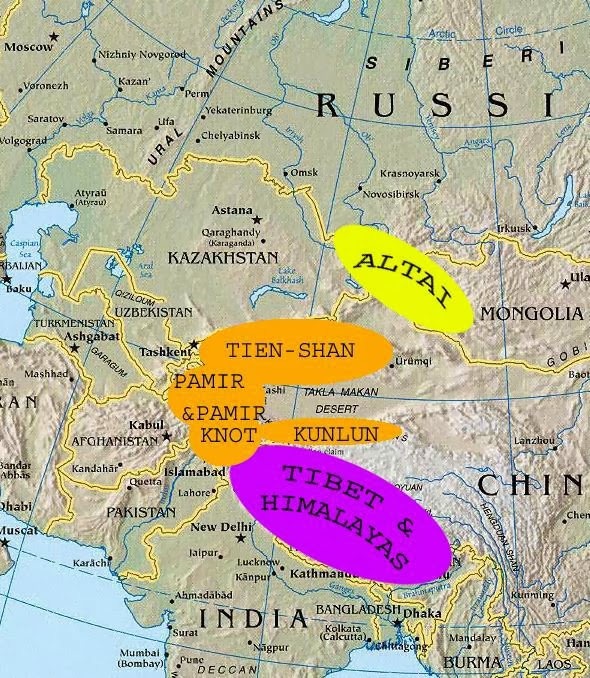
One of the probable location for Uttarakuru

N.B. If you want to reproduce this article, please email me for permission. You must get written permission from me for each and every article separately. swami_48@yahoo.com

ஆய்வுக் கட்டுரை எழுதியவர் லண்டன் சுவாமிநாதன்

கட்டுரை எண்:– 1137; தேதி 29 ஜூன் 2014

(இக்கட்டுரை என்னால் ஆங்கிலத்தில் ஏற்கனவே வெளியிடப்பட்டது)

உத்தரகுரு பற்றி வேதகாலம் முதல் சங்க காலம் வரை உள்ள கருத்துக்கள் மிகவும் சுவையானவை. சர் தாமஸ் மூர் (1516) என்பவர் எழுதிய ‘உடோபியா’ என்ற கற்பனை உலகம் போன்றது இதுவா? அல்லது உண்மையிலேயே ஒருகாலத்தில் இப்படி இருந்ததா என்பது பலருடைய கேள்வி. வேதகாலத்தில் இப்படி உண்மையில் ஒரு இடம் இருந்தது உண்மையே.

வேதத்தில் காணப்படும் எல்லா விஷயங்களையும் வெளிநாட்டினர் கூட உண்மை என்றே நம்பி அதன் அடிப்படையிலேயே பல நூல்களையும் ஆய்வுக் கட்டுரைகளையும் எழுதி வருவதே இதற்குச் சான்று பகரும்.

சிலப்பதிகாரம் (2-10)
முதலில் தமிழில் உள்ள சில குறிப்புகளைக் காண்போம்:-
தமிழர்களின் கலைக்களஞ்சியமான “நெஞ்சை அள்ளும்” சிலப்பதிகரத்தில் மனையறம்படுத்த காதையில் பூம்புகார் நகரத்தின் செல்வ வளத்தினை உத்தரகுருவுக்கு ஒப்பிடுகிறார் இளங்கோ அடிகள்.

“அத்தகு திருவின் அருந்தவம் முடித்தோர்
உத்தரகுருவின் ஒப்பத் தோன்றிய
கயமலர்க் கண்ணியும் காதற்கொழுநனும்
மயன் வித்தித்தன்ன மணிக்கால் அமளிசை
நெடுநிலை மாடத்து இடைநிலத்து இருந்துழி”—

வாழ்க்கையில் பெரும் தவம் செய்தவர்கள் அவர்களின் தவ வலிமையால் உத்தரகுரு என்னும் இடத்தில் வசிப்பர் (பிறப்பர்). அந்த உத்தரகுரு போலத் தோன்றிய பூம்புகாரில் கண்ணகியும் கோவலனும் வாழ்ந்தனர் என்கிறார் இளங்கோ. இதற்கு முந்திய வரிகளில் பூம்புகாரின் செல்வ வளம் வருணி க்கப்படுகிறது. அரசர்களும் விரும்பும் செல்வ வளம்— கடல் வழியாகவும் தரை வழியாகவும் குவிந்த புதிய பொருள்கள்— பண்பு குறையாத உயர்குல மக்கள்— ஏழடுக்கு உடைய மாடிக்கட்டிடம் என்று வருணிக்கிறார் அடிகள்.

பதிற்றுப்பத்து (9-14)
இந்த வருணனை உத்தரகுரு பற்றி நமக்கு ஓரளவுக்கு சித்திரம் கொடுக்கிறது. இதற்கு பல நூறு ஆண்டுகளுக்கு முன் எழுந்த பதிற்றுப்பத்தில்

நாமம் அறியா ஏம வாழ்க்கை
வடபுல வாழ்நரின் பெரிதமர்ந்து அல்கலும்
இன்னனகை மேய பல்லுறை பெறுபகொல் — (ஏழாம் பத்து, கபிலர்)

பொருள்:– கள்ளுக்கடைகளில் கொடிகள் பறந்தன. பகை மன்னர்களின் யானைகளின் தந்தங்களை ஒடித்து கள்ளுக் கடைகளில் கொடுத்து மக்கள், ‘’கள்’’ வாங்கிச் சாப்பிட்டனர். அவர்களுடைய பயமே இல்லாத இன்ப வாழ்வு உத்தரகுரு (வடபுல வாழ்நர்) மக்கள் வாழ்க்கை போல இருந்தது என்று கபிலர் பாடுகிறார். பழைய உரையாசிரியர் இதை போகபூமியாகிய உத்தரகுரு என்பர்.

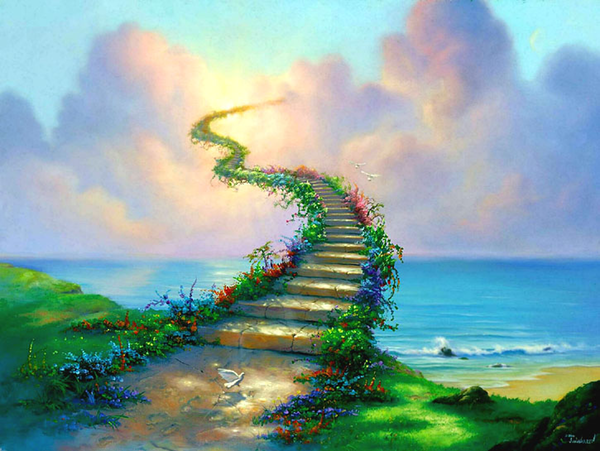
stairway-to-heaven

வேதத்தில் கூறுவதைச் சுருக்கமாகக் காண்போம்:
ஐதரேய பிராமணத்தில் (8-14), இமயமலைக்கு அப்பால் ஓரிடத்தில் உள்ள இடம் — (பரேன ஹிமவந்தம்) –என்று சொல்லப்பட்டுள்ளது. வாசிஷ்ட சாதஹவ்யா (8-23) என்பவர் இதை கடவுள் நாடு (தேவ க்ஷேத்ர) என்று அழைக்கிறார். ஜானம்தபி அத்யராதி என்பவர் அதை வெல்ல விரும்புவதாகவும் வேத இலக்கியம் கூறுவதால் உண்மையில் இப்படி ஒரு நாடு இருந்தது என்பது உறுதியாகிறது. வடபுல வாழ் ‘குரு’ இன மக்கள் கஷ்மீருக்கு குடியேறி பின்னர் குருக்ஷேத்ர பகுதிக்கு வந்ததாக சிம்மர் என்பவர் கூறுகிறார். இதிலிருந்து தழைத்ததே கௌரவ- பாண்டவ குரு குலம்.

மஹாபாரத சபா பர்வம்
அர்ஜுனனுக்கு உள்ள முக்கியமான பத்து பெயர்களில் ஒன்று தனஞ்செயன். உத்தர குரு வரை சென்று தனத்தை வென்று (ஜயித்து) வந்ததால் அவன் தனஞ்செயன் என்று அழைக்கப்பட்டான். சபாபர்வத்தில் யுதிஷ்டிர (தர்மர்) மஹாராஜாவுக்கு ராஜசூய யாகம் செய்து முடிசூட்டும் வைபவம் வருகிறது. ஒவ்வொரு சஹோதரரும் பூமியின் ஒருபகுதியை வெல்லச் சென்றனர். வட திசை நோக்கிச் சென்ற அர்ஜுனனை உத்தரகுரு வாசலில் நிறுத்தி ‘’இது மனிதர் புகமுடியாத இடம். அப்படியே புகுந்தாலும் அவர்கள் கண்களுக்கு எதுவும் புலப்பாடாது’’ என்கின்றனர். உடனே அர்ஜுனன் தர்மரின் ஆளுமையை ஏற்று அவருக்குக் கப்பம் செலுத்தினால் திரும்பிப் போவதகக் கூறுகிறான். அவர்களும் தெய்வீக அணிகலன்கள், ஆடைகள், தோல் முதலியன தந்து அனுப்புகின்றனர்.

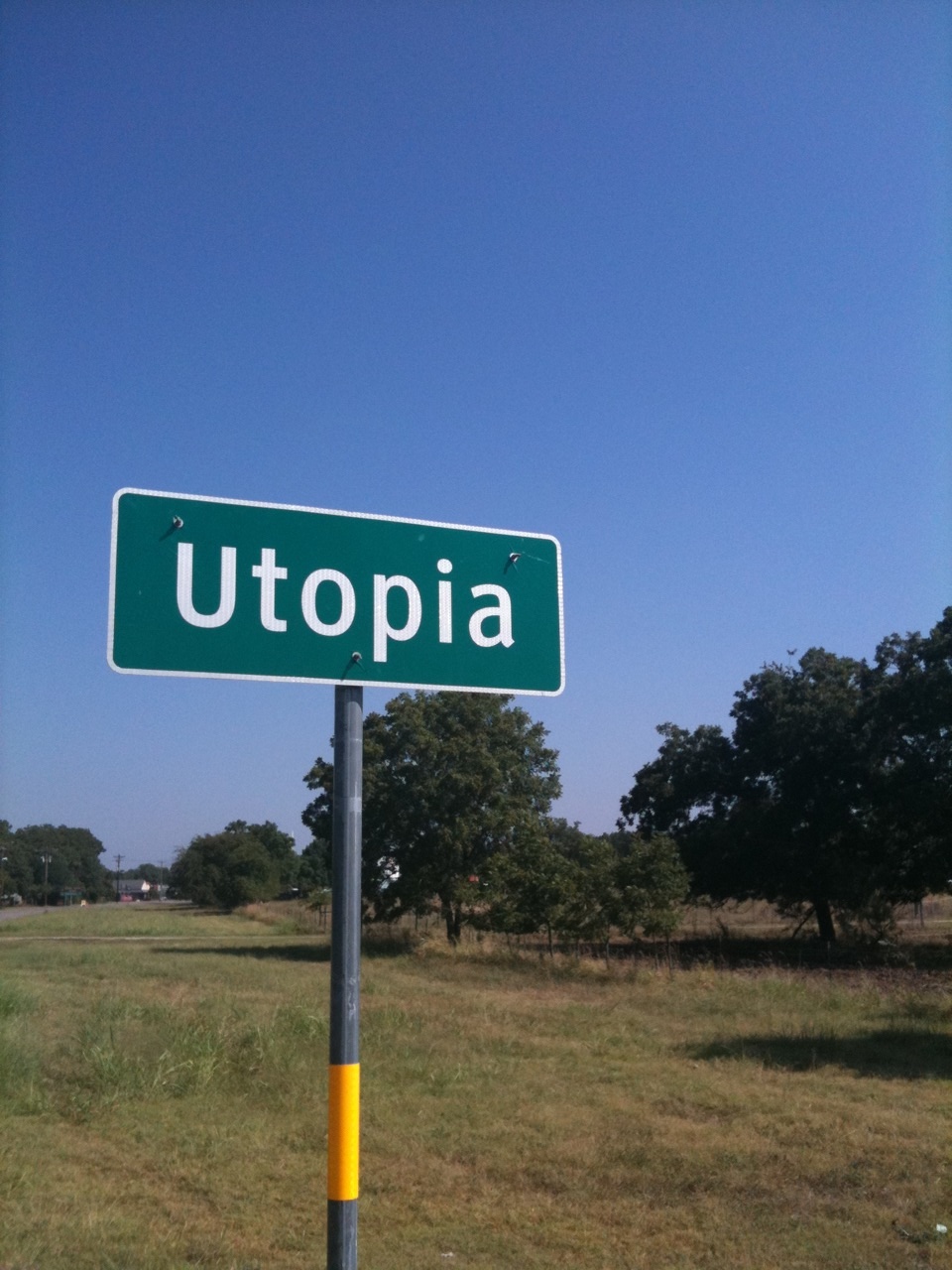
Utopia

இதுதவிர ஆதிபர்வத்திலும் உத்தரகுரு வருகிறது. ராமாயணத்தில் வால்மீகி முனிவரும் இது பற்றிப் பேசுகிறார். ஆக இது ஒரு இன்ப பூமி, போக பூமி,, செல்வ வளம் கொழிக்கும் பூமி, ஆண்களும் பெண்களும் சுதந்திரமாக பாலியல் உறவு கொள்ளும் சுகபோக பூமி, தவ சீலர்கள் வசிக்கும் பூமி, சாதாரண மக்கள் புக முடியாத பூமி என்ற பல அரிய ஆச்சர்யமான தகல்கள் கிடைக்கின்றன. இதைப் பார்த்துதான் பிளாட்டோவின் ‘ரிபப்ளிக்’, தாம்ஸ்மூரின் ‘உடோபியா’ ஆகிய நூல்கள் எழுந்தனவோ என்று வியப்போரும் உண்டு!!

உத்தரகுரு பற்றி கிரேக்க ஆசிரியர் அமோதேயஸ் ஒரு புத்தகமே எழுதியதாக ப்ளினி சொல்கிறார். அது கிடைக்கவில்லை. டாலமியும் இந்த தேசத்தைக் குறித்துள்ளார்.

புத்த, ஜைன மத நூல்களில் பூகோள வர்ணனைப் பகுதிகளில் உத்தர குரு வடக்கில் உள்ளதேசமாகக் குறிப்பிடப்படுகிறது. பலரும் இதை இந்துகுஷ், பாமீர் பீடபூமியில் இருந்த இடம் என்றே கருதினர். வடக்கில் இமயமலைக்கு அப்பால் இருந்தது என்பதில் கருத்தொற்றுமை காணப்படுகிறது.

நாம் புதிய உத்தரகுருவை சமைப்போம் ‘நாமம் அறியா ஏம வாழ்க்கை” – வாழ்வோம்!!
–சுபம்–

Uttarakuru- A Mythical Land

map_mountains_central_asia_small

Written by London swaminthan
Post No.1136; Dated 28th June 2014.

N.B. If you want to reproduce this article, please email me for permission. You must get written permission from me for each and every article separately. swami_48@yahoo.com

Uttarakuru has been referred to as a land of gold and immense pleasure in Tamil and Sanskrit literature. It is found in Vedic literature as well as Sangam Tamil literature. Lot of authors of classical age and writers of epics Vyasa and Valmiki also wrote about Uttarkurau. In the Vedic days it was NOT a mythical region. It existed somewhere beyond the Himalayas. Sabha Parva of Mahabharata described it as a real geographical area.

Arjuna got the Name Dhananjayan because he won the wealth of Uttarakuru (Dhanam= wealth, Jayan= one who won). Free sex was practised there.

Just before the Rajasuya Yajna of Yudhistra, Arjuna went towards North to conquer the lands. At the gates of Uttarakuru, he was stopped and told that no human being was allowed in. Even if he entered he could not see anything with human eyes. Then he insisted that they should accept Yudhistra’s sovereignty and offer tributes to him. They offered him divine garments, divine ornaments and divine hides and skins as tribute (Ref. Sabha parva of Mahabharata).

In Adhi Parva of Mahabharata ( 1—17—19) and Ramayana (4-44-88) the land of the Uttarakurus was described like a mythical country.

stairway-to-heaven

Sangam Tamil Literature

In Sangam Tamil literature Pathitrupathu (9-14)refers to Uttarakurus. Post Sangam Tamil epic Silappadikaram also refers to it.

Tamil poets described it as Bhogabhumi, land of pleasure. Ilango, author of Tamil epic Silappadikaram (2-10) compared the Tamil city Pumpuhar with Uttarakuru. He said that Uttarakuru was the residence of great penance performers and blessed with inexhaustible wealth.

UTTARAKURU In Vedic Literature —A Mysterious place with Gold!

The Uttarakurus, who play a mythical part in the epic and later literature are still a historical people in the Aitareya Brahmana (8—14) says the authors of the Vedic Index. They are located beyond the Himalaya. In another passage, however, the country of the Uttarakurus is stated by Vasistha Satyahavya to be a land of the gods (deva-kshetra), but Janamtapi Atyarati was anxious to conquer it, so that it is still not wholly mythical. It is reasonable to accept Zimmer’s view that the Northern Kurus were settled in Kashmir, especially as Kurukshetra is the region where tribes advancing from Kashmir might naturally be found (Vedic Index by AA Macdonell and AB Keith, page 84).

Identifying ancient lands mentioned in Puranas and Ithihasas (mythology and epics) has been a problem from the very beginning. Since the names like Kurus, Madras, Khambojans are tribal or community names and wherever they migrated that was called their land (country). In course of time, they slowly migrated to different areas, which led to lot of confusion. So nothing can be said with any certainty.

Sanskrit playwright Bhasa has referred to it in two of his dramas (Avimaraka and Svapnavasavadatta)
Pliny said that the Greek author Amometus wrote a book on Attacorae (Uttarakuru), which is lost.
The Uttarakuru is the seventh of the nine divisions lying to the north of Meru. Being the land of the eternal beautitude and enjoyment it came to be regarded as a heaven (Devabhumi or Bhogabumi) where the heavenly nymphs (Apsaras) dwelt.

Similar descriptions are found in Jain and Buddhist scriptures.

It is identified with Ottoro Korai of Ptolemy and Lassen places the country somewhere east of modern Kasgar– Source:Act 4 of Svapnavasavadatta of Bhasa ,translated by M R Kale.

Utopia

Utopia of Thomas Moore (1516)
Sir Thomas Moore wrote a book about an ideal society in an imaginary land in the Atlantic Ocean called Utopia. Probably he got the idea from Hindu Uttarakuru. Plato in his Republic wrote about a society where there are four classes of citizens (Gold, Silver, Bronze and Iron). The golden citizens are philosopher kings like Janaka of Upanishads. He might have got the idea from the Four Yugas of Hindu literature. Golden citizens are like the citizens in Krita Yuga, the Hindu Golden Age.

Tamil References (in Tamil):–
Silappadikaram, 2. Manaiyarampatutha katai
Uutarakuruvin oppath thodriya (2-10)
See Pathitru pathu – ezam pathu lines 9-14 vatapula vaazwar= uththarakuru.

Miracles of Sri Seshadri Swamikal

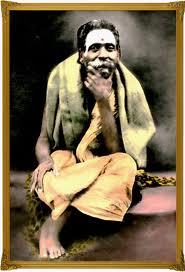
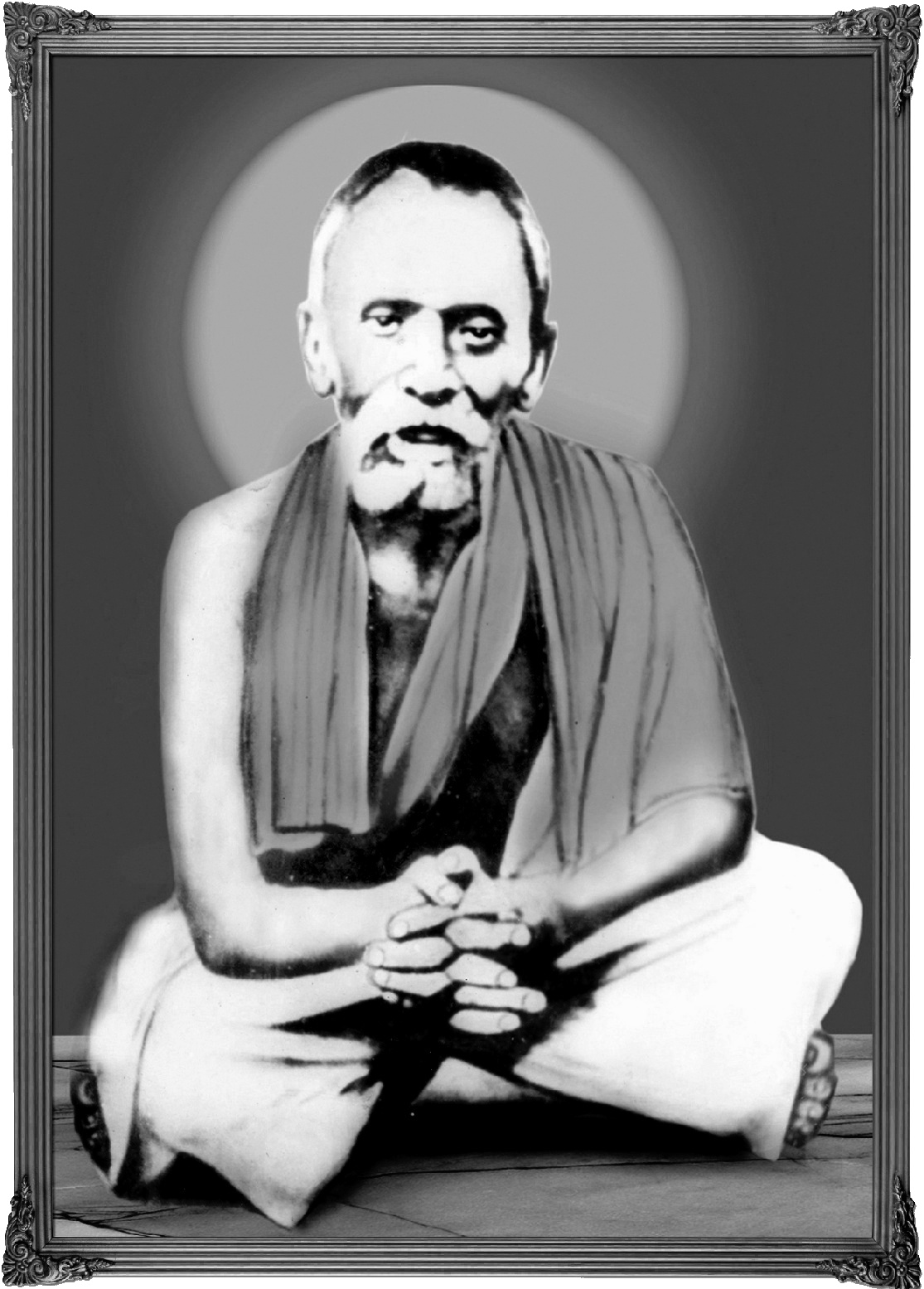
sesu1

Miracles of Sri Seshadri Swamikal of Tiruvannamalai

Written by London Swaminathan
Post No. 1120; Dated:– 20th June 2014.

Tiruvannamalai in Tamil Nadu is famous for many things. This is one of the Five Main Shrines (Pancha Bhutha Sthala) of Lord Shiva. Lord Shiva is in the form of Agni (fire) in this shrine. It is also famous for several saints including Arunagiri nathar (author of Tiruppugaz in Tamil), Sri Ramana Maharishi and Sri Seshadri Swamikal. Ramana is known to all spiritual aspirants around the world. But Seshadri Swami is not known to many outside Tamil Nadu. His life was full of miracles. Studying his life shows how the world looks at a budding saint, how the family puts all the hurdles in one’s spiritual path and how one becomes great saint at the end.

old-sesha

Seshadri was born (22 January 1870) in Kancheepuram. The city of Kancheepuram was the capital of Pallava Dynasty for several centuries. Its fame spread throughout India because of its great temples and university. It was the Nalanda of the South. One of the Chalukya kings conquered Kanchi but not to touch a single stone. Because it was so beautiful he ordered his soldiers not to destroy it.

Long ago, Adi Shankara brought 30 families from the North to Kanchi, because of shortage of Shakta practitioners. They were known as Kamakoti family, well versed in Sri Vidya Worship. Seshadri was born in that family to Maragatham and Varadarajan. Seshadri’s mother Maragatham was extremely beautiful and well versed in arts and Sanskrit literature.
vedas t v malai
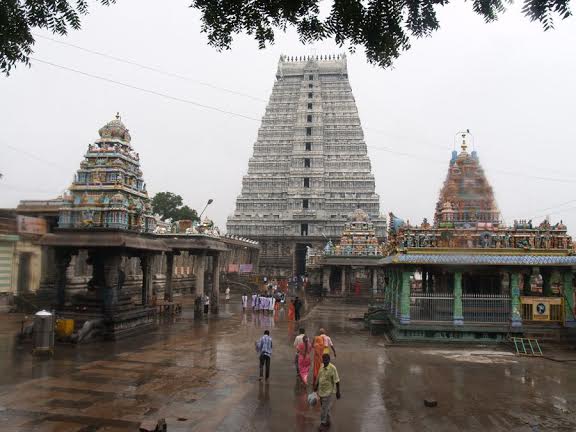
Tiruvannamalai Temple

Seshadris father Varadarajan died when Seshadri was young. His death came on the appointed day as he correctly predicted before. After a few years his mother Maragatham also died saying the name of Arunachaleswar, God of Tiruvannamalai. Hindus believe that any one dying with the thought of Arunachal (Tiruvannamalai) gets liberated from the cycle of birth and death. His mother’s death with the words of Arunachala Siva made a deep impression in Seshadri’s mind. He used to draw the hill of Tiruvannamalai and offer puja (worship) to it.

Though Seshadri mastered lot of Tamil and Sanskrit scriptures, his mind was only thinking of god. His behaviour was very strange and similar to that of a mad man. For hours doing Puja in a secluded place or behind the closed doors and even at the crematorium was the order of the day. When the elders in the family warned about going to crematorium and getting all the ‘impurities’ it did not bother him. He made every one dumbfound by arguing with a great scholar about it for three hours in Sanskrit! A section of Hindus believe that doing prayer at the crematorium will increase its effect tenfold. But one must have proper maturity to do it. The last warning came that he can’t enter the house once he goes to the crematorium for pujas. He was waiting for those words. From that day he did not enter the house.

tv malai
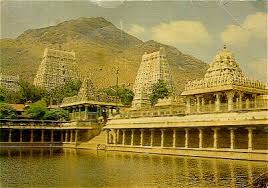
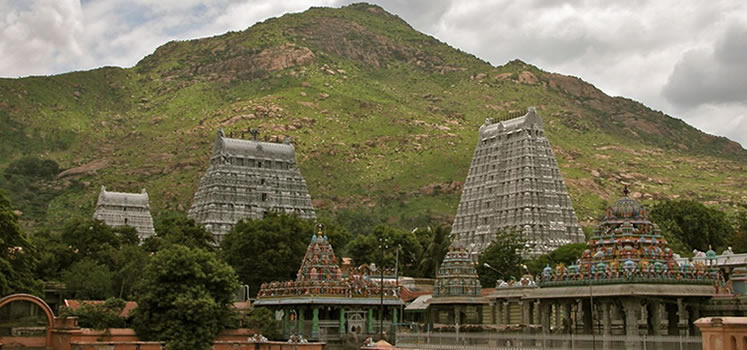
Temple With the Hill of Tiruvannamalai

Every spiritual aspirant needs a guru for proper initiation. Seshadri was lucky to get one North Indian Guru by name Balaji Swami who came to Kanchi on his way to Rameswaram. Seshadri took Sanyasa (vow to lead an ascetic life) from him and proceeded to Tiruvannamalai where he stayed for next forty years.
When he was a child a few miracles happened which showed that he was going to become great. Once when his mother took him to the temple, a seller was selling Krishna idols. When he asked for one, his mother hesitated. The vendor was ready to give him free of cost. At last mother bought him one. But Seshadri was allowed to choose one from the pile. He put his hands through the pile of mini statues and chose one. As soon as he left all the figures were sold which never happened in the life of the vendor. Next time when his mum took Seshadri to the temple he came running and kissed the hands of Seshadri and touchéd his feet saying that he was a divine child. From that day he was known as Golden Hand Seshadri.

When one of the family friends came to his house asking Seshadri for his daughter, the eldest in the family told him loud and clear that he can’t be married because his horoscope was an ascetic’s horoscope. Though everyone in the family resented it, his statement came true.

What happened in Seshadris younger days never stopped even when he became old. If he went to a shop and touched any eatable with his “unclean” hand, no shop keeper would object to it, because that shop would do a roaring business on that day. He used to throw out articles from the shop. But vendors were waiting for that moment.

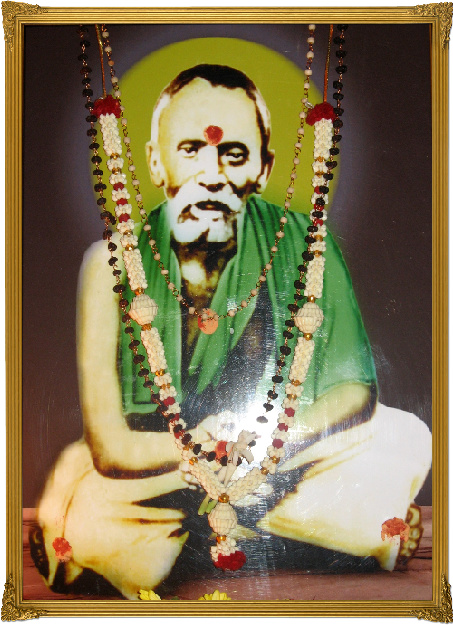
old-seshanatha

His control over animal world also was also amazing. I have already written about it in my post “Mysterious Tamil Bird Man” (Posted on 19th April, 2012). He called hundreds of beautiful birds of different varieties at the backyard of a house, just to amuse his devotee!!!

Another time a snake was coming quickly towards him. All his friends ran for life. But Seshadri called the snake and it climbed over him and spread its hood over him like an umbrella. He used to bathe several times every day and he was given a nickname “cormorant” (water crow in Tamil).

His behaviour was like a mad man. He used to laugh for an hour without any rhyme or reason, looking at the sky and “listen to the heavenly music of the Gandharvas (Singers in the heaven)”.

There was another holy man by name Vitobha Swamil at Polur near Tiruvannamalai. He fell sick and told his devotees that he would ‘depart’ within three days. One day Seshadri looked at the sky and was shouting “Vittobha going, Vittobha going”. Within a short time people received the news of Vittobha’s death from the nearby town. As he was a Tri Kala Jnani, he could see the present, past and the future events.

There are scores of anecdotes like this in his life. He never did any miracle for the sake of miracle to attract people. No one could predict what he was going to do next minute. In Tamil there is a proverb meaning Siddhas and beggars have the same style/attitude (Siddham Pokku Sivam Pokku; Andi poku adhe pokku) . Seshadri Swami was a typical example of this saying.

He visited the house of Judge Sundaram Chettiar once. He started playing with him by throwing his upper garment on his neck like a garland. This he did several times. Soon he was promoted as a High Court Judge. Once he sat on the pyol (Thinnai in Tamil) of a poor cart man’s house. The old woman in the house gave him porridge. He asked him to sell the cart and the bull. Next week he got married to a rich woman and he sold his bullock cart and migrated to Madras. So many good things happened to so many people. His look can destroy even the past karma and change the future to good.

Venkatrama Iyer was working as a teacher at Danish Mission High School. Because of jealousy of a few people he was about to be dismissed. One day he saw Swamikal coming and took off his shoes and fell at his feet. But contrary to his expectations of blessings, he was beaten with his own shoe several times. Venkatrama Iyer was shocked. When he went to his school he saw an envelope on the table. He felt very bad and opened the envelope thinking that it was his dismissal order. But he was promoted as the Head Master of the school. Swami can eradicate anyone’s past bad karma.

tv malai2

Sivaprakasa Mudaliyar was a Sub Inspector of police. He was stopped on the road by the Swami and was asked whether he would accept ten rupees more. He told Swami that he would be glad to take it. Swami put his dirty cloth on him and took it. When he saw his superiors on the same day he was given ten rupees increment!

He did penance at the Durga Temple at the foothill. He advised his devotees to follow Rama instead of reading Ramayana. Ramana Maharishi came to Tiruvannamalai after Seshadri. When Ramana was doing severe penance, insects were crawling over him and he was bitten by the insects. Seshadri Swamikal saved Ramana and revealed him to the world as a saint. When Seshadri Swamikal died Ramana took part in the funeral procession.

Seshadri Swamikal also predicted his death and died in 1929 after a serious illness. His Samadhi ( holy grave where his body is buried) is very near Ramanashram (The author was fortunate to visit both the Ashrams). A lot of people were cured of their sicknesses and received advice from him. Even now the very thought of him or a prayer to him would do wonders.

Next time you visit Tamil Nadu, don’t forget to visit the two great Ashrams of Ramana and Seshadri at Tiruvannamalai. Seshadri Swamikal’s full life history is available in Tamil and English.

–Subham–

God Feeds Toad in the Stone & Ant in the Box

Ramdas Shivaji

Written by London Swaminathan
Post No. 1118; Dated 19th June 2014.

There is a popular story about a conversation between Shiva and his wife Parvati. Shiva’s wife was annoyed at his idleness. Like every mother likes all her children to be fed well, she also asked Lord Shiva to go around the world and feed all the hungry creatures. Though she was the embodiment of love and kindness, she did not realise that Shiva was Omnipresent, Omniscient and Omnipotent.

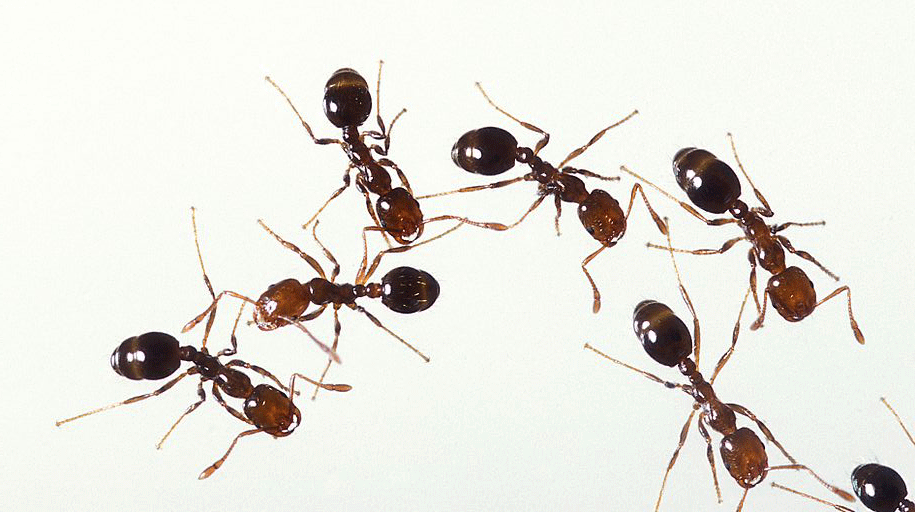
Fire_ants

Lord Shiva simply smiled at her and told her that what he was he doing. Parvati was very suspicious about what Shiva said to her. Suddenly an idea crossed her mind. He went to the backyard and caught a few ants and put them in the box. That evening she raised the issue with her husband once again. She asked Shiva whether he provided food for every living being in the world. Siva said to her that was what he was doing all the day. Now Parvati smiled at him and took the box saying, “Oh, My Lord, you forgot a few poor little creatures. Look here I have caught some ants in the morning. You did not even come near this box. I carried it with me all through the day”. Shiva asked her to open the box. When she opened the box she was greatly surprised to see the ants were eating rice. She felt very much about her ignorance and realised the greatness of Lord Shiva.

Toad in the Rock
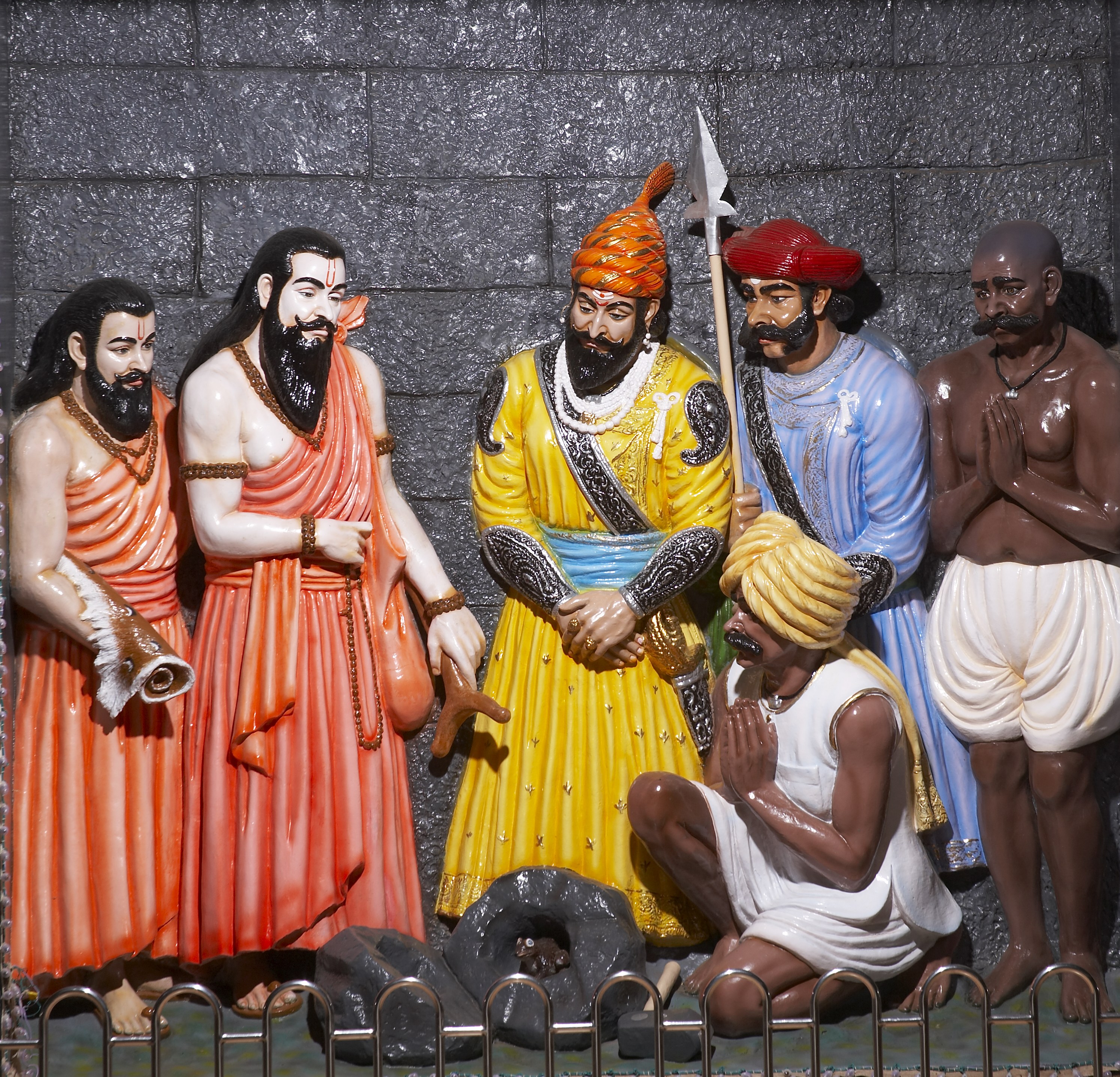
Shivaji was very proud of his victories. He thought he was the one protecting everyone in his kingdom. Though he was arrogant about his achievements he was always obedient to his Guru Samartha Ramdas. So Ramdas wanted to teach him a lesson.
Once he was building a fort for which he engaged thousands of workers. He was inspecting them and felt a certain amount of pride. Guru Ramadasa was by his side. Immediately he asked Sivaji to bring some workers to break one huge rock. Shivaji was wondering what the Guru was about.

shivajipg21

(One of the nature’s wonders is that toads inside the rocks. Whenever some stones are rocks are cut, people see toads living inside them).

As commanded by his Guru, he brought some workers and asked them to break the rock. Inside the rock they saw water in the holes and frogs (toads) living happily. Pointing out to the frogs Guru asked, “Shivaji are you feeding and looking after these frogs as well? Hearing this Shivaji’s pride was humbled and at once he fell at the feet of his Guru and sought pardon for his conceit.

tad in rock

Talismans in Atharva Veda & Ancient Tamil Literature

AV1

Written by London Swaminathan
Post No.1113; Dated 17th June 2014.

(Also read my earlier post “Sex Mantras and Talismans in Egypt and Atharva Veda” – posted on 26th September 2012)

What is a Talisman?
A Talisman is an inscribed ring or stone, supposed to be endowed with magic powers, especially averting evil from or bringing good luck to its holder. It is also a charm or amulet which is capable of working wonders (The Concise Oxford Dictionary).

Impadai_thaali
Picture of Aimpatai Thali of Tails with Five of Vishnu’s weapons.

Talismans are found in the Vedas and in the Indus Valley Civilisation. Though SWASTIKA is found all over the world, India is the only country which has some explanation for it. So the Sanskrit word is used all over the world including the Oxford Dictionary. Swastika seals were found in the Indus Valley excavations.
Talismans conveyed joy and confidence to their owners and gave them warning of coming events, inspiring courage and faith in the fearful; they have played a part in the lives of individuals.

swastika-stamps
Swastika Stamps of Hitler,Germany.

Swastika
Hitler, who believed in the Aryan Racist Theory, misused the symbol and so it earned a bird name after World War II in Western countries. But Hindus use it even today in their wedding invitations and shops for good luck. There is a mantra in the Vishnu Sahasra Nama with the word Swasti.
In Sanskrit its name means happiness, pleasure and good luck.
Su = good and Asti = being; full meaning = well being.

Tamil Talismans
Ancient Tamils used talismans from young age. Tamil children were given talismans made up of tiger nails or tiger tooth. That gave them courage to fight the evil. Tamils called it Aimpatai Thali or simply Thayathu. Tamil Women wore talismans in yellow thread (Purananuru 127and Tamil epic Silappadikaram 1-47 & 4-50) when they got married.

chettiar tali
Picture of Chettiyar Thali.

Tamil children had Aimpataith thali made up of five symbols: Vishnus’s conch,Chakra/wheel, Bow, Sword and Mace.
Ref.Akam.54, Puram.77

(Ref.S Ramakrishnan’s Tamil Book Inthaiya Panpatum Thamizarum, Meenatchi Puthaka Nilayam, Madurai 1971)

Even married women wore Pulippal Tali ( Tiger Teeth) in the hill areas. It was worn hanging from the neck. For children they tied it around their waist. They believed in the magical powers of the teeth and nails of the tigers. When we look at the Talis of today, we can still see the shape of tigers’ claw or teeth. P.T Srinivasa Iyengar thinks that it was the origin of later Golden Talis.
(Ref. History of The Tamils, 1930)

There are more references in Silappadikaram, Manimekalai (Fifth Century CE) and Peria Puranam (Tenth Century CE).
Thirumangalyam from mr srinivasan

Tirumangalyam designs provided by MR Srinivasan

Among the tribes living in the hills of Tamil Nadu, we find various types of talismans.
I guess the English word Talisman and Tamil word Tali came from the Sanskrit word Tala for Palmyra leaf. In the ancient India, Hindus wore ornaments made up of Palmyra leaf in which they wrote mantras. Adi Shankara and his followers installed Thadanga in Kanchi Kamakshi Temple and Trichy Akilandeswari Temple. But that is worn on the ear as ear studs.

During lunar and solar eclipse times the Brahmin priests visited my house and asked us to wear the Palmyra leaf with written mantra on our foreheads. This is to ward off the evil effects of the planets, if the eclipse occurred on the day of your birth star etc. This custom shows that wearing the palm leaf with written mantra has been there for ages.
TALI WITH SHIVE & PARVATI
Tali with Shiva, Durga.

Following Atharva Veda passages also confirm the usage of plant materials as talismans. Tamils give importance to Ganesh made up of Vellerukku plant.

Talismans in the Atharva Veda
Following list is taken from the book “Common Life in The Rig Veda and Atharva Veda” by Chhanda Chakraborty, Calcutta, 1977.

“ A study of the A.V. and the Kausika Sutra reveals the faith of the people in a number of amulets used for various purposes, both defensive and offensive. Certain herbs and plants as well as conch shells, lead etc. appear to have been used as amulets the chief of which are mentioned below.
1.Ajasrngi (AV 4-37):- Destroys the influence of Picasas, Asuras, Gandharvas etc.
2.Apaamarrga (AV 4-17;8-65; K 39-7-12): Removes all sorts of evil and is used against witch craft.
3.Astra (AV 19-46) : Kills one who curses
4.Asvatta (AV 3-6; KK 48-3-6): Destroys enemies
5.Badhaka (AV 8-8-3) :Used in Witchcraft
AV2

6.Darbamani (AV 19-28,29,30,32,33): Destroys enemies.Brings prosperity to warriors
7.Dasavrksa (AV 2-9;K 27-5,7) : Used against Brahmagraha
8.Jangida (AV 2-4; 19-34,35) Removes dangers arising from hostile demons and sorcerers
9.Khadira Nairbadhya : Used in Witchcraft
10.Havis Nairhasta (AV 6-75) : Used in Witchcraft

11.Havis Parnamani (K 19-22): Used for subduing enemies (Amulet of Palasa)
12.Phaalamani (AV10-6): Made up of Khadira wood and wrapped in gold, can destroy Dasyus.
13.Pratisara (AV 4-40;8-5-5, 20) :Repels hostile witchcraft which harms its performer himself; protects the wearer even against the Apsaras, Gandharvas and prosperity to him;Made from Sraktya Tree)
14.Prsniparni (AV 2-25) : Repels demons called Kanva.
15.Sraktyaa (AV 8-5, 8, 9) : Repels Abhicaara

AV3
16. Sadampuspaa ( AV 4-20; 5-1-1; K 28-7, 39-6): Used in Witchcraft; The wearer can see everything in front, at back, far and near, on earth and in the sky etc., kills sorcerers
17.Sahadevi Samkhamani : Same as Apaamaarga : Destroys the influence of Rakshasas, Amiiva, Sadanvaa etc.
18.Satavaara (AV 19-36) : Cures diseases like Yaksma, kills Rakshasas. Used against hostile Apsarases and Gandharvas.

tiger claw
Picture of Tiger Claw Talisman

19.Sisa (AV 1-16-1-2) : Used in Witchcraft.
20.Sunodivyasya (AV-6-80): Used in Witchcraft.
21.Havis Taarchya (K 48-24) : Made up of bone, according to some, of Palasa wood, according to others. Believed to ward off Pisacas, Viskhandas etc.
22.Trisandhyaa ( Made from the navel of a Snataka, hairs of a lion, a tiger, a goat or a ram, a bull or a king and pasted with lac, covered with gold. It is worn by a king so that he is endowed with lustre. For the same purpose another amulet made from pieces of a holy wood on which AV 3-6; 6-38, 39, 69; 11—1 are recited, is also prescribed. The seven vital parts of a lion and a tiger was mixed with.

aveda chart

Pictures are used from various sites;thanks.
Contact swami_48@yahoo.com