Date: 9 OCTOBER 2019 British Summer Time uploaded in London – 20-52 Post No. 7077
Pictures are taken from various sources; beware of copyright rules; don’t use them without permission; this is a non- commercial, educational blog; posted in swamiindology.blogspot.com and tamilandvedas.com simultaneously. Average hits per day for both the blogs 12,000.
Date: 5 OCTOBER 2019
British Summer Time uploaded in London – 15-59
Post No. 7060
Pictures are taken from various sources; beware of copyright rules; don’t use
them without permission; this is a non- commercial, educational blog; posted in
swamiindology.blogspot.com and
tamilandvedas.com simultaneously. Average hits per day for both the blogs
12,000.
Vedic Hindus
were predominantly agriculturists. The Rig Veda, the oldest religious book in
the world, was transmitted unaltered from generation to generation simply
through oral traditions. It furnishes us with a picture of the earliest Hindu
culture. Vedic people domesticated cows, horses and sheep. They knew the uses
of bronze, gold , copper and silver.
The Rig Veda
is regarded as a genuine document belonging to 1500 BCE or before that. Scholars
like Herman Jacobi and BG Tilak even place it between 4000 and 6000 BCE
In the RV,
we find mention of gold, silver, copper and bronze among metals. A hymn (1-162)
gives an account of the bronze cauldron slung over the fire by pot-hooks for
the cooking of meat. Gold was used for
ornaments like anklets, rings etc. Mention of metal vessels, tools and armour,
made mainly of bronze, affords evidence of the knowledge of metal working.
Some writers
believe that iron was known during the time of the Rig Veda . For according to
them the word ayas in the hymns of the Rig Veda definitely refers to iron in certain
instances. But many other scholars pointed out that AYAS is a generic term for
metals in the Vedic age and sometimes for gold.
In Tamil
also PON refers to gold, iron and five metals in gods’ (Pancha loka= Aim Pon) idols.
Even in Tamil Veda Tirukkural, it is used for both iron and gold.
Then again
in the Brahmanas and Upanishads, which were of later date than the Vedas we
find that the word ayas has been differentiated into lohita ayas or red metal
and Krishna ayas or black metal, representing copper and iron respectively. So Rig
Veda ayas is not iron and in the Indus valley civilization we don’t find
iron. It may be early Vedic
civilization.
compiled BY LONDON SWAMINATHAN swami_48@yahoo.com Date: 3 OCTOBER 2019 British Summer Time uploaded in London – 20-21 Post No. 7052
Pictures are taken from various sources; beware of copyright rules; don’t use them without permission; this is a non- commercial, educational blog; posted in swamiindology.blogspot.com and tamilandvedas.com simultaneously. Average hits per day for both the blogs 12,000.
Brahmins and
any other communities in India follow Gotra (clan) rules strictly. They
consider the people brothers and sisters if they are born in the same Gotra. Primarily
there were seven Gotras which multiplied in course of time to hundreds. A 100
year old book compare this to the rules in other countries. Brahmins don’t marry
in the same Gotra.
It is found
in the book
The People
of India, Sir Herbert Risley, London, 1915
Senart’s
theory
After examining
the views propounded by three people including me Senart points out the close
correspondence that exists between the three series of groups in Rome – gens,
curia, tribes; family groups in Greece; and he family gotra and caste in India.
Pursuing the subject into fuller detail, he seeks to show from the records of
classical antiquity that
in the
department of marriage, roman gens and an Athenian group present striking
resemblance to the Indian gotra.
We learn from
Plutarch, that the romans never married a woman of their own kin, and among the
matrons who figure in classical literature, none bears the same gentile name as
her husband . nor was endogamy unknown.
At Athens in
the time of Demosthenes. membership of a group was confined to the offspring of
that particular group.
In Rome the
long struggle of plebeians to obtain the jus connubii with patrician women
belongs to the same class of facts; an the patricians, according to Senart,
were guarding the endogamous rights of their order—
If they
marry a woman from humbler origins or foreigners he children were traded as low
class people. In Rome if low class people are present in the sacrifice of gens,
they are offended. In Rome the woman was transferred to the group of her
husband . brahmin women also get the gotra of her husband leaving her own
gotra.
In food also
they refused to take food cooked by other groups they were not allowed to eat with
the members of other lower group. In Rome ,as in India, daily libations were
offered to ancestors and the funeral feasts of Greeks and romans correspond to Hindu
sraddha
The expulsion
rites were also similar in Rome and India. Roman interdict aqua et igni
corresponds to the ancient Indian ritual for expulsion from caste. A slave
filled the water of an offender’s vessel and solemnly pours it on the ground.
Meaning of
phrases and words –
Ius Connubii, the right of contracting a lawful marriage. Ius Commercii, the
right of acquiring, transferring, and holding property of all kinds according
to the Roman laws. … Ius Connubii, the right of
contracting a lawful marriage.
Definition
of aqua
et igni interdictus
: forbidden
(to be furnished) with water and fire : banished
Pictures are taken from various sources; beware of copyright rules; don’t use them without permission; this is a non- commercial, educational blog; posted in swamiindology.blogspot.com and tamilandvedas.com simultaneously. Average hits per day for both the blogs 11,000.
I HAVE
COVERED UP TO 9-55 SO FAR. LET ME CONTINUE FROM 9-56 TODAY. Last post was on 18th
July 2019.
INTERESTING
POINTS IN THIS SECTION—
SLOKAS 56 TO
70
Appointing another
man to get a child- it is called Niyoga or in Latin levirate. We see such
practice in Mahabharata when Vichitravirya died without children. But commentators
point out the confusion and contradictory statements in this section.
My comments
: There are interpolations in this section.
Sloka 71
When you
promise a girl to a man don’t go back on your words
Sloka 74
Very interesting;
if you don’t arrange for food and basic
things for your wife while you go on a long journey, she will runaway with
someone.
Divorce rules
If a man
doen’t come back within 8 years , she is free
If your wife
hates you for more than a year kick her out.
Oldest Tamil
book Tolkappiam also ban Tamil women going overseas with her husband. So there
is a waiting period, beyond which she can do what she wants to do.
Sloka 80-84 Drinking
and Violent Wives
Interesting .
If your wife
is barren for 8 years, you may leave her;
If all her
children died , leave her in tenth year.
If your wife
gives birth only to daughters, you may leave her in the eleventh year;
If a woman
drinks and extravagant, leave her immediately.
88-94 Marriageable
Age
Love marriage
is not wrong – sloka 91
Age limits –
sloka 94
WIFE IS GIFT
FROM GOD; SUPPORTING A WOMAN PLEASES GOD- SLOKA 95
BRIDE PRICE –
DON’T SELL YOUR DAUGHTER- SLOKA 97 TO 100
Chastity for
men and women – slokas 101 and 102
Property rights
– from sloka 9-104
What did
Daksa do with 10+13+27= 50 daughters? sloka -129
He gave 10 daughters
to Dharma;
13 daughters
to Kasyapa;
27 daughters
to Soma/ Moon
Sloka 137 to
139
Role of son,
grand son and great grand son
Sloka 140-
142 – adopted son
DIVISION OF
PROPERTY WITH FOUR WIVES- SLOKA 140
Rest of the
slokas gives minute details of division of property.
GETTING A CHILD THROUGH ANOTHER PERSON
9-57. The wife of an elder brother is for his younger (brother) the wife of a Guru; but the wife of the younger is declared (to be) the daughter-in-law of the elder.
58. An elder (brother) who approaches the wife of the younger, and a younger (brother who approaches) the wife of the elder, except in times of misfortune, both become outcasts, even though (they were duly) authorised.
59. On failure of issue (by her husband) a woman who has been authorised, may obtain, (in the) proper (manner prescribed), the desired offspring by (cohabitation with) a brother-in-law or (with some other) Sapinda (of the husband).
60. He (who is) appointed to (cohabit with) the widow shall (approach her) at night anointed with clarified butter and silent, (and) beget one son, by no means a second.
61. Some (sages), versed in the law, considering the purpose of the appointment not to have been attained by those two (on the birth of the first), think that a second (son) may be lawfully procreated on (such) women.
62. But when the purpose of the appointment to (cohabit with) the widow bas been attained in accordance with the law, those two shall behave towards each other like a father and a daughter-in-law.
63. If those two (being thus) appointed deviate from the rule and act from carnal desire, they will both become outcasts, (as men) who defile the bed of a daughter-in-law or of a Guru.
64. By twice-born men a widow must not be appointed to (cohabit with) any other (than her husband); for they who appoint (her) to another (man), will violate the eternal law.
65. In the sacred texts which refer to marriage the appointment (of widows) is nowhere mentioned, nor is the re-marriage of widows prescribed in the rules concerning marriage.
66. This practice which is reprehended by the learned of the twice-born castes as fit for cattle is said (to have occurred) even among men, while Vena ruled.
67. That chief of royal sages who formerly possessed the whole world, caused a confusion of the castes (varna), his intellect being destroyed by lust.
68. Since that (time) the virtuous censure that (man) who in his folly appoints a woman, whose husband died, to (bear) children (to another man).
69. If the (future) husband of a maiden dies after troth verbally plighted, her brother-in-law shall wed her according to the following rule.
70. Having, according to the rule, espoused her (who must be) clad in white garments and be intent on purity, he shall approach her once in each proper season until issue (be had).
71. Let no prudent man, after giving his daughter to one (man), give her again to another; for he who gives (his daughter) whom he had before given, incurs (the guilt of) speaking falsely regarding a human being.
72. Though (a man) may have accepted a damsel in due form, he may abandon (her if she be) blemished, diseased, or deflowered, and (if she have been) given with fraud.
73. If anybody gives away a maiden possessing blemishes without declaring them, (the bridegroom) may annul that (contract) with the evil-minded giver.
74. A man who has business (abroad) may depart after securing a maintenance for his wife; for a wife, even though virtuous, may be corrupted if she be distressed by want of subsistence.
75. If (the husband) went on a journey after providing (for her), the wife shall subject herself to restraints in her daily life; but if he departed without providing (for her), she may subsist by blameless manual work.
76. If the husband went abroad for some sacred duty, (she) must wait for him eight years, if (he went) to (acquire) learning or fame six (years), if (he went) for pleasure three years.
HATEFUL WIVES
77. For one year let a husband bear with a wife who hates him; but after (the lapse of) a year let him deprive her of her property and cease to cohabit with her.
78. She who shows disrespect to (a husband) who is addicted to (some evil) passion, is a drunkard, or diseased, shall be deserted for three months (and be) deprived of her ornaments and furniture.
79. But she who shows aversion towards a mad or outcast (husband), a eunuch, one destitute of manly strength, or one afflicted with such diseases as punish crimes, shall neither be cast off nor be deprived of her property.
80. She who drinks spirituous liquor, is of bad conduct, rebellious, diseased, mischievous, or wasteful, may at any time be superseded (by another wife).
81. A barren wife may be superseded in the eighth year, she whose children (all) die in the tenth, she who bears only daughters in the eleventh, but she who is quarrelsome without delay.
NEVER LEAVE A SICK WIFE WITHOUT HER CONSENT
82. But a sick wife who is kind (to her husband) and virtuous in her conduct, may be superseded (only) with her own consent and must never be disgraced.
83. A wife who, being superseded, in anger departs from (her husband’s) house, must either be instantly confined or cast off in the presence of the family.
84. But she who, though having been forbidden, drinks spirituous liquor even at festivals, or goes to public spectacles or assemblies, shall be fined six krishnalas.
MY COMMENTS- GOLD WEIGHING SIX KRISHNALAS??
85. If twice-born men wed women of their own and of other (lower castes), the seniority, honour, and habitation of those (wives) must be (settled) according to the order of the castes (varna).
86. Among all (twice-born men) the wife of equal caste alone, not a wife of a different caste by any means, shall personally attend her husband and assist him in his daily sacred rites.
87. But he who foolishly causes that (duty) to be performed by another, while his wife of equal caste is alive, is declared by the ancients (to be) as (despicable) as a Kandala (sprung from the) Brahmana (caste).
88. To a distinguished, handsome suitor (of) equal (caste) should (a father) give his daughter in accordance with the prescribed rule, though she have not attained (the proper age).
89. (But) the maiden, though marriageable, should rather stop in (the father’s) house until death, than that he should ever give her to a man destitute of good qualities.
90. Three years let a damsel wait, though she be marriageable; but after that time let her choose for herself a bridegroom (of) equal (caste and rank).
NOTHING WRONG IN LOVE MARRIAGE
91. If, being not given in marriage, she herself seeks a husband, she incurs no guilt, nor (does) he whom she weds.
92. A maiden who choses for herself, shall not take with her any ornaments, given by her father or her mother, or her brothers; if she carries them away, it will be theft.
93. But he who takes (to wife) a marriageable damsel, shall not pay any nuptial fee to her father; for the (latter) will lose his dominion over her in consequence of his preventing (the legitimate result of the appearance of) her enemies.
94. A man, aged thirty years, shall marry a maiden of twelve who pleases him, or a man of twenty-four a girl eight years of age; if (the performance of) his duties would (otherwise) be impeded, (he must marry) sooner.
WIFE IS A GIFT FROM GOD
95. The husband receives his wife from the gods, (he does not wed her) according to his own will; doing what is agreeable to the gods, he must always support her (while she is) faithful.
96. To be mothers were women created, and to be fathers men; religious rites, therefore, are ordained in the Veda to be performed (by the husband) together with the wife.
97. If, after the nuptial fee has been paid for a maiden, the giver of the fee dies, she shall be given in marriage to his brother, in case she consents.
98. Even a Sudra ought not to take a nuptial fee, when he gives away his daughter; for he who takes a fee sell his daughter, covering (the transaction by another name).
99. Neither ancients nor moderns who were good men have done such (a deed) that, after promising (a daughter) to one man, they have her to another;
100. Nor, indeed, have we heard, even in former creations, of such (a thing as) the covert sale of a daughter for a fixed price, called a nuptial fee.
101. ‘Let mutual fidelity continue until death,’ this may be considered as the summary of the highest law for husband and wife.
102. Let man and woman, united in marriage, constantly exert themselves, that (they may not be) disunited (and) may not violate their mutual fidelity.
103. Thus has been declared to you the law for a husband and his wife, which is intimately connected with conjugal happiness, and the manner of raising offspring in times of calamity; learn (now the law concerning) the division of the inheritance.
PROPERTY RIGHTS
104. After the death of the father and of the mother, the brothers, being assembled, may divide among themselves in equal shares the paternal (and the maternal) estate; for, they have no power (over it) while the parents live.
105. (Or) the eldest alone may take the whole paternal estate, the others shall live under him just as (they lived) under their father.
106. Immediately on the birth of his first-born a man is (called) the father of a son and is freed from the debt to the manes; that (son), therefore, is worthy (to receive) the whole estate.
107. That son alone on whom he throws his debt and through whom he obtains immortality, is begotten for (the fulfilment of) the law; all the rest they consider the offspring of desire.
108. As a father (supports) his sons, so let the eldest support his younger brothers, and let them also in accordance with the law behave towards their eldest brother as sons (behave towards their father).
109. The eldest (son) makes the family prosperous or, on the contrary, brings it to ruin; the eldest (is considered) among men most worthy of honour, the eldest is not treated with disrespect by the virtuous.
110. If the eldest brother behaves as an eldest brother (ought to do), he (must be treated) like a mother and like a father; but if he behaves in a manner unworthy of an eldest brother, he should yet be honoured like a kinsman.
111. Either let them thus live together, or apart, if (each) desires (to gain) spiritual merit; for (by their living) separate (their) merit increases, hence separation is meritorious.
112. The additional share (deducted) for the eldest shall be one-twentieth (of the estate) and the best of all chattels, for the middlemost half of that, but for the youngest one-fourth.
113. Both the eldest and the youngest shall take (their shares) according to (the rule just) stated (each of) those who are between the eldest and the youngest, shall have the share (prescribed for the) middlemost.
114. Among the goods of every kind the eldest shall take the best (article), and (even a single chattel) which is particularly good, as well as the best of ten (animals).
115. But among (brothers) equally skilled in their occupations, there is no additional share, (consisting of the best animal) among ten; some trifle only shall be given to the eldest as a token of respect.
116. If additional shares are thus deducted, one must allot equal shares (out of the residue to each); but if no deduction is made, the allotment of the shares among them shall be (made) in the following manner.
117. Let the eldest son take one share in excess, the (brother) born next after him one (share) and a half, the younger ones one share each; thus the law is settled.
118. But to the maiden (sisters) the brothers shall severally give (portions) out of their shares, each out of his share one-fourth part; those who refuse to give (it), will become outcasts.
119. Let him never divide (the value of) a single goat or sheep, or a (single beast) with uncloven hoofs; it is prescribed (that) a single goat or sheep (remaining after an equal division, belongs) to the eldest alone.
120. If a younger brother begets a son on the wife of the elder, the division must then be made equally; this the law is settled.
121. The representative (the son begotten on the wife) is not invested with the right of the principal (the eldest brother to an additional share); the principal (became) a father on the procreation (of a son by his younger brother); hence one should give a share to the (son begotten on the wife of the elder brother) according to the rule (stated above).
122. If there be a doubt, how the division shall be made, in case the younger son is born of the elder wife and the elder son of the younger wife,
123. (Then the son) born of the first wife shall take as his additional share one (most excellent) bull; the next best bulls (shall belong) to those (who are) inferior on account of their mothers.
124. But the eldest (son, being) born of the eldest wife, shall receive fifteen cows and a bull, the other sons may then take shares according to (the seniority of) their mothers; that is a settled rule.
125. Between sons born of wives equal (in caste) (and) without (any other) distinction no seniority in right of the mother exists; seniority is declared (to be) according to birth.
TWINS
126. And with respect to the Subrahmanya (texts) also it is recorded that the invocation (of Indra shall be made) by the first-born, of twins likewise, (conceived at one time) in the wombs (of their mothers) the seniority is declared (to depend) on (actual) birth.
SUBRAHMANYA VERSES ARE IN AITAREYA BRAHMANA 6-3
127. He who has no son may make his daughter in the following manner an appointed daughter (putrika, saying to her husband), ‘The (male) child, born of her, shall perform my funeral rites.’
128. According to this rule Daksha, himself, lord of created beings, formerly made (all his female offspring) appointed daughters in order to multiply his race.
129. He gave ten to Dharma, thirteen to Kasyapa, twenty-seven to King Soma, honouring (them) with an affectionate heart.
130. A son is even (as) oneself, (such) a daughter is equal to a son; how can another (heir) take the estate, while such (an appointed daughter who is even) oneself, lives?
131. But whatever may be the separate property of the mother, that is the share of the unmarried daughter alone; and the son of an (appointed) daughter shall take the whole estate of (his maternal grandfather) who leaves no son.
132. The son of an (appointed) daughter, indeed, shall (also) take the estate of his (own) father, who leaves no (other) son; he shall (then) present two funeral cakes to his own father and to his maternal grandfather.
133. Between a son’s son and the son of an (appointed) daughter there is no difference, neither with respect to worldly matters nor to sacred duties; for their father and mother both sprang from the body of the same (man).
134. But if, after a daughter has been appointed, a son be born (to her father), the division (of the inheritance) must in that (case) be equal; for there is no right of primogeniture for a woman.
135. But if an appointed daughter by accident dies without (leaving) a son, the husband of the appointed daughter may, without hesitation, take that estate.
136. Through that son whom (a daughter), either not appointed or appointed, may bear to (a husband) of equal (caste), his maternal grandfather (has) a son’s son; he shall present the funeral cake and take the estate.
ROLE OF SON, GRAND SON, GREAT GRAND SON
137. Through a son he conquers the worlds, through a son’s son he obtains immortality, but through his son’s grandson he gains the world of the sun.
138. Because a son delivers (trayate) his father from the hell called Put, he was therefore called put-tra (a deliverer from Put) by the Self-existent (Svayambhu) himself.
139. Between a son’s son and the son of a daughter there exists in this world no difference; for even the son of a daughter saves him (who has no sons) in the next world, like the son’s son.
140. Let the son of an appointed daughter first present a funeral cake to his mother, the second to her father, the funeral to his father’s father.
Pictures are taken from various sources; beware of copyright rules; don’t use them without permission; this is a non- commercial, educational blog; posted in swamiindology.blogspot.com and tamilandvedas.com simultaneously. Average hits per day for both the blogs 11,000.
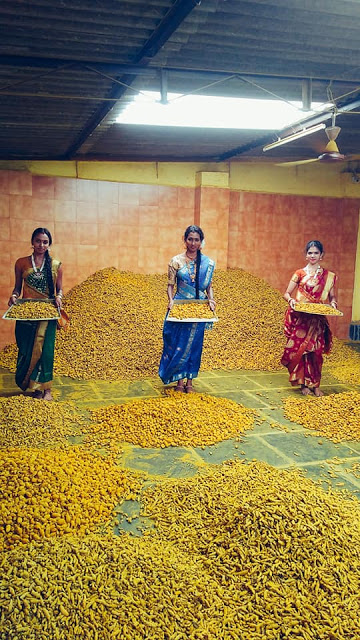
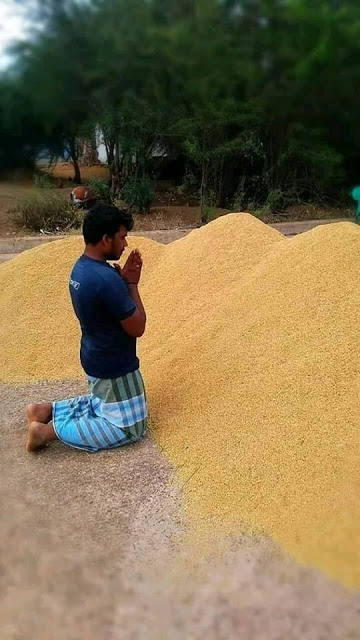
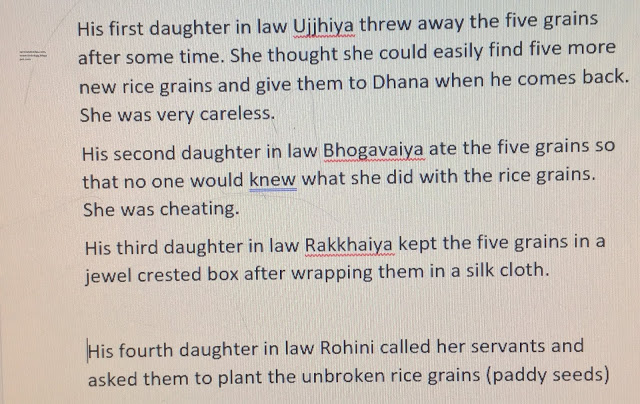
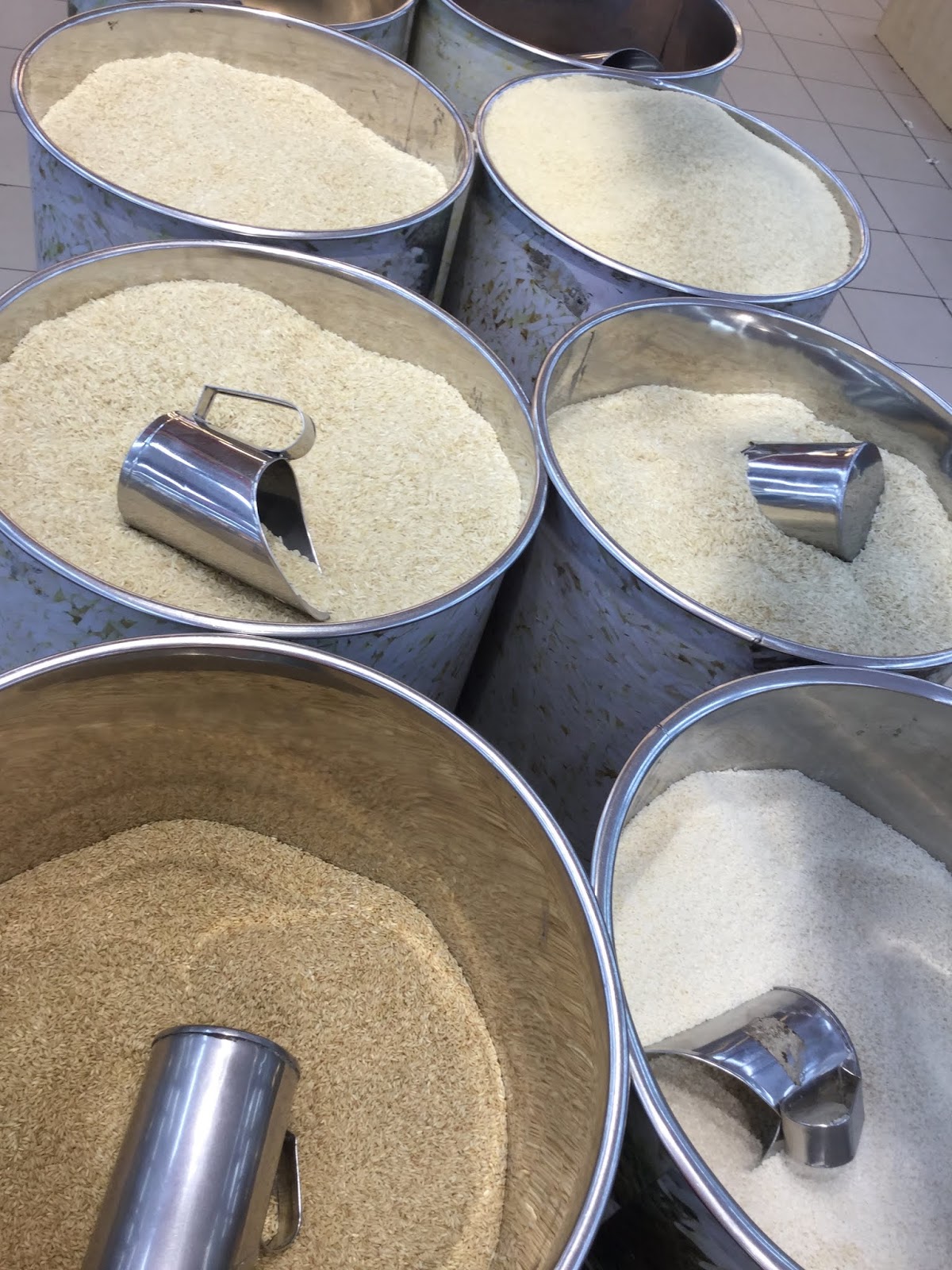
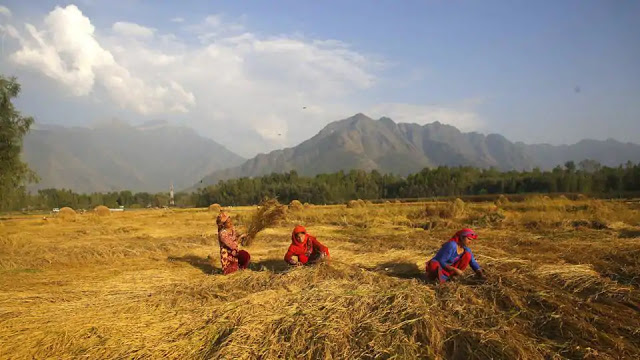
THE FIVE RICE GRAINS REPRESENT FIVE PRINCIPLES FOLLOWED BY THE JAINS. THEY INCLUDE NON VIOLENCE, TRUTH AND NON- STEALING. THOSE WHO FOLLOW THEM WILL GET THE FULL BENEFITS AND SHINE IN LIFE.
Pictures are taken from various sources; beware of copyright rules; don’t use them without permission; this is a non- commercial, educational blog; posted in swamiindology.blogspot.com and tamilandvedas.com simultaneously. Average hits per day for both the blogs 11,000.
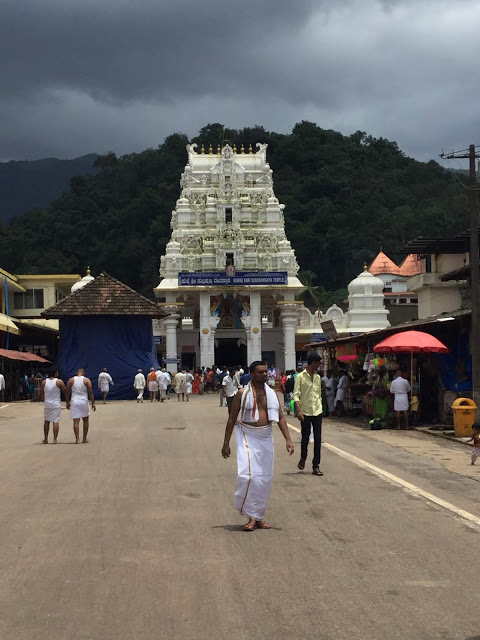
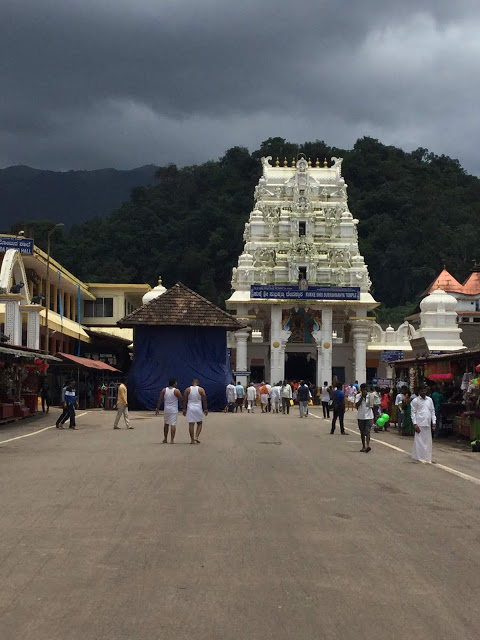
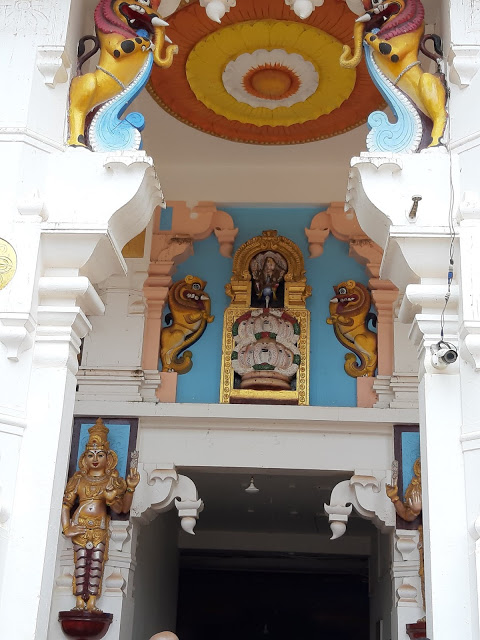
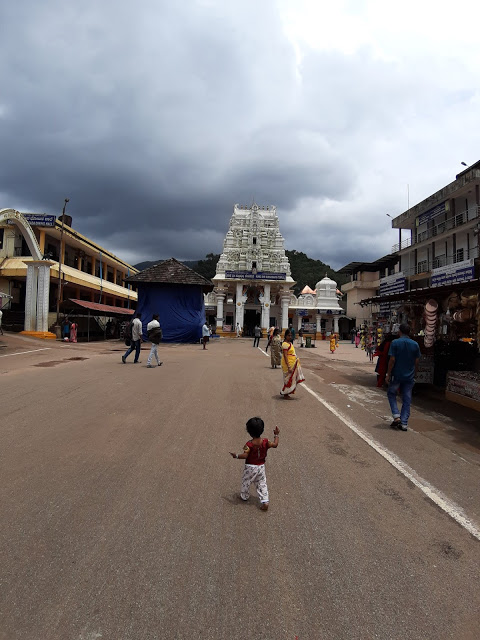
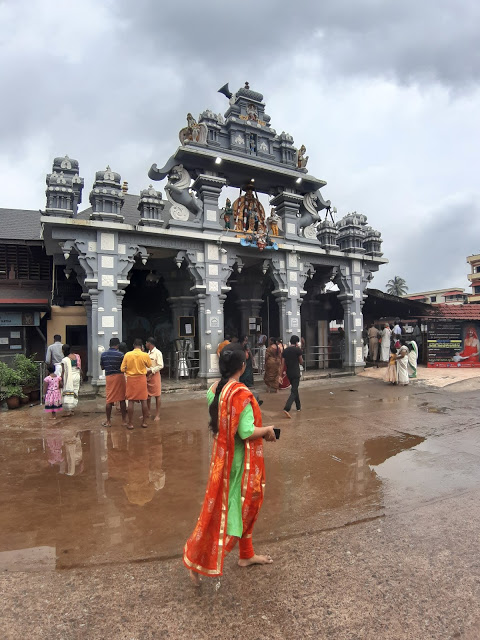
The last
stop in my Karnataka tour in September 2019 was Kukke Subrahmanya Temple in
Karnataka. After visiting Sringeri, Kollur, Agumbe, Udupi we came to Kukke. It
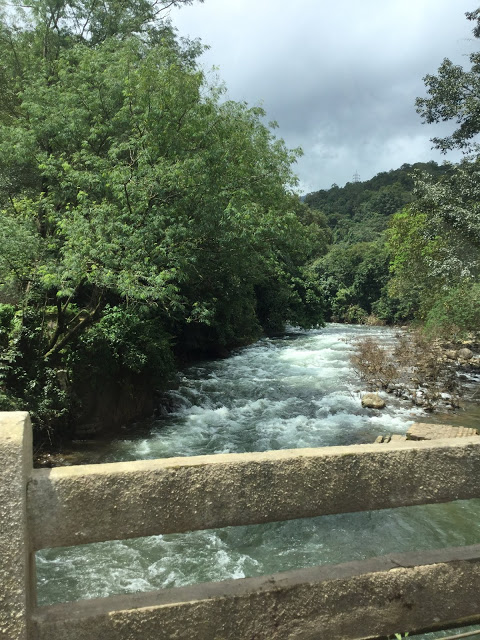
is a small village surrounded by the Western Ghats. Kumara Parvatha Hills and
River Dhara added beauty to Kukke. The temple attracts thousands of devotees
from Kerala, Karnataka and Tamil Nadu. Astrologers advise people who are
affected by certain Doshas, particulary Naga Dosha (Dosha= defect, drawback) to
do certain Parikaras or Prayachittas (atonement) in some temples. Kukke
Subrahmnya was one of such temples.
My driver
Narasimha told us that people come stay there for two to five days and finish
the rituals. If you do online bookings the temple itself would make
arrangements for the Pujas and food. Cheaper accommodation is available in the
nearby places. The temple has lot of Naga Prathistas (installation of Snake
idols). We were there for short time and had to buy Rs.100 instant Darshan
ticket so as to reach Bengaluru by 8 pm.
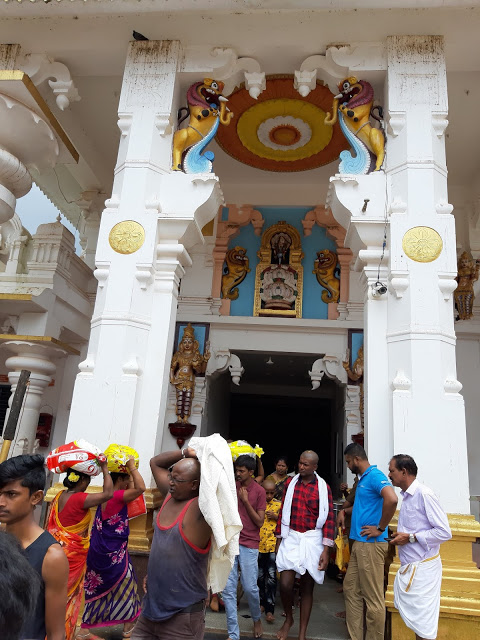
When the curtain
was raised at 12-30 pm we had good darshan in the temple. Another crowd was
waiting for the Naga Prathista ceremonies.
Where is
Kukke?
It is
situated 100 kilometres from Mangaluru and 164 kms from Udupi. The original
name was Kukke or basket with which the priest of the temple covered the
Kukkelinga ( Lord Shiva). Snake worship is popular in this temple and hundreds
of Naga idols are seen.
The legend
is that Vasuki, the snake, sought refuge from Lord Subrahmanya to escape from Garuda,
the eagle. So snake and Subrahmanya shower grace on the devotees. Other names
of Subrahmanya are Skanda, Kartikeya, Kumara and Muruga.
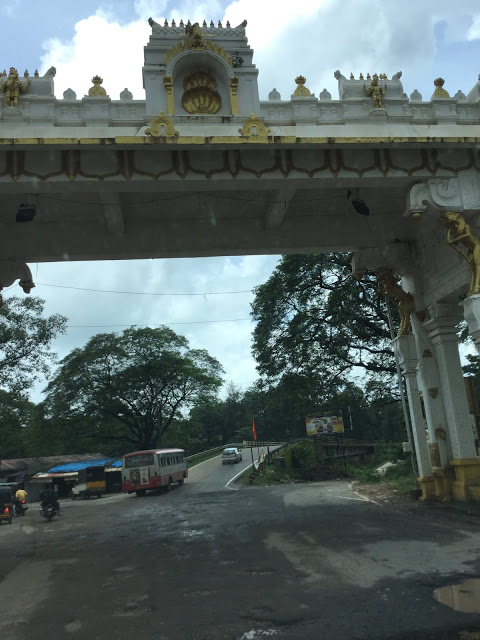
People can
bathe in River Dhara and climb or trek Kumara Parvatha Hills if they want to.
But one can reach the gate of the temple straight in a car or bus. Along the
route people can see small waterfalls, fog topped and cloud capped hills.
Pictures are taken from various sources; beware of copyright rules; don’t use
them without permission; this is a non- commercial, educational blog; posted in
swamiindology.blogspot.com and tamilandvedas.com simultaneously. Average hits
per day for both the blogs 11,000.
On 6th
September 2019, I visited Sri Skandashramam Temple in Selaiyur, Chennai-73
The
temple is situated near busy roads of East Tambaram. But inside the temple one
could see a serene atmosphere. When I went there, ladies were reciting slokas in the
Bhuvaneshwari shrine. Since photography inside the temple is prohibited, I bought
two books and reproduce some pictures here from the books. For some reason Sri
Shanthanantha of Pudukkottai installed unusual and huge idols in two or three
places in Tamil Nadu. He installed peaceful Bhuvaneswari idol along with the
ferocious Ugra Prathyankara Devi and Sri Sarabeswarar. The reason for this, I believe,
is to protect Hinduism and India from ‘adharmic’ (anti social, anti religious) forces.
Because he used to tell us that he was doing all the Yajnas for the welfare of
the society. Since Swamiji Krishna of Ayakkudi (Tenkasi), told us that he had
seen him doing Tapas deep inside forest we believed in him completely.
Our family
was associated with Sri Santhanantha from his early pubic appearance. When he
organised Sahasra Chandi Mahayajnam in Pudukkottai, for the welfare of the world
in 1963, my father and News Editor Sri V Santanam gave huge publicity in
Dinamani News paper. I and my brother were students at the time and we ran the
book shop at Adi Vethi of Sri Meenakshi Sundareswara Temple, Madurai where Sri
Anantha Rama Deekshitar was doing Ramayana Upanyasa/discourse to raise funds
for the Yajna. If I remember correct it was done for 40 days.
Whenever
Sri Santhananda Swamigal visited Madurai, he used to visit my father and had
Bikshai at our house. He was very tall and had rolling matted locks. He looked
like a Vedic Rishi. His hair used to touch the ground. His cheeks were rosy
like a young woman. He had Tejas (divine light, fire and brightness) in his face. I have met so many matted lock
swamijis, but I have never seen any one with such Tejas.
In his
early days, he took three handful of food only. When my mother cooked all sorts
of delicious dishes he just asked her to mix all together and give only three handful
of food. When my mother did thi,s tears rolled down her cheeks. When she came
out of the kitchen she told us that in spite of her serious , laborious,
careful cooking, he just had thee handfuls only. He did mantra Upadesa to us. I
met him again when I went to India in 2000 or 2001. Since he was very ill at
that time he came out for a minute and accepted my pranams and offerings.
Since I visited Bhuvaneswari temple then, I made it a point to visit Skandashramam Temple in Chennai this time.
Following
pictures will show what he established in Pudukkottai and Selaiyur, Chennai.
Pictures are taken from various sources; beware of copyright rules; don’t use
them without permission; this is a non- commercial, educational blog; posted in
swamiindology.blogspot.com and tamilandvedas.com simultaneously. Average hits
per day for both the blogs 11,000.
During my
third trip to India this year (September 5 to 18, 2019) I visited Bengaluru,
Sringeri, Kollur, Agumbe, Udupi and Kukke. Before entering Karnataka, I toured
in Trichy area visiting Samayapuram, Srirangam and Tiruanaikka. It was a
productive trip. I hit all my targets!
Gods seek
help from human beings for publicity!!! Sabarimalai became popular due to
actors like Nambiar; Manthralaya became popular due to actors like Rajnikanth;
Kollur became famous due to actors like MGR and Jayalaitha. I remember former
Chief Minister of Tamil Nadu and famous actor M G Ramachandran donating a golden
sword to Kollur Mookambika. Chief
ministers of Tamil Nadu and Rajasthan Jayaalalitha and Vadundhara and Sri
Lankan Prime Minister Wikramasinghe and several political heavyweights have
visited the temple. When Jayalaaitha
came to Kollur in 2004 she was shown the golden sword offered by her
predecessor MGR and she offered Rs.30,000 towards food offering in the temple
and one ton Ghee (clarified butter). After Tamil politicians’ visits, the Tamil
crowd in the temple increased!!
My driver (Narasimha of Vishnu Travels, Bengaluru) told me that Keralites come in big numbers to the temple. I saw lot of Malayalees.
Where is
Kollur?
It is in the
midst of ever green forests of Western Ghats in Karnataka. Kollur is 45
kilometres from Kundapur and 80 kms from Udupi. I went by car from Udupi.
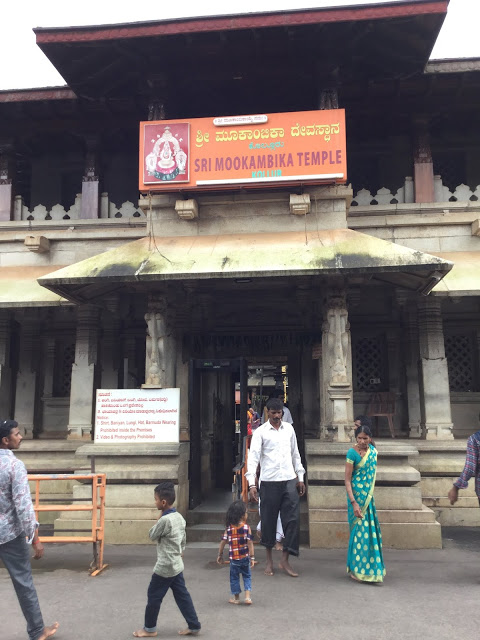
Temple of Goddess Mookambika (Parvati) is on top of Kodachadri hill. River
Sauparnika is flowing nearby. People from Karnataka ,Tamil Nadu and Kerala come
to this temple in big numbers. The reason for attraction, it is believed, is
the installation of a Sri Chakra by Adi Shankara. Wherever Adi Shankara
installed Sri Chakra Yantras (plate with magical drawings of triangles) people
throng the places and pour money in to the money boxes of the temples. Tirupati
and Varanasi are other examples).
The main
deities here are Goddess Mookambika and Shiva linga. The goddess killed Mooka (dumb) Asura (demon).
I remember another Mooka. He is known as Dumb Poet/ Mooka Kavi. The dumb poet
received the blessings of Goddess Kamakshi of Kanchipuram and burst out in
poems (Mooka Panchasati).
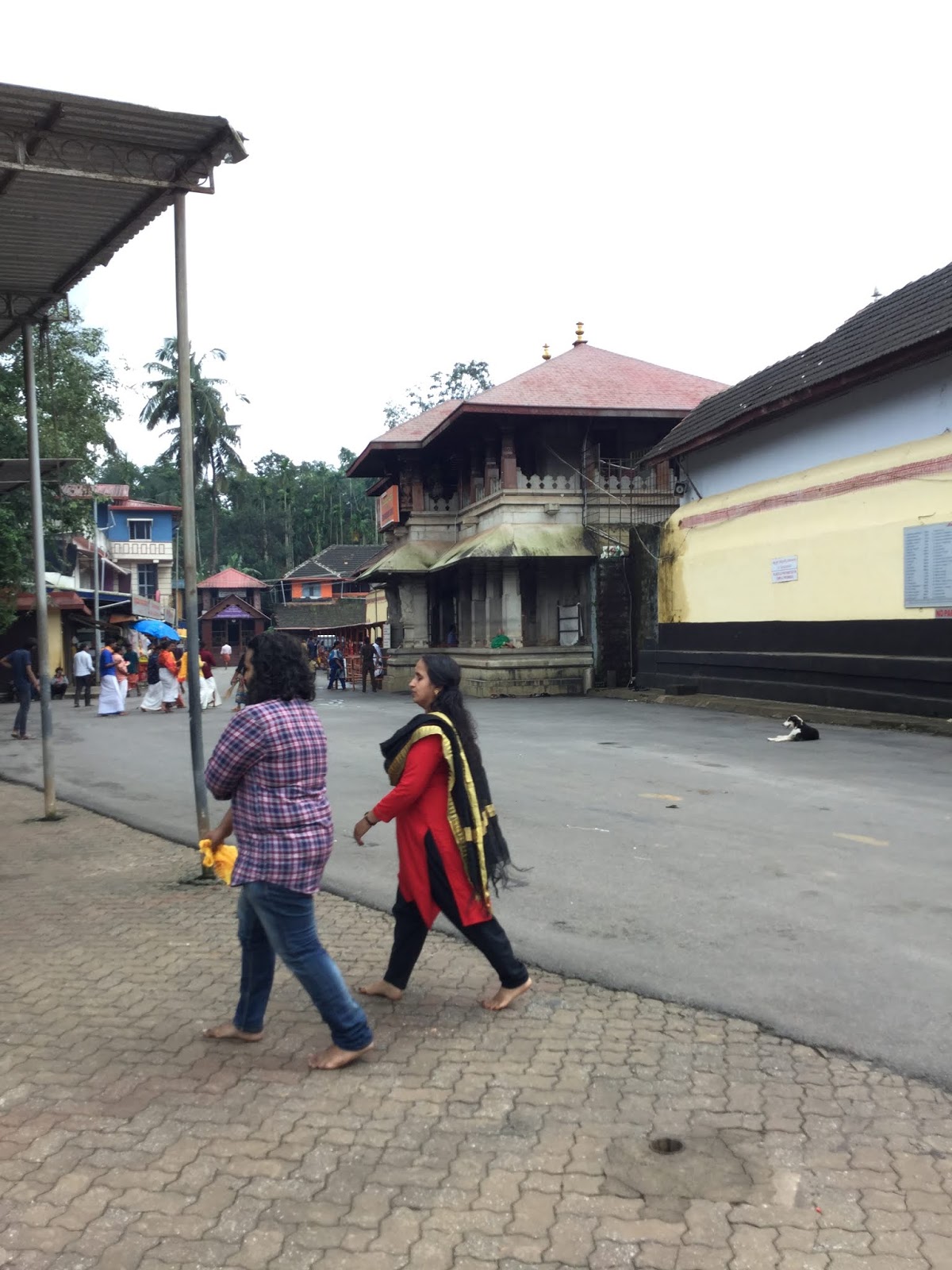
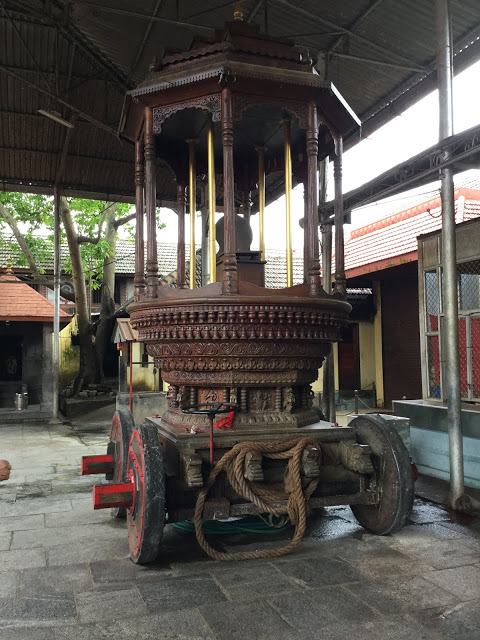
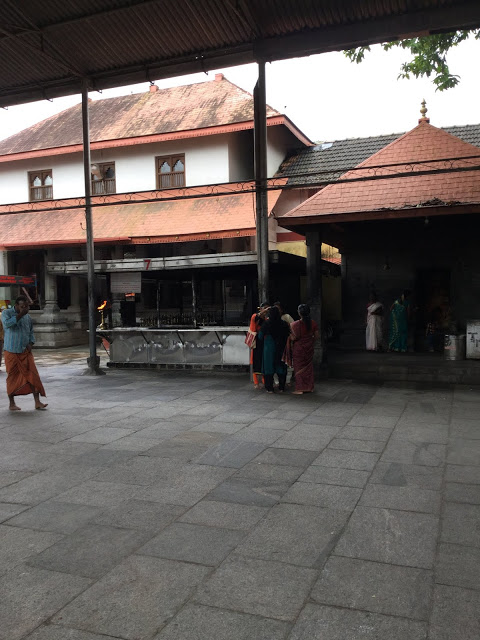
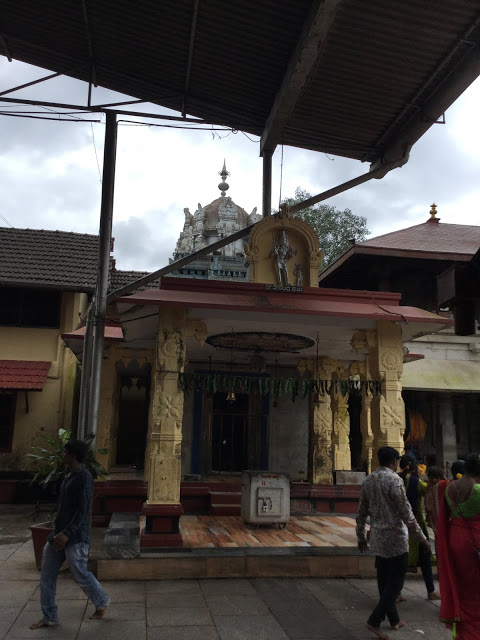
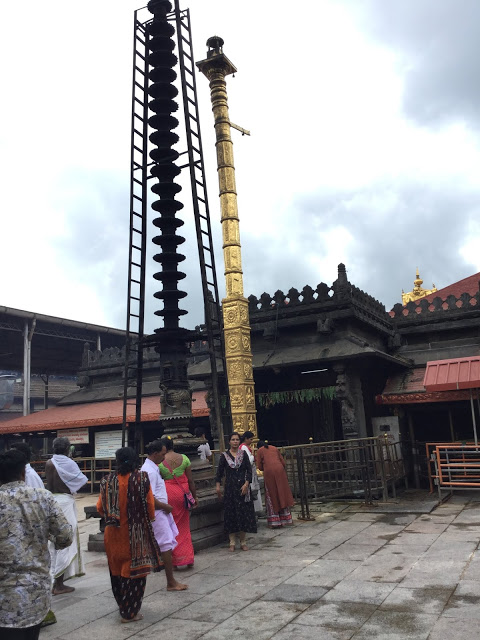
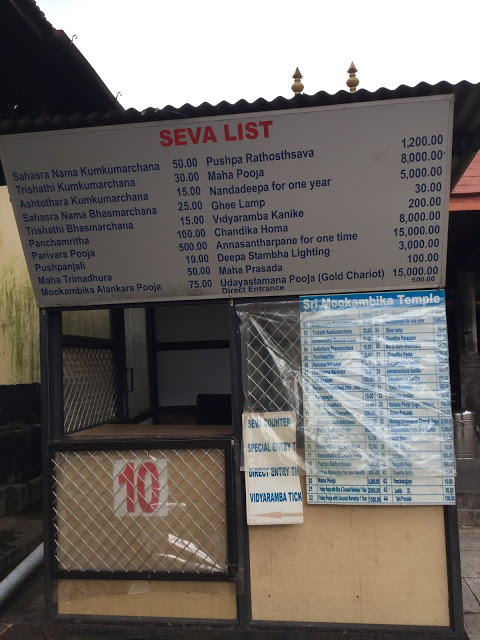
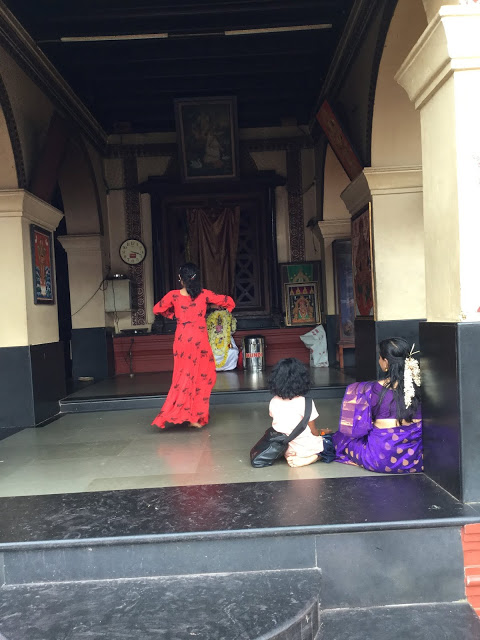
Goddess Mookambika is very beautiful. During festival time the temple attracts huge crowd. But I was fortunate to have Darshan at 3 pm in the afternoon within 15 minutes. See the pictures taken by me. Jayalalitha picture is from Mangalorean news.
7 Jun 2014 – Compiled by London swaminathan. Post No.1091; Dated 7th June 2014. मूकं करोति वाचालं पङ्गुं लङ्घयते गिरिं । यत्कृपा …
MALGUDI DAYS AND AGUMBE
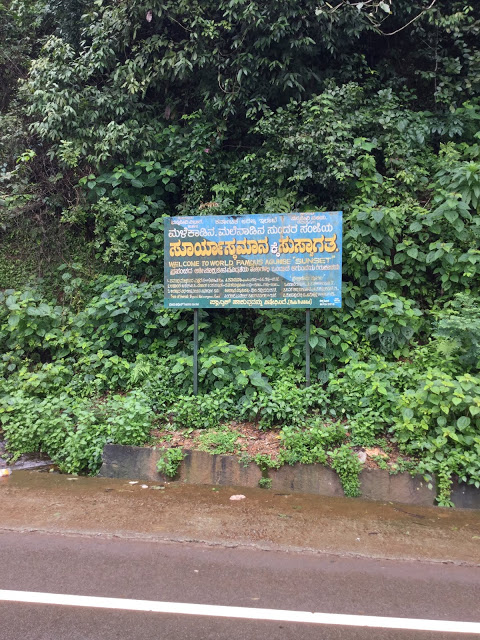
When I was studying B.Sc in Madura College in Madurai we were taken to Western Ghats for botanical collections. We were promised the viewing of beautiful tropical rain forests and big water falls in Agumbe. But after passing Singeri we stayed at Central Coffee Research Institute ( in 1968 or 1969). We were told by our professor that the weather was very bad and we couldn’t proceed any further. All the students were disappointed. But we did plant collections on our way back. From that day I wanted to visit Agumbe. When my driver told me that we were going via Agumbe I felt that my long time dream was fulfilled. Though I did not go deep into the forest, I stopped at the sunset viewing point. My driver told me the area was infested with most poisonous king cobras. We saw small water falls and streams along the Ghat section. At a distance huge water falls were visible. Agumbe receives the highest rain fall in South India like Cherrapunji in Assam in North East India..
Agumbe is
the Cherrapunji of South India receiving 300 inches of rain (760 cms) in a
year. This part of Karnataka experiences continuous rain fall for four months
in a year.
My driver
showed me a place connected with the most famous TV serial Malgudi Days of R K
Narayan. Probably director and actor Shankar hailed from the place.
I saw cloud
and fog topped mountain peaks. That reminded me of Pillar Rocks in Kodaikanal.
The 1500 mile long Western Ghats is a paradise for nature lovers.
Don’t miss your next opportunity to visit this part of Karnataka! Study well before you visit that area.
spot connected with Malgudi Days according to my driver.
Pictures are taken from various sources; beware of copyright rules; don’t use them without permission; this is a non- commercial, educational blog; posted in swamiindology.blogspot.com and tamilandvedas.com simultaneously. Average hits per day for both the blogs 11,000.
During my
third trip to India this year (2019), I was fortunate enough to have darshan of
Lord Krishna in Udupi in Karnataka on 12th September 2019. It is a
big town and district headquarters. So I saw a lively town. I was lucky to have
darshan in 15 minutes. I stayed there in Hotel Samanvay which I think is a
three star hotel. It’s standard was very high and came equal to good hotels in
London. It has a restaurant as well.
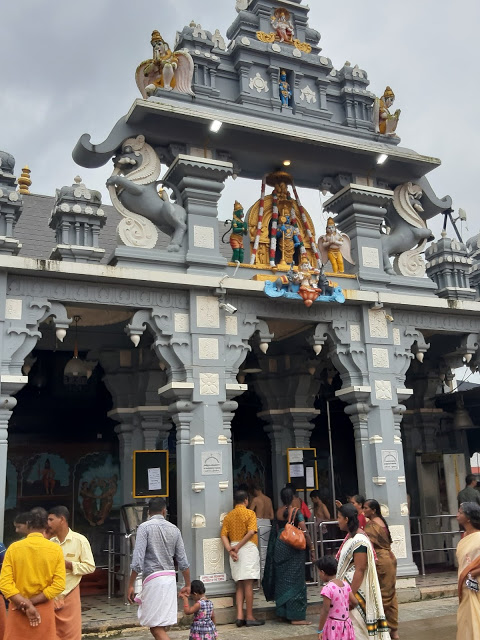
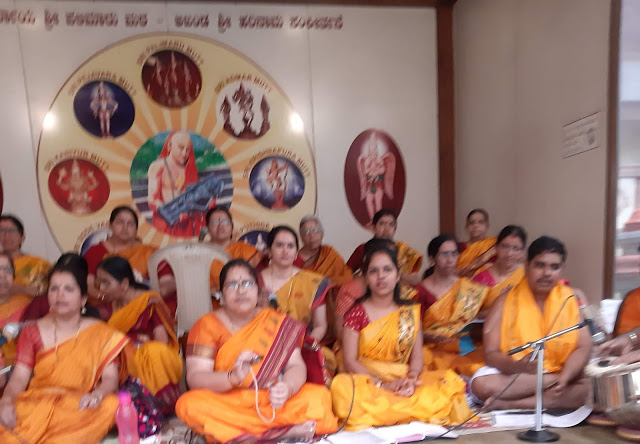
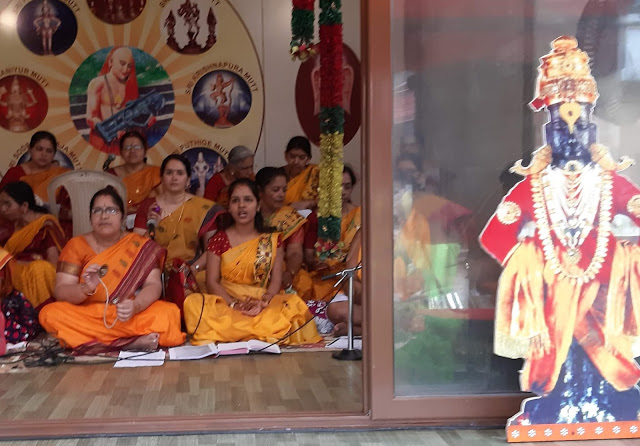
Let us go to the temple now. Before we entered the temple we saw yellow sari clad ladies singing the Kirtans on Lord Krishna. The sweet music was broadcast by loudspeakers. When I went to the temple next morning to get a book on the temple still the bhajan was going on. Only when I examined my pictures, I came to know it was a different group in the same uniform. It looks like the temple surroundings are surcharged with this Bhajans and Kirtans 24 hours a day. (Please see the pictures taken by me).
Where is
Udupi?
It is a
coastal town in Dakshina Kannada, 380 kilometres from Bengaluru and 60
kilometres from Mangaluru. Well connected by railways and road routes.
What is
there to see?
The
famous temple of Lord Krishna founded by Saint Madhvacharya is in the town.
There are
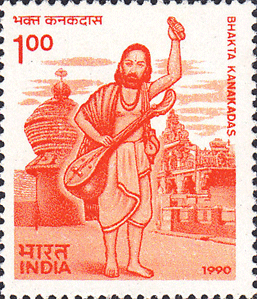
two interesting things about the temple. Kanakadasa was a great saint. He was
born in a low caste and so he was not allowed to have darshan (viewing’ seeing
) of the Lord through the main entrance of the temple. But when he came to the
temple complex Lord Krishna himself turned in the direction of Kanaka dasa. He
saw the lord’s idol through the window. From that day onwards Lord Krishna was
seen only through the Kanakadasa window. It is similar to the story of Saint
Nandanar of Tamil Nadu. The low caste devotee was not allowed to have the
Darshan of Lord Shiva and so Siva ordered his lieutenant Nandkikeswara to move
to a side so that Nandanar can see him.
Lord Krishna of Udupi is decorated with lot of valuable jewellery. The second important thing about the temple is that eight mutts run the temple in rotation. Every tow years, a new mutt takes charge of the temple. All the eight mutts are around the temple.
Udupi is
surrounded by many famous towns and beauty spots. Famous Manipal Medical
college, beautiful sandy beaches, several temples are in the vicinity. So one should
spend a few days in Udupi to see all the places.
Since June to September is a rainy season for Karnataka we also experienced occasional heavy showers. Tourists and devotees throng the area . all through the year.
Another interesting story about Udupi Krishna
Madhvacharya,
the great Vaishnava saint and exponent of Dwaita philosophy was doing prayers
in the beach . He saw a ship sailing towards a big rock. Madhva alerted the
captain of the ship by waving his top cloth and the great disaster was averted.
The captain was very grateful and offered any valuable item on the ship. But Madhva
said that being a sanyasin / ascetic he couldn’t accept any valuable gift. When
Madhva came to know that ship is sailing from Dwaraka, another holy shrine of
Lord Krishna with ballast, he asked for the yellow ballast/clay so that he and
his devotees could use it for tilak and holy marks on their bodies. Years
rolled after this incident and when the ballast was broken into pieces, they
found the statues of Balarama and Krishna inside. Balarama was installed in a
temple on the beach and Lord Krishna’s statue was taken eight miles inland to
the modern Udupi. All this happened 800 years ago.
One more
important thing about Udupi is saint Madhva’s birth place Pajaka village is nearby.
Malpe is only a few miles away where Balarama temple is situated on the coast.
So one
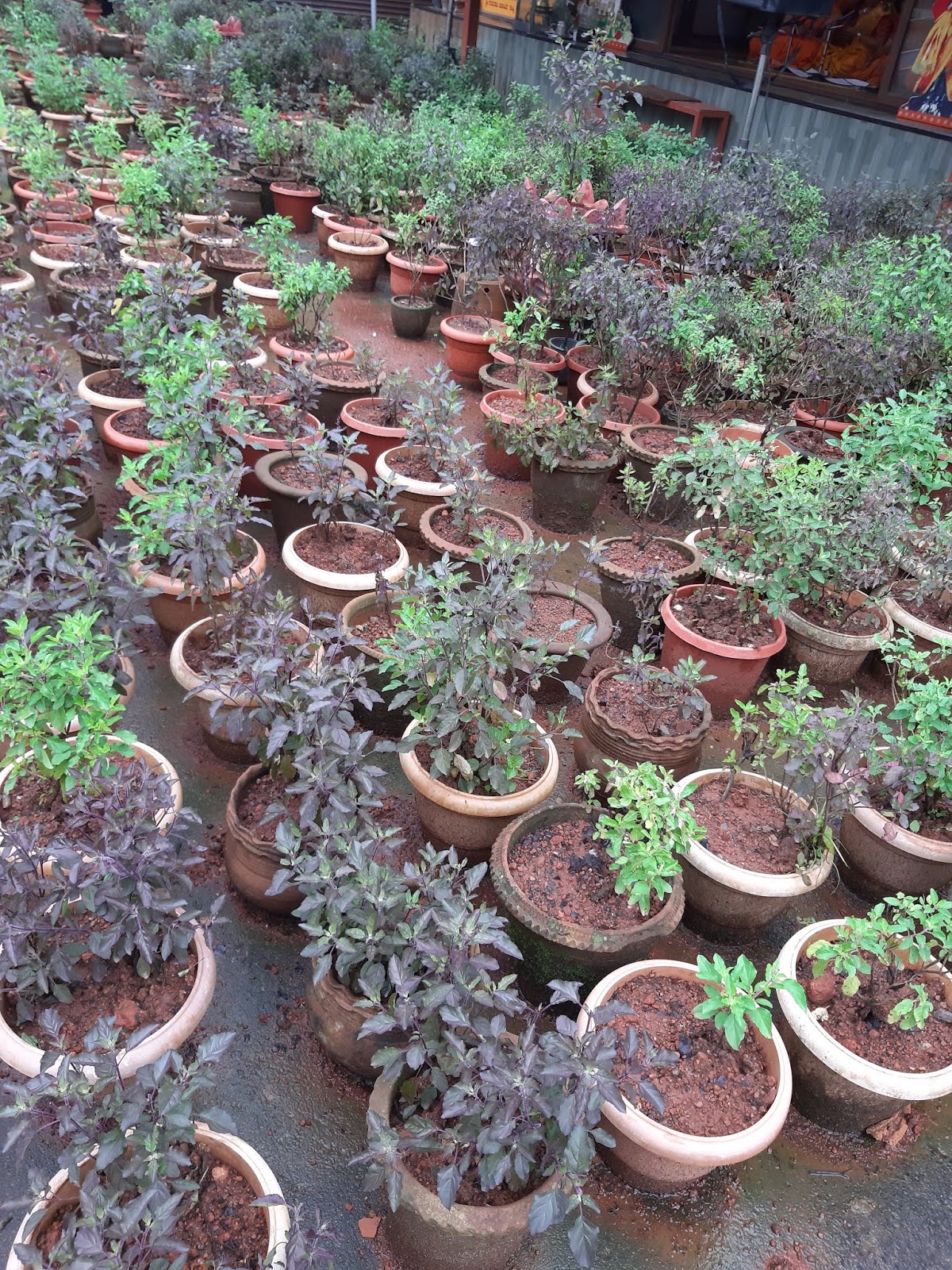
can earn lot of Punya by visiting Udupi and its surrounding holy shrines. I saw
lot of Tulsi pots in front of the temple.
Whether one knows Udupi Krishna or not, Udupi hotels (restaurants) are very famous through out South India. The sign Udupi Hotel stands for quality and taste.

























 Tamil and Vedas