மஹாபாரதம் தெரிவிக்கும் அஸ்திரங்களின் மர்மம்! (Post No.4430)

Written by S.NAGARAJAN


Date: 25 NOVEMBER 2017


Time uploaded in London- 6-26 am


Post No. 4430

Pictures shown here are taken from various sources such as Facebook friends, Books, Google and newspapers; thanks. Pictures may not be related to the story. They are only representational.


மஹாபாரதம்

கடந்த நூறு ஆண்டுகளில் மஹாபாரதம் பற்றிய ஏராளமான, சுவாரஸியமான ஆராய்ச்சிகள் நடைபெற்றுள்ளன. 2013, டிசம்பரில் வந்த ஒரு செய்தி பற்றிய கட்டுரை இது.


மஹாபாரதம் தெரிவிக்கும் அஸ்திரங்களின் மர்மம்!


ச.நாகராஜன்

1

மஹாபாரதம் ஒரு லட்சம் ஸ்லோகங்களைக் கொண்டது. பிரமிக்க வைக்கும் மர்மங்களைக் கொண்டது.

கதை ரீதியான மரமங்கள் மட்டுமல்ல, இதை இயற்றிய வியாஸ பகவான் மஹாபாரதத்தில் அடக்கி இருக்கின்ற மரமங்களும் ஏராளம்.


கூட ஸ்லோகங்கள் என்று கூறப்படும் சுமார் 8000 ஸ்லோகங்களின் பொருளை விநாயகரே யோசித்துத் தான் புரிந்து கொண்டார் என்றால் சாமானிய மனிதர்களால் மஹாபாரதத்தின் முழுப் பொருளையும் புரிந்து கொள்வது சுலபமில்லை.

ம்ஹாபாரதத்தை பல நூறு கோணங்களில் ஆராயலாம். ஒவ்வொரு ஆராய்ச்சியும் பிரமிக்க வைக்கும் உண்மைகளைத் தெரிவிக்கும்.


2

மஹாபாரதத்தில் கூறப்படும் அஸ்திரங்களைப் பற்றிய அபூர்வமான ஓலைச்சுவடி ஒன்று அஷ்டவைத்யன் வைத்யமடம் செரிய நாராயணன் நம்பூதிரி என்பவரிடம் இருந்தது. இவர் 2013ஆம் ஆண்டில் காலமானார்.

இவரது தொகுப்பில் உள்ள ஒரு மஹாபாரத நூலில் – பனை ஓலைச் சுவடி நூலில் – 63 பகுதிகளில் மஹாபாரதத்தில் கூறப்படும் அனைத்து அஸ்திரங்களும் எப்படி பயன்படுத்தப்படலாம் என்பதைப் பற்றிய விவரங்கள் உள்ளன.

இது சுமார் 120 வருடங்களுக்கு முன்னால் எழுதப்பட்டதாக நம்பப்படுகிறது.

இப்படி ஒரு ஓலைச் சுவடி இந்தியாவிலேயே இது ஒன்று தான்!

48 மந்திரங்கள் இதில் விவரமாகக் குறிப்பிடப்பட்டுள்ளன.

இந்த மந்திரங்கள் மூலமாக அஅனைத்து அஸ்திரங்களையும் இயக்க முடியும்.
 

3

செரிய நாராயணன் நம்பூதிரியிடம் 1300 கட்டு ஓலைச் சுவடிகள் இருந்துள்ளன.இதை அவர் டிஜிடல் மயமாக்க வேண்டும் என்று திட்டமிட்டிருந்தார். இதன் மூலம் எதிர்கால் ஆராய்ச்சியாளர்கள் பெரிதும் பயனடைவர் என்பது அவரது எண்ணம்.

சென்ட்ரல் கவுன்ஸில் ஃபார் ரிஸர்ச் இன் ஆயுர்வேதா (Central Council for Research in  Ayurveda)-வின் டைரக்டர் திரு ஏ.ஆர். கிருஷ்ணகுமார், “ரெப்ரோகிராபி (reprography) என்ற நம்பகமான முறையில் நாங்கள் டிஜிடல் வடிவமாக இதை ஆக்கும் போது இந்த நூல் அருமையான ஒரு நூல் என்பதை அறிந்தோம் என்றார்.

இந்திராகாந்தி நேஷனல் சென்டர் ஃபார் தி ஆர்ட்ஸ், புது டில்லியிலிருந்து இந்தப் பணிக்காக அமைக்கப்பட்டுள்ள குழுவில் கிருஷ்ணகுமாரும் ஒருவர். இவர் ஐஜிஎன்சிஏ- ஐச் சேர்ந்த சீனியர் ரெப்ரோகிராபிக் அதிகாரி. (CCRASS ) Central Council for Research in Ayurdedic Sciences) – நிறுவனத்தின் ப்ராஜக்ட் மேனேஜர் கிருஷ்ணகுமார்.

இந்த மையம் பொது நிலையங்கள் மற்றும் தனியாரிடம் உள்ள அனைத்து ஓலைச்சுவடிகளையும் டிஜிடல் மயமாக்கும் பெரிய பொறுப்பை ஏற்றிருக்கிறது.

ஏன் இவை அனைத்து டிஜிடல்மயமாக்கப்பட வேண்டும் என்ற கேள்விக்கு கிருஷ்ணகுமார் பதில் அளிக்கையில், “ ஏனெனில் இது நமது பண்பாடு, வரலாறு, பழக்க வழக்கங்கள்,பழைய மதங்கள் ஆகியவை பற்றிய தகவல்களைத் தருவதோடு சுற்றுப்புறச் சூழல், உடல் நலம், புராதன கால விஞ்ஞானம் ஆகியவை பற்றித் தெரிவிக்கும்” என்கிறார்.
இது வரை ஆயுர்வேதம் பற்றிய சுவடிகளில் 15 % ஓலைச்சுவடிகள் மட்டுமே டிஜிடல்மயம் ஆக்கப்பட்டுள்ளது. ஆயுர்வேதம் மிகவும் அங்கீகரிக்கப்பட்ட மருத்துவ சிகிச்சை முறையாக உலகில் இருக்கிறது. இப்போது சற்று கற்பனை செய்து பாருங்கள். ஐந்து லட்சம் ஓலைச் சுவடி நூல்களில் எவ்வளவு பிரம்மாண்டமான அறிவுச் செல்வம் புதைந்து கிடக்கும்!இது மக்களுக்குக் கிடைத்தால் ஆயுர்வேதம் இன்னும் எவ்வளவு திறனுடன் நன்மை தரும்” என்கிறார் கிருஷ்ணகுமார்.

“கேரளாவில் உள்ள நூலகங்கள், கல்லூரிகள், பல்கலைக் கழகங்கள் இன்னும் இதர நிறுவனங்களில் உள்ள நூல்களில் ஒரு பகுதியை சில வருடங்களுக்கு முன்னர் டிஜிடலைஸ் செய்தோம்.

இப்போது இரண்டாவது கட்டப் பணியாக பாலக்காடு மாவட்டத்தில் மேழாத்தூரில் உள்ள வைத்யமடத்தில் உள்ளவற்றை டிஜிடலைஸ் செய்ய ஆரம்பித்திருக்கிறோம். எங்களது அடுத்த இடம் தச்சு சாஸ்திரம் என்று கூறப்படும் கட்டிடக் கலைக்குப் பெயர் பெற்ற குன்னம் குளத்தின் அருகில் உள்ள கனிப்பையூர் மனா என்ற இடமாகும்.

இன்னும் பல மையங்களில் ஏராளமான சுவடிகள் உள்ளன” என்று கிருஷ்ணகுமார் கூறியுள்ளார்.

“இதில் ஒரு பெரிய நல்ல விஷயம் என்னவெனில் அனைத்து தனியார் வசம் உள்ள நூல்களையும் டிஜிடலைஸ் ஆக்க அனைவரும் ஒத்துழைப்புத் தருவது தான்!” என்று மகிழ்ச்சி பொங்க அவர் மேலும் தெரிவித்தார். ஆயுர்வேதம் மட்டுமின்றி இயற்பியல் விஞ்ஞானம், இரசாயனம், ஜோதிடம் உள்ளிட்ட பல பொருள்களைப் பற்றிய நூல்கள் இந்த ஐந்து லட்சத்தில் அடக்கம்!


4

இது 2013 டிசம்பரில் வந்த செய்தி. நான்கு வருடங்கள் ஓடி விட்டன. பல நூல்கள் டிஜிடலைஸ் ஆகி இருக்கும்..

மஹாபாரத அஸ்திர விவரங்களை நமது நாட்டு ஆராய்ச்சியாளர்களிடம் தந்தால் மிகப் பெரும் வல்லரசாக நாம் மாறி விடுவோம்.

இதே போலப் பல்வேறு ஆராய்ச்சியாளர்கள் வெவ்வேறு பொருளில் மஹாபாரத மர்மங்களை அவிழ்த்து வருகின்றனர்.

அவை அனைத்தும் சுவையானவை!

இது கடந்த நூறு ஆண்டுகளுக்கும் மேலாக நடை பெற்று வருகிறது.

அப்படியானால் இது வரை மஹாபாரதம் பற்றிய்  ஆராய்ச்சி முடிவுகள் எவ்வளவு இருக்க வேண்டும்.

மலைப்பாக இருக்கிறது.

அவை பற்றி அறிந்து கொள்வதே ஒரு ஆனந்தம் தான்!

***
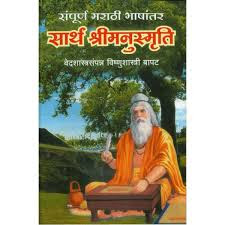
Science and Linguistics in Manu Smrti- Part 1 (Post No.4412)

Written by London Swaminathan 


Date: 19 NOVEMBER 2017


Time uploaded in London- 14-15


Post No. 4412

Pictures shown here are taken from various sources such as Facebook friends, Books, Google and newspapers; thanks.


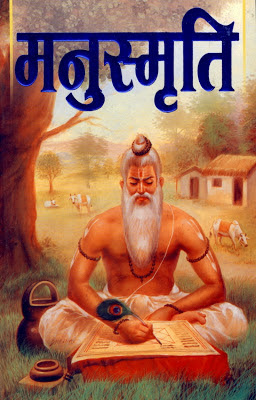
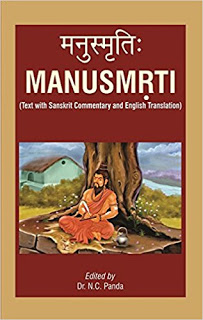
Manu Smrti is the first Law book in the world. It is in Sanskrit. There are over 2650 couplets in 12 chapters in the book. Latest updated version belongs to 2nd century BCE. But my research shows that the original Manu Smrti was composed before 2000 BCE. There are internal evidences for such dating; they are as follows:


Manu is referred to in the oldest book in the world – The Rig Veda

Manu talks about Sarasvati river which existed around 2000 BCE

Manu never spoke about Sati- the widow burning

Many of Manu’s rules wouldn’t fit into a period around 2nd century BCE

And updated version has lot of interpolations.

Leaders like Gandhiji could easily spot them, which went contradictory to the true spirit of the book.

People like B R Ambedkar felt very angry and burnt the copies because of Anti Shudra references in the book.

But even a child could see the interpolated Anti Shudra verses as later interpolations.

One must read it in full and then weigh it pros and cons.

The subjects he deals with are of amazing variety.

He lived before Hammurabi (1810 BCE) and other law makers.

Following is the evidence for his knowledge in Science:

My comments on first ten slokas:

  1. He knew Big Bang (See Sloka 5, 6 and 7 given below)
  2. He knew water is the source of living beings and the first seed was in the waters (see sloka 8 given below).


  1. Pancha Bhuta (Five Elements) concept went from India to Greece and other parts (See sloka 6).


  1. Linguistics:

His interpretation of the name Narayana (Nara=water+ Ayana=dwelling place) shows that water is called Nara. Linguists like S K Chatterjee thought Neer/water found in the Rig Veda was a Tamil word. But it is found in Greek in the word Nereids (water nymphs).

When a word is found in the Greek language it would be considered Indo European (Sanskrit family). But I have listed 20 to 30 Tamil words in ancient Greek. This supports my pet theory that Tamil and Sanskrit are the parents of most of the ancient languages. Most of the words can be traced back to either Tamil or Sanskrit (see Sloka 10 given below)


॥ मनुस्मृति अथवा मानवधर्मशास्त्रम् ॥


अध्याय १

मनुमेकाग्रमासीनमभिगम्य महर्षयः ।

प्रतिपूज्य यथान्यायमिदं वचनमब्रुवन् ॥ Bछ्.Sछ्॥


भगवन् सर्ववर्णानां यथावदनुपूर्वशः ।

अन्तरप्रभवानां च धर्मान्नो वक्तुमर्हसि ॥ Bछ्.Sछ्॥


त्वमेको ह्यस्य सर्वस्य विधानस्य स्वयंभुवः ।

अचिन्त्यस्याप्रमेयस्य कार्यतत्त्वार्थवित् प्रभो ॥ Bछ्.Sछ्॥


स तैः पृष्टस्तथा सम्यगमितोजा महात्मभिः ।

प्रत्युवाचार्च्य तान् सर्वान् महर्षींश्रूयतामिति ॥ Bछ्.Sछ्॥


आसीदिदं तमोभूतमप्रज्ञातमलक्षणम् ।

अप्रतर्क्यमविज्ञेयं प्रसुप्तमिव सर्वतः ॥ Bछ्.Sछ्॥


ततः स्वयंभूर्भगवानव्यक्तो व्यञ्जयन्निदम् ।

महाभूतादि वृत्तोजाः प्रादुरासीत् तमोनुदः ॥ Bछ्.Sछ्॥


योऽसावतीन्द्रियग्राह्यः सूक्ष्मोऽव्यक्तः सनातनः ।

सर्वभूतमयोऽचिन्त्यः स एव स्वयमुद्बभौ ॥

सोऽभिध्याय शरीरात् स्वात् सिसृक्षुर्विविधाः प्रजाः ।

अप एव ससर्जादौ तासु वीर्यमवासृजत् ॥ Bछ्.Sछ्॥


तदण्डमभवद्धैमं सहस्रांशुसमप्रभम् ।

तस्मिञ्जज्ञे स्वयं ब्रह्मा सर्वलोकपितामहः ॥ Bछ्.Sछ्॥


आपो नारा इति प्रोक्ता आपो वै नरसूनवः ।

ता यदस्यायनं पूर्वं तेन नारायणः स्मृतः ॥ Bछ्.Sछ्


CHAPTER I


  1. The great sages approached Manu, who was seated with a collected mind, and, having duly worshipped him, spoke as follows:


  1. ‘Deign, divine one, to declare to us precisely and in due order the sacred laws of each of the (four chief) castes (varna) and of the intermediate ones.


  1. ‘For thou, O Lord, alone knowest the purport, (i.e.) the rites, and the knowledge of the soul, (taught) in this whole ordinance of the Self-existent (Svayambhu), which is unknowable and unfathomable.’


  1. He, whose power is measureless, being thus asked by the high-minded great sages, duly honoured them, and answered, ‘Listen!’


  1. This (universe) existed in the shape of Darkness, unperceived, destitute of distinctive marks, unattainable by reasoning, unknowable, wholly immersed, as it were, in deep sleep.


  1. Then the divine Self-existent (Svayambhu, himself) indiscernible, (but) making (all) this, the great elements and the rest, discernible, appeared with irresistible (creative) power, dispelling the darkness.


  1. He who can be perceived by the internal organ (alone), who is subtile, indiscernible, and eternal, who contains all created beings and is inconceivable, shone forth of his own (will).


  1. He, desiring to produce beings of many kinds from his own body, first with a thought created the waters, and placed his seed in them.


  1. That (seed) became a golden egg, in brilliancy equal to the sun; in that (egg) he himself was born as Brahman, the progenitor of the whole world.


  1. The waters are called narah, (for) the waters are, indeed, the offspring of Nara; as they were his first residence (ayana), he thence is named Narayana.


–to be continued……………..


STRANGE VEDIC RITUALS AND MANTRAS TO OBTAIN RAIN (Post No.4298)

Written by London Swaminathan


Date:13 October 2017


Time uploaded in London- 18-42


Post No. 4298

Pictures shown here are taken from various sources such as Facebook friends, Books, Google and newspapers; thanks.


Vedic seers (rishis) believed in the extraordinary powers of the sound. They believed that certain intonations can do miracles. They were highly civilized and cultured and used metres in the poems to derive power. It is amazing to see such thinking before other civilizations never wrote poems following prosody or a set of grammar rules.

Following articles posted by me have the full details:

Vedic metrs | Tamil and Vedas

https://tamilandvedas.com/tag/vedic-metrs/

Translate this page

These are the Vedic metres, part of prosody (the study of versification, especially, the systematic study of metrical structure). Vedic Hindus paid so much attention …


Vedic grammar | Tamil and Vedas

https://tamilandvedas.com/tag/vedic-grammar/

So they named all the Vedic metres after women starting from Gayatrimetre (24 syllables) and the speech as Vac or Sarasvati or Bharati. Some stanzas of the …


Vedas and science | Tamil and Vedas

https://tamilandvedas.com/tag/vedas-and-science/

Posts about Vedas and science written by Tamil and Vedas. … The term ‘Chandas’ (metre) normally sets a limit to the number of words used in a ‘Rik’; at a …


Vedic riddle | Tamil and Vedas

https://tamilandvedas.com/tag/vedic-riddle/

Posts about Vedic riddle written by Tamil and Vedas. … Seven hands are explained as seven metres of the Vedas. Triple bonds are Mantra, Kalpa and …


Satapata Brahmana has very interesting information   regarding this. Unless we do proper scientific research, we would not know the full significance of it. Even though Sayana and several others before him tried to interpret Vedas, traditionalists never acknowledged it. They believed mantras have sound effect and there is no need to know the meaning.

Looking at the mantras in the Brahmana literature we would also think the same, because many of them have no meaning literally or the meaning would be ‘silly’.


Here are some passages from the Brahmanas:

“On account of the metres of the first three days being ascending, the fire blazes up, for the upper regions belong to fire. On account of the metres of the middle three days being crossed, the wind blows across. The wind moves across the other regions, and the waters flow also across; for the region which is across the others belong to the wind. On account of metres of the last three days being descending, that one (i.e. the sun) burns downwards, the rain falls down, and the constellations in the heaven sends their light down. For the region which goes down belongs to the sun”.


“The strength of the metres was exhausted by the gods, for it was by the metres that the gods attained the world of heaven.   And the response song is ecstasy – what ecstasy there in the Rik and that is there in the Saman, that is sap. This sap now he lays in the metres and thus makes the metres of restored strength, and with them of restored strength, they perform the sacrifices”—Satapata Br. 4-3-2-5


The science of the Vedas is most intimately connected with  the rhythm and metres of the Vedas. Vedic Hindus had great faith in the stupendous powers of different metres, employed in the several mantras  recited at the sacrifices, the number of feet in each, the variety of the feet, and the manner in which these occurred, as stated above, for example.

In the Aitareya Brahmana we have the following: –

“Which has its analogy in the fact that great people, when travelling to a distant place, yoke to their carriage at every station fresh horses or oxen which are not fatigued. Just in the same way the sacrificers travel to the celestial world by employing at every station fresh metres representing the horses or oxen which are not fatigued”.


Here is another way of obtaining rain: On the fourth day of the Dvadasa Sacrifice, the singers make ‘Nyunkha’ of the syllable ‘Vach’ by pronouncing it with a tremulous voice increasing and decreasing the tone. This serves to make the fourth day particularly important. Because the ‘Nyunkha’ (the special mode of intoning vach) produces food for the singers seeking a livelihood, wander about to make food grow by their singing for rain’- Aitareya Br. Haugh Vol. bii. P 323


Food and rain are thus produced by making Nyunkha. The power of Nyunkha to bring rain must be explored scientifically. I believe that the sound waves and water were used by the Vedic Hindus to give one a boon or throw a curse.

The power of Kusa/Dharba grass is also known only to Vedic Hindus. We must do scientific research.


–Subham–


179 ‘VICTIMS’ IN HINDU HUMAN SACRIFICE!- Part 1 (Post No.4262)

Written by London Swaminathan


Date: 1 October 2017


Time uploaded in London- 15-33 pm


Post No. 4262

Pictures shown here are taken from various sources such as Facebook friends, Books, Google and newspapers; thanks.


Please read my articles posted in the past few days on the same topic if you need more background information about Purushamedha and Sunaschepa anecdote


Pursuhamedha Yajnam, Human Sacrifice, never happened in Hindu India. Sunschepa episode in Aitareya Brahmana showed that Hindus never tolerated such barbaric acts. There were always revolutionary leaders like he great Viswamitra to revolt against such acts. Even in the Vedic literature King Harichandra only tried it and failed miserably. We have a long list of kings before Harichndra and longer list of kings after him. No such custom or actual incident is reported.

But the most interesting thing is there is a big chapter detailing this fire sacrifice. This shows that all the yajnas were symbolic and they mean actually different things. The seers themselves repeat the phrase, ‘Gods love the mystic or mysterious”. So they show that all the 179 jobs are necessary to run life successfully. The victims list makes very interesting reading. There is eve astronomer. And the first person thrown into the fire was a Brahmin!


This clearly shows that the message is not burning the people, but making them part of the functional society. Without them the society is not complete. Foreigners who wanted to show Hinduism in bad light tried their best to use this sacrifice, but in vain.


Satapata Brahmna (of Yajur Veda) and the Aitareya Brahmana (of the rig Veda) give a detailed description of the rite.


If you read the full list you would yourself know that it is symbolic.

Here is the list of 179 victims and to which god they were ‘’sacrificed’’ from the Taittiriya Brahmna:–


1.To the divinity of Brahman caste a Brahmin should be sacrificed (‘alabhate)

After this only the God and the victim are mentioned without the verb ‘sacrificed’


  1. To the divinity of Kshatriya caste a kshatriya (king or warrior)


3.To the Maruts, a Vaisya (business man)

  1. To the Tapas (presiding deity of penance), a Shudra
  2. To the Tamas (divinity of darkness) a thief
  3. To naraka (hell), a Virahana, one who blows out sacrificial fire.
  4. To Papman (divinity of sin), a hermaphrodite (a eunuch.
  5. To Akrayi ( divinity of commerce), an Ayogu (one who acts against the ordinances of Satras

9.To Kama (divinity of Love, a courtesan).

  1. To Atikrushtha, a Magadha (the son of a Vaisya by a Kshatria woman)

(Mixed marriages were encouraged!!)

  1. To Gita (divinity of Music), a Suta or a musician.

(Vedic society had great number of music lovers and singers. They were a happy group who enjoyed dance and music)

  1. To Nritta (Divinity of Dancing),one who lends his wife to another ( a cuckold)

13.To Dharma (righteous behaviour), one who frequents assemblies and preaches preaches morality.

  1. To Narma, the Divinity of Humour), a wit


15.To Narishta, a coward.

  1. To Hasa ( the divinity of Laughter), a person of ambling gait.


(So it is not a nomadic, pastoral, uncivilised community; Foreigners contradict themselves)


  1. To Ananda (the divinity of delight), a favourite of  women
  2. To Pramada (the divinity of Joy, the son of an unmarried woman


  1. To Medha, (the Goddess of Intelligence), a coach builder
  2. To Dhairya (the divinity of Patience), a carpenter.

21To Srama (divinity of labour), the son of a  potter

22.To Maya (divinity who delights in Art), a blacksmith

23.To Rupa (the divinity of beauty), a jeweller

24.To the divinity of Prosperity, an agriculturist

25.To Saravyi (divinity of arrows), an arrow-maker

26.To Heti (Goddess of arms), a bow-maker

27.To Karma (divinity of art-work), a bow string maker

28.To Dishta, a maker of ropes

29.To Mrtyu (the divinity of death), a hunter

30.To Antaka (the divinity of murder), aperson delighting in hunting with dogs


31.To Sandha (Divinity of assignation), a person given to adultery

32.To Geha (the divinity of homesteads), one who live in concubinage

33.To Nirriti (the goddess of mis fortune), one who has married before his elder brother

34.To Atri (the goddess of pain), one who wishes to marry before his elder brother

35.To Aradhi (divinity who causes obstruction to enterprise), , one who has married a widow


36.To Pavitra (divinity of purity), a Doctor/physician

37.To Prajnana (divinity of Time), an Astronomer

38.To Niskriti (goddess of success), the wife of a goldsmith

39.To Bala (Divinity of strength), a girl who is forcibly taken and kept as a concubine for food and raiment, but no pay

40.To Vrana (the Divinity of colours), one who works for the sake of another, not for himself.


My comments:–


Max Mullers and Caldwells and Marxists looked like Pukka Idiots before this list. They described this list silly, ridiculous, childish, and from nomads, pastoral, migrants.

But all these items show they were high ranking thinkers, they have doctors, astronomers, engineers and agriculturists in the list. They knew if they publish this list which belongs to 1000 BCE or before they will become the laughing stock. So they did not make the list very popular. Anyone who reads between the lines will know how thoughtful they were about the society, the works and the professionals. There is even a person “one who works for the sake of another, not for himself”, may be a social worker!


to be continued…………..


‘WOMEN ARE STARS’ says SATAPATA BRAHMANA (Post No.4253)

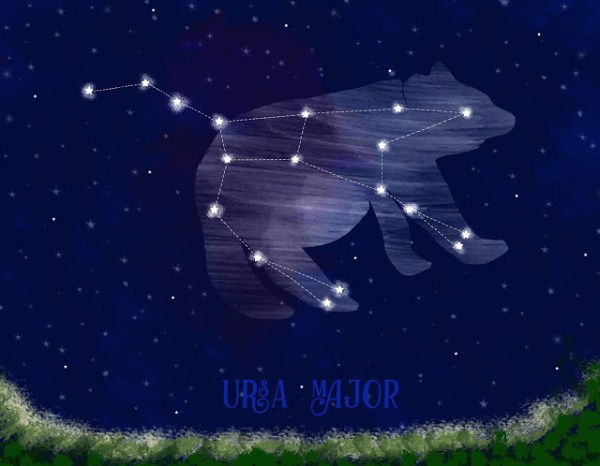
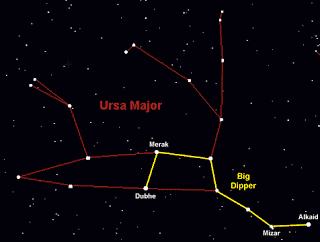
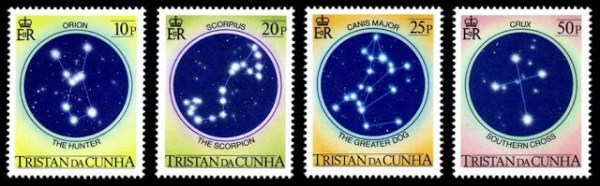
Picture of Saptarishi mandala (Great Bear/ Ursa Major/ Great Dipper)

Written by London Swaminathan


Date: 28 September 2017


Time uploaded in London- 14-37


Post No. 4253


Satapata Brahmana, part of Shukla Yajur Veda, says that women are stars. They mean that women become stars in the sky and lead their husbands to heaven.


Many cultures believe that dead people, ancestors, departed souls become stars. But Hindus say that good souls become stars. Hindus even gave the star status to Seven Seers (sapta Rishis/ Ursa Major), a little boy name Dhurva (Pole star) , Agastya (Canopus), chaste women Arundhati (alcol) and Trishanku (Southern cross).

Satapata Brahmana says:

“Of old the divine women, with unclipped wings, dear to all the gods, did bake it (the fire pan), like Angiras, in the lap of the earth; and with their help, he (the priest) now bakes it. but surely these are the stars – the women (jani) and indeed the stars, for these are the lights of those righteous men (jana) who go to the celestial world; it is by means of the stars that he thus bakes it.”


“When one has thus ascended these worlds, that is the goal, that the safe refuge; the rays of the sun who burns there, are the righteous departed and what highest light, there is, that is Prajapati or the heavenly world. Having then in this way ascended these worlds, he reaches that goal, that safe refuge”

–Satapata Brahmana 1-9-3/10

Seven Seers ( Sapta Rishis) constellation

In 4-3-4-8 we read the statement that the stars are the lights of righteous me who go the heavenly world. In another passage, we read that they are divine women. There is no contradiction; both the statements are right.


Vanaparvam of Mahabharata also confirms that the stars are holy souls.


Stars like Rohini attains importance during marriages.

Stars like Krittikas attains importance during long fire sacrifices.


In fact, all the 27 stars are important in one way or other.

Arudra star is identified with Lord Shiva

Sravana is identified with Lord Vishnu

Krittikas are identified with Lord Skanda and the six women who raised him.

Every star has a story!


Tamil books and Sanskrit books give several names for each star and each one has some explanation. A scientific study will help us to understand these better.


I have illustrated the significance of the stars in four or five of my articles.


–Subham–


STAR MYSTERIES IN THE RIG VEDA- PART 2 (Post No.4250)

Written by London Swaminathan


Date: 27 September 2017


Time uploaded in London- 14-55


Post No. 4250


Pictures are taken from various sources such as google, Facebook friends, newspapers and Wikipedia for non-commercial use; thanks.


I posted the first part of this article yesterday.


Part 2

Atharva Veda added more names to the Nakshatra list.

Punarvasu is recommended by all authorities as suitable for ‘relaying of sacred fires (Punar aadheya); Kathaka Samhita allows Anuradha (star) also.

One Year

In the ceremony of Agnicayana (piling of the fire altar),the bricks are assumed to be equal in number to the Naksatrasa. The bricks number 756 and they are equated to 27 stars multiplied by 27 secondary stars (nakshatras), reckoned as 720 (instead of 729) with addition of 36 days, the length of intercalary month.

Taiitiriya, Maitrayani and Kathaka samhitas give a list of 28 stars.


Taittiriya Samhita divided the stars into two categories:

1.Deva naksatras 1-14 i.e. Krittika to  Visakhe

2.Yama Naksatras- 15-27 i.e. Anuradha to Apabharani (Abijit with No 20 is not included)


In Krittika group (Pleiades) the names of the seven stars in the constellation include : Abhrayantii, Meghayantii, Vajrayantii (all connected with rain and clouds)

.

Next to Rohini comes Mrgasiirsa  ( also called Invakaa) and Arudraa (moist), Punarvasu, Tishya (also known as Pushya), Aslesa, Maghas (also known as Anaghaa). They are followed by Phalguni (also Arjuni), Hasta, Citra, Svati (also known as Nistyaa), Visakhe, Anuradha, Rohini (Jyestagni or Jyesta—two stars have the name ROHINI),Vicratu (Mula), Ashadas (Uttara, Purva), Abhijit (in the Lyrae constellation), Srona (Sravana), Sravisthas (also Dhanista), Satabhisaj (having 100 physicians), Prosthapadas, Revati, Asva-yujau (Asvini), Apabharani (Bharani).


In the Brahmanas , Nakshatras are joined with the moon such as Tisya- Paurnamasa, Phalghuni paurnamasa etc

The Nakshatras and the Chronology

Sravana always marked the Summer Solstice.

Now we list the stars from Asvini, Bharani, krittika………….; but in Vedic days all the lists of the Naksatras (stars) begin with Kritika. The reason is vernal equinox coincided with it. It happened in 3000 BCE, according to Weber.


Jacobi’s argument

German scholar Herman Jacobi contended that in the Rig Veda (RV 7-103 frog hymn; 10-85 marriage hymn) , the commencement of the rains and the summer solstice mark the beginning of the new year and the new year began with summer solstice in Phalguni. He has also referred to the distinction of the two sets of Deva and Yama nakshatras in the Taittiriya Brahmana as supporting his view of the connexion of the sun and the nakshatras.


The Winter Solstice in Magha (Regulus)

William Jones calculated it happened in 1181 BCE, taking the starting point at 499 CE given by Varaha mihira; but Davis and Colebrook arrived at 1391 BCE.

Year Beginning in Phalghuni:

Since it is called the mouth of the year, Phalghuni was considered the beginning of the year. Jacobi calculated and said that it happened in 4000 BCE.


B G Tilak, on the other hand, holds that the winter solstice coincided with the Magha full moon at the time of the Taitiriya Samhita (2350BCE) and coincided with Phalguni and Caitri  in early periods – i.e. 4000 – 2500 BCE, and 6000-4000 BCE.


I am Margasirsha among the months: Krishna said in the Bhagavad Gita. Why?


Markazi (in Tamil) or Maargairsha was called Aagrahaayana (belonging to the beginning of the year. Spring commenced in Caitra). This means the Vedas older than these calculations.


Pole Star

Jacobi pointed out Dhruva means fixed star and this pole star could have happened only in third millennium BCE.


All these point out to a very old date for the Rig Veda. If Margasirsa was the first month (as we find in the Bhagavad Gita) it will give us an older date to the Vedas!

Source Book: Vedic Index by Keith and Macdonell


Tomorrow I will tell you about Yajur Veda’s statement “STARS ARE WOMEN!”

–Subham-

STAR MYSTERIES IN THE RIG VEDA- Part 1 (Post No.4247)

Research article written by London Swaminathan


Date: 26 September 2017


Time uploaded in London- 16-27


Post No. 4247


Pictures are taken from various sources such as google, Facebook friends, newspapers and Wikipedia for non-commercial use; thanks.

Hindus believed that stars are holy souls or departed souls. In Vanaparva of Mahabharata and Sakuntalam of Kalidasa, Arjuna’s space travel is explained in detail. Please see the links at the end of this article for my old articles regarding this. Read Stars are Gods? We are Stars!


Egyptians, Greeks, Eskimos, Indians of Amazon forest and Australians believed that the heavenly lights have formerly been their ancestors. Hindus have the oldest reference to this in the Mahabharata. We were the ones who gave the Seven Seers (Saptarishis)  a place in the Ursa Major constellation in addition to Dhruva (pole star) and Agastya (canopus).

Stars, known as Nakshatra in Sanskrit, appear in the Rig Veda, oldest book in the world. It slowly increases in number to 28 in the later Vedas. The mystery about the star is its heliacal rising at different times in different periods. That is, they were not in the place where they are today.


Another mystery in the Veda is the beginning of the year. It did not begin in Chitrai (April-May) as we have now.


The study of all these things pushed the date of Vedas to 4500 BCE. Two researchers did astronomical study independently and arrived at a period between 4000 and 4500 BCE for the Rig Vedic hymns. They were Balagangadhara Tilak of India and Herman Jacobi of Germany. The wonder about this research is that they did it independently without  the other knowing such a research!

Satapata Brahmana of Shukla Yajurveda is an encyclopaedia. For the white skinned foreign scholars it is the most childish, rubbish prattle, blabber, jabber and gibberish. For Hindus it is the biggest resource book of Yagas and Yajnas detailing hundreds of rituals.


The half baked western “scholars” were happy to read about the Asvamedha Yajna and Purushamedha Yajna in it. The Purushamedha Yajna lists 179 human beings from different professions to be thrown into fire. But it had never happened anywhere in India. The only reference is about a boy called Sunashepa who was rescued by the great sage Viswamitra. Now they must read this episode in various rituals and they will get gold coins for reciting it! All these things puzzle and confuse the western “scholars”. For us it is great encyclopaedia giving 179 different professions in Vedic period. That shows the Vedic society was a highly civilized and advanced one. Several workers or jobs or professions are heard only through the Purushamedha yajna.


In the same way Asvamedha Yajna lists 200 plants and animals for sacrifice. Nobody knew the meaning of the whole list. They did not even know whether it is a plant or animal or an insect!! No proof is there for to show that all the animals were placed in the fire.

Western “scholars” project themselves as clowns, jesters and Jokers by giving different interpretations for each word. Their primary aim was to confuse the Hindus in every sentence, in every word and in every aspect. The sycophant English educated Indians of the 19th century also wrote lot of rubbish following these “great western scholars”. Marxists gave them the lead by interpreting everything as ‘class struggle’! Now we know those people were pukka idiots because we get a bird’s eye view of the Vedic literature and Sangam Tamil literature.


The amazing thing about the huge and voluminous Satapata Brahmana is about that one  can find any subject from Astronomy to Zoology in it. But most of the things they say wouldn’t mean anything if we take them literally. But we know they were very intelligent because they talk about linguistics, psychology, botany etc.


All these things are said to illustrate that the Satapata Brahmana talk about all the stars we know of in astrology and astronomy. No ancient book, Babylonian, Mayan or Egyptian give such a detailed list. Satapata Brahmana belongs to a period around 1000 BCE. It lists 27 or 28 stars.

Let us start from the Rig Veda:

There are various interpretations abbot the meaning of Nakshatra. The meaning is ‘guardian of night’ or ‘having rule over night’ (Nakta is night).


The star appears in all the passages where this word occurs (2-1-2, 2-1-18)


The sun and nakshatras are mentioned together (AV 6-10-3 and later books)!

Now we know that sun is also a star.

At least three stars are mentioned in the Rig Veda: Tisya (RV.5-59-13, 10-64-8) Aghas and Arjuni (10-85-13). It seems probable that they are the later lunar mansions called Maghas and Phalguni. It occurs in the wedding hymn.


Ludwig and Zimmer have seen other references to the Nakshatras as 27 in the Rig Veda (1-162-18—34 ribs of the horse=moon, sun, 5 planets and 27 stars); other “scholars” don’t agree with them.

Nakshatras as Lunar Mansions (months)

In later Samhitas (hymn books) the connection of the moon and the stars is conceived as a marriage union. Two samhitas (Khathaka and Taittiriya) state that Soma/moon was wedded to the mansions, but dwelt with only with Rohini)


It is very interesting to note that Tamils and other North Indians did marry only on the Rohini asterism day according to 2000 year old Sangam Tamil literature and Vedic literature.

It is also interesting to note that Tamils have special names (multiple names) for all the 27 stars 2000 years ago. Some of them are Tamilized Sanskrit words or translated Sanskrit words.


In the second part I will show you how Jacobi and Tilak calculated the age of Vedas on the basis of stars and their heliacal rising.


My Old articles: —


  1. Space Travel | Tamil and Vedas

tamilandvedas.com/tag/space-travel

Matali is always associated with space travel and I have written about Arjuna’s space travel in Matali’s … //tamilandvedas.com/2014/09/12/did-kalidasa-fly …

  1. Did Kalidasa fly in a Space Shuttle? | Tamil and Vedas

tamilandvedas.com/2014/09/12/did-kalidasa-fly-in…

Research Paper written by London swaminathan Post 1284; dated 12th September 2014. Kalidasa gives us an amazing picture of space travel in his most famous drama …

  1. Orion | Tamil and Vedas

tamilandvedas.com/tag/orion

There is a fascinating account of Arjuna’s Space Travel in the Vanaparva … The amazing thing about this space travel of Arjuna in … //tamilandvedas.com …


—to be continued


ரிக் வேதத்தில் உலகம் வியக்கும் அறிவியல் சிந்தனை! (Post No.4237)

Written by London Swaminathan


Date: 23 September 2017


Time uploaded in London-  7-12 am


Post No. 4237


Pictures are taken from various sources; thanks.


உலகிலேயே பழமையான சமய நூல் ரிக் வேதம் என்பதில் யாருக்கும் கருத்து வேறுபாடு இல்லை; உலகிலேயே மிகப்பெரிய பழங்கால கவிதைத் தொகுப்பு ரிக் வேதம் என்பதிலும் யாருக்கும் கருத்து வேறுபாடு இல்லை. சரஸ்வதி நதி  கி.மு 2000க்கு முன்னரே மறைந்துவிட்டது என்று பாபா அணுசக்திக் கேந்திர விஞ்ஞானிகளும், நா ஸா (NASA) விண்வெளியிலிருந்து எடுத்த புகைப்படமும் காட்டியதால் ரிக் வேதத்தின் காலம் கி.மு 2000-க்கு முன் என்பது உறுதியாகிவிட்டது. அது மட்டுமின்றி துருக்கியில் கிடைத்த களிமண் க்யூனிபார்ம் கல்வெட்டில் ரிக்வேதத்தில் தெய்வங்கள் எந்த வரிசைக் கிரமத்தில் இருக்கிறதோ அதே வரிசைக் கிரமத்தில் இருப்பதை கி.மு.1400ல்  கண்டுபிடித்தவுடன் ரிக்வேதம் கி.மு.1400லேயே துருக்கிவரை சென்றதும் உறுதியாகிவிட்டது.


சரஸ்வதி நதி பற்றித் துதிக்கும் பாடல்கள் ரிக் வேதம் முழுதும் ஐம்பதுக்கும் மேலான இடங்களில் விரவிக் கிடக்கின்றன. ஆக ரிக் வேதத்தின் எந்தப் பகுதியையும் எவரும் .கி.மு2000க்குக் குறைத்து மதிப்பிட முடியாது. அதாவது மொஹஞ்சதாரோ, ஹரப்பாவுக்கு முந்தையது வேத கால நாகரீகம் (இதற்கு ஆட்சேபம் எழுப்பியோர் குதிரை, இரும்பு பற்றிக் கூறியவற்றுக்கு எனது முந்தைய ஆராய்ச்சிக் கட்டுரைகளில் பதில்கள் உள்ளன. கண்டு மகிழ்க).


இது பழைய மாக்ஸ்முல்லர் கொள்கையையும், மார்கஸீயவா(ந்)திகளின் கொள்கையையும் காற்றில் பறக்கவிட்டுவிட்டது.


மாபெரும் வெடிப்பு BIG BANG!


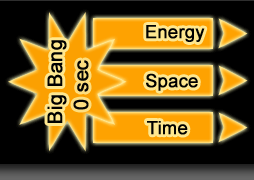
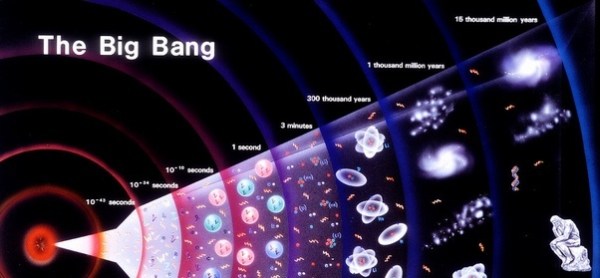
இந்த பிரபஞ்சம் எப்படித் தோன்றியது? என்பதற்கு அண்மைக் காலத்தில் விஞ்ஞானிகள் விளக்கம் கண்டு பிடித்துள்ளனர். அவர்கள் சொல்கிறார்கள்– 1500 கோடி ஆண்டுகளுக்கு முன்னர் திடீரென்று ஒரு வெடிப்பு ஏற்பட்டது. அப்போது முதல், நட்சத்திரங்கள், பூமி, கிரஹங்கள் எல்லாம் கொஞ்சம் கொஞ்சமாக உற்பத்தியாகின. அந்தப் பிரபஞ்சம் இன்னும் பலூன் ஊதுவது போல பெருகிப் பரந்து விரிந்து கொண்டே போகிறது. முடிவு என்ன ஆகும் என்று எங்களுக்குத் தெரியாது. இந்த மாபெரும் வெடிப்பு (BIG BANG) ஏன் ஏற்பட்டது, எப்படி ஏற்பட்டது என்பதும் எங்களுக்குத் தெரியாது – என்று அறிவியல் நூல்கள் செப்பும்.


இதில் ஒரு பெரிய விந்தை என்னவென்றால் ஒரு பிரம்மாவின் யுகக்கணக்கில் 1500 கோடி ஆண்டுகளுக்கு முன்னர் இப்போதைய பிரபஞ்சம் தோன்றியதாக இந்து சமய நூல்களும் பகர்கின்றன. அது மட்டுமின்றி காலம் என்பது வட்ட வடிவில் (Cyclical, not linear) பயணம் செய்யும் ; ஆகையால் இது மீண்டும் சுருங்கி, மீண்டும் விரிவடையும் என்றும் இந்து சமய நூல்கள் விரித்துரைக்கின்றன. இனி நாசதீய சூக்தத்தில் உள்ள  அதிசய விஷயத்தைக் காண்போம்.


இப்பேற்பட்ட ரிக் வேதத்தில் கடைசி பாடலில் உலக சமாதானம் , உலக மக்கள் நலம் பற்றிய பாடல் இருப்பது – 6000, 7000 ஆண்டுகளுக்கு முன்னரே — வேத கால ரிஷிகள் ஆடிப்பாடி ஆனந்தக் கூத்தாடி இருப்பது உலகையே வியக்க வைக்கிறது. ஐக்கிய நாடுகள் சபை உருவாகும் முன்னரே இப்படி ஒரு சிந்தனை எழுந்தது வேத கால நாகரீகம் ஒன்றே முதன்மையானது என்பதைக் காட்டிவிட்டது.


இப்படி பசு மாடு, குதிரை, டெஸிமல் சிஸ்டம் , உலக மக்கள் நலம் என்பதில் எல்லாம் முன்னொட்டியில் நிற்கும் விஞ்ஞானத்திலும் முன்னனியில் இருப்பது  எல்லோர் மூக்கிலும் விரலை வைக்கவைத்து விட்டது.


இதைப்படித்த வெளிநாட்டு “அறிஞர்கள்” வேதம் பற்றிய எல்லாப் புத்தகத்திலும் இதைச் சேர்த்துவெளியிட்டனர். நூற்றுக்கும் மேலான “அறிஞர்கள்” இது பற்றி பிரெஞ்சு, ஜெர்மன், ஆங்கில, லத்தீன் மொழிகளில் உரை- வியாக்கியானம்- கருத்துக்களை மொழிந்துள்ளனர்.


இந்த துதியின் பெயர் நாஸதீஅய சூக்தம். ரிக் வேதத்தின் பத்தாவது மண்டலத்தில் உள்ளது (10-129)


சரஸ்வதி நதி தீரத்தின் கரையில் 6000, 7000 ஆண்டுகளுக்கு முன்னர் உட்கார்ந்திருந்த ஒரு முனிவர் இரவு நேரத்தில் பல்லாயிரக் கணக்கான நடசத்திரங்கள் வான வீதியில் பவனி வருவதைக் கண்டார். உடனே இவை எப்படித் தோன்றின என்று ஞான திருஷ்டியில் கண்டார். அதை ஒரு பாடல் மூலம் வெளியிட்டார். அதுதான் நாசதீய சூக்தம் என்னும் துதி.


ஒரு விஞ்ஞானியோ நாஸ்தீக வாதியோ, மாபெரும் வெடிப்புக்கு (Before The Big Bang) முன்னர் என்ன இருந்தது? அதை யார் தோற்றுவித்தார்? அவர் எப்படி வந்தார் அல்லது அது எப்படி வந்தது என்று கேள்வி கேட்டுக் கொண்டே போனால் விடையே கிடைக்காது. ஒரு நேரத்தில் இப்படி யோசிப்பதை நிறுத்தாவிடில் வேட்டி சட்டையைக் கிழித்துக் கொண்டு பைத்தியம் பிடித்து அலைவார்.


ஆனால் ரிக் வேத ரிஷியோ மாபெரும் வெடிப்பை வர்ணித்துவிட்டு இது கடவுளின் இச்சையால் ஏற்பட்டது என்று மொழிகிறார். விஞ்ஞானிகள் காரணமே தெரியாது என்று சொன்ன இடத்தில் கடவுள் என்பவரையும் அவரது விருப்பத்தையும் பகர்ந்தவுடன் விடை கிடைத்துவிடுகிறது.


அதெல்லாம் சரிதான், ஐயா? 7000 ஆண்டுகளுக்கு முன்னர் ஒரு வேத கால இந்துவுக்கு எப்படி இப்படி ஒரு அபூர்வ, அதிசய, அற்புத சிந்தனை பிறந்தது? அப்படியானால் அவர்கள் நாகரீகத்தின் சிகரத்தில் அல்லவா வாழ்ந்திருக்க வேண்டும்? மார்கஸீய வா(ந்)திகளும் வெள்ளைத் தோல் :அறிஞர்களும்” செப்பியது தவறு அன்றோ! கைபர் கணவாய் வழியாக மாடு மேய்த்து வந்த நாகரீகமற்ற நாடோடிகள் ஆரியர்கள் என்று கற்பனையை எழுதிய கயவர்களைக் கண்டு நாம் இன்று கைகொட்டிச் சிரிக்கலாமே!


இதோ அற்புதமான நாசதீய சூக்தம்:–


1.அப்போது எதுவுமே இல்லை; இல்லாமலும் இல்லை; ஏதுனும் இருந்ததுமில்லை; இல்லாமலும் இல்லை. அப்போது விண்வெளியோ ஆகாயமோ இல்லை; அதற்குப் பின்னரும் எதுவுமே இல்லை. என்ன நேர்ந்தது? எங்கே? யார் இதைக் கவனித்தார்? ஆழம் தெரியாத அளவுக்கு அப்போது தண்ணீர் இருந்ததா?


2.சாவு என்பதே அப்போது கிடையாது; மரணமில்லப் பெருவாழ்வு என்பதும் இல்லை. பகல் இரவு என்பதே இல்லை. ஆனால் ஒன்றுமட்டும் உயிர்மூச்சுடன் இருந்தது; காற்றே இல்லாவிடினும் அது தனது சக்தியால் சுவாசித்துக் கொண்டிருந்தது. அதைத்தவிர எதுவுமே இல்லை.

3.ஆரம்பத்தில் இருளை இருட்டு வளைத்துப் பிடித்துக் கொண்டிருந்தது. எதையும் பிரித்துக் காட்டுவதற்கு எதுவுமே இல்லை. எங்கும் தண்ணீரோ! எல்லா இடமும் வெற்றிடம். அப்போது தவ சக்தியால், தவ (Heat) வெப்பத்தால் ஒன்று மட்டும் எழுந்தது (மாபெரும் வெடிப்பு BIG BANG இதுதான்)


4.துவக்கத்தில் அதற்கு ஆசை எழுந்தது. அதுதான் மனதில் விதைக்கப்பட்ட முதல் விதை; ஒன்றுமே இல்லாததில் ஒன்று இருந்ததை ஞானத்தை நாடும் தெய்வீக கவிஞர்கள் கண்டார்கள்.


5.அந்தக் கயிறு– இணைப்பு- எங்கும் சென்ற து ஆனால் கீழ், மேல் என்று ஏதாவது அப்போது உண்டா? விதைகள் தூவப்பட்டன. எங்கும் சக்தி. உயிர்த்துடிப்பு மேலும் கீழும்.


யாருக்குத் தெரியும்? யார் இதைச் சொல்ல முடியும்? அது எப்போது தோன்றியது? இந்த படைப்பு என்பது எப்போது ஏற்பட்டது ?படைப்புக்குப் பின்னரே (நாம் இன்று வணங்கும்) கடவுளர் வந்தனர். அப்படி இருக்கையில் இது எப்போது தோன்றியது என்பதை எவர் அறிவார்?


  1. எப்போது இந்தப் படைப்பு ஏற்பட்டது? அதுவே ஏற்பட்டதா? இல்லையா? யார் இதை மேலிருந்து கவனித்தாரோ அந்த உயர்ந்த சுவர்கத்துக்கே அது தெரியும்; தெரியாமலும் இருக்கலாம்.


இதை இந்துக்கள் கடவுள் உலகைப் படைத்தார் என்ற கருத்தில் எடுத்துக் கொள்ளுவர். நாஸ்தீகவாதிகள் இங்கு சந்தேக த்வனி இருப்பதாவும் எடுத்துக் கொள்ளுவர். இவ்விருவர் கோணத்தில் பார்த்தாலும் இப்படி ஒரு ரிஷி முனிவருக்கு ஒரு சிந்தனை 6000, 7000 ஆண்டுகளுக்கு முன் தோன்றியதும், அதை வாய்மொழியாக 7000 ஆண்டுகளாக இந்துக்கள் பாடிப் பாதுகாத்து வைத்திருப்பதும் உலக மஹா அதிசயம். ஏனெனில் வேதங்க ளை எழுதக்கூடாது. வாய்மொழியாக மட்டுமே மூன்று ஜாதியினர் கற்காலாம். சங்கத் தமிழ் நூல்கள் வேதங்களை எழுதாக் கிளவி, எழுதா மறை, எழுதாக் கற்பு என்று போற்றுகின்றன.


மாபெரும் எடிப்பு என்பதை இறைவனின் தவ வலிமையில் பிறந்த இச்சை- காமம்- விருப்பம் -ஆசை என்று அற்புதமாக வருணிக்கிறார் வேத காலப் புலவர். கவிஞருக்கே உரித்தான பாணியில் சந்தேகக் கேள்விகளை எழுப்பி—அதாவது தடை எழுப்பி விடை காண்கிறார்.


நாகரீகத்தின் உச்சானிக் கொம்பில் இருந்தால்தான் இப்படி ஒரு சிந்தனை பிற க்கும் அல்லது பாபிலோனியாவில் உள்ளது போல ஒரு லட்சம் கல்வெட்டுகளிலும் உப்பு, புளி, மிளகாய், எண்ணை வாங்கிய பழங்கால கணக்குகளை  எழுதி இருப்பார்கள். அல்லது ஜில்காமேஷ் “காவியம்” போல ஏதாவது பிதற்றி இருப்பர்!


சில வெளிநாட்டு அரை வேக்காடுகள் – ‘கடவுளரே படைப்புக்குப் பின்னர் தோன்றியதாக’ வரும் வரியை எடுத்துக் கொண்டு – படைப்புக்குக் கடவுள் காரணம் அல்ல – என்று பகர்ந்து தன் அறியாமையை வெளிப்படுத்துவர். ஏனெனில் இதே துதியில் “அந்த ஒன்று” உயிர்த்துடிப்புடன் இருந்தது; அது தவத்தினால் ( தவம்= வெப்பம்), இச்சையினால் இதைத் தோற்றுவித்தது — என்பது தெளிவாகச் சொல்லப்பட்டிருக்கிறது.


கவிகளுக்கே உரித்தான பாணியில் எழுதும் போது இப்படிக் கேள்விகளை எழுப்பி – உளதோ இலதோ — என்று புகல்வர். மாணிக்க வாசகரின் திருவாசகத்தைப் படித்தவர்களுக்கு இது இன்னும் நன்றாக விளங்கும்.


உருவம், அருவம் அருஉருவம் எல்லாம் உடையவன் அவன்!


TAGS: -மாபெரும் வெடிப்பு, நாசதீய சூக்தம், வேதத்தில் விஞ்ஞானம்

–சுபம்–


Big Bang in the Rig Veda! (Post No.4235)

Written by London Swaminathan


Date: 22 September 2017


Time uploaded in London- 16-28


Post No. 4235


Pictures are taken from various sources; thanks.


What is the Big Bang?

Big Bang in astronomy, is the hypothetical explosive event that marked the origin of the universe as we know it. At the time of the Big  Bang, the entire universe was squeezed into a hot , super dense state. The Big Bang event threw this composite material outwards producing the expanding universe. The cause of the Big Bang is unknown; observations of the current rate of expansion of the universe suggests it took place about 10-20 billion years ago —Hutchinson Encyclopaedia


According to Hindu Yuga calculation, it happened about 15 billion years ago.

The Big Bang is described in the Rig Veda 6000 or 7000 years ago. Cosmologists wonder that such a thought occurred to one or two seers on the banks of River Sarasvati in India. Hindus are great cosmologists that the same creation is described in several Brahmanas, Puranas and Manau Smrti as well.

Creation Hymn: Nasadiya Sukta

The following remarkable passage from the Rig Veda (10-129) describes the creation of the universe.


“There was then (in the beginning) neither non-entity nor entity; there was no atmosphere, nor sky above. What enveloped all? Where in the receptacle of what (was it contained)? Was it water, the profound abyss? Death was not there, nor immortality; there was distinction of day or night. That one breathed calmly, self-supported; there was nothing different from, or above it.


In the beginning darkness existed, enveloped in darkness. All this was undistinguishable water. That one which lay void, and wrapped in nothingness, was developed by the power of fervour. Desire first arose in it. which was the primal germ of mind; and which sages, searching with their intellect, have discovered it in their heart to be the bond which connects entity with non-entity.


The ray (cord) which stretched across these worlds, was it below or above? There were there impregnating powers and mighty forces, a self-supporting principle beneath and energy above. Who knows, who here can declare, whence has sprung this creation?”


A beautiful description of the Big bang and the later water enveloped earth. So I see two stages here; one is the Big Bang. Scientists say that they don’t know the cause of the Big Bang. But Hindu seers say that the DESIRE in the god made it happen. The second stage is water every where , of course billions of years after he Big bang. Now we all know that there was only sea and then land emerged and the life first appeared in water.


The Hindu scriptures clearly say that the water had the life seeds, impregnated ny the rain god.


How did the Hindu seers get such a thought about cosmology (Big bang) 6000 years before the Western cosmologists/astronomers? Did they find it by intuition? They also knew that TIME is cyclical. It happens again and again. Western scientists still do not know it.


Manu also says in the first chapter of Manava Dharma Shastra:

“This universe was enveloped in darkness, uperceived, undistinguishable, undiscoverable, unknowable, as it were entirely sunk in sleep. Then the irresistible , self-existent Lord, undiscerned, causing this universe with the five elements and all other things to become discernible, was manifested, dispelling the gloom. He who is beyond the cognisance of the senses, subtle, undiscernible and eternal, who in the essence of all beings, and inconceivable, himself shone forth. He, DESIRING, seeking to produce various creatures from his own body, first created the waters, and deposited in them the sed. This became a golden egg, resplendent as the sun, in which he himself was born as Brahma, the progenitor of all the world. That Lord having continued one year ( not our year Brahma’s year), divided it into two parts by his mere thought. With these two shells, he formed the heaven and earth, and in the middle placed the sky (atmosphere), the eight regions and the eternal abode of waters.”

Wherever science said unknown, there Hindus introduced God. The Five elements (Pancha Bhuta) concept, The Floods (Pralaya) concept, Life from the water concept,  Heaven and earth concept—all these things spread to Babylonia and Greece from India. Vedas were the earliest literature to describe anything in the universe is globular. Now we know that the earth and other planets are globular or round and the universe itself is expanding as a round balloon! So this is also a Hindu discovery. How did they know it? That is the greatest mystery. And they say that there will be a Big Shrink and then it starts again with another Brahma.


If a scientist or an atheist begin to think what was there before the Big Bang? How did or where did it come from? he will become mad and stop thinking at one stage. Because if you something came from something then one would question how did that something came? and where from did it come? So it is a never ending enquiry. Hindus said that its God’s will or desire. So, they recognised the existence of God before the Big bang or the creation. And they told the world that God is eternal. So, no more questions arose!


Nasadiya Suktam in the Rig Veda shows that the Vedic Hindus were well advanced in Astronomy and cosmology. They were great mathematicians and used decimal system in almost all the hymns 6000 0r 7000 years ago! Now if anyone says that the Vedic Hindus were nomads and pastoral people we can have a good laugh. The foreign “scholars” look like pukka idiots in front of this Vedic seer who gave us the Nasadiya (creation) sukta.


The Nasadiya Hymns (RV 10-129) traces the creation of the existent to the non-existent. One must read much between the lines to fit it in a true metaphysical pattern. But from the text itself it is obvious that the poet succeeded in stretching his imagination to a point of time when creation had not yet come into being ( before the Big Bang!). He can visualize the primal darkness of non-existence and the complete void in Time and Space. He has a dim misty vision – but a powerful and gripping one all the same – of being slowly emerging of non being. The power of the hymn lies in this vision.


In another essay, we will see what the great scholars say about this creation hymn.

Long Live the Vedas! Long Live the Vedic seers!!


–Subham–

Comets: Shakespeare also believed Hindu Views (Post No.4218)

Written by London Swaminathan


Date: 16 September 2017


Time uploaded in London- 18-48


Post No. 4218


Pictures are taken from various sources; thanks.


In Sangam Tamil literature and Hindu epic literature lot of references to comets (dhumaketu) are vailable.; all those references fear the evil effect of the comets. Ancient tamils used both Sanskrit word Dhumam (smoke) and the lieral translation of Dhema Ketu + Pukaik kodi in Purananuru.

Shakespeare also had the same belief about comets in his drama Julius Caesar, Calpurnia says

“When beggars die, there are no comets seen; the heavens themselves blaze forth the death of princes” Julius Caesar 2-2-30/31


Meaning:

Calpurnia, wife of Julius Caesar, begs her husband not to venture out on this morning, the ides of March. Caesar has spent a restless night and there is a wild storm raging. Calpurnia has had disturbing dreams, as well; crying out three times in her sleep, “They murder Caesar!” She begs him to stay home. Caesar sends word to the priests and they, too, return a warning that Caesar must stay home. Calpurnia is very upset , especially because of the strange events of the preceding evening: reports that a lioness was seen giving birth in the streets of Rome, the dead rising from their graves, warriors fighting in the clouds, reports of horses neighing and dying men groaning, ghosts shrieking. Comets were seen during the night, which Calpurnia interprets as a prophecy of the death of a prince.


Shakespeare had similar views about eclipse which is also in Tamil and Sanskrit books.

Tamil Belief

Meteor
Meteors: Kudalur Kizar (Puram 229) described the effect of a meteor he and his colleagues saw in the sky. They predicted that the Chera King Mantharan Ceral Irumporai would die in seven days time and it came true.

Comets: Like any ancient community Tamils were also afraid of the comets. They used the Sanskrit word ( Dhuma ketu) and Tamil word (Pukai Kodi) for it. Reference: Puram 117and 395 Also in post- Sangam Tamil epic Manimekalai 6-64, 7-74, Silappadikaram 10-102


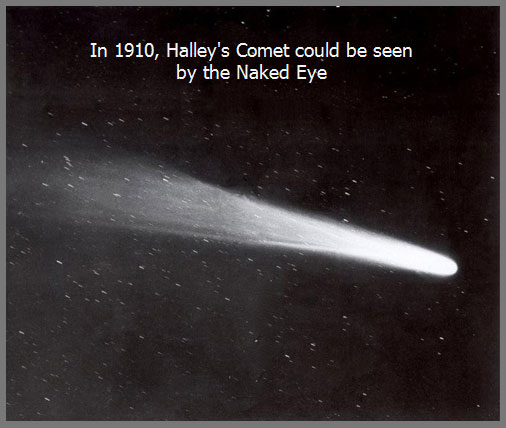
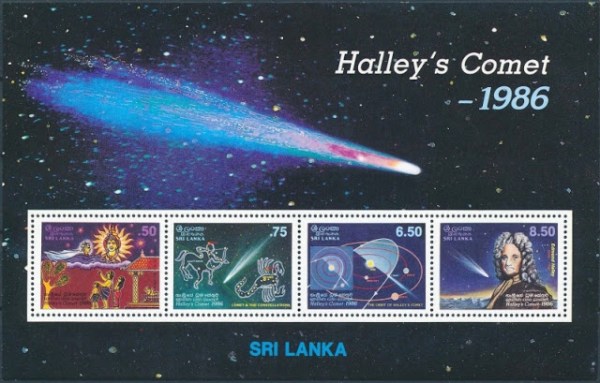
Tamil Poet Bharati On Halley’s Comet
1.Like a palm tree set on a millet plant,
With a growing tail on a little star,
You blaze forth in kinship with eastern moon
Oh, lustrous comet! I bid you welcome

2.You range over countless crores of Yojanas
They say your endless tail wrought of gas
The softness of which is indeed peerless

  1. They say that yourtail touches the earth too
    An you fare forth with no harm to the poor;
    The wise talk of your myriad marvels.
    ( I have given only 3 stanzas from 7 stanzas of translation by Dr T N Ramachandran)

Varahamihira on Comets:


  1. Dhumaketu | Tamil and Vedas

tamilandvedas.com/tag/dhumaketu

Posts about Dhumaketu written by Tamil and Vedas. … is considered as Dhumaketu – a portentous comet … //tamilandvedas.com/2015/05/13/comets-in-brhat-samhita/


  1. ISON comet | Tamil and Vedas

tamilandvedas.com/tag/ison-comet

Posts about ISON comet written by Tamil and Vedas. … Dhumaketu in Sanskrit means Lord Ganesh and the … //tamilandvedas.com/2013/01/05/spectacular-comet-show-in …