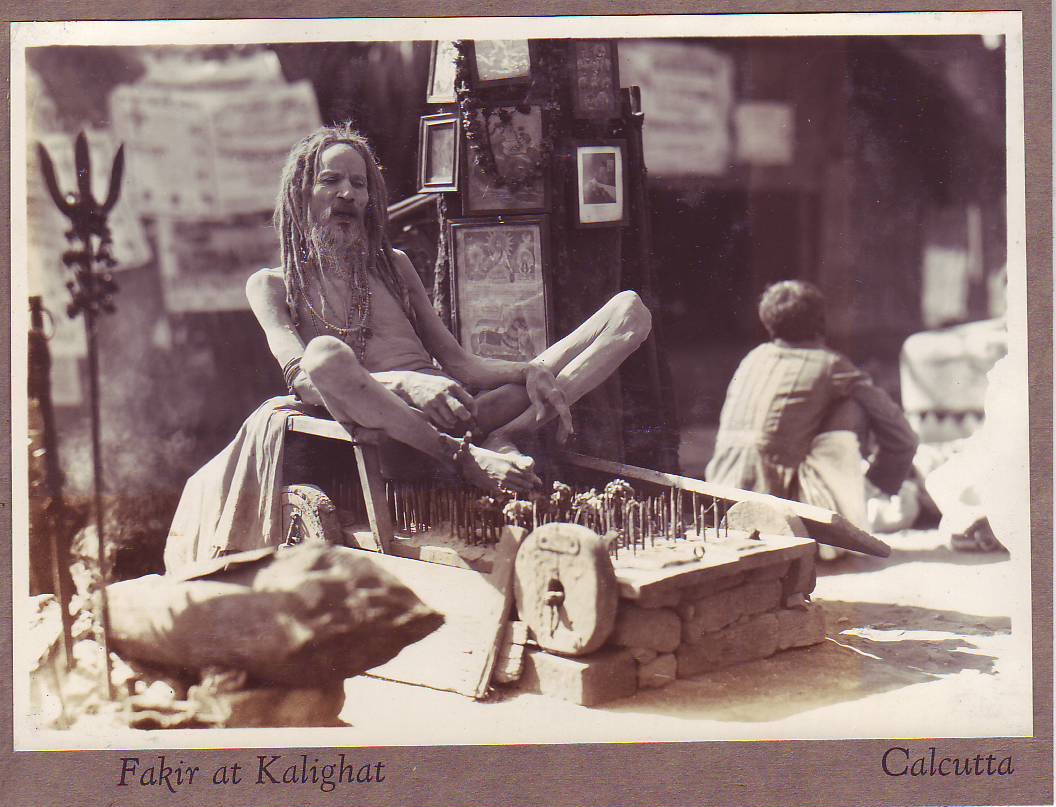
Indiahhhhhhh———-RICHEST country in the world (Part 5)

By S Swaminathan


Please note this is part of an ongoing series. Read prior parts here:

Part 1
Part 2
Part 3

Part 4

Part 5 – LATEST

Tamil king who refused to take gold

The worst thing we read in Cankam Tamil literature is the execution of a little girl just because she took a mango fruit from the king’s garden. Tamil poets were so angry that not only they refused to sing about him but also ridiculed him in the Cankam poems. But one good thing about the story is that it reveals the immense wealth of Tamilnadu 2000 years ago. The story is as follows:

Nannan was a king who ruled part of Kerala called Poozi Nadu. A mango fell from one of the trees in his garden and it was washed away in the water of a canal. Any little girl or boy who sees a fruit will naturally go for it. So did a little girl in his town. The servants reported this ‘theft’. Immediately Nannan ordered to kill the girl for theft. The whole town rose against him. The girl’s father with the support of the VIP’s of the town met the king and begged to to release his daughter. He even came forward to give Nannan 81 elephants as a penalty. Nannan did not budge.

Then her father told him that that he WOULD GIVE GOLD MEASURE FOR MEASURE. But evil Nannan executed the girl refusing to accept the gold. One of the great poets of Tamil Cankam (Tamil Academy) Paranar gave this story in Kurunthokai poem 292. Perunthalai Sathanar who sang a poem long after this incident refused to sing about another king Ilam Vichiko (puram 151) just because he was born in Nanna’ns clan. Till this day Nannan was ridiculed as a ‘Murderer of a little girl’. My purpose of narrating this story is to show the wealth of ancient Tamilnadu. Look at the word MEASURE FOR MEASURE gold.

This is called Thula Bharam (Weighing in a balance). This is a Hindu Ritual followed in many temples, particularly Tirupati Balaji temple and Guruvayur Krishnan temple. The ancient Tamils were so wealthy they were ready to give measure for measure gold to Nannan. Another poem in Tamil literature says Tamil girls threw golden ear rings at the birds to chase them  instead of stones. This may be an exaggeration!

Having said ,that I want to point out the golden thula bharam of very recent years. In Thula bharam ritual devotees sit on one side of the balance and fill the other side of the balance with materials one wishes to give to god. Last year T N C Menon, managing director of the Bangalore based Sobha group of companies weighed himself in the balance and gave 70 kilos of gold to Guruvayurappan.

Gold from Holymen

Now and then we read about the CBI raids in Ashrams run by holy men of India. Very recently, when Sathya Sai Baba’s room was opened by his devotees after his death, they found 98 kilos of gold from Baba’s private chamber. They found gold and silver worth of Rs 76 lakhs from another room in addition to cash of Rs11.56 crores.But this was not a raid.

About other holy men, newspapers reported of raids in several places in Tamilnadu and Karnataka and recovery of gold. Recovering 20 to 30 kilos of gold from government officers or industrialists is a common phenomenon in India. If one could collect all the data and total them it would run in to thousands of kilos.

Gold Chariots of Temples

In Tamilnadu,Kerala,Karanataka and Andhrapradesh all major temples have got Golden Chariots for the gods and goddesses. Many of the vahanas (mounts of gods) are plated with gold. Each temple has used at least ten kilos of gold to make the chariots.

Indian Women’s thirst for gold

Akshay Tritiya is an auspicious day and people believe whatever they buy on that day will multiply and bring more prosperity to the families. Women who always wait for an excuse to buy jewellery rush to the shops and buy the gold on that day. Look at a few examples to see what they bought in 2011:

  • Lucknow : 80 kilos of gold on 6th May ,2011
  • Mumbai 1500 kilos of gold
  • Ahmedabad  500 kilos

50 tonnes (50000  kilograms) of gold were sold all over India on that day alone.

Pandya King Who Ruled Vietnam

By S Swaminathan
It is a well known fact that India’s cultural empire extended to South East Asia in the first few centuries of our era. Hindu empire existed for over a thousand years in several countries in the region. But the fact that a Pandya king ruled Vietnam was missed by many historians. The first king in Vietnam was known by the name Sri Maran. Translated in to Tamil it is Thiru Maran. We knew several Pandya kings by these names through inscriptions and Tamil Cankam literature. The oldest Sanskrit inscription discovered in Vietnam mentions the name Sri Maran. Unfortunately we did not get the complete inscription. Most of it is not legible.
The inscription is known as Vo-Chanh Inscription. It was inscribed on a rock as two parts. This is about the donation made by the family of the king Sri Maran. We have fifteen lines on one part of the rock and seven more lines on the other side. Of these only nine lines are readable. Scholars who took a copy of the inscription say the poetry part is in Vasantha Thilaka metre in Sanskrit and rest is in prose.
The king donated all his property to the people who were close to him and ordered that it should be honoured by the future kings. The inscription ends abruptly. But we could read the words ‘Sri Mara raja kula’ very clearly. Though we couldn’t get much information about this king from other sources, Chinese historians confirmed that the Hindu empire that existed in Vietnam, Laos and Cambodia started with Sri Maran.
Chinese historians named Thiru Maran as Kiu Lien and said that he captured Champa following a revolt. Champa was part of modern Vietnam. The French scholars who excavated most of the South East Asian sites have identified Kiu Lien as Sri Maran. All the kings’ names who followed Sri Maran were in Chinese style and beyond recognition. The revolt started in AD 132 against Chinese and Sri Maran ruled from AD 192.But the kings’ names end with Fan (in Chinese) which is nothing but Varman. As a surprising co incidence we have both Varman and Maran names in the Pandyan Kingdom in Tamil Nadu.
There are more than 800 Sanskrit inscriptions in South East Asia. Mula Varman was another king whose inscription was found in the thick jungle of Borneo (Indonesia).
Now let us look at the Tamil literature to get some corroborative evidence. The last king who ruled during the second Tamil Academy (Second Tamil Sangam) was Thiru Maran. When a tsunami struck his capital he moved his capital to the present day Madurai. May be he or his representative might have ruled Vietnam.
Velvikkudi Copper Plate inscription also mentions Thiru Maran, Sri Maran as titles for a few kings. The king who ruled during the days of Tolkappiyar also had the title Thiru. He was Nilam Tharu Thiruvil Pandyan. We see the name Maran at least ten times in the colophon of Cankam poems. Most importantly the author of Natrinai poems 105 and 228 was Muda Thiru Maran. Velvikkudi Copper Plate says that Agastya was the Kula Guru of the Pandya clan and we see Agastya statues in several places in S.E. Asia. (See my article ‘Did Agastya drink the ocean?’ for more information) .
The author of Purananuru poem 182 was Kadalul Maintha Ilam Peru Vazuthi. The translation of the king’s name will sound ‘the king who died in the sea’. This king might have died during an expedition to S E Asian countries. So it was not uncommon for a Pandya king to travel to a foreign country in first or second century.
We have more evidence from the Tamil inscription in Malaysia, the discovery of Tamil coins in Thailand, Greek and Roman writers’ references about South Indian Marine trade to support our argument in favour of Pandya’s expedition to South East Asia. (For more information on inscriptions of Champa/Vietnam please read R.C. Mazumdar’s book).
Please do contact me with feedback at: swami_48@yahoo.com, or leave comments below.

Bhishma – First man to practise acupuncture

Bhishma, the great warrior of Mahabharata period was the first man to practise acupuncture. When he was shot by arrows in the battle field he did not die immediately. He had a boon to choose the day of his
death. So he decided to lie on a bed of arrows for 56 days. He wanted to die on an auspicious day. The bed of arrows was made by Arjuna.

This bed of arrows is nothing but acupuncture treatment. Dr B K Singh of Indian Acupuncture Centre also  pointed this out in one of his lectures thirty years ago. Bhishma kept himself in good health by using the
acupressure techniques. But it is true acupuncture was practised more widely in China and the world came to know about it through the wandering Buddhist monks.
We have more evidence to show that the Indians knew about acupressure and acupuncture. Hindus used to pierce ear of babies during the first birth anniversary. They knew that the children’s wisdom and knowledge will increase after piercing the ears with a golden needle. Girls will have nose piercing at a
later age in addition to the ear piercing. People who go to fields for ablutions in the olden
days used to wear a turban/towel around their head closing their ears. In those days people belonging to first three castes (Brahmins, Kshatriyas and Vaisyas) wore the sacred thread. They used to wear the thread tightly around their ears to give pressure. This helped them to clear their bowels well.
Wearing the tuft (kudumi in Tamil,choti in Hindi) has also some meaning in acupuncture. From time immemorial Indian Brahmins have kept a tuft of hair tied on their shaven heads at a particular point. Chinese called this point ‘bahue’ meaning blessing. Last but not the least Indian barbers also knew a
lot of acupressure points. When they visit home to perform their services, a common practise was to apply pressure to particular points of the body to prevent their customers from receiving an embarrassing involuntary erection.
Wrestling school teachers also practised Varma Kalai (art of varma); part of which is acupressure. It was not uncommon for barbers and wrestlers to treat patients in the absence of doctors in ancient India.

Do Words Have Power?

Do Words have power?
An Interesting study of Boons and Curses
-S Swaminathan-

Hinduism is a wonderful religion. Here even the Gods and saints have to obey the rulesIt is very interesting to study the way curses and boons work in Hinduism. Equally interesting is how they are showered upon people and gods .Though we hear about the curses in other mythologies such as Greek and Roman there is a logical pattern in Hinduism. Here truthfulness is the basis for the curses and boons. Let us take the curses first. If a sage or god or a Deva/semi god curses someone, it can’t be taken back even by the person who spelt it. It is like a bullet from the rifle or an arrow from the bow. But every curse has an antidote or atonement. We can call it an escape route or exit strategy.

Following things are obvious in the episodes of cursing:

1.    Water is used to curse a person. Water has got magical powers or it is used as a medium to transfer those powers.


2.    A person curses another for the wrong doing. Arrogance and bad deeds invariably attract a curse


3.    When the person begs for pardon or mercy, the curser gives an antidote which is usually an escape route-but comes after a long time. Here is the beauty of Hinduism. No one can escape the Karma. If some one does something wrong that person must undergo punishment. But it is not an eternal condemnation. Any sinner can become a saint.


4.    Kings (Dasaratha,Ravana,Vali),Devas(Indra,Rambha),Gods(Brahma) and mortals (Ahalya,Sakunthala) are famous examples of victims.


5.    A person who curses, spends enormous energy to do it. This energy comes from the penance he or she does. Actually it is like wasting their energy. But most of the curses come out of rage/extreme anger.


6.    It shows that one’s words have got magical powers to turn any one in to a stone or animal etc.


7.    Though we hear about curses in the Vedas, particularly Atharva Veda, they are of general category. We don’t know the victims. But in mythology we know the victims.


8.    There are more episodes of curses in Puranas than in epics.


9.    In Rama’s time we hear about curses more than Krishna’s time. Mahabharata characters are more human.


10. In the modern times we don’t hear about curses at all. But there are a lot of Sthala Puranas where we hear about it. But most of them have no basis.  Just to enhance the prestige of the place a lot of things are said.


11. Truth is the basis for all the curses. That is why even the person cursed could not withdraw it. If the person withdraws it, he will loose the power. His words won’t come true anymore. One can’t go back on his words.


12. Any one can curse. If you have a good case-honesty and truth- you can do it. Most of the curses are from men-not from women.


13. Curses are there in all the cultures in India from northern Himalayas to southern most point Kanyakumari. We hear it in the Tamil epics Silappathikaram, Kundalakesi etc. The earliest Tamil poems ‘Purananuru’ also hint at it.


14. Durvasa, a short tempered sage is the holder of highest number of curses. He deserves a place in the Guinness Book of Records!!


15. The curses- most of them are on one to one basis. But there are episodes where even thousands of people were made victims.


16. The curse is directly proportional to the bad acts done by a person. The severe the crime, severe is the curse.


17. Boons become curses in the case of bad people/asuras. Asura’s boons are taken literally. Words carry more weight than the spirit behind the words.

Famous curse episodes: Ahalya , Sakunthala, Rambha, Dasaratha, Ravana, Vali, Indra, Brahma

SCIENCE BEHIND CURSES

Modern science is yet to discover the power of the words and water. But a day will come when they will appreciate the ancient Hindu discovery of these powers. Hindus believe that a word can be transformed in to energy. A medium like water can be used to transfer it to the victims. Penance power is the ‘power house’ that supplies energy to this process. We see it in the launching of missiles (Astras) in the Mahabharata and Ramayana wars.

Strange are the ways of the boons!! Boons also require enough power from the power house of one’s penance. Vishwamitra spent most of his power by helping the unwanted. Once he tried to send the king Trisanku to heaven in human body. But he had not got enough power to push him through. So Trisanku got stuck up in the middle.

Boons are quite opposite to curses. Someone, mostly, sages or gods, become happy because of the penance or good deeds of their devotees and give the boons. When boons are given Gods don’t discriminate between goodies (Devas) and the baddies (Asuras). Equal Opportunity Policy is followed! Sometimes even Gods got scared because of their own boons(Eg. Story of Pasmasura, Shiva was rescued by Vishnu!)

As a result or reward for the penance, a God, usually one from the Trinity, would appear and grant a Boon. This was usually in the form of some power in the form of protection against certain creatures, or unlimited power or immortality etc

Anybody can perform a penance. During the penance, the person usually meditates on the deity being propitiated, and often chants the Mantras (incantations) extolling the glory of that God. A penance ends when the deity appears in person and grants the boon sought by the person .

Boons may also be granted for particularly meritorious deeds. Nearly all deities can grant boons, as can the sages. Sometimes even mortal men of merit can grant a boon.

Kalidasa and Tenali Rama beacame great poets and comedian/jester respectively by the boons given by Goddess Kali.

Even animals were subject to curses and boons!

The crow lost one of its eyes because of Rama’ curse. When Kakasura in the form of crow attacked Sita, Rama cursed it.

The squirrel was given three lines/patches on it back by Rama. When it helped Rama to build a bridge between India and Sri Lanka to bring Sita back from captivity Rama became so happy and stroked the squirrel on its back and it got its three lines!

In all the Asura ( bad people/demons) stories we see one string going all along. Their boons themselves became curses for them because of their bad intentions!  Gods play tricks on bad people and make them go for wrong boons.

Pasmasura tried to test the boon given by Lord Siva on Siva’s head itself. Had he succeeded in it, Siva would have been burnt to ashes. Siva had to run for his life and at last saved by Vishnu. But the working of boons also is strange. Gods can’t withdraw it. But ‘’Truth alone triumphs’’(Satyameva Jayate—Mundakopanishad) is a maxim in Hinduism. So God triumphs at the end. Many times the Asuras/demons were fooled. They wanted one thing, but got quite the opposite. This is because of their bad intentions.

Ravana’s brother Kumbakarna wanted immortality. But he was tricked and got never ending sleep. This was due to a minute change in the Sanskrit words. Kumbakarna intended to ask for nithyathva’ (permanence) instead asked for ‘nidhrathva’ (slumber forever). The Lord without a moment’s delay granted the boon and disappeared. Kumbakarna had to pursue his penance once again to get an amendment to the boon – to reduce the length of sleep to half the year!

Another demon wanted one strong son to kill Indra. But he got one son Vrutrasura who was killed by Indra. This was due to minute change in the accent of Vedic mantras.Tvasta mispronounced the word ‘indrasatru’ and got a son Vrtra who became the victim of Indra instead of slayer of Indra.

Vritrasura also got a boon not to be killed by any weapon made of wood or metal or stone.But Indra killed him with foam.

Hiranyakasipu was the king of Daityas. He performed tapas/penance and got a boon from Brahma: he could not be slain by man or beast. He became arrogant with the boon. He thought he was so powerful that he could terrorize all the three worlds. But God appeared as a man-lion (Narasimha avatar) and killed him

Dasaratha gave two boons to Kaikeyi, because she drove his chariot to victory in the battle field. In those days even women went to the battle field. But Kaikeyi used both the boons against Dasaratha. King Shantanu gave Bishma a boon to choose his own time for death.

Tamil’s belief of Black Tongue

Tamils believe that certain people have got ‘black tongue’ (Karu Naakku) and whatever they say will come true. Tamil word for ‘black’ and ‘curse’ are almost similar-‘Karu’ and ‘Karuvu’ respectively. Probably this gave credence to the belief of ‘black tongue’(Karu Nakku). People fear even to see such people because they always say something negative and it comes true.

Lesson we learn from this is always think positive, say something positive. The minute we curse someone, we lose our energy—particularly the spiritual energy.
100 Wonderful Things About Tamil Nadu

Many of us often read about the Great Pancha Bootha shrines, the shrines sung of by the 12 Alvars (Vaishnavite saints), the Six Abodes of Lord Muruga, and of the hundreds of temples sung by the Great Four Saivite saints. For those people already familiar with Tamil Nadu, this is very much treading a well beaten path. Instead, in this article I would like to present a checklist of 100 alternative sites to visit beyond the usual tourist centres:

1. Connemara Library – Chennai
2. Saraswathy Mahal Library – Thanjavur

These two libraries host very rare books.

3. The Honey Falls – Courtalam (the other falls are well known – Shenbaga Devi, Five Falls, Old Courtalam Falls, Main Falls, Tiger Falls and Pongumaankadal)
4. Avudayar Temple Granite Ceiling – Avudayar
5. Thiruvallam Suzi Palakani/window
6. Tharamangalam Pillar

Whenever the ancient Tamil sculptors make a contract, they say that they would take on any work but items 4, 5 and 6 – they were such masterpieces.

7. The Musical Pillars – Madurai, Sucheendram, and other temples
8. The Big Nandhi Statue and 80 tonne granite stone in Thanjavur tower – Thanjavur
9. The Monolith Sculptures in Meenakshi temple showing Meenakshi’s wedding scene – Madurai
10. The penance of Bhagiratha sculpture at Mahabalipuram
11. Macacue in the Kallakadu Forest. This kind of monkey is not seen anywhere else in the world.
12. Vedanthangal Bird Sanctuary
13. Panban Bridge
14. Padmanabhapuram Palace. Don’t miss the bed made up for 64 herbs and the wooden Ramayana sculptures.
15. Sunset and Moonrise at the same time in Kanya Kumari (also Vivekananda Rock, Valluvar Statue and Bhagavati’s nose ring)
16. Kalaikudi Chettiar Palace
17. The Jewels of Madurai Meenakshi. Now they are likely to be worth several million rupees.
18. The 108 gestures of dance (Bharatanatyam) in Chidambaram Temple and the golden dome.
19. The huge pillars of Thirumalai Nayak Mahal (no wood or iron was used in this huge palace).
20. The world horoscopes in the Madurai Temple Kalyanam Mandapam (Bhugolam and Kagolam).
21. The Nataraja Statue made of five metals. The dance of Shiva has recently been interpreted variously by scholars and scientists.
22. Ramasethu – Dhanushkodi (even the Nasa pictures from the satelite shows this structure)
23. Nagaswaram made of stone – Alvar Thirunagiri and Kumbakonam
24. Thiruvarur Temple drum with five faces and ivory Nagaswaram
25. Sri Rangam Temple is the largest Hindu temple. It spreads over 156 acres and has 21 towers. The tallest tower is 236ft high.
26. Darasuram Temple sculptures – the delivery scene of a village woman, Ravana lifting Kailash and the ornamental pillars are remarkable
27. Hoganakkal Falls in the Kaveri River.
28. Silk Sarees industry in Kanchipuram and Thirubhuvanam
29. The Thousand Pillar Halls in Madurai, Thiruvanamalai and Thiruterunthurai
30. Chennai Kollywood Cinema Studios
31. The Cave Temple in Narasimham with 1500 year old Pandya inscriptions near Madurai
32. Sithannavasal Cave Paintings near Pudukottai
33. Kurinji Flowers in Kodaikanal and Nilgrais. They bloom once every 12 years.
34. The longest pod – Anaipuliamkottai (this is seen in Tamil Nadu forests and grow up to 5 feet)
35. Uttarakosamangai Maragatha statue (called emerald stone; it is always covered in sandalwood paste)
36. The gold coins of Chera, Shoza and Pandyas found in several museums
37. Vattakottai – the Fort in the Sea – Kanya Kumari District
38. Chenji Fort
39. Sripuram Golden Temple near Vellore. 1,500 kg of gold cover the temple.
40. Valampuri Conch (the big conches in temples are worth several hundreds of thousands of rupees).
41. The Ilmenite and Thorium sand – Kanya Kumari.
42. The pith sculptures – made by artisans all over Tamil Nadu
43. Rare musical instruments at Thanjavur palace
44. Wonderful trees – the Banyan tree in Adayar, the Mango tree in Kanchi temple, the Tamarind tree in Alvar Thirunagiri and the Redwood trees (exported to foreign countries due to resistance to radiation).
45. The oil well in Nanguneri and pure water well in Thiruchandur (on the seashore).
46. The mangrove forest in Pichavaram
47. The magnificent Rangoli/Kolam in front of houses during Diwali and Pongal (precise geometric shapes and patterns drawn without a ruler or compass by Tamil women – they are born with a gene for mathematics!)
48. The Tea estate in Valpari Gardens
49. Fossil trees in Sathanur and Thiruvakarai. They are millions of years old. Dinosaur eggs were also excavated here.
50. 24 Jain Theerthankarar statues near Chenji
51. Papanasam Waterfalls near Thirunelveli
52. Thirumurthi Waterfalls near Coimbatore
53. Thirparappu Waterfalls near Nagarcoil
54. Kolli hills – Puliyan Solai  (72km from Thiruchi)
55. Namakkal – Durgam Fort
56. 18ft Hanuman statue at Sucheedram Temple (Also the big statues at Namakal and Nanganalloor).
57. Udayagiri Fort (Near Nagarkoil)
58. There are Samadhis of great people wherein the devotees experience miracles.
– Kulanthaianandar – Madurai
– Gnananandar – Thirukovilur
– Sadashiva Brahmendra – Nerur (near Karur)
– Kanchi Mahaswamigal – Kanchipuram
– Bodhendrar – Govindapuram
– Mother – Pondicherry
– Aurobindo – Pondicherry
– Thiyagabrahmam – Thiruvaiyaru
– Ramana – Thiruvannamalai
– Seshadri Swamigal – Thiruvannamalai
– Judge Swamigal – Pudukottai
– Swayamprakasa Swamigal – Senthamangalam
– Pamban Swamigal – Thiruvamiyur
– Ramanujacharya – Sri Rangam
– Vallalar -Ramalinga Swamigal – Vadalur
– Kaduveli Siddhar – Kanchipuram. There are 51 Jeeva Samadhis in and around Chennai.
– The following 18 great Siddhas are already known to many
– Pazani – Bogar
– Madurai – Sundaranandar
– Rameswaram – Patanjali
– Thiruvarur – Kamalamuni
– Mayuram – Kuthumbhai
– Sankaran Koil – Pambatti Siddhar
– Thiruparankundram – Macha Muni
– Azagar Malai – Ramadevar
– Thiruvannamalai – Yelaikadar
– Yettukudir – Valmiki
– Thiruvarangam – Sattai Muni
– Perur – Gorakkar
– Vaitheeswaran Koil – Dhanvantri
– Chidambaram – Thirumular
– Outside Tamil Nadu – Kasi – Nandeeswarar, Thirupathi – Konganar, Thiruvanandapuram – Agastiar
59. Gulf of Manar – Coral Reefs
60. Grand Anaicut of Karikalan
61. Bull fighting in Alanganaloor near Madurai
62. Flamingos of Point Calimere/Codikarai
63. Sculptures of hunters in Krishnapuram (near Tirunelvelli)
64. Colour changing Ganesh statue at Keralapuram
65. Ancient Jain University in Sitharal
66. Thiruchi – Rock Fort which is 271ft high
67. Kumbakonam – Rajaveda patasala
68. 14ft Krishna statue at Thipparamalai
69. Thiruvarur Chariot (also Kamalalayam Tank)
70. Sri Vallipathur – Andal Garland and the mirrored well
71. Kurusalay Island – Biologists’ paradise
72. Ganga Chozapuram sculptures. The smile of the Nataraja statue reflects Appar’s Thevaram hymn.
73. The houses of the Badagas and Thodas tribes in the Nilgris
74. Chennai Marina Beach
75. Chennai T Nagar – Ranganathan St (nowhere else in the world can you see so many street vendors in such a tiny place)
76. Thiruvattaru Koil Mandapa – an 18ft square, 3ft thick monolith base on which the mandapam stands. Its an engineering marvel.
77. Thiruvannamalai – Karthigai Light cauldron – 10ft high/5ft radius cauldron with a 300 metre long wick and thousands of kilos of ghee
78. Sivagasi – fireworks and calendar industries
79. Gulf of Mannar – Pearl diving
80. Panrutti clay dolls (Navaratri)
81. Poompuhar – Where the river Kaveri meets the sea
82. The temple vahanas (Particularly the golden horse/eagle/bull in several temples)
83. Othagamandalam Mountain Railway.
84. 3rd Century BC Brahmi inscriptions around Madurai
85. Orchideriums in Yerkad and Kondaikanal. Orchid flowers are rare and expensive.
86. Kavalur – Observatory and telescope
87. Madras AIR station
88. Guindi Rajabhavan Deer Park
89. Thanjavur – Golden Kamakshi Statue
90. Pallankuzi – the ancient Tamil game that has spread to far flung places such as Indonesia and Senegal in Africa
91. Pazani Hills – Siddha medicine centres
92. Kanchipuram has 124 temples. One of them is Varadharajaperumal Temple, which contains 357 inscriptions in one temple.
93. Sunlight entering certain temples on particular days. For example, in Srivaikundam Temple, sunlight falls on the deity on the 6th day of Chitrai and 6th day of Aippasi. There are lots of temples like this in Tamil Nadu.
94. Production of Wheat Halwa in Thirunnelveli
95. Chennai Music Sabha concerts
96. Kalakshetra in Adiar
97. Chennai Koyam Pedu vegetable market
98. Madurai Jasmine flower cultivation and export industry
99. Erode – Turmeric market
100. Thirupoor – vest and towel industry

If you have seen all the 100, you get 100 marks. Take a look for yourself, add up the total and let me know what your score is! I welcome your feedback; comments can be sent to: swami_48@yahoo.com.

Great Engineers of Ancient India

GREAT ENGINEERS OF ANCIENT INDIA

S Swaminathan, Tutor,University of London

Contact details swami_48@yahoo. com ,
Swaminathan.santanam @ gmail. com

  • Rama was the world’s first king tobuild a bridge across the sea. But he did not do it on his own. He sought thehelp of a great engineer called Nalaaccording to Valmiki Ramyana. Any wise man will seek local knowledge when heventures in new places. Nala knew the shallow areas across the sea in and around Tamilnadu. American space agency NASA also confirmed that there was a bridge through the satellite pictures. Some may argue that it was some natural
    rock projection. Any wise engineer will use such naturally elevated areas instead of deep waters to build a bridge. Thanks to Nala, the Tamil engineer , Rama was able to cross the sea!!
  • Another story of a squirrel helping Rama while he was building a bridge is found in Ramayana. Ancient people were wise to use the animals to find any hidden dangers. Snakes, dogs and cats can feel the tremors of earth even before major earth quakes strike a
    region. They simply run to safe areas. This is what Nala and Rama did by using the squirrels. The Indus Valley seal, 3000 year old Middle Eastern seals and the Jataka story called Baveru Jataka narrate how we used crows to find the land during sea voyages.
  • Lord Krishna invented Boomerang. The Sudharsana Chakra he used killed his victims and returned to him the very next
    minute. This is made amply clear in the stories of Sisupala Vadham and Gajendra Moksham.
  • With Arjuna he cleared a very big forest area called Khandava Forest by burning them. This resulted in  very big clashes spanning several generations even after Krishna’s accidental death by
    an arrow from a hunter. Nagas (people with snake totem) challenged to kill the king Parikshit within seven days. Parikshit had all the security in the world like Black Cat commandos of modern India. But a murderer hid himself in the fruit basket that went in to the palace and assassinated king Parikhit. After this murder- revenge –murder cycle a settlement was reached. According to the
    peace agreement even today the Brahmins in their three times a day ritual called Sandhya Vandhanam repeat that peace agreement with the mantra ‘’Narmadhayai Nama: —–
  • Bageeratha changed the course of the mighty river Ganges. The vast forest areas of modern Bihar,Uttar Pradesh and West Bengal were made in to fertile lands by his marvellous engineering feat. In
    those days very few people lived in those jungles. Puranas say that Bageeratha did a penance for several thousand years to do this that too ‘standing in one feet’. This is a phrase Indians use very often. Even the great Tamil poet Tiruvalluvar use the simile of Stork that stands in one foot to catch a fish. This is the hidden language to say that he tried for very long time with focussed attention.
  • Vedic Saint Agasthya discovered the land  route to South India via Vindhyas. The Puranas say that he  ‘’subdued the
    arrogance of the hills’’. This is hidden language. Till Agastya’s this great discovery  kings and travellers used only
    sea route. Since they knew the secret of monsoon winds they can travel to West Bengal or Maharashtra from Sri Lanka in a few months time.
  • He was the first one to cross Indian ocean and establish Hindu Empire in South East Asia. Puranas say that
    ‘’he drank the ocean and spit it back after killing the asura’’( sea pirates). Even today we find the staues of Agastya in Indonesia and Cambodia.
  • He killed sea pirates who gave lot of troubles to Tamil Kings . He codified Tamil grammar. He changed the course of river Cauvery for the benefit of the Tamils. Tamil Pandya King Sri Maran established a Hindu empire in Cambodia in second century AD. His name is in a Sanskrit inscription in Cambodia.

He may be Muda Thiru Maran or Kadalul Mayntha Ilam Peru Vazuthi
mentioned in Tamil Cankam literature.

  • Agastya led the first migration of Yadavas 18 branches in to Tamilnadu from Guajrat. It is in Purananuru poem sung
    by Kapilar and commentated by Nachinarkiniyar. When North India was suffering from population explosion Lord Shiva sent him south and fond out a solution for the population problem.
  • Uparichara Vasu, an ancient king made mountain passes for the benefit of land travellers.He was a Vasu king ruling over the Chedi kingdom. Mahabharata say that he kicked the Kolahal
    mountain which was blocking the flow of Shaktimati river. This is hidden language to say that he diverted the river for irrigation by cutting the hills. Incidentally Uparichara’s wife is named Girika meaning Miss Hills. The story goes that he was born in the river. Actual meaning is she is a tribal woman with local knowledge.
  • In short Bageerathan, Agastya and Uparichara Vasu are the earliest engineers who built dams across the rivers. But unlike modern engineers they did not use cement or mortar but they used the
    hills themselves. To avoid the force they made checks and balances. They use a hidden language saying that Shiva bore the force when Ganga came down from heaven. The heaven is just Himalayas!!
  • Parasuraman retrived lot of land and gave it to Keralites. A Pandya king also did this. His name was Nilam Tharu Vil Nediyon. Also known as Maa Keerthi meaning ‘Great Fame’. He built sea walls to prevent sea invading in to land. But they use the hidden language to say that he prevented the sea by showing his bow with very great anger.
  • Balraman always travelled with an axe  to clear the forests and make them cultivable. He was a great agriculturist.When Krishna spent most of his time in politicks, his brother Balarama did constructive work.
  • Rik Veda and Puranas mention great architects- Twatri and Maya. Of these two, Maya was the most famous. His followers took the building construction work to the whole of South and Central
    Americas. Even today Maya’s buildings can be seen in Maya,Aztec,Inca and Tolmec civilizations.The Thousand Pillar Halls which Nayak kings built in Madurai and other places were mentioned in Mayan civilization works. Incidentally Rik Veda
    also mentions 1000 oared ships 1000 pillar mandaps!!!

South Indian Tamil saint Appar always travelled with an pick axe
to clear the bushes from the temple towers. He simply followed Balarama.

  • Great Chola king Karikalan built a dam across river Cauvery in Kal Anai. The grand anaicut was an enginnering wonder of ancient
    Tamils. It was built around 1st century AD.
  • Big temples of India, the number of which runs in to thousands, stand as a monumental proof for the engineering skills of Indians. Each temple will cost millions of dollars if it is buil today!!
  • Mamallapuram and other Pallavacave temples are well known mile stones in Indian architecture.
  • Indus Valley Cities such as Harappa, Mohanjadaro, Lothal,Dholavira, Kalibangan need no new interpretations.
    The well laid cities with uniform brick structures, Great Bath, most hygienic drainage system, grain storage barns and wells are all already well known to the world.

Vedas are the oldest religious scriptures in the world.2000 year old Tamil literature translate the word VEDA as Secret (Marai in Tamil) and Unwriiten Word (Ezuthaa Kilavi in Tamil). Vedic rishis/ascetics
say that they enjoy saying anything with hidden meanings. That is why ancient Tamils translated Vedas as SECRET. Ithihasas also used a language of idioms and phrases. A child in a western country says Mum, buy me the game, I will give you million kisses. The child did not mean literally one million kisses. Ancient Indians used a sort of language and said that Dasaratha had 60,000 wives.

Vedas also use this number in many places to say that Indra killed 60,000.What they wanted to say is ‘’a lot of’’.Not literally 60,00, Buddhist literature use 500 for everything. They a king visited 500 prostitutes.No one takes the meaning literally. Tamils used 16000 pon (gold) for most gifts. Even today in Brahmin marriages when the close relatives of brides and grooms donate something the priest will say a mantra
and add ‘’lakasham katti varahan’’ mama donation 101 rupees. The actual meaning is uncle donated just 101 rupees which is equal to 100000 lumps of gold!!

When thousands or hundreds of years lapse people lose the original meaning of those idioms and phrases and start taking literal meaning. Modern day youths with their scientific bent of mind and back
ground ridiculed these things as a pigment of imagination. Let us re interpret our Puranas and Ithihasas, but very very carefully. We should not confuse the already confused Hindu youths. The westerners made very big chaos by wrong interpretations. Take any one’s date Like Kalidasa or the date of Vedas or the Origin of Tamils. Ten different authors say ten different things. They did not dare to do such things to Greeks or Romans or Sumerians or Egyptians. Even when they did this, they were all corrected long ago. But Indian students are still reading the 300 year old history books written by westerners but printed with new wrappers. The old history book by Smith even has a picture of Brahmins with
tufts fighting with aboriginals!!! Aryans Vs Dravidians!!! Divide and Rule!!
They did it and succeeded for 350 years. Now the picture is changing very slowly for good.

Indus script deciphered

Many scholars and amateurs are trying to decipher the Indus script without any success so far.

If we look at it from a new angle, perhaps we may succeed. From the very beginning people who have excavated passed on their personal opinion without allowing  scholars to interpret it. Since no rosetta stone is available for Indus Valley civilization and so everyone’s decipherment remains a speculation. When one seal is interpreted with a set of rules, the same rules must be follwed for interpreting other seals as well. No one has succeeded in it.They get stuck up somewhere.

I am proposing a new approach.Why should we think that there is only one set of people following the same culture occupied the valley. The valley was very near some imporatnt ports and natural mountain  passes. So many different people might have come and occupied that area. If it is the case we have to look for different languages, different cultures and may be different languages too. Vedas speaks about five people (pancha Jana:) and Puranasa speak of 18 types of people (18 ganas).

Even if we accept that the invading Aryans destroyed  the Indus civilization, we must have something Aryan there-the Aryan Gods, Aryan culture etc. So I think that the Indus people were following different Gods and cultures. There may be two different systems even diametricall y opposite.

When I looked at the elephant seal with a man or woman fighting with two symmetrical tigers immediately I thougt of Indra on his mount Airavata. Since I have been doing research on Vahanas (mounts of Gods) in different cultures like Sumerian, Babylonian, Indian and Egyptian I saw the elephant seal as the first Vahana seal of Indian sub continent. A man or woma is standing on an elephant. And he/ she is fighting with two tigers. Most interesting thing is that on top of the elephant is a wheel symbol. The name of the Vedic God Indra in the Vedas is Chakra meaning wheel. His vehicle is the elephant Airavata. If the figure is a woman it may be Indrani, wife of Indra. One other Hindu God associated with the wheel is Lord Vishnu. But during age old days he was not that popular. So I will consider the seal is that of Indra with his name on top of it in the form of a symbol ( wheel).

In other seals a mortar and pestle symbol is always put together with three vertical lines. I read it as Mitra.

Reason being three lines are thra/three and the mortar and pestle is Maituna meaning intercourse in Sanskrit.

This ‘Mitra’ seal is always accompanied by some fish signs. Fishes are Devas, according to great Sanskrit poet Kalidasa. Both of them dont close their eyes even during sleep. So all the fish symbols are used to symbolise Gods and Devas. In HIndu and other ancient religions God appear as fish.  They may be interpreted as Agni,Varuna, Vayu, Yama and other devas depending upon the strokes, lines etc.

Anothr symbol-The two circle symbol may be Aswin devas. They are the Vedic twins. So circle within circle when it is followed by two vertical strokes may be aswins and in other places without strokes it may be aswa/horse.

My deciphermments are all only speculations. Once I apply the same principle for other seals and succeed it will be  a great step forward.


Is Brahmastra a nuclear weapon?

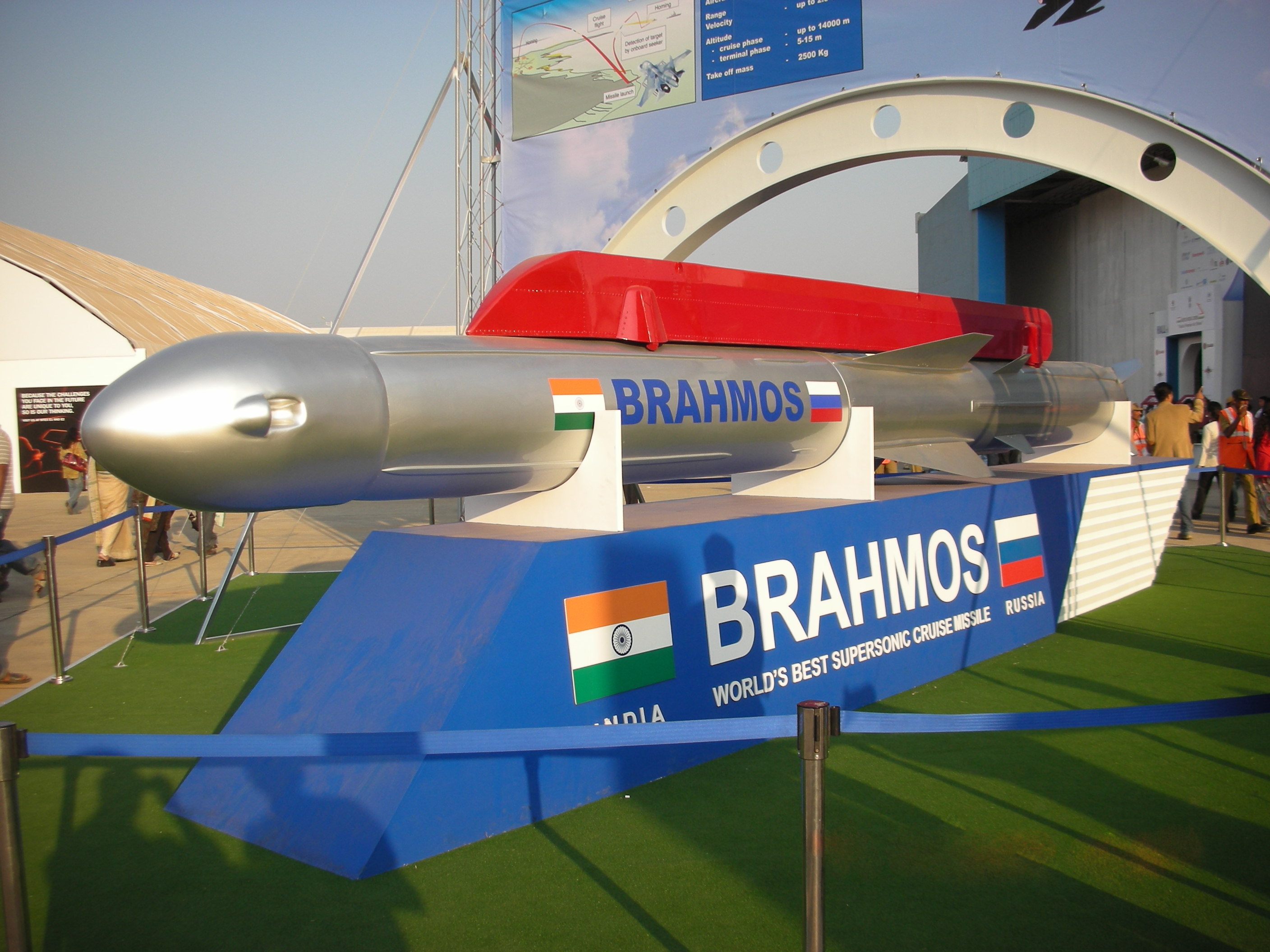
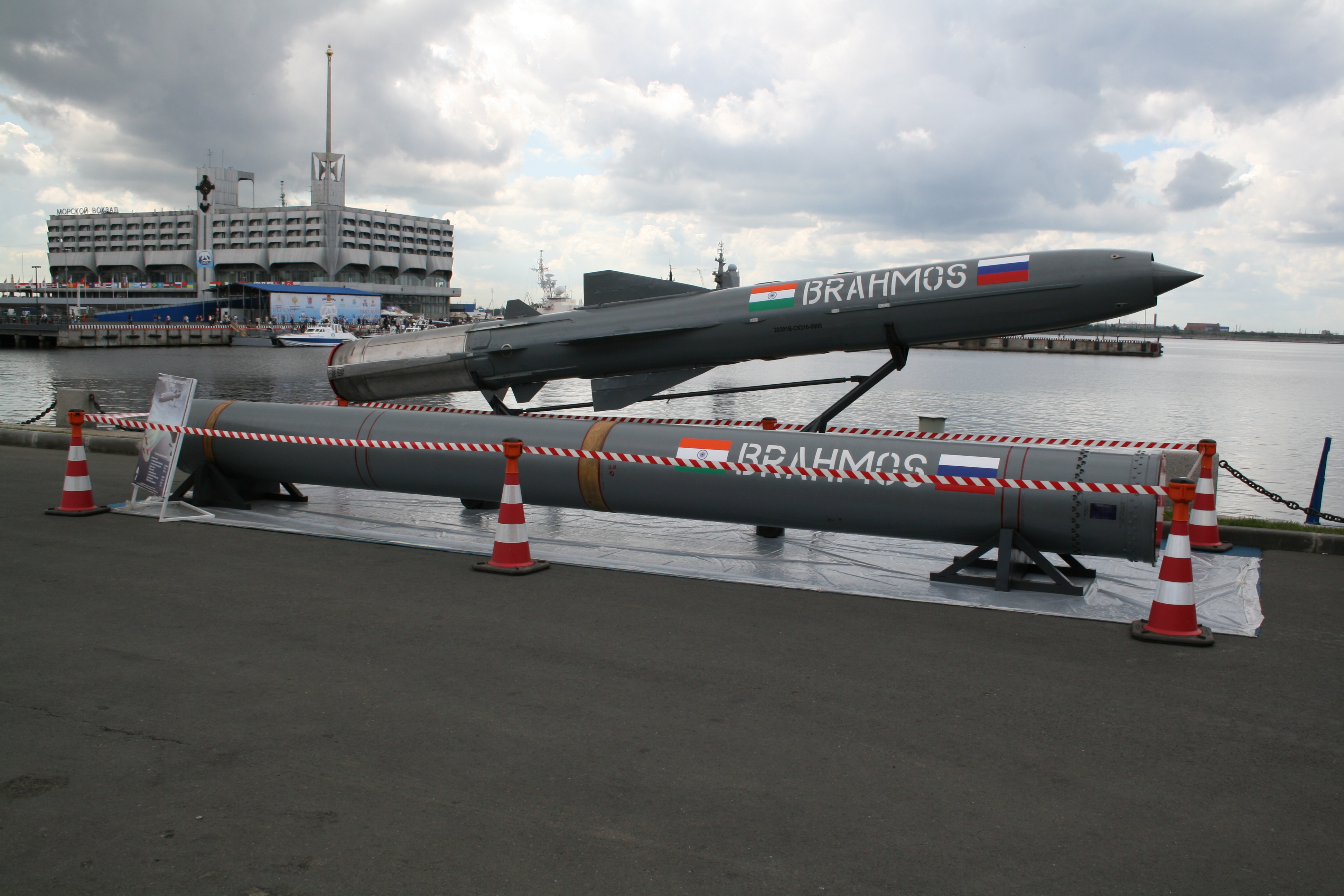
Brahmos_imds
Picture of India’s mighty missile.

IS BRAHMASTRA A NUCLEAR
WEAPON?

– S .Swaminathan, Tamil
Tutor, SOAS, University of London

Nowadays we see a lot of documentaries on television giving scientific or rational explanations for the Biblical events. But not many things in the Hindu epics or Puranas are explained in the same way. Any one with a scientific bent of mind or rational outlook can find explanations for most of the ‘unusual or abnormal’ phenomena or miracles. While I was working for the BBC World Service twelve years ago I had to interview one Indian doctor who had specialisation in Test Tube (IVF) Babies. Casually I mentioned that Gandhari also might have undergone IVF treatment to give birth to 100 children from the urns where the pieces of flesh were kept. But the doctor laughed at my suggestion.  I was surprised to read my view many years later when Mr Cho Ramaswamy started writing Mahaharata in his magazine ‘Tughlak’.

I am giving below some events from our epics and puranas and modern explanations for the same. They
may raise some questions such as ,Did they have all the modern equipment like today? or Are they just imagination or intuition about the future? I leave it to the judgement of the readers.

Dasavatara and Darwin

Many of us have noticed the similarity between Darwin’s Theory of Evolution and ten avataras of Lord Vishnu . Fish/matsya Avatara, Tortoise/kurma Avatara,, Boar/varaha Avatara, Man- Lion/narasimha Avatara,
Dwarf/vamana Avatara, then Rama, Parasurama, Krishna, Buddha(or Balarama) and Kalki avataras are equated with the life in the sea, amphibians, land animals, half man/half animal-semi civilised state, then full grown intelligent men. This is a reflection of Darwin’s Theory of Evolution. While I was writing this , a news item appeared in the British newspapers saying that the have found a fossil of 3 foot tall man. They also added that those people may be there even today in the remote forests. This justifies the Vamana (dwarf) avatara. We already know that there are pygmies in the Congo forests of Africa.

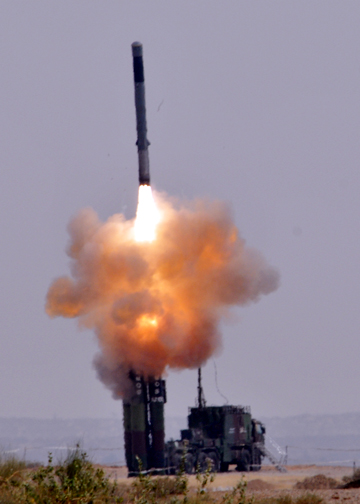
test fire
Brahmos Missile Test Fire.

One Indian scholar explains the Varaha Avatara as follows:

‘One is reminded of the meaningful story full of highly relevant symbolism from our Puranas,
centred round the incarnation of Lord Vishnu as the boar to restore the Mother Earth that had tilted and slipped into the depths of ocean. The moral is when human beings become oblivious of their responsibilities consequent on their inter connectedness and interdependence, God Almighty incarnates as Yagna Varaha-symbol of the principle of sacrifice. When our actions become self oriented and disjointed, breaking the natural inter relatedness, Truth gets devalued and there is atilt. Varaha(boar) comes to remind man of the urgency of bringing the sense of sacrifice into his actions, of raising them into Yagnas, so that harmony and strength are restored as also the balance.

Theory of Time Dilation

If a 16 year old person travels at the speed of light (186000 miles per second), that person will be a ‘Markandeya’ for ever. He will be young for ever. We came to know this fact only after the greatest physicist of our times Albert Einstein gave us the Theory of Relativity. But there is a story in our Puranas about Arjuna’s travel to Swarga (an alien planet?)  in Indra’s chariot driven by his driver Matali. When Arjuna came back to earth he saw people more aged than he expected. When he asked for explanation scholars told him that the time on earth was different from the time of the place he visited. Even now we read in the Puranas about Deva’s day, Manu’s day and Brahma’s day. They have different duration. No other religion in the world described ‘Time’ this way. The concept of time and the way we use adjectives like ‘Surya Koti samaprabha’/light equivalent to million suns show that our forefathers were aware of the modern concepts.

agni
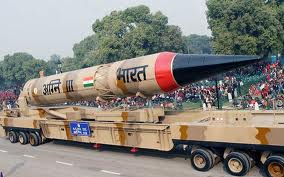
Picture of Agni missile of India.

Futurology and Nuclear Winter

Vanaparvam of Mahabharata describes the end of the world. It says how the world will end at the end of Kaliyuga. It says that all the planets will be aligned in a single line. It also describes the climatic changes at the time. One cant miss the similarity between the nuclear winter (What will happen in the aftermath of a nuclear explosion) and the changed climate. Before reading about the nuclear winter I thought the epic describes some natural catastrophe. Now it is very clear that they describe only the nuclear winter.

Biology in Tamil

There is a proverb in Tamil ‘pulikku piranthathu poonaiyaguma? (Will a cub born to a tiger be a cat? ).The modern zoological classification says that both the animals belong to the same cat family. Did Tamils group both the animals in the proverb by sheer coincidence or did they know a scientific classification. Even the oldest Tamil book Tolkappiyam classifies all the living beings into six groups.

BrahMos

Brahmastra- a Nuclear Missile?

Whenever the use of Brahmastra is mentioned  in our scriptures ,the devastation it caused was also described in detail. They allowed it to use only once, that too only as a last resort. When they gave reason for it, they said that it kills the good and bad together and other living beings also. And we know that it was the most powerful weapon of the epic period. What is this weapon? Is it just a fire weapon or more than that? When we compare this with other weapons of Mahabaharata period such as the Shakti missile used by Karna, the Nagastra (Biological weapon?), Pasupatastra  etc it is very different from them. When Aswaththama and Arjuna released their Brahmastras, Krishna foreseeing the end of the world by such terrible weapons asked both to recall their weapons. When Arjuna did so, Aswaththama was unable to do it as he did not possess the requisite knowledge. At last Krishna had to use his power to save the child (Parikshit) in the womb of Uttara (from the radioactive fallout?) by using his special powers. 

Bhagiratha- a Great Engineer

The story of the descent of river Ganges to the ‘earth’ through Bhagiratha’s several thousand year penance is nothing but a marvelous engineering feat. Three decades ago when engineers wanted to build a dam across
river Nile in Egypt, they removed the massive Abu Simbel statues from the banks of the river and then a bomb explosion diverted the river Nile. The story of Bhagiratha bringing river Ganges to the earth clearly says that several of his forefathers also tried and failed in the mission. That is to say several kings tried to divert the Ganges which was running mostly on the Himalayan mountain but failed.  Bhagiratha with great ingenuity, diverted the river by breaking certain point in the Himalaya and the mighty river descended to the present Gangetic plains of North India. We must remember several thousand years ago there were no people on the Gangetic plains. This is what we read as the ‘descent of the river from sky to earth’. Population slowly spread eastward from the Indus plains. So we may call Bhagiratha the greatest engineer of the ancient world.

Did Agastya drink ocean?

Agastya was one of the greatest travelers of ancient India. He was mentioned in the Rig Veda and the Ramayana. He slowly moved southward and established an ashram at the western ghats-Pothya malai. There are lot of myths about him. All this can be explained scientifically. He did divert the river Cauvery to the present Chola mandala like Baghiratha. But in thousands of years it became a myth and we read a crow tilted the ‘kamandalam’ (pot) of Agastya and thus came River Cauvery.

Another story told about Agastya is that he traveled to the south at the behest of Lord Siva. It is
true that either Siva or a Saivite saint requested him to go to the south to disperse the population. The story of Siva’s(Meenakshi wedding) Tirulkalyanam makes it clear by  saying the overcrowding of the earth tilted the balance and Siva requested Agastya to go southward. Our fore fathers were such a great planners that they did what we are doing today-building satellite cities! This story is in Tiruvilayadal puranam and other books.

Did Agastya drink the ocean? Agastya was the first person to cross the Indian ocean for the first time to establish a great Hindu empire in South East Asia.  We now knew that there was a flourishing Hindu colony in Laos,Vietnam,Cambodia (Angorvat temple) Malaysia,Singapore and Indonesia (Borobudur Stupi) for 1300 years. Now they are all converted as Muslims. Like Columbus and Magellan, he crossed the ocean- that is he ‘drank’ the ocean! It is a symbolic story. Agastya’s statues are displayed through out South East Asian countries even today.

One another myth about Agastya is that he made the Vindhya Hill not to grow again. This is another
symbolic story to say that he crossed the Vindhyas for the first time through the ‘land route’. Before him North and South Indians used coastal sea routes. Tamil literature also makes it very clear in several places that Agastya came to the south with 18 groups of people and he was the one who codified a grammar for Tamil.

Jarasandhan-Siamese Twins?

Jarasandhan was born to two mothers and he came as two balls of flesh. The left and right     sides (child) were thrown into a dustbin by the queens in disgust and fear and a rakshasi (wild shaman woman) by name Jara picked it up and gave it to the king after joining both the parts .The fact is one woman gave birth to a Siamese twins (two children joined together physically) and  threw it in to the bin. Somebody did some surgery successfully and gave the child in good condition back to the king.

I have counted and listed more than 20 abnormal children in the Mahabjharata. Several of them are
stories of cloning. Mandhata was born out of his ‘father’ says the epic. Another story says that Vaidharbi gave birth to a squash fruit and it was divided into several parts and kept in urns. They became sons. The stories of Shisupala, Sikandi and Sthunakarna talk about organ changes. Vashista and Agastya were born in ‘pots’(Kumba Muni or Kumba Yoni). If we remove all the myths about all these miracle children we see clear medical treatment or surgeries/operations!

Who discovered Boomerang?

All of us knew that the Australian aboriginals had a weapon called Boomerang which will come back to
the person who shoots it. But Krishna’s Sudarsana charka also did the same .Whenever Lord Krishna used it, it came back to him. Was it the first boomerang weapon? Did Krishna teach this art to the world?

Miracle or Solar eclipse?

On the fourteenth day of the 18 day Mahabharata war, Arjuna vowed that he would kill Jayadrathan  before sunset or commit suicide. Unfortunately Arjuna couldn‘t kill him. But the story is that Krishna created false sunset using his Sudarsana charka (disc). If we look closely at this event it is nothing but a solar eclipse. The sun light faded for some time because of the eclipse. When all prepared for the withdrawal of the army for the day, the sun came out and Arjuna killed the unguarded Jayadratha. In those days they didn’t fight after sunset.

What I have given here is only very little. If we take the fields of Medicine, Mathematics,
Psychology  ,The power of mind/brain, Extra Sensory perception etc. we may write volume after volume. But I wish someone analyses all such events and publish their findings well before the western scientists reveal them. No one will appreciate if we keep on comparing every new invention with the writings in our old literature.

contact swami_48@yahoo.com
Pictures are inserted on 26th March 2014 in the original article. The article was written ten years ago for the South Indian Society UK (London) magazine.

********

Amazing power of human mind

You Are What You Think
Santanam Swaminathan, London

Human mind has amazing powers. But many of us do not realize this. Our epics and Puranas illustrate the power of mind with beautiful stories. Every person creates some kind of vibration. Some people are pleasure to be with. They seem to have a certain energy that they share with others. Then there are those who are negative and depressed; they seem to draw energy out of others. The reason for this is that there is a power contained in thought. It is very subtle, yet it does exist and is extremely powerful. ‘’Every thought has weight, shape, size, form, colour, quality, and power. An experienced yogi can see this directly with his inner eye. Just as an apple can be given to your friend, or taken back, so also it is possible to give a useful, powerful thought to someone and take it back.’’-says Swami Vishnu Devananda.

Many of us know that we are what we eat. But only a few people knew we are what we think. Lord Krishna in Bhagavad Gita says,’’Let a man lift himself by himself: let him not degrade himself: for the self alone is the friend of the self and self alone is the enemy of the self’(Chapter VI-Sloka 5;translation by Sarvapalli Dr S. Radhakrishnan).

The following six stories show that how a man can elevate himself simply by thinking something good.

ekata Dwita Trita

STORY No.1
Trita is a great seer of ancient times who was well versed in the Vedas. His two brothers Ekata and Dwita who were less learned, accompanied Trita to various yagnas (Yagna: A fire Ceremony to please the god) and collected a lot of cattle between them. Once while out in a forest, Ekata and Dwita decided to take all the cattle for themselves and abandon Trita. They were then attacked by a wolf and all of them ran in different directions. Trita hid in a deep well and shouted for help, but Ekata and Dwita ran away from there in spite of hearing Trita’s cries for help.

Trita being unable to get out of the well by himself, decided to perform a yagna to please the gods. By sheer mental force he imagined the availability of various sacred articles he needed and then conducted such a stupendous yagna and the gods were pleased. They then arranged for his release and gave him a boon through which the well became very holy. This story is in Mahabharata (Parva 9, Chapter 36).

Here we see one who did a great yagna mentally.
By the way,look at the names in Sanskrit Ekta, Dwita and Trita which mean
No1,No 2 and No 3.

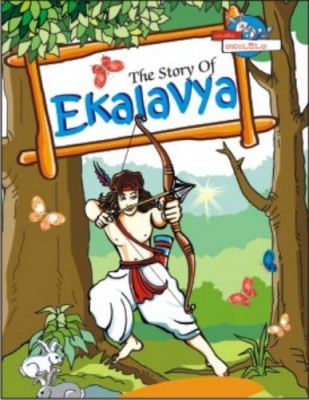
story of ekalavya

STORY No.2
Ekalavya was the son of Hiranyadhanu, a tribal chief. Having come to know of the greatness of Drona as a teacher, Ekalavya tried to enrol himself as a pupil. But Drona declined to accept him, because he was teaching the royals-Pandavas and Kauravas.
Ekalavya then went into the forest and erected a statue of of Drona. He imagined the statue as his guru and derived inspiration from the statue. He mastered the art of archery and became a great archer.

Once the Kaurava and Pandava princes saw a dog whose mouth had been skilfully closed by a number of arrows that he could not bark. Admiring this unique feat they looked around for the archer. They found out Ekalavya was the archer. When they enquired him who his teacher was, he told that he was a pupil of Drona. It came as a surprise for them. Arjuna was upset because he was told by Drona that he was his best student. But here he saw a person who excelled him in the art of archery. When Drona was informed of all these things, he came to Ekalavya. Ekalavya was thrilled to meet his ‘Guru’in person. But Drona demanded his right thumb as Guru Dakshina( Fees to Guru). Ekalavya did give his thumb without any hesitation. Without his right thumb he was not able to shoot the arrows as before. Here wee see one’s devotion to Guru and a person’s mental power to obtain any thing. He just imagined an earthen statue as his Guru and attained the unachievable for a layman. This story is also in Mahabharata(Parva1, chapter132).

pusalar2

STORY No.3

Here is story from the Tamil book ‘Periya Puranam’ about a saint who built a temple in mind and consecrated it mentally. Pusalar was born in a Brahmin family at Tiruvarur.
He was a great devotee of Lord Siva and he wanted to build a temple for Him. He sought every means to find the money required for this purpose but was unsuccessful. Nothing daunted, he resolved to erect a temple in his own heart. He gathered all the necessary materials to build a temple in his mind. He chose an auspicious day and laid the foundation stone and the temple rose slowly higher and higher day after day. When he finished it building mentally, he fixed a day for the great Kumbabishekam (ceremonial consecration).

About this time the all powerful Pallava king had built an actual temple at Kanchipuram-the famous Kailasanathar temple at Kanchi. He expended all his wealth on its construction. He fixed the same day for consecration of the actual temple. But Lord Siva appeared in his dream and told him that he could not come on the day because Pusalar Nayanar had built a temple and the Kumbabhishekan was on the same day. The king had to postpone his Kumbabishekam. But he became curious about the other temple built by Pusalar. The king travelled to Tiruninravur and asked the way for the temple. The people of the town told him that there was no new temple or any Kumbabhishekam in the town. The king told them that he had a dream and Lord Siva told him that there was a temple built by one Pusalar. When they brought Pusalar in front of him the whole story unfolded in full. Pusalar was thrilled to know that Lord Siva recognised his temple built in heart better than the temple built by the king in stone. Such is the greatness of thought power.

This is a marvellous story. It shows that our forefathers knew more about the mind than what the modern psychologists knew today.

ascetic good

STORY No. 4

Here is a beautiful story narrated by Sri Ramakrishna Paramahamsa:
A saffron clad sanyasin(ascetic) dwelt by the side of a temple. There was the house of a harlot in front. Seeing the constant concourse of men in the prostitute’s house, the sanyasin one day called her, saying’’You are a great sinner. You sin day and night. Oh, miserable will be your lot in your next life’’. The poor prostitute became extremely sorry for her misdeeds, and with genuine inward repentance she prayed to god beseeching forgiveness. But the prostitution was he profession, she could not adopt any other means of earning her livelihood. And so, whenever her flesh sinned, she always reproached herself with greater contrition of heart and prayed to god for more and more forgiveness.

The sanyasin saw that his advice had apparently produced no effect upon her and started counting the number of people visiting her every day. He did it by putting one pebble stone for every customer in front of her house. In course of years it became a big heap.
He chided her now and then showing the heap of stones/her sins. Now she started praying more intensely asking for forgiveness. The final day came. By rare co incidence both the sanyasin and the prostitute died on the same day. The messengers of Yama(God of death) took the sanyasin to hell and the prostitute to the heaven!! The sanyasin was furious to see this and demanded for explanation. The messengers laughed at him and told him’’You passed your life in external show as a sanyasin. Your heart never sincerely yearned for god. You spent more time in counting the sins of others. But this poor prostitute earnestly prayed to god day and night, though her body sinned all the while. She was pure in heart. You were not pure in mind/heart.

This story lays more emphasis on good thoughts rather than good external rituals.

tales_of_narada_acl56

SDTORY No.5

Once Narada (messenger in the Heaven) approached Lord Vishnu and asked who his best devotee was. He expected the answer to put him as the best. But to his surprise Lord Vishnu said that Arjuna was his best devotee. Narada was not satisfied with his answer. The Lord knew what went in Narada’s mind. Narada doubted the integrity and impartiality of the Lord. So Lord showed Narada two heaps of flowers and started explaining ‘’Look at the small heap of flowers. That is yours. What you have offered me all through your life is saved there. Look at the hill of flowers there. That is Arjuna’s. Now Narada became even more suspicious. He boldly opened his mouth to say, Well, I am Triloka Sanchari (Traveller of the three worlds). I have never seen Arjuna doing Puja (flower offering) to you. How do you explain this hill of flowers? Then Lord told him, you do the puja with your hands with great pride in your mind. But Arjuna does it in his mind. Whenever and wherever he sees beautiful flowers, he dedicates them to me saying ‘Krisna arpanam astu’(Let all this go to Krishna). Narada realised that open rituals are far inferior to great mental purity.

astrologer
STORY NO.6
Here is another story from the excellent magazine called Tatvaloka (March 2004):
There was a famous astrologer in a village who mastered the art of astrology and palmistry. One day a farmer came to see him to know about his future. The astrologer examined the lines on his palm and found out that he might die in an accident that day. He did not like to reveal this to the farmer, as that would shock him. So he told the farmer to come and see him the next day. While the farmer was on his way home, there was heavy rain with thunder and lightning. The farmer took shelter in a temple of Lord Siva. When he saw the temple in ruins, he said to himself, ‘’if I was rich I would have renovated this temple.’ Then he started imagining the renovation and reconstruction of the temple. He was mentally constructing a new temple tower and a huge corridor, with carved pillars. But he was brought out of his dreamy status by the hiss of a cobra coming out of a hole in the broken wall.

His imagination of building a temple broke to pieces and he ran out of the dilapidated temple to save his life. The next moment a massive lightning struck the temple and the huge edifice, heavy stone pillars, all collapsed.. The farmer thanked the god for saving him and next day he met the astrologer. ‘’Your palm lines indicated a danger for your life yesterday. You should have accumulated great amount of punya by constructing a temple and so you are alive today. The farmer realised the mercy of god who had granted him his life for building an imaginary temple. Every good thought is considered by god as a good deed and one gets the benefit of it.

Who is Chitra Gupta?

Every thought counts. Our grandmas and grand dads say that Yama’s accountant maintain the accounts of sins and meritorious deeds of all human beings.
Yama’s accountant is Chitra Gupta. Translated in to English it means ‘’hidden picture’’.
That is our thoughts. It is like Issac Newton’s law of motion- there is an equal and opposite reaction for every action. Our thoughts are accounted. On the final day you are rewarded or punished. How scientific is Hinduism!!!

Let us all Think Good. Let us all Aim High.
************************************************************************