Pictures are taken from various sources; this is a non- commercial, educational blog; posted in swamiindology.blogspot.com and tamilandvedas.com simultaneously. Average hits per day for both blogs 12,000.
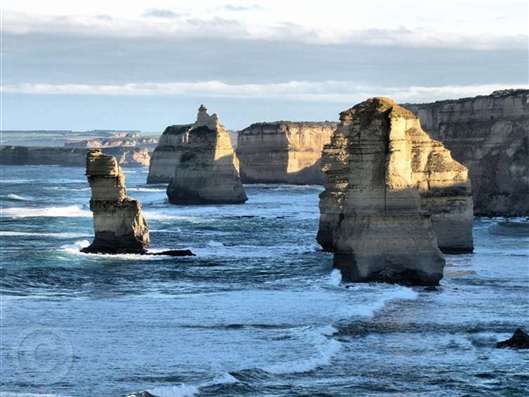
Seven Sisters in Melbourne, Australia
Seven in Rig Veda
Seven is the most sacred number
for Hindus. Anything holy, they count in seven, whether it is hills, rivers,
forests, cities, holy women or holy men to remember (sapta kanya, sapta nadhi,
sapta Rishi, sapta mokshapuri, sapta aranya etc). Seven is found in largest
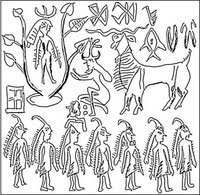
number of seals in Indus valley. The Seven Sister seal in the Indus is a famous
one. Most of the Hindu temples have Sapt Kanya/ seven women statues in South
India. The story of Seven Sisters is there in several parts of the world from
Australian aborigines to ancient Greeks.
Mr Dave even identified seven
birds in Rig Veda as seven sisters known to Bengalis (Bengalis call these seven
birds as seven sisters). Birds in Sanskrit Literature by K.N Dave
Varunan with seven sisters is
found in Rik Veda 8-41
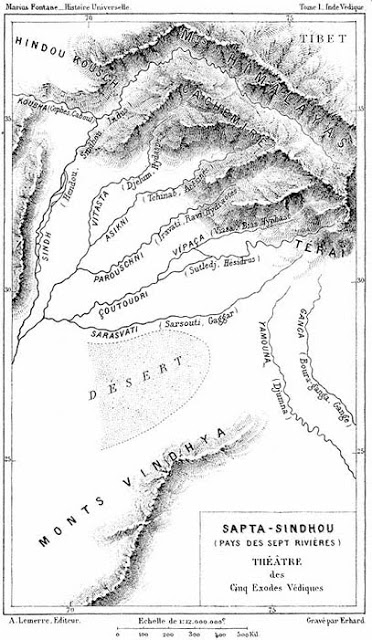
Seven rivers of Punjab are mentioned
in Rig Veda as Sapta Sindhu.
“Seven to the one-wheeled chariot
yoke the Courser ;bearing seven names the single Courser draw it.
Three-naved the wheel is, sound
and undecaying, whereon are still resting alhese worlds of being.”- 1-164-2
“The seven who on the seven
wheeled car are mounted to have horses, seven in tale, who draw them onward.
Seven sisters utter songs of
praise together, in whom the names of the seven cows are treasured.”- 1-164-3
Seven Sisters seal is found in
the Indus valley civilisation as well.
The Seven: according to Sayana,
the seven solar rays, or seven divisions of the year.
Seven sisters: Probably the seven
celestial rivers, which as emblems of fertility may bear the name of cows.
Seven Vedic Metres including
Gayatri are mentioned by the poet.
Hymn 1-164
Dirgatamas’ hymn 1-164 is one of
the longest hymns the Rig Veda. He talks about various subjects in a coded
language with lot of symbolism.
In the hymn, mantra 24 refers to
the seven speeches
Mantra 24 points out that this
faculty of speech is found only in the human beiges.
Mantra 45 gives information about
the divisions of speech. Grammarian Patanjali and others also discussed this in
detail.
Hymn 4-58
Patanjali referred to part of
this hymn. The four parts of speech are explained here. Patanjali discusses
seven cases and the three originating centres of pronunciation.
Hymn 8-59
Some of the most prominent
observations of this hymn are as follows:
The ultimate truth is brought
forth through the medium of seven-fold speech
These seven folds or divisions of
speech are seven sisters of the ultimate truth
Speech protects us through its
seven physical and three temporal divisions. And
three chief aspects of
speech-behaviour are mental, and intellectual faculties, coupled with the
acquired knowledge.
Hymn 10-71
This hymn is most important and
is solely devoted to the linguistic observations alone, some of which are as
follows:
An initial expression of name is
indicative of a wholesome integrated expression of the accumulated ideas in the
speaker’s mind. Thus, it originates as a representative of complete statement.
The emotions are desires of the
Self are filtered in the mind, from where it takes the shape of words or
speech, which is expressed externally with the help of the articulatory forces.
Thus, a word takes its usable
form first in one’s mind which is then pronounced from seven places and in
different tones.
Speech and language are not only
the objects ears and eyes alone; no one can understand it without the help of
mind, the sharpness of otherwise of which makes the difference in one’s power
of understanding.
With only training and knowledge,
we can learn the correct usage of the language and avoid its misuse, generated
mostly from our ignorance.
Hymn 10-114
In at least six verses of this
hymn, different aspects of linguistic phenomenon have been discussed. In the
fourth and fifth verses, the principle of multiple exprepressibility of one and
the same truth has been stressed explicitly. The seventh verse declares that the
seven fold speech is capable to express all expressible forms.
xxx
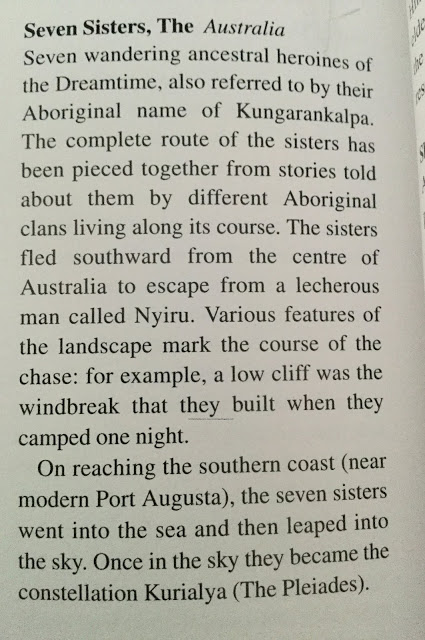
Story from Australia:
Seven wandering ancestral
heroines of the Dream time, also referred to their aboriginal name
KUNGARANKALPA. The complete route of the sisters has been pieced together from
stories told about them by different aboriginal clans living along its course.
On reaching the southern coast, the seven sisters went in to the sea and then
leaped in to the sky. Once in the sky they became the constellation KURIYALA
(The Pleiades). Hindus call this six Krithikas. Westerners call this
constellation Seven Sisters. This tallies somewhat with Hindu counting One
Skanda+looked after by six sisters=seven).
Ancient San Rock paintings in
South Africa have seven women as a group.
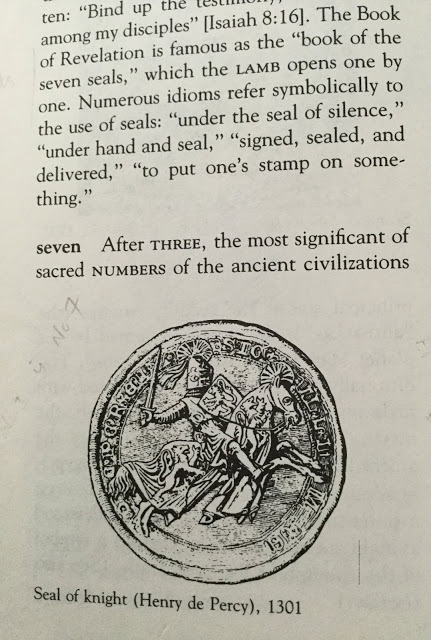
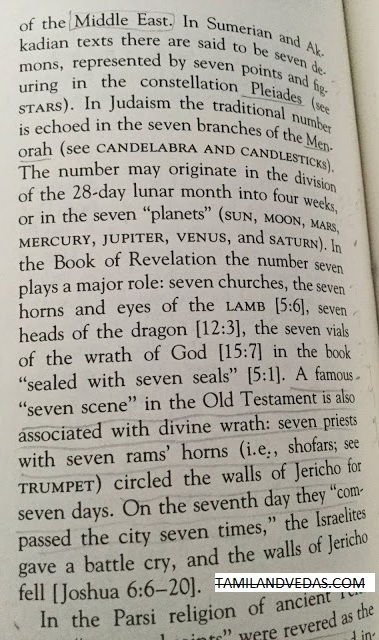
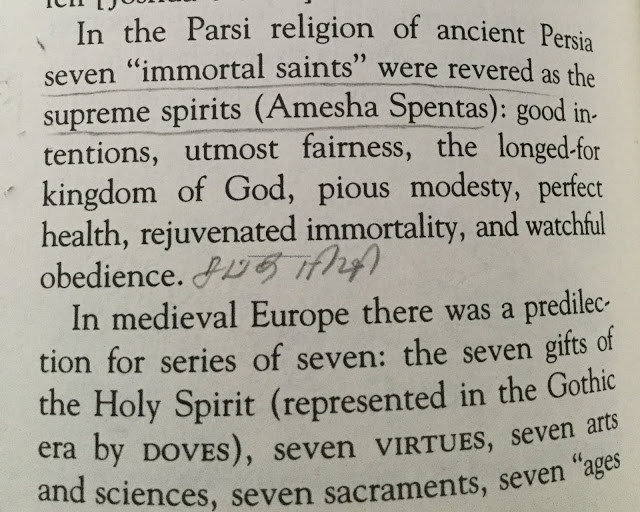
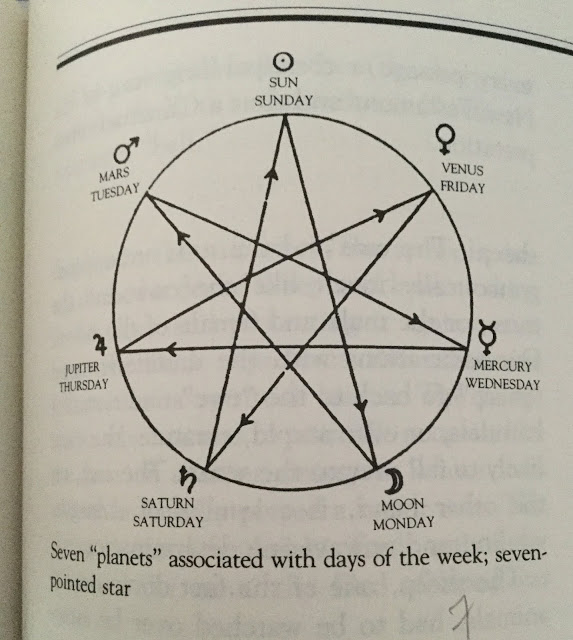
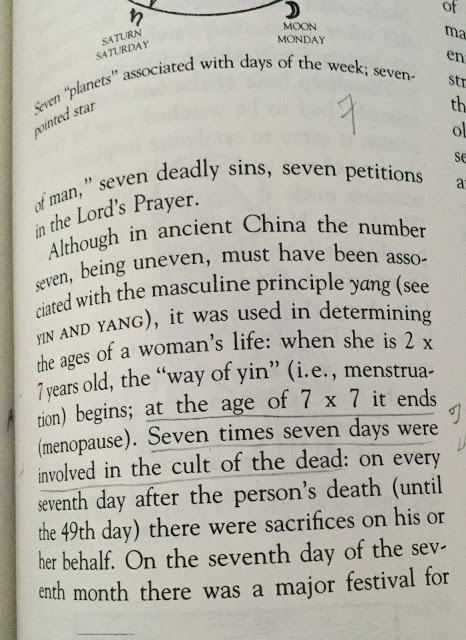
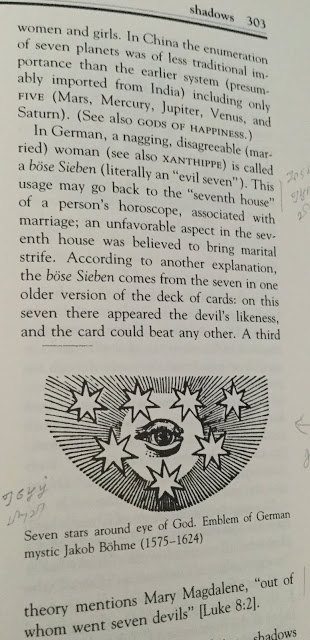
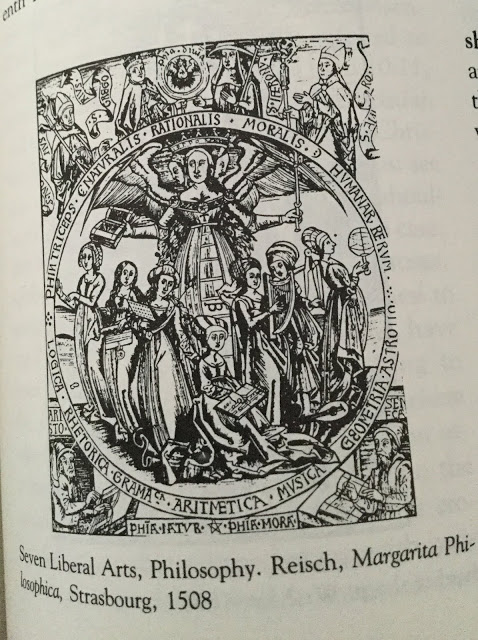
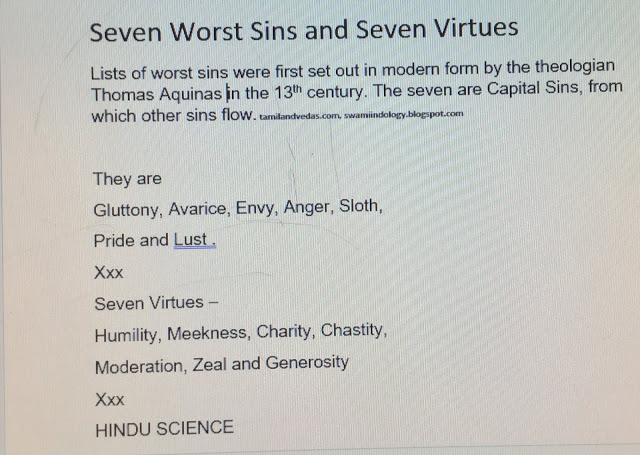
IN GREECE AND INDIASEVEN SISTERS IN AUSTRALIASEVEN IN BIBLESEVEN IN MIDDLE EASTSEVEN IN CHINASEVEN IN GERMANYSEVEN LIBERAL ARTS
Pictures are taken from various sources; this is a non- commercial, educational blog; posted in swamiindology.blogspot.com and tamilandvedas.com simultaneously. Average hits per day for both blogs 12,000.
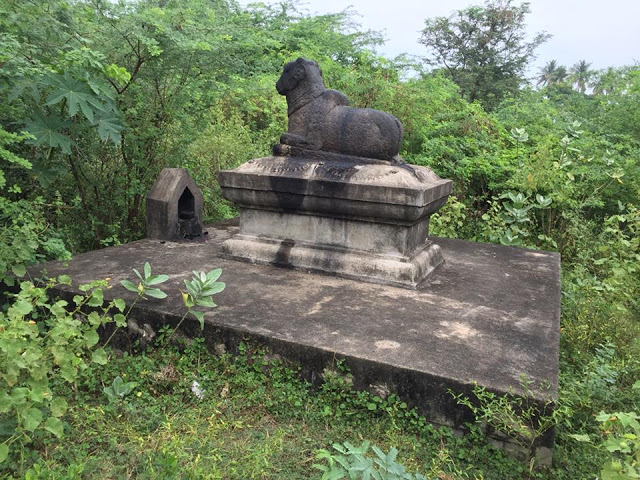
A giant petroglyph of Nandi, found in front of a Shiva
Temple
Nandhi, the bull, is Lord Shiva’s Vahana
Chennai: A giant petroglyph of Nandi, found in front of
a Shiva temple on top of a hill in K Mettupatti village near
Madurai, may be the biggest of ITS KIND IN Tamil Nadu .
The petroglyph of Nandi is 27 feet wide and 30
feet tall
Andhra Pradesh’s second largest petroglyph site, containing
about 80 petroglyphs, has been discovered at Mekala Benchi in Kurnool
district.
Kandanathi, with 200
petroglyphs, the biggest petroglyph site in Andhra Pradesh is
also in Kurnool district.
Petroglyphs are rock
carvings (rock paintings are called pictographs) made by pricking directly on
the rock surface using a stone chisel and a hammerstone.
These Petroglyphs
mostly have images of bulls or bull-riding, in addition to human
figures, an elephant, tiger-like animals and cupules.
While Mekala Benchi
has petroglyphs dating back from the Neolithic to the Megalithic period,
Kandanathi carvings range from the prehistoric to the historic period.
The petroglyphs at
Kandanathi reveal the presence of the Boya community divided into many
exogamous groups such as Mandla (herdsmen) and Yenubothula (buffalomen).
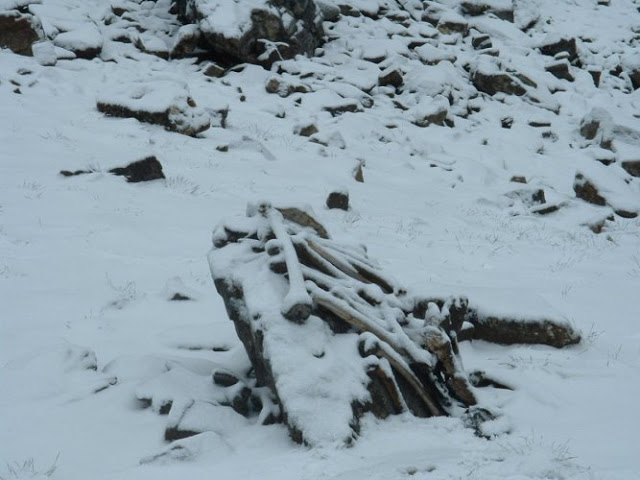
Hundreds of
skeletons are scattered around a site high in the Himalayas, and a new study
overturns a leading theory about how they got there.
Science magazines
around the world have published today (21-8-2019) the latest results of their
studies about the Hindu Mystery Lake in the Himalayas.
I have collected the
details from various reports.
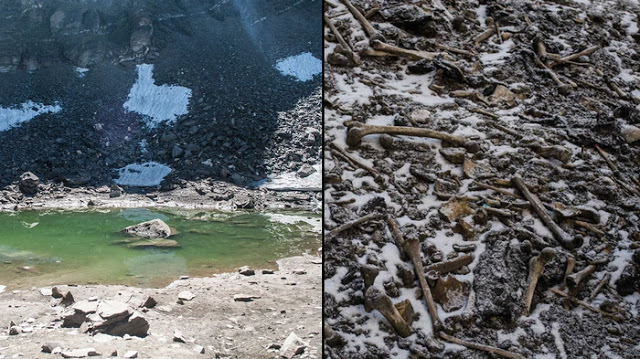
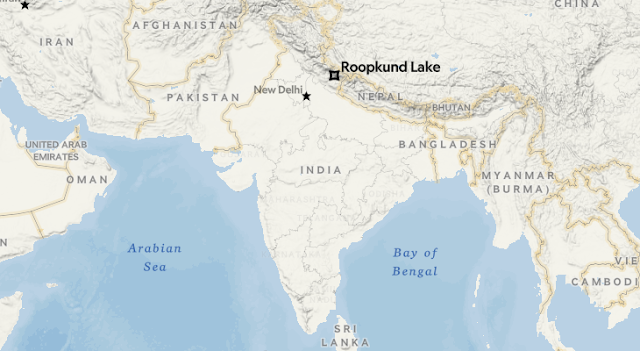
The Roopkund lake
at an altitude of 16,500 ft in Chamoli district of Uttarakhand has hundreds of
ancient human skeletons around its shores.
Untangling a few
knots on the enigmatic skeleton lake mystery, scientists on Tuesday reported
that people belonging to three distinct ethnicities — Indians, Greeks and a lone
South East Asian individual — travelled to the icy lake in the Himalayas
The Roopkund lake at an altitude of 16,500 ft in
Chamoli district of Uttarakhand remains a puzzle to science for more than 60
years, with barely any explanations about hundreds of ancient human skeletons
around its shores
XXXX
skeletons in icy lake
Biomolecular
analyses of Roopkund skeletons show Mediterranean migrants in Indian Himalaya
A large-scale study conducted by an international team of scientists has
revealed that the mysterious skeletons of Roopkund Lake—once thought to have
died during a single catastrophic event—belong to genetically highly distinct
groups that died in multiple periods in at least two episodes separated by 1000
years. The study, published this week in Nature Communications,
involved an international team of 28 researchers from institutions in India,
the United States and Europe.
Situated at over 5000 meters above sea level in the Himalayan Mountains
of India, Roopkund Lake has long puzzled researchers due to the presence of
skeletal remains from several hundred ancient humans, scattered in and
around the lake‘s shores, earning
it the nickname Skeleton Lake or Mystery Lake.
“Roopkund Lake has long been subject to speculation about who these
individuals were, what brought them to Roopkund Lake, and how they died,” says
senior author Niraj Rai, of the Birbal Sahni Institute of Palaeosciences in
Lucknow, India, who began working on the Roopkund skeletons when he was a
post-doctoral scientist at the CSIR Centre for Cellular and Molecular Biology
(CCMB) in Hyderabad, India.
The current publication, the final product of a more than decade-long
study that presents the first whole genome ancient DNA data from India, reveals
that the site has an even more complex history than imagined.
xxx
800 skeletons may be there
First ancient DNA data from India shows diverse groups at Roopkund Lake
Ancient DNA obtained from the skeletons of Roopkund Lake—representing
the first ancient DNA ever reported from India—reveals that they derive from at
least three distinct genetic groups.
“We first became aware of the presence of multiple distinct groups
at Roopkund after sequencing the mitochondrial DNA of 72 skeletons. While many
of the individuals possessed mitochondrial haplogroups typical of present-day
Indian populations, we also identified a large number of individuals with
haplogroups that would be more typical of populations from West Eurasia,”
says co-senior author Kumarasamy Thangaraj of CCMB, who started the project
more than a decade ago, in an ancient DNA clean lab that he and then-director
of CCMB Lalji Singh (deceased) built to study Roopkund.
Whole-genome sequencing of 38 individuals revealed that there were at
least three distinct groups among the Roopkund skeletons.
1.The first group is composed of 23 individuals with ancestries that are
related to people from present-day India, who do not appear to belong to a
single population, but instead derived from many different groups.
2.Surprisingly, the second largest group is made up of 14 individuals
with ancestry that is most closely related to people who live in the eastern
Mediterranean, especially present-day Crete and Greece.
3. A third individual has ancestry that is more typical of that found in
Southeast Asia. “We were extremely surprised by the genetics of the
Roopkund skeletons. The presence of individuals with ancestries typically
associated with the eastern Mediterranean suggests that Roopkund Lake was not
just a site of local interest, but instead drew visitors from across the
globe,” says first author Éadaoin Harney of Harvard University.
XXX
skeletons of three ethnic groups
In a kinder world,
archaeologists would study only formal cemeteries, carefully planned and
undisturbed.
But such an ideal
burial ground wouldn’t have the eerie appeal of Skeleton Lake in Uttarakhand,
India, where researchers suspect the bones of as many as 500 people lie. The
lake, which is formally known as Roopkund, is miles above sea level in the
Himalayas and sits along the route of the Nanda Devi Raj Jat, a famous festival
and pilgrimage. Bones are scattered throughout the site: Not a single skeleton
found so far is intact.
HOW DID THEY FIND IT?
Since a forest ranger stumbled across the ghostly scene during World War
II, explanations for why hundreds of people died there have abounded. These
unfortunates were invading Japanese soldiers; they were an Indian army
returning from war; they were a king and his party of dancers, struck down by a
righteous deity. A few years ago, a group of archaeologists suggested, after inspecting
the bones and dating the carbon within them, that the dead were travelers
caught in a lethal hailstorm around the ninth century.
In a new study published
today in Nature Communications, an international team of
more than two dozen archaeologists, geneticists, and other specialists dated
and analyzed the DNA from the bones of 37 individuals found at Roopkund. They
were able to suss out new details about these people, but if anything, their
findings make the story of this place even more complex. The team determined
that the majority of the deceased indeed died 1,000 or so years ago, but not
simultaneously. And a few died much more recently, likely in the early 1800s.
Stranger still, the skeletons’ genetic makeup is more typical of Mediterranean
heritage than South Asian.
“It may be even more
of a mystery than before,” says David Reich, a geneticist at Harvard and one of
the senior authors of the new paper. “It was unbelievable, because the type of
ancestry we find in about a third of the individuals is so unusual for this
part of the world.”
Roopkund is the sort
of place archaeologists call “problematic” and “extremely disturbed.”
Mountaineers have moved and removed the bones and,
researchers suspect, most of the valuable artifacts. Landslides probably
scattered the skeletons, too. Miriam Stark, an archaeologist at the University
of Hawaii at Manoa who was not involved in the research, pointed out that,
unlike most archaeological sites, Roopkund is “not within a cultural context,”
like a religious site or even a battlefield. That makes the new study “a really
useful case study of how much information you can milk” from an imperfect data
set, she says.
From a scientific
standpoint, the only convenient thing about Roopkund is its frigid environment,
which preserved not only the bones, but the DNA inside them, and even, in some
cases, bits of clothing and flesh. That same environment can make the site
difficult to study.
Veena
Mushrif-Tripathy, an archaeologist at Deccan College in Pune, India, was part
of an expedition to Roopkund in 2003. She says that even at base camp, which
was about 2,300 feet below the lake, the weather was dangerous and turned
quickly. To reach Roopkund, the party had to climb to a ridge above the lake
and then slide down to it, because the slopes surrounding the lake are so
steep.
Mushrif-Tripathy never actually reached the lake; she was stuck at
base camp with altitude sickness. “That was one of my biggest … regrets,” she
says. “Still today, I am not over that.”
As Fernando Racimo, a geneticist at
the University of Copenhagen, points out, ancient-DNA studies commonly focus on
the global movements of human populations over thousands of years. The new
study, in contrast, is “a nice example of how ancient-DNA studies could not
only inform us about major migration events,” Racimo says, “but it can also
tell smaller stories that would have not been possible to elucidate otherwise.”
Stark says that seeing geneticists and archaeologists collaborating to ask
nuanced questions is refreshing. “A lot of the time it seems like the
geneticists are just performing a service,” she says, to prove the hunches of
anthropologists or historical linguists about where a specimen really came from. “And
that’s not what we should be asking.”
To Kathleen Morrison,
the chair of the anthropology department at the University of Pennsylvania, the
least interesting thing about the specimens at Roopkund is where in the world
their DNA says they came from. She points out that a Hellenic kingdom existed
in the Indian subcontinent for about 200 years, beginning in 180 b.c. “The fact
that there’s some unknown group of Mediterranean European people is not really
a big revelation,” she says. She also cautions that radiocarbon dating gets
less and less accurate the closer specimens get to the present day, so the
early-1800s date assigned to the Roopkund specimens with Mediterranean heritage
might not be perfectly accurate.
Besides, knowing that
some of the bones at Roopkund came from a slightly unusual population still
doesn’t shake the fundamental mystery: how hundreds of people’s remains ended
up at one remote mountain lake. Reich and Mushrif-Tripathy are both confident
that the skeletons were not moved to the site. Mushrif-Tripathy believes that
the people whose bones she helped study simply “lost their way” and “got stuck”
near the lake during bad weather. As Reich points out, it’s possible that
remains scattered around the area gradually fell into the lake during
landslides.
Morrison, though,
doesn’t fully buy this explanation. “I suspect that they’re aggregated there,
that local people put them in the lake,” she says. “When you see a lot of human
skeletons, usually it’s a graveyard.”
XXX
Nobody Knows Why Hundreds of People Died at This Creepy Himalayan Lake
Hundreds of people mysteriously died over a millennium at “Skeleton
Lake” in the Himalayas according to a new study, making the creepy
location even more mysterious.
A small glacial lake nestled in the world’s highest mountain range is
the site of hundreds of unexplained deaths spanning more than 1,000 years,
according to a new study.
Roopkund Lake, also known as “Skeleton Lake” because it is cluttered
with human bones, has perplexed visitors for decades. Located over 16,400 feet
above sea level in the Indian Himalayas, it was rediscovered during the 1940s by a forest
ranger. But the shallow lake was clearly known to ancient travelers, many of
whom never made it out alive.
Nobody knows what killed all these people at such a remote location.
Until now, the leading theory was that a brutal hailstorm pummelled all of the travelers to
death at the same time around 800 CE in a single catastrophic event, which
might explain the unhealed compression fractures found on some of the bones.
While deadly hail may account for some of the fatalities, new evidence strongly
suggests that these people met their deaths in multiple different events at the
lake across the centuries.
In a study published on
Tuesday in Nature Communications, a team led by Éadaoin
Harney, a PhD student in evolutionary biology at Harvard University, analyzed
DNA extracted from 38 skeletons. This analysis revealed that many different
populations experienced mortal incidents at the lake, including one that
occurred as late as the 19th century.
“We find that the Roopkund skeletons belong to three genetically
distinct groups that were deposited during multiple events, separated in time
by approximately 1,000 years,” Harney’s team said in the study. “These findings
refute previous suggestions that the skeletons of Roopkund Lake were deposited
in a single catastrophic event.”
The earliest group of deceased travellers identified by the researchers,
called Roopkund_A, contained 23 men and women from a diverse range of South
Asian ancestries. This population was already known to have perished some 1,200
years ago, but radiocarbon dating showed that their deaths were likely not
caused by a single violent storm as previously proposed.
Some of the Roopkund_A individuals were dated to earlier ranges of about
675-769 CE, while others were dated to between 894-985 CE. The gap in time
suggests “that even these individuals may not have died simultaneously,” the
team said.
Even more astonishing is the discovery of a second population, called
Roopkund_B, which died just centuries ago, around 1800. This group contained 14
men and women of eastern Mediterranean descent, who were most genetically
similar to the people of present-day Crete, the largest of the Greek islands.
The third population is comprised of a sole individual, called Roopkund_C, who
was a man of East Asian descent that died at the same time as the Roopkund_B
group.
“Our study deepens the Roopkund mystery in many ways,” said study
co-author Niraj Rai, head of the Ancient DNA Lab at Birbal Sahni Institute of
Palaeosciences in India, in an email. At the same time, the team was able to
rule out common “speculations about the ancestry of Roopkund individuals,” Rai
said.
For instance, since the 1950s, there has been a local theory that the skeletons were left by
the fleeing army of general Zorawar Singh Kahluria, who was killed in an
attempted invasion of Tibet in 1841. This explanation is challenged by the new
discovery of several women at the site, who were unlikely to have been included
in a military expedition.
The hailstorm theory is still plausible for some of the victims, and the
team plans to examine the fractured skulls in their next study, Rai said.
Still, we don’t know how these groups ended up at such an inaccessible
location in the first place. Roopkund Lake lies on the route of the Nanda Devi
Raj Jat, a Hindu pilgrimage, which may have been observed as early as 1,200
years ago. For now, that is the most plausible explanation for the presence of
at least some of the Roopkund_A individuals, the team said.
The remains of the other populations are much harder to explain. The
study concludes that the Mediterranean individuals, who did not seem to have
close familial ties to each other, were probably born under Ottoman rule.
“As suggested by their consumption of a predominantly terrestrial,
rather than marine-based diet, they may have lived in an inland location, eventually
traveling to and dying in the Himalayas,” the team said. “Whether they were
participating in a pilgrimage, or were drawn to Roopkund Lake for other
reasons, is a mystery.”
“Mystery” seems to be the operative word for anything to do with
Roopkund Lake. While the site has become a destination for researchers and
tourists—who have lived to tell the tale of their visits—the secrets of those
who never left remain largely unknown.
Xxx
Himalayan Lake Mystery
ANOTHER REPORT—800 SKELETONS
DNA study deepens mystery of lake full of skeletons
Hundreds
of bodies at Roopkund Lake belonged to pilgrims who perished in a Himalayan
storm more than a thousand years ago—or so researchers thought.
Roopkund, a remote lake high in the Indian
Himalaya, is home to one of archaeology’s spookiest mysteries: the skeletons of
as many as 800 people. Now, a study
published today in Nature Communications attempts
to unravel what happened at “Skeleton Lake”—but the results raise more
questions than answers.
In the early
2000s, preliminary DNA studies had suggested that the people who died at
Roopkund were of South Asian ancestry, and radiocarbon dates from around the
site cluster at 800 A.D., a sign that they all died in a single event.
Now, full genomic
analyses from 38 sets of skeletal remains upend that story. The new results
show that there were 23 people with south Asian ancestry at Roopkund, but they
died during one or several events between the 7th and 10th centuries A.D.
What’s more, the Roopkund skeletons contain another group of
14 victims who died there a thousand years later—likely in a single event.
And unlike the
later South Asian skeletons, the earlier group at Roopkund had a genetic
ancestry tied to the Mediterranean—Greece and Crete, to be exact. (An
additional individual, who died at the same time as the Mediterranean group,
had east Asian ancestry.) None of the tested individuals were related to each
other, and additional isotopic studies confirm that the South Asian and
Mediterranean groups ate different diets.
Why was a
Mediterranean group at Roopkund, and how did they meet their end? Researchers
don’t know and aren’t speculating.
In Hindu
Puranas Seven is the most sacred number. All the sacred objects and saints and
gods are grouped in Sevens; We find
Seven Sacred Rivers, Seven Sacred Forests, Seven Sacred Towns, Seven Sacred
Hills , Seven Sacred Immortals etc. In Indus valley Number 7 and Number 3 are
seen more than other numbers. First let us look at the significance Number Seven
in other cultures and compare it with Hindu culture:-
Seven Days
of the Week Sunday To Saturday
Even the
Tamil saint Thirugnana Sambandar sang the seven days in the same order 1400
years ago. (see Kolaaru Tiruppathikam in Thevaram). In Sanskrit
Sunday –
Bhaanuvaar or Ravivaar
Monday –
Soma vaar or Induvaar
Tuesday –
Mangalvaar or Paumavaar
Wednesday-
Budhavaar or Saumyavaar
Thursday-
Guruvaar
Friday –
Sukravaar or Bruguvaar
Saturday –
Sanivaar or or Sthira vaar
Apart from
sun, moon and Saturn all other days were named after Norse Gods in Western
countries. But Hindus used the planets names.
In the
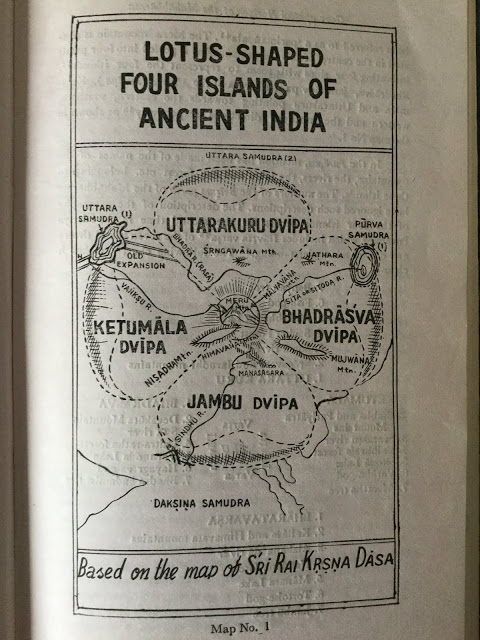
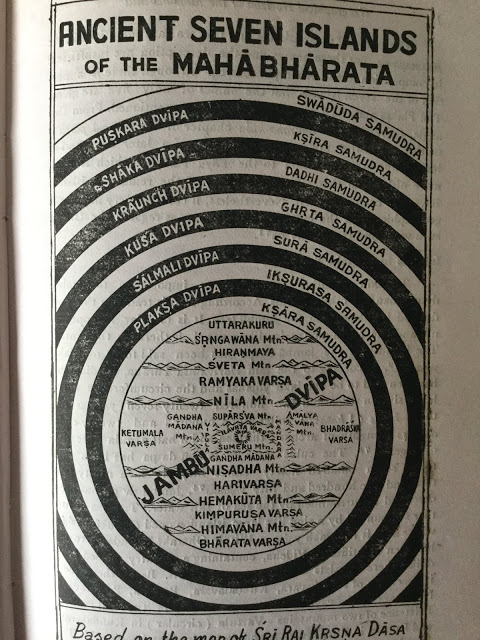
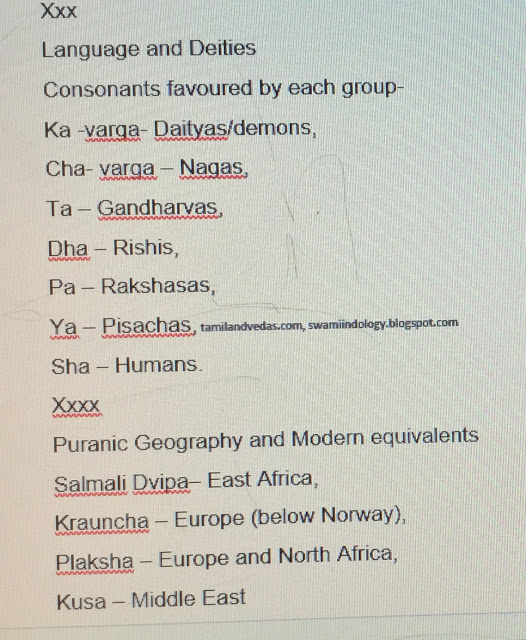
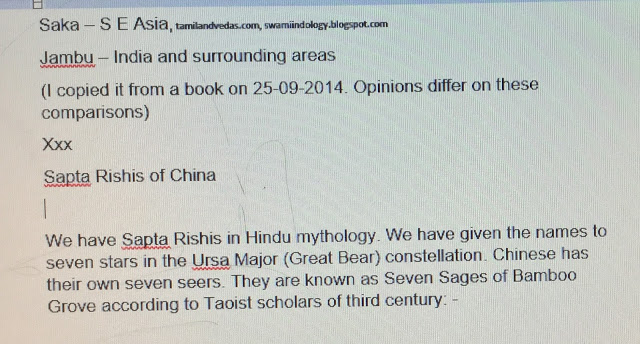
Puranic geography earth was divided into Seven Dvipas or Islands
Mystic No.7 in Music!
(posted on 13th April 2013) Numbers in the Rig
Veda (posted on 3rd September2014) Hindus’ Magic Numbers 18,108,1008!
(posted on …
26 Nov 2011 – Hindu’s Magic Numbers 18, 108,
1008. By S Swaminathan … One digit numberswill be 8, 7, 6, 5, 4, 3, 2,
1). “With each breath you are positively …
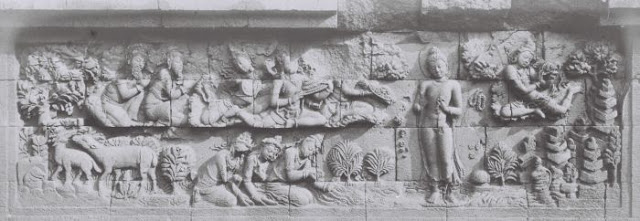
An interesting
story of golden bowl given to Buddha has been described in 1800 year old Sanskrit
book called Lalita Vistara and 1000 year
old sculptures of Borobudur in Indonesia.
Sujata was
the daughter of the village headman of Uruvilva. After a long fast of Buddha,
se gave him milk rice in a golden bowl. But before eating it he went to the
river of Nagas known as Nairanjana to refresh himself. After his bath he wanted
to sit down on the banks of the river. Naga daughter who inhabits the river
brought him a jewelled throne. Seated on
the throne Buddha took his milk rice. After having the food he threw the golden
bowl into the river.
Sagara, the
Naga King, seized it at once and waned to carry it to his
abode. At the same time Indra assuming the shape of Garuda (eagle) and holding
his Vajra weapon in his beak tried to rob the priceless treasure from the Naga
chief. When Indra realised, he was too powerful for him to beat, he took his original
fomr and begged for the bowl. When Indra received it, he took it to the Heaven
and instituted an annual ‘Festival of the Bowl’. The author of Lalita Vistara
says it is still celebrated.
(Today we don’t
know anything about it. So it may be one of the lost festivals of ancient
India)
It was so
popular till Borobudur period and in panels 85 to 89 of Lalita Vistara sculptures
we see them even today. The popular story went up to Indonesia. 120 panels
describe the anecdotes in Buddha’s life as detailed in Lalita Vistara.
Following are
the details found in the sculptures of five panels:
Buddha in
his previous Bodhisatva form, receives the golden bowl from Sujata in his right
hand.
Four divine
personages kneel before him. Celestial Rishis shower on him divine flowers and
ornaments.
Then a Naga
maid offers him the jewelled throne. Another three Naga females kneel before
Buddha
Buddha
seated cross legged on the throne took the food.
Another panel
shows buddha’s empty right hand . Then a hooded Naga receive the bowl and then
give it to Indra. Another peculiar figure with the head dress in the shape of an
elephant trunk is found near the royal personage. Scholars think that it is
Airavata in the shape of a human being.
Airavata is
the elephant Vahana of Indra.
Such a
detailed and popular story has disappeared from India with its Bowl festival!
(The elephant
headed dress is found in North West India and Pallava History as well)
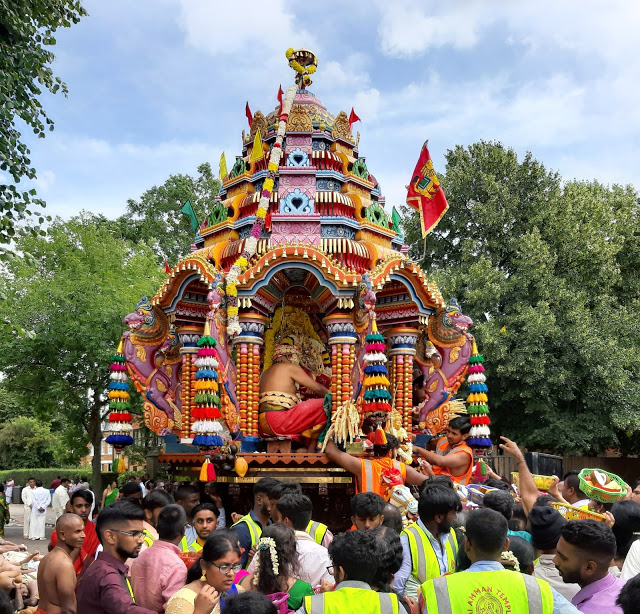
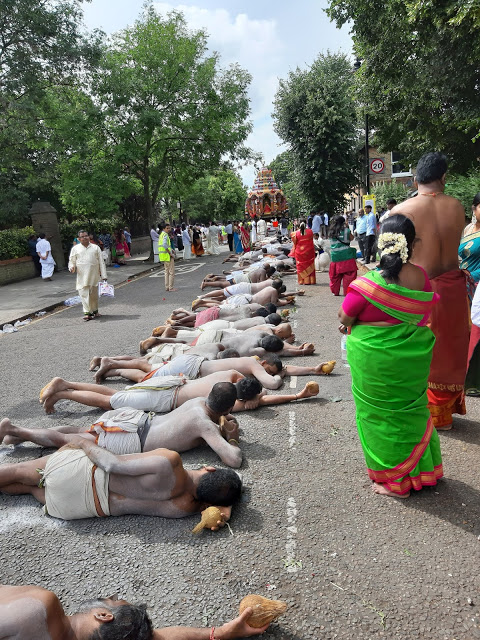
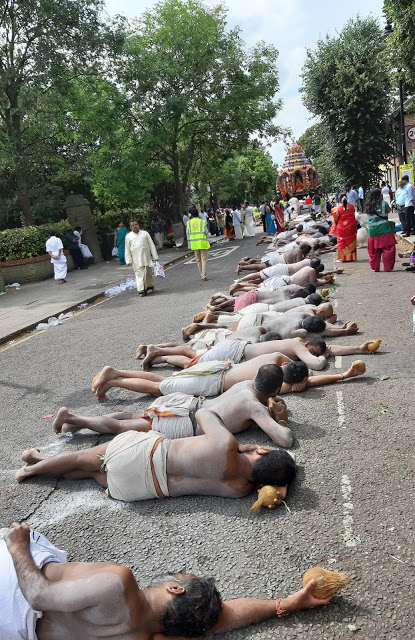
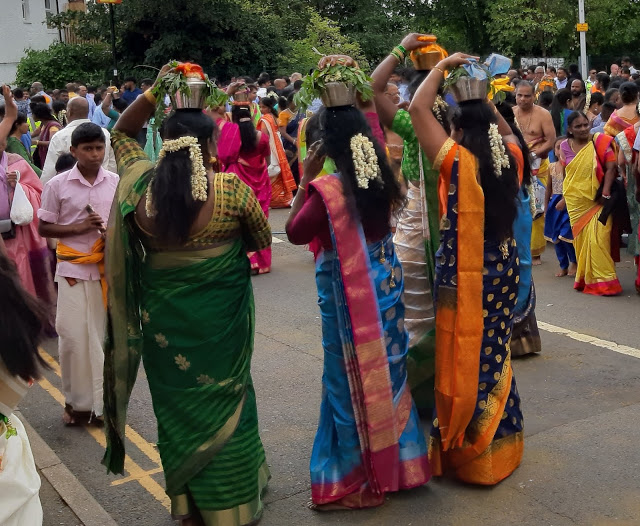
LONDON SAW A
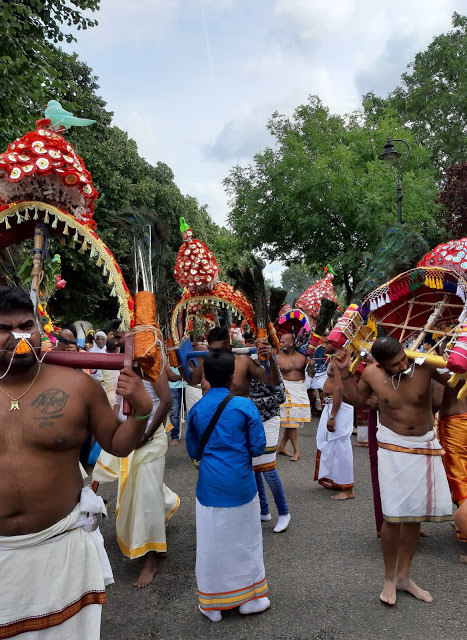
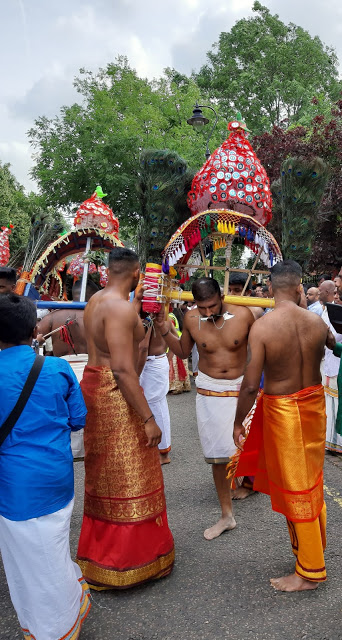
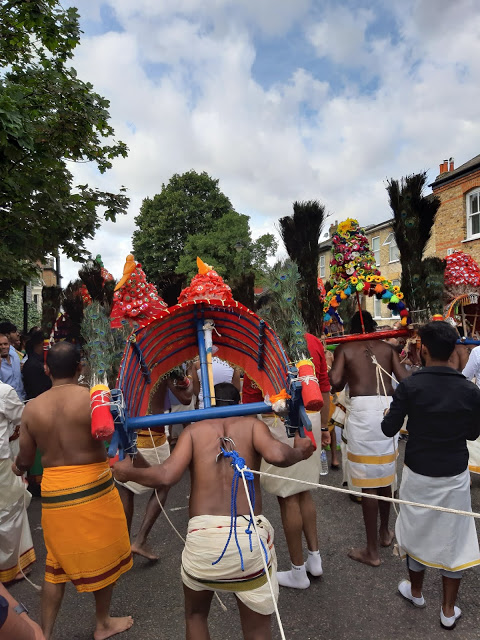
VERY STRANGE SCENE TODAY (11-08-2019). SRI LANKAN HINDU DEVOTEES ROLLED ON THE
ROADS TO FULFILL THEIR VOWS, AS PART OF RATH YATRA.
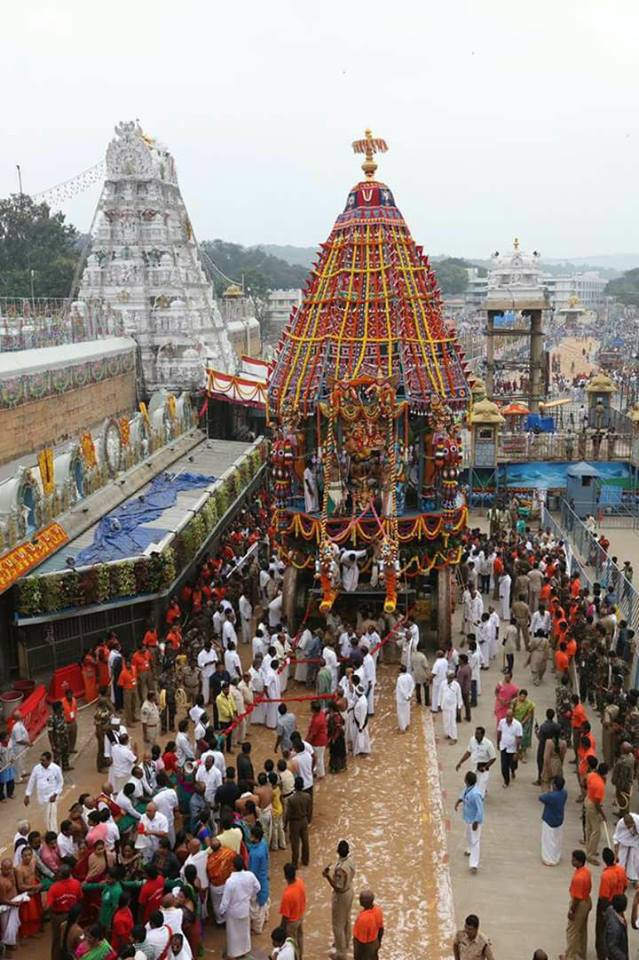
Kanaga Durga
Temple in Ealing, London, celebrated its Annual Chariot festival also known as
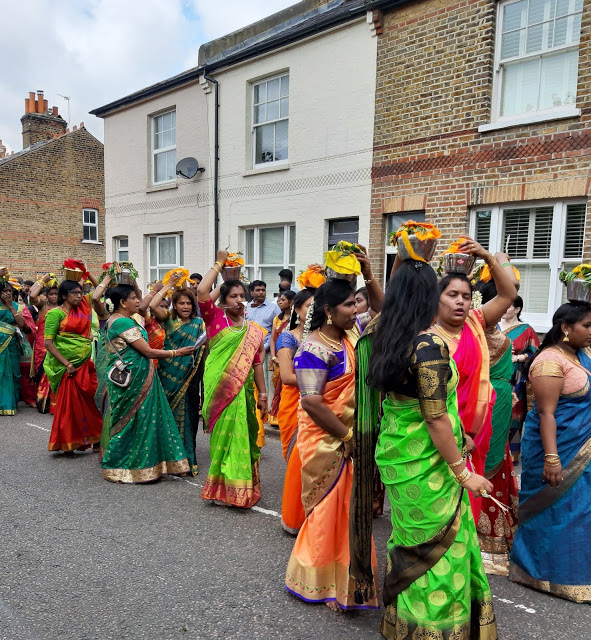
Car Festival and Rath Yatra. Ealing in London became another Jaffna (Sri Lanka)
today. Sri Lankan Hindus showed that they are second to none in following Hindu rituals. I
have seen many Rath Yatras in London and Tamil Nadu (India). But today’s one
was unique.
The unusual scene today was the rolling of scores of Hindu Tamil devotees on the ground, literally on the roads. Hindus take vow and do several strange rites to fulfil their vows. Fire Walking, Carrying Fire Pots in hands or heads, Carrying Milk Pots or Pots with young /germinating plants on their heads, rolling on the left over food leaves/plates and rolling on the ground etc.
The meaning behind all these rituals is thanks giving to the god for fulfilling their wishes. Several people do it with newer demands as well; “Lt me get married soon; let me get a good wife or husband, let me pass in the exams, let my troubles be over, let me get a child, let me get good health or wealth” are some appeals. Several mothers do it for their children. That is why Manu and other Law makers made Mother superior to God in Hinduism.
Today I saw
scores of people rolling on the hot, rough roads following the Ratha/ chariot
of Goddess Durga. Kanaga Durga (Golden Goddess of Protection) is a famous
temple in London. Every year the Rath Yatra is held.
Hindus believe
that the dust of the devotees is more powerful in healing than the Prasad of
Gods. So they roll on the ground where the Bhaktas/devotees and Gods walked.
That is why they came at the far end of the procession.
The whole of
Jaffna descended upon Ealing area of London this morning giving colourful scenes.
Hundreds of young volunteers led the procession peacefully for four hours.
Several thousands attended and had free food. They waited patiently with young children with smiling faces to get the
Darshan (viewing of the Goddess) and the Maha Prasad (sumptuous food).
Another beautiful scene is the Kavadi Dance (Kanwaria in North India). They take the semi circular, decorated wooden arch on their shoulders and dance and chant the names of Gods. Kavadi carriers put hooks behind their backs or insert sharp spade shaped Vel in their mouths to show their intensity of devotion; another interpretation is that by punishing themselves like this they atone for their sins.
Hundreds of
women carried the Milk Pots on their heads. These are the things that give them
great mental strength. These serve as shock absorbers and tackle all sorts of family
problems.
Sri Lankan
mothers brought their children in large numbers. It is not only fun for the
children but also memorable events in their life. Todays’ mothers and fathers
were trained on the job (of understanding Hinduism) by their parents in the
same way.
Hinduism is unique in the world with hundreds of colourful rituals and foods. The more they celebrate such festivals the more faith they get. Their faith gets more deep rooted.
In addition
to Rolling men, Milk Pots, Fire Pots, Kavadis there were music troupes playing
on traditional pipes and drums. Three Rathas/ chariots took nearly four hours
to reach the destination and people walked all through the route. They broke
thousands of coconuts and offered them to Goddess Durga along the route.
I have taken
scores of pictures- please see the attached pictures.
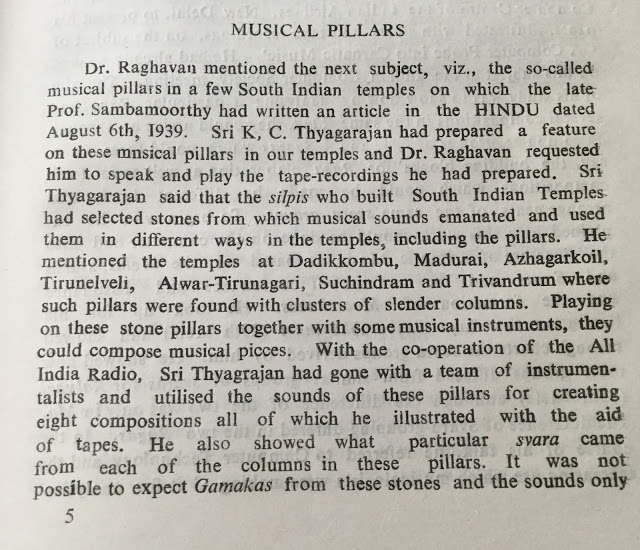
You may have
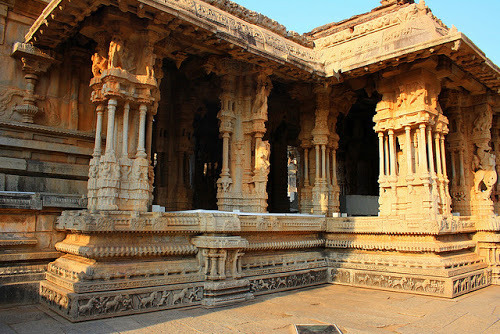
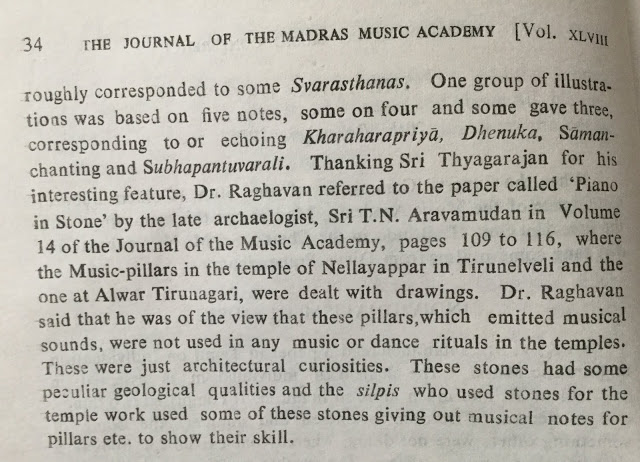
read many articles about Musical Pillars in South Indian Hindu temples. I have read
one interesting piece of information in the Golden Jubilee souvenir of Madras
Music Academy. K C Thyagarajan has recorded the music from the temple pillars
and played it for the audience in 1976.
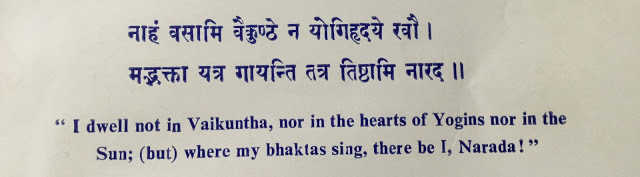
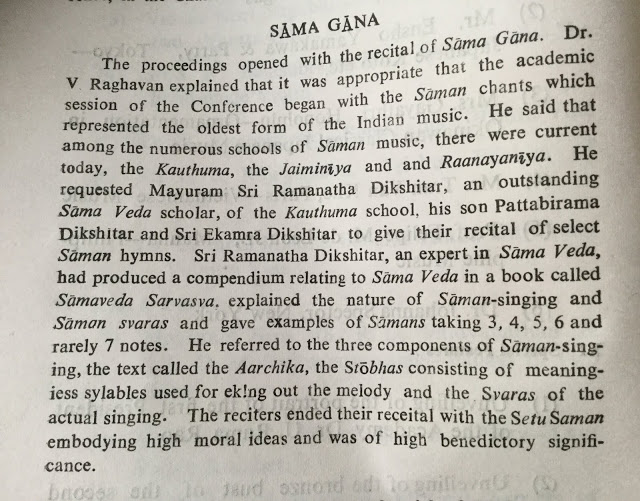
There is another piece about the Music in Sama Veda. Please see the attachments below:
12 May 2013 – Musical pillars found in five
or more temples are Nayak’s contribution. The most famous Musical Pillars are in Sri
Vittala Temple in Hampi in Karnataka. There are musical pillars in Madurai
Meenakshi Temple, Nellaiyappar Temple in Tirunelveli, Thanumalayan Temple in
Suchindrum and …
5 Jul 2014 – There are 22 pillars in a corner which emit
different musical notes when struck with a piece of stone or metal. Ferguson in his
“Indian and …
You’ve visited this
page 2 times. Last visit: 20/03/17
22 Mar 2017 – ஒரே அளவுள்ள தூண்கள்கணிதவியலின் அளவுப்படி சரியான்
இடங்களில் … மதுரை மீனாட்சி அம்மன் கோவிலில் உள்ள ஆயிரங்கால் மண்டபத்தை … தையலும், இசையும்இவரது பொழுதுபோக்குகள். … https://tamilandvedas.com/2017/03/22/%e0%ae%ae%e0%ae%a4%e0%af%81%e0%ae%b0%e0%af%88-%e0%ae%86%e0%ae%af%e0 …

















 Tamil and Vedas