STUPID MISTAKES IN NEWSPAPERS -ANECDOTES (Post No.5156)

Compiled by LONDON SWAMINATHAN


Date: 28 JUNE 2018


Time uploaded in London –  8-31 AM (British Summer Time)


Post No. 5156


Pictures shown here are taken from various sources such as Facebook friends, Wikipedia, Books, Google and newspapers; thanks. Pictures may be subject to copyright laws.\


Boners (STUPID MISTAKES)  anecdotes
A woman whose husband had entered the Navy, gave the pastor of her church a note just as he was mounting to the pulpit one Sunday morning.
The note said “John Anderson, having gone to sea, his wife desires the prayers of the congregation for his safety.”
The minister in haste picked up the slip and read aloud,
“John Anderson having gone to see his wife, desires the prayers of the  congregation for his safely”.

Xxxx


In the early days of his career the famous writer of short stories, Bret Harte, was editor of a newspaper in a California mining town. It was his painful duty one time to write an obituary for the highly respected wife of a leading citizen.
Harte concluded his remarks with the sentence,
“She was distinguished for charity above all the other ladies in this town”.

When the proof of this was handled to him he found that the compositor had rendered his statement,
“She was distinguished for chastity above all the other ladies of this town.”
Carefully, Harte corrected the matter thinking it sufficient to refer the compositor back to the original copy by a large query in the margin .

To his horror the following day the paper appeared with the statement
“She was distinguished for chastity (?) above all the other ladies in this town.”

Xxxx


A freight agent on the Delaware, Lackawanna and Western received a shipment including a donkey, which was itemised on the freight bill as “1 Burro”. He checked over his shipment carefully and then filed his report, concluding with,
“Short, 1 bureau, over 1 jackass”
Xxx

A cub reporter was sent to cover the annual class play of the local high school. Being new to his job he described the event in glowing terms, instead of scant few lines used by a more experienced newspaper man for such an event, and concluded with the words
“And the auditorium was filled with expectant mothers, eagerly waiting their offspring”.
Xxx subham xxx
.

Woman does yoga on the edge of English Mountain cliff (Post No.4151)

Compiled by LONDON SWAMINATHAN


Date: 26 JUNE 2018


Time uploaded in London –  15-51 (British Summer Time)


Post No. 5151


Pictures shown here are taken from various sources such as Facebook friends, Wikipedia, Books, Google and newspapers; thanks. Pictures may be subject to copyright laws.


Indian Prime Minister Narendra Modi approached the United Nations in 2014 to declare June 21 (longest day in Northern hemisphere) as the International Yoga day . They approved it and for the past four years the Yoga has spread far and wide. In England one woman made everyone to gasp for breath by doing Yoga on a dangerous cliff. Though people appreciated her spirit, they thought that it is dangerous to do such daredevil acts. All the British newspapers published these pictures due to Wayne Spring, who usually takes pictures at the cliff .


June 21 is the longest day for people who live in Northern hemisphere. We in London saw sun at 9-10 pm (in the evening) on that day.

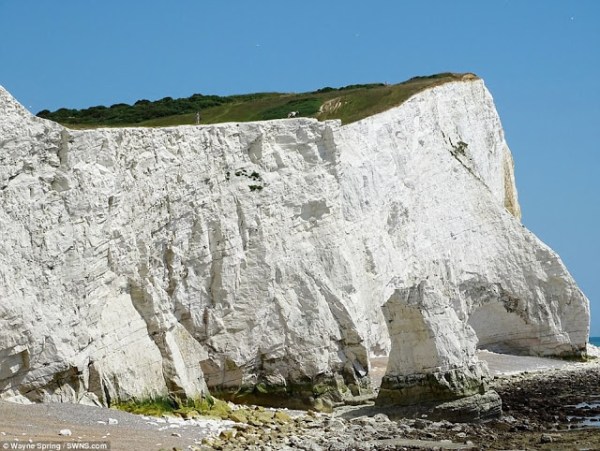
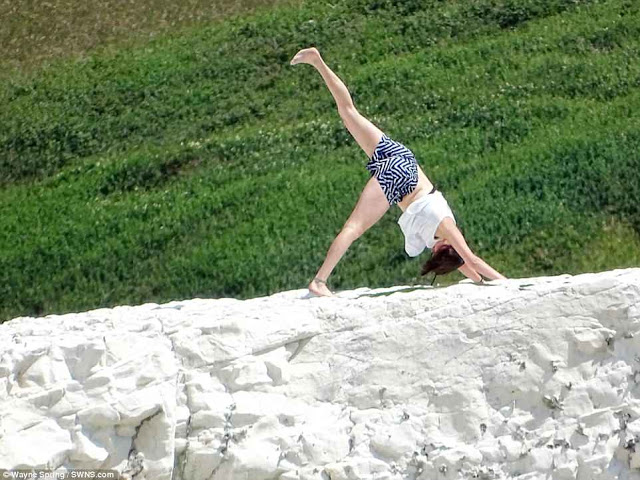
The thrill seeker was criticised over the ‘dangerous’ moves, 200ft above jagged rocks in East Sussex (ENGLAND, UNITED KINGDOM)

  • An unidentified woman was spotted recklessly posing at the edge of a cliff as she performed yoga 
  • She spent 20 minutes performing a series of yoga poses at Seaford Head cliff, in Seaford, East Sussex
  • Wayne Spring, 51, captured the reckless woman’s activity on Friday afternoon


  • Despite giant cracks, and signs warning that the cliffs could give way at any moment, tourists are often spotted dangling over the edge of the Seaford Head cliff, in Seaford, East Sussex.
  • Wayne Spring, 51, has seen scores of people go too close to the edge of the cliff.
  • A woman put herself in danger doing a handstand on the edge of a crumbling cliff.


  • Despite giant cracks and signs warning that the chalk cliffs could give way at any moment, tourists are often spotted dangling over the edge of the Seaford Head cliff, in Seaford, East Sussex, to take selfies.
  • Photographer Wayne Spring, 51, has seen scores of people gamble with death at the edge of the cliff and branded the woman’s behaviour “ridiculous”.
  • He said: “I find myself questioning people’s common sense quite a lot these days, but this was just another level.
  • “But this was something else – I couldn’t believe my eyes when she did the headstand.”
  • The thrillseeker, who appears to be in her 30s, performed a series of poses at the edge of the cliff, including standing on one leg and the ‘downward-facing dog’ pose.
  • Snapper Wayne added: “Yoga’s meant to be relaxing, but I can tell you that it wasn’t relaxing watching her.
  • “There was a crowd gathered around me at the time and people couldn’t stop gasping.

  • “The woman was so firm with her poses, it just goes to show that she was totally oblivious to the danger she was in.
  • “The cliffs are so unstable, they could collapse at any time.
  • “Nobody’s would ever be able to walk away from that drop, no matter how bendy they were.”
  • The edge of the cliff is fractured with cracks, and every year along the iconic white cliffs, hundreds of tonnes of rocks fall onto the beach below.
  • For years there have been calls to install security fences at the top of the cliff to prevent people falling off the sheer drop.
  • Wayne added: “If you fence it off you might spoil the area but you can’t rely on people to use their common sense any more.
  • “I don’t want the natural environment to be spoilt by a few idiots but if a fence stops them then so be it.
  • “I think they’re uninformed. If you are not from the area you will not know about the dangers but people just need to use their common sense.”
  • The South Downs National Park Authority, who maintain the Seven Sisters cliffs in Newhaven, East Sussex, have said fences are impractical because of erosion.

Seaford Head is along the same stretch of coastline as Beachy Head, one of the world’s most notorious cliffs


SOURCE; DAILY MAIL AND DAILY MIRROR, LONDON


காந்திஜி : ஹரிலால், மணிலால்! (Post No.5148)

Written by S NAGARAJAN


Date: 26 JUNE 2018


Time uploaded in London –   7-00 AM (British Summer Time)


Post No. 5148


Pictures shown here are taken from various sources such as Facebook friends, Wikipedia, Books, Google and newspapers; thanks. Pictures may be subject to copyright laws.


காந்திஜி : ஹரிலால், மணிலால்!


ச.நாகராஜன்

1

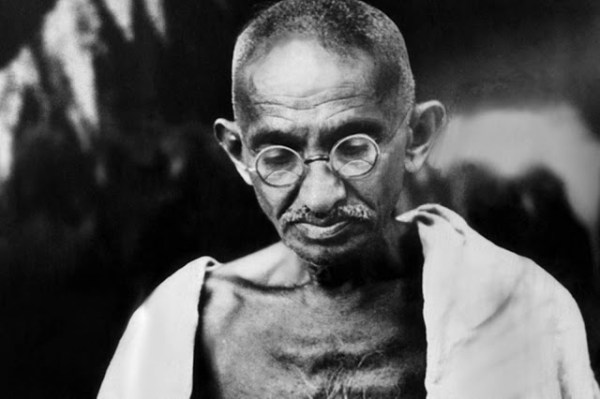
மஹாத்மா காந்திஜியின் வாழ்க்கை ஒரு திறந்த புத்தகம். உபசார வார்த்தைகளுக்காக சொல்லப்படும் கூற்று அல்ல இது. உண்மையிலேயே உலகமே கண்டிராத அளவு அவர் வாழ்க்கை ஒரு திறந்த புத்தகம். அதில் அவரது சத்தியத் தேடல்கள், இறைவனுடன் பேசியது, உள்ளிருந்து எழுந்த குரலின் வாயிலாக தேச மக்களை உரிய வழியில் நடத்தியது, அந்தரங்கம், தவறுகள், ஒப்புதல்கள், முதலிய அனைத்தும் அடங்கும்.


அற்புதமான ஒரு சரித்திரம் மஹாத்மாவின் சரித்திரம்.

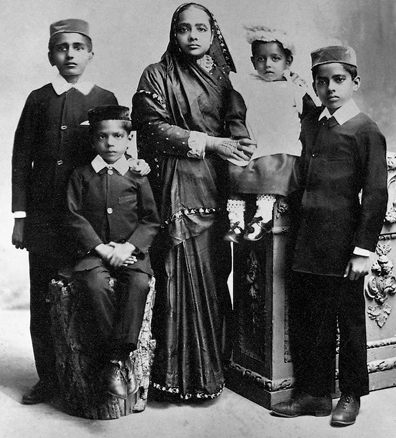
அவரின் வாழ்க்கையில் இணைந்து பிணைந்த அவரது மகன்களின் வாழ்க்கையும் கூட இதனால் திறந்த புத்தகம் ஆனது.


இது அவர்களை சற்று சங்கடப்படுத்தியது என்னவோ உண்மை!


அனைவருமே மஹாத்மா ஆக முடியாது, அல்லவா!

ஹரிலால் ஒரு சமயம் காந்திஜியிடம் கூறினார் இப்படி: “எல்லோருக்கும் தெரியும்படி இப்படிக் கண்டிப்பதை விட எங்களைத் தனியே கூப்பிட்டு பிரம்பால் அடிக்கலாம்

(Harilal remarked to Gandhi later in life that instead of “reprimanding us publicly–we would have preferred if you caned us privately” (p. 109 of the book – Gandhi’s Prisoner?: The Life of Gandhi’s Son Manilal).


ஹிந்து காந்தியாக இருந்த சனாதனி காந்தி ஹிந்து மதத்தின் பால் ஆழ்ந்த பற்று கொண்டவர். சிறந்த ஹிந்துவாக அவர் விளங்கியதாலேயே அவர் இதர அனைத்து மதங்களையும் சமமாக ஒப்புக் கொண்டார்.


     அவரது மகனான ஹரிலால் (1888 -1948) திடீரென்று இஸ்லாமிற்கு மாறி அப்துல்லா ஆனார்.

இதை அவரால் ஜீரணிக்க முடியவில்லை; ஒப்புக் கொள்ளவும் இல்லை.


இப்படி மதம் மாறுவது அவரது பிரச்சினைகளுக்குச் சரியான தீர்வு ஆகாது என்று அவர் நம்பினார். அவர் சென்றதால் ஹிந்து மதத்திற்கு ஒரு நஷ்டமும் இல்லை; அவரை இஸ்லாமில் சேர்த்தது உண்மையில் பலஹீனமான ஒன்று என்று அவர் எழுதினார். சுத்தமில்லாத ஹ்ருதயம் உள்ள ஒருவன் மதம் மாறினால், அது கடவுளையும் அவனது மதத்தையும் மறுத்தது போல ஆகும் என்றார் அவர். எனது முஸ்லீம் நண்பர்களை நான் கேட்டுக் கொள்வது, அவர்கள் அவரது கடந்த காலத்தை


சோதித்துப் பார்க்கட்டும், அப்போது இந்த மதமாற்றம் ஆன்மா இல்லாத ஒன்று என்று அவர்களுக்குத் தெரிய வந்தால் அதை அப்படியே அவரிடம் சொல்லி அவரைத் துறந்து விட வேண்டும் என்பது தான் என்றார் அவர்.


அவரது எழுத்தை அப்படியே கீழே பார்க்கலாம்:

The statement issued to the Press on 2-6-1936, under the title “To My Numerous

Muslim Friends”, regarding Harilal’s conversion to Islam, was published in Harijan.


“Harilal’s apostasy is no loss to Hinduism and his admission to Islam is a source of

weakness to it if, as I apprehend, he remains the same wreck that he was before.

“Surely conversion is a matter between man and his Maker who alone knows His

creatures’ hearts. And conversion without a clean heart is, in my opinion, a denial of

God and religion. Conversion without cleanness of heart can only be a matter for

sorrow, not joy, to a godly person.


“My object in addressing these lines to my numerous Muslim friends is to ask them to

examine Harilal in the light of his immediate past and, if they find that his conversion is

a soulless matter, to tell him so plainly and disown him and if they discover sincerity in

him to see that he is protected against temptations so that his sincerity results in his

becoming a godfearing member of society. Let them know that excessive indulgence has

softened his brain and undermind his sense of right and wrong, truth and falsehood. I

do not mind whether he is known as Abdulla or Harilal if, by adopting one name for the

other, he becomes a true devotee of God which both the names mean.”


From :- ‘The Collected Works of Mahatma Gandhi’, published by Publication Division, Govt, of India.

Volume 63- Page no 7

பின்னால் கஸ்தூரிபாவின் வேண்டுகோளுக்கிணங்க மணிலால் தாய்மதம் திரும்பினார்.

2

காந்திஜியின் இன்னொரு புதல்வர் மணிலால். (1891 – 1956). அவரது வாழ்க்கை வரலாற்றை அவரது பேத்தி துபேலியா மெஸ்திரி எழுதியுள்ளார். (Uma Dhupelia-Mesthrie. Gandhi’s Prisoner?: The Life of Gandhi’s Son Manilal. Cape Town: Kwela Books, 2005. 419 pp. $27.00 (cloth), ISBN 978-0-7957-0176-4.). அவர் தென் ஆப்பிரிக்காவில் உள்ள வெஸ்டர்ன் கேப் பல்கலைக் கழகத்தில் வரலாற்றுத் துறையில் இணைப் பேராசிரியையாகப் பணியாற்றுகிறார்.

அவர் எழுதியுள்ள நூலில் தனது தாத்தாவைப் பற்றி மிக விரிவாக எழுதியுள்ளார்.

மணிலால் ஃபாத்திமா கூல் என்ற பெண்ணை மணக்க விரும்பினார். ஆனால் காந்திஜியோ ஒரு முஸ்லீம் பெண்ணை மணிலால் மணப்பதை விரும்பவில்லை.

ஒரு உறையில் இரு கத்திகள் இருப்பது போல ஆகும் என்று அவர் கூறினார்.

இளம் வயது பாலினக் கவர்ச்சியிலிருந்து விடுபடு என்று அவர் மணிலாலுக்கு புத்திமதி கூறினார். மணிலால் பிரம்மசாரியாகவே இருக்கலாம் என்றார் காந்திஜி. ஆனாலும் மணிலால் தனது 34ஆம் வயதில் மணம் புரிந்து கொண்டார். ஆனால் மணப்பெண் வீட்டார் பார்த்த பெண் தான். 19 வயதான சுசீலா மஸ்ருவாலாவை அவர் மணந்தார். அவரும் பனியா தான். மணப்பெண்ணின் தந்தை காந்திஜியைப் பின்பற்றுவர்; பெரிய செல்வந்தர்.

மணிலாலின் பேத்தி புத்தகத்தில் தரும் செய்திகள் இவை: புத்தகத்தைப் பற்றி ஆங்கிலத்தில் அப்படியே பார்க்கலாம்.

Gandhi’s influential hand was also evident in Manilal’s decision to marry. He had wanted to marry Fatima Gool, a Muslim from the Cape, but Gandhi objected because she was not Hindu: “it will be like putting two swords in one sheath” (p. 175). This seems anomalous considering that Gandhi had brought up his children to believe all religions equal. However, the boys were “shaped primarily by Hinduism” even though Gandhi respected all religions (p. 40). Gandhi was concerned about the impact the marriage would have on Hindu-Muslim relations in India. He warned Manilal that if he proceeded with the marriage he would have to stop editing Indian Opinion and would not be able to return to India. Gandhi advised Manilal to get over the “infatuation” and “delusions” of love: “our love is between brother and sister. Whereas here the main urge is carnal pleasure” (p. 176). Whatever Manilal might have felt, “in the end, though, he could not forget whose son he was. He did not have the courage to face the consequences of defiance; there really was no future without his father’s blessing” (p. 176). Gandhi implored Manilal to remain celibate, but on this issue Manilal disagreed with his father and married in 1927, at the age of thirty-four. However, his wife was chosen by Gandhi. She was nineteen-year-old Sushila Mashruwala, also of the bania caste and daughter of a wealthy property-owner and fervent Gandhi supporter (p. 183).

3

காந்திஜி தனது வாழ்க்கையில் ஒரு அற்புதமான ஹிந்துவாகவே வாழ்ந்தார். ஆதர்ச ஹிந்துவாக இருந்தார்.

தனது மகன்கள் இஸ்லாமிற்கு மதம் மாறவும் அவர் விரும்பவில்லை; அங்கிருந்து ‘பெண் எடுக்கவும் அவர் அனுமதிக்கவில்லை.

‘எல்லா மதமும் சம்மதம்; அதற்காக எனது மதத்தை இழிவு படுத்தி மற்ற மதங்களின் பால் எனக்குள்ள மரியாதையைக் காண்பிக்க முடியாது என்பதை அவர் வாழ்க்கை தெரிவிக்கிறது.

இன்றைய போலி செகுலரிஸவாதிகள் நம்மை நோக்கிக் கூறுவது, ‘மைனாரிடி என்ன செய்தாலும் அது சரி என்று கூறு; உனது சொந்த மதத்தை அடிக்கடி இழிவு படுத்தி நீ மைனாரிடிகளுக்கு நல்லவன் என்பதை நிரூபி என்பதைத் தான்.

காந்திஜியின் கொள்கைகளுக்கு நேர் விரோதிகள் இவர்கள் என்பதை அனைவரும் உணர்ந்தால் போதும், அது பாரத தேசத்திற்கு நல்ல நாளாக அமையும்!

***


HARE KRISHNA RATHA YATRA IN LONDON ON 24 JUNE 2018 (Post No.5149)

Written by LONDON SWAMINATHAN


Date: 26 JUNE 2018


Time uploaded in London –  7-51 am (British Summer Time)


Post No. 5149


Pictures by London swaminathan


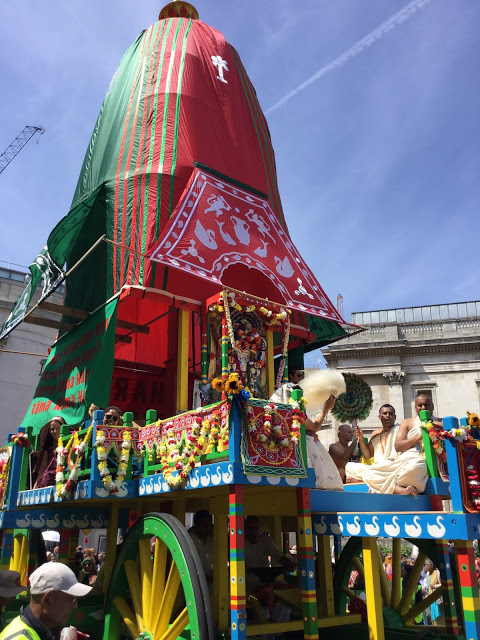
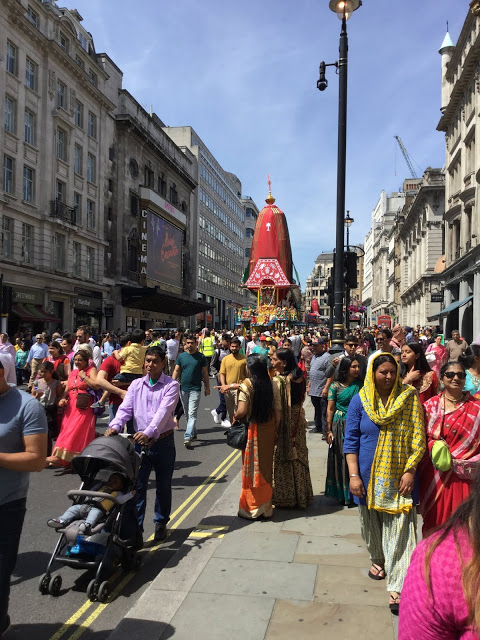
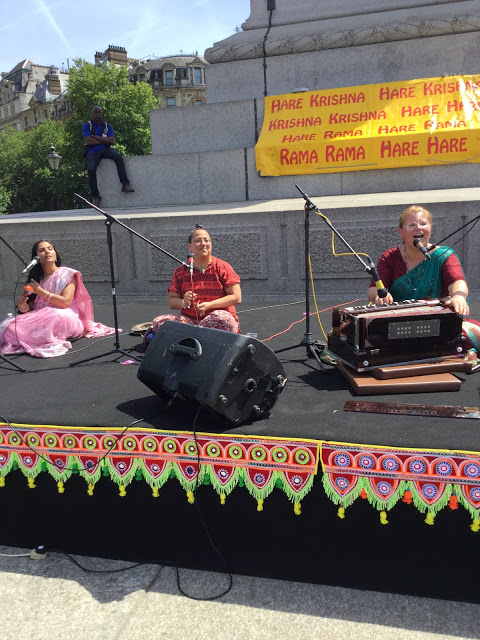
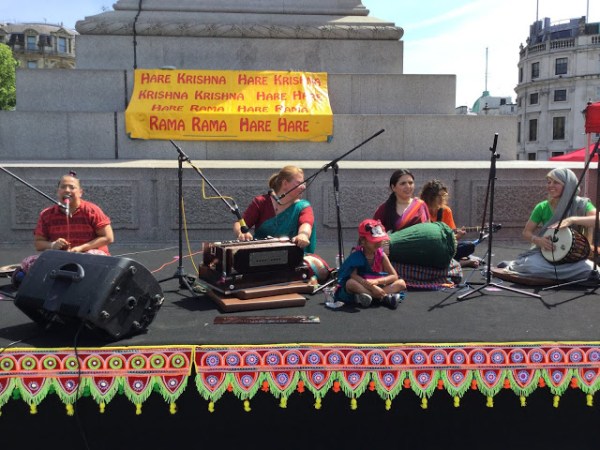
International Society for Krishna Consciousness (ISKCON), also known as Hare Krishna movement, conduct annual Chariot Procession in all the major cities of the world every year. Chariot Procession (Ratha Yatra) of Lord Krishna and Balarama took place on 24 June 2018. The devotees gathered in thousands and they came from far off places. The procession went through the heart of London where millions of pictures were taken by the tourist as well as devotees. It started from Hyde Park and finished at Trafalgar Square where all had free vegetarian meals given by the Hindujas.


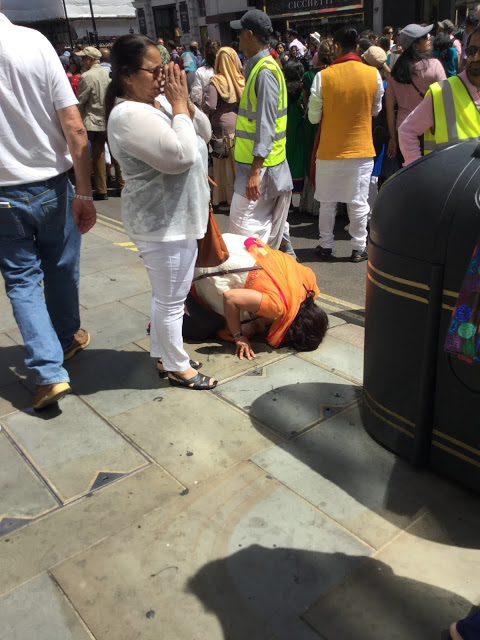
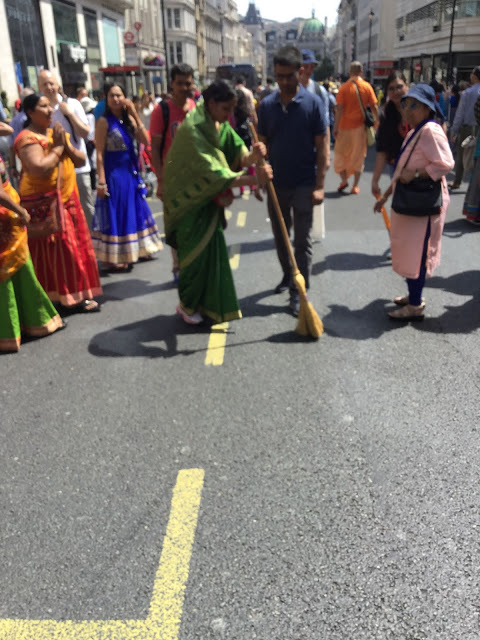
The devotees followed all the nine attributes of a true devotee and the pictures prove it


Nine Sadhanas

In a sloka in the Bhagavata, Prahlada explains to Hiranyakasipu that there are nine sadhanas to foster Bhakti, namely,

Sravana = Listening to the stories of God’s Lilas,

Kirtana = Singing  His praises

Smarana = Constantly remembering them

Padasevana = Serving him and his disciples

Archana= Worshipping him with flowers

Vandana = Saluting him and taking refuge in him

Dasya = Treating him as our boss and obey his commands

Sakya = Treating him as his life time friend

Atmanivedana = Dedicating oneself to Him (Ultimately comes the stage when one offers himself up to God effacing his self completely)


Please see the pictures below taken by me:–


-Subham-

Accuracy and Absent Mindedness Anecdotes (Post No.5143)

Compiled by LONDON SWAMINATHAN


Date: 24 JUNE 2018


Time uploaded in London –  9-17 am  (British Summer Time)


Post No. 5143


Pictures shown here are taken from various sources such as Facebook friends, Wikipedia, Books, Google and newspapers; thanks. Pictures may be subject to copyright laws.

More Absent mindedness anecdotes


Nose, Big Nose!!
When her daughters were very small girls, Mrs Dwight Morrow gave a high tea at which one of the guests was to be the senior JP Morgan.
The girls were to be brought in, introduced and ushered out. Mrs Morrow’s great fear was the possibility that Anne, the most outspoken of them, might comment audibly upon Mr Morgan’s celebrated and conspicuous nose. She therefore took pains to explain to Anne that personal observations were impolite and and to caution her especially against making any comment upon Mr Morgan’s nose, no matter what she thinks of it.
When the moment came and the children were brought in, Mrs Morrow held her breath as she saw Anne’s gaze unfalteringly fix upon this objective and remain there.

Nonetheless, the introduction was made, the little girls curtsied and were sent on their way. With a sigh of relief Mrs Morrow turned back to her duties as hostess and said to her chief guest, “And now, Mr Morgan, will you have cream or lemon in your nose?”

Xxxx

Lungs!
That absent minded professor Schmaltz has left his umbrella again. He would leave his head if it were loose, observed the waiter.
That is true, said the manager, I just heard him say he was going to Switzerland for his lungs.
Xxx


Send a wreath for Your Own Death!

The professor was very absent minded;

Did you see this?, his wife asked as he came in.
There is a report in the paper of your death.
“Dear me, said the professor, we must remember to send a wreath”.
Xxx


Forgotten Floor!
You mean to say, asked the judge of the defendant, that you threw your wife out of the second story window through forgetfulness ?
Yes sir, replied the defendant
We used to live on the ground floor and I plumb forgot we moved.
Xxxx

Top Speed! To Unknown Destination!

Thomas Henry Huxley once arrived late in a town in which he was to deliver an important lecture.
Jumping into a cab, he cried to the driver ,”Top speed!”

In a hurry the cabby whipped his horse into action and the vehicle went bumping along the streets at a wild clip. The lack of dignity and organisation in the proceedings then dawned upon Huxley, and above the clatter of the wheels he shouted to the driver,
“Here,here, do you know where I want to go?”
“No, Your Honour, called the cabby, cracking his whip the while, but I am driving as fast as I can.”

Xxxxx

Accuracy anecdotes
Cordell Hull is an extremely cautious speaker, striving always for scientific accuracy. One day on a train, a friend pointed to a fine flock of sheep grazing in a field. Look, those sheep have just been sheared, he said.
Hull studied the flock. Sheared on this side any way, he admitted.

Xxx

Tit for Tat

The captain of a certain freighter was martinet who, although technically just, was noted far and wide, for the strictness of his interpretation of the facts.

On a certain voyage he had a new first mate, an able and conscientious man. Following an of shipboard revelry, the captain entered in the log the note, ‘The first mate was drunk last night’.
Seeing this the mate was greatly distressed and pled with the captain to strike it off the record. He had never been drunk before, he insisted, would not be drunk again; was conscientious in the performance of his duties and had been off duty at the time of the offence anyway.
He begged for leniency, pointing out what an unduly detrimental effect on his record such an entry on the log might have.


The captain remained adamant, “you were drunk last night and I cant change the fact. The record will stand’.


Much wounded by this the first mate resumed his duties. That night it fell to his lot to make the next entry in the log for a period of his watch. This he did, with what may be called a malicious scrupulousness of accuracy. Accordingly the captain next day found on the log that innocently damning statement, “The captain was sober last night”.
 

–Subham–

Gambling Anecdotes (Post No.5140)

Compiled by LONDON SWAMINATHAN


Date: 23 JUNE 2018


Time uploaded in London –  11-57 am  (British Summer Time)


Post No. 5140


Pictures shown here are taken from various sources such as Facebook friends, Wikipedia, Books, Google and newspapers; thanks. Pictures may be subject to copyright laws.


Picture by Lalgudi Veda

At a large party, Mrs Henry Clay, chaperoning a young lady, passed through a room where gentlemen we’re playing cards, Mr Clay among them.
“Is this a common practice?, inquired the young lady.
“Yes, said Mrs Clay, they always play when they get together.”
“Doesn’t it distress you to have Mr Clay gamble?”
“No, my dear, said the old lady composedly , he most always wins.”
Xxxxx

BOOK MAKER APPROACH!

An ailing book maker sent his son to summon the doctor. Instead of the expected man, a stranger arrived. Later the book maker asked for an explanation.
“Well,said the boy ,there were a lot of brass plates on the doors, and when I got to the one you told me to go to, it said,
Consultations 11 to 12.
The one next to it said, 10 to 1.
And I knew you would like the one who gave the best odds
Xxx

Comedian Win

The British comedian, Beatrice Lillie, once won a hundred and fifty thousand franks at Chemin de fer through having the hiccoughs. Her repeated convulsions and noises were interpreted by the croupier as cries of Banquo.

BANQUO: Character in Macbeth, Gambling, Bank.

Xxxx
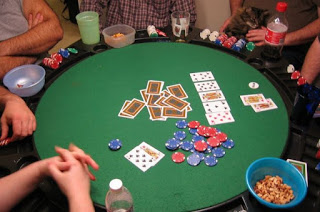
Anti Poker Grandma was cheated!


A Grandmother was bitterly opposed to gambling games, especially poker, but gave her sanctions to the playing of authors. So the grandchildren engaged her interests in the game of her choice. Her enthusiasm increased as the game progressed, and while she knew that the cards used were a deck of authors ,she didn’t know that the game she was playing was poker , and that grand mother was enthusiastically playing Whittier’s wild (Poems)

Xxx

Proverbs on God (Post No.5138)

Compiled by LONDON SWAMINATHAN


Date: 22 JUNE 2018


Time uploaded in London –  18-51  (British Summer Time)


Post No. 5138


Pictures shown here are taken from various sources such as Facebook friends, Wikipedia, Books, Google and newspapers; thanks. Pictures may be subject to copyright laws.

1.Man proposes, God disposes
The greatness of the Almighty is beyond the ken of one’s comprehension

acintaniiyo mahimaa paresithuh- Kahaavatratnaakar (Sanskrit).


Who can comprehend the ways of God?- viramaorvasiiya of Kalidas

ko devata rahasyaani tarkayisyati


Tamil also has this proverb—Thaan ondru ninaikka Deivam ondru ninaikkum

2.God helps them that help themselves


God is the right hand of the diligent.


nityam prayatammaanaanaam sahaayah paraleswarah

3.God hath leaden feet but iron hands

Tamil- Arasan Andre Kolvaan, Deivam nindru kollum

God pays back the dimwit in his own coin

devopi mandaaya dadaati mandam

4.God provides for him that trusteth


Those devoted to Narayana know no fear

naraayanaparaah sarve no kutacana bibhyati -Bhagavata Purana


Never does anyone who does good, tread the path of woe- Bhagavad Gita 6-40


na hi kalyaanakrt kascid durgatim taata gachchati – BG 6-40

My devotee perishes neve- Bhagavad Gita 9-31

na me bhakta pranasyati -9-31

5.God shapes the back for the burden


What is impossible for the Creator?

Dhaaruh kim naama durghatam- Brhat kathaa Manjari

6.God tempers the wind to the shorn lamb


Nectar turns into poison and poison turns into nectar, if the Lord so chooses- Raguvamsa of Kalidasa


visamapyammrtam kvacidbhavedamrtam vaa visamiisvarecchayaa

7.Gods mill grind s slow but sure
Tamil- Arasan Andre Kolvaan, Deivam Nindru Kollum
Lord Krishna gave 99 chances to criticise him. When he did it for 100th time he was done away with.


8.When need is highest, God’s help is nighest

Draupadi was helped by Lord Krishna;


Elephant Gajendra was helped by Lord Vishnu;


Prahlada was helped by Narasimha;


With the Lord’s grace, the negative traits convert into positives -Subhasita Ratnabhandaagaara


9.Whom god would ruin, he first deprives of reason
Vinasa kale Vipareeta Buddhi

Samsayaatmaa vinasyati – BG 4-40

Doubting Thomasses perish

10.Every man for himself, and god for us all 
Tamil- Dikkatravarkku Deivamee Thunai


What is impossible with the unfailing benediction of the gods?- Kathaa sarit saagara


Four kinds of people worship me: the distressed, seeker of wealth, the wise and the seeker of knowledge; the wise is dear to me.- BG 7-16

11.There is no going to heaven in a sedan
God’s will is formidable- Mahabharata
12.Ye cannot serve god and mammon


No ills of life ever touch those that alone cling to the feet of Him who is beyond the world of likes and dislikes

13.Short prayers rise up to heaven


The power of God is so great that it opens doors everywhere- Ramayana manjari

14.Bells call other’s but themselves enter not into the church


Not the fishes in holy Ganges go to heaven- Ramakrishna Paramahamdsa
15.The nearer the church the farther from the God


The head which bows not at the feet of God of eight attributes is as worthless as organs which do not perform their proper functions -Tirukkural -9

16.Like priest like people

Lord Krishna says that people follow good people in the Bhagavad Gita

Whatever action a great man performs common man follows- BG 3-21

17.He that would learn to pray let him go to sea.
Deeds, good or evil, that spring from darkness shall not affect those who gloriously sing the praise of theLord – Tiruvalluvar, Kural 5


Lord Krishna also say that those who are in trouble pray to him in Bhagavad Gita (Sea Travel is such a difficult one)


18.Faith can remove mountains 


Padmapada walked on water when his Guru Adi Shankara called him from the other side of the Ganges

Dumb becomes eloquent and lame cross the mountains with the grace of God- Muka Kavi


Muukam Karoti vaachaalam, Pankum langrte Girim


19.The just shall live by faith

Truth is dear to God


Isvarah satyavaak praiyah- Kahaavatratnaakar

-subham-


MANU’S STRANGE RULES ON HOSPITALITY! (Post No.5129)

Written by LONDON SWAMINATHAN


Date: 19 JUNE 2018


Time uploaded in London –  21-08  (British Summer Time)


Post No. 5129


Pictures shown here are taken from various sources such as Facebook friends, Wikipedia, Books, Google and newspapers; thanks. Pictures may be subject to copyright laws.


Manu Smrti- Third Chapter continued….

My Comments

1.Hospitality is a unique feature of Hindu culture. It is found in Sanskrit and Tamil scriptures with equal emphasize only among the ancient languages. Sita of Ramayana and Kannaki of Tamil epic Silappadikaram worried about their inability to feed and honour the guests. The concept of feeding complete strangers to get religious merits is unknown in other ancient cultures. This shows that Hindus are the sons of the soil and they developed the culture in their own land. This explodes the theory of Vedic Hindus coming from outside.

Another aspect coming to light in the slokas is that the culture and the values were same from Kanyakumari Kashmir. It is equally empahsized in both Sanskrit and Tamil scriptures.

2.Manu Smrti is the oldest law book, older than Hammurabi’s (I have pointed out the reasons for my conclusion already). Here is one more point: The Vedic deities are mentioned in the slokas quoted here. If it is composed in second century BCE we would not have come across Vedic Kuhu and Anumati

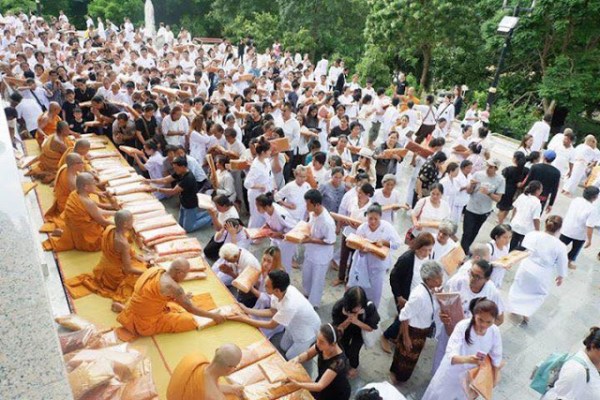
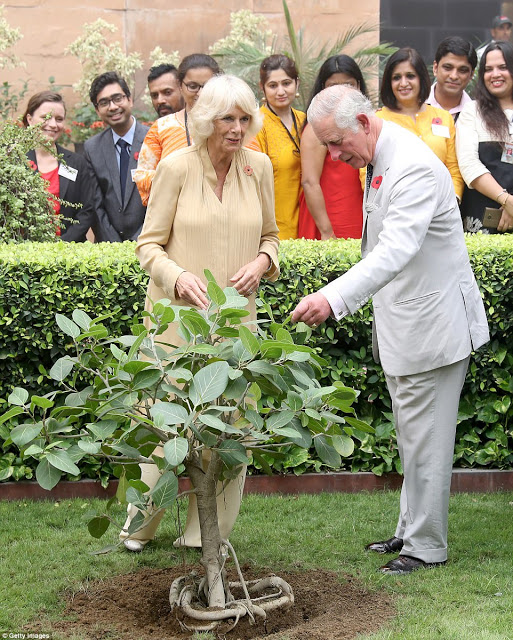
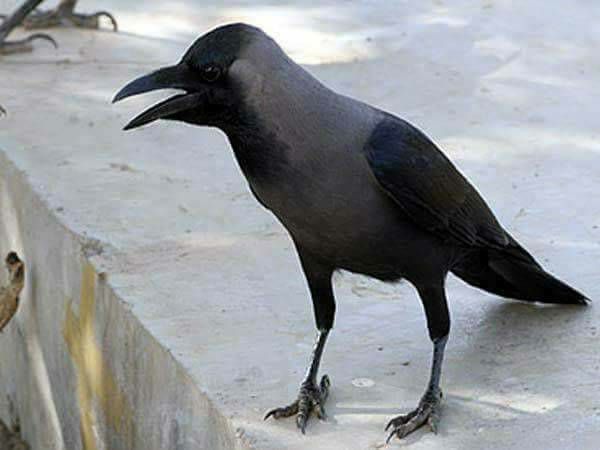
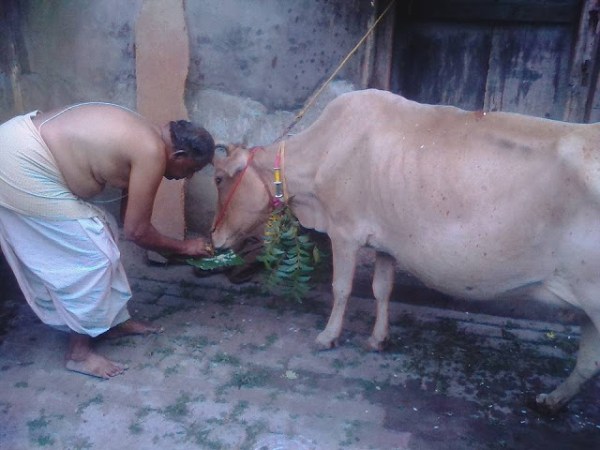
  1. The five sacrifices given to five groups include trees, dogs, crows and people of Four Castes. That shows Manu is compassionate towards all living beings. Feeding dogs and crows as part of religious sacrifice is unknown in other cultures. This shows the uniqueness of Hindu culture. Feeding the crows and watering the plants as sacred thing is found in ancient Tamil books; it is one more proof to show that the culture in one from Kanyakumari to Kashmir.
  2. Sacrificing to goblins along with Vedic deities is also strange. But when we consider trees, crows and dogs are included in the list, it is not strange.


5.Manu asked the Hindus to give four things: Mat, Water, Room and KIND WORDS. It shows his high thoughts.

6.His definition of a GUEST is good; those who stay one night only are considered guests; he asks everyone to feed all the four castes; This does not correlate with the 40 or odd slokas/couplets which the Dravidians and Marxists use for their Anti Manu propaganda. They are later interpolations.

  1. Another strange thing is ‘newly married’ get priority in eating; he wants them to enjoy life fully!

8.Manu says the householder can eat only after feeding kinsmen, servants and the guests! This is unknown in any part of the world except the Hindus from Kanyakumari to Kashmir.

  1. Ancient Tamil literature also confirm all the oblations to manes who live in SOUTHERN Direction. So Tamils were ardent Hindus as others in the North. It is in Tirukkural and Purananuru. This explodes the theory of half -baked theories of Vedic Hindus coming from outside India. No other ancient culture has such belief about SOUTH or daily oblations to manes with WATER. Use of water in every ceremony shows that it is a tropical culture.
  2. He who prepares food for himself is a sinner is in Manu and Bhagavad Gita.
  3. Last but not the least, Manu asks to honour people who comes once a year! Good Advice!!


Third Chapter continues……………………..

Sacrifice to Vedic Deities

3-83. Let him feed even one Brahmana in honour of the manes at the Sraddha which belongs to the five great sacrifices; but let him not feed on that occasion any Brahmana on account of the Vaisvadeva offering.

3-84. A Brahmana shall offer according to the rule (of his Grihya-sutra a portion) of the cooked food destined for the Vaisvadeva in the sacred domestic fire to the following deities:

3-85. First to Agni, and next to Soma, then to both these gods conjointly, further to all the gods Visve Devah, and then to Dhanvantari,

3-86. Further to Kuhu (the goddess of the new-moon day), to Anumati (the goddess of the full-moon day), to Pragapati (the lord of creatures), to heaven and earth conjointly, and finally to Agni Svishtakrit (the fire which performs the sacrifice well).

  1. After having thus duly offered the sacrificial food, let him throw Bali offerings in all directions of the compass, proceeding (from the east) to the south, to Indra, Yama, Varuna, and Soma, as well as to the servants (of these deities).


To the Trees

3-88. Saying, ‘Adoration to the Maruts,’ he shall scatter some food near the door, and some in water, saying, ‘Adoration to the waters;’ he shall throw some on the pestle and the mortar, speaking thus, ‘Adoration to the trees.’

  1. Near the head of the bed he shall make an offering to Sri fortune, and near the foot of his bed to Bhadrakali; in the centre of the house let him place a Bali for Brahman and for Vastoshpati (the lord of the dwelling) conjointly.


Goblins- Ghosts

3-90. Let him throw up into the air a Bali for all the gods, and in the day-time one for the goblins roaming about by day, and in the evening one for the goblins that walk at night.

  1. In the upper story let him offer a Bali to Sarvatmabhuti; but let him throw what remains from these offerings in a southerly direction for the manes.


To the Crows

3-92. Let him gently place on the ground (some food) for dogs, outcasts, Candalas (Svapak), those afflicted with diseases that are punishments of former sins, crows, and insects.

  1. That Brahmana who thus daily honours all beings, goes, endowed with a resplendent body, by a straight road to the highest dwelling-place (i.e. Brahman).
  2. Having performed this Bali offering, he shall first feed his guest and, according to the rule, give alms to an ascetic (and) to a student.


Equal to Cow Donation/ Go Daana

3-95. A twice-born householder gains, by giving alms, the same reward for his meritorious act which (a student) obtains for presenting, in accordance with the rule, a cow to his teacher.

  1. Let him give, in accordance with the rule, to a Brahmana who knows the true meaning of the Veda, even a small portion of food as alms, or a pot full of water, having garnished the food with seasoning, or the pot with flowers and fruit.
  2. The oblations to gods and manes, made by men ignorant (of the law of gifts), are lost, if the givers in their folly present (shares of them) to Brahmanas who are mere ashes.
  3. An offering made in the mouth-fire of Brahmanas rich in sacred learning and austerities, saves from misfortune and from great guilt.
  4. But let him offer, in accordance with the rule, to a guest who has come (of his own accord) a seat and water, as well as food, garnished (with seasoning), according to his ability.
  5. A Brahmana who stays unhonoured (in the house), takes away (with him) all the spiritual merit even of a man who subsists by gleaning ears of corn, or offers oblations in five fires.

Give Four Things!

  1. Grass, room for resting, water, and fourthly a kind word; these (things) never fail in the houses of good men.


One Night Stay is a Guest

  1. But a Brahmana who stays one night only is declared to be a guest (atithi); for because he stays (sthita) not long (anityam), he is called atithi (a guest).
  2. One must not consider as a guest a Brahmana who dwells in the same village, nor one who seeks his livelihood by social intercourse, even though he has come to a house where there is a wife, and where sacred fires are kept.
  3. Those foolish householders who constantly seek (to live on) the food of others, become, in consequence of that (baseness), after death the cattle of those who give them food.
  4. A guest who is sent by the setting sun in the evening, must not be driven away by a householder; whether he have come at supper- time or at an inopportune moment, he must not stay in the house without entertainment.

Hospitality to Guests

  1. Let him not eat any dainty food which he does not offer to his guest; the hospitable reception of guests procures wealth, fame, long life, and heavenly bliss.
  2. Let him offer to his guests seats, rooms, beds, attendance on departure and honour while they stay, to the most distinguished in the best form, to the lower ones in a lower form, to equals in an equal manner.
  3. But if another guest comes after the Vaisvadeva offering has been finished, the householder must give him food according to his ability, but not repeat the Bali offering.

Non Brahmin Guests

  1. A Brahmana shall not name his family and (Vedic) gotra in order to obtain a meal; for he who boasts of them for the sake of a meal, is called by the wise a foul feeder (vantasin).
  2. But a Kshatriya who comes to the house of a Brahmana is not called a guest (atithi), nor a Vaisya, nor a Sudra, nor a personal friend, nor a relative, nor the teacher.
  3. But if a Kshatriya comes to the house of a Brahmana in the manner of a guest, (the house-holder) may feed him according to his desire, after the above-mentioned Brahmanas have eaten.


Feed all the Four Castes

  1. Even a Vaisya and a Sudra who have approached his house in the manner of guests, he may allow to eat with his servants, showing (thereby) his compassionate disposition.
  2. Even to others, personal friends and so forth, who have come to his house out of affection, he may give food, garnished with seasoning according to his ability, at the same time with his wife.

Newly Married Get Priority

  1. Without hesitation he may give food, even before his guests, to the following persons, (viz.) to newly-married women, to infants, to the sick, and to pregnant women.
  2. But the foolish man who eats first without having given food to these (persons) does, while he crams, not know that (after death) he himself will be devoured by dogs and vultures.
  3. After the Brahmanas, the kinsmen, and the servants have dined, the householder and his wife may afterwards eat what remains.
  4. Having honoured the gods, the sages, men, the manes, and the guardian deities of the house, the householder shall eat afterwards what remains.
  5. He who prepares food for himself (alone), eats nothing but sin; for it is ordained that the food which remains after (the performance of) the sacrifices shall be the meal of virtuous men. (It is in Bhagavad Gita)


Once a Year!

  1. Let him honour with the honey-mixture a king, an officiating priest, a Snataka, the teacher, a son-in-law, a father-in-law, and a maternal uncle, (if they come) again after a full year has elapsed since their last visit.
  2. A king and a Srotriya, who come on the performance of a sacrifice, must be honoured with the honey-mixture, but not if no sacrifice is being performed; that is a settled rule.

to be continued………………….

Ganesh and Navagraha in Japan!! (Post No.5125)

Compiled by LONDON SWAMINATHAN


Date: 18 JUNE 2018


Time uploaded in London –  16-26  (British Summer Time)


Post No. 5125


Pictures shown here are taken from various sources such as Facebook friends, Wikipedia, Books, Google and newspapers; thanks. Pictures may be subject to copyright laws.


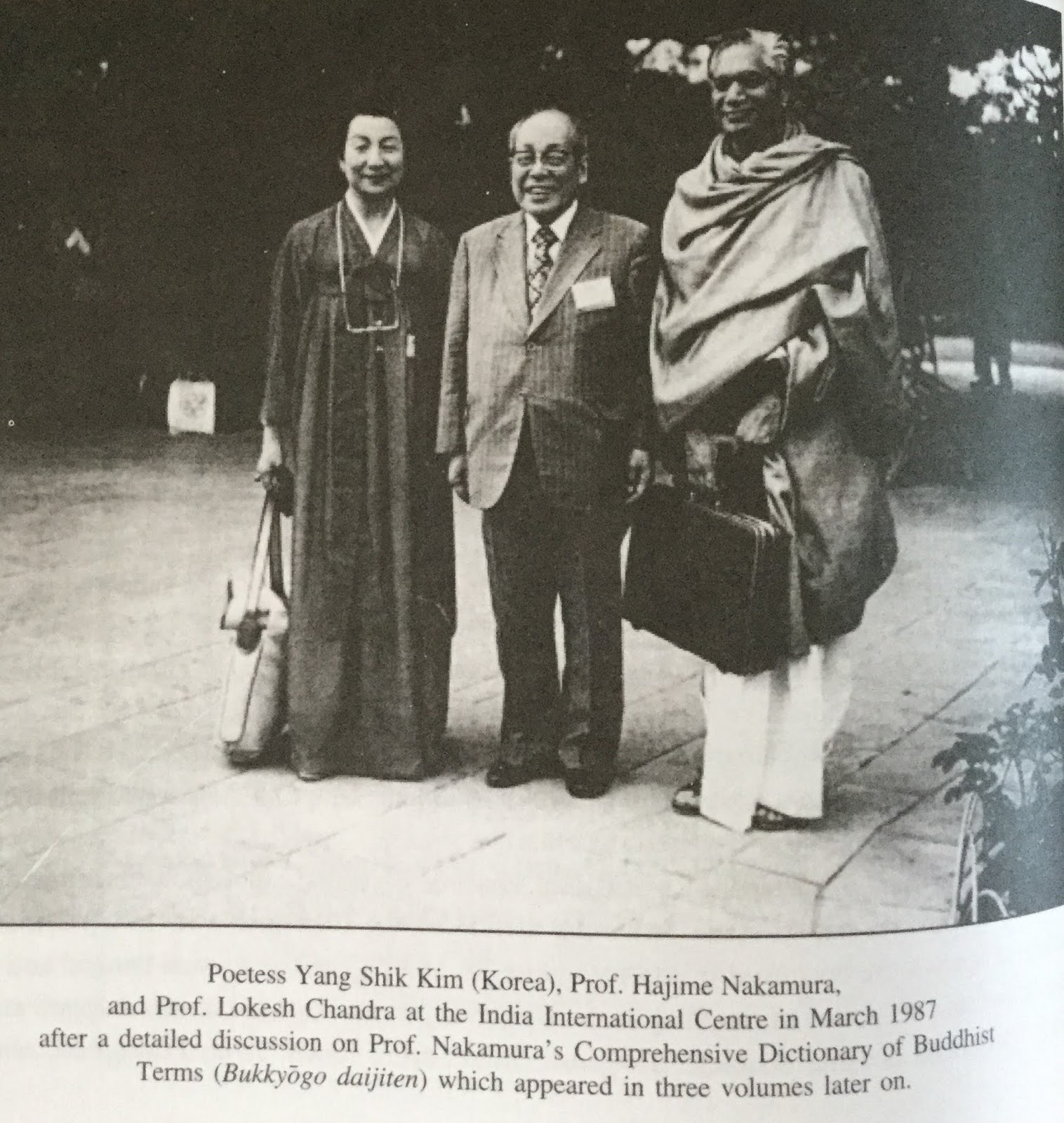
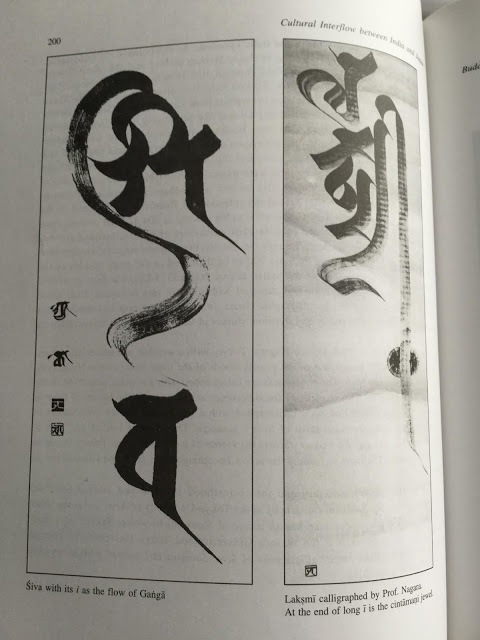
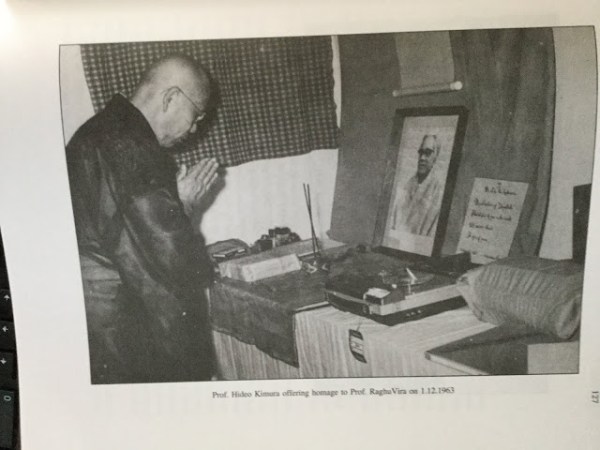
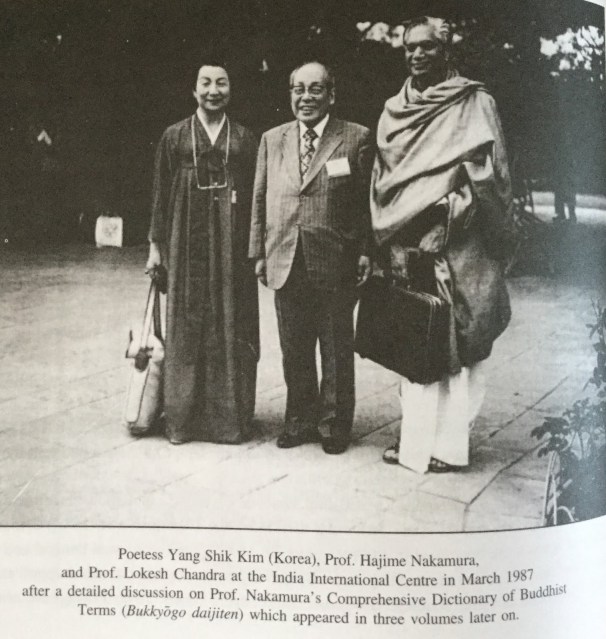
Those who are interested in the ancient history of India and Japan must buy Lokesh Chandra’s book
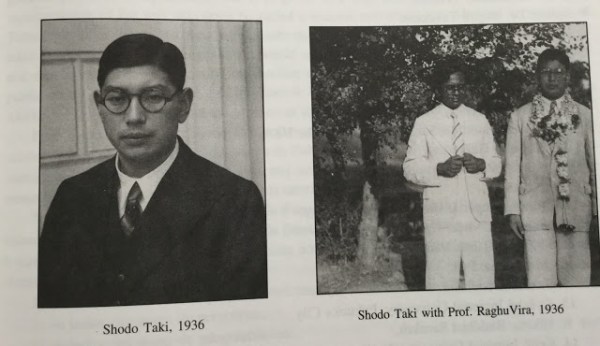
‘Cultural Interflow Between Indian and Japan’ (published by International Academy of Indian Culture and Aditya Prakashan , New Delhi, 2014) It is in A 4 size with lots of pictures an diagrams. It contains lot of information which is not known to the outside world. Mr Lokesh Chandra and his father Dr Raghuvira are renowned scholars and authority on Indo- Japanese relations of ancient periods.


I am going to give you some interesting information only in bullet points; for full information one must read the book.
Mahbaharata in the Kabuki Theatre

The well known kabuki drama Naru-kami is derived from the legend of Rsyasrnga known in Japanese as Ikkaku Sennin, that is Ekasrnga. The whole legend has been translated from Chinese into French by Edouard Chavanes. Hsuan tsang mentions a hermitage in Gandhara where Ekasrnga lived near the foot hills of Swat mountains

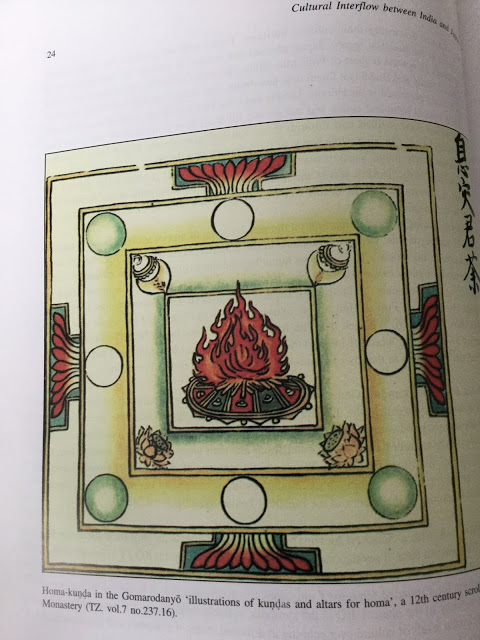
Homa and Homa Kundas in Japan

Goma (homa in Sanskrit) is lit in metallic vessel on a wooden altar. A ninth century scroll in the Toji monastery has different homa altars for the worship of planets (Nava Graha) and 28 constellations (naksatra- isti). This Goma- ro – dan -yo scroll has coloured illustrations of the planets, constellations and their altars. Goma is the esoteric fire, the calm and the fury of the ritual rhythms in the cosmic counterpoint of invocations with Sanskrit mantras.
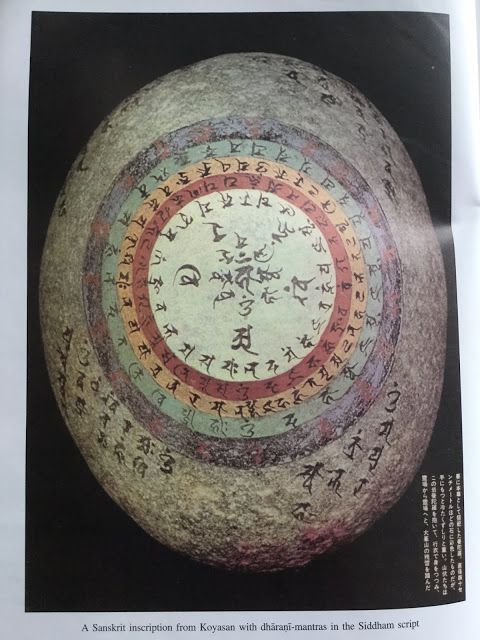
Gigantic Rock with Sanskrit hieronym

Along a road stands an oval rock about ten feet high on flat roundish base of another rock, with the Sanskrit monogram RO. Sanskrit letters implying deeper levels. A modern Japanese girl in mini, her hair dyed blonde and perhaps with a styrene injection for a round feminine form, stops by, graciously puts a tangerine on a piece of paper, as an offering to the planets. RO is the symbolic syllable of the Biijaakshara for Nava Graha Puja (Nava Graha= Nine Planets). Such are the frozen levels of culture ever echoing at different strata of existence and consciousness.

Bugaku and Gigaku

Bugaku and Gigaku dances are performed on the occasion of the Great Consecration ceremony at the Todaiji temple. Indian cultural influence is very easily recognised in bugaku’s structure. For instance one of the popular stories of Bugaku is the Bali Dance, which reproduces Ramayana’s famous story of the fight between Vali and Sugriva in the Kishkinda forest.

Gigaku, introduced twelve centuries ago, reproduces Indian legendary stories. Gigaku was also performed at the Great Buddha Consecration ceremony and moved spectators to laughter. Gikaku, masked comical dance, was believed to have been very popularly performed at the Todaji and other temples in Nara in those times.
 

Biwa= Veena

The largest lake in Japan, Lake Biwa,  is named after its close resemblance to the shape of a biwa. Thus, the Indian Viina, became the origin of Japan’s largest lake.

Buddhism in Japan

In 552 CE, the monarch of Paekche (Kudara/Korea) presented a gilt bronze image of Saakyamuni, Sutras, banners and umbrellas to the Japanese emperor Kimmei. The emperor replied that, “never from former days until now have we had the opportunity of listening to so wonderful a doctrine”.

Korea sent monks, a nun, a Buddhist image maker and an architect to the Japanese emperor in 577.

In 584, a stone image of Maitreya was brought from Paekche.

Dharmabodhi

Indian monk Dharmabodhi (Hoodoo) came via China and settled in Hokkezan.
The Brahmin Archbishop

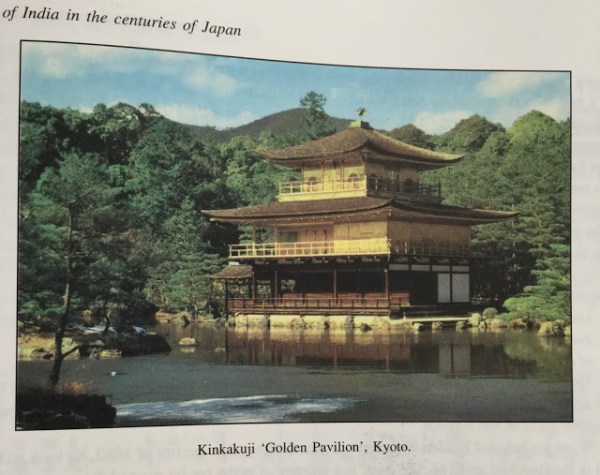
Floating in a sea of verdant woods in the golden ornament of the imposing roof of the Daibutsu-den “Hall of the Great Buddha” of the Todaiji temple. It enshrines the Viraat Rupa of Rocana, in the form of a gigantic statue, in the national temple eighth century Japan. Emperor Shomu had vowed to raise this statue to a height of 48 feet to symbolise the power of the profane and profound. Twelve years and immense materials were spent in casting the Daibutsu.


on 9th April 752 it was consecrated in a sumptuous ceremony, which was presided over by Bodhisena, the first historic Indian to have visited Japan. He was a Brahmin of Bharadvaja Gotra. Inspired by Manju Sri, he went to China to Wutai shan mountains sacred to Manju sri. At Imperial invitation, he arrived in Japan in 736 CE where he was warmly welcomed. The people knew him as the Baramon(Brahmin) Archbishop. He attained Samadhi on 25 February 760.


In Todaiji temple consecrated by the Brahmin Archbishop, we can view an expressive range of Nara sculptures of Brahma, Indra, Four Lokapaalass, Surya, Candra, Sarasvati and Sri Mahaadevi. Among them is a Krishna like figure playing the flute.


In front of the Great Hall of Buddha stands the eighth century octagonal bronze lantern adorned with musicians.


Largest Buddha statue in the largest wooden building is found here.


Bodhisena had rescued a  monk shipwrecked in the ocean on his way to China. This monk came to Japan along with him where he received a cordial welcome from monk Gyogi and was taken to the capital Nara in 736. His name was Buttestu (Buddhasthira??) He introduced music from his native land of Champa. He introduced Hindu- Buddhist music dances and dramas in Sanskrit.


Indian Cotton

Praajnaa (born 744 CE) was a monk from Kapisa who had studied at Nalanda University. In 781 he went to China and translated several Sutras. His writings in palm leaves were brought to Japan


In 799 an Indian was washed ashore somewhere in the Makawa province. A young man of twenty years, with nothing to cover his body except a straw coat and short drawers, he was stranded in a country where none understood him. Years later when he became conversant with Japanese, he said that he had come from India. He had seeds of cotton with him. He lived at the Kawadera temple at Nara. Two ancient chronicles Nihon -koki, and Ruiju-kokushi mention that he introduced the cultivation of cotton which became the most important clothing material. The Japanese words WATA or HATA for cotton are derived from Sanskrit ‘Pata’.
Ka, ka, ki, ki, ko, ku


India and Japan drink from common springs of culture. I go to children’s school and hear the Goju-on

a i u e o

ka ki ke, ke ko

It reminds me of my childhood when I recited, in like manner, the syllabary

Ka, Kaa, Ki, Kii, Ku, Kuu, Ke Kai …..

The Japanese language is written in the kana syllabary along with Kanji or Chinese characters. The kanji unites India and Japan at the deepest levels.
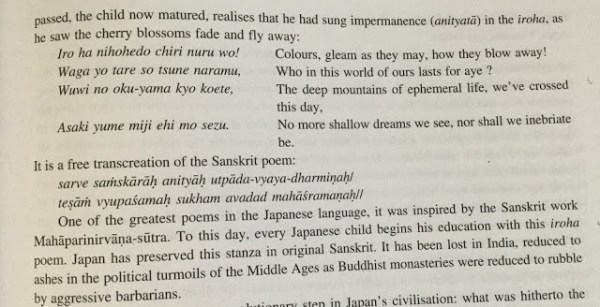
A Japanese child recites the IROHA poem, which has all the fifty sounds of the alphabet and every syllable occurs only once It is called Citrakaavya in  Sanskrit.

When many decades have passed, the child now matured, realises that he had sung impermanence in the IROHA, as he saw the cherry blossoms fade and fly away. It is a free translation of the Sanskrit poem.


One of the greatest poems in Japanese language, it was inspired by the Sanskrit work, Mahapari nirvana Sutra. To this day every Japanese child begins his education with this IROHA poem. Japan has preserved this stanza in original Sanskrit. It has been lost in India.
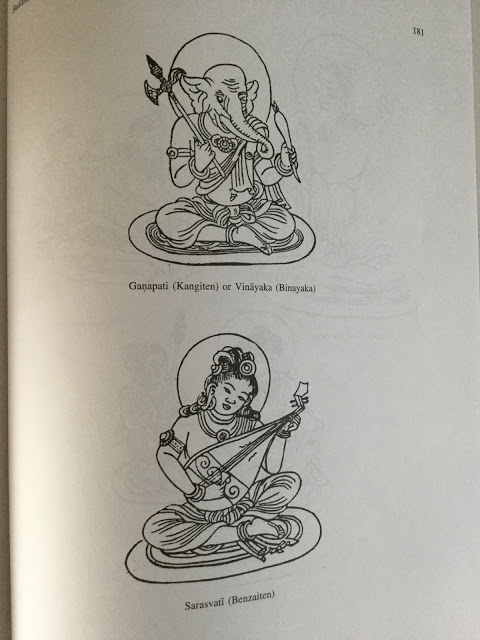
Ganesh Temples in Edo

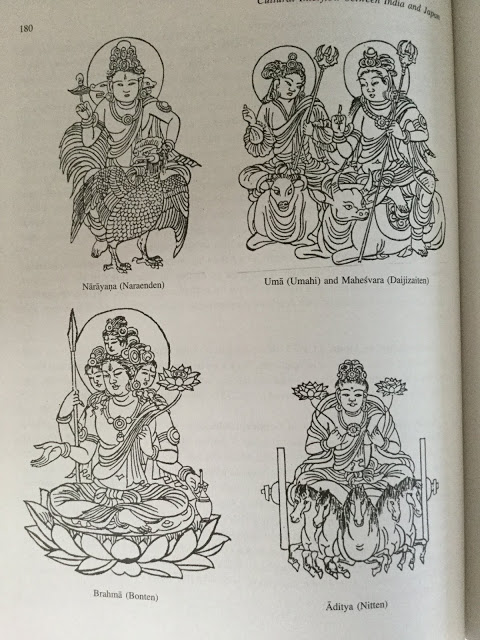
The German doctor Phillip Franz von Siebold lived in Edo, Japan during he years 1823-28. He wrote Pantheon von Nippon (1832). He notes that Ganapati was popular among the masses in the Edo period, and there were several temples. The area is known as  Shoten Choo, Ganapati Township, to this day. I visited the Ganapati Temple Shotengu in the frequented area of Asakusa.  In 1970 I saw a huge gathering of young boys and girls who had come to pray for success in their courtship as he is Nandikesvara (Kangiten). Senior people too thronged for all kinds success.

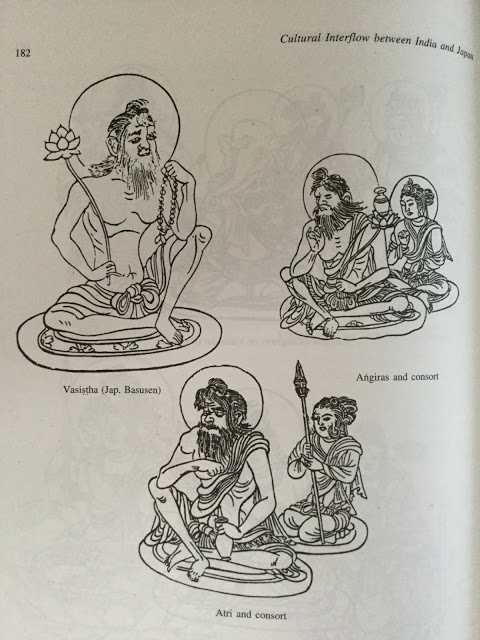
There were 131 shrines to Sarasvati. The German text deserved to be translated into English to get vivid picture of vibrant Buddhism in Edo. In 1836 a shrine to Varuna was consecrated to prevent typhoons. The Japanese worshipped Indra for long life, Brahma to succeed in Imperial service, Varuna for rain, Garuda to cure poisoning and Mahaa  kaala (Good Time) for good business and for victory in war. Japan has the oldest functioning temple of Ganapati in the world.


My comments

The book by Lokesh Chandra has about 400 pages. It is an encyclopaedia on Indo-Japanese Cultural Links. If I give all the information in the book, it will be a gross violation of copyright rules. Everyone must buy the book and read it.


After reading the book, I feel Japan is a fertile field for spreading Hinduism. There we see a mixture of Hindu and Buddhist beliefs.
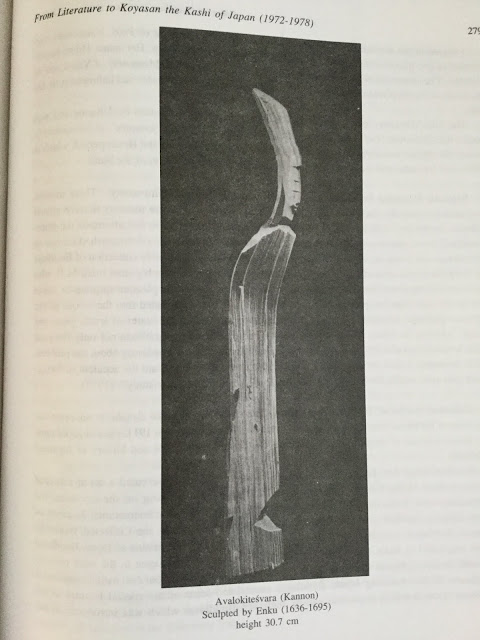
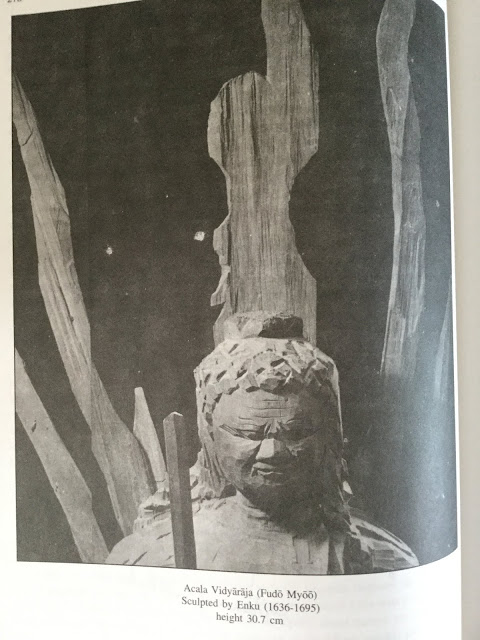


Enku made 100,000 Chip Buddhas (see my article posted yesterday)
–Subham–


One Lakh Buddhas in Wood by Enku!(Post No.5122)

Compiled by LONDON SWAMINATHAN


Date: 17 JUNE 2018


Time uploaded in London –  20-13  (British Summer Time)


Post No. 5122


Pictures shown here are taken from various sources such as Facebook friends, Books, Google and newspapers; thanks. Pictures may be subject to copyright laws.


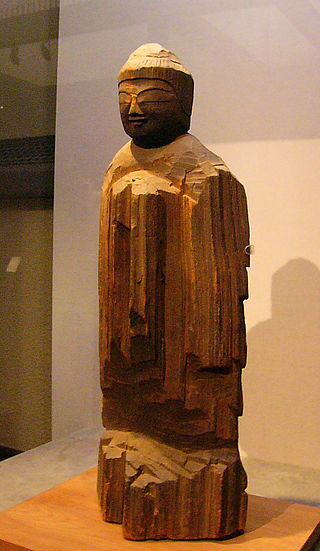
Like Hindus do Laksha archanai (Laksha= 100,000, Archanai- Puja with flowers), like some devotees write name of Ram or Siva 100, 000 times, Enku (1632-1695) made 100,000 wooden sculptures of Buddha. Japanese monk Enku did ‘Chip Buddhas’ with the stroke of a chisel. They were carved on chips and splinters of wood and were known as ‘koppa bustu’ (chip buddhas). In the economy of strokes and a rough and direct style they seem extremely modern.

Enku took 28 years to fulfil his vow of making 100,000 Buddhas. He was 59 when he finished the last Buddha and he wrote on the last Buddha- ‘one hundred thousand Buddhas completed’.


This was his first part of worship ’Saakaara’. It had to culminate in the Niraakaara -an iconic of Samadhi. Enku asked a hole to be dug in the ground beside the Nagara river. He sat in it, had it covered thick with earth, and put a bamboo tube to breathe. Fasting, chanting prayers, ringing a bell he remained interred and passed away. He attained supramundane Samadhi of Suunyataa, animitta and nirvana.


Tall oak and cherry trees entwined with wisteria vines stand at the spot. People in the village say that these wines will bleed if anyone cuts them.

To cite monk Enku himself:

“Each day the mind grows purer

The moon in the sky and myself

Round and full”

Japanese Saint learnt Sanskrit from Saraswati

In the eighteenth century lived a saint of noble virtue and great learning whom the tradition has honoured with the highest epithet of ‘sonja’ ‘aarya’, ‘arhat’.

He was Jiun Sonja (1718-1804), the last Sanskritist in the traditional style’. He planned a corpus of all Sanskrit texts found in Japan in 1000 fascicules, of which 300 fasciculi are preserved in his Kokiji monastery. He tried to reconstruct the Nayasuutra in Sanskrit. He collected palm leaves preserved in the Horyuuji, Kairyuoji, Shoryoji, Zuissenji and other monasteries. I published 59 Sanskrit texts from his writings in Sanskrit Manuscripts from Japan Parts 1 and 2—writes Lokesh Chandra in his book


Jiun Sonja used to say, “Sarasvati had manifested Herself to teach me Sanskrit and I have heard Sanskrit pronounced by  her. When I take up my pen, it is very likely that I am scribling in Sanskrit”.

Sanskrit was the waves of Dharma and Jiun Sonja the shore, the shadow of palm leaf sutras falling in his scriptorium, his mind dancing on the ripples of Bongo (Sanskrit) and  Sanskrit  words blooming in the serenity of his calamus in the flow and flourishes of the Siddham script: all unified India and Japan in the glimmer of the divine.

He undertook the 1000 fasciculed encyclopaedia of texts ‘Bongaku Shinryo’. Tradition has it that goddess Sarasvati had herself appeared to the sage Jiun and initialled him into the mysteries of the divine language Sanskrit. He spent his 30 years at the Kokiji Monastery to deepen his moral excellence to cultivate Dharma. No wonder Sarasvati is the presiding deity of the Kokiji where annual prayers are offered to Her.


–SUBHAM–