How Hindu Lahore became Muslim Lahore: A.H. Hallam Murray, Year 1905 (Post No 2829)

Lahore

Article written by London swaminathan


Date: 21 May 2016


Post No. 2829


Time uploaded in London :–  13-50


( Thanks for the Pictures)


DON’T REBLOG IT AT LEAST FOR A WEEK!  DON’T USE THE PICTURES; THEY ARE COPYRIGHTED BY SOMEONE.


(for old articles go to tamilandvedas.com OR swamiindology.blogspot.com)
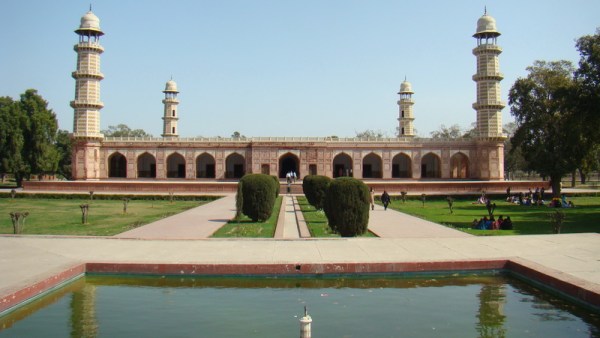
 

03 Lahore Jahangir's Tomb

Picture: Jahaghir Tomb in Lahore


“In old days, he who held Lahore held India, for it stands at the sluice gates through which, from the north-west – since the time of Alexander – the flood of many successive generations of India’s conquerors has swept. Into Lahore poured the first Mohammedan invaders at the end of the seventh century, and looted the great Brahminical city, of which years before, the Chinese Buddhist pilgrims, Fo-Hian and Hiuen- Tsiang, had described the splendour. Again three centuries later, the ten thousand picked horsemen of Mahmoud of Ghazni burst, “like a foaming torrent”, through the barriers and overwhelmed Jai Pal, the Rajput king of Lahore, at Peshawur. He was carried off, with rich spoils, into captivity, but released on promising a tribute: the disgrace, however, broke his heart, and mounting a pyre, he had had constructed, he applied the torch with his own hands, and perished in the flames.


The burden of the tribute passed to his son, Anang Pal, who was true to his inherited engagements, though other subjugated Rajahs were less loyal, and the northern Sultan returned in wrath and – defeating the largest army India ever had mustered- gained a firm foot in Hindustan. He occupied Lahore, which remained the capital of Musalman Empire, until 1194, when Mohammad Ghori, or Sahabuddin, whose dominions extended from Tibet to the Caspian, transferred the Metropolis to Delhi.


In the last years of the fourteenth century Lahore fell before the invasion of the lame   Timur, and when another 140 years had elapsed, it was once again sacked and pundered by the great Babar in 1526, who pushed his invasion further, and, after the victory of Panipat, founded the Empire of Moghuls. From that time Lahore ranked one of the great capitals of the East, and Milton, no doubts basing his estimate on  Mr William Finch’s remark, “This is without doubt one of the greatest cities of the East”, coupled it with Agra – in the well-known lines –

Samarckand by Oxus, Timur’s throne

To Pekin, of Simoean kings, and then

To Agra and Lahor of Great Mogul

Down to the golden Chersonese


The Mogul emperors lived here at intervals, and four great builders of the dynasty are all represented in Lahore: Akbar by the mixed Saracenic and Hindu architecture in the Fort and walls, Jehangir and Shah Jehan by their splendid palaces and the fanatical Aurngazeb by the great mosque. Subsequently the city became the scene of perpetual pillage and loot until the establishment of Sikh Kingdom under Ranjit Singh, a magnificent figure, who welded the Sikhs, under European officers, into the strongest native power in India; he was always a faithful ally of the British, and it was not till after his death, that two great wars led to the annexation of his kingdom”( by the British).

lahore-flash-mob

Picture of Lahore Fort

–A H Hallam Murray, London, 1905

From his book “THE HIGH ROAD OF EMPIRE”

–Subham–

Auspicious Words in Sanskrit and Tamil Books (Post No.2825)

08.08.67.earth.med

Research article written by London swaminathan


Date: 20 May 2016


Post No. 2825


Time uploaded in London :–  13-49


( Thanks for the Pictures)


DON’T REBLOG IT AT LEAST FOR A WEEK!  DON’T USE THE PICTURES; THEY ARE COPYRIGHTED BY SOMEONE.


(for old articles go to tamilandvedas.com OR swamiindology.blogspot.com)


Ancient Hindu writers who wrote in Sanskrit and Tamil had some wrting traditions which were not found anywhere else in the world. They had a set of rules about the opening sentence or opening word of a great work in literature. They always started with some auspicious words or with the name of God. Either the prayer in the book or the first verse had that Mangala or auspicious words.


Here is a simple sloka which gives the rule:-

Omkaarascha atha sabdascha dvaavethau brahmanah puraa

Kandam bitwaa viniyaartau tasmaan maangalikaavubau

-Paatanjala darsanam


The sounds ‘Om’ and ‘Atha’ came first from the mouth of Brahma. So both these are considered auspicious words.

moon night

This ancient tradition lead the poets and compilers to begin a book with these words. The first letter of the alphabet in most of the old languages is ‘A’. Tamils and Sanskritists used this word as well.

Om or Aum has got a mystical meaning; it is the primordial sound from which everything came out/ originated

‘Atha’ means now

Here are some examples to illustrate the tradition:-

Atha yogaanusaasanam – Opening line of Patanjali Yogasutram

Atha Srimad Bhagavd Gita – Bhagavad Gita

Athaatho brahmajijnaasaa – Brahmasutra

Agni meele – Rig Veda (Om is also added with every mantra in the Vedas).

When the Guru opens the book in front of the students, he would say

Atha Valmiki Ramayana, Atha Rik Vedah etc. and then teaches the students.

Kalidasa, the greatest of Indian poets, prays to god with various words. If god is not directly referred to then the poets used words like ‘Viswa’, ‘Loka/world’.


Vishu Sahsranama begins with ‘Viswam’ vishnur Vashatkaro……..

tricolour om

But all the Sanskrit religious texts used Om or Atha in the beginning.

Amarakosa also says ‘Atha’ is an auspicious word. So we know that it has been in vogue for thousands of years.

Tamil Rule

Tamils have used the following words as the initial word in their works if it does not contain a direct Prayer to God:–

Siir(Sri), Ezuthu(word),Pon(gold), Puu(flower), Thiru (Sri/Lakshmi), Mani(Gem/Bell), Yaanai (Elephnt),Ther(chariot), Pari(horse), kadal(Sea), Malai(hill) Pukaz(fame), Mathi(Moon), Neer (water) Aaranam(Vedas) ,Sol(wprd), Puyal (rain/storm), Nilam (Earth), Ganga (Holy Ganges River), Ulakam(world),Parithi(Sun), Amirham (Ambrosia/Amrut).

Ulakam/World

Famous Tamil works such as Tirumurukatruppadai, Manimekalai, Valayapathy, Periya Puranam, Kamba Ramayanam, Mullaippaattu, Mudumozikanchi, Seevaka Chintamani, Villi Bharatam begin with the word ‘Ulakam’.

Other books such as Sirupaanatrupadai, Natrinai, Tirikaduka used the synonyms of world (Maanilam)

Oldest Tamil book Tokaappiam begins with Ezuthu(Word).

Tamil Epic Silappathikaram begins with Moon, Sun and Rain.

swastik, om lamps, kotipali shivratri

Tamil Veda Tirukkuran begins with ‘Akara’.

All the ancient Sanskrit and Tamil inscriptions begin with Swasti Sri, another auspicious word.

All the literary works ended with the word SUBHAM ( meaning Well, Good, Prosperity)

No other ancient culture except the Hindus had this literary tradition.

sheep, sun

–Subham_


Three Tamil Kings fast unto Death! (Post No 2820)

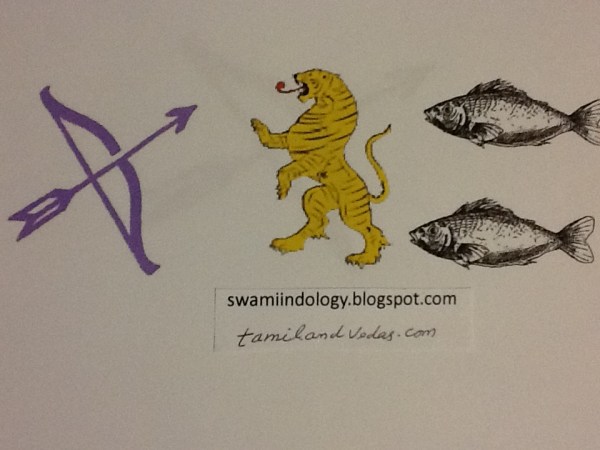
bow arrow

Research article written by London swaminathan

Date: 17 May 2016


Post No. 2820


Time uploaded in London :– 20-49


( Thanks for the Pictures)


DON’T REBLOG IT AT LEAST FOR A WEEK!  DON’T USE THE PICTURES; THEY ARE COPYRIGHTED BY SOMEONE.


(for old articles go to tamilandvedas.com OR swamiindology.blogspot.com)


Tamils who lived 2000 years ago valued good reputation and family honour. They thought that it was better to die than to live in disgrace. This is a typical Hindu thinking. Throughout Valmiki Ramayana we come across several references to losing one’s life just to save their name and fame. Rama, Lakshmana, Bharata and Hanuman thought of killing themselves once or twice because they couldn’t do what they were supposed to do. The popular method of losing one’s life was jumping into a ritual fire. Alternative method was fast unto death.

IMG_3325

Tamil literature has listed at least three kings who lost their lives by ritual fasting.

Popular Tamil poet Tiruvalluvar says in his

Tirukkural (970)

The world will admire the glory of men, who give up their life,

When overtaken by dishonour

Purananuru, part of Sangam literature, has a verse sung by the Chera king Kanaikal Irumporai (Puram 74). He was defeated by the Chola king Chenganan. After his defeat hhe was thrown into the prison. Suddenly he felt thirsty and he asked for some cold water. The prison guards delayed t under some false excuses. He fasted unto death and refused to take the water which was brought to him after a deliberate delay.

He sang the verse when he was insulted by the prison guards:–

“Royal babies that die and even moles delivered from the womb of queens, even though they are not men, are cut to pieces with swords (warriors are supposed to die in battle fields; so it is done symbolically as if they died in battle fields). When this is so, could any king beget a son, when tied like a chained dog, would be so weak to drink  water charitably offered by his jailor, for allying the  fire in his stomach?”


When he got the water after a long delay, he composed this poem, holding the water in his hand. He never drank it. He starved him to death.

Tiruvalluvar says in another couplet

Hair lost, the yak lives not

Honour lost, noble men leave their life(969)

Ike hair that is fallen from the head are men athat have fallen from their height (964)

Pandya_territories

Asi Dhara Vrata (Sharp Sword Edge Vow)


It is like standing on the sharp edge of a sword. The meaning is  it is difficult to maintain that balance or it would hurt if slipped. A bachelor can lie in the same bed with a beautiful girl but yet never swerve from the vow of chastity. It is said that a sword will be placed in between them in the bed according to the commentator (Raghuvamsa 13-67).


When Rama returned to Ayodhya after 14 year stay in the forest, he saw Bharata walking towards him. He praised Bharata as practising Asidhara Vratam, without enjoying the Rajyalakshmi  (Kingdom or Earth is praised as Lakshmi, Goddess of Wealth in Hindu scriptures).


Tamil Kings Kopperum Choza and Neduncheralatha


Tamil Kings Kopperum Choza and Neduncheralatha of Sangam age also followed similar type of vow. They sat facing North on the banks of a river and fast unto death. They were also holding a sword in their hands, probably meaning the same, i.e. sharp edged vow. Verses in Purananuru 65 (by Kazath thalaiyar) and Akananuru  55 (by Mamulanar) are about the Chera King Neduncheralathan who died facing North. When such a great person sacrificed his life, scholars and general public joined them and made it a “mass suicide”. We see it when Lord Rama drowned himself in the Sarayu River and in the Tamil Kings’ deaths. Lot of Tamil poets and scholars joined them in the fast unto death ceremony. In Tamil it is called “Vaal Vatakkiruthal”, meaning Facing North with a Sword.


When the greatest of the Chola kings, Karikalan fought with Chera King Nedunseralathan, Chera king was wounded on his back. No Tamil king tolerated a wound on his back. Those who were injured on the back were called cowards. So Chera king decided to die through fasting. Several poets sang in praise of both the kings ( see Puram verses 65 and 66).


In another episode we read about a family feud where the sons of Chola king Kopperuncholan revolted against their dad. Immediately a poet advised him to go into fasting. When he decided to die through fasting, several famous poets joined him and died with him. One of them, Pisiranthaiyar, has never met him but considered him as his best friend (see Puram 214 to 223).


IMG_3459

Apart from Jain’s Sallekhana we come across several examples in Sanskrit scriptures. Kishkinda Kanda of Valmiki Ramayana has one such episode. Angatha, son of Vali, went in search of Sita, but in vain. He decided to sit tight on Dharba grass and die. Only minor difference was he faced east but not north.

Alexander and Purushottama

When Alexander the Great conquered the valiant Hindu King Purushottama alias Porous, he asked him how he would like to be treated, Purushottama said,

“I am King. Treat me like a king”.

Alexander was greatly impressed with his bold answer and treated him like a king. When Alexander saw this little king fighting valiantly, he had second thoughts attacking the mighty Mauryan army.

Honour was valued and no king could live in disgrace. Chittor Queen Padmini jumped into fire with hundreds of her loyal servants just the avoid the disgrace from the cruel Alauddin Khilji.


Honour in Animal World

Sangam Tamil literature gives some interesting details about Tigers. Tamil poets say that the tigers wont eat their prey if it falls on its left side. It will eat the animal only when it falls on its right side. In Hindu culture left is inauspicious and right is auspicious. All the auspicious things are done in clockwise direction (right turn) and inauspicious or funeral rites are done in leftward direction/anti clockwise direction. This simile is always used to illustrate the greatness of honour.

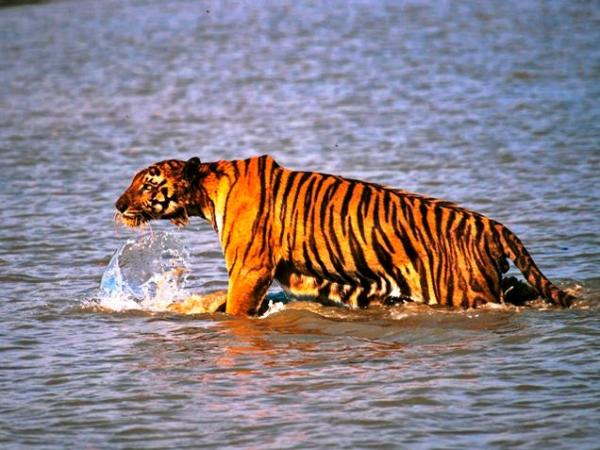
Tiger_2504157f

–subham–


Mahabharata–about Women! (Post No.2813)

IMG_4875 (2)

Compiled by london swaminathan


Date: 15 May 2016


Post No. 2813

Time uploaded in London :–  14-55


( Thanks for the Pictures)


DON’T REBLOG IT AT LEAST FOR A WEEK!  DON’T USE THE PICTURES; THEY ARE COPYRIGHTED BY SOMEONE.


(for old articles go to tamilandvedas.com OR swamiindology.blogspot.com)


Women! Women !! Women !!!

IMG_4412

She is the true wife who is a good house wife. She is a true wife whose heart is devoted to her husband. She is a true wife who is faithful to her husband.

A man’s half is his wife. The wife is her husband’s best of friends…. The wife is the source of salvation.


Those who have wives can perform religious acts. Those that have wives lead domestic lives. Those that have wives can be happy; and those that have wives can achieve good fortune.


The sweet –speeched wives are their husband’s friends on the occasion of joy; they are as fathers on occasions of religious acts;they are as mothers in the hours of illness and woe.


Even in the deep forest, the wife is the refreshment and solace of her roaming husband. He who has a wife, is trusted by all. The wife, therefore, is man’s great means of salvation.

–Mahabharata

(Taken from the book Asia through Asian Eyes, Thames and Hudson, London, page176)


“Let this heart of yours be mine, and let this heart of mine be yours”- Mahabharata (1.3.9)

Xxx

IMG_4384

Manu on Wife

The production of children, the nurture of those born, and the daily life of men (of these matters) woman is visibly the cause.

Offspring, (the due performance of) religious rites, faithful service, highest conjugal happiness, and heavenly bliss for the ancestors and oneself, depend on one’s wife alone.

“ Yatra naryast pujyante ramante tatra devatah

Yatraitastu na pujyante sarvastatraphalah kriyah”

Manu smriti 3-56, Mahabharata 13-45-5


‘Where women are worshipped, there the gods are delighted; but where they are not worshipped, all religious ceremonies become futile’—Manu Smriti.


“Her father protects her in childhood, her husband protects her in youth, and her sons protect her in old age; a woman is never independent”. Manu IX-9 (The meaning is that she is always protected and not left alone without support).


Durga Saptasati

In Saptashati, Durga says, “He who conquers me in battle, he who humbles my pride, he who is my equal in this world, he shall be my husband”.

India was the only country in the world where women were free to choose their husbands. Eight types of marriages were offered to men and women. Men and women met and mixed freely at festivals like ‘Samanas’. Nowhere in the ancient world have we seen such a freedom.

IMG_4880 (2)

Selling of Daughters

Whoever sells his daughter in emergency or merely for the sake of filthy lucre, goes to the Hell…. Where he is bitten by crows and vultures.

Whoever sells his daughter for gain dwells in the pit of flesh, and eats I for as many years as there are hairs on the skin of the body of his daughter.

–brahma-Vaivarta, Prakrit Khanda


Old Posts on Women

One mother is greater than 1000 fathers (posted on 7 June 2013)

‘Women in state affairs are like Monkeys in Glass Shops’ (Post No 2625)

Posted on 12 March 2016

An Ounce of Mother is worth a Ton of Priest! (Post No.2793);posed 8 May 2016

Most Intelligent Woman in the Ancient World; Posted 7 August 2013

Women’s freedom by Bharatiyar; posted on 19 April 2014

Wonderful Syllabus for Women! Posted by 4 May 2014
இந்தியப் பெண்கள் உலக மஹா அறிவாளிகள்! – பகுதி-1


இந்தியப் பெண்கள் உலக மஹா அறிவாளிகள்- பகுதி 2

–subham


Bernier’s Description of Peacock Throne (Post No.2808)

Shah_Jahan_op_de_pauwentroon

Written by london swaminathan


Date: 13 May 2016


Post No. 2808


Time uploaded in London :–  17-13


( Thanks for the Pictures)


DON’T REBLOG IT AT LEAST FOR A WEEK!  DON’T USE THE PICTURES; THEY ARE COPYRIGHTED BY SOMEONE.


(for old articles go to tamilandvedas.com OR swamiindology.blogspot.com)


Francois Bernier (1620-1688) was a French traveller and a physician to Moghul emperors. Following is his description of the Peacock Throne:

In a letter to M.de l Mothe le Vayer, dated July 1, 1663, contemporaneously translated, the Frenchman writes “The king appeared sitting upon his throne, in the bottom of the great hall of the Am-kas, splendidly apparelled. His vest was of white satin flowered and raised with a very fine embroidery of gold and silk. His turban was of cloth of gold, having a fowl wrought upon it like a heron, whose foot was covered with diamonds of an extraordinary bigness and price, with a great oriental topaz, which may be said to be matchless, shining like a little sun.


A collar of big pearls hung about his neck down to his stomach, after the manner some heathens wear here their great beads. His throne was supported by six high pillars, or feet, said to be of massive gold, and set with rubies, emeralds and diamonds. I am not able to tell you aright  neither the number nor the price of this heap of precious stones, because it is not permitted to come near  enough to count them, and to judge of their water and purity. Only this I can say, that the big diamonds are in confusion, and is the throne is said to be  worth four kouroures of rupies, if I remember well.  I have said elsewhere that a rupie is almost equivalent to half-a-crown, a lacquer to a hundred thousand rupies and kourour to a hundred lacques; so that the throne is valued forty millions of roupies, which are worth about sixty millions  of French livres.  That which I find upon it best devised are two peacocks covered with precious stones and pearls.


Beneath this throne there appeared all the Omrahs in splendid apparel upon a raised ground covered with a canopy of purified gold with great golden fringes, and enclosed by a silver balistre. The pillars of the hall were hung with tapestries of purfled gold, having the ground of gold; and for the roof of the hall there was nothing but great canopies of flowered satin fastened with red silken cords that had big tufts of silk mixed with threads of gold hanging on them. Below there was nothing to be seen but great silken tapestries, very rich of, of an extraordinary length and breadth. In the court there was set abroad a curtain tent as long and large the hall and more”.


Peacock throne of Shajahan

(from my old post)

Persian king Nader Shah invaded India in 1739 just for gold and gems like Alexander and Mohmed of Gazni. He took lot of invaluable jewellery items to Persia (modern Iran). But it is believed that the Peacock Throne of Mogul emperor Shahjahan was broken into parts and shared by the commanders of his army. But there are different thrones in Tehran (capital city of Iran) museum taken from India. These are displayed items and there are many more items not displayed. The King of Iran who ruled before Khomeini’s Islamic revolution took lot of items with him when he left the country.

But the original peacock throne was more valuable than this. It was made up of over 1100 kilo gold and 250 kilo gem stones. But the Peacock Throne in Tehran Museum is not the original one. Even the famous Kohinoor diamond was part of the throne. Two Peacocks made up of gems decorated the top of the throne. French traveller Jean Baptist Taveriner was an expert in jewellery. He had given full details in his report.

Iranian Crown jewellery is the largest royal collection in the world. The most important items were from India. Several crowns, golden thrones and chains are in the vault of Central bank of Tehran.

Persian King Nadir Shah invaded when a weak Mogul king Mohamed Shah was ruling Delhi. A rumour was spread that Nadir Shah was killed in the battle. Enraged by this rumour Nadir Shah ransacked Delhi and his soldiers killed 30,000 people in one night. Mogul king begged to him to leave Delhi promising him all the treasures in the world. Nadir Shah took the most valuable jewellery including the globe and the Peacock Throne. But he was killed by the Kurdish while returning to Persia. Immediately his soldiers and Kurdish enemies divided most of the booty.


My old posts on the same theme:

Rs1000 Crore Indian Gem Wonder (4 May 2012)

India needs an Indiana Jones ! (1 May 2012)


–subham–


Secret Box of a Shepherd! Persian Story!! (Post No.2799)

sheep, sun

Written by london swaminathan


Date: 10 May 2016


Post No. 2799


Time uploaded in London :–  18-33


( Thanks for the Pictures)


DON’T REBLOG IT AT LEAST FOR A WEEK!  DON’T USE THE PICTURES; THEY ARE COPYRIGHTED BY SOMEONE.


(for old articles go to tamilandvedas.com OR swamiindology.blogspot.com)


There was a shepherd in a remote corner of Iran. In those days the country was called Persia. He was very simple and spent all his time happily in shepherding. He just wore a tattered sheep skin. But he was extraordinarily brilliant. He was a great scholar who looked like a beautiful lotus in a muddy pond or like shiny a gem stone in the middle of barren rocks. He can be compared to Emperor Vikramaditya, the great wise king of India. Like Vikramaditya he knew the language of the birds and animals. He gave advice to anyone who came to him.


Slowly he was made the leader of the people living in that area. When his name and fame spread to the capital, the king also came to know about him. He was wondering whether the people simply exaggerate or there is some truth in the story. So he decided to meet in but in disguise. One day he set out to the cave in the far corner of his country dressed like a poor man in rags. He rode an old horse. His ministers also followed him disguised as travellers.


As soon as they came near the cave, they were received with all the hospitality. The shepherd gave them milk and cheese. Slowly they got involved in discussion on various topics. The king asked him who his master was. He told the king that he learnt all himself. Answering a question of the disguised king, he suddenly addressed him Oh! King!.


The king was surprised and asked him how come he knew that he was the king of Persia. He told him that his behaviour, voice, stance, look and the knowledge showed him that he must be a great king. Now the king was really impressed told him his knowledge shouldn’t be wasted and gave him the post of state governor. The shepherd accepted his offer.

sheep cycle field

Years rolled on. The governor turned shepherd was going to all the places with locked box. People were wondering what it contained and why he was holding it all the times. Slowly rumours were spread by jealous people. They said that he was stealing the money of the king or he may be pocketing the taxes or he may be accepting bribes and keeping them in the locked box. The rumour reached the ears of the king who rushed to his place.


As and when the king saw the locked box with him he became very angry and shouted at him and ordered him to open the box. He maintained his composure and quietly opened the box. All were eagerly waiting for that moment. People were imagining all the worst that could happen to the poor shepherd governor. But to their disappointment there was only his old sheep skin. Before any one asked him the reason for keeping it in a tightly locked box, he explained: “I don’t want to become arrogant and forget my humble past. I was happy being a shepherd, dressed with this simple sheep skin. I always wanted to remember my past.”


The king was more impressed now and offered him a bigger role of ruling a big region. Did he accept it?


There are two ends for the story:

1.He said ‘No’. He told the king that he was happy going back to his previous shepherding which kept him happy for ever.

  1. He said ‘Yes’. He became the ruler of a bigger are and became more famous.


–subham–


Two Types of Thieves! Two Types of Knowledge! (Post No.2796)

happy-valmiki-day08

Written by london swaminathan


Date: 9 May 2016


Post No. 2796


Time uploaded in London :–  21-14


( Thanks for the Pictures)


DON’T REBLOG IT AT LEAST FOR A WEEK!  DON’T USE THE PICTURES; THEY ARE COPYRIGHTED BY SOMEONE.


(for old articles go to tamilandvedas.com OR swamiindology.blogspot.com)


Sanskrit literature gives us very interesting information about thieves, knowledge and charity.

Thieves are of two types:-

Prakaasa – explicit

Aprakaasa – invisible

The Sanskrit saying goes thus:-

“Prakaasaascaprakaasaasca dvividhaastaskaraah smrutaah”


My view is corrupt politicians are day light robbers ie. Prakaasa

Night time thieves are invisible i.e Aprakaasa


xxx

Knowledge

Knowledge is said to be of two types: Saabdika – verbal (even Vedic and other Sastras transmitted verbally) and Anubhava – experience.

In the olden days lot of things were learnt on the job i.e. through experience.


Vedic and other subsidiary scriptures were learnt through verbal teaching. But yet experience counted more than bookish knowledge.


Xxx

AVVAI, BATTICAOLA,S.L.

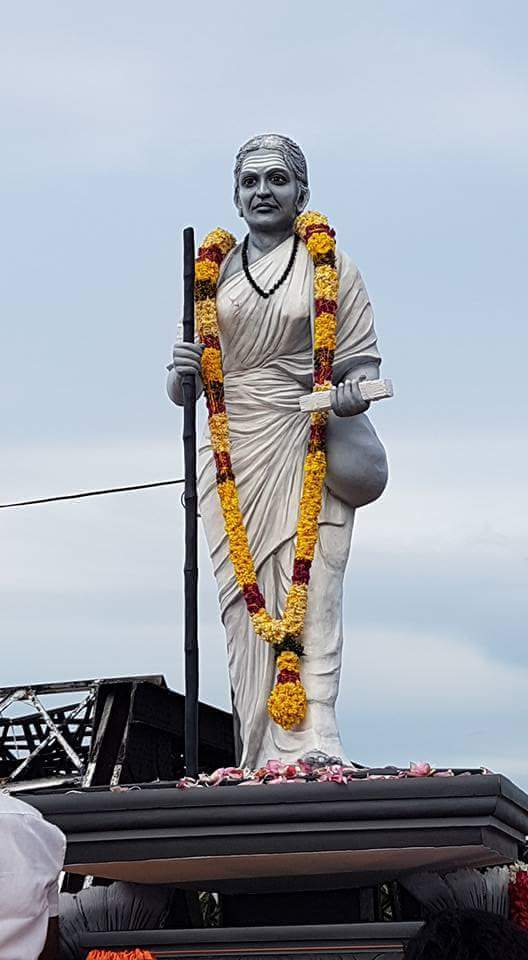
Avvai statue in Batticaola, Sri Lanka

Overstepping the rules of Charity

Mahabharata says that there are two things which violate the scriptural instructions.

Apaatre pratipatti – giving to the undeserving

Paatre apratipatti – not giving to the deserving

Labdhanaamapi vittaanaam boddhauyau dvaatkramau

Apaatrepratipattisca patre chaapratipadanam

Mahabharata, Shaanti parva, 26-31


Tamil proverbs also concur with this view. Tamil poets were very strict about giving. One poet says that Ay, the chieftain, was not a ‘Charity businessman’ who expects something when he gives a donation. Ay gives to the poor to get rid of poverty and not expecting a good place in the heaven or good rebirth.


Another poet says that even if there is no heaven (for those who give), it is good to give (donate).


We see lot of poets praising Dhana/ donation in the Vedas. It is good to see the same concept existed throughout the vast land of India for thousands of years. Majority of the 80,000 Tamil inscriptions talk about donation to Brahmins or temples. Tamil poets of Sangam age praised donating to the poor. Seven chieftains were called the Last Seven Philanthropists. One of them was Ay.


The first lesson the Vedic students taught was Do Charity, “Dharmam Chara”. Later Tamil poetess Avvaiyar translated this and put it as the first advice to youngsters in her Athichudi.

–subham–


An Ounce of Mother is worth a Ton of Priest! (Post No.2793)

mother rangoli

Compiled by london swaminathan


Date: 8 May 2016


Post No. 2793


Time uploaded in London :–  14-4o


( Thanks for the Pictures)


DON’T REBLOG IT AT LEAST FOR A WEEK!  DON’T USE THE PICTURES; THEY ARE COPYRIGHTED BY SOMEONE.


(for old articles go to tamilandvedas.com OR swamiindology.blogspot.com)


Following are the proverbs and sayings on Mother in Tamil ,Sanskrit and English

mother_love_

1.A man’s mother is his other God (African Proverb).

2.The teacher is more important than ten instructors; And the father more than a hundred teachers, but the mother more than a thousand fathers- Manu Smriti 2-145

3.Mataa, Pitaa, Guru, Deivam.

4.Guru is the physical form of god, the father the physical form of Brahma, the mother the physical form of the earth and the brother is the physical form of one’s own self- Manu Smrti 2-227


5.A mother’s love is best of all.

6.A mother’s love never ages

7.Never forget your mother (Tamil: Mathaavai oru Naalum Marakka veendaam)

8.Though one see’s one’s mother starving let the person not do  those actions which are condemned by the wise- Tirukkural 656

9.It is not as thy mother says, but as thy neighbours say.

10.A father’s goodness higher than the mountains; a mother’s goodness is deeper than the sea (Japanese Proverb)


mother baby

11.An ounce of mother is worth a ton of priest.


12.Like mother like daughter


13.Like mother like daughter; like yarn like the sari (Tamil Proverb)

14.The birth follows the belly (daughter is like her mother)

15.Is there a mother who does not pardon the mistake of her offspring? – Pratima Nataka

16.The mother’s side is the surest

17.The hand that rocks the cradle rules the world.

18.THERE MAY BE BAD SONS BUT NEVER A BAD MOTHER- Devi Aparadha Kshamapana Stotra


19.There is only one pretty child in the world, and every mother has it.

The owl thinks her own young fairest (For a crow its young one is golden- Tamil Proverb)

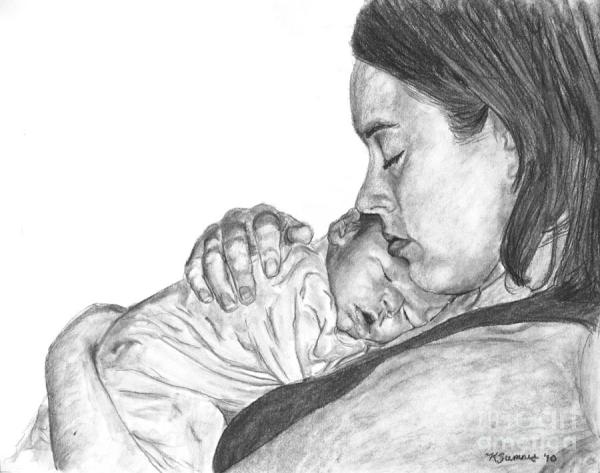
mother-and-baby-portrait-drawing-kate-sumners

20.The good mother says not. “Will you?” but gives.

21.The mother’s breath is aye sweet.

22.The mother of the coward does not worry about him (Arabic proverb).

23.Mother and Motherland are greater than heaven  (Jananii janma bhuumisca svargaadapi gariiyasii) – Kahavatranakar

24.Home life is blessed as long as mother is alive– Kahavatranakar

25.Unbrarable are the sorrows of mothers –Brhad Katha manjari

26.When a daughter is given away in marriage, mothers feel distressed-Pratinjaa yaugandharaayana

27.No god beyond mother (Na maatuh daivatam param)—Canakya Neeti

28.The teesth of the mother cat do not harm her kittens

29.For all humans, the mother indeed is the God of all Gods.

30.Hail the Mother as God! Hail the Father as God (Maatr Devo bhava pitr devo bhava) – Taittiriya Upanishad.

31.As the Mother, so the daughter –Kahavatratnakar

32.None indeed can nourish your body like the mother – Subhasitaratnavali

33.The caress of a mother is as soothing as a water-jet to the thirsty.

–subham–


What is Rare? Views of Three Great Poets! (Post No.2784)

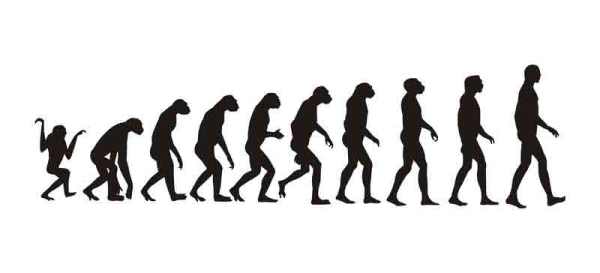
evolution

Written by london swaminathan


Date: 5 May 2016


Post No. 2784


Time uploaded in London :– 13-54


( Thanks for the Pictures)


DON’T REBLOG IT AT LEAST FOR A WEEK!  DON’T USE THE PICTURES; THEY ARE COPYRIGHTED BY SOMEONE.


(for old articles go to tamilandvedas.com OR swamiindology.blogspot.com)


What is rare? It is very interesting to see how Adi Kavi Valmiki, great philosopher Adi Shankara and Tamil poetess Avvaiyar answered this question.

Valmiki said in his Ramayana,

Speaker of unpleasant truth and listener of unpleasant truth are rare.

“sulabaa purushaa raajan satatam priyavaadinah

Apriyasya ca pathyasya vaktaa srotaa ca durlabhah

–Valmiki Ramayana, Aranya Kanda, 37-2

It is easy to find the speakers of pleasant things. But pathyasya vaktaa (speaker of unpleasant truth) and pathyasya srotaa 9listener of unpleasant truth are rare to find.


Easy death is also rare!


There is another Sanskrit saying that says easy death and life without misery are rare:-

“Anaayaasena maranam vinaa dainyena jiivanam”

Anaayaasena maranam = easy death

Vina dainyena jiivanam = life without misery

We see our friends and relatives suffer in the hospital for a long time before death. It has become very common nowadays to stop the life supplying machine at our will and pleasure. In the olden days all good souls died peacefully in their sleep. That is ‘anayesena maranam’.

rarerarerrarest

Following is from my old article:–


‘Jantunam Narajanma Durlabatha:’


Human Birth is difficult to obtain (21 October 2013)
wriiten by london swaminathan

Human birth is difficult to obtain is a famous saying from northern Himalayas to Southern Kanyakumari. It is in ancient Tamil and Sanskrit literature. The above quote is from Viveka Cudamani of Adi Shankara. Let us look at the full sloka:

“ For all beings a human birth is difficult to obtain, more so is a male body; rarer than that is Brahmnahood; rarer still is the attachment to the path of Vedic religion; higher than is erudition in the scriptures; discrimination between the Self and not-Self, Realization, Identity with Brahman—these come next in order. Mukti/liberation is not to be attained except through the well earned merits of a hundred crores of births (1000 million births!)”.

In the next sloka he says three things are rare:Human birth, the longing for liberation and protective care of a greatman (mahapurusha).
Tamil literature explains the same thing in a beautiful way. One of the five Tamil epics is Jeevaka Chintamani which gives the story of Udayana and Vasavadatta. The author Thiruththakka devar says human birth is rare. It is like one yoke floating in southern sea coming next to another yoke floating in northern sea and a pole is inserted into it. Human birth is rarer than this.

sheep_thumb1

Avvai answers Lord Skanda’s question
Another famous episode in Tamil is about the grand old lady of Tamil literature Avvaiyar meeting Lord Skanda. Skanda asked her several thought provoking questions just to enjoy her beautiful Tamil. He asked her what is bigger, sweeter, crueler and rarer. When she answered his question about rarer things in the world she says human birth is rarer. Let us look at the beautiful Tamil poem in full:

“ Rare is human birth, Vadivel (Skanda/Subramanya)! Rarer is birth as a male with perfect limbs and with full use of all the senses. Rarer still is attainment of knowledge and wisdom. Rarer than this is the tendency to give and serve; and rarest of all is a life dedicated to spiritual enlightenment, for when one reaches the end the heavens will open to welcome that person—the perfect of all human beings”.

I consider this as an echo of Adi Shankara’s three slokas 2, 3 and 4 of Viveka Cudamani. It is not uncommon to see the same thoughts in all saints of India whether they speak Tamil or Sanskrit. Great men think alike. We see the same thought in all the hymns of Thevaram,  Thiruvasagam and Divya Prabandham.


–subham–


Art of Bargaining! How to bargain? (Post No.2781)

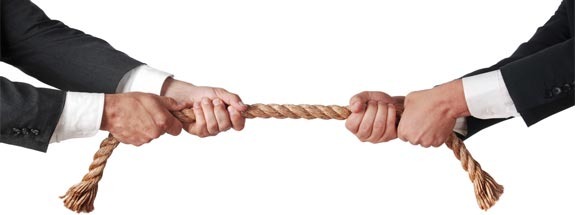
tugofwarbusiness

Compiled by london swaminathan


Date: 4 May 2016


Post No. 2781


Time uploaded in London :– 17-50


( Thanks for the Pictures)


DON’T REBLOG IT AT LEAST FOR A WEEK!  DON’T USE THE PICTURES; THEY ARE COPYRIGHTED BY SOMEONE.


(for old articles go to tamilandvedas.com OR swamiindology.blogspot.com)


Georges Clemenceau, The Tiger of France, told this story: “One day in a little village in the East Indies, I noticed a little statuette, and said to the dealer, “l like your statuette. How much is it?”
“Because it is you”, he answered “75 rupees”.
“Because it is you”, I answered, “I offer you 45 rupees”.
He raised his hands to heaven.
“Forty five rupees! You are making fun of me! What if anyone happened to hear of it?”
“Forty five rupees”, I said.
Then he made a fine gesture of indignation. “Impossible!
I would rather give it to you”.
“Agreed !”

I took the statuette, stuffed it into my pocket, and said, “you are extraordinarily kind, and I thank you.
But it is quite evident that this gift can only come from a friend to a friend. Consequently you won’t take it amiss if I in turn make you a gift”.
“Naturally not”.
“Well, here are forty five rupees to use in good works”. He took them and we parted, enchanted with each other.

Xxx

bargaining-300x225

Shrewd Bargaining!

Shrewd bargaining is typified by the woman who entered one of the large department stores of New York and ordered a yard of silk which had been priced at 35 cents a yard. After her purchase, there was left a remnant of one and a half yards, and the clerk suggested that she take it also.

“What do you want for it?”, she asked.
“Oh, 20 cents”, replied the clerk.
“Alright”, said his customer, “I will take it and you can keep the yard you just cut off”.

Xxx