Prisoners: Barack Obama, Manu and Kalidas (Post No.3610)

Statue of Kalidasa in China


Written by London swaminathan


Date: 6 FEBRUARY 2017


Time uploaded in London:-  9-17 am


Post No. 3610


Pictures are taken from different sources; thanks.


contact; swami_48@yahoo.com


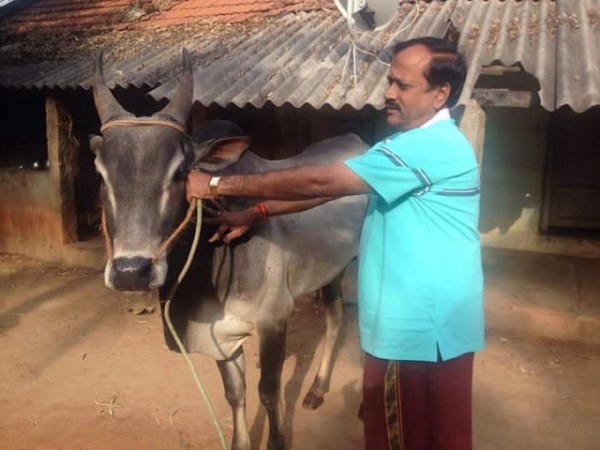
Kalidasa refers to the release of prisoners on the eve of the coronation of a king (Raghuvamsa 17-19). Barack Obama, outgoing US President also did the same just before leaving the office. This custom was started in Hindu India thousands of years ago. But India was one step ahead of all the countries. They even gave freedom to birds and animals! Caged birds were released! Domestic animals were unharnessed according to Kalidasa.

बन्धच्छेदन् स बद्धानान् वधार्हाणामवध्यताम्।
धुर्याणान् च धुरो मोक्षमदोहन् चादिशद्गवाम्॥ १७-१९

bandhacchedan sa baddhānān vadhārhāṇāmavadhyatām |
dhuryāṇān ca dhuro mokṣamadohan cādiśadgavām|| 17-19


On coronation Atithi ordered the release of prisoners; cancelled death sentences of those who are condemned to it; released the beasts of burden from burden, and interdicted the milking of cows. [17-19]


क्रीडापतत्रिणोप्यस्य पञ्जरस्थाः शुकादयः।
लब्धमोक्षास्तदादेशाद्यथेष्टगतयोऽभवन्॥ १७-२०

krīḍāpatatriṇopyasya pañjarasthāḥ śukādayaḥ |
labdhamokṣāstadādeśādyatheṣṭagatayo’bhavan|| 17-20


Even the caged birds of amusement such as parrots and others having gained their freedom through his order and became free birds to go as they wished. [17-20]


(Raghuvamsa translation from sanskritdocuments.org)

Kautilya also says that the king releases all the prisoners in the newly captured country. They are released when there is a coronation or a new child is born to the king. The joy is shared by everyone. Death sentence is commuted or cancelled.


The king should have all the prisons built on the royal highway, where the suffering mutilated evil doers can be seen 9-288


Manu says a prisoner should be excluded from the ceremony for the dead (Manu 3-158)


A priest (Brahmin) should not eat the food of a man bound in chains prisoner) 4-210


Prisoners Release in America


President Obama granted commutations Tuesday to 79 federal drug offenders who were imprisoned under harsh and outdated sentencing laws, pushing to more than 1,000 the number of inmates who have received clemency from him.

Obama’s historic number of commutations — more than the previous 11 presidents combined — was announced as administration officials are moving quickly to rule on all the pending clemency applications before the end of the president’s term. The Trump administration is not expected to keep in place Obama’s initiative to provide relief to nonviolent drug offenders.

About a third of the 1,023 inmates who have been granted clemency, 342 prisoners, were serving life sentences for their ­offenses.

“The President’s gracious act of mercy today with his latest round of commutations is encouraging,” said Brittany Byrd, a Texas attorney who has represented several inmates who have received clemency since Obama’s initiative began in 2014.

“He is taking historic steps under his ground-breaking clemency initiative to show the power of mercy and belief in redemption. Three hundred and forty-two men and women were set to die in prison. The president literally saved their lives.”

Eighteen of the inmates granted clemency Tuesday were serving life sentences.


My old article:

Prisoners Rehab in Ancient India! (Posted on 23 March 2013)

–SUBHAM–


Drama, Puppet Show, Folk Theatre in Tamil and Sanskrit Literature (Post No.3608)

43187-krishna2bsandhana2bdrama2bmysuru2bnew2bie

Research article written by London swaminathan


Date: 5 FEBRUARY 2017


Time uploaded in London:-  15-52


Post No. 3608


Pictures are taken from different sources; thanks.


contact; swami_48@yahoo.com


Literary references in ancient Tamil and Sanskrit literature show that the people of India had wonderful entertainment for at least 3000 years continuously. We have references to drama, folk theatre and puppet show from Bhagavad Gita to Tamil saint Manikkavasagar’s Tiruvasagam. Though Bharata’s Natyasastra is about dance and drama, it is interesting to see similes of dance and drama from the olden days.


Following are the references: –

iisvarah sarvabhuutaanaam hrddase’rjuna tisthati

bhraamayan  sarvabhuutaani yantraaruudhaani maayayaa _Bhagavad Gita 18-61)

Arjuna, God abides in the hearts of all creatures, causing them to revolve according to their karma by His illusive power as if they were mounted on a machine.


I think this is a reference to Puppet show. Puppeteers mount the puppets on a wheel or a circular disc and show them dance. In Indian puppet show the operator sits behind a white curtain on which the shadow of the puppets are projected from behind the screen.

Ramakrishna Paramahamsa used to say Ami Yantram and You are Yantri (I am a machine, You (god) are the operator.


5fa4c-siva2buma2bdance252c2bfb

Adi Sankara in his Viveka Chudamani, says

yatsatyabhutam nijarupamadhyam

chiddhayanandamaruupamakriyam

tadetya mithyaavapurutsrujeta

sailuushavadveshamupssttamaatmanah (292)


That which is real and one’s own primeval Essence, that Knowledge and Bliss Absolute, the One without a second, which is beyond form and activity – attaining That, one should cease to identify with one’s false bodies like an actor giving up his assumed mask.


When the actor has played his part, he is simply a man. So the man of realization is one with Brahman, his real Essence.

false bodies: The gross, subtle and casual bodies, which are super impositions upon the Atman.

(Translation of Vevekachudamani by Swami Madhvananda, Advaita Ashrama, Calcutta)


Sangam Tamil Literature

In Purananuru verse 29, Mudukannan Sattanar says, “Oh King, our life is like dance drama where the actors come and dance and go. (The life is so impermanent)”


Tiruvalluvar, author of the Tamil Veda Tirukkural refers to the drama in three couplets:-


“Fortune coming to one and its departure are likened to the assembling of a crowd to witness a drama and its dispersal respectively” (332)


“The men who do not possess sensitiveness to shame in their hearts are like the wooden dolls operated by strings (puppets)” (`1020)


“The great cool world will be  moving like a lifeless puppet show if none asks for help” (1058)

In later Tamil and Sanskrit literature, we have lots of similes for puppets shows.

049bf-dace2blike2bsiva2buma

Manikkavasagar’s Tiruvasagam

Tamil saint Manikkavasagar who lived 1500 years ago also used the Sanskrit word Nataka (drama) in three places:

In the Tirusatakam song of Tiruvasagam, he refers to drama in three places (verses 11, 15 and 99)

In verse 11, he sings about the dance of Siva n the crematorium with the ghosts.


Amidst your devotees, I acted like one of them

to gain entrance (to get leberated) –15


and in 99

Thou Whom the lords of heaven themselves know not!

Thy source and end the Vedas cannot trae!

Thou Whom in every land men fail to know

As Thou hast sweetly made me Thine hast called

This flesh to dance on stage of earth

me to enjoy Thyself with melting soul

in mystic drama , too, hast caused to move

pining on earth, Thou Lord of Magic power.


Of virtue void, of penitential grace

devoid, undisciplined, untaught

As leathern puppet danced about, giddy,

I whirling fell, lay prostrate there!

-643

(Souce: The Tiruvacagam by Rev. G U pope, Oxford, 1900)


Dhammapada

Buddha says in Dhammapada (147), “Consider this body! A painter puppet with jointed limbs, sometimes suffering and covered with ulcers,full of imaginings, never permanent, forever changing.(147)


513e7-dance2bvaranasi252c2bvasanta2bpanchami

Last but not the least is Shakespeare whose quotation on world as a drama theatre has become a very popular quote:-


All the world’s a stage,
And all the men and women merely players;
They have their exits and their entrances,
And one man in his time plays many parts,
His acts being seven ages. At first, the infant,
Mewling and puking in the nurse’s arms.
Then the whining schoolboy, with his satchel
And shining morning face, creeping like snail
Unwillingly to school. And then the lover,
Sighing like furnace, with a woeful ballad
Made to his mistress’ eyebrow. Then a soldier,
Full of strange oaths and bearded like the pard,
Jealous in honor, sudden and quick in quarrel,
Seeking the bubble reputation
Even in the cannon’s mouth. And then the justice,
In fair round belly with good capon lined,
With eyes severe and beard of formal cut,
Full of wise saws and modern instances;
And so he plays his part. The sixth age shifts
Into the lean and slippered pantaloon,
With spectacles on nose and pouch on side;
His youthful hose, well saved, a world too wide
For his shrunk shank, and his big manly voice,
Turning again toward childish treble, pipes
And whistles in his sound. Last scene of all,
That ends this strange eventful history,
Is second childishness and mere oblivion,
Sans teeth, sans eyes, sans taste, sans everything.

–As You Like It

 770d1-dance2bof2bsix

Conclusion

Drama and Puppet show were so popular that even Krishna and Buddha used them as similes.

Every town had a drama or puppet show on Hindu religious them during the local temple festival. It continued until recent days.

Most of the drama quotations are from religious sources which show the nature of the puppet shows and dramas.

Even before Shakespeare made this theme popular, Hindus used it to show the instability and impermanence of life and its pleasures.

World is a drama theatre and we all players!


–Subham–


Custom of Garlanding and Flower Giving in Tamil and Sanskrit Literature (Post No.3550)

Giving Flowers to a woman began in India.


Written by London swaminathan


Date: 16 January 2017


Time uploaded in London:- 21-06


Post No.3550


Pictures are taken from different sources; thanks.


contact; swami_48@yahoo.com


Garlanding statues of Gods and leaders, garlanding visiting dignitaries are common sights in India. Exchanging garlands is a marriage ritual as well. Giving flowers to women, offering flowers to Gods are also an everyday sight in India. All these started with the Hindus thousands of years ago according to Sanskrit and Tamil literature.


Jayamala ceremony is part of a marriage in North and South, showing Indian culture is one.

In my article FLOWERS IN TAMIL CULTURE posted on 25th August 2012, I have dealt with the Flower vendors in Sangam Tamil Literature, Kapilar’s listing of 99 flowers, Tamil classification of flowers, Tamil’s obsession with flowers even in the wars, 27 leaves to God Vinayaka, Famous Andal garland of Srivilliputtur, Onam Pukkolam and Pushpanchali.


Garlands are used from the Swayamvara (A princess choosing a King as her husband by garlanding) days.


Giving flowers to women was also started by the Hindus at least 2000 years ago. Let me give some examples from Kalidasa’s works:-


In the most famous drama of Sakuntala (Act 7-1), we read about garlands:

“Glancing up with a smile at Jayanta, his son

who stood beside him longing inwardly for the same,

Hari placed around my neck the Mandara garland

tinged with golden sandal rubbed off his chest”


In the Kumara Sambhava (3-22), the Master’s command is imagined to be a garland offered as a gift of favour.

In the Raghu vamsa (18-29)the king was, as it were, the crest garland of his race suggesting thereby the marks of a good rule.

The Love god whose energy had diminished with the departure of spring seems to be regaining his vim and vigour through the head hair of pretty women, for they are letting it loose after a bath aesthetically, per-fumigating it tastefully, and slicing evening jasmine flowers pleasingly. [16-50]


(Kiraataarjuniiyam also has a reference).


In the Raghuvamsa (6-80), Indumati’s glance itself was like the Swayamvara garland to Aja. The flowers in the garland were fresh and white and her steady glances were also white.

Keeping flowers in the ear or just above the ear is also mentioned in Kalidasa:-

Meghaduta. – 28, 67


“Where women toy with a lotus held in hand

twine fresh jasmines in the hair

the beauty of their faces glows pale gold

dusted with the pollen of lodhra flowers

fresh amaranth blooms encircle the hair-knot

a delicate Sirisa mestles at the ear

and on the hair parting lie Kadamba blossoms

born at your coming (verse 67, Megaduta)


Sakuntala : 1-4; 1-30; 6-18; in the prologue as well.


Raghu.7-26; 9-28, 9-43, 16-62

In the Tamil literature

Flower or tender plant in the ear:

Kurinjip paattu (Kapilar) 119-120

Tiru murukku-(Nakkirar)-30-31; 207

Paripaatal – 11-95; 12-88


GIVING FLOWERS TO A WOMAN

Kuruntokai belongs to Sangam period. The very first verse is about a man giving flowers to a woman he loves. It is sung by Tiputolar.


Natrinai, part of 2000 year old Tamil Sangam Literature, describes the garland worn by a man who came to see his lady love. He came wearing a garland made up of wild jasmine flowers and Bilva (Vilvam) leaves. Kalidasa also mentioned jasmine flowers in the hair of women. It showed that there was only one culture from the southern most part to the Northern Himalayas.


one of the verses in Marutham genre describes that when the farmers go to the fields, heroines (women) get flowers and garlands.

Natrinai verse 173 says that the women gathered flowers and made into a garland for Lord Skanda. She did it to so that her lover would marry her soon.

Purananuru verse 106 by Kapilar mentions that god wont reject even leaves and grass offered, reflecting the Bhagavad Gita verse 9-26 (Patram pushpam phalam toyam……)
This flower giving and garlanding is another proof to show that Indian culture is one from south to north and the Aryan-Dravidian Race theory is a fake one. No ancient culture has this flower culture.

–Subham–


Causes of Destruction: Woman and Brahmin (Post No.3541)

Written by London swaminathan


Date: 13 January 2017


Time uploaded in London:- 21-44


Post No.3541


Pictures are taken from different sources; thanks.


contact; swami_48@yahoo.com


What causes one’s destruction? Sanskrit scholars (Pundits) have a list; they have compiled the list out of past experience. I am pretty sure we can find lot of examples for each category.


Vinaasahetavah (causes of destruction):

Strii – ruupam = woman is destroyed by her beauty.

Chittoor Rani Padmini is a good example; her beauty made Aaludin Khilji to invade the Rajput Kingdom and she had t jump into fire along with her friends to save her honour.

Brahmana-rajaseva = Brahmins by service to the king

Nanda vamsa kings are typical xamples; they ridiculed all the Brahmins including Chanakya; first the Brahmins suffered at the hands of the Nava Nandas and then Chanakya destroyed them. Parasurama’s clash with kshatriyas is also famous


Gavah duurapracaarana= Cows by grazing distant field

Many of the village disputes are due to the cows grazing someone else’s field, usualy away fom one’s own field.


Hiranya lobhalipsaa – Gold by greed; here gold stands for all sorts of wealth. Most of the non violent prisoners are jailed because of their greediness.

Strii vinasyati ruupena braahmano raajasevayaa

Gaavo duuraprachaarena hiranyam lobhalipsayaa

–Subhasita ratna bhadaagaaram 153/19


Garuda Purana also has a similar couplet (sloka):-

ruupena strii = woman by beauty

krodhena tapah = penance by anger

duuraprachaarena gaavah = cows by distance gracing

ksudraannena dvijaah = Brahmins by eating unhygienic food.


Striyo nasyanti ruupena tapah krodhena nasyati

Gaavo duuraprachaarena kshudraannena dwijottamaah

Garuda Purana 115-7


xx x

Causes for the Fall of Brahminhood: Manu

Viprasya naasahetu

Veda- anabhyaasa = not learning the Vedas

Acaaravarjana = abandoning the codes of conduct

Aalasya = lethargy

Annadosa = disrespect for food


anabhyaasena vedaanaamaachaarasya sa varjanaat

aalasyaadannadoosaaccha mrtyurvipraandhaamsati

–Manu Smrti 5-4


Source Book: Encyclopaedia of Numerals (Volume 1)

The Kuppuswami Sastri Research Institute, Chennai 600 004, Year 2011


Pearl is available from Twenty Sources! (Post No.3538)

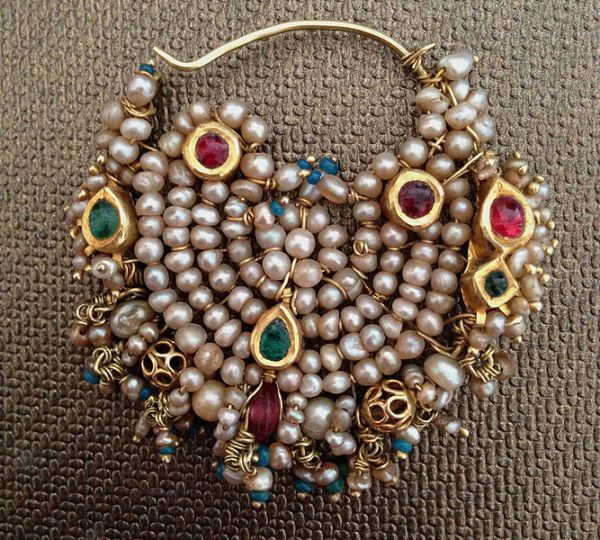
a6727-nose_ring_wikipedia

Written by London swaminathan


Date: 12 January 2017


Time uploaded in London:- 20-20


Post No.3538


Pictures are taken from different sources; thanks.


contact:  swami_48@yahoo.com

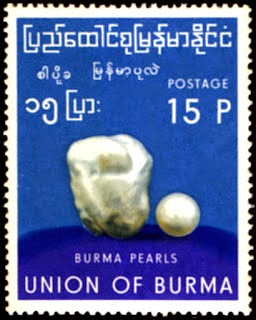
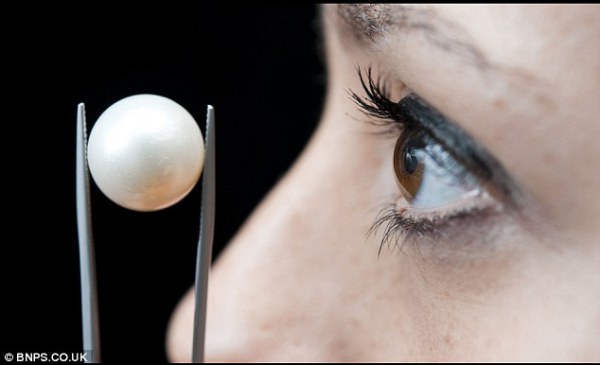
Tamil literature lists 20 places as the sources of pearls . Biologists know only one place where pearl is born. Sanskrit literature lists only eight places but these are not scientifically proved.

Twenty places according to Tamil verse from Uvamana Sangraham and Rathina Surukkam:
Oysters
Horn of elephant/tusk
Horn of boar

Bamboos

Areca nut Tree

Special Type of Banana Tree

Chalanchalam (Rare Type of right whorld Chank

Hear of Fish

Head of Crane

Lotus

Neck of women

Sugar cane

Paddy

Snake (cobra)

Clouds

Iguana

Moon

Chanks

Head of a crocodile
Teeth of cows

Varahamihira lists the following eight places in his Brhat Samhita:-


Following is from 2015 post: “Eight Types of Pearls: Varahamihira’s 1500 year old Price list”

17f95-pearl-large

Pearls are produced by:

Elephants, Oysters, Snakes, Clouds, Chanks, Bamboos, Whales, Boar (Brhat Samhita, Chapter 81)

Pearls come from eight areas


Simhalaka (Sri Lanka), Paraloka (Travancore coast), Surashtra (Gujarat), Tampraparani River (in South Tamil Nadu), Parasava (Iran), a Nothern country, Pandya vataka and the Himalayas.

Kautilya’s Artha Shastra (Third Century BCE) mentioned Pandya Kavata pearl. Fahien (399-414 CE) mentioned Simhala/Sri Lankan pearls.

Paraloka is a confusing term. There is one river called Parali in Kerala and there is an island Parali in the Lakshadweep. But the interesting thing is that itself sounds pearl in Tamil (Paral in Tamil is pearl in English and this town name is Paral+i).

Elephant Pearls:


Pearls are also obtained from the head and tusks of Bhadra class of elephants, says Varahamihira. But Varahamihira makes it clear that he repeats what the ancients believed about the elephant pearls. (This means they are not found even in Varahamihira days who lived around 510 CE)

He speaks about the pearls found in Boar tusk, Whales etc. Then he gives details about the pearls that are found in the seventh layer of winds. But the heaven dwellers will catch them before it falls on to earth!

Then he categorises Nagaratna as pearls. If the kings wear Nagaratna pearls enemies will be destroyed and his reputation will increase.
Kalidasa speaks of pearls from the head of elephants

xxx

From my 2012 post “Gem Stones in Kalidasa and Sangam Literature”

 
Pearl in the Oyster


If the rain falls on Swati star day the oysters open their mouth to drink the rain drops and the rain drops become pearls-This was the belief of ancient Indians including Tamils.
Bhartruhari and Sangam Tamil literature say that the pearls are created by the oysters on a particular day,I.e. The oysters open their mouths when there is rain falling down on a day under the star Swati(one of the 27 stars ). Biologists say that the sand particles that enter the living oysters secrete a liquid which covers the irritant to become a pearl.
Malavi.1-6: Kalidasa says , ‘the skill of a teacher imparted to a worthy pupil attains greater excellence, as the water of a cloud is turned in to a pearl in a sea shell.In Puram 380 ,Karuvur Kathapillay says the same about the origin of pearls. Bhartruhari makes it more specific by saying the rain on Swati Nakshatra days become pearls. Biologits also confirm on full moon days lot of sea animals like corals release their eggs or spores. So far as India is concerned it might have happened in that particular (Swati star with Moon) season.

Kalidasa gives more similes about pearls. He describes the river that is running circling a mountain as a garland of pearls ( Ragu.13-48 and Mega.-49)

Other references from Kalidasa: sweat drops as pearl:Rtu.6-7; tears as pearls: Mega 46, Ragu VI 28,,Vikra V 15; smile-KumarI-44, water drops on lotus leaf:Kumara VII 89


Pearls obtained from the head of elephants:Kumarasambhava 1-6, Raghu.9-65; In Tamil literature: Murugu 304, Malaipadu 517, Puram 170Natri.202, Kurinchi.36, Akam.282 etc.


In Tamil the teeth are compared to the pearls: Ainkur. 185, Akam 27

Since Gulf of Mannar is the main source of pearls in India ,thre are innumerable references to pearls in Tamil literature. Even Kautilya refers to the pearls from Pandya country. Korkai was the harbour city where the pearl fishing was flourishing. Aink 185,188, Akam 27,130 and Natri 23mention pearls from Korkai.

(for more information, go to  the two articles mentioned  by me

–Subham–


Bull Fighting in the 1890s (Post No.3523)

Compiled by London swaminathan


Date: 7 January 2017


Time uploaded in London:-  20-41


Post No.3523


Pictures are taken from different sources; thanks.


contact; swami_48@yahoo.com


“There are several other kinds of amusement, some of them of a vulgar character, Bull fighting is one of them.

The bull fighting must not be regarded as like the familiar bull-fighting in Spain, or any other western country. This fight is called ‘sallikattoo’, and takes place during the day.


A large plain is chosen for the purpose and the villagers collect money among themselves with which to meet the necessary expenditure. They send out invitations to the people of other villages and inform them of the fixed day for bull-fight. This news spreads abroad among all classes of the people who come in numbers in bands and parties, both men and women to the spot appointed. The people of the village who have arranged the bull fight erect temporary sheds at their own cost in order to accommodate their visitors. As it is a public meeting place, the sellers of various articles flock to it with their different kinds of goods.

At about eight O clock in the morning all assemble in the plain. Sometimes there are thousands of people met on such occasions. Several fighting bulls will be brought by the villagers from different districts. The owner of each bull ties a new cloth around its neck. In  some cases the owner puts money in a corner of the cloth. He takes the bull to the headman of the assembly and bows his head to him. Then the headman inquiries concerning the parentage and name if he does not happen to know him. Then be asks the herald or the crier to beat his drum three times. This is a sign for the people to understand that a fighting bull will be let loose in the midst of the assembly. This is a signal also to the men who have come to fight the bull, and take the cloth and the money its neck that they must hold themselves in readiness. The owner of the bull takes him to the centre of the assembly, and there be lets him loose by warning the bult to take cate of and to make his way through the crowd to his shed.


As soon as ever the bull is set free, ten or fifteen men come to the front of the assembly without either stick or knife, and they face the bull manfully. Some of the clever bulls defend themselves hours together, hurting many of those men, and sometimes killing one or two; at last they escape from their hands and go home, leaping and frisking for joy. There are many bulls who are known to be great fighters and who allow anyone to take the cloths from their necks. Whoever takes the cloth considered to be a is hero. The bullocks are brought in to fight, one after another, the whole day through, and sometimes this terrible struggle between man and beast will be continued for two or three days. Some of the owners of the bulls offer a large sum of money to anyone who can arrest their bulls before the assembly.


These beasts are very knowing and clever in their fighting; they stand quietly before the assembly, and do not run or jump but if anyone approaches them, they hit him with their horns or legs as quickly as a flash of lightning. The people who come to witness the fight occupy the ground for half a mile in a crescent form. Some will sit and some will stand, just as they may please, and most of them will be exposed to the wind and the sun; but this they consider as nothing compared with the pleasure they derive from watching the bull-fight. The public do not pay a penny on occasions of this kind.


–Subham–

Stone cutters of Tamil Nadu and the Story behind Madurai Temple (Post No.3520)

Incomplete Raya Gopuram of Madurai in Tamil Nadu

Compiled by London swaminathan


Date: 6 January 2017


Time uploaded in London:-  17-14


Post No.3520


Pictures are taken from different sources; thanks.


contact; swami_48@yahoo.com


The village stone cutter belongs to the five artisans of the village. He generally lives where there is solid rock which will suit his purposes. He opens his workshop under the burning sun on the open rock. He has a few chisels of different kinds and some iron hammers. With these simple tools he turns out some really good and useful work. He makes the stone for grinding curry materials; the mortar in which to pound rice and the mills– which are primitive in style– for grinding the flour. He can also make stone steps, pillars, beams, doorposts, jars, stands, troughs for watering the cattle and other useful articles that are required for domestic use.


He is not a monthly or annually paid artizan, but he receives suitable payment from the people for all the articles with which he supplies them. He does not go about to collect grain and vegetables from the villagers. If any villager chooses to give him a gift in the form of grain or fruit, of course, he is only too happy to accept it.


The skill of the famous Indian stonemasons has been displayed in the erection of the temples of India. The remarkable way in which groups of animals and human figures are carved out of the solid rock in some of the most famous ancient Hindu temples, speaks volumes for the skilfulness of the Indian stonemason. There is a temple (consecrated to the Hindu god Subramanian, the second son of the god Siva) at Kalugumalai, in the Tinnevelly district of Southern India, which is noted for its singular situation under a solid rock. The cave itself is well worth a visit and the carvings in solid rock are simply marvellous.


In the temple of Srirangam, in the Trichinopoly district, there are several indications of the skill of the stonemason. There are many beautiful pagodas, which shoot up into the sky to a lofty height, in the midst of hundreds of palm-trees and mango-trees, between the two great rivers, the Kavery and the Kollidam. The beautiful and attractive stone pillars, which stand in some of the temple mandapam(cloisters) were first conceived in the mind of the stonemason and then fashioned into shape by his skilful hands. At the bottom of the pillar is the figure of a bear ten feet in height; in the middle of the pillar is a horse about eight feet in height; on the back of the horse there is a hero holding a long spear in his hand, which is passing through the bear that holds up the pillar. On the top of the pedestal there hangs different kinds of Indian fruits. There are several pillars of this kind, and they differ only in the form given to the animals.


The stonecutters also make innumerable gods and goddesses for the people. They make gods with human bodies and animal heads, or with animal bodies and human heads. Their fingers have formed images of all the living creatures of India and placed them in the sacred buildings of the Hindu community.


It is a general complaint that the ancient Indians did not leave any proper record of the history of their land. The stonecutters have to some extent made up for this deficiency. They have told the histories and mysteries in the works of their bands. The inscriptions carved by them in various temples some two to three thousand years ago are still read with interest, and they are often used in deciding the disputes as to the rights of the peasants, the priests, and the princes of the land.

Story behind the Madurai Temple Tower

There are many stories connected with the scientific knowledge of the stonemasons. There is a beautiful and even magnificent temple in the historical and ancient city of Madurai. This temple was built by the founders of the Pandyan dynasty, and afterwards much improved by Terumal Naick (Thirumalai Nayakar), the latest Hindu ruler of Madura. In this temple there is a royer gopuram (the great pagoda) which was built by Terumal Naick. There are two large stone pillars in this royer (Rayar) gopuram. A certain stonemason, by order of the king, brought the stones from the mountain, and placed them in the pagoda, and then died. His son came, and attempted to follow in the footsteps of his father in erecting the royal monument to the goddessMeenatchi, and then he died. By-and-by his son came to the temple to pay his vows. As he entered the royer gopuram saw the great stone pillars. As he looked at them he thought that his grandfather had made a mistake in bringing of the stones and placing it in the sacred place, and he gave expression to his feelings while he was standing in the temple, saying that the temple was polluted according to building science, inasmuch as in one of the two huge pillars a frog was still alive at a certain spot towards the top of the pillar. This statement was brought to the notice of the king, and the man was summoned at once into his presence. The king asked the stonemason, “Have you said that my temple is polluted on account of one of the pillars being placed in the main entrance of the temple?”

“Yes, Your hHghness,’”politely said the man.

“If you cannot prove your statement to be true, remember your head will be severed from your body,” said the king in a very severe tone of voice.


Having placed his life as the pledge for the truth of his the stonemason boldly asked the king to follow him to the temple. The king and his courtiers went. The stonemason requested one of the servants of the king to place a ladder beside the pillar and to go up to the top, and break off a certain portion of the pillar with a hammer. When several small pieces had been broken off a stone frog actually fell down to the great surprise of the king and the advisers. The king immediately ordered his servants to bring gifts from the palace, and these be presented to the stonemason, and he even bestowed upon him royal honours.


Source: Indian Village Folk, T B Pandian, London Year 1897
-Subham-

Bhagavad Gita Simile used by Ancient Tamil Poets! (Post No.3514)

Research Article written by London swaminathan


Date: 4 January 2017


Time uploaded in London:-  20-56


Post No.3514


Pictures are taken from different sources; thanks.


contact; swami_48@yahoo.com


If one studies the similes used by ancient Sanskrit poets and Tamil poets one will find out that Indians had a unique culture spreading over a vast landmass, that was the largest country in the world 2000 years ago. The simile used by Lord Krishna in Bhagavad Gita is found in the oldest Tamil book Tolkappiam and Sangam Tamil literature. Kalidasa and other Sanskrit poets also used the simile in umpteen places. This explodes the divisive Aryan- Dravidian Race Theory. Hundreds of similes are unique to Tamil and Sanskrit literature which are not found in any other literature or culture in the world.


Lord Krishna says (Sutra Manigana Iva) :

There is nothing whatsoever higher than Me, O Dhanjanjaya. All this strung in Me, as clusters of gems on a string 7-7


Commenting on this couplet Swami Chinmayananda says: “To show that the Self is one and the same in all forms, it has been said that the Lord is the common factor in all forms in the universe. He holds them all intact as the string holds all the pearls in a necklace. These words have deep significance. Not only is it beautiful in its poetic suggestion, but it has also a very exhaustive philosophical implication. The pearls in the necklace are necessarily uniform and homogenous, and its thread, which is generally unseen, passes through the central core of every pearl, and holds them all, the big and the small, into a harmonious ornament of beauty. Here is an instance wherein we see Shri Veda Vyasa typically expressing himself as the poet-philosopher of the world.


Tolkappaiam written by Tolkappiar, is considered the oldest book available in Tamil. It is dated around First Century BCE. Definitely later than Bhagavad Gita. We find the simile in Tolkappiam as well. Like Sanskrit, Sutra means a book and a thread in Tamil also; in Tamil the word used is Nuul= Thread or Book.


Tolkappiar used the word Sutra following Panini. He never hesitated to use a Sanskrit word. In the Sutra 1426:

Like orderly arranging the gems in a string, arranging the same types is called Othu.


Tamil Veda Tirukkural written by Tiruvalluvar also used the Bhagavad Gita simile:-

There is something that is implied in the beauty of this woman, like the thread that is visible in a garland of gems.


Thus Krishna’s “Sutra Manigana Iva” simile has become popular 2000 years ago. Avadhutopanishad also has this.

Kalidasa used this imagery in His Raghuvamsam and Vikrama Urvaseeyam:-

Though a dunce, I have a way in through the epic already rendered by Valmiki like the thread that easily goes through the diamonds already bored- (Raghuvamsa 1-4)


This King of Anga made the wives of his enemies to throw off their ornaments and weep for their husbands shedding tears larger than pearls on to their breasts which appeared like pearl necklaces. The king took the real necklace and gave them tear necklace- Raghu.6-28


A lady was halfway through her stringing of gems for her girdle. The thread was tied to her thumb. When she came to know about Aja’s visit she rushed to the window to see him. All the gems fell and scattered leaving only the thread still knotted to her thumb 7-10


These women engrossed at splashing water on each other are unable to give a thought to the severance and slithering of their pearl necklaces from their bosom, for the water drops as large as pearls are hopping on their bosoms which they think necklace of pearls – 16-62

These similes of Raghuvamsa were used by Tamil poets in Sangam literature.

Sangam Tamil poets used the similes in the following places:


Kudavayil Keerathanar has used this imagery twice in his poems in Akananuru (289 and 315)


Eyinanthai Ilankeeranar (Akam.225) used the broken pearl necklace image in his verse.


Kurunthokai Poets Kundriyanar and Kavan Mullai Poothanar and  Marudan Ilanagan of Marudakkali also followed his predecessors.   All of them used the unstringed or broken necklace images.


Thus, we see One Thought- One Culture from Kanyakumari to Kashmir. Before the foreigners came they didn’t know any divisions in the community such as Aryan or Dravidian races.

-Subham-


Book Review: Brindavan Express by Mr V.Desikan (Post No. 3481)

74231-sundal

Written by S NAGARAJAN


Date: 25 December 2016


Time uploaded in London:- 6-17 am


Post No.3481


Pictures are taken from different sources; thanks.


contact; swami_48@yahoo.com


This article first published in www.ezinearticles.com under expert author : santhanam Nagarajan


Brindavan Express by Mr V.Desikan


Santhanam Nagarajan


The book under review Brindavan Express written by Mr V Desikan is a fantastic book.


Mr Desikan belongs to Tamilnadu.


He has obtained his  degree in electronics from the Madras Institure of Technology and joined in Defence Research and Development organization at Bangalore. He is the recipient of ‘Scientist of the Year (1983) DRDO  award from the late Prime Minister of India Mrs Indira Gandhi


He has jotted down his thoughts systematically from time to time and like a sculptor creates his dream statue, has written down articles weaving his beautiful thoughts with a  humorous touch.


The book has 73 articles under twelve captions namely My roots, Emotions, Life is a game, My living town – Bangalore, Food, Music and Novels, Future Tense, Language, Growing old, Science and Engineering, What is in a name and Mixture.


One of his friends Mr RV Rajan induced him to publish these article in a book form.


The articles were published in a leading English daily Deccan Herald. His style is lucid.


Each and every article kindles readers thought process. His conclusions are compelling and convincing.


As a scientist he dreams towards a better future where every thing is perfect. He points out that the future lies in Nano technology.


There are  many quotations through out the book from great men like Rabindranath Tagore, Harry Emerson Fosdick, Shakespeare, G.K.Chesterton etc.


The book makes an interesting reading. He has


The book is neatly printed and can be obtained from leading book shops.


Some excerpts from the book:

f31bf-sundal2b2

About his Boss:


My boss Burman, a confirmed bachelor was in charge of system integration. He was a chain smoker.If he liked someone,he would call him an ‘idiot’ or ‘a fool’ –  I was one of his favorite idiots!


On seeing his dream vehicle,  the 40 feet long SANGAM:

I went towards my favorite SANGAM  and stood there for a long time. I looked at her and gently whispered (what Brutus told Cassius):

‘Forever and forever farewell, my dear

If we do meet again, why, we shall smile.

If not, why then this parting was well made.’


About Sundal :

If there be Chat Centres, fast food outlets all over our cities, why can’t someone open a ‘Sundal Center’?


About KDK (Kumbakonam Degree (Coffee) Kaapi :

Thank you KDK

You bring me joy in the morning

You bring me joy in the morning;


About the requirement of a positive newspaper :

I have a real problem on hand. All my life I have enjoyed sipping my morning coffee, reading the morning newspaper. I have recently discontinued my habit as it is no more a pleasant experience. Now I need a ‘Positive Newspaper’ badly.


I have a dream:

My idea of Next-gen city is that it should be

Totally green and with Zero pollution

With efficient and complete public transportation

With minimum private vehicles

Total Connectivity – Airports, roads, sea (where applicable)

Full Safety


I congratulate Mr Desikan for releasing this wonderful book. I strongly recommend this book for the book lovers.


*********

Origin of Sri= Sir = Thiru (Sanskrit/English and Tamil) – Post No. 3479

Research Article Written by London swaminathan


Date: 24 December 2016


Time uploaded in London:-  15-22


Post No.3479


Pictures are taken from different sources; thanks.


contact; swami_48@yahoo.com


Believe it or not, the Sanskrit word ‘Sri’, English honorific title ‘Sir’ and Tamil word ‘Thiru’ all mean the same. Sir and Thiru came from the Sanskrit word Sri.

Sri is written as ‘Siri’ (as in Sirimao Bhandaranayake) in Sri Lanka and ‘Sere’ in South East Asia.


In India, Sri is also written as Shree, Sree, Shri and Sree. Sri means wealth and Goddess Lakshmi. Sri also means light, resplendent etc.


In the name of a country Sri Lanka , the meaning of Sri is ‘replendednt’.


Nowadays Hindus use it before a male’s name to give him respect. It is used as Mr and in Tamil Tiru. If it is a woman, then Srimati (in Tamil Tirumati) is used. It may mean respectful or enlightened.


Sri= Lakshmi, Wealth, Fortune, Prosperity, Light, Resplendent (nowadays Mr)


Tamil word Thiru or Tiru is also derived from Sanskrit Sri. In Tamil also the meaning is similar to Sanskrit.

According to linguistic rules ‘S’ and ‘T’ are interchangeable. That is why all the English words with ‘TION’ ending is pronounced ‘SION’ ((E.g) Education, Fruition, Cognition. Even in Tamil literature Tamil saints changed Vithyai as Viccai (Vidhya=Vithyai- vicchai) in Tevraram and Tirvasagam and Divya prabandham. The oldest portion of these Tamil devotional literature is at least 1500 year old.

Sir—Honorific Title

English people who are knighted are given the title ‘Sir’. In India scientists like Sir C V Raman, Sir Jagadish Chandra Bose, Literaturs like Ravindranatha Tagore and judges like Sir C Ramaswami Iyer, sportsmen like Sachin Tendulkar were awarded this ‘SIR’ title by the British Queen.


The etymology of the word according to Oxford dictionary is as follows:-

The word Sir derived from the Middle English ‘Sire’ according to the dictionary. It was first used in 1297. All these are forced etymology, because it doesn’t explain where the Old French or Latin got it. As everyone knows that Germanic languages and Romance languages are derived from Sanskrit , the root of Sir can be easily traced.


Sri is found in the Vedas. There is a Suktam (Poem/verse/hymn) named after Sri. Names such as Srimati, Sri, Sridharan, Srinidhi, Srinivas are common even today. Oldest Shasranama Vishnu sahasranama has several names beginning with Sri. Several town names (Srisailam, Sriperumpudur) and book names (Sri Bhagavata, Srimad Bhagavd Gita) also have the Sri as prefix.

Following the Hindus, the world used sir(i) in other European langauges. We have proofs for such usage even today in Sri Lanka (Siri) and South East Asia (sere). Change in the position of the letter ‘I’ or change in the position of sound cause such spellings. For instance Dharma is written as Dharam in Hindi. The famous city of Tamil Nadu Madurai is pronounced as Marudai and Kuthirai (horse) is pronounced as Kuruthai. No wonder Sri ischanged to Sir or Siri or Sere in other languages!


–Subham–