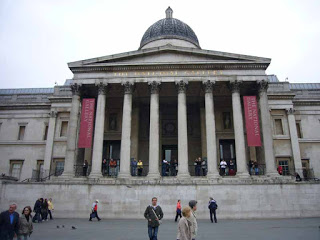
Spiritual Message though a Village Woman (Post No.3529)

4692c-pot2bwomen252c2btribal

Written by London swaminathan


Date: 9 January 2017


Time uploaded in London:- 17-45


Post No.3529


Pictures are taken from different sources; thanks.


contact; swami_48@yahoo.com


Hindu saints are great writers. They propagate great ideals through simple similes or imageries. When those examples are seen in our day to day life, it goes straight in to our head and heart. Ramakrishna Paramahmasa was one who propagated the highest ideals in Hindu literature through parables, pithy sayings and similes. It is a strange coincidence that a Tamil saint who lived approximately 1000 years before Sri Ramakrishna Paramahamsa also used the same simile.


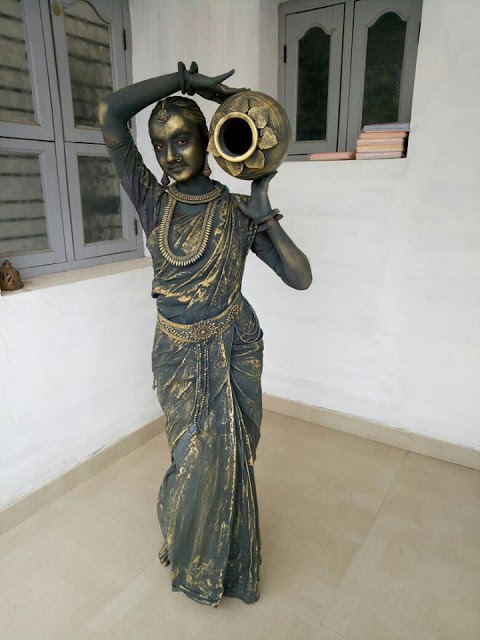
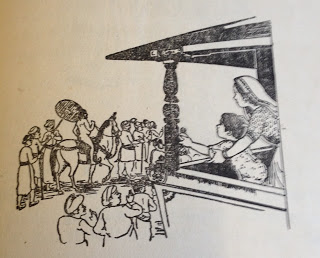
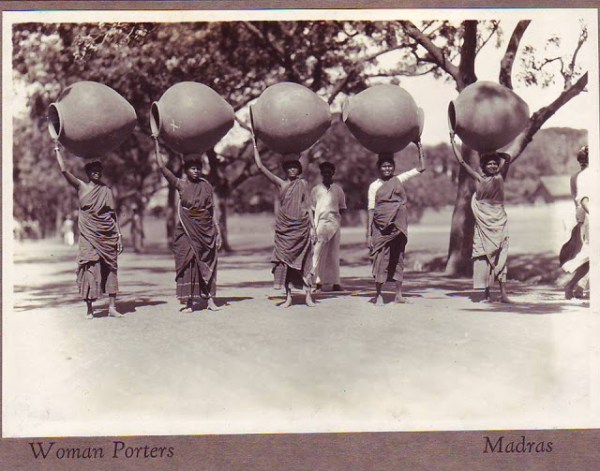
An ascetic or a Yogi is like a water carrying village woman. She fetches water from a faraway well or tank in five or six metal pots piled up one over the other on her head. Juts to avoid the boredom, she gossips with other women watch fun on her way, but always remember the water pots on her head. An ascetic or Yogi also does everything like an ordinary man but always remember God. Though the women artistes in the Circus, Folk dance and Acrobats also do such things they are trained for it. But a village woman is just an ordinary person bt with extraordinary talent in carrying and balancing the water pots.


I have given below the sayings of Paramahamsa and Pattinathar; I have already written about Pattinathar. Please read my post: “Eyeless Needle changed the Life of a Millionaire”- posted on 2nd January 2017.

9c281-water2beverywhere

Pattinathar Verse:-

What though  they do, what though they undergo,

The liberated are ever poised in Silence.

With easy skill she  sports a gait

Flourishing her hands Twain.

Yet the house maid has an eye on the water pot

She carries on her head – Pattinathar Poem


ca850-water2bpot

Ramakrishna Sayings: –

As a boy holding to a post or pillar whirls about it with headlong speed without any fear of falling, so perform your worldly duties   fixing your hold firmly on god ,and you will be free from danger.


As the village maidens in India carry four or five pots of water placed one over the other upon their heads, talking all the way with one another about their joys and sorrows, and yet do not allow a single drop of water to spill, so must the traveller in the path of virtue walk along his route. In whatever circumstances, he may be placed, let him always take heed that his heart does not swerve from the true path.


The magnetic needle always s to the North, and hence it is that the sailing vessel does not lose her direction. So long as the heart of man is directed towards God, he cannot be lost in the ocean of worldliness.


–Subham–


Who are the Despicable Five? What are the Five Things to be Avoided? (Post No.3517)

Compiled by London swaminathan


Date: 5 January 2017


Time uploaded in London:-  15-29


Post No.3517


Pictures are taken from different sources; thanks.


contact; swami_48@yahoo.com


Five Despicable People

anyavaadii =who gives wrong answer

kriyaa dvesii = who hates to work

nopasthaataa = who is not present

niruttara = who does not answer

aahuta prapalaayii = who runs away after being called


anyavaadii kriyaa dvesii nopasthaataa niruttara:

aahuta prapalaayii ca hiina: panchavidhasmrta:

Naradasmrti: 2-33


xxx

Five Things to avoid during Twilight (Sandhyaakaala)

aahaara = food

maithuna = copulation

nidraa = sleep

sampaatha = studying scriptures

adhvani gati = travel


aahaaram maithunam nidraam sampaatham gatimadhvani

etaani pancha karmaani sandhyaayaam varjayet budhah

xx


Five Witnesses

likhitah = written document

smaaritah = narrated/ recounted

yadrcchaabhijna = unexpected and unobstructed intruder

guudhah = spy

Uttara saakssii = listener of witness’s statements


likhitah smaaritas caiva yadrcchaabhijna eva ca

guudhah Uttara saakssii ca saakshii panchavidha krtah

Naradasmrti: 1-27

xx


Five that belongs to Everyone (universal)

vaapi = lake

kuupa = well

tadaaka = tank

devaalaya = temple

kujanmaa = tree

vaapikuupatadaagaanaam devaalayakujanmanaam

utsargaatparatah svaamyamapi kartum na sakyate

–Panchatantra 3-92


xxx


Five to be Remembered:

(from my previous post)

You must always remember the following Five:-

Janani – Mother

Janmadaataa- Father

Vidyaadaataa – Teacher

Raastra – Motherland

Dharmopadestaa – Teacher of Dharma


Janani Janmadata ca suvidyam pradadati yah

Raastram Dharmopadestaa ca pancakam santatam smaret


–subham–

8 Auspicious Things, 16 Gifts and 32 Charitable Acts! (Post No.3505)

 Written by London swaminathan


Date: 1 January 2017


Time uploaded in London:-  19-50


Post No.3505


Pictures are taken from different sources; thanks.


contact; swami_48@yahoo.com


Ancient Hindu poets have composed poems to remember important things in life. Uvamana Sangraham is a book that contains good verses giving details of Eight Auspicious Symbols, Sixteen Good Fortunes or God Given Gifts in life and 32 Charitable Acts.

According to it, the Eight Auspicious (Ashta Mangla) symbols are:

1.Fly whisk 2.Purna Kumbha/Pot 3.Mirror 4Ankusam/Goad 5. Drum 6.Flag 7. Two Fishes 8.Lamp

Eight Precious Things (Aiswarya) are

1.Good Relatives 2.Good Government 3.Good Children 4.Gold 5. Clothing 6.Servants 7. Grains (food items) 8. Vehicles for Transport


16 God Given Gifts

1.Strength 2. Youthfulness 3.Good Children 4.Good Health 5. Long Life span 6. Lands 7. Woman/wife 8. Gold 9. Intelligence 10. Enthusiasm 11. Education 12. Victory 13. Fame 14. Respect 15. Grains/Food Items 16. Beauty


32 Charitable Acts

Provision of 1.Washerman 2.Barber 3.Ear Ornament 4.Mutts 5.Public Gardens 6.Public Tanks 7.Lime 8. Cremating bodies of Orphans 9. Fodder for Cows 10. Medicine for Eye sight 11. Water Provision by erecting Pandals/Thatched Sheds 12.Oil for head 13.Rescuing people from Danger 14. Milk for Children 15. Giving birth to children 16. Raising them 17. Setting Orphanage 18.Food for learners/students 19.Food for all animals 20. Medicine for the sick 21. Providing Bulls for breeding 22. Serving food in Prisons 23.Solving the difficulties of People/Community Service 24. Help for Marriage 25. Food for mendicants 26. Provision of Snacks 27. Help for clothing 28. Provision of women 29. Shelter for the Poor 30.Giving to Beggars 31. Water Drinking Places for cows 32.Provision of Mirrors

–Subham–


31 Beautiful Quotes on Omkara (Aum)—Post No. 3499


Compiled by London swaminathan


Date: 30 December 2016


Time uploaded in London:-  18-28


Post No.3499


Pictures are taken from different sources; thanks.


contact; swami_48@yahoo.com


January 2017 Good Thoughts Calendar

8- Vaikunda Ekadasi, 13-Bogi Festival, 14-Pongal/Makarasankranti, 15-Mattu Pongal, 17- Tiruvaiyaru Thyagaraja Aradhana, 26-Republic Day 27- Thai Amavasya.

Ekadasi- 8, 23; New moon day- 27; Full moon day- 12.


Om or Aum is also known as Pranava, Eka Akshara and Udgita


1 January Sunday

I am the syllable Aum in all the Vedas- Bhagavad Gita 7-8

2 January Monday

He who utters the single syllable Aum which is Brahman, remembering Me, as he departs, giving up his body, he goes to the highest goal Bhagavad Gita 8-13

3 January Tuesday

I am the syllable Aum and I am the Rik, the Sama and the Yajus as well –Bhagavad Gita 9-17

4 January Wednesday

Aum stands for the inexpressible Absolute – Dr Radhakrishnan

5 January Thursday

Truly seeing Thy golden feet this day, I have gained release.

O Truth! as the Omkaram dwelling in my soul—- Manaikkavasakar in Tiruvasakam 1 (Tamil)

Showed me the way to escape; and taught the meaning of the mystic OM

—- Manaikkavasakar in Tiruvasakam 51 (Tamil)


6 January Friday

The sacred syllable Aum is verily the lower Brahman and it is also said to be the Higher Brahman. Aum is without beginning, unique, without anything external to it, unrelated to any effect and imperishable- Gaudapada.


7 January Saturday

If we worship Aum as Isvara, we pass beyond grief; Know Om to be Iswara, ever present in the hearts of all. The wise man realising Aum as all pervading does not grieve- Gaudapada.

8 January Sunday

Firstly there was an unexcelled king among kings, namely Vaivasvat-Manu, an estimable one for all sensible people, like the unexcelled mystic syllable Om for Veda-s. [Raghuvamsa 1-11]


9 January Monday

Vedic Recitation begins with Aum and ends with Hari: Aum or Om Tat Sat.

10 January Tuesday

In making a sound we use the larynx and the palate as a sounding board. Is there any material sound of which all other sounds must be manifestations, one which is the most natural sound? Om (Aum) is such a sound, the basis of all sounds. The first letter, A, is the root sound, the key, pronounced without touching any part of the tongue or palate. M represents the last sound in the series, being produced by the closed lips, and the U rolls from the very root to end of the sounding board of the mouth. Thus, Om, represents the whole phenomena of sound-producing. As such, it must be the natural symbol, the matrix of all the various sounds. It denotes the whole range and possibility of all the words that can be made- Swami Vivekananda

11 January Wednesday


The word OM has been retained at every stage of religious growth in India and it has been manipulated to mean all the various ideas about God. Monists, dualists, mono-dualists, separatists, and even atheists took up this Om. Om has become the one symbol for the religious aspiration of that vast majority of human beings. Take, for instance, the English word God. It covers only a limited function, and if you go beyond it, you have to add adjectives, to make it Personal, or Impersonal, or Absolute God. So with the words for God in every other language their signification is very small. This word Om however, has around it all the various significances– Swami Vivekananda


12 January Thursday


Aum or Om or Pranava or Eka Akshara is found in the scriptures of Hindus, Buddhists, Jains and Sikhs.


13 January Friday


When someone correctly enunciated the syllableOM according to the rules, the lore that he had previously rehearsed came back to him.- Vana Parva, The Mahabharata


14 January Saturday

The Panchbhutas (five elements) came from the Omkara; all the movable and immovable things came from it; Om has the three types of living beings; and Om is not only Pranava but also the Symbol of Shiva – Tirumanthiram


15 January Sunday


Since the two words Om and Atha came from the mouth of Brahma, bot are considered auspicious (Sanskrit works begin either wwith Om or Atha)—Patanjala darsanam.


16 January Monday


The great hail it ever as OM,

it smashes karma and quells evil;

it wipes out embodiment and ushers weal

Nor name nor form is it endowed with

And is beyond the pale of mind and buddhi.

It is of the shape of all things existent;

It is, aye, Wisdom, pure and unalloyed

Whose nature is Bliss absolute – Tamil Poet Bharati


17 January Tuesday


Devas chanted: OM OM OM

Heaven rumbled its Amen

The earth did quake; a blizzard

Smote the sky with a storm of dust.

The elements of five then attested;

It is Dharma who is the Lord of the Earth

Our mission stands fulfilled

May this world four fold be in bliss immersed. Bharati


18 January Wednesday


OM, the imperishable sound

is the seed of all that exists

The past, the present,  the future,

all are but the unfolding of Om

And whatever transcends the three realms of Time

that indeed is the flowering of OM

–Mandukya Upanishad.

19 January Thursday


The pure Self and Om are as one;

and the different quarters of the self

correspond to om and its sounds A U M

–Mandukya Upanishad.


20 January Friday


Experience of the inner world corresponds to A, the first sound

This initiates the action and achievement.

Whoever awakens to this acts in freedom and achieve success

–Mandukya Upanishad.

21 January Saturday


Experience of the inner world corresponds to U,

the second sound

This initiates upholding and unification

Whoever awakens to this upholds the tradition

of knowledge and unifies the diversities of life

Everything that comes along speaks to him of Brahman

–Mandukya Upanishad.


22 January Sunday


The state of dreamless sleep corresponds to M,

the third sound.

This initiates measurement and merging.

Whoever awakens to this merges with the word

and has the measure of all things.

–Mandukya Upanishad.


23 January Monday


The pure Self alone,

that which is indivisible,

which cannot be described,

the supreme good,

the one without a second,

That corresponds to the wholeness of OM.

Whoever awakens to that becomes the Self

–Mandukya Upanishad.


24 January Tuesday

By sound alone is the non-sound revealed. Now here the sound is Aum. Moving upward along it one rises to the non-sound. So this is the way, this is immortality, this is the total union and peace. Just as the spider moving upward by the thread reaches unbound space, certainly the meditator moving upward by the syllable Aum reaches the self-sufficiency

– Maitryopanishad VI-22


25 January Wednesday
OM is a word of solemn invocation, affirmation, benediction and consent. The word is used at the commencement of prayers and religious ceremonies, and is generally placed at the beginning of  books —-Dictionary of Hinduism


26 January Thursday


OM is a compound of three letters A U M, which are typical of the three Vedas; and is declared in the Upanishads,  to have a mystic power and to be worthy of the deepest meditation. In later times the monosyllable represents the Hindu triad or union of the three gods, A being Vishnu, U Shiva and M Brahma. This monosyllable is called Udgitha- Dictionary of Hinduism

27 January Friday


Image of Ganesh looks like OM: parAdicatvArivAgAtmakaM – who is the embodiment (AtmakM) of the four  levels (catvAri) of speeches (vAg) commencing with  parA (parAdi) , namely parA, pashyanI, madhyamA, and vaikharI

praNavasvarUpavakratuNDaM – who has a curved (vakra) trunk (tuNDaM) in the shape of (svarUpa) the sacred mystic syllable “Om” (praNava) – Muthuswamy Dikshitar

28 January Saturday

In every piece of music there are three aspects, namely (1) the meaning of the song; (2) the laws of music, and (3) the sound of the song. Similarly, on OM there are three aspects. The first is the mere sound, the mere mantra as pronounced by the mouth; the second is the meaning of the syllable, which is to be realized through feeling; and the third is the application of OM to your character, singing it in your acts, and so through your life— Chinmayananda


29 January Sunday

No sound is beyond the ken of Om; all sounds are permutations and products of Om. Brahmam too is Om, identified by It and with It. The Brahmam, which is beyond Vision, is manifest for the vision as Atma. —Sathya Sai Baba

30 January Monday

Subrahmanya taught the meaning of OM to the sage Agastya and Lord Shiva and so Subrahmanya is called Swami Nathan.

31 January Tuesday

I want to soak myself in the Omkara and remain motionless like a picture, Grant me it _ Arunagirinatha’s Tiruppugaz


–Subham–


Eastern and Western View of Women (Post No. 3486)

Compiled by London swaminathan


Date: 26 December 2016


Time uploaded in London:-  14-57


Post No.3486


Pictures are taken from different sources; thanks.


contact; swami_48@yahoo.com


There is good and bad said about women in all the literatures of the world. To take one quotation out of context and interpret it as the author’s view about women is wrong. There are lots of praise for women in the Vedic mantras  (Marriage Hymns); in the Upanishads they are shown as spiritually inclined; in the Hindu epics Draupadi, Savitri, Sita and others are shown as intelligent women. When it came to Kaikeyi, Tadaka and Surphanakha we see diametrically opposite views. It is same in Tamil literature as well. When the poets sing about young women they praise their beauty. When the same women are shown as concubines or harlots they are condemned. As Mothers, they command the highest respect in Hindu literature, which is not seen in any other ancient literature. If we consider the Vedic age they command more praise and respect than any other period (Please see my earlier posts on Manu and others on women)


BHARATIYAR

The lock is opened by the hand

And good mind by the intellect;

It is tune that opens he song

And women the home of delight–Tamil Poet Bharati


It is mother’s milk that gives us strength

While the wife’s kind words reap our harvest of fame

As women’s blessedness blasts all evil,

let us rejoice with linked hands.

Blow the conch! Dance in joy!

For woman is sweeter than life itself.

She the protectress of life, and creatrix too;

She is the life of our life, and the soul of sweetness


We will grow lofty by dint of merit;

we will rub off the old stigmas;

if men take us fully as their equals Attributing nought of defects to us

We will join them and labour in the fight

To win back our nation and retrieve –Tamil Poet Bharati


Gone are the days who said to woman: Thou shall not

Open the Book of Knowledge

And the strange ones who boasted saying:

We will immure these women in our homes

Today they hang down their heads–Tamil Poet Bharati


Thou to me the flowing Light

And I to thee the discerning sight

Honeyed blossom thou to me

Bee enchanted I to thee

O Heavenly Lamp with shining ray

P Krishna, love, O nectar-sparay

With faltering tongue and words that pant

Thy glories here I strive to chant

–Tamil Poet Bharati


 HOMER

O woman, woman, when to ill thy mind

Is bent all hell contains no fouler fiend – The Odyssey, XI


For since of womankind so few are just

Think all are false, nor even the faithful trust– The Odyssey XI

xxx


The time for trusting women’s gone forever!- The Odyssey XI

A man shall walk behind a lion rather than behind a woman- Babylonian Talmud

And I find more bitter than death the women, whose heart is snares and nets, and her hands as bands – Ecclesiastes XXV-19


Women are the gate of hell – St Jerome

Nothing is  worse than a woman, even a good one – Menander

Women have no souls – Lewis Wager

xxx


SHAKESPEARE

Down from the waist they are Centaurs

Though women all above;

But to the girdle do the gods inherit

Beneath is all the fiends

There is hell, there is darkness, there is sulphrous pit

Burning, scalding, stench, consumption;

Fie, fie, puh, pah

Give me an ounce of civet, good Apothecary,

to sweeten my imagination there is money for thee

-King Lear Act 4, Scene 6


age cannot wither her, nor custom stale

Her infinite variety; other women cloy

The appetites they feed, but she makes hungry

Where most she satisfies; for vilest things

Become themselves in her, that the holy priests

Bless her when she is riggish

–Antony and Cleopatra Act 2, Scene 2

xxx

PATTINATHAR

O peafowl like woman adorned with garlands

Of bourgeoning flowers, the one that just now

Quested for you, had gone away; compose yourself.

If you earn for me I will kick you on your hips

And if I think of you, you kick me – Pattinathar, Tamil saint

xxx


KALHANA

For, a woman who has sold her soul for love, reveals the changed attitude (towards her husband), due to the orgy of the demon of unchastity -Rajatarangini 3-501

O these wretched women, pursuers of physical love, barren of thought, by whom men are soon hurled downward-Rajatarangini 3-513

Women being quick-witted analyse, at the same time while they are lamenting, their altered position and sons even while they are by the side of the funeral pyre discuss the material and moral condition-Rajatarangini 7-734

xxxx

Thou to me the Harp of Gold

And I do thee the finger bold;

Necklace shining thou to me

New-set diamond I to thee;

O mighty queen with splendour rife

O Krishna, Love, O well of life

Thine eyes do shed their light on all

Wherever turn, their beams do fall

–Tamil Poet Bharati

Bharati’s poems are translated by several scholars and published by Tamil University, Thanjavur


–Subham–


Churchill’s Moustache! More Rough and Ready Anecdotes (Post No. 3472)

Compiled by London swaminathan


Date: 22 December 2016


Time uploaded in London:- 8-13 AM


Post No.3472


Pictures are taken from different sources; thanks.


contact; swami_48@yahoo.com


Did you call me X Y Z?
Chief Justice Marshall of the US Supreme Court related that Governor Giles of Virginia once addressed a note to Patrick Henry
“Sir, I understand that you have called me a “Bobtail politician “. I wish to know if it be true and, if true, your meaning” – W M Giles

Patrick Henry replied
“Sir, I do not recollect calling you a Bobtail politician at any time but think it probable I have. Not recollecting the time of the occasion, I can’t say what I did mean; but if you will tell me what you think I meant, I will say whether you are correct or not”.
Very Respectfully,
Patrick Henry

Xxx


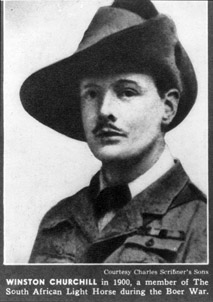
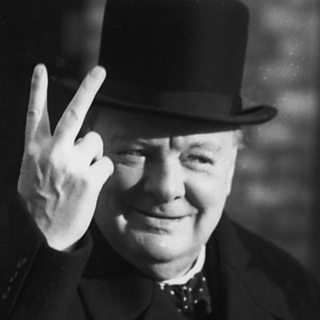
Winston Churchill’s Moustache!

At that stage in his political career at which Winston Churchill switched over from the Conservative to the Liberal side of the house , many of his erstwhile adherents were sorely offended. A snappish young lady once told him playfully, “There are two things I don’t like about you, Mr Churchill.
“Yes”, he inquired.

“Your new politics and your new moustache”.
“My dear Madam, said Churchill coldly, you are not likely to come into much contact with either”.

Xxx

Shooting just for the Motion!

At Kentucky (USA) political meeting a certain participant in the debate was shot by the several of the others at the meeting. The event occurred on the open floor and created a considerable stir in the community .

A Northerner, who was in the town, asked an
acquaintance who had been present, why the shooting had occurred.
“He made a motion that was Out of order”, explained the Kentuckian.
Horrified at this excess of parliamentarianism ,
“You mean to tell me that they shot a man in cold blood on the floor of the meeting just for making a motion that was out of order!”
“Well, drawled his informant, the motion was toward his hip pocket ”

–SUBHAM–
 

Rudeness Anecdotes (Post No.3469)

Compiled by London swaminathan


Date: 21 December 2016


Time uploaded in London:- 18-14


Post No.3469


Pictures are taken from different sources; thanks.


contact; swami_48@yahoo.com


The would -be wit found himself quietly put down several pegs when, at the dinner table, he held up his fork with a piece of meat upon it and asked his hostess,
“Is this pig?”
“To which end of the fork do you refer ?”, asked one of his fellow guests.

Xxx
I can’t remember your name
At a recent gathering of Hamilton college alumni, Alexander Woollcott was interrupted in the telling of a story by a former classmate, who said, “Hello Alex! You remember me, don’t you?”

Mr Woollcott shook his head,
“I can’t remember your name, but don’t tell me……” He then went on with his story.

Xxxx

Real Pearls and False Teeth!

At a stuffy English garden party, Beatrice Lilly, Lady Peel, wearing the Peel pearls, was approached by a lady of lineage who said maliciously,
“What lovely pearls, Beatrice, are they genuine?”
Miss Lillie nodded,
“Of course you can always tell by biting them” , she said.
“Here, let me see.”
“Gladly, said Lady Peel, preferring her jewels, but remember Duchess, you can’t tell real pearls with false teeth”.

Xxxx
 

“I simply can’t bear fools”.

One of Dorothy Parker’s more telling retorts was in answer to the snobbish young man who had been discoursing at some length at a party and had finally observed,
“I simply can’t bear fools”.
“How odd, was Miss Parker’s reply.
“Apparently your mother could”.

Xxxx

For deadly comments on deadly occasions Beatrice Lillie deserves some accolade.
“Don’t think it has been charming”, she said to her hostess when leaving a party, “because it has not” .
Xxx


Polished Brass!
Robert Hall being unsuccessful in securing the hand of a Miss Steel, while smarting under his disappointment, took tea with a company of ladies, one of whom, the lady of the house, said, in bad taste ,
“You are dull, Mr Hall, and we have no polished steel to brighten you”.
“O, madam, replied Hall, that is of no consequence; you have plenty of polished brass”.

Xxx

I never forget a Face, but……
A celebrity hound approached Groucho Marx at a party.
“You remember me, Mr Marx. We met at the Glynthwaites some months ago”.
“I never forget a face”, Groucho replied, “but I will make an exception in your case”.

Xxx
Against the charge of malice, Samuel Rogers defended himself thus:
“They tell me I say ill- natured things. I have a very weak voice; if I didn’t say ill- natured things no would hear what I said”.

Xxxx
When one of the town’s most important movie producers had his secretary call the late john Barrymore to invite him to a party, Barrymore politely murmured  into the telephone,
“I have a previous engagement which I shall make as soon as possible”.

Xxx


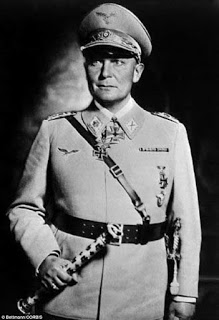
I am Herman Goering!

Herman Goering accompanied the Fuehrer on one of his visits to Rome. On the crowded railway platform filled with dignitaries and troops, the massive Marshal roughly jostled past an Italian gentleman of aristocratic bearing, who turned and haughtily demanded an apology. Fiercely the Marshal turned upon him and snapped,
“I am Herman Goering”. The Italian bowed and replied,
“As an excuse that is not enough, but as an explanation it is ample”.


–Subham–

Truth, The Teacher (Post No. 3466)

Compiled by London swaminathan


Date: 20 December 2016


Time uploaded in London:- 20-49


Post No.3466


Pictures are taken from different sources; thanks.


contact; swami_48@yahoo.com


There was a king. He believed that life is meant only for enjoyment. He was especially fond of wearing new clothes. But he didn’t discharge properly the duties of his high office. The people, too, consequently became remiss.


One day four wise men visited the capital. When they heard of the king’s pleasure seeking ways they thought of bringing him to the right path as they were very clever. So, saluting the king, one day they said to him, “Your Highness, we are expert weavers. We can weave such fine cloth with gold and silver threads that you may have never seen anything like it. But what is still more wonderful is that the cloth is invisible to a person who does not do his work faithfully.


Hearing this, the king thought to himself, “This is a fine way of finding out who in my kingdom is neglectful and irresponsible in carrying out his duties”.


Accordingly, he asked the weavers to weave a piece of the wonderful cloth. For this purpose, he ordered the treasury officer of the State to supply them with whatever quantity of gold and silver threads they required.

The weavers started to work on the job. they, however made only noise all the time with the empty looms, though everyday they brought from the treasury  as much of gold and silver threads as they liked.

After four days, the king asked his minister to visit the weavers and find out how far they had done the job. The minister accompanied by some officers of the State set out for the weavers’ place


Hearing that minister coming with State officers, the four weavers at once set down to work on the looms.  Soon afterwards the minister and his officers arrived.  They saw the weavers working away on the empty looms, and with much concentrated attention as if they were weaving the cloth.


But though they looked at the looms with wide-open eyes  again and again, they didn’t see any cloth! The minister therefore said to himself, “Why can’t I see the cloth? Am I not doing my allotted work faithfully?”


Sensing his perplexity, the weavers smiled and asked him whether the cloth was being woven properly “Have you any suggestion to improve it ,sir?, they added.


The minister, hiding his puzzlement, however smiled back and answered, “What a wonderful cloth have you woven!  Indeed, I have never seen like of it before”. The turning to the officers he asked, “Is it not so?”


The officers, too were in a similar state of mind. They also, therefore hid their real feeling and simply endorsed the minister’s opinion.

The minister and officer then returned home.  The minister subsequently reported to the king. He was full of great admiration for the weavers’ skill.


Eight days afterwards the king accompanied by his minister, visited the weavers. He, too, had an experience like that of his minister. Though again and again he cleared his eyes with his hand kerchief to see the cloth, yet all was in vain! He also, therefore, asked himself whether he was faithful in doing his duties.

The minister, surmising what was passing through the mind of the king smiled a little and said to the king, “Your Highness, is not the cloth beautiful? Don’t you like it?”


Hearing this the king was startled! But he also pretended to endorse the opinion of the minister. The weavers said to the king, “Your Highness, the cloth is almost woven. We have worked on it very hard, indeed. Let us now take your measurement, as we would like to prepare a beautiful garment out of it for you.”


After three or four days the weavers carrying an empty tray, went to the king.  The king was utterly confused! He did not know what to do. If he told the weavers that he could not see any garment in the tray, that would be confessing that he was not worthy of being a king!


The weavers removed the clothes the king was wearing and instead put the new garment on him. But he could not see it on his body.  He pretended, however, that he was wearing the new garment. And so, did the minister and the officers. Asa matter of fact, they all exclaimed, of course hypocritically with one voice, “Your Highness, your dress is so beautiful!”

The king was then taken around the city everybody pretended that he or she saw his new dress, for fear of being found out if he spoke the truth. More, they were even full of admiration for the king’s new garment.


Just then a little boy shouted, “The king has no dress on!” This forthwith disillusioned the people.  The king too felt ashamed of himself.  A search of the weavers was ordered immediately. But they had already fled.

-Subham-


Every Little Helps! (Post No.3462)

Written by S NAGARAJAN


Date: 19 December 2016


Time uploaded in London:- 9-29 am


Post No.3462


Pictures are taken from different sources; thanks.


contact; swami_48@yahoo.com


Every Little Helps!

S.Nagarajan


Have you ever heard the little story of Mr. Little? For your ready reference the story is given below.

Mr. Little lived in a little house in a little town and he worked for a very little salary. The neighbours wondered how Mr. Little and the whole Little family could get along on such a small salary. He was asked, “Mr. Little, How do you, Mrs. Little and the seven little Littles get along on such a little salary?”

He replied, “Every Little helps!”

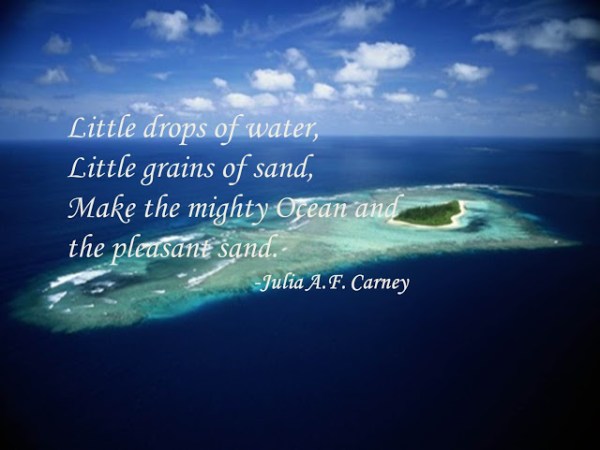
Yes, every little helps in everybody’s life. A famous Tamil proverb often quoted is: ‘Small drops make ocean’!

The famous Ganges originates from Gangotri. It is situated at a height of 10,319 feet.

The most sacred river of Hindus originates as little drops! Then Mother Ganges comes out of a crevice and falls as a cascade, twenty feet high, into an egg shaped place.

From Himalayas it flows 1567 miles southeastward across an immense undulating plain.

The Ganges drainage basin covers an area of around 376,800 square miles, roughly a quarter of the Indian Subcontinent. Flowing through one of the world’s most densely populated areas; the Ganges carries an enormous cargo of sediments at an annual average of 2.4 billion tonnes that is more than any other river!

Greatness comes from little things!

Here is a story from The Bustan of Sadi: “A rain drop fell from a spring cloud, and, seeing the wide expanse of the sea, was ashamed. ‘Where is the sea’, it is reflected, “where I am? Compared with that, forsooth, I am extinct.”


While thus regarding itself with an eye of contempt, an oyster took it to its bosom, and fate so shaped its course that eventually the raindrop became a famous royal pearl.

It was exalted, for it was humble. Knocking at the door of extinction, it became existent.

Orison Swett Marden quotes Gothe and Sydney Smith in his book ‘Cheerfulness’ to emphasize a few good points.

“One ought, every day,” says Gothe, “at least to hear a little song, read a good poem, see a fine picture, and, if it were possible, to speak a few reasonable words”

Sydney Smith recommends us to make at least one person happy every day: “Take ten years, and you will make thirty- six hundred and fifty persons happy: or brighten a small town by your contribution to the fund of general joy.”

Every great journey starts with a small step. Why don’t you start now?

«««««««


SNOBBISHNESS Anecdotes (Post No.3460)

Compiled by London swaminathan


Date: 18 December 2016


Time uploaded in London:- 6-21 AM


Post No.3460


Pictures are taken from different sources; thanks.


contact; swami_48@yahoo.com


Greek Noble

The Athenian general Iphicrates was the son of a shoemaker. One of his opponents in a suit at law, a descendent of pariot Harmodius, referred insultingly to Iphicrates’ humble birth. With the spirit of a true democrat, the general answered calmly,

“Yes, the nobility of my family begins with me; just as that of yours ends with you”.

xxxx

Snobbish English


Mount Vernon, the estate of General George Washington, is visited by many people. One day a somewhat snobbish and patronizing young English man remarked to Shep Wright, an old gardener employed on the estate,

“I say, old man, this hedge. Ah ……. I see that dear old George got this hedge from England”.


The old gardener was more than a match for him. Looking at the young man quizzically for about a minute, he said:

“Yes reckon he did. And that ain’t all. He got this whole blooming country from England”.


xxx

Asking for Dinner


Displaying considerable snobbishness a Englishman remarked to an American friend, “How unpleasant it must be for you Americans to be governed by people whom one would never think of asking for dinner”.


With scarcely a moment’s thought, the American replied coldly, “No more unpleasant than being governed by people who wouldn’t ask you to dinner.”


xxx

Sir William Wallace rebuffed


There came to the National Art Gallery in London, one day, a gentleman rather shabbily dressed, carrying a picture under his arm, who asked to see William Boxall, the governor. He was peremptorily refused an audience, and only repeated rebuffs was he granted a moment’s interview.


The stranger intimated that he had a picture in his possession which he wished to give to the National gallery, and began to unbuckle the straps to show the painting within. Sir William, however brusquely ordered him either to leave it or take it away altogether, saying that he was too busy to look at it.

“But you had better have one glance – I ask for no more”., said the stranger.


Again Sir William refused, and was just on the point of turning away when the covering fell off the picture and there was revealed one of Terborch’s masterpieces which the governor himself, sometime previously, had failed to gain though he had offered for it 6000 pounds.

“My name is Wallace, said the stranger quietly, Sir William Wallace, and I came to offer this picture to the National Gallery.”

“I almost fainted, related Boxall later.


–Subham–