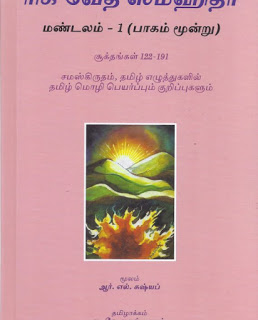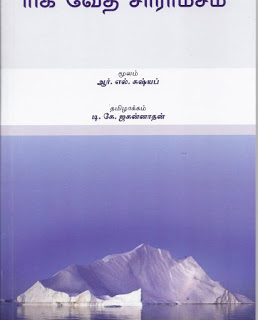
STRANGE STORIES ABOUT TREES IN VEDAS –Part 2 (Post No.4371)

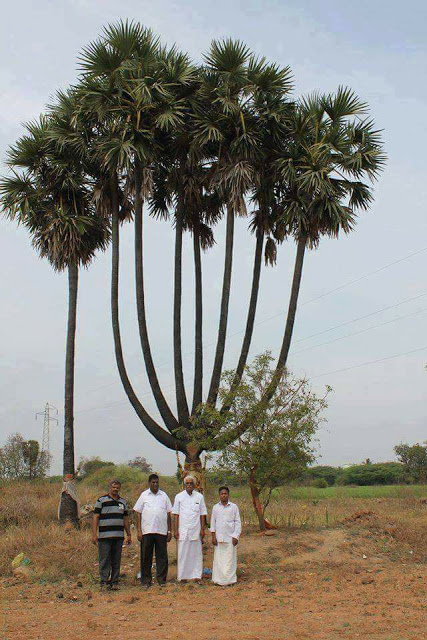
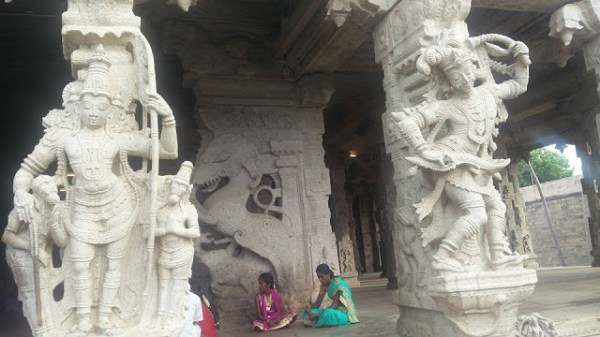
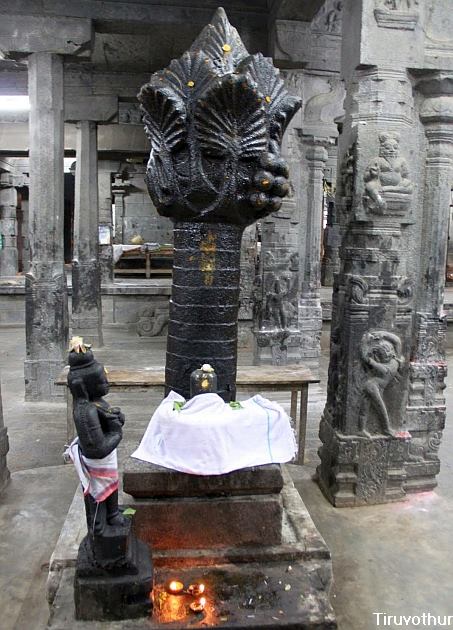
Granite tree in a Tamil Temple; posted by Lalgudi Veda

Written by London Swaminathan 


Date: 6 NOVEMBER 2017


Time uploaded in London- 16-08


Post No. 4371

Pictures shown here are taken from various sources such as Facebook friends, Books, Google and newspapers; thanks.


(First part was posted yesterday)
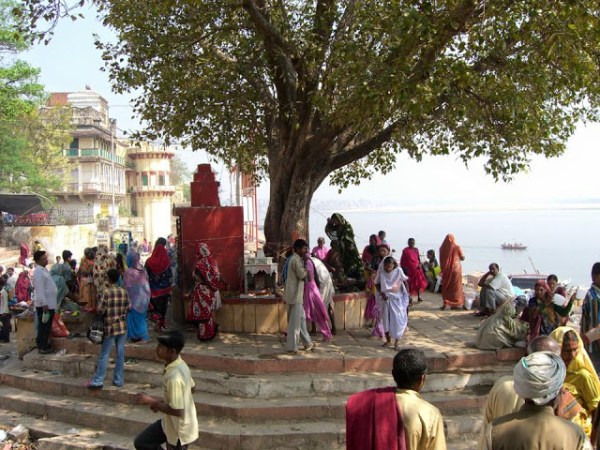
 

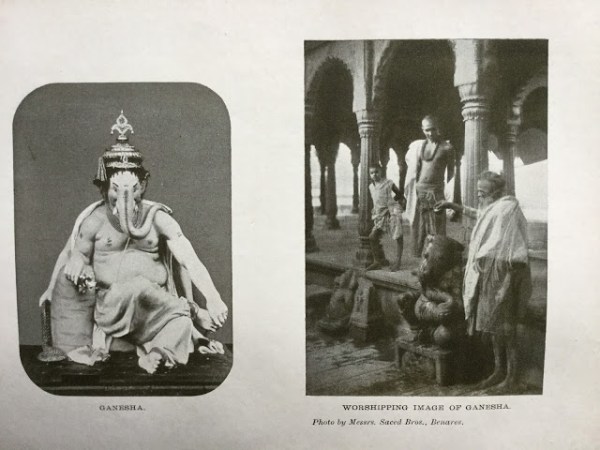
Picture of a sacred tree in Varanasi


The Gods and the Asuras, both of them sprung from Prajapati, strove together. The gods, having placed Agni in the front, went up to the Asuras.  The Asuras cut off the point of that flame held forward. It settled down on this earth and became that Krimuka tree; hence it is sweet, for there is vital essence in it. Hence also it is red, for it is a flame, that Krimuka tree being the same as Agni; it is in the shape of fire that he imparts growth to it- Satapata Brahmana 6-6-2-11


When Prajapati performed the first offering, a Vinkankata tree (Flacouritas apida) sprang forth from that place where, after offering, he cleansed his hand  –6-6-3-1


“When the gods and Asuras, both of them sprung from Prajapati, strove together, all the trees sided with the Asuras, but  the Udumbara tree alone did not forsake the gods. The gods having conquered the Asuras took possession of their trees. They said, ‘come let us lay into the Udumbara tree whatever pith, whatever vital sap, there is in these trees; were they then to desert us they would desert us worn out like a milked-out cow or like an ox that has been tired out drawing the cart. Accordingly they laid into the Udumbara tree what pith and essence there was in those trees; and on account of that it matures fruit  equal to all other trees; hence that tree is always moist, always full of milky sap- that Udumbara tree indeed, being all the trees, is all food—Sat Br. 6-3-2-3


Aitareya Brahmana also gives the same story (1-23)
 

(VERY IMPORTANT POINT: Gods and Asuras came from Brahma/Prajapati. Foreigners wont highlight this point anywhere in their writings; those cunning and conspiring people wanted to project Asuras as aborigines or Dravidians. Throughout Hindu literature, Asuras, Rakshasas or so called Shudras are shown as children of same father and mother)


“Trees were temples of Divinities, and in the old way the simple country folk to this day dedicate any remarkable tree to a god”—Pliny in Natural History 12-3

Pliny (23-79 CE) was a Roman scholar and his Natural History reflected the Hindu views on Trees.


Persian Poet Haafiz praised the trees too,

“Mark where yon tree rewards the stony shower

With fruit nectareous, or the balmy flower,

All nature calls aloud, ‘Shall man do less

Than heal the smiter and the railer bless?”
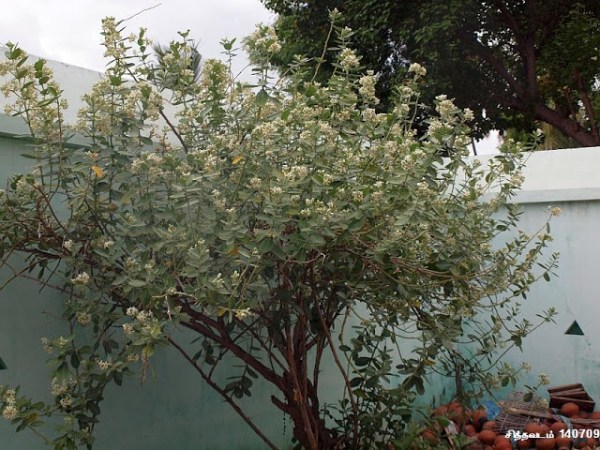
Posted by Lalgudi Veda, Vellerukku, Siddhavatam

In India that is Hindustan all life is sacred. Hindus are believers in the law of continuity, for in their creed the life of gods is connected with that of demons, the life of demons  with men, the life of men with animals, the life of animals with that of trees and plants, the life of plants with a supposed life in rocks and stones, and the divine soul is thought to permeate all. There is no break anywhere. Tamil Saints like Manikkavasagar sings about several births of soul from stone to man. According to Hindus, all plants are conscious beings, having distinct personalities and souls of their own as gods, demons, men and animals (Manu 1-49).


Good spirits and demons occupy the trees. They may often resort to it as guests or take up their abode as tenants.


There is a firm belief that certain trees are demon haunted. Tamils believe that demons occupy Tamarind trees. However it is necessary to make clear  distinction between sacred trees and trees feared as the home of evil spirits. Hindus worship trees out of fear or out of its sacredness. Another reason for the worship of trees is their wonderful utility in daily life. Their shade is grateful in a hot climate. Their wood is the source of fuel/fire. Their fruits, juices are bark have medicinal and curative properties. Plamyra palm or Coconut tree of south India has over fifty distinct uses.

Huge banyan trees are assembling point for vendors, gossip mongers, Assembly Hall and Court House of the village communities. It becomes the abode of village god or Ganesh in South India.
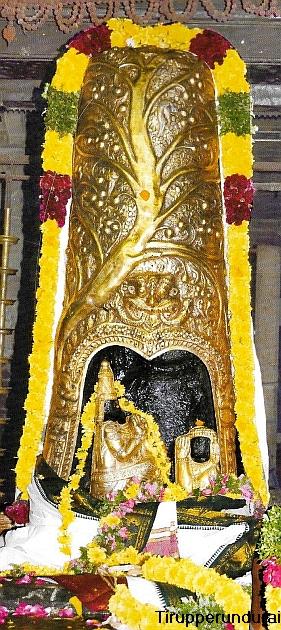
Kuruntha Tree, Avudayar Koil, by Lalgudi Veda


TREE MARRIAGE


In the olden days a Hindu who plants a grove of mango trees will not take the fruit f the mango tree before they have been married to another kind of tree, usually a tamarind tree, sometimes an acacia or even a jasmine plant which is planted in the grove. It is done only when the mango tree reaches fruit bearing stage. In the same way a tank is married to a plantain tree.


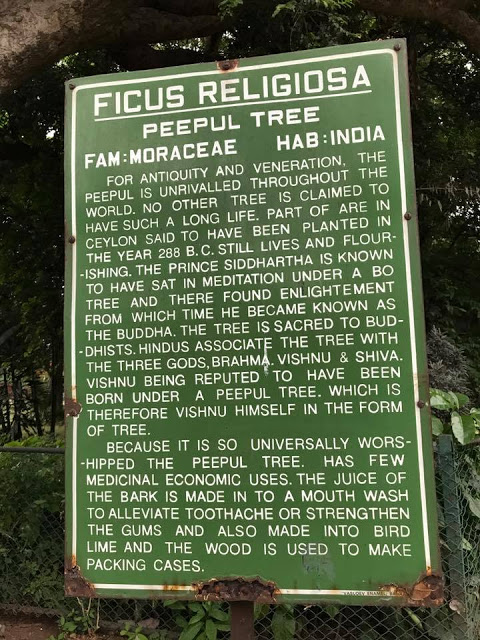
The tree worship began in Vedic age. We see a whole Mandala of Rig Veda is devoted to Soma (plant) worship. Pipal tree is worshipped from the Vedic days. Rishis/ seers are named after Pipal trees. Buddha, born as a devoted Hindu, did penance under the pipal tree (Bodhi).  Parijata came form the ocean when demons/ Asuras and Devas/angels churned the milky ocean.


Tree worship is seen among tribal Hindus as well; in the Birbhum district annual pilgrimage is made to shrine in the jungle to leave offerings to a Bel tree.


The custom of hanging votive offerings or rags or threads on the trees is of great antiquity. It is seen from Kashmir to Kanyakumari.
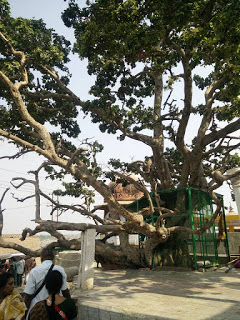
Kadamba  Tree in Chir Ghat, Yamuna River

This custom existed in other parts of the world as well; names like Holyoake, Hollywood recall the English worship of trees and groves.


Ovid (43 BCE), the Roman poet, says,

“There stood a mighty oak of age-long strength

Festooned with garlands, bearing on its trunk

Memorial tablets, proofs of helpful vows”

–Metamorphoses, 8-741, also Fasti 3-267


This Hindu custom was prevalent in different parts of the world; now we can see such pictures in museums or in their literature; but in Hindu India, where it originated, is still practised!!


The famous Bodhi tree in Gaya (Bihar, India) and its sister trees in Sri Lanka, Tamarind tree of Tansen and Nammalvar, Banyan Tree of Lord Krishna and Panchavati (five Banyan trees) of Lord Rama are some examples. There are hundreds of trees like these throughout India Every Tamil temple has a tree worshipped in its complex.
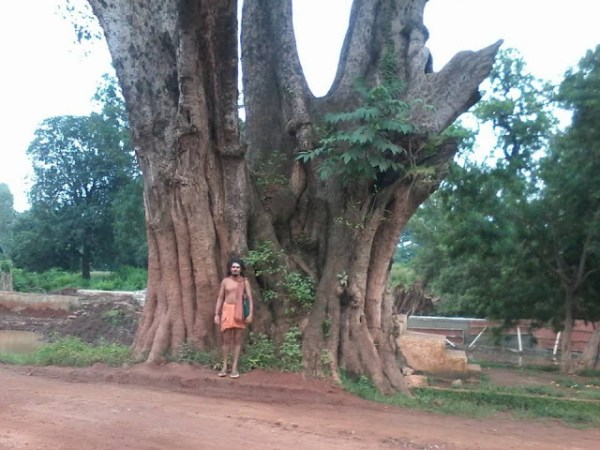
A pilgrim under a tree

Classical analogies of tree deities are found in many places: Daphne turned into a laurel that Apollo honours for her sake, and the sorrowing sisters of Phaethon changing into trees, yet still dropping blood and crying for mercy when their shoots are torn”

–Metamorphoses of Ovid 1-452, 2-345


Like I have pointed out earlier, they are all in old literature or museums in other parts of the world; In India, Hindus practise it even today and worship all the nature as God; and India is not primitive; it is the first developing country to send a spaceship into sky; it is the first developing country to explode a nuclear device. it is the country with highest number of computer personnel.
–Subham–



MIRACULOUS POWERS OF VEDIC SEERS (Post No.4362)

Written by London Swaminathan


Date: 3 NOVEMBER 2017


Time uploaded in London- 9-56 AM


Post No. 4362

Pictures shown here are taken from various sources such as Facebook friends, Books, Google and newspapers; thanks.

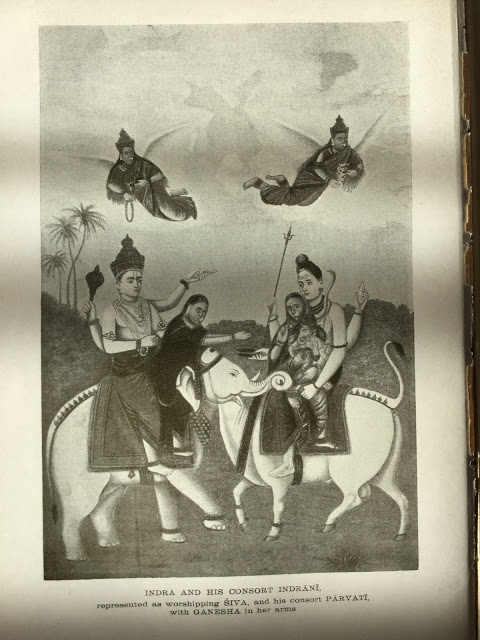
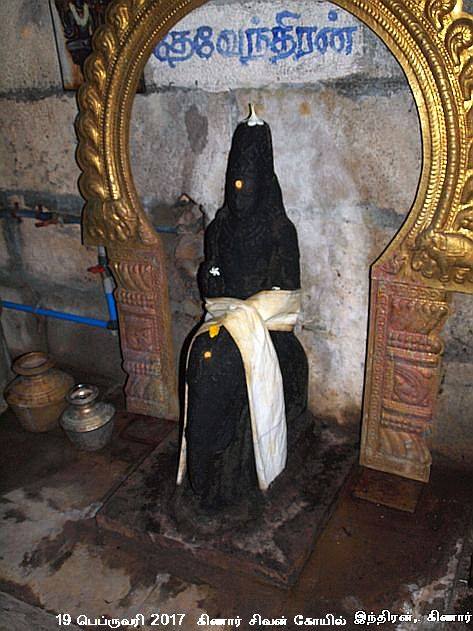
INDRA IN A TEMPLE; Lalgudi Veda post

Vedas are mysterious; the more we read the more we wonder. Even with the available English translations of foreigners who did not understand or appreciate our culture and religion, we know a lot of things. We must read it between the lines. In Hindi, Marathi and Guajarati there are original translations and interpretations; In many other languages, only translations are available


Here are some more wonders:–

Miraculous powers are attributed to the prayers of Rishis (seers) in the following passages in the Rig Veda:


viswaatrasya rakshati brahma idam bhaaratam janam—RV 3-53-12


Praises to Indra have I sung, sustainer of this earth and heaven. This prayer of Viswamitra keeps secure the race of Bharatas.

the race of Bharatas is the descendants of Viswamitra, Bharata being the son of  celebrated Sakuntala,  the daughter of Vviswamitra and Apsaras Mena.

xxx

evam nu kam daasaraaknje sudaasam praavad

indro brahmanaa vo vasishtaahaa- RV 7-33-3

“So verily, with these he crossed the river (Yamuna), in company with these he slaughtered Bheda.”

vasishtasya stuvatah indrah asnot urum trutsumya akrunod lokam RV 7-33-5


“Like thirsty men they looked to heaven, in the battle with the Ten Kings, surrounded and imploring.


Then Indra heard Vaishta, as he praised him, and gave the Trustus ample room and freedom.”


These passages show that Indra answered the prayers by giving them miraculous powers. They could cross even deep rivers.


Later we came to know about Vasudeva with Krishna crossed the River Yamuna and Moses crossed the sea with his followers.

The mention of River Yamuna in the Battle of Ten Kings surprised the historians. Even during this early period, the Vedic Hindus spread up to River Yamuna. The Battle of Ten Kings can be compared to several Wars fought by the Three Tamil Kingdoms Chera, Choza and Pandya. Every time one king attacked the other two kings, a lot of chieftains joined one or the other. So the kings were praised as one who defeated Nine Kings or seven kings. Though all the Tamil kings spoke the same language, followed the same culture and same religion, fights like Ten Kings War of Rig Veda (Dasaraja Yuddha) occurred through out 1500 years of Tamil history. Tamils were the longest fighting race in the world.


Half baked foreigners, without understanding  Indian culture, dubbed one or two as Aryans and others as Dravidians or aborigines. The fact of the matter is they were all Vedic Hindus. Foreign coolies concocted their own stories. If one has to understand Indian culture one must study all the 2500 poems of Tamil literature. We have to thank god for foreigners not able to read Tamil poems; otherwise they would have dubbed half of them as Aryans and others Dravidians.


SECRET SPEECHES OF SEERS

“To these who knowest , Agni, you Disposer, all these wise SECRET SPEECHES I have uttered.

Sung to you, sage, the charming words of wisdom, to you, O Singer, with my thoughts and praises” – RV 4-3-16


2000 year old Tamil Sangam Literature translated the word Veda into ‘Marai’ which means ‘Secre’t, ‘Hidden’ (meaning).

xxx

DIRECTIONS IN THE BRAHMANA LITERATURE

GODS CAME FROM THE EAST!

The severest blow to all the foreigners who advocated the Aryan Invasion Theory comes from the Brahmana Literatures.

“FROM THE EAST THE GODS CAME WESTWARDS TO THE MEN;HENCE ONE OFFERS TO THEM WHILE STANDING WITH HIS FACE TOWARDS THE EAST”-Satapata Brahmana 2-6-1-11


“One must not sleep with his head towards the west, lest he should sleep stretching his legs towards the gods. The Southern quarters belongs to the Fathers (Pitrs=departed souls); and the Western one to the Snakes (s+naka= Nagas); and that faultless one is the one where the gods ascended to the Heaven. And the Northern quarters belongs to Men; Hence in human practice a hall or a shed is constructed with the top beams running from South to North because the North is the quarter of men. It is only for a consecrated, not for an unconsecrated person, that is constructed with the top beams running from West to East.—Sat. Brah3-1-1-7


(This shows that some sort of Vastu Shastra existed from the Vedic period)


VASTU SHASTRA?

“He cuts off some goat’s hair and lets loose the animals towards the North East for this North East is the region of both gods and men – he thus bestows cattle on that region, and hence both gods and men subsist on cattle- 6-4-4-22


Standing with his face towards North East, Prajapati (Brahma, the Creator) created creatures, and again North East is the quarter of both gods and men…………… In that quarter is the GATE OF THE WORLD OF HEAVEN.—6-6-2-2/4


“Standing with his face towards North East, Prajapati (Brahma, the Creator) created offspring by means of the Vishnu strides; in like manner does the sacrifice now, standing towards North east, create offspring by means of the Vishnu strides. 6-7-2-12

“In whatever direction he may intend to drive, let him first drive east, for the East is Agni’s region 6-8-1-8

“With the they proceed to South west quarter, for that is Nirrti’s quarter (Nirrti= Goddess of Evil); he thus places Nirrti in Nirrti’s quarter-7-2-1-8


“THE EAST TENDS GODWARD – meaning towards Agni 7-3-21 “

(I consider this as the origin of Vastu Shastra; so Vastu Shastra is several thousand years old!!!)


EAST IS MORE IMPORTANT!

Foreigners said that Vedic culture spread from the western direction (Punjab, Haryana, Gujarat, Rajasthan) to the East, but Vedic scriptures reject those bluffs. Indra is allocated East and Varuna is allocated West in Vedic scriptures. Apart from tha,t the rivers are listed from east to West. And Hindus also believe that Bhageeratha and his forefathers lived on the banks of Ganges. Moreover, Kasi/Benares/ Varanasi was the oldest city in the world and it is on the banks of Ganges.  All of these prove that the westerners’ views are incorrect.

—Subham, Subham–


30 MORE QUOTATIONS FROM ATHARVA VEDA (Post No.4348)

Written by London Swaminathan


Date: 29 October 2017


Time uploaded in London- 16-07


Post No. 4348

Pictures shown here are taken from various sources such as Facebook friends, Books, Google and newspapers; thanks.


November 2017 ‘Good Thoughts’ Calendar

FESTIVALS IN NOVEMBER: 4- Guru Nanak birthday; 6 Kanakadasa Jayanti; 23-Sathya Saibaba Jayanti

NEW MOON/AMAVASYA-18

FULL MOON/PURNIMA-3/4

EKADASI/FASTING DAYS — 14, 29

AUSPICIOUS DAYS (MUHURTAS)- 2, 9, 24, 30

November  1 WEDNESADY

WOMEN AND MARRIAGE

O Indra, you join this couple like the ChaKravak (BIRD) and his male. May they attain to their full old age with children in their happy homes. AV 14-2-64 (ALSO RV)


November 2   THURSDAY

HUSBAND AND WIFE

I am this man, you are the dame

I am the psalm, you are the verse

I am the heaven, you are the earth

So will we dwell together here

Parents of children yet to be AV 14-2-71


November 3 FRIDAY

LOVERS

Sweet are the glances of our eyes,

Our faces are as smooth as balms

Within your bosom harbour me

On spirit dwell in both of us -AV 7-36 (ALSO RV)


November 4 SATURDAY

YOU ARE MINE

With this my robe, inherited from Manu, I envelop you, so that you may be all my own and give no thought to other dames- AV 7-37


November 5 SUNDAY

HARVEST CHILDREN FROM HER

This dame has come as a corn field; there you sow the seed of future harvest; she from her teeming side shall bear you children and feed them from the fountain of her bosom AV 14-2-14

November 6 MONDAY

YOU ARE SARASVATI

Take your stand; you are a queen like Vishnu, here Sarasvati—AV 14-2-15


November 7 TUESDAY

I AM THE SPEAKER

I am the speaker here, not you; you speak where the assembly meet; you shall be mine, only mine and never mention other dames -AV7-38-4


November 8 WEDNESADY

ENTER THE HOME

Bliss bringer, furthering your household welfare, dear gladdening your husband and her father, enter this home, mild to your husband’s mother AV 14-2-26


November 9   THURSDAY

FATHER IN LAW

Be pleasant to your husband’s father, sweet to your husband and lord. To all their family be gentle and favour these men’s prosperity AV 14-2-27


November 10 FRIDAY

WAKE UP EARLY

Watchful and understanding like Indrani wake you before he earliest light of morning –AV 14-2-31


November 11 SATURDAY

SECOND HUSBAND

If she is widowed find her a second husband- AV 9-5-27


November 12 SUNDAY

HOSPITALITY

The man who offers food follows in the footsteps of Prajapati – AV 9-6-29


November 13 MONDAY

Verily when a host looks at his guests, he looks at the place of sacrifice, when he salutes them reverently, he undergoes Diksha.- AV 9-6-3/5


November 14 TUESDAY

FOOD FOR THE GUESTS

This man whose food the guests eat, hath all his wickedness blotted out. All that man’s sin whose food they do not eat remains unblotted out. –AV 9-6-25/26


November 15 WEDNESADY

GUEST

The man should not eat before the guest who is versed in holy lore. When the guest had eaten he should eat—AV 9-6-31

November 16   THURSDAY

GUIDE MANKIND

Leaving the world behind and making choice of Divine World, gird up your loins with all your friends to lean on and guide mankind – AV 7-105


November 17 FRIDAY

LOVE ONE ANOTHER

Freedom from hate I bring to you, concord and unanimity. Love one another as the cow loves the calf that she has borne AV 3-30-1


November 18 SATURDAY

LOYALTY

One minded with his mother let the son be loyal to his father. Let the wife, calm and gentle, speak words sweet as honey to her lord -AV 3-30-2


November 19 SUNDAY

HATRED

No brother hats his brother, no sister to sister be unkind; Unanimous with one content, you speak in friendliness. AV 3-30-3


November 20 MONDAY

ONE MIND

Intelligent, submissive, rest united, friendly and kind, sharing each other’s labours. Come, speaking sweetly each one to the other. I make you one intentioned and one minded.—AV 3-30-5


November 21 TUESDAY

COMMON BOND

Let what you drink, your share of food be common, together with one common bond I bind you. Serve Agni, gathered round him like the spokes about the Chariots nave.


November 22 WEDNESADY

CHARM

with the biding charm, I make you all united, obeying one sole leader and one minded AV 3-30-7


November 23   THURSDAY

CREMATION

gather him to his ancestors, O Agni, who goes over with oblations offered in you. Let him approach his survivors with renewed life and invested with a splendid body AV 18-2-10


November 24 FRIDAY

AGNI, BURN THIS MAN HAPPILY FROM BEHIND, BEFORE, ABOVE AND UNDER—AV 18-4-11

November 25 SATURDAY

MOTHER EARTH

I wrap you up in sacred vesture of our Mother Earth- AV 18-2-52


Cover him as a mother draws her skirt about her child, O Earth – AV 18-3-50

November 26 SUNDAY

TRUTH

If a hundred other Brahmins beg the cow of the owner, the sages have said that out of them she belongs to him who knows the Truth AV 12-4-22

November 27 MONDAY

BEEF EATERS

Whoever regarding the cow as fruitless, cooks her flesh at home, god makes beggars of his sons and grandsons. —AV 12-4-38

November 28 TUESDAY

If one cooks the cow in his house, in sacrifice or otherwise, an offender of saints and Brahmins he, unrighteous fellow, hastens his departure from the world – AV 12-4-53


November 29 WEDNESADY

LIVE UPTO 100 YEARS

Come hither, stand upon this stone. Your body shall become a stone. The all-pervading god shall make your life a hundred years long – AV2-13-4


November 30  THURSDAY

TRUTH AND ORDER

Truth, eternal order, dedication—these uphold the earth. The home of cattle, horses, birds, may she give us lustre………….. whatever I dig from you, may it be speedily regenerated!O purifier, may we not injure their heart! Earth, My Mother, set me securely with bliss in full accord with the heaven- AV 12-1-1


–EVERY MONTH I PUBLISH 30 0R 31 QUOTES WITH THE SOURCE IN THE MONTHLY CALEDAR. SO FAR OVER 1500 QUOTATIONS ROM HINDU BOOKS HAVE BEEN PUBLISHED IN TAMIL AND ENGLISH; ENJOY READING THEM.

40 Important Quotations from the Atharva Veda! | Tamil and Vedas

https://tamilandvedas.com/2014/05/…/40-important-quotations-from-the-atharva-veda…

2 May 2014 – The Fourth Veda Atharva Veda is divided into 20 books (Kanda). … I have already given the important quotation from the Atharva Veda in…

30 Quotations from The Vedas | Tamil and Vedas

https://tamilandvedas.com/2014/06/…/30-quotations-from-the-veda…

26 Jun 2014 – 30 important Quotes from the Four Vedas are given in this month’s … ((RV=Rig Veda; YV= Yajur Veda; AV= Atharva Veda; SV =Sama Veda)).

Gems from the Atharva Veda | Tamil and Vedas

Gems from the Atharva Veda

27 Sep 2013 – The above quote of Atharva Veda is reflected in Tirukkural as well: ‘May we be charitable’:Giving to the poor is real charity, says Valluvar under …

Quotations on Vedas | Tamil and Vedas

https://tamilandvedas.com/tag/quotations-on-vedas/

22 Jul 2017 – Posts about Quotations on Vedas written by Tamil and Vedas. … They are divided into four books: Rig, Yajur, Sama and Atharva Vedas. Hindus …


–SUBHAM, SUBHAM–


INTERESTING STORIES IN THE BRAHMANAS (Post No.4345)

Written by London Swaminathan


Date: 28 October 2017


Time uploaded in London- 18-41


Post No. 4345

Pictures shown here are taken from various sources such as Facebook friends, Books, Google and newspapers; thanks.


Following stories in the Brahmanas are symbolic stories. They show that the Vedic Hindus were very intelligent and advanced in civilization. They talk about gold, goddess of speech, amicable solution, unity among good people etc.


“The Gods and Asuras contended together. The Gods were hostile to one another. Striving with one another for superiority, they parted into five divisions, Agni with the Vasus, Soma with the Rudras, Indra with the Maruts, Varuna with the Adityas and Brihaspati with the Visvedevas. They then reflected, ‘we are subject to our enemies, the Asuras, because we are hostile to one another. Let us unite our bodies; and whoever shall show enmity to another, let him be separated from his body. Hence anyone among our persons who have bound themselves together by an oath, who first commits an injury, falls into calamity. When a man joins in the oath ‘tananaptra’ for the purpose of overcoming his enemies, he conquers,  and his adversary is overcome.

–Taittiriya Samhita Ashtaka 6

Aitareya Brahmana 1-24 has the following story:-

The Devas were afraid, surmising the Asuras might become aware of their being disunited and seize their reign.  They marched out in several divisions and deliberated. Agni marched out with the Vasus and deliberated; Indra did go with the Rudras; Varuna with the Adityas; and Brihaspati with the Visvedevas. Thus all, having severally marched, deliberated. They said, ‘well let us put these our dearest bodies in the house of Varuna the king (water); he among us who should, out of greediness, transgress this oath, , not to do anything which might injure the sacrifice, he shall no more be joined with them’. They put their bodies in the house of Varuna. This putting their bodies I the house of Varuna the king became their ‘tananaptram (joining of bodies). Thence the Asuras could not conquer the gods’ empire, for they had all been made inviolable by the enemy”.

xxxx


Angiras Vs Adityas

In the beginning, there were two kinds of beings here, the Adityas and the Angiras (both children of Prajapati). The Angiras then were the first to prepare a sacrifice, and having prepared the sacrifice they said to Agni. “Please announce to Adityas there would be a Soma sacrifice tomorrow and you will be the minister.


The Adityas spoke to one another and wondered why should they be ministering in the sacrifice. Then they decided to have one Soma feast on their own. They brought together the material for sacrifice and told Agni, “you have announced a Soma feast for tomorrow”. We have decided to have one today itself and let Angiras be the officiating priest. They sent back the Angiras a messenger about the feast.


But the Angiras were very angry with Agni. You went as our messenger and why didn’t you say ‘no’. The blameless chose me and I could not say ‘no’. The Angiras then officiated for the Adityas. This is called Sadhyakri. They brought Vach (goddess of speech) to them for their sacrificial fee. They aid, we cannot accept her. If we accept her we will be the losers. So it remained incomplete. Then they brought Surya (Sun) to them and they accepted him.

Whereupon the Angiras said, “we are fit for the sacrifice office; we are worthy to receive fees. Hence a white horse was the fee for the Sadhyakri. On the front of it was a golden ornament.


Now Vach was angry. It asked in what respect is that one better than I? Then she went away from them. Having become a lioness she went on seizing upon everything between those two contending parties, the gods and the Asuas. The gods called her to them and so did the Asuras. Agni was the messenger of the gods and one Sharakshas for the Asura-Rakshas. Being willing to go over to the gods, she said, ‘What would be mine if I were to come over to you.

“The offering will reach you even before it reaches Agni”. She then said to the gods, “Whatsover blessing you will invoke through me, all that shall be accomplished on to you. So she went over to the gods”—Satapata Brahmana 3-5-1-13


xxxx

Mind is the Ocean

In the same Brahmana Vach is credited with  another service: “ Mind is the ocean. From Mind, the ocean, the gods, with Vach for a shovel, dug out the triple sciences, i.e. the Three Vedas. Wherefore this verse has been uttered – Sat Brah5-5-2-52


–Subham–

WATER, WATER, EVERYWHERE IN THE HINDU VEDAS! (Post No.4341)

Written by London Swaminathan


Date: 27 October 2017


Time uploaded in London- 18-46


Post No. 4341

Pictures shown here are taken from various sources such as Facebook friends, Books, Google and newspapers; thanks.

Water occupies a pre-eminent position among the five elements, in the Hindu scriptures. A Hindu cannot survive without water. From birth to death every ceremony is done with the help of water. Brahmins cannot survive without water. So they lived on the banks of the rivers. Even today all the Brahmin streets called Agraharams are on the banks of the rivers. This poohpoohed the theory of half-baked people like Max Mullers and Caldwells who thought that the Vedic Hindus came from arid or snow clad regions of Central Asia or Europe and Dravidians came from the Mediterranean regions.


Water is, of course, essential for every human being whether you are a Hindu or not. But no literature praised water like the Hindu scriptures. Even a today a Brahmin worships water three times a day. Apart from that, the  Hindus discovered the enormous power of water. they can create missiles with it. They can curse any one with water or give a boon to anyone with water.


The whole of Sanskrit literature and the Tamil literature repeated the phrase sea-clad earth thousands of times. Whenever a Tamil poet or a Sanskrit poet wants to describe the earth they will say ‘sea clad’, or ‘sea clothed earth’. Asvini  Devas, the mysterious gods of the Rig Veda, had hundred oared ships and went deep into the ocean to rescue ship wrecked people according to the Rig Veda.


The mighty Saraswati rives is praised as ‘ocean like’ in the Rig Veda. Modern atomic research (carbon dating of isotopes) and astronomical research (NASA satellite pictures) showed that the Saraswati River Civilization existed before the Indus valley Civilization. So, water is the mainstay of the Vedic Hindus. The Vedas reverberated on the banks of the River Saraswati for the first time.

17 Kinds of Water!

Idiots and half-baked people wrote lot of nonsense about the Vedas in ENGLISH! They wrote that the Vedic people were nomads and those people mostly wrote silly/ nonsense in Sanskrit. But when we read the Vedas we are surprised to see the subjects they deal with. For the first time 27 stars are mentioned in the Brahmana literature. Since foreign idiots knew only Greek literature, they did not know the vast topics covered in the Vedic literature. Even if you just write the titles of the subjects you will know what they knew and you wouldn’t dare to call them primitive.


In the consecration ceremony of a king, as given in the Satapata Brahmana there are 17 different kinds of water used in order to infuse their different kinds of vigour into the king. This shows the importance of water in the Vedic literature.

Lot of half-baked people dated the Vedic literature differently and made themselves laughing stocks. First, they wrote that the Vedic Hindus were nomads and primitive people and then in their translations of Brahmanas which were dated  200 years after the Rig Veda by them,  the world’s highest decimal number and the consecration of a king with 17 types of water, 27 stars etc are shown.


Even in the Rig Veda, the oldest scripture in the world, a vast area from Ganges to rivers in Afghanistan is described. The world’s biggest and oldest geography book!


The 17 different waters are:

1.Water from the River Saraswati

(This explodes the theory of half baked  ‘scholars’ and  Marxist idiots, because Saraswati disappeared around 2000 BCE. So Satapata Brahmana or the ceremony it denotes existed before 2000 BCE)

2.Water that rises in front of him (called males wave), when he steps into water.

(either we don’t know their geography jargon or we don’t know their coded language)

3.Water that rises behind him

4.The flowing water

5.Such water as flows against the stream of the flowing water

6.Water that flows off the main current

7.The Lord of the waters (sea?)

8.Water from a whirlpool

9.Water from a standing pool of flowing water in a sunny spot

10.Water raining while the sun shines

11.Water from a pond

12.Waters from a well

13.Dew drops

14.Honey- one kind of water

15.Embryonic waters

16.Milk- another kind of water

17.Clarified butter

When the mantra says honey, milk, clarified butter we don’t know whether they meant them or a type of water. When they said embryonic waters we wonder what it is.

But through out the Vedic literature it is said that life came from the waters. Later Puranas also showed the first Avatar of Vishnu in waters.

Prajapati (Brahma) is given the number of 17 (another mystery) and the mantra says 17 kinds of water brings together, for Prajapati is 17 fold, and Prajapati is the sacrifice.;that is why he brings together 17 kinds of water.

Water in the Rig Veda

Hymn 9 in the 10th Mandala of Rig Veda is addressed to the Waters as Divinities and the first three of the nine verses are repeated by all Brahmins at their morning ablutions (Sandhyavandanam). The same three are used in the making of firepan, as described in the Sat. Br.(6-5-1-2) in which we read,

“Hence this triplet (RV10-9-1/3) is these waters which appeared as one form.

“This whole earth dissolved itself all over the water; all this universe appeared as one form only, namely water (6-1-1-12)

“Agni, we know that source whence thou art come, – the source, doubtless, is the heavenly waters, for from the waters he first came. In the sea the manly minded kindled thee in the water—the manly minded is Prajapati; thus, in the waters Prajapati kindled thee – the man watcher hath kindled thee, O Agni, in the udder of the sky—the man watcher, doubtless, is Prajapati, and the udder of the sky is water—thee whilst standing in the third region, doubtless, is the sky. the buffaloes made thee grow in the lap of the waters—the buffaloes, doubtless, are the vital airs; thus the vital airs made thee grow in the sky—Sat.Brah 6-7-4-5

Geographically we are informed that an ocean of water surrounds the earth. Later Puranas refer to the seven concentric oceans of milk, ghee, sugarcane etc.

“He surrounds this world with water—it is with the ocean that he thus surrounds it on all sides, and hence the ocean flows round this world in a moat- Sat. Br.7-1-13


Hindus were the first one to describe this world ‘round’ in shape (Anda=egg) and they are the one who described the universe is round (Hiranyagarbha). I have also written about how the Hiranyagarbha gave birth to the Big Bang theory.

Satapata Brahana and other Brahmanas have lot of things about water which may be considered unintelligible (or silly by foreigners) today. The reason being they were translated into English (which I and many others follow today) by people who don’t know anything about Hindu culture; leave alone the lack of knowledge about Hindu beliefs, they were anti-Hindu which is reflected in their lectures (please read my articles on Max Muller and his bluff)

–Subham–


SIX DOORS TO BRAHMAN (Post No.4338)

Written by London Swaminathan


Date: 26 October 2017


Time uploaded in London- 16-31


Post No. 4338

Pictures shown here are taken from various sources such as Facebook friends, Books, Google and newspapers; thanks.


Brahmana literature in prose which followed the poems in Vedas have many mysteries like the Vedas. A lot of research—rather than research—intuition of great saints will help us to understand the mysteries.


Here are some curious passages from the Satapata Brahmana:

“There are six doors to Brahma(n), viz. Agni, Vayu, the Waters, the Moon, Lightning (Indra) and the Sun. He who sacrifices with a burnt offering arrives by Agni, as the door to Brahma; and having so arrived, he attains to a union with Brahma and abides in the same sphere with him.


“When he performs the Viasvadeva offerings, then he becomes Agni and attains union with Agni and to co-existence in his world…. and when he performs the Sakha-medha offerings, then he becomes Indra and attains to union with Indra and to co-existence in his world – Satapata Brahmana 2-6-4-8

A man who reads the Vedas in a particular manner is “freed from dying again and attains to a sameness of nature with Brahma. Even if he cannot recite with much power, let him read one sentence relating to the gods”– Satapata Brahmana 9-5-6-9

“The man who knows this, that the sun never sets, enjoys union and sameness of nature with him and abides in the same sphere—Aitareya Brahmana3-4-4

DOOR TO HEAVEN

In the Sat.Brah(6-6-2-4), it is said that the door of heaven (Swarga Loka) is situated in the north-eastern regions; while by that which the heaven of the Fathers is entered lies to the south-east (13-8-1-5).


In a legend in Sat.Brah (11-6-1-6), it is related that Bhrigu, son of Varuna, visited, by his father’s command, the four points of the compass, where he saw men being cut into piece and eaten by other men, who when questioned by Bhrigu, declared they were revenging on their victims the treatment which they had received at their hands in the other world (earth). These victims are allegorically explained in the Brahmana as representing the trees, animals, plants and waters employed in sacrifice.

The idea of rebirth or transmigration of soul is in our Upanishads and Brahmanas.

“The spring, assuredly comes to life again out of the winter, for out of the one the other is born again; therefore he who knows this is indeed born again in the world -1-5-3-14


The Mahabharata gives the stories of previous births of several individuals. The Puranas are all replete with such stories. The idea of re-incrnation is one which lives deep in the Hindu mind. Hindu philosophers have held this doctrine for ages past, and the chief object which the Hindu shastras have in view is, is to obtain emancipation from the series of Re incarnations which every soul by its actions, is heir to . Every Hindu believes in the doctrine and our females are not behind in their beliefs.

According to a very ancient conception, the soul ascends to the abodes of the blessedon the wings of the air, of the wind, having itself changd into an aerial from.

“Whoever departs from this world, knowing this, goes with his voice to fire (Agni), with his eye to the Sun (Aditya), with his mind (manas) to the moon (Soma) with his ear to the regions, with his breath (prana) to the wind (Vayu). Having attained the nature of these and become any one of these deities that he desires, he rests (10-3-3-8)

When the voice of the departed soul goes to fire, his breath to the wind, his eye to the sun, his mind to the moon, his hearing to the regions, his body to the earth, his soul to the ether, the hairs of his head to the trees, his blood and his seminal fluid to the waters  — Where then is the spirit?(15-6-2-13)


The rays of him who shines (the Sun) are the pious. The ligt which is above is Prajapati or the heavenly world (1-9-3-10)

The stars are the lights of the practisers of holy acts who go to heaven (6-5-4-8)


The earth is macrocosm and our body is microcosm is developed from this. Greeks copied it from us.


The stars are the lights of the holy people is in Vana Parva of Mahabharata as well.


–Subham–


Serious Argument between Rama and Bharata on Two Words! (Post No.4332)

Written by London Swaminathan


Date: 24 October 2017


Time uploaded in London- 16-42


Post No. 4332

Pictures shown here are taken from various sources such as Facebook friends, Books, Google and newspapers; thanks.


Serious Argument between Rama and Bharata on Two Words! (Post No.4332)

All of us know the outline of Ramayana, one of the two great Hindu epics in India. Ramayana has got lot of materials on Dharma or righteousness. During the meeting of Bharata and Rama in the forest, each one tried to outsmart the other. The context is Bharata persuading Rama to return to Ayodhya and take over the reins. Most of us miss the minute points; only those who read it in full original slokas (Sanskrit couplets) will observe and digest those things. Right Honourable Silver tongue V S  Srivasa sastri gave some lectures on Ramayana in 1944 touching those minute and very useful points. Madras Sanskrit Academy arranged those talks. He gave 30 lectures on Valmiki Ramayana.


Here is an excerpt: –

In the middle of the argument Bharata says, “Have pity on me. It was when I was away that Kaikeyi behaved in this fashion, fancying that it would please me. She deserves to be severely punished but I don’t punish her because I am afraid of violating the rule of Dharma. I am also afraid of your serious displeasure. As for my father, Dasaratha, he was an old man and a dotard. He was in the hands of my mother. The old saying has it that people weaken in their old age, become somewhat senile,

‘anta kale hi bhutaani muhyantiti puraa sruthi:’

This old saying has abundantly testified to by our father. (V R 2-106-8 to 14)


Apatya

Then Bharata ventures on advising his own elder brother!

You know the word APATYA means son. It is grammatically neuter in gender but it means son. It comes from a peculiar belief that the son saves father from ‘falling’ (apatya), that is, from perdition we say. That is why he is called APATYAM. He prevents father’s fall. Bharat uses the word in its literal sense and ventures his brother in the truth.

Bharata says to Rama,

“Our father thinking that he was under some obligation or perhaps in fear of the anger of the wife, whatever it was, through some mistake, passed an unjust order. The transgression of our father, you had better undo it. Put it right. Father did wrong some mistake, may be he was a fool.

He is called a son in this world who when the father has gone wrong, puts the matter right:

piturhi samatikraantam puto ya: sadhu manyate- 2-106-15

If a son doesn’t do it but obeys his father in the wrong course, then he must not be called APATYA (preventing falling). He helps his father’s fall, brings it about. You had better be an APATYA.

Maa Bhavaan duskrtam pitu:- 2-106-16

Do not carry out the wrong order passed by the father. Do not confirm him in the error of his ways and thus bring down Heaven’s punishment on him. Do the right thing and save him”

See how a clever man can twist things to his own purpose.


(After giving new interpretation to the word Apatya, Bharata shows all those assembled in support of his request that Rama should return to Ayodhya)

Right Honourable Srinivasa sastri continues……………

“Then Sri Rama Says: You think that I , being the eldest son, must obey father and that you need not. Is that your opinion? Father has laid on me one duty,  going to the forest. He has laid on you another duty, being king at Ayodhya and ruling the kingdom. You forget that is your duty. Go and get yourself crowned. Do not waste time here. Carry out your father’s wish as I  carrying out his wish.

Please your mother by carrying out your father’s wish.”

Significance of going to Gaya Kshetra

Rama continues……….

“There was once a great mannamed Gaya who in the place called Gaya performed a great Yajna and saved his Pitris (departed souls).That man having saved his Pitris has laid it down for posterity.


putraamno naarakaadhyasmaatpitaram traayate suta:

tasmaan putra iti prokta: pitruun ya paathi sarvata: (2-107-12)


Because a son saves the father from the Naraka called ‘Put’ by performing what is called Ishtaputra, be it in wealth, in temples and so on, he is called PUTRA. A son who performs these benevolent offices and dedicates them for the benefit of his father is called a PUTRA.”

Now Rama says to Bharata,

You had better be a PUTRA. You asked me to be an APATYAM, I ask you to be a PUTRA.


(Both Putra and Apatyam meant the same; but Bharata gave a new interpretation and Rama corrected him by explaining Putra)


The prescription is that the man should bear many sons. One wont do, no, not even two; for life is subject to so many mutations and vicissitudes. We want one son at least to go to Gaya and perform Sraddha.


Now, ladies and gentlemen, how famous must this Gaya must have been for it to get this sanctified flavour even in the  time of Sri Rama! What an ancient place it must have been! One must wish to get many sons of whom someone may go to and perform Sradhdha.


At the end Rama outsmarted Bharata by using the word Putra which has the same meaning of Apatyam.

–subham–

IS THERE POETRY OR PHILOSOPHY IN THE RIG VEDA? (Post No.4329)


Written by London Swaminathan


Date: 23 October 2017


Time uploaded in London- 20–15


Post No. 4329

Pictures shown here are taken from various sources such as Facebook friends, Books, Google and newspapers; thanks.

We know that the Rig Veda is the oldest religious book in the world; we know that Rig Veda is the first anthology in the world; we know that Rig Veda gives a list of 400 plus poets who were here 6000 years ago. It is amazing to see such a long list of poets several thousand years ago; No language has such a long list of firsts in the modern world.


Foreigners, particularly Max Muller and Marxists, dubbed them silly, ‘mostly childish’ with one or two rare gems here and there. They also said you cannot see high philosophy in it. I give below some excerpts of lectures delivered by Dr Ghate in University of Bombay 100 years ago:–


“Do you, young readers, come to the Rig Veda (RV) with the hope of finding in it the most sublime poetry? Then I am not surprised at the disappointment which would be in store for you.

You must not expect to find in the RV the smooth and melodious verses of KALIDASA,

nor the deep and heart-rending emotions of BHAVABUTI,

nor the polished and jingling music of DANDIN,

nor the elaborate and highly finished art of MAGHA,

nor the deep significance of BHARAVI,

nor the bewilderingly complex phrases of BANA.

All the same it cannot be denied that the hymns of the RV, at least some of them are such as goddess of poetry would be proud of.


The freshness and beautiful imagery which characterize the hymns addressed to Ushas (aurora), the heroic simplicity of some of the hymns addressed to Indra (the Thundering Bull), the homeliness which pervades some of the hymns to Agni, cannot but appeal to a sympathetic and appreciative reader. Though the RV as a book of poetry cannot at all stand comparison with the best specimens of Sanskrit classical poetry, still it has something indescribable in it which cannot be slightly passed over”

MY COMMENTS:-

Rig Veda is not a ‘poetry book’, i.e. nobody praised it as a poetry book. It is valued because it is a book of hymns. Moreover, 5000 or 6000 years ago, the world has no civilisation at all. Egypt, Babylonia, Mayan, Chinese, Greek civilisations came after the RV, if we go by the modern date of RV. Astronomically Tilak and Jacobi placed it in 4500 BCE and latest Saraswati River Research and NASA satellite images place RV before Indus Valley Civilization, i.e. 2500 BCE or before. Hindus believe that Vyasa divided the Vedas into four around 3102 BCE. So when there is no civilization in any part of the world we see 400 plus poets who sang religious songs on the banks of the mighty, ocean like River Sarswati. We even know they did not ‘compose’ but they gave us what they ‘heard’ (Sruti in Sanskrit, Kelvi in Tamil).


Is there Philosophy before the Upanishads?

I will give some excerpts from Bombay University lecture by Dr Ghate:

“So far I have spoken about the mythology of the Rig Veda (RV). Before concluding, I should like to make few remarks on the philosophy of the RV:-

“India is often spoken as the cradle of philosophy. Nowhere are made so bold and daring attempts to solve the riddle of the universes as in India, where there lived kings like JANAKA and AJATASATRU, Brahmins like YAAJNAVALKYA and NACHIKETAS, philosophers as SANKARA and KUMARILA. So the student of the RV will naturally be curious to know what philosophy is taught in the RV. He has, however to be warned, that no cut  and dry system is taught here, for which he has to go to SUTRAS. Nor do philosophic speculations form the main burden of the RV as they do in the case of the UPANISHADS.


However, the seeds of the Upanishad thought are seen scattered about here and there in the Samhita (Hymns) of the RV. Though the general religion of the RV refers to a plurality of nature gods, still the tendency to monism is distinctly in some of the hymns. Just as the Rishis (seers) thought that the several natural phenomena had some divine forces behind them which were personified into so many gods, in the same way they advanced one step further and came to think that all these were the aspects of one and the same all-pervading divine force which manifested itself in different ways. Thus there was a transition from many gods to one god. Thus in 1-164-46, we have, “They call it Indra, Mitra, Varuna and Agni or the heavenly Garutmath (the sun). The sages call the One Being in many ways; they call it Agni, Yama and Matariswan. Here the several Vedic gods are stated to be one being. This whole hymn (1-164) is nothing but a collection of fifty verses poetry, all of them except one, being riddles whose answers are not given. “The subjects of these riddles are cosmic, that is, pertaining to the nature phenomena of the universe: mythological, that is, referring to the accepted legends about the god; psychological that is, pertaining to the human organs and sensations of finally crude and tentative philosophy or theosophy. Heaven and Earth, Sun and Moon, air, clouds and rain; the course of the sun, the year, the seasons, months days and nights; human voice, self-consciousness of life and death; the origin of the first creature and the originator of the universe – such are the abrupt and bold themes” (from Bloomsfield).


The idea that the dead forefathers are dwelling in another world, in the company of gods, where we ourselves to go after death, seem to be expressed or implied in several places.

Thus, we have in 1-91-1, “under your guidance, O Indra, our wise fathers received their share of treasurers among the gods;”

so also 1-125-5. The thirst for life haunts the mind of the Rishis and he leads himself to believe that the life after death in the world of the gods and fathers, is eternal, at least as compared with the life on this earth. Thus in 5-55-4 and 5-63-2 the life is called AMRUTATVA or IMMORTALITY.


Questions concerning the beginning and origin of all things were asked and answered by the Vedic Rishis. Thus, in the hymn 10-121 Hiranyagarbha (golden egg) is described as existing in the beginning of the creation, the sole Lord of beings, supporting heaven and earth.


In 10-90 hymn popularly known as Purushasukta, the idea that the whole world is one being, the Viratpurusha, who having pervaded the world from all sides, still remained over and above it, is dealt with.


In the hymn 10-82, waters are spoken of as being the first substance or prime cause.


In hymn 10-125, Vak (speech) is represented as the companion and upholder of the gods and as the foundation of all religious activity and its attendant boons.


Hymn 10-129 is a typical hymn in this connection. It is called the Creation hymn. Deussen says of this hymn: “In its noble simplicity, in the loftiness of its philosophic vision, it is possibly the most admirable bit of philosophy of olden times… No translation can ever do justice to the beauty of the original”

The avowed purpose of all philosophy is to account for the presence of the world and its contents as something which is not self-evident, and needs to be explained beyond the point of mere individual experience, or analysis through empirical knowledge. The creation hymn performs this act not without some unsteadiness and with petulance due to scepticism. In putting forth a fundamental principle without personality it does not fall far behind the best thought of later times inside or outside India.”.

One thing, however, must be noted and it is that pessimism and metempsychosis, the two main threads which are oven in everything Indian, and which are he distinguishing traits thereof, are wanting in the early philosophy of the Vedas.”


MY COMMENTS:

Modern translations and interpretations give more information on the philosophy of the Vedas. Traditionalists believe that all the philosophical of ancient India existed from the very beginning. They called it the ‘Conclusions of the Vedas’ Vedanta (literally End of Vedas). Dr Ghate’s view was the one held by foregners.


Source: Ghate’s Lectures on Rig Veda, Revised and Enlarged by Dr V S Suktankar, Oriental Book Agency, Poona 2, 1966 (First Edition 1915)


–Subham–


Books on Vedas in Tamil (Post No.4322)

Written by London Swaminathan


Date: 21 October 2017


Time uploaded in London- 14-58


Post No. 4322

Pictures shown here are taken from various sources such as Facebook friends, Books, Google and newspapers; thanks.


Now and then people e mail me and ask for Tamil Books on the Vedas; I have received the following e mail today. So I googled and found out some books. But I have not seen them or read them; first let me give the names of the books I have:


Sir..


Holy wishes to u..


I m reading your blog’s contents with excited feelings..


It has a lot of miracles messages and  new to me..


I’m an astrologer in XXXXXXXXXXXXX town


I read Upanishads eagerly.


And I’m living with the same


I wish to know and read about


“Atharvaa vedham”in Tamil


U r the expert in this field


So i request u to please guide me to know about the Tamil books for atharvaa vedham..


Please refer the name and publications..


It’ll be a very much benefit to my life style life and worshiping god by an another way..


I’ll be a grateful to u..


Pls reply


R V


My Reply:–


1.Atharvavetham Arulum Ananda Vazvu

author- Kavimamani Thamiz Maaran

Ramya Pathippagam, 33/4 Rmanathan Theru,

Thiyagaraya nagar, achennai 600 017

Tel- 24340599

Year of Publication 2009

It is a very good book (pages 222+)

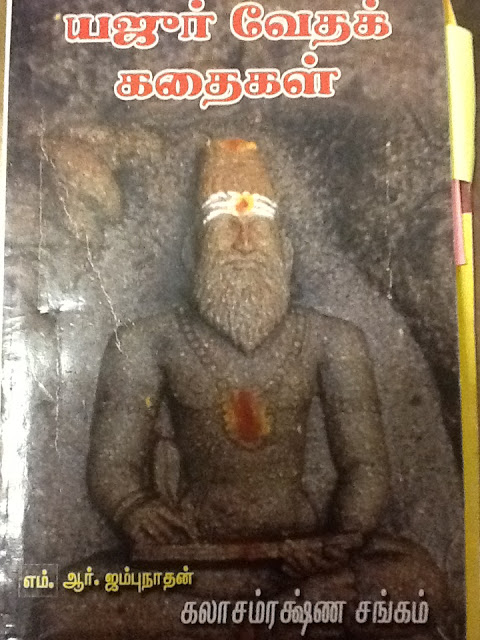
2.YajurVethak Kathaikal

author- M R Jambunathan

Kala Samrakshna Sanagam

5-D Selvam Nagar

Thanjavur 613 007

Year of Publication 2004

It is a good book (pages 80)

contact- Marutham Pathippagam

Tel 04372 232829 (Orathanadu)


These are the two books in Tamil with me in London

I have got 20 books on Vedas in English.

University of London has 100s of books and I borrow them every month.


The best place to find books on Vedas in Tamil and English is:–


Jayalakshmi Indological Book House

Mylapore, Chennai

6, Appar Swamy Koil Street,
Mylapore,
Chennai – 600004
Tamil Nadu


Ramakrishna Mutt (Mylapore, Chennai)  publish very good books about Upanishads in Tamil.


MY BOOKS


I want to publish my articles on Vedas (already in my blog) and distribute them free of cost to the interested people. If any one is interested in this venture, please contact me.

swami_48@yahoo.com


Following books are on the internet:


Sakshi Trust in Bangalore has published three vedas in Tamil; but I have not seen Atharva veda titles; please phone them to find the latest publications.


SAKSHI Trust
#63, 13th Main,
4th Block, Jayanagar
Bangalore – 560011
+91 (080) 22456315
info@vedah.com


xxxxxxx

Vedangal – Oru Pahuppaaivu: Vedas – an analysis (Tamil Edition)(Tamil) Paperback – May 24, 2016

by Dr. Ramamurthy Natarajan (Author)


Product details

  • Paperback:280 pages
  • Publisher:Local agency assigned (May 24, 2016)
  • Language:Tamil
  • ISBN-10:9382237313
  • ISBN-13:978-9382237310
  • Product Dimensions: 2 x 0.6 x 8 inches

xxxxxxxx


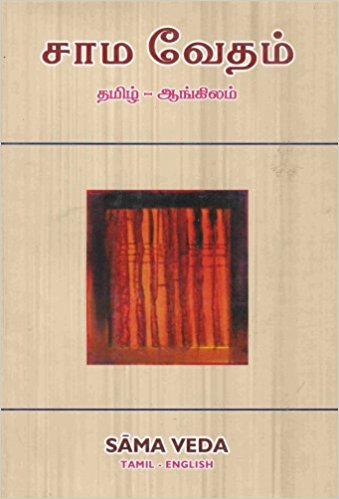
Samaveda – Veda of Holy Songs (Bilingual Tamil and English Translation) (Tamil) Hardcover – 2005

by M.R. Jambunathan (Author), R.D.H. Griffith (Author)


  • Hardcover:618 pages
  • Publisher:Alaigal Veliyeetagam (2005)
  • Language:Tamil
  • ASIN:B000V9AAXM
  • xxxxxxxxxxxxxxxxx


A lot of books are published in Marathi, Guajarati and Hindi. Tamil lags in this area.


–Subham–


BARBARIC ATTACK ON HINDU GODS BY THREE “SCHOLARS” (Post No.4318)

Written by London Swaminathan


Date:20 October 2017


Time uploaded in London- 7-48 am


Post No. 4318

Pictures shown here are taken from various sources such as Facebook friends, Books, Google and newspapers; thanks.


MAX MULLER

In a lecture on missions delivered in the nave of Westminster Abbey on December 3, 1873, Max Muller declares that “Brahmanism as a religion cannot stand the light of the day. The worship of Shiva, of Vishnu and of other popular deities, is of the same, nay, in many cases of a more degraded and savage character than the worship of Jupiter, Apollo and Minerva; it belongs to a stratum of thought which is long buried beneath our feet; it may live on, like the lion and tiger, but the mere air of free thought  and civilised life will extinguish it……..

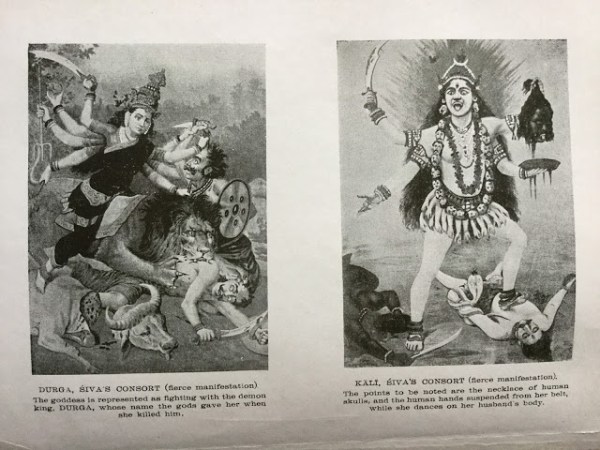
“It is true that there are millions of women, men and children in India who fall down before the stone images of Vishnu with his four hands, riding on a creature half bird, half man or sleeping on a serpent; who worship Shiva, a monster with three eyes, riding naked on a bull, with a necklace of skulls for his ornament. There are human beings who still believe in a god of War, Kartikeya, with six faces, riding on a peacock, and holding bow and arrow in his hands, and who invoke a god of Success, Ganesha with four hands and an elephant’s head, sitting on a rat. Nay, it is true that in the broad day light of the Nineteenth century, the figure of the goddess Kali carried through the streets of her own city, Calcutta, her wild dishevelled hair reaching to her feet, with a necklace of human heads, her tongue protruded from her mouth, her girdle stained with blood. all this true; but ask any Hindu who can read, write and think, whether these are the gods he believes in and he will smile at your credulity. How long this living death of national religion in India may last no one can tell.”

SIR MONIAR WILLIAMS

Sir Monier Williams says of Brahmanism: “Its policy being to check the development of intellect, and to keep the inferior castes in perpetual childhood, it encouraged an appetite for exaggeration more monstrous and more absurd than would be tolerate in the most extravagant European fairy tales. The more improbable the statement, the more childish delight it was calculated to awaken. Time is measured by millions of years; space by millions of miles; and if a battle is to be described, nothing is thought of unless millions of soldiers, elephants, and horses are brought into the field.”


LORD MACAULAY

Lord Macaulay similarly says, “The Brahminical mythology is so absurd that it necessarily debases every mind that receives it as truth”.


Source: The Gods of India, Rev. E. Osborn Martin, London, 1914


–subham–