
By London Swaminathan (my posts are simultaneously uploaded into five websites)
(This article is available in Tamil as well in my blogs.)
Worship of God Indra was popular in ancient Tamil Nadu. The oldest Tamil Book is Tolkappiyam, which is dated to 1st century BCE. Vedic gods Indra and Varuna were among the four Gods mentioned by Tolkappiam as Gods of the Tamils. Interestingly, Shiva was not one of them. That book was written by a Brahmin by name Trundadumagni and launched in the court of Pandya king under the chairmanship of Athankottu Asan, who was well versed in the four Vedas. Today we see the amazing continuity of Indra worship in India and Nepal. Brahmins worship Indra and Varuna three times a day in their Sandhya vandhana. Nepalese celebrate Indra Festival every year. Hindu Temple priests around the world invoke all the Vedic Gods in their day to day rituals.
Indra Festival was a very popular festival in ancient Tamil Nadu according to twin Tamil epics Silappadikaram and Manimekalai. It was first mentioned in Mahabharata and Ramayana. But in the Vedas we have some information which is interpreted by scholars as Indra festival. Atharva Veda mentioned Indra Dwaja (banner or flag of Indra). Rig Veda hinted at it.
At present Indra festival is celebrated as a grand Royal festival in Nepal. Gunabhadra, a king of 10th century CE started this festival in Nepal. They call it Yenya or Indra Jatra. Bengalese also celebrated it.
Raksha Bhandan celebrated all over India and the Water Festivals celebrated in Laos, Cambodia, Thailand and Burma has got some links with Indra, the god of rain.
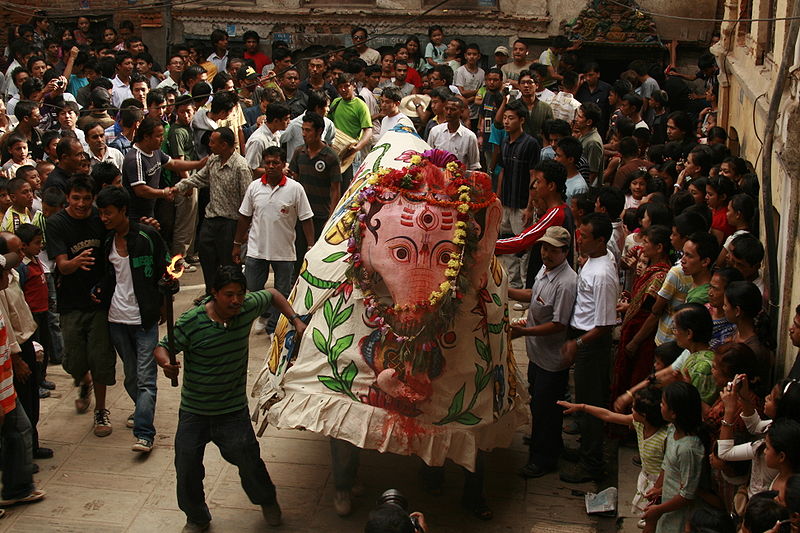
Picture: Elephant dance in Indra Festival,Kathmandu, Nepal
All the important Hindu scriptures like Bhagavatha, Ramayana and Mahabharata and Jain and Buddhist scriptures refer to Indra festival. This shows that Indra was held in high esteem from the southernmost tip of India up to Nepal in the Himalayas. Jains and Buddhists competed with each other in praising Indra by saying that “even Indra” worshipped the Buddha or Jain Tirthankara. Ramayana used the simile of Indra Dwaja in many places. Bringing down Indra Dwaja (flag)on the last day of the festival was a ritual used very often by Valmiki.
2000 year old Sangam Tamil literature refers to Indra (Pura Nanuru 182 and 241, Ainkuru. 62, Tirumurugu. 155-59 ) and Amruta (ambrosia of Indraloka) in a lot of places. Didactic books including Tirukkural also refer to Indra and Amruta.
The rare coincidence between the Tamils and the Nepalese is that both of them install a pole and hoist the Indra flag. In Nepal it is celebrated for 8 days but in Tamil Nadu it was celebrated for 28 days.
Another rare coincidence of Indra Festival in north and south is that they believed stoppage of the festival would result in a natural catastrophe. When Krishna stopped it, it was raining incessantly and Krishna had to lift the Govardhana Hill to protect his people. When the Choza king stopped it, the harbour city of Kaveripumpattinam in Tamil Nadu was devoured by the sea. Both of them believed Indra was in charge of rains and water.
Who Started the Festival?
Mahabharata says it was started by Uparichara Vasu. The life story of Uparichara Vasu itself is interesting. He was given an aeroplane and a garland of never fading lotus flowers by Indra. He married Girika but he was asked to go to a forest where his seed (semen) fell at the thought of his wife. It was devoured by a fish and Matsya (satyavati) was born to the fish. Each one of his sons started a separate dynasty in India. He was credited with some engineering feats such as breaking down a hill to create a new river (Please read my post GREAT ENGINEERS OF ANCIENT INDIA).
Jain scriptures link Indra festival with Rishabadeva, the first Thirthankara. Tamil epic Silappadikaram (Kathai 5) says that one choza king Thungeyil Erintha Thodithot Sembiyan started this festival. Both may be correct if we take one started it in the north and another started in the south of India. Interestingly Chozas themselves claimed that their ancestors ruled north India. All their ancestors were mythological characters mentioned in Mahabharata and Ramayana. The very word Sembiyan came from Sibi Chakravarthy of the famous pigeon story (Sibi=Saibya=Sembiya). The story of Sibi is in Sangam Tamil literature, Pancha Tantra and Tamil epic Silappadikaram.
The details of the celebrations were given in Silappadikaram (5: 141-4) and Manimekalai (1:27-72, 2:1-3, 1:1-9, 24: 62-69, 25: 175-200). The drummer will announce that the festival began and then people will assemble to hoist the Indra Dwaja (Banner). The whole town wore a festive look with lot of decorations. Indra was bathed with holy water. It started on a full moon day in Chitra month (coinciding with April). Other deities were also decorated. Dance and Music were the highlights.
According to Maimekalai, Agastya asked the Sembian (Choza) king to start this festval. In Nepal, it is celebrated in September. In Tamil Nadu, the festival Bogi, celebrated on the eve of Makarasanranti/ Pongal also linked with Indra. Bogi itself means Indra.
In the Vedas
Indra is said to have shaken in front of Maruts in the Vedas. Actually it means that Indra Flag was fluttering in the Wind (Maruts are wind gods; The word Maruti/ Anjaneya came from it). Vedic scholars Dange and Meyer have written about the festival in detail.
In the Rig Veda it is said that Indra shook in the company of his followers. His companions Maruts were the wind god. Vedas also say, “ priests have raised you up on the high, O, Satakratu like a pole” (RV 1.X.1). Vedic poets used symbolic language to convey the message that the Indra flag was hoisted and it was fluttering in the wind. Meyer gives more evidence from Atharva Veda.
In Kuchipudi and other dance performances a victory flag and staff are installed in the name of Indra. In ancient Tamil Nadu a big honour in the name of Indra’s son Jayanta was given to the court dancer. It was called Talai kol.
Tamils celebrate Bogi festival on the eve of Pongal (Makara Sankaranti). Bogi is another name of Indra. Indra and Varuna are worshipped by the Brahmins in their day to day Sandhayvandana (thrice a day water oblation to Sun God) and in all the temples during Puja and Abhisheka (ritual bathing of Gods). It is amazing to see the same custom is followed for more than at least 3500 years.
Nivedita and Indra Flag
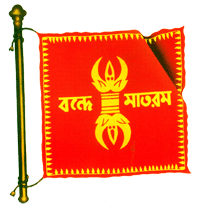
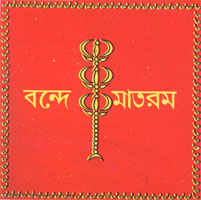
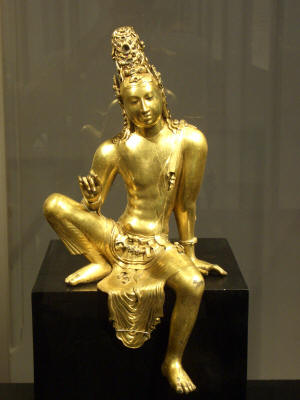
Swami Vivekananda asked his Irish disciple Nivedita alias Margaret Noble to design a Hindu flag. She came with a design of Indra’s weapon Vajrayutha and word “Vandemataram” in Bengali language. South East Asian countries had Indra’s vehicle Iravatha elephant on their flags or on their national emblems. Now we see lot of Indra Idols and statues in the museums around the world.
Now we realise that the theory of Aryan Dravidian divisions proposed by the Western “scholars” were utter lies. Indians had one culture from time immemorial though out India. We have seen the same festival celebrated from Vedic days to modern days in Nepal via Krishna of Mathura and Chozas of Tamil Nadu.
(Read other posts Indra Seal in Indus Valley, Vishnu Seal in Indus Valley by Swaminathan. Contact for more information: swami_48@yahoo.com or swaminathan.santanam@gmail.com)
***************









 Tamil and Vedas
Amazing statistics on Kalidasa!
By London swaminthan
Seven Books—40,000 words—93 commentaries for three of his works—he beat Shakespeare in writing poetry+ dramas+ Epics+ stotras (Shyamaladandakam) and usage of similes. He covered the history of 29 kings in Raghuvamsam. He used 1250 similes! He gives a description of a vast geographical area from Iran to Indonesia! He called the Himalayas “the measuring rod of earth” even before George Everest told the world the height of Everest Peak!!! An amazing poet the world has ever produced. Read the incredible statistics below.
“ Kalidasa’s achievements in poetry and drama are great. Not only was Kalidasa a supreme delineator of the play of human character and motive but he was an expert in the creation of dramatic situations. Above all, he was an unrivalled exponent in Sanskrit of every type of poetic rhythm and melody ranging in subject from simple and crystal clear historical narrative to the elaborate description of natural phenomena and the moods of the human spirit. His Meghasandesa is perhaps the most perfect example, in all literature, of verbal felicity”—C P Ramaswami Aiyar
“ The occasional echoes in Gatha Sapta Sati of ideas in Kalidasa’s poems and dramas e.g. GSS 14, 44, 47, 232, 251 etc. would lead to the conclusion that Kalidasa belonged to the 1st century BCE and enjoyed the patronage of Vikramaditya who started Vikrama Era 56 years before the Christian era. Vikramaditya was referred to in the GSS sloka 465.
–Gathakosa translated by M V Patwardhan, 1988
“ One is bound to remain in bewildering wonderment when one thinks of marvellous art of Kalidasa, the supreme poet of senses, of aesthetic beauty, of sensuous emotion, the consummate artist profound in conception and wonderful in expression. The vision, the majestic and vigorous style, the warm humanism, the wealth of striking similes, the vividness of thought and fancy, the expressive and happy descriptions, all these and very many more easily and undoubtedly mark out his poems as perfect patterns of exquisite poetic grace and charm.—V.S.Venkata Ragavacharya in his Foreword to Raghuvamsam.
Picture: Scene from Shakuntalam, Indian Postage Stamp
Greater than Shakespeare
“ It is not often that a great dramatist is also a supreme lyrical poet. Shakespeare is, of course, the most celebrated instance of such a combination. It is rarer still to find, along with the gift of lyrical poetry, the capacity to produce epics or narrative poems of authentic excellence. Kalidasa has, however triumphantly achieved this triune greatness”.
“ In the Rithusamhara, he has given us a marvellous descriptions of the Indian seasons and his Meghasandesa is, in my view, the finest example of descriptive poetry interwoven with one of the greatest love poems of the world”.
“His work as a dramatist has evoked worldwide admiration and the name of Goethe is enrolled among his devotees.
In Kumarasambhava and Raghuvamsa, he has essayed a most comprehensive task and the latter is the memorable example of a historical narrative containing descriptive and poetic passages of transcendent merit.
It is not as well known as it should be that Kalidasa was one of those who dreamt centuries ago of a unified and powerful India”.
— Sir C P Ramaswamy Aiyar
Picture: Scene from Meghaduta
Kumara Sambhavam
17 Sargas—1000 slokas
20 commentaries
Ragu Vamsam
19 Sargams—1569 slokas
29 kings
33 commentaries
Rtu Samharam
6 divisions —144 stanzas
Megadhutam
121 stanzas
40 commentaries
How many words did Shakespeare know?
In his collected writings, Shakespeare used 31,534 different words. 14,376 words appeared only once and 846 were used more than 100 times..
This means that in addition the 31,534 words that Shakespeare used, there were approximately 35,000 words that he knew but didn’t use. Thus, we can estimate that Shakespeare knew approximately 66,534 words.
According to one estimate the average speaker of English knows between 10,000-20,000 words. (This is taken from a website)
How many words did Kalidasa Know?
Now it is my guess. Kalidasa composed a total of 2570 slokas +245 longer stanzas.
At the rate of ten words per sloka he would have used 25700 words for Kumarasambhavam and Raghuvamsam. For Ruthusamharam and Meghadutam, he would have used 20 words per stanza and in total he would have used 144+121X20=5300 words. This makes a total of 31,000 words for four books.
If we give his three dramas another 9000 words (3000 each), it will make a grand total of 40000 words.
If Kalidasa used 40,000 words for seven books he would have used 211,429 words for 37 books if he has followed Shakespeare. But still we may not know how many new words who would have used. We need to work like English people to get better statistics!
I have already posted seven articles proving that Kalidasa lived before Sangam Tamil period, i.e in the first century BCE. More to come.
Please read Kalidasa. Anyone who wants to know about Indian literature and culture must study Kalidasa. I recommend Chandra Rajan’s translation of Kalidasa.
For more of the same, contact swami_48@yahoo.com or Swaminathan.santanam@gmail.com
*****************
Posted by Tamil and Vedas on August 12, 2012
https://tamilandvedas.com/2012/08/12/amazing-statistics-on-kalidasa/