CAMELS IN PANINI, MANU AND MAHABHARATA (Post No.5294)

Research Article Written by London swaminathan

Date: 6 August 2018


Time uploaded in London – 14-10  (British Summer Time)


Post No. 5294


Pictures shown here are taken from various sources such as Facebook friends, Wikipedia, Books, Google and newspapers; thanks. Pictures may be subject to copyright laws.


CAMEL MYSTERY IN SANSKRIT AND TAMIL LITERATURE-PART2

(FIRST PART WAS POSTED YESTERDAY).
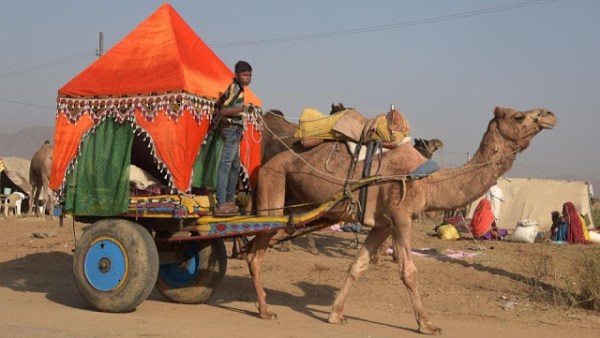
CAMELS IN ASHTADYAYI OF PANINI (7TH CENTURY BCE)

“The organisation of the army included a camel corps. Camels are referred to in the Vedas as being native to the soil but there is no specific mention of fighting camels. Camels are of two varieties, the single humped one, now seen in upper India and in Arabia, (where it was probably introduced from India) and the double humped Bactrian camel which was later introduced in the Middle East and North Africa.

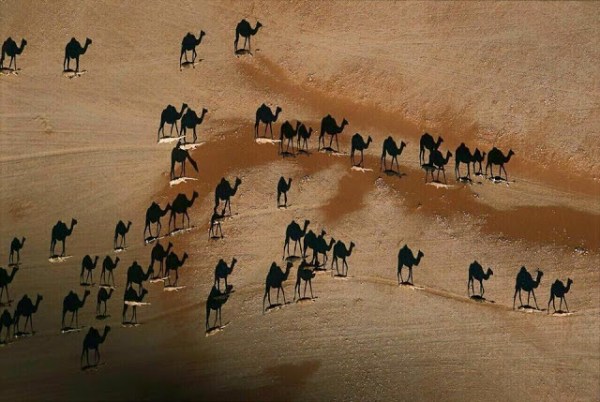
Panini is familiar with the camel corps known in his time as Austraka or Ushtra-sadi (ushtra =camel). A mixed corps of camels and mules (asvatari) , was known as ushtra-vani. It would appear that the camels were mostly used as army transports over the difficult sandy terrain, frequently come across in the Indus basin and in Rajaputana

Source, Arya Tarangini ,page 342; Volume one, A Kalyanaraman , Asia Publishing House, 1969

Xxxx
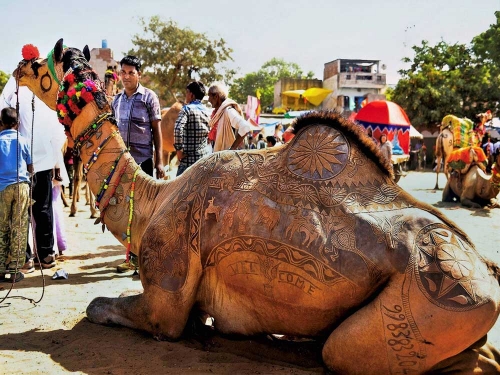
 

Camel in Mahabharata

We find an interesting story about camel in the Shanti parva of Mahabharata. A lazy camel did not want to go out to get food. So it stayed in a place and prayed to Brahma. He gave him a long neck so that it can eat all the plants up above the trees without much effort. The lazy camel tried that way and in greediness it protruded its neck into a cave. A fox inside he cave bit the head of the camel and killed it.


This is to teach a lesson to the lazy people, probably included in the Mahabharata at a later date.


Camel Vahana

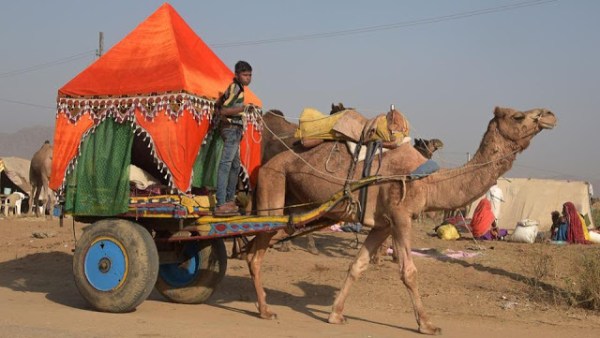
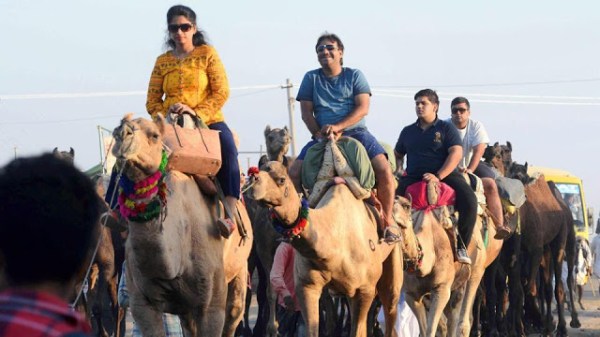
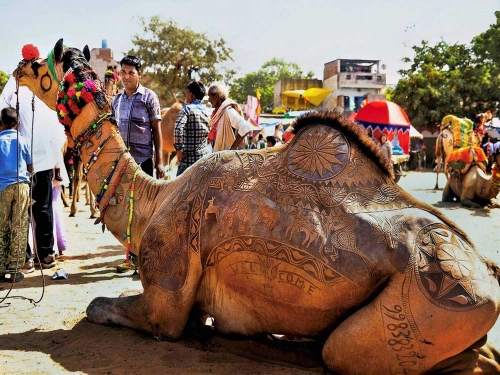
Camel Fair in Pushkar is famous in Rajastha. It attracts a large number of local people and foreign tourists.


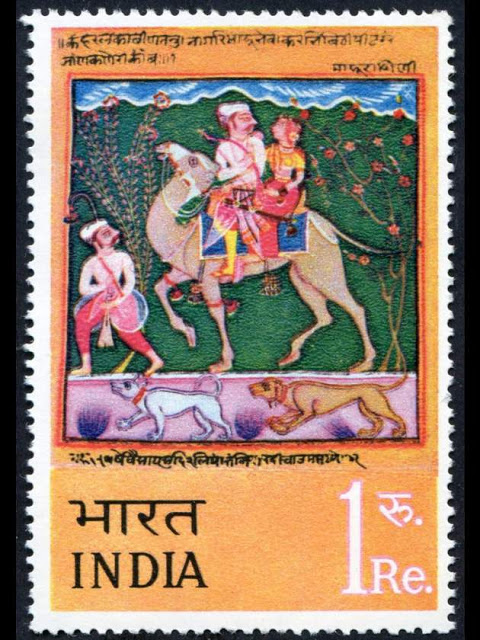
Though camel is found only in desert areas. strangely it became the vahana (mount) of Hindu god Anjaneys (Maruti). There are some local stories to justify it. We can see such camel figures in Chennai Hyderabad and other Hanumar temples.


One of the Ashta Dik Devatas ( Eight Gods in charge of Eight Directions) is Naitruti in charge of South West. Camel is the Vahana of Naitruti.
 

Camel in Manu Smrti

MANU ON CAMELS


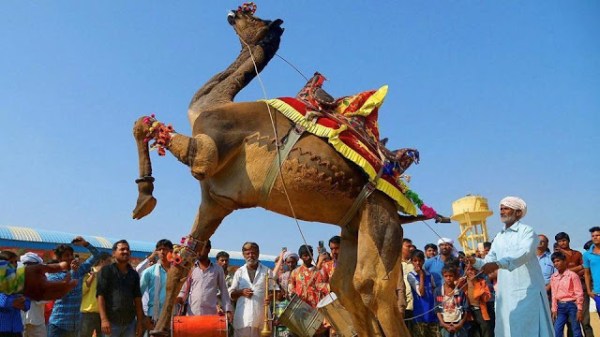
These slokas must be read with interpretation or in the right context. What I can say is that Manu has used camels in nearly 20 places. He even spoke about the fence up to a  height of a camel. That means camels were well known and very widely used and they were like common domestic cattle. Even Brahmins were riding on the camels which we know from Manu’s ban on reciting Vedas sitting on a camel. If we look at each sloka or its commentary, we can make a picture of the society during Manu’ days.


Following are couplets From Manu smrti (2-204 means second chapter 204th sloka)


2-204. He may sit with his teacher in a carriage drawn by oxen, horses, or camels, on a terrace, on a bed of grass or leaves, on a mat, on a rock, on a wooden bench, or in a boat.


3-162. A trainer of elephants, oxen, horses, or camels, he who subsists by astrology, a bird-fancier, and he who teaches the use of arms, (DON’T ENTERTAIN THEM IN SRARDHA)


4-115. A Brahmana shall not recite (the Veda) during a dust-storm, nor while the sky is preternaturally red, nor while jackals howl, nor while the barking of dogs, the braying of donkeys, or the grunting of camels (is heard), nor while (he is seated) in a company.


4-120. Let him not recite the Veda on horseback, nor on a tree, nor on an elephant, nor in a boat (or ship), nor on a donkey, nor on camel, nor standing on barren ground, nor riding in a carriage.


5-8. The milk of a cow (or other female animal) within ten days after her calving, that of camels, of one-hoofed animals, of sheep, of a cow in heat, or of one that has no calf with her,(AVOID THEM; DON’T OFFER IT TO GOD)


5-18. The porcupine, the hedgehog, the iguana, the rhinoceros, the tortoise, and the hare they declare to be eatable; likewise those (domestic animals) that have teeth in one jaw only, excepting camels.
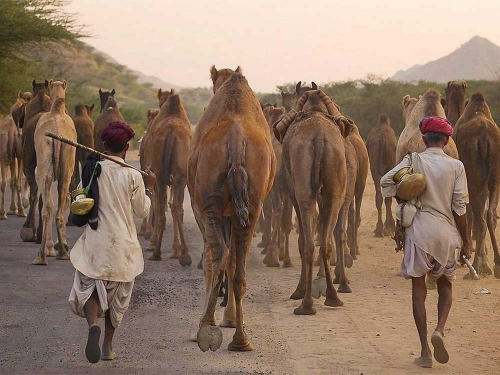
 

8-146. Things used with friendly assent, a cow, a camel, a riding-horse, and (a beast) made over for breaking in, are never lost (to the owner).


8-239. (The owner of the field) shall make there a hedge over which a camel cannot look, and stop every gap through which a dog or a boar can thrust his head.


8-296. If a man is killed, his guilt will be at once the same as (that of) a thief; for large animals such as cows, elephants, camels or horses, half of that.


9-48. As with cows, mares, female camels, slave-girls, buffalo-cows, she-goats, and ewes, it is not the begetter (or his owner) who obtains the offspring, even thus (it is) with the wives of others.

11-69. Killing a donkey, a horse, a camel, a deer, an elephant, a goat, a sheep, a fish, a snake, or a buffalo, must be known to degrade (the offender) to a mixed caste (Samkarikarana).

11-138. But for killing carnivorous wild beasts, he shall give a milch-cow, for (killing) wild beasts that are not carnivorous, a heifer, for killing a camel, one krishnala.


11-155. A twice-born man, who has swallowed the urine or ordure of a village pig, of a donkey, of a camel, of a jackal, of a monkey, or of a crow, shall perform a lunar penance.

11-157. The atonement for partaking of (the meat of) carnivorous animals, of pigs, of camels, of cocks, of crows, of donkeys, and of human flesh, is a Tapta Krikkhra (penance).

11-200. He who has been bitten by a dog, a jackal, or a donkey, by a tame carnivorous animal, by a man, a horse, a camel, or a (village-) pig, becomes pure by suppressing his breath (Pranayama).

11-202. A Brahmana who voluntarily rode in a carriage drawn by camels or by asses, and he who bathed naked, become pure by suppressing his breath (Pranayama).


12-55. The slayer of a Brahmana enters the womb of a dog, a pig, an ass, a camel, a cow, a goat, a sheep, a deer, a bird, a Kandala, and a Pukkasa.

12-67. For stealing a deer or an elephant a wolf, for stealing a horse a tiger, for stealing fruit and roots a monkey, for stealing a woman a bear, for stealing water a black-white cuckoo, for stealing vehicles a camel, for stealing cattle a he-goat.

Camel in The Bible

St Augustine, 354-430 CE, made the camel a symbol of humble Christian shouldering life’s burden without complaint.

In images of Magi the camel appears as a beast of burden.
A camel began to speak in support of the wish of St. Cosmos and St Damian that they may be buried in the same grave; the Devil however, assumed the form of a giant camel to plague Macarius the Egyptian.
It has been that a mistranslation may have produced Christ’s statement that “ it is easier for a camel to go through the eye of the needle than for a rich man to enter into the kingdom of god” . Mathew 19-24
In Aramaic gamla means camel and rope.
It seems camel is more correct, when we look at another image.
In the Babylonian Talmud a similar image is used in reference to those who achieve the impossible: they make “an elephant pass through the eye of a needle “.

GAUTAMA BUDDHA

In Asian mythology, camel joined the water buffalo, the elephant and the tiger in mourning the death of Gautama Buddha.

Symbolism of camel

“The animal by its largely undemanding nature, made it possible for humans to cross the steppes and the deserts of North Africa. The camel became a symbol of moderation and sobriety.

Because of its physiognomy, which appears to the human eye appears haughty, it also came to symbolise arrogance and selfishness. Because it would accept only those burdens that it could actually carry, the camel came to stand for discernment. It stood for laziness too. Its ability to kneel obediently was taken as a positive characteristic”.

Source
Dictionary of Symbolism. Hans Biedermann, 1989
 

Conclusion:

1.From the days of Rig Veda Hindus know about camels

2.Camels were also part of gift/Daana like cows.

3.Camels have been used for transport

4.Oldest Tamil book also mentioned camels in addition to Sangam Literature

5.English words and Tamil words might have been derived from Ustra and Kramela (Sanskrit words for camels)

6.Camels are also shown as Vahana of Hindu Gods giving it some sanctity.

7.Camels were part of Pancha tantra fables and Katha Sarit Sagara stories and so even children knew about it.

7.Panini who lived 2700 years ago mentioned Camel Corps and so it was part of Hindu Army.

8.Mahabharata story about camels show that it was part of epic literature.


-Subham–


CAMEL MYSTERY IN SANSKRIT AND TAMIL LITERATURE- Part 1 (Post No.5291)

RESEARCH ARTICLE Written by London swaminathan

Date: 5 August 2018


Time uploaded in London – 15-47  (British Summer Time)


Post No. 5291


Pictures shown here are taken from various sources such as Facebook friends, Wikipedia, Books, Google and newspapers; thanks. Pictures may be subject to copyright laws.


Camels are referred to in the Vedas, Mahabharata, Panini’s Ashtadyayee, Pancha tantra fables, Katha sarit sagara, Buddhist literature, Amarakosa Thesarus, oldest Tamil book Tolkappiam, two books of Tamil Sangam period, Tamil epic Silappadikaram (???), about 20 slokas of Manu Smrti, in the Bible, folk tales and festivals such as Pushkar camel festival


Camels are of two types. Camels with one hump is found in India and its neighbourhoods. The oldest reference to the camel in literature is found in the Rig Veda, if we believe the dates given to it by Herman Jacobi and Balagangadhara Tilak i.e. 6000 BCE. Even otherwise the camels are referred to in Indian literature continuously for thousands of years. Let me start with Tamil literature:

The oldest book in Tamil language is Tolkappiam, a grammatical treatise dated between first century BCE and first century CE. The third part of the book refers to camels in two Sutras (rules). It describes the naming of a calf of camel and a female camel.


Next comes Akananuru and Sirupanaatrup padai- two books from the 18 major works of Sangam Tamil literature.


Akananuru verse 245 created a debate among Tamil scholars because of the two interpretations.

One interpretation is that the camels ate the dried flowers of silk cotton trees on the rocks which looked like the bones of animals and another interpretation is camels ate bones in the dry and arid areas of Tamil Nadu. Since camels are herbivorous the second interpretation is wrong.


In Sirupannatruppadai (line 154) the Agarwood washed by the sea in the City of Eyirpattinam looked like a camel lying down.

Both are interesting because the camels were found even in the southern most part of India 2000 years ago. Since they mentioned horses in hundreds of places it is no wonder that they were driven from north to south by the merchants.


In the most famous Tamil epic Silappadikaram the hero of the story Kovalan is said to have travelled to the sea side on a mule; but the word used by the poet Ilango is ‘Attiri’ which may mean a camel or a mule according to Tamil dictionary!


The very word ‘Ottakam’ in Tamil is derived from the Sanskrit word Ustra and Usti, both are found in the Rig Veda, the oldest book in the world.


Another interesting thing is the word CAMEL is cognate to Kramela in Sanskrit for camel. It may be derived from gamal of Arabic or Kramela from Sanskrit , subject for research!


Camels in Madurai Temple procession

In my home town Madurai in Tamil Nadu, the temple festivals used to have Elephant, Camel and Bull with a drum on it. God’s procession is always led by these three. I don’t know when this custom came to Madurai Meenakshi Sundareswarar Temple.

xxx

USTI, USTRA in the VEDAS.

Both of these words, of which the former is quite rare (RV 18-106) must have the same sense

Roth and Aufrecht hold tha in the Rig Veda and the brahmanas the sense is humped bull or buffalo, but the former thinks in the vs the sense is doubtful, and camel may be meant.

Hopkins is decidedly of opinion that the sense in every case is camel.

Rig Veda 1-138-2

8-5-37

6,48; , 22, 31

Atharva Veda 20-127-2, 132, 13

Vajasaneyi Samhita 13-50

Satapata Brahmana- 1-2-3-9

Aitareya Brahmana- 2-8

The animal was used as a beast of burden yoked in fours—AV 2-127-2; RV 8-6-48


Source- Vedic Index of Names and Subjects Volume-1, AA Macdonell and AB Keith


It is interesting to note that more camel references come from the Eighth Mandala of Rig Veda. It is concerned more with the kings of Iran. This Mandala is full of mysteries and much research is needed. Here are a few references:

RV 8-46-32 says,

Balbhutha and Taruksha have made a gift of 100 camels to the sage. The names Balbutha and Taruksha, both of typical Sanskrit sounds are rare names.

RV 8-5-37 says,

Kashu gives 100 camels and 10000 cows to the priest

Kasu is found in Avestan literature confirming his Iranian descent.

Another reference to Iraninans is 8-6-46 ; here Parshu (Persian Parsa) and Tirinda (Persian Tiridates) gave one lakh gifts. It may be gold or cattle or camels or all mixed.


What is mentioned here can be compared with Mulavarman Sanskrit Inscription of Indonesia, where the Seven Yupa Stambha inscriptions say that the king donated 20,000 cows to the Brahmins with lot of gold. So 10,000 cows in RV need not raise any one’s eye brows!

In Kalidasa

This can be again compared with a reference in Kalidasa’s Raghu vamsa (whom I date first Century BCE on the basis of Sangam Literature similes):-

“Then the seer Kautsa after loading the gold bags on 100 horses and camels , affectionately touched the King Raghu and said the following”- ( Raghu Vamsa 5-32)


Here also we see 100 camels like we see in the Rig Veda. So all these were very common in those days.


When we see Panini’s reference to Camel Corps around Seventh Century BCE, we would be surprised.

–to be continued………………….

HINDU FESTIVAL NAGA PANCHAMI AND ENVIRONMENTAL SCIENCE (Post No.5288)

Written by London swaminathan

Date: 4 August 2018


Time uploaded in London – 11-59 AM  (British Summer Time)


Post No. 5288


Pictures shown here are taken from various sources such as Facebook friends, Wikipedia, Books, Google and newspapers; thanks. Pictures may be subject to copyright laws.


HINDU FESTIVAL NAGA PANCHAMI AND ENVIRONMENTAL SCIENCE (Post No.5288)


This year (2018), Naga Panchami falls on 15th of August. It is a Hindu festival celebrated throughout India. Though the stories change from area to area the basis is same. People worship snakes or snake goddess on that day. Snake goddess is found in Rig Veda, Greece, Indus Valley and South Indian villages (Please see my articles listed at the end).


It falls on Suklapaksha Panchami of Ashada (Adi in Tamil) month.


(Naga= snake, Panchami= Fifth Lunar day)


English word snake came from Sanskrit= S+Naga= Snake

English word serpent came from Sanskrit Sarpa

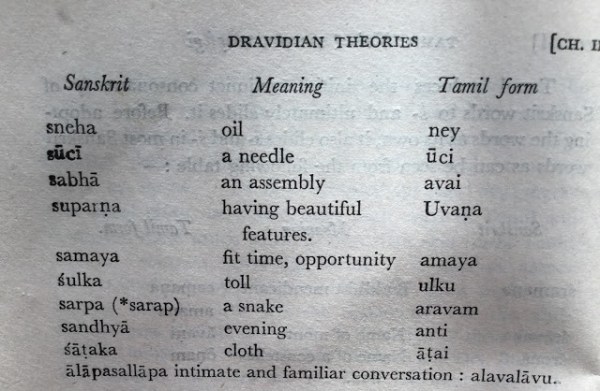
Tamil word Aravu/ Aravam came from Sanskrit Sarpam (s dropped, p=v;according to linguistic rule)


Hindus show great respect to environment. They want to keep disturbance to the nature to the minimum. From the morning, they worship nature. Before putting their feet on earth (floor) they ask for pardon (Padas sparsam Kshamsvame). Before they dig the land for wells or ploughing the land, they ask for pardon. They say cutting the trees is a sin. They called the earth mother (Bhuma Devi= Gaiya in Greek). It is in the oldest book, the Vedas.


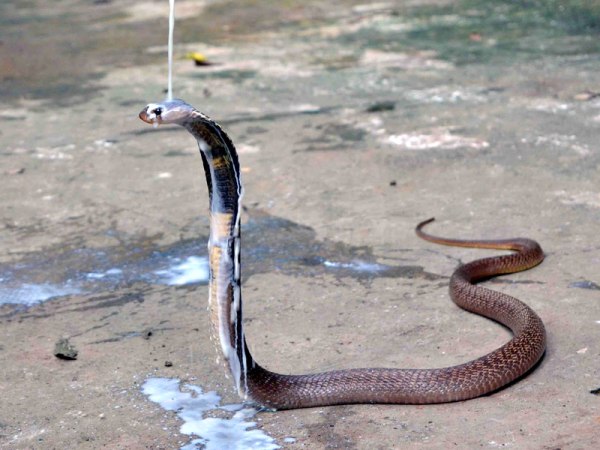
They are scientists; so, they know that optimum utilisation of nature is the best. Though they know snakes are poisonous animals, they still worshipped the poisonous cobras. They knew that snakes are required to kill the rats in the fields. If the rats are not controlled food production will be reduced. They knew snakes form a vital link and it maintains an equilibrium in Nature. That is why all Hindu gods are adorned with snakes!


They also know that snakes never bite a man unless and otherwise they are threatened or disturbed. People walking in the villages, particularly during nights just clap the hands and walk ( can the snakes hear human sounds? do they have ears? discussed in my previous articles)


In some parts of India Naga Panchami continue for one month till the Panchami of next month (Ashada to Bhadra).

Holes in the anthills are considered to be the homes of cobras. Women worship them even on ordinary Fridays and they pour milk in the holes.


Bengalese plant a milky white plant (Euphorbia Lingularum) on these days on a raised mound of earth in the courtyards of their houses and worship Goddess Manasa Devi. They worship her to get immunity from snake bites or avoiding bitten by snakes. If anyone has died due to snake bite in the family all of them join in worship and they pour milk in the ant hills where snakes live.


Punjabis draw a black figure on the wall to avoid snakes coming into the houses. The figure represents snake goddess.


In the central parts of Indi,a they paint snakes and birds on walls and they make a paste with wheat and pulses. They dip grass in the paste and make snake figures. They offer sweets and milk to the snakes.


In Maharashtra and other parts, they offer milk and dried rice to snakes. They pour it in the places where they live. They even avoid digging and ploughing on those days.


In Karnataka, a vrata(fasting) named Citranemi is observed.


In Mithila (Bihar- Nepal border) Mauni Panchami is celebrated.


In Orissa and Dravida, Guru Panchami is celebrated by worshipping Lakshmi and Gauri on that day.


TWO STORIES ABOUT NAGA PANCHAMI


In South India the story is about a Brahmana boy bitten by a cobra when he went to get a Ketaki flower ( Thazam Pu in Tamil; Pandanus Fascicularis) . His sisters followed a vow (Vrata) and brought him back to life. The fourth day of waxing moon in Sravana month is observed as Festival of Brothers and Sisters. They observe it.


Another story


Chand was a merchant who did not believe in the Goddess Manasa devi. As a result, he lost all his sons due to snake bites. But yet he was very obstinate and never paid reverence to the Goddess. He got one more son who was the apple of his eyes. He was still obstinate in not worshipping Manasa and Manasa Devi was also relentless and she bit his son on his wedding day in spite of his precautions. His newly wed wife Vehula did not allow his body to be cremated. She was fasting till her body became a skeleton but never stopped her prayers to Manasa. She begged to Manasa for the restoration of his husband’s life. At last Manasa relented and gave his life back.


It is the belief of many that a person supposed to be dead by a snake bite, really lives in a state of suspended animation for a long time after.

Hindus, by not killing the snakes, the vital animal in the food production chain, increase the production of food grains. The snakes keep even frogs and toads in control which freely enters every home during rainy season.


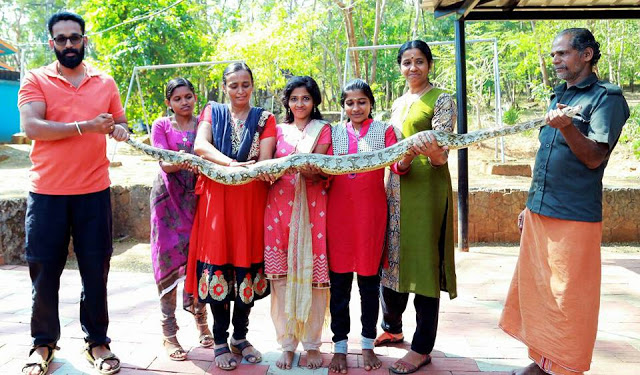
Villagers don’t fear snakes even when it enters a house; they simply trap it in a box or pot and release it in the field. They know the value of it.


Every village has some snake charmers, who handle snakes without any fear. Every village has a medicine man with anti-dotes for venom. But yet snake bites kill hundreds of villagers; it is said that more people die in panic or not seeking proper help.


What do Hindus do on Naga panchami Day?


1.They go to ant hills where the snakes live, they pour milk or feed them with some eatables (only vegetarian food).


2.They actually worship the snakes if they see them with utmost reverence.


3.They worship snake goddess Manasa Devi and other snake (Naga sculptures) stones.


4.They draw pictures of snake goddesses on the walls in houses.


  1. They draw pictures of snakes and birds which will drive away the fear of snakes.


  1. Through these activities, they psychologically prepare children and women not to panic when they see snakes in the garden or filed.


Sanskrit and Tamil scriptures have hundreds of snake bite stories; most of the bitten people came back to life by the grace of a saint or God.


Being a tropical country India has hundreds of varieties of snakes and most of them are non-poisonous.


Foreigners have taken several videos and films in appreciation of Hindus’ reverence to snakes


  1. MY OLD ARTICLES ON SNAKE WORSHIP


  1. serpent worshp | Tamil and Vedas

tamilandvedas.com/tag/serpent-worshp

Posts about serpent worshp written by Tamil and Vedas. about; Fatness Anecdotes (Post No.3526) Napoleon’s Leadership Qualities (Post No.4155) … Snake worship in …


Serpent Queen:Indus Valley to Sabarimalai | Tamil and Vedas

tamilandvedas.com/2012/06/17/serpent-queenindus…

Picture shows Indus Snake seal The most famous snake queen figure came from the Minoan Civilization in the island of Crete. British archaeologist Arthur Evans …


Snakes and Snake Bites in Mahabharata! | Swami’s Indology Blog

swamiindology.blogspot.com/2015/03/snakes-and-snake-bites-in-mahabharata.html

10 Mar 2015 – The stories in Hindu scriptures are real life stories. They are not concocted. The best examples are stories of snake bites. From the story of Parikshit to down south Tamil stories of Periya Purana and Tiruvilaiyadal Purana, we hear about several deaths due to snake bites. In some stories gods or saints came ..


included the Olmec, the Mixtec, the Toltec, the Aztec, and the Maya.

snake miracle | Tamil and Vedas

https://tamilandvedas.com/tag/snake-miracle/

(for old articles go to tamilandvedas.com ORswamiindology.blogspot.com). sesha … Though there is no religion or culture without a snake in it, Hindus are the only community who worship snakes from the Vedic days until today. There are millions of … All the Hindu gods are linked with a snake in one way or another. All the .

Are Mayas, Indian Nagas? | Tamil and Vedas

https://tamilandvedas.com/2012/04/28/are-mayas-indian-nagas/

28 Apr 2012 – Maya calendar begins on 11th August 3114 BC. Indiancalendar Kaliyuga begins in 3102 BC. But Hindu mythology is very clear about their existence long before Kali yuga. Kaliyuga is the last of the four yugas. But Mayas are silent about their existence before this date 3114 BC. The amazing co incidence …


Amazing Similarities between Mayas and Hindu Nagas | Tamil and …

https://tamilandvedas.com/…/amazing-similarities-between-mayas-and-hindu-nagas/

28 Apr 2012 – Amazing Similarities between Mayas and Hindu NagasAmazing Similarities between Mayas and Hindu Nagas ( The first part of this article is Are Mayas, Indian Nagas?) 1. Strange co incidence: Kali Yuga 3102 BC and Maya Yuga beginning 3114 BC 2. Maya appearance:Maya people of Central America …


Naga Yakshi | Tamil and Vedas

https://tamilandvedas.com/tag/naga-yakshi/

We have Nagapanchami celebrations celebrated throughout India where live snakes are worshipped. Hindus respect Nature and Environment and use the natural resorces to the minimum. Snake Goddesses such as Manasa Devi and Naga Yakshi are worshipped in India. The Vedas has an authoress named as Serpent …


Gondwana | Tamil and Vedas

https://tamilandvedas.com/tag/gondwana/

They celebrate Hindu festivals such as Dasara and Naga Panchami. Like any other village community they have their own stories for everything. They are well versed in arts and building. They have divided themselves into four different castes lie the four divisions of work in ancient Hindu society. They form the biggest tribe …


–subham–


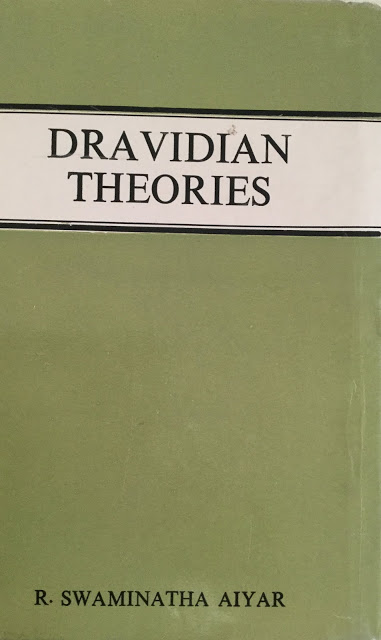
Dravidian Theories- Tamil and Sanskrit came from same source! (Post No.5284)


Compiled by London swaminathan

Date: 3 August 2018


Time uploaded in London – 8-16 AM   (British Summer Time)


Post No. 5284


Pictures shown here are taken from various sources such as Facebook friends, Wikipedia, Books, Google and newspapers; thanks. Pictures may be subject to copyright laws.

The present book is a store house of information on everything Dravidian, and bears evidence on every page of it, to the immense learning of the author, his indefatigable research, his genius for analysis, and his familiarity with the grammars of almost all the languages of South India.

It is a pioneering contribution to a field of study in which there have been too few workers. Swaminatha Aiyar, a painstaking scholar, author of the book, has laboured long over it with single minded devotion in the cause of linguistic science. No doubt his labours will help in promoting national integration, by showing how , over two or three millennia ago, people living in different parts of India lived in linguistic amity taking freely from neighbouring languages and there by enriching their own .

Running in twelve chapters of immense importance this pioneering research material suffixed with appendices, bibliography and footnotes, shall be of great help to those who are interested in linguistics in general and Dravidian theories in particular. This is a must for every library and institution.

Author’s Profile

  1. Swaminatha Aiyar was one of the galaxy of brilliant men who are born and bred in Thanjavur district in the nineteenth century. He was a contemporary of P S Sivaswami Aiyar and continued as his close associate and friend, with mutual respect and admiration.

    Like so many great men of those days, R Swaminatha Aiyar also commenced his life as a school teacher in the district, serving as such from 1880 to 1884.

    1885- He was appointed Assistant Professor of Mathematics in Presidency College, Madras
    1889- Head clerk, Revenue Department
    1893- Senior Assistant in Board of Revenue
    1895- Registrar of the Revenue Department
    1896- Professor of Mathematics Presidency College , Madras
    1897- Famine Assistant in Revenue Department , Tamil Translator to Government.

1910- Treasury Deputy Collector, Administrative Deputy Collector

He was a linguist, administrator, mathematician, grammarian, educator, scholar, orientalist, and polymath, a versatile genius. In short, he, by birth, early training and bent of mind, and the opportunities provided by his occupation, became eminently fitted for the work he dedicated himself to later on in life.


-TAKEN FROM THE JACKET OF THE BOOK.

Mr P N Appuswami in his foreword to the book said in 1975:
The knowledge he had cultivated of Vedic Sanskrit and of classical Sanskrit, from his boyhood, at a time when such knowledge was more prevalent and valu d , was of great help in preparing his mind for linguistic study . So too his knowledge of the classic Tamil of the Sangam and later periods helped him in his study of the dialects of the Tamil country.

One must be familiar with Vedic and classical Sanskrit and proficient in South Indian languages to understand his theories. But even a cursory reading without deep knowledge in many of these languages, we can understand his line of thinking.

Lot of so called researchers and scholars take one matter from here and one matter from there and try to connect them. They don’t realise that the information belongs to various periods or various levels of development. They connect Vedic Sanskrit and classical Tamil which is widely different in ages. There is at least a 2000 year gap.

Swaminatha Aiyar has beautifully shown the intermediate Prakrit link between Sanskrit and Tamil. He has used the table prepared by Dr Caldwell and showed the possible Prakrit link.

If one followed his line of thinking one could find the common foundation of Tamil and Sanskrit. One can understand why Shiva sent his disciple Agastya from the Northern Himalayas to the Southern Pothiya Hillls to codify a grammar for Tamil. Tradition says that both these languages came from the kettle drum sound of Lord Shiva. Paranjothi Munivar confirms it in his Tiru Vilaiyatal Purana.

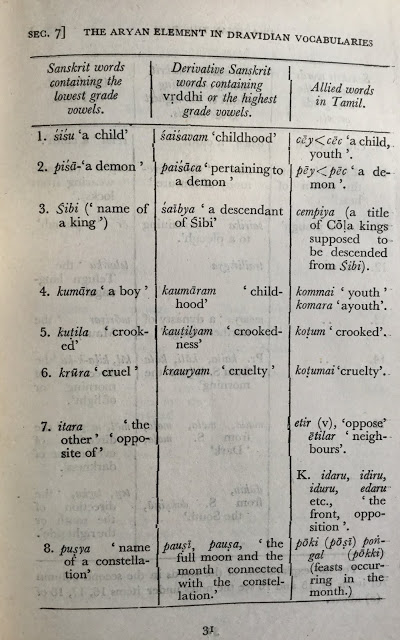
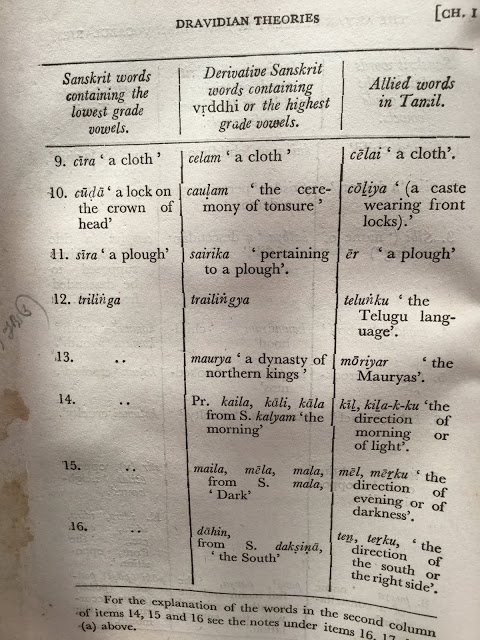
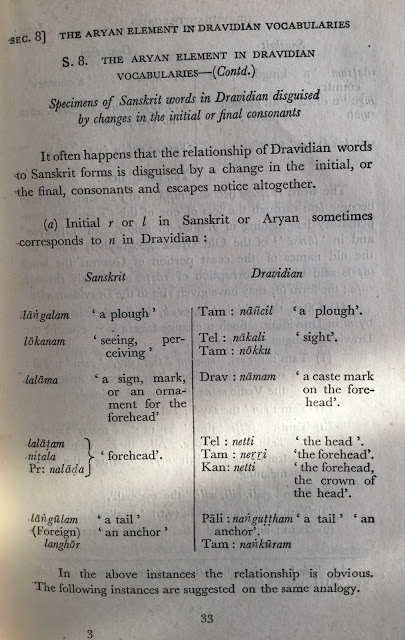
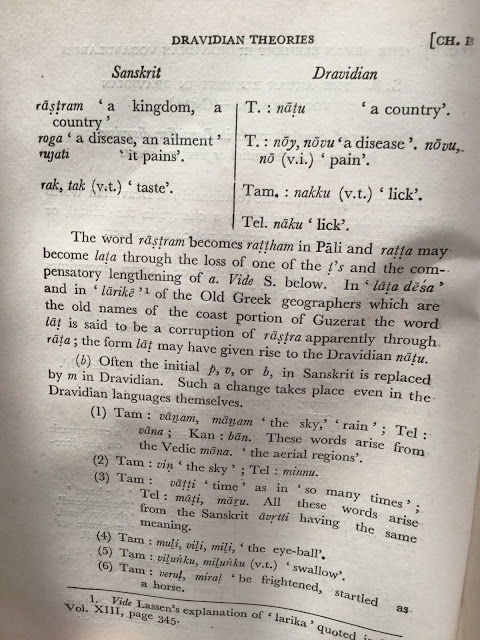
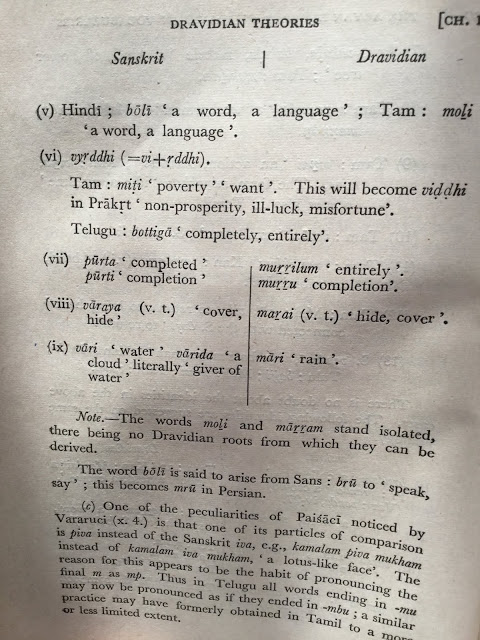
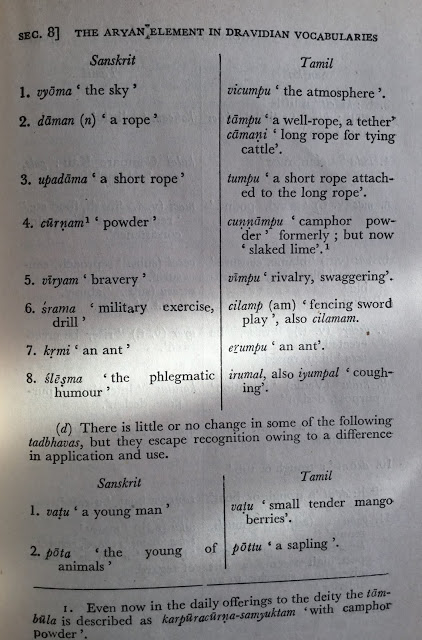
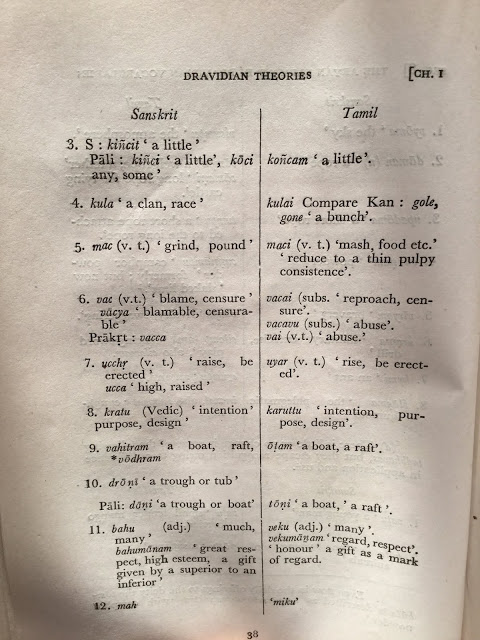
Following is the table given by Swaminatha Aiyar to show the link between Tamil and Sanskrit:


My previous articles on the same subject:

  1. Who are Dravidians? | Tamil and Vedas

tamilandvedas.com/2013/07/17/who-are-dravidians

Who are Dravidians? By London Swaminathan … https://tamilandvedas.com/2013/07/17/who-are-dravidians/ Previous Post திராவிடர்கள் யார்?

.

  1. ‘Dravidians are Invaders’ – Tamil and Vedas

tamilandvedas.files.wordpress.com/2013/12/…

‘Dravidians are Invaders’ Who are Dravidians ? Part- 2 Post No. 761 dated 26/12/13 ; compiled by London swaminathan Please read part 1 before reading this part …


  1. Dravidian | Tamil and Vedas

tamilandvedas.com/category/dravidian

Foreigners used this “Dravidian” Brahui to show the Dravidians entered India through the north … (for old articles go to tamilandvedas.com OR swamiindology …

  1. Very Important Date – Tamil and Vedas

tamilandvedas.files.wordpress.com/2014/01/very…

5.Who are Dravidians? (Posted July 17, 2013) and 700 more articles. Contact swami_48@yahoo.com . Title: Microsoft Word – Very Important Date Author: Swaminathan

  1. Munda Tribe follows Brahmin customs! Mystery of Indian Hill …

swamiindology.blogspot.com/2016/06/munda-tribe…

(for old articles go to tamilandvedas.com OR swamiindology.blogspot.com) … Foreigners classified them as Dravidians but there is no Dravidian or Aryan element in them.

  1. Indus Valley Case – Tamil and Vedas

tamilandvedas.files.wordpress.com/2013/12/indus…

Indus Valley Case: Lord Indra Acquited Post No 764 dated 28th December 2013. … Dravidians and Aryans came to India from outside. But Hindu literature says


Brahui | Tamil and Vedas

tamilandvedas.com/tag/brahui

Posted by Tamil and Vedas on September 12, 2017. https://tamilandvedas.com/2017/09/12/brahui-theory-incorrect-post-no-4205/

  1. Tamil and Sanskrit | Tamil and Vedas

tamilandvedas.com/tag/tamil-and-sanskrit

Tagged Agastya statues, Panini, Tamil and Sanskrit, Tamil Grammar. Posted by Tamil and Vedas on July 26, 2016. … Tamil and Sanskrit came from the same source.

  1. Origin of Tamil and Sanskrit | Swami’s Indology Blog

swamiindology.blogspot.com/2014/11/origin-of…

Tamil and Sanskrit came from the same source. One who knows these two languages can learn any language in the world without much difficulty.

  1. Origin of Tamil and Sanskrit | Tamil and Vedas

tamilandvedas.com/…/origin-of-tamil-and-sanskrit

Origin of Tamil and Sanskrit. Research paper written by London Swaminathan Research article No.1409; … Tamil and Sanskrit came from the same source.


–SUBHAM—

Upagupta and a Beautiful Prostitute- Interesting Story (Post No.5268)

Compiled by London swaminathan

Date: 29 JULY 2018


Time uploaded in London – 7-48 am  (British Summer Time)


Post No. 5268


Pictures shown here are taken from various sources such as Facebook friends, Wikipedia, Books, Google and newspapers; thanks. Pictures may be subject to copyright laws.

A young lady, a healthy child of nature full of animal spirits, met Upagupta, the disciple of the Buddha, one fine evening and made advances to him. He was in a dialectical mood. She checked him and said,

 
“Do not talk to me about stars and saints, the suffering of the world and the plan of the cosmos . They are not in my line. I believe in warm, natural, happy, healthy life. What the blood feels and believes is all that real for me.”

 
With difficulty Upagupta got out of the situation that evening, not before promising to return on another occasion.

 
Long years elapsed. The young lady of leisure and life, of wealth and beauty, with her easy morals made a mess of them all till she decayed and became a mass of rotting flesh, festering with sores, stinking with horrible odour. As if this were not enough, she committed a crime for which she was condemned to have her limbs cut off. Despised and rejected by all, she was turned out of the city gates and left on the spot where her punishment was carried out. A few years ago, she was a spirit aflame with zeal, now nothing but a mass of weakness and helpless ness

No more revolt, no more passion, not even complete darkness, just emptiness. Accepting nothing, refusing to be touched, to be cared for, remaining empty, she saw through everything. No one can deceive her again. In what she thought her last moment amid prayer and silent weeping she remembered her interview with Upagupta and felt a gentle touch.

Her eyes found Upagupta shining with an unearthly radiance and vitality, looking down on her, tender with a mother’s love for a sick child. He noticed in her eyes an expression of anxiety, distress and self- reproach, an appeal for mercy.

She said,
“Upagupta when my body was adorned with brilliant jewels and costly clothes and was as sweet as a lotus flower, I waited for you in vain. While I inspired flaming desire, you came not. Why come you now to witness this bleeding and mutilated flesh full of horror and disgust”?

Upagupta gently stroked her hair, stirred her whole being and said,

“Sister, for him who sees and understands, you have not lost nothing. Do not covet the shadows of the joys and pleasures which have escaped you. My love to you is deeper than what is based on vain appearances.”

Her eyes brightened, her lips parted and with a new sense of well-being and lightness of heart, she became his disciple, which is another illustration that saints start their careers by first losing their characters!
It needs a great soul to respond to a soul in torment”.
From Radhakrishnan Reader- An Anthology.
–Subham–
Is Hinduism a Museum of Beliefs, Medley of Rites, Name Without any Content? (Post No.5266)

Compiled by London swaminathan

Date: 28 JULY 2018


Time uploaded in London – 14-47  (British Summer Time)


Post No. 5266


Pictures shown here are taken from various sources such as Facebook friends, Wikipedia, Books, Google and newspapers; thanks. Pictures may be subject to copyright laws.


AUGUST 2018 ‘GOOD THOUGHTS’ CALENDAR

FESTIVAL DAYS- AUGUST 3- Adi Pathinettu (Tamil Festival), 5-Adi Krithikai, 11- Adi Amavasai, 13- Adi Puram,  15- Independence Day, Naga Panchami, 21- Avani Mulam, 24-Varalakshmi Vrata, 25- ONAM and Rig Veda Upakarma, 26-Raksha Bandan and Yajur Veda Upakarma, 27- Gayatri Japa,


FULL MOON DAY- 26

NEW MOON DAY- 10 Bodhayana amavasai, 11 Adi Amavasai

August 11 Solar Eclipse/ Surya Grahana not for India

EKADASI FASTING DAYS- 7, 22

AUSPICIOUS DAYS- 23, 29, 30

Is Hinduism a Museum of Beliefs, a Medley of Rites, a Name Without any Content? (Post No.5266)


I have given below 31+ quotations from ‘Radhakrishnan Reader – An Anthology’. Dr S Radhakrishnan was the
President of India . He was a great philosopher.

AUGUST 1 WEDNESDAY

It is a bewildering phenomenon that, just when India is ceasing to appear grotesque to Western eyes, she is beginning to appear so to the eyes of some of her own sons. The West tried its best to persuade India that its philosophy is absurd, its art puerile, its poetry uninspired, its religion grotesque and its barbarous. Now the West is feeling that it’s judgement is not quite correct, some of us are insisting that it was wholly right.

AUGUST 2 THURSDAY

The past course of Indian philosophic development encourages us in our hope. The great thinkers, Yajnavalkya and Gargi, Buddha and Mahavira, Gautama and Kapila, Samkara and Ramanuja , Madhva and Vallabha and scores of others are India’s grandest title to existence, a clear testimony of her dignity as a nation with a soul , the proof that she may yet rise above her self and the pledge of this supreme possibility.

AUGUST 3 FRIDAY

God’s Creation not an instantaneous act or a series of acts, but is an eternal process. There is no divorce between the natural and the supernatural. The two are continuous. If god is anywhere, he is everywhere.

AUGUST 4 SATURDAY

The Mahabharata says, ‘To you I declare this holy mystery, there is nothing nobler than humanly’– 12-300-20

Guhyam brahma tad idam vo bravimi
Na manuscat srestataram hi kincit

AUGUST 5 SUNDAY
The inadequacy of-religion-is evident from the disparity between outward allegiance and inward betrayal. Religion is confused with the mechanical participation in the rites or passive acquisition in the dogmas.


AUGUST 6 MONDAY

INDIA’S CAPACITY
Hinduism is not limited in scope to the geographical area which is described as India Its sway in early days spread to Campa, Cambodia, Java and Bali. There is nothing which prevents it from extending to the uttermost parts of the earth. India is a tradition, a spirit, a light. Her physical and spiritual frontier s do not coincide.

AUGUST 7 TUESDAY

For thinking minds to blossom, for arts and sciences to flourish, the first condition necessary is a settled society providing security and leisure. A rich culture is impossible with a community of nomads, where people struggle for life and die of privation.


AUGUST 8 WEDNESDAY
The huge forests (in India)  with their wide leafy avenues afforded great opportunities for the devout soul to wander peacefully through them, dream strange dreams and burst forth into joyous songs.

AUGUST 9 THURSDAY

Intellectual unselfishness or humility is the mother of all writing, even though that writing may relate to the history of philosophy.

AUGUST 10 FRIDAY

On God
God is not the great silent sea of infinity in which individuals lose themselves but the Divine person who inspires the process first , last and without ceasing.


AUGUST 11 SATURDAY

To say God created the world is an understatement. He is creating now and for all the time.

AUGUST 12 SUNDAY

I have had my own share of anxiety trouble and sorrow, but I have had blessings, too, more than I deserve, the chief being the affection and kindness which I receive
In abundance from other people. For all these a thanks offering is due.

AUGUST 13 MONDAY
Life is not a mere chain of physical causes and effects. Chance seems to form the surface of reality, but deep down other forces are at work. If the universe is a living one, if it is spiritually alive, nothing in itis merely accidental. “ The moving finger writes and having writ moves on.”

AUGUST 14 TUESDAY

Indian wisdom has also contributed effectively to the cultural developments of the regions of South East Asia. The characteristic features of Indian culture can still be discerned from ‘Ayuthia and Angkor to Borobudur and Bali’.

AUGUST 15 WEDNESDAY

Ancient Indians do not belong to a different species from ourselves. An actual study of their views shows that they ask questions and find answers analogous in their diversity to some of the more important currents in modern thought. The systems of Nagarjuna and Samkara, for example, are marvels of precision and penetration. Comparable to the very best of Western thought.


AUGUST 16 THURSDAY
The scientific mastery of natural force s has intoxicated the modern mind with a sense of material success and intellectual conceit.

AUGUST 17 FRIDAY

Though peoples of different races and cultures have been pouring into India from the dawn of history, Hinduism has been able to maintain its supremacy, and even the proselytising creeds backed by the political power has not been able to coerce the large majority of Indians to their views.

AUGUST 18 SATURDAY

There is an Indian saying that words are the daughters of earth but deeds are the sons of heaven. Words are born of intellect, deeds of spirit. It is faith that can move mountains. Faith is an attitude of will, the energy of soul, the response of the entire self.

AUGUST 19 SUNDAY

Pascal is right when he says “most of the mischief in the world would never happen, If men would only be content to sit still in their parlours “. Even worship is a means to gain solitude. But sitting still, being alone has become very difficult in these days. We devise ways to escape from solitude, such as play and drink, luxury and dissipation.


AUGUST 20 MONDAY

God is the living friend of all—suhridam sarvabhutaanaam— as the Bhagavad Gita has it.


AUGUST 21 TUESDAY

If we are spiritually alive, our capacity for love and service will be ever growing. We will be indulgent to others and hard on ourselves. The characteristic sign of a spiritual temper is to be inwardly hard and austere and outwardly genial and forgiving.


AUGUST 22 WEDNESDAY

A great Sanskrit poet Bhavabuti, maintains that though the artist speaks of different moods of laughter, pity, compassion, anger, love etc., they are all variations of a common theme, Karuna, compassion, love with suffering.

AUGUST 23 THURSDAY
If we should wish to build a society in which judges and evil doers are transformed into higher beings, into brothers forgiving one another, and thus free themselves from falsehood, guilt and crime, we must practise love.

AUGUST 24 FRIDAY

Difficulty of defining what Hinduism is……….
‘To many it seems to be a name without any content. Is it a museum of beliefs, a medley of rites, or a mere map, a geographical expression? If there is not a unity of spirit binding its different expressions and linking up the different periods of its history into one organic whole, it will not be possible to account for the achievements of Hinduism’.

AUGUST 25 SATURDAY
Half the world moves on independent foundations which Hinduism supplied. China and Japan, Tibet-and Siam, Burma and Ceylon look to India as their spiritual home.


AUGUST 26 SUNDAY

The Hindu attitude to religion is interesting. While fixed individual’s beliefs mark off one religion from another, Hinduism sets no such limits. Intellect is subordinated to intuition, dogma to experience, outer expression to inward realisation.

AUGUST 27 MONDAY
The chief sacred scriptures of the Hindus, the Vedas, register the intuitions of the perfected souls. They are not so dogmatic dicta as transcripts from life. They record the spiritual experiences of souls strongly endowed with the sense for reality. They are held to be authoritative on the ground that they express the experiences of the experts in the field of religion.

AUGUST 28 TUESDAY

The Vedic tradition became surrounded with sanctity, and so helped to transmit culture and ensure the continuity of civilisation. The sacred scriptures make the life of the spirit real even to those who are incapable of insight.


AUGUST 29 WEDNESDAY

While other civilisation s have perished or absorbed in the changes that have transpired in the march of over five thousand years, the Indian civilisation, which is contemporary with those of Egypt and Babylon, is still functioning.

AUGUST 30 THURSDAY
How has she managed to remain more or less the same in the midst of social migration s upheavals and political changes that have else where changed the face of society? Why is that her conquerors have not been able to impose on her their language, their thoughts and customs, except in superficial ways? It is not by the use of force or by the development of aggressive qualities that India has succeeded in her missions.

AUGUST 31 FRIDAY

Hinduism is an inheritance of thought and inspiration living and moving with the movement of life itself, an inheritance to which every race in  India  has made its distinct and specific contribution. Its culture has a certain unity, though on examination it dissolves into a variety of shades and colours.


SUBHAM

MORE QUOTES FROM THE SAME BOOK

SAINT TUKARAM

We seem to give value to god, more than god to us. Saint Tukaram says “That we fall into sin is thy good fortune; we have bestowed name and form on thee; had it not been we, who would have asked after thee, when thou was lonely and unembodied?
ON FEAR
Religion is the conquest of fear, the anti dote to failure and death. The fear which is an expression of mans rationally cannot be removed by any change in his circumstances. It is an instinctive fear which can be displaced by the stimulation of other instincts.

STRANGE ALCHEMY

By what strange social alchemy has INDIA subdued her conquerors them to her very self and substance?, transforming.

MISSIONARY RELIGIONS

All missionary religions, Buddhism, Christianity and Islam believe in their own superiority . They all profess that they have the highest truth. How is anyone claim to be preferred to others?

–THE END–


PROPHET MOHAMMAD HAIR IN KASHMIR: TWO INTERESTING DREAMS! (Post No.5260)

Written by London swaminathan

Date: 26 JULY 2018


Time uploaded in London – 15-39  (British Summer Time)


Post No. 5260


Pictures shown here are taken from various sources such as Facebook friends, Wikipedia, Books, Google and newspapers; thanks. Pictures may be subject to copyright laws.


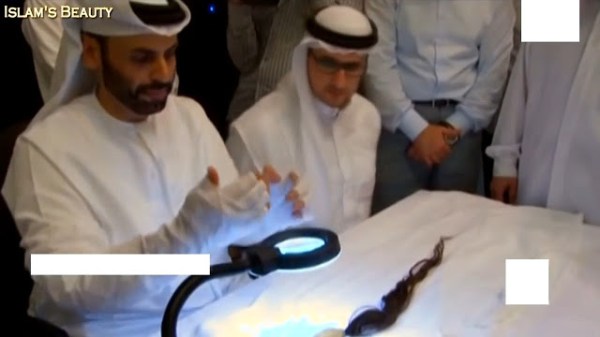
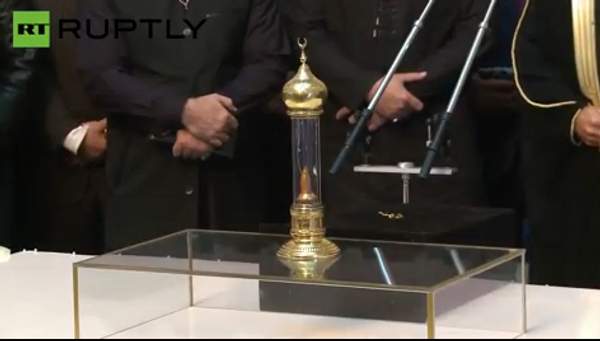
Prophet Mohammad Nabi’s hair is kept in different parts of the world for viewing by Muslims and othesr. They pay respect to all the relics such as his hair, beard, the bowls and other things used by the Prophet. One of such relics, Mohammed’s hair, is in the Hazratbal Shrine in Sri Nagar, Kashmir. It has been there from the days of Mogul emperor Aurang zeb. You Tube shows another hair in Dubai Museum. The Independent newspaper of London published a news item about the hair in Moscow Cathedral mosque.


One version in the book ‘Mysteries of the Himalayas’ talks about two dreams about Prophet’s advice about his hair.


Here is the story about two dreams:

One of Prophet Mohammad’s descendants was Syed Abdullah. He brought Mohammad’s hair from Medina to Bijapur in South India. He died 23 years after his migration to Bijapur. Then his son Syed Ahmed became the care taker of the hair. When Aurang Zeb captured Bijapur all the things in Bijapur were taken to Delhi. Syed Ahmed went to Delhi to get back the relic but was trapped in big debt. It happened in 1693-94.


One business man of Kashmir, Nuruddin Ashwari was ready to buy the hair so that Syed can repay his debts. But he refused to give away the hair. But Prophet came into his dream and asked him to sell it to Nuruddin Ashwari.


While the hair was being taken to Sri Nagar in Kashmir Aurang Zeb came to know about the hair. When he tested the authenticity of the hair, he came to know that it was true. He asked Ashwari to give it to him and Ashwari refused. Aurang zeb took it away by force and sent it to Ajmeer for display. Ashwari died in shock. Prophet came into the dream of Aurang Zeb and ordered him to send it to Kashmir with the body of Ashwari. Thus the prophet’s hair came to Hazrat bal shrine in Sri Nagar. Now thousands of people pay respect to it.


In 1963 the hair disappeared and Muslims staged big protests all over the country. Jawaharlal Nehru, then Prime Minister had to pacify Muslims through a broadcast. Then the hair was recovered in 1964.


Hair in Moscow

The independent newspaper has published the following news and picture in 2015:-


Thousands of new visitors are expected at the Cathedral Mosque in Moscow this week as it now houses a strand of hair believed to have belonged to the Prophet Mohamed.


The relic was a gift from the Chechen Republic leader Ramzan Kadyrov, to honour the Moscow’s newest mosque, one of the biggest in Russia, which had recently reopened after a ten year reconstruction.


The hair will be permanently stored in a glass case inside the mosque and be displayed to the general public on religious holidays. It was previously stored in Grozny in Chechnya.


Relics of Buddha such as tooth, relics of Christ such as Turin shroud, sandals of great Hindu saints, Mahatma Gandhi’s chappals, specs, vessels are all in display in different parts of the world. All museums in the West display all the relics of great kings and queens who ruled that part of the world.

–Subham–
Linguists’ bluffing blasted by Tamil Language (Post No.5252)

Compiled by London swaminathan

Date: 24 JULY 2018


Time uploaded in London – 7-19 am  (British Summer Time)


Post No. 5252


Pictures shown here are taken from various sources such as Facebook friends, Wikipedia, Books, Google and newspapers; thanks. Pictures may be subject to copyright laws.


Following is the question and answer from The Guardian Newspaper of London and my comments are added at the end


How do YOU know the correct way to pronounce a dead language?

“Old languages don’t die. They just fade into new languages (at least most of them do). While the entire sound system of ancient language rarely survives intact, fragments can usually be found scattered around its various daughter languages.


For example, many traits of Latin pronunciation are directly observable in Italian French Spanish and Romanian. The job of linguistic historian is to try to piece these various bits together. The most tried and tested technique is comparative reconstruction, which focuses on the systematic sound correspondences that emerge when we compare the same words in different sister languages. Where this exercise turns up different sounds, it is usually possible to trace them back to a common historical source.

For example, many English words beginning with ‘t’ correspond to words beginning with ‘ ts’ ( Spelt z) , in sister language German; compare English ten, to, time with German Zein, zu, zeitgeist.


On the basis of this and many similar correspondences, we can reconstruct a Common Germanic parent language in which the older sound in this particular instance is the knowledge that each type of sound change takes place in one direction only. On the strength of what happens in many other languages, we know that ‘t’ at the beginning of a word can turn into ‘ts’ but not vice versa. The more  widely we cast our comparative net, the further we can reach back into the mists of time. The ‘t’ of early Germanic itself derives from an even older ‘d’ — contrast English two and tooth with, say, Italian ‘due’ and ‘dente’. Ultimately we arrive at the sound system of an ancient Indo-European tongue, the common ancestor of languages as apparently diverse as English, French, Russian, Irish, Greek and Urdu.”

John Harris, Department of Phonetics and Linguistics, University college, London


FROM NOTES AND QUERRIS, GURDIAN NEWSPAPER, VOLUME 5, 1994


MY COMMENTS

Compare changes in Tamil

IN TAMIL also we see ‘S’ of Sanskrit change into ‘T’ in Tamil

I will give some examples though there are hundreds of such words

Purushan– Purutan
Visesham– Visetam
Sishya — Seetan
Joshyam — Jothitam
VishaM —  Vitam
Koshtam — Kottam
Pushpam — Putpam

In my earlier research articles, I have  Exploded all the OLD theories about similarities or changes in Indo- European languages. In fact, those changes or similarities are found even in Pacific Ocean and Mayan languages. In short, all the bluffing of ‘D’ of Aryans changing into ‘L’ after contacting Dravidians, are wrong. Once they study the similarities between Tamil and Sanskrit or other languages they will know all those are nothing but SHEER bluffing.


Tamil and Sanskrit: Rewrite Linguistics Theory

tamilandvedas.com/2014/12/20/tamil-and-sanskrit…

Tamil and Sanskrit: Rewrite Linguistics Theory … But this D/L or R/L changes are natural. They are in Tamil … in Tamil itself. In Sanskrit language Sandhi .

Ja and Ya in Indian languages | Tamil and Vedas

tamilandvedas.com/tag/ja-and-ya-in-indian-languages

Posts about Ja and Ya in Indian languages written by Tamil and … with other languages will rewrite linguistic … this change lies in Tamil and Sanskrit …


Origin of Tamil and Sanskrit | Tamil and Vedas

tamilandvedas.com/…/origin-of-tamil-and-sanskrit

They believed that Siva’s drum Damaruka gave Sanskrit from one side and Tamil from another side. … //tamilandvedas.com/2014/11/13/origin-of-tamil-and-sanskrit/


  1. Vowels = Life, Consonants = Body; Hindu concept of Alphabet …

tamilandvedas.com/2015/06/27/vowels-life…

Research paper No 1958 Written by London swaminathan Date: 27 June 2015 Uploaded in London at 20-15 I have been arguing in my earlier posts that the Western …


Sanskrit Alphabet | Tamil and Vedas

tamilandvedas.com/tag/sanskrit-alphabet

Posts about Sanskrit Alphabet written by Tamil and Vedas


  1. Tamil or Sanskrit: Which is Older? | Tamil and Vedas

tamilandvedas.com/2014/07/16/tamil-or-sanskrit…

Tamil or Sanskrit: Which is Older? … my pet theory is Tamil and Sanskrit originated from a common source on the … comparative reconstruction pays no attention to …

  1. Tamil and Sanskrit | Tamil and Vedas

tamilandvedas.com/tag/tamil-and-sanskrit

Posts about Tamil and Sanskrit written by Tamil and Vedas. … (for old articles go to tamilandvedas.com OR … Tamil and Sanskrit, Tamil Grammar. Posted by Tamil …


–SUBHAM–
JUGGERNAUT AND LORD JAGANNATH! (Post No.5251)

Compiled by London swaminathan

Date: 23 JULY 2018


Time uploaded in London – 17-13  (British Summer Time)


Post No. 5251


Pictures shown here are taken from various sources such as Facebook friends, Wikipedia, Books, Google and newspapers; thanks. Pictures may be subject to copyright laws.


What is the origin of the word Juggernaut?

Meaning in English dictionary:

Definition of juggernaut


1: a massive inexorable force, campaign, movement, or object that crushes whatever is in its path

  • an advertising juggernaut


  • a political juggernaut

2chiefly British a large heavy truck

xxx


Juggernaut is derived from Sanskrit word and modern North Indian languages such as Hindi:

Naut here is ‘nath’ Lord of the Universe (Jagath).

The compound jaganath, is a title of the Hindu god, Vishnu, especially in his eighth incarnation as Krishna.


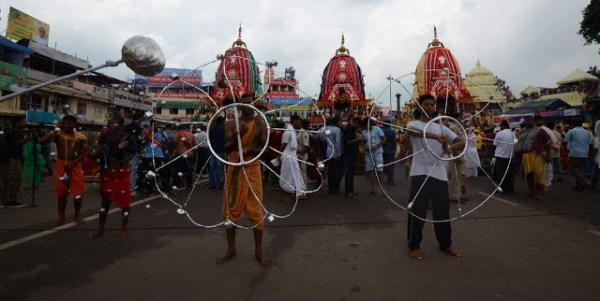
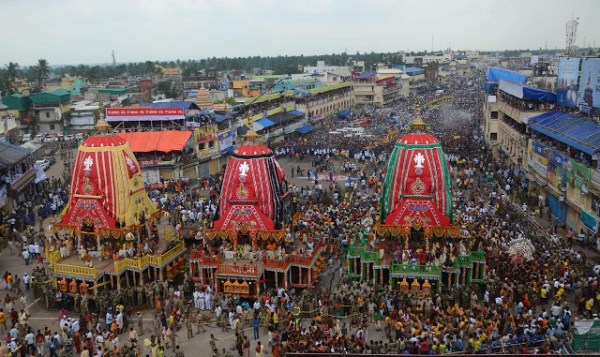
Huge lorries are called juggernaut because the epithet of the deity had come in English to be associated with the enormously heavy chariot /rath which bears Jagannath in procession at the annual festival- rath yatra at the town of Puri in Orissa in north East India.


This has been reported by European travellers from 1321 CE and reports mentioned worshippers dying, crushed under the massive wheels.


Western observers’ usually disparaging accounts led to an immediate usage of juggernaut for any institution to which persons are ruthlessly sacrificed (OED 1933) before it was applied to a very large lorry for transporting goods by road, especially one that travels throughout Europe (Collins Dictionary 1979)


During the past 150 years, juggernaut served in a derogatory sense as a verb and an adjective as well as noun.

–Elenore Nesbitt, Senior Research Fellow Religious Education, University of Warwick

The Guardian Newspaper, Notes and Queries, Vol.5, Year 1994


My comments:


First it was used to do propaganda against Hindus by Christian missionaries. Slowly the dictionaries changed the meaning and made it milder and milder.

In fact not many people died in such Rath yatras. The crowd that gathers there is more than the population of several European and Pacific Ocean island countries.

Like they keep on changing the language of The Bible every year and now 200 different types of Bibles are available, the dictionaries also differ. Derogatory sense is left behind.


–SUBHAM–


HIMALAYAN WONDERS- NANDA DEVI and KUMARI (Post No.5234)

WRITTEN by London swaminathan


Date: 18 JULY 2018


Time uploaded in London – 18-31 (British Summer Time)


Post No. 5234


Pictures shown here are taken from various sources such as Facebook friends, Wikipedia, Books, Google and newspapers; thanks. Pictures may be subject to copyright laws.


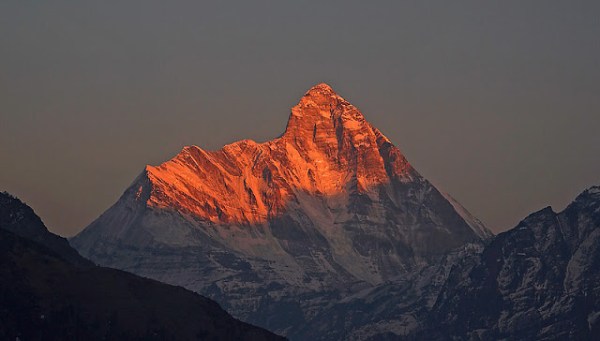
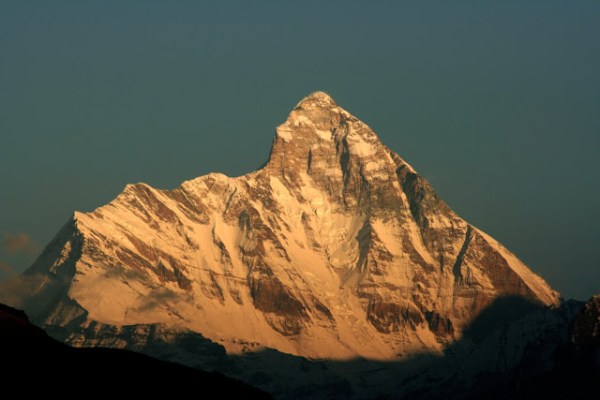
Nanda Devi is the second highest peak in India; Kangjenjunga is higher than Nandadevi. Kangjenjunga is the distorted Sanskrit name Kanchana Srngam (Golden Horn or peak) . Sangam Tamil literature literally translated it in to Tamil as Por Kottu Imayam.

The height of Nada Devi is 25643 feet. Nanda Devi is the name of a goddess. It means boon giving goddess.

There are two interesting stories about this Goddess.

The natives maintain that smoke is seen to issue from its summit, which they regard as the kitchen of the local deity. Probably they mean the smoke like white clouds.


The locals believe Nanda Devi is a boon giving goddess and at the same time she can destroy those who stray from the moral path.  The legend of Nanda Devi says that the daughter of a Garhwal chieftain escaped to the mountains and took refuge there. Temples dedicated to her can be found in Almora and other places in Garhwal.


In the hills, there are more stories about British people, who visited  it during their rule. The first commissioner, was stuck blind because he moved Nanda Devi temple near his office in the Badhan Fort to Almora. He did not like the festivities of the temple. He regained his sight only when he begged for forgiveness.


Another version of the story is, “When the British took possession of the Kumaon, the revenue free villages attached to the temple were sequestrated by Mr Traill. In 1818, he was on a visit to Bhotiya Valley of Juhar. While he was passing Nanda Kot was struck blind by the dazzling colour of the snow. People told him unless the worship of Goddess was restored, his temporary snow blindness would remain for ever, and on promising to this effect, his eyes were opened and healed.

KUMARI OF NEPAL – A LIVING GODDESS

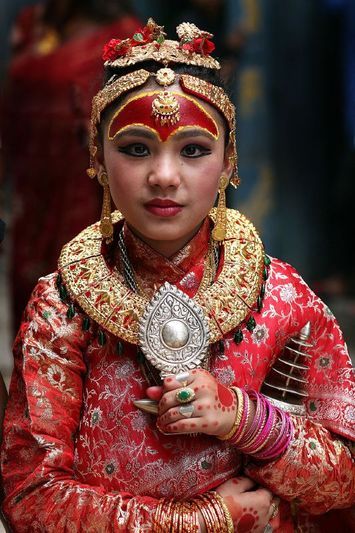
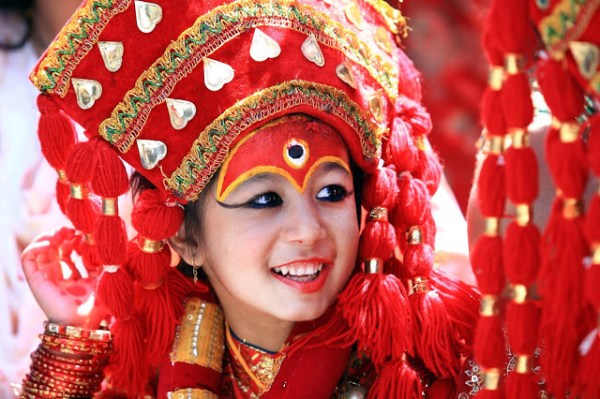
In Nepal,  a young virgin is worshipped as Kumari, Goddess. This custom started in the seventh century. King Jayaprakash Malla was ruling Nepal under the guidance of goddess Taleju, hidden behind the screen. One day fascinated by the Goddess, he decided to see her. She became angry and told him that she would appear in the form of a girl in future.

They selected one girl with 32 Divine Marks (shamudrika Lakshanas) as Kumari. All the Kings go to Kumari to get her blessings.  The Kumari is said to embody Goddess Taleju. She has to possess 32 perfections that are marks of Goddess. Before a girl child has been recognised as Kumari,  she is inspected by female attendants for this purpose. They look for clear skin with small pores, even teeth, black hair and eyes, soft hands, a moist tongue, and absence of bad body odour.

A girl does not stay a Kumari for ever. With the first hint of tell tale bleeding (puberty) , the ritual of worship is transferred to a new virgin Kumari and the previous Kumari goes back home. She has to enter family life like any normal girl.

In other parts of India also Kanya Stris (virgin girls)  are worshipped as Goddess, but for a brief period. They invoke Goddesses on those girls and at the end of the day they are treated as normal girls.

Source Book- Himalayan Mysteries, Ganesh Saili

–subham–