Research Article written London Swaminathan
swami_48@yahoo.com
Date: 16 OCTOBER 2019 British Summer Time uploaded in London – 20-48 Post No. 7103
Pictures are taken from various sources; beware of copyright rules; don’t use them without permission; this is a non- commercial, educational blog; posted in swamiindology.blogspot.com and tamilandvedas.com simultaneously. Average hits per day for both the blogs 12,000.
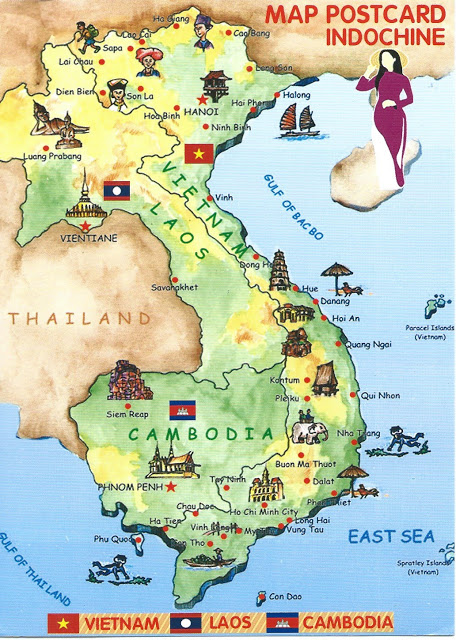
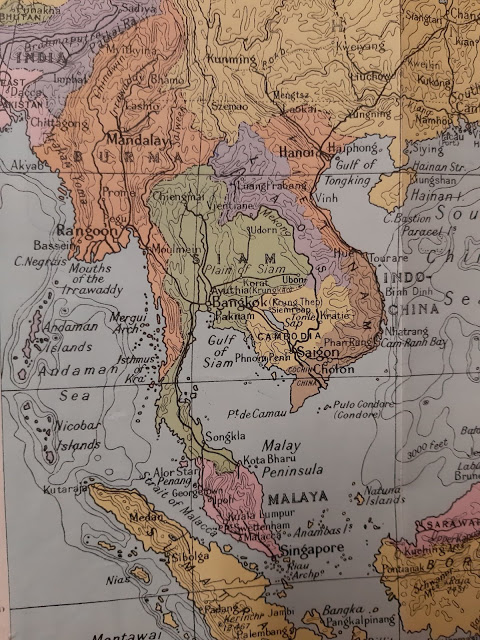
There are two interesting stories about the fonder of the Hindu Rule in Vietnam. Two thousand years ago the country was called Annam and Champa. When the French ruled the region, it was called Indo-China and Cochin- China. The Hindu rule was started by a Brahmin named Kaundinya. The inscriptions talk about two Kaundinyas. But there is nothing unusual in it because Kaundinya is a Gotra name. Whoever is born in the Gotra/clan call himself Kaundinya. They were well known in Tamil Nadu. We know three famous Kaundinyas. One was the saint who crossed the ocean and established Hindu rule in South East Asia (S E A) which lasted for over 1500 years. Another famous Kaundinya was the great Saivaite saint Thiru Jnana Sambandar who revived Saivism in Tamil Nadu 1400 years ago. The third Kaundinya was Vishnu Dasan in Purananuru of Sanagam Tamil Literature. He was a great Brahmin who performed Yagas and Yajnas and the ghee was flowing like river according to Tamil poet Avur Mulan Kizar (Verse 166 of Pura nanuru)
Now back
to Kaundinya of Vietnam. Once a follower of Hindu faith, directed by god in his
dream, came to Champa in a trading vessel. The female ruler of the kingdom came
to plunder the vessel, but was taken aback by the military power of the
Brahmana Kaundinya and his followers. She submitted to the new comer and
married him. Her name was Soma and she was the head of Nagas, the snake (race) people.
The story was recorded in the middle of third century by the Chinese. It is
echoed in an epigraphic record dated 657 CE in Cambodia.
In that
epigraph we hear that Brahmana Kaundinya married daughter of the Naga King, and
from this union sprang the royal family.
The Chinese records distort Sanskrit names beyond recognition. But from the history of both the countries and the period of rulers we are able to identify the Chinese names.
Kaundinya
was called Hen Tien in Chinese history.
Another story
about the foundation of Kambuja (Cambodia) says that the son of Indraprastha
was banished by his father for some misdeeds. He came to the kingdom and
defeated the Naga ruler and then married his daughter.
We see similar stories in Tamil epic Manmegalai, Pallava
history and Mahavamsa of Sri Lanka.
The story line is similar- one banished prince travels to a far-off
place, marries the local princess and start a new royal line.
The Chinese distortion of names must be understood to follow
the history of Vietnam. Since we have only inscriptions in Vietnam and no
written history we have to look at the written records in Chinese. Following
Sanskrit names are identified in Chinse records.
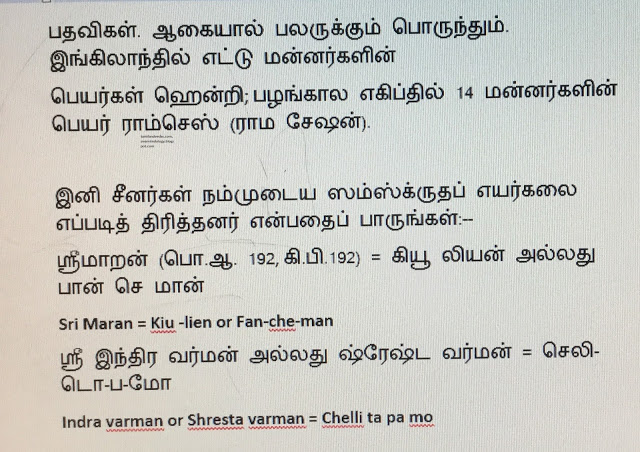
First King Sri Maran (192 CE) = Kiu -lien or
Fan-che-man
Indra varman or Shresta varman = Chelli ta pa mo
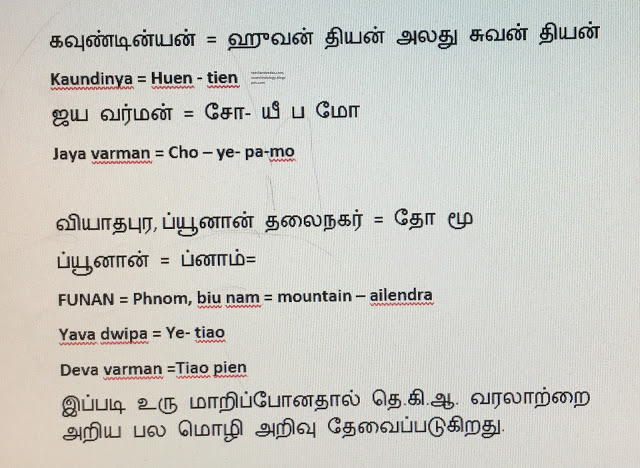
Kaundinya = Huen – tien
Jaya varman = Cho – ye- pa-mo
FUNAN = Phnom, biu nam (meaning mountain – Sailendra )
Yava dwipa = Ye- tiao
Deva varman =Tiao pien
R C Majumdhar, an authority on S E A History argues
that we see the influence of both South and North Indian cultures in S E An
countries.
So far, scholars agree that the script came through
the Pallava region and the architecture also is similar to the Pallava period. Place
names and Kings’ names and religious ideas and artefacts are from both North
and South India
But my research shows more similarities and the
scholars have missed those points until now.
Following are my discoveries:
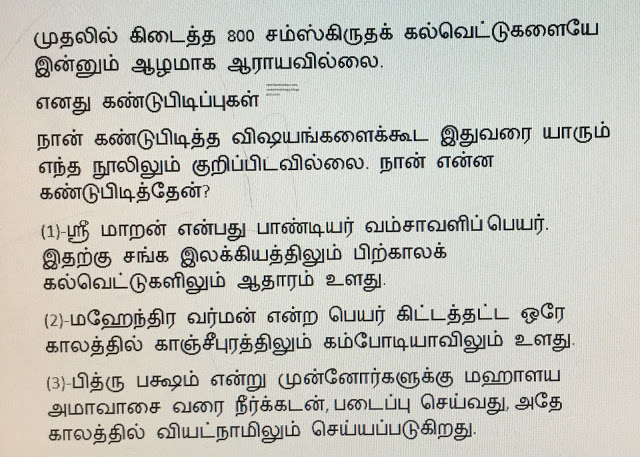
1.The first King’s name SRI MARAN is a typical Tamil
Pandya king’s name. We don’t find such name anywhere in India except Pandya
Dynasty. Sri Maran’s name is documented in Tamil inscriptions and Tamil
literature
2.Vietnam’s Kate festival is similar to Pitru Paksha
and Mahalaya Amavasai of Hindus of India. Both pay homage to the departed souls
at the same period in similar ways.
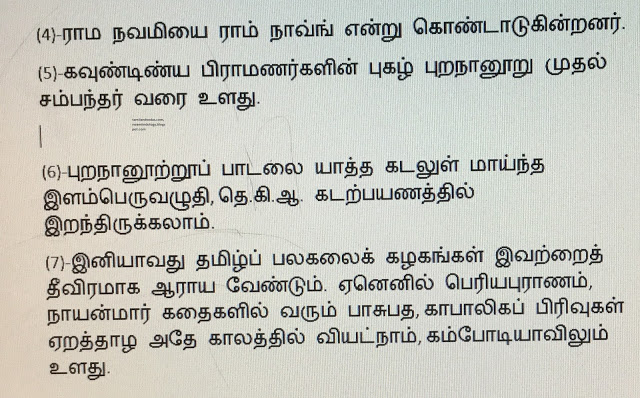
3. Ram Navami and other Hindu festivals are
celebrated by Vietnam Hindus (Chams) with the names like Ram naung
4.We have two famous Kaundinyas in Tamil literature-
Purananuu (verse 166) and Thevaram of Sambandar.
5. There was a Tamil king with the title ‘the
Pandya who lost life in sea’ (Kadalul Maaintha Ilam Peruvazuthi). My opinion is
that he was one of the kings on sea expedition, may be travelling towards S E
A.
6.Most famous Pallava King Mahendra Varman ruled
from Kancheepuram in Tamil Nadu. At the same time there was one Mahendra Varman
in SEA.
7. Pasupata Cult , Kabalika cult are referred to in
Tamil Saivaite saints’ stories (Periya
Puranam etc). it existed in S E A
at the same time. We must find out who spread this to SEA.
8.Sanskrit Inscriptions, numbering over 800 are
found spread over a vast area from Vietnam to remote Borneo. We see Sanskrit
writing in Vietnam from second century CE and we see Mulavaraman Yupa
Inscription deep inside Borneo’s thick forest. How was is possible to spread
Sanskrit from one end of SEA to another end 1600 years ago?
There is much scope for research in the above areas
and the universities in both countries must come together and organise joint
research. One must know Sanskrit, Chinese and Tamil to study the ancient
history of S E An countries.
–subham —
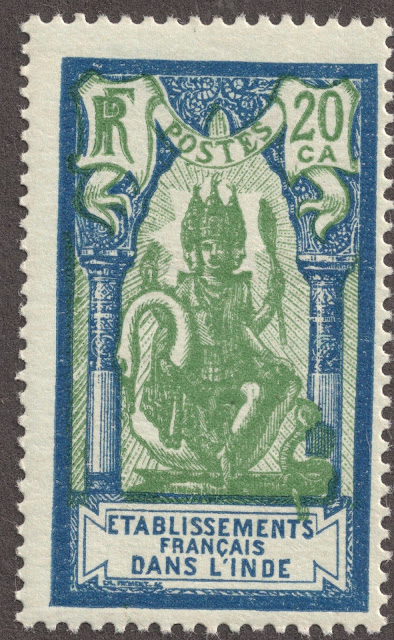
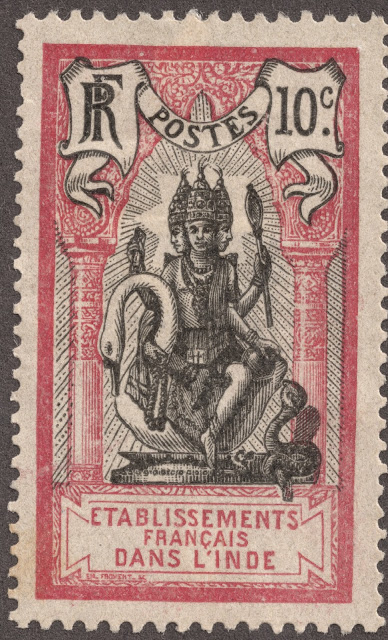
Brahma on Stamps
Following are my discoveries:
1.The first King’s name SRI MARAN is a typical Tamil Pandya king’s name. We don’t find such name anywhere in India except Pandya Dynasty. Sri Maran’s name is documented in Tamil inscriptions and Tamil literature.
2.Vietnam’s Kate festival is similar to Pitru Paksha and Mahalaya Amavasai of Hindus of India. Both pay homage to the departed souls at the same period in similar ways.
3. Ram Navami and other Hindu festivals are celebrated by Vietnam Hindus (Chams) with the names like Ram naung.
4.We have two famous Kaundinyas in Tamil literature- Purananuu (verse 166) and Thevaram of Sambandar.
5. There was a Tamil king with the title ‘the Pandya who lost life in sea’ (Kadalul Maaintha Ilam Peruvazuthi). My opinion is that he was one of the kings on sea expedition, may be travelling towards S E A.
6.Most famous Pallava King Mahendra Varman ruled from Kancheepuram in Tamil Nadu. At the same time there was one Mahendra Varman in SEA.
7. Pasupata Cult , Kabalika cult are referred to in Tamil Saivaite saints’ stories (Periya Puranam etc). it existed in S E A at the same time. We must find out who spread this to SEA.
8.Sanskrit Inscriptions, numbering over 800 are found spread over a vast area from Vietnam to remote Borneo. We see Sanskrit writing in Vietnam from second century CE and we see Mulavaraman Yupa Inscription deep inside Borneo’s thick forest. How was is possible to spread Sanskrit from one end of SEA to another end 1600 years ago?
There is much scope for research in the above areas and the universities in both countries must come together and organise joint research. One must know Sanskrit, Chinese and Tamil to study the ancient history of S E An countries.
Date: 16 OCTOBER 2019 British Summer Time uploaded in London – 18-33 Post No. 7102
Pictures are taken from various sources; beware of copyright rules; don’t use them without permission; this is a non- commercial, educational blog; posted in swamiindology.blogspot.com and tamilandvedas.com simultaneously. Average hits per day for both the blogs 12,000.
Date: 15 OCTOBER 2019
British Summer Time uploaded in London – 16-59
Post No. 7100
Pictures are taken from various sources; beware of copyright rules; don’t use
them without permission; this is a non- commercial, educational blog; posted in
swamiindology.blogspot.com and tamilandvedas.com simultaneously. Average
hits per day for both the blogs 12,000.
Does this
terracotta tablet from around 1,000 BCE depict Lord Krishna and Arjuna?
ZEE NEWS 15-10-19
A nine-cm wide terracotta artifact lies in Hong Kong, in the possession
of an art dealer, but the inferences and interpretations from it could possibly
lead to interesting revelations about the time period of the Indian epic
Mahabharata and its occurrence.
A nine-cm wide terracotta artifact lies in Hong Kong, in the
possession of an art dealer, but the inferences and interpretations from it
could possibly lead to interesting revelations about the time period of the
Indian epic Mahabharata and its occurrence.
The tablet depicts a man holding four horses, standing on the back
of a half chariot with a spoked wheel. There are two figures in the chariot,
one who is presumably the charioteer, while another has his hand pointed in a
direction. Both the figures in the chariot have quivers that contain
arrows.
Curious to know more about the tablet, Jeremy Pine, the owner had
sent a picture of it to Dr Nanditha Krishna, CPR Institute of Indological
Research and requested her to share her interpretations of the same and its
historical significance. Dr. Nanditha along with other historians and
domain experts had studied the image and historical texts to draw inferences.
According to a document shared with the media, the tabled is said
to have been authenticated by Oxford Authentication using Thermoluminescence
(TL testing) on May 14, 2019. The result of which states that the terracotta
was fired between 2300 and 3600 years ago i.e. 1600 to 300 BCE.
Date: 13 OCTOBER 2019 British Summer Time uploaded in London – 20-55 Post No. 7093
Pictures are taken from various sources; beware of copyright rules; don’t use them without permission; this is a non- commercial, educational blog; posted in swamiindology.blogspot.com and tamilandvedas.com simultaneously. Average hits per day for both the blogs 12,000.
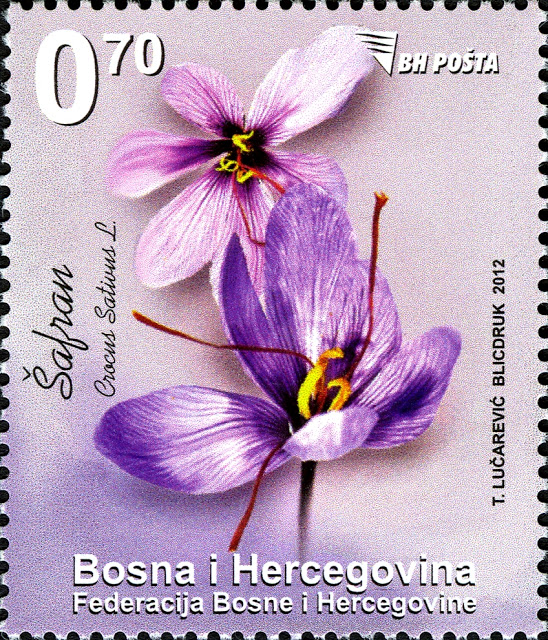
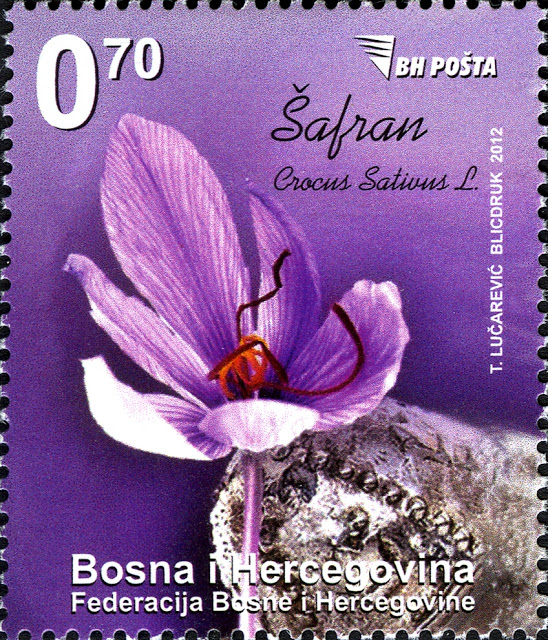
Kashmir is known
for its saffron cultivation. Chinese writers say that Kashmir is the home of
saffron. Hindus use this in the worship of their gods and goddesses. Pregnant women
also use it in their drinks, particularly milk. They believed that the children
born to them will be healthy and fair. Latest researches show the benefits of
such use. It is a medicine to cure hyperactivity of children.
Latest research
in Tehran (Iran) University gives the result:-
NEW YORK—Saffron capsules
appear to be as effective as methylphenidate for treating children with
attention-deficit/hyperactivity disorder (ADHD), researchers from Iran report.
“My research group at Roozbeh Psychiatric Hospital has worked
on the psychotropic effects of saffron since early 2000, and we have documented
the antidepressant effects of saffron,” Dr. Shahin Akhondzadeh from Tehran
University of Medical Sciences told Reuters Health by email.
“On the other hand, many antidepressants have been used as
alternative for stimulants in patients with ADHD that cannot tolerate Ritalin
(methylphenidate) or do not respond to Ritalin. Therefore, from this
preliminary study, the main point is that we can consider saffron just as an
alternative in the above mentioned patients,” he said.
Saffron (Crocus sativus L.) and its active constituents are
thought to increase the reuptake inhibition of dopamine and norepinephrine and
are NMDA-receptor antagonists and GABA-alpha agonists.
Leaving the medical jargon to one side, we can safely say that it boosts one’s mental power and cures depression.
Other interesting
facts about saffron are:-
Saffron is
seen 50,000 year old cave paintings in Iraq. It is seen in ancient Greek
legend.
Alexander the
Great used it to heal his wounds.
Cleopatra bathed
in it.
It was
spread along the streets in advance of Nero’s (Roman emperor 37-68 CE) entry to
Rome.
Sumerians used
it in magical potions.
King Solomon
revered it in love poetry.
Plague sufferers
coveted it.
Pirates stole
it.
14 week war
broke out between Austria and Basel over saffron in 1374 after nervous nobles
seized vast quantities of saffron from a rising merchant class.
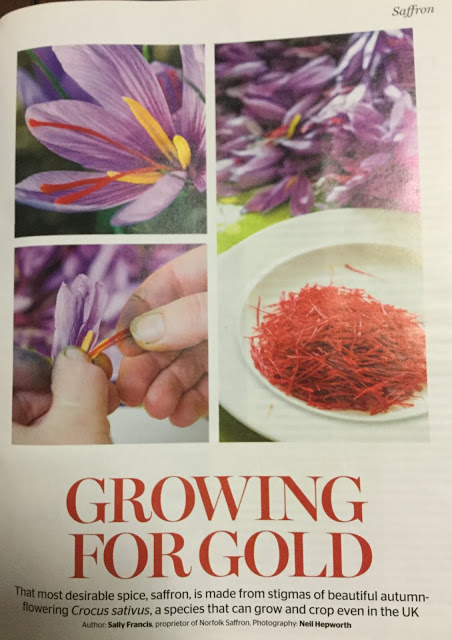
Saffron is
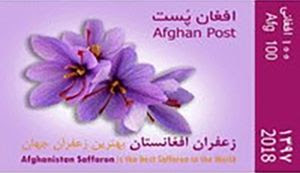
extracted from flower stamens of Crocus sativus plant. Iran, Spain, Afghanistan,
Italy and India grow saffron.
It is one of
the most expensive spices.
Indians use
it in milk and drinks. But westerners use it in buns and cooked foods such as
saffron Risotto.
Golden brown
saffron buns are traditionally served in Scandinavian countries on St Lucia
day.
Saffron plays
an important role in the food traditions of Mediterranean region.
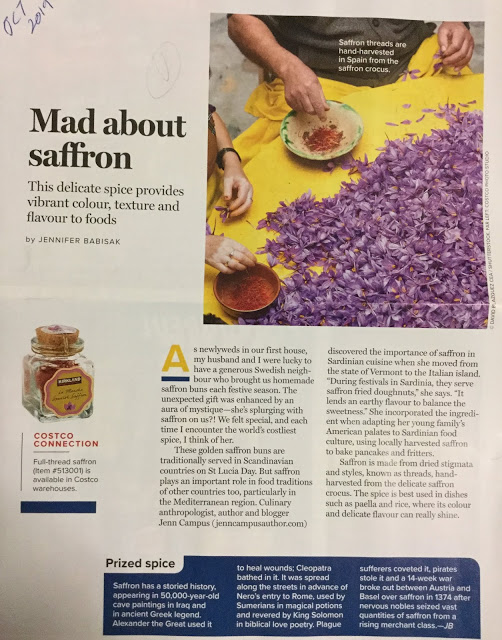
Latest Costco
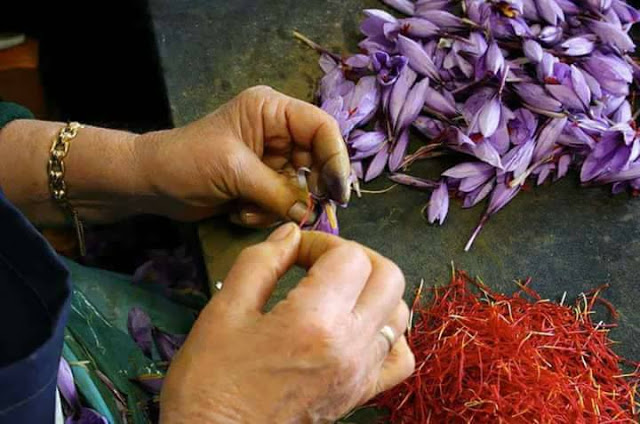
magazine has given saffron recipes. Saffron is made from dried stigmata and
styles, known as threads, hand harvested from the delicate saffron flowers.
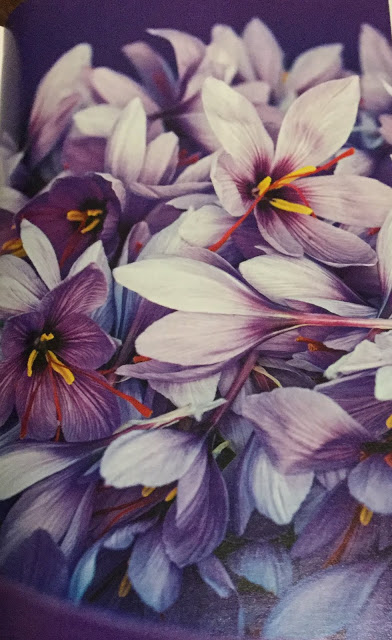
Crocus sativus
(saffron plant) is an autumn flowering plant. The etymology and the place of
origin are not certain. Crete, Iran and India are considered as the place of
origin. Though it has been used for thousands of years the name saffron is
attributed to Arabic or Latin. Now Iran generates 94 percent of global
supplies. Kashmir (India), Spain, Greece and Morocco are the next largest
suppliers.
A good
gatherer harvests 1000 flowers per hour. We need over one lakh flowers to make
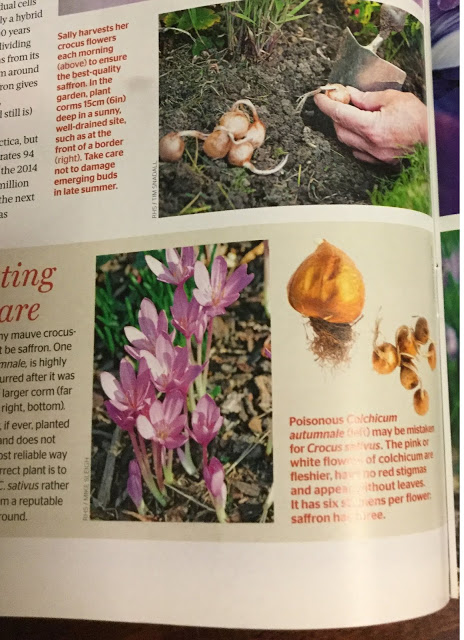
one kilo of saffron. There are over 150 volatile chemicals in the flower. Saffron
has only three stamens in one flower. So one can easily differentiate saffron
from other similar coloured flowers.
Though there
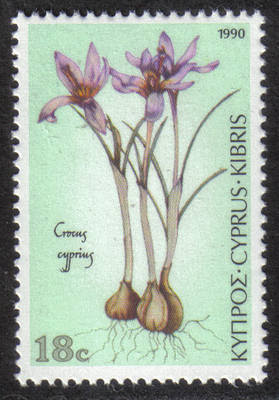
are different types of crocus flowers ,
crocus sativus is the only one used as spice.
Source – Costco
magazine and gardening magazine, U.K.
Date: 10 OCTOBER
2019
British Summer Time uploaded in London – 17-58
Post No. 7081
Pictures are taken from various sources; beware of copyright rules; don’t use
them without permission; this is a non- commercial, educational blog; posted in
swamiindology.blogspot.com and tamilandvedas.com simultaneously. Average
hits per day for both the blogs 12,000.
RESTRAINT, OBSERVANCES, POSTURES, REGULATION OF
BREATH, WITHDRAWAL OF THE SENSES, CONCENTRATION, MEDITATION, TRANCE.
Date: 6 OCTOBER 2019 British Summer Time uploaded in London – 19-38 Post No. 7065
Pictures are taken from various sources; beware of copyright rules; don’t use them without permission; this is a non- commercial, educational blog; posted in swamiindology.blogspot.com and tamilandvedas.com simultaneously. Average hits per day for both the blogs 12,000.
compiled BY LONDON SWAMINATHAN swami_48@yahoo.com Date: 3 OCTOBER 2019 British Summer Time uploaded in London – 20-21 Post No. 7052
Pictures are taken from various sources; beware of copyright rules; don’t use them without permission; this is a non- commercial, educational blog; posted in swamiindology.blogspot.com and tamilandvedas.com simultaneously. Average hits per day for both the blogs 12,000.
Brahmins and
any other communities in India follow Gotra (clan) rules strictly. They
consider the people brothers and sisters if they are born in the same Gotra. Primarily
there were seven Gotras which multiplied in course of time to hundreds. A 100
year old book compare this to the rules in other countries. Brahmins don’t marry
in the same Gotra.
It is found
in the book
The People
of India, Sir Herbert Risley, London, 1915
Senart’s
theory
After examining
the views propounded by three people including me Senart points out the close
correspondence that exists between the three series of groups in Rome – gens,
curia, tribes; family groups in Greece; and he family gotra and caste in India.
Pursuing the subject into fuller detail, he seeks to show from the records of
classical antiquity that
in the
department of marriage, roman gens and an Athenian group present striking
resemblance to the Indian gotra.
We learn from
Plutarch, that the romans never married a woman of their own kin, and among the
matrons who figure in classical literature, none bears the same gentile name as
her husband . nor was endogamy unknown.
At Athens in
the time of Demosthenes. membership of a group was confined to the offspring of
that particular group.
In Rome the
long struggle of plebeians to obtain the jus connubii with patrician women
belongs to the same class of facts; an the patricians, according to Senart,
were guarding the endogamous rights of their order—
If they
marry a woman from humbler origins or foreigners he children were traded as low
class people. In Rome if low class people are present in the sacrifice of gens,
they are offended. In Rome the woman was transferred to the group of her
husband . brahmin women also get the gotra of her husband leaving her own
gotra.
In food also
they refused to take food cooked by other groups they were not allowed to eat with
the members of other lower group. In Rome ,as in India, daily libations were
offered to ancestors and the funeral feasts of Greeks and romans correspond to Hindu
sraddha
The expulsion
rites were also similar in Rome and India. Roman interdict aqua et igni
corresponds to the ancient Indian ritual for expulsion from caste. A slave
filled the water of an offender’s vessel and solemnly pours it on the ground.
Meaning of
phrases and words –
Ius Connubii, the right of contracting a lawful marriage. Ius Commercii, the
right of acquiring, transferring, and holding property of all kinds according
to the Roman laws. … Ius Connubii, the right of
contracting a lawful marriage.
Definition
of aqua
et igni interdictus
: forbidden
(to be furnished) with water and fire : banished
Pictures are taken from various sources; beware of copyright rules; don’t use them without permission; this is a non- commercial, educational blog; posted in swamiindology.blogspot.com and tamilandvedas.com simultaneously. Average hits per day for both the blogs 11,000.
I HAVE
COVERED UP TO 9-55 SO FAR. LET ME CONTINUE FROM 9-56 TODAY. Last post was on 18th
July 2019.
INTERESTING
POINTS IN THIS SECTION—
SLOKAS 56 TO
70
Appointing another
man to get a child- it is called Niyoga or in Latin levirate. We see such
practice in Mahabharata when Vichitravirya died without children. But commentators
point out the confusion and contradictory statements in this section.
My comments
: There are interpolations in this section.
Sloka 71
When you
promise a girl to a man don’t go back on your words
Sloka 74
Very interesting;
if you don’t arrange for food and basic
things for your wife while you go on a long journey, she will runaway with
someone.
Divorce rules
If a man
doen’t come back within 8 years , she is free
If your wife
hates you for more than a year kick her out.
Oldest Tamil
book Tolkappiam also ban Tamil women going overseas with her husband. So there
is a waiting period, beyond which she can do what she wants to do.
Sloka 80-84 Drinking
and Violent Wives
Interesting .
If your wife
is barren for 8 years, you may leave her;
If all her
children died , leave her in tenth year.
If your wife
gives birth only to daughters, you may leave her in the eleventh year;
If a woman
drinks and extravagant, leave her immediately.
88-94 Marriageable
Age
Love marriage
is not wrong – sloka 91
Age limits –
sloka 94
WIFE IS GIFT
FROM GOD; SUPPORTING A WOMAN PLEASES GOD- SLOKA 95
BRIDE PRICE –
DON’T SELL YOUR DAUGHTER- SLOKA 97 TO 100
Chastity for
men and women – slokas 101 and 102
Property rights
– from sloka 9-104
What did
Daksa do with 10+13+27= 50 daughters? sloka -129
He gave 10 daughters
to Dharma;
13 daughters
to Kasyapa;
27 daughters
to Soma/ Moon
Sloka 137 to
139
Role of son,
grand son and great grand son
Sloka 140-
142 – adopted son
DIVISION OF
PROPERTY WITH FOUR WIVES- SLOKA 140
Rest of the
slokas gives minute details of division of property.
GETTING A CHILD THROUGH ANOTHER PERSON
9-57. The wife of an elder brother is for his younger (brother) the wife of a Guru; but the wife of the younger is declared (to be) the daughter-in-law of the elder.
58. An elder (brother) who approaches the wife of the younger, and a younger (brother who approaches) the wife of the elder, except in times of misfortune, both become outcasts, even though (they were duly) authorised.
59. On failure of issue (by her husband) a woman who has been authorised, may obtain, (in the) proper (manner prescribed), the desired offspring by (cohabitation with) a brother-in-law or (with some other) Sapinda (of the husband).
60. He (who is) appointed to (cohabit with) the widow shall (approach her) at night anointed with clarified butter and silent, (and) beget one son, by no means a second.
61. Some (sages), versed in the law, considering the purpose of the appointment not to have been attained by those two (on the birth of the first), think that a second (son) may be lawfully procreated on (such) women.
62. But when the purpose of the appointment to (cohabit with) the widow bas been attained in accordance with the law, those two shall behave towards each other like a father and a daughter-in-law.
63. If those two (being thus) appointed deviate from the rule and act from carnal desire, they will both become outcasts, (as men) who defile the bed of a daughter-in-law or of a Guru.
64. By twice-born men a widow must not be appointed to (cohabit with) any other (than her husband); for they who appoint (her) to another (man), will violate the eternal law.
65. In the sacred texts which refer to marriage the appointment (of widows) is nowhere mentioned, nor is the re-marriage of widows prescribed in the rules concerning marriage.
66. This practice which is reprehended by the learned of the twice-born castes as fit for cattle is said (to have occurred) even among men, while Vena ruled.
67. That chief of royal sages who formerly possessed the whole world, caused a confusion of the castes (varna), his intellect being destroyed by lust.
68. Since that (time) the virtuous censure that (man) who in his folly appoints a woman, whose husband died, to (bear) children (to another man).
69. If the (future) husband of a maiden dies after troth verbally plighted, her brother-in-law shall wed her according to the following rule.
70. Having, according to the rule, espoused her (who must be) clad in white garments and be intent on purity, he shall approach her once in each proper season until issue (be had).
71. Let no prudent man, after giving his daughter to one (man), give her again to another; for he who gives (his daughter) whom he had before given, incurs (the guilt of) speaking falsely regarding a human being.
72. Though (a man) may have accepted a damsel in due form, he may abandon (her if she be) blemished, diseased, or deflowered, and (if she have been) given with fraud.
73. If anybody gives away a maiden possessing blemishes without declaring them, (the bridegroom) may annul that (contract) with the evil-minded giver.
74. A man who has business (abroad) may depart after securing a maintenance for his wife; for a wife, even though virtuous, may be corrupted if she be distressed by want of subsistence.
75. If (the husband) went on a journey after providing (for her), the wife shall subject herself to restraints in her daily life; but if he departed without providing (for her), she may subsist by blameless manual work.
76. If the husband went abroad for some sacred duty, (she) must wait for him eight years, if (he went) to (acquire) learning or fame six (years), if (he went) for pleasure three years.
HATEFUL WIVES
77. For one year let a husband bear with a wife who hates him; but after (the lapse of) a year let him deprive her of her property and cease to cohabit with her.
78. She who shows disrespect to (a husband) who is addicted to (some evil) passion, is a drunkard, or diseased, shall be deserted for three months (and be) deprived of her ornaments and furniture.
79. But she who shows aversion towards a mad or outcast (husband), a eunuch, one destitute of manly strength, or one afflicted with such diseases as punish crimes, shall neither be cast off nor be deprived of her property.
80. She who drinks spirituous liquor, is of bad conduct, rebellious, diseased, mischievous, or wasteful, may at any time be superseded (by another wife).
81. A barren wife may be superseded in the eighth year, she whose children (all) die in the tenth, she who bears only daughters in the eleventh, but she who is quarrelsome without delay.
NEVER LEAVE A SICK WIFE WITHOUT HER CONSENT
82. But a sick wife who is kind (to her husband) and virtuous in her conduct, may be superseded (only) with her own consent and must never be disgraced.
83. A wife who, being superseded, in anger departs from (her husband’s) house, must either be instantly confined or cast off in the presence of the family.
84. But she who, though having been forbidden, drinks spirituous liquor even at festivals, or goes to public spectacles or assemblies, shall be fined six krishnalas.
MY COMMENTS- GOLD WEIGHING SIX KRISHNALAS??
85. If twice-born men wed women of their own and of other (lower castes), the seniority, honour, and habitation of those (wives) must be (settled) according to the order of the castes (varna).
86. Among all (twice-born men) the wife of equal caste alone, not a wife of a different caste by any means, shall personally attend her husband and assist him in his daily sacred rites.
87. But he who foolishly causes that (duty) to be performed by another, while his wife of equal caste is alive, is declared by the ancients (to be) as (despicable) as a Kandala (sprung from the) Brahmana (caste).
88. To a distinguished, handsome suitor (of) equal (caste) should (a father) give his daughter in accordance with the prescribed rule, though she have not attained (the proper age).
89. (But) the maiden, though marriageable, should rather stop in (the father’s) house until death, than that he should ever give her to a man destitute of good qualities.
90. Three years let a damsel wait, though she be marriageable; but after that time let her choose for herself a bridegroom (of) equal (caste and rank).
NOTHING WRONG IN LOVE MARRIAGE
91. If, being not given in marriage, she herself seeks a husband, she incurs no guilt, nor (does) he whom she weds.
92. A maiden who choses for herself, shall not take with her any ornaments, given by her father or her mother, or her brothers; if she carries them away, it will be theft.
93. But he who takes (to wife) a marriageable damsel, shall not pay any nuptial fee to her father; for the (latter) will lose his dominion over her in consequence of his preventing (the legitimate result of the appearance of) her enemies.
94. A man, aged thirty years, shall marry a maiden of twelve who pleases him, or a man of twenty-four a girl eight years of age; if (the performance of) his duties would (otherwise) be impeded, (he must marry) sooner.
WIFE IS A GIFT FROM GOD
95. The husband receives his wife from the gods, (he does not wed her) according to his own will; doing what is agreeable to the gods, he must always support her (while she is) faithful.
96. To be mothers were women created, and to be fathers men; religious rites, therefore, are ordained in the Veda to be performed (by the husband) together with the wife.
97. If, after the nuptial fee has been paid for a maiden, the giver of the fee dies, she shall be given in marriage to his brother, in case she consents.
98. Even a Sudra ought not to take a nuptial fee, when he gives away his daughter; for he who takes a fee sell his daughter, covering (the transaction by another name).
99. Neither ancients nor moderns who were good men have done such (a deed) that, after promising (a daughter) to one man, they have her to another;
100. Nor, indeed, have we heard, even in former creations, of such (a thing as) the covert sale of a daughter for a fixed price, called a nuptial fee.
101. ‘Let mutual fidelity continue until death,’ this may be considered as the summary of the highest law for husband and wife.
102. Let man and woman, united in marriage, constantly exert themselves, that (they may not be) disunited (and) may not violate their mutual fidelity.
103. Thus has been declared to you the law for a husband and his wife, which is intimately connected with conjugal happiness, and the manner of raising offspring in times of calamity; learn (now the law concerning) the division of the inheritance.
PROPERTY RIGHTS
104. After the death of the father and of the mother, the brothers, being assembled, may divide among themselves in equal shares the paternal (and the maternal) estate; for, they have no power (over it) while the parents live.
105. (Or) the eldest alone may take the whole paternal estate, the others shall live under him just as (they lived) under their father.
106. Immediately on the birth of his first-born a man is (called) the father of a son and is freed from the debt to the manes; that (son), therefore, is worthy (to receive) the whole estate.
107. That son alone on whom he throws his debt and through whom he obtains immortality, is begotten for (the fulfilment of) the law; all the rest they consider the offspring of desire.
108. As a father (supports) his sons, so let the eldest support his younger brothers, and let them also in accordance with the law behave towards their eldest brother as sons (behave towards their father).
109. The eldest (son) makes the family prosperous or, on the contrary, brings it to ruin; the eldest (is considered) among men most worthy of honour, the eldest is not treated with disrespect by the virtuous.
110. If the eldest brother behaves as an eldest brother (ought to do), he (must be treated) like a mother and like a father; but if he behaves in a manner unworthy of an eldest brother, he should yet be honoured like a kinsman.
111. Either let them thus live together, or apart, if (each) desires (to gain) spiritual merit; for (by their living) separate (their) merit increases, hence separation is meritorious.
112. The additional share (deducted) for the eldest shall be one-twentieth (of the estate) and the best of all chattels, for the middlemost half of that, but for the youngest one-fourth.
113. Both the eldest and the youngest shall take (their shares) according to (the rule just) stated (each of) those who are between the eldest and the youngest, shall have the share (prescribed for the) middlemost.
114. Among the goods of every kind the eldest shall take the best (article), and (even a single chattel) which is particularly good, as well as the best of ten (animals).
115. But among (brothers) equally skilled in their occupations, there is no additional share, (consisting of the best animal) among ten; some trifle only shall be given to the eldest as a token of respect.
116. If additional shares are thus deducted, one must allot equal shares (out of the residue to each); but if no deduction is made, the allotment of the shares among them shall be (made) in the following manner.
117. Let the eldest son take one share in excess, the (brother) born next after him one (share) and a half, the younger ones one share each; thus the law is settled.
118. But to the maiden (sisters) the brothers shall severally give (portions) out of their shares, each out of his share one-fourth part; those who refuse to give (it), will become outcasts.
119. Let him never divide (the value of) a single goat or sheep, or a (single beast) with uncloven hoofs; it is prescribed (that) a single goat or sheep (remaining after an equal division, belongs) to the eldest alone.
120. If a younger brother begets a son on the wife of the elder, the division must then be made equally; this the law is settled.
121. The representative (the son begotten on the wife) is not invested with the right of the principal (the eldest brother to an additional share); the principal (became) a father on the procreation (of a son by his younger brother); hence one should give a share to the (son begotten on the wife of the elder brother) according to the rule (stated above).
122. If there be a doubt, how the division shall be made, in case the younger son is born of the elder wife and the elder son of the younger wife,
123. (Then the son) born of the first wife shall take as his additional share one (most excellent) bull; the next best bulls (shall belong) to those (who are) inferior on account of their mothers.
124. But the eldest (son, being) born of the eldest wife, shall receive fifteen cows and a bull, the other sons may then take shares according to (the seniority of) their mothers; that is a settled rule.
125. Between sons born of wives equal (in caste) (and) without (any other) distinction no seniority in right of the mother exists; seniority is declared (to be) according to birth.
TWINS
126. And with respect to the Subrahmanya (texts) also it is recorded that the invocation (of Indra shall be made) by the first-born, of twins likewise, (conceived at one time) in the wombs (of their mothers) the seniority is declared (to depend) on (actual) birth.
SUBRAHMANYA VERSES ARE IN AITAREYA BRAHMANA 6-3
127. He who has no son may make his daughter in the following manner an appointed daughter (putrika, saying to her husband), ‘The (male) child, born of her, shall perform my funeral rites.’
128. According to this rule Daksha, himself, lord of created beings, formerly made (all his female offspring) appointed daughters in order to multiply his race.
129. He gave ten to Dharma, thirteen to Kasyapa, twenty-seven to King Soma, honouring (them) with an affectionate heart.
130. A son is even (as) oneself, (such) a daughter is equal to a son; how can another (heir) take the estate, while such (an appointed daughter who is even) oneself, lives?
131. But whatever may be the separate property of the mother, that is the share of the unmarried daughter alone; and the son of an (appointed) daughter shall take the whole estate of (his maternal grandfather) who leaves no son.
132. The son of an (appointed) daughter, indeed, shall (also) take the estate of his (own) father, who leaves no (other) son; he shall (then) present two funeral cakes to his own father and to his maternal grandfather.
133. Between a son’s son and the son of an (appointed) daughter there is no difference, neither with respect to worldly matters nor to sacred duties; for their father and mother both sprang from the body of the same (man).
134. But if, after a daughter has been appointed, a son be born (to her father), the division (of the inheritance) must in that (case) be equal; for there is no right of primogeniture for a woman.
135. But if an appointed daughter by accident dies without (leaving) a son, the husband of the appointed daughter may, without hesitation, take that estate.
136. Through that son whom (a daughter), either not appointed or appointed, may bear to (a husband) of equal (caste), his maternal grandfather (has) a son’s son; he shall present the funeral cake and take the estate.
ROLE OF SON, GRAND SON, GREAT GRAND SON
137. Through a son he conquers the worlds, through a son’s son he obtains immortality, but through his son’s grandson he gains the world of the sun.
138. Because a son delivers (trayate) his father from the hell called Put, he was therefore called put-tra (a deliverer from Put) by the Self-existent (Svayambhu) himself.
139. Between a son’s son and the son of a daughter there exists in this world no difference; for even the son of a daughter saves him (who has no sons) in the next world, like the son’s son.
140. Let the son of an appointed daughter first present a funeral cake to his mother, the second to her father, the funeral to his father’s father.
Pictures are taken from various sources; beware of copyright rules; don’t use them without permission; this is a non- commercial, educational blog; posted in swamiindology.blogspot.com and tamilandvedas.com simultaneously. Average hits per day for both the blogs 11,000.
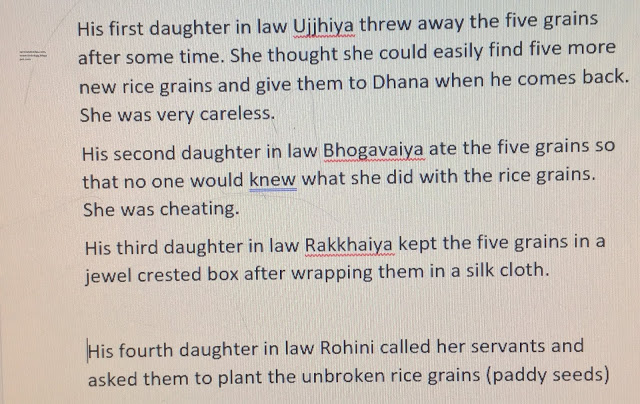
THE FIVE RICE GRAINS REPRESENT FIVE PRINCIPLES FOLLOWED BY THE JAINS. THEY INCLUDE NON VIOLENCE, TRUTH AND NON- STEALING. THOSE WHO FOLLOW THEM WILL GET THE FULL BENEFITS AND SHINE IN LIFE.
Pictures are taken from various sources; beware of copyright rules; don’t use them without permission; this is a non- commercial, educational blog; posted in swamiindology.blogspot.com and tamilandvedas.com simultaneously. Average hits per day for both the blogs 11,000.
gold or silver in bulk before coining, or valued by weight.
“gold bullion”
2.
ornamental braid or fringing made with twists of gold or silver thread.
“bullion cords”
Moses broke
the ‘Golden Calf’ in Israel according to the Bible (Exodus 32:1-4). Though it
is called Golden Calf it was a bull. Moses was against Idol worship.
The rust
free , gleaming metal was associated with the SUN in almost all the cultures. Mayans,
Aztecs aand Incas worshipped sun. Inca made sun images in gold.
Gold is
called chin in China. It symbolised the principal of Yang, the dualistic
complement of Yin (whose metal was silver.
Aztecs
called it divine excrement (Teocuitlatl = faeces of the Sun God).
The
alchemists maxim ‘aurum nostrum non est arum vulgi (our gold is not the gold of
the masses)suggests that to him gold meant not literally the metal, but rather
esoteric knowledge.
In classical
antiquity, medicinal herbs were dug out with golden implements, so that their
powers would not be diminished and gold jewellery was believed to ward off
magic spells.
In Babylonia
Scarcity ,
malleability and beauty made gold a desirable medium for the execution of holy
and valuable objects in the Near East.
Coins and
jewels were made up of gold. In Mesopotamia goldsmiths were distinguished from
other metal workers.
The earliest
gold objects discovered were rings dated around 5000 BCE. They were discovered
in a cave in Nahal Qana in Palestine. Occasional gold objects were discovered
from 4th millennium BCE. A FINELY MADE WOLF’S HEAD WAS DISCOVERED IN
Tepe Gawra in Mesopotamia.
Gold came
from Anatolia/Turkey and via Persian Gulf. It is electrum , viz naturally occurring
ore of silver and gold.
Lot of
golden objects were discovered from 3000 BCE.
Dasaratha
, Hindu King who ruled Syria -Turkey area sent an Egyptian pharaoh two golden
statues of Goddesses according to Amana Letters.
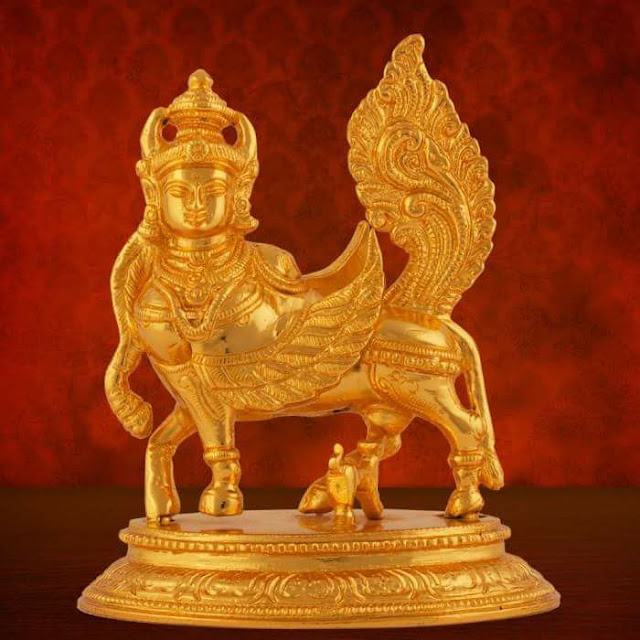
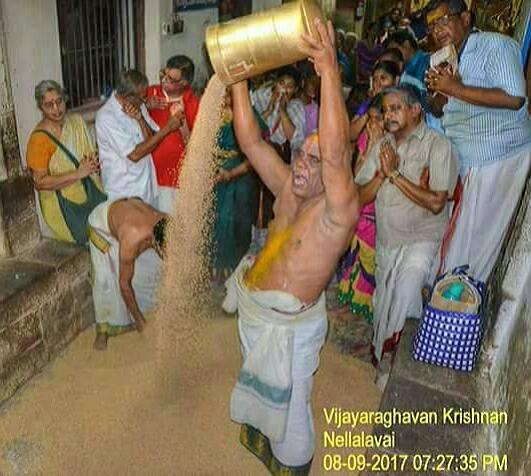
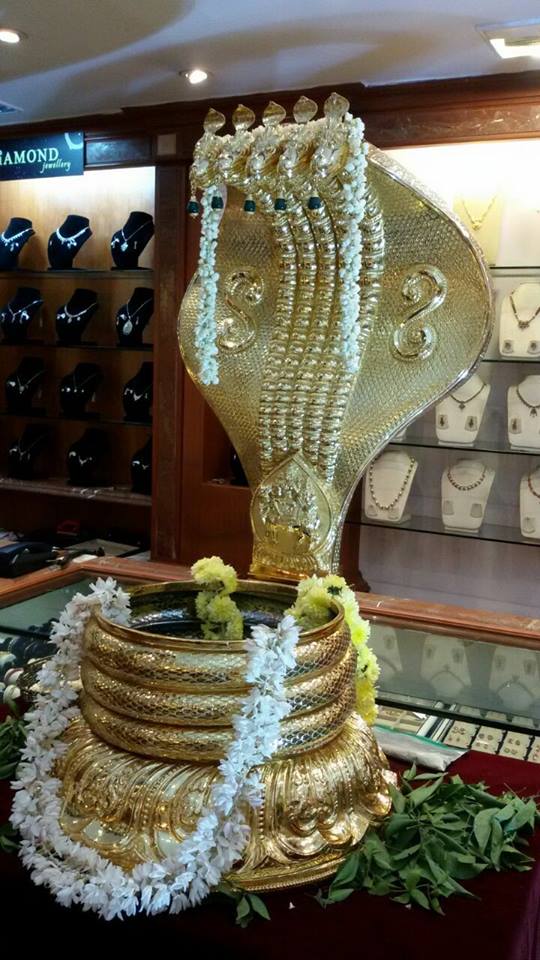
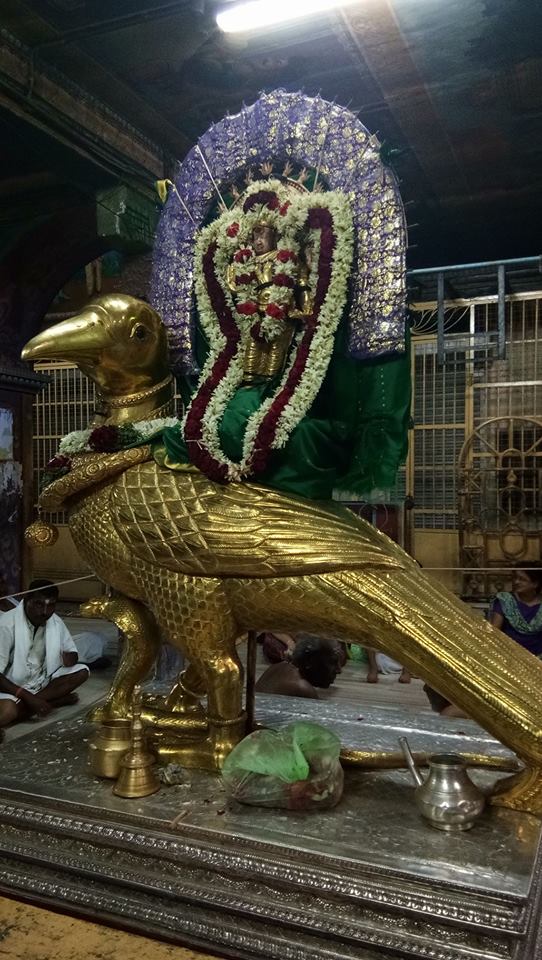
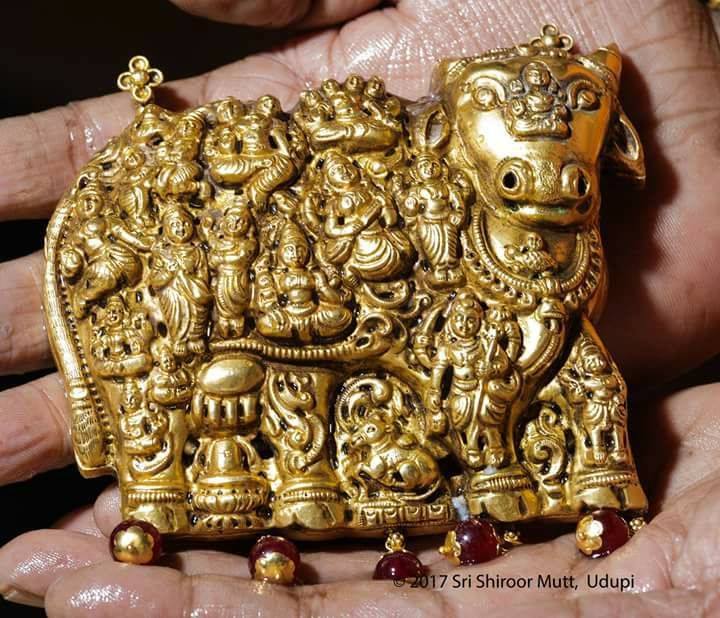
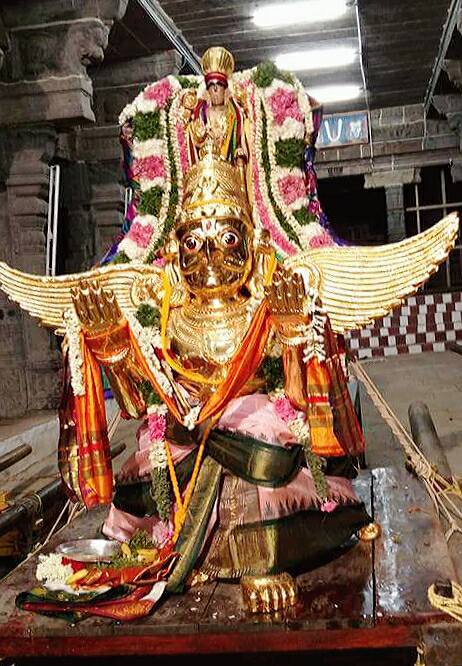
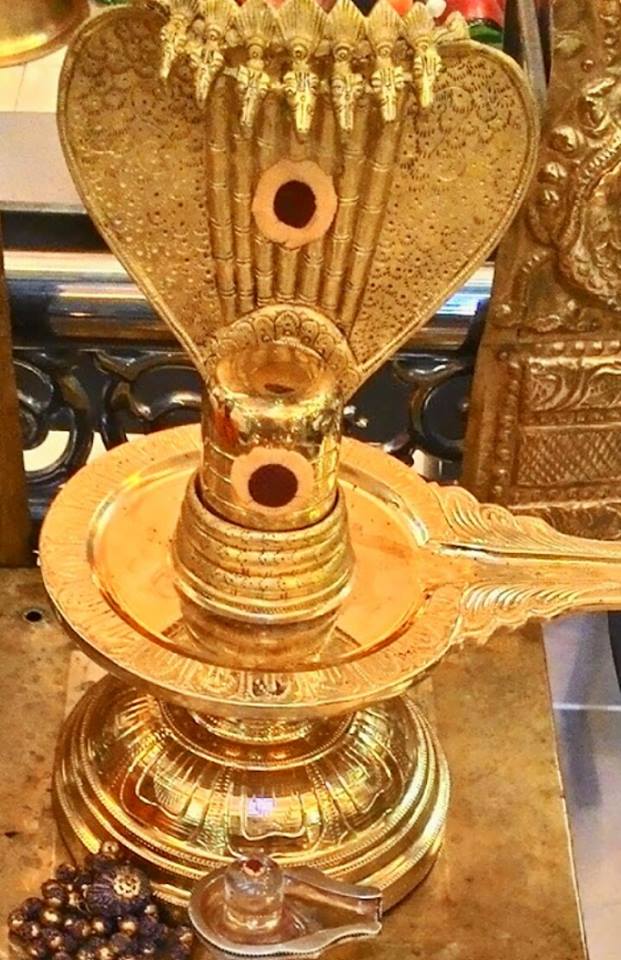
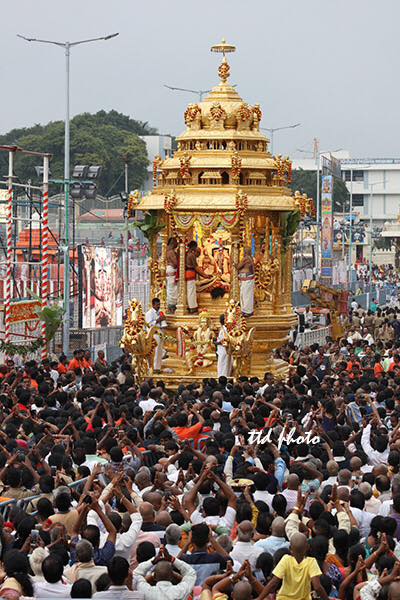
gold measure gold snake vahanagolden crow vahanagolden eagle golden chariot



















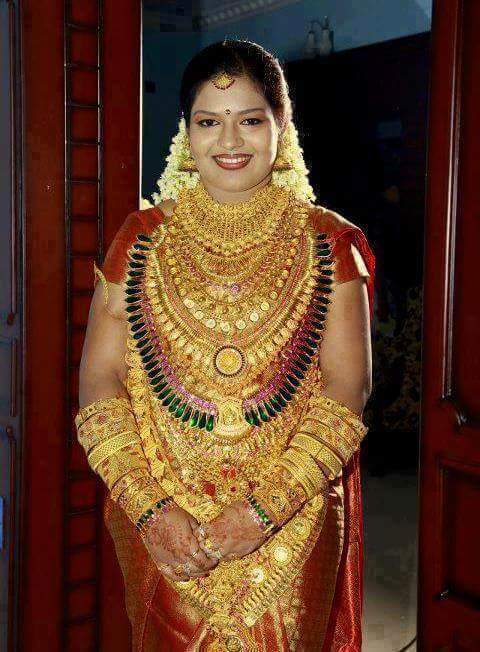
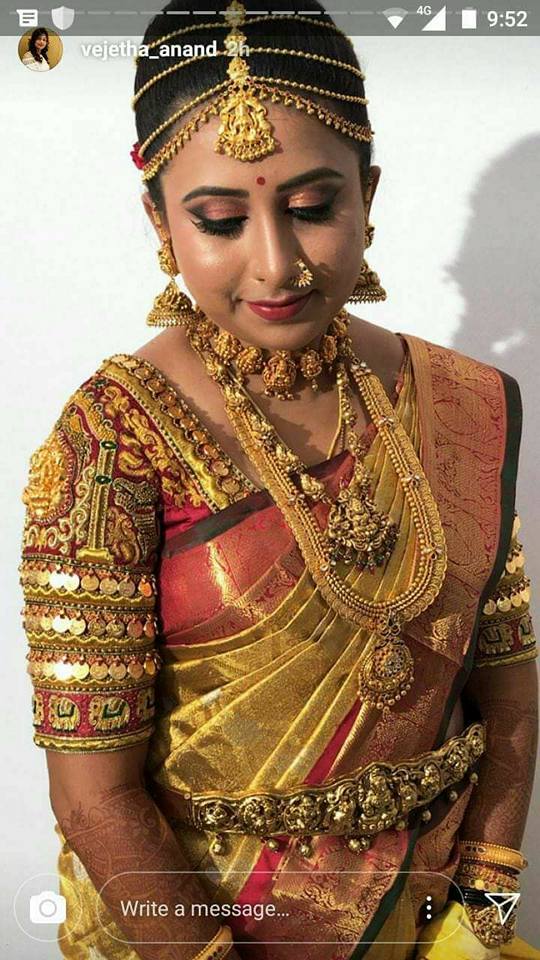










 Tamil and Vedas