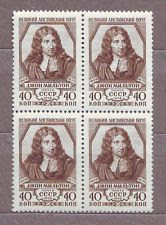
MILTON’S VIEWS SIMILAR TO HINDU VIEWS! (Post No.4295)

Written by London Swaminathan


Date:12 October 2017


Time uploaded in London- 20-32


Post No. 4295

Pictures shown here are taken from various sources such as Facebook friends, Books, Google and newspapers; thanks.
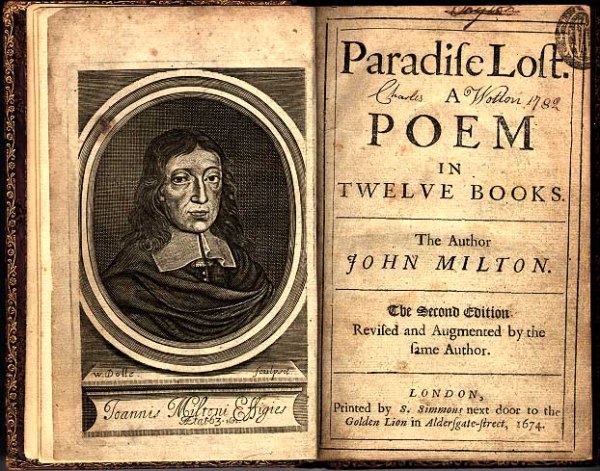
 

Hindus believe that spirits or angels live everywhere in nature- from sea to the hill top. They are the guardians of hills, groves, streams, fountains, paths, trees, rivers, paths and cities. Sangam Age Tamils called them Anangus. They are cognisant of every human action. In considering the domination of the above, compare Milton’s lines:-


Millions of spiritual creatures walk the earth

Unseen, both when we wake and when we sleep

—Paradise Lost


Xxx


Worship of Earth by the Hindus


They always ask for forgiving before stepping on it or ploughing or digging a well. The worship of the earth assumes many forms. The pious Hindu does reverence to her when he rises from his bed in the morning and even the indifferently religious man worships her when he begins to plough or sow.


Pious Hindu recites a couplet saying, please forgive me for stepping on you, Vishnu patni namastubhyam padas sparsam kshmasvame


In Punjab when a cow or a buffalo  is first bought, or when she gives milk after calving, the first five streams of milk drawn from her allowed to fall on ground in honour of the goddess Mother Earth, and at every time of milking the first stream is so treated.


The dying man is laid on the earth at the moment of dissolution and so is the mother at the time of parturition.


Milton in his Paradise Lost says

………till like ripe fruit thou drop

Into thy mother’s lap- 9-273


Earth again is regarded as a remedy for disease. It is used frequently as a poultice, and an application for the cure of wounds and sores.


Xxxx

Earth in Wedding Ceremony of Lower Castes


Following incident is mentioned by Rev. Osborne Martin in his book Gods of India, year 1914


At the side of a Mission compound in North India is a tank which during half the year is dried up. The women of a neighbouring Chamar village, before any wedding, go in a procession to the dry tank to fetch from it sacred earth used to make the marriage altar and fire place on which the wedding feast is cooked.  The ground close to which the earth is taken is smeared away with vermillion, and marigold flowers are scattered here and there, while puja is offered before the soil is removed. The earth is always given by the digger to a maiden, and married women are not allowed to touch it. The maiden receives it in her sari and heads the procession on its return to the village. This rite is performed with secrecy, and usually at nightfall. This is part of ancient earth worship.

xxx

Valluvar and Milton


Tamil poet Tiru Valluvar says,


If one exercises self-restraint with knowledge and intent

He will gain distinction among the wise (Kural couplet 123)


If one practises self-control in respect of thought, word and deed, he will certainly come to be counted among the good people of the world. In fact as the great English poet Milton would say


“The command of one’s self is the greatest

Empire one can aspire to”


Lord Krishna says in the Bhagavad Gita about the Self-Restrained:

“But the self-controlled man, moving among objects with senses under restraint, and free from attraction or aversion, attains tranquillity- Gita 2-64


xxx

Milton says

The Ionian Gods – of Javan’s issue held

Gods, yet confessed later than Heaven and Earth

Their boasted parents – Paradise Lost 1-508


Vedic Rishis also give queer notions of their gods.


xxx
In the Vedas there is a hymn called the Bhumi Sukta and that is the oldest hymn by a community to Mother Earth. I Have already written about it:-


 Bhumi Sukta | Tamil and Vedas

https://tamilandvedas.com/tag/bhumi-sukta/

Posts about Bhumi Sukta written by Tamil and Vedas.

–SUBHAM—
179 ‘Victims’ in Hindu Human Sacrifice – Purushamedham- Part 2 (Post No.4265)

Written by London Swaminathan


Date: 2 October 2017


Time uploaded in London-16-46


Post No. 4265

Pictures shown here are taken from various sources such as Facebook friends, Books, Google and newspapers; thanks.


First part was posted yesterday. Here is the second part


41.To the Gods of rivers, a fisherman

42.To the regents of lonely place, A Naishada

43.To the god who claims to be the noblest of males, an excessively vain man

44.To the gods of Heroes, an insane man

45.To the Gandharvas and their wives, one who has not been duly purified by the initiatory rites, A Vratya


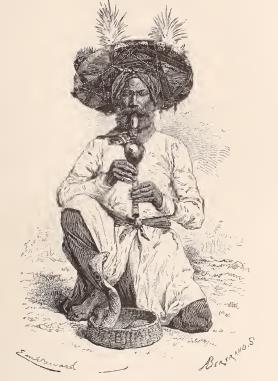
46.To the regents of snakes, and snake charmers, one unfit for the initiatory rites

47.To the guardian gods, a gambler

48.To Iryata, the goddess of food, one who abstains from gambling

49.To the Pichasas, a basket maker

  1. To the Yatudhanas, one who puts up a thorny edge.


51.To those gods who frustrate undertakings, a hunchback

52.To Pramada, divinity of excessive joy, a dwarf

  1. To those goddesses who are guardians of gates, a diseased person.

54.To the presiding divinity of dreams, a blind man

55.To the divinity of sin, a deaf man

56.To the divinity of sense, one who wins her husband’s affection through charms or filters


57.To the divinity of profuse talk, a bore

58.To the goddess who is little conversant with Vedas, a sceptic

59.To her who is conversant with them, one who is proficient in questioning.

60.To her who presides over the purport of the Sastras, one who is able to meet arguments.


  1. To one who prides in killing heroes, a tattler

63.To one who presides on gains, a charioteer

64.To the divinity who protects Royal treasuries, a treasurer or revenue collector

  1. To the mighty, servant

66.To the majestic, an officer or assistant

  1. To the dear one, a sweet speaker

68.To the uninjurious, a cavalier

  1. To the intelligent, or him who is proficient in a knowledge of religious rites, a washer-woman

70.To the most loving, a female dyer

71.To the refulgent, a collector of fuel

72.To the highly refulgent, a fire man or a lighter of fires

73.To him who dwells on the top of heaven, one who officiates at a coronation

74.To the regent of the region of sun, a polisher of metal pots

75.To him who prides himself on being of the Devas, one who causes enmity

76.To him who resides in the region of the mortals, one who foments quarrels among those who are in peace.

77.To whom who belongs to all regions, a peacemaker

  1. To him who presides over death by penance, one who meddles in quarrels

79.To him who prides himself on being of heaven(svarga), one who collects the dues of a king from his subjects

80.To the most aged of heaven, a tableservant.

81.To the wavy mover, an elephant keeper or a mahout

82.To the swift, a groom

83.To the robust, a cowherd

84.To the vigorous, a goatherd

85.To the energetic, a shepherd

  1. To the divinity of food, a ploughman

87.To that of water, a distiller or a vintner

88.To that of welfare, householder

89.To that of prosperity, an owner of wealth

90.To him who is the immediate cause of all things, the servant of a charioteer or an assistant charioteer.


My comments: Another 90 are yet to come. Even the first ninety people are enough to show, the Purushamedham was only symbolic. Even a cursory reading of the list will show that it did not happen anywhere. What they are trying to show is  that the people were all just limbs of one common body.


The list shoos that the Vedic Hindus were highly skilled and talk even about coronation. There was a monarchy to whom people were paying taxes. All these happened around 1000 BCE even according to the jaundice eyed foreign “scholars”!

to be continued………………….


RECITE STORY OF SUNASHEPA: YOU WILL GET GOLDEN CARPET AND SILVER CHARIOT! (Post No.4256)


Written by London Swaminathan


Date: 29 September 2017


Time uploaded in London- 15-56


Post No. 4256


Pictures are taken from various sources such as google, Facebook friends, newspapers and Wikipedia for non-commercial use; thanks.


RECITE STORY OF SUNASHEPA: YOU WILL GET GOLDEN CARPET AND SILVER CHARIOT! (Post No.4256)

Rig Vedic society was well advanced and highly civilized. They were an economic super power in the ancient world. Every prize is given only in big decimal numbers such as 10,000 or 100,000 and  gold is freely distributed as dakshina (fees for the priests). Half baked, white skinned “scholars” and their Marxist sycophants described the Rig Vedic Hindus as nomads, pastoral, silly, ridiculous, childish, gibberish, obscure etc. But the biggest wonder is there were 179 different jobs they were doing. One of them is Nakshatra Darshak (Star gazer= astronomer); Jyotish is different. It dealt with auspicious time and the 27+1 stars. India was the oldest civilization to teach jyotisha (astrology) as part of Veda Patasala syllabus. The Vedic youths must study six more subjects such as grammar, linguistics, astrology along with the Vedas. These 179 jobs are in Yajur Veda. White skinned scholars never give the list of 179 professions such as doctors engineers in the Vedic society but they always add one line “victim of Purushameda Yajna’ when such words occur. What is it?


Purushameda Yajna was sacrificing human beings and they should throw 179 different people into fire. The foreign scholars were very happy to read such passages in the Satapata Brahmana (of Yajur veda) Even Arya Samajists disowned the Brahmana literature saying that they were not part of the Vedas. They did it because of the bad atmosphere created by the Christian preachers.

The Brahmana literature was a huge mass with full of mysteries. The language is a secret language. Neither Tamil, Greek nor Latin had any literature. If anyone reads it, it wouldn’t make any sense. But the subjects it covers is very vast from astronomy to Zoology. At first the foreigners wrote Hinduism won’t survive even for 100 years with such materials. But those foreigners never said what professions existed at the Vedic period. If they give the full list everybody would know that they were highly civilized. Hindus describe even God as doctor and his advice as medicine ( In Rudram of Yajur Veda).


The fact of the matter is that nobody has any proof for Purushameda Yajna (Human Sacrifice). The only anecdote is Sunashepa Anecdote. The brief account is as follows:-


It is from the Aitareya Brahmana: King Harischandra of the race of Ikshwaku, being childless, made a vow that if he obtained a son he would sacrifice him to Varuna. A son was born who was named Rohita, but his father postponed, under various pretexts, the fulfilment of his vow (sacrificing children is in every religious book all around globe; thousands of mysterious children’s graves are in Bahrain; read my article about Mysteries of Bahrain).


When he was ready to perform the sacrifice, Rohita refused to be the victim and he ran into the forest. He lived there for six years. He then met a poor Brahmin Rishi Ajigerta, who had three sons. He gave his second son Sunashepa (meaning Dog’s tail)  for an exchange of 100 cows. Sunashsepa was tied to a pole. Viswamitra was passing that way and found Sunashepa and released him. He thought it was barbaric to sacrifice a human being. Ramayana and Mahabharata gave different versions where Viswamitra’s two divine mantras released Sunashepa. He was adopted as a son by Viswamitra and changed his name as Devavarta.

A series of seven hymns in the Rig Veda is attributed to Sunashepa.


This clearly shows that there was no such human sacrifice nor any custom before Harischandra, one of the long list of kings. Vedic literature was very huge and most of them came before Greeks started writing.


Foreigners thought they could use it against Hinduism; but they couldn’t because there was no sacrifice even in this episode.


But on the contrary Hindus, particularly Brahmins, used it in a positive way. This is the longest and most interesting story in Aitareya Brahmana. The mere telling of the story saves one from sin.


“If a sinful king has the story of Sunashepa told him, not the slightest trace of sin and its consequences will remain in him. He must therefore give a 1000 cows to the teller of this story and a 100 to him who makes the responses required; and to each of them the gold embroidered carpet on which he was sitting; to the priest, besides a silver decked carriage drawn by mules. Those who wish for children should also have this story told them; then they certainly will be blessed with children”.


Foreign “scholars” looked like idiots when this is known to the world. Golden carpet! Silver decked chariot! to the priests for telling a story!! How wealthy they must be! Before the Sumerians did the Tulabharam (weight equal to one’s body weight) of gold was given by the Hindus! Tamil King Cheran Senguttuvan gave 55 kilos of gold to a Brahmin just for advising him to do Vedic yajnas and stop killing people in the wars! It happened 2000 years ago in Tamil Nadu.


Now you can laugh very loudly when you read some silly things about Vedic Hindus written by Marxist idiots and white skinned fools.


–Subham–


VEDAS ARE MOSTLY ‘CHILDISH’: MAX MULLER (Post No.4246)

Written by London Swaminathan


Date: 25 September 2017


Time uploaded in London- 14-32


Post No. 4246


Pictures are taken from various sources such as google, Facebook friends, newspapers and Wikipedia for non-commercial use; thanks.


I Have earlier shown in my articles that Max Muller was like a poisonous snake with a split tongue; he would blow hot and cold; he would praise the Vedas whenever he wanted to identify himself with the Aryans “who travelled from Germany to India” to establish that nobody lived in India and any foreigner could occupy it like the British.  At other times he dubbed the Vedas as childish blabbers, pastoral, ridiculous and the Aryan people were nomads.


This he did for two reasons. He got a collie from the East India Company to say so and the Oxford professorship has a condition that they should show to the world that Christianity is the only civilized religion. In fact, all the Sanskrit professors appointed under a chair in Oxford fall under this category. That is what they were paid for. In simple language, coolies. For money, they would do anything.


Here is more proof to show the true colures of Prof. Max Muller. He was a poisonous snake and along with Bishop Caldwell and other foreigners they coined a new term ‘Aryan race’. Neither the Tamil Sangam literature nor the Vedas has that racial connotation for ‘Arya’.

Subrahmanya Bharati, the greatest Tamil poet of modern times used the word ARYA in scores of places in his poems with the correct meaning: civilized, cultured, who recites Mantras in Sanskrit at the foot hills of the Himalayas. Bharati deliberately used the word ARYAN and deliberately avoided the word Dravidian in his poems. Probably to give a slap on the faces of Caldwells and Max Mullers and such cunning dirty fellows.


Max Muller describes the conclusion arrived at by intelligent Indians: “The friends of Rammohan Roy, honest and fearless as they have always proved themselves to be, sent some young scholars to Benares to study the Vedas and to report on their contents. As soon as their report was received, Debendranath Tagore, the Head of the Brahma Samaj, said at once that, venerable as the Vedas might be as relics of a former age, they contained so much that was CHILDISH, ERRONEOUS and impossible as to make their descent from a divine source utterly untenable” (another group of collies).

(Biographical essays pp 163, 169)


Prof. Max Muller has spent many years, editing the Rig Veda, with commentary of Sayana (MM must be the biggest fraud in the field. He did not translate Sayana’s. Because Sayana never said that there was a race called Aryan and they came from Europe).


Max Muller says the following in his “Preface to the Sacred Books of the east”:-

“Scholars also who have devoted their life either to the editing of the original texts or to the careful interpretation of some of the sacred books, are more inclined, after they have disinterred from a HEAP OF RUBBISH some solitary fragments of pure gold, to exhibit these treasures only than to display all the REFUSE from which they have to extract them. I do not blame them for this, perhaps I should feel that I was open to the same blame myself, for it is but natural that the scholars in their joy at finding ONE or TWO fragrant fruits or flowers should gladly forget the BRAMBLES and THORNS that had to be thrown aside in the course of their search”.


xxx

In his Lecture on the Vedas he expresses the following opinion of the hymns:-

“ The historical importance of the Veda can hardly be exaggerated but its intrinsic merit, and particularly the beauty or elevation of its sentiments, have by many been rated far too high. LARGE NUMBER OF THE VEDIC HYMNS ARECHILDISH IN THE EXTREME: TEDIOUS, LOW, COMMON-PLACE. The gods are constantly invoked to protect their worshippers to grant them food, large flocks, large families and a long life; for all which benefits they are to be rewarded by the praises and sacrifices offered day after day, or certain seasons of the year. But hidden in this RUBBISH there are precious stones.


“ I remind you again that the Veda contains a great deal of what is CHILDISH and FOOLISH, though very little of what is bad and objectionable. Some of its poets ascribe to the gods sentiments and passions unworthy of the deity such as anger, revenge, delight in material sacrifices; they likewise represent human nature on a low level of SELFISHNESS and WORDLINESS. Many hymns are utterly UNMEANING and INSIPID and we must search patiently before we meet, here and there, with sentiments that come from

the depth of the soul, and with prayers in which we could join ourselves.”


(Sayana never expressed such an opinion. Tamil Sangam literature praised the Vedas sky high. For two thousand years Tamil devotional poets praised them. Tamils translated he word Veda as ‘secret’. because they knew literal meaning should not be looked at.)

Western fellows never talk about other or their religious books. If Vedas are rubbish there more rubbish in their very short books!


Not even Buddha, not even Mahavira criticised the Vedas.  They praised Indra. They criticised only doing Yagas without understanding the meaning or purpose. Oldest Tamil book  Tolkappiam said that INDRA, VARUNA, VISHNU and DURGA are Tamil gods


When all other old religions died and their gods gone into museums, Hinduism is still a vibrant religion and Vedic Gods are worshipped every day. How and Why?


If there is so much RUBBISH in the Vedas, why did MM spend 60 years in Vedic studies and publish 51 Volumes of Sacred Books of the East? Was he a fraud or a faithful collie and did all these things for money to belittle Hinduism? Because of his Aryan Race theory, Hitler picked up Arya and Swastika and killed millions. Because of this America killed one million innocent Buddhists and Shintoism followers by throwing atom bombs on their heads. They never nuked a Jew or a Muslim or a Christian.

Caldwell says: “If any person reads the hymns of the Vedas for the first time, he will be struck with surprise at the utterly WORLDLY, UNETHICAL, UNSPIRITUAL tone by which they are generally pervaded.”

MM did another fraud by praising Dyaus Pita and comparing him with European gods and dubbing it as he oldest God. he never proved it. He never proved that those hymns in the Rig Vedas as the oldest portions. No scholar in the world proved it. Most of the things said by one idiot is repeated by other idiots. Because all of them belong to the same bandwagon.

Readers can pass a judgement on MM and his bed mates.


–Subham–

Importance of Cow in Sanskrit Literature! (Post No.4053)

Written by London Swaminathan
Date: 5 July 2017
Time uploaded in London- 9-28 am
Post No. 4053

 
Pictures shown here are taken from various sources such as Facebook friends, Books, Google and newspapers; thanks.


The cow occupies a unique position in Hinduism. Kalidasa’s Raghuvamsa gives a graphic account of care and respect shown to a cow by the emperor Dilipa.

Hindus’ greatest contribution to the world civilization is cow and its products. When the world was drinking goat’s milk and camel’s milk and even donkey’s milk they discovered that the cow’s milk is the best in the world and it is as good as mother’s milk. No ancient literature praises or values cow’s milk as Hindu literature. From Rig Veda to Sangam Tamil literature we find innumerable references in praise of the cow.


There are very interesting words in Sanskrit from the cow:-

Vaatslayam

Love and affection shown towards calf by its mother cow. Oft quoted in the Vedas

Go loka

The heaven of Krishna is Go loka (cow’s world)

Duhitri

A daughter is called milk maid (duhitri)

Gotra

clan; group

Gopis

Women with divine love towards Krishna

Madhuparka

All the saints are honoured with Milk and Honey. Hospitality is a unique Hindu concept. Rig Veda and Tamil Sangam book Purananuru have a lot of Danastutis, in praise of donation and hospitality. (English word donation comes from Sanskrit Dhaana).

Hosipitality is the rule of life among the Hindus. Tamil Veda Tirukkural has a chapter on it. Rig Veda praises it. Mahabharata has several stories in praise of hospitality. Panchatantra is full of quotations on hospitality. Guests were received with great ceremonies in ancient India. They must be given water to wash their feet and a seat to take rest. If they are unknown people, pial of the house was given to them to take rest and provided with full meals.


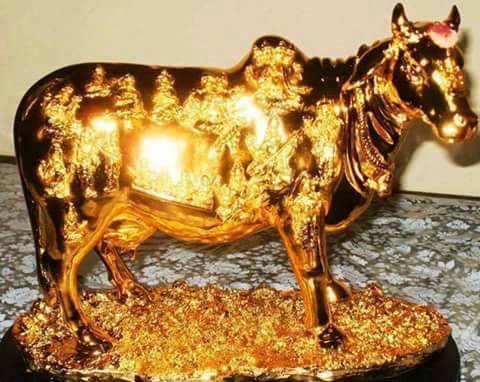
Hindus not only domesticated the cows and oxen, they worshipped them as gods and goddesses. Kamadhenu is the wish fulfilling cow. The picture and statues of Kamadhenu are in Hindu houses and temples.

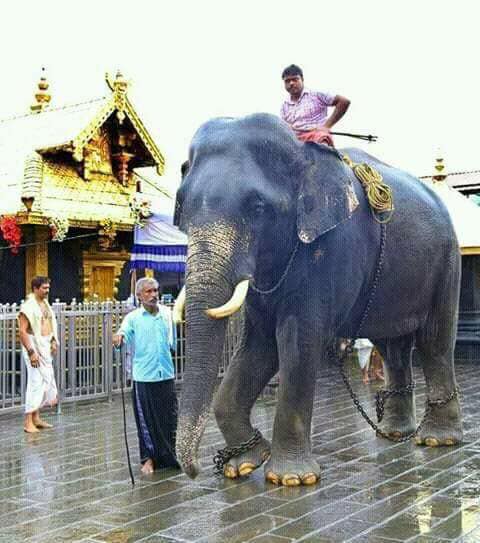
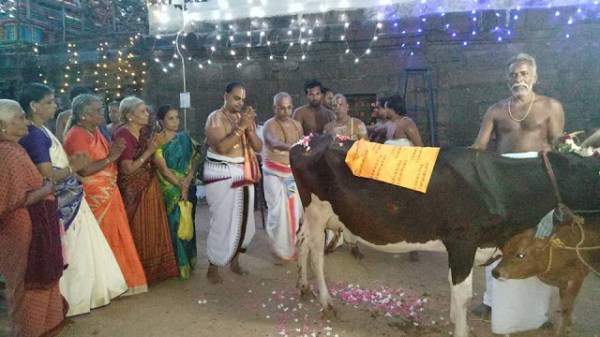
Go puja and Gaja Puja (cow and elephant worship) are done in all the temples and religious Mutts. This has been going on for several thousand years without stopping. No animal in the world is worshipped continuously like this.

A word ‘Gohna’ is used for the guests. Foreigners translated it literally as Cow killer. They thought a cow was killed by the seer to feed another seer. The real meaning is that a cow’s products such as milk, butter, ghee, curd/yogurt, cow dung Go mutra (cow’s urine)– all are used in the service of the guests. Cow dung will be sprinkled with water in front of the house. Cow dung will be smeared in the oven to clean it. Cow’s urine is used to purify a place and a person.

Story of Cow’s creation

Satapata Brahmana (2-2-4-1) gives the story of Cow’s creation.

“Prajapati alone existed. He generated Agni (fire) from his mouth.

When they had sung praises, they went towards east saying, ‘We will go back thither! The gods came upon a cow which had sprung into existence. Looking up at them, she uttered the sound ‘hin’. The gods perceived that this was the ‘hin’ of the Saman (melodious sacrificial chant of Sama Veda); for heretofore their song was without ‘hin’, but after that it was the real Saman. (musical chant of Rig Vedic mantras; Hindus discovered the musical notes sa, ri, ga , ma pa, da ni – seven notes)


And as this same sound, ‘hin’ of the Saman, was in the cow, therefore the latter affords the means of subsistence; and so does he afford the means of subsistence whosoever thus knows the ‘hin’ of the Saman in the cow”.


“They said, ‘Auspicious indeed, is what we have produced here, who have produced the cow; for truly she is the sacrifice, and without her no sacrifice is performed; she is also the food. This word ‘go’ (Sanskrit word for cow; English word cow came from Sanskrit Go) then, is a name of those cows, and so it is of the sacrifice; let him therefore repeat it, saying , good, excellent! and verily, whosoever, , knowing this, repeats it, as it were saying good, excellent! with him those cows multiply, and the sacrifice will incline to him”.

Foreigners couldn’t understand this mantra. They took the word sacrifice and wrote that cow was sacrificed in the fire. But Hindus knew the correct  meaning: without cow’s products they cant run their life or do religious performance; Hindus use milk in birth and funeral ceremonies. Without Go mutra (cow’s urine), Ghee and milk no ceremony is done. They were great scientists to find that that Cow’s urine and Cow’s poo (cow dung) have got great curative and anti- bacterial properties.

Another story about cow is as follows:

Cow came from Prajapati’s Breath

Satapata Brahmana says ((7-5-2-6)

“Prajapati was alone at first. He desired, May I create food, may I be reproduced!. He fashioned animals from his vital airs, a man from his soul (mind), a horse from his eye, a cow from his breath, a sheep from his ear and a goat from his voice”.


Foreigners couldn’t understand the meaning of such mantras. Whenever and wherever they wanted they interpreted some words according to their whims and fancies; and the fact is no two foreigners agreed on the meaning, because they don’t know the real meaning. We can see this tend throughout the Vedic translations done by 20 to 25 authors. For them it was jigsaw puzzle game.


In the above mantras if they see a direction ‘North’, they will write “Look, they have come from North pole”. Here in the mantra the direction mentioned is east. Poor foreigners couldn’t say that Aryans came from the east. So they will keep quiet!


–Subham–


Who is a Dasyu? Kalidasa and Rig Veda explain! (Post No.3982)

Research article Written by London Swaminathan


Date: 8 June 2017


Time uploaded in London- 11-00 am


Post No. 3982


Pictures are taken from various sources such as Face book, Wikipedia and newspapers; thanks.


contact: swami_48@yahoo.com


Dasyu means a thief; but foreign ‘thieves’ who translated the Hindu Vedas wrote that Dasyu mean an aborigine- a deliberate distortion. In every community, there are thieves and we can find them even in all the scriptures. We have poems about robbers and thieves in Sangam Tamil literature. Some words gain wrong meaning in course of time. We have several caste names (Pariahs and Kallars) in Tamil literature which have earned wrong connotation in course of time. But nobody bothered about them.

English newspapers around the world use the Tamil word ‘PARIAH’ everyday with wrong connotation, which originally meant a drummer or an announcer. Countries and leaders are described as International Pariah in English newspapers and TV stations every day. The new meaning the English dictionaries give is AN UNTOUCHABLE!


Tamils were the only race in the world who fought among themselves for at least 1500 years according to Tamil literature and Tamil inscriptions. But nobody divided them on racial lines. The Chera, Choza, Pandya kings fought with each other for 1500 years continuously, killed one another, detained their women and made ropes out of their hair to pull their Victorious Chariots. The Tamil poets praised the kings as great heroes. The poets also say that they burnt the palaces of other Tamil kings and razed it to ground and ploughed it with donkeys just to insult the defeated Tamil king. The Sangam Tamil poets sang about rivers of blood as well. Even though the Tamil kings claimed different origins the foreigners never attributed any race into it.


But foreigners who wanted to divide the Hindus, deliberately divided the Hindu community into two : Aryan and Dravidian which are not found in Tamil or Sanskrit literature. Though we have the word Aryan in Sangam Tamil literature  and Arya in the Rig Veda, the meaning is ‘cultured’, ‘civilized’ or ‘saints in the Himalayas’. There is no racial division or connotation. But from the days of Max Mullers and Caldwells, they coloured the word with racial paint.

Dasyu in Kalidasa

In the Sakuntala drama, Sarngarava in his anger accused the king Dusyanta as a thief. It is because the king married Sakuntala secretly and abandoned her. When she was sent back to the king, the simile Kalidasa used was that sending the stolen property to a thief himself! The word Kalidasa used is DASYU for thief (Act 5-21)


Dasyu in Rigveda

In the Vedic Index, Keith and Macdonell say,

“Dasyu, a word of somewhat of doubtful origin, is in many passages of the Rig Veda, clearly applied to superhuman enemies. On the other hand, there are several passages in which human foes, probably the aborigines, are thus designated.

Dasyus are described as

God Hating (a-devayu) 8-70-11

Not sacrificing (a-yajvan) 4-16-9

Devoid of rites ( a karman); RV 10-22-8

Lawless (a vrata)

Addicted to strange vows (anya vrata) 8-70-11

Reviling the Gods (deva piyuu) AV 12-1-37

It is impossible in all cases to be certain that people are meant.

No clans of dasyus are mentioned;

Indra is Dasyu-hatya (killer of dasyus); but never mentioned as Dasa hatya. This means Indra was against criminals, thieves, robbers etc but not against people.

It is like later inscriptions describing Hindu kings as ‘parantapa’ scorcher of the enemies (Bhagavd Gita)


In one passage of the Rig Veda they were described as A-nas(RV 5-29-10); some wrongly translated this as nose less and attributed to Dravidians; Dravidians have big noses! As far as we know only the Japanese have small noses; some foreigners translated it as faceless, broken nose.

When the Rig Veda described them in one place as ‘Mrdhra vac’, they translated it as ‘stammering, unintelligible speech!’

Actually Sangam Tamil literature describe the Yavanas (Romans, Greeks and Arabs) as people of harsh speech; Tamil literature describe the shepherds as Kallaa Idaiyar ( rude, uneducated, uncultured etc). No one attributed any race or aborigine element into it.


Every scripture or every literature has such words to describe the enemies from their own clan or from the opposite sides.


In Iran there is a province with the name Dasyu!. What they meant was it was an enemy country. We can call Pakistan and China as Dasyus today. England which fought 1000 year war with France would have called them Dasyu!.

When Cumuri, Sambara and Susna fought Indra they were described as Dasyu, meaning ‘a brutal enemy’.


In the Aitareya Brahmana it meant uncivilized people.

In short Dasyu meant hostile, uneducated, uncultured thieves and robbers. These types of people are found in every scripture and  every ancient book. But only in Hindu scriptures they were coloured by foreigners as aborigines or Dravidians. A deliberate distortion with an ulterior motive. Marxists and Dravidian politicians spread the distorted version to laymen for their own political gains.

It is Hindus’ primary duty to translate the Vedas  properly and rewrite Indian History.

–subham–

Drought in Tamil and Sanskrit Literature (Post No.3953)

Research Article Written by London Swaminathan


Date: 29 May 2017


Time uploaded in London- 14-36


Post No. 3953


Pictures are taken from various sources such as Face book, Wikipedia and newspapers; thanks.


contact: swami_48@yahoo.com


Our forefathers and writers gave a true account of the weather conditions prevailing in those days. These true accounts prove that they wrote genuine things and not concocted anything. We have reports of Tsunamis, earth quakes, accidents, shipwrecks, massive engineering works such as diverting River Ganga (by Bhageeratha) and River Kaveri (by Agastya), laying roads through the Vindhya Hills (Agastya ), population explosion in North India and migrating to South east Asia (Agastya drank sea) etc. Only thing is people could not understand their symbolic language. They though these are all mythological ‘stories’.


If we read through our literature, we can see many droughts which caused massive migrations. We even come to know the drying of Saraswati river ended the Indus Valley civilization and they migrated to different parts of India. These are very important events to know the history of the land.

Massive drought resulted in the migration of people from the Saraswati River Valley during Vedic days. Brahmins in India are generally divided into 10 groups: Pancha Goawda and Pancha Dravida. Gowda Brahmins lived in North India and Dravida Brahmins lived in South India. It is all in our literature. Many droughts caused the migration of Brahmins from one part of the country to the other.


Hindus believed that the 12 year orbit of Jupiter around the sun caused a drought every twelve years. Position of Venus was also considered to measure the amount of rain.

Tevaram sung by three Saivite saints mentioned the drought in different parts of Tamil Nadu. Lord Siva helped the saints by providing huge quantity of paddy and gold coins, which are considered great miracles by the Tamils. Those  1400 year old Tevaram verses are sung by all the Saivaite Tamils even today.


The word for drought in Sanskrit is Varkadam. In Tamil we have Varatchi and it is related to Varkata.


Tamil Tiruvilaiyaadal Purana talks about the drought in and around Madurai.


Kalidasa and Tamil Sangam Literature

Kalidasa and other poets used drought followed by rains as similes in their poems.

रावणावग्रहक्लान्तमिति वागमृतेन सः।
अभिवृष्य मरुत्सस्यम् कृष्णमेघस्तिरोदधे॥ १०-४८

rāvaṇāvagrahaklāntamiti vāgamṛtena saḥ।
abhivṛṣya marutsasyam kṛṣṇameghastirodadhe || 10-48

rAvaNAvagrahaklAntamiti vAgamR^itena saH|
abhivR^iShya marutsasyam kR^iShNameghastirodadhe || 10-48


On showering ambrosian water called his speech on the desiccating crop called gods owing to the drought called Ravana, he that black cloud called Vishnu disappeared.

Rain=speech, dry crops=gods, drought caused by=Ravana, Black Cloud=Vishnu


Tamil poet Alankudi Vanganar used the same simile in Natrinai verse 230. A man came back to his wife after visiting a courtesan. She told that the very sight of him is like rain flooding the land affected by drought.


Raghuvamsa 10-48= Natrinai 230


Sangam Tamil poets (Pura nanauru 35, 383 and 397) say that even if the planet Venus is seen in the wrong direction there wont be any drought because of the just rule of the kings. This shows their belief n the position of Venus in the sky.


12 long Drought and Indus Valley Civilization


There is an interesting reference to the drying of River Saraswati, the mighty river which ran through Punjab, Uttapradesh and other states.


Sarasvata, son of Dadhichi and Sarasvata survived a twelve year long drought. But all other rishis had gone away  in search of food. They had forgotten the Vedas completely. Then Sarasvata rishi taught them the Vedas (Mahabharata 9-51). This gives credit to the story of Vedic Hindus migration from the Indus valley to other parts of India after a 12 year long drought. Story of Saraswata Brahmins’ origin also corroborates this.


During the reign of Ukra Kumara Pandya, a legendary king, there was a 12 year long drought. Then he went and prayed to Agastya. He showed them the way.


The reference to 12 year long drought and once in 12 year drought are plenty in our literature.

Two droughts during Tevaram days


Tevaram is a collection f hymns sung by three saints Sambadar, Appar and Sundarar.


Sambandar and Appar were contemporaries who lived during seventh century CE. Because of drought and famine they went to Siva temple and prayed for the sake of the people. They were given one coin each till they tided over the famine. They used the coins to buy food articles.


Sundarar, who lived later than Appar and Sambadar , was getting regular  supply of paddy  from a generous Shiva devotee.  Suddenly he stopped it due to a severe drought. When Sundara came to know about it, he was very much worried. Lord Shiva appeared in the dream of that philanthropist and promised him a good supply of paddy. The very next day he went to nearby Tiruvarur and informed Sundara about the miracle. When Sundara saw the huge hills of paddy I a village he was wondering ow to carry them. Shiva told him that the paddy would be in Tiruarur. His words came true and every house in Tiruarur had a heap of paddy in front of his/her house. Sundara was very happy to see the delivery at the doorstep.

–SUBHAM–


Kalidasa and Valluvar on Bad Friends and Laughter (Post No.3946)

Written by London Swaminathan


Date: 27 May 2017


Time uploaded in London: 13-57


Post No. 3946


Pictures are taken from various sources such as Face book, Wikipedia and newspapers; thanks.


contact: swami_48@yahoo.com


Kalidasa and Valluvar on Bad Friends and Laughter (Post No.3946)


Tiruvalluvar is the author of Tirukkural, the Tamil Veda. It has got 1330 couplets organised in 133 chapters. Each chapter has a specific subject dealing with virtues, wealth and love (between man and woman). It expresses the highest and purest truths. It is very rare to see a secular work like this in any other language in the world. It has become very popular because of its brevity and universal appeal. Anyone will enjoy reading it.


Kalidasa is the most celebrated poet of India. His seven literary works are considered the best in classical Sanskrit literature. He is more famous for his over 1300 apt similes, imageries and analogies. All the similes in other Indian literatures are his imitations or adaptations. His influence over Indian literature is enormous. There is lot of scope for comparative studies.


Here are some amazing similarities in the above two books on two subjects: Laughter and Friendship.


Tamil poet Thiru Valluvar is so obsessed with friendship, that he deals with it in 70 to 80 couplets under different headings.


Kalidasa says that the relationship with bad friends should be cut off like a poisoned finger affected by a snake bite. Tiruvalluvar says the bad friends are like harlots and thieves.


“Cunning friends whose motive is gaining money, are like harlots who sell their body for gold and thieves who plunder” (Kural 813)

“It is better to leave than have the friendship of mean, low minded people that are useless and unhelpful” (Kural 815)

Kalidasa says,

“A friend who is part and parcel of life should be discarded if wicked as a finger which is part of body is cut down if it is bitten by a snake. But a good man, though unfriendly should be accepted, as a medicine though distasteful is acceptable to the sick” (Raghuvamsa 1-28)

द्वेष्योऽपि सम्मतः शिष्टस्तस्यार्तस्य यथौषधम्।
त्याज्यो दुष्टः प्रियोऽप्यासीदङ्गुलीवोरगक्षता॥ १-२८

dveṣyo’pi sammataḥ śiṣṭastasyārtasya yathauṣadham |
tyājyo duṣṭaḥ priyo’pyāsīdaṅgulīvoragakṣatā || 1-28

dveSyo.api sammataH shiSTastasyaartasya yathauSadham |
tyaajyo duSTaH priyo.apyaasiida~NguliivoragakShataa || 1-28


Even if someone is despicable he becomes agreeable to King DilIpa, in case if he were to be a principled person, as with a pungent medicine somehow agreeable to a patient; and even if someone is dearer to him he becomes discardable to him in case if he were to be an unprincipled person, as with a finger fanged by a snake, severable for anyone. [1-28]

A friend indeed is a friend in need!

In the Rtu Samhara Kalidasa says,

“The bodies of elephants, lions and oxen were scorched by the fire due to the excessive heat in summer season. They quickly emerged from the grass where they were burnt by fire and they all rested on the banks of a river together, forgetting their natural enmity. They behaved like friends. The image suggests that a real friend is helpful, particularly during distress. Rtu Samhara 1-27


Valluvan defines a good friend more beautifully:

“Genuine friendship hastens to redress distress even like the hand which picks up quickly that garment that slips (Kural 788)

“Friendship with worthy men is like the taste in the good books; the more we study the more we know” (Kural 783)

Laughter

There are two words for laughter in Tamil : one with good and another with bad connotations. Strictly speaking both are interchangeable. Only the context determines its meaning. Valluvar deals with laughter in over 16 couplets whereas Kalidasa used it in lesser places. But Kalidasas’ three plays have the Vidushaka (comedian, Jester) which gives good scope for creating mirth. All the ancient Sanskrit dramas have this Vidushaka/ jester character.


Let us look at one or two couplets from Tirukkural:

“Laugh when trials and troubles confront you, for there is no other way to overcome grief” (Kural 621)

It is very difficult to laugh when troubles come to us; one must be a saint like Tiruvalluvar to act that way. But most of us laugh at others’ troubles; particularly the troubles encountered by our enemies.

Valluvar echoed what Lord Krishna said in the Bhagavad Gita in the following couplets:

He does not suffer sorrow in sorrow, who does not look for pleasure in pleasure (Kural 629)

He is never afflicted by sorrow who knows the grief is natural and seeks no pleasure” (628)

Kalidasa says,

The lovely gardens resplendent with white jasmine flowers are imagined to be as bright as the sportive laugh f ladies, which is also considered white in colour—(Rtu Samhara 6-23)


In Hindu literature White is used for laughter, red is used for anger, Yellow is used for auspiciousness and Black for sorrow or wickedness. They have colour coded the emotions and feelings.

In the Raghu Vamsa (5-70) Kalidasa says,

“The dew drops fallen on the tender leaves with their interiors red resemble the sportive smile fallen on Aja’s lip brightened by the splendour of teeth”

Dew drops = smile; tender leaves = lips

ताम्रोदरेषु पतितं तरुपल्लवेषु

निर्धौतहारगुलिकाविशदं हिमाम्भः

आभाति लब्धपरभागतयाधरोष्ठे

लीलास्मितं सदशनार्चिरिव त्वदीयम्॥ ५-७०

tāmrodareṣu patitaṁ tarupallaveṣu

nirdhautahāragulikāviśadaṁ himāmbhaḥ

ābhāti labdhaparabhāgatayādharoṣṭhe

līlāsmitaṁ sadaśanārciriva tvadīyam || 5-70

taamrodareShu patita.n tarupallaveShu
nirdhautahaaragulikaavishada.n himaambhaH
aabhaati labdhaparabhaagatayaadharoShThe
liilaasmita.n sadashanaarciriva tvadiiyam || 5-70

“Like the thoroughly cleansed pearls in a necklace the dewdrops are now stringing on the surfaces of tender coppery leaflets only to expropriate their ochreish magnificence onto their whitely white bodies, in which process they look like your pleasing smiles occasionally gleaming with the sparkle of your teeth radiating onto your lower lip… [5-70]


Kalidasa uses tears of joy to express happiness:

The stream of the Himalayan snow melting under the rays of the sun is compared to the tears of joy shed by a woman when her  lover returns to her after a long absence (Raghu vamsa 16-44)


अगस्त्यचिह्नादयनात्समीपम् दिगुत्तरा भास्वति संनिवृत्ते।
आनन्दशीतामिव बाष्पवृष्टिम् हिमस्रुतिम् हैमवतीम् ससर्ज ॥ १६-४४

agastyacihnādayanātsamīpam
diguttarā bhāsvati saṁnivṛtte |
ānandaśītāmiva bāṣpavṛṣṭim
himasrutim haimavatīm sasarja  || 16-44

agastyacihnAdayanAtsamIpam diguttarA bhAsvati sa.nnivR^itte |
AnandashItAmiva bAShpavR^iShTim himasrutim haimavatIm sasarja  || 16-44


On the return of the Sun from her co-wife South (indicated by the star Canopus) after his southern solstice to the proximity of North, she that northerly quarter another wife of that Sun shed tears of joy duly dampened with her happiness to which the flow of melted snow from the Himalayas is hypothetical. [16-44]

(Agastya’s direction is South where the star Canopus is known as Agastya Nakshatra)


In the fourth act of famous drama Sakuntala Kanva, the foster father of Sakuntala, sheds tears of joy when she departs to join her husband King Dushyanta.

These are just some examples to show how great poets think alike and use forceful similes to bring out the emotions.

Sources: Raghuvamsa from sanskritdocuments.com

Tirukkural by A Aranganatha Mudaliyar, Trplicane, Madras, 1949

The Imagery of Kalidasa, Dr Vinod Aggarwal, Delhi, 1985


–Subham–


Mysterious Number 17 in the Vedas! (Post No.3916)

Research article Written by London Swaminathan


Date: 17 May 2017


Time uploaded in London: 19-46


Post No. 3916


Pictures are taken from various sources such as Face book, google and Wikipedia; thanks.


contact: swami_48@yahoo.com


Vedas are full of mysteries. So-called foreign translators and scholars have bluffed their way through the Vedas for over 250 years. Every book written by a foreigner on the Vedas is a big joke book.  If you look at another foreigner’s book for the meaning or an interpretation for the same word or mantra you will have a big laugh. I have been enjoying such jokes every day.


Number symbolism is in the Vedas from the very beginning. This shows that the Vedic seers are very great intellectuals. They were the inventors of decimal system. No foreigner or an Indian scholar can give a reasonable explanation for such numbers. Though Appar alias Tirunavukkarasar used number symbolism to some extent in the seventh century and later Tirumular and Sivvakkiyar, to name a few, we are not able to get the full meaning of the verses. No wonder Vedas are beyond our reach.


That is why great saints like Kanchi Paramacharya (1894-1994) advised us not to look at the meaning and follow it blindly. A great intellectual like Adi Shankara would appear one day and guide us. Kanchi Paramacharya rightly used an analogy: a blind person holding a lamp was laughed at by the people and he told them that though he was blind he did not want them to stumble upon him when it was dark. We are blind with the Vedic interpretations but if we take the lamp (Vedas) with us it would help others.

Here is the mystery of Number Seventeen in the Soma Yagas and other Yajnas (Fire ceremonies):


Agni with one syllable won speech

The Asvins with two syllables won expiration and inspiration

Visnu with three syllables Three worlds

Soma with four syllables the four- footed cattle

Pusan with five syllables the Pankti

Prajapati with SEVENTEEN syllables, the  SEVENTEEN fold Stoma

–Taittiriya Samhita, Yajur Veda


There are four priests in sacrificial rites: (Hotr, Udgaatr, Adhvaryu, Brahman). They have four assistants. It increased to SEVENTEEN later, with each one allocated different work. Why 17? It is a mystery!

At a Soma sacrifice, in the midday pressing of Soma plants (for juice), a Kshatriya shoots SEVENTEEN arrows to measure out a racing space; then three of the sacrificer’s horses are yoked to his chariot while four horses are yoked to each of his four other chariots. A ritual race takes place to the beating of SEVENTEEN drums and the sacrifice comes out victorious.


The sacrificers drew water from Sarasvati, Sindhu rivers, streams, tanks and stored rain water; altogether SEVENTEEN kinds of water were used in the fire sacrifices. Why 17? It is a mystery.

So many rituals like this are unexplainable. When William Jones pointed out the similarities between European languages and Sanskrit these people said Aryans migrated into India from outside.

Thousands of customs and rituals in the Vedas and Hindu epics are found nowhere outside India. If at all some traces are found, there the Hindu influence is very visible. This shows Hindus went outside several thousand years ago from India to different places on earth and slowly they lost their customs or changed or adapted them to suit the local needs. Number SEVENTEEN is one of them.

Rare coincidence! This article is written on SEVENTEENTH of May 2017

17-05-17

-Subham-


Gold and Touch Stone in Kalidasa and Tamil Literature (Post No.3887)

Written by London Swaminathan


Date: 7 May 2017


Time uploaded in London: 21-21


Post No. 3887


Pictures are taken from various sources; thanks.


contact; swami_48@yahoo.com


Gold is a precious bright yellow metal. Streaks of gold appears charming on the black touch stone, and it remains firm and distinct on the clean touch stone. So Tamil and Sanskrit poets have used this image in their poems.


In Kalidasa’s Meghaduta, the flashes of lightning in dark-blue cloud are imagined to be as charming as  the streak of gold on the black touchstone which has peculiar brightness (Meghaduta 40)


In the Vikrama Urvasiyam (5-19), Kalidasa used the touch stone simile which is used by several Sangam age Tamil Poets as well.

The Goddess of Wealth, though fickle by nature became steady due to the magnanimous and virtuous qualities of King Atithi as a streak of gold on the clean touch stone remains firm and distinct (Raghuvamsa 17-46)


प्रसादाभिमुखे तस्मिंश्चपलापि स्वभावतः।
निकषे हेमरेखेव श्रीरासीदनपायिनी॥ १७-४६

prasādābhimukhe tasmiṁścapalāpi svabhāvataḥ |
nikaṣe hemarekheva śrīrāsīdanapāyinī|| 17-46


The lady called kingdom-fortune though naturally fickle was constant with him who was inclined to be gracious; and hence she was like an ineffaceable streak of gold upon a touchstone. [17-46]


In Sangam Tamil Literature

Famous Sangam Tamil Poet Paranar compares a rock strewn with yellow flowers to a touch stone with gold streaks (Akananauru 178)

Ilamkeeranaar in Natrinai verse 3 says the illiterate children used to play with gooseberries in a touchstone shaped circle (Narrinai 3)

Berisattanar, in Natrinai verse 25, says that the beetle that sucked nectar from the flowers looked like a touch stone with gold streaks, because the beetle was smeared with the golden coloured pollen grains.

In Kuruntokai 192, Kachipedu Nannaakaiyaar, says that the black winged cuckoo looks like a touchstone with golden streaks after it visited the mango flowers loaded with pollen grains.


Perumpanatruppadai author uruththirankannanar also used the touchstone simile (Line 221)

Tamil Veda Tirukkural (505) says,

“A man’s deeds are the touchstone of his greatness and littleness.”


Kalidasa’s 200 similes were used by the Sangam age Tamil poets 2000 years ago. I have been showing that Kalidasa lived well before Sangam age somewhere between first and second century BCE. Kalidasa could not have copied from scores of Tamil poets. Then the world would not have praised him for the apt similes Moreover Kalidasa had better knowledge about the Ganges, Himalayas, Northern rivers and Hills and mythological characters than the Tamil poets.


Raghuvamsa sloka is taken from the sanskritdocumets.org

–subham–