Indus script deciphered

Many scholars and amateurs are trying to decipher the Indus script without any success so far.

If we look at it from a new angle, perhaps we may succeed. From the very beginning people who have excavated passed on their personal opinion without allowing  scholars to interpret it. Since no rosetta stone is available for Indus Valley civilization and so everyone’s decipherment remains a speculation. When one seal is interpreted with a set of rules, the same rules must be follwed for interpreting other seals as well. No one has succeeded in it.They get stuck up somewhere.

I am proposing a new approach.Why should we think that there is only one set of people following the same culture occupied the valley. The valley was very near some imporatnt ports and natural mountain  passes. So many different people might have come and occupied that area. If it is the case we have to look for different languages, different cultures and may be different languages too. Vedas speaks about five people (pancha Jana:) and Puranasa speak of 18 types of people (18 ganas).

Even if we accept that the invading Aryans destroyed  the Indus civilization, we must have something Aryan there-the Aryan Gods, Aryan culture etc. So I think that the Indus people were following different Gods and cultures. There may be two different systems even diametricall y opposite.

When I looked at the elephant seal with a man or woman fighting with two symmetrical tigers immediately I thougt of Indra on his mount Airavata. Since I have been doing research on Vahanas (mounts of Gods) in different cultures like Sumerian, Babylonian, Indian and Egyptian I saw the elephant seal as the first Vahana seal of Indian sub continent. A man or woma is standing on an elephant. And he/ she is fighting with two tigers. Most interesting thing is that on top of the elephant is a wheel symbol. The name of the Vedic God Indra in the Vedas is Chakra meaning wheel. His vehicle is the elephant Airavata. If the figure is a woman it may be Indrani, wife of Indra. One other Hindu God associated with the wheel is Lord Vishnu. But during age old days he was not that popular. So I will consider the seal is that of Indra with his name on top of it in the form of a symbol ( wheel).

In other seals a mortar and pestle symbol is always put together with three vertical lines. I read it as Mitra.

Reason being three lines are thra/three and the mortar and pestle is Maituna meaning intercourse in Sanskrit.

This ‘Mitra’ seal is always accompanied by some fish signs. Fishes are Devas, according to great Sanskrit poet Kalidasa. Both of them dont close their eyes even during sleep. So all the fish symbols are used to symbolise Gods and Devas. In HIndu and other ancient religions God appear as fish.  They may be interpreted as Agni,Varuna, Vayu, Yama and other devas depending upon the strokes, lines etc.

Anothr symbol-The two circle symbol may be Aswin devas. They are the Vedic twins. So circle within circle when it is followed by two vertical strokes may be aswins and in other places without strokes it may be aswa/horse.

My deciphermments are all only speculations. Once I apply the same principle for other seals and succeed it will be  a great step forward.


Is Brahmastra a nuclear weapon?

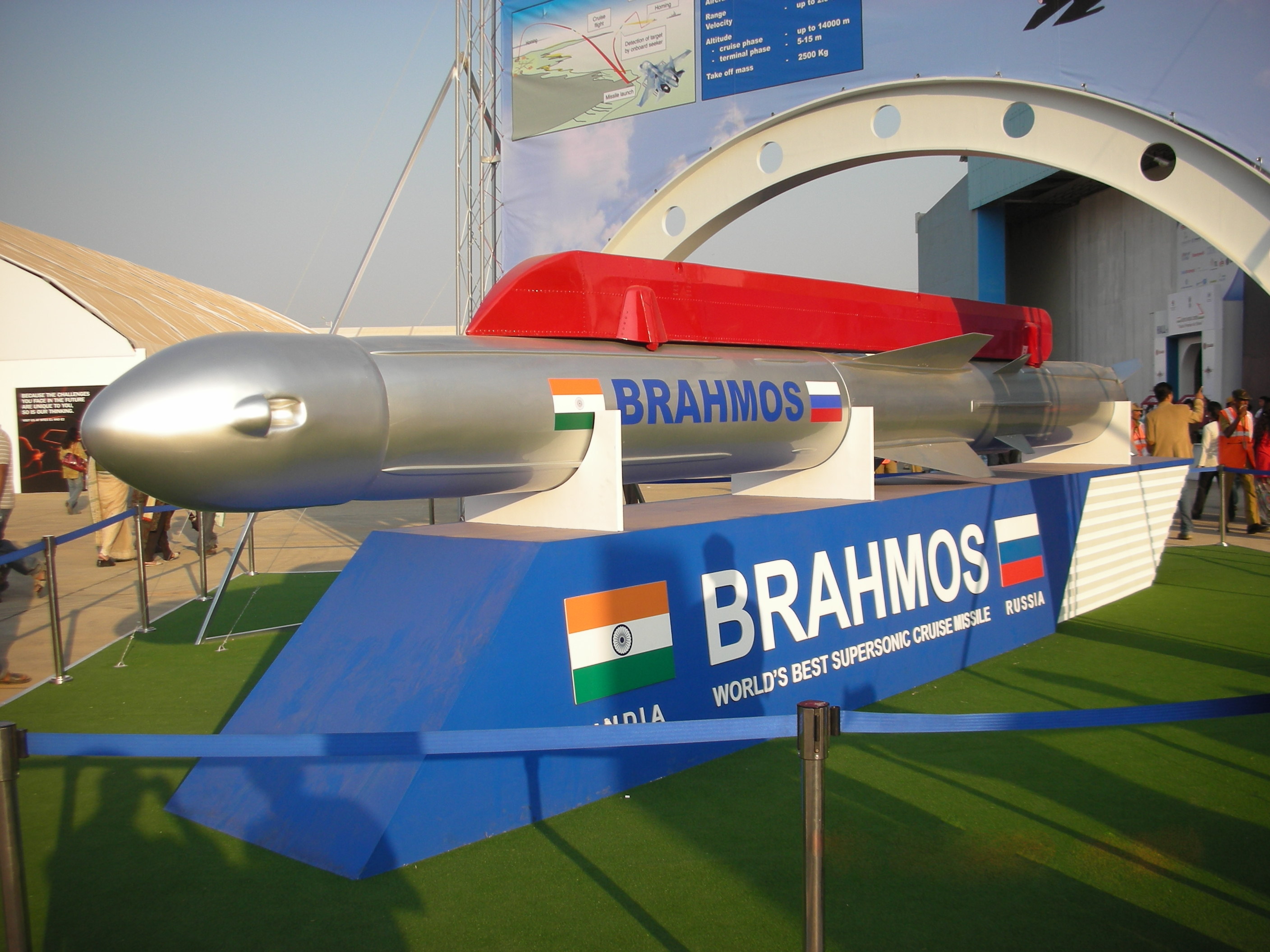
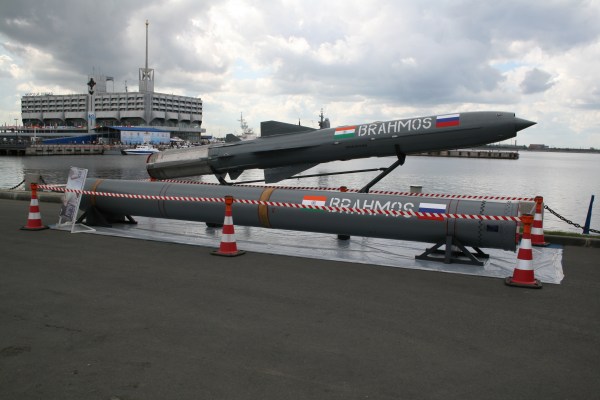
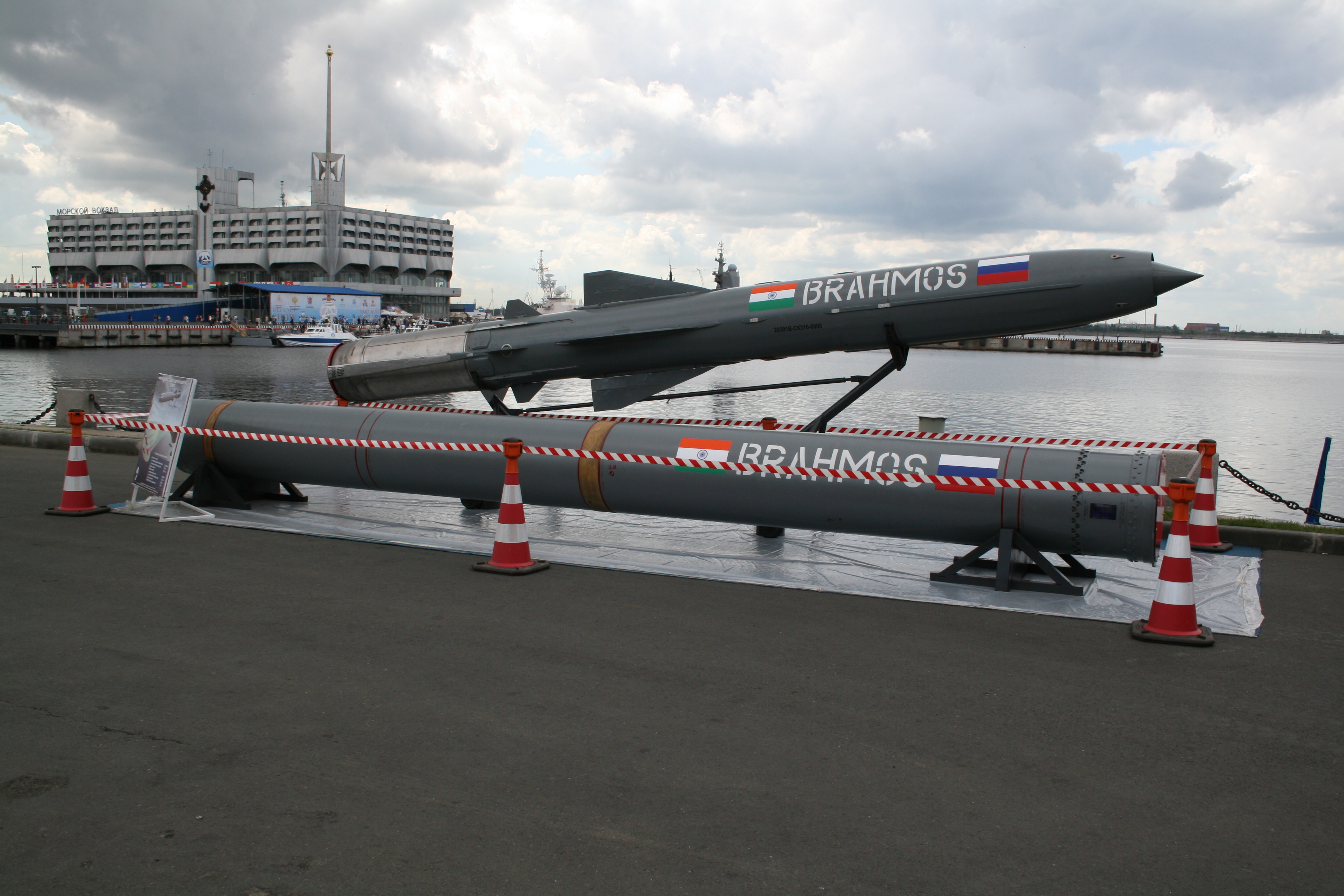
Brahmos_imds
Picture of India’s mighty missile.

IS BRAHMASTRA A NUCLEAR
WEAPON?

– S .Swaminathan, Tamil
Tutor, SOAS, University of London

Nowadays we see a lot of documentaries on television giving scientific or rational explanations for the Biblical events. But not many things in the Hindu epics or Puranas are explained in the same way. Any one with a scientific bent of mind or rational outlook can find explanations for most of the ‘unusual or abnormal’ phenomena or miracles. While I was working for the BBC World Service twelve years ago I had to interview one Indian doctor who had specialisation in Test Tube (IVF) Babies. Casually I mentioned that Gandhari also might have undergone IVF treatment to give birth to 100 children from the urns where the pieces of flesh were kept. But the doctor laughed at my suggestion.  I was surprised to read my view many years later when Mr Cho Ramaswamy started writing Mahaharata in his magazine ‘Tughlak’.

I am giving below some events from our epics and puranas and modern explanations for the same. They
may raise some questions such as ,Did they have all the modern equipment like today? or Are they just imagination or intuition about the future? I leave it to the judgement of the readers.

Dasavatara and Darwin

Many of us have noticed the similarity between Darwin’s Theory of Evolution and ten avataras of Lord Vishnu . Fish/matsya Avatara, Tortoise/kurma Avatara,, Boar/varaha Avatara, Man- Lion/narasimha Avatara,
Dwarf/vamana Avatara, then Rama, Parasurama, Krishna, Buddha(or Balarama) and Kalki avataras are equated with the life in the sea, amphibians, land animals, half man/half animal-semi civilised state, then full grown intelligent men. This is a reflection of Darwin’s Theory of Evolution. While I was writing this , a news item appeared in the British newspapers saying that the have found a fossil of 3 foot tall man. They also added that those people may be there even today in the remote forests. This justifies the Vamana (dwarf) avatara. We already know that there are pygmies in the Congo forests of Africa.
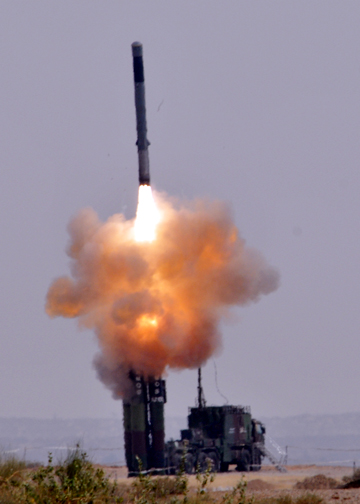
test fire
Brahmos Missile Test Fire.

One Indian scholar explains the Varaha Avatara as follows:

‘One is reminded of the meaningful story full of highly relevant symbolism from our Puranas,
centred round the incarnation of Lord Vishnu as the boar to restore the Mother Earth that had tilted and slipped into the depths of ocean. The moral is when human beings become oblivious of their responsibilities consequent on their inter connectedness and interdependence, God Almighty incarnates as Yagna Varaha-symbol of the principle of sacrifice. When our actions become self oriented and disjointed, breaking the natural inter relatedness, Truth gets devalued and there is atilt. Varaha(boar) comes to remind man of the urgency of bringing the sense of sacrifice into his actions, of raising them into Yagnas, so that harmony and strength are restored as also the balance.

Theory of Time Dilation

If a 16 year old person travels at the speed of light (186000 miles per second), that person will be a ‘Markandeya’ for ever. He will be young for ever. We came to know this fact only after the greatest physicist of our times Albert Einstein gave us the Theory of Relativity. But there is a story in our Puranas about Arjuna’s travel to Swarga (an alien planet?)  in Indra’s chariot driven by his driver Matali. When Arjuna came back to earth he saw people more aged than he expected. When he asked for explanation scholars told him that the time on earth was different from the time of the place he visited. Even now we read in the Puranas about Deva’s day, Manu’s day and Brahma’s day. They have different duration. No other religion in the world described ‘Time’ this way. The concept of time and the way we use adjectives like ‘Surya Koti samaprabha’/light equivalent to million suns show that our forefathers were aware of the modern concepts.
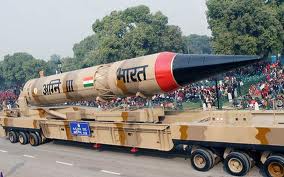
agni
Picture of Agni missile of India.

Futurology and Nuclear Winter

Vanaparvam of Mahabharata describes the end of the world. It says how the world will end at the end of Kaliyuga. It says that all the planets will be aligned in a single line. It also describes the climatic changes at the time. One cant miss the similarity between the nuclear winter (What will happen in the aftermath of a nuclear explosion) and the changed climate. Before reading about the nuclear winter I thought the epic describes some natural catastrophe. Now it is very clear that they describe only the nuclear winter.

Biology in Tamil

There is a proverb in Tamil ‘pulikku piranthathu poonaiyaguma? (Will a cub born to a tiger be a cat? ).The modern zoological classification says that both the animals belong to the same cat family. Did Tamils group both the animals in the proverb by sheer coincidence or did they know a scientific classification. Even the oldest Tamil book Tolkappiyam classifies all the living beings into six groups.
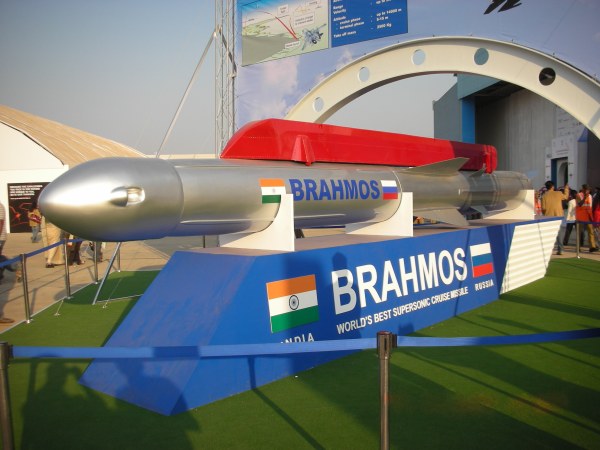
BrahMos

Brahmastra- a Nuclear Missile?

Whenever the use of Brahmastra is mentioned  in our scriptures ,the devastation it caused was also described in detail. They allowed it to use only once, that too only as a last resort. When they gave reason for it, they said that it kills the good and bad together and other living beings also. And we know that it was the most powerful weapon of the epic period. What is this weapon? Is it just a fire weapon or more than that? When we compare this with other weapons of Mahabaharata period such as the Shakti missile used by Karna, the Nagastra (Biological weapon?), Pasupatastra  etc it is very different from them. When Aswaththama and Arjuna released their Brahmastras, Krishna foreseeing the end of the world by such terrible weapons asked both to recall their weapons. When Arjuna did so, Aswaththama was unable to do it as he did not possess the requisite knowledge. At last Krishna had to use his power to save the child (Parikshit) in the womb of Uttara (from the radioactive fallout?) by using his special powers. 

Bhagiratha- a Great Engineer

The story of the descent of river Ganges to the ‘earth’ through Bhagiratha’s several thousand year penance is nothing but a marvelous engineering feat. Three decades ago when engineers wanted to build a dam across
river Nile in Egypt, they removed the massive Abu Simbel statues from the banks of the river and then a bomb explosion diverted the river Nile. The story of Bhagiratha bringing river Ganges to the earth clearly says that several of his forefathers also tried and failed in the mission. That is to say several kings tried to divert the Ganges which was running mostly on the Himalayan mountain but failed.  Bhagiratha with great ingenuity, diverted the river by breaking certain point in the Himalaya and the mighty river descended to the present Gangetic plains of North India. We must remember several thousand years ago there were no people on the Gangetic plains. This is what we read as the ‘descent of the river from sky to earth’. Population slowly spread eastward from the Indus plains. So we may call Bhagiratha the greatest engineer of the ancient world.

Did Agastya drink ocean?

Agastya was one of the greatest travelers of ancient India. He was mentioned in the Rig Veda and the Ramayana. He slowly moved southward and established an ashram at the western ghats-Pothya malai. There are lot of myths about him. All this can be explained scientifically. He did divert the river Cauvery to the present Chola mandala like Baghiratha. But in thousands of years it became a myth and we read a crow tilted the ‘kamandalam’ (pot) of Agastya and thus came River Cauvery.

Another story told about Agastya is that he traveled to the south at the behest of Lord Siva. It is
true that either Siva or a Saivite saint requested him to go to the south to disperse the population. The story of Siva’s(Meenakshi wedding) Tirulkalyanam makes it clear by  saying the overcrowding of the earth tilted the balance and Siva requested Agastya to go southward. Our fore fathers were such a great planners that they did what we are doing today-building satellite cities! This story is in Tiruvilayadal puranam and other books.

Did Agastya drink the ocean? Agastya was the first person to cross the Indian ocean for the first time to establish a great Hindu empire in South East Asia.  We now knew that there was a flourishing Hindu colony in Laos,Vietnam,Cambodia (Angorvat temple) Malaysia,Singapore and Indonesia (Borobudur Stupi) for 1300 years. Now they are all converted as Muslims. Like Columbus and Magellan, he crossed the ocean- that is he ‘drank’ the ocean! It is a symbolic story. Agastya’s statues are displayed through out South East Asian countries even today.

One another myth about Agastya is that he made the Vindhya Hill not to grow again. This is another
symbolic story to say that he crossed the Vindhyas for the first time through the ‘land route’. Before him North and South Indians used coastal sea routes. Tamil literature also makes it very clear in several places that Agastya came to the south with 18 groups of people and he was the one who codified a grammar for Tamil.

Jarasandhan-Siamese Twins?

Jarasandhan was born to two mothers and he came as two balls of flesh. The left and right     sides (child) were thrown into a dustbin by the queens in disgust and fear and a rakshasi (wild shaman woman) by name Jara picked it up and gave it to the king after joining both the parts .The fact is one woman gave birth to a Siamese twins (two children joined together physically) and  threw it in to the bin. Somebody did some surgery successfully and gave the child in good condition back to the king.

I have counted and listed more than 20 abnormal children in the Mahabjharata. Several of them are
stories of cloning. Mandhata was born out of his ‘father’ says the epic. Another story says that Vaidharbi gave birth to a squash fruit and it was divided into several parts and kept in urns. They became sons. The stories of Shisupala, Sikandi and Sthunakarna talk about organ changes. Vashista and Agastya were born in ‘pots’(Kumba Muni or Kumba Yoni). If we remove all the myths about all these miracle children we see clear medical treatment or surgeries/operations!

Who discovered Boomerang?

All of us knew that the Australian aboriginals had a weapon called Boomerang which will come back to
the person who shoots it. But Krishna’s Sudarsana charka also did the same .Whenever Lord Krishna used it, it came back to him. Was it the first boomerang weapon? Did Krishna teach this art to the world?

Miracle or Solar eclipse?

On the fourteenth day of the 18 day Mahabharata war, Arjuna vowed that he would kill Jayadrathan  before sunset or commit suicide. Unfortunately Arjuna couldn‘t kill him. But the story is that Krishna created false sunset using his Sudarsana charka (disc). If we look closely at this event it is nothing but a solar eclipse. The sun light faded for some time because of the eclipse. When all prepared for the withdrawal of the army for the day, the sun came out and Arjuna killed the unguarded Jayadratha. In those days they didn’t fight after sunset.

What I have given here is only very little. If we take the fields of Medicine, Mathematics,
Psychology  ,The power of mind/brain, Extra Sensory perception etc. we may write volume after volume. But I wish someone analyses all such events and publish their findings well before the western scientists reveal them. No one will appreciate if we keep on comparing every new invention with the writings in our old literature.

contact swami_48@yahoo.com
Pictures are inserted on 26th March 2014 in the original article. The article was written ten years ago for the South Indian Society UK (London) magazine.

********
Amazing power of human mind

You Are What You Think
Santanam Swaminathan, London

Human mind has amazing powers. But many of us do not realize this. Our epics and Puranas illustrate the power of mind with beautiful stories. Every person creates some kind of vibration. Some people are pleasure to be with. They seem to have a certain energy that they share with others. Then there are those who are negative and depressed; they seem to draw energy out of others. The reason for this is that there is a power contained in thought. It is very subtle, yet it does exist and is extremely powerful. ‘’Every thought has weight, shape, size, form, colour, quality, and power. An experienced yogi can see this directly with his inner eye. Just as an apple can be given to your friend, or taken back, so also it is possible to give a useful, powerful thought to someone and take it back.’’-says Swami Vishnu Devananda.

Many of us know that we are what we eat. But only a few people knew we are what we think. Lord Krishna in Bhagavad Gita says,’’Let a man lift himself by himself: let him not degrade himself: for the self alone is the friend of the self and self alone is the enemy of the self’(Chapter VI-Sloka 5;translation by Sarvapalli Dr S. Radhakrishnan).

The following six stories show that how a man can elevate himself simply by thinking something good.

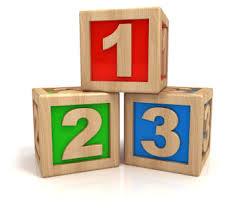
ekata Dwita Trita

STORY No.1
Trita is a great seer of ancient times who was well versed in the Vedas. His two brothers Ekata and Dwita who were less learned, accompanied Trita to various yagnas (Yagna: A fire Ceremony to please the god) and collected a lot of cattle between them. Once while out in a forest, Ekata and Dwita decided to take all the cattle for themselves and abandon Trita. They were then attacked by a wolf and all of them ran in different directions. Trita hid in a deep well and shouted for help, but Ekata and Dwita ran away from there in spite of hearing Trita’s cries for help.

Trita being unable to get out of the well by himself, decided to perform a yagna to please the gods. By sheer mental force he imagined the availability of various sacred articles he needed and then conducted such a stupendous yagna and the gods were pleased. They then arranged for his release and gave him a boon through which the well became very holy. This story is in Mahabharata (Parva 9, Chapter 36).

Here we see one who did a great yagna mentally.
By the way,look at the names in Sanskrit Ekta, Dwita and Trita which mean
No1,No 2 and No 3.

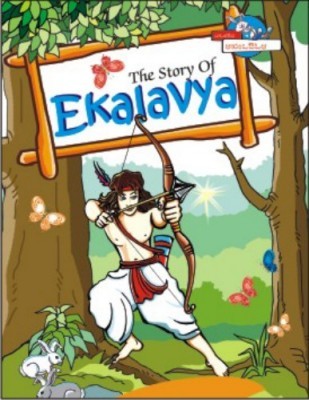
story of ekalavya

STORY No.2
Ekalavya was the son of Hiranyadhanu, a tribal chief. Having come to know of the greatness of Drona as a teacher, Ekalavya tried to enrol himself as a pupil. But Drona declined to accept him, because he was teaching the royals-Pandavas and Kauravas.
Ekalavya then went into the forest and erected a statue of of Drona. He imagined the statue as his guru and derived inspiration from the statue. He mastered the art of archery and became a great archer.

Once the Kaurava and Pandava princes saw a dog whose mouth had been skilfully closed by a number of arrows that he could not bark. Admiring this unique feat they looked around for the archer. They found out Ekalavya was the archer. When they enquired him who his teacher was, he told that he was a pupil of Drona. It came as a surprise for them. Arjuna was upset because he was told by Drona that he was his best student. But here he saw a person who excelled him in the art of archery. When Drona was informed of all these things, he came to Ekalavya. Ekalavya was thrilled to meet his ‘Guru’in person. But Drona demanded his right thumb as Guru Dakshina( Fees to Guru). Ekalavya did give his thumb without any hesitation. Without his right thumb he was not able to shoot the arrows as before. Here wee see one’s devotion to Guru and a person’s mental power to obtain any thing. He just imagined an earthen statue as his Guru and attained the unachievable for a layman. This story is also in Mahabharata(Parva1, chapter132).

pusalar2

STORY No.3

Here is story from the Tamil book ‘Periya Puranam’ about a saint who built a temple in mind and consecrated it mentally. Pusalar was born in a Brahmin family at Tiruvarur.
He was a great devotee of Lord Siva and he wanted to build a temple for Him. He sought every means to find the money required for this purpose but was unsuccessful. Nothing daunted, he resolved to erect a temple in his own heart. He gathered all the necessary materials to build a temple in his mind. He chose an auspicious day and laid the foundation stone and the temple rose slowly higher and higher day after day. When he finished it building mentally, he fixed a day for the great Kumbabishekam (ceremonial consecration).

About this time the all powerful Pallava king had built an actual temple at Kanchipuram-the famous Kailasanathar temple at Kanchi. He expended all his wealth on its construction. He fixed the same day for consecration of the actual temple. But Lord Siva appeared in his dream and told him that he could not come on the day because Pusalar Nayanar had built a temple and the Kumbabhishekan was on the same day. The king had to postpone his Kumbabishekam. But he became curious about the other temple built by Pusalar. The king travelled to Tiruninravur and asked the way for the temple. The people of the town told him that there was no new temple or any Kumbabhishekam in the town. The king told them that he had a dream and Lord Siva told him that there was a temple built by one Pusalar. When they brought Pusalar in front of him the whole story unfolded in full. Pusalar was thrilled to know that Lord Siva recognised his temple built in heart better than the temple built by the king in stone. Such is the greatness of thought power.

This is a marvellous story. It shows that our forefathers knew more about the mind than what the modern psychologists knew today.

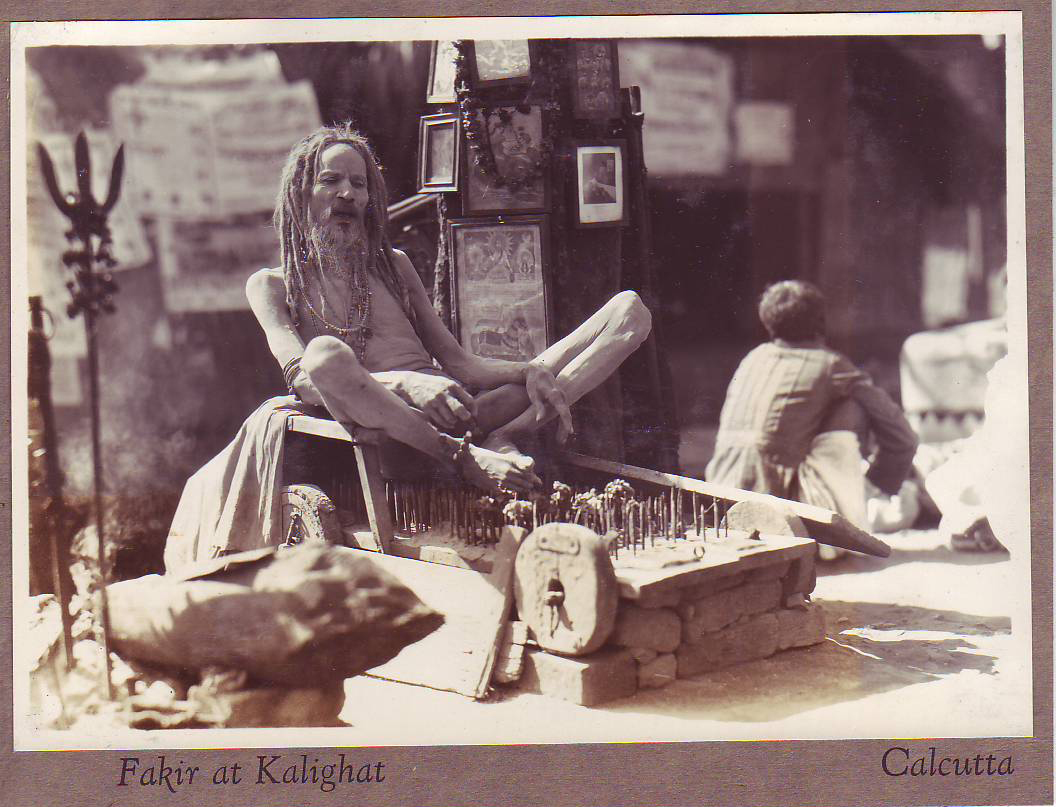
ascetic good

STORY No. 4

Here is a beautiful story narrated by Sri Ramakrishna Paramahamsa:
A saffron clad sanyasin(ascetic) dwelt by the side of a temple. There was the house of a harlot in front. Seeing the constant concourse of men in the prostitute’s house, the sanyasin one day called her, saying’’You are a great sinner. You sin day and night. Oh, miserable will be your lot in your next life’’. The poor prostitute became extremely sorry for her misdeeds, and with genuine inward repentance she prayed to god beseeching forgiveness. But the prostitution was he profession, she could not adopt any other means of earning her livelihood. And so, whenever her flesh sinned, she always reproached herself with greater contrition of heart and prayed to god for more and more forgiveness.

The sanyasin saw that his advice had apparently produced no effect upon her and started counting the number of people visiting her every day. He did it by putting one pebble stone for every customer in front of her house. In course of years it became a big heap.
He chided her now and then showing the heap of stones/her sins. Now she started praying more intensely asking for forgiveness. The final day came. By rare co incidence both the sanyasin and the prostitute died on the same day. The messengers of Yama(God of death) took the sanyasin to hell and the prostitute to the heaven!! The sanyasin was furious to see this and demanded for explanation. The messengers laughed at him and told him’’You passed your life in external show as a sanyasin. Your heart never sincerely yearned for god. You spent more time in counting the sins of others. But this poor prostitute earnestly prayed to god day and night, though her body sinned all the while. She was pure in heart. You were not pure in mind/heart.

This story lays more emphasis on good thoughts rather than good external rituals.

tales_of_narada_acl56

SDTORY No.5

Once Narada (messenger in the Heaven) approached Lord Vishnu and asked who his best devotee was. He expected the answer to put him as the best. But to his surprise Lord Vishnu said that Arjuna was his best devotee. Narada was not satisfied with his answer. The Lord knew what went in Narada’s mind. Narada doubted the integrity and impartiality of the Lord. So Lord showed Narada two heaps of flowers and started explaining ‘’Look at the small heap of flowers. That is yours. What you have offered me all through your life is saved there. Look at the hill of flowers there. That is Arjuna’s. Now Narada became even more suspicious. He boldly opened his mouth to say, Well, I am Triloka Sanchari (Traveller of the three worlds). I have never seen Arjuna doing Puja (flower offering) to you. How do you explain this hill of flowers? Then Lord told him, you do the puja with your hands with great pride in your mind. But Arjuna does it in his mind. Whenever and wherever he sees beautiful flowers, he dedicates them to me saying ‘Krisna arpanam astu’(Let all this go to Krishna). Narada realised that open rituals are far inferior to great mental purity.

astrologer
STORY NO.6
Here is another story from the excellent magazine called Tatvaloka (March 2004):
There was a famous astrologer in a village who mastered the art of astrology and palmistry. One day a farmer came to see him to know about his future. The astrologer examined the lines on his palm and found out that he might die in an accident that day. He did not like to reveal this to the farmer, as that would shock him. So he told the farmer to come and see him the next day. While the farmer was on his way home, there was heavy rain with thunder and lightning. The farmer took shelter in a temple of Lord Siva. When he saw the temple in ruins, he said to himself, ‘’if I was rich I would have renovated this temple.’ Then he started imagining the renovation and reconstruction of the temple. He was mentally constructing a new temple tower and a huge corridor, with carved pillars. But he was brought out of his dreamy status by the hiss of a cobra coming out of a hole in the broken wall.

His imagination of building a temple broke to pieces and he ran out of the dilapidated temple to save his life. The next moment a massive lightning struck the temple and the huge edifice, heavy stone pillars, all collapsed.. The farmer thanked the god for saving him and next day he met the astrologer. ‘’Your palm lines indicated a danger for your life yesterday. You should have accumulated great amount of punya by constructing a temple and so you are alive today. The farmer realised the mercy of god who had granted him his life for building an imaginary temple. Every good thought is considered by god as a good deed and one gets the benefit of it.

Who is Chitra Gupta?

Every thought counts. Our grandmas and grand dads say that Yama’s accountant maintain the accounts of sins and meritorious deeds of all human beings.
Yama’s accountant is Chitra Gupta. Translated in to English it means ‘’hidden picture’’.
That is our thoughts. It is like Issac Newton’s law of motion- there is an equal and opposite reaction for every action. Our thoughts are accounted. On the final day you are rewarded or punished. How scientific is Hinduism!!!

Let us all Think Good. Let us all Aim High.
************************************************************************