Three lesser-known Tamil Philosophic Poets (Post.16,294)

Written by London Swaminathan

Post No. 16,294

Date uploaded in London – 11 October 2026

Contact – swami_48@yahoo.com

Pictures are taken from various sources for spreading knowledge.

this is a non- commercial blog. Thanks for your great pictures.

tamilandvedas.com, swamiindology.blogspot.com

xxxx 

OZIVIL ODUKKAM BY KANNUDAIYA VALLALAR;

GNANAMIRTHAM BY VAGEESAR;

KAIVALYA NAVANEETHAM BY THANDAVARAYA SWAMIGAL;

About seventy years ago A V SUBRAMANIYA AYYAR wrote a short book titled THE POETRY AND THE PHILOSOPHY OF THE TAMIL SIDDHARS, year 1957. Of the famous 18 TAMIL SIDDHARS, only Tirumular is known to many Tamil devotees. He was the only one recognised by Tamil Saivites; others are treated as iconoclasts though they were also Siva devotees. Apart from the Tamil Siddhars, there are other great saints like Pattinathar and Thayumanavar and later Vallalar Ramalinga Swamikal. Because of a clash between famous Saivite scholar Arumuga Navalar and Vallalar, his Thiru Arutpa is also rejected by Saivite scholars and Saivite Adeenams. Later years produced some Tamil philosophic poets, and they are not known to many devotees. Thanks to AVS Ayyar, a short summary of their works is available.

ஒழிவில் ஒடுக்கம் – கண்ணுடைய வள்ளலார் ;

ஞானாமிர்தம் – வாகீசர்;

கைவல்ய நவநீதம் – தாண்டவராய சுவாமிகள்

Swami Omkarananda of Theni Vedapureeswara Ashram made the Kaivalya Navaneetham a popular through his excellent talks. They are available on You Tube and CDs released by the Ashram in Theni, Tamil Nadu.

Here is what AVS Ayyar says,

1

There are three outstanding works, which are technically outside the range of Siddhar literature., but which deserve special mention as constituting philosophic poetry of the highest quality with considerable literary value. These are the Jnanamirtham of saint Vagisar, Olivilodukkam of Kannudaiya Vallalar and Kaivalya Navaneetham of Thandavaraya Swamigal. These works are not generally considered to be part of Siddhar literature, but their content and conclusions, developed with argument and force in a terse and vigorous poetic style, emphasize in the main, the outlook and the general philosophy for which the Siddhars stood. There is an essential unity between the look on life here and hereafter and that of the Siddhars.

(Pronunciation guide- Vagisar= vaageesar; Jnanamirtham = jnaanaamirtham ).

Vagisar, the author of Jnanamirtham was a philosopher who lived probably in the 12th or 13th century. His work is one of the most profound philosophical treatises in Tamil literature. It contains about 75 poems; all of them are in Ahaval metre in which all the stiffness of the ancient usage has been retained.  In spite of this, the poet has shown extraordinary command over the Ahaval form and has made his style and diction vigorous and somewhat smooth.

The poem stresses the importance of the path of Jnana for salvation and leans toward the Saiva Sidhdhanta system in its philosophy. It contains an indictment of the life of senses and also a powerful plea for a virtuous life and avoidance of all evil. A brilliant exposition of the doctrine of Karma is found in a number of poems, in which it has been maintained, with illustrations from the Itihasas and Puranas, that even Jnanis are not exempt from the influence of Karma. The attributes of those who have attained spiritual realization have been described with imagination and power. Their state of bliss is as ineffable, says the poet, as that of the union of a lover and his beloved and can be known only to those who have enjoyed it. Quite a number of lyrics in this work have outstanding poetical qualities, though they deal with abstruse philosophy.

2

Kannudaiya Vallalar  was a Saiva mystic, who lived in the 14th or 15th century. His work Olivilodukkam, which contains a little over 250 stanzas in Venba metre, is one of the most thoughtful and philosophic poems in Tamil literature. It is an endless mine of intellectual similes. Compared with his merciless sarcasm on all kinds of idolatry, the words of Sivavakkiyar and others, so frequently quoted,  are the tamest of the jejune platitudes. Sivavakkiyar adopted the language of the common man and wanted to appeal to him while Kannudaiya Vallalar has written for the cultivated reader. That explains the real difference between them.

Whatever that may be, Olivilodukkam is a highly intellectual poem. its verses have excellent form and are pregnant with thought and meaning. There is an introductory stanza (Paayiram), which has called forth an elaborate commentary from Ramalinga Swamigal . the poem lays greater emphasis on Jnana than Yoga, Bhakti or Karma. In a magnificent stanza that contains beautiful similes, the poet has drawn a fine picture of the joy of the soul that has divested  itself of Avidya or ignorance and seen light. He does not believe in idol worship and condemns false ascetics. That the ultimate condition of bliss which a Vedantin or Sidhdhantin enjoys is one and the same is pointed out by this philosopher. He pays a glowing tribute to Pattinathar and Bhadragiriyar and holds them up as the highest examples of renunciation. Those who have attained the supreme spiritual state, form a class of supermen by themselves. They have neither name nor caste nor religion; they are merely embodied souls. The mystic and philosophical teachings of this poem which are enshrined in splendid poetry unmistakably  gives the author a high place among the Tamil Sidhdars in the general sense of that term.

3

The Kaivalya Navaneetham of Thandavaraya Swamigal, who lived than later than the two philosophers mentioned above, is a poem that expounds pure Vedantic Advaitism. It is more well known than the other two works mentioned above. It contains nearly 300 stanzas in two sections; the first expounds philosophic principles and the second clarifies possible doubts. The poem is in the form of an exchange of views between the Guru and his Sishya. The poem is intellectual and argumentative and as such, from a purely literary point of view, it is inferior to the other two poems. Most of its verses are only pedestrian; but as a clear and lucid summary of Advaitic philosophy in simple and forcible language in readable verses, it is unrivalled and masterly. The familiar and well known arguments of the Vedantin are marshalled with cogency and insight. 

A V S Ayyar has given some verses in Tamil to illustrate his points. He has also given inscriptional evidence to find the approximate dates of the poets.

All the three poems must be given more publicity.

–subham—

Tags- Three, lesser-known, Tamil Philosophic Poets ,OZIVIL ODUKKAM , KANNUDAIYA VALLALAR;GNANAMIRTHAM , VAGEESAR;KAIVALYA NAVANEETHAM , THANDAVARAYA SWAMIGAL, ஒழிவில் ஒடுக்கம் , கண்ணுடைய வள்ளலார், ஞானாமிர்தம், வாகீசர், கைவல்ய நவநீதம், தாண்டவராய சுவாமிகள்

Four Crores verses in one day?! (Post No.15,488)

WRITTEN BY S NAGARAJAN

Post No. 15,488

Date uploaded in Kumbakonam, India – 12 March 2026

Contact – swami_48@yahoo.com

Pictures are taken from various sources for spreading knowledge.

this is a non- commercial blog. Thanks for your great pictures.

tamilandvedas.com, swamiindology.blogspot.com

xxxx

 Four Crores verses in one day?! 

S. Nagarajan 

The Tamil literature is a vast treasure, and it is not possible to learn all this literature in one lifetime.

Avvaiyar is a great female poet of Sangam period. She is belonging to the first century BCE.

 She was respected by one and all in the Tamil country. She travelled widely from one point of the country to the other point inspiring people with her fantastic poems.

 All the kings were delighted to have Avvaiyar in their court. They used to ask several questions and used to get amazing answers.

 Once Avvaiyar went to Pandiyan kingdom and the king welcomed her with respect.

 When the court assembled one mischievous person asked Avvaiyar, “You are great! Could you compose four crores’ poems in one day?”

 All were stunned on hearing this mischievous question.

 But Avvaiyar laughed, “Why not? I will recite four crores poem tomorrow.”

 Everybody was worried how Avvaiyar could compose four crores’ verses in one day.

Avvaiyar took rest and there was no action on her part to compose any poem.

 Next day when the court assembled the King asked, “Madam, have you got four crores’ poems? There is no cart to carry all the four crore palm leaves contain the verses?’

 Avvaiyar unfolded her small bag and took one palm leaf, and said, “This is enough to answer the question raised by the person yesterday.”

All were eagerly looked her face.

She started reading her poem from the palm leaf.

The poem consisted of four lines.

She read one by one.   

Not stepping into the place of those who is not respecting you is equals to a crore.

 Not taking food in those persons’ home who have not invited you with whole heart is equals to a crore.

 To get a friendship of person from a noble lineage even by giving one crore equals to a crore.

Not allowing your tongue swerving from truth even one is offering crores and crores to you equals to a crore.

 Everyone was wonderstruck on hearing this four crores poem. The person asked for four crores only. But Avvaiyar used many crores in her verse and the king was so pleased that he bows down before Avvaiyar.

 Even to this day, the four-crore poem is very famous in Tamil World. And Avvaiyar is being honored by every Tamil speaking people till this day.

 In 1991, a 20.6-kilometer-wide crater in Venus was named after her by the international Astronomical Union.

 Her famous quote, “What you have learned is a mere handful; What you have not learned can be compared to the size of the world” is included in NASA’s Cosmic Questions Exhibit.

 **

Interesting Chemistry Anecdotes (Post No.5369)


Compiled BY LONDON SWAMINATHAN

Date: 27 August 2018


Time uploaded in London – 16-11 (British Summer Time)


Post No. 5369


Pictures shown here are taken from various sources including google, Wikipedia, Facebook friends and newspapers. This is a non- commercial blog.


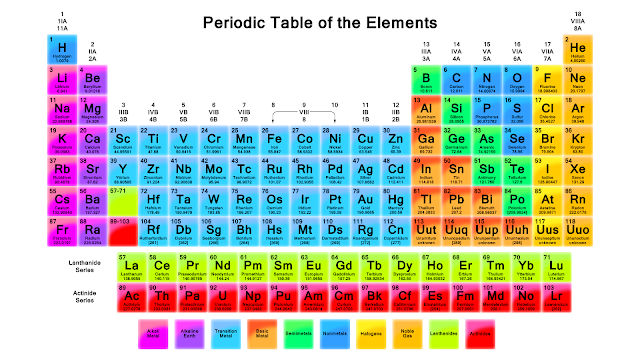
From very young age I was very much interested in the Periodic Table. At one time I memorised all the elements in the periodic table. Then I bought The Russian series of Physics for Entertainment, Mathematics for Entertainment, Chemistry, astronomy boos in the same series. Now I started reading another book which I bought ten years ago. Still I am toying with my pet theory or hypothesis that there is a periodic table for all subjects. God has created the world in a mathematical order which we see in the phyllotaxy of the plants and Fibonacci numbers.

Let me give you some interesting anecdotes from ‘Nature’s Building Blocks’ by John Emsley OUP, 2001

Xxx


Berkelium Jokes
The discovery of berkelium caught the attention of The New Yorker magazine which saw it as part of a growing number of new elements and jokingly suggested the University of California at Berkeley had missed a golden opportunity to immortalize itself for ever on the Periodic table. The article said that they should have named the sequence of trans -uranium elements ‘universitium’, ‘ofium ‘, ‘californium ‘ and ‘berkelium ‘.
Seaborg replied to the article, saying that they had thought this but this would open door to someone in New York discovering the next two elements naming them ‘newium, and ‘yorkium’. The New Yorker retorted that they were already hard at work on the new elements, but so far all they had was their names.

Xxx

Aluminium Mysteries
Analysis of a curious metal ornament removed from the tomb of Chou Chu, a military leader in the third century China, showed that it was 85% aluminium. How it was produced remains a mystery.
As long ago as the first century CE, the Roman army doctor Dioscorides wrote a medical text De Materia Medica , in which he recommended alum for stopping bleeding and for various skin conditions such as eczema, ulcers, dandruff etc (ALUM= aluminium compound)

Gems and aluminium
Several gem stones are made of the clear crystal form of aluminium oxide known as corundum. The presence of traces of other metals creates various colours:-
Iron producers yellow Topaz
Cobalt create blue Sapphires
Chromium makes red Rubies
All these are now easy and cheap to manufacture artificially.

Xxx


Emeralds of India
Emeralds have been traded since the time of ancient Egyptians and are to be found in early jewellery across Europe, including that of the Celts. The Romans and Celts got their emeralds mainly from Austria, although some came from Pakistan.

More surprising is the discovery that the Mogul rulers of India got some of their emeralds from South America. Analysis of gems from the treasure of the eighteenth century Nizam of Hyderabad showed they were of Colombian Origin; this has been interpreted to mean that there was trade across the Pacific Ocean by Spanish vessels which carried emeralds to their colonies in the Philippines, from where they eventually reached India.

Xxx


Poem about Periodic Table
There is antimony, arsenic, aluminium ,selenium ,
And hydrogen and oxygen and nitrogen and rhenium,
And nickel, neodymium, neptunium, germanium
And iron, americium, ruthenium, uranium ,
Europium, zirconium, lutetium, vanadium,
And lanthanum and osmium and astatine and radium ,
And gold and protactinium and indium and gallium,
And iodine and thorium and thulium and thallium,
There’s yttrium, ytterbium, actinium, rubidium,
And boron, gadolinium, niobium, iridium,
And strontium and silicon and silver and samarium,
And bismuth, bromine, lithium, beryllium ,barium,
There is holmium and helium and hafnium and erbium,
And phosphorus and francium and fluorine and terbium
And manganese and mercury, molybdenum, magnesium,
Dysprosium and scandium and cerium and caesium,
And lead, praseodymium, and platinum and plutonium ,
Palladium, promethium, potassium, polonium
And tantalum and technetium, titanium, tellurium,
And cadmium and calcium and chromium and curium,
There’s sulphur, californium and fermium, berkelium,
And also mendelevium, einsteinium and nobelium,
And argon, krypton, neon , radon, xenon, zinc and rhodium,
And chlorine, cobalt, carbon ,copper, tungsten, tin and sodium
These are the only ones of which the news has come to Harvard
And there may be many others, but they haven’t been discavard.
Tom Lehrer wrote this amusing poem in the 1950s. He entertained a whole generation of chemists when he sang his poem to the tune of the song ‘I am the Very Model of a Modern Major General from Gilbert and Sullivan’s operetta ‘The Pirates of Penzance’.

Xxx SUBHAM Xxx