பாரதி போற்றி ஆயிரம் – 86 (post No.4981)

COMPILED by S NAGARAJAN


Date: 6 MAY 2018


Time uploaded in London –  5-28 AM   (British Summer Time)


Post No. 4981


Pictures shown here are taken from various sources such as Facebook friends, Books, Google and newspapers; thanks. Pictures may be subject to copyright laws.


WARNING: PLEASE SHARE MY ARTICLES; BUT DON’T SHARE IT WITHOUT AUTHOR’S NAME AND THE BLOG NAME. BE HONEST; OTHERS WILL BE HONEST WITH YOU


பாரதி போற்றி ஆயிரம் – 86

  பாடல்கள் 852 முதல் 883


கவிதை இயற்றியோர்: பல்வேறு கவிஞர்கள்

தொகுப்பு : ச.நாகராஜன்

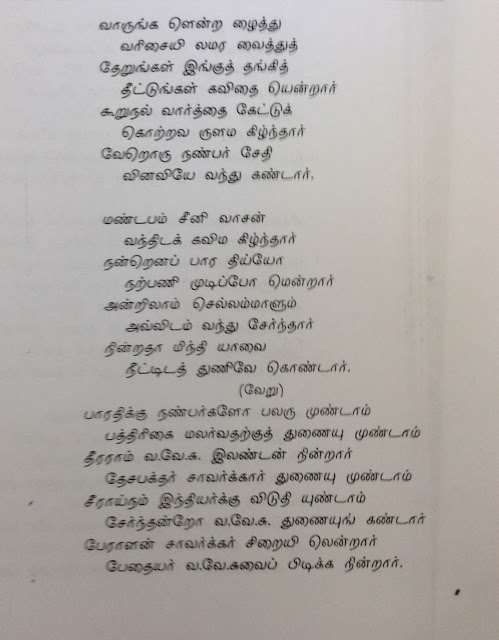
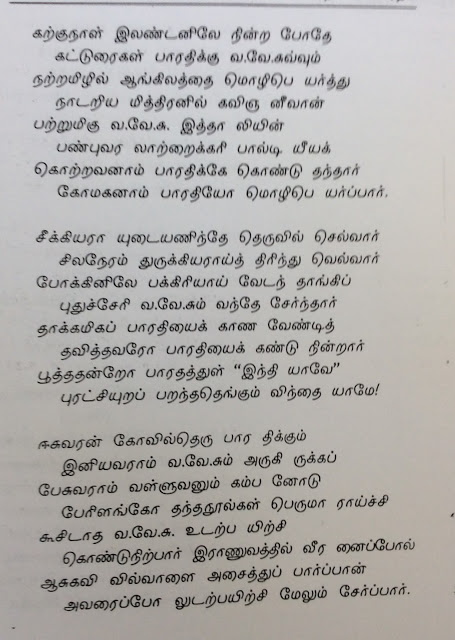
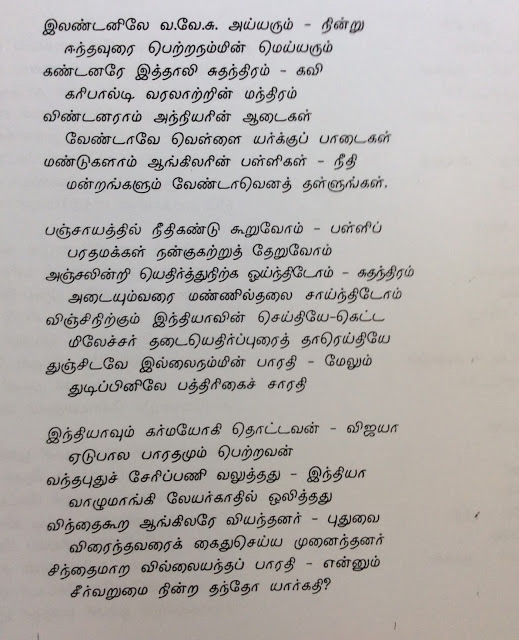
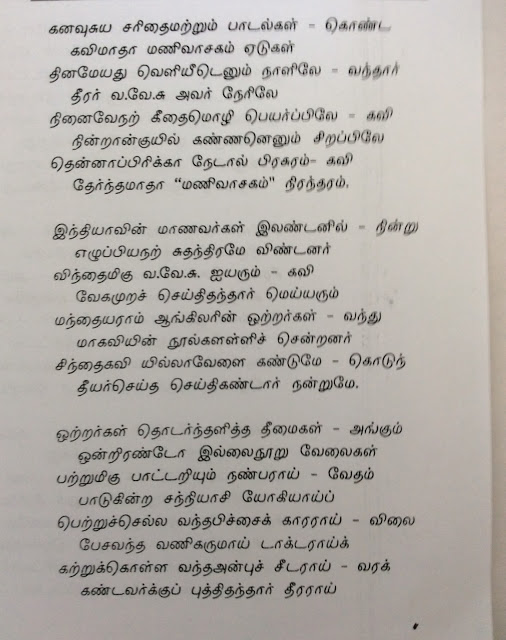
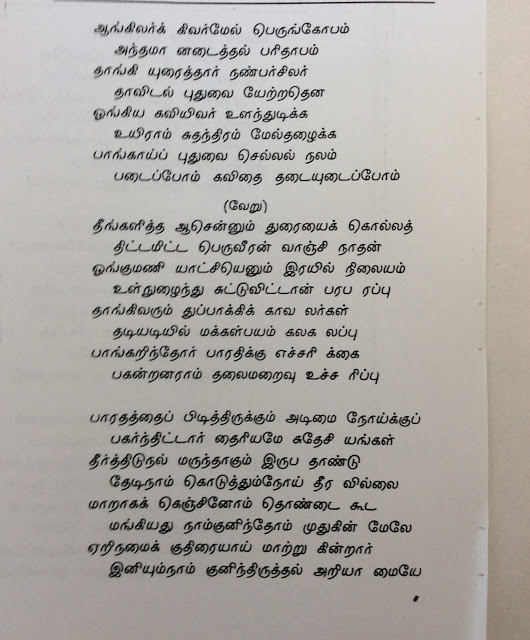
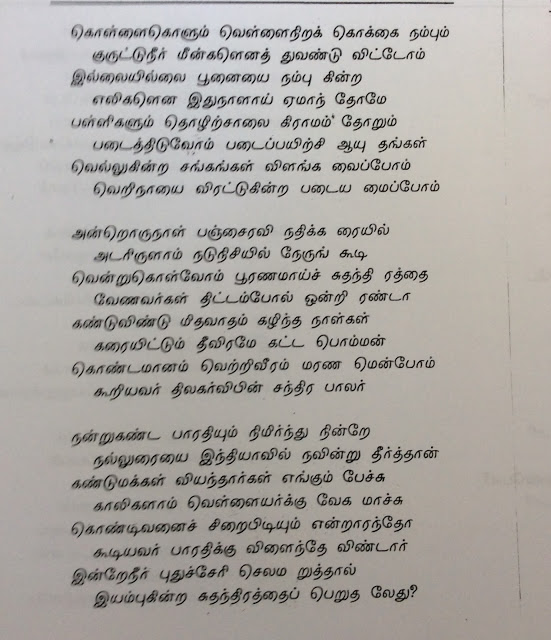
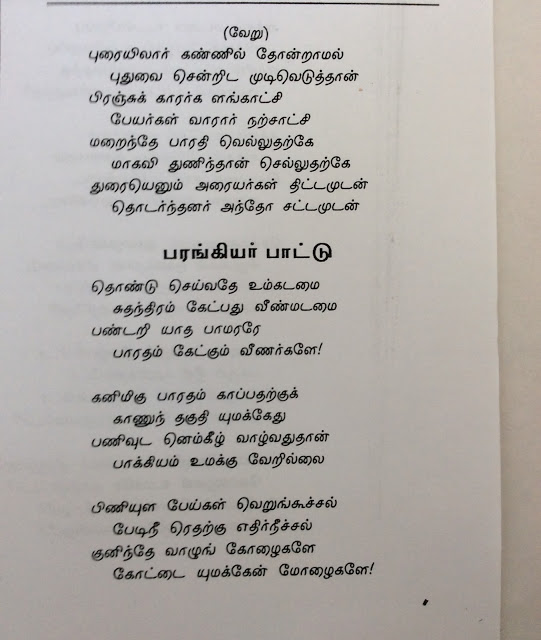
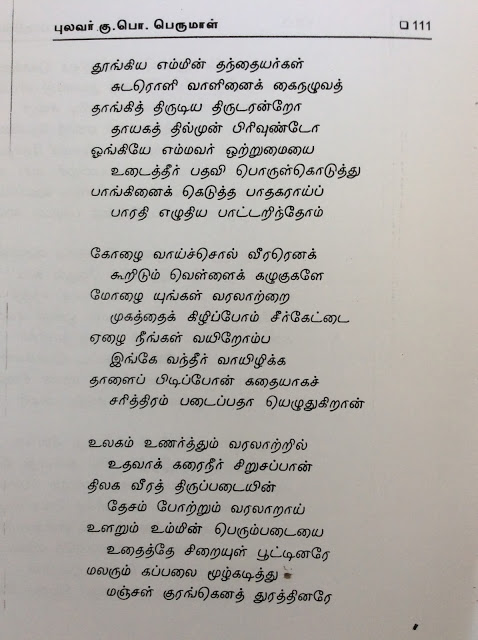
புலவர் கு.ப. பெருமாள் இயற்றிய       பாரதியின் “பா”ரதம்

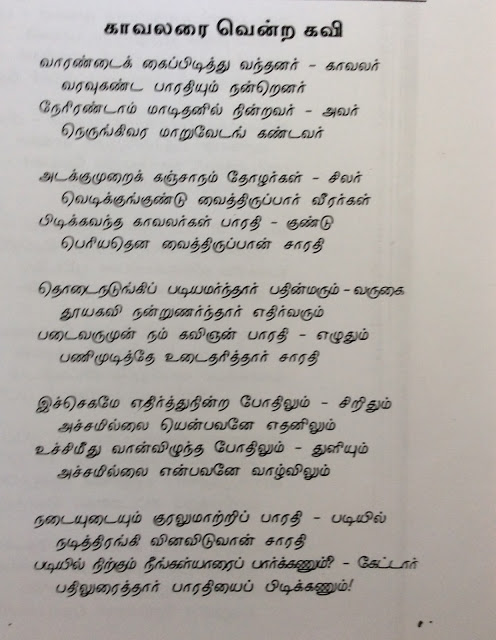
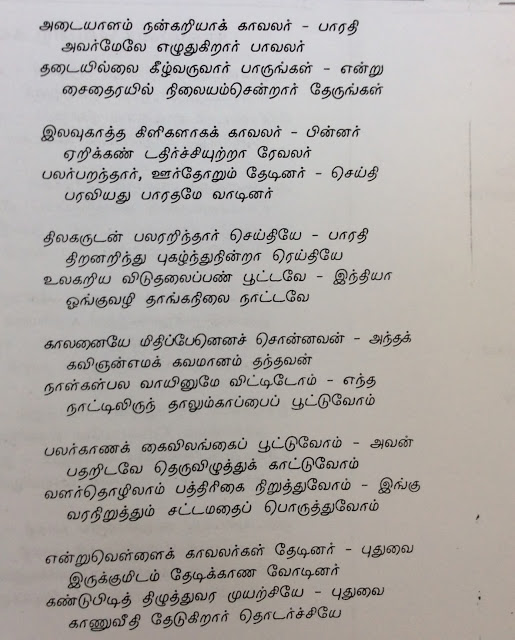
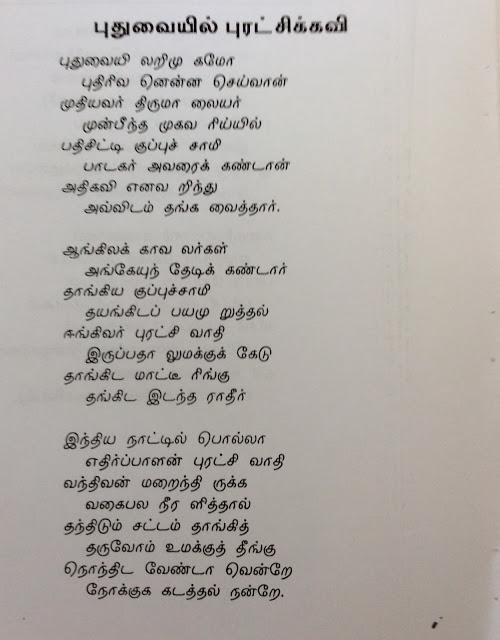
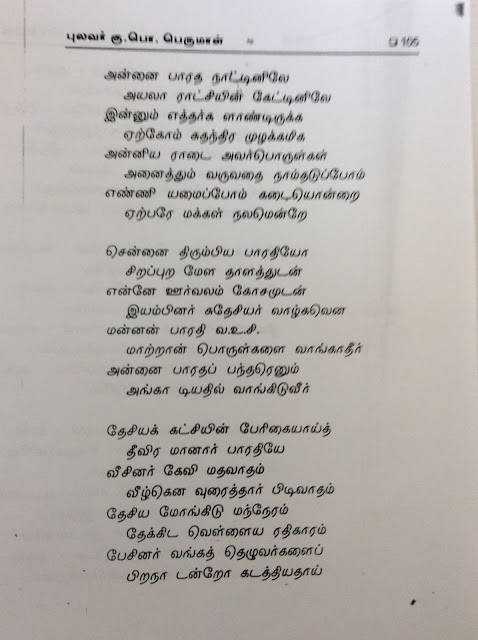
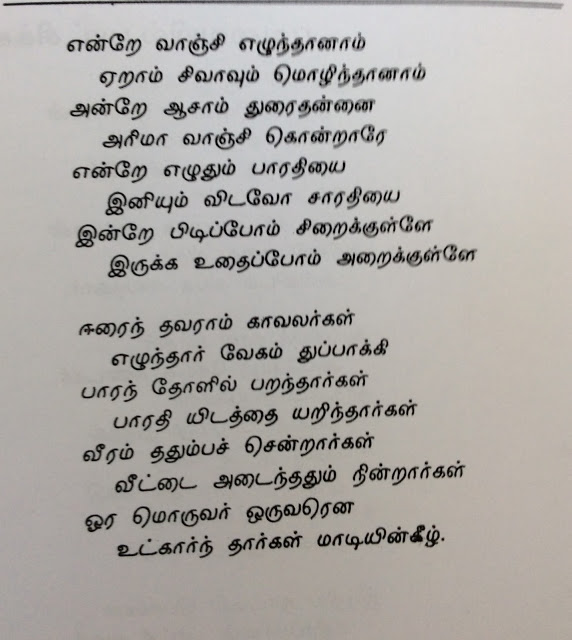
இந்த பாரதியாரின் வரலாற்று நூலில் பல அத்தியாயங்கள் உள்ளன. நூலை முழுவதுமாகத் தர இயலாத நிலையில் தேர்ந்தெடுத்த கவிதைகள் இங்கு அளிக்கப்படுகின்றன. இங்கு காவலரை வென்ற கவி என்ற அத்தியாயத்தில் உள்ள 11 பாடல்களையும் புதுவையில் புரட்சிக்கவி என்ற அத்தியாயத்தில் முதல் 21 பாடல்களையும் படித்து மகிழலாம். நூலின் பக்கங்களை அப்படியே காணலாம்.

இணைப்பாகத் தரப்படுபவை :

காவலரை வென்ற கவி – 11 பாடல்கள்

புதுவையில் புரட்சிக்கவி – முதல் 21 பாடல்கள்


தொகுப்பாளர் குறிப்பு:
புலவர் கு.பொ.பெருமாள் பல்வேறு சந்தங்களில் மரபு நிலை மாறாது பாடல்களை யாத்துள்ளார்.

இவரைப் பற்றிய குறிப்பு ஏற்கனவே தரப்பட்டுள்ளது.

திண்டுக்கல் மாவட்டம் வேடசந்தூர் மாவட்டம் புளியம்பட்டியில் இருக்கும் புலவர் பதிப்பகம் இந்த நூலை வெளியிட்டுள்ளது.

கவிஞர் கு.பொ.பெருமாள் அவர்களுக்கும் புலவர் பதிப்பக உரிமையாளருக்கும் நமது நன்றி

***


More Loans and Banks Anecdotes (Post No.4980)

Compiled by London Swaminathan 


Date: 5 May 2018


Time uploaded in London – 9-02 am (British Summer Time)


Post No. 4980


Pictures shown here are taken from various sources such as Facebook friends, Books, Google and newspapers; thanks. Pictures may be subject to copyright laws.


WARNING: PLEASE SHARE MY ARTICLES; BUT DON’T SHARE IT WITHOUT AUTHOR’S NAME AND THE BLOG NAME. BE HONEST; OTHERS WILL BE HONEST WITH YOU


Written by London Swaminathan 


Date: 5 May 2018


Time uploaded in London – 8-32 am (British Summer Time)


Post No. 4980


Pictures shown here are taken from various sources such as Facebook friends, Books, Google and newspapers; thanks. Pictures may be subject to copyright laws.


WARNING: PLEASE SHARE MY ARTICLES; BUT DON’T SHARE IT WITHOUT AUTHOR’S NAME AND THE BLOG NAME. BE HONEST; OTHERS WILL BE HONEST WITH YOU

  
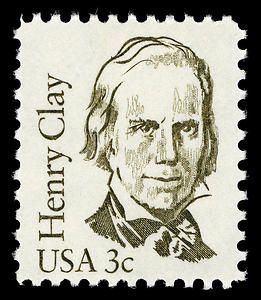
It is said that Henry Clay once asked the Riggs Bank for a 250 dollar loan on his personal note There was no reflection upon his credit , the bank replied, but it was a necessary formality in connection with this particular institution to have an endorser
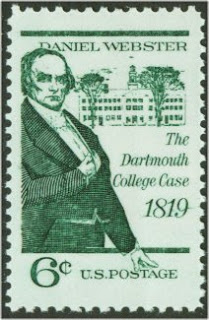
Clay happened upon Daniel Webster and asked him if he would be kind enough to indorse for him.
Certainly, said Webster, but look here, I need some money myself. Why not make the note dollars and you and I will split it.
This was done, and to this day the note is in the Riggs Bank, unpaid.
Xxxx


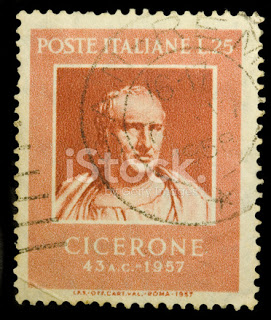
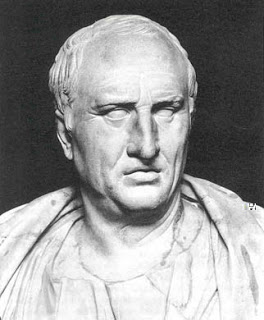
Cicero and Cato

According to Cicero, when Cato (Roman Statesman 95 BCE) was asked what was the most profitable feature of an estate, he replied
Raising cattle success fully;
What next to that?
Raising cattle with fair success.
And next?
Raising cattle with but slight success
And fourth?
Raising crops.
And when his questioner said, How about money lending?
Cato replied, How about murder?

Xxxx

Chicago Bank Directors


A stranger in Chicago, a New Yorker ,stopped a little boy and asked him the way to Fifth National Bank, adding, Direct me there, son, I will give you a dollar.
Suppressing a grin the boy replied,
Ok boss, just follow me.
About half a block farther, the boy stopped and pointed to building nearest to them
Here you are, sir.
The man chagrined by his gullibility handed the boy the dollar but couldn’t help saying, That certainly was an easily earned dollar
That is right, said the boy, but don’t forget that bank directors in Chicago are highly paid.

Xxx


More Vice Presidents!

A man working as a teller in a bank bumped into an old friend of his one day.
Seeing that the bank teller seemed very preoccupied, the friend said,
What is the matter with you?
Well, there’s a lot of trouble down at the bank. We are going through a complete reorganisation
Why?
It seems we had more Vice presidents than depositors, replied the bank teller as he walked away.

Xxxx  SUBHAM xxx

பாரதீய ஜனதா இல.கணேசன் ‘ஜோக்’குகள் (Post No. 4979)

Written by London Swaminathan 


Date: 5 May 2018


Time uploaded in London – 5-36 am (British Summer Time)


Post No. 4979


Pictures shown here are taken from various sources such as Facebook friends, Books, Google and newspapers; thanks. Pictures may be subject to copyright laws.


WARNING: PLEASE SHARE MY ARTICLES; BUT DON’T SHARE IT WITHOUT AUTHOR’S NAME AND THE BLOG NAME. BE HONEST; OTHERS WILL BE HONEST WITH YOU


முன்னொரு காலத்தில் மதுரையில் ஆர்.எஸ்.எஸ். பிரசாரக்காக இருந்தவர் இல. கணேசன்; அவர் இப்பொழுது பாரதீய ஜனதா எம்.பி. இந்திரா காந்தி  (Emergency) எமர்ஜென்ஸி பிரகடனம் செய்த காலத்தில் நாங்கள் எல்லோரும் தலைமறைவு இயக்கத்தில் வேலை செய்தோம். எமர்ஜென்ஸிக்கு முன்னரும் பின்னரும் மதுரையில் வீட்டிற்கு சாப்பிட வருவார். அவர் தஞ்சாவூர்காரர். ஆகையால் பேச்சில் நிறைய நகைச் சுவை இருக்கும். அவர் என்ன சொன்னாலும் நான் தலை அசைப்பேன்

‘நான் இப்பொழுது என்ன சொன்னேன் தெரியுமா? உங்களை ஒரு குரங்கு என்று சொன்னேன் அதற்கும் தலை அசைத்து ஆமாம், ஆமாம் என்கிறீர்களே’ என்பார்.


ஜீ!  நீங்கள் சொன்னால் எல்லாம் சரிதான் என்று சொல்லி நான் சிரித்து (அசடு வழிய) மழுப்பி விடுவேன்.


வீட்டிற்கு சாப்பிட வந்த போது, வழக்கமாக பிராமணர்கள் சொல்லுவது போல, அவரிடம் என் அம்மாவும்

“சங்கோஜப்படாமல் சாப்பிடுங்கள்” என்றார்.

கணேஷ்ஜி, தடால் அடியாக ஒரு போடு போட்டார்.

“நான் கொஞ்சம் அதிகமாகவே சாப்பிடுவேன்; நீங்கள் சங்கோஜம் இல்லாமல் தாராளமாகப் போடுங்கள்” என்றார்.


என் அப்பா, அம்மா எல்லோரும் தஞ்சை ஜில்லாக்காரர்கள்தான். ஆகவே அவர் ‘ஜோக்’கைப் புரிந்து கொண்டு சிரித்தார்கள்.

xxxx


தமிழ்நாட்டு எம்.பிக்கள் வழக்கம் போல பார்லிமெண்டில் கூட்டம் நடக்கும் போது தூங்கிக் கொண்டிருந்தார்களாம். அப்போது காரசார விவாதத்தில் வடக்கத்திய எம்.பி.க்கள் “எங்களுக்கு இரண்டு வேண்டும், மூன்று வேண்டும்; அந்த மாநிலத்துக்கு எங்கள் மாநிலம் என்ன இளைத்தவர்களா?” என்று சண்டை போட்டனராம்.


திடீரென விழித்துக் கொண்ட தமிழ் நாட்டு எம்.பிக்கள், “நீங்கள் எப்போதுமே இப்படித்தான் ‘ வடக்கு வாழ்கிறது; தெற்கு தேய்கிறது. எங்களுக்கும் மூன்று வேண்டும்” என்று கூச்சல் போட்டார்களாம்.

அது சரி, நீங்கள் எந்த மிருகக் காட்சிசாலைக்காக கேட்கிறீர்கள் என்பதையும் சேர்த்துச் சொல்லுங்கள்; சபைக் குறிப்பேட்டில் அது பதிவாகட்டும் என்றார் அவைத்  தலைவர்.


தமிழ்நாட்டு எம்.பிக்களுக்கு ஒன்றும் புரியவில்லை. ஒருவரை ஒருவர் பார்த்துக் கொண்டு பேசா மடந்தைகளாக நின்றனராம்.


கரசாரமாக விவாதித்தது வெளி நாட்டில் இருந்து வந்த குரங்குகளை எங்கு அனுப்புவது என்பதாகும்; குரங்கு பற்றிய விவாதம் என்பதே புரியாமல் இவர்கள் எங்களுக்கும் “மூன்று தா” என்று கூச்சல் போட்டனராம்!! அது போல நான் சொன்னது என்ன என்றே தெரியாமல் நீங்களும் ஆமாம் என்றீர்களே என்று என்னை இடித்துரைப்பார்.


xxx


என் மனைவி ஒரு செவிடு!

எங்கள் வீட்டுக்கு நிறைய உபந்யாசகர்கள், சாமியார்கள், சாது, சந்யாஸிகள் சாப்பிட வருவர். என் தந்தை வெ.சந்தானம்  திருக்கருகாவூர்க்காரர். தஞ்சாவூர்காரர்கள் பேச்சில் நிறைய நகைச் சுவை இருக்கும்—- ஒரு முறை ஒரு சொற்பொழிவாளர் சாப்பிடுகையில் ஏதோ கேட்டார். என் அம்மா வேறு வேலை செய்து கொண்டிருந்ததால் கொஞ்சம் தாமதாமக அதைக் கொண்டு வந்தார்.


என் அப்பா சொன்னார்,

“என் பெண்டாட்டி ஒரு செவிடு; கொஞ்சம் பொறுங்கள்; நான் சொல்கிறேன்” என்று ஜோக் அடித்தார்.

அதற்குள் அவர் கேட்ட பொருளும் வந்தது.


அடுத்த முறை அவருக்கு மோர் தேவைப்பட்டது. சமையல் ரூம் முழுக்க எதிரொலிக்குமாறு உரத்த குரலில் மோர் கொண்டு வாருங்கள் என்று இடி முழக்கம் செய்தார். எங்களால் சிரிப்பை அடக்க முடியவில்லை; பெரிதாகச் சிரித்து விட்டோம். அவருக்கு ஒன்றும் புரியவில்லை.


பின்னர் எங்கள் சஹோதரர்களில் ஒருவர் “அம்மாவுக்குக் காது கேட்கும்; அப்பா ஜோக் அடித்தார்; அதை நீங்கள் உண்மை என்று நம்பிவிட்டீர்களே” என்றார்.அவருக்கு தர்ம சங்கடமாகிப்போனது.


விருந்தாளியின் முகம் வாடக்கூடாதே என்பதற்காக நாங்கள் பேச்சை மாற்றி, அவருடைய முந்திய நாள் உபந்யாசத்தைப் புகழ்ந்தோம்.


xxxx

சிங்கார சுப்ரமண்ய சாஸ்திரிகள்

கூத்தனூர் சிங்கார சுப்ரமண்ய சாஸ்திரிகள் மதுரைக்கு வந்தால் எங்கள் வீட்டில்தான் தங்குவார். பெரிய வேத பண்டிதர்; ரிக் வேதத்தின் ஒரு ஷாகையை மனப்பாடம் செய்து (அத்யயனம் செய்து) காஞ்சி பரமாசார்ய சுவாமிகளிடம் தங்கக் காசு, சால்வை, பசு மாடு, ஒரு வீடு ஆகியன பெற்றவர்.


எப்போது சாப்பிட உட்கார்ந்தாலும், எங்கள் தாயார் உங்களுக்கு இது வேண்டுமா. அது வேண்டுமா என்று கேட்டுப் பரிமாறுவார். அவரோ இன்னும் கொஞ்சம் ரஸம் வேண்டுமா? என்று கேட்டால்” நீங்கள் எல்லோரும் க்ஷேமமாக (நன்றாக) இருக்க வேண்டும்” என்பார். இன்னும் கொஞ்சம் பாயஸம் வேண்டுமா? என்று கேட்டாலும் ‘நீங்கள் எல்லோரும் நன்றாக இருக்க வேண்டும்’ என்பார். அவ்வளவு நல்ல உள்ளம்; சதா ஸர்வ காலமும் உப்பிட்டவரை உள்ளளவும் நினைப்பவர்; நன்றி பாராட்டுவர். “அன்ன தாதா ஸுகீ பவ” என்று ஆஸீர்வதிப்பவர்.


அதிலிருந்து அவர் சொன்ன வாசகம் எங்கள் வீட்டில் ஒரு IDIOM AND PHRASE ‘இடியம் அண்ட் ப்ரேஸாக’ மாறிவிட்டது. எங்கள் அம்மா ஏதாவது வேண்டுமா என்று கேட்டாலோ வேறு யாராவது ஏதாவது வேண்டுமா என்று கேட்டாலோ நீங்கள் எல்லோரும் க்ஷேமமாக இருக்க வேண்டும் என்போம். சிரித்து மகிழ்வதற்கு ஒரு சான்ஸ் கிடைத்தால் விடலாமா?

ஆனால் அந்தப் பெரியவர் வந்தால் வழக்கம் போல நமஸ்கரித்து ஆஸி பெறுவோம். ‘ஜோக்’ வேறு; மரியாதை வேறு.


xxxx Subham xxxxx

சங்க காலத்தில் புலவர்களின் ஜாதி பேதம் பார்க்கவில்லை! (Post N.4978)

WRITTEN by S NAGARAJAN


Date: 5 MAY 2018


Time uploaded in London –  5-08 AM   (British Summer Time)


Post No. 4978


Pictures shown here are taken from various sources such as Facebook friends, Books, Google and newspapers; thanks. Pictures may be subject to copyright laws.


WARNING: PLEASE SHARE MY ARTICLES; BUT DON’T SHARE IT WITHOUT AUTHOR’S NAME AND THE BLOG NAME. BE HONEST; OTHERS WILL BE HONEST WITH YOU


சங்க இலக்கிய காலத்தில் புலவர்களின் ஜாதி பேதம் பார்க்கவில்லை!


ச.நாகராஜன்


திராவிடம் என்று மார் தட்டும் தம்பிகள் அகநானூறையும் புறநானூறையும் முன்னிறுத்தி அகநானூற்றுத் தம்பியே ஆர்ப்பரித்து வா; புறநானூற்றுப் போர்வீரனே பொங்கி எழு என்றெல்லாம் போலி வசனம் பேசிய காலத்தில் அதனால் ஏமாந்த ஆயிரக்கணக்கான தமிழர்கள் அதற்கான பலனை இப்போது அனுபவித்து தமிழகத்தை இழிநிலைக்கு உள்ளாக்கி மோசமான நிலையில் வாழ்ந்து வருவதைப் பார்க்கிறோம்.

பார்ப்பன எதிர்ப்பு; பார்ப்பன காழ்ப்பு என்ற அடிப்படை வெறுப்பில் உருவாகிய திராவிடக் கட்சிகள் அதனால் சொந்தக் குடும்பங்களுக்கு ஆதாயம் சேர்த்தது தான் மிச்சம்.

ஆனால் அந்தக் கொடிய செயலே அந்தக் குடும்பங்களுக்குள் குழப்பம் விளைவித்திருப்பது தர்மத்தின் வழி முறை தானே!

சொத்து யாருக்கு என்பதில் – அதாவது சொத்தை ஒரு டிரஸ்டாக ஆக்கினாலும் அதை ஆள்வது யார் என்பதில் – நடக்கும் போர் அவர்களை அழித்து விடும் என்பதைக் காலம் காட்டும்.

சங்க இலக்கியத்தை நன்கு படிக்காமலேயே இவர்கள் விட்ட கட்டுக் கதைகள் அந்தக் கால (ஆயிரத்தி தொள்ளாயிரத்து ஐம்பதுகளில் வாழ்ந்த) தமிழர்களை ஏமாற்றி நாசமுறச் செய்தது.

இதனால் அலிபாபாவும் நாற்பது திருடர்களும் என்பது போல ஒரு திருடர் கூட்டம் தான் உருவானது.

நிற்க, சங்க இலக்கியத்திற்குத் திரும்புவோம்.

அங்கு ஜாதி பேதமே இல்லை; பார்ப்பன வெறுப்போ, பார்ப்பன காழ்ப்புணர்ச்சியோ இல்லை.

தமிழ் படித்த யார் வேண்டுமானாலும் அவர் நன்கு இலக்கியம் படித்து கற்பனை வளத்தில் ஊறி அருமையான கருத்து வளம் சொல் வளம், நன்னெறி போதிக்கும் திறமை, உவமைகளைக் கையாளுவது போன்றவற்றில் திறம்பட்டு இருந்தால் அவர் புலவராகலாம்.


ஆணியம் பெண்ணியம் என்ற பால் வேறுபாடும் அந்தக் காலத்தில் இல்லை என்பது வியப்பூட்டும் ஒரு குறிப்பிடத் தகுந்த விஷயம்!

இப்படி புகழுடனும் பெருமையுடனும் பரந்த மனப்பான்மையுடனும் உலக நலன் ஒன்றையே குறிக்கோளாகக் கொண்டு வாழும் மனப்பானமையுடனும் வாழ்ந்த தமிழர்களை நாம் மறந்து விட்டோம்.

நமது முன்னோர்களை கொச்சைப் படுத்தி பார்ப்பனன், பார்ப்பனன் அல்லாதோன் என்றெல்லாம் வகை வகையாக வேறுபடுத்தி பல்வேறு சண்டைகளை மூட்டி அரசியல் ஆதாயம் பார்க்கும் தலைவர்களின் கீழ் வாழ்கிறோம். என்ன கொடுமை இது!

சில குறிப்புகளைக் கீழே பார்த்தால் சங்க இலக்கியப் புலவர்கள் பற்றி நன்கு அறியலாம்:

புலவர்களில் அந்தணர்

ஆமூர்க் கௌதமன் சாதேவனார்

கடியலூர் உருத்திரங்கண்ணனார்

கபிலர்

கோடிமங்கலம் வாதுளிநற் சேந்தனார்

செல்லூர்க் கோசிகன் கண்ணனார்

நக்கீரனார்

மதுரை ஆசிரியர் நல்லந்துவனார்

மதுரை இளங்கௌசிகனார்

மதுரைக் கணக்காயனார்

மதுரைக் கௌணியன் தத்தனார்

மாமூலனார்

புலவர்களில் அரசர்கள்

அண்டர்மகன் குறுவழுதியர்

அதியன் விண்ணத்தனார்

ஒல்லையூர்த்தந்த பூதப்பாண்டியன்

கோட்டம்பலத்துத் துஞ்சிய சேரமான்

சேரமான் இளங்குட்டுவன்

பாண்டியன் அறிவுடைநம்பி

பாண்டியன் உக்கிரப் பெருவழுதி

பாலைபாடிய பெருங்கடுங்கோ

மருதம்பாடிய இளங்கடுங்கோ

முடங்கிக்கிடந்த நெடுஞ்சேரலாதன்

வீரைவெளியன் தித்தனார்


புலவர்களில் இடையர்கள்

இடைக் காடனார்

இடையன் சேந்தன் கொற்றனார்

இடையன் நெடுங்கீரனார்

இருங்கோள் ஒல்லை ஆயன் செங்கண்ணனார்


புலவர்களில் எயினர்

எயினந்தைமகன் இளங்கீரனார்

விற்றூற்று மூதெயினனார்


புலவர்களில் கூத்தர்

உறையூர் முதுகூத்தனார்

மதுரை இளம்பாலாசிரியன் சேந்தன்கூத்தனார்

மதுரைக் கூத்தனார்

மதுரைத் தமிழ்க்கூத்தன் கடுவன்மள்ளனார்

மதுரைத் தமிழ்க்கூத்தன் நாகன்றேவனார்


புலவர்களில் தட்டார்

தங்காற் பொற்கொல்லனார்

மதுரைப் பொன்செய்கொல்லன் வெண்ணாகனார்


புலவர்களில் மந்திரத்தலைவர்

ஏனாதி நெடுங்கண்ணனார்


புலவர்களில் வண்ணக்கர்

வடமவண்ணக்கன் டேரிசாத்தனார்


புலவர்களில் வணிகர்

காவிரிப்பூம்பட்டினத்துக் காரிக்கண்ணனார்

மதுரை அறுவைவாணிகன் இளவேட்டனார்

மதுரைக் கூலவாணிகன் சீத்தலைச் சாத்தனார்

மதுரைப் பண்டவாணிகன் இளந்தேவனார்


புலவர்களில் வேளாளர்

ஆர்க்காடுகிழார்மகனார் வெள்ளைக் கண்ணத்தனார்

ஆவூர்கிழார் மகனார் கண்ணத்தனார்

ஆவூர் மூலங்கிழார்

மேற்படியார் மகனார் பெருந்தலைச் சாத்தனார்

உமட்டூர்கிழார்மகனார் கண்ணனார்

கோடியூர் கிழார்மகனார் நெய்தற்றத்தனார்

செல்லூர் கிழார்மகனார் பெரும்பூதங் கொற்றனார்

நல்லாவூர்கிழார்

நெய்தற்சாய்த்துய்த்த ஆவூர்கிழார்

நொச்சிநியமங்கிழார்

பெருங்குன்றூர் கிழார்

பொதும்பில்கிழார் வெண்கண்ணனார்

மதுரைக் காஞ்சிப்புலவர்

மதுரை மருதங்கிழார்மகனார் பெருங்கண்ணனார்

மாற்றூர்கிழார்மகனார் கொற்றங் கொற்றனார்

வடமோதங்கிழார்

புலவர்களில் பெண்பாற் புலவர்

அஞ்சில் ஆந்தைமகள் நாகையார்

அள்ளூர் நன்முல்லையார்

ஒக்கூர்மாசாத்தியார்

ஔவையார்

கழார்க்கீரனெயிற்றியார்

குமிழிஞாழார் நப்பசலையார்

நக்கண்ணையார்

போந்தைப்பசலையார்

மதுரைநல்வெள்ளியார்

முள்ளியூர்ப்பூதியார்

வெள்ளிவீதியார்

வெறிபாடிய காமக்கணியார்.


மேலே கண்ட புலவர்களின் பெயரே பெரிய வரலாறைச் சொல்லும். தமிழர்கள் இன்றைய திராவிடக் கட்சிகள் கூறும் பொய்களை நம்பாமல் உண்மையான சங்க இலக்கியத்தைத் தாமே படித்து ஆராய்வது தான் உண்மையைத் தெரிந்து கொள்ள சரியான வழியாகும்.

மேலே கண்ட பட்டியல் முழுதுமான பட்டியல் அல்ல; ஒரு பானைச் சோற்றுக்கு ஒரு சோறு பதம் என்பது போல ஒரு சின்னப் பட்டியலே.

அன்புத் தமிழர்கள் உண்மை அறியும் ஆர்வத்துடன் பரந்த சங்க கால நெறியுடன் இந்தக் கால நவீன தொழில்நுட்பத்தையும் ஏற்று வாழ்ந்தால் புதிய பொன்னான வரலாறைப் படைக்க முடியும்!

***

Twelve Types of Sons- Kautilya (Post No.4977)

Compiled by London Swaminathan 


Date: 4 May 2018


Time uploaded in London – 7-04 am (British Summer Time)


Post No. 4977


Pictures shown here are taken from various sources such as Facebook friends, Books, Google and newspapers; thanks. Pictures may be subject to copyright laws.


WARNING: PLEASE SHARE MY ARTICLES; BUT DON’T SHARE IT WITHOUT AUTHOR’S NAME AND THE BLOG NAME. BE HONEST; OTHERS WILL BE HONEST WITH YOU

 
Kautilya observes in his monumental work Arthasastra, that wives are indeed for bearing sons—Artha sastra 3-2
A husband with a barren wife is allowed to remarry. Hindus believed that a son is necessary to do the funeral rites so that the dead person can avoid a hell called ‘puth’. That’s why a son is called Puthra.

Medical Care (Maternity care)
In the days of Kautilya great medical care was available for pregnant ladies. The midwife attended to her. The state exempted midwives from curfew rules.2-35
The commodities required for confinement were exempted from tolls 2-21
A pregnant woman gets free ferry service 2-28.
Criminal law exempted her from physical torture during pregnancy and one month after delivery.

Kautilya talks about oblations offered to Indra and Brihaspati  for the welfare of the mother and baby.1-17

Greek Ambassador Megasthenes too says
“From the time of their conception in the womb they are under the guardian care of learned men, who go to the mother and under pretence of using some incantations, for the welfare of herself and her unborn baby in reality gives her prudent hints and counsel. The women who listen most willingly are thought to be the most fortunate in their children”.

Speaking of physicians, Megathenes records
“By their knowledge of pharmacy they can make marriage and determine the sex of the offspring”.

xxx


Various classes of sons are described by the Artha sastra (1-17) and they are

1.AURASA
Son begotten by the husband on his wife who has gone through all the required ceremonials

2.PUTRIKAAPUTRA
Son of the appointed daughter
3.KSETRAJA
Son Begotten on a wife of a person by another man, appointed for the purpose, and of the same gotra as that of the husband or of a different gotra (clan)

4.GUUDHAJA
Son secretly born in the house of relatives
5.APAVIDDHA
Son cast off by his natural parents and to belong to that man who performs necessary religious ceremonials to him.

6.KAANIINA
Son of an unmarried girl
7.SAHODHA
Son of a woman married while carrying

8.PAUNARBHAVA
Son of a remarried woman
9.DATTA
He who is given in adoption with water by both the father and the mother (Hindus use water for giving, cursing etc)
10.UPAGATA
Son who either of his own accord or following the the intention of his relatives, offers himself to be son of another
11.KRITAKA
He who is appointed as a son
12.KRIITA
He who is purchased.


xxx


There are various other types of sons born of inter caste marriages

Kautilya was great in describing all the possibilities and allocating shares in the parental property.

It shows that the Hindu family system became very complex even during his time, 2300 years ago!

Source: Kautilya on Love and Morals by P C Chunder

— Subham —

சாப்பாட்டு ராமன் கதைகள் (Post No.4976)

Written by London Swaminathan 


Date: 4 May 2018


Time uploaded in London – 5-56 am (British Summer Time)


Post No. 4976


Pictures shown here are taken from various sources such as Facebook friends, Books, Google and newspapers; thanks. Pictures may be subject to copyright laws.


WARNING: PLEASE SHARE MY ARTICLES; BUT DON’T SHARE IT WITHOUT AUTHOR’S NAME AND THE BLOG NAME. BE HONEST; OTHERS WILL BE HONEST WITH YOU

புகழ் பெற்ற ஆபரா பாடகி (Opera singer) மேடம் எமெஸ்டின் ஷூமான் ஹைங்க், நியூயார்க்கில் ஒரு உணவு விடுதியில் உட்காந்திருந்தார். அது மெட்ரோ பாலிடன் ஆபரா மண்டபம் (Metropolitan Opera House) அருகில் இருந்தது. அவருக்கு முன்னால் ஒரு பிளேட்டில் பெரிய மாமிசத் துண்டு இருந்தது.

அந்த நேரத்தில் புகழ் பெற்ற ஆண் பாடகர் என்ரிகோ கருஸோ  (Enrico Caruso) அங்கே வந்து சேர்ந்தார். இந்தப் பெண்மணியின் தட்டில் பெரிய மாமிசத் துண்டு இருந்ததைப் பார்த்து ஆச்சரியப்பட்டார். உடனே மனம் திறந்து பேசியும் விட்டார்.

நீங்கள் தனியாக சாப்பிடப் போகிறீர்களா? (You are not going to eat that alone?) என்று கிண்டலாக கேட்டார்.


அவர் உடனே சொன்னார்,

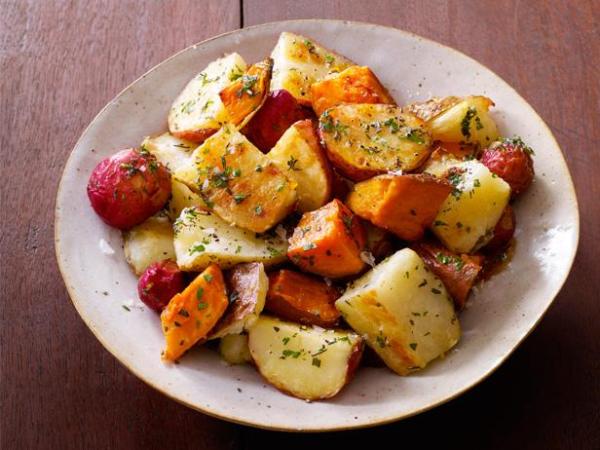
இல்லை, இல்லை, உருளைக் கிழங்குக் கறிக்கும் ஆர்டர் கொடுத்துள்ளேன்; அத்துடன்தான் சாப்பிடுவேன்!


(என்ரிகோ கேட்டது, வேறு யாராவது வரப்போகிறார்களா என்ற தொனியில்;  இது அந்த அம்மையாருக்கும் புரிந்தது. ஆயினும் தன் விஷயத்தில் வேறு ஒருவர் தலையிடுவதை விரும்பாத அவர் கிண்டலாக, இப்படி மூக்கை உடைக்கும் பதிலைத் தந்தார்)

xxxxxxxxxxxx

ஸ்பூன், போஃர்க், கரண்டி சாப்பிடாதீர்கள்!!!

பிரிட்டனில் வாழ்ந்த புகழ் பெற்ற டாக்டர்களில் ஒருவர் ரிச்சர்ட் ஜெப். அவர மூக்குப் பிடிக்க சாப்பிடும் நல்ல சாப்பாட்டு ராமன்; அவருக்கு யாராவது என்ன சாப்பிடுவது? என்று கேட்டால் பிடிக்காது.


வரும் நோயாளி ஒவ்வொருவரும் வழக்கமாகக் கேட்கும் கேள்வி:


டாக்டர் ஸார், நான் என்ன சாப்பிடலாம்? என்ன சாப்பிடக்கூடாது? என்று கேட்பர்.

அவர் சிரிக்காமல் அழாமல் மிகவும் ஸீரிஸாகப் பதில் கொடுப்பார்:

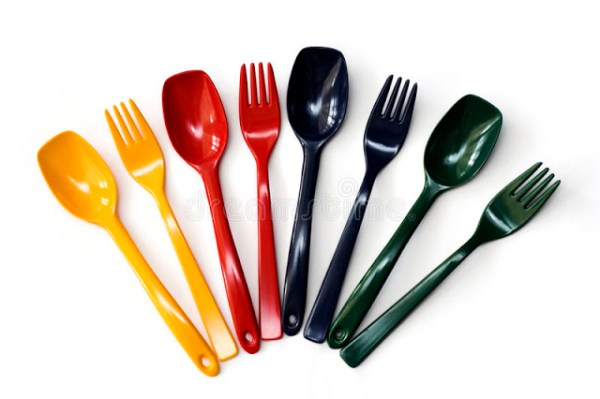
ஸ்பூன், போஃர்க், கரண்டி எதையும் சாப்பிட்டு விடாதீர்கள்; வயிற்றுக்கு மிகவும் கெடுதி; ஜீரணமும் ஆகாது; வாயு வேறு வரும்’ என்பார்.

ஏண்டா கேட்டோ,ம் என்று நினைத்துக் கொண்டு நோயாளிகள் ஓடி விடுவர்.

xxxxxxxxxxxxxxxx

மெல்பா டோஸ்ட்

விபத்துகளே ( தவறுகளே ) புதிய கண்டுபிடிப்புகளை உருவாக்குகின்றன (Great Inventions are the products of Accidents) என்று ஆங்கிலத்தில் ஒரு பொன்மொழி உண்டு. மெல்பா டோஸ்ட் (Melba Toast) என்பது உருவான கதை இதோ!


லண்டனில் புகழ்பெற்ற ஹோட்டல் ஸவாய் (Savoy) ஹோட்டல். ஸவாய் ஹோட்டல் மிகவும் பிரஸித்தமானது; அதி பயங்கர விலை!

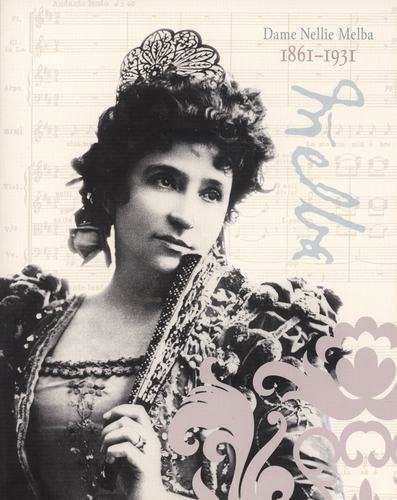
அதில் பிரபல ஆபரா பாடகி நெல்லி மெல்பா (Nellie Melba) தங்கி இருந்தார். அப்போது தலைமைச் சமையல்காரர் பிரான்ஸைச் சேர்ந்த எஸ்கோப்பியே.

நெல்லி மெல்பா மிக ஸீரியஸாக பத்தியம் இருந்தார்; எடை குறைய வேண்டும் என்பதற்காக ரொட்டித் துண்டு மட்டுமே (டோஸ்ட்) சாப்பிட்டு வந்தார்.

ஒரு நாள் மாஸ்டர், வேறு ஏதோ வேலையில் இருந்ததால் வேறு ஒருவர் டோஸ்ட் செய்து கொண்டு போனார். அது காய்ந்து போன கருவாடு போலக் காட்சி தந்தது. அதைப் பார்த்துக்கொண்டிருந்த   ஹோட்டல் தலைவர் (Ritz) ரிட்ஸ் பதறிப்போனார். மன்னிப்புக் கேட்க ஓடி வந்தார். அவர் வாயைத் திறப்பதற்கு முன்னால், நெல்லி மெல்பா,

“என்ன அருமையான, சுவையான டோஸ்ட்; என் வாழ்நாளில் இப்படி ஒரு சுவையான டோஸ்ட் சாப்பிட்டதே இல்லை. எஸ்கோப்பியே மிகவும் திறமையான சமையல்கார என்றார். ரிட்ஸ் சத்தம் போடாமல் திரும்பி வந்தார்.

அது முதல் மெல்பா டோஸ்ட் என்ற பெயரில் எல்லோரும் , அதே போலச் செய்து விற்கத் துவங்கி விட்டனர்.


xxxxx SUBHAM xxxxx


பாரதி போற்றி ஆயிரம் – 85 (Post No.4975)

Compiled by S NAGARAJAN


Date: 4 MAY 2018


Time uploaded in London –  5-05 AM   (British Summer Time)


Post No. 4975


Pictures shown here are taken from various sources such as Facebook friends, Books, Google and newspapers; thanks. Pictures may be subject to copyright laws.


WARNING: PLEASE SHARE MY ARTICLES; BUT DON’T SHARE IT WITHOUT AUTHOR’S NAME AND THE BLOG NAME. BE HONEST; OTHERS WILL BE HONEST WITH YOU


பாரதி போற்றி ஆயிரம் – 85

  பாடல்கள் 820 முதல் 851


கவிதை இயற்றியோர்: பல்வேறு கவிஞர்கள்

தொகுப்பு : ச.நாகராஜன்

புலவர் கு.ப. பெருமாள் இயற்றிய       பாரதியின் “பா”ரதம்

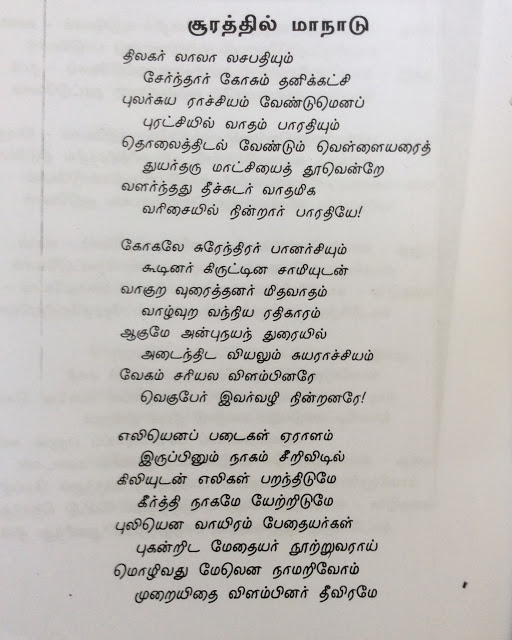
இந்த பாரதியாரின் வரலாற்று நூலில் பல அத்தியாயங்கள் உள்ளன. நூலை முழுவதுமாகத் தர இயலாத நிலையில் தேர்ந்தெடுத்த கவிதைகள் இங்கு அளிக்கப்படுகின்றன. இங்கு சூரத்தில் மாநாடு என்ற அத்தியாயத்தில் உள்ள 19 பாடல்களையும் பரங்கியர் பாட்டு என்ற அத்தியாயத்தில் உள்ள 13 பாடல்களையும் படித்து மகிழலாம். நூலின் பக்கங்களை அப்படியே காணலாம்.

இணைப்பாகத் தரப்படுபவை :

சூரத்தில் மாநாடு – 19 பாடல்கள்

பரங்கியர் பாட்டு – 13 பாடல்கள்


தொகுப்பாளர் குறிப்பு:
புலவர் கு.பொ.பெருமாள் பல்வேறு சந்தங்களில் மரபு நிலை மாறாது பாடல்களை யாத்துள்ளார்.

இவரைப் பற்றிய குறிப்பு ஏற்கனவே தரப்பட்டுள்ளது.

திண்டுக்கல் மாவட்டம் வேடசந்தூர் மாவட்டம் புளியம்பட்டியில் இருக்கும் புலவர் பதிப்பகம் இந்த நூலை வெளியிட்டுள்ளது.

கவிஞர் கு.பொ.பெருமாள் அவர்களுக்கும் புலவர் பதிப்பக உரிமையாளருக்கும் நமது நன்றி

***


மௌன நீரூற்றால் புரட்சி-2 (Post No.4974)

Written by S NAGARAJAN


Date: 3 MAY 2018


Time uploaded in London –  17-33   (British Summer Time)


Post No. 4974


Pictures shown here are taken from various sources such as Facebook friends, Books, Google and newspapers; thanks. Pictures may be subject to copyright laws.


WARNING: PLEASE SHARE MY ARTICLES; BUT DON’T SHARE IT WITHOUT AUTHOR’S NAME AND THE BLOG NAME. BE HONEST; OTHERS WILL BE HONEST WITH YOU


பாக்யா 4-5-2018 இதழில் அறிவியல் துளிகள் தொடரில் வெளியாகியுள்ள எட்டாம் ஆண்டு ஒன்பதாம் கட்டுரை

மௌன நீரூற்றால் புரட்சி செய்த பெண்மணி!–2

ச.நாகராஜன்


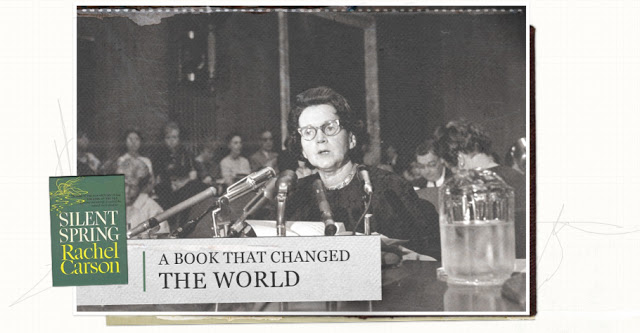
ஜனாதிபதி கென்னடியையே பதில் சொல்லச் செய்யும் அளவுக்கு ராக்கேல் கார்ஸனின் சைலண்ட் ஸ்பிரிங் உருவாகக் காரணம் என்ன?

ராக்கேல் சிறுமியாக இருந்த போது அவரது படுக்கை அறை ஜன்னல் வழியே ஒரு மைல் தூரத்தில் உள்ள குதிரைகளை வெட்டித் தள்ளும் ஒரு கசாப்புத் தொழிற்சாலையைப் பார்த்த வண்ணம் இருப்பார்.அதிலிருந்த புகைபோக்கியிலிருந்து எழும் புகை வானத்தை மறைக்கும்.


மாலை நேரத்தில் வெட்டப்பட்ட உபயோகமற்ற மாமிசக் குவியலிலிருந்து எழும் நாற்றமும், குதிரை மாமிசத்தினால செய்யப்பட்ட உரத்தின் நாற்றமும் கிராமம் வரை வந்து அனைவரையும் வாந்தி எடுக்கச் செய்யும். ஆகவே மாலை நேரங்களில் கிராம மக்கள் வீ டுகளின் கதவுகளைத் திறப்பதே இல்லை.


இந்த அவலத்தினால் ராக்கேலின் மனம் பெரிதும் பாதிக்கப்பட்டதில் வியப்பில்லை.

தனது சைலண்ட் ஸ்பிரிங் நூலை அவர் அமெரிக்க இல்லத்தரசிகளை நோக்கி இலக்கு வைத்தார்.லட்சக்கணக்கில் அவற்றை வாங்கிய அமெரிக்கப் பெண்மணிகள் அவர் பக்கம் தங்கள் ஆதரவைத் தெரியப்படுத்தினர்.

அவர்கள் ஜனாதிபதி கென்னடியிடம் ஒரு கேள்வியை முன் வைத்தனர்.


1962, ஆகஸ்ட் மாதம் அவர்கள் ஜனாதிபதியிடம் அரசு DDT  பற்றி ஏதேனும் செய்யப் போகிறதா இல்லையா என்று கேட்டனர்.

அவர் உடனடியாக இப்படி பதிலளித்தார்:

“ஆம்.செய்யப் போகிறோம். குறிப்பாக மிஸ் கார்ஸனின் புத்தகத்தால் தான். ஆனால் இதை அவர்கள் (கமிட்டி) பரிசீலித்து வருகிறார்கள்”.

கென்னடியின் அறிவியல் குழு 1963 மே மாதம் 15ஆம் தேதி தனது இறுதி அறிக்கையை சமர்ப்பித்தது.
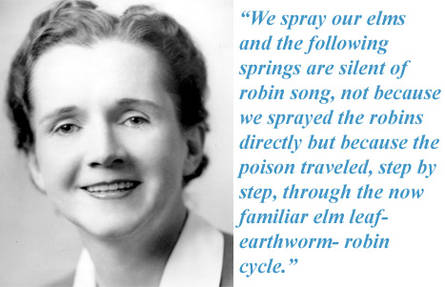
 

“சைலண்ட் ஸ்பிரிங் வெளிவரும் வரை பொதுவாக உரங்களில் விஷத் தனமை இருப்பது பற்றி ஒன்றும் தெரியாமல் இருந்தது. ஆனால் சுற்றுப்புறச்சூழல் கேட்டை ரசாயன உரங்களைக் கட்டுப்படுத்துவன் மூலமே தடுத்து நிறுத்த முடியும்.”

வணிக நோக்கில் இது வணிகர்களுக்குப் பெரும் பாதிப்பை ஏற்படுத்தியதால் அவர்களிடமிருந்து கடும் எதிர்ப்பு கிளம்பியது.

1972இல் அமெரிக்க அரசு விவசாயத்தில் DDT உபயோகத்தைத் தடை செய்தது.


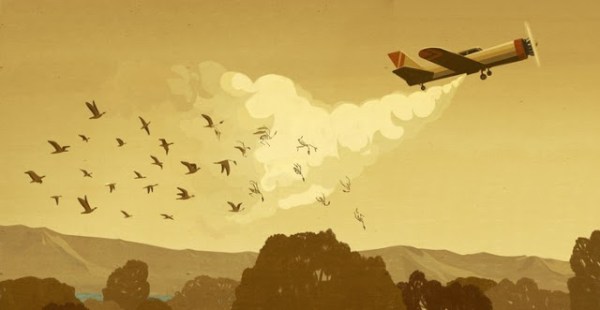
அமெரிக்காவின் தேசீயச் சின்னமான கழுகு ஒரு லட்சத்திலிருந்து 500 ஜோடிகளாகக்க் குறைந்தது ஏன்?


இரசாயன உரத்தினால் தான். அபாயகரமான உரம் அதன் முட்டைகளைக் குஞ்சு பொறிக்க விடாமல் பொறிப்பதற்கு முன் முட்டைகளை உடைத்து விட்டதால் இந்த அபாயம் ஏற்பட்டது!


என்றாலும் கூட மலேரியாவைத் தடுப்பதற்கு DDT அனுமதிக்கப்பட்டது. இதையும் ராக்கேல் எதிர்த்தார்.
 

இதற்கிடையில் அவரது உடல் நிலை இதய நோய்களுள் ஒன்றான ஆஞ்ஜினா (ANGINA) வியாதியால் பாதிக்கப்பட்டது.

அவருக்கு மார்பகப் புற்று நோயும் வந்து சேர்ந்தது.

1964இல் கான்ஸர் உடல் முழுவதிலும் பரவி விடவே அவர் தலைமயிர் எல்லாம் உதிர்ந்து தலை வழுக்கையானது. எலும்புகள் பலஹீனமாக ஆகி விடவே அவர் வீல் சேரிலேயே இருக்க வேண்டிய நிலை ஏற்பட்டது.

1964 மார்ச் மாதம் கான்ஸர் கல்லீரலைத் தாக்கி அவரை வெகுவாகப் பாதித்தது.


அறுவைச் சிகிச்சை நிபுணர்கள் ஒரு ரேடியோ ஆக்டிவ் பதியத்தை அவர் உடலில் பதியம் செய்தனர்.


இது போன்ற உடல் நிலையில் தான் அவர் அமெரிக்க கமிட்டி முன்னர் ஆஜராகி தன் தரப்பு வாதங்களை முன் வைத்தார்.

DDT போன்ற இரசாயன உரங்கள் முதலில் பூச்சிகளைக் கொல்லும். பின்னர் உணவுச் சங்கிலித் தொடரினுள் புகுந்து உணவையே நச்சாக்கும். அதனால் பறவைகள், மீன் உள்ளிட்ட அனைத்து ஜீவராசிகளும் அழிந்தொழியும். ஏனெனில் அவை இப்படிப்பட்ட நச்சு உணவுகளை உட்கொள்ள வேண்டிய சுற்றுப்புறச் சூழ்நிலை கேடு உருவாவதால் தான்! ஆகவே இதற்கு ஒரு முடிவு கட்டுங்கள் என்றார் அவர்.


‘மக்கள் விஞ்ஞானி’ என்ற பெயருடன் புதுமையாக மலர்ந்த அவர் மக்களுக்காக அரிய உண்மைகளைப் புள்ளி விவரங்களுடன் தொகுத்து வழங்கினார்.


நடக்க முடியாமல் அவர் தன் இருக்கைக்கு மெதுவாகத் திரும்பியது அனைவரையும் உருக்கியது.

தலை வழுக்கை தெரியாமல் இருக்க ஒரு ‘விக்’கை அவர் அணிந்திருந்தார்.


தனது வியாதி பற்றி அவர் யாரிடமும் சொல்லவில்லை. ஆகவே அவரது கான்ஸர் பற்றி இறுதி வரை மக்களுக்குத் தெரியவில்லை.


1964ஆம் ஆண்டு ஏப்ரல் மாதம் 14ஆம் தேதி அவர் காலமானார்.

அவரது அஸ்தியின் ஒரு பகுதி மேரிலாந்தில் அவரது தாயாரின் கல்லறையில் புதைக்கப்பட்டது. இன்னொரு பகுதி ஷீப்ஸ்காட் பே என்ற இடத்தில் தெளிக்கப்பட்டது.


மனித குல சரித்திரத்தில் முக்கியமான காலகட்டங்களிலெல்லாம் ஒரு புத்தகம் வெளியாகி அது வரலாறையே மாற்றுவது வழக்கம் என்று அலாஸ்காவைச் சேர்ந்த செனேட்டர் எர்னஸ்ட் க்ரூயநிங் அவரைப் போற்றிப் பாராட்டினார்.


ராக்கேலின் வழியில் சென்ற அறிஞர் அல்கோர் ‘யாருக்கும் பிடிக்காத உண்மை’ என்ற தலைப்பில் பல உண்மைகளை முன் வைத்தார். அவருக்கு நோபல் பரிசு கிடைத்தது.


இன்று சுற்றுப்புறச் சூழலைப் பாதிக்கும் அம்சங்கள் முன்பை விட ஏராளமாகப் பெருகி விட்டன. ஆனால் ராக்கேல் கார்ஸன் போல அயராது பாடுபட்டு அந்த அம்சங்களை ஒழிக்க ஆள் தான் இல்லை.


‘தி நன் ஆஃப் நேச்சர்’ – இயற்கையின் கன்யாஸ்தீரி என்று அன்புடன் அழைக்கப்பட்ட கார்ஸனின் புகழ் என்றும் இலங்கும்!
 

அறிவியல் அறிஞர் வாழ்வில் .. ..


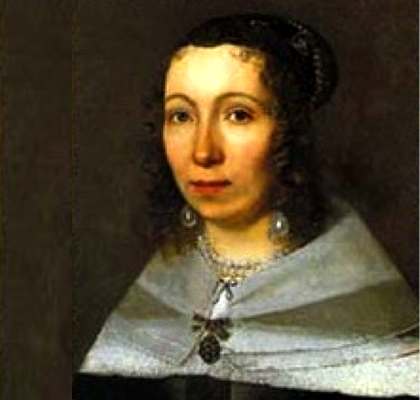
ஜெர்மனியைச் சேர்ந்த பெண்மணியான மரியா மெரியன் (Maria Merian -1647-1717) பூச்சிகளை ஆராய்ந்த ஒரு அபூர்வமான விஞ்ஞானி.

அவரது கண்டுபிடிப்புகளுக்கு முன்னர் அனைவரும் பட்டாம்பூச்சி பூமியிலிருந்து தானாகவே சேற்றிலிருந்து பிறக்கிறது என்று எண்ணிக் கொண்டிருந்தனர்.


ஒவ்வொரு பூச்சியையும் அது எப்படி பிறக்கிறது எப்படி வாழ்கிறது என்று அவர் ஆராய்ந்தார். அவர் தனது கண்டுபிடிப்புகளை எல்லாம் அந்தக் காலத்திய விஞ்ஞான மொழியான லத்தீனில் எழுதாமல் ஜெர்மானிய மொழியில் எழுதியதால் அவரைப் பற்றிப் பலரும் அறிய வாய்ப்பில்லாமல் போனது.


என்றாலும் கூட சுயமாக பெரிய அளவில் நிதி திரட்டி பூச்சிகளை ஆராயக் களம் புகுந்தார். அவைகளை வகைப் படுத்தினார். பட்டியலிட்டார். அத்துடன் அவர் ஒரு ஓவியராகவும் திகழ்ந்ததால் செடிகள், பூச்சிகள், மிருகங்கள் ஆகியவற்றின் படங்களையும் வரைந்தார்.


அவை இன்றளவும் உள்ளன. அவரது பட்டியல் இன்றளவும் விஞ்ஞானிகளால் அங்கீகரிக்கப்பட்ட ஒன்றாகத் திகழ்கிறது.

பூச்சிப் பெண்மணி என்று புகழ் பெற்ற அவரை உலகம் இப்போது பாராட்டுகிறது!

***
 

MANU ON STUDENTS WHO WILL BE BORN AS ANIMALS! (Post No.4973)


MANU ON STUDENTS WHO WILL BE BORN AS ANIMALS! (Post No.4973)


Written by London Swaminathan 


Date: 3 May 2018


Time uploaded in London – 11-54 am (British Summer Time)


Post No. 4973


Pictures shown here are taken from various sources such as Facebook friends, Books, Google and newspapers; thanks. Pictures may be subject to copyright laws.


WARNING: PLEASE SHARE MY ARTICLES; BUT DON’T SHARE IT WITHOUT AUTHOR’S NAME AND THE BLOG NAME. BE HONEST; OTHERS WILL BE HONEST WITH YOU


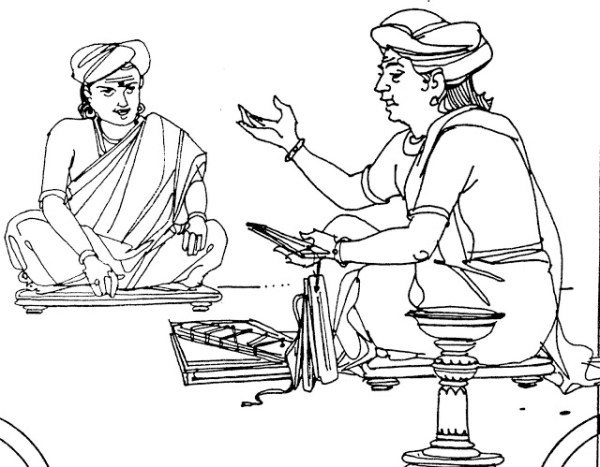
Manu Smrti, in the second chapter, explains the duty of a student who is in the Guru Kula studying the Vedas. There some interesting points:

1.He gives a long list DOs and DONTs. He advises the students not to use perfume and not to learn dance and music. This is only applicable for the Brahmin students who learnt Vedas.

2.He says the students should beg and eat; sleep alone

  1. He talks about the distance to be maintained between him and the students.
  2. He says students will be born as ass or dog or worm or an insect if they insult the teacher in any manner.

(Please read my comments under each heading as well.)


Second Chapter of Manu Smrti continued……………..

Good Vedic Students


DANCE AND MUSIC- NOT FOR VEDIC STUDENTS

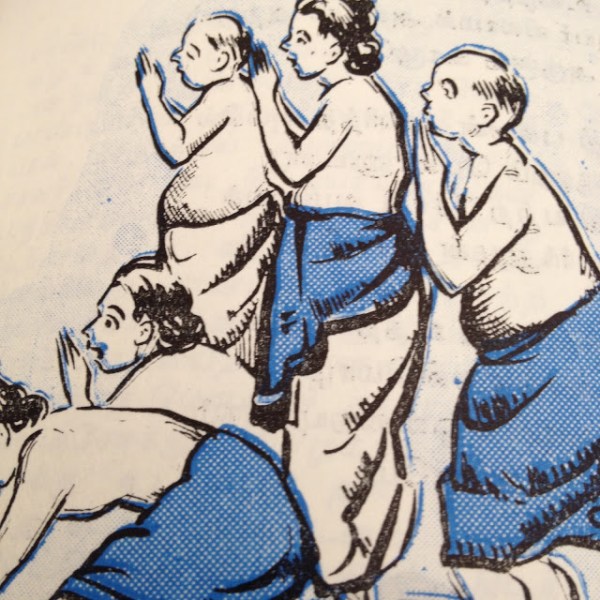
2-175. But a student who resides with his teacher must observe the following restrictive rules, duly controlling all his organs, in order to increase his spiritual merit.

  1. Every day, having bathed, and being purified, he must offer libations of water to the gods, sages and manes, worship (he images of the gods, and place fuel on the sacred fire.
  2. Let him abstain from honey, meat, perfumes, garlands, substances used for flavouring food (condiments), women, all substances turned acid, and from doing injury to living creatures.
  3. From anointing his body, applying collyrium to his eyes, from the use of shoes and of an umbrella or parasol, from sensual desire, anger, covetousness, dancing, singing, and playing musical instruments,
  4. From gambling, idle disputes, backbiting, and lying, from looking at and touching women, and from hurting others.


My Comments:

Andal, a saint and poetess of Tamil Nadu, who lived 1400 years ago also mentioned the discipline that girls follow during the period of Vow (Vrata). Refer to Tiruppavai verse 2.


CELIBATE SUDENTS MUST SLEEP ALONE

2-180. Let him always sleep alone, let him never waste his manhood; for he who voluntarily wastes his manhood, breaks his vow.

  1. A twice-born student, who has involuntarily wasted his manly strength during sleep, must bathe, worship the sun, and afterwards thrice mutter the Rik-verse which begins, ‘Again let my strength return to me.’
  2. Let him fetch a pot full of water, flowers, cowdung, earth, and Kusa grass, as much as may be required by his teacher, and daily go to beg food.
  3. A student, being pure, shall daily bring food from the houses of men who are not deficient in (the knowledge of) the Veda and in performing sacrifices, and who are famous for following their lawful occupations.
  4. Let him not beg from the relatives of his teacher, nor from his own or his mother’s blood-relations; but if there are no houses belonging to strangers, let him go to one of those named above, taking the last-named first;
  5. Or, if there are no virtuous men of the kind mentioned above, he may go to each (house in the) village, being pure and remaining silent; but let him avoid Abhisastas (those accused of mortal sin).
  6. Having brought sacred fuel from a distance, let him place it anywhere but on the ground, and let him, unwearied, make with it burnt oblations to the sacred fire, both evening and morning.
  7. He who, without being sick, neglects during seven successive days to go out begging, and to offer fuel in the sacred fire, shall perform the penance of an Avakirnin (one who has broken his vow).


My comment:

Hinduism is a very practical religion; they have atonement and escape strategy for every eventuality.


Guru Puja by good students


VEDIC STUDENTS MUST BEG AND EAT

2-188. He who performs the vow of studentship shall constantly subsist on alms, but not eat the food of one person only; the subsistence of a student on begged food is declared to be equal in merit to fasting.

  1. At his pleasure he may eat, when invited, the food of one man at a rite in honour of the gods, observing however the conditions on his vow, or at a funeral meal in honour of the manes, behaving however like a hermit.
  2. This duty is prescribed by the wise for a Brahmana only; but no such duty is ordained for a Kshatriya and a Vaisya.

My comment

By begging one becomes humble and always looking for support from the local community. More over less eating will keep oneself healthy in physique and mind. Walking is an exercise done during begging.


HOW TO BEHAVE WITH THE TEACHERS

2-191. Both when ordered by his teacher, and without a special command, a student shall always exert himself in studying the Veda, and in doing what is serviceable to his teacher.

  1. Controlling his body, his speech, his organs of sense, and his mind, let him stand with joined hands, looking at the face of his teacher.
  2. Let him always keep his right arm uncovered, behave decently and keep his body well covered, and when he is addressed with the words , ‘Be seated,’ he shall sit down, facing his teacher.
  3. In the presence of his teacher let him always eat less, wear a less valuable dress and ornaments than the former, and let him rise earlier from his bed, and go to rest later.
  4. Let him not answer or converse with (his teacher), reclining on a bed, nor sitting, nor eating, nor standing, nor with an averted face.
  5. Let him do that, standing up, if his teacher is seated, advancing towards him when he stands, going to meet him if he advances, and running after him when he runs;
  6. Going round to face the teacher, if his face is averted, approaching him if he stands at a distance, but bending towards him if he lies on a bed, and if he stands in a lower place.
  7. When his teacher is nigh, let his bed or seat be low; but within sight of his teacher he shall not sit carelessly at ease.
  8. Let him not pronounce the mere name of his teacher (without adding an honorific title) behind his back even, and let him not mimic his gait, speech, and deportment.
  9. Wherever (people) justly censure or falsely defame his teacher, there he must cover his ears or depart thence to another place.

My comment

Such a respect and reverence is seen nowhere in the world except India. Even today we can see it in the religious centres, but not in ordinary schools. Students must rise when the teacher enters the class room till I studied in the college. Western countries do it only in Judicial courts.


STUDENT BECOMES AN ASS, DOG, WORM AND INSECT

2-201. By censuring his teacher, though justly, he will become in his next birth an ass, by falsely defaming him, a dog; he who lives on his teacher’s substance, will become a worm, and he who is envious of his merit, a larger insect.

  1. He must not serve the teacher by the intervention of another while he himself stands aloof, nor when he himself is angry, nor when a woman is near; if he is seated in a carriage or on a raised seat, he must descend and afterwards salute his teacher.
  2. Let him not sit with his teacher, to the leeward or to the windward of him; nor let him say anything which his teacher cannot hear.
  3. He may sit with his teacher in a carriage drawn by oxen, horses, or camels, on a terrace, on a bed of grass or leaves, on a mat, on a rock, on a wooden bench, or in a boat.
  4. If his teacher’s teacher is near, let him behave towards him as towards his own teacher; but let him, unless he has received permission from his teacher, not salute venerable persons of his own family.


My comments:

You may take the meaning of verse 201 literally and think that it would happen in the next birth. My interpretation is such a student will have the badd qualities of animals mentioned.


Manu Smrti must be read in full with the commentaries and then one would wonder how come he thought about even the minutest details several thousand years ago. Manu is mentioned in the Rig Veda, the oldest book in the world; he is the first law giver, even before Hammurabi.

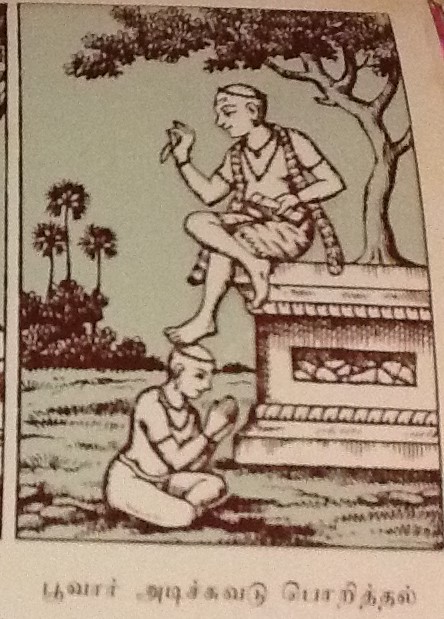
Tamil Saint Manikkavasagar receiving blessings from his Guru

–SUBHAM–


கம்பன் கவிதையில் உபநிஷதம், ஓம்! (Post No.4972)

Written by London Swaminathan 


Date: 3 May 2018


Time uploaded in London – 6-39 am (British Summer Time)


Post No. 4972


Pictures shown here are taken from various sources such as Facebook friends, Books, Google and newspapers; thanks. Pictures may be subject to copyright laws.


WARNING: PLEASE SHARE MY ARTICLES; BUT DON’T SHARE IT WITHOUT AUTHOR’S NAME AND THE BLOG NAME. BE HONEST; OTHERS WILL BE HONEST WITH YOU


ஆயிரம் ஆண்டுகளுக்கு முன் ராமாயணத்தைத் தமிழில் தந்தான் கம்பன்; இதன் மூலம் இலக்கிய உலகை வென்றான். 2000 ஆண்டுகளுக்கு முன்னர் யூபம், வேதம் முதலிய ஸம்ஸ்க்ருதச் சொற்களை சங்கப் புலவர்கள் அப்படியே பயன் படுத்தியது போலவே கம்பனும் ஓம், உபநிஷதம் போன்ற ஸம்ஸ்க்ருதச் சொற்களை அப்படியே பாடலில் பயன்படுத்துகிறான்; அக்காலத்தில் வேத வேள்விகளும் ஓம் என்னும் வேதத்தின் முதல் சொல்லும் வேதத்தின் முடிவான (வேதம்+ அந்தம்= வேதாந்தம்) உபநிஷதமும் தெய்வத் தமிழ்நாட்டில் எவ்வளவு பிரஸித்தம் என்பதற்கு இவைகள் சான்று பகருகின்றன.


கம்பன் பாடிய இரணிய வதைப் படலத்தில் (யுத்த காண்டம்) இந்து மத தத்துவங்கள் அனைத்தும் பிரஹலாதன் வாயின் வழியாகத் தரப்படுகின்றன. அதில் சில பாடல்கள்:

அளவையான் அளப்பரிது அறிவின் அப்புறத்து

உளவை ஆய் உபநிடதங்கள் ஓதுவ

கிளவி ஆர் பொருள்களான் கிளக்குறாதவன்

களவை யார் அறிகுவார் மெய்ம்மை கண்டிலார்.


பொருள்

இறைவனின் நிலை கண்கூடாகத் தெரியக்கூடிய பிரமாணங்களைக் கொண்டு அளவிட முடியாதது; அறிவுக்கும் எட்டாத தொலைவில் இருக்கிறது. ஐயனே! உபநிடதங்கள் சொல்கின்ற சொற்களால் கூறமுடியாதவனான  அவனுடைய மாயத் தன்மையை அறியவல்லவர் யாவர்? அந்த மெய்மையைக் கண்டவர் எவருமிலர்.


(இதிலுள்ள ‘சொற்களால் கூற முடியாத’ என்பது கூட உபநிஷத வாக்கியம் ஆகும்)

இன்னொரு படலில் வேதம் சொல்லுவோர் ஓம் என்ற சொல்லுடன் துவங்குவர் என்பதை ‘சிந்தையின்……. முந்தை ஓரெழுத்து என வந்து’ என்று ஓம் என்னும் ஓரெழுத்தின் புகழைப் பாடுகிறார்.


அடுத்தொரு பாடலில் ஓம் என்ற சொல்லை அப்படியே பயன்படுத்துகிறார். இதோ அந்தப் பாடல்:


ஓம் எனும் எழுத்து அதனின் உள் உயிர்

ஆம் அவன் அறிவினுக்கு ஆறிவும் ஆயினான்

தாமு மூவுலகமும் தழுவிச் சார்தலால்

தூமமும் கனலும் போல் தொடர்ந்த தோற்றத்தான்


ஓர் எழுத்தாக உள்ள ஓம் என்னும் பிரணவத்தினுள்ளே பொருந்திய அ, உ , ம் என்ற மூன்றினுள் அகார உயிராகத்திகழும் அந்த இறைவன் (அகர முதல எழுத்தெல்லாம்-குறள்) அந்த உயிர்களின் அறிவுக்கு எல்லாம் உள் நின்று உணர்த்தும் ஞானமாகவும் விளங்குகின்றான்; பரந்த மூவுலகங்களையும் பரவிப் பொருந்துவதால் புகையும் நெருப்பும் போல பல இடங்களிலும் பரவும் தன்மை கொண்ட வனாயும் உள்ளான்.


விறகில் தீயினன், பாலில் படு நெய் போல் உள்ளவன் என்று தேவாரமும் சொல்லும். ஆங்கிலத்தில் ஆண்டவனை எங்கும் நிறைந்தவன், எல்லாம் அறிந்தவன், எல்லாம் வல்லவன் (Omnipresent, Omniscient, Omnipotent) என்பர். அதை எல்லாம் கம்பன் பாடல் வடிவில் இங்கே கூறுகிறான்.

இங்கே நாம் பார்க்க வேண்டியது இரண்டே விஷயங்கள்தாம்:

1.கம்பனின் வேதாந்த அறிவு; மாண்டூக்ய உபநிஷதம் ‘ஓம்’ எனும் பிரணவாகாரத்தின் புகழ்பாடும்; அதைக் கம்பன் படித்து உணர்ந்து இருக்க வேண்டும்

2.கம்பன் காலத்தில், ‘ஓம்’, ‘உபநிஷதம்’ போன்ற ஸம்ஸ்க்ருதச் சொற்களை சர்வ சாதாரணமாகப் பயன்படுத்தி இருக்க வேண்டும்.


இரணிய வதைப் படலம் முழுவதையும் படித்து இன்புறுக.


வாழ்க தமிழ்; வளர்க கம்பன் புகழ்