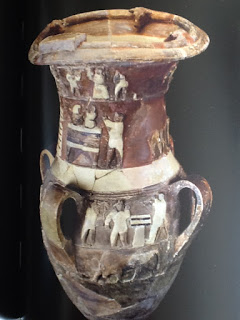
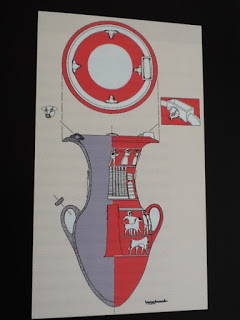
HINDU SPY IN THE SKY (Post No.4021)

Written by London Swaminathan
Date: 21 June 2017
Time uploaded in London- 10-28 am
Post No. 4021
Pictures are taken from various sources such as Face book, Wikipedia and newspapers; thanks.


“Light giving Varuna! Your piercing glance does scan

In quick succession, all this stirring active world

And penetrates, too the broad ethereal space,

Measuring our days and nights and SPYING OUT all creatures”—Rig Vedic Hymn on Varuna


Brahmins who do Sandhyavandanam thrice a day worship Varuna; He is the God of the coastal area according to the oldest Tamil book Tolkappiam; Sangam Tamil verses say that Tamil fishermen worshiped Varuna on sea coast of Tamil Nadu. Varuna is in almost all European and Iranian languages.


Max Muller says,

“Varuna is one of the most interesting creations of Hindu mind, because, though we can still perceive the physical background from which he rises, the vast, starry, brilliant expanse above, his features more than those of any other Vedic God have been completely transfigured, and he stands before us as a god who watches over the world, punishes the evil doer, and even forgives the sins of those who implore his pardon”


In the Rig Veda an exceedingly high position is ascribed to Varuna. He is Chief of the Adityas – sons of Aditi. They are inviolable, imperishable, eternal beings.


Aditi, the great Mother Goddess has twelve sons including Varuna, Mitra, Daksha, Indra and Surya. Varuna is derived from the Sanskrit root ‘var “to cover”. He is therefore god of the heavens covering all things. A mysterious presence, a mysterious power and a mysterious knowledge were all ascribed to him.

He is the one who makes the sun to shine in the heavens; the winds that blow is but his breath; he has hollowed out the channels of the rivers which flow at his command, and he has made the depths of the sea.


His ordinances are fixed and unassailable; through their operation the moon walks in brightness, and the stars which appear in the night sky vanish in the day light.


The birds flying in the air, the rivers in their sleepless flow, cannot attain a knowledge of his power and wrath. But he knows the flight of the birds in the sky, the course of the far travelling wind, paths of ships on the ocean, and beholds all the secret things that have been, or shall be, done.

He witnesses man’s truth and falsehood.


In truth, omniscience is his outstanding attribute. The sun and the thousand stars are his eyes searching out all the passes on earth, from which even darkness cannot hide. When two are in the company, he is the third. He is the god of the serene distant heaven, yet he is not far from any one of us.


“His spies descending from the skies glide all this world around;

Their thousand eyes, all scanning, sweep to earth’s remotest bound

Whatever exits in heaven and earth, whatever beyond the skies.,

Before the eyes of Varuna the thing unfolded lies.

The secret winkings all he counts of every mortal eyes

And wields this universal frame as gamester throws his dice!
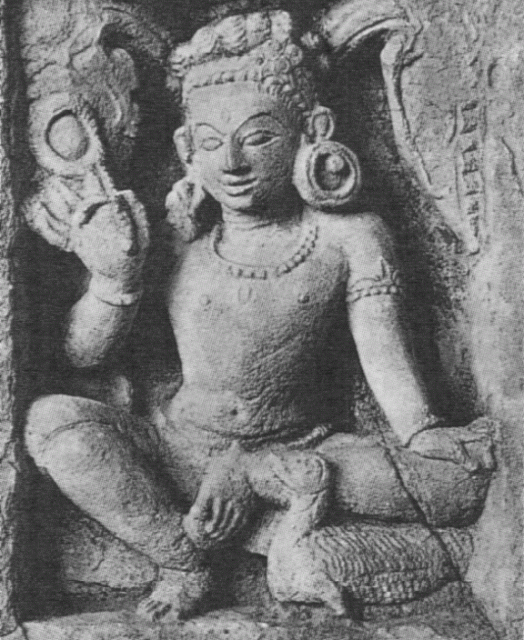
 

Tamil God

Varuna is one of the Gods mentioned in the oldest Tamil book Tolkappiam. He is portrayed a s a god of the coastal Tamils. Tamil Sangam literature also has a reference to fishermen worshipping Varuna.


Mitra and Varuna are always paired in the Vedic hymns. Some people see it as positive and negative forces in the universe. Mitra represents light and Varuna represents night. It is like Shiva and Sakti; both are required for the survival of the universe.


Rig Veda (7-86-3/6) has the following prayer:

Be gracious, O mighty God, be gracious. I have sinned through want of power; be gracious.

Seeking to perceive that sin, O Varuna, I inquire: I resort to the wise to ask. The sages will tell me the same; it is Varuna who is angry with you.

What great sin  is it, Varuna, for which you seek to slay your worshipper and friend?

Tell me, O unassailable and self dependent God; and, freed from sin, I shall speedily come to you for adoration.

Release us from the sins of our fathers, and from those which we have committed in our own persons.

O King, loose, like a thief who feeds the cattle, as from the cord a calf, set free Vasistha.

It was not our own will, Varuna, but some seduction which lead us astray – wine anger, dice or thoughtlessness. The stronger perverts the weaker. Even sleep occasions sin.”


It is the prayer from the bottom of the heart of a true devotee!


Hundreds of hymns in the Vedas praise the mighty Varuna. They all make very interesting reading. The ancient Hindu society knew the general weakness of the human beings.

Perun (Varun) in Slavish Countries.


INTERESTING STORY IN YAJUR VEDA

In the Yajur Veda, the following story is narrated of Varuna:_

Varuna is found instructing Bhrigu, one of the Seven Divine Rishis, as to the nature of Brahman, the Supreme Spirit.

Varuna tod the seer: Whence all beings are produced; by which they live when born, towards which they tend, and unto which they pass.

Bhrigu, after meditating in devout contemplation, recognised food to be Brahman; for all things are indeed produced from food; when born they live by food; towards food they tend, they pass into food.

Unsatisfied, however after further meditation, he discovered breath to be Brahman: for all things are indeed produced from breath; when born they live by breath; towards breath they tend; they pass into breath.

Again he sought Brahman in deep meditation, and discovered intellect to be Brahman; for all things are indeed produced from thought; when born they live by thought; towards thought they tend; they pass into thought.


Then he went to Varuna and requested him,

“Venerable Father, make known to me Brahman.

Varuna replied, “Inquire by devout contemplation, profound meditation”.

Bhrigu thought deeply and then he knew Ananda (bliss, joy, felicity) to be Brahman; for all things are indeed produced from desire; when born they live by joy; towards happiness they tend; they pass into happiness.

Such is the science taught by Varuna of the origin of things.


Hymns to Varuna reach a lofty poetic height because they are rather sombre and inspire reverence and awe in a manner few other Vedic Gods do. As an unwinking watcher of men’s conduct and as judge and punisher he inspires awe and fear- the god who evokes an ethical response.


These hymns show that the Vedic Hindus were highly intellectual and reached the pinnacle of civilization. They are not primitive as westerners described. Human psychology is fully reflected in these Vedic poems.

(Bhagavad Gita 3-14 to 3-17 also discuss it)


“He instructs the seer Vasistha in mysteries; but his secrets and those of Mitra are not to be revealed to the foolish”


(that is why Vedic seers speak in symbolic language; it has hidden meaning; only the enlightened people can read between the lines)


“he has a hundred thousand remedies, and is supplicated to show his wide and deep benevolence and drive away evil and sin, to unite sin like a rope and remove it. He is entreated not to steal away, but to prolong life, and to spare the life who daily transgresses his laws. In many places mention is made of the bonds or nooses with which he seizes and punishes transgressors.


Amazing Knowledge of the Seas!

“By his wonderful contrivance the rivers pour out their waters into one ocean but never fill it”.

These lines are in the Vedas and Sangam Tamil Literature. Paranar, a Brahmin poet, quoted this in his Tamil Sangam verse.

This shows that the Vedic Hindus had amazing knowledge about the seas and oceans. They talk about thousands of rivers pouring into ocean and yet the seas never cross its shores. This is because of God’s order- Varuna’s orders.


All the Hindus use the simile every day at the end of their prayer “Akasat patitam toyam yathaa—– like the rain water that fall from the sky reaches the ocean , all my salutes/pranams go to Kesava”. They knew very well about the thousands of rivers and 7 oceans.


All the Tamil Sangam verses and earlier Sanskrit verses, whenever they mentioned earth, they say ‘sea clad earth’. Every second they remembered it. No literature in the world would mention it in all their verses that mentioned earth.


Vedic Hindus migrated from India to different parts of the world and spread Hindu values. All the famous rivers and seas around the world have Sanskrit names!

(I have dealt with this in my articles; so I am not going to repeat it)


If you get hold of the Vedas, just read the poems/hymns on Varuna! You will be wonderstruck!!!

In Mahabharata and Puranas, we see a different Varuna. ( I will deal with it separately)


Source Books:–  four different books on Vedas.

Vedic God Varuna in Oldest Tamil Book | Tamil and Vedas

Vedic God Varuna in Oldest Tamil Book

8 Jul 2013 – Vedic God Varuna in Oldest Tamil Book. East European Slavs worshiped Varu as Perun. Oldest Tamil book Tolkappaiam dated to 1st century …


-Subham–
 

Akbar was a Hindu Saint in his Former Life! (Post No.3988)

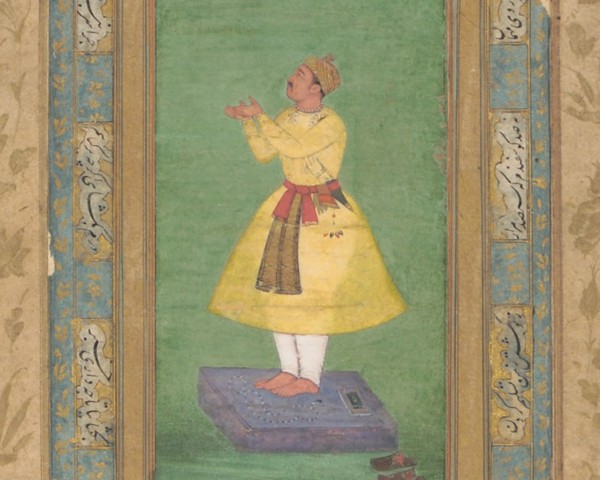
Akbar worshipping sun, Asian Civilisations Museum, Singapore


Compiled by London Swaminathan

Date: 10 June 2017

Time uploaded in London- 7-15 am

Post No. 3988

Pictures are taken from various sources such as Face book, Wikipedia and newspapers; thanks.

contact: swami_48@yahoo.com


There are two interesting stories about the Moghul emperor Akbar (1556-1605) and there is a true anecdote as well.

1.Akbar’s previous birth

2.Akbar and a Hindu ghost

3.Akbar and Surya Namaskar


In the Agra Fort there is an image of a man named Mukunda. He was a celebrated saint who decided to end his life by throwing himself in the river Jamuna, which flows by the fort. The reason for his decision was that he accidentally swallowed the hair of a cow by drinking milk without straining it. Though he punished himself by committing suicide, that was not thought a sufficient punishment. So, he was condemned to be born as a Mohammedan in his next birth, but in view of his sanctity, the harshness of the sentence was partially mitigated and he was born again as Emperor Akbar.

Akbar and the Hindu Ghost!

Hindu villagers attribute diseases like cholera and small pox to village goddesses. But there is a strange story about a historical personage. Hardaur Lala, son of Bir Sinha Deva (Veera Simha Deva), the miscreant Raja of Orcha in Bundelkhand, who at the instigation of Jahangir, assassinated the accomplished Abul Fazl, the literature of the court of Akbar. His brother, Jahjhar, succeeded to the throne on the death of his father, and after sometime, suspecting Hardaur of undue intimacy with his wife, he compelled her to poison her lover, with all his companions, at a feast in 1627 CE.


After this tragedy, the Princess Kanjavati, sister of Jahjhar, was about to be married. When the mother issued wedding invitations, Raja Jhajar mockingly suggested that one invitation should be sent to Hardaur.


Thereupon she in despair went to the tomb of Hardaur and lamented his wretched end. To her surprise Hardaur from below the earth answered her and promised to attend the wedding.


The ghost kept his promise and attended the marriage ceremony. Subsequently he went to the bedside of emperor Akbar at midnight and asked him to erect platforms in his name. If the king did so there would not be any damage by storm or drought in any part of the country. Akbar also did so. Since then the ghost of Hardaur was worshipped in every village in Northern India. But one unsolved problem in this story is a chronological error. Akbar died in 1605. Hardaur was murdered in 1627. (So it may not be Akbar, may be his son)

Akbar and Surya Namaskaram

“Emperor Akbar endeavoured to introduce a special form of Sun Worship into his dominions. He ordered his subjects to adore the sun four times a day; morning, noon, evening and midnight.  His Majesty had one thousand and one Sanskrit names of the Sun collected and read them daily, devoutly turning to the sun. He then caught hold of his both ears by their upper parts and turning himself quickly round used to strike the lower ends with his fists. He ordered his band to play at midnight and was weighed against gold at his solar anniversary (birth day)  — from Blockman’s translation of Ain-i-Akbari.

The Ain-i-Akbari or the “Constitution of Akbar”, is a 16th-century, detailed document recording the administration of emperor Akbar’s empire, written by his vizier, Abu’l-Fazl ibn Mubarak.

All the three stories are summarised from ‘The Gods of India’ by Rev E Osborn Martin, London, year 1914.


–subam–

Kashmir Minister’s Sacrifice Saved the King! (Post No.3872)

Written by London swaminathan

Date: 2 May 2017

Time uploaded in London: 21-35

Post No. 3872

Pictures are taken from various sources; thanks.

contact; swami_48@yahoo.com


We have read about the great sacrifice of Dadhichi Rishi (see) who sacrificed his backbone to make Vajrayudha weapon to kill the bad people. We have heard about the sacrifice of eyes by Tamil saint Kannappa Nayanar and Mahavishnu. We also know the sacrifice of head by Dadhyank in the Rig Veda. But not many people know the great sacrifice of Devasarman the minister of Kashmiri King Jeyapida who ruled Kashmir around 750 CE.

Kalhana gives a graphic account of his sacrifice in his book Rajatarangni (River of Kings) in Sanskrit

From the Fourth Taranga (Chapter):

Jayapida invaded Nepal; but the King Aramudi did not fight with him. He was skilled in magic and statecraft. He retired to a great distance from his army. Jeyapida also followed him. Aramudi went to the other side of a river and beat the war drums. Jeyapida’s army crossed the knee-deep water in the river. Suddenly the water level rose from the tides of the sea. Aramudi was waiting for this moment; He caught the king from the middle of the flooded river. Jeyapida did not know the territory but Aramudi skilfully drew him to a place near the eastern ocean. Jeyapida’s army was washed away into the sea.


Kashmiris use Drti (Inflated skin) to cross the river; it was the primitive method to cross a river or stream. it is inexpensive because they use the buffalo skin to make this skin bag.


Jeyapida was imprisoned in a stone building on the bank of the River Kalagandika. The natural sceneries were so beautiful, Jeyapida composed slokas (couplets) on it. Kashmiris were reciting those slokas, at least until the days of Kalhana. Rajatarangini says his slokas were melting hearts.

Jeyapida had a very wise minister called Devasarman. He sent emissaries to the Nepalese King Aramudi. Devasarman told the Nepalese king that Jeyapida’s treasure would be given to him. Since the army is holding the war booty he had brought the entire army to the other side of the river bank. Nepalese King Aramudi believed all these things.


Devasarman had a different plan. After getting the permission of Aramudi, he went and saw Jeyapida.


Devasarman told Jeyapida:

“I hope you have not lostyour personal bravery; for it exists like mural support for frescoes, the plans of perilous adventure will be successful”

Jeyapida replied to him: “O minister! thus segregated and without arms what wonderful act could I do even if I were possessed of courage”

Devasarman said: Are you capable of, after falling into the waters of the river from this window, of going to the further bank? For your own army is there.”

The King said to him: “After falling from here one cannot come to the surface of the water without an inflated skin (Drti) and in this place even the inflated skin would burst owing to the distance of the fall.”


Then after consideration the minister said to him: “Stay out side for two nalikas (48 minutes). Then the minister entered the room alone and killed himself; He has written with his blood:

I am the inflated skin for you; the body is filled with breath, it having been destroyed just now, mount me and cross the river; to serve as a hold for your thighs when mounted, the turban has been tied by me around my own loins, get into this and jump at once into the water”.

Such was the direction tied to the neck with a strip of cloth, written in blood, torn with the nails from his limbs, which he saw and deciphered.


At first the king was surprised and shocked, but later without wasting time jumped into the waters and reached his army. His army went into Nepalese territory and defeated Aramudi. Thus, the minister sacrificed his own life and saved Jeyapida.

–Subham–
 

Why did a Tamil King Kill 1000 Goldsmiths? (Post No.3821)

Written by London swaminathan


Date: 15 APRIL 2017


Time uploaded in London:- 15-59


Post No. 3821


Pictures are taken from various sources; thanks.


contact; swami_48@yahoo.com 


Silappadikaram, the Tamil epic, is the story about Kannaki and Kovalan (The details of the story are given at the end of this post).

Matalan, the Brahmin, is a link in the story. He plays a key role and fills the gaps in the story. He advised the mighty king Cheran Senguttuvan about the good things in life (Dharma).


In the Nirpataik (Chapter) Kaathai of the epic he gives some important details:-

While King Senguttuvan was sitting on the throne, the Brahmana Matalan appeared before him and said:

“Long live the King! After going around the Potiyil Hills, sacred to the great sage (Agastya) and bathing in the famous ghat of Kumari, I was returning, when, as if impelled by fate, I went into Madura belonging to far-famed Tennavan (Pandya King) of the sharp sword.


There when Matari heard that beautiful (Kannaki) had defeated the Pandyan king of the mighty army with her anklet, she proclaimed in the Taateru manram (common meeting place of the cowherds and cowherdesses, and was generally under a tree):-

“O people of the cowherd community! Kovalan had done no wrong; it is the king who has erred; I have lost her to whom I gave refuge. Have the king’s umbrella and the sceptre fallen from the righteous path?”  With these words, she (Matari) threw herself into the burning flames in the dead of night.

Kavunti, distinguished for her penance, took a vow to die of starvation and thus gave up her life.

I heard in full detail all this and also of the devastation that over took the great city of Madurai ruled by the Pandyan of the golden car. Overcome by this I went back to my native place (KaveriPumpattinam, Port city of Chozas) and leant that Kovalan’s father distributed all his wealth in charity and entered Indra Viharas/Buddhist temple and practised penance. Kovalan’s mother died of pity. Kannaki’s father also gave away his wealth in religious gifts and adopted Dharma in the presence of Ajhivakas. His wife gave up her good life within a few days ( of Kovalan’s execution , followed by the death of Pandya King and Queen and Kannaki burning Madurai city).


The lady Matavi (courtesan), shorn of her hair with the flower wreaths therein, entered the Buddha Vihara and received the holy instruction. She told her mother that her daughter should not become a courtesan.


Brahmin Matalan continued………….

“These people died because, they heard this news from me, therefore I come to bathe in the holy waters of the Ganges (In order to purify myself). Long live you, O King of Kings!


When Matalan gave the king the tragic news about Kannaki’s parents, Kovalan’s parents, Cowherd woman Matari, Jain woman saint Kavunti and courtesan Matavi, the mighty lord of the Cheras, asked Matalan:


“May I hear what happened in the highly flourishing Pandya Kingdom after the king’s death?”

Matalan said,

“May you long live, King of the great world! You destroyed in a single day nine umbrellas of nine kings, who joined together in an alliance against your brother in law Killi valavan.

Human Sacrifice of 1000 people!


“The victorious (Pandya king) Ver Chezian residing at Korkai (Port City of the Pandyas), offered a human sacrifice of one thousand goldsmiths in a day to divine Pattini (chaste woman) who had twisted off one of her breasts (with which Kannaki burnt Madurai city).

“And when ancient Maduria lost her glory and was chafing in untold trouble owing to royal injustice, this Pandyan prince of the lunar line (Chandra vamsa) which was celebrated for the exemplary way in which it gave protection to the people of the southern regions, mounted in succession the royal throne of Madura, like the (sun) mounting in the morning, with his rays crimson, the divine chariot with the single wheel, yoked to seven horses with tiny bells attached to its necks. May the king of our land live for all time protecting the world from aeon to aeon; live he in fame.”


Thus, from the Brahmin Matalan we come to know the fate of cowherdess Matari, Jain woman saint Kavunti, Courtesan Matavi, Parents of Kannaki and Kovlan and the human sacrifice of 1000 goldsmiths.


Silappadikaram Story:–


Silappathikaram is the earliest among the available Tamil epics. It was written by a poet cum prince Ilango. The story of the epic is as follows:-

Kannaki and Kovalan were the daughter and son of wealthy merchants of the port city Kaveri Pumpattinam of Choza kingdom . Both of them were married  and before long Kovalan fell into the spell of courtesan Matavi. But Kannaki was a faithful wife and received Kovalan wholeheartedly when he came back to her. They wanted to start a new life away from their home town and so they travelled to the renowned city of the Pandyas, Madurai.


Kannaki came to Madurai along with her husband Kovalan to sell her anklet and start a new life. But, her husband was unjustly accused of stealing the anklet of the Queen by a GOLDSMITH and was killed under the orders of the Pandya King. To prove the innocence of her husband, and expose the heinous crime of the Great Pandya King, Kannaki went to his court with one of her anklets. She accused the Pandya King of having ordered the death of her husband without conducting proper trial. The Pandya Queen’s anklet had pearls whereas the anklet of Kannaki had gems inside. She broke her anklet in the presence of the king and proved that her husband Kovalan was not guilty. Immediately Pandya King and Queen died, probably of massive heart attack.

Image of Kannaki and Kovalan

Afterwards Kannaki burnt the city by twisting one off her breasts and throwing it in the streets of Madurai City , Capital of the Pandya Kingdom, sparing the elderly, invalids, children, Brahmins and women. In other words, all the bad people were burnt alive. Later she went to Chera Nadu (present Kerala in South India) and ascended to Heaven in the Pushpaka Vimana/ pilotless airplane, that came from the Heaven. When the Chera King Senguttuvan heard about it from the forest tribes who witnessed her ascension, he decided to go to Holy Himalayas to take a stone and bathe it in the holy Ganges and then carve a statue out of it for Kannaki. King Senguttuvan’s brother Ilango composed the Silappadikaram giving all the details about the chaste woman/Patni Kannaki. Though the incidents happened in the second century CE, the epic in its current form is from the fourth or fifth century CE (Post Sangam Period).

–Subham–


Nayan Tara Temple in Syria with Mysterious Foot Prints! (Post No.3799)

Written by London swaminathan


Date: 8 APRIL 2017


Time uploaded in London:- 13-47


Post No. 3799


Pictures are taken from various sources; thanks.


contact; swami_48@yahoo.com


The latest book on The Hittite Civilization has new information on Hittites Gods. They ruled Parts of modern Syria and Turkey.

The very name of the country SYRIA comes for the Sanskrit word Surya. Sun God worship is the most popular in ancient Syria. Hittites who ruled for 400 years between 1600 BCE and 1200 BCE spoke old form of Sanskrit (Indo-European) and worshipped Sun God (Surya).


I have identified at least three Hindu Gods in the pantheon.

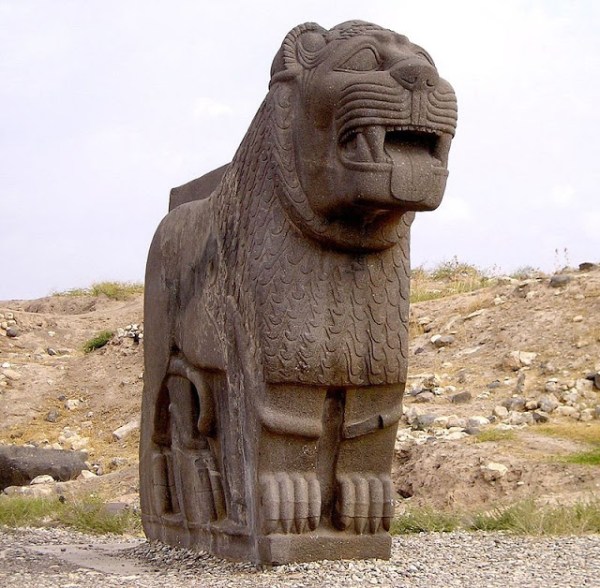
 Lion from the temple (wikipedia picture)


My research shows they worshiped

(1).  Twelve Adityas (12 forms of Surya)

(2).Goddess Nayanatara (Ayn Dara in Hittite language)

(3).Varuna (Tarunhas)

Linguistics show that some time the initial letters are dropped (Nayn Dara= Ayn Dara) and initial letters are changed (T=V; tarunhas=Varuna)


The oldest religious book Rig Veda has all the three gods and goddesses.


Nayanatara= Ayn Dara

Nayan Tara means Star of the eyes (iris). It is a popular Hindu name for girls. Nayantara saghal, novelist, related to Jawaharlal Nehru (India’s first prime minister) is one example. Nayan Tara got corrupted and became Ayn Dara in Syria. Hindus worship goddess in different forms. One of them is Eye of the Goddess; It is worshipped even now in the Naina Devi temple in Himachal Pradesh, India (Naina=Nayana=Eye)  . It is a very popular temple attracting thousands of devotees with EYE of the goddess as the main symbol. It is one of the 51 Shakti Kendras (51 Centres of Goddess Parvati).


Ayn Dara Temple near Aleppo in Syria

Ain Dara temple in Syria belongs to 1300 BCE. It is mentioned in the Hebrew Bible. It is similar to Solomon temple (Word Solomon is also Sanskrit word meaning Surya; Solar=Surya=Solomon=Sulaiman in Arabic).

Nayantara statues are available in Nepal.

As Hindus worship the same Goddess Durga with 51 different names in 51 Goddess temples on the Indian Sub Continent, Middle East people worshipped goddess as Ishtar, Ashtarte (to the Babylonians), Ashtoreth (to the Hebrews), Douga/Durga (in Tunis), Kathayee (in Carthage ) and several other names. If one reads the attributes of the gods, one wold find out that it is one and the same. (Douga and Carthage are place names – named after goddess).


In the Middle East there 3000 gods and goddesses like we find in Hinduism. For a Hindu, it is easy to understand. Same God Shiva is having 1000s of names around India and it is same with Lord Vishnu. Each one has got one special story in these places. For a layman, everything looks different. For a scholar, it is the same God with different names. It is same in the West Asia.

Nayana Devi (nainadevi) Temple in Himachal Pradesh.


There are some proofs to conclude that Ayn Dara was a Hindu temple.

1.Big Lion statues are excavated; lion is the vahana (mount) of Hindu Goddess Durga; even today all the temples take the goddess on lion statue during Hindu festivals in India.

  1. The second proof is the discovery of Massive Foot Prints in front of the temple. I have already explained the worship of foot prints and sandals in my two research articles (see below for the links).

3.One foot step goes into the temple; that is right foot; Hindus are supposed to put the right foot first into the house; newlywed Hindu brides must use her right foot when she comes into the house.

4.Hindus use Foot prints even today to show that god is coming into the house. All the Hindus draw the symbol of foot prints of Lord Krishna on the Birth day of Krishna (Janmashtami) from the gate up to the prayer room inside the house.

5.The whole region of Syria and Turkey were under Hindu rule for 1000 years under the Kassites, Hittites and Mitanni. The world has recognised Mitannian civilization as the Hindu Civilization because of the clay tablets showing Rig Vedic Gods and Sanskrit numbers and Sanskrit names Dasaratha (tushratta), Pratardhana, Sathya Sila =hattusa=hattusili

( Please read my article about Bogazkoy; it is available in all encyclopaedias.)

6.Hindu Girls were married to Egyptian Pharaohs (Please read Amarna letters, Dasaratha letters; Kikkuli’s horse manual;available in all encyclopaedias and in my articles)

7.Hindus have thousand names/Sahasranama for all the gods. Most famous are of Vishnu, Lalita and Shiva. Hittites also used the word THOUSAND GODS OF HATTI. Hittites were polytheists. (hatti=Hittite=Kshatri/ya).


Hittite religion is an amalgam of beliefs, cults and traditions drawn from different regions and cultures.

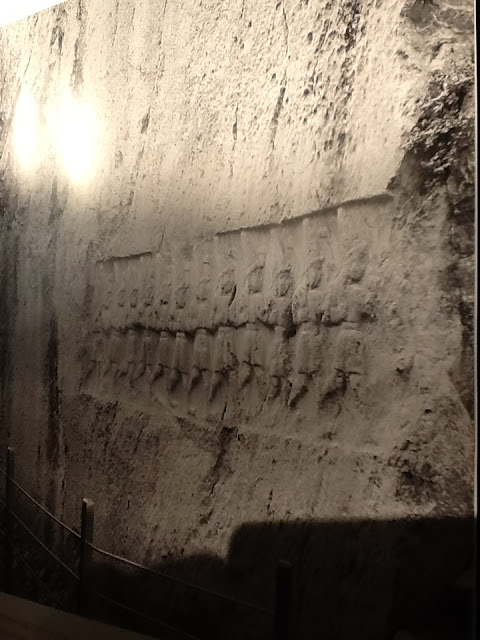
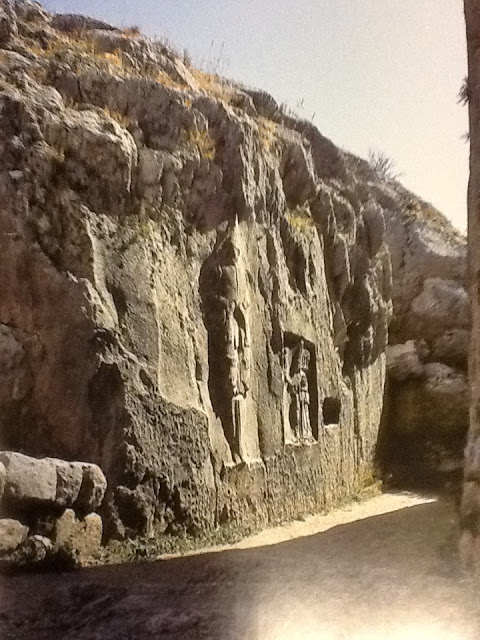
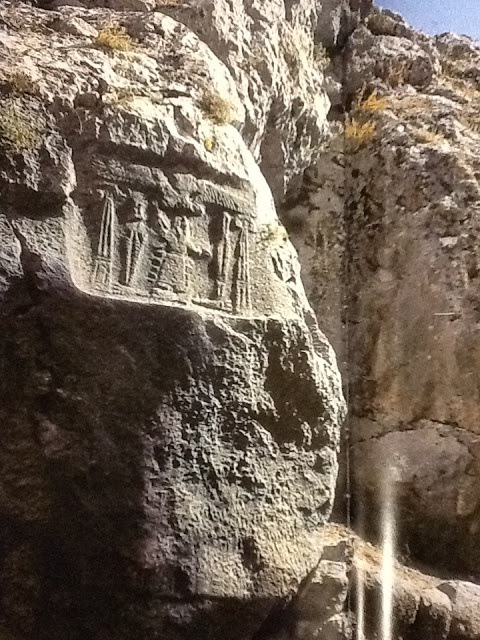
12 Adityas from Wikipedia; location Yazilikaya, Turkey

Varuna:

The main deity of the Hittite Kingdom was the Storm God TARHUNA. It is the Vedic God Varuna , changed as Taruna. He was considered king of all gods. He was a celestial God that brought storms and therefore thunder and lightning were his attributes. It looks similar to Vedic God INDRA. But even in India, when they need rains, they do Varuna Japa (Prayers to Varuna) and not to Indra. His consort was the Sun Goddess of Arinna. It is similar to Gayatri (Sun Goddess). Apart from these Gods, local and regional deities  joined the Hittite pantheon and new names and new stories were created.


Like Hindus, the Hittites considered the sun ,the moon and the stars as Gods. They believed in astrology, predictions and foecasts.


Dwadasa (12) Adityas at Yazilikaya

Dwadasa means Twelve; Aditya means Suns. The twelve Adityas represent 12 months of Sun’s orbit. They are Vedic deities. 12 Adityas were sculptured on huge rocks of Yazilikaya Rock Temple (Please see the picture).


My Old Articles:

Hindu Wonders in a Muslim Country!

Posted on 12 May 2012

Why Do Hindus Worship Shoes?

Posted on 15 August 2012

The Sandals- posted on 24 April 2013


–Subham–

‘Day of the Mother’ was Inauspicious in the Ancient World! (Post No.3797)

Written by London swaminathan


Date: 7 APRIL 2017


Time uploaded in London:- 20-52


Post No. 3797


Pictures are taken from various sources; thanks.


contact; swami_48@yahoo.com


Hittites who ruled Turkey and Syria 3500 years ago practised both burial and cremation like the Hindus. The graves were simple, not like the Egyptian tombs. But the buried food, horses and donkeys with the dead.


But whether they buried the dead or cremated the dead, they believed that the soul would travel t the world of the dead, a bleak and muddy place in the dark earth.


The Hittites thought that that the deceased would be accompanied on this journey by his or her pre-deceased mother who would from the nether world to meet her child; thus, one of the Hittite euphemisms for the day of death was “the day of mother”.


Like the Egyptians, Hittites also believed Kings wold become Gods after death. Statues of the deceased Royals were installed and living king made offerings.

The corpse of the king was burned in the night and the following morning, ashes and bones were collected by women after extinguishing the remaining embers by

pouring beer and wine on it. Statue of the dead king was taken in a procession. Agricultural tools and products are brought and burned. They deposit in the place where the heads of oxen and horses had been before hand. Thus, the decease Hittite king was provided with cattle and horses, grazing grounds, fields, water and all the tools for working the land and harvesting its wealth.


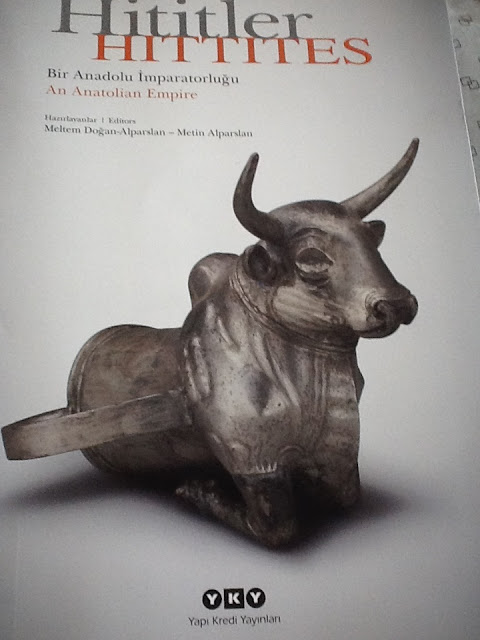
Source book:- Hittites, An Anatolian Empire, YKY, 2013

British Atrocities in India (Post No.3787)

Compiled by London swaminathan


Date: 4 APRIL 2017


Time uploaded in London:- 10-30 am


Post No. 3787


Pictures are taken from various sources; thanks.


contact; swami_48@yahoo.com


Following are the excerpts from the book ‘Orient and Occident’ Written by Manmath C Mallik, Barrister at Law, London (Year 1913):-


Blood Boiling Anecdotes:

Page 110/111


“Neither better- caste Hindus nor Bengalis of any caste would serve foreigners in any menial capacity; but the low class Hindu and Moslem are always available, and these may, by their timid and unintelligent ways, perhaps rouse the foreigner’s ire. Beating of servants is so common in European society outside Presidency towns that an employer that has been an exception to the rule is sometimes heard to brag that he has never thrashed his servants. The thrashing is indirectly encouraged by the judiciary and local police, who, on account either of backstairs influence or of fear of incurring the displeasure of superiors, let a culprit escape justice, except in very grave cases that cannot be hushed up, and even then the murderer is generally let off with a fine of twenty or thirty rupees (E1 5s. to €2), because European juries, composed of clerks and shop- assistants, cannot be persuaded to convict of grave offence a member of their own race.” It is, as a London paper once remarked, cheap homicide.” It is doubtless cheap for the criminal but it is far from cheap for the Government, for every such case undermines its authority and prestige and shakes the popular faith in its capacity to protect its subjects. By law the Government has power to appeal against acquittals or inadequate punishment to the High Court, and when this power is exercised in the more advanced provinces a conviction with a term of imprisonment generally satisfies the claims of justice. In these cases the poor witnesses, being of the class to which the victim belongs, are so browbeaten and frightened when giving evidence that they often contradict themselves in details. Such contradiction is made the excuse for acquittal or for a nominal punishment when a European is the offender; but on much flimsier evidence Indians charged with similar offences are severely punished or sent to the gallows.


Page 114 of ORIENT AND OCCIDENT


“A few cases may serve to illustrate the state affairs. In the first week of February, 1911, a Mohammedan member of the Viceroy’s Council was travelling in the only first-class compartment of a train. A European military officer, joining the train, felt himself too exalted to travel with a native,” and asked the Indian gentleman to leave the compartment, on his hesitating to move as there was no other first-class carriage, the officer forced him, by the threat of using his sword, to get out and to go into a second-class carriage. The Anglo-Indian papers did not report the promotion, usual in such cases, gained by this officer for his “imperial” attitude towards an Indian gentleman. This is by no means an isolated instance.


There is scarcely an Indian judge, Raja, or Councillor (not to speak of humbler mortals) that has not had, when travelling by rail, similar experience of this rude imperialism. In answer to a question in the House of Commons in April, 1911, the Under- Secretary for India stated a case in which a Mohammedan Councillor had left his servant in charge of his luggage in a first-class compartment while he was in the restaurant car. A European sub-engineer of the railway turned the servant out, and forced him to travel to the next station (43 minutes) on the footboard. It was stated that the “imperial” engineer was made to apologize to the Mohammedan Councillor, but it was not stated whether the apology was tendered in the presence of the servant, who was arrested by the police for breach of railway regulations by travelling on the footboard and for failing to commit suicide. The engineer doubtless became a hero in his community and received promotion for his imperial bearing. The treatment of third- class passengers by the lower type of Europeans, as well as by the railway servants generally, may be imagined.


One would have thought that after the beneficent influence produced by the Royal visit cases of assault at railway-stations on Indian gentlemen would be unknown. In January, 1913, a case is reported to have been heard in the second magistrate’s court at Bombay, in which an I.M.S. was charged with pushing and insulting at the Grant Road station a Hindu gentleman, who with his wife wished to get into a first-class compart- ment next to the one in which the I.M.S. was travelling. Hitherto “high-born” personages in East and West have objected to travel with smaller fry in the same compartment, but matters are advancing fast, and humble individuals must


116 ORIENT AND OCCIDENT


not wish to travel in the same train with the “imperial” breed. In this case the Hindu gentleman happened to be an ex-sheriff of Bombay. Although, being an athlete, he was strong enough to knock his assailant down, he preferred to lay a charge, at the hearing of which the culprit was let off with an apology.


One may imagine what would have happened if the position of the parties had been reversed. Europeans of the type of the I.M.S. are better recruiting- sergeants for the extreme Nationalist Party than seditious preachers and writers, and yet the authorities proclaim their helplessness to control them or to protect the people under their care. While Europeans in India indulge in these pranks, Indian gentlemen, however exalted their rank, receive grudging obedience from their servants and scant courtesy from policemen and subordinate officials, who regard every European tag-rag as a greater personage than even Rajas and Nawabs.


At the racecourse at Calcutta the writer once witnessed the Chief of a Tributary State- an honoured guest at the King’s Coronation refused admission to the paddock by the European policeman at the entrance probably because he was dressed in ordinary Indian costume, while every foreigner was being admitted without showing a ticket. A steward luckily seeing from a distance the Maharaja


Page 117


turned away , rushed to the spot and took him in.  These unfortunate incidents are more frequent on railways, and the authorities, instead of punishing the offenders, seem by their inaction and by the approbation of the foreign Press to encourage rudeness in the same way as Colonial harsh treatment of Indians is condoned by the Imperial Government. It is a strange nemesis that so many Moslem gentlemen have recently experienced such rudeness, as if to prove to Moslems generally the falsity of the anxiety of reactionary officialdom to conciliate them at the expense of Hindus. Perhaps the apology is tendered when the offended party is Moslem, while no notice would be taken of insult to a Hindu. Reaction would display greater wisdom if it were to issue private instructions to the “imperial” breed to display their “high-born” manners towards Hindus alone and to conciliate Moslems at every opportunity.


So long as this attitude continues, Indian Nationalism has a substantial ground for its propaganda, and with increasing strength its cry will grow louder that the only security against foreign outrage is to deport the offender. There are people in Britain who object to travel in the same railway compartment with their humbler fellow-countrymen not so well groomed as themselves, and who object to go up in lifts with servants or postmen.


Page119


American Atrocities against Blacks


Matters in India have not yet come to the pass described in a book reviewed in a London Liberal journal in July, 1910, where it is stated that in parts of the United States, when a white man takes a dislike to a negro and shoots him dead, a false charge against the negro of attempting to kill him is pleaded as his excuse;  that such charge is certified by other white men that were never near the place of outrage, and that on such evidence the murderer is acquitted, and the judge comes down from the bench to congratulate the accused and to express regret for putting him on trial.


In India, the people being meek and disarmed, the excuse of threatened assassination or outrage is not available but pretexts for assaults are often found and the criminal goes scot-free. Impartial justice is of prime importance in advancing contentment and national well-being.


Page 136

“The Colonial claim is nothing but an arrogant assertion of superiority of a petted and pampered portion of the Empire, and of their ability to dictate to its rulers. The attitude of British statesmen is incomprehensible, since there is nothing to show that in the hour of need the Colonials will be more helpful to the Empire than Indians, or that they will claim no return for any service they may render to their sovereign In any case, if this civil strife is permitted to continue within the Empire, or to grow as it has been doing for some years, it is vain to expect peace and prosperity under the existing political conditions.


“Asiatics, if not permitted to give blow for blow, which alone will bring the uncultured Colonial to reason, will be driven to seek other means of rousing his conscience and of advancing the happiness of mankind. The British Empire or Dominions or Possessions- by whatever name it may please people to call the British territories in Asia-cannot be safe under present conditions. Until the people of India are fully trusted, and bold statesmanship removes all barriers from their paths of service to their sovereign and country, the British dominions will owe a good deal of their security to foreign alliances or to the goodwill of foreign nations”.


(Thousands of such incidents made Gandhi, Tilak, Netaji, Poet Bharatiyar and others to fight against the British rule in India)


–Subham–

Ghost busting-Hittite Style! (Post No.3784)

Written by London swaminathan


Date: 3 APRIL 2017


Time uploaded in London:- 10-26 am


Post No. 3784


Pictures are taken from various sources; thanks.


contact; swami_48@yahoo.com


Who are Hittites?

Hittite civilization, one of the oldest and most splendid in the world lasted for approximately 450 years and  set its signatures to many firsts in history.


They were the rulers of Turkey (Anatolia) and Northern Syria from the second millennium BCE. They spoke an Indo-European language (close connection with Sanskrit). They ruled from Hattusa ( now known as Bogazkoy in Turkey). They over threw Babylonian Empire. They became very powerful between 1400-1200 BCE and successfully waged war with Egypt.

Like any ancient culture they believed in ghosts and exorcism. Their methods were very funny. They used mouse to get rid of the ghosts. But their spells are similar to the spells in Atharvana Veda.

A voluminous book released in December 2013 with the title HITTITES gives lot of interesting information.

Salient features of the Civilization:

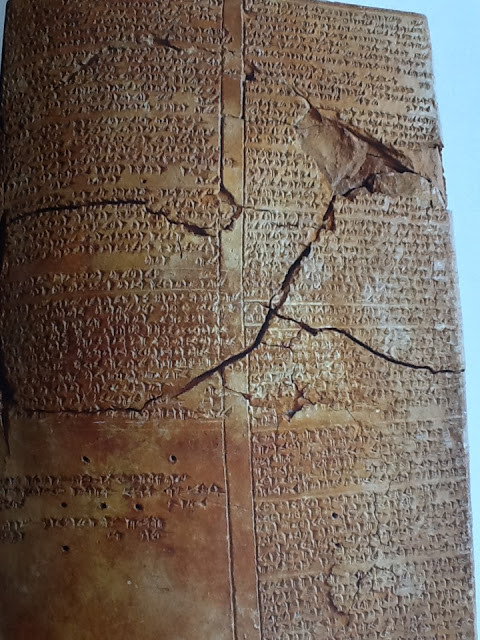
1.Hundreds of clay tablets were discovered in the early part of 20th century. Their texts included an account of training horses and a prayer to the Sky God pleading for relief from a plague epidemic. (The oldest archaeological evidence for Sanskrit language and Vedic deities – 1400 BCE—were discovered here)


2.Once clay tablet referred to the practice of sibling marriage (brother-sister marriage) that was common in Egypt and adjacent regions was hated by the Hittites and they declared it should be punishable by death.


  1. On another tablet the king complains of his son who was ambitious to accede to the throne, “Can one who thinks only of himself in this way really love Hattusa? and proclaims a ne heir apparent, instructing him to “Rule the great men of the country with compassion”.

(Hattusa was the capital city. This reminds us of the Puranic King Venan, Bengal King Simhabahu, who founded an empire in Sri Lanka and the Manu Neeti Choza who killed his own son for violating the rules)


4.Yet another clay tablet includes the advice: “If you sense someone’s treachery consult the Pankus:, impying the existence of the kind of council and making he Hittites the oldest constitutional kingdom in the world.

(My comments: The Rig Veda has reference to such Sabhas and Samitis. if we take the age of Vedas as 4500 BCE, suggested by Herman Jacobi and B G Tilak, then Hindus are the first to have constitutional assembly; later they developed into Five people council and Eight People Council in classical Tamil period and Classical Sanskrit literature; but we don’t have archaeological evidence).


  1. The most important of all the clay tablets is that bearing history’s first written treaty, concluded between the Hittites and Egyptians after the Battle of Kadesh, which ended without a conclusive victory for either side. According to this text the Egyptian pharaoh Ramses II and the Hittite King Hattusili III pledges to “maintain friendship, brotherhood and their great kingdoms’ against the common threat posed by the Kingdom of Assyria. From that time on the parties are to show mutual respect for the sovereignty of each, preserve amity between them for ever, and act in alliance against enemy attack. Prisoners and deserters were to be voluntarily and unconditionally returned without subjecting them to violent punishment, causing any tears to flow from their eyes, or taking revenge on their wives and children” This respect for human rights was the most significant characteristic distinguishing the Hittites from their neighbours in the Near East.”

(My comments: This treaty is wonderful indeed! This is the template now we use in all our International Treaties; but Hittites were not the first; Hindus were the first. Mahabharata and Ramayana have such treaties; Sangam Tamil Literature commentator Nacchinarkiniyar gives vital information about a Peace Treaty between the Sri Lankan King Ravana and a Tamil Pandya King. The treaty ‘signed; in front of Agni (Fire between Rama and Sugriva clearly says from this day onwards your enemy is my enemy and my friend is your friend as well; even in the same area Mitanni an kings made an agreement by quoting Rig Vedic deities; but once again we don’t have archaeological proof; but the Hittites had it).

Chasing the Ghost!

“A substantial body of Hittite magic rituals provides us with ample information on ceremonial rituals that served therapeutic and apotropaic purposes. These rituals were used to repel evil and remove impurity and they were performed at the client’s place. The ultimate cause of the client’s impurity could be demons, ghosts, witchcraft, slander, contact with impure substances, the transgression of taboos, or divine anger. The female expert that figures most prominently in the texts is called the ‘old woman’, while he best known male expert is the ‘diviner’.


Typical elements of Hittite magic rituals include a variety of symbolic actions and gestures. Evil and impurities were transferred to substitutes, such as figurines and animals. The substitutes could then be disposed of or driven away.


In one ritual, the evil affecting the patient is transferred on to a mouse: Tin is attached to the patient’s right hand and foot by means of a bowstring. The tin is then taken off and tied to the mouse with the bowstring. Then the performer of the ritual drives the mouse away and assigns it to two hostile demons that have to be soothed: “ I have taken away the evil from them. I have wrapped it around a mouse. Let this mouse carry it through the mountains, deep valleys, on long roads… Zarniza, Tarpatassa, you take it”.


This is one of the many types of rituals.


–Subham–


11 Egyptian Kings with Same Name: Ramesses! (Post No.3744)

Written by London swaminathan


Date: 21 March 2017


Time uploaded in London:- 19-38


Post No. 3744


Pictures are taken from various sources; thanks.


contact; swami_48@yahoo.com


Egypt has many wonders such as the Pyramids and Sphinxes; over 100 pyramids and several sphinx statues! Apart from the gigantic monuments, the history of Egypt itself has many wonders. One of the wonders is the long reigns of the kings. Historians around the world allocate 20 years for every king on an average. But Egyptian kings ruled for 90 years, 80 years, 70 years, 60 years according to historians. This is incredible and impossible. Just to create excitement and interest, historians, like our tourist guides, created lot of stories. When Kalhana, author of Rajatarangini, said that the kings  Pravrasena, Siddha, Hiranyakula, Vasukula, Baka, Nara, Gopaditya and Aksa  ruled for 60 years each, the historians did not believe him and never entered them into our history books. Same Kalhana in his Rajatarangini, gave Mihirakula 70 years reign and a Tamil verse gave Karikal Choza 83 years  which the historians ridiculed. But in Egypt’s case, they believed whatever said by the people who lived 3000 years after them! This is business; tourist business; Book writers make millions and tourism industry is making billions.

Here is the breakdown of reign by some famous ancient Egyptian kings:-

Pepi II – ruled for 94 years! became king at the age of six and died at the age of 100!

Ramesses II – 64 years

Narmer – 64 years

Aha (Hor) -64 years


In fact, history was first written by the Hindus in their mythologies (Purana). No religious scripture in the world includes history as a compulsory section. But Hindu Puranas must have a section called Dynasties of the Kings. This is one of the five sections of all the Puranas.


When the historians found out lot of discrepancies in the Sumerain King list given by Berossus and others, in the Egyptian king lists given by Manetho and others, they made lot of patch work, additions, omissions and commissions, and presented a “full history”.


When the Puranas gave a long list of kings, which even Megasthanes believed, they simply did not enter it into History books. When the Hindu Panchang (almanac) gave the official beginning of Kaliyuga as 3102 BCE, they ridiculed it. But they began all the histories including Chinese, Mayan, Babylonian, Egyptian histories from 3000+ BCE. They didn’t even know that it was the starting year of the Kaliyuga. All histories around the world began in a year very close to Kaliyuga!


11 Kings with same name!

Hindus are the ones who have the highest number of similar names in the list of kings. VIKRAMADITYA is used by several kings from Kanyakumari to Kashmir for over 2000 years. Probably Egypt comes next with 11 kings holding the same name Ramesses.

The name itself sounds very interesting; knowledgeable people and greatest ascetic of modern times Kanchi Paramacharya (1894-1994) think that there is a Hindu influence of Ram; others think it may be Lord Shiva, because all Ramesses kings have snake over their heads like Lord Shiva. there is a reason to believe in such theories because all these came only after Hindu contacts.

( Please see encyclopaedias for more details about Dasaratha letters, Amarna letters and Mitanninan Hindu king’s daughters marriage with Egyptian kings and sending two goddesses statues (Durga or Lakshmi?) to Egyptian Pharaoh etc).

Now let us look at some interesting details about these 11 kings:

Ramesses I (1295-1294 BCE)

He was a soldier turned Pharaoh! ruled only for one and half years. He was the founder of the Nineteenth Dynasty.

Ramesses II (1279 – 1213 BCE)

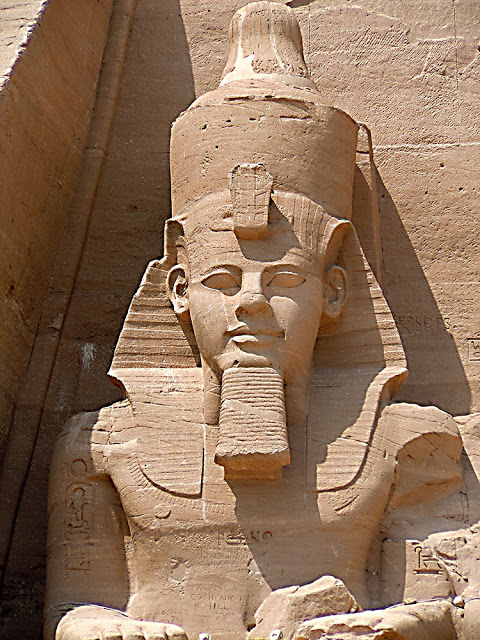
He ruled Egypt for 67 years! He became a king when he was twenty years old. He was famous for his huge statues. He built gigantic structures, most of them containing huge representations of himself!

He had several wives and had over 100 children! He beat Hindu Dasaratha in marriage and Hindu Kuchela (Sudhama) in fathering children!

He was always portrayed with his pet lion in battlefields. He fought a war with the Hittites at the city of Qadesh, but was defeated. But like modern politicians, he depicted the outcome of the war as a big victory according to his inscriptions. His temple is in West Thebes and called Ramesseum. English poet Shelly wrote Ozymandias based on Ramesses’ broken statue.


Ramesses III (1184 BCE – 1153)

World’s first labour strike happened during his reign at Deir El Medina. He had to deal with the invasion of Sea Peoples. He defeated them and inscribed it at his temple in Medinet Habu. He died because of a harem plot. He might have been murdered.

Like Hindu Kings he made lot of grants to Egyptian temples. They are all recorded on papyrus by his successor and it is known as The Great Harris Papyrus.

Ramesses IV (1153-1147 BCE)

He settled the labour dispute which began in the previous king’s period. He did many mining expeditions to get good stones for the temples. He prayed to Gods that he should also live like his predecessor. But Gods had different plans and he died in the sixth year of his rule.

Ramesses V (1147-1143 BCE)

Corruption among temple priests grew in his time. An enquiry was ordered and the corruption was exposed. Ruled only for five years.

He had a long list of hollow titles:

Living Horus (god of Egypt)

Mighty bull

Great in Victory

Sustaining the two lands (Upper and Lower Egypt)

Favourite of the Two Goddesses

Mighty in Strength; repulser of Millions

Rich in Years

Protector of Egypt

Filling Every Land with Great Monuments in His Name

Son of Re (Solar God)

Lord of Diadems and several more!!


Ramesses VI (1143-1136)

It is thought that he came to rule because of an insurrection against his father Ramesses V.

Ruled only for a brief period.

Ramesses VII (1136-1129BCE)

Little is known about his rule; prices rose alarmingly and people became angry. He ruled for seven years.

Ramesses VIII (one year rule)

He ruled for one year.

Ramesses IX (1126-1108 BCE)

He ruled for 17 years. He built extensively and gave special attention to Heliopolis (Surya Puri). During his reign pillaging of royal and private tombs came to light. Even 3000 years before our time such scandals happened. Since there were treasures in tombs, people started plundering them. He ordered an investigation into the scandals and moved the mummies of the kings to a safer place.

Ramesses X

Ruled for ten years. Nothing remarkable happened.

Ramesses XI (1097- 1069 BCE)

He was the last of the Ramessid kings, the eleventh of the name, proved to be one of the longest lasting, reigning for twenty-seven years. He had to tackle the attacks of tribesmen. Priests in Thebes became very powerful and challenged his authority. He even sent one priest out of the country. Priests of God Amun became richer and more powerful than kings! Number of tomb robberies were recorded and court investigations launched. Kings were slowly losing control from his time.

Source: Who is who in Ancient Egypt by Michael Rice.

My Research Articles on Egypt

Please Read my earlier Posts:—

Did Indians build Egyptian Pyramids?

27 august 2012

Hindu Gods in Egyptian Pyramids

16 september 2012

Sex Mantras and Talismans in Egypt and Atharva Veda

26 september 2012

Vedas and Egyptian Pyramid Texts

29 August 2012

Vishnu in Egyptian Pyramids (Part 3)

5 september 2012

More Tamil and Sanskrit Names in Egypt

Research paper written by London Swaminathan
Research article No.1413; Dated 15th November 2014.

Flags: Indus Valley-Egypt similarity

15 october 2012

Hindu Mudras in Egyptian and Sumerian Statues (Posted on 7 October 2012)


First Homosexual King in History! (Post No.3692) 5-3-2017


The Great Scorpion Mystery in History – Part 1 (posted 10 November 2012)
The Great Scorpion Mystery in History – Part 2(posted 10 November 2012)


–Subham–


River Ganges in Sumerian Culture (Post No.3731)

Written by London swaminathan


Date: 17 March 2017


Time uploaded in London:- 8-05 am


Post No. 3731


Pictures are taken from various sources; thanks.


contact; swami_48@yahoo.com


Enki – River Ganges in Sumerian Culture


Holy River Ganga (Ganges) is so famous and so holy that wherever Hindus went they named at least one river after Ganga. We see Ganga in River Mekong (Ma Ganga) in South East Asia, Maveli Ganga in Sri Lanka, Congo in Central Africa etc. Sumerians also named God Enki after River Ganga.


Enki is the Sumerian god of the waters and wisdom. Akkadians called it Ea.


Both Enki and Ea are corrupted Sanskrit words:

Enki= Ganga

Ea – Toyam/water


But Enki is a male god in Sumerian; His abode was subterranean sweet water ocean Apsu.

Apsu is also a Sanskrit word for water (Apa= Apsu).


In Mesopotamian flood myths, Enki appears as the protector of humanity. Lot of stories are linked to Enki in course of time. This is because the local gods got mixed up with Enki. More over various cultures layered one over the other and people thought all are same.


Enki was worshipped in Iraq (Mesopotamia) between 3500 BCE and 1750 BCE. Hindu migration started towards Europe and West Asia 8000 years ago according to the latest Genetic research. Cave paintings in Bhimbetka and other parts of India proved that human occupation was there as early as 50,000 years ago in the heart of India (Madhya Pradesh etc).

Sumerians believed that Enki fills the Iraq rivers Tigris and Euphrates. Enki is perceived to fill the two rivers with sacred sweet water. This Sumerian belief is a typical Hindu belief. Hindus believe that all the rivers in India gets Ganga water on holy days. On Deepavali (Diwali) day, all the waters in any part of India is considered Ganga water. Tamils exchange greetings in the morning “have you had Ganges bathing today?” This is a traditional greeting for Deepavali.


When Kumbamela is celebrated every four years, Ganges visits different rivers in India. Mahakumbamela is celebrated every 12 years at Prayag (also known as Allahabad).


Whenever they dip in any water they recite the Punya Nadhi (River Hymn) sloka. Ganga Sindhusca Kaveri, Yamuna ca Saraswati……… The meaning is seven rivers are sacred and Ganga stands first. Hindus always keep Ganges water at home and mix it with other waters. Just by adding a drop of Ganga water they consider the whole water is from the Ganges. Sumerians also believed that Enki floods the rivers in Iraq (old Mesopotamia).


Enki is associated with Creation myth in Sumerian Civilization. Though the special meaning was Ganga , the common meaning was water for Enki. No wonder water is associated with creation. All the major cultures have the Flood Myth.


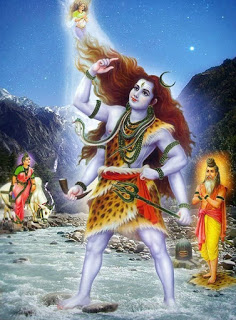
He is usually represented as a figure in typical horned head dress and tiered skirt with two streams of water springing from his shoulders or a vase and including leaping fish. This is again a Hindu story. Ganges is coming from the head of Lord Shiva and is depicted in all the pictures. Since Hindus migrated to Sumerian lands thousands of years ago, they had only vague memories. Fish stands for the Fish Avatar (Matsyaavatar) of Lord Vishnu.


The water coming from a vase is also a typical Hindu story. Hindus believe that the South Indian River Kaveri came from the vase of a great sage named Agastya. Ganges is also represented in a vase in every Hindu house.


Some of the images in Sumerian would remind any Hindu the penance done by the King Bhageeratha to bring the celestial Ganges to earth. This is a story about geology and a great engineering marvel. Around 1800 or 2000 BCE, big natural catastrophes happened in the Himalayan region. As a result of this great Saraswati river disappeared; Ganges changed its course; Indus valley civilization disappeared because of drought and floods. At that time Bhageeratha,who was a great engineer diverted the Ganges towards bay of Bengal via the modern Gangetic plain.


Like the Egyptians relocated Abu symbol  from the course of Nile river, Bhageertha removed a big blockage in the course of Ganges which was considered a big Engineering marvel. This is depicted in Mahabalipuram (Tamil Nadu Pallva Monuments) and other sculptures. Puranas say that Ganges comes from the head of Lord Shiva. Sumerians also has depicted this scene.

Enki and Egypt

Michael Rice, in his book Egypt’s making, writes,

“In Egypt the hieroglyphic symbol – ‘foot with a jar’ from which water is pouring, meant PURE, CLEAN.

The Pyramid text Utterance 513says,

“Be pure; occupy your seat in the bark of Re; row over the sky and mount up to the distant ones; row with the imperishable stars, navigate with the Unwearyingly Stars.”

(my comments: Hindus also place Ganges at two levels; one is Ganges on earth/Himalayas

and the second is Aakasa Ganga (Sky Ganga). The Milky Way galaxy that contains solar system is called Akasa Ganga in Sanskrit literature)


“One of Enki’s shrines is described as ‘the clean place’ and ‘pure’ and the idea of distant journeying is compelling, at least in the context of a review which started out on this voyage through the Egyptian perceptions of their island connections. The association with purity and water is also notable”.

(My comments: The words clean, pure etc show that they meant only Ganga; this confirms Enki is Ganga; Hindus sprinkle Ganges water on the day of Purity Ceremony known as Punyaaha Vachana)


Dictionary of Ancient Near East adds,

“Enki’s most important cult centre was the E-abzu at Eridu. As a provider of fresh water and a Creator God and determiner of destinies, Enki was always seen as favourable to mankind. In the Sumerian poem ‘Inana and Enki’, he controls the ‘me’ concerned with every aspect of human life and in ‘Enki and the World Order’, he has the role of organising in detail every feature of the civilized world. He also appears as a powerful and cunning deity in several Hittite Myths”.


New Larousse Encyclopaedia of Mythology adds:

“Enki or Ea, god of the Apsu, was the principal divinity of the liquid elements. But he had a daughter, the goddess NANSHE who shared his functions. She was the goddess of springs and canals. Like her father she ws particularly honoured in Eridu, the holy city, which was situated at the mouth of Apsu. She was also worshipped at Lagash each year, on a canal near the city, there was a procession of boats to escort the sacred barge in which the Goddess rode”.

(My comments: In addition to Sanskrit words used in the above (enki=Ganga, Ea=Toyam, Apsu=apa), note that Eridu is considered Gangotri of Sumerians. Lagash is Kailash. Sumerians vaguely remembered all the Indian place names and they changed or got corrupted in course of time. even today famous city Madurai in Tamil Nadu is called Marudai; no wonder Kailsh became Lagash! The boat festival is the Ganaga mata festival with Goddess Ganga on the boat.)

“Nanshe’s emblem was a vase in which a fish swam. Finally the rivers were deified. They were invoked not only as the creators of all things but also the instruments of the Gods’ justice”.

(My comments: India is the only country in the world where all the rivers are deified; even today they worship the rivers. There are even statues for all the River Goddesses and festivals around the year. They considered famines, droughts and floods are God’s punishments for their evil deeds; now environmental scientists agree with the Hindus: if we abuse Nature it punishes us!)


Ganges is praised in the Rig Veda. When Saraswati River existed Ganges occupied a secondary place. When Saraswati river disappeared, Ganga came to first place. So Ganges and Enki can be used to find out the periods of civilization. My guess is that Sumerian, Babylonian and Mesopotamian civilizations came when Ganga was considered most sacred. That means Rig Veda is earlier than all these civilizations. Nicholas Kazanas, greek scholar, proved that Rig Veda was composed before 3300 BCE through linguistic research. Herman Jacobi of Germany and BG Tilak of India have dated Rig Veda before 4500 BCE through astronomical data.

Now  the samples of underground Saraswati River proved scientifically that  the Vedic civilization was older than the previous conjectures.

–Subham–