Christian Conversion Anecdotes (Post No.4693)

Date: 2 FEBRUARY 2018


Time uploaded in London- 11-59 am


Compiled by London swaminathan


Post No. 4693


Pictures shown here are taken from various sources such as Facebook friends, Books, Google and newspapers; thanks. Pictures may not be related to the story. They are only representational.


WARNING: PLEASE SHARE MY ARTICLES; BUT DON’T SHARE IT WITHOUT AUTHOR’S NAME AND THE BLOG NAME. BE HONEST; OTHERS WILL BE HONEST

WITH YOU.


I gave everything to my sister!


A woman was testifying of her conversion in a revival meeting She said,

I was very foolish and vain. Worldly pleasures, especially the fashions were my only thought,

I was fond of silk, satins, ribbons and laces. But my friends, when I saw they were dragging me down to perdition I gave them all to my sister.


Xxxx


Navy of the Lord!

A young man who had formerly attended Dr Bethune’s meetings , after an absence of a few years called upon him and said,

Dr Bethune, I have become a Christian since I saw you, and have joined the army of the   Lord.

I am very glad to hear it,

said the doctor, and added, with what denomination have you become connected?

The Baptists.

“Oh, the Baptists”, said Dr Bethune,

Why they are not the army, but the Navy of the Lord.

((Baptists are Christians distinguished by baptizing professing believers only (believer’s baptism, as opposed to infant baptism), and doing so by complete immersion (as opposed to affusion or sprinkling))

Xxxx


Brandy is better than Water!

A Methodist in America, bragging how well he had instructed some Indians in religion, asked one of them,

If he had not found great comfort last Sunday after receiving the sacrament.


“Aye, master, replied the savage, but I wished it had been brandy”.

(wine or water or bread is given during sacrament)

Xxxx

Water is Good, but…

George Cruikshank having become a teetotaller, showed all the vehement zeal of a convert. Douglas Jarrold, meeting him, shortly after his conversion, exclaimed,

Now George, remember that the water is very good anywhere except upon the brain


Xxxx

During the Civil war, the late Colonel Gabe Boucher organised a regiment which he controlled as a dictator.

I am a humble servant of the Lord, said an itinerant evangelist who had wandered into camp one day, endeavouring to save the souls of the unfortunate.  I have just left the camp of the Massachusetts, where I was instrumental in leading eight men into paths of righteousness

Adjutant, thundered Colonel Bouch, after a moment’s pause, detail ten men for baptism. Nod — D Massachusetts regiment shall beat mine for piety.”

Xxxx SUBHAM xxx


CHRISTIAN FANATICS DISAPPOINTED (Post No.4684)

Date: 31 JANUARY 2018


Time uploaded in London- 8-02 am


Compiled  by LONDON SWAMINATHAN


Post No. 4684


Pictures shown here are taken from various sources such as Facebook friends, Books, Google and newspapers; thanks. Pictures may not be related to the story. They are only representational.


WARNING: PLEASE SHARE MY ARTICLES; BUT DON’T SHARE IT WITHOUT AUTHOR’S NAME AND THE BLOG NAME. BE HONEST; OTHERS WILL BE HONEST

WITH YOU.


Bigotry Anecdotes


BURN THE LIBRARY!

In connection with the destruction of the 700 000 manuscript volumes of the Alexandrian library, the Caliph Omar said

Either these books conform to the Koran or they do not. If they do, they are not needed; if they do not, they are positively harmful. Therefore, let them be destroyed.


Xxx

WHAT DID CHRISTIANS DO?


What did Puritans come to this country for?

Asked a teacher in a class of American history.


To worship in their own way, and make other people do not same, was the reply


Xxxx

FANATICS DISAPPOINTED!


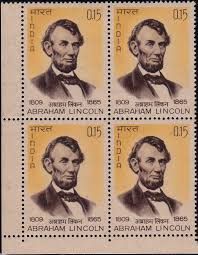
The Young Men’s Christian Association appointed a committee to go to President Lincoln to protest his appointment of the Rev Mr Shrigley as hospital chaplain in the army. When they first approached, the president mentioning Mr Shrigleys name, he misunderstood them and thought they had come to praise his choice and said,

“Oh yes, I have sent it to the Senate. His testimonials are highly satisfactory, and the appointment will no doubt be confirmed at an early date”.

Hastily the committee spokesman protested,

“But sir, we have come not to ask for the appointment, but to solicit to withdraw the nomination, on the ground that Mr Shrigley is not evangelical in his sentiments”.

“Ah! Said the president, that alters the case. On what point of doctrine is the gentleman unsound? “

“He doesn’t believe in endless punishment”, was the reply.

“Yes, added another member of the committee, he believes that even the rebels themselves will finally be saved; and it will never do to have a man with such views as hospital chaplain”.


The president was silent for a moment. Then, regarding the expectant faces about him, he said with emphasis,

“If that be so, gentlemen, and there be any way under heaven where by the rebels can be saved, then let the man be appointed!”


Xxx

TRAGIC GALILEO


There are few more tragic records of the struggle of the human mind and spirit against bigotry than this text of Galileo”s recantation before the Holy Inquisition


“But because I have been enjoined by this Holy Office altogether to abandon the false opinion which maintains that the sun is the centre and immovable, and forbidden to hold, defend or teach the said false doctrine in any manner and after it had been signified to me that the aid doctrine is repugnant with the Holy Scripture.


I abjure, curse and detest the sad heresies and errors…….. and I swear that I will never or assert anymore in future say or more anything verbally  or in writing , which may give rise to a  similar suspicion of me”.

–SUBHAM–


TAMIL VALLUVAN AND WORLD PHILOSOPHERS on NUMBER EIGHT! (Post No.4665)

WRITTEN by London Swaminathan 


Date: 26 JANUARY 2018


Time uploaded in London – 16-24


Post No. 4665

Pictures shown here are taken from various sources such as Facebook friends, Books, Google and newspapers; thanks.


WARNING: PLEASE SHARE MY ARTICLES; BUT DON’T SHARE IT WITHOUT AUTHOR’S NAME AND THE BLOG NAME. BE HONEST; OTHERS WILL BE HONEST WITH YOU

TAMIL VALLUVAN AND WORLD PHILOSOPHERS on NUMBER EIGHT! (Post No.4665)

Number Eight stands for Stability

Tiru Valluvar (Valuvan in short) says in his monumental didactic work TIRUKKURAL ,


“The head that does not bow before the Lord of Eight Attributes,

In prayer, is like a body with all its senses defunct”

–Kural 9

Lord of Eight Attributes is used both in Saivism and Jainism. Buddhists and followers of Confucius also use it for eight fundamental virtues.


In the commentary for this Kural 9 (couplet) Eight Miraculous powers (Ashta Ma Siddhis in Sanskrit) are also attributed to God; normally they are attributed to the devotees of gods who have attained eight miraculous powers.

1.Anima :power of becoming the size of an atom and entering into smaalest life.

2.Mahima : power of becoming mighty and co-extensive with the universe.

3.Laghima : capacity to be light, though big in size

4.Garima : capacity to be heavy though seeming small in size

5.Prapthi : capacity to enter all the worlds from Brahmaloka to Pathalam

6.Prakasyam : power of disembodying and entering into other bodies and going to heaven and enjoying whatever one wants from one place

7.Isithvam :  having the creative power of God and control over the sun, the moon and the elements

8.Vasithvam : power of control over kings and Gods.


Chinese Philosopher Confucius


According to Saivite philosophy the eight qualities are 1.Self dependence 2.Immaculate body, 3.Natural Understanding, 4.omniscience, 5.nfinite Detachment, 6.Infinite mercy, 7.Omnipotence and 8.Limitless bliss


According to the Jains, the eight fold qualities are 1.Infinite knowledge, 2. Infinite vision, 3. Infinite energy, 4. Infinite joy, 5.Indescribability, 6.Beginninglessness, 7.Agelessness and 8.Deathlesness

Picture:Eight qualities in Confucianism

Lord Krishna’s Eight

In the Bhagavad Gita Lord Krishna says (7-4)

“Earth, water, fire, air, ether, mind and understanding and self sense- this is the eight fold division of my nature”


‘There is no end to My Divine Attributes’ (10-40)


Dutch philosopher Spinoza described God as ‘consisting of infinite and eternal attributes’.

Spinoza’s metaphysics of God is neatly summed up in a phrase that occurs in the Latin (but not the original Dutch) edition of the Ethics: “God, or Nature”, Deus, sive Natura: “That eternal and infinite being we call God, or Nature, acts from the same necessity from which he exists” (Part IV, Preface)


It is interesting to see Number Eight is used in all the oriental religions. Though Buddha did not talk about God, he insisted eight qualities for human beings. They are Right view,  Right resolve,  Right speech, Right conduct, Right livelihood, Right effort, Right mindfulness, and  Right concentration.


The Eight Confucian virtues are 1. Benevolence, 2.Righteousness, 3.Courtesy, 4.Wisdom, 5.Fidelity, 6.Loyalty, 7.Filial Piety and 8.Service to elders.


The Samurai warriors of Japan has a Bushido (way of warriors) code with eight virtues:

1.Rectitude or Justice, 2. Courage, 3.Benevolence or Mercy, 4.Politeness, 5.Honesty and sincerity, 6.Honour, 7.Loyalty and 8.Character, Self-Control. These 8 virtues are influenced by Buddhism, Confucianism and Taoism.


xxx Subham xxx

WHY DOESN’T LAKSHMI LIKE THE BRAHMINS? (Post No.4636)

Written by London Swaminathan 


Date: 19 JANUARY 2018


Time uploaded in London 17-15


Post No. 4636

Pictures shown here are taken from various sources such as Facebook friends, Books, Google and newspapers; thanks.


WARNING: PLEASE SHARE MY ARTICLES; BUT DON’T SHARE IT WITHOUT AUTHOR’S NAME AND THE BLOG NAME. BE HONEST; OTHERS WILL BE HONEST WITH YOU.


Chanakya says some strange things about the Brahmins and the End of Kali Yuga


Chanakya says in his Chanakya Niti Sastra,

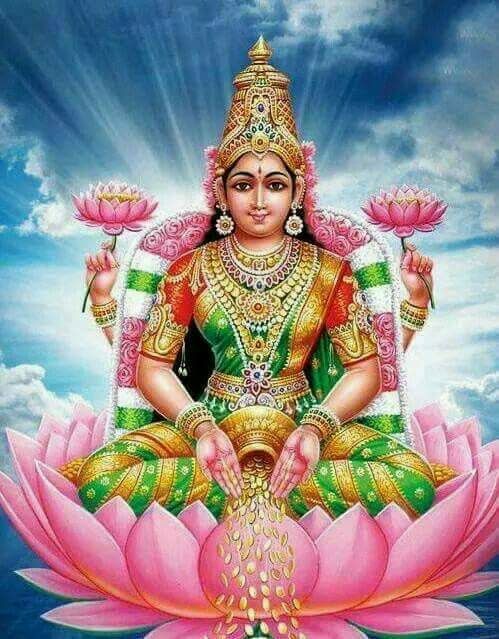
“Lakshmi’s words to Vishnu: O Lord, in disgust I avoid always the house of the Brahmins because the angry one (Agastya) drank my father (ocean), the sage Bhrgu hit with his foot my husband (Vishnu), right from childhood Brahmins carry my adversary (Sarasvati) in the cavity of their mouth, day and day out destroy my house (the lotus) for offering worship to Siva.”


Chapter 15, sloka 16


This sloka reveals two things:

1.There is a proverb in Tamil, Where is money (Panam), there is no Virtue (Gunam). In other words Lakshmi, Goddess of wealth never resides where there is Sarasvati, Goddess of Education. This is very true in Indian context. Most of the poets lived in acute poverty. Bharati, the greatest of the modern Tamil poets, suffered from poverty till his death. So the message is that Money and virtue don’t go together.


2.The second thing is a compliment to Brahmins, not a complaint against the Brahmins. Sarasvati lives in their tongues from their early childhood. This means they are well versed in the Vedas. Vak Devi and Sarasvati are praised in the Rig Veda, the oldest religious book in the world. And the Brahmins used the lotus flower for Siva Puja (flower offering to Lord Siva)

Fame comes from Luck!


In another sloka, Chanakya praises Lord Vishnu indirectly.

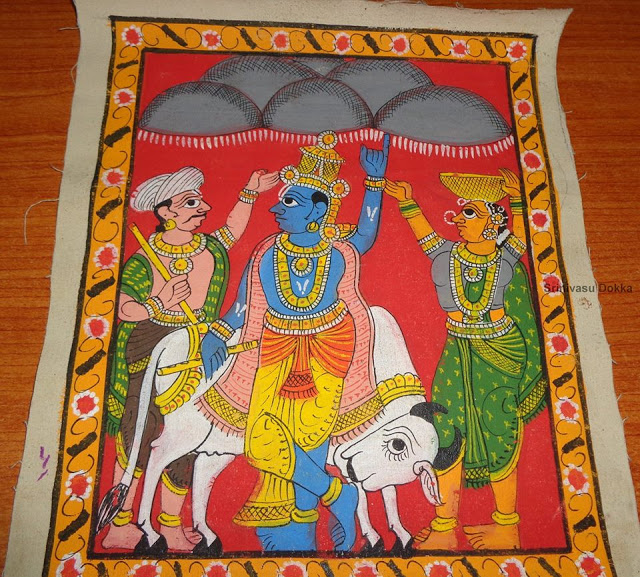
“A small hillock on the earth was held by you on a finger with ease. Because of this your praise is sung under the name of Govardhana both in the heaven and the earth.

Yasoda’s remark “I cary you, O Kesava,  the carrier of all the worlds, on the tips of my breasts. (Still nobody sings my praises), O Kesava, enough of words. Fame comes from luck”

Chanakya Niti, Chapter 15, sloka 19.


These are called Nindha Stutis. That is you criticise someone in words explicitly, but the real implicit meaning is that you praise him or her. You have to read between the lines.


Chanakya’s Strange Prediction

Chanakya, the greatest genius of ancient India, made a strange prediction in one of the slokas:-


“Hari leaves the earth with the passage of ten thousand years in Kali Yuga, in the half of that period does the Ganga water and in the half of that village deity”.


It is very strange that the village deity disappears first, then the River Ganges disappears and then only God leaves the earth. So we may measure  the progress of Kaliyuga  by the Ganges.

The sloka is as follows:

Kalau dasa shasreshu Harisyajati medhiniim

tadardhe jahnaviitoyam tadardhe gramadevataa

Chapter 11, sloka 4

We have already passed 5000 year limit In Kaliyuga. But Ganga is still flowing but not with its original pristine purity. So Chanakya might have mentioned Deva year and not the human year.

–Subham–

WOMAN AND YOGI- CHANAKYA (Post No.4624)

Written by London Swaminathan 


Date: 16 JANUARY 2018


Time uploaded in London  8-50 am


Post No. 4624

Pictures shown here are taken from various sources such as Facebook friends, Books, Google and newspapers; thanks.


WARNING: PLEASE SHARE MY ARTICLES; BUT DON’T SHARE IT WITHOUT AUTHOR’S NAME AND THE BLOG NAME. BE HONEST; OTHERS WILL BE HONEST WITH YOU.


The same object appears in three different forms as it is viewed. The female body appears corpse to Yogins (saints), a charming figure to the love-stricken and just flesh to dogs- says Chanakya in his Niti sastra.


eka eva padaarthastu tridhaa bhavati diikshitah

kunapaha kaaminii maamsam yoogibhih kaamibhihsvabhih

–chanakya niti, chapter 14, sloka 16


My comments

Chankaya has explained it beautifully well; let us explore it further.


If a young and beautiful lady sits with her brother, he gets some affectionate thoughts. Oh, how lucky I am to get such a lovely girl as my sister; she should be married in a good family and live happily.


If a youth sits with her or nearby her in the bus, he gets amorous feelings; Oh, how much happy I would be if I get this girl as my wife.


If a very little baby sits next to her, it even hugs that girl as if it hugs its own mother; it gets the feeling of bond between a mother and a baby- the supreme form of love; each expecting nothing from the other except love and protection.


Now where is pleasure coming from? is it from the beautiful skin of that youthful young girl? or is it from the mind of the person sitting next to that beautiful girl?


Saints say that the flesh of a person or the skin of a person is not the source of permanent pleasure. If it is the source of permanent pleasure it should do that with the brother, youth, child, saint and others for ever. It is not permanent. So the saints say, “ when I can show you that which gives you permanent pleasure, bliss, Ananda to everyone, why do you still go to other sources?”


Chanakya said it in two lines; saints give long lectures to illustrate this point.


Saints give another example as well; a dog chews the bone of another animal and the sharp ends of the bone pricks dog’s mouth and makes the blood to ooze out; the dog finds it very tasty and thinks that the blood comes from the bone and bites it more vigorously. Is it a wise dog or a foolish one?


But saints never advise all to become saints in the first place. They say, Go and Enjoy temporary pleasure in the family life, but remember and realise that it is not permanent!


–Subham–

Manu’s Mystery about Sarasvati, Black buck, Mlechcha land and Gold Medicine (4527)

Written by London Swaminathan 


Date: 21 DECEMBER 2017 


Time uploaded in London- 18-16


Post No. 4527

Pictures shown here are taken from various sources such as Facebook friends, Books, Google and newspapers; thanks.


Manu’s Mystery about Sarasvati, Black buck, Mlechcha land and Gold Medicine (4527)

Manu Smrti, also known as Manava  Dharma Sastra, has lot of things which are not explained in full; so the mystery continues. The age of Manu Smrti is also wrong when we look at these mysteries. The mention of River Sarasvati, Mlecha (barbarians) land, Black buck, administering gold to a newly born child, the boundary of three different areas Brahmavarta, Brahmirishi desa and Aryavarta – all these need further explorations.

Look at the following slokas in the second chapter of MS; they deal with Ayurveda, zoology, geography and sociology (My comments are given at the end of these slokas)

CHAPTER II.

  1. The knowledge of the sacred law is prescribed for those who are not given to the acquisition of wealth and to the gratification of their desires; to those who seek the knowledge of the sacred law the supreme authority is the revelation (Veda=Sruti).
  2. But when two sacred texts (Sruti) are conflicting, both are held to be law; for both are pronounced by the wise (to be) valid law.
  3. For example, the fire sacrifice may be (optionally) performed, at any time after the sun has risen, before he has risen, or when neither sun nor stars are visible; that (is declared) by Vedic texts.
  4. Know that he for whom (the performance of) the ceremonies beginning with the rite of impregnation (Garbhadhana) and ending with the funeral rite (Antyeshti) is prescribed, while sacred formulas are being recited, is entitled (to study) these Institutes, but no other man whatsoever.
  5. That land, created by the gods, which lies between the two divine rivers Sarasvati and Drishadvati, the sages call Brahmavarta.
  6. The custom handed down in regular succession (since time immemorial) among the four chief castes (varna) and the mixed castes of that country, is called the conduct of virtuous men.
  7. The plain of the Kurus, the country of the Matsyas, Panchalas, and Surasenakas, these form, indeed, the country of the Brahmarshis (Brahmanical sages, which ranks) immediately after Brahmavarta.
  8. From a Brahmana, born in that country, let all men on earth learn their several usages.
  9. That (country) which lies between the Himavat and the Vindhya mountains to the east of Prayaga and to the west of Vinasana (the place where the river Sarasvati disappears) is called Madhyadesa (the central region).
  10. But (the tract) between those two mountains (just mentioned), which extends as far as the eastern and the western oceans, the wise call Aryavarta (the country of the noble people or civilised people).
  11. That land where the black antelope naturally roams, one must know to be fit for the performance of sacrifices; the tract different from that (is) the country of the Mlechas (barbarians). (So no part of India is mlecha bhumi)
  12. Let twice-born men seek to dwell in those (above-mentioned countries); but a Sudra, distressed for subsistence, may reside anywhere.
  13. Thus has the origin of the sacred law been succinctly described to you and the origin of this universe; learn (now) the duties of the castes (varna).
  14. With holy rites, prescribed by the Veda, must the ceremony on conception and other sacraments be performed for twice-born men, which sanctify the body and purify (from sin) in this (life) and after death.
  15. By burnt oblations during (the mother’s) pregnancy, by the Jatakarman (the ceremony after birth), the Chowla (tonsure), and the Maungibandhana (the tying of the sacred girdle of Munga grass) is the taint, derived from both parents, removed from twice-born men.
  16. By the study of the Veda, by vows, by burnt oblations, by (the recitation of) sacred texts, by the (acquisition of the) threefold sacred science, by offering (to the gods, Rishis, and manes), by (the procreation of) sons, by the great sacrifices, and by (Srauta) rites this (human) body is made fit for (union with) Brahman
  17. Before the navel-string is cut, the Jatakarman (birth-rite) must be performed for a male (child); and while sacred formulas are being recited, he must be fed with gold, honey, and butter.


MY COMMENTS

Manu Smrti is dated around second century BCE. This is wrong. Neither Manu Smrti nor the Rig Veda deal with the Sati (widow burning) ceremony; Both Rig Veda and Manu mention Sarasvati river which existed around 2000 BCE and then disappeared.

Another reference to River Sarasvati adds to the mystery:

‘A Brahmin killer may eat food fit for an oblation and walk the length of the river Sarasvati against the current; or he may restrain his eating and recite one entire collection of Veda three times ( to get rid of the sin) –11-78


Modern research shows that Sarasvati lost its full glory around 2000 BCE. But Manu talks about the Vinasan ( which is described as the place of disappearance of Sarasvati). So during Manu’s time there was a river running its full length. Might have disappeared just before it met the sea. Rig Veda sings that the mighty Sarasvati was running between the high mountains and the sea. If Sarasvati was not running during his days Sloka/couplet 11-78 would not make any sense.


The version we have today is only an updated version. The original must be 4000 year old.


Another interesting point is the reference to the antelope Black buck (Krishnasara). He says that wherever black buck lives that land is holy and fit for conducting the fire ceremonies. According to 19th century writers, Black buck was found throughout the subcontinent covering the modern Bangladessh, Pakistan and Nepal. It was found from the southernmost end of the land to the Himalayas. Even now it is considered sacred and not hunted.

There are two interesting questions:

Why did Manu choose Black buck? Like cow and elephant, it also gained divine status. Brahmin boys tie it in their sacred thread. Does it show that once upon a time all the Brahmins wore deer skin, particularly black buck skin?


The second question is if black buck is the criteria for sacredness, then the whole country is a sacred land. Black buck is found in Palani Hills in Tamil Nadu around 1850. Sangam Tamil literature also confirmed that the Vedic fire sacrifices were conducted in Tamil Nadu 2000 years ago. So the whole of Indian subcontinent is holy land, fit for fire sacrifices and it was not Mlecha land at least 2300 years ago.


But the above passages show that beyond the Vindhyas and Himalayas it was Mlecha land. This passage must be written long long ago, before the humans occupied the southern part of India. Sangam Tamil literature describe the Greeks and Romans as Mlechas. Later literature called the Arabs and English as Mlechas. Second chapter description of Brahma desa, Brahmarishi desa and Aryavarta show that this was older part of MS. Drshadvati and Sarsvati were Vedic rivers.


During the Jatakarma (ceremony for newly born child), Manu asks to give the boy butter, milk  in golden vessels. Micro quantity of gold was good for the health says later medical literature. It describes the manufacture of Goldpasma (gold powder) This shows Ayurveda was practised during his time.

–to be  continued……………..

–subham—


QUIZ ON HINDU SEERS- RISHIS! (Post No.4521)

Written by London Swaminathan 


Date: 20 DECEMBER 2017 


Time uploaded in London-  8-33 am


Post No. 4521

Pictures shown here are taken from various sources such as Facebook friends, Books, Google and newspapers; thanks.


CAN YOU ANSWER THE FOLLOWING QUESTIONS ON HINDU RISHIS AND TEST YOUR KNOWLEDGE IN THE RISHI LORE?

1.WHO WAS THE RISHI WHO GOT THE TITLE BRAHMA RISHI FROM VASISTHA?

2.WHO WAS THE SHORTEST RISHI?

3.WHO WAS NOTORIOUS FOR HIS ANGER AMONG RISHSIS?

4.WHO DID INTER GALACTIC TRAVEL BETWEEN THREE WORLDS RECITING NARAYANA’S NAME?

  1. WHO ARE THE SAPTA RISHIS?

6.WHO HAD AN EYE IN HIS FOOT?

  1. WHICH RISHI HAD A HORN (LONG BULGE) ON HIS HEAD?

8.WHO OWNED THE WISH FULFILLING COW-KAMADHENU?

  1. WHO WAS THE RISHI WHO MARRIED LOPAMUDRA OF RIG VEDIC FAME?
  2. A RISHI LIVED THREE LIVES AND HE HEARD LEARNT SO FAR WAS ONLY A HAND FULL OF SAND COMPARED TO THE MOUNTAIN OF VEDAS. WHO WAS HE?


11.RIG VEDA HAS FAMILY MANDALAS/CHAPTERS IN 2,3,4,5,6,7 MANDALAS. WHO ARE THE RISHIS ?

12.WHO WAS ANASUYA’S HUSBAND?

  1. WHO WAS THE ONE ( RISHI) WHO MARRIED AHALYA?
  2. WHO ‘DRANK’ (CROSSED SEA TO ESABLISH HINDU KINGDOMS IN SOUTH EAST ASIA) THE SEA”

15.WHOSE NAME WAS GIVEN TO THE CITY OF AJMEER IN RAJASTHAN?

16.THE SUBMARINE FIRE IN THE SEA KNOWN AS BADAVA OR VADA MUKA AGNI WAS CAUSED BY A RISHI. WHAT IS HIS NAME?

17.CAN YOU NAME THE FOUR RISHIS WHO VEDA VYASA ENTRUSTED WITH THE FOUR VEDEAS?

18.WHICH RISHI HAS THE THREE FORMS OF BRAHMA, VISHNU AND SHIVA?

19.WHO IS THE FATHER OF MEDICINE ACCORDING TO HINDU SCRIPTURES?

  1. CAN YOU NAME THE RISHI/SEER WHO CAME OUT OF AN ANTHILL AND GOT THE NAME ‘ANTHILL’?


ANSWERS:

1.Viswamitra, 2.Agastya, 3.Durvasa, 4.Narada, 5.Sapta Rishis- Atri, Bruhu, Kutsa, Vasistha, Gautama, Kashyapa, Angirasa, 6.Bruhu 7.Rishya Srnga, 8.Vasistha, 9.Agastya, 10.Bharadwaja, 11.Family Mandalas of Rig Veda- Grtsamada/Bruhu 2,Viswamitra 3, Vamadeva Gautama 4, Atri 5, Bharadwaja 6, Vasistha 7th mandala, 12.Atri, 13.Gautama, 14.Agastya, 15.Ajameeda, father of Kanva Maharishi, 16.Aurva, 17.Four Vedas were entrusted to Pailar-Rig Veda, Vaisampayana- Yajur Veda, Jaimini- Sama Veda and Sumantu- Atharvana Veda, 18.Dattatreya, 19. Danvantri, 20.Valmiki.


–subham–


How Hindu Women Tackle Those who Make Advances! (Post No.4509)

WRITTEN by London Swaminathan 


Date: 17 DECEMBER 2017 


Time uploaded in London-  19-10


Post No. 4509

Pictures shown here are taken from various sources such as Facebook friends, Books, Google and newspapers; thanks.


There are one or two episodes or couplets which show how Hindu women of the old world tackled men who made advances. Those were the days when women don’t even stand in front of men, leave alone talking. They did it out of modesty, shyness and the tradition of the land.


If some men approach a woman amorously or sexually now, she will threaten him with words and then warn him that she would call the police or at least raise alarm. They may even scold the men as b****ds. But in those days women never speak a single word in front of unknown men.


Look at the couplet in Chanakya Niti where a middle- aged woman tackled a man who made overtures to her:


A young man asks a middle -aged woman: he addresses her in chuckle “ Oh You Young beauty!  Why are you looking down? What of yours has fallen down on the earth?”

The middle-aged woman knew his intentions. So she gave him a fitting reply:

“Oh You fool! You do not know; The pearl in the form of my youth has fallen (I am looking for it)”.

She indirectly told him that she cannot neither entertain people like him nor he would find anything interesting in her because her charm is already gone.

–from Chanaya Niti, chapter 17 last sloka

adhah pasyasi kim bale patitam tava kim bhuvi

re re muurksha na jaanaasi gatam taarunya mauktikam


xxx


Ramayana Painting on the Wall

Gata Sapta Sati in Prakrit language, has 700 couplets mostly dealing with sex, family life, Illicit intimacy and love.

There is an interesting couplet; it was composed by Salivahan (GSS 1-35)

A newly married couple set up a family; but her husband had gone out on a business trip. Brother in law stepped into her house and eyed on her; she knew he was trying to make advances. He came for romance. She is newly married and even if she tells the truth to anyone no one is going to believe her. Even her husband may criticise her for accusing his own brother.


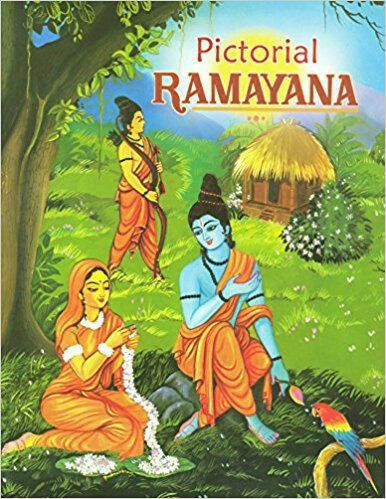
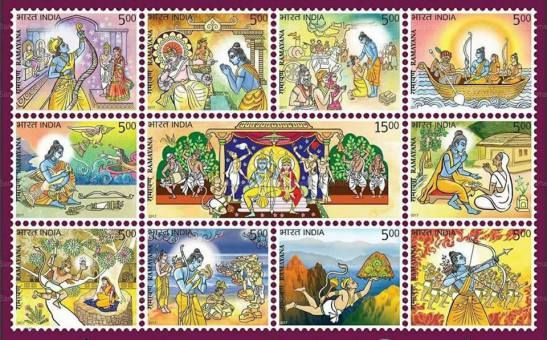
Thank god, a Ramayana painting on the wall of the house came to her rescue. Lakshmana, Rama’s brother was famous for maintaining chastity and integrity in the 14 year stay in the jungle with his brother Rama and sister in law Sita. Ramayana says that he never looked at Sita’s face and he knew only her holy feet with the toe rings. This painting was on the wall.

This newly married lady, looking at the picture, started telling the story of Lakshmana to her brother in law who came with amorous thoughts. Th way she praised Lakshmana for never looking at the face his sister n law conveyed the message very strongly. She made it very clear that she was not his cup of tea.

WHERE THERE IS RAMA , THERE IS NO KAMA!

Hindu women who never talk about sex or love to men, have their own way of conveying the message!  They are born clever in such matters!

xxx


God came in the form of Prostitute!

I used to attend Bhajans every Saturday with my father and mother in Madurai (Tamil Nadu, India). One night a beautiful Bhajan singer (i.e. a male with a beautiful voice) narrated an incident. He neither felt shame nor any hesitation in narrating it to us. Like Mahatma Gandhi admitting his childish mistakes (smoking secretly etc) to his father, he admitted in front of 20 to 25 Bhajan singers. Despite the holy atmosphere, during the Prasad distribution, he told us this:

Once I had some sexual urge and I went to a woman’s house, who was notorious for her bad behaviour. Knowing that I went for sex. But as soon as I entered her house she brought both here hands together to give me a big Namaste, saying ‘oh , holy singer! I have listened to your beautiful Bhajans now and then; God has given you a great gift. I am not that fortunate. Please take a seat. I will bring you some water and food. I will be blessed if you eat something in this poor woman’s house. As soon as I heard her words, all my sexual urge had disappeared. Then I pretended that I was looking for some address of XYZ and by mistake came into her house. Once again she heaped all the praises on me and I slipped out of the house without anybody seeing me. On that day God came to me in the guise of a prostitute and warned me not to entertain such thoughts. This was a great lesson.”


If you constantly think of God, even if you want to go astray he wouldn’t allow you to go bad.

Here the woman knew that he came with bad intentions, but she did not want to spoil him and tacked him in her own way!

–Subham–

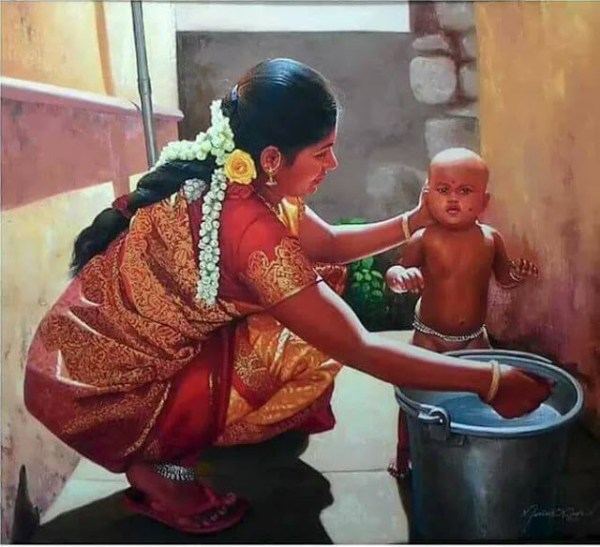
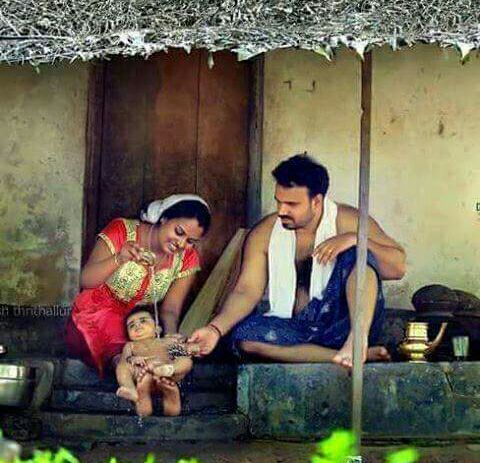
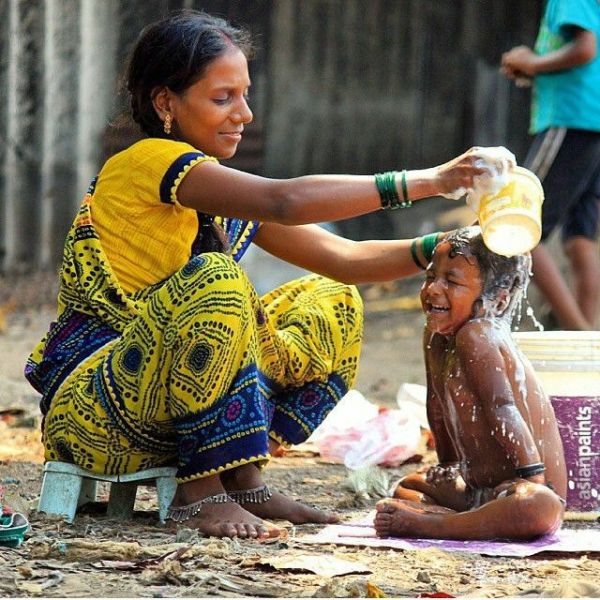
SEVEN TYPES OF HINDU BATH, SHOWER ( Post No.4494)

Written by London Swaminathan 


Date: 14 DECEMBER 2017 


Time uploaded in London-  20-56


Post No. 4494

Pictures shown here are taken from various sources such as Facebook friends, Books, Google and newspapers; thanks.


Hindus take at least one bath every day. Those who live in villages, particularly on the banks of rivers, take two baths every day. Orthodox Hindus don’t do anything before a shower. Hindus are supposed to wash themselves every day ad wear washed clothes. They must use only dry clothes during religious ceremonies. Wet clothes are worn for certain ceremonies when one is bereaved.


There are at least seven types of baths or bathing methods according to Hindu scriptures. Some people divide them into five categories. Let me the give the list of seven types:


1.Vaarunam

This is the normal, full shower in a tank or a river or in the bath room. That is the head to foot wash. Hindu women don’t wash their hair every day, but men do wash head to foot.

2.Paarthiva Snanam

This is mud bath, but with proper mantras. Smearing with the clean mud on the whole body. There is a mantra beginning, ‘Mrthike haname Papam’.

3.Aagneyam

This is smearing the body with the ash that comes out of the Agni Hotra Kunda (fire altar). This is like Vibhuti (holy ash) bath.

4.Vaayavyam

Dust from the cattle shed where cows are kept in clean condition. All products from the cow including the urine, cow dung, milk are used by the Hindus. Scientifically they are proved to have anti-bacterial quality. The dust from hoofs of the cow are smeared on the body with Go Savitri mantras. This is called Vayavyam bath.

5.Divya Snanam

This is a rare one. When there is sun light and rain , one bathes  oneself in the rain. Particularly when it is Uttarayana (sun’s northward journey for six months when the Northern Hemisphere is having summer).

6.Mantra Snanam

Brahmins do it when they could not take a full shower. They recite the mantra “Apohistaa Mayo Bhuvah…..’ and sprinkle water on the head, chest and feet. This mantra is known to every Brahmin because it is part of their thrice a day Sandhyavandanam ceremony. In the olden days men from three castes — Brahmin, Kshatriya and Vaisya were doing Sandhyavandan every day.

7.Maanasam

If there is no water available or if one is not in a position to take a shower, one takes a shower mentally. One imagines the Lord Vishnu or Sun God with conch and wheel in hands and think that the holy Ganges flows through the body from head to foot. One must also imagine that the dirt in the body and mind are washed away.

Apart from these seven types, another bath or snanam is known as Panchanga (five body parts) Snanam, because one washes five parts: two hands, two feet and face.

Sponge bath is also approved in Hinduism; it is called Kaapila Snanam, where one wipes the body with a wet cloth.

Another approved bath is marking the body with any religious symbols in 12 places. It may be Vaishnavite or Saivaite symbols.


It is very interesting to see the mud bath, sponge bath and other baths are practised in India from the olden days.


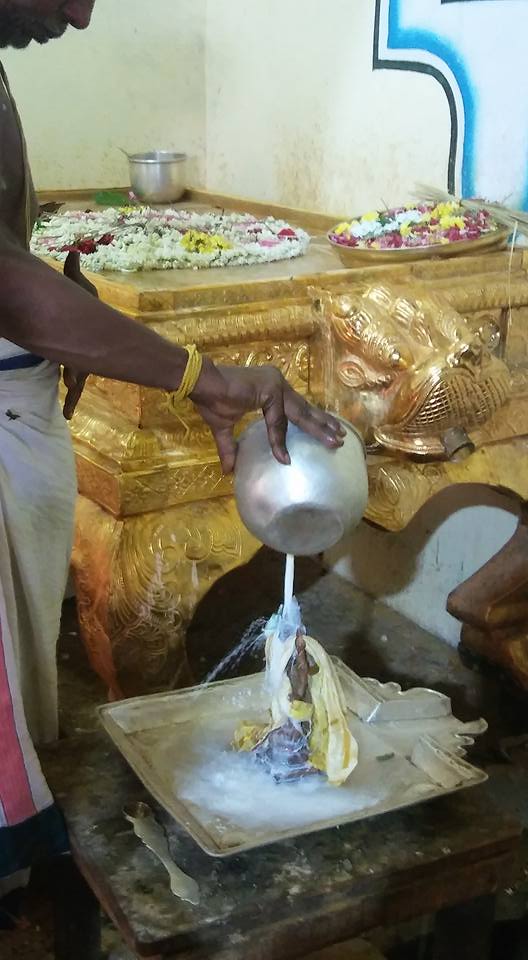
Another interesting fact is that Hindus bathe the gods and goddesses. It is called Abisheka. It is unique to Hindus. They bathe the gods with milk, honey, tender coconut water, rose water, sandal and Vibhuti (holy ash) and Kunkum.


–Subham–


Valluvar and Manu agree on Violence, Non-Violence, Leadership and Householder (Post No.4477)

Valluvar and Manu agree on Violence, Non-Violence, Leadership and Householder (Post No.4477)

WRITTEN by London Swaminathan 


Date: 10 DECEMBER 2017 


Time uploaded in London-  15-13


Post No. 4477

Pictures shown here are taken from various sources such as Facebook friends, Books, Google and newspapers; thanks.


Rev. G U Pope in the Sacred Kural of Tiruvalluva Nayanar compared the Tirukkural with Manu and Bhagavad Gita; he gave it in the appendix of his book published in 1886. This is another article in the series.


Householder

Tiru Valluvar says,

He is the true householder who helps the three orders of the virtuous (Brahmachari, Vanaprastan, Sanyasin) in their home life is the fruit of love begotten by a harmonious, right path of life.- (Kural 41)


Manu says,

“3.78. Because men of the three (other) orders are daily supported by the householder with (gifts of) sacred knowledge and food, therefore (the order of) householders is the most excellent order (Manu).”


Valluvar says,

The true house-holder gives succour to the forsaken, the poor and the departed (Kural 42)

The paramount duty of a house-holder is to cherish daily the manes, the gods, his guests, his relations and himself (43)

If a man acquires wealth by fair means and is charitable to whom charity is due his progeny will never become extinct (44)


Manu says,

3-71. He who neglects not these five great sacrifices, while he is able (to perform them), is not tainted by the sins (committed) in the five places of slaughter, though he constantly lives in the (order of) house (-holders).

3-72. But he who does not feed these five, the gods, his guests, those whom he is bound to maintain, the manes, and himself, lives not, though he breathes.

3-117. Having honoured the gods, the sages, men, the manes, and the guardian deities of the house, the householder shall eat afterwards what remains.

3-118. He who prepares food for himself (alone), eats nothing but sin; for it is ordained that the food which remains after (the performance of) the sacrifices shall be the meal of virtuous men.

xxxxxxxxxx
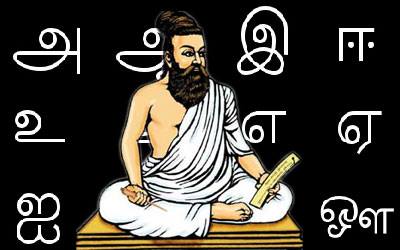
 

Ahimsa (non-killing)  chapter 33 of Tirukkural

Tiru Valluvar deals with Killing animals in the chapter Ten. He says,

Non-killing is a matchless virtue according to teachers of ethics. Truthfulness ranks as second in merit to non-killing (Kural 323)

Killing leads to all other sinful acts. Therefore non-killing is the highest virtue (321)


 Manu says on Ahimsa

5-43. A twice-born man of virtuous disposition, whether he dwells in (his own) house, with a teacher, or in the forest, must never, even in times of distress, cause an injury (to any creature) which is not sanctioned by the Veda.

10-63. Abstention from injuring (creatures), veracity, abstention from unlawfully appropriating (the goods of others), purity, and control of the organs, Manu has declared to be the summary of the law for the four castes.

xxxx

LEADERS and KINGS


Valluvar says,

He is a lion among leaders who has these six: an army, subjects, wealth, ministers, allies, fortification (Kural 381)

Courage, wisdom, liberality and zeal – these four qualities form royal features (382)

The three things alertness, learning and bravery should never be wanting in the ruler of a country (383)

A noble leader must be brave, virtuous, adventurous and free from vices and injustice (Kural 384)

An able leader makes and and earns wealth; guards and apportions it for people’s good (385)

Death Sentence:

The judge gives capital punishment to wicked killers like removing weeds from a flourishing field (Kural 550)


Manu says,

7-20. If the king did not, without tiring, inflict punishment on those worthy to be punished, the stronger would roast the weaker, like fish on a spit;

7-99. Let him strive to gain what he has not yet gained; what he has gained let him carefully preserve; let him augment what he preserves, and what he has augmented let him bestow on worthy men.

7-100. Let him know that these are the four means for securing the aims of human (existence); let him, without ever tiring, properly employ them.

7-101. What he has not (yet) gained, let him seek (to gain) by (his) army; what he has gained, let him protect by careful attention; what he has protected, let him augment by (various modes of) increasing it; and what he has augmented, let him liberally bestow (on worthy men).

7-102. Let him be ever ready to strike, his prowess constantly displayed, and his secrets constantly concealed, and let him constantly explore the weaknesses of his foe.

7-103. Of him who is always ready to strike, the whole world stands in awe; let him therefore make all creatures subject to himself even by the employment of force.

Manu says in the Third Chapter,


xxx


Marriage Types in Manu and Tolkappiam

Manu says,

3-20. Now listen to (the) brief (description of) the following eight marriage-rites used by the four castes (varna) which partly secure benefits and partly produce evil both in this life and after death.

3-21. (They are) the rite of Brahman (Brahma), that of the gods (Daiva), that of the Rishis (Arsha), that of Pragapati (Pragapatya), that of the Asuras (Asura), that of the Gandharvas (Gandharva), that of the Rhashasas (Rakshasa), and that of the Pisakas (Paisaka).

3-32. The voluntary union of a maiden and her lover one must know (to be) the Gandharva rite, which springs from desire and has sexual intercourse for its purpose.

Oldest book Tolkappiam (Porul Adikaram ) refered to the eight types of marriages.

Oldest Tamil book Tolkappiyam refers to eight types of marriages which is already said by Manu and other Hindu law books/smrtis. Most famous Tamil commentator Nachinarkiniyar explained them in detail.

xxx

More articles on Manu and Tirukkural

MARRIAGE – TWO OPPOSSING TAMIL VIEWS (Post No.4462) | Tamil …

https://tamilandvedas.com/…/marriage-two-oppossing-tamil-views-…


9 hours ago – Post No4462. Pictures shown here are taken from various sources such as Facebook friends, Books, Google and newspapers; thanks. (Tamil Joke: Husband:While I read my love … Dr G U Pope compared couplet 41 with Manu’s 3-78 and showed Naladiyar, the poems of Jains were opposed to marriage.


Tamil Literature | Tamil and Vedas

https://tamilandvedas.com/category/tamil-literature/


MANU IN TAMIL VEDA TIRUKKURALRev GU Pope and Father Beschi compare -1 ( Post No.4459). MANU … RevG U Pope, a Tamil scholar and Christian preacher published The Sacred Kural of Tiruvalluva Nayanar in 1886 with his English translation. Throughout the book he had used his predecessors’ views. He had .


–Subham–