BRAHMANAS, KSHATRIYAS, VAISYAS MUST STUDY VEDAS- MANU (Post No.7354)

Written by London Swaminathan

swami_48@yahoo.com

Date: 17 December 2019

Time in London – 13-44

Post No. 7354

Pictures are taken from various sources; beware of copyright rules; don’t use them without permission; this is a non- commercial, educational blog; posted in swamiindology.blogspot.com and tamilandvedas.com simultaneously. Average hits per day for both the blogs 12,000

MANU10,CHAPTER X.

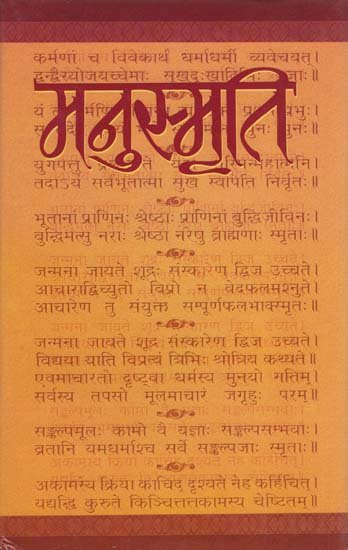
So far we have covered nine chapters with salient features highlighted; I have also added my comments wherever it was appropriate. To day let us look at the 74 slokas in the tenth chapter of Manu Smrti.

First I will give important slokas/ couplets in bullet points.

Sloka 63 – This is the most important sloka in the firsts 70 + slokas. Good qualities are common for all the Four Varnas/castes

Sloka 1 -People who belong to Three castes must learn Vedas. It will be interesting to find out till what time the three castes studied Vedas.

Sloka 8 on wards – Inter caste marriages and specific terms for them in permutation and combinations. We know that inter caste marriages were done during even Mahabharata days. But never heard these many different kinds. This chapter must be a later addition.

Sloka 20 – definition of Vratyas

Sloka 22 – Dravidas

Sloka 32  – Dasyus

Sloka 44 – Yavanas & Dravidas

These terms are used with different connotations. It is not Vedic Dasyu; Like Dravidas we have several people named after Countries/Desa So instead of Geographical connotation we have inter caste people.

Sloka 25 onwards – Sons of Inter Caste couples are dealt with.

We can infer two things from these :-

1.Inter Caste marriages took place

2.Yavanas, Dravidas, Kambojas, Vratyas, Sakar – are all Hindus.

Sloka 47 on wards – their professions

Sloka 56 – death sentence

Sloka 58 – Non Aryan qualities (Here Aryan stands for Cultured, Civilized).

Sloka 64/ 65 – A Sudra becomes a Brahmana in seventh generation

Sloka 69 to 73  Interesting Debate —

Which is important Seed (Husband) or Land (Wife)?

xxxx

Now let us look at the original translation of Slokas?

1. Let the three twice-born castes (varna), discharging their (prescribed) duties, study the Veda; but among them the Brahmana alone shall teach it, not the other two; that is an established rule.

2. The Brahmana must know the means of subsistence prescribed by law for all, instruct the others, and himself live according to the law

3. On account of his pre-eminence, on account of the superiority of his origin, on account of his observance of (particular) restrictive rules, and on account of his particular sanctification the Brahmana is the lord of (all) castes (varna).

4. Brahmana, the Kshatriya, and the Vaisya castes (varna) are the twice-born ones, but the fourth, the Sudra, has one birth only; there is no fifth caste.

5. In all castes (varna) those (children) only which are begotten in the direct order on wedded wives, equal (in caste and married as) virgins, are to be considered as belonging to the same caste (as their fathers)

6. Sons, begotten by twice-born man on wives of the next lower castes, they declare to be similar (to their fathers, but) blamed on account of the fault (inherent) in their mothers.

7. Such is the eternal law concerning (children) born of wives one degree lower (than their husbands); know (that) the following rule (is applicable) to those born of women two or three degrees lower.

INTER CASTE  MARRIAGES

8. From a Brahmana a with the daughter of a Vaisya is born (a son) called an Ambashtha, with the daughter of a sudra a Nishada, who is also called Parasava.

9. From a Kshatriya and the daughter of a Sudra springs a being, called Ugra, resembling both a Kshatriya and a Sudra, ferocious in his manners, and delighting in cruelty.

10. Children of a Brahmana by (women of) the three (lower) castes, of a Kshatriya by (wives of) the two (lower) castes, and of a Vaisya by (a wife of) the one caste (below him) are all six called base-born (apasada).

11. From a Kshatriya by the daughter of a Brahmana is born (a son called) according to his caste (gati) a Suta; from a Vaisya by females of the royal and the Brahmana (castes) spring a Magadha and a Vaideha.

12. From a Sudra are born an Ayogava, a Kshattri, and a Candala, the lowest of men, by Vaisya, Kshatriya, and Brahmana) females, (sons who owe their origin to) a confusion of the castes.

13. As an Ambashtha and an Ugra, (begotten) in the direct order on (women) one degree lower (than their husbands) are declared (to be), even so are a Kshattri and a Vaidehaka, though they were born in the inverse order of the castes (from mothers one degree higher than the fathers).

14. Those sons of the twice-born, begotten on wives of the next lower castes, who have been enumerated in due order, they call by the name Anantaras (belonging to the next lower caste), on account of the blemish (inherent) in their mothers.

15. A Brahmana begets on the daughter of an Ugra an Avrita, on the daughter of an Ambashtha an Abhira, but on a female of the Ayogava (caste) a Dhigvana.

16. From a Sudra spring in the inverse order (by females of the higher castes) three base-born (sons, apasada), an Ayogava, a Kshattri, and a Candala, the lowest of men;

17. From a Vaisya are born in the inverse order of the castes a Magadha and a Vaideha, but from a Kshatriya a Suta only; these are three other base-born ones (apasada).

18. The son of a Nishada by a Sudra female becomes a Pukkasa by caste (gati), but the son of a Sudra by a Nishada female is declared to be a Kukkutaka.

19. Moreover, the son of by Kshattri by an Ugra female is called a Svapaka; but one begotten by a Vaidehaka on an Ambashtha female is named a Vena.

WHO ARE VRATYAS?

20. Those (sons) whom the twice-born beget on wives of equal caste, but who, not fulfilling their sacred duties, are excluded from the Savitri, one must designate by the appellation Vratyas.

21. But from a Vratya (of the) Brahmana (caste) spring the wicked Bhriggakantaka, the Avantya, the Vatadhana, the Pushpadha, and the Saikha.

WHO IS A DRAVIDA?

22. From a Vratya (of the) Kshatriya (caste), the Ghalla, the Malla, the Likkhivi, the Nata, the Karana, the Khasa, and the Dravida.

23. From a Vratya (of the) Vaisya (caste) are born a Sudhanvan, an Akarya, a Karusha, a Viganman, a Maitra, and a Satvata.

24. By adultery (committed by persons) of (different) castes, by marriages with women who ought not to be married, and by the neglect of the duties and occupations (prescribed) to each, are produced (sons who owe their origin) to a confusion the castes.

SONS OF INTER CASTE COUPLES

25. I will (now) fully enumerate those (sons) of mixed origin, who are born of Anulomas and of Pratilomas, and (thus) are mutually connected.

26. The Suta, the Vaidehaka, the Kandala, that lowest of mortals, the Magadha, he of the Kshattri caste (gati), and the Ayogava,

27. These six (Pratilomas) beget similar races (varna) on women of their own (caste), they (also) produce (the like) with females of their mother’s caste (gati), and with females (of) higher ones.

28. As a (Brahmana) begets on (females of) two out of the three (twice-born castes a son similar to) himself, (but inferior) on account of the lower degree (of the mother), and (one equal to himself) on a female of his own race, even so is the order in the case of the excluded (races, vahya).

29. Those (six mentioned above) also beget, the one on the females of the other, a great many (kinds of) despicable (sons), even more sinful than their (fathers), and excluded (from the Aryan community, vahya).

30. Just as a Sudra begets on a Brahmana female a being excluded (from the Aryan community), even so (a person himself) excluded pro creates with (females of) the four castes (varna, sons) more (worthy of being) excluded (than he himself).

31. But men excluded (by the Aryans, vahya), who approach females of higher rank, beget races (varna) still more worthy to be excluded, low men (hina) still lower races, even fifteen (in number).

DASYU

32. A Dasyu begets on an Ayogava (woman) a Sairandhra, who is skilled in adorning and attending (his master), who, (though) not a slave, lives like a slave, (or) subsists by snaring (animals).

33. A Vaideha produces (with the same) a sweet-voiced Maitreyaka, who, ringing a bell at the appearance of dawn, continually. praises (great) men.

34. A Nishada begets (on the same) a Margava (or) Dasa, who subsists by working as a boatman, (and) whom the inhabitants of Aryavarta call a Caivarta.

35. Those three base-born ones are severally begot on Ayogava women, who wear the clothes of the dead, are wicked, and eat reprehensible food.

36. From a Nishada springs (by a woman of the Vaideha caste) a Karavara, who works in leather; and from a Vaidehaka (by women of the Karavara and Nishada castes), an Andhra and a Meda, who dwell outside the village.

37. From a Candala by a Vaideha woman is born a Pandusopaka, who deals in cane; from a Nishada (by the same) an Ahindika.

38. But from a Candala by a Pukkasa woman is born the sinful Sopaka, who lives by the occupations of his sire, and is ever despised by good men.

39. A Nishada woman bears to a Candala a son (called) Antyavasayin, employed in burial-grounds, and despised even by those excluded (from the Aryan community).

40. These races, (which originate) in a confusion (of the castes and) have been described according to their fathers and mothers, may be known by their occupations, whether they conceal or openly show themselves.

41. Six sons, begotten (by Aryans) on women of equal and the next lower castes (Anantara), have the duties of twice-born men; but all those born in consequence of a violation (of the law) are, as regards their duties, equal to Sudras.

42. By the power of austerities and of the seed (from which they sprang), these (races) obtain here among men more exalted or lower rank in successive births.

43. But in consequence of the omission of the sacred rites, and of their not consulting Brahmanas, the following tribes of Kshatriyas have gradually sunk in this world to the condition of Sudras;

YAVANAS, DRAVIDAS

44. (Viz.) the Paudrakas, the Kodas, the Dravidas, the Kambogas, the Yavanas, the Sakas, the Paradas, the Pahlavas, the Kinas, the Kiratas, and the Daradas.

45. All those tribes in this world, which are excluded from (the community of) those born from the mouth, the arms, the thighs, and the feet (of Brahman), are called Dasyus, whether they speak the language of the Mlekkhas (barbarians) or that of the Aryans.

46. Those who have been mentioned as the base-born (offspring, apasada) of Aryans, or as produced in consequence of a violation (of the law, apadhvamsaga), shall subsist by occupations reprehended by the twice-born.

THEIR OCCUPATIONS

47. To Sutas (belongs) the management of horses and of chariots; to Ambashthas, the art of healing; to Vaidehakas, the service of women; to Magadhas, trade;

48. Killing fish to Nishadas; carpenters’ work to the Ayogava; to Medas, Andhras, Kunkus, and Madgus, the slaughter of wild animals;

49. To Kshattris, Ugras, and Pukkasas, catching and killing (animals) living in holes; to Dhigvanas, working in leather; to Venas, playing drums.

50. Near well-known trees and burial-grounds, on mountains and in groves, let these (tribes) dwell, known (by certain marks), and subsisting by their peculiar occupations.

51. But the dwellings of Candalas and Svapakas shall be outside the village, they must be made Apapatras, and their wealth(shall be dogs and donkeys.

52. Their dress (shall be) the garments of the dead, (they shall eat) their food from broken dishes, black iron (shall be) their ornaments, and they must always wander from place to place.

53. A man who fulfils a religious duty, shall not seek intercourse with them; their transactions (shall be) among themselves, and their marriages with their equals.

54. Their food shall be given to them by others (than an Aryan giver) in a broken dish; at night they shall not walk about in villages and in towns.

55. By day they may go about for the purpose of their work, distinguished by marks at the king’s command, and they shall carry out the corpses (of persons) who have no relatives; that is a settled rule.

DEATH SENTENCE

56. By the king’s order they shall always execute the criminals, in accordance with the law, and they shall take for themselves the clothes, the beds, and the ornaments of (such) criminals.

57. A man of impure origin, who belongs not to any caste, (varna, but whose character is) not known, who, (though) not an Aryan, has the appearance of an Aryan, one may discover by his acts.

58. Behaviour unworthy of an Aryan, harshness, cruelty, and habitual neglect of the prescribed duties betray in this world a man of impure origin.

59. A base-born man either resembles in character his father, or his mother, or both; he can never conceal his real nature.

60. Even if a man, born in a great family, sprang from criminal intercourse, he will certainly possess the faults of his (father), be they small or great.

61. But that kingdom in which such bastards, sullying (the purity of) the castes, are born, perishes quickly together with its inhabitants.

62. Dying, without the expectation of a reward, for the sake of Brahmanas and of cows, or in the defence of women and children, secures beatitude to those excluded (from the Aryan community, vahya.)

63. Abstention from injuring creatures, veracity, abstention from unlawfully appropriating the goods of others, purity, and control of the organs, Manu has declared to be the summary of the law for the four castes.

64. If (a female of the caste), sprung from a Brahmana and a Sudra female, bear (children) to one of the highest caste, the inferior (tribe) attains the highest caste within the seventh generation.

SUDRA BECOMES A BRAHMANA

65. (Thus) a Sudra attains the rank of a Brahmana, and (in a similar manner) a Brahmana sinks to the level of a Sudra; but know that it is the same with the offspring of a Kshatriya or of a Vaisya.

66. If (a doubt) should arise, with whom the pre eminence (is, whether) with him whom an Aryan by chance begot on a non-Aryan female, or (with the son) of a Brahmana woman by a non-Aryan,

67. The decision is as follows: ‘He who was begotten by an Aryan on a non-Aryan female, may become (like to) an Aryan by his virtues; he whom an Aryan (mother) bore to a non-Aryan father (is and remains) unlike to an Aryan.’

68. The law prescribes that neither of the two shall receive the sacraments, the first (being excluded) on account of the lowness of his origin, the second (because the union of his parents was) against the order of the castes.

SEED AND LAND DEBATE

69. As good seed, springing up in good soil, turns out perfectly well, even so the son of an Aryan by an Aryan woman is worthy of all the sacraments.

70. Some sages declare the seed to be more important, and others the field; again others (assert that) the seed and the field (are equally important); but the legal decision on this point is as follows:

71. Seed, sown on barren ground, perishes in it; a (fertile) field also, in which no (good) seed (is sown), will remain barren.

72. As through the power of the seed (sons) born of animals became sages who are honoured and praised, hence the seed is declared to be more important.

73. Having considered (the case of) a non-Aryan who acts like an Aryan, and (that of) an Aryan who acts like a non-Aryan, the creator declared, ‘Those two are neither equal nor unequal.’

To be continued…………………………….

TAMIL POETESSES AVVAI, ANGAVAI AND SANGAVAI (Post No.7350)

Written by London Swaminathan

swami_48@yahoo.com

Date: 16 December 2019

Time in London – 18-10

Post No. 7350

Pictures are taken from various sources; beware of copyright rules; don’t use them without permission; this is a non- commercial, educational blog; posted in swamiindology.blogspot.com and tamilandvedas.com simultaneously. Average hits per day for both the blogs 12,000

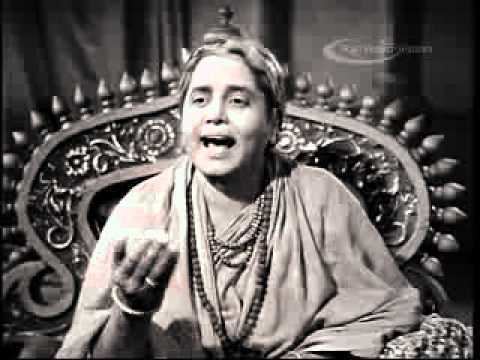
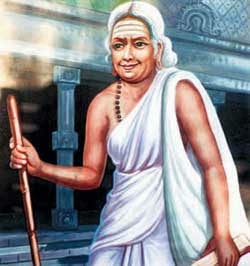
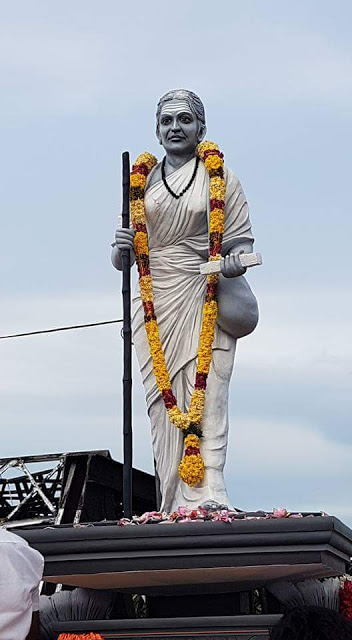
Tamil women are great poetesses, temple builders and social reformers. Andal ,a devotee of Vishnu, and Karaikkal Ammaiyar, a devotee of Shiva are known to many. Avvaiyar is a household name in Tamil Nadu; but many Avvais existed in various ages. Probably the word AVVAI was used for an old woman completely devoted to God; that is a full timer on public service, widowed OR not married . Scholars think that six women known as Avvai lived in Tamil Nadu. But linguistically speaking, we can see at least four Avvais clearly. One belong to Sangam age , another belongs to middle age and the third one is from our times. The language of the poems draws a clear cut line. Fourth one is in between them.

The most famous Avvai existed during Sangam age i.e. 2000 years ago. She was well versed in Tamil and bold enough to challenge and advise the mighty Tamil kings. But she was respected by one and all. The Tamils were fighting among themselves from the very beginning of history. The longest infighting race in the world. Avvai was bold enough to advise them to stop fighting.

A great Chola king Peru Narkilli did a Rajasuya Yagam like Yuthisthiraa of Mahabharata. Chera king and the Pandya king attended the Hindu fire ceremony. Grand old lady of Tamil country Avvaiyar came there and blessed them. She sang that they must be united like this for ever and live longer in years than the number of stars in the sky and the number of drops in the rain. She advised them to give a lot of gold to worthy Brahmins (See Purananuru verse 366).

She went to another inexperienced king and advised him not to fight with his enemy. She used very subtle language and said to him “your weapons are brand new and shining like silver whereas your enemy’s weapons are blunt, rusty and bloody. The message she hinted was ‘Oh, you idiot, you don’t know what a battle is like, where as your enemy is an experienced fighter.”

She was in the court of Neduman Anji, the Adigamaan Chief of Tagadur (Dharmapuri). He held her in high esteem and even gave her the Nelli (amla) with rare medical properties. He entrusted her an embassy to the Chief of Tondaimandalam. She composed many poems on the generosity of Adigaman. For vigour and depth of feeling her odes to Adigaman are second to none in the Purananuru collections.

After the death of Adigaman she visited several places in Tamil Nadu. Avvai took her themes from life in the palace and in the country farm. The simple pleasures and the daily cares of the lowly appealed to her even more than the chivalry of heroes and the magnificence of princes. Her odes which are included in the   Sangam collections Akananuru, Purananuu, Natrinai and Kuruntokai, are a true mirror of contemporary Tamil life.   With a rare economy of words she creates marvellous pen pictures , and some poetic imagery; she adds choice moral precepts. She is a great exponent of morality.                                                                                                                                                                                                                                                                                                                                                                  


We see one Avvai as most famous Tamil poet Tiruvalluvar’s sister (probably around fourth or fifth century CE) and another Avvai with Sundarar and Cheraman Perumal (probably ninth century) and another Avvai who composed Athichudi and other poems in simple Tamil during modern times. She is the one devoted to Lord Skanda/Muruga and author of Vinayakar Akaval. So one can easily see four different Avvais. Pithy aphorisms of later Avvai are lisped by Tamil children even today as introduction to Tamil poetry and a guide to a moral life.

Tradition ascribes to Avvai a strange parentage- a Brahmana father and a low caste mother brought up in a Brahmana family. She has six siblings along with Tiru Valluvar. This story is found in all books that were published 75 years ago. This Avvai came after Sangam age. Her poetic talents were first discovered by Buuda, a petty chieftain of Pulveluur on the River Pennaaru.

( Tamils killed each other continuously for 1200 years and then invited Muslim invaders to kill all the Tamils. For 150 years Tamils were ruled by Muslim invaders and then Telugus saved Tamil Nadu, Tamil Culture, Tamil temples and Hinduism. Kumara Kampannan came with his wife Ganga Devi to Madurai and sounded the death knell to Muslim Rule. Tamils are ever grateful to the Telugus. Without them Tamil Pakistan would have emerged 500 years before the actual Pakistan.)

Angavai and Sangavai


One of the great Tamil philanthropists is Chieftain Vel Pari. He had two daughters named Angavai and Sangavai. They were well educated and could compose poems. Paari was ruling a small area called Parampunaadu. Three great Tamil kings of Chera, Chola and Pandya wanted to marry those girls. When Pari refused they laid a siege around his small kingdom. Kabilar, a brahmin poet was his close friend . He helped him to break the siege by training thousands of parrots to bring grains from around the kingdom. But at the end Chieftain Pari was killed . Since Kabilar took care of Pari’s daughters, the three kings could not touch them . Kabilar contributed highest number poems to the Sangam corpus . He was the only poet sung and praised by other poets. He was praised as a  Brahmin of spotless character . He was a revolutionary who broke the barriers of caste 2000 years ago. He got them married and then entered fire like several Hindu saints. That place is called Kabilar Rock near Tirukkovalur in Tamil Nadu.

One of the Purananuru collections is sung by these two daughters.
An unconquerable hero, he fell a victim to foul treachery and his orphaned girls were exiled from their home . The hymn is an exquisite pen picture of their sufferings in exile, presented in sharp contrast to their past life of affluence and luxury in their palace at Parambu Naadu.
See Puram verse 112.

Xxx subham xxx

AVVAIYAR

QUEEN DIDDA OF KASHMIR – A WOMAN OF INTRIGUES AND EFFICIENCY (Post No.7346)

WRITTEN By London Swaminathan

swami_48@yahoo.com

Date: 15 DECEMBER 2019

Time in London – 15-29

Post No. 7346

Pictures are taken from various sources; beware of copyright rules; don’t use them without permission; this is a non- commercial, educational blog; posted in swamiindology.blogspot.com and tamilandvedas.com simultaneously. Average hits per day for both the blogs 12,000


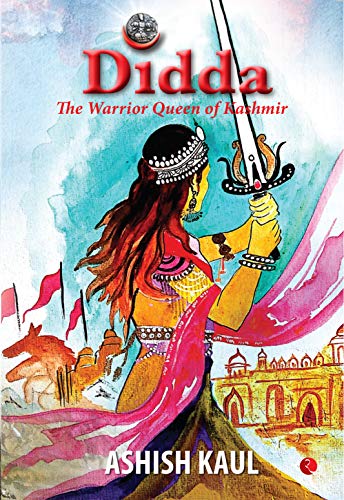
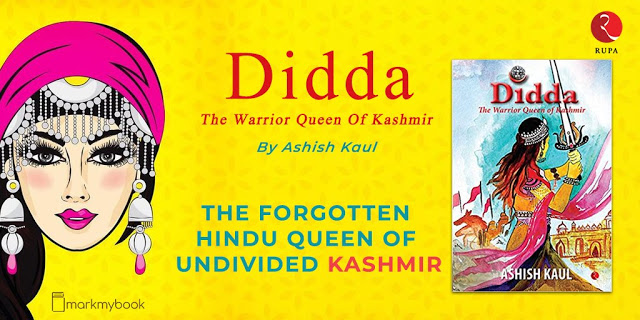
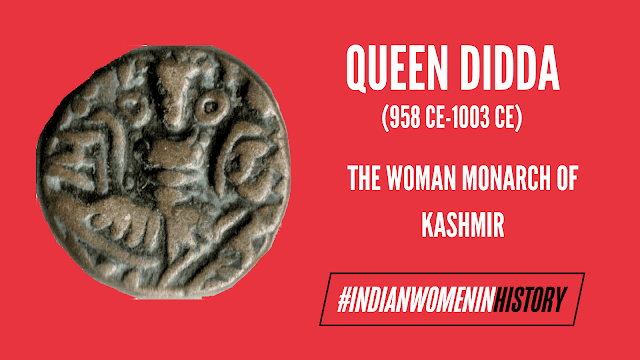
Didda was the most successful Queen in Indian history . She ruled Kashmir for 23 years quelling many rebellions and weeding out corrupt ministers. Here is the only instance in the ancient history of India where we have some details of the activities of a female ruler. She was very influential in the history of Kashmir between 958 and 1003 CE. She was a ruler from 981 till her death in 1003 CE.

Diddaa was the daughter of Simharaja of Lohara and the granddaughter of Shahi king Bhimapala of Udabhaandpura. She was married to the Kashmiri king Kshemaraja (950-958 CE). According to Rajatarangini, Kashmiri chronicle written by Kalhana, Diddaa had so great an influence over her husband and he was known as Diddaa- kshema, a humiliating appellation. Kalhana’s statement is supported by the copper coins of Kashmir , where we see Di-Kshema, apparently an abbreviation of the above appellation .


After the death of Kshemagupta in 958 CE, his son Abhimanyu was raised to the throne under the guardianship of the widowed Queen Mother. During Abhimanyu’s rule Diddaa caused the downfall of powerful Chief minister Phalguna because he gave his daughter to Kshemagupta. The Queen next found the powerful nobles Mahiman and Patala conspiring for the throne of Kashmir.

 
In spite of great influence they wielded Diddaa turned them out of the palace. They rose in revolt, but she quickly bought off their Brahmana supporters. One of the bribed Brahmanas, named Yasodhara was now made the Commander in Chief of the Kashmirian Army. But when Yasodhara defeated the Sahi King Thakkana, Diddaa grew suspicious and accused him of taking money to keep the king on the throne. When Diddaa tried to banish him, Yasodhara’s supporters rose in revolt and besieged Diddaa in her palace. But she crushed the rebellion with the help of minister Naravahana. The valiant force known as Ekangas also helped her.

Kalhana is eloquent in describing the achievements of Diddaa when he says, “Those treacherous ministers who during sixty years had robbed sixteen kings from 901 CE, from Gopala to Abimanyu, of their dignity, lives and riches were quickly exterminated by the energy of Queen Diddaa”.

The grateful Queen now made Naravahana her Chief councillor with the title Rajaanaka, but soon she was led to believe that he was trying to usurp power. The minister fell from her grace and ultimately committed suicide.


Soon afterwards Diddaa had to tackle another rebellion by the landed aristocracy. They were called Damaras. Unable to cope with the situation now she called Phalguna to help her. About this time her son Abhimanyu died in 972 CE . It was a shock to Diddaa. Suddenly she turned to religion and engaged herself for a year in building temples and monasteries for acquiring Punya, a religious merit.

Loose character was a fatal weakness in her and this coupled with a great desire for power, soon led to a violent reaction and she had her little grandsons Nandigupta, Tribhuvana and Bhimagupta, killed one after another by employing witchcraft, and herself ascended the throne of Kashmir in 981 CE .


Then she ruled for 23 years. When she made a low born favourite named Tunga her Chief minister; other ministers revolted against her under the guidance of Prince Vigraharaja. He was her brother’s son. He induced influential Brahmanas to enter upon a solemn fast; but the queen bought them off by a judicious distribution of gold amongst them. Vigraharaja was then utterly defeated by the Kashmirian forces under Tunga, who next subdued Prithwipaala, the rebellious leader of Rajapuri and forced him to pay tribute. Tunga was made Commander in Chief and he defeated the Damaras who rose in revolt again about the close of Didda’s reign.

Diddaa died in 1003 CE; but before her death she selected her brother’s son Sangraama Raaja of Lohara as her heir to the throne of Kashmir. She secured a change of dynasty without any political upheaval. Scholars have rightly concluded that, in spite of the defects in her character, she was endowed with energy and statesmanship of a very high order.

She could beat all our modern politicians of India.

Source book – Great Women of Indi, Advaita Ashrama, 1953.

–subham–

TELUGU HEROINE NAYAKURALU; COCK FIGHT USED TO WIN THE KINGDOM! (Post No.7341)

WRITTEN By London Swaminathan

swami_48@yahoo.com

Date: 14 DECEMBER 2019

 Time in London – 14-23

Post No. 7341

Pictures are taken from various sources; beware of copyright rules; don’t use them without permission; this is a non- commercial, educational blog; posted in swamiindology.blogspot.com and tamilandvedas.com simultaneously. Average hits per day for both the blogs 12,000

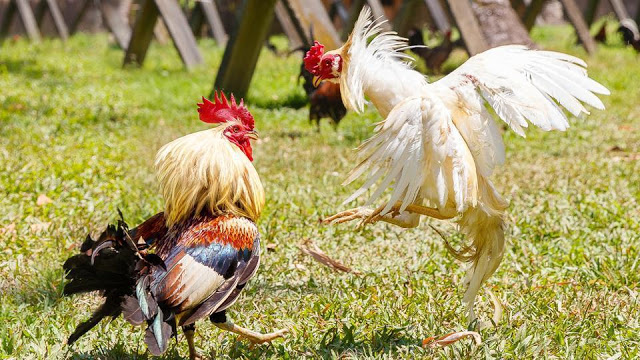
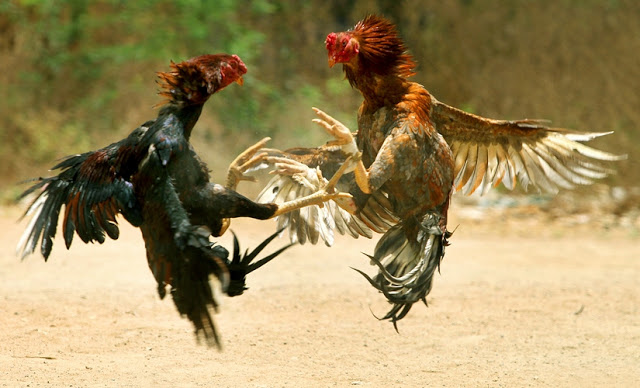
Two Tamil kings used elephant garlanding to win the kingdoms. When elephants garlanded the strangers in the crowd, Karikal Choza and Murthi Nayanar became kings according to legends. In Andhra Pradesh a cock fight was used to decide the Ruler.

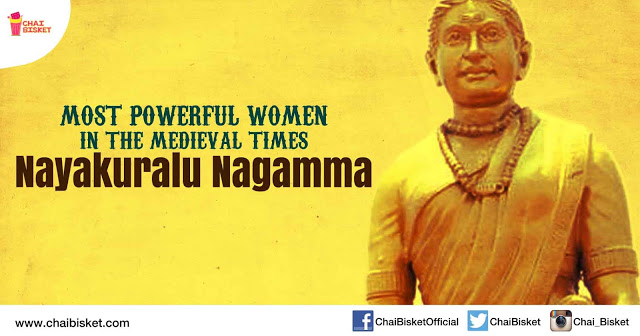
The story of Telugu heroine Naayakuraalu is celebrated in song and legend. As an infant she was abandoned by her parents and was discovered and cared by others. One farmer bought her and named her Naagammaa. She married a rich man and on his death inherited a vast fortune.  She succeeded in winning the favour of Anuguraja, a Haihaya prince, who ruled over the small principality of Palnad. He had received that as a wedding present. He ruled in the 12th century.the chief had three wives and several sons.

The growing influence of Nayakuralu in the court was resented by the minister Dodda and he resigned his office in favour of his son Brahma. Brahma soon brough about the assassination of the chief.  

Nayakuralus influence continued in the reign of net chief Nalagama and she was practically the ruler the minister Brahma persuaded the chief to partition the country. Mallideva , one of the half brothers of the chief , established his rule at Macherla. Brahma became his minister. Other brothers of the chief also lived with Mallideva.

Nayukarulu did not like the division of the country. She challenged Mallideva and Brahma to a cock fight, the wager being that the defeated party should surrender all territory to the victor and live in the forest for seven years. In the contest Brahma’s cock was killed and he along with his master and his half brother retired to the forests in Nallagonda.

Harassed constantly by the agents of Nayakuralu , their life in exile was miserable. On the expiry of seven years , they returned and demanded the restoration of their territory. But Nayakuralu refused.  In the fight that ensued , Nayakuralu donned the armour and fought  at the head of her army, but was defeated and captured. The battle was a bloody one and all the half brothers of Nalagama perished. Brahma generously restored the whole kingdom to Nalagama.

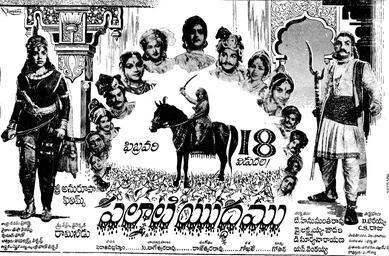
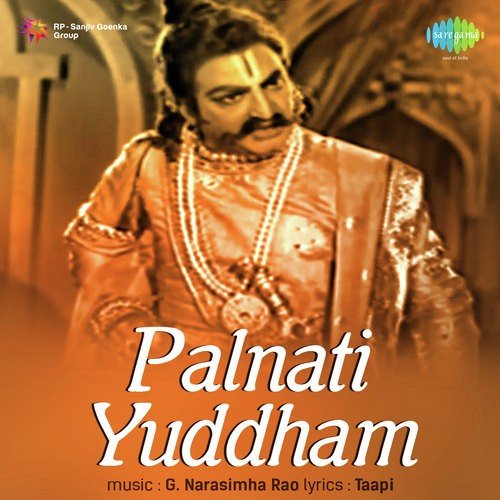
The battle she fought was known as Palnati Yuddham. Two films were taken based on this battle that happened approximately 1000 years ago. Now there is a statue for Nagamma in Dachepal in in Palnadu area of Guntur District.

Nayakuralu had a talent for intrigue and organisation, and her life of adventure was cast in a heroic mould.

Source book – Great Women of India, Advaita Ashrama, Mayavati, Year 1953

Tags- Nayakuralu, Nagamma, Palnadu, Cock fight, Palnati Yudhdham

–subham–

KANNAKI’S PRAISE FOR SEVEN GREAT TAMIL WOMEN! (Post No.7337)

WRITTEN BY London Swaminathan

swami_48@yahoo.com

Date: 13 DECEMBER 2019

 Time in London – 17-

Post No. 7337

Pictures are taken from various sources; beware of copyright rules; don’t use them without permission; this is a non- commercial, educational blog; posted in swamiindology.blogspot.com and tamilandvedas.com simultaneously. Average hits per day for both the blogs 12,000

Mighty Chera King Senkuttuvan with Kannaki Statue

Kannaki and Kovaalan
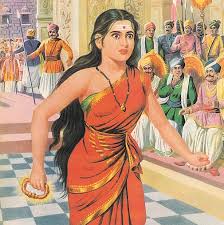
angry Kannaki proved to the king that her husband is innocent

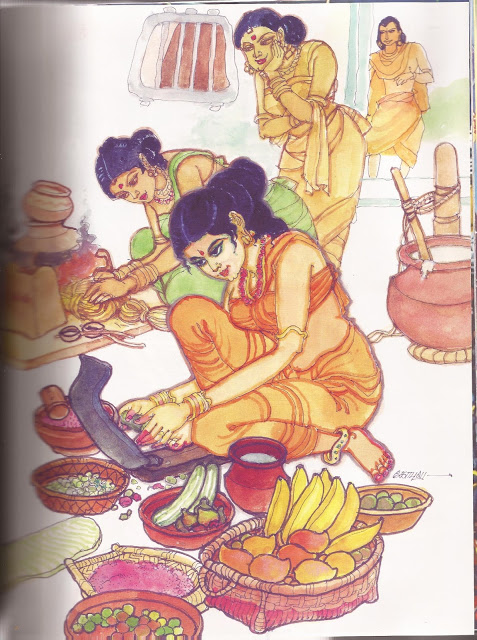
Kannaki cooking

VASTU 12 AND MANTRA 12 AND HERCULES 12 (Post No.7334)

WRITTEN BY LONDON SWAMINATHAN

swami_48@yahoo.com

Date: 12 DECEMBER 2019

 Time in London – 20-25

Post No. 7334

Pictures are taken from various sources; beware of copyright rules; don’t use them without permission; this is a non- commercial, educational blog; posted in swamiindology.blogspot.com and tamilandvedas.com simultaneously. Average hits per day for both the blogs 12,000

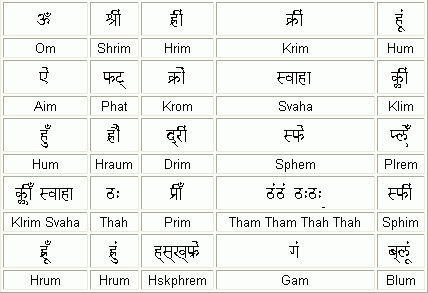
12 BHI JA MANTRAS AND THEIR DEITIES

AIM- SARASVATI

SRIM – LAKSHMI

HRIM – SURYA/ BHUVANESWARI

HRING- PARVATI

KLING – KAMA

LAM – BHUMA DEVI. MOTHER EARTH

HAUM- SADHASHIVA

TUM – DURGA

KRIM — KALI

HUM — SHIVA

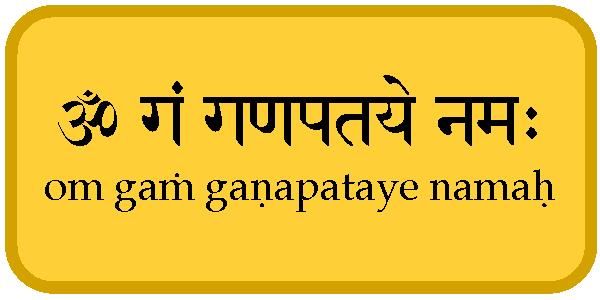
GAM – GANESH

KSHRAUM – NARASIMHA

XXXX

12 Kinds Srardha in Bhavishya Purana–

Nitya, Naimittika, Kamya, Vruddi, Sapinda, Parvana, Goshti, Suddhi, Karmanga, Daivika, Yatra, Pushti

Xxx

Vastu Twelve Houses—

House – Source – Direction – Organ – Lord are given:–

First House – Water – East – Mouth – Sun

Second House – Place of Worship – Right eye – Jupiter

Third House – Place of worship – Arm – Ketu

Fourth House – Treasury – North – Heart – Mercury

Fifth House – Child Delivery – Knee – Moon

Sixth House – Right Foot

Seventh House – West – Genitals, Stomach –  Saturn

Eighth House – Left foot – Rahu

Ninth House – Toilet – Kidney, Knee

Tenth House – Bed room – South – Chest

Eleventh House – Kitchen – Left Arm – Venus

Twelfth House – Left eye

Xxx

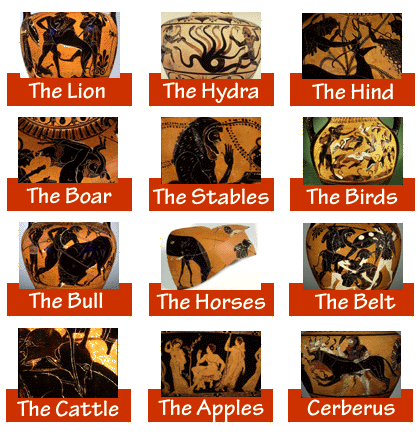
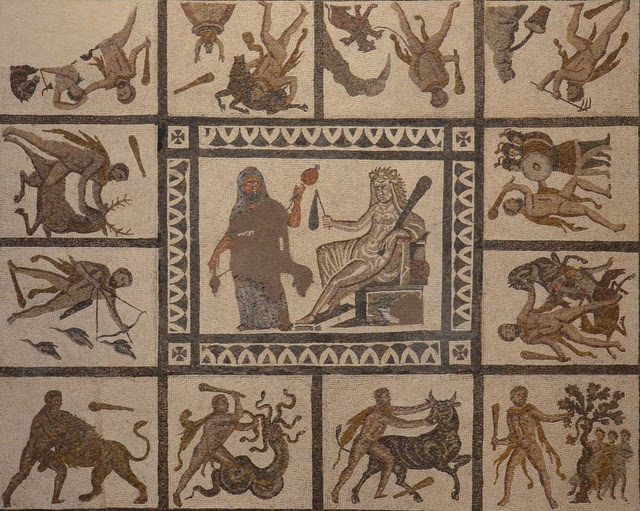
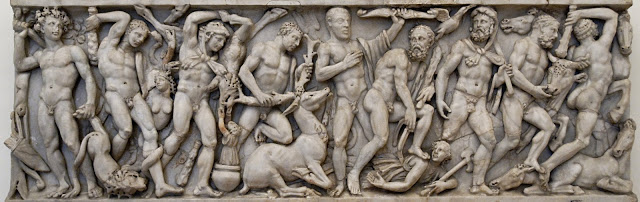
TWELVE LABOURS OF HERAKLES

Greek Hero Hercules ( Herakles) accomplished twelve labours when he was in the service of King Eurystheus of Tiryns; several of these resemble Lord Krishna’s Leelas :-

1.The Nemean Lion

Herakles was ordered to kill a lion which was terrorizing the Land of Nemea. No weapon could penetrate its hide. He used his club and killed it. He then skinned the lion with its own claws  and donned the pelt to render himself invulnerable.

2.The Lernean Hydra

He was sent to kill the nine headed snake or dragon Hydra in the swamp near Lerna When he chopped off one head two grew up. His Iolus helped him to kill it. It is similar to Kaliya mardhana of Lord Krishna.

3. The Cerynean Hind

Herakles was asked to capture this beast. It had golden horns and bronze hooves.  It was sacred to goddess Artemis. After a yeas chase he caught and injured it. To escape the goddess’ anger, he blamed King Eurystheus for its injury.

4.The Erymanthian Boar

The hero had to bring this monstrous boar back home. He captured it and sent to Tiryns. King Eurystheus was scared to look at it and so hid it in an urn.

5. The Augean Stables

Herakles was asked to clean the stables in one day.. he succeeded in cleaning it by diverting the rivers into stable. It is similar to Krishna lifting the Govardhana Giri.

6. The Stymphalian Birds

Heracles was ordered to get rid of the monstrous man eating birds with iron claws. They were living in Lake Stymphalos; He first scared them and shot one by one with his bow.

7.The Cretan Bull

Eurystheus sent Herakles to Crete island to capture a bull that was terrorizing the island. The hero caught the bull and took it to Greece.

8.The Mare of Diomedes

Diomedes , King of Bitones owned vicious mares and he fed them with the flesh of strangers. Herakles went to Thrace and killed Diomedes and fed the mares with his flesh. He tamed them and took them to his king.

9. The Girdle of Hippolyte

Hippolyte was the queen of Amazons, who wore a beautiful girdle. Herakles was sent to fetch it for Eurytheus’ daughter. He slew Hippolyte and took the girdle from her body

10.The Cattle of Geryon

Herakles borrowed the cu of Helios, the sun and sailed to Gerion beyond Spain. There he killed the three bodied monster.

11.The Apples of the Hesperides

Hesperides was the nymph who raised a tree with golden apples. Herakles killed the dragon called Ladon who guarded the tree. He took the golden apples.

12.The Descent to the Underworld

Cerberus was the three headed dog which guarded the gates of the underworld. Herakles after a great struggle dragged it to his king Eurystheus and then sent it back to the Underworld.

—subham—

Great Tamil Poetess -Nappasalai (Post No.7330)

WRITTEN BY  LONDON SWAMINATHAN

swami_48@yahoo.com

Date: 11 DECEMBER 2019

 Time in London – 19-29

Post No. 7330

Pictures are taken from various sources; beware of copyright rules; don’t use them without permission; this is a non- commercial, educational blog; posted in swamiindology.blogspot.com and tamilandvedas.com simultaneously. Average hits per day for both the blogs 12,000.

Tamil laymen knew about great Tamil poetesses Avvaiyar, Andal and Karaikkal Ammaiyar. But many people do not know about Sangam age women poets.

Nappashalai was one of the Sangam Age (Sangam age – first three centuries of modern era) Tamil poetesses. Her seven verses are in Purananuru of Sangam Age.

She was a native of Marokkam in south Pandya country.  Her odes were admired by all the kings f the day. There is much art in the following ode praising Killi Valavan’s generosity justice and might; she mentions the Sibi Chakravarthy Story from the Puranas. Several poets have pointed out that Cholas belong to Solar Race and  Sibi, Mandhata and others of Surya Kula are their forefathers. Here is her poem:-

Descendant of him who to save a dove from grief entered the balance… giving in grace was born with you, and is not your peculiar praise!

And when one ponders how your forefathers of ancient days destroyed the mighty fort suspended in the sky which foes dreaded to approach – to slay your foes is not your peculiar praise!

And since the council of Uraiyur , impregnable city of the valiant Cholas is the home of equity; Justice is not your peculiar praise!

Oh Valavan! Swift horsemen , whose stout arms are like fortress bars , whose wreaths attract every eye, how then shall I sing your praise?”

— Purananuru verse 39

Xxx

Napashalai’s ode on the death of Killi is marked by a quaintness of conceit in her address to Death:-

If in his mind against you he were  wroth

Or if in outward act he showed his rage,

Or if he touched you with afflictive hand ,

You could not have escaped, O Death!

You took great Valavan, entreating him,

Like minstrels, bowing low, with suppliant hand

Praising you did bear off his life,

Leader of hosts that crowd the glorious field,

Crowned with gold wreath, Lord of the mighty car.

Purananuru verse 226

Xxx

There is another lyric where she expresses pathos. She expressed grief at the destruction of the fair city of Karur by the impetuous  Chola king Killi Valavan.

You scion of the Chola Lord who saved

The dove from woe- chief of the wrathful hosts

Armed with gleaming darts that work havoc

As when a fiery dragon , angry, fierce,

Bearing five heads, with gleaming poisonous tooth,

Has entered the vast mountainous cavern, where

The golden creepers twine, and from the sky

Fire issues forth and loudest thunderbolt

You saw the lordly city old, whose king

Was circled round by girdled elephants

There in deep dark moat alligators congregate

In the wide waters of guarded lake

Are crocodiles that fierce in fight

Dart forth to catch the shadows cast

By gleam of watchman’s torch at midnight hour.

Its walls like burnished copper shone.

This seemed not fair to your eyes; for you did

Work destruction mightily, glorious king!-

Purananuru verse 37

Translations of odes by  P T S Aiyangar, G U Pope and Kanakasabhai

–subham–

HINDU ASTROLOGY IN BABYLONIA! (Post No.7326)

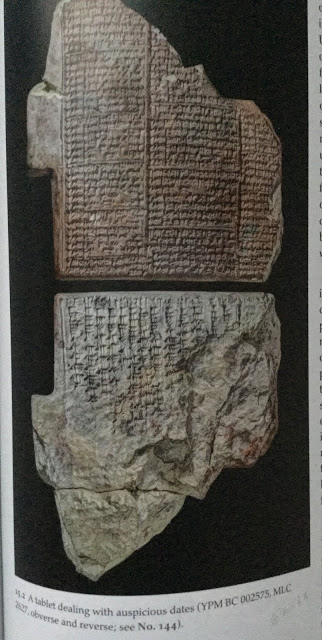
clay tablet with auspicious days

WRITTEN BY  London Swaminathan

swami_48@yahoo.com

Date: 10 DECEMBER 2019

 Time in London – 18-52

Post No. 7326

Pictures are taken from various sources; beware of copyright rules; don’t use them without permission; this is a non- commercial, educational blog; posted in swamiindology.blogspot.com and tamilandvedas.com simultaneously. Average hits per day for both the blogs 12,000

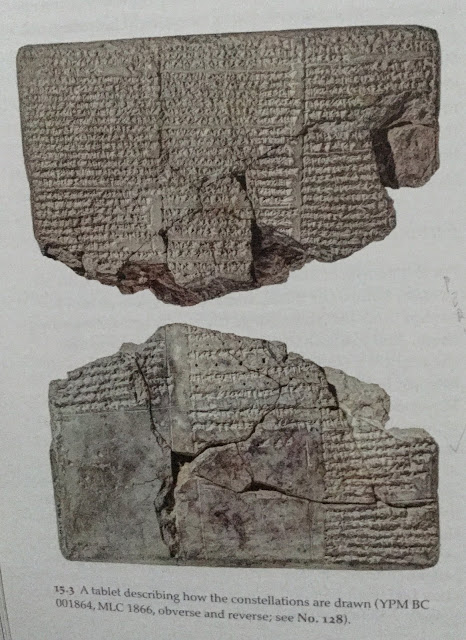
constellation maps

‘Ancient Mesopotamia Speaks’ is a latest book (year 2019) on Babylonia. It is published by Peabody Museum of Natural History, Yale University. The Yale Babylonian collection with more than 40,000 clay tablets and seals is one of the most important repositories of Mesopotamian artefacts in the world.

The Mesopotamian writing system, known as Cuneiform, was invented in southern Iraq around 3500 BCE and remained in use for 3500 years. Scholars in the Western world believe that everything we have today came to us via Greece. Greeks took it from Babylonia and spread it to other parts of the world. Early Indian scholars also wrote that astronomy and astrology came to  Hindus from the Greeks. The blunder that they made was that they thought Vedic civilization came after Babylonian. But Hindus strongly believe that Vedas and other texts were from Pre Kaliyuga period. According to them Kaliyuga began in 3102 BCE. And this belief has been there for at least 1500 years according to archaeological evidence. According to Aihole inscription and Parthivasekara pura Tamil inscription Hindu dating of Kaliyuga and Vedas was correct.

Very interesting similarities are seen between the Hindus and Babylonians with regard to Time, Calendar and Almanac. I have found the following similarities in the book:

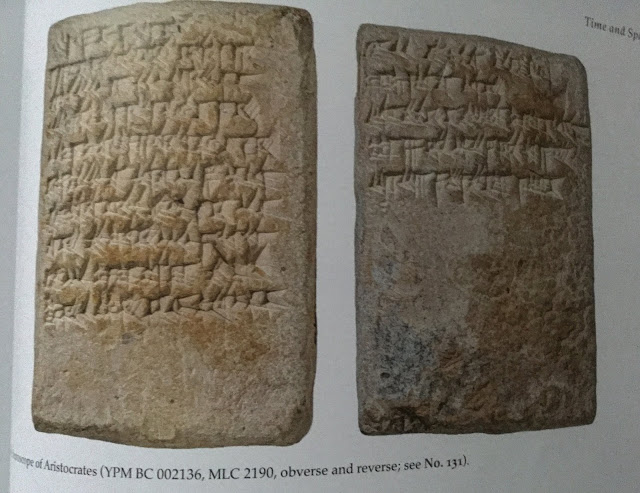
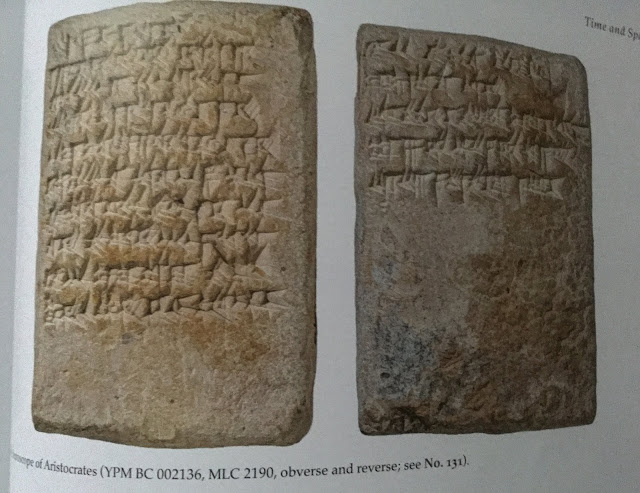
 horoscope of Aristocrates

1.Following Luni-Solar calendar for celebrating festivals; for instance Hindus celebrate some festivals on the basis of cycle of moon and others on the cycle of Sun. Babylonians did the same.

2.Because of the 11+ days of difference between the two cycles, an Intercalary Months was inserted every third year as the unlucky 13th month. Vedic scholars also did this and called it impure/dirty month (Mala Maatha). That is why 13 is considered impure, un lucky.

3.Horoscope writing was followed by both the cultures

4. Marking favourable and unfavourable days i.e. Auspicious and Inauspicious (Subha and Asubha Dinas)

5.Good days to make medicines and to take medicines. What part of the body is controlled by which zodiac sign. Though we have lots of things about these in Sanskrit scriptures, scholars believe that we borrowed them from the Babylonians through Greeks.

6.Movement of Venus and its effects on us. Hindu astrology linked movement of Venus and Jupiter with drought and harvest.

7.Even 2000 year old Tamil Sangam literature has hundreds of astrological and astronomical remarks in Tamil verses.

Following statements in the book are interesting: –

“Babylonians had astronomical diaries marking the movements of celestial things on day today basis. Akkadian language mentioned them as ‘regular watching’.

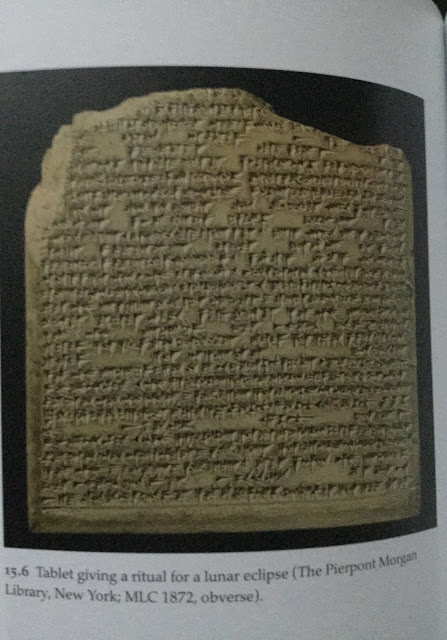
lunar eclipse rituals 

Celestial divination is known to have been practised in Mesopotamia already in early second millennium BCE . The late first millennium BCE saw many significant developments in astrology, including schemes linking astronomical phenomena to the rise and fall of business. They applied astrology to medicine including associating signs of the zodiac to a wide range of aspects of life. In particular, we find an increasing interest in applying astrology to medicine , including associating signs of the zodiac with different parts of the body.

The most significant development within astrology, however, was casing the horoscope of a new born child. One of these horoscopes reads-

“Year 77 (of the Seleucid Era), on the fourth of the month of Simanu, in the morning of the fifth, Aristocrates was born. That day the moon was in Leo, the sun was in 12;30Gemini. (..) The place of Jupiter (his life) will be prosperous, at peace; wealth will be long lasting. Venus was in 4 degree Taurus. The place of Venus; he will find favour wherever he goes. He will have sons and daughters.”

Seleucid era began in 312 BCE.

My comments

This is how Hindu astrologers write horoscopes till this day. Seleucus Nicator was a commander in Alexander’s army and he occupied parts of Alexander’s territories after his death. When Selecus invaded India he was defeated by the mighty Hindu army of Mauryas and he made peace with Chandragupta Maurya by giving his daughter in marriage to him. So he might have taken this horoscope writing to Babylonia and not vice versa. Even the 12 zodiac sign system came to Babylonia very late. This also may be the contribution of Hindus. Before that they had some zodiac signs and not all the 12. Greeks spread it to the Western world.

–subham–

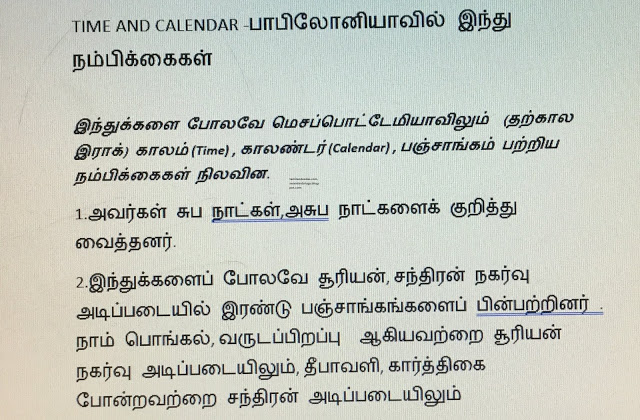
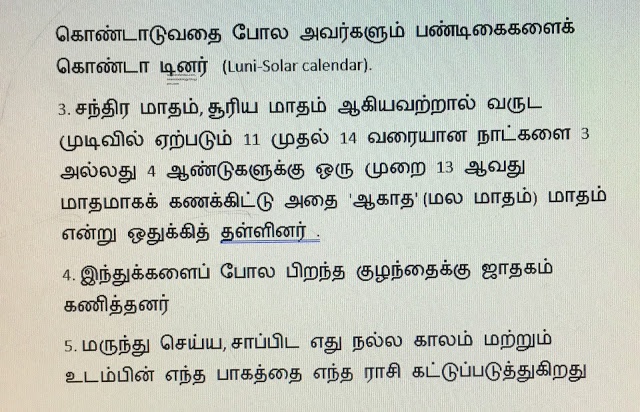
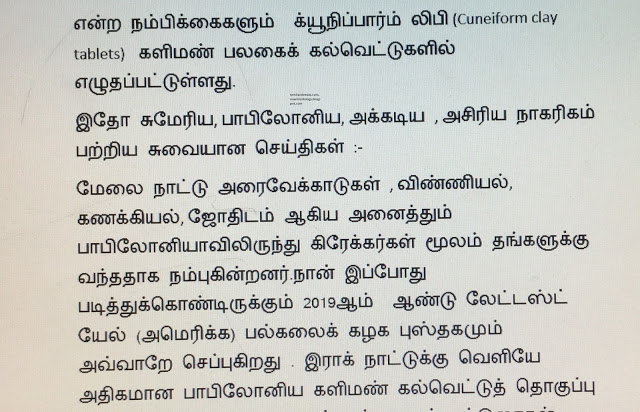
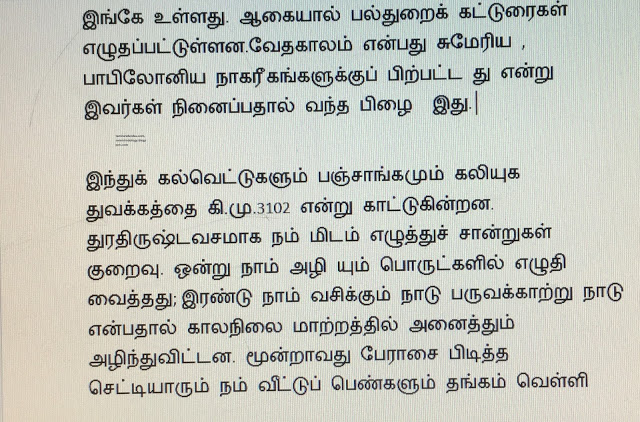
TIME AND CALENDAR -பாபிலோனியாவில் இந்து நம்பிக்கைகள் (Post No.7325)

list of auspicious  days

WRITTEN BY  London Swaminathan

swami_48@yahoo.com

Date: 10 DECEMBER 2019

 Time in London – 15-34

Post No. 7325

Pictures are taken from various sources; beware of copyright rules; don’t use them without permission; this is a non- commercial, educational blog; posted in swamiindology.blogspot.com and tamilandvedas.com simultaneously. Average hits per day for both the blogs 12,000

Ritual for lunar eclipse

அரிஸ்டோக்ரடீஸ் என்ற கிரேக்க சிறுவனுக்கு அவனது ஆட்சிக்காலத்தில்  எழுதப்பட்ட ஜாதகம் களிமண் கல்வெட்டில் உள்ளது. இன்று நாம் எப்படி ஜாதகம் எழுதுகிறோமோ அதே பாணியில் ஜாதக வாசகம் உளது!

horoscope of atris

–subham–

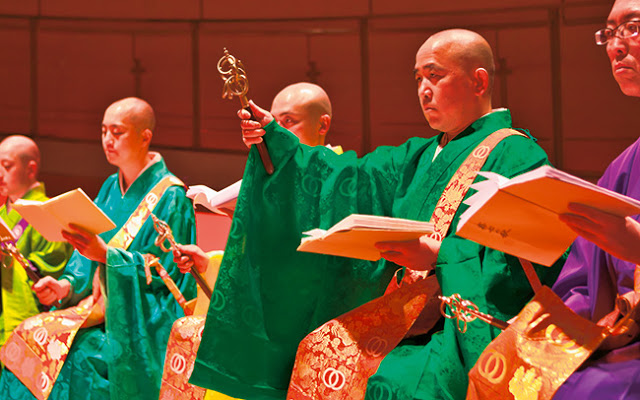
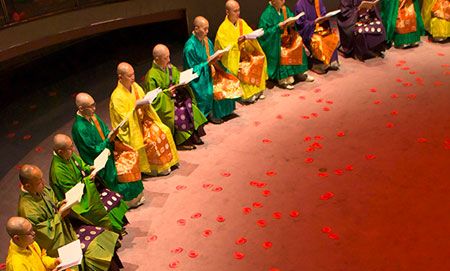
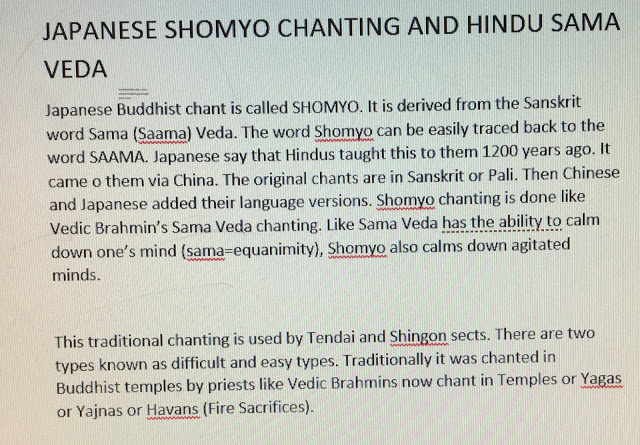
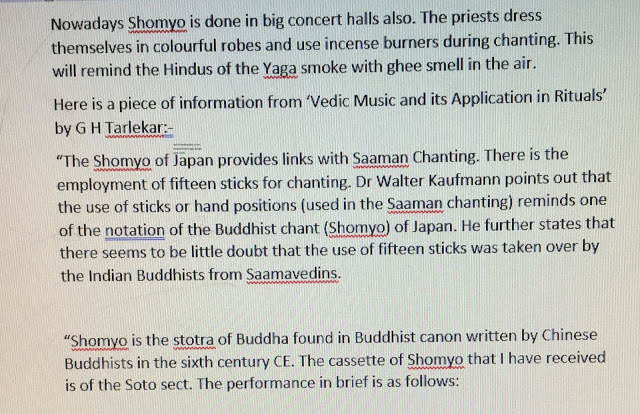
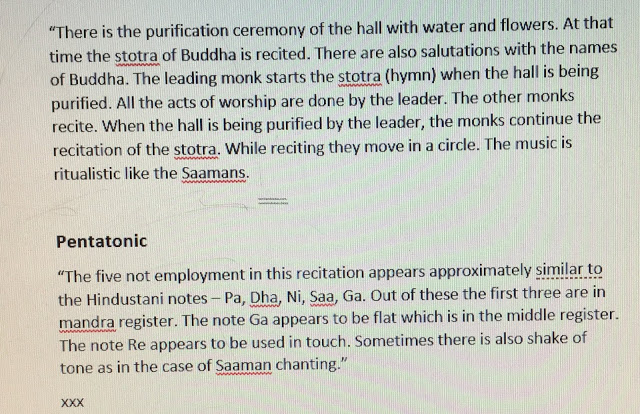
JAPANESE SHOMYO CHANTING AND HINDU SAMA VEDA (Post no.7268)

SHOMYO

Written by London Swaminathan

swami_48@yahoo.com

Date: 27 NOVEMBER 2019

Time  in London – 9-07 AM

Post No. 7268

Pictures are taken from various sources; beware of copyright rules; don’t use them without permission; this is a non- commercial, educational blog; posted in swamiindology.blogspot.com and tamilandvedas.com simultaneously. Average hits per day for both the blogs 12,000

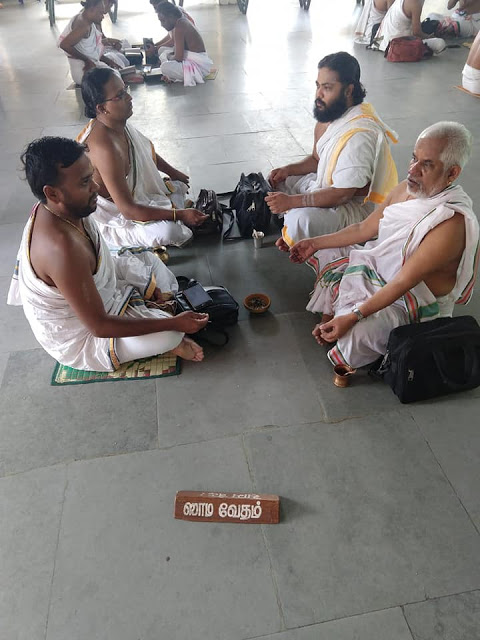
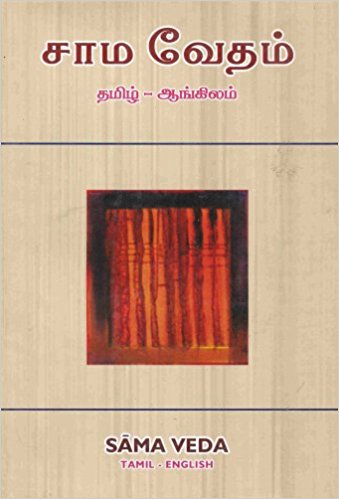
SAMA VEDIC CHANTING
SAMA VEDA PUNDITS

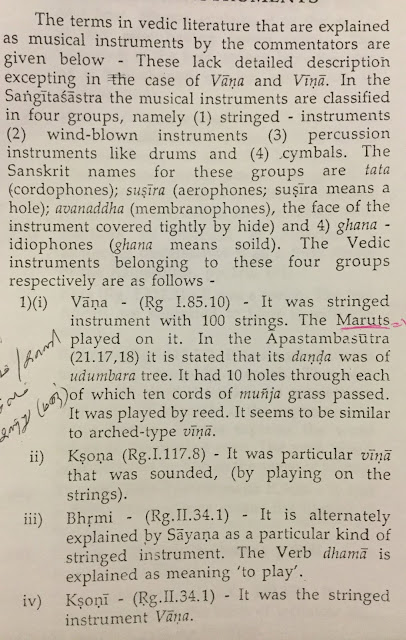
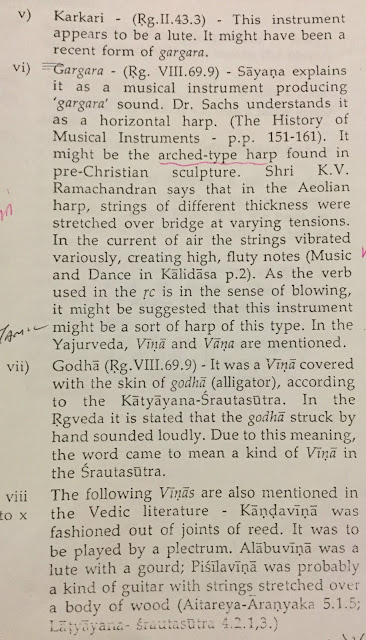
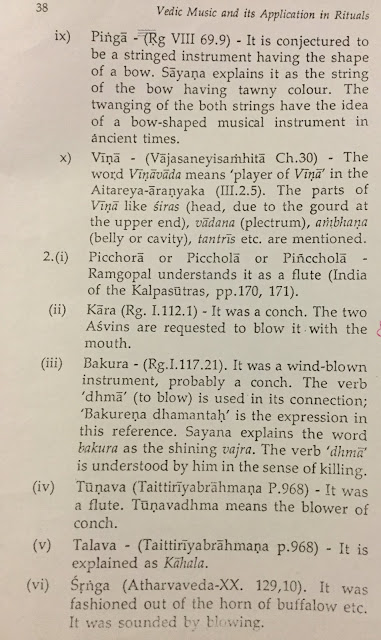
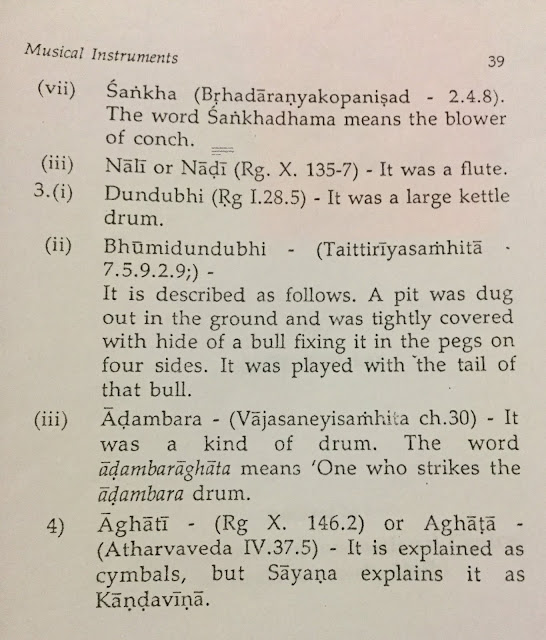
MUSICAL INSTRUMENTS IN THE VEDAS

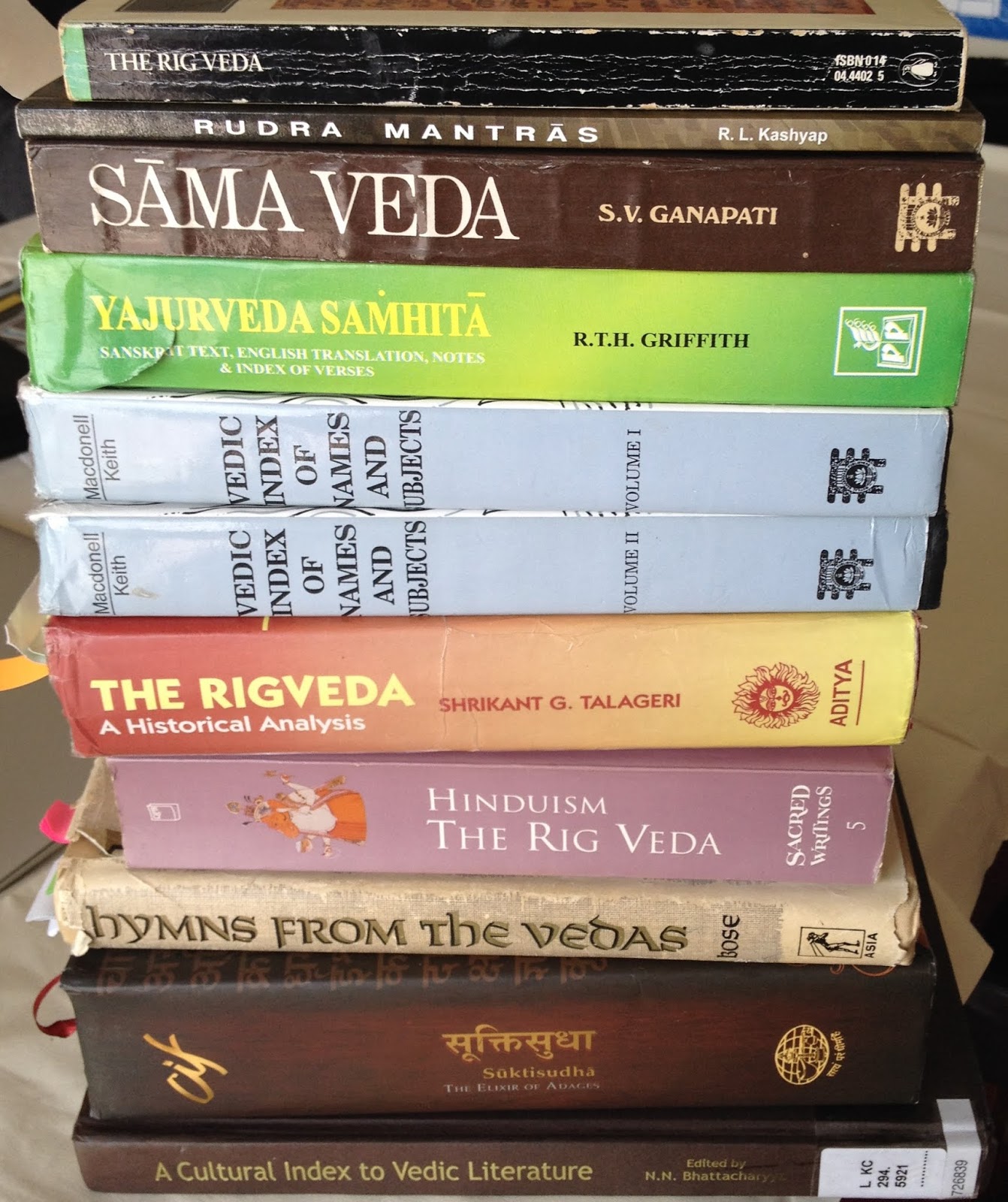
FROM MY HOME LIBRARY

–SUBHAM–