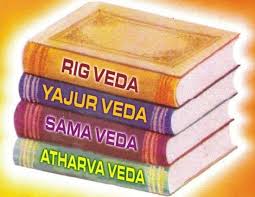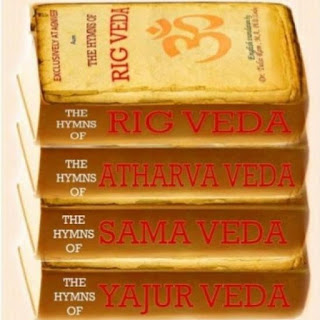
DIRGATAMAS HYMN- A RIDDLE IN THE RIG VEDA (Post No.4453)

Written by London Swaminathan 


Date: 2 DECEMBER 2017 


Time uploaded in London-  20-45


Post No. 4453

Pictures shown here are taken from various sources such as Facebook friends, Books, Google and newspapers; thanks.


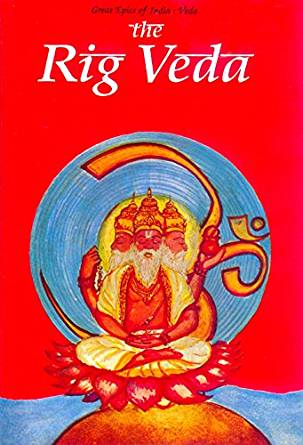
The Rig Vedic hymn 1-164 is a great hymn. Probably that is the longest hymn in the oldest book in the world with 52 mantras. It is like an encyclopaedia touching various subjects. It is a riddle because the poet Dirgatamas has used lot of numbers which can be interpreted in many ways. In fact Wilson, Max Muller, Ludwig, Hillebrandt, Griffith, Grasmann and many imitation western Sayanas gave their own interpretations. Even our own Sayana was struggling with the meaning of the mantras. The story of Dirgatamas itself is interesting. He was a blind poet like Homer who lived 100 years. His name meant Long Darkness.


First let me give you a beautiful comment on the Hymn RV 1-164 by Umapada Sen in the introduction of his book titled ‘The Rig Vedic Era’ (Calcutta, 1974):–

The Veda is an Indian mass product of a highly advanced civilised society based on class co-operation. It flowered spontaneously, breathing in Indian atmosphere, unassailed by extraneous influences for several centuries, till it was stifled by abrupt and strange appearance of liturgical codes of completely different character.

The clamour for ambiguity or inefficient articulation of the Vedic hymns by the protagonists need not be deplored. The critics should do justice to themselves in case they just take the pains to go through the hymns addressed to the Visvedevas or only the Hymn RV 1-164 and concentrate to find out the meaning of their own accord. Invariably it will dawn that the hymns are ovations addressed to all the luminaries, the then gods to the Rig Vedic singers. The sun, moon, nakshatras (stars), Sapta Rishis (Ursa Major), Pole star (Dhruva) and others being mentioned and their functions, inter related with astral phenomena, minutely described in a riddle type song sung by a poet soliciting a solution.


The humble effort in solving the quiz has mainly been confined in rationally arranging the translation of Indologists when necessary and nothing further. Only the respective solutions, e.g. where a luminary is seen to revolve in a chariot with no wheels the axle only spinning without linear motion;  seven luminaries bearing seven distinct names journeying in a chariot but with seven wheels following the sun’s track closely; the variant sun Vishnu, never making a journey in a chariot, encompassing the entire expanse only with three strides and relate to the pole star so on, have been offered.
Logical deductions are palpably conspicuous and do not depend on superfluous elucidation or interpretations of the verses in greater details. It is apparent that the above mentioned allusions respectively relate to the pole star, the Sapta Rishis (Ursa Major), seven planets, Vishnu’s sun (and not ordinary sun’s) three typical positions in the ecliptic, now known as the cardinal points, where through Vishnu’s annual revolution is completed. It would have been sheer folly if any other explanation was suggested. Nowhere, any farfetched idea has been construed or imported, nor any artificial rendering was adopted to spin a yarn or obliterate the real purport of the verse to suit the present deductions.”

xxx

This verse is famous for a few other statements and quoted very frequently for those statements:


(1).Truth is one; scholars call it with different names!

“They call him Indra, Mitra, Varuna, Agni and he is heavenly nobly-winged Garutman.

To what is One sages give many a title; they call it Agni, Yama, Matariswan”-RV 1-164-46


(2).Speech has Four Divisions!

“Speech has been measured out in four divisions, the Brahmins who have understanding know them

Three kept in close concealment cause no motion; of speech, men speak only the fourth division.”—1-164-45


Four divisions of speech are

Four Types

1.Paraa, 2.Pasyantii, 3.Madhyamaa, 4.Vaikharii

Chathvaari vaak parimitaa padaani taani vidurbrahmanaa ye maniishinah

Rik Veda 1-164-45

Saayanaa in his commentary mentioned that the four types mentioned by the seers are Paraa, Pasyantii, Madhyamaa and Vaikharii.


(3).Adam and Eve Story from the Rig Veda!

“Two birds with fair wings, knit with bonds of friendship, in the same sheltering tree have found a refuge.

One of the twain eats the sweet Fig tree’s fruitage; the other eating not regadeth only” 1-164-20

Kanchi Paramacharya has rightly pointed out that this gave birth to the Story of Adama and Eve and Adam eating the forbidden fruit.

Adam= ADma=Atma

Eve= Jeev (Jeevatma)

Sayana says that the two birds are the vital and the Supreme spirit, dwelling in one body. The vital spirit enjoys the fruit or rewards of actions while the Supreme Spirit is merely a passive spectator.
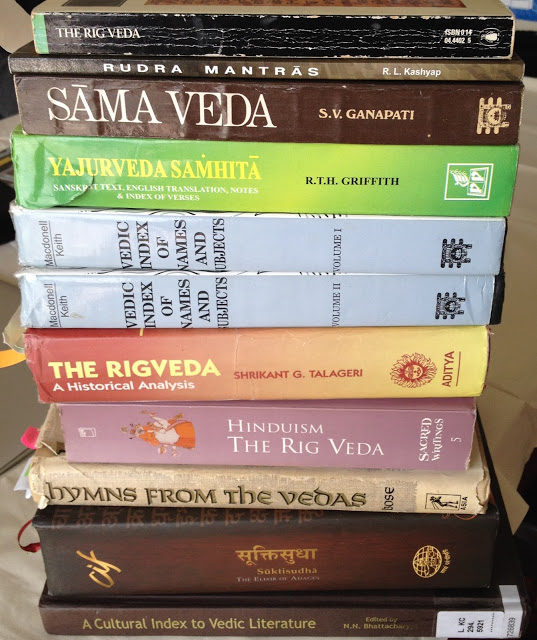
 

(4).Number Symbolism

“Seven to the one-wheeled chariot yoke the Courser;bearing seven names the single Courser draw it.

Three-naved the wheel is, sound and undecaying, whereon are still resting alhese worlds of being.”- 1-164-2


“The seven who on the seven wheeled car are mounted to have horses, seven in tale, who draw them onward.

Seven sisters utter songs of praise together, in whom the names of the seven cows are treasured.”- 1-164-3

Seven Sisters seal is found in the Indus valley civilisation as well.

The Seven: according to Sayana, the seven solar rays, or seven divisions of the year.

Seven sisters: Probably the seven celestial rivers, which as emblems of fertility may bear the name of cows.


Dirgatamas is playing with numbers! he used numbers 1 to 10 to denote various things. It gives scope for new interpretations touching from Astronomy to Zoology.

Tamil mystic poets Tirumular, tirumazisai Alvar and Siva vakkiyar followed this number symbolism in their poetry, but 2000 years after Dirgatamas.


(5). Vedic Metres

Seven Vedic Metres including Gayatri are mentioned by the poet.

(6) The Path of Knowledge

Unknowing, I ask of those  who know – the sages

as one ignorant for the sakeof knowledge;

who is that ONE in the form of the Unborn

that has supported these six spheres of the world? 1-164-6
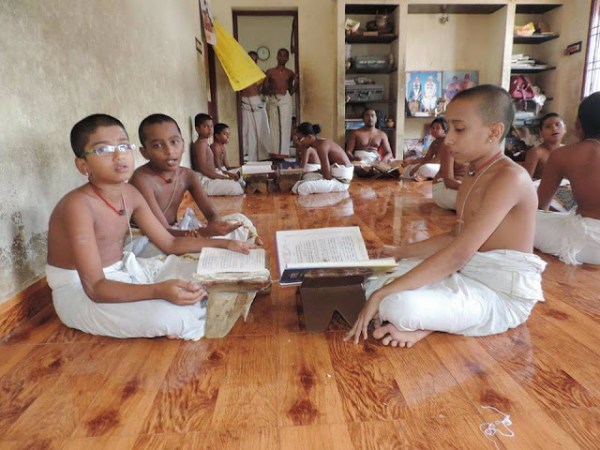
 

(7). What is the use of Veda?

What will he do with the hymn of the Veda

who does not know its theme—the Eterna

in the supreme region, in which the Devas dwell?

But those who have come to know That are perfect. – 1-164-39


(8).Words of Ambiguity

Boneless one, Unborn image, Suprna, Five-footed, the single, Triplet, the buffalo, Garutman, the Sadhyas, Sraswati etc.  are interpreted differently.

Dirgatamas was one of the latest poets of the Rig Vedic period. Rig Veda covers a time span of at least 500 years. If we cant even understand Dirgatamas, how are we going to understand more ancient poets?


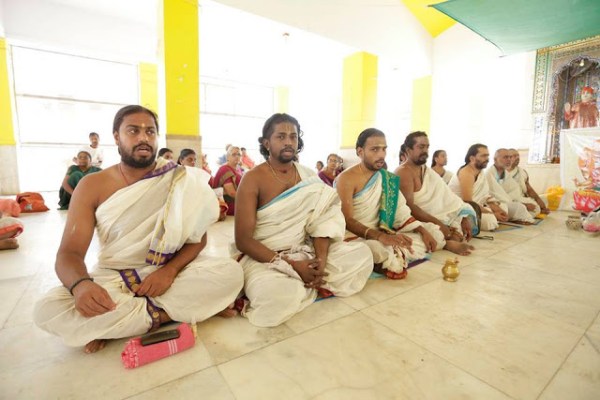
As Umapada Sen says one must read the entire hymn and come to one’s own conclusion. Don’t depend upon Western Sayanas’ interpretations. They were not Hindus and moreover they did not live the life of Indians. Unless one lives in the culture, one cannot understand the full meaning, thrust, import and significance of the poem or hymn.


(I will give the story of Dirgatamas separately)
–Subham–


HINDU DHRUVA IN SHAKESPEARE! (Post No.4449)

Written by London Swaminathan 


Date: 1 DECEMBER 2017 


Time uploaded in London-  14-46


Post No. 4449

Pictures shown here are taken from various sources such as Facebook friends, Books, Google and newspapers; thanks.


SHAKESPEARE, the greatest English playwright and dramatist was influenced by Hindu literature. We know from his plays that he has read lot of materials. We see Kalidasa’s Shakuntala in Miranda in his play the Tempest. We hear about Nagaratna (cobra jewel) in one of the plays. I have already listed the parallelisms in Tirukkural, the Tamil Veda and Shakespeare in several articles. Here is one more Hindu story in Shakespeare.


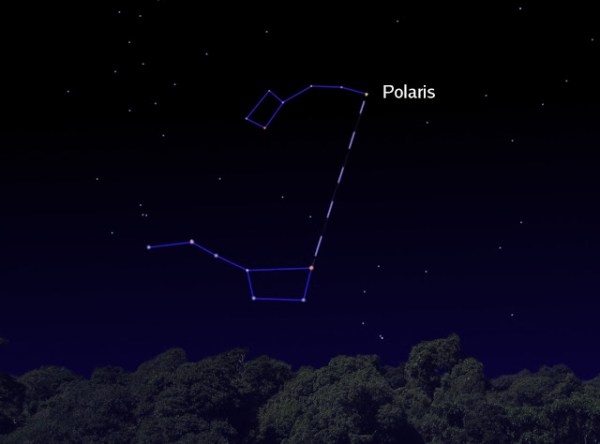
The story of the young boy DHRUVA is known to every Hindu. Dhruva has been elevated to the status of Pole Star in Hindu literature. Not only Pole star but also the seven stars circling the pole star worshiped by millions of Hindus every day three times  when they do Sandhyavandan, the water ceremony.


According to the Vishnu Purana, the sons of Swayambhuva Manu were Priyavrata and Uttanapada. Uttandapada had two wives, one was Suruchi who was very proud and haughty and the other was Suniti who was humble and gentle. Suniti gave birth to Dhruva. Suruchi treated him very badly while he was young. Suruchi made sure that her son Uttama succeeds to the throne. Dhruva and his mother Suniti were helpless. Dhruva wanted to pray to God to keep himself happy. He joined a group of seers (Rishis) and he went through rigid course of austerities. Indra wanted to distract him so that there wont be any competition from him for his post. At the end, he got a boon from Vishnu and became a star. A star among boys and a star in the sky. Hindus are shown Dhruva Nakshatra—known as Pole Star during wedding along with the Seven Stars, the Ursa major. He is the pivot of the planets. He became the symbol of steadfastness, determination, tenacity and resolution to the Hindus. Hindus are advised to be as constant as Dhruva.

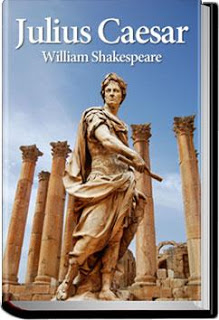
Shakespeare says in Julius Caesar,

“But I am constant as the Northern Star, of whose true fixed and resting quality, there is no fellow in the firmament”– (Caesar)


Several of Hindu beliefs are in Shakespeare for which there is no other source such as Greek, Egyptian and Roman.


–Subham–


STORY ABOUT A.BRAHMANA (Post No.4383)


Written by London Swaminathan


Date: 10 NOVEMBER 2017


Time uploaded in London- 13-35


Post No. 4383

Pictures shown here are taken from various sources such as Facebook friends, Books, Google and newspapers; thanks.


This is a story about the origin of Aitareya Brahmana.

The Brahmanas are the prose works in the Vedic literature. They deal with the fire sacrifices of the Vedic Hindus. Each Veda has separate Brahmanas. In fact each ‘Shaka’ of the Veda has one Brahmana. One of the oldest Brahmanas is Aitareya Brahmana of Rig Veda.


There is a curious story about the origin of this book. Sayana, the Vedic commentator said this story. There was a sage who had many wives, and one of them was called Itara. She had a son whose name was Mahidasa. The father neglected him and loved the other sons more than Mahidasa, and at a certain sacrifice, he allowed all the other sons to sit on his lap, but refused the honour to Mahidasa.

Thereupon Itara prayed to Goddess of Earth who appeared at once and offered a divine thrown to Mahidasa and seated him on it. The goddess then made him a great scholar. To Mahidasa Aitareya, enlightened by the boon of Earth,there appeared or was revealed. One Brahmana of the Rig  Veda  (of Sakala Saka was called after his name. Itara——-A/Itareya. The aranyaka is also called Aitareya Aranyaka.


(The legend says that Aitareya was the son of Itara; itara means the other woman, probably the woman was not the legal wife of the King and so her son was neglected.)

Aitareya Brahmana is divided into eitght Panchikas (pentads), each of which has five adhyayas and so it contains forty chapters; it deals with the duties of the priests, explanations of Soma, Uktya, Shodasa, Atiratra and other sacrifices including 12 minor sacrifices


How many Brahmana Books are there?


There is one more Brahmana of Rig Veda: Kaushitaki Brahmana.

Satapata Brahmana

Of all the Brahmana books, Satapata Brahmana is the most important one. It belongs to Sukla Yajur Veda. It deals with important fire sacrifices in addition to etymology, grammar and meanings of several other things. The name itself shows that it has hundred (sata) chapters. The Krishna Yajur Veda has Taittiriya Brahmana.  Atharva Veda has Gopata Brahmana.


The Brahmanas shows the oldest stage in the development of Sanskrit prose. It is a most interesting phase in the history of Indian thought. Some of the things are said in a symbolic language and so they appear as silly stories. The seers themselves often say the gods love mysterious language. The astronomical remarks in the Brahmanas show they belong to a period between 2000 BCE and 3000 BCE. Foreigners date them around 1000 BCE. This is wrong because Max Muler gave a rough date believing that a anguage changes every 200 years. This theory is not applied to any other language and proved More over, apart from language, there is huge difference between the Upanishadic stage and Brahmana stage.


–subham —


EAT ONLY TWICE: VEDA SAYS (Post No.4351)

Written by London Swaminathan


Date: 30 October 2017


Time uploaded in London- 16-24


Post No. 4351

Pictures shown here are taken from various sources such as Facebook friends, Books, Google and newspapers; thanks.

Satapata Brahmana is one of the important Brahmanas, part of the Vedic literature. It says,

“Devas, men, fathers (pitrs=departed souls) and Asuras approached Prajapati. One walked after another and asked him in what manner they have to live. He ordains for each.

To ‘the men clothed and bending their bodies’ ,

‘Your eating shall be in the morning and in the evening’.

The devas were told the sacrifice was to be their food.

The fathers/Pitrs were told to eat only monthly in Moon light;

The beasts (animals) can eat whatever and whenever they liked, in season or out of season

To the Asuras he gave darkness and illusion (Tamas and Maya):-

“Neither the gods/devas nor the Pitrs , nor beasts transgress (their several ordinances); some of the men alone transgress theirs. Hence whatever man grows fat, he grows fat in unrighteousness, since he totters and unable to walk because of his having grown fat by doing  wrong. One should therefore eat in the evening and morning; whosoever knowing this eats only in the evening and in the morning, reaches full measure of life, and whatever he speaks , that  is true. Because he observes the divine truth –Sat.Br.2-4-2-6

In Tamil Poetry book Neethi Venba, there is a verse which says, “Yogis eat once a day, healthy men eat twice a day, Rogis eat thrice a day (gluttons, those who want to fall sick; rogam=sickness)  those who want to leave the earth quickly eat four times a day”.

DISPUTE BETWEEN MIND AND SPEECH

A dispute once took place between Mind and Speech as to which was the better of the two. Both Speech and Mind said, ‘I am excellent’.

Mind said, ’surely I am better than you. For you do not speak anything that is not understood by me (mind).  And since you are only an imitator of what is done by me and a follower in my wake I am surely better than you’.


Speech said ‘surely I am better than you, for what you know, I make known. I communicate’


Both of them went to appeal to Prajapati for hi decision. He, Prajapati, decided in favour of mind, saying to Speech, ‘Mind is indeed better than you for you are an imitator of its deeds and a follower in its wake’.


Then Speech (Vach) being thus gainsaid was dismayed and miscarried. She, speech, then saidt  Prajapati,

‘May I never be your oblation bearer, I whom you have gainsaid’.


Hence whatever at the sacrifice is performed for Prajapati, that is performed in a low voice; for Speech would not act as oblation bearer for Prajapati- Sat. Bra. 1-5-1-8

(My comments: These symbolic stories show that the Vedic Hindus were very literate and they can even use speech and language for conveying some message.)


Here is an illustration of statecraft following the philosophy of Speech and Mind:

“Let him draw the cups of Soma for Indra Marutvat (accompanied by the Maruts), and not for the Maruts likewise. For were he to draw cups for the Maruts, he would make the people refractory to the nobility. He thus assigns to the Maruts a share therin after Indra, whereby he makes the people subservient and obedient to the nobility—4-3-3-10

SOME QUOTES FROM THE BRAHMANAS

Gods and evil spirits were originally soulless and mortal They become immortal by putting in their inmost being the immortal fire—2-2-2-8

xxx

In their originally mortal condition, they used to live on earth. But the gods grew, it is said, tired of man’s endless petitions and fled—2-3-3-4

xxx


The gods abhorred the Ribhus, on account of their human smell. The gods placed two Dhayyas between the Ribhus and themselves because of the human smell of the former- Aitareya Brahmana 3-30

xxx

The sun would not rise if the priests did not make sacrifice- Sat. Br.2-3-1-5


xxx


Be Exemplary!

The months follow one another as they do because in a certain ceremony one priest follows another:-

“Were to both walk out together, were to both enter together these months would assuredly pass separated from one another; therefore, while out walks the one, in steps the other—Sat Br.3-1-7-11


–subham, subham–

Serious Argument between Rama and Bharata on Two Words! (Post No.4332)

Written by London Swaminathan


Date: 24 October 2017


Time uploaded in London- 16-42


Post No. 4332

Pictures shown here are taken from various sources such as Facebook friends, Books, Google and newspapers; thanks.


Serious Argument between Rama and Bharata on Two Words! (Post No.4332)

All of us know the outline of Ramayana, one of the two great Hindu epics in India. Ramayana has got lot of materials on Dharma or righteousness. During the meeting of Bharata and Rama in the forest, each one tried to outsmart the other. The context is Bharata persuading Rama to return to Ayodhya and take over the reins. Most of us miss the minute points; only those who read it in full original slokas (Sanskrit couplets) will observe and digest those things. Right Honourable Silver tongue V S  Srivasa sastri gave some lectures on Ramayana in 1944 touching those minute and very useful points. Madras Sanskrit Academy arranged those talks. He gave 30 lectures on Valmiki Ramayana.


Here is an excerpt: –

In the middle of the argument Bharata says, “Have pity on me. It was when I was away that Kaikeyi behaved in this fashion, fancying that it would please me. She deserves to be severely punished but I don’t punish her because I am afraid of violating the rule of Dharma. I am also afraid of your serious displeasure. As for my father, Dasaratha, he was an old man and a dotard. He was in the hands of my mother. The old saying has it that people weaken in their old age, become somewhat senile,

‘anta kale hi bhutaani muhyantiti puraa sruthi:’

This old saying has abundantly testified to by our father. (V R 2-106-8 to 14)


Apatya

Then Bharata ventures on advising his own elder brother!

You know the word APATYA means son. It is grammatically neuter in gender but it means son. It comes from a peculiar belief that the son saves father from ‘falling’ (apatya), that is, from perdition we say. That is why he is called APATYAM. He prevents father’s fall. Bharat uses the word in its literal sense and ventures his brother in the truth.

Bharata says to Rama,

“Our father thinking that he was under some obligation or perhaps in fear of the anger of the wife, whatever it was, through some mistake, passed an unjust order. The transgression of our father, you had better undo it. Put it right. Father did wrong some mistake, may be he was a fool.

He is called a son in this world who when the father has gone wrong, puts the matter right:

piturhi samatikraantam puto ya: sadhu manyate- 2-106-15

If a son doesn’t do it but obeys his father in the wrong course, then he must not be called APATYA (preventing falling). He helps his father’s fall, brings it about. You had better be an APATYA.

Maa Bhavaan duskrtam pitu:- 2-106-16

Do not carry out the wrong order passed by the father. Do not confirm him in the error of his ways and thus bring down Heaven’s punishment on him. Do the right thing and save him”

See how a clever man can twist things to his own purpose.


(After giving new interpretation to the word Apatya, Bharata shows all those assembled in support of his request that Rama should return to Ayodhya)

Right Honourable Srinivasa sastri continues……………

“Then Sri Rama Says: You think that I , being the eldest son, must obey father and that you need not. Is that your opinion? Father has laid on me one duty,  going to the forest. He has laid on you another duty, being king at Ayodhya and ruling the kingdom. You forget that is your duty. Go and get yourself crowned. Do not waste time here. Carry out your father’s wish as I  carrying out his wish.

Please your mother by carrying out your father’s wish.”

Significance of going to Gaya Kshetra

Rama continues……….

“There was once a great mannamed Gaya who in the place called Gaya performed a great Yajna and saved his Pitris (departed souls).That man having saved his Pitris has laid it down for posterity.


putraamno naarakaadhyasmaatpitaram traayate suta:

tasmaan putra iti prokta: pitruun ya paathi sarvata: (2-107-12)


Because a son saves the father from the Naraka called ‘Put’ by performing what is called Ishtaputra, be it in wealth, in temples and so on, he is called PUTRA. A son who performs these benevolent offices and dedicates them for the benefit of his father is called a PUTRA.”

Now Rama says to Bharata,

You had better be a PUTRA. You asked me to be an APATYAM, I ask you to be a PUTRA.


(Both Putra and Apatyam meant the same; but Bharata gave a new interpretation and Rama corrected him by explaining Putra)


The prescription is that the man should bear many sons. One wont do, no, not even two; for life is subject to so many mutations and vicissitudes. We want one son at least to go to Gaya and perform Sraddha.


Now, ladies and gentlemen, how famous must this Gaya must have been for it to get this sanctified flavour even in the  time of Sri Rama! What an ancient place it must have been! One must wish to get many sons of whom someone may go to and perform Sradhdha.


At the end Rama outsmarted Bharata by using the word Putra which has the same meaning of Apatyam.

–subham–

IS THERE POETRY OR PHILOSOPHY IN THE RIG VEDA? (Post No.4329)


Written by London Swaminathan


Date: 23 October 2017


Time uploaded in London- 20–15


Post No. 4329

Pictures shown here are taken from various sources such as Facebook friends, Books, Google and newspapers; thanks.

We know that the Rig Veda is the oldest religious book in the world; we know that Rig Veda is the first anthology in the world; we know that Rig Veda gives a list of 400 plus poets who were here 6000 years ago. It is amazing to see such a long list of poets several thousand years ago; No language has such a long list of firsts in the modern world.


Foreigners, particularly Max Muller and Marxists, dubbed them silly, ‘mostly childish’ with one or two rare gems here and there. They also said you cannot see high philosophy in it. I give below some excerpts of lectures delivered by Dr Ghate in University of Bombay 100 years ago:–


“Do you, young readers, come to the Rig Veda (RV) with the hope of finding in it the most sublime poetry? Then I am not surprised at the disappointment which would be in store for you.

You must not expect to find in the RV the smooth and melodious verses of KALIDASA,

nor the deep and heart-rending emotions of BHAVABUTI,

nor the polished and jingling music of DANDIN,

nor the elaborate and highly finished art of MAGHA,

nor the deep significance of BHARAVI,

nor the bewilderingly complex phrases of BANA.

All the same it cannot be denied that the hymns of the RV, at least some of them are such as goddess of poetry would be proud of.


The freshness and beautiful imagery which characterize the hymns addressed to Ushas (aurora), the heroic simplicity of some of the hymns addressed to Indra (the Thundering Bull), the homeliness which pervades some of the hymns to Agni, cannot but appeal to a sympathetic and appreciative reader. Though the RV as a book of poetry cannot at all stand comparison with the best specimens of Sanskrit classical poetry, still it has something indescribable in it which cannot be slightly passed over”

MY COMMENTS:-

Rig Veda is not a ‘poetry book’, i.e. nobody praised it as a poetry book. It is valued because it is a book of hymns. Moreover, 5000 or 6000 years ago, the world has no civilisation at all. Egypt, Babylonia, Mayan, Chinese, Greek civilisations came after the RV, if we go by the modern date of RV. Astronomically Tilak and Jacobi placed it in 4500 BCE and latest Saraswati River Research and NASA satellite images place RV before Indus Valley Civilization, i.e. 2500 BCE or before. Hindus believe that Vyasa divided the Vedas into four around 3102 BCE. So when there is no civilization in any part of the world we see 400 plus poets who sang religious songs on the banks of the mighty, ocean like River Sarswati. We even know they did not ‘compose’ but they gave us what they ‘heard’ (Sruti in Sanskrit, Kelvi in Tamil).


Is there Philosophy before the Upanishads?

I will give some excerpts from Bombay University lecture by Dr Ghate:

“So far I have spoken about the mythology of the Rig Veda (RV). Before concluding, I should like to make few remarks on the philosophy of the RV:-

“India is often spoken as the cradle of philosophy. Nowhere are made so bold and daring attempts to solve the riddle of the universes as in India, where there lived kings like JANAKA and AJATASATRU, Brahmins like YAAJNAVALKYA and NACHIKETAS, philosophers as SANKARA and KUMARILA. So the student of the RV will naturally be curious to know what philosophy is taught in the RV. He has, however to be warned, that no cut  and dry system is taught here, for which he has to go to SUTRAS. Nor do philosophic speculations form the main burden of the RV as they do in the case of the UPANISHADS.


However, the seeds of the Upanishad thought are seen scattered about here and there in the Samhita (Hymns) of the RV. Though the general religion of the RV refers to a plurality of nature gods, still the tendency to monism is distinctly in some of the hymns. Just as the Rishis (seers) thought that the several natural phenomena had some divine forces behind them which were personified into so many gods, in the same way they advanced one step further and came to think that all these were the aspects of one and the same all-pervading divine force which manifested itself in different ways. Thus there was a transition from many gods to one god. Thus in 1-164-46, we have, “They call it Indra, Mitra, Varuna and Agni or the heavenly Garutmath (the sun). The sages call the One Being in many ways; they call it Agni, Yama and Matariswan. Here the several Vedic gods are stated to be one being. This whole hymn (1-164) is nothing but a collection of fifty verses poetry, all of them except one, being riddles whose answers are not given. “The subjects of these riddles are cosmic, that is, pertaining to the nature phenomena of the universe: mythological, that is, referring to the accepted legends about the god; psychological that is, pertaining to the human organs and sensations of finally crude and tentative philosophy or theosophy. Heaven and Earth, Sun and Moon, air, clouds and rain; the course of the sun, the year, the seasons, months days and nights; human voice, self-consciousness of life and death; the origin of the first creature and the originator of the universe – such are the abrupt and bold themes” (from Bloomsfield).


The idea that the dead forefathers are dwelling in another world, in the company of gods, where we ourselves to go after death, seem to be expressed or implied in several places.

Thus, we have in 1-91-1, “under your guidance, O Indra, our wise fathers received their share of treasurers among the gods;”

so also 1-125-5. The thirst for life haunts the mind of the Rishis and he leads himself to believe that the life after death in the world of the gods and fathers, is eternal, at least as compared with the life on this earth. Thus in 5-55-4 and 5-63-2 the life is called AMRUTATVA or IMMORTALITY.


Questions concerning the beginning and origin of all things were asked and answered by the Vedic Rishis. Thus, in the hymn 10-121 Hiranyagarbha (golden egg) is described as existing in the beginning of the creation, the sole Lord of beings, supporting heaven and earth.


In 10-90 hymn popularly known as Purushasukta, the idea that the whole world is one being, the Viratpurusha, who having pervaded the world from all sides, still remained over and above it, is dealt with.


In the hymn 10-82, waters are spoken of as being the first substance or prime cause.


In hymn 10-125, Vak (speech) is represented as the companion and upholder of the gods and as the foundation of all religious activity and its attendant boons.


Hymn 10-129 is a typical hymn in this connection. It is called the Creation hymn. Deussen says of this hymn: “In its noble simplicity, in the loftiness of its philosophic vision, it is possibly the most admirable bit of philosophy of olden times… No translation can ever do justice to the beauty of the original”

The avowed purpose of all philosophy is to account for the presence of the world and its contents as something which is not self-evident, and needs to be explained beyond the point of mere individual experience, or analysis through empirical knowledge. The creation hymn performs this act not without some unsteadiness and with petulance due to scepticism. In putting forth a fundamental principle without personality it does not fall far behind the best thought of later times inside or outside India.”.

One thing, however, must be noted and it is that pessimism and metempsychosis, the two main threads which are oven in everything Indian, and which are he distinguishing traits thereof, are wanting in the early philosophy of the Vedas.”


MY COMMENTS:

Modern translations and interpretations give more information on the philosophy of the Vedas. Traditionalists believe that all the philosophical of ancient India existed from the very beginning. They called it the ‘Conclusions of the Vedas’ Vedanta (literally End of Vedas). Dr Ghate’s view was the one held by foregners.


Source: Ghate’s Lectures on Rig Veda, Revised and Enlarged by Dr V S Suktankar, Oriental Book Agency, Poona 2, 1966 (First Edition 1915)


–Subham–


ORIGIN OF ANIMALS AND BIRDS ACCORDING TO BRAHMANAS (Post No.4326)

Written by London Swaminathan


Date: 22 October 2017


Time uploaded in London- 16-35


Post No. 4326

Pictures shown here are taken from various sources such as Facebook friends, Books, Google and newspapers; thanks.


There are strange stories about the appearance of animals and the origin of animals and birds in the Brahmana literature.

The reddish appearance of a white horse’s mouth is explained as follows:-

“Agni went away from the gods; he entered the water. The gods said to Prajapati: Go thou in search of him; to thee, his own father, he will reveal himself He became a white horse, and went in search of him. He found him on a lotus, having crept forth from the water. He eyed him, and Agni scorched him.  Hence the white horse has, as it were, a scorched or reddish mouth, and indeed is apt to be weak-eyed. Agni thought he had hit and hurt him, and said to him, ‘I grant thee a boon’.

–Satapata Brahmana,7-3-2-14


Agni’s mark is also on the shoulder of the Ox:

“For such a one (as an ox) is of Agni’s nature, since its shoulder (bearing the yoke) is as if burnt by fire.”

–Satapata Brahmana,4-5-1-15

“The Asuras persecuted the Devas and came into contact with them. The Devas turned horses (asva) and kicked them with their feet. Thence the horses are called ‘asva’ from ‘as’ to reach. He who obtains this knowledge obtains all he desires. Thence the horse is the swiftest of animals because of its kicking with the hind legs. He who has such a knowledge destroys the consequences of guilt”

–Aitareya Brahmana Vol.1 (Haug’s Vol.2, page 319)


This was the more necessary because animals, and even plants avenged in a future existence injuries inflicted on them in this life—Satapata Brahmana, 11-6-1-1


The origin of some of the birds and quadrupeds is explained in the following texts:-

“Tvashtri had a three-headed, six eyed son. He had three mouths, and because he was thus shaped, he was called Visva-Rupa (all shape). One of his mouths was Soma-drinking, one spirit-drinking, and one for other food. Indra hated him, and cut off those heads of his. And from the one which was Soma-drinking, a hazel cock sprang forth; hence the latter is of brownish colour, for King Soma is brown. And one which was spirit-drinking, a sparrow sprang; hence the latter talks like one who is joyful, for one who has drank spirits, one talks as one who enjoys himself; And from one which was for other kinds of food, a partridge sprang; whence the latter is exceedingly variegated; ghee-drops have, as it were, dropped on his wings, in one place, and honey drops, as it were, on another; for such like was the food he consumed with that mouth” — –Satapata Brahmana,5-5-4-12

Origin of Lion, Wolf and Trees

“Indra, uninvited, consumed what pure Soma there was in the tub, as the stronger would consume the food for the weaker. But it hurt him; it flowed in all directions from the opening of his vital airs; only from his mouth it did not flow. From what flowed from the nose a lion sprang; and from what flowed from the ears a wolf sprang; and from what flowed from the lower opening wild beasts sprang, with the tiger as their foremost; and what flowed from the upper opening (top of the head whence the soul issues at death), that was foaming spirit. And thrice he spat out; thence were produced the fruits called Kuvala, Karkandu and Badara, three different species of the Jujube tree). Indra became emptied out of everything, for Soma is everything. Being thus purged by Soma

he walked about, as one tottering. The Aswins cured him by this offering… By offering he indeed became better.”

–Satapata Brahmana,5-5-4-8

My Comments:–

These stories are like stories told by the illiterate tribes living in the remotest parts of the forest or hills. But unless they have hidden meanings they would not have survived from 1000 BCE. More over along with such stories we have very high thoughts, big numbers in mathematical order, information about 27 stars, linguistics etc. So we have to do more research into their statements. Foreigners called these writings, silly, childish and gibberish. But Hindus value them as mantras (holy spells or magic spells).

–Subham–


Books on Vedas in Tamil (Post No.4322)

Written by London Swaminathan


Date: 21 October 2017


Time uploaded in London- 14-58


Post No. 4322

Pictures shown here are taken from various sources such as Facebook friends, Books, Google and newspapers; thanks.


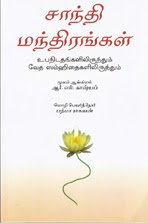
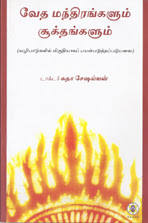
Now and then people e mail me and ask for Tamil Books on the Vedas; I have received the following e mail today. So I googled and found out some books. But I have not seen them or read them; first let me give the names of the books I have:


Sir..


Holy wishes to u..


I m reading your blog’s contents with excited feelings..


It has a lot of miracles messages and  new to me..


I’m an astrologer in XXXXXXXXXXXXX town


I read Upanishads eagerly.


And I’m living with the same


I wish to know and read about


“Atharvaa vedham”in Tamil


U r the expert in this field


So i request u to please guide me to know about the Tamil books for atharvaa vedham..


Please refer the name and publications..


It’ll be a very much benefit to my life style life and worshiping god by an another way..


I’ll be a grateful to u..


Pls reply


R V


My Reply:–


1.Atharvavetham Arulum Ananda Vazvu

author- Kavimamani Thamiz Maaran

Ramya Pathippagam, 33/4 Rmanathan Theru,

Thiyagaraya nagar, achennai 600 017

Tel- 24340599

Year of Publication 2009

It is a very good book (pages 222+)

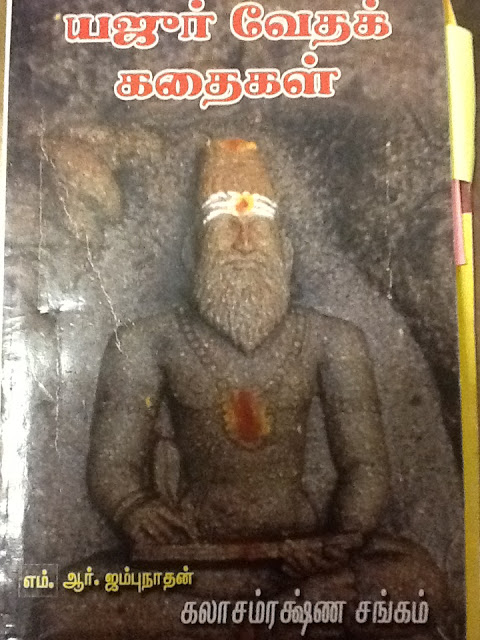
2.YajurVethak Kathaikal

author- M R Jambunathan

Kala Samrakshna Sanagam

5-D Selvam Nagar

Thanjavur 613 007

Year of Publication 2004

It is a good book (pages 80)

contact- Marutham Pathippagam

Tel 04372 232829 (Orathanadu)


These are the two books in Tamil with me in London

I have got 20 books on Vedas in English.

University of London has 100s of books and I borrow them every month.


The best place to find books on Vedas in Tamil and English is:–


Jayalakshmi Indological Book House

Mylapore, Chennai

6, Appar Swamy Koil Street,
Mylapore,
Chennai – 600004
Tamil Nadu


Ramakrishna Mutt (Mylapore, Chennai)  publish very good books about Upanishads in Tamil.


MY BOOKS


I want to publish my articles on Vedas (already in my blog) and distribute them free of cost to the interested people. If any one is interested in this venture, please contact me.

swami_48@yahoo.com


Following books are on the internet:


Sakshi Trust in Bangalore has published three vedas in Tamil; but I have not seen Atharva veda titles; please phone them to find the latest publications.


SAKSHI Trust
#63, 13th Main,
4th Block, Jayanagar
Bangalore – 560011
+91 (080) 22456315
info@vedah.com


xxxxxxx

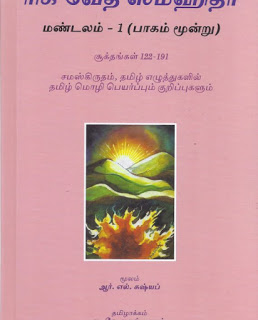
Vedangal – Oru Pahuppaaivu: Vedas – an analysis (Tamil Edition)(Tamil) Paperback – May 24, 2016

by Dr. Ramamurthy Natarajan (Author)


Product details

  • Paperback:280 pages
  • Publisher:Local agency assigned (May 24, 2016)
  • Language:Tamil
  • ISBN-10:9382237313
  • ISBN-13:978-9382237310
  • Product Dimensions: 2 x 0.6 x 8 inches

xxxxxxxx


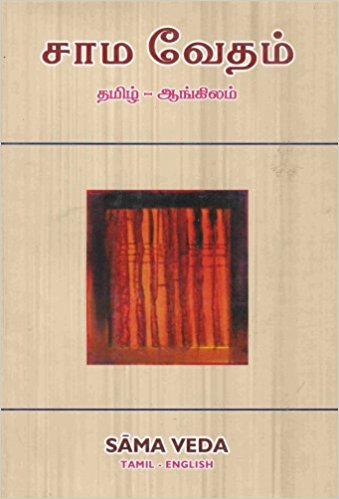
Samaveda – Veda of Holy Songs (Bilingual Tamil and English Translation) (Tamil) Hardcover – 2005

by M.R. Jambunathan (Author), R.D.H. Griffith (Author)


  • Hardcover:618 pages
  • Publisher:Alaigal Veliyeetagam (2005)
  • Language:Tamil
  • ASIN:B000V9AAXM
  • xxxxxxxxxxxxxxxxx


A lot of books are published in Marathi, Guajarati and Hindi. Tamil lags in this area.


–Subham–


Index to Vedas by Katyayana and Significance of No.432,000! (Post No.4313)

Written by London Swaminathan


Date:18 October 2017


Time uploaded in London- 20-46


Post No. 4313

Pictures shown here are taken from various sources such as Facebook friends, Books, Google and newspapers; thanks.


Hindu civilisation has reached its pinnacles during Vedic period itself.

They wrote the first grammar book and they taught grammar in the Vedic school. And even before Panini of seventh century BCE , they had  umpteen grammarians. We were fortunate enough to get the Book of Panini (Seventh Century BCE), but others were lost.


We wrote the first Nikandu /Thesaurus and we added the Contents and Index to the Vedas, Even the law book written by Manu, was earlier than Hammurabi who lived in 2600 BCE. The latest version of Manu Smrti, we have today is from second century BCE. Since the name of Manu occurs several times in the RV. Manu refers to Sarasvati river, we know he lived at the time of Sarasvati’s mighty flow. Now due to the satellite picture from NASA and Carbon-14 dating of the underground water by the Bhaba Atomic Research Institute, the date of Sarasvati’s disappearance is fixed 2000 BCE or earlier. So Manu who wrote the original book must have lived well before that. He never mentioned Sati, like the RV. During Vedic period, there was no Sati/widow burning. So the original Manu Smrti belongs to Rig Vedic period. This is confirmed by his definition of Brahmavarta and Aryavarta (Manu Chapter 2). He mentioned the rivers Drsadvati and Sarasvati. Aryas included all the four Varnas/castes according to Rig Veda (10-90).


All the anti Shudra verses in the Manusmrti are added to it during the Sunga period. Sunga Kings were Brahmins. Anyone who reads Manu from top to bottom could easily find the interpolated portions. They go against the natural flow of Manusmrti. They are not only controversial but also contradictory.

Beautiful Vedic Index

Katyayana who lived before 600 BCE counted all the hymns, mantras, syllables in the Rik Veda and prepared the Anukramani/ Index. He did a painstaking research and counted everything in the Vedas, leaving no scope for interpolation or corruption.


Sarvanukramani (Rig Vedic Index) of Katyayana gives the first word of each hymn, the number of the verses, the name and the family of the poets, the names of the deities and the metres of the verses. Saunaka did another anukramani based on the Anuvakas.

Yajur Veda has three anukramanis .

And we have anukramanis for Sama and Atharva Veda as well, one each.

It is strange that someone had such a scientific approach 2600 years ago, when most of Europe was semi civilised or barbaric. If some society has reached the heights of philosophical thought around 850 BCE (Brihadaranyaka Upanishad), no wonder they have mastered numbers grammar, linguistics and language.

Significance of 432,000

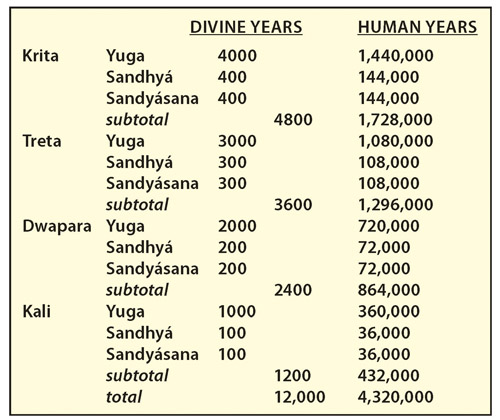
The number of syllables in the Rig Veda is 432,000.

This number has a great significance in Hinduism

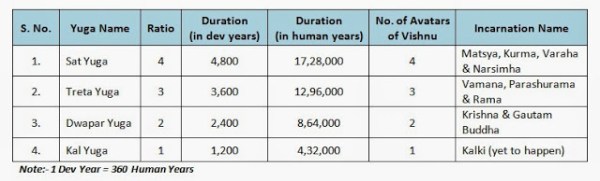
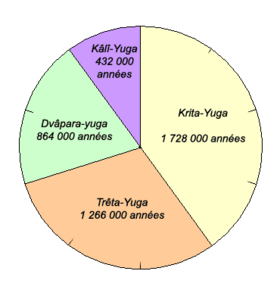
The total number of years in Kali Yuga is 432,000 years. Other Yugas have the multiple of this number.

Half baked and biased foreigners argued that Yuga cycles and the big numbers are added to Hindu scriptures later. Now this number 432,000 and the very big numbers in the Brahmanas prove them wrong

Katyayana’s count of Verses in the RV is 10,662 (minus the appendix- 10,402)

The words in the RV – 1,53,826

We have lost lot of our Vedic literature. Even during Vyasa’s time (3100 BCE+), Vedas had become very bulky and unmanageable. So he divided it into four (Rik, Yajur, Sama and Atharvana) and gave the responsibility of teaching it to the future generations by the word of mouth. It is great wonder that tradition has been maintained until today. Brahmins deserve great admiration for doing this wonderful task.

Even with all the google, internet and computers in our hands,we find it difficult to analyse all the 20,000 plus mantras in the four Vedas, leave alone the very huge Brahmana literature.

Let us salute the great Vedic Seers and the Brahmins

.

-Subham–


Marriage between Heaven and Earth (Post No.4301)

Written by London Swaminathan


Date:14 October 2017


Time uploaded in London- 18-59


Post No. 4301

Pictures shown here are taken from various sources such as Facebook friends, Books, Google and newspapers; thanks.


The Heaven Father and the Earth Mother are two of the ancient deities in the Rig Veda. They are revered as primitive pair from whom the rest of the Vedic gods sprung. They are described in the Vedas as ‘wise, great and energetic’. They ‘promote happiness and lavish gifts upon their worshippers’. Their marriage is a most poetic conception. In the Aitareya Brahmana (4-27) the marriage of Heaven and Earth is mentioned:

“The gods then brought the two, Heaven and Earth together, and when they came together they performed a wedding of the gods.”

“The Vedas set before us a world of rich and vigorous life, full of joyous fighting men”, says Huxley.

“These two worlds were once joined (subsequently) they separated. (After their separation) There fell neither rain, nor was sunshine.

This marriage of heaven and earth were found in many cultures. They have borrowed it from the Vedic Hindus. The Greeks addressed the Earth, ‘as the Mother of the gods and starry heavens’.

In the 41st fragment of Aezchylus (from the Danaides), Aphrodite is introduced as saying, “The pure heaven loves to inflict upon earth an amorous blow; and desire seizes the Earth to obtain the nuptial union. Rain falling from the moist Heaven impregnates the Earth, who brings forth for mortals the food of sheep, the sustenance of Demeter (Deva Mata= demeter). The verdure of the woods also is perfected by the showers preceding from this marriage. Of all these things I (Aphrodite) am in part of the cause”

French author Albert Reville says, that “the marriage of Heaven and Earth form the foundation of hundred mythologies”.


Max Muller Bluff

Max Muller and Wilkins spread wrong information that Dyaus (Sky father) and Prithvi (Mother Earth) as ‘the most ancient deities of the Aryans and they were replaced by Indra and Agni later’. But there is no proof for it. All the references to marriage of Dyaus (sky) with Prthvi (earth) come from later part of the Vedas. Greeks borrowed it from us and pronounced it as Zeus.


Moreover, in the early Mandalas Agni and Indra are praised more than the Dyaus and Prithvi. The early Suktas divided it into three Sky, Atmosphere and Earth. Even the parents of Earth and Heaven (Pusan) are mentioned. So his concocted story that the Earth and the Heaven are ‘the most ancient deities’ has no basis.


If one idiot says something 1000 idiots repeat it without verifying the fact. With very great enthusiasm, he identified himself with those ‘’marching Aryans’’ who entered India .

Dyaus in Rig Veda :

“At the festivals ( I worship) with offerings, and celebrate the praises of Heaven and Earth, the promoters of righteousness, the great, the wise, the energetic, who, having gods for their offspring, thus lavish with the gods the choicest blessings in consequence of our hymn”

“With my invocations I adore the thought of beneficent Father, and that mighty inherent power of the mother. The prolific parents have made all creatures, and through their favours (have conferred) wide immortality on their offspring”—Rig Veda 1-159-1


One must be careful about English translation of the Vedas. No two foreign authors agree on the meanings of the Vedic mantras. And these people add ‘Sayana said’, ‘Sayana thinks’, ‘Sayana believed ‘and then add “Aryan” as a race. Sayana never used it in that sense. He used it like the ancient Tamils used Arya in Sangam literature and Greatest Tamil poet Bharati used Arya throughout his poems; in short, no racial connotation! They meant ‘cultured’, ‘who believed God’. Even Buddha used Arya (Ajja= ayya= ayyar in Tamil) in the right sense. Those who use English translations of the foreign authors must be very careful; there are over 40 interpretations on the word Asura and origin of Asuras!!!

Dyaus Pita | Tamil and Vedas

https://tamilandvedas.com/tag/dyaus-pita/

In the hymns there are various speculations about the origin of Dyaus and Prithvi. A Perplexed poet enquires, “Which of these was the first, and which the last?


–Subham–