Origin of Tamil and Sanskrit

shiva

Research paper written by London Swaminathan
Research article No.1409; Dated 13th November 2014.

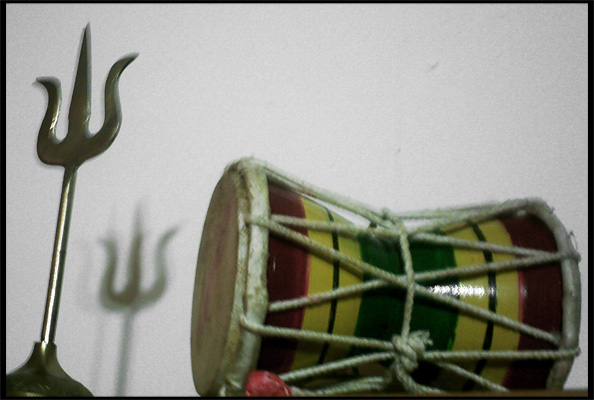
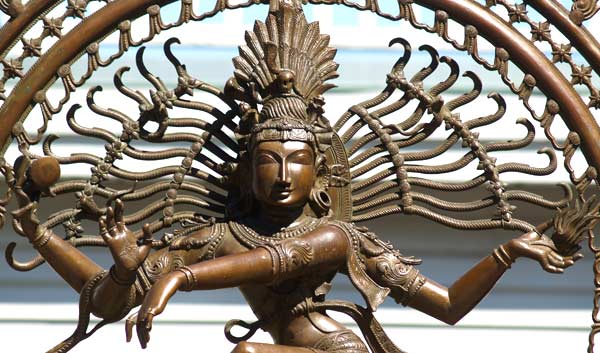
Ancient Tamils believed that Lord Shiva gave two languages to the Hindus: Sanskrit and Tamil. They believed that Siva’s drum Damaruka gave Sanskrit from one side and Tamil from another side. The fourteen Maheswara Sutras (fourteen sounds of letters) came from one side of the drum. And the other side echoed Tamil. Panini, the first grammarian in the world, used the Maheswara sutrani to write Sanskrit grammar.

Where is the proof for such a belief in Tamil?

Tamil poets Kamban, Paranjothy and Bharatiyar openly proclaimed this truth and Kalidasa indirectly referred to it in his Raghuvamsam. Saivite and Vaishnavite saints also praised Sanskrit and Tamil in their hymns from seventh century CE.

Greatest of the modern Tamil poets Subramanya Bharati said in his poem “Mother Tamil”:

1.Siva the supreme was my father
Sage Agastya took delight in me
Grammar, complete and perfect
The Brahmin endowed me with

2.The three royal families
Cherished me with loving care
Among advanced languages I stood
As peer of sublime Sanskrit

Poets erudite, experienced and wise
Combined wine and fire, wind and cosmic space;
Out of that alchemy arose
Sweet poems to enrich me

3.Treatises, scientific and spiritual
Scholars equipped me with;
And glory was mine
That reached the ends of earth. (Translated by Prof. S Ramakrishnan)
trishul-damaru
Dum Dum Dum Dum dum dum Damaruka natha
Bam Bam Bam bam bam bam Bhaje Damaru (Bhajan song)

Bharati did not concoct a new story. This was the age old belief at least from Kamban’s time (Twelfth Century CE). Agastya was sent by Lord Shiva to the south to reduce the imbalance in the population in Northern India (Please see the details in my earlier post on the Population Explosion: Oldest Reference is in Hindu Scriptures posted on 2nd February 2013). “Himalayas was tilting to one side due to heavy concentration of people”. He asked Agastya to lead one group of people to the south. Agastya was not happy to go out of the Himalayas, where Lord Shiva has his permanent abode. But Shiva promised him that he would be on his side in the south. He led 18 tribes from the north which is attested by commentator Nachinarkiniyar (See Tolkaapiam commentary and Puram verse 201).

The earliest reference to Agastya in connection with Tamil land comes from the Raghuvamsam of Kalidasa of first century BCE. Tamils have been living in this land from the days of Ravana. A peace treaty was signed between the Pandyas and Ravana not to attack Tamil Nadu. All these are found in ancient Tamil commentaries from 13th century (please see for details Ravana-Pandya Peace treaty posted on 24th June 2014).

Paranjothy, author of Tiru Vilayadal Purana also says that Lord Siva gave Panini the Sanskrit language and gave Agastya Tamil which is equal to Sanskrit.

Great Tamil poet Kamban also praised Lord Siva as the giver of Tamil language in his Tamil Ramayana and lauded Agastya as the one who gave Tamil which is like boundless ocean. Most of the Vaishnavite and Saivite saints praised Tamil and Sanskrit together in their poems. We may take it as an indirect reference.

Apart from this story, another important thing is Tamil is the closest language to Sanskrit and vice verse. Both have similar case suffixes and alphabetical order. Writers of both the languages follow the same style and beliefs, literary styles (genres) and the values in life.
shiva3

The oldest book in Tamil, Tolkappiyam, speaks of Dharma Artha Kama in the same order. Tiruvalluvar who followed Tolkappiyar also said everything in 1330 couplets under Dharma Artha and Kama (Aram, Porul, Inbam in Tamil) in his Tirukkural.

Hundreds of beliefs and customs were common to both the south and the north from as early as the Sangam period. Key words in Sangam Tamil such as Kamam (sexual desire), Manam(mind), Ulakam (world), Arasan (king), avai(Sabha) etc came from Sanskrit. In fact Tamils did not hesitate to use Sanskrit wherever necessary.
Kamban praised Agastya as the one who gave us the boundless ocean called Tamil. Earliest Tamil poems made an indirect reference to Agastya by comparing Pothiyil Mountains with the Himalayas. Pothyil was the hill where Agastya established his southern most Ashram. It forms part of the 1000 mile long Western Ghats. He shifted his Ashram from the Himalayas, to the Vindhyas and then to Karnataka and then his last resort was at Pothiya Malai near Tirunelveli. We don’t know whether one Agastya did this or his descendants did one after another. We see his statues all over South East Asia.

From Purananuru (Pothyil Hill) to Bharati it covers a historical period of 2000 years. From Agastya/Pandya/Ravana link to modern days, it covers a period of several thousand years. So Agastya’s connection to Tamil is not new. From seventh century onwards we see long Tamil inscriptions which openly speak of Agastya’s contribution to Tamil. Of the three great Tamil kingdoms, Pandyas were the one who patronised Tamil language, Tamil Poets and Three Tamil Academies known as Tamil Sangam.

damaruka

Credits go to Kalidasa of first century BCE for linking Agastya, Pandya and Ravana (Raghuvamsam 6-61, 6-62).
Tamil and Sanskrit came from the same source. One who knows these two languages can learn any language in the world without much difficulty. Anyone who wants to understand Indian culture must study literature in these two languages; otherwise one’s knowledge will be incomplete in this area.

My Earlier posts related to this topic:
Ravana-Pandya Peace Treaty: Kalidasa solves a Tamil Puzzle (24th June 2014)
Population Explosion: Oldest Reference is in Hindu Scriptures (posted on 2nd February 2013).
என் அப்பாவிடம் கற்றது!

Santanam Rajalakshmi 2

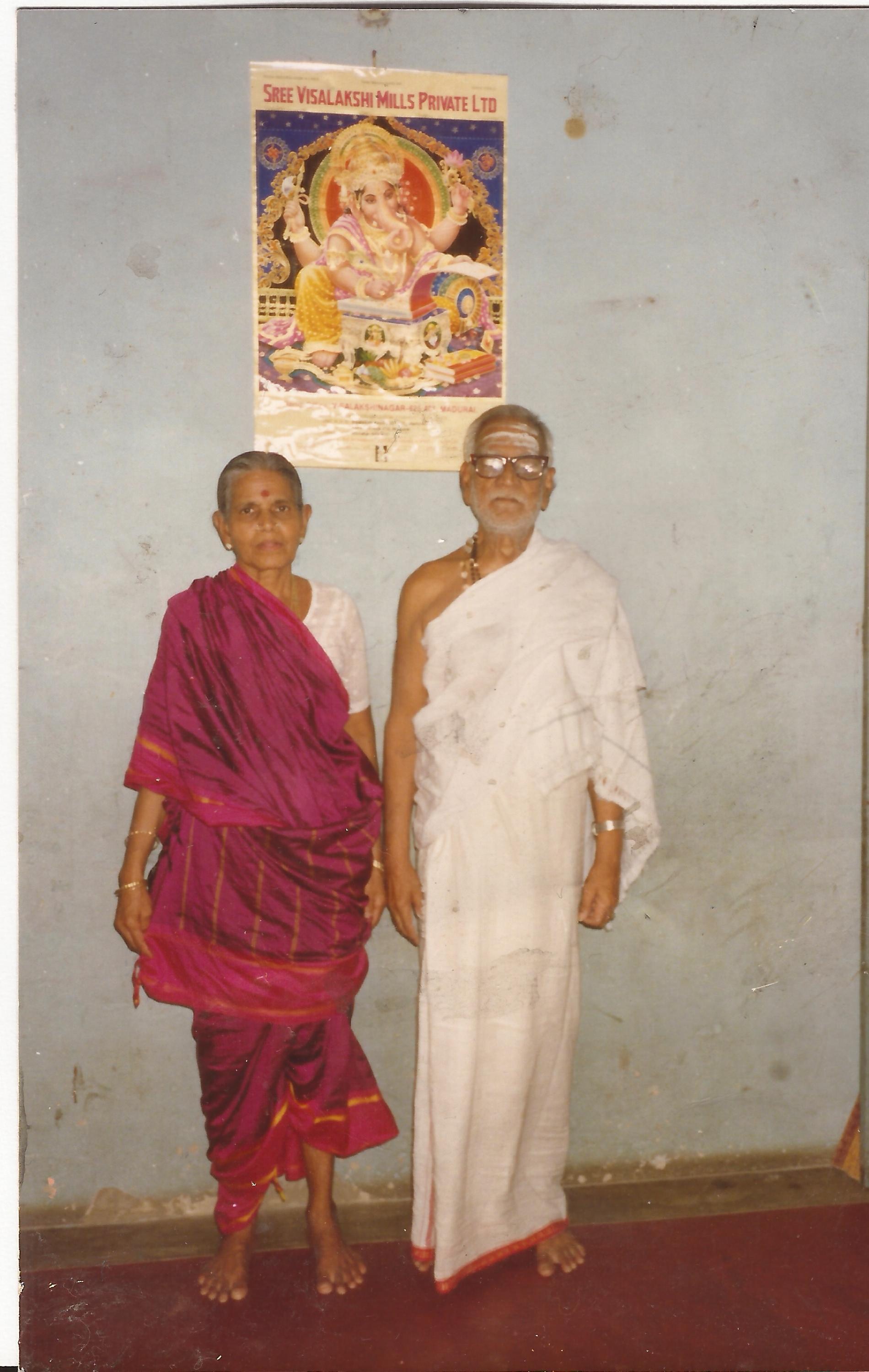
Srimati Rajalakshmi Santanam and Sri Venkataraman Santanam

கட்டுரை மன்னன் :– லண்டன் சுவாமிநாதன்
கட்டுரை எண்:- 1274; தேதி: 8 செப்டம்பர் 2014

மதுரையில் பிரம்ம ஞான சபை என்ற கட்டிடம் சந்தைப் பேட்டைத் தெருவில் உள்ளது. அங்கே அரிய புத்தகங்களைக் கொண்ட லைப்ரரி (Theosophical Society Library) உண்டு. அதைக் கண்ணும் கருத்துமாகக் காத்துவந்தார் கல்யாணம் என்பவர். எவ்வளவு கண்ணும் கருத்தும் என்றால் —- யாரையும் புத்தகத்தைத் தொடவே அனுமதிக்க மாட்டார்!!! ஆனல் என் அப்பா வேங்கடராமன் சந்தானம் மட்டும் விதிவிலக்கு!!

நாங்கள் போய் மாமா, இந்தப் புத்தகம் இருக்கிறதா? என்றால் இருக்கிறது ஆனால் வெளியே கொண்டு போகக் கூடாது என்பார். அத்தோடு நில்லாமல் பார், உங்கள் அப்பா படிக்காத புத்தகம் இந்த லைப்ரரியில் எதுவுமே இல்லை என்று என் அப்பா அந்தப் புத்தகங்களில் போட்ட Pink colour proof reading pencil பிங்க் கலர் பென்சில் மார்க்குகளைக் காண்பிப்பார். இது பத்திரிகையாளர்கள் ‘’ப்ரூப்’’ திருத்த பயன்படுத்தும் பென்சில்! மற்றவர்களைப் புத்தகத்தையே தொடவிட மாட்டாதவர் என் தந்தை கலர் பென்சில் கோடு போட்டாலும் பொறுத்துக் கொண்டது எனக்கும் என் சகோதரர்களுக்கும் வியப்பை உண்டாக்கும் . எங்கள் தந்தையிடம் சொல்லிச் சொல்லி சிரிப்போம். அவரோ தன்னைப் பற்றி எந்தக் காலத்திலும் ஒன்றுமே சொன்னதில்லை. வெற்றிலையை வாயில் போட்டுக் கொண்டு ஒரு புன் சிரிப்பு சிரிப்பார்.

பிரம்ம ஞான சபையில் அவருக்கு அவ்வளவு உரிமை கொடுத்த காரணம் எங்களுக்குப் புரியும். என் தந்தை சம்பந்தப்படாத ஆன்மீக விஷயம் மதுரையில் எதுவுமே இல்லை! தமிழ் நாட்டின் ஆன்மீகத் தலைநகரம் மதுரை என்பதால் எல்லா மதத் தலைவர்களும் மதுரைக்கு வந்துதான் ஆக வேண்டும். அவர்களுக்கு அந்தக் காலத்தில் ஆன்மீகச் செய்தி வெளியிட்டு ஆதரவு கொடுத்தவர் என் தந்தை ஒருவரே என்றால் அது மிகை இல்லை.

ஆங்கிலத்தில் வெளியாகும் ‘’இந்து’’ நாளேடு மட்டும் கடைசி பக்கத்தில் 4 அங்குலத்துக்கு ஆன்மீகச் செய்தி வெளியிட்ட காலம் அது. மற்ற பத்திரிக்கைகள் எல்லாம் ஆன்மிகச் செய்திகளைக் கிண்டல் செய்த காலம் அது. மதுரை தினமணி கொள்ளிடம் ஆற்றின் கரை வரை எட்டு ஜில்லாக்களை “கவர்” செய்ததால் தமிழ் நாட்டின் முக்கால் வாசி பகுதிக்கு எட்டிவிடும். அந்தக் காலத்தில் சென்னை தினமணி ஆர்க்காடு செங்கல்பட்டு, சென்னை, புதுவை மட்டும்மே சென்றது.

என் தந்தை புத்தகப் பிரியர். இசைப் பிரியர். மதுரை எழுத்தாளர் சங்கத் தலைவர் பதவியையும் சத்குரு சங்கீத சமாஜம் (பிற்காலத்தில் இசைக் கல்லூரியாக மாறியது), ராகப்ரியா போன்ற பல அமைப்புகளில் முக்கியப் பொறுப்புகளையும் வகித்தார்.

வீட்டில் மூன்று நான்கு காத்ரேஜ் (ஸ்டீல்) பீரோக்களை வாங்கிவைத்து அதில் 6000 புத்தகங்களைச் சேர்த்துவைத்தார். அதுதான் அவர்கள், எங்களுக்கு விட்டுச் சென்ற சொத்து. பணமோ, வீடோ, வாசலோ, நிலபுலன்களோ வாங்கவில்லை.

வீட்டிற்கு வருபவர்கள் முதல் அறையிலேயே காட்ரேஜ் பீரோக்கள் இருப்பதைக் கண்டு வியப்பர். அதை என் தந்தை திறக்கும் போது கொல் என்று சிரித்துவிடுவர்.

“என்ன சார் இது! புத்தகங்களை வைக்கவா இப்படி மூன்று நான்கு காத்ரேஜ் பீரோக்கள்?” என்பார்கள். வழக்கம்போல் அவர் பேசமாட்டார், வெறும் புன்சிரிப்புதான் பதில்.

தினமணிப் பத்திரிக்கையில் புத்தக மதிப்புரை (Book Review) எழுதுவதற்காக பலர் எழுதிய புத்தகங்களைக் கொண்டுவருவர். எல்லா பத்திரிக்கைகளிலும் ஒரு விதி உண்டு—அதாவது இரண்டு புத்தகங்களை ( Two Copies ) மதிப்புரைக்கு அனுப்ப வேண்டும். ஒன்று அந்த புத்தக மதிப்புரை எழுதுபவர் வைத்துக் கொள்வார். மற்றொன்று அலுவலகத்தில் பாதுகாப்பாக வைக்கப்படும். இதை அறிந்தவர்கள் முதலில் இரண்டு பிரதிகளைக் கொடுத்துவிட்டு “சார், இது உங்களுக்கு என்று வேறு ஒரு பிரதி கொடுப்பர். உடனே என் தந்தை அதற்குப் பணம் கொடுப்பார். அவர்கள் பதறிப்போய் “சார், உங்களிடம் விற்க வரவில்லை” என்பார். என் தந்தையோ நான் எழுத்தாளர் சங்கத் தலைவன். ஆகையால் ஒரு எழுத்தாளரை ஆதரிக்கும் ஒரு வழி அவருடைய புத்தகத்தை விலைக்கு வாங்குவதுதான் என்று சொன்னவுடன் அவர் மசிழ்ச்சியுடன் ஏற்பார்.

ஆனால் சுவாமி சித்பவானந்தர், அனந்த ராம தீட்சிதர், கிருபானந்த வாரியார் போன்ற பெரியோர்கள் கொடுக்கும்போது அவர்களிடம் பணம் கொடுப்பது அவமரியாதை என்பதால் அவர்கள் ஏற்று நடத்தும் அறப் பணிகளுக்கு நன்கொடை என்று புத்தக விலை போன்று பன்மடங்கு பணத்தைக் கொடுத்து விடுவார். நானும் எங்கும் இதுவரை விலை கொடுக்காமல் புத்தகம் வாங்குவதில்லை. சின்மயா மிஷன் சொற்பொழிவுகளுக்குப் போனால்கூட அங்கே வெளியே போகும்போது இலவச பிரதிகள் விநியோகிப்பர். அதற்கெல்லாம் சேர்த்து டொனேஷன் கொடுத்து விடுவேன்.

baba

சத்ய சாய் பாபாவின் அழைப்பு
ஒரு முறை புட்டபர்த்தியில் இருந்து ஒரு “போன் கால்” அழைப்பு வந்தது. பாபா, முன்னாள் ஆந்திர கவர்னர் தலைமையில் சென்னையில் சொற்பொழிவு ஆற்றுகிறார். அதில் நீங்கள் சிறப்புப் பேச்சாளராக வரவேண்டும் என்பது பாபாவின் விருப்பம் என்றனர். என் தந்தைக்கு ஒரே குழப்பம். அதற்கு முன் நாங்கள் எல்லோரும் 1963 ஆம் ஆண்டில் ஒரே முறைதான் சத்ய சாய்பாபாவத் தரிசித்து இருக்கிறோம். அதற்குப் பின் அவர் மதுரை வந்த போதெல்லாம் தனியாக அவரைச் சந்தித்தது இல்லை. லட்சத்தோடு ஒன்று, லட்சத்திஒன்று என்ற கணக்கில் நாங்களும் கூட்டத்தோடு கூட்டமாக பஜனைக்குப் போவோம்.

என் தந்தையை முன்னாள் கவர்னர் கே. சந்தானத்துடன் பலரும் குழப்பிக்கொள்வர். என் தந்தைக்கு இது தெரியும். உடனே புட்டபர்த்திக்குப் போன் செய்து நீங்கள் தவறாக போன் செய்து விட்டீர்கள் போல இருக்கிறது. நான் முன்னாள் கவர்னர் கே சந்தானம் அல்ல என்றார். உடனே புட்டபர்த்தி அலுவலகம் எங்களுக்கு அது தெரியும். பாபா உங்களைத்தான் – மதுரை தினமணிப் பத்திரிக்கை ஆசிரியர் சந்தானத்தைக் கூப்பிடு – என்று குறிப்பாகச் சொன்னதால்தான அழைத்தோம் என்றனர்.

எனது தந்தை வெ. சந்தானம், ஆந்திர முன்னாள் கவர்னருடனும் பாபாவுடனும் பேசிய கூட்ட புகைப்படம் இன்றும் இந்தியாவில் எங்கள் வீட்டுச் சுவரை அலங்கரித்துக் கொண்டிருக்கிறது. அந்தக் கூட்டத்தில் பல்லாயிரக் கணக்கானோர் இருந்தனர் என்பதை சொல்லத் தேவை இல்லை.

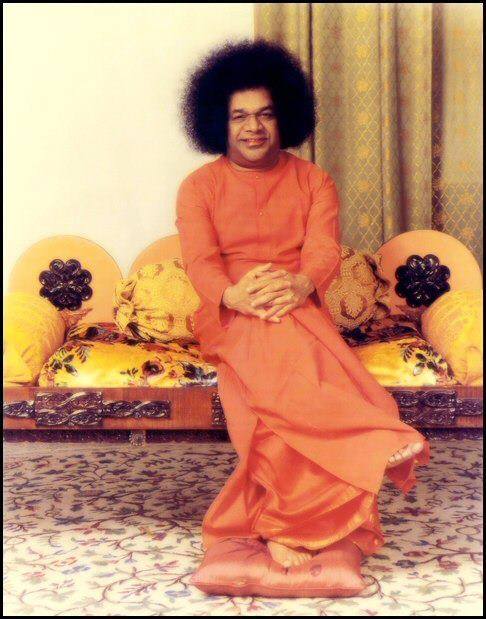
புட்டபர்த்திக்குப் போனபோது என் கவலை எல்லாம் அடுத்த ஆண்டுவரும் எஸ் எஸ் எல் சி –யை நல்ல முறையில் பாஸ் செய்ய வேண்டும் என்பதுதான். பாபா என் கன்னத்தில் ஒரு அன்பான அடி கொடுத்து பாஸ் என்றார். அப்போது பாபா வரவழைத்துக் கொடுத்த புகைப்படத்தை என் தந்தை இறக்கும் வரை மணிபர்ஸில் வைத்திருந்தார்.

எழுபது வயதுக்குப் பின் என் தந்தை இறந்தார். அதுவரை எழுதிக் கொண்டே இருந்தார். தேவாரம், திருப்புகழ், திவ்வியப் பிரபந்தம், திருமந்திரம் முதலியவற்றை நோட்டு நோட்டாக எழுதுவார். எனக்கு வியப்பாக இருக்கும் புத்தகத்தில் இருப்பதை ஏன் இப்படித் திருப்பி அழகாக எழுதுகிறார்? அதற்கு பிரவுன் கலர் அட்டை போட்டு கலர் கலர் மைகளில் தலைப்பு எழுதுகிறார் என்று வியப்பேன். இப்போது காரணம் புரிகிறது. 65 வயதைத் தாண்டிவிட்ட எனக்கு விஷ்ணு சஹஸ்ரநாமம் முதல் எதைப் படிக்கவும் புத்தகம் தேவைப்படுகிறது படித்த விஷயங்கள்—குறிப்பாக கவிதைகள், தோத்திரங்கள் நினைவில் நிற்பதில்லை. நானும் நோட்டுப் புத்தகத்தில் எழுதி உருப்போடும் காலம் நெருங்கிவருகிறது. கடை வரை அவர் எழுதிவந்த மற்றொன்று ஸ்ரீ ராமஜெயம்.

அடுத்த முறை இந்தியன் எக்ஸ்பிரஸ் கோயங்கா சாம்ராஜ்ய ரகசியங்கள், காமராஜ் எழுதிக் கொடுத்த ஒரு சீட்டு, “டேய் சந்தானம் என்னை தினமணி ஆசிரியர் இல்லை என்கிறாண்டா! – என்று என் அப்பாவிடம் ஏ. என். சிவராமன் அடித்த ‘ஜோக்’, என் வீட்டிற்கு புதுக்கோட்டை ஸ்ரீ சாந்தானத சுவாமிகள் வருகை, ஆயக்குடி சுவாமிஜி கிருஷ்ணாவின் உபதேசம், மவுனகுரு சாமி வருகை, எங்கள் வீட்டில் கோபால கிருஷ்ண பாகவதரின் அஷ்டபதி பஜனை, ஏ.என். சிவராமனின் நால் வேத டேப்ரிகார்டிங், வார பஜனை பஜனை, சேதுராம் பஜனை மண்டலி பஜனை, திருப்புகழ் பஜனை, மீனாட்சி கோவில் பள்ளி அறை தீபாரதனை, ஆடி வீதி தெய்வ நெறிக் கழக பஜனை, காலையில் ஞானப் பால், கோயங்கா குடும்ப கோவில் விஜயம், மீனாட்சி கோவில் கும்பாபிஷேகம்,உலகத் தமிழ் மாநாட்டு கலாட்டா, இந்தி மொழி எதிர்ப்புக் கிளர்ச்சி, கீமாயண கலாட்டா, ஆர். எஸ் எஸ் அடிதடி, அனந்தராம தீட்சிதர் உபந்யாசம், ஸ்ரீகாஞ்சி சுவாமிகள் மதுரை நாராயணபுரம் சதஸ், ஸ்ரீ சிருங்கேரி மஹா சந்நிதானம் எங்கள் வீட்டுக்கு வருகை தந்தது, பிசிராந்தையார் போல சுவாமி சிவானந்தாவை தரிசிக்காமலேயே நட்பு ஆகியன பற்றியும் சுருக்க மாக வரைகிறேன்.

contact swami_48@yahoo.com

Indus Valley to Egypt: Lapis lazuli Export!

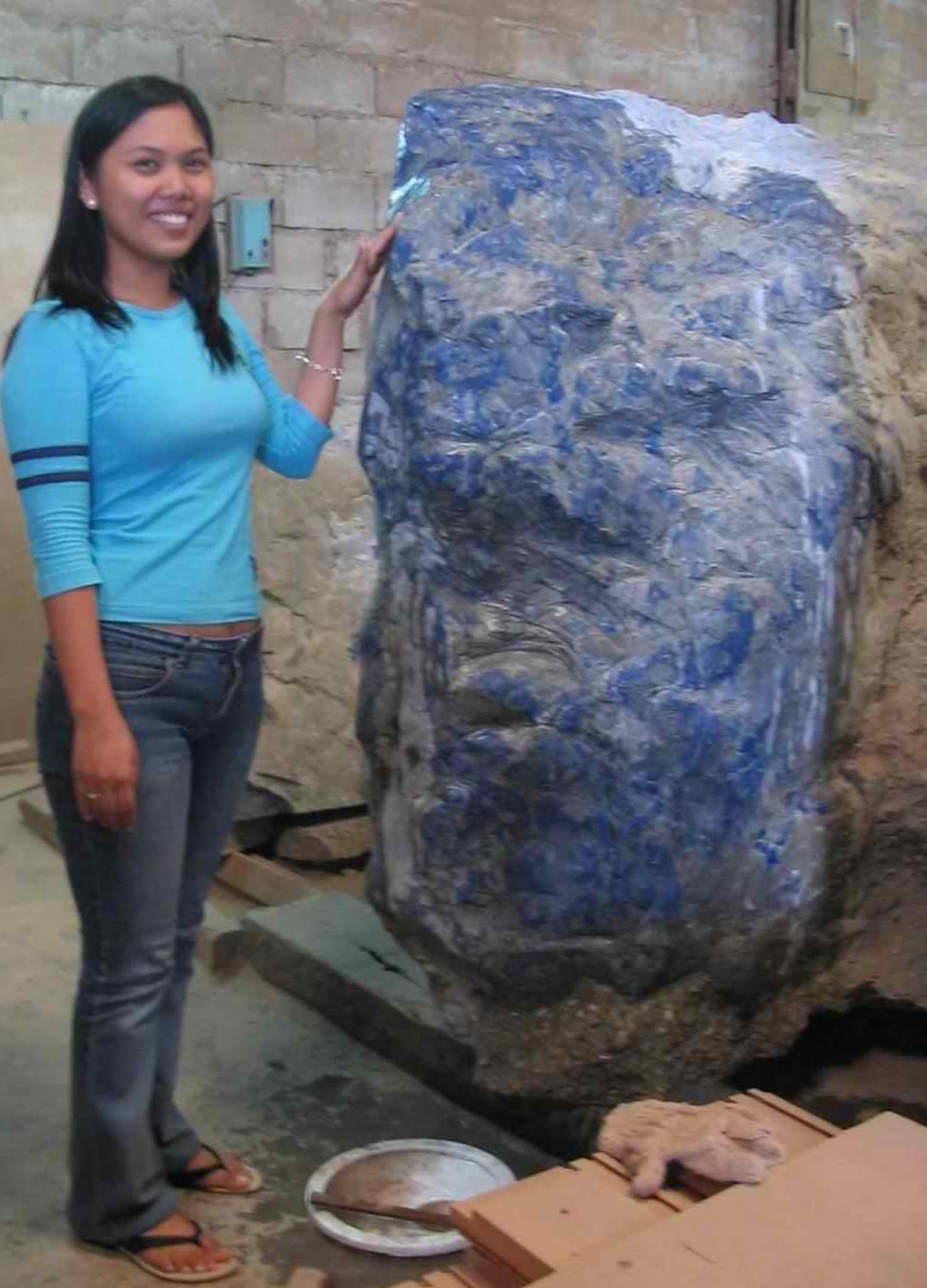
lapis block
Lapis lazuli rock

Research Paper written by London Swaminathan
Post No.1270; Dated 6th September.

What is Lapis lazuli?
It is a blue colour semi precious stone used in jewellery. Egyptians and Sumerians imported it from India. Afghanistan and Pakistan, parts of ancient Bharat were the main sources for this stone, says the archaeologists.

The contact between Egypt and the Hindu kings of Turkey and Syria is well documented. Thanks to the clay tablets of Amarna letters we know that Dasaratha’s daughter Taduhepa ( Datta shivaa) was married to Amenophis III of Egypt. Dasaratha was ruling Syria and Turkey around 1380 BCE. He was assassinated in 1340 BCE. Mitanni kings followed Vedic religion is confirmed by Bogazkoy inscription where all the four major Vedic gods are mentioned in a treaty. Pratardhana – name in Vishnu sahasranama – was ruling Aleppo now in Syria. Turkey and Syria were ruled by the Vedic kings from 1480 BCE according to the clay tablets. Dasaratha sent Amenophis five chariots, five horses, trinkets of gold, a pair of gold rings and goodly stones, says one of the Amarna letters. We have more Sanskrit names and horse manual with Sanskrit numbers around 1400 BCE in Turkey. Marrying one’s daughter with a king of a neighboring country is a typical Hindu custom followed by kings from Kanyakumari to Kashmir and beyond. Afghan Gandhari and Iranian Kaikeyi were married to Drudharashtra and Dasaratha, because all those countries were ruled by the Hindus in those days.

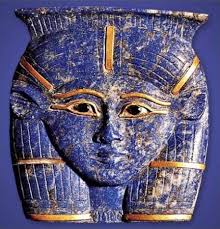
goddess hathor
Egytian Goddess Hathor made up of lapis lazuli

(Mitannian Dasaratha is different from Ramayana Dasaratha. Like Tamils, tamilize Sanskrit words, Mitannians also wrote Dasaratha as Tushratta, Pratardhana as Parartana. Even today Sri Lankan Tamils write Damayanthy as Tamayanthy. Mauritius Tamils are still worse and they write Subramanya as Soupramoniamme due to French influence)

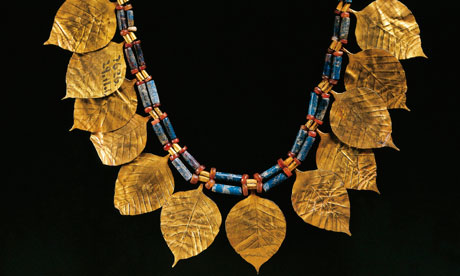
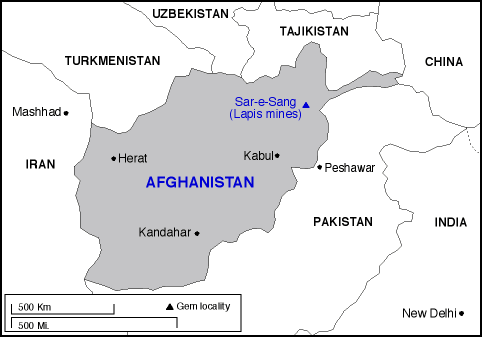
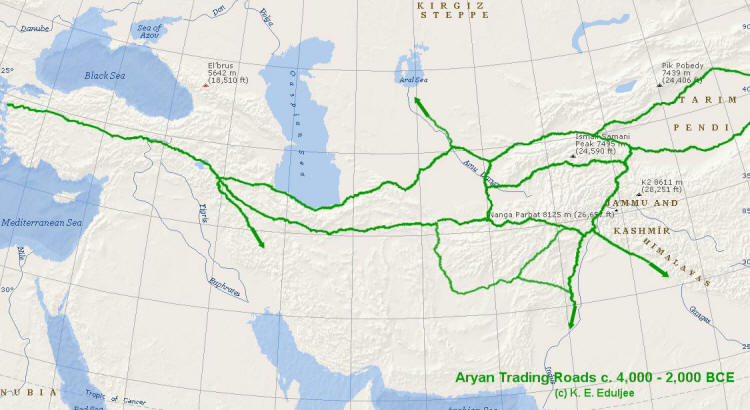
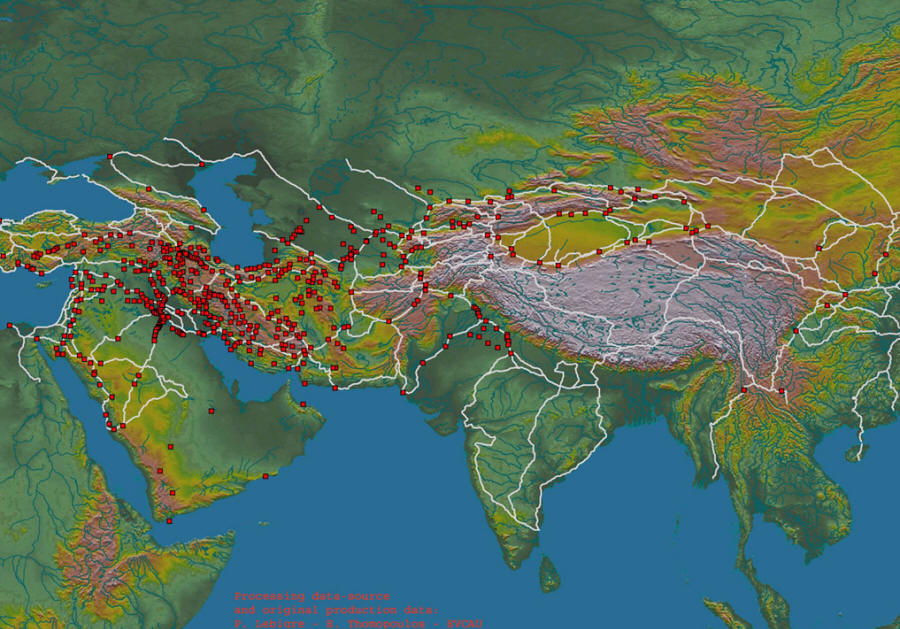
But the actual contacts with India began even before Amenophis period. Egypt and Sumer had jewelry made up of lapis lazuli blue stones from 2500 BCE. The stone is mentioned in the Bible also. Lapiz lazuli means blue stone. It was dug out in the Badakshan area of Afghanistan and Quetta of Pakistan from 4000 BCE. At that time it was part of India. Some of the areas were under Indus valley civilization. Vedas refer to Vanksu River which the Greeks wrote as Oxus. The other name of the river was Amu Darya (Darya in Persian means river).

A-Sumerian-lapis-lazuli-Ur,Iraq
Found in Ur, Iraq.

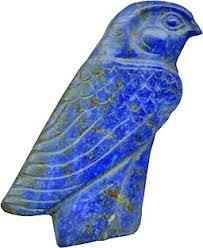
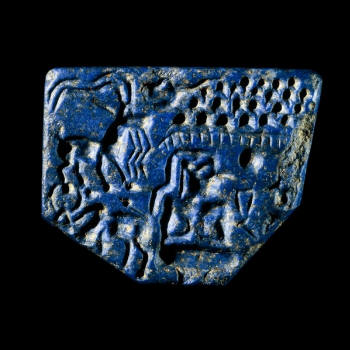
Egyptians were crazy about blue colour. They powdered the stone and applied blue colour on most of the jewelries and crowns. They made statues of lapis lazuli out of big stones. One of the Sumerian sculptures show Indus (Zebu) bull. The workmen use only Sanskrit words to describe different types of lapis: neeli, asmani and suvci. The general term for lapis lazuli is “lajword” in Persian. All the historians and archaeologists acknowledge the source as Indian subcontinent. Only later other sources of lapis lazuli were discovered.

Michael Rice in his book “Egypt’s Making” says,
“Lapis is, literally, one of the touchstones of sophisticated early civilizations. It was to be found in large quantities in the cities of Sumer whose people valued it highly. It is found extensively in Egypt. Lapis appears in Egypt from late in the fourth millennium, often in association with foreign, specifically Mesopotamian elements. It is found more in rich peoples’ burials”.

lapis_lazuli_map

It is also found in the royal tombs of Sumers at ur in Iraq, dating to 2500 bce.
Egyptian king Kamose, on a stela narrates a military campaign against Avaris. He claims that he has looted hundreds of ships loaded with cedar, lapis lazuli, silver, turquoise and all precious products of Asia.

Vedic seers received hundreds of camels as gifts from the kings according to Rig Veda (8-5-37; 8-46-32). The Vedas talk about 99,000 wagons (RV. 10-98-11) and number of wagon loads (10-98-10). It is no wonder they traveled up to Sumer or Egypt.

“The book of Talismans” by William Thomas and Kate Pavit adds the following information, “It was very popular with the Egyptians, several of their talismans being made up of this gem, particularly the Eye and Heart, specimens of which may be seen in the fourth Egyptian room in the British Museum. On account of its beautiful deep blue colour it has always been dedicated to Venus, and in Christian religions it is regarded as the stone of the Virgin Mary. It was freely used by the Romans and the Greeks for both ornamental purposes and to cure certain diseases”.

silkroads2000BCE

Chemical composition
It is a rock containing the blue mineral lazurite in a matrix of white calcite with small amounts of other minerals. It occurs in silica poor igneous rocks and metamorphic lime stones found in Afghanistan, Siberia, Iran Chile and Pakistan.

Earlier articles on INDUS VALLEY CIVILIZATION

Indus Valley-Brahmin Connection (Post No 1034, Date 10-5-14)
Bull Fighting: Indus Valley to Spain via Tamil Nadu (posted 21/1/12)
Human Sacrifice in Indus Valley and Egypt (posted on 31/10/12)
Ghosts in Indus Seals and Indian Literature
Flags: Indus Valley- Egypt Similarity
Tiger Goddess of Indus Valley: Aryan or Dravidian?
Indra on Elephant Vahana in Indus Valley
Indus Script Deciphered

caravanseraiEVCAU
Map of Caravan routes and stopping points

Human sacrifice in Indus Valley and Egypt 0ct.31, 2012
Indus Valley Cities in Ramayana Dec.18, 2012
Open Sesame’: Password to Heaven Post No 756 dated 23rd December 2013
Change ‘’Indus’’ valley civilization to ‘’Ganges’’ valley civilization! Ulta! 29-3-2014
Indus Valley Case: Lord Indra Acquitted Post No 764 dated 28th Dec. 2013
‘Sex Worship’ in Indus Valley
1450 bce

Flags: Indus Valley – Egypt Similarity (15/1012)
The Sugarcane Mystery: Indus Valley and the Ikshvaku Dynasty
Vishnu in Indus Valley Civilization (posted on 19-10-11)
Serpent Queen: Indus Valley to Sabarimalai 18 June 2012
Fall of Brahmin Kingdoms in Pakistan and Afghanistan 23-3-14
Indus Valley Civilization- New Approach , posted on May 29, 2011
Indra-Taranis- Thor in Indus Valley –posted on 5th September 2014.

NearEastSealFromBadakshanLapisSeal
Indus animal on Sumer lapis lazuli seal.

contact swami_48@yahoo.com

Quotations on Gambling: From Rig Veda to Tirukkural

dice

Compiled by London Swaminathan
Post No.1224; Dated 9th August 2014.

Do not Gamble:
“Do not play with dice; cultivate your corn fields,
Delight in the gain, thinking highly of it.
There are your cattle, gambler, there is your wife”
So has the noble Savitri told me
———–Rig Veda 10-34-13, Rishi Kavasha, son of Elusha.

BHAGAVAD GITA
I am gambling among the deceiting –Bhagavad Gita 10-36
Dyuutam chalayataam asmi (Lord Krishna in BG 10-36)

dice2

TIRUKKURAL by Tiruvalluvar
Gambling ruins a man’s fortune, and corrupts the innate honesty,
It also hardens the heart and brings on endless misery (Tirukkural 938)

Do not take to gambling even if you can win. What can the fish gain by swallowing the baited hook? (Tirukkural 931)

Wealth, including food and dress, as well as the glory, resulting from learning,
Will desert the man, who seeks gain only from gambling? (Tirukkural 939)

Is there a future for the gambler to thrive, when he loses hundreds,
To gain only one in the bargain? (Tirukkural 932)

chaturan

SANSKRIT SAYINGS
Gambling, to a man, is a kingdom without a throne —-Mrcchakatika
Dyuutam naanma purusasya asimhasanam raajyam

Gambling is the root of all evils Bharata Manjari 2-11-340
Dyuutam sarva apadaam mulam

What will not a defeated fraudulent gambler hesitate to do? –Katha Sarit Sagara
Dyuutanaatasya kim naama kitavasya hi duskaram

Gambling is the destruction of wealth— Bharat Manjari 2-11-308
Dyuutamunmuulanam sriyah

Gamblers do not neglect a chance of profit, even to their very end Rajatarangini 3-393
Na paryante pyupeksante kitavaah svaarthasaadhanam

Don’t ridicule the defeated gambler Satopadesa prabandha
nopahasennirjitam dyuute

Players of dice become the abode of craftiness Brhat Katha Manjari
Bhavanti dyuutakaaraa padam dhiyah

By all means a gambler is despicable Vikrama Carita 3-98
Haa dyuutakaaram satadaah dhigastu

Source: Rig Veda, Bhagavad Gita, Tirukkural, Suktisudha by Chinmaya International Foundation

Five Ascetics who Entered Fire: Vedavati, Sabhari, Sarabhanga,Kabila, Quetzalcoatl

sabari ram
Tribal Woman Saint Sabhari and Rama.

Five Ascetics who Entered Fire: Vedavati, Sabhari, Sarabhanga,Kabila, Quetzalcoatl

Research Article Written by London Swaminathan
Post No. 1168; Dated 12th July 2014.

Hindu epic Ramayana is unique in many ways. One of the unique things about the Ramyana is “self immolation”. It is very interesting to know that women ascetics existed in the days of Ramayana and they did enter the fire and sacrificed their lives when they thought that the date of their departure had come. This is one the boldest things, we can see only in the Hindu world. Here we see a continuity of Upanishadic age sages like Gargi and Maitreyi. They did not feel any body pain when they entered the fire due to their Yogic practice.

Sita did not fear to enter fire to prove her purity. Kumarila Bhatta, contemporary of Adi Shankara, did not hesitate to burn his body slowly in the middle of husk lighted on all four sides. Tamil poet Kabila did enter fire after fulfilling his noble mission. Aztec saint Quetzalcoatl (may be a Hindu saint) did sacrifice his life in fire.

Goddess Uma did penance by standing in the middle of Five Fires (Panchagni). Many a saints including Bhageeratha did Panchagni penance. Bharata and Angatha tried to enter the fire thinking that they lost their in their mission. This is a Hindu ritual. When one completes something noble, one enters fire. When one failed to achieve to fulfil something, they enter the fire ritually.

There is a big difference between suicide and this ritual sacrifice. Here they enter the fire after announcing to the whole wide world that on such and such day they would do it for a particular noble cause. It is not because of depression or agitated mind. There is another type known as Sati, where in the women who lost their husbands climb the funeral pyre. There is another type of sacrifice where women like Chitoor Rani Padmini along with her friends entered the fire to save their modesty.
Here is a short list of great ascetics who immolated themselves:
sita
Sita Devi in Agni Pareeksha.

Sharabhanga :

Rama, after slaying the demon Viradha, visited the hermitage of Sharabhanga. He told Rama that he rejected Indra’s invitation to visit Brahmaloka, knowing that Rama was visiting the place. He also directed Rama to Sutikshna’s dwelling. He requested Rama to stay with him till he casts off his body as a snake casts off its slough. Then Sharabhanga prepared a fire and poured clarified butter therein. The sage entered the flames and assumed a youthful form and ascended to Brahma’s abode (Source: Aranya Kanda, Chapter 5)

Sabhari:

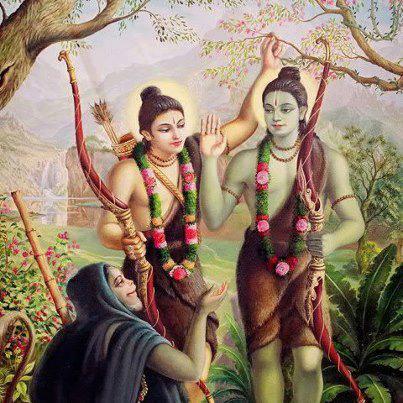
She was waiting to see Rama. When Rama went to her in the middle of the forest; she gave him berry fruits and roots which were bitten by her. She did this to give the sweetest ones to Rama. Since Rama knew her motherly love, he did not reject it. She belonged to the caste of hunters. That tribal woman guided Rama and Lakshmana to lake Pampa an Rishyamuka mountain.
“Having received permission from Rama to depart, Sabhari, wearing matted locks, robes of bark and a black antelope skin, cast herself into the fire, thereafter rising into the air like a bright flame. (Chapter 74, Aranya Kanda).
ram sabari
Rama and Sabhari

Vedavati:

Vedavati was the daughter of Rishi Kusadhwaja. When Ravana was passing through the forests in the Himalaya he met Vedavati, a damsel of great beauty dressed in acetic garb. When Ravana wanted to marry her she told him that she would marry only Vishnu. But Ravana boasted to her about his heroic deeds and touched her hair with a bad intention. Enraged by this, she cursed him that he would be destroyed by her in her next birth (as Sita) and entered fire before him. When she entered the fire celestial flowers fell around her (Uttara Kanda, Ramayana)

Tamil Poet Kabilar:

Kabilar, a Brahmin poet of great character, who lived in the Sangam Age ( First three centuries CE) was a good friend of a generous chieftain Pari. When the mighty Tamil kingdoms laid a siege around his kingdom Kabilar boldly supported Pari. The three Tamil kings of Sera, Choaza, Pandya kingdoms killed him by deceit. Then Kabilar took his two daughters to all the chieftains begging them to marry them. No one dared to earn the enmity of the powerful Tamil kings. At last, one chieftain took care of those girls and Kabilar, having fulfilled his mission, entered the fire. There was a memorial stone in the place known as Kabilar Stone near Tirukoyilur on the banks of River Pennai. There is an inscription with this story in verse (Source Dr R Nagasamy’s Tamil book ‘Paamaalai’).

Bharatha, Rama’s brother, was desperate to see Rama after his 14 year banishment. When he did not arrive on the appointed day Bharat was about to jump in to ceremonial fire. But Rama arrived by his divine Supersonic jet from Sri Lanka and saved his life. When Angathan and other monkeys could not find Sita in their search mission, they contemplated sacrificing themselves in fire. This is a typical Hindu approach.

Quetzalcoatl_magliabechiano
Aztec Deity
Aztec Saint’s Self Immolation

Aztec civilization (750 CE to 1500 CE) in South and Central America had a mysterious person with the name Quetzalcoatl. There were two people with the same name which resulted in lot of confusion. He was a demiurge, priest, ruler conceived by virginal birth years after his father’s death. He was ruler of Toltecs for twenty two years. He lived in Tula, lost a civil war, fled with a good sized Toltec force. He set sail into the open sea on a particular date Aztec calendar with a prophecy that he would come back on the recurrence of that date.

Centuries after this date, Spanish man Herman Cortes landed on the coast of Mexico on 4th March 1519. Aztec king Montezuma believed that god and saint Quetzalcoatl had come back in the form of a white man. He was given royal welcome. But Cortes, Columbus and his band of explorers brought disease, death and destruction to the wonderful Mayan, Aztec and Inca civilizations. They plundered the whole of South America and took tons of gold to Spain and Portugal.

Quetzalcoatl_Ehecatl
Quetzalcoatl means ‘feathered serpent’ or ‘precious twin’. He is one of the most important Aztec deities, although he has origins in pre Aztec cultures. There was a historical king in the same name that was expelled from Tula, the Toltec capital in 987 CE. According to one version he reached the Gulf of Mexico and immolated himself, to be reborn as the planet Venus. He predicted that he would come back. He may be a Hindu saint who practised such rituals in ancient India.

sita2
Sita Devi in Fire Test.

Contact swami_48@yahoo.com

2013 in review

The WordPress.com stats helper monkeys prepared a 2013 annual report for this blog.

Here’s an excerpt:

The Louvre Museum has 8.5 million visitors per year. This blog was viewed about 160,000 times in 2013. If it were an exhibit at the Louvre Museum, it would take about 7 days for that many people to see it.

Click here to see the complete report.

2012 in review

The WordPress.com stats helper monkeys prepared a 2012 annual report for this blog.

Here’s an excerpt:

19,000 people fit into the new Barclays Center to see Jay-Z perform. This blog was viewed about 72,000 times in 2012. If it were a concert at the Barclays Center, it would take about 4 sold-out performances for that many people to see it.

Click here to see the complete report.

Tamil through proverbs

Please see attachment below in PDF format.

Swami

Palamoliyil Inthumatham PDF

Indiahhhh——RICHEST country in the world (Part 4)

By S Swaminathan, University of London

Please note this is the 4th part in a series. To read the pior parts click the links below:
Part 1
Part 2
Part 3

Mohmed of Gazni’s Thirst for Gold
Mohmed of Gazni invaded India 17 times just to plunder all the temples in North India. He came to know about the fabulous wealth of Hindu temples in Punjab, Rajasthan, Uttar Pradesh and Gujarat and targeted them. During each invasion he massacred several thousand people and took tonnes of gold and silver ornaments from the temples. Historians say that when he entered Mathura, birth place of Lord Krishna, there was no resistance. It was a cake walk for him. He took all the property of the temple.
If one could make a list of all that Mohmed of Gazni plundered from the temples, he would definitely find a place in the Guinness Book of Records as the greatest plunderer in the world. He will put the Spanish plunderers of Inca and Maya gold to shame. The most famous plunder of Mohmed of Gazni was of Somnath Shiva temple in Gujarat. It had an incredible amount of wealth. The Shiva linga was covered with kilos of gold and gems. He broke the linga after taking all the jewellery. He got only 20 million Dinars from Somnath temple. The founder of Bharatiya Vidhya Bhavan Sri K M Munshi has described it in detail in his book about Somnath. These events took place between 1,000 AD and 1,026 AD. Historians estimate that he took three billion dinars from India. Afgan people lined the streets of the city of Gazni just to see the booty. As a side note – a Dinar is a gold coin. Different weights were used during different times but normally a dinar was four grams.
Rajaraja’s gold donations
Rajaraja was one of the famous Chola kings who ruled Chola country from 985 AD. He built the famous Brihadeeswarar Temple in Thanjavur. There are over 85 inscriptions of Rajaraja in the temple detailing his donations to the temple. He donated enormous gold coins to run the temple. He also donated a lot of gem studded golden jewellery to the gods and goddesses. It is estimated that he donated 4,000 Kazanju (8,000 grams) of gold. Rajaraja and his family members had donated 66 bronze idols to the temple. The inscriptions describe all the diamonds, emeralds, rubies, sapphires, pearls and gold with precise measurements. He also donated huge golden vessels. Dr R Nagaswamy, famous archaeologist and historian, has given a detailed account of all these inscriptions in his book about the temple. The antiquities had a value well beyond that of the gold itself. The current location of these items is unknown; they were all lost during the last one thousand years.
Malikafur and gold
Malikafur was the general of The Delhi Sultan Alauddin Khilji. When Malikafur invaded Madurai and Srirangam he plundered hundreds of places and took thousands of kilos of gold to Delhi. Madurai was under Sultanate rule for 48 years in the thirteenth century and the Madurai temple was closed for 48 years. The gold plundered by Muslim invaders slowly went out of the country when the Delhi sultans lost power. Kampanna Udayar was the General sent by the Vijayanagar Emperor to conquer Madurai from the sultans. His wife Gangadevi accompanied him and gave vivd reports of what her husband saw in Madurai, much like a news paper reporter. All her reports were in Sanskrit poetry in the book called Madura Vijayam.
Women were very well educated in those days. She not only had the courage to follow her husband’s army, but also had written a beautiful running commentary of the war eight hundred years ago in Sanskrit. I have the copy of Madura Vijayam with me in London.
There’s more coming! In the following parts you will read about:

  • Why Roman writers were angry about Tamil Nadu’s exports two thousand years ago
  • How many Roman gold coins were unearthed in India
  • The largest gold coin of Shajahan
  • The Tirupati Temple Gold reserve
Please contact me on swami_48@yahoo.com or leave comments and feedback below.
Please also show your support and simultaneously register yourself for future updates by clicking ‘Follow’. 

To Master the Tamil language….Keep a calculator handy!

                                                -S. Swaminathan-

How many years would it take to master the Tamil language? The simple answer is that no one can complete studying Tamil in one’s own life time. The Tamil proverb says ‘’ kalvi karai ila, karpavar naal sila‘’(Art is long, Life is short). Another saying goes that even the most learned persons say ‘’Katrathu kai alavu, kallaathathu ulaka alavu’’ (What one has learnt is a handful, what one has to acquire is as expansive as the world). No wonder Sir Isaac Newton , who discovered  the three basic laws physics said ,  ‘‘ I was like a boy playing on the sea-shore and diverting myself now and then finding a smoother pebble or a prettier shell than ordinary, whilst the great ocean of truth lay all undiscovered before me’’.

Tamil is a very rich language and produced literature for 2,000 years without a break. Even If we just take the poems composed in the first 1,000 years , it would be impossible to study all of them within one life time, let alone understanding the full depth of the poems. Tamil stands on par with other ancient languages like Sanskrit, Hebrew, Chinese, Greek and Latin. Tamil Cankam literature consists of 18 books; that is, 2,381 poems sung by 473 poets running into 30,000 lines composed in the first few centuries of modern era. The oldest Tamil book is a grammatical treatise called Tolkappiyam. Following the Cankam period we had epic period which saw five great Tamil epics including the most famous Silappadhikaram and Manimekalai. 18 books on ethics including Tirukkural were written after this.
If we take in to account the Thevaram, Thiruvasagam, Thirumanthiram and the Divya Prabandham sung by the great Four Saivaite Saints and 12 Vaishnavaite saints one has to take several births to complete studying Tamil. Don’t take my word for it. Take a calculator in your hand and do the calculation for yourself.

Tolkappiyam -3,999 lines
Cankam Literature Ettu thokai, Pathup paattu- 30,000 lines
Silappadhikaram -5,001 lines
Manimekalai – 4759 lines
Perunkathai- 16,230 lines
18 ethical books including Tirukkural- 3,250 poems (10,348  lines)
Panniru Thirumurai (Thevaram etc.)- 18,326 poems/hymns
Divya Prabandham – 4,000 poems/hymns
Kamba Ramayanam- 10,500 poems
Seevaka Chinthamani- 3,145 poems
Thayumanavar- 1,454 hymns
Arunagiri Thiruppugaz- 1,361 hymns
Ramalinga Swamikal- 5,800 hymns
The last three poets lived in the past few centuries. I have not yet dealt with Villipuththurar Mahabharatham, Nalavenba by Pukazenthi, Siledai (double meaning) poems of Kavi Kalamegam, 18 Puranam translations running in to several thousand lines, Kallaadam, all the grammar books including Nannul, Nikandu /dictionaries, Siddhar songs etc. Now do the maths with your calculator. Each one will read it at their own speed. If you read a few poems every day understanding every line of it, how many years would it take?

If one discovers the beauty of the poems composed by poets like Bharathiyar in the last century, you wouldn’t waste a single minute! Enjoy reading Tamil books.