Jesters in Rig Veda (Post No.4365)

Written by London Swaminathan


Date: 4 NOVEMBER 2017


Time uploaded in London- 14-21


Post No. 4365

Pictures shown here are taken from various sources such as Facebook friends, Books, Google and newspapers; thanks.


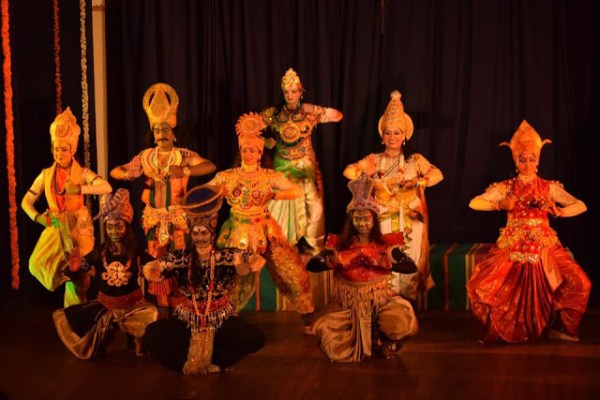
Rig Veda is an encyclopaedia of ancient India. Hindu playwrights, actors and dramatists believe that the drama originated in India. Though we have dramas in ancient Egypt, if one believes the date (4500 BCE or before that) given to the Rig Veda by Herman Jacobi and B G Tilak, then India can claim the credit. Whatever be the origin of drama, we have very clear drama scenes in the Rig Veda in the form of dialogue hymns:


RV 10-51: Agni and Varuna
RV 10-10 Yama- Yami
RV 1-179 Agastya and Lopamudra
RV 10-95: Pururuvas and Urvasi
RV 10-86 Indra and Vrsakapi
We have such conversation hymns in RV 10-135; 10-124; 4-26; 10-108; 10-28 and many more. ( I have dealt with this in detail in  my old article; see the link at the bottom)
I was reading Hazra Commemoration Volume (Pages 505, 506) and found an interesting article which shows that even jesters (Vidushaka) in the Vedic period. The author quotes the following information:

Rig Veda (9-112-4) says,

“Just as a draught horse desires a light chariot, the jesters desire such appropriate words to excite others laughter. The male desires his mate’s approach and a frog desires food”


Vajasaneyi Samhita

In the long list of persons to be offered to relevant deities in a Purusha Medha Yajna (human sacrifice), there Is even a person sacrificed to the God of Laughter. The God was Hasa VS 30-6 and T S 3-41.


Though Purusha medha yajna did mention over 200 persons belonging to various professions, none was sacrificed. But the long list shows that there were so mam types of workers during Vedic period and one of them was a jester No culture had a separate God for laughter. It says a Kari should be sacrificed to Hasa, the god of laughter.


From the word KARI, it is evident that among the people of the Vedic age there were some who practised the art of Joking.


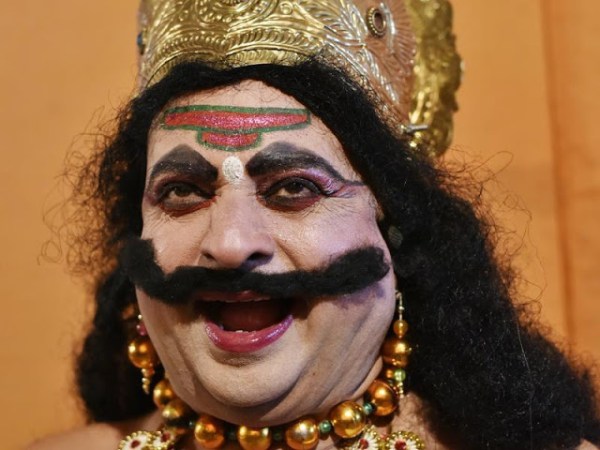
Classical drama has jesters. So it is no wonder that Vedic Hindus also had such a character in the dramas. This shows the Vedic civilization was well advanced in art and culture. They were not primitive as foreigners projected them. More over when we put all the facts together, we see a well cultured and civilized society.

Origin of Drama in Ancient India and Egypt


Vedic dramas | Tamil and Vedas

https://tamilandvedas.com/tag/vedic-dramas/

Where did dramas originate? Did the first play was enacted in Egypt or India? We have dialogue hymns in the RigVeda and several scholars believe those …


—subham–

Boastfulness Anecdotes (Post No.4360)

Written by London Swaminathan


Date: 2 NOVEMBER 2017


Time uploaded in London- 16-21


Post No. 4360

Pictures shown here are taken from various sources such as Facebook friends, Books, Google and newspapers; thanks.


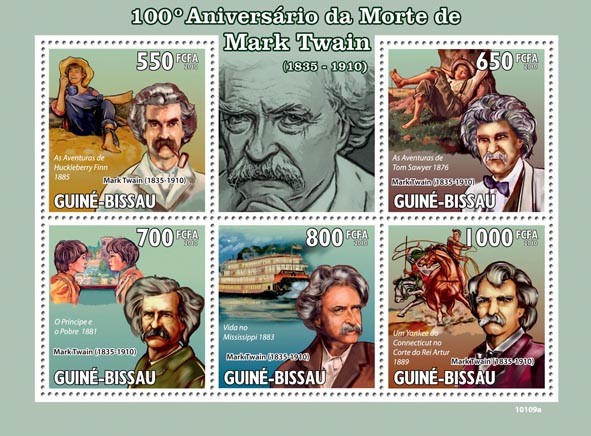
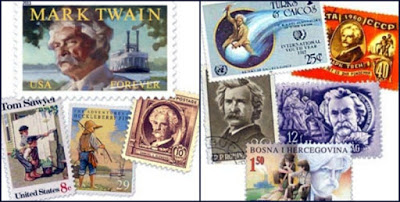
Mark Twain’s Climax

Mark Twain, whenever feats of heroism or ingenuity were being bragged about, would come forth with a little story of his own which usually climaxed the discussion.


There was a fire in Hannibal one night and old man Hankinson got caught in the fourth story of the burning house. It looked as if he was a goner. None of the ladder s was long enough to reach him. The crowd started at one another, nobody could think of anything to do.


Then all of a sudden, boys, an idea occurred to me. Fetch a rope, I yelled, somebody fetch a rope, and with great presence of mind, I flung the end of it up to old man Hankinson. Tie it around your waist, I yelled. The old man did so, and I pulled him down.


Xxxx


500 years to build a cathedral!

An over patriotic American gazed at the superb masses of an European cathedral with its marvellous statues and ornaments and asked the guide how long it had taken to build. Five hundred years, replied the guide.


The American sniffed, Five hundred years. Why we would build a structure like that and have it fall to pieces on our hands all inside of two or three years.


Xxxx


Brother Jessi James was shot


A group of men in a bar room were exchanging wild boasts about their feats of courage and bravery. When the tall tales have almost stretched themselves to the limit, a quiet old Swede who had been silently drinking and listening, spoke up, I myself never do anything very brave said he, But my brudder, he call Yeasie Yames, a big sob………….The others were appalled

What they cried, he called Jessie James a s o b.


S O B = son of a bitch (slang)

My brudder he was drinking and he get pretty drunk. Yessie Yames was in same bar room . My brudder he go over and say Yessie Yames you are one big   s o b.

What did Jessie James do? Demanded listeners.

He shoot my brudder.

Xxx Subham xxxx


EAT ONLY TWICE: VEDA SAYS (Post No.4351)

Written by London Swaminathan


Date: 30 October 2017


Time uploaded in London- 16-24


Post No. 4351

Pictures shown here are taken from various sources such as Facebook friends, Books, Google and newspapers; thanks.

Satapata Brahmana is one of the important Brahmanas, part of the Vedic literature. It says,

“Devas, men, fathers (pitrs=departed souls) and Asuras approached Prajapati. One walked after another and asked him in what manner they have to live. He ordains for each.

To ‘the men clothed and bending their bodies’ ,

‘Your eating shall be in the morning and in the evening’.

The devas were told the sacrifice was to be their food.

The fathers/Pitrs were told to eat only monthly in Moon light;

The beasts (animals) can eat whatever and whenever they liked, in season or out of season

To the Asuras he gave darkness and illusion (Tamas and Maya):-

“Neither the gods/devas nor the Pitrs , nor beasts transgress (their several ordinances); some of the men alone transgress theirs. Hence whatever man grows fat, he grows fat in unrighteousness, since he totters and unable to walk because of his having grown fat by doing  wrong. One should therefore eat in the evening and morning; whosoever knowing this eats only in the evening and in the morning, reaches full measure of life, and whatever he speaks , that  is true. Because he observes the divine truth –Sat.Br.2-4-2-6

In Tamil Poetry book Neethi Venba, there is a verse which says, “Yogis eat once a day, healthy men eat twice a day, Rogis eat thrice a day (gluttons, those who want to fall sick; rogam=sickness)  those who want to leave the earth quickly eat four times a day”.

DISPUTE BETWEEN MIND AND SPEECH

A dispute once took place between Mind and Speech as to which was the better of the two. Both Speech and Mind said, ‘I am excellent’.

Mind said, ’surely I am better than you. For you do not speak anything that is not understood by me (mind).  And since you are only an imitator of what is done by me and a follower in my wake I am surely better than you’.


Speech said ‘surely I am better than you, for what you know, I make known. I communicate’


Both of them went to appeal to Prajapati for hi decision. He, Prajapati, decided in favour of mind, saying to Speech, ‘Mind is indeed better than you for you are an imitator of its deeds and a follower in its wake’.


Then Speech (Vach) being thus gainsaid was dismayed and miscarried. She, speech, then saidt  Prajapati,

‘May I never be your oblation bearer, I whom you have gainsaid’.


Hence whatever at the sacrifice is performed for Prajapati, that is performed in a low voice; for Speech would not act as oblation bearer for Prajapati- Sat. Bra. 1-5-1-8

(My comments: These symbolic stories show that the Vedic Hindus were very literate and they can even use speech and language for conveying some message.)


Here is an illustration of statecraft following the philosophy of Speech and Mind:

“Let him draw the cups of Soma for Indra Marutvat (accompanied by the Maruts), and not for the Maruts likewise. For were he to draw cups for the Maruts, he would make the people refractory to the nobility. He thus assigns to the Maruts a share therin after Indra, whereby he makes the people subservient and obedient to the nobility—4-3-3-10

SOME QUOTES FROM THE BRAHMANAS

Gods and evil spirits were originally soulless and mortal They become immortal by putting in their inmost being the immortal fire—2-2-2-8

xxx

In their originally mortal condition, they used to live on earth. But the gods grew, it is said, tired of man’s endless petitions and fled—2-3-3-4

xxx


The gods abhorred the Ribhus, on account of their human smell. The gods placed two Dhayyas between the Ribhus and themselves because of the human smell of the former- Aitareya Brahmana 3-30

xxx

The sun would not rise if the priests did not make sacrifice- Sat. Br.2-3-1-5


xxx


Be Exemplary!

The months follow one another as they do because in a certain ceremony one priest follows another:-

“Were to both walk out together, were to both enter together these months would assuredly pass separated from one another; therefore, while out walks the one, in steps the other—Sat Br.3-1-7-11


–subham, subham–

INTERESTING STORIES IN THE BRAHMANAS (Post No.4345)

Written by London Swaminathan


Date: 28 October 2017


Time uploaded in London- 18-41


Post No. 4345

Pictures shown here are taken from various sources such as Facebook friends, Books, Google and newspapers; thanks.


Following stories in the Brahmanas are symbolic stories. They show that the Vedic Hindus were very intelligent and advanced in civilization. They talk about gold, goddess of speech, amicable solution, unity among good people etc.


“The Gods and Asuras contended together. The Gods were hostile to one another. Striving with one another for superiority, they parted into five divisions, Agni with the Vasus, Soma with the Rudras, Indra with the Maruts, Varuna with the Adityas and Brihaspati with the Visvedevas. They then reflected, ‘we are subject to our enemies, the Asuras, because we are hostile to one another. Let us unite our bodies; and whoever shall show enmity to another, let him be separated from his body. Hence anyone among our persons who have bound themselves together by an oath, who first commits an injury, falls into calamity. When a man joins in the oath ‘tananaptra’ for the purpose of overcoming his enemies, he conquers,  and his adversary is overcome.

–Taittiriya Samhita Ashtaka 6

Aitareya Brahmana 1-24 has the following story:-

The Devas were afraid, surmising the Asuras might become aware of their being disunited and seize their reign.  They marched out in several divisions and deliberated. Agni marched out with the Vasus and deliberated; Indra did go with the Rudras; Varuna with the Adityas; and Brihaspati with the Visvedevas. Thus all, having severally marched, deliberated. They said, ‘well let us put these our dearest bodies in the house of Varuna the king (water); he among us who should, out of greediness, transgress this oath, , not to do anything which might injure the sacrifice, he shall no more be joined with them’. They put their bodies in the house of Varuna. This putting their bodies I the house of Varuna the king became their ‘tananaptram (joining of bodies). Thence the Asuras could not conquer the gods’ empire, for they had all been made inviolable by the enemy”.

xxxx


Angiras Vs Adityas

In the beginning, there were two kinds of beings here, the Adityas and the Angiras (both children of Prajapati). The Angiras then were the first to prepare a sacrifice, and having prepared the sacrifice they said to Agni. “Please announce to Adityas there would be a Soma sacrifice tomorrow and you will be the minister.


The Adityas spoke to one another and wondered why should they be ministering in the sacrifice. Then they decided to have one Soma feast on their own. They brought together the material for sacrifice and told Agni, “you have announced a Soma feast for tomorrow”. We have decided to have one today itself and let Angiras be the officiating priest. They sent back the Angiras a messenger about the feast.


But the Angiras were very angry with Agni. You went as our messenger and why didn’t you say ‘no’. The blameless chose me and I could not say ‘no’. The Angiras then officiated for the Adityas. This is called Sadhyakri. They brought Vach (goddess of speech) to them for their sacrificial fee. They aid, we cannot accept her. If we accept her we will be the losers. So it remained incomplete. Then they brought Surya (Sun) to them and they accepted him.

Whereupon the Angiras said, “we are fit for the sacrifice office; we are worthy to receive fees. Hence a white horse was the fee for the Sadhyakri. On the front of it was a golden ornament.


Now Vach was angry. It asked in what respect is that one better than I? Then she went away from them. Having become a lioness she went on seizing upon everything between those two contending parties, the gods and the Asuas. The gods called her to them and so did the Asuras. Agni was the messenger of the gods and one Sharakshas for the Asura-Rakshas. Being willing to go over to the gods, she said, ‘What would be mine if I were to come over to you.

“The offering will reach you even before it reaches Agni”. She then said to the gods, “Whatsover blessing you will invoke through me, all that shall be accomplished on to you. So she went over to the gods”—Satapata Brahmana 3-5-1-13


xxxx

Mind is the Ocean

In the same Brahmana Vach is credited with  another service: “ Mind is the ocean. From Mind, the ocean, the gods, with Vach for a shovel, dug out the triple sciences, i.e. the Three Vedas. Wherefore this verse has been uttered – Sat Brah5-5-2-52


–Subham–

WATER, WATER, EVERYWHERE IN THE HINDU VEDAS! (Post No.4341)

Written by London Swaminathan


Date: 27 October 2017


Time uploaded in London- 18-46


Post No. 4341

Pictures shown here are taken from various sources such as Facebook friends, Books, Google and newspapers; thanks.

Water occupies a pre-eminent position among the five elements, in the Hindu scriptures. A Hindu cannot survive without water. From birth to death every ceremony is done with the help of water. Brahmins cannot survive without water. So they lived on the banks of the rivers. Even today all the Brahmin streets called Agraharams are on the banks of the rivers. This poohpoohed the theory of half-baked people like Max Mullers and Caldwells who thought that the Vedic Hindus came from arid or snow clad regions of Central Asia or Europe and Dravidians came from the Mediterranean regions.


Water is, of course, essential for every human being whether you are a Hindu or not. But no literature praised water like the Hindu scriptures. Even a today a Brahmin worships water three times a day. Apart from that, the  Hindus discovered the enormous power of water. they can create missiles with it. They can curse any one with water or give a boon to anyone with water.


The whole of Sanskrit literature and the Tamil literature repeated the phrase sea-clad earth thousands of times. Whenever a Tamil poet or a Sanskrit poet wants to describe the earth they will say ‘sea clad’, or ‘sea clothed earth’. Asvini  Devas, the mysterious gods of the Rig Veda, had hundred oared ships and went deep into the ocean to rescue ship wrecked people according to the Rig Veda.


The mighty Saraswati rives is praised as ‘ocean like’ in the Rig Veda. Modern atomic research (carbon dating of isotopes) and astronomical research (NASA satellite pictures) showed that the Saraswati River Civilization existed before the Indus valley Civilization. So, water is the mainstay of the Vedic Hindus. The Vedas reverberated on the banks of the River Saraswati for the first time.

17 Kinds of Water!

Idiots and half-baked people wrote lot of nonsense about the Vedas in ENGLISH! They wrote that the Vedic people were nomads and those people mostly wrote silly/ nonsense in Sanskrit. But when we read the Vedas we are surprised to see the subjects they deal with. For the first time 27 stars are mentioned in the Brahmana literature. Since foreign idiots knew only Greek literature, they did not know the vast topics covered in the Vedic literature. Even if you just write the titles of the subjects you will know what they knew and you wouldn’t dare to call them primitive.


In the consecration ceremony of a king, as given in the Satapata Brahmana there are 17 different kinds of water used in order to infuse their different kinds of vigour into the king. This shows the importance of water in the Vedic literature.

Lot of half-baked people dated the Vedic literature differently and made themselves laughing stocks. First, they wrote that the Vedic Hindus were nomads and primitive people and then in their translations of Brahmanas which were dated  200 years after the Rig Veda by them,  the world’s highest decimal number and the consecration of a king with 17 types of water, 27 stars etc are shown.


Even in the Rig Veda, the oldest scripture in the world, a vast area from Ganges to rivers in Afghanistan is described. The world’s biggest and oldest geography book!


The 17 different waters are:

1.Water from the River Saraswati

(This explodes the theory of half baked  ‘scholars’ and  Marxist idiots, because Saraswati disappeared around 2000 BCE. So Satapata Brahmana or the ceremony it denotes existed before 2000 BCE)

2.Water that rises in front of him (called males wave), when he steps into water.

(either we don’t know their geography jargon or we don’t know their coded language)

3.Water that rises behind him

4.The flowing water

5.Such water as flows against the stream of the flowing water

6.Water that flows off the main current

7.The Lord of the waters (sea?)

8.Water from a whirlpool

9.Water from a standing pool of flowing water in a sunny spot

10.Water raining while the sun shines

11.Water from a pond

12.Waters from a well

13.Dew drops

14.Honey- one kind of water

15.Embryonic waters

16.Milk- another kind of water

17.Clarified butter

When the mantra says honey, milk, clarified butter we don’t know whether they meant them or a type of water. When they said embryonic waters we wonder what it is.

But through out the Vedic literature it is said that life came from the waters. Later Puranas also showed the first Avatar of Vishnu in waters.

Prajapati (Brahma) is given the number of 17 (another mystery) and the mantra says 17 kinds of water brings together, for Prajapati is 17 fold, and Prajapati is the sacrifice.;that is why he brings together 17 kinds of water.

Water in the Rig Veda

Hymn 9 in the 10th Mandala of Rig Veda is addressed to the Waters as Divinities and the first three of the nine verses are repeated by all Brahmins at their morning ablutions (Sandhyavandanam). The same three are used in the making of firepan, as described in the Sat. Br.(6-5-1-2) in which we read,

“Hence this triplet (RV10-9-1/3) is these waters which appeared as one form.

“This whole earth dissolved itself all over the water; all this universe appeared as one form only, namely water (6-1-1-12)

“Agni, we know that source whence thou art come, – the source, doubtless, is the heavenly waters, for from the waters he first came. In the sea the manly minded kindled thee in the water—the manly minded is Prajapati; thus, in the waters Prajapati kindled thee – the man watcher hath kindled thee, O Agni, in the udder of the sky—the man watcher, doubtless, is Prajapati, and the udder of the sky is water—thee whilst standing in the third region, doubtless, is the sky. the buffaloes made thee grow in the lap of the waters—the buffaloes, doubtless, are the vital airs; thus the vital airs made thee grow in the sky—Sat.Brah 6-7-4-5

Geographically we are informed that an ocean of water surrounds the earth. Later Puranas refer to the seven concentric oceans of milk, ghee, sugarcane etc.

“He surrounds this world with water—it is with the ocean that he thus surrounds it on all sides, and hence the ocean flows round this world in a moat- Sat. Br.7-1-13


Hindus were the first one to describe this world ‘round’ in shape (Anda=egg) and they are the one who described the universe is round (Hiranyagarbha). I have also written about how the Hiranyagarbha gave birth to the Big Bang theory.

Satapata Brahana and other Brahmanas have lot of things about water which may be considered unintelligible (or silly by foreigners) today. The reason being they were translated into English (which I and many others follow today) by people who don’t know anything about Hindu culture; leave alone the lack of knowledge about Hindu beliefs, they were anti-Hindu which is reflected in their lectures (please read my articles on Max Muller and his bluff)

–Subham–


VIOLENCE IN RIG VEDA AND TAMIL VEDA AGAINST THE MISERS! (Post No.4323)

Written by London Swaminathan


Date: 21 October 2017


Time uploaded in London- 18-53


Post No. 4323

Pictures shown here are taken from various sources such as Facebook friends, Books, Google and newspapers; thanks.


Rig Veda is the oldest religious book; and that is the oldest anthology. It is full of mystery and history. It shows a civilised society with very high values. The Vedic seers praised hospitality and charity. They made it one of the six tasks for Brahmins; they can accept donation but they must also give. Tamil literature also praised hospitality and charity. Tamils consider Tirukkural, the didactic book with 1330 couplets, as the Tamil Veda. It is authored by Tiruvalluvar, the greatest of the Tamil poets. Though Rig Veda and Tamil Veda are thousands of years apart, the values remained same throughout the vast land, then the world’s largest country.


The Vedic and Tamil poets were dead against the misers. They went even to the extent of preaching violence against the stingy fellows. The poets of the Rig Veda and Tamil Veda advocates arm twisting and jaw breaking tactics to extract money from the parsimonious and penurious lot.

Rig Veda says,

When will Indra trample, like a weed; the man who hath no gifts for him? RV 1-84-8

“Slay the niggards”- says another Vedic seer 1-184-2

“Wealth comes not to the niggard, unpleasant man” – RV 7-32-21


There are hundreds of places where the hospitality and charity are praised and penny-pinching, cheese-paring, ungenerous lot condemned.


Break the jaw; Crush him like Sugarcane: Valluvar

Tamil poet Tiruvaluvar never hesitated to advocate violence against the mean-minded, close fisted, Scrooge like fellows; he says in a Tirukkural couplet,

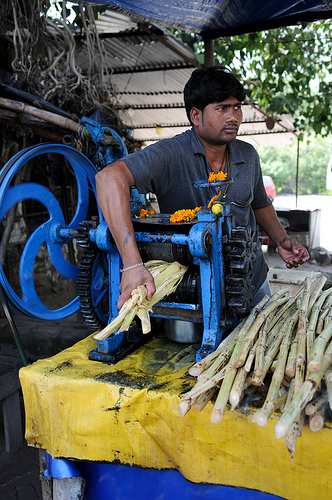
“At a mere word the good melt; but the mean, like the sugarcane, yield only under pressure” – 1078

Another translation of the same couplet: “Good men of virtue give charity at the mere call for help, but ignoble ones, will give only when crushed like sugarcane”.

Another couplet runs like this:

“The mean will not even shake off what sticks to their hands to any but those who would break their jaws with their clenched fists”- 1077

Another translation of the same couplet: Except to those who twist their hands and break their jaws, mean characters, will not even shake their food-moistened fingers.


S M Diaz in his Tirukkural commentary says “The well-known description of a bad miser in Tamil Nadu is that he will not even shake the hand with which he ate his food lest some starving crow should pick it up and eat. The idea is that the very fact that somebody will benefit from any action of theirs is repugnant to them. In this Kural/couplet, Valluvar has combined it, with certain other adverse qualifications of the miser, that he will part with that he has only to those, who are capable of twisting his hands and breaking his jaws. That is the only language, which he will understand”.

Tolkappiam and Bhagavad Gita

Oldest Tamil book Tolkappiam also says that those who don’t give will be shunned and those who give would be praised (Sutra 1036)


In the Bhagavad Gita, Lord Krishna says those who cook for themselves, verily eat sin (B.G.3-13)


Manu also says the same: “The person who cooks only for himself eats nothing but sin, for the food left over from sacrifice is the food intended for good men”- Manu 3-118


2000 years ago, Tamil poet Ilamperu Vazuthi (Purananuru verse 182) said that Tamils wouldn’t eat alone even if they get Indra’s Amrta (ambrosia from the Indraloka); Giving and sharing was in their blood.


–Subham–


READING THOUGHTS WITHOUT WORDS: TAMIL POETS’ VIEWS (Post No.4316)

Written by London Swaminathan


Date:19 October 2017


Time uploaded in London- 16-59


Post No. 4316

Pictures shown here are taken from various sources such as Facebook friends, Books, Google and newspapers; thanks.


We all know that face is the index of the mind. Tamil and Sanskrit poets say that eye is the index of the mid; both are nearly same, because eye is the most important organ of face; without eyes we would not call it face, but blind.


The Sanskrit saying is “caksuhi manobhaavam aaviskaroti” i.e. The eye is the mirror of the mind.

Tiruvalluvar, the greatest of the ancient Tamil poets and the author of Tamil Veda ‘Tirukkural’ says,

“The measuring rod of the subtle brains is nothing but the eye revealing lurking secrets” (Kural 710)

It is interesting that only the Tamils took this virtue of DIVINING or SENSING FROM APPEARANCES  as an important one for a minister. Tiruvalluvar even raises a man with this virtue to the level of God. He advises the kings that a king must appoint such a person in the ministerial cabinet at any cost. He has devoted ten couplets on this topic.

“Regard him divine, who divines without a doubt what is passing in another’s mind” – Kural 702


“At any cost make him a member of the cabinet, who can judge by looks the intentions of another man”- Kural 703


The saying ‘face is the index of the mind’ is also echoed by Tiruvalluvar in another couplet:

“The mirror reflects nearby objects; even so the face indicates emotions throbbing in the mind” – Kural couplet 706

Cicero says, “the countenance is the portrait of the soul”.

Another Tamil poet of Naladiyar, collection of Tamil poems, says ‘ hatred or love could be read off from the eyes themselves, by those familiar with the eyes and the world is under the control of such people.

Experts in criminology and criminal investigation are convinced that an offender’s guilt is most often reflected in the eyes and the face.

The 2000 year old Sanskrit book Panchatantra puts in a beautiful sloka/poem,

“The guilty man is terrified
By reason of his crime.
His pride is gone, his powers of speaking fail
His glances rove, his face is pale.

The sweat appears on his brow,
He stumbles on, he knows not how,
His face is pale, and all he utters
Is much distorted; for he stutters.
The culprit always may be found
To shake, and gaze upon the ground:
Observe the signs as best you can
And shrewdly pick the guilty man.

While on the other hand
The innocent is self reliant
His speech is clear, his glance defiant
His countenance is calm and free
His indignation makes his plea

–(Panchatantra 151- 158 The Tale of the Weaver’s Wife)


In Tamil there are even proverbs about the eyes of the thieves (Thiruttu Muzi). When children do some naughty things, we spot them easily by looking at their face, particularly from their eyes!

In Indian classical dance Bharatanatyam, eyes play an important role; most of the emotions can be revealed through the eyes and face.

My old articles on the appearance of the people are given below:–

Face is the Index of Mind | Tamil and Vedas

Face is the Index of Mind

3 Nov 2013 – Face is the Index of Mind. Mirror. Great men think alike: Quotations on Mind. 1.Manu on Examining witnesses. He shall discover the internal …


31 Indian Quotations on Mind! | Tamil and Vedas

https://tamilandvedas.com/2014/12/…/31-indian-quotations-on-min…

27 Dec 2014 – Face is the Index of the Mind (English Proverb). January 7 … The human mind has a tenedency to do what is forfidden — Kathasaritsagara.

–Subham–
 

Index to Vedas by Katyayana and Significance of No.432,000! (Post No.4313)

Written by London Swaminathan


Date:18 October 2017


Time uploaded in London- 20-46


Post No. 4313

Pictures shown here are taken from various sources such as Facebook friends, Books, Google and newspapers; thanks.


Hindu civilisation has reached its pinnacles during Vedic period itself.

They wrote the first grammar book and they taught grammar in the Vedic school. And even before Panini of seventh century BCE , they had  umpteen grammarians. We were fortunate enough to get the Book of Panini (Seventh Century BCE), but others were lost.


We wrote the first Nikandu /Thesaurus and we added the Contents and Index to the Vedas, Even the law book written by Manu, was earlier than Hammurabi who lived in 2600 BCE. The latest version of Manu Smrti, we have today is from second century BCE. Since the name of Manu occurs several times in the RV. Manu refers to Sarasvati river, we know he lived at the time of Sarasvati’s mighty flow. Now due to the satellite picture from NASA and Carbon-14 dating of the underground water by the Bhaba Atomic Research Institute, the date of Sarasvati’s disappearance is fixed 2000 BCE or earlier. So Manu who wrote the original book must have lived well before that. He never mentioned Sati, like the RV. During Vedic period, there was no Sati/widow burning. So the original Manu Smrti belongs to Rig Vedic period. This is confirmed by his definition of Brahmavarta and Aryavarta (Manu Chapter 2). He mentioned the rivers Drsadvati and Sarasvati. Aryas included all the four Varnas/castes according to Rig Veda (10-90).


All the anti Shudra verses in the Manusmrti are added to it during the Sunga period. Sunga Kings were Brahmins. Anyone who reads Manu from top to bottom could easily find the interpolated portions. They go against the natural flow of Manusmrti. They are not only controversial but also contradictory.

Beautiful Vedic Index

Katyayana who lived before 600 BCE counted all the hymns, mantras, syllables in the Rik Veda and prepared the Anukramani/ Index. He did a painstaking research and counted everything in the Vedas, leaving no scope for interpolation or corruption.


Sarvanukramani (Rig Vedic Index) of Katyayana gives the first word of each hymn, the number of the verses, the name and the family of the poets, the names of the deities and the metres of the verses. Saunaka did another anukramani based on the Anuvakas.

Yajur Veda has three anukramanis .

And we have anukramanis for Sama and Atharva Veda as well, one each.

It is strange that someone had such a scientific approach 2600 years ago, when most of Europe was semi civilised or barbaric. If some society has reached the heights of philosophical thought around 850 BCE (Brihadaranyaka Upanishad), no wonder they have mastered numbers grammar, linguistics and language.

Significance of 432,000

The number of syllables in the Rig Veda is 432,000.

This number has a great significance in Hinduism

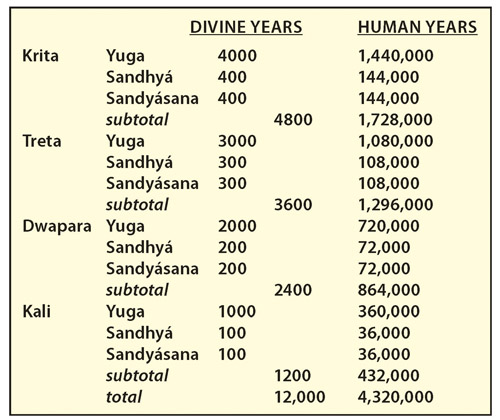
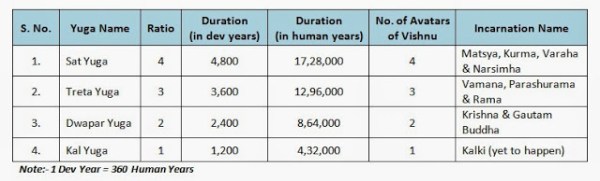
The total number of years in Kali Yuga is 432,000 years. Other Yugas have the multiple of this number.

Half baked and biased foreigners argued that Yuga cycles and the big numbers are added to Hindu scriptures later. Now this number 432,000 and the very big numbers in the Brahmanas prove them wrong

Katyayana’s count of Verses in the RV is 10,662 (minus the appendix- 10,402)

The words in the RV – 1,53,826

We have lost lot of our Vedic literature. Even during Vyasa’s time (3100 BCE+), Vedas had become very bulky and unmanageable. So he divided it into four (Rik, Yajur, Sama and Atharvana) and gave the responsibility of teaching it to the future generations by the word of mouth. It is great wonder that tradition has been maintained until today. Brahmins deserve great admiration for doing this wonderful task.

Even with all the google, internet and computers in our hands,we find it difficult to analyse all the 20,000 plus mantras in the four Vedas, leave alone the very huge Brahmana literature.

Let us salute the great Vedic Seers and the Brahmins

.

-Subham–


Asuras and Rakshasas: Foreigners’ Interpretation!! (Post no.4309)

Written by London Swaminathan


Date:17 October 2017


Time uploaded in London- 10-36 am


Post No. 4309

Pictures shown here are taken from various sources such as Facebook friends, Books, Google and newspapers; thanks.


Foreigners who came to rule India and destroy Hinduism spread a big lie that Asuras and Rakshasas were aborigines and they opposed the invaders because they tried to encroach their lands. But any Hindu can see this is nonsense from the following facts:


1.The Brahmana literature and the epic literature clearly say that the ASURAS and DEVAS were all born to the same parents.

2.The ‘Da Da Da’ Upanishad story clearly show that they went to the same gods to get advice.

Da……………Da……………Da Story – Tamil and Vedas
Da……………Da……………Da Story

19 Feb 2014 – Da….Da: The Thunder Said”- is the most popular story in the Upanishads. Most of you know it already. In our own times, Kanchi Paramacharya …


3.Ravana and other Rakshas were great Siva devotees/Bhaktas. They got boons from Brahma or Siva.

  1. Krishna’s son Pradyumna married a Rakshasa girl; Arjuna married a Rakshasa girl; Bhima married Hidimba, a Rakshasa woman.


  1. From Pasmasura to xyz everyone prayed, and did the penance in the same way.
  2. Even in the churning of the ocean anecdote they were also called to churn the ocean
  3. In the Rig Veda gods Agni, Varuna and Indra were called Asuras. Then it meant Supreme spirit and person of great strength. Later they denoted exactly opposite meaning.

But why did the Devas fight against the Asuras? Because they were immoral, lawless criminals. Like we have filled all our jails with criminals, Devas punished all the criminals. Dasyus were described as Dravidians by cunning, divisive foreigners, but second century BCE poet Kalidasa used it for thieves.

Dasyus, Asuras and Rakshas were born to same parents, but they did not care for the law or rule of the land. Like we have murderers, rapists robbers, thieves, money launderers, cheats, frauds in our society, Vedic society had Asuras, Rakshasas and Dasyus. They raided the civilised community in the night time and killed the people, carried their women and cattle. They obstructed the Yagas and Yajnas. Throughout Hindu literature they were described as cannibals. They ate human beings like the non vegetarians eat chicken and mutton. This is a big difference between the Devas and Rakshasas. All these things are crystal clear in Mahabharata, Ramayana and Brahmana literature.


Foreigners knew that majority of the Hindus don’t read the Hindu scriptures and so they easily misled the laymen. Hindu scriptures are huge in volume, incomparable with any religious literature in the world. And the wonder of the wonders, all the Brahmanas and Vedic samhitas were written before the old testament of the Bible, Tamil literature, Greek literature and latin literature.


Since Muslims ruled India for 700 years and Christians ruled for 300 years, intellectuals kept quiet or their voice was not heard by many. Foreign “scholars” were paid coolies and they had to support the government or their pay masters. There is a proof for this. No where in the world so many people were studying another religion just to criticize it. If there are equal number of scholars studying and critically analysing another holy book then we may consider them ‘scholars’.


Now we shall look at the actual proof from our literature which no foreigner told us:-

Rakshas were called night walkers; no honest person  or a warrior will attack anyone in the night. Only cowards or criminals do it.

They were described as taking different forms or shapes during the attacks. That means they wore masks or came in different disguises. No honest person would do it.

Born from Prajapati!


According to Taittiriya Brahmana, the breath (asu) of Prajapati became alive and with that breath he created the Asuras. Satapata Brahmana also says that Asuras were created from the lower breath of Prajapati.

In another part of the same book, it is said that Prajapati became pregnant and he created the Asuras from his abdomen.

Taittiria Aranyaka says that Prajapati created Gods, Men, Fathers, Gandharvas and Apsarasses from water and that the Asuras, Rakshasas, Pisachas sprang from the drops which were split.

Manu says they were created by Prajapati.

Puranas says that Asuras were created from the groin of Brahmaa/Prajapati.

The word Asura has been used for long as a general name of the ‘enemies of the gods’, including the Daityas and Danavas and other descendants of Kasyapa, but not including the Rakshasas, who descended from Pulastya. Both of them were Brahmins and Vedic seers!

Asura has another explanation; ‘a’ is taken as the negative prefix, and a+sura signifies ‘not a god’; sura means god.

Another meaning for Asura is those who are not fond of Sura (liquor). There are over 40 theories about their origin and meaning.

RAKSHASAS

Goblins or evil spirits are called Rakshas. There are categories in it: Yakshas, not so bad, and Danavas/Rakshas and Pisachas, who occupy crematoriums and cemeteries. Chief of the Rakshas was Ravana, who descended from Pulastya Maharishi.

There are more explanations:

Vishnu Purana says that they were descendants of Kashyapa Maharishi and Khasa, daughter of Daksha, through their son Rakshas.


Ramayana says they were created by Brahma, who were appointed as the guardians of water .Raksha means ‘protect’ in Sanskrit. According to Ramayana they were in different forms and shapes, most of them very crude.


Rakshasas had many epithets

Hanushas= killers or hurters

Ishti pachas= stealers of offerings

Sandhya balas= strong in twilight

Naktan charas, nicicharas= night walkers

Kiilaalapas, rakta pas= blood drinkers

Dandasukas = biters

Malina- mukhas = black faced

Karburaas=  users of rude words


— SUBHAM—


Marriage between Heaven and Earth (Post No.4301)

Written by London Swaminathan


Date:14 October 2017


Time uploaded in London- 18-59


Post No. 4301

Pictures shown here are taken from various sources such as Facebook friends, Books, Google and newspapers; thanks.


The Heaven Father and the Earth Mother are two of the ancient deities in the Rig Veda. They are revered as primitive pair from whom the rest of the Vedic gods sprung. They are described in the Vedas as ‘wise, great and energetic’. They ‘promote happiness and lavish gifts upon their worshippers’. Their marriage is a most poetic conception. In the Aitareya Brahmana (4-27) the marriage of Heaven and Earth is mentioned:

“The gods then brought the two, Heaven and Earth together, and when they came together they performed a wedding of the gods.”

“The Vedas set before us a world of rich and vigorous life, full of joyous fighting men”, says Huxley.

“These two worlds were once joined (subsequently) they separated. (After their separation) There fell neither rain, nor was sunshine.

This marriage of heaven and earth were found in many cultures. They have borrowed it from the Vedic Hindus. The Greeks addressed the Earth, ‘as the Mother of the gods and starry heavens’.

In the 41st fragment of Aezchylus (from the Danaides), Aphrodite is introduced as saying, “The pure heaven loves to inflict upon earth an amorous blow; and desire seizes the Earth to obtain the nuptial union. Rain falling from the moist Heaven impregnates the Earth, who brings forth for mortals the food of sheep, the sustenance of Demeter (Deva Mata= demeter). The verdure of the woods also is perfected by the showers preceding from this marriage. Of all these things I (Aphrodite) am in part of the cause”

French author Albert Reville says, that “the marriage of Heaven and Earth form the foundation of hundred mythologies”.


Max Muller Bluff

Max Muller and Wilkins spread wrong information that Dyaus (Sky father) and Prithvi (Mother Earth) as ‘the most ancient deities of the Aryans and they were replaced by Indra and Agni later’. But there is no proof for it. All the references to marriage of Dyaus (sky) with Prthvi (earth) come from later part of the Vedas. Greeks borrowed it from us and pronounced it as Zeus.


Moreover, in the early Mandalas Agni and Indra are praised more than the Dyaus and Prithvi. The early Suktas divided it into three Sky, Atmosphere and Earth. Even the parents of Earth and Heaven (Pusan) are mentioned. So his concocted story that the Earth and the Heaven are ‘the most ancient deities’ has no basis.


If one idiot says something 1000 idiots repeat it without verifying the fact. With very great enthusiasm, he identified himself with those ‘’marching Aryans’’ who entered India .

Dyaus in Rig Veda :

“At the festivals ( I worship) with offerings, and celebrate the praises of Heaven and Earth, the promoters of righteousness, the great, the wise, the energetic, who, having gods for their offspring, thus lavish with the gods the choicest blessings in consequence of our hymn”

“With my invocations I adore the thought of beneficent Father, and that mighty inherent power of the mother. The prolific parents have made all creatures, and through their favours (have conferred) wide immortality on their offspring”—Rig Veda 1-159-1


One must be careful about English translation of the Vedas. No two foreign authors agree on the meanings of the Vedic mantras. And these people add ‘Sayana said’, ‘Sayana thinks’, ‘Sayana believed ‘and then add “Aryan” as a race. Sayana never used it in that sense. He used it like the ancient Tamils used Arya in Sangam literature and Greatest Tamil poet Bharati used Arya throughout his poems; in short, no racial connotation! They meant ‘cultured’, ‘who believed God’. Even Buddha used Arya (Ajja= ayya= ayyar in Tamil) in the right sense. Those who use English translations of the foreign authors must be very careful; there are over 40 interpretations on the word Asura and origin of Asuras!!!

Dyaus Pita | Tamil and Vedas

https://tamilandvedas.com/tag/dyaus-pita/

In the hymns there are various speculations about the origin of Dyaus and Prithvi. A Perplexed poet enquires, “Which of these was the first, and which the last?


–Subham–