KASHMIR SAINT LALLA AGAIN!

SOMETIME AGO I POSTED ONE ARTICLE ABOUT SAIVITE SAINT LALLESWARI OF KASHMIR. HERE IS ANOTHER INFORMATIVE ARTICLE.

 Lal Ded: Her Life and Works

July 21, 2025

Dr Shiben Krishen Raina

FROM THE HINDU POST.

The people of Kashmir revere Lal Ded under various names—Laleshwari, Lalyogeshwari, Lala, Lal, and Lalarifa. Scholars have long debated over the precise period of her birth. On analyzing these various views, the year 1335 AD appears to be the most plausible date for her birth.

It is likely that Lal Ded’s birth name was different. In Kashmiri, Lal means ‘belly,’ and Ded is an honorific term used for revered elderly women. It is said she often roamed half-naked, her large belly covering her private parts. Pt. Gopi Nath Raina, in his book Lal Vakya (1920) and The Word of Lalla Prophetss (1929), suggests her birth name was Padmavati.

It is also believed that during her lifetime, Lal Ded interacted with many prominent figures, such as the then prince Shihabuddin, saints like Syed Jalaluddin Bukhari, Syed Hussain Samanani, and Syed Ali Hamadani. These events are recorded around the Hijri years 748, 773, and 781 respectively, indicating that she was not only born before these years but was mature and enlightened by then.

Like her birth, Lal Ded’s death is also shrouded in uncertainty. It is only said that when she passed away, her body shone like pure gold. This event is believed to have occurred near Bijbehara, close to Anantnag (Islamabad). There is no reliable record regarding the final rites or cremation of her mortal remains. Legend has it that the saint-poet Sheikh Noor-ud-din Wali, born in 1376 CE, once suckled her mother’s breast after being reprimanded by Lal Ded, implying she lived at least till 1376 AD.

Lal Ded was born in Simpura village near Pampore, about nine miles from Srinagar, into a Brahmin farming family. According to the then prevalent customs, she was married in childhood to a reputed Brahmin family in Pampore. Her husband’s name is recorded as Sonpandit. Even from her young age, this proto-poetess harbored a rebellious spirit toward worldly bonds, which ultimately found expression in her deeply emotional and philosophical Vakhs (verses). She received her early education from her family guru, Shri Siddhamol, who introduced her to the secrets of religion, philosophy, knowledge, and yoga, thereby earning the reverential status of a Guru.

When Sonpandit noticed his wife growing increasingly detached, he requested Siddhamol to guide her towards worldly engagement. During a visit to her house, a profound discussion emerged among Sonpandit, Siddhamol, and Lal Ded. The topics were:

1. What is the greatest light?

2. What is the most sacred pilgrimage?

3. Who is the most important relative?

4. What is the most delightful thing in life?

Sonpandit answered: sunlight, the Ganges, a brother, and a wife.

Siddhamol offered: sight, knees (as the body’s journeying tool), pocket (symbolizing wealth), and health.Lal Ded responded: self-realization is the greatest light, curiosity is the holiest pilgrimage, God is the truest relative, and fear of God is the greatest delight.Both  were stunned by the profundity of her response.

Even in childhood, Lal Ded displayed extraordinary traits. She often sat alone in deep thought, never drawn by the attractions of the world—so much so that her peers mocked her for her eccentricity (Kashmiri Zabaan aur Shayari, Vol. 2, p.113).

After marriage, she endured the bitterness and tyranny of her mother-in-law with great patience. Once, she went to fetch water. Her mother-in-law incited her son to spy on her. As Sonpandit approached with a stick, Lal Ded was returning with a water-pitcher on her shoulder. He struck the pitcher, which shattered, but the water remained suspended as if supported by a divine force. She used this water to fill utensils at home, and the leftover water she threw from the window created a pond that still exists, known as Lal Nag.

On another occasion, during a feast at her in-law’s house, her friends teased her that she would enjoy delicious food today. Lal Ded humbly replied, “Whether sweets or savory dishes are cooked, I am fated to eat stones.” Her cruel mother-in-law would place a stone beneath a layer of rice on her plate. This incident led to a local proverb in Kashmir: “Lali neelvath chali na janah”—“ Lal cannot change her fate of stones.”

By now, her spiritual insight had transcended the limitations of the physical world. She began wandering in search of inner truth, even discarding her clothes. She danced, sang, and roamed freely in bliss. She considered only those men to be real who feared God—and such men, she said, were rare. Hence, she felt no shame being naked before others. When she once spotted the great Sufi saint Syed Hamadani approaching, she tried to cover herself. Hamdani asked why she was ashamed now. Lal Ded replied, “O friend of God, until now, only women passed by. You are the first man with divine vision.”

On another occasion, she ran to a shopkeeper requesting clothes to cover herself, saying, “The saint who is coming recognizes me as I recognize him.” As Saint Hamadani arrived, she jumped into a nearby bakery’s tandoor. When the saint called out, “O Lalla, come out and see who is here,” she emerged clad in radiant, divine garments. This incident inspired a Kashmiri saying: “Aayi vaanas te gayi kandaras”—“She came to the grocer but went to the baker.”

Lal Ded had no children, a bond from which nature freed her. She herself said: .“Na pyaayas, na zaayas, na kheayam hend taney shonth”(Neither did I give birth nor partake in maternal food).

The hardships she faced in her household awakened in her a new vision of life. Her spiritual realizations blossomed into poetic expressions known as Vakhs, just like Kabir, who never used pen and paper. These verses were sung orally before being documented. Dr. Grierson, with the help of Pandit Mukund Ram Shastri, compiled 106 Vakhs, published in 1920 in Lalvakyaani by the Royal Asiatic Society, London. R.C. Temple further studied her sayings in The Word of Lalla, published by Cambridge University Press in 1924. Rajanak Bhaskaracharya translated 60 of her Vakhs into Sanskrit.

Many other scholars, such as Sarvanand Charagi, Anand Kaul Bamzai, Ramju Kalla, Jia Lal Kaul Jalali, Gopi Nath Raina, Prof. Jia Lal Kaul, R.K. Wanchoo, and Nand Lal Talib, have contributed significantly to preserving and translating her work. Sarvanand Charagi translated 100 Vakhs into Hindi under Kalam-e-Lalarifa, Anand Kaul Bamzai 75, and Ramju Kalla published 146 Vakhs in Amritvani. Renowned writer/translator Dr.Shiben Krishen Raina collected around 180 Vakhas and published them in a collection printed by Bhuvan Vani Trust Lucknow(1983)

Lal Ded’s  Vakhs are mostly in free verse with rhythmic cadence. Her philosophical insights reflect influences of Shaivism, Vedanta, and Sufism. When she emerged, Islam had already entered Kashmir as a theological system. Amidst religious dogmatism and socio-political unrest, Lal Ded rose above sectarian divisions and voiced the universal truth in the language of the common people. Her mystic vision was deeply personal: “My guru whispered a secret—turn away from the outer and seek within. Since then, my soul has danced naked.”

She had attained a state beyond ego and duality. She saw no difference between self and other, between honor and insult. Her realization of the Self as Shiva was supreme:

“Let people insult or mock me—

I shall never harbor ill in my heart.

When my Shiva has showered grace,

Why should I fear what others think?”

Shaken by social contradictions, her inner being was stirred:

“I saw a wise man dying of hunger,

His body withered like autumn leaves.

I saw a fool beating for stealing food,

And my soul, disturbed, walked away.”

Her understanding of Advaita (non-dualism) matched that of Shankara. She found God not in temples or rituals but within herself:

“I searched for Him in the world—

Day and night, I wandered.

At last, I found Him in my own home—

And from that day, my true path began.”

She opposed religious hypocrisy and criticized both Hindus and Muslims who strayed from true piety. For Lal Ded, religion meant purity of heart.

“Your face is beautiful; your heart is like stone—

Where is the essence in that?

You read and write till your hands are sore—

But you have not removed the darkness within.”

Lal Ded’s poetry is a blend of philosophical depth, poetic beauty, and spiritual universality. Her expressions use metaphor, paradox, suggestion, and symbolic imagery rooted in everyday life. Most of her Vakhs evoke the tranquil Shanta rasa (aesthetic mood of peace).

Lal Ded’s language marks a milestone in Kashmiri literary history. Though some consider Shitikantha’s Mahanaya Prakash the first Kashmiri text, its language is far less Kashmiri than that of Lal Ded’s verses. Her language is Sanskrit-rooted but also contains Persian and Arabic elements. She used Sanskrit words in original or slightly modified forms: prakash, teerth, anugrah, karm, moorkh, manushya, shiv, .updesh., .geeta., .gyaan., etc. Persian-Arabic words include. sahib.,. dil., .jigar., .mushk., .gul., .bagh., .kalma., .shikar., etc.

There is no significant shrine, memorial, or temple dedicated to Lal Ded in Kashmir. Perhaps she transcended such earthly symbols. She came as a divine emissary and merged silently with the Infinite—beyond life and death:

“For me, birth and death are alike.

No one dies for me—

Nor shall I die for anyone.”.

Lal Ded ranks among the greatest spiritual luminaries of the world. She had attained enlightenment during her lifetime and entered the abode of God. For her, life held purpose and death lost its dread. She loved God wholeheartedly and found Him within herself.

Kashmir’s great Sufi saint Sheikh Noor-ud-din Wali, also known as Nund Rishi, offered the most fitting tribute to Lal Ded:

“That Lalla of Padmapore drank the nectar divine—

She was our incarnation.

O Lord! May I be blessed as she was!”

–SUBHAM–

TAGS- Lalleswari, Saint Lalla, Kashmir, Saivite, Hindu Post.
IS THERE POETRY OR PHILOSOPHY IN THE RIG VEDA? (Post No.4329)


Written by London Swaminathan


Date: 23 October 2017


Time uploaded in London- 20–15


Post No. 4329

Pictures shown here are taken from various sources such as Facebook friends, Books, Google and newspapers; thanks.

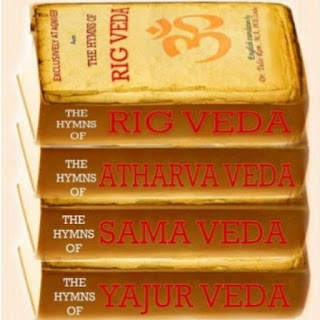
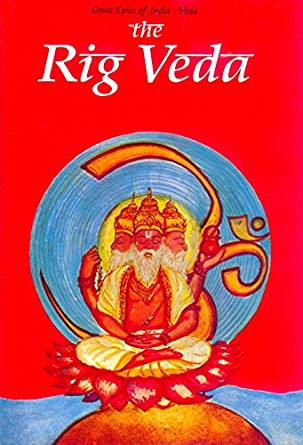
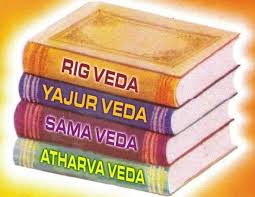
We know that the Rig Veda is the oldest religious book in the world; we know that Rig Veda is the first anthology in the world; we know that Rig Veda gives a list of 400 plus poets who were here 6000 years ago. It is amazing to see such a long list of poets several thousand years ago; No language has such a long list of firsts in the modern world.


Foreigners, particularly Max Muller and Marxists, dubbed them silly, ‘mostly childish’ with one or two rare gems here and there. They also said you cannot see high philosophy in it. I give below some excerpts of lectures delivered by Dr Ghate in University of Bombay 100 years ago:–


“Do you, young readers, come to the Rig Veda (RV) with the hope of finding in it the most sublime poetry? Then I am not surprised at the disappointment which would be in store for you.

You must not expect to find in the RV the smooth and melodious verses of KALIDASA,

nor the deep and heart-rending emotions of BHAVABUTI,

nor the polished and jingling music of DANDIN,

nor the elaborate and highly finished art of MAGHA,

nor the deep significance of BHARAVI,

nor the bewilderingly complex phrases of BANA.

All the same it cannot be denied that the hymns of the RV, at least some of them are such as goddess of poetry would be proud of.


The freshness and beautiful imagery which characterize the hymns addressed to Ushas (aurora), the heroic simplicity of some of the hymns addressed to Indra (the Thundering Bull), the homeliness which pervades some of the hymns to Agni, cannot but appeal to a sympathetic and appreciative reader. Though the RV as a book of poetry cannot at all stand comparison with the best specimens of Sanskrit classical poetry, still it has something indescribable in it which cannot be slightly passed over”

MY COMMENTS:-

Rig Veda is not a ‘poetry book’, i.e. nobody praised it as a poetry book. It is valued because it is a book of hymns. Moreover, 5000 or 6000 years ago, the world has no civilisation at all. Egypt, Babylonia, Mayan, Chinese, Greek civilisations came after the RV, if we go by the modern date of RV. Astronomically Tilak and Jacobi placed it in 4500 BCE and latest Saraswati River Research and NASA satellite images place RV before Indus Valley Civilization, i.e. 2500 BCE or before. Hindus believe that Vyasa divided the Vedas into four around 3102 BCE. So when there is no civilization in any part of the world we see 400 plus poets who sang religious songs on the banks of the mighty, ocean like River Sarswati. We even know they did not ‘compose’ but they gave us what they ‘heard’ (Sruti in Sanskrit, Kelvi in Tamil).


Is there Philosophy before the Upanishads?

I will give some excerpts from Bombay University lecture by Dr Ghate:

“So far I have spoken about the mythology of the Rig Veda (RV). Before concluding, I should like to make few remarks on the philosophy of the RV:-

“India is often spoken as the cradle of philosophy. Nowhere are made so bold and daring attempts to solve the riddle of the universes as in India, where there lived kings like JANAKA and AJATASATRU, Brahmins like YAAJNAVALKYA and NACHIKETAS, philosophers as SANKARA and KUMARILA. So the student of the RV will naturally be curious to know what philosophy is taught in the RV. He has, however to be warned, that no cut  and dry system is taught here, for which he has to go to SUTRAS. Nor do philosophic speculations form the main burden of the RV as they do in the case of the UPANISHADS.


However, the seeds of the Upanishad thought are seen scattered about here and there in the Samhita (Hymns) of the RV. Though the general religion of the RV refers to a plurality of nature gods, still the tendency to monism is distinctly in some of the hymns. Just as the Rishis (seers) thought that the several natural phenomena had some divine forces behind them which were personified into so many gods, in the same way they advanced one step further and came to think that all these were the aspects of one and the same all-pervading divine force which manifested itself in different ways. Thus there was a transition from many gods to one god. Thus in 1-164-46, we have, “They call it Indra, Mitra, Varuna and Agni or the heavenly Garutmath (the sun). The sages call the One Being in many ways; they call it Agni, Yama and Matariswan. Here the several Vedic gods are stated to be one being. This whole hymn (1-164) is nothing but a collection of fifty verses poetry, all of them except one, being riddles whose answers are not given. “The subjects of these riddles are cosmic, that is, pertaining to the nature phenomena of the universe: mythological, that is, referring to the accepted legends about the god; psychological that is, pertaining to the human organs and sensations of finally crude and tentative philosophy or theosophy. Heaven and Earth, Sun and Moon, air, clouds and rain; the course of the sun, the year, the seasons, months days and nights; human voice, self-consciousness of life and death; the origin of the first creature and the originator of the universe – such are the abrupt and bold themes” (from Bloomsfield).


The idea that the dead forefathers are dwelling in another world, in the company of gods, where we ourselves to go after death, seem to be expressed or implied in several places.

Thus, we have in 1-91-1, “under your guidance, O Indra, our wise fathers received their share of treasurers among the gods;”

so also 1-125-5. The thirst for life haunts the mind of the Rishis and he leads himself to believe that the life after death in the world of the gods and fathers, is eternal, at least as compared with the life on this earth. Thus in 5-55-4 and 5-63-2 the life is called AMRUTATVA or IMMORTALITY.


Questions concerning the beginning and origin of all things were asked and answered by the Vedic Rishis. Thus, in the hymn 10-121 Hiranyagarbha (golden egg) is described as existing in the beginning of the creation, the sole Lord of beings, supporting heaven and earth.


In 10-90 hymn popularly known as Purushasukta, the idea that the whole world is one being, the Viratpurusha, who having pervaded the world from all sides, still remained over and above it, is dealt with.


In the hymn 10-82, waters are spoken of as being the first substance or prime cause.


In hymn 10-125, Vak (speech) is represented as the companion and upholder of the gods and as the foundation of all religious activity and its attendant boons.


Hymn 10-129 is a typical hymn in this connection. It is called the Creation hymn. Deussen says of this hymn: “In its noble simplicity, in the loftiness of its philosophic vision, it is possibly the most admirable bit of philosophy of olden times… No translation can ever do justice to the beauty of the original”

The avowed purpose of all philosophy is to account for the presence of the world and its contents as something which is not self-evident, and needs to be explained beyond the point of mere individual experience, or analysis through empirical knowledge. The creation hymn performs this act not without some unsteadiness and with petulance due to scepticism. In putting forth a fundamental principle without personality it does not fall far behind the best thought of later times inside or outside India.”.

One thing, however, must be noted and it is that pessimism and metempsychosis, the two main threads which are oven in everything Indian, and which are he distinguishing traits thereof, are wanting in the early philosophy of the Vedas.”


MY COMMENTS:

Modern translations and interpretations give more information on the philosophy of the Vedas. Traditionalists believe that all the philosophical of ancient India existed from the very beginning. They called it the ‘Conclusions of the Vedas’ Vedanta (literally End of Vedas). Dr Ghate’s view was the one held by foregners.


Source: Ghate’s Lectures on Rig Veda, Revised and Enlarged by Dr V S Suktankar, Oriental Book Agency, Poona 2, 1966 (First Edition 1915)


–Subham–


Forty-Six Hindu Discoveries and Indianization of Greek Philosophy (Post No.3837)

Compiled by London swaminathan

Date: 21 APRIL 2017

Time uploaded in London:- 10-52 am

Post No. 3837

Pictures are taken from various sources; thanks.

contact; swami_48@yahoo.com


Nowadays there are lot of websites and blogs to explain the scientific basis of Hindu rituals and beliefs. I have also written hundreds of articles in this blog. But I was surprised to read an article by Dr Balakrishna M.A., Ph.D. in the Dr Modi Memorial Volume published in 1930.Dr Balakrishna listed at least 46 discoveries of Hindu forefathers. Here is a summary of his nine page article written in 1930 or earlier.


1.The Indo- Aryans, whether they constitute the oldest race on this planet or not, surely developed a great civilization at some unknown antiquity. Theirs might be called the earliest civilization in the known annals of mankind.


2.Several scholars have shown numerous evidences of the Indian influence on Greek thought, literature, customs and political institutions, but others vigorously reject every idea of the Indianization of the Hellenistic culture


3.The speculations of the Vedic and Upanishadic writers are antecedent to all attempts of the Greek mind to dive deep into the mysteries of the world around. The similarity of Zoroastrianism to the Atharvan (Vedic) religion, the worship of the four Vedic Gods such as Agni, Mitra, Indra Asvins in Assyria, and the Greek tradition of the travel of Thales, Pythagoras, Empedocles, Anaxagoras, Democritus and other philosophers into the Oriental countries, and of their acquaintance with Arabs, Chaldeans, Hebrews, Galatians and Indians, in a word, with all the inspired people of the East – all these should lead us to the conclusion that the Greek mind was more or less influenced by Indian Philosophy.

Indian Roots of Pythagoreanism


The close similarity of Pythagoreanism with the Hindu philosophy in the worship of god as Tatragmation; the doctrine of five elements, the immortality and transmigration of souls, tripartite soul, the communion with gods, the miraculous powers of the soul, and of the esoteric circle of the initiated; the belief of Pythagoreans in periodic cycle and the kinship of all living creatures, their love of mysticism, asceticism and spiritualism; their pantheistic tendencies; their belief in magic; abstinence from animal diet except when the animals were sacrificed to the gods; the regular performance of Homa; the Pythagorean theorem in particular, and, in general, mathematics, medicine and music, these analogies should lead one to the same conclusion.


Hence Dr Grabe positively asserts that there seems to be no doubt abaout the dependence of Pythagoras upon Indian philosophy and science; and all the more so, as the Greeks themselves considered his doctrines as foreign.


Indian Origin of Orphicism


Again, the cult of Orphicism with its Hindu doctrines of ecstacy, asceticism, soul-culture and abstension from animal food, its systems of purification and sacraments for the redemption of the soul, its belief in a written revelation, its organisation of initiated ‘communities’ or religious fraternities, its faith I the happier lot of the purified and the initiated and, lastly, its creed of the ‘wheel of birth’ of the transmigration of souls or the reincarnation, rather imprisonment, of souls in animal and vegetable forms – these facts show at least some influence of Indian philosophy on the Greek mind.


Similar Systems of Indian and Greek Philosophy


The Greek theories of pantheism, hedonism and mysticism are profoundly similar to those enunciated in India. The identity of divine pantheons, of religious beliefs and practises, especially of language is no less perplexing. The Indian and Greek systems of philosophy built upon these bases have remarkable resemblance.


The teachings of Xenophanes, Parmendies and other Eleatics seem to be parodies of the Upanishadic verses.

The views of Heraclitus, Anaximander, Empedocles, Democritus, Epicurus, Plato and Neo-Platonists, present many striking analogies with the Sankhyan doctrine.

Hindu Discoveries


The Hindus were the earliest pre-cursors of the European scientists and philosophers in anticipating and formulating important theories bearing directly or indirectly upon the central doctrine of evolution. The list of such discoveries will show that their scientific contributions were not insignificant.

  1. The Atomic Theory.
  2. Ether as the prima materia.
  3. The Ether Theory of Light.
  4. The Law of Evolution
  5. Spontaneous Evolution of the Cosmos
  6. The Law of Nihil ex nihilo
  7. Nebular Theory.
  8. Emanation Theory.
  9. The Law of the Constancy of Matter,
  10. The Law of the Conservation of Energy.
  11. The Theory of the Dematerialization of Matter.
  12. The Theory of the Unification of Energy.
  13. The doctrine of the unity and Convertibility of human energy and natural forces.
  14. The Procreatrix of the Cosmos is energy and not Matter. 15. Matter is a form of Energy.
  15. The Theory of Abiogenesis.
  16. The Theory of Biogenesis.
  17. Soul-a physiological product,
  18. Mind a -material evolution.
  19. Consciousness–a material evolution.
  20. Sense organs are phenomenal.
  21. Physical origin of life.
  22. The Theory of Epigenesis.
  23. The theory of cosmozoa.
  24. Corpuscular theory.
  25. Life and Consciousness in plants.
  26. Fertilization of plants by insects.

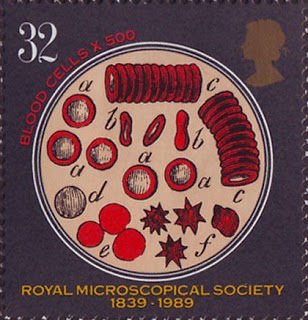
28, Circulation of blood.

  1. circulation of the sap in trees.
  2. Cell Theory,
  3. The theory of the control of sex.
  4. Laws of Eugenics
  5. Laws of Heredity.
  6. Effects of exogamy and endogamy.

35, Physical interpretation of character.

  1. Relation of food and mind.
  2. Theories of the origin of colour.
  3. Factors of the variation of species
  4. Theory of progressive social evolution.
  5. Theory of social retrogression.
  6. The law of the survival of the fittest.
  7. The state as a necessary evil.
  8. The state as a necessary good.
  9. The state, a divine institution
  10. The Hobbesian theory of warfare.
  11. Theory of Social Contract.

Some of these theories can be traced in one form or another in Greek philosophy. Hence there are striking parallelisms in all the important spheres of thought of the Indians and Hellenes. This profound similarity of Greek and Indian speculations on cosmogony and other problems of life, has led many to the conclusion that Greek thought is the inspired child of Indian philosophy.

–Subham–