
By S.Swaminathan
(Ancient India gave us the largest story book in the world! That too in poetry, not prose.22,000 verses, that means 44,000 lines. Even if we do a rough calculation at the rate of five words per line it would add up to 220,000 words in Sanskrit! And it is not about religion!!)
Harry Potter is a series of seven fantasy novels written by the British author J. K. Rowling. The books chronicle the adventures of a wizard, Harry Potter, and his friends Ronald Weasley and Hermione Granger, all of whom are students at Hogwarts School of Witchcraft and Wizardry.
Since the release of the first novel Harry Potter and the Philosopher’s Stone on 30 June 1997, the books have gained immense popularity, critical acclaim and commercial success worldwide. Eight films have been made out of seven books. They were all box office hits.
As of June 2011, the book series has sold about 450 million copies, making it the best-selling books series in history and has been translated into 67 languages, and the last four books consecutively set records as the fastest-selling books in history.
Rowling has led a “rags to riches” life story, in which she progressed from living on social security to multi-millionaire status within five years. As of March 2011, when its latest world billionaires list was published, Forbes estimated Rowling’s net worth to be US$1 billion.
(Above matter about Harry Potter is lifted from Wikipedia)
Indians are very familiar with these types of story plots and themes from their younger days. They would have read them in Chandamama monthly magazines (Ambulimama in Tamil). But Ms Rowling’s luck and the way she wrote it in English brought her billions of pounds.
India is the country which supplied the story themes to the world from the earliest days. Even foreign authors acknowledge that Aesop got the ideas from the Panchatantra stories and the 1001 Arabian Nights got the ideas from Brhat Katha/ Katha Sarit Sagara, Giovanni Boccaccio’s The Decameron got the idea from the Dasakumara Charitha. La Fontaine’s Fables and The Canterbury Stories got the ideas from the Panchatantra. Upanishads simple parables served as models for Jesus’ parables in the Bible.
(Please read S.Swaminathan’s other article How Jonathan Swift got the idea for his Gulliver’s Travels in “Valakhilyas-60,000 thumb sized ascetics protecting humanity”)
Whether it is ghost or animals, Gods or Angels, mountains or rivers all the themes went from India. Take any modern short story. You will find something similar in the old Sanskrit literature.
I will give you some facts instead of making sweeping statements:
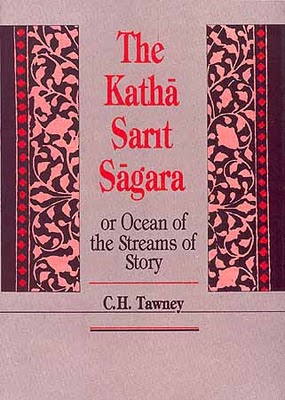
One thousand years ago India produced the largest story book in the world. The Katha Sarit Sagara (Ocean of Stories) written by Soma deva contained over 400 stories. It was written in Sanskrit in 11th century CE (AD)
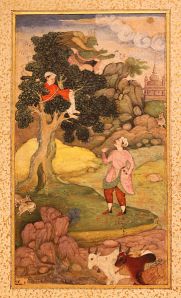
Somadeva was the court poet of king Ananta of Kashmir. He wrote it to amuse queen Suryavaty. It was translated from Brhatkatha. The earliest and largest collection of stories, perhaps in the world contains 18 books divided into 124 tarangas/ waves with a total of 22000 verses.
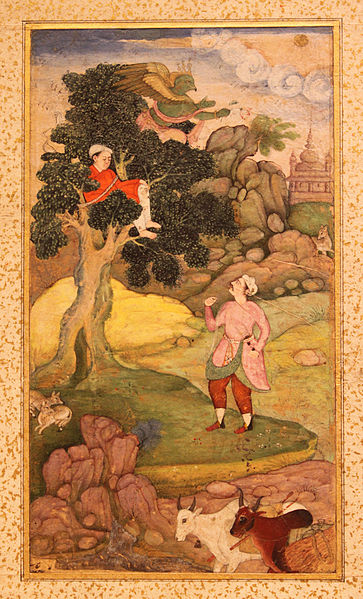
Tales of wondrous maidens, fearless lovers, kings and cities, statecraft and intrigues, magic and spells, treachery, trickery, war, vampires, devils, ascetics, gamblers and beggars.
Though Jataka Tales (Second Century BC) has 550 stories in Pali language they were all adapted into Buddhist literature from various sources to say that Buddha had 550 previous incarnations as animals and human beings. It is not secular literature. A lot of secular matter was copied from Sanskrit sources and converted into religious literature. Even Ramayana and Mahabharata characters were turned into Buddha’s incarnations.
The Panchatantra Stories written by Vishnusarman, were the earliest Sanskrit stories that travelled to different parts of the world. By fifth century it reached four corners of the earth. Divided into five chapters it has woven stories within story. It has more than 81 stories.
Hitopadesa followed Panchatantra in style and contents.
Vedala Pancha Vimsati –25 stories (Twenty Five Tales of the Ghost/Vetala)
Dasa Kumara Charitham –10 stories (Ten Stories of Dasakumara)
Simhasana Dwattrimsika–32 stories (Thirty Two Stories of the Lion Throne)
Suka Sapatati–70 stories (Seventy Stories of a parrot)
The number of stories given indicate only main stories. We see lot of stories within stories. The actual number will be many more hundreds.
Jataka Tales (in Pali language) –550 stories (Incarnations of Buddha)
Hundreds of stories and anecdotes are in Mahabharata
Hundreds of Stories are in The Vedas and Parables in Upanishads.
In fact the world’s oldest short stories are from India. Stories such as Gilgamesh in Sumerian literature are of religious type.
The earliest of Sanskrit stories has moral themes. But later writings such as Katha saritsagara haven’t got such moral teachings. They were written just for pleasure. Katha saritsagara is unique and it was written in verse.
(Article was written by S.Swaminathan. Contact: swami_48@yahoo.com or swaminathan.santanam@gmail.com )
*****************







Secrets of Vishnu Sahasranama
By S Swaminathan
Vishnu Sahasranama is the most popular sahasranama (sahasranama means 1000 names of the Lord) in India. South Indians don’t know much about Sri Ramcharithamanas or Hanuman Chalisa of Tulsidas. North Indians don’t know much about the great Thevaram (saivaite) and Divya Prabhandham (Vaishnavaite) hymns of Tamil saints. But like Bhagavad Gita, Vishnu Sahasramnamam became popular due to the great works of Swami Chinmayananda, Acharya Vinobha Bhave, Anandamayi and other religious leaders.
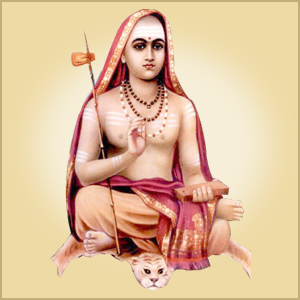
Adi Sankara was a passionate commentator. He wrote commentaries on many Hindu scriptures. When he was in Kashmir, he asked his disciple to bring one book from the book shelf to start some new work. He brought Vishnu Sahasranama. But Sankara was not happy. He sent another disciple to get a book. He also brought the same Sahasranama. When he was thinking about it, Goddess Saraswati appeared before him and asked him to go ahead with the commentary (Source for this anecdote: Anna’s commentary on Sahasranama in Tamil by Ramakrishna Mutt).
Second Anecdote
Kuthanur in Tamilnadu is famous for its ancient Saraswati temple. This is one of the rare temples for Goddess Saraswati. A boy by name Purushothaman went to Kuthanur for Vedic studies. But he was the dullest boy in the class. His father Sarangapani Dikshithar of Kumbakonam was a great scholar. This hurt him more. Being the son of a big pundit he wanted to learn at least the basics. One day a Vaishnavite saint noticed that he was very sad advised him to recite Vishnu sahasranama. Suddenly he got a big boost in his studies and went to the temple for more prayers. There Goddess Saraswati appeared as a woman and asked him to stick out his tongue to give her betel leave and supari. When he was hesitant to accept the spit from a woman’s mouth, a poet came that way and realised she was goddess Saraswati herself. He accepted her Prasad and became a great Tamil poet by name Ottakkuthan. He gave the town the name Kuthanur. Though Purushothaman did not become that famous he also studied well and became a scholar. That is why we remember him after one thousand years today.
Three Commentaries
Adi Sankara, Parasara Bhatta and Sri Madhwa wrote commentaries on it. When Bhisma was lying on the bed of arrows after the great war, Krishna asked Yudhistra to get Sahasranama from the mouth of Bhisma. It Is in the Anusasana Parva of Mahabharata. Scholars of ancient India used to recite Upanishad, Gita ,Rudram, Purushasuktam and Vishnu Sahsranama every day.
This stotra is like a cure for all sorts of problems. Anyone under the evil influence of 27 stars, 9 Grahas or 12 zodiac signs will get rid of the evil influence once one reads it.
The stotra was originally done by Sanakathi Rishis. Bhisma got it from them. It has got ancient names of gods. Some of the names like Vrsakapi, Suparna etc are from ancient Vedas. One who reads it will find lots of similarities with Bhagavad Gita. Names of all Hindu Gods are there in it. Some names have links with Indus Gods (Please read my article Vishnu seal in Indus Valley civilization).
Ayurveda books prescribed it as a medicine for diseases. Astrology books have prescribed it for Graha peetas. Dharma Sastra scriptures have prescribed it to get rid of nightmares and inauspicious signs or bad omens.
It is believed particular slokas are effective for solving particular problems. Astrologers and priests are experts in this field
(Contact for more details: swami_48@yahoo.com or Swaminathan.santanam@gmail.com ).
Posted by Tamil and Vedas on July 13, 2012
https://tamilandvedas.com/2012/07/13/secrets-of-vishnu-sahasranama/