Was Jayadratha killed by a Solar Eclipse?

By S Swaminathan

Solar Eclipse

The earliest reference to a solar eclipse occurs in the Rig Veda. Atri Maharishi speaks of the wonders of the solar eclipse (RV5-40-5). Like today’s newspaper reports, he also tells us how confused animals and birds become when the sun suddenly disappears. He must have watched a total solar eclipse. This eclipse happened in 3,928 BC according to some scholars. Later the Brahmanas give more details about the same eclipse. Panchavimsa Brahmana speaks of four different stages of an eclipse. It describes beautifully the changing colours during the eclipse. The Vedic hymns also imply that Atri maharishi knew the secret of eclipses.

In the Mahabharata there are 8 references to solar eclipses and Dr S Balakrishna of NASA did a thorough study of them with advanced computer software. When he went through the eclipse pairs i.e two eclipses happening in a 13 day interval, which the Mahabharata refers to, he matched one eclipse that happened in 2,559 BC.

References to lunar eclipses and solar eclipses are plentiful in our literature. Tamil Sangam book Purananuru also described a solar eclipse. The commentator explained how the demons tried to outsmart the devas in the episode of churning of the Ocean of Milk to get Amrita. The word used for Vishnu in this verse (Anjana Vannan) is used for Krishna as well in Tamil. So we can interpret this is a reference to the fourteenth day war in the Mahabharata.

What happened on the 13th day? Jayadratha, the king of Sindhu Desa (Indus Valley King) killed Abimanyu, son of Arjuna on the 13th day of the war. Arjuna was furious and vowed to kill Jayadratha before the sunset next day. The whole Kaurava army gave Jayadratha full protection. When the sun appeared to set, Jayadratha poked his head out to show that he was victorious. Suddenly the sun reappeared in the sky and Arjuna shot Jayadratha down. The story goes that Krishna hid the sun with his Sudarsana chakra. Actually Krishna tricked Jayadratha with the knowledge of the solar eclipse happening on that day. Arjuna’s brothers Nakulan and Sahadevan were experts in such calculations.

People were told for a long time that the war started on a new moon (Amavasya) day. Latest research by scholars with computer software shows that it started on a full moon day. Ancient people preferred full moon day for any big festivals or events. Almost all famous Hindu festivals fall on full moon day. It helps people to move around safely and easily in the evening. Mahabharata war, a Dharma Yudhdha, was fought according to strict rules. They stopped all fighting at sunset. Later both sides of the war visited their relatives on either side and helped to dress wounds like the modern day Red Cross. Dr B N Narhari Achar, Department of Physics, Memphis University, USA also supported the theory of war starting on a full moon day.

Now if we look at the Purananuru verse 174 sung by Marokkaththu Nappasalaiyaar and the commentary, it matches well with the 14th day of war where Anjana Vannan alias Krishna played a major role with his Sudarsana Chakra – the solar eclipse. Ancients Tamils had full knowledge of the epics. In fact they have given three or four episodes in their 2000 year old books which were not even found in the Valmiki Ramayana or Vyasa Mahabharata.

Follow me on Twitter: @Swami_48

Tulabharam: Indian-Sumerian connection

By S Swaminathan


Sibi in Borobudur (Indonesia)

Tulabharam is a Hindu ritual that has been practised from Dwapara Yuga. Tulabharam means a person weighing himself or herself in a balance and pay in equal weight of gold, fruits or grains to God when one’s prayers are fulfilled. Temples in Tirupati, Guruvayur, Dwaraka, Udupi and several other towns practice such offerings. Recently, Guruvayur temple hit the headlines in newspapers when a businessman from Bangalore gave the temple his weight in gold – 70 kg. Tirupati temple hits the headlines now and then when famous politicians and film stars give something to god measure for measure. This is offered to the gods when their prayers are answered.

The earliest reference to a Tulabharam comes from the Mahabharata, about the great emperor Sibi. He was so famous his name is found in ancient Tamil Sangam literature in four places and later in hundreds of places. He was even praised in Buddhist Jataka stories and Borobudur (Indonesia) sculptures. Emperor Sibi was a just king. Lord Indra and Agni wanted to test him and came in the form of an eagle and a dove. When the dove came to Sibi for protection from the chasing eagle, Sibi was ready to offer anything to save the dove. The eagle asked him to give his flesh measure for measure. Sibi cut himself bit by bit but the pans in the balance were never equal. At last when he himself stood on the pan the Gods appeared in front of him and blessed him. The story is found in other Sanskrit works as well.

The Tamil king who refused to take gold

The worst thing we read in Sangam Tamil literature is the execution of a little girl just because she took a mango fruit from the king’s garden. Tamil poets were so angry that not only they refused to sing about him but also ridiculed him in the Cankam poems. The story is as follows: Nannan was a king who ruled part of Kerala called Poozi Nadu. A mango fell from one of the trees in his garden and it was washed away in the water of a canal. Any little girl or boy who sees a fruit will naturally go for it. So did a little girl in his town. The servants reported this ‘theft’. Immediately Nannan ordered to kill the girl for theft. The whole town rose against him. The girl’s father with the support of the VIP’s of the town met the king and begged to release his daughter. He even came forward to give Nannan 81 elephants as a penalty. Nannan did not budge.

Then her father told him that that he WOULD GIVE GOLD MEASURE FOR MEASURE. But evil Nannan executed the girl refusing to accept the gold. One of the great poets of Tamil Cankam (Tamil Academy) Paranar gave this story in Kurunthokai poem 292. Perunthalai Sathanar who sang a poem long after this incident refused to sing about another king Ilam Vichiko (puram 151) just because he was born in Nannan’s clan. Till this day Nannan was ridiculed as a ‘Murderer of a little girl’. This story shows the practice of Tulabharam in ancient Tamil Nadu. Look at the words – MEASURE FOR MEASURE in gold.

Tulabharam in Silappadikaram

Indian kings used to give sixteen kinds of gifts to Brahmins and poets. The Vijayanagara empire period inscriptions mention Tulabharam as one of them. We have a literary reference to such a practice in the famous Tamil epic Silappadikaram. Cheran Chenguttuvan who went to the holy Himalayas to get a stone for the chaste woman Kannaki washed it in the holy river Ganges and consecrated the statue at a place in modern Kerala. At that time he gifted his body weight of gold to a Brahmin called Matalan. The epic says the king weighed 50 Tulams (not Tola which is only 12 grams).

Periapuranam: Amarneethi Nayanar

Peria Puranam gives the life story of 63 Saivite saints called Nayanmars. Amarneethi Nayanar of Pazaiyarai was one of them. He was running an inn at Thirunalloor. One day a bachelor came to the town and asked Amarneethi to take care of his loin cloth until he comes back from bathing in a nearby river. When he came back the loin cloth was not found at the place he left it. After a frantic search Amarneethi started panicking and offered anything in compensation. The bachelor, who was God himself in disguise, asked him to give some cloth equal in weight to what he was keeping as a spare. When Amarneethi put one loin cloth after loin cloth on the pan, it did not rise even a single inch. Getting ready to sacrifice himself he stood on it. Even then, the scale did not move. When all his family members came and stood on the pan of the balance the pans were equal. God blessed all of them after this Tulabharam.

Krishna Tulabharam

 
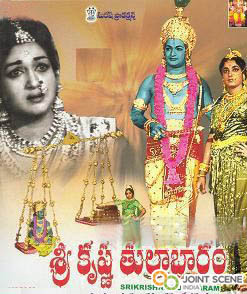
Telegu film of Krishna Tulabharam


The most famous Tulabharam story comes from the life of Lord Krishna. Tamil and Telugu films were made using this story long back. Krishna had several wives including Rukmini, Sathyabhama and Jhambavati.

There was a rivalry between the posh, proud, jealous and fashionable Sathyabhama and simple and innocent Rukmini. The heavenly sage Narada wanted to teach Sathyabhama a lesson. When he met her he mooted a plan to attract Krishna towards her. Sathyabhama fell prey to his clever and cunning plan. The plan was to sell Krishna as a slave to Narada and buy him back with gold. Whoever pays more would win Krishna. Sathyabhama was so confident that she would win hands down because Rukmini was not as rich as her. Innocent Rukmini had to accept this when Krishna himself agreed to be sold. When the scene was set, Sathyabhama brought all her gold and diamond jewellery to buy back Krishna. It could not match Krishna’s weight. Seeing Sathyabhama struggling, the mischievous Narada himself suggested that she borrowed some gold from Rukmini. Pure hearted Rukmini knew that nothing was greater than the Tulsi (Holy Basil) leaves and she put some Tulsi leaves onto the pan after removing all of the jewellery. The problem was thus solved. This story also showed the importance of Tulsi in Hindu worship. Tulsi is one of the most powerful medicinal herbs.

Sumerian Tulabharam

Sumerian culture has a lot of similarities with Indian culture. No one can dismiss them as sheer coincidences. (Please read my article DOUBLE HEADED EAGLE: INDIAN SUMERIAN CONNECTION). Clay tablets from the 13th century BC unearthed at Ugarit give some interesting information about a king. His name is given only in consonants KRT (perhaps Kirta or Kurita rather than Keret). The king lost his brothers and seven wives but had no heir. Praying for a son, he was advised in a dream by their chief god El to sacrifice to Baal then march with his army to Udumu to ask for it’s king’s daughter Hurriya as his wife. On the way he VOWED TO GIVE TWICE HER WEIGHT IN SILVER AND THRICE HER WEIGHT IN GOLD TO THE GODDESS ATHIRAT (AHSERATH) of Tyre, if he were successful. When he got her, he did not fulfil his vow to the god Athirat. The god struck him with an illness. This story of Keret was published in the Dictionary of the Ancient Near East. The story continued with what his wife did later etc. We can even see some similarities in the names with Hindu mythological names Kratu (KRT), Surya (Hurriya), Kreeta and many more. But we could clearly see the practice of Tulabharam to gods and goddesses, offering in silver and gold.


*******************


Valakhilyas: 60,000 thumb-sized ascetics protect humanity (Tamil)


Please find the article: Valakhilyas: 60,000 thumb-sized ascetics protect humanity in Tamil below

சூரியனுடன் சுற்றி வரும் குள்ள முனிவர்கள் யார்

Valakhilyas: 60,000 thumb-sized ascetics who protect Humanity

By S Swaminathan

 
The ozone layer protects us from the Sun

60,000 Ascetics are protecting us from ultra violet radiation!

Jonathan Swift has taken the idea of Lilliputians for his novel Gulliver’s Travels from Valakhilyas!!

Valakhilyas are thumb sized ascetics accompanying the sun in its every day travel in the sky. They are protecting the humanity by taking all the extra heat and act like the ozone layer. They are 60,000 in number they are shining like brilliant lights because of their severe penance. They used to hang upside down in the trees while doing penance—these are some of the interesting facts that are found in the Vedas, the epics and the mythologies. Tamil literature adds more details about these strange kinds of ascetics.

Valakhilya hymns, eleven in number, are the appendix of the eighth Mandala of the Rig Veda. But famous commentators like Sayana rejected them as interpolations. The Ramayana and the Mahabharata have a lot of references to the Valakhilya Rishis. They may be considered the forerunners of English folklore: ‘Tom Thumb’ and the Lilliputians of the famous satirical novel Gulliver’s Travels by Jonathan Swift. English newspapers and magazines were publishing a lot of stories about India in the 1700s.

Ancient Sangam Tamil literature refers to Valakhilyas in Puranaanuru (verse 43), Tirumurugatrup patai (lines 16-109), post Sangam book Silappadikaram (Vettuvavari 15) and in the poems of middle age poet Arunagirinathar.

Valakhilyas were born to Kratu and Kriya. Once Kasyapa did a Yagna (fire sacrifice) to beget children. He invited all the Devas and Rishis to help him in the task. Everybody readily agreed. Mighty Indra, the King of Heaven, brought wood for the ceremony. Valakhilyas were emaciated due to severe penance. They were hardly able to lift anything but leaves. Even when they were moving leaves like ants, they fell into rain water puddles, because they were so tiny. It amused Indra and he laughed loudly. Valakhilyas were very much offended. They made a vow to do a separate yagna to create another Indra. When Indra listened to their vows he was afraid and ran to Kasyapa to explain what had happened.

Kasyapa lent a patient ear, but warned that he could not stop the powerful Valakhilyas. But he gave an assurance to Indra that he would find a compromise. When he met Valakhilyas he requested them to drop the yagna to create a new Indra. He also assured them that whoever they create will be the Indra of the birds and Valakhilyas agreed to this new plan.

After the yagna Valakhilya’s prasad (food offering) was given to Vinata, one of the two wives of Kasyapa. She gave birth to two children Aruna and the most powerful golden-hued eagle, Garuda. Long after this Garuda flew to Indraloka to get Amrita and defeated Indra. The Second wife of Kasyapa Kadru gave birth to the Nagas or the Snake race. Garuda on his way back sat on the tree where Valakhilyas were doing penance. The tree broke into many branches, but Garuda lifted all the ascetics with the branch and put them in a safe place.

The Rig Veda says that they sprang from the hairs of Prajapati Brahma. They are the guards of the Chariot of the Sun. They are also called the Kharwas. The Vishnu Purana describes them as pious, chaste and resplendent as the rays of the sun.

Tamil literature is very clear in saying that the main task of the short and smart ascetics is to prevent human beings from being scorched. So they absorb the excess heat from the sun by travelling in front of him. Tamil books also add they were in turn given energy by Lord Skanda and Goddess Durga. Even the hunters in the forest pray to Durga for this. Another Tamil poet compares the sacrifice of the Valakhilyas to the sacrifice of the Emperor Sibi who gave his flesh to an eagle to save a pigeon. The famous story of Sibi was referred to in four Sangam Tamil books. Sibi was praised as the forefather of the famous and powerful Tamil Chola dynasty. The food of Valakhilyas is only wind.

Another story in the Hindu mythology is that the sun has to fight a set of demons called Mandokarunar on a day to day basis for survival. Valakhilyas stand beside the Sun in battle. We don’t know whether there is scientific basis for this story. Mandokarunar maybe a reference to the dangers of solar flares or magnetic storms. In any case, it is crystal clear that the Valakhilyas act as the ozone layer to protect us from harmful ultraviolet rays. Too much ultraviolet rays will cause us skin cancer and other health problems.

We must be grateful to the authors of the Vedas, Puranas, Epics and Tamil commentators Nachinarkiniyar and Adirarku Nallar for creating awareness about the dangers of ultra violet radiation. In western countries people are warned to use special creams whenever they sun bathe.

 ******************

Tamil Article: Solar Eclipse in Tamil and Sanskrit Literature

Please see below for my latest article on Solar eclipses in Tamil and Sanskrit Literature in Tamil

புறநானூற்றில் சூரியகிரஹணம்

Do our Dreams Have Meaning?


by S Swaminathan


Maya Devi dreaming


Every one of us dreams at night. Most of them are without any meaning. We couldn’t even remember them the next morning. But now and then we read in newspapers or our ancient scriptures about some dreams becoming prophetic. What is the truth?

A devote Hindu knows the importance of good sleep. He prays for it in the Rudram – Chamakam of Yajur Veda. Every day, Brahmins pray to God three times a day to not give them “dus swapna” (nightmares). Ref. Adyano deva savita:,Sandhyavandana Mantra.

Western psychoanalyst Sigmund Freud interpreted dreams as wish fulfilment (nightmares being failed dreams prompted by fears of repressed impulses). In short western psychologists saw them as suppressed desires, feelings and wishes. According to the scientists, dreams occupy one fifth of our sleep and they happen during the REM (Rapid Eye Movement) period of sleep. REM sleep means that the cortex of the brain is about as active as during waking hours.

Hindus don’t agree with western views. We see more meaning in dreams. We think they are telling you what is going to happen to you – like winning the lottery or becoming ill or some misfortune to our near and dear. But not all the dreams are interpreted in this way. Hindus have analysed the status of the mind better than modern scientists. All our religious literature speaks of Jagrat (waking) Swapna (dream) Sushupti (deep sleep) and Turiya (an experience of pure consciousness beyond the three stages of sleep – there is no English word for it).

Swami Sivananda of Rishikesh who himself was a doctor turned ascetic explains dreams in a beautiful way in his book The Philosophy of Dreams ( It is available free of cost on the Divine Life Society website):

“Every dream presentation has a meaning. A dream is like a letter written in an unknown language. To a man who does not know Chinese, a letter written in that language is a meaningless scroll. But to one who knows that language it is full of most valuable information. It may be the letter calls for immediate action; or it may contain words of consultation to one suffering from dejection. It may be a letter of threat or it may speak of love. These meanings are there only to one who would care to attend to the letter and would try to decipher it. But alas! How few of us try to understand these messages from the deep unseen ocean of our own Consciousness!”

Dreams in Vedic Literature

We have references to dreams in the Rig Veda, Kaushitaki Brahmana, Chandogya Upanishad and other classical Sanskrit literature. They treated dreams as prophetic- conveying some message of the future. For instance, the Chandogya Upanishad (V 2-8-9) says seeing a woman in a dream means a previous sacrifice (fire ceremony) was successful. But it gives conditions for such dreams. Kaushitaki Brahmana says seeing a man in black with black teeth is not a good omen. Some people even receive messages in dreams. Rishi Viswamitra received mantra upadesa from Lord Siva in his dream. Advocate of Vishistadvaita Sri Ramanuja believed that the dreams are caused by the Lord.

Andal, a great Tamil Vaishnavite woman saint saw Lord Vishnu marrying her in a dream. She sang about her dream in beautiful Tamil verses known as Varanam Ayiram. This is sung in all Tamil Vaishnavite weddings.

Before great men were born, the women had strange dreams. We see this in the birth of Jain saint Vartaman Mahavira, Gautama Buddha, Sri Ramakrishna Paramahamsa, Swami Vivekananda and several saints. Bhuvaneswari Devi, mother of Swami Vivekananda dreamt of Siva agreeing to be born as her son. Being a great devotee of Lord Vireswara Siva of Varanasi, she gave the name

Vireswara to her son. Later it was changed to Narendra and then to Vivekananda.

Ramakrishna Paramahamsa’s parents experienced supernatural incidents, visions before his birth. His father Khudiram had a dream in Gaya in which Lord Gadadhara said that he would be born as his son. Chandramani Devi is said to have had a vision of light entering her womb from Shiva’s temple.

Gauthama Siddhartha’s mother Maya Devi and King Sudhdhodana were trying for a baby for twenty years after their marriage. One day she had a dream of a white elephant with a lotus flower in it’s trunk going around her three times and entering her womb. Before this she dreamt of bathing in a lake in the Himalayas. She was carried away to the lake by four angels in her dream.

Mother of Mahavira Trishala had 16 auspicious dreams before his birth. When King Sidhdharth consulted his astrologers they told him that there were 72 auspicious dreams according to the books on dreams and the king was going to get a son who will rule a spiritual empire. Trishala saw

1.       A white elephant

2.       A lion

3.       The Goddess Gaja Lakshmi

4.       Moon

5.       Two jumping fishes

6.       Sun

7.       Lake full of lotus flowers

8.       Ocean of milk

9.       A celestial palace

10.   A throne of rubies and diamonds

11.   A celestial king

12.   A garland

13.   A white bull

14.   Fragrant Mandara flowers

15.   A tall vase with gems and

16.   A white elephant entering her.

Seeing an elephant in a dream is considered auspicious. In most of the cases of divine births, we see a light entering or elephant entering the mother’s body.

Messages from the Departed souls

The previous Head of Madurai Adheenam (Saiva Mutt) who died several years ago did a lot of research about communicating with dead people. He has narrated several incidents where departed souls appeared in dreams to warn people about coming dangers.

When Vallabhacharya was born prematurely without life signs, his mother left him under a tree. When she came home with all the sadness, she dreamt of Krishna saying to her that he was born as a child to her. She ran back to the tree where the boy was alive and kicking with a divine fire protecting him. All of these stories impart some knowledge about dreams to those who have an interest in their interpretation.

Swami Vivekananda also narrated a strange dream about Jesus Christ to his disciples. Read it in his own words:

“I had a curious dream on my return voyage to England. While our ship was passing through the Mediterranean sea, in my sleep, an old and venerable looking person, Rishi-like in appearance, stood before me and said: I am one of the ancient order of Theraputtas which had its origin in the teaching of the Indian Rishis.
 The truths and ideals preached by us have been given out by Christians as taught by Jesus: but for the matter of that there was no such personality by the name of Jesus ever born. Various evidences testifying to this fact will be brought to light by excavating here. By excavating which place can those proofs and relics you speak of be found? I asked. The hoary-headed one pointing to a locality of Turkey, said, see here.
 Immediately after, I woke up, and at once rushed to the upper deck and asked the captain, ‘what neighbourhood is the ship in just now?’. ’Look yonder’, the captain replied, ’there is Turkey and the island of Crete’.”

Svapnavasava datta (Dream of Vasavadatta) is a famous drama by ancient Sanskrit playwright Bhasa.

The hero of the story is presented with an exact painting of a girl he had previously seen in a dream in the court of King Udayanan. Indians do not miss any opportunity to use a dream as the basis of their novels, dramas and films.

Mathematical Genius Ramanujan

Indian mathematical genius Srinivasa Ramanujan said that he received his inspiration and mathematical solutions in his dreams. He attributed this to the Goddess at Namakkal. He said:

“While asleep I had an unusual experience. There was a red screen formed by flowing blood as it were. I was observing it. Suddenly a hand began to write on the screen. I became all attention. That hand wrote a number of results in elliptic integrals. They stuck to my mind. As soon as I woke up, I committed them to writing”

The most famous Tamil epic Silappadikaram narrated the vivid dreams of Kovalan and Kannaki, the hero and the heroine in great detail.

Tamil Bhakti literature (5th to 9th centuries) has a lot of references to dreams. 2000 year old Tamil Sangam literature talks of animals dreaming – a concept which modern research at MIT and other scientific institutions recently confirmed.

Finally, I will leave you with a list of great people who attributed their discoveries or inventions to strange dreams:

1.       F.A. Kekule: saw the structure of Benzene in his dream and revealed it to the world

2.       Abraham Lincoln: dreamt of his assassination just before his death and told his friends

3.       Otto Loewi: won the Nobel prize for Science having discovered the chemical transmission of nerve impulses in a dream

4.       Paul McCartney: He got his tune for the ‘Yesterday‘ in a dream

5.       Mary Shelley: the idea for Frankenstein came to her in a dream

6.       Elias Howe: invented the sewing machine from a dream

7.       Stephen King: the famous novelist’s plots came from his dreams

Have sweet dreams!

********************


Tamil article: The Age of Tamil Race

Click the title below for my Tamil article about The Age of Tamil Race


தமிழ் இனத்தின் வயது என்ன

The Tortoise Mystery: Can we live for 300 years?

By S Swaminathan

Giant Tortoise

The holy book of Hindus, the Bhagavad Gita and the Tamil ethics book, Tirukkural, both use the tortoise as an example of self control. Among the vertebrates that live on land, the tortoise is the longest living animal. Records speak of tortoises living for over 250 years. Unconfirmed reports say that they live for up to 350 years. But lower organisms in the sea like sponges and clams live for over 400 years.

Why did Lord Krishna and the Tamil poet Tiruvalluvar (author of Tirukkural) use the tortoise as an example? What is the message they wanted to convey through this example or simile?

Here is the sloka from the Gita:

“When, like the tortoise which withdraws its limbs on all sides, he (a sage) withdraws his senses from the sense-objects, then his wisdom becomes steady” (Chapter 2-58)

Here is the couplet from Tirukkural:

“If a man learns to control his five senses in one birth as the tortoise, that power will stand by him in his seven future births.”  (Kural 126)

Neither of these explicitly mentions long life but we may think that they used it to mean the outward shell and the limbs withdrawn in to it. Actually they knew the secret of the tortoise’s long life: its breathing rate. It breathes only three to four times every minute, whereas human beings breathe at least 15 times every minute.

Another Tamil saint Tirumular was very clear in saying that a person can live 1000 years – longer than a tortoise – by yogic practices. (Tirumantira 2264 & 2304).

Manu Smrithi (VII-105) and Vaishnavite Tamil Book Divya Prabandham (2360) also refer to the tortoise in this context. Our forefathers, who were keen observers of nature, knew very well that the tortoise is the longest living vertebrate. Otherwise they wouldn’t talk about seven births or living longer than a tortoise.

Tirumular who sang Tirumantiram was said to have lived for 3000 years. But we did not know whether he lived with his physical body or not.

Man’s life span is 100 years according to the Hindu Vedas. Brahmins recite the Vedas asking for 100 years of healthy life in their daily ritual called Sandhyavandhanam (Pasyema saradas satham, jeevema saradas satham,nandhama aradas satham etc.) When we were born, we were given a certain number of years, which can also be expressed as a certain number of breaths. The quicker we spend our breaths, the sooner we die. But the saints spend very little of their breath and live longer.

If a man breaths 15 times a minute (or 18 times as per the western calculation) he will breathe 900 times in an hour and 21,600 in a day.  If you slow down the breathing rate by yoga (Pranayama) techniques, you live longer. It is like our money deposited in a bank. The quicker you spend it, the sooner you become a pauper. Yoga technique teaches you to reduce the breathing rate. To emphasize this point, a Chola king put 21,600 golden tiles in the roof of the famous Chidambaram Nataraja Temple in Tamil Nadu. He used 72,000 nails to fix the golden tiles. Tirumular, the great Siddha, in his Tirumantiram explains this calculation clearly.

Look what Paramahamsa Yogananda (An Autobiography of a Yogi) says about breathing: “The restless monkey breathes at the rate of 32 times a minute, in contrast to man’s average 18 times. The elephant, tortoise, snake and other animals noted for their longevity have a respiratory rate which is less than man’s. The tortoise for instance, who may attain the age of 300 years, breathes only 4 times per minute.”

Dogs breathe 40 to 50 times per minute and live up to 25 years only.

Let us do an interesting sum before we finish:

We believe that we can live for 100 years by breathing 15 times a minute.

If one breathes 18 times a minute one’s age will decrease to 83 1/3 years.

If a person breathes only 2 times every minute one can live for 750 years.

If one breaths only once every minute, one can live for 1500 years.

If one stops breathing, and slows their metabolic activity, one can live longer. But this is only possible for Yogis. They did it by reciting the Pranava mantra AUM. We read about bears, rabbits and other animals going in to hibernation for six months during winter. In short they temporarily become “Yogis “. Our ancient literature talk about devas and demons doing penance for thousands of years. Though we may think that it was an exaggeration, we knew that ant hills grew around the saints during their meditation implying the passage of time. The famous saint who wrote the Ramayana was ‘Valmiki’ meaning ’ant hill’. There was another poet with the same name in Sangam Tamil literature.

Sex and the breathing

Modern research shows that a man spends 200 calories and breathes 30 times a minute during sex -twice the rate of normal breathing. An average man ejaculates semen 5000 times during his life time. But our Yogis, being celibate, saved energy on that count as well.  But Hinduism never prohibited sex for an ordinary man; only Yogis lived that way.  Sangam Tamil book Tirumurukatru patai speaks of priests who observed celibacy for 48 years. It is crystal clear that our forefathers knew the secret of longevity.

The tortoise is one of the ten avatars of Lord Vishnu. The Chinese, Mongolians, Koreans, Vietnamese and other South East Asians also respect the tortoise and the turtle for various other reasons.


Follow me on Twitter @Swami_48 and find me on Facebook.

Double Headed Eagle: Sumerian-Indian Connection

By S Swaminathan

 
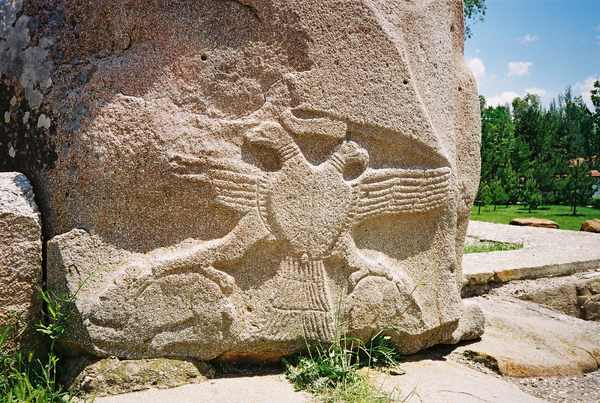
Double-Headed bird found in Alaja Huyuk, Turkey, 14th C BC


There are striking similarities between the Indian and Sumerian civilizations. One of them is the use of the Double Headed Eagle as a royal symbol. From 3800 BC until today this mythical bird is used as a symbol of royalty. Russia and other Eastern European countries use it on their currency notes and national flags. Tamil Nadu, Karnataka and Andhra Pradesh praise the mighty strength of this bird in coins, sculptures and literature. The Panchatantra used the story of double headed bird, also known as Ganda Berunda bird, to emphasize unity. Ancient Cankam (Sangam) Tamil literature used this bird in their love poetry. Devotional poets of India like Ekanath also used this bird as a simile.

Sumerians considered this bird the symbol of God Ninurta of Lagash. They thought it had divine power. We can trace the history of this mythical bird from the Sumerian days. A cylindrical seal shows the double headed eagle from 3800 BC. Later, the Hittite empire which had its capital in Bogazkoy (in Modern Turkey) used it in several monuments. Even today we can see the monuments displaying this symbol in huge sculptures in Hattusa and Yazilikaya. Bogazkoy was the place where a tablet with the names of the Vedic Gods: Indra, Mitra, Nasatya and Varuna was discovered. The tablet was dated 1380 BC. This establishes the Indian connection of the region.

Even the Holy Roman Empire and the Byzantine Empire used this symbol. This Hindu symbol was used by the Christians.

In Sanskrit literature – the Panchatantra (book of fables) has a story about Ganda Berunda bird. It says that the bird had two heads but one stomach. In the story, one head wanted to drink Amrita (ambrosia) but the other head went for poison. Ultimately, the head that drank the poison made the bird die. The moral of the story is that disunity is dangerous.

 
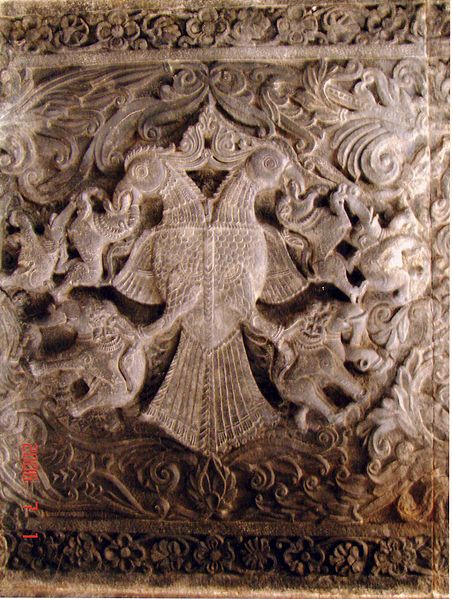
Sculpture in Keladi Temple, Karnataka


Tamil literature, dated two thousand years old, mentions it in three places. In Akananuru, poet Kapilar (verse 12) compares this double-headed, single-bellied bird to two people in love. Though there were two physical bodies, they have one life. Nallanthuvanar also used this simile in Paripatal (Verse 8-72). But another Tamil poet Maruthan Ilanagan in Kalithokai (verse 89) used this bird in the form of two fighting heads, like the Panchatantra story. It shows that Indians from one end of the land to the other knew this bird very well. Thakadur Yaththirai is a lost Tamil book, but excerpts are available as quotes in other works. These quotes compared the fight between two kings Athiyaman and Peruncheral Irumporai to the double headed bird fighting with itself. (Ref. Purath thirattu verse 785).


The Bird that lifts elephants

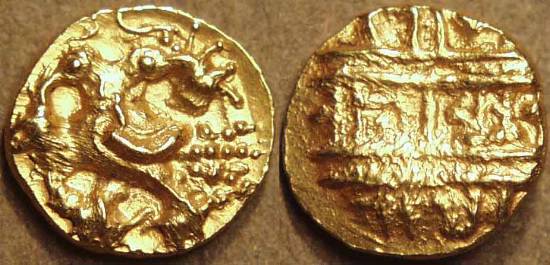
The most imaginative story of the bird comes from the Vijayanagar Empire. Gold Coins issued by Achyuta Raya (1530-1542) show the Ganda Berunda bird lifting an elephant in each of its beaks. Its power is legendary. Other coins show each head holding a snake. Before Achyuta Raya Devaraya II (1422-1446) issued coins with the bird’s name in Deva Nagari script.

Jain Stupa at Sirkap, Taxila is the most ancient Ganda Berunda monument in India. We can see this mythical bird sculptures in Srisailam, Keladi, Koramangala, Belur and the medieval art of Sri Lanka.


Achyuta Gold coin with the bird


Recently even dances were choreographed showing the magical strength of the bird. Dasara Flower Show in Mysore had a 10 foot flower decoration of the bird to commemorate the 500th anniversary of the bird symbol in Karnataka.

The Wodeyar family of Mysore use this as their royal emblem. Later the Government of Karnataka used it as the emblem of the state. There are stories connecting this bird with the Narasimha (Man-Lion) avatara of Vishnu.

Eastern European country Albania has this bird in its national flag. Several countries issued stamps and coins as well. Russian Roubles and Kopeks had this bird.


National flag of Albania


In the Eastern Province Erzurum of Turkey, a huge double headed eagle is being erected in 2011 which is visible from space. Turkey gives so much importance to this legendary bird.

An ancient monument of Turkey shows this bird lifting two hares on its beaks. But the imagination of Indians made it a dinosaur lifting two elephants on its beaks!

Follow me on Twitter @Swami_48 and find me on Facebook.


When Animals worship God, Why not Men?

When Animals worship God, Why not Men?

Parrots recite the Vedas.
Dog follows Yudhistra to heaven.
Squirrel helps to build Rama Setu.
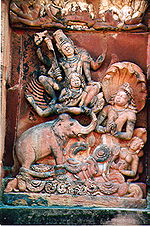
Gajendra, the elephant called on Vishnu for help.
Dogs inspire Adi Shankaracharya.
Four dogs come as four Vedas to Somasi Nayanar Yagna.
In Madurai pigs, swallow and heron were given moksha by Lord Shiva.
Cows bathed Shiva lingas with milk in several Indian towns.
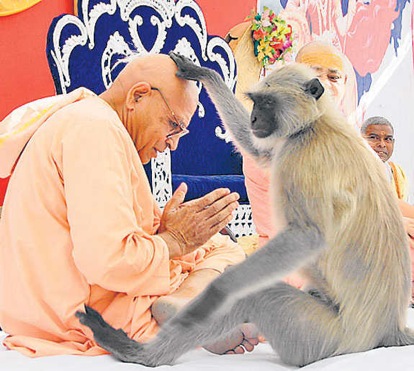
Recently in Ratlam (Madhya Pradesh) monkeys listened to Ramayana.
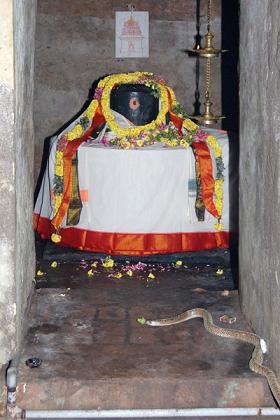
Very recently In Tamil Nadu snakes and goats did Puja to statues of gods.
What are all these? Are these Panchatantra stories or Aesop fables? or
Are Walt Disney’s films on nature? If you read more you can judge it yourself.
Indian Tamil and Sanskrit literature are full of animal stories. They say that if a just king rules the country deer and tiger will drink water from the same river without showing enmity. They go one step forward and say that animals when pregnant get more affection even from their natural enemies. Snakes open their hoods to protect pregnant frogs from scorching sun. Such is the love and affection they show one toward another.
Western newspapers don’t lag behind in such stories. Within the last quarter of 2011 three such stories about parrots appeared in London publications. A pet parrot alerted its owner when his pet dog gave birth prematurely. But for the timely intervention of the bird many of the cubs would have died. Another parrot betrayed its owner during illicit intimacy by calling his wife’s name. A third parrot helped to catch a burglar, because even after it was stolen it was repeating its original owner’s name and identified him in the pet shop.
But Indian literature goes well beyond these anecdotes in time. We have the great Bhagavatham story of Elephant Gajendra calling Lord Vishnu to rescue it from the near fatal grip of a crocodile. This was beautifully sculpted 1500 years ago in the Deogarh temple. (My article about mysterious messengerstalks about a cobra giving shelter to a frog).
Look at the pictures now:
Monkey blessing Rama katha exponents in Ratlam in Madhya Pradesh, India (Monkey attending Rama katha is available on You Tube).

Elephant Gajendra calling Vishnu, 5th century AD (1500 old statue).
When the intellectual giant and the greatest Indian philosopher Adi Shankaracharya at a tender age went to challenge the mightiest figure of his days Mandanamishra on the banks of the river Narmada, he was laughed at and ridiculed by the women of the village who came to get water from the river. When they heard from a youth like Shankara that he came to discuss philosophical subjects with Mandanamishra and wanted to know where his house was, they giggled. But they were so intelligent that they replied to him in Sanskrit poetry. They asked him to go to a house where the parrots were reciting the Vedas and discussing Upanishad philosophy. The story takes very interesting turns at every stage. But I will stop with the parrots (those who wanted to read the story in English must go to Osho’s website, and those who wanted to read it in Tamil must go to Kanchi Shankaracharya’s Tamil lectures).
 
Thepperumanallur, Tamil Nadu, India- snake worships Lord Shiva.
On 16th January 2010 there was a solar eclipse. When the priest of Thepperumanallur in Thanjavur district of Tamil Nadu opened the temple, he saw a snake on top of the Shivalingam statue. It slowly went to the holy Bilva tree and brought the bilva leaves and put them on the head of Lord Shiva. It did it three times. Hundreds of villagers and photographers rushed to the temple and quietly watched the wonderful ceremony. The priest explained that solar eclipse is a holy occasion and people who do puja at that time get more punya.
 
Erode, Tamil Nadu, India – Goat worships Nagadeva statue with Tulsi (basil Leaves)
On 17th November 2011 when the Ayyappa devotees started their 40 day fasting (vrata) they all wore garlands and did Puja. A goat also took the holy basil leaves and did puja to the Nagadeva statues. Hundreds of devotees watched this with great reverence and curiosity. Popular Tamil Daily Dinamalar had published these incidents and they were read by millions.
People who have read Ramayana and Mahabharata knew about the little animals (read my story -Two LittleAnimals) When Adi Shankara was walking along a narrow street, a person of low caste came in the opposite direction. When Shankara, with all arrogance, asked him to move out of his path he asked a great philosophical question whether the body or soul should move out of his path. This opened Shankara’s eyes and awakened a greater fire in him. He realised that the man who came as an ugly uneducated person was nothing but God and the four dogs that accompanied him were four Vedas.
The same thing happened in the Soma yagna conducted by a great Tamil devotee called Somasimara Nayanar. When an untouchable came in drunken state with four dogs looking for his lost animals, all the Brahmins chased him away. But the great Nayanar realised that it was nothing but Shiva who came with four Vedas as dogs. Shiva showed him his real form and blessed him. It happened in the eighth century. The story appears in great detail in Periya Puranam in Tamil. Swami Sivananda of Rishikesh has translated it in to English.
Madurai Meenakshi Temple (Please go to The Wonder that is Meenakshi Temple) is full of animal stories. People were all reborn as animals and blessed by Lord Shiva. All these stories were given in greater details in the Tiruvilaiyadal Purana which is available in Sanskrit and English.
A lot of holy places and temples in India claim that the places were discovered when cows spontaneously showered milk in those spots.
Tamil Nadu (South India) is full of legends about temples. Most of the towns are associated with animals in one way or another. Just to mention a few Tiruanaika near Trichy in Tamil Nadu became famous because a spider and an elephant worshipped Shiva there. According to the local legend the spider was reborn as a famous Chola king and built many temples for Shiva. Tiruverumbur (ants worshipped), Tirukkazuku Kundram (eagles worshipped) and Vaitheeswaran Koil (Eagles Jatayu and Sampati worshipped).
So many places in India are associated with animals worshipping God and it is a good topic for further research.
                                                     ************************