Pictures are taken from various sources for spreading knowledge.
this is a non- commercial blog. Thanks for your great pictures.
tamilandvedas.com, swamiindology.blogspot.com
ஒரே சொல் பல இடங்களில் வந்திருந்தாலும் ஒரு இடம் அல்லது சில இடங்களே இங்கே கொடுக்கப்பட்டுள்ளன. முதல் எண் பகவத் கீதையின் அத்தியாய எண் ; இரண்டாவது எண் ஸ்லோக எண்
XXXXX
அக்ஷய: (அக்ஷயஹ) – 10-33 முடிவற்ற
அக்ஷர ஸமுத்பவம் -3-15 அழிவற்ற பரம்பொருளில் தோன்றியது
Pictures are taken from various sources for spreading knowledge.
this is a non- commercial blog. Thanks for your great pictures.
tamilandvedas.com, swamiindology.blogspot.com
DON’T FORGET TO READ 43 PARTS – “TAMIL WORDS IN ENGLISH” THAT ENDED ON SIXTH DECEMBER 2020;
FOLLOWING SERIES STARTED ON NINTH DECEMBER 2020.
ALL THE NUMBERS BELOW ARE SUTRA NUMBERS FROM 2700 YEAR OLD ‘ASHTADHYAYI’ OF PANINI, WORLD’S FIRST GRAMMAR BOOK.
XXX
2700 ஆண்டுகளுக்கு முன்னர் தமிழ், ஆங்கில சொற்கள் – பகுதி -57
Xxxx
PART 56 POSTED ON 28 JUNE 2021
XXX
PANINI SUTRA 5-4-67
M=B
Though out my posts I have been following the same rules. Here is another example to show B becomes M and vice-versa.
Madra was the word for offering hair to god or in general shaving the hair on head .
Varttika adds Badra for the same. This shows M becomes B in three hundred years time..
I have already given examples:-
Manual -Panual
Mandi -Bandar
Money- Panam
Mare- Pari (horse)
Mare= Vaari, Vaaranam (sea)
Manufacture -Pannu/do/produce
Badra -Madra (happiness)
Xxx
5-4-69
Puja = Pugaz in Tamil
பூஜித்தல் = புகழ்தல்
பூஜ = புக /ழ்
Xxx
5-4-73
Varttika gives Kadga/ knife example
Kadga becomes Kaththi in Tamil
Xxx
5-4-74
Dvipa becomes Theevu in Tamil
P=V
த்வீப = தீவு
Xxx
5-4-75
Bhumi in Sanskrit becomes Puvi
M=V
பூமி = புவி ; புவனம் = புவி
ம=வ
Other examples already given by me:
Maanam -Vaanam
Maari- Vaari
Melaa -Vizaa
Muzi -Vizi
Xxx
5-4-77
Chatura = Square
Xxx
5-4-78
Varchas = Virtues
Xxx
5-4-86
Finger= Angula, inch
அங்குலம்= விரற்கடை ; அங்குலீயம்= மோதிரம்
Xxx
5-4-87
Aha’s becomes Pahal/day time in Tami
Raatri becomes Iravu
அஹஸ் =பஹல் =பகல்
ராத்ரி = ரா = இரா = இரவு
Xxx
5-4-94
Ayas becomes Iron in English
Iron becomes Irumbu/ferrum in Tamil Tamil
உலகில் ஒரே மொழிதான் இருந்தது. அது தமிழ்-ஸம்ஸ்க்ருதத்தின் மூல மொழி என்றும் அதனால்தான் தமிழுக்கு இலக்கணம் எழுத இமய மலை ரிஷியான அகஸ்தியரை சிவன் அனுப்பினார் என்றும் காட்டி வருகிறேன். இதோ மேலும் ஒரு சான்று :
அயஸ் – ஐரன் /அயன் = பெர்ர ம் /லத்தீன் மொழி = இர்ரம் பு /தமிழ்
***
Saras = is stream in English (Saras-vati river)
Xxx
5-4-102
Anjali = iru kai kooppi Vanangu thal
Angel came from this word. ANGELS are depicted on both sides of God or God like person, as if they are worshipping ( In Greek it meant messenger). Greeks borrowed it from the Hindus. Throughout Hindu epics and Hindu puranas we read angels showered Pushpa Anjali . There also it meant God’s messengers.
அஞ்சலி – பரத நாட்டியத்திலும் , கோவிலிலும் இன்றும் பயன்படுகிறது ; புஷ்பாஞ்சலி
Xxx
5-4-129
Jaanu = joint
Xxx
5-4-130
Uurdhva – uyarththiya in Tamil
Uurdhva – uupar – upper in English
ஊர்த்வ = உச்ச= ஊபர் = ஆங்கிலத்தில் அப்பர்
Xxxx
5-4-135
Vaarttika adds
Aapana = shop
In Tamil it becomes Aavana
P=V
ஆபண = ஆங்கிலத்தில் ஷாப்/shop ஆகும்; தமிழில் ஆவணம்/கடை
ப= வ
Xxx
5-4-140
Add ped to denote the number of legs- says PANINI.
In english we have quadraped, millipede, centipede etc
Xxx
5-4-141
Danta = dental; seen already in previous sutras
யானைத் தந்தம் = யானையின் பல்
டென்டிஸ்ட் = பல் மருத்துவர்
Xxx
5-4-150
Suhrut – good hearted
Durhrut – evil minded
Hrut = heart
The expression good hearted s as old as panini’s work
நல்ல மனம் படைத்த , நல்ல இருதயம் உடைய
சம்ஸ்க்ருதத்தில் இது நண்பனுக்கும் பயன்படுகிறது.
Xxx
5-4-154
Commentators add
Bahu – vegu in Tamil ; b= v
Gadva = cot in English
பஹு , பொகு – வெகு
ப =வ
கட்வ= கட்டில் = ஆங்கிலத்தில் காட்
Xxx
5-4-158
Commentators add
Hatha – hit; killed
Xxx
5-4-159
Nadi = naadi = nerve= naar
Like said becomes sari, nadi becomes nar-nerve-naar- naadi
All the parts look like thread in appearance
Panini adds here Tantri – thread
Tamils and sanskritists think in the same way:-
Tantra= book, tantu= thread or sting
In tamil also nuul means thread and book.
Earlier we saw sutra meant book and thread.
This shows the book culture spread from one common source
ட என்பது ர ஆக மாறும்
நாடி= நார்= ஆங்கிலத்தில் நெர்வ்= தமிழில் நரம்பு
****
தமிழும் ஸம்ஸ்க்ருதமும் ஒரே மூலத்திலிருந்து வந்தவை என்பதைக்காட்ட இங்கு மேலும் ஒரு உதாரணம் / சான்று கிடைக்கிறது.
முன்னர் ‘சூத்திரம்’ என்றால் இரு மொழியிலும் நூல்/thread, புஸ்தகம்/book என்ற இரு பொருள் உள்ளதை பாத்தோம்.
இங்கு பாணினி தந்திரி/thread என்பதை நூலுக்கு பயன்படுத்துகிறார்.
இரு மொழியிலும் இது தைக்கும் நூலுக்கும்/thread, படிக்கும் நூலுக்கும்/book பயன்படுகிறது.
தந்து = நூல், தந்திரம் =புஸ்தகம்/ Tantra Shastras
Books are named with suffix Tantra.
Xxx
To be continued……………………………………
TAGS — PANINI ,TAMIL, SANSKRIT, TAMIL IN PANINI 57
Pictures shown here are taken from various sources such as Facebook friends, Books, Google and newspapers; thanks.
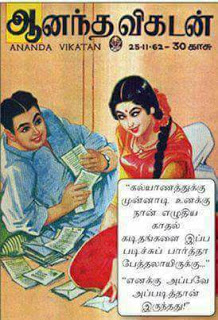
(Tamil Joke: Husband:While I read my love letters now which i sent you before marriage, i feel they were nonsense/rubbish; Wife: Oh, for me they looked nonsense/rubbish even before marriage!)
Manu in his Manava Dhrama Shastra and Tiru Valluvar in his Tamil Veda Tirukkural support marriage; but Jain Munis who composed several hundred poems in Tamil in Naladiyar and Pazamozi had different views. Dr G U Pope, Christian priest and Tamil scholar, Father Constantine Beschi, Jesuit priest from Italy and a Tamil scholar had compared several couplets in Tirukkural and Manu’s Law book. Dr G U Popes puts forth several arguments in his translation of Tirukkural, published in 1886, to prove that Tiruvalluvar, author of Tirukkural was not a Jain. One of the arguments is about marriage.
Tiruvalluvar, an ardent Hindu supports marrying. Dr G U Pope compared couplet 41 with Manu’s 3-78 and showed Naladiyar, the poems of Jains were opposed to marriage.
We know the views of the Greek philosopher Socrates:
“By all means marry; if you get good wife, you will become happy; if you get a bad one, you will become a philosopher.”
Tamil poet Valluvar says,
He is the true householder who helps the three orders of the virtuous (Brahmachari, Vanaprastan, Sanyasin) in their home life is the fruit of love begotten by a harmonious, right path of life.
Even before Valluvar, Manu said the same in Sanskrit:
“3.78. Because men of the three (other) orders are daily supported by the householder with (gifts of) sacred knowledge and food, therefore (the order of) householders is the most excellent order (Manu).”
Marriage is throwing Stones at you!
Naladiyar, the didactic book has 400 verses composed by Jain saints of Tamil Nadu who were great Tamil scholars. Here are two poems opposing marriage:
“Since it is a hard thing for a husband to reject his wife though she may neither have borne children nor have a good disposition, the wise have, on account of the misery entailed by matrimony, called it a thing to be eschewed – Naladiyar verse 56.
“Though one is advised to eschew marriage, he eschews it not; though the sound of death-drum pierces his ear , he heeds it not. He moreover takes in another wife and indulges in the delusion of matrimonial pleasures. These the wise say ‘ like one stoning himself’ “- Naladiyar 364
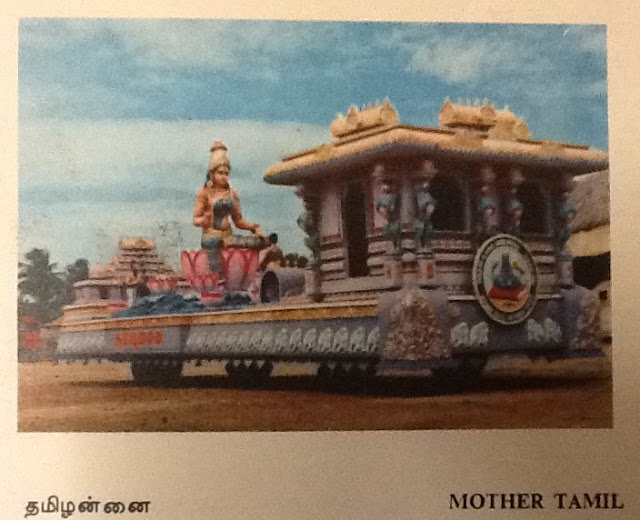
1981 World Tamil Conference Procession in Madurai -Part 1
MOTHER TAMIL
Tamil is one of the classical languages of the world. It is the most ancient language among all the languages of the Dravidian family. It is endowed with rich vocabulary, beautiful diction, rhythm and melody. The ancient Tamils, who have been fascinated by the greatness, grandeur and glory of their mother tongue, have personified her as Mother Goddess and showered all praise and honour on her.
It is a convention to describe some of the classical epics of Tamil language as the ornaments worn by the Mother Goddess Tamil. Silappathikaram is hailed as her anklet, Valayapathi as her bracelet, Manimekalai as her waist belt studded with gems, Chintamani as her necklace, Kuntalakesi as her ear-ring and Chutamani as the jewel worn on her forehead. She is also portrayed as a queen holding in her hand Thirukkural as the sceptre the symbol of her righteous rule.
The Tamil poets of yore have glorified their mother tongue as the first language of the human race. Its ancient grammatical treatises such as Tholkappiyam and Irayanar Kalavijal bear testimony to its rich legacy of literature and continuity of literary tradition from a hoary past. Here is a tableau which depicts Tamil language as Mother Goddess.
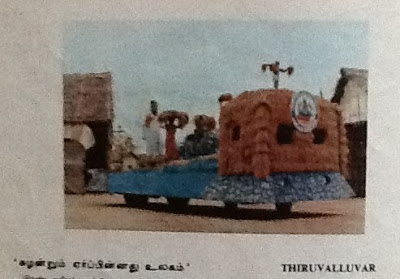
THIRUVALLUVAR
Thiruvalluvar was a profound scholar, philosopher and poet, who lived in Tamil Nadu two thousand years ago. His magnum opus THIRUKKURAL or the sacred couplets, is an ethical work which speaks about the greatness of righteousness (Aram), polity and economy (Porul) and domestic happiness (Inpam) in 1330 couplets. This work is a great human heritage which has transcended the linguistic, racial and religious barriers in its presentation of the ethical codes. Among the Indian classics it is the only book which has been translated into nearly two and a half dozens of languages. The modern Tamil year is calculated beginning with the birth of Thiruvalluvar. Since agriculture formed the basis of the economy of the ancient Tamils, Thiruvalluvar has devoted one chapter to this noble profession. The float depicts an agricultural scene, so well portrayed by Thiruvalluvar.
AVVAIYAR
In the portrayal of various internecine and intertribal wars which were waged for various political motives, the Sankam literatures introduce Avvaiyar, a poetess of the Sankam age, as a peace maker between two warring kings. Thontaiman plans a war against Athiyaman. Avvaiyar, wishing to stop the war, meets Thontaiman. Contrasting his decorated weapons with those of Athiyaman, so frequently used in battles, she brings home to Thontaiman, the latter’s superiority in warfare. A war is thus averted.
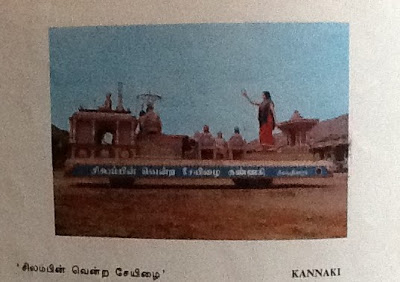
KANNAKI in SILAPPATHIKARAM
Silappathikaram is the earliest among the available Tamil epics. Kannaki came to Madurai along with her husband Kovalan to sell her anklet and start a new life. But, her husband was unjustly accused of stealing the anklet of the Queen and was killed under the orders of the King. To prove the innocence of her husband, and expose the heinous crime of the Great Pandya King, Kannaki went to his court with one of her anklets. She accused the King of having ordered the death of her husband without conducting proper trial. The Queen’s anklet had pearls whereas the anklet of Kannaki had gems inside. She broke her anklet in the presence of the king and proved that her husband Kovalan was not guilty. She is worshipped in Tamil Nadu as the Goddess of Chastity. The scene where Kannaki accused the King and broke her anklet is depicted in this tableau.
தமிழ் இன்றேல் தெய்வம் இல்லை; தெய்வம் இன்றேல் தமிழ் இல்லை. இரண்டும் இரண்டறப் பின்னிப் பிணைந்தவை என்பதை தமிழ் இலக்கியம் காட்டும்; தமிழ்ப் பண்பாடு காட்டும். தமிழ்ச் சமூகம் காட்டும்.
இதை உடைக்க நினைப்பவர் உடைபட்டுப் போவர்.
பிரம்மாண்டமான வரலாறைக் கொண்ட தமிழ் இலக்கியத்தில் தெய்வத்தைப் பிரித்தால் மிஞ்சுவது சவமே.
அதாவது சிவ இலக்கியம் சவ இலக்கியம் ஆகி விடும்!
சங்க இலக்கியம் மிகவும் பழமையானது.
அதில் தெய்வம் பற்றிய பாட்லகள் ஏராளம் உள்ளன. அனைத்தையும் தொகுத்து விளக்கினால் அது ஒரு கலைக் களஞ்சியமாக ஆகி விடும்.
ஒவ்வொரு தெய்வத்திற்கும் சங்க இலக்கியத்திலிருந்து எடுத்துக் கொடுக்கப்பட்ட குறிப்புகள் கீழே உள்ளன.
விநாயகரிலிருந்து ஆரம்பிப்போம்
விநாயகர் : ஒருகைமுகன் தம்பியே (திருமுருகாற்றுப்படையில் காணப்படும் வெண்பா 7)
சிவன் முதுமுதல்வன் (புறம் 166) தொல்முது கடவுள் (மதுரைக் காஞ்சி 42)
(புறநானூறு 58) இப்படி ஏராளமான குறிப்புகளைச் சங்க இலக்கியத்த்தில் பரக்கக் காணலாம்.
இதை யார் படித்து விடப் போகிறார்கள் என்ற நோக்கில் தமிழர் பண்பாடு என்பது தெய்வத்திற்கு அப்பாற்பட்ட ஒரு பண்பாடு என்பது போலவும் தெய்வங்களைப் பற்றிப் பழைய தமிழ் இலக்கியங்கள் குறிப்பிடவில்லை என்றும் தன் சொந்த உள் நோக்கிற்காக வெள்ளையரின் வழியில் கடந்த அறுபது ஆண்டுகளாக நாத்திக பிரச்சாரம் நடைபெறுகிறது.
இவர்கள் தெய்வத்தை நம்பவில்லை என்றால் தமிழையும் நம்பக் கூடாது. தமிழை நம்பினால் அது சுட்டிக்காட்டும் தெய்வீகப் பண்பாட்டையும் மதித்துத் தழுவ வேண்டும்.
இல்லையேல் இவர்கள் அனைவரும் ‘ஜோம்பிகளாகத்’ தான் வாழ வேண்டும். ஜோம்பி என்பது கல்லறையில் புதைக்கப்பட்டு திடீரென்று இருளில் எழுந்து நடமாடும் சவம் என்ப்தை அனைவரும் அறிவர்.
தாங்கள் ஜோம்பிகளாக மாறியதோடு மொத்த தமிழ்ச் சமுதாயத்தையும் ஜோம்பிகளாக மாற்ற முயலும் இவர்களை என்ன்வென்று சொல்வது?
தமிழர்கள் விழிப்புணர்வுடன் சங்க இலக்கியத்தைத் தாமே ஊன்றிப் படிக்க வேண்டும். அது காட்டும் பண்பாட்டை நன்கு புரிந்து கொள்ள வேண்டும்.
குமரி முனையில் ஆரம்பித்து இமயமலை வரை முடிந்த் இடம் எல்லாம் சென்று நமது பண்பாட்டை ஊன்றிக் கவனிப்பதுடன் தனது ஆன்மீக அனுபவங்களைச் சிலரிடமாவது சொல்லி நல்லனவற்றைப் பரப்ப வேண்டும்.
சங்க இலக்கியம் தங்க இலக்கியம் அது தெய்வ இலக்கியமே!
கட்டுரை மன்னன் :– லண்டன் சுவாமிநாதன்
ஆராய்ச்சிக் கட்டுரை எண்:-1279; தேதி: 10 செப்டம்பர் 2014
தமிழுக்கு உயிர் கொடுத்த, தமிழால் உயிர்பெற்ற பாரதியின் நினைவு தினம் செப்டம்பர் 11. அந்தக் கவிஞன் பெயரைச் சொன்னாலேயே போதும். நம் நாவில் தமிழ் பொங்கித் ததும்பும். உடல் முழுதும் சக்தி பாயும்.
சீரிய சிந்தனை!
நேரிய பார்வை!
வீரிய உணர்வு!
பாரிய நோக்கு!
கூரிய மதி படைத்த பாரதியின்
ஆரியப் பாடல்களைக் காண்போமா?
ஆரிய என்றால் ‘பண்பாடுமிக்கவர்’ என்று பொருள். இது பிராக்ருதத்தில் ‘அஜ்ஜ’ என்று மருவி தமிழில் ‘ஐயர்’ என்று புழங்கியது. ஐயர் என்றால் குணத்தால், ஒழுக்கத்தால் உயர்ந்தவர் என்பது ‘பழம் பொருள்’.
தேசிய கவி சுப்பிரமணிய பாரதி 1921 ஆம் ஆண்டிலேயே இறந்து விட்டார். அப்பொழுதுதான் சிந்து சமவெளி நாகரீக அகழ்வாராய்ச்சி துவங்கியது. உலகிற்கு ஹரப்பா நாகரீகம் என்று ஒன்று இருப்பதே அப்போது தெரியாது. ஆனால் ஆரிய- திராவிட இனவெறிக் கொள்கையை அதற்கு நூறு ஆண்டுகளுக்கு முன்னரே வெள்ளைக்காரர்கள் புகுத்திவிட்டனர். சுவாமி விவேகாநந்தர் போன்றோர் இந்தக் கொள்கையை எள்ளி நகை ஆடியதே இதற்குச் சான்று.
பாரதிக்கு இதில் நம்பிக்கை இல்லை என்பதை அவர் பாடல்கள் மூலம் காட்டிவிட்டார். இக்கொள்கையைப் பற்றிப் பாடாமல், பரிகசிக்காமல் நாசசூக்காக — வாழைப்பழத்தில் ஊசி ஏற்றுவது போல — ஆரிய என்ற சொல்லை ஏராளமான பாடல்களில் பயன்படுத்தி அதன் உண்மைப் பொருளைக் காட்டிவிட்டார். அவர் பாடல்களில் எங்கு எங்கெல்லாம் ஆரிய என்ற சொல் வருகிறதோ அதுதான் வேதத்திலும், இதிஹாசத்திலும் கையாளப்பட்ட பொருள். வடமொழி நூல்களில் கணவனை, மனைவி “ஏ ஆர்ய!” என்று அழைப்பார். “ஐயா, மதிப்புக்குரியவரே, உயர் குணச் செம்மலே” என்பது அதன் பொருள். இன வெறிப் பொருளைப் புகுத்தியது வெள்ளைத்தோல் “அறிஞர்”களே.
இதோ சில பாரதி பாடல்கள்:
1.தமிழ்த் தாய் பாடலில்……………..
ஆதி சிவன் பெற்று விட்டான் – என்னை
ஆரிய மைந்தன் அகத்தியன் என்றோர்
வேதியன் கண்டு மகிழ்ந்தெ – நிறை
மேவும் இலக்கணஞ் செய்து கொடுத்தான்
2.ஆன்ற மொழிகளினுள்ளே – உயர்
ஆரியத்திற்கு நிகரென வாழ்ந்தேன்
ஆரிய நாடு எது?
3.பாரத தேவியின் திருத் தசாங்கம் பாடலில்…….
பேரிமய வெற்பு முதல் பெண் குமரி ஈறாகும்
ஆரிய நாடென்றே அறி
ஆரியர் யார்?
4.சங்கு என்ற பாடலில்………………
பொய்யுறு மாயையை பொய்யெனக் கொண்டு
புலன்களை வெட்டிப் புறத்தில் எறிந்தே
ஐயுறவின்றிக் களித்திருப்பவராவர்
ஆரியராம் என்று இங்கூதேடா சங்கம்!
6.வாழிய செந்தமிழ் பாடலில்…………………..
அறம் வளர்ந்திடுக ! மறம் மடிவுறுக!
ஆரிய நாட்டினர் ஆண்மையோடியற்றும்
சீரிய முயற்சிகள் சிறந்து மிக்கோங்குக!
பாரத மாதா= ஆரிய மாதா
7.பாரத மாதா என்ற பாடலில்…………………….
முன்னை இலங்கை அரக்கர் அழிய
முடித்தவில் யாருட வில்? – எங்கள்
அன்னை பயங்கரி பாரத தேவி நல்
ஆரிய ராணியின் வில்
சித்தமயம் இவ்வுலகம் உறுதி நம்
சித்தத்தில் ஓங்கிவிட்டால் – துன்பம்
அத்தனையும் வெல்லலாம் என்று சொன்ன சொல்
ஆரிய ராணியின் சொல்
8.தாயின் மணிக்கொடி என்ற பாடலில்………………….
அணி அணியாயவர் நிற்கும் – இந்த
ஆரியக் காட்சி ஓர் ஆனந்தம் அன்றோ?
9.சத்ரபதி சிவாஜி என்ற பாடலில்…………… (மொகலாயர் பற்றி)
பாரதப் பெரும்பெயர் பழிப்பெயராக்கினர்
சூரர்தம் மக்களைத் தொழும்பராய்ப் புரிந்தனர்
வீரியம் அழிந்து மேன்மையும் ஒழிந்து நம்
ஆரியர் புலையருக்கு அடிமைகளாயினர்
ஆரிய! நீதி நீ அறிகிலை போலும்!
பூரியர் போல் மனம் புழுங்குறலாயினை
அரும்புகழ் தேய்ப்பதும் அனாரியத் தகைத்தும்
பெரும்பதத் தடையுமாம் பெண்மை எங்கெய்தினை?
பேடிமை அகற்று! நின் பெருமையை மறந்திடேல்!
ஈடிலாப் புகழினோய் எழுகவோ எழுக
(பகவத் கீதையில் கண்ணன் சொன்ன பகுதி)
10.லாஜபதிராயின் பிரலாபம் என்ற பாடலில்………………..
சீக்கரெனும் எங்கள் விறற் சிங்கங்கள் வாழ்தருநல்
ஆக்கமுயர் குன்றம் அடர்ந்திருக்கும் பொன்னாடு
ஆரியர் பாழாகா தருமறையின் உண்மை தந்த
சீரியர் மெய்ஞான தயானந்தர் திருநாடு
(சீக்கியரை சிங்கங்கள் என்றும், பஞ்சாபில் ஆரிய சமாஜத்தை நிறுவிய தயானந்த சரஸ்வதி வேதத்தின் உண்மைப் பொருளை தந்தார் என்பதையும் பாராட்டும் பாடல் இது)
இவ்வாறு பாரதி பாடல் முழுதும் ‘ஆரிய’ என்ற சொல்லை அதன் உண்மையான ,மேன்மைப் பொருளில் பயன் படுத்தியுள்ளார். ஆரிய- திராவிட இனவெறிக் கொள்கைக்கு பாரதி கொடுத்த சரியான அடி இது என்றால் எதிர்ப்பொரும் உளரோ?
மேன்மை கொள் ஆரிய நீதி விளங்குக உலகமெலாம்!!
என்னுடைய முந்தைய பாரதி பற்றிய கட்டுரைகள்:
1.மனம் ஒரு பெண், மனம் ஒரு புலி (Posted on 17-2-2014)
2.Quotes from the Greatest Tamil Poet Bharati (11-12-2013)
3.வாழ்க்கையில் வெற்றி பெற பாரதி அட்வைஸ் 10-12-2013
4.பாரதியுடன் 60 வினாடி பேட்டி (16-1-2012 & 10-9-2014)
5.பாரதியின் பேராசை (Posted on 27-12-2012)
6.பாரதி பாட்டில் பகவத் கீதை (Posted on 10-12-2012)
7.பேய்கள் பற்றி பாரதி & விவேகாநந்தர் (Posted on 29-11- 2012)
8.சொல்லில் உயர்வு தமிச் சொல்லே (Posted on 10-9-2012)
9.பாரதி பாட்டில் பழமொழிகள் (Posted on 25-6-2012)
10.உங்களுக்கு வள்ளுவனையும் பாரதியையும் தெரியுமா? (27-3-2014)
11.காலா என் காலருகே வாடா! ஞானிகளின் ஞானத் திமிர் (23-3-2014)
எனது சகோதரர் ச.நாகராஜன் எழுதியவை
1.பாரதி தரிசனம் (Posted on 10-12-2013)
2.பாரதி தரிசனம்– பகுதி 2 ( Posted on 12-12-2013)
Questions answered by London Swaminathan
Post No. 1176; dated 16th July 2014.
Dear Swamy
It appears that you are not inclined to clear my doubts. However, I started reading your posts regularly and trying to find answers’
Recently I read your following post
Here too I wish for clarification for the following
Regards
N K M.
(This is the Second e mail from NKM)
Dear NKM,
I have given my answers below:
Qestion1.What is the difference between Panini grammar and Tolkappiyam Grammar?
Answer: I am not an expert on Paninian Grammar. My Sanskrit knowledge is limited. I have passed five Sanskrit Examinations and Five Bhagavad Gita exams conducted by the Bharatiya Vidya Bhavan, Mumbai. When I was a school boy I passed all the five Sanskrit exams conducted by Chittoor Samskrutha Bhasa Pracharini Sabha. I can claim some authority on Sangam Tamil literature. I have read the 27,000+ lines four times. It will take 2 years if you devote some time every day to complete one round. I have read Post Sangam books and Valmiki and Kamba Ramayanam and all the Saivite and Vaishnavite scriptures only once. With my limited knowledge I answer your questions:
Paninian grammar was written around 7th century BCE. Tolkappiyam was written around 1st century BCE or CE. My estimate is 5th century CE in the present form. I have given the reasons for it in my five articles in English and Tamil on Tolkappim and the author Tolkappian. If you hold the word index of Sangam Books and Post Sangam works in your hand, you can see lot of Tolkappian words are found only in Post Sangam Tamil literature. That is why no Tamil scholar dares to compare them.
Porulathikaram of Tolkappiyam is a later addition according to many scholars. My opinion is all the three Adikarams belong to fifth century CE. In short there is a 1000 year gap between Tolkappiyam and Panini.
Wikipedia also listed the name of the authors and their dating.
Paninian Grammar is far superior to Tolkappiam in structure and construction. (If I remember correct Kamil Zvelebil mentioned something like that in his book The Smile of Murugan).
Q2. Do Panini’s grammar has all three viz Sollathigaram. Porul adhikaram and Ezhuththu adhikaram?
Answer : Panini’s Ashtadyayi (Eight Chapters) is not divided in that way. In short there is no Porul Adhikaram which is unique to Tolkappiam. Patanjali’s Mahabhasya gives lot of examples in the commentary on Panini. So we come to know more about Panni’s India. Please read the book “India in Panini”. I borrowed it from University of London (SOAS) Library. A very interesting book.
Sol (Syntax) and Ezuthu (Alphabet, formation of Words) are dealt with by Panini, in addition to several other topics.
Q3. What is the difference between Vedic language and classical Sanskrit?
Answer : The difference between the Vedic Sanskrit (1500 BCE) and the classical Sanskrit ( from 3rd Century BCE) is the difference between the Sangam Tamil ( First Century BCE to 3rd Century CE) and Modern Tamil (18th Century CE). Without Tamil commentaries we would not understand the Sangam Tamil literature, particularly the iraichi porul (hidden meaning, implied meaning etc). There was no present, past, future tenses in Sangam Tamil. Vaiyapuri Pillay has given lot of examples about the development in Tamil Grammar when he dated Tirukkural and Tolkappiam. Please read Vaiyapuri Pillay’s works.
The natural law is “CHANGE IS INEVITABLE. EVERYTHING MUST CHANGE. NOTHING CAN REMAIN STATIC in THE UNIVERSE”. Whether it is Nataraja’s dance, or the simplest Hydrogen atom or the Universe or my wife’s blouse or our food habits everything is changing/moving.
A language changes every two hundred miles and every two hundred years. This is the thumb rule used by Max Muller for dating the Vedas.
Q4. While I understand Sanskrit words are in Tamil and Tamil words are in Sanskrit, how Sanskrit was considered as Deva basha and Tamil as common man language
Answer : You don’t need to worry much about this nomenclature. It is very simple. All the ancient Hindu scriptures are in Sanskrit. So people may call it a Divine language. No one said that Tamil is not a divine Bhasa. Kanchi Paramacharya says Tamil has more devotional hymns than Sanskrit, which is correct. The word “divine” is used for the Tamil language by many poets. I have given it in my blog.
Patanjali called Panini ‘Bhagavan Panini’ (divine Panini). Kamban called Valmiki ‘Divine Valmiki ( Deiva Maa Kavi)’. Valluvar is called ‘Deiva Pulavar’ in Tiruvalluva Malai. Homer is called ‘Divine Homer’ in Greek. I will call Subramanya Bharati a ‘Divine Poet’.
Regarding Tamil words in Sanskrit:
No language is pure in the world. Our forefathers were NOT language fanatics. They freely used Sanskrit words in Sangam literature and later Tirukkural. In the same way Tamil words are in later classical Sanskrit. But I doubt about it in Vedic Sanskrit. I have shown that even great linguists like Suneet Kumar Chatterji are wrong to claim that ‘Neer’ (water) in Rig Veda is Tamil. I have shown that it is in the oldest Greek mythology (Nereids=Water Nymphs). When a word is found in other Indo European languages it is not counted as Dravidian even in etymological dictionaries. But old linguists misled many others and so ‘Neer’ is shown as Dravidian. I have also shown that Kapi, Tuki in the Bible are Sanskrit words. Please read my article “Sanskrit in The Bible”.
In this context, my pet theory is Tamil and Sanskrit originated from a common source on the Indian soil. This is what saints like Paranjothy Munivar and others believed 300 years ago. If we believe our Puranas and Tamil commentators, we accept that Agastya from the north came to South India and codified grammar for Tamil. He was sent by Shiva to balance the population (Please read my article “Population Explosion: Oldest Reference is in Hindu Scriptures”; posted on 2nd February 2013). Naturally Agastya would have done it on the basis of Sanskrit grammar. But even Shiva accepted Tamil as a separate language and entrusted the grammar work to great Agastya. Even Lord Shiva recognised the greatness and uniqueness of Tamil. Do we need any other certificate?
Q.5. Yet the literature in Sanskrit or other classical languages are equally comparable with Tamil literatures in richness and depth of literacy.
Answer : Tamil is one of the richest languages in the world. My opinion is that it will come next to Sanskrit and Greek in the quantity and quality of the literature. Then only Hebrew, Chinese and Latin will come. But among these languages Tamil is the junior most language except Latin. But Sanskrit literature is enormous like an ocean. No one has listed all the books in Sanskrit. In Tamil we have listed all the lost and available books. It will come in a handy book. But if you just compile the names of the Sanskrit books only, it will come in several volumes. In Tamil we have not got anything before 1st century BCE. But Sanskrit had a huge, very huge literature even before Homer started writing his first book in Greek language. Around that time, we had great women philosophers Maitreyi and Gargi attending World Philosophers Conference in Mithila. Even before Moses issued Ten Commandments all those Ten Commandments were in the Vedas.
Q.6. Even though Kalidasa is controversial, why you are not providing constructive arguments for the Tamil poets antiquity?
Answer : Date of Kalidasa is not controversial. Though it is debatable, great art historians like Sivaramamurthy and several foreign and Indian scholars have dated him in the Pre Christian Era. Reverend G.U. Pope dated him Pre Kabila as soon as he read Kurinjipattu.
Though we date the Tamil poets around first century CE references in Mahavamsa, Mahabharata, Ramayana, Kalidasa and Asoka’s epigraph show that the Tamils existed long before the Sangam Period. I have written the following articles about Tamil antiquity in this blog:
Dravidian Queen (1320 BC) in North India (Posted April 14, 2012).
Valmiki in Tamil Sangam Literature (posted on 27 June 2013).
To Master the Tamil Language ……Keep a Calculator Handy! (12 Sept. 2011)
20000 Tamil Proverbs (1 June 2012)
Pandya King who Ruled Vietnam
How old is Indian Civilization? (Posted 25 September 2011).
In the first part, I mentioned that over 200 plants and 185 weapons are mentioned in the Valmiki Ramayana. Bible mentioned only 110 plants. Those who want the lists of plants and weapons can get them from the glossary of Hari Prasad Shastri’s translation of Ramayana. I have also got the full list of weapons and plants mentioned in the Ramayana
How many miles did Rama walk?
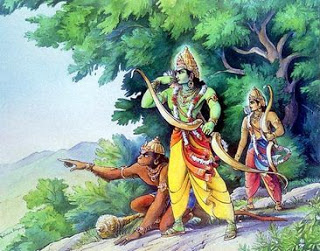
Indians are the Ancient Marathon champions. No literature in the world talks about long walks. Only two ancient Indians walked long distance and beat all the world records. Rama walked over 2000 miles from Ayodhya to Sri Lanka. He did not walk in a straight line as the crow flies. He had to cross the thick tropical forest, Dandaka Aranya, and cross several rivers before he entered Karnataka (Kishkinda) where he met Hanuman and Sugreeva. Then he came to Rameswaram in Tamil Nadu and crossed the sea to go to Sri Lanka. He covered over 2000 miles. Adi Shankara who came several thousand years after Rama, walked all over India several times and established four centres in the four corners of India.
Some foreign scholars tried to belittle Rama’s grand travel by saying that the Lanka that Valmiki mentioned was an island in the Godavari River. Those myths were exploded by the Sangam Tamil Works and Saivaite and Vaishnavaite references to Lanka in Thevaram and Divya Prabandham. Scholars who put forth those absurd theories did not know Tamil literature. One of the Sangam Tamil poets name is Valmiki!
ChineseRamayana
Buddhists took Ramayana to China in the first century AD. The names are distorted as Lomo (Rama), Poloto (Bharata), Loman (Lakshman),Naloyen (Narayan). The Pali Tripitaka was rendered in Chinese and compiled in the name of Taisho edition. Dasaratha Jataka and Story of Unnamed king were translated in 472 and 251 AD. Ravana was described as a wicked Naga King. Dasaratha Jataka has a verbatim Pali translation of Valmiki’s Sanskrit sloka!
Buddhists tried to enlist the national hero of India Rama on their side by transcribing his legend into their own in the Dasaratha Jataka.
Kush Vamsa in Ethiopia
Rama’s son ruled Kusha Dwipa. Ethiopian King considers himself as a descendant of Kush. According to P.N. OAK, swami Krisnananada was told by Haile Selaasie, King of Ethiopia that his dynasty came from Kush , son of Ham (Ram).
Niroshta (No Lip Touching) Ramayana
Of the 300 versions of Ramayana, Niroshta Ramayana, is an interesting piece. When one reads it or recites it the lips won’t touch or close together. No labial letters are used. Hindus believe human saliva or spit is unclean, particularly when they do religious rituals. So they wanted to say Rama’s name without spit/saliva polluting it.
Saraswati Mahal Library in Thanjavur has got rare books. One of the books is Sabdarth Chintamani. This Sanskrit book was written by Chidambara Kavi sometime in the 15th or 16th century. If anyone reads the couplets from left to write, it is Ramayana story. If one reads it from right to left it is Mahabharata. Later he wrote Kathathreya including Ramayana, Mahabharata and Bhagavatha in the same verse. It is a Three in One Hindu scripture. Only Sanskrit language can do such wonders! Tamil has Poet Kalamegam’s puns, but that is entirely a different genre.
In Sanskrit Kalidasa dealt with the story of Rama in Raguvamsa, Bhavabhuti in Uttara Ramacharita, Bhojaraja in Ramayana Chambu and Ramachandra Dikshitar in Janaki Parinayam. In Tamil the great poet Kamban wrote the story of Ramayana in verse form, Arunachala Kavirayar in Drama. Number of references is in Bhasa’s dramas and Alvars hymns.
Ramayana in One Day
Rajatarangini of Kalhana says that Damodaran, predecessor of Kanishka heard the whole of Ramayana in one day to cure a curse.
Ramayana recitation and musical discourses are done in every language in all parts of India. When Chera King Kulasekara was listening to a musical discourse of Ramayana he got mesmerised by the talk. When the speaker described how Rama was fighting all alone with 14000 demons of Kara Dushana army, the king stood up and ordered his army to march to help Ramayana. He was so absorbed in the story he even forgot he was listening to a story. Then the embarrassed ministers sent some men to say to king that Rama defeated the Kara Dushanas.
Bodi Palace Ramayana Paintings
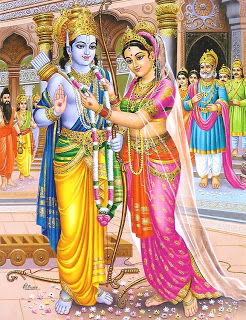
Not many people knew Tamil Nadu has beautiful Ramayana paintings on the walls of Ramanathapuram and Bodi palaces. Nayak kings made artists paint them on the walls at least four hundred years ago. Ramanathapuram palace paintings describe Ram’s history up to Sita Kalyanam (Sita’s wedding). Bodi palace has got more on this topic. All the colour paintings were done with herbs. Madurai Meenakshi temple and Alagarkoil also got some Nayak paintings on the same theme.
New Information in Sangam Tamil Literature
Ramayana, Mahabharata and Bhagavatham (Krishna’s life history) are very familiar in Tamil Nadu 2000 years ago. Tolkappiam, the oldest Tamil book refers to Baladevan’s Palmyra flag. Sangam literature speaks about river Yamuna and Gopika girls bathing with Krishna. But it gives some new information about Rama and Sita which was not found in Valmiki Ramayana. Rama consulted engineers under a banyan tree on the sea shore. Lot of birds were making a big noise. Rama asked them to keep quiet and all the birds fell into pin drop silence. This is in one of the verses. Another verse says that when Sita threw the jewels, the monkeys that picked up the jewels wore them in the wrong way. Likewise when a king gave the singers lot of jewels they did not know what to wear where. This is in Purananuru, Sangam Tamil anthology.
Lakshmana in GSS
Gatha Sapta Sati is an anthology of 700 sexy love poems in Prakrit language. One of the poems beautifully describes Lakshman’s chastity. Rama’s brother Lakshman was most famous for his character of observing a vrata (vow) not to look at married women. He never saw Sita’s face after she got married to Rama. On the banks of River Godavari an amorous gentleman looks at his brother’s wife when his brother was away. The sister in law who was embarrassed showed him a painting on the wall where a Ramayana scene was painted. Painting showed Lakshmana looking at the earth or Sita’s feet in the company of Rama and Sita. This couplet speaks a lot: 1.There were Ramayana paintings in homes like we have calendars today 2.Chaste women were intelligent enough to give the message without mincing words.
Contd. In the third part………………………..
Source Materials: India in the Ramayana Age by Shantikumar Nanooram Vyas; The Ramyana of Valmiki- translated by Hari Prasad Shastri and Articles by PN Oak and CV Vaidya. Pictures are from Face Book and other websites. Thanks. Contact swami_48@yahoo.com
Please read other posts about Rama: 1. Ram –the Best PR Man 2. தியாகராஜ சுவாமிகளுடன் 60 வினாடி பேட்டி 3.நாமும் அனுமார் ஆகலாம் 4.கம்பனுடன் 60 வினாடி பேட்டி 5.ராமாயண வினா-விடை (க்விஸ்) 5.Ramayana Wonders Part 1





















You must be logged in to post a comment.